Copyright © 2019 (Marina Prentoulis and Maria Kyriakidou). Licensed under the Creative Commons Attribution Non-commercial No Derivatives (by-nc-nd). Available at http://ijoc.org.
Media and Collective Action in Greece:
From Indignation to Solidarity
MARINA PRENTOULIS
University of East Anglia, UK
MARIA KYRIAKIDOU
Cardiff University, UK
This article explores the role of media and communication processes in the organization of collective action in Greece in the context of the Aganaktismeni (Indignant) protests and subsequent solidarity networks. Theoretically, the article employs the concept of communication ecology to highlight the complex network of media platforms in which collective action is embedded. The concept allows us to explore collective action both within the specific cultural and political environment in Greece as well as beyond specific moments of political mobilization and across time. Based on interviews with activists from various solidarity networks in Athens, we discuss the use of media and unmediated communication practices employed for the organization and mobilization of collective action. We argue that these practices need to be explored beyond the moment of protest in order to better understand how collective action moves across social and political sites.
Keywords: collective action, protests, communication ecology, social movements, solidarity networks, collective identity
Inspired by the Spanish Indignados—the movement that was launched in Spanish squares on May 15, 2011—the Greek Aganaktismeni (Indignants) made their appearance a few days later, on May 25, at Syntagma Square in Athens. Similar to their Spanish counterpart, Aganaktismeni was an expression of citizen indignation against the austerity measures implemented to tackle the euro crisis as well as against the political establishment (Giovanoulos & Mitropoulos, 2011). Despite its short-lived presence in the Greek squares, which ended with a forced evacuation in August 2011, the Aganaktismeni helped ingrain a sense of collective identity in Greek people and has been regarded as a significant moment in contemporary politics (Stavrides, 2012).
The Indignados and Aganaktismeni are one expression of the global “movements of the squares” (Gerbaudo, 2012) that started with the Arab Spring revolutions in 2011 and continued with the Occupy movement later that year. Central to academic discussions about these movements and subsequent similar
political mobilizations has been the role of digital and, in particular, social media. Facebook and Twitter have been instrumental for mobilization and organization of the Aganaktismeni protests (Theocharis, 2016) and the Indignados movement overall (Gerbaudo, 2012). In this context, social media has been instrumental for collective action.
This article explores how the communication practices of Aganaktismeni enabled the transposition of the political claims of the protest movement into solidarity networks operating in the city of Athens. These practices, we argue, are not restricted to the use of social media but need to be observed in relation to the broader communication ecology in which the protesters and activists are embedded. We employ the concept of communication ecology to highlight both the complexity of the activists’ mediated and interpersonal networks as well as the continuity of their communication practices that not only enabled the emergence of collective action but also sustained it over time. We argue that in order to explore media practices in political mobilization, we should look beyond the moment of protest and explore how collective action moves from one social site to another (Prentoulis & Thomassen, 2014). The aim of the article is, therefore, twofold: Empirically, we investigate the theoretical concept of communication ecology put forth by social movement scholars in recent years (Treré & Mattoni, 2016); analytically, we argue for the study of collective action as rearticulated in different sites, which activists themselves see as continuous. These sites can be conceptualized both in spatial terms, describing the movement from the squares to various grassroots hubs in Athens, and as spaces of political activity developed and transformed over time.
The discussion draws on interviews with activists who were involved in both the Greek Aganaktismeni movement and later solidarity networks. We start by setting the theoretical background for the analysis. We explore the concept of communication ecologies in relation to social movements and describe the Greek context for the study. The review of the empirical material illustrates the continuity of collective action from the Aganaktismeni movement to solidarity networks through complex communication practices.
Social Movements and the Media
A plethora of studies have explored the relationship between social movements and the media. The networked nature of digital media and participatory potential of Web 2.0 have inspired significant debates about whether and how such characteristics of communication technologies enable more horizontal and inclusive forms of political participation and resistance. Drawing on cases such as the global justice movement (Della Porta & Mosca, 2005), the Occupy movement (Kavada, 2015), and anti-austerity protests (Gerbaudo, 2012; Treré & Mattoni, 2016), such studies have explored how collective action is enabled and reinforced through digital technologies, and especially social media, which allow for practices of collective identification as they become “a source of coherence as shared symbols, a centripetal focus of attention, which participants can turn to when looking for other people in the movement” (Gerbaudo, 2014, p. 266).
criticized for allowing shallow commitments and the “dispersion of critical energy” necessary for a “coherent opposition” to social inequality (Dean, 2012, p. 126). Furthermore, the commercial nature of social media platforms, which capitalize on the data generated by users and activists, embeds collective action within capitalist frameworks and shifts the emphasis from the use value of shared messages to their exchange value (Kaun, 2016; Loader & Mercea, 2011). Given actual uses to which social networking is put, Fenton and Barassi (2011, p. 191) argue that social media politics are an expression of individualistic politics reproducing neoliberal ideas.
Despite the presence of such critical perspectives and the move away from the early “digital exceptionalism” (Marwick, 2013) that approached the Internet as radically different from other forms of communication and inherently democratizing, there still seems to be an overemphasis on the “new” in studies of the relationship between social movements and the media, which ostensibly overlooks continuities in political organizing (Kaun, 2016). Although research has insightfully illustrated the complexity of communication dynamics in online-mediated activism (Bennett, 2012; Gerbaudo, 2012; Kavada, 2015), digital technologies remain the starting point of inquiry into the organization of social movements. Relevant arguments continue to be largely Web-centric, paying little attention to the persistent role of off-line forms of mediated communication and neglecting the reinforcing relationship between digital technologies and off-line organizing forms (Wolfson, 2014).
Anthropological approaches to the study of social movements have illustrated the intersecting nature of digital and off-line communication dynamics. In his study of the development of Indymedia, Wolfson (2014, p. 169) found that the creation of physical spaces and off-line swarming was central to the building of social relations and, therefore, equally important to activists as the use of online spaces such as websites and electronic mailing lists. Indeed, the “absolute openness” of the online world was criticized by some activists as leading “to the domination of an upper-middle-class white voice,” and direct work with specific communities with no Internet access or digital literacy was preferred instead (Wolfson, 2014, p. 172). Barassi (2013) argues that grassroots organizations remain attached to material forms of communication, such as activist magazines, that construct a feeling of belonging and cohesion. In addition to such activist media, mass media can play a role in the organization success of alternative political action, as Costanza-Chock (2014) found in their study of the 2006 “Day Without an Immigrant” demonstrations in the United States, when the scale of protests was largely due to the participation of commercial Spanish-language broadcasters. What these studies highlight is how digital technologies, traditional media, and off-line communication intersect and often work together in social movements. In a similar vein, we argue here that the study of intersecting communication practices provides not only a better understanding of collective action but also a clearer overview of the transformation of this action from one site of political engagement to another.
Collective Action in Complex Communication Ecologies
different social sites (Altheide, 1994). Communication ecology, therefore, highlights the complexity of the relationship between social movements and media technologies and moves beyond recent privileged analyses of single platforms or technologies over others (Treré & Mattoni, 2016, p. 291). It also avoids the overestimation of the democratic potential of digital technologies and the assumption of their inherent horizontality and transparency (Norval, 2006, p. 102). It is for these reasons that we employ it as a framework here to illustrate how collective action within the communication ecology of the Aganaktismeni protests transformed and was rearticulated in the form of solidarity networks in the city of Athens.
The metaphor of ecology has been employed in a range of ways and from different traditions— illustrated in the similar terms such as “media” (Fuller, 2005), “communication” (Mercea, Iannelli, & Loader, 2016), and “information” (Nardi & O’Day, 1999; Treré, 2012) ecology—making it virtually impossible to provide a univocal definition of what communications ecologies are (Treré & Mattoni, 2016, p. 295). We appropriate here Nardi and O’Day’s (1999) definition of communication ecology as “a system of people, practices, values, and technologies in a particular local environment” (p. 49). In this conceptualization, “the spotlight is not on technology, but on human activities that are served by technology” (p. 49). These are situated within networks of mediated, interpersonal, and organizational connections, which function as both a context and resources for individuals “to construct knowledge and to achieve goals” (Broad et al., 2013, p. 328). Accounting for the significance of locality, the ecological trope alludes to the specific cultural, social, political, and technological characteristics of spatially circumvented contexts. Placing the focus on social practices for the achievement of goals, the approach also allows us to look at how the evolution of such goals is reflected in the development of processes and technological uses and within specific structural constraints and opportunities in ways that (re)articulate the collective over time (Treré & Mattoni, 2016).
Collective identity is understood here as “an interactive and shared definition produced by a number of individuals (or groups at a more complex level) concerning the orientations of their action and the field of opportunities and constraints in which such action is to take place” (Melucci, 1996, p. 70). Collective identities, therefore, emerge in the process of collective action (Melucci, 1985) as well as in processes of communication among participants (Bennett & Segerberg, 2012; Gerbaudo, 2014; Kavada, 2015). Collective action develops in interconnected and overlapping sites of communication and conversation, with varying spatialities and temporalities (Kavada, 2015, p. 876). Examining the role of media in collective action requires, therefore, looking at processes of communication, both online and off-line, that allow for movement participants to reflect on their vision and membership as well as the platforms through which this communication takes place and their norms and regulations (Kavada, 2015). At the same time, we are interested in how such expressions of the collective are rearticulated and, therefore, sustained in different spatial and temporal contexts beyond particular moments of political mobilization. As the movement develops and evolves, its aims change and so do its communication practices within its communication ecology. Its collective identity is thus rearticulated in different actions and processes.
without limits, integrating new nodes as long as they are able to communicate within the network, namely as long as they share the same communication codes” (Castells, 1996, p. 470). In the case of solidarity networks, the nodes are groups of various sizes and levels of formal organization, consisting of individuals actively engaged in remedying the effects of the financial crisis in Greece and providing for those in need. As Podolny and Page (1998) have argued, network forms of organizations, in the absence of a legitimate organizational authority, form relationships and engage in exchanges based on a distinct ethical behavior. Solidarity in the groups of Athens-based activists we study here expresses this ethical behavior and functions as an active principle that challenges the competitive nature of neoliberalism with an emancipatory aim. In this sense, solidarity is an expression of broader political action.
This centrality of solidarity as an active, political principle differentiates the networks from both nongovernmental organizations offering relief and other charitable institutions, such as the church, which not only are structured according to organizational authority and hierarchies but also provide services that are not antagonistic to the existing socioeconomic reality. In effect, the lack of organizational coherence and resources of the Greek indignant movement has produced in consecutive years solidarity networks as “hidden” forms of resistance (Scott, 1990) or as “submerged networks” (Melucci, 1989) that produced a particular form of collective action.
Aganaktismeni and Solidarity Networks
We approach the Greek crisis as the context and fertile ground for the formation of new collective identities, expressed through the movement of Aganaktismeni and the concomitant solidarity networks. Touraine (2002, p. 90) has argued that social movements emerge as responses to threats against a social group’s ability to make decisions. The financial crisis of 2008 posed such a threat for social groups and national populations alike. The signing of the first bailout package in 2010 by the then Prime Minister George Papandreou placed Greece under the economic—and, by implication, political—control of the troika, comprised of the Eurogroup, the European Central Bank, and the International Monetary Fund. Announcements of new austerity measures in 2011 led to an “organic crisis” in Gramsci’s terms: a generalized crisis of social identities (Laclau & Mouffe, 1985, p. 136). This crisis also can be understood as what Laclau (2005, p. 280) has called a dislocatory event—that is, an event that puts in question the whole (even if only “imagined”) order of society. The “holes” created in the symbolic order of sociopolitical reality by such an event are experienced as sentiments of discontent. It is within this setting that the Aganaktismeni protests emerged and new collective identities were articulated.
The use of social media for the protests of Aganaktismeni has been noted as a characteristic unique in the history of political mobilization and organization-based protests in the country (Theocharis, 2016). Political activism in Greece had been traditionally organized by the usual suspects of trade unions and politically affiliated activists (Rüdig & Karyotis, 2013). The self-organization and coordination enabled by the use of social media, such as Facebook and Twitter, allowed for the mobilization of a different and much broader body of the population (Theocharis, 2016). The prevailing groups among the protesters were not the “urban proletariat” but rather the “precariat”—the people in precarious employment—and the unemployed (Sotirakopoulos & Sotiropoulos, 2013, p. 450). A significant characteristic of the protests was the diversity of the subject positions composing them: “the indignant pensioner (whose pension has been devalued), the indignant parent . . . the indignant shop owner (whose clientele is now diminished), the indignant taxpayer (whose reduced salary cannot accommodate the increased rate of taxation)” (Theodossopoulos, 2014, p. 370). These subject positions were rearticulated under the trope of indignation with old and new political identities from the “indignant conservative” to the “indignant communist” and the “indignant fascist” (Theodossopoulos, 2014, p. 370).
Despite the relatively short (about two-month) existence of the Aganaktismeni movement, resistance practices initiated in the squares were recontextualized in the formation of solidarity networks, which, through local-level engagement, reconstituted the “people” against the established political system. The immediate aim of these networks was to offer relief to those in severe hardship, such as the people with no health and social insurance, the homeless, or those deprived of economic means. These grassroots groups organized solidarity clinics with volunteer doctors, they organized food banks and food markets selling direct to consumers, and they offered emotional and psychological support (Demertzian, 2014). The Aganaktismeni not only produced “hidden forms of resistance” (Scott, 1990) but also contentious, radical politics on different social sites. The articulation of such political subjectivities in the form of solidarity networks not only tackles the immediate effects of the crisis but also constitutes a conscious alternative politics and a critique to austerity policies (Rakopoulos, 2014). In this context, “solidarity discourse is becoming counter-hegemonic to that of debt” (Rakopoulos, 2014, p. 313).
Solidarity groups multiplied quickly after the protests. Although by 2011 relief to people in need living in Athens and the broader Attica area was provided by institutions such as charities, nongovernmental organizations, and the church, with only a handful of solidarity networks run by activists, the picture changed dramatically after 2011.1 During 2012–2014, 21 social pharmacies and clinics were recorded, along with 55 direct markets and food banks and 36 cooperatives. Participants in the networks were both seasoned activists and people with no previous political engagement, all finding in solidarity groups an emancipatory democratic potential that differentiated their work from that of charities and nongovernmental organizations.
This article examines the organization potential of media in the indignant protests and in the consequent formation of solidarity networks. Central in our investigation is the assumption that we are
dealing with a rearticulation of collective action from one site to another that is enabled, sustained, and defined by particular uses of available communication channels. In the process of collective identity formation, social media are part of the ideological reservoir of grassroots politics, justifying their character as a leaderless, horizontal organization of “the people.” They play a decisive role in enabling the displacement and decontextualization of demands from the protest movement to grassroots solidarity groups. In this function, however, social media were not alone; an important role was also performed by mainstream media as well as unmediated communication.
The Greek Media System
To better understand these communication practices, it is important to situate the study in the Greek media system as the institutional and technological framework within which activists operated. A prominent characteristic of this system, and relevant to our question here, is the relatively low Internet penetration. When the movement of Aganaktismeni emerged in 2011, Internet penetration was at 53% (World Bank, 2014), and social media were mostly used by a young educated minority. These relatively low numbers suggest that one should be cautious not to overstate the role of digital media in the collective action of the protests and solidarity networks. As discussed later, activists needed to navigate among a range of other media to have their messages heard.
At the same time, the mainstream and mass media are embedded in a deeply ingrained culture of clientelism and political parallelism. Politicians, media, and businesses operate as a “triangle of power,” where private and political interests are intrinsically intertwined and where the media function as the means through which these interests are played out (Iosifidis & Boucas, 2015). These power dynamics exist in a weak and inconsistent regulatory framework. The market deregulation of the 1980s and 1990s allowed for the proliferation of private media and an excessively augmented and financially unsustainable media market, with high levels of media concentration in the hands of Greek businesspeople with interests in other sectors of the economy, such as shipping, telecommunications, and refining. The media have long been used as means of political pressure. Newspapers operate as political instruments, broadcasting is politically partisan and displays high levels of sensationalism, while journalists are explicitly or implicitly partisan, often pursuing careers in politics (Papathanassopoulos, 1997, 2001). The idea of public service has never fully developed in the Greek media system, both because of the levels of corruption of the media overall and because the national broadcaster, ERT, had always been a state channel (Kyriakidou, 2015). In this media environment, the traditional media are met with widespread distrust, suspicion, and hostility.
Method
We conducted semistructured interviews to explore how collective identities were articulated and rearticulated during the Aganaktismeni protests and the following solidarity networks. We reached our interviewees through the snowballing method with the requirement that they had been active in solidarity groups at that moment and had some previous involvement—no matter how minimal—in the Aganaktismeni protests. The first interviewees were approached through the platform of Solidarity for All (www.solidarity4all.gr)—an initiative loosely associated with Syriza that established an online umbrella collective. The group defined its aim as an attempt to contribute to a “life without austerity memoranda, poverty, exploitation, fascism and racism and to the creation of the conditions for a radical political change and social transformation” (Solidarity for All, 2013a, p. 21). Among the initiative’s objectives are the facilitation of communication among the different solidarity groups and structures, the exchange of experiences among them, and increasing their visibility among those seeking relief from the consequences of the crisis. At the same time the collective assists the organization of national and international solidarity campaigns. The solidarity groups focus primarily on organizing one or more of three services: (1) local markets where producers sell directly to consumers at lower prices and collective kitchens and food banks for those without means; (2) social clinics and pharmacies offering basic health care services; and (3) cooperatives.
The interviews were initially designed to take place on a one-to-one basis. Because some interviews were conducted in solidarity centers, in some instances two or more people joined the discussion. Overall, we conducted 20 interviews with activists from six different solidarity groups in Athens. Half of these groups were principally involved in direct food markets, and the other half was involved in setting up social clinics and pharmacies (Solidarity for All, 2013b). The interviewees varied in age from people in their late 20s to others in their 60s. The names used in this article have been changed to preserve the interviewees’ anonymity.
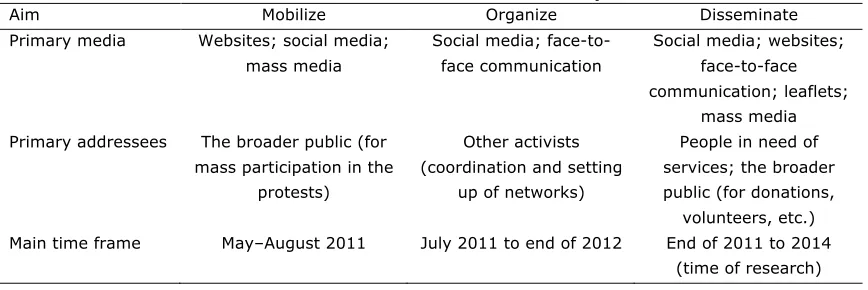
Table 1. The Evolution From Protests to Solidarity Networks.
Aim Mobilize Organize Disseminate
Primary media Websites; social media; mass media
Social media; face-to-face communication
Social media; websites; face-to-face communication; leaflets;
mass media Primary addressees The broader public (for
mass participation in the protests)
Other activists (coordination and setting
up of networks)
People in need of services; the broader public (for donations,
volunteers, etc.) Main time frame May–August 2011 July 2011 to end of 2012 End of 2011 to 2014
(time of research)
Political Mobilization Through Both New and Old Media
A few days after the appearance of the Spanish Indignados on May 15, 2011, a call appeared on Facebook for Greek people to protest peacefully at Syntagma Square without flags or banners (Theodossopoulos, 2014). The call (whose origin eluded most of our interviewees) soon went viral and a huge gathering took place in the square in front of the parliament building on May 25, 2011. This first Facebook call was the trigger of the protests that were then sustained through other contingent factors. Although social media were central in the initial stage of mobilizations, mass media also played an important role in expanding the scale of protests and sustaining them over time.
Many of our interviewees remembered the wide dissemination of the initial Facebook message— and other related ones—calling for a peaceful gathering at Syntagma. Rumor has it that it had been initiated by a young man from Athens, and many people started to like and share it on the social network. Soon after the initial call in Athens, similar ones were made urging people to take to the squares of different cities. Participants often recalled that initial excitement of realizing the possibility of mass mobilizations offered by social media. As one interviewee recalls: “What was amazing about it was the pace with which it was disseminated. It was crazy, every day it was 20, 30,000 more. I invited everyone I knew [via Facebook], almost 2,000 people” (Nikos, from the social and cultural space and solidarity network Ampariza). The ultimate success of the protests, however, was the result of many factors, historical contingencies, and dissemination by diverse communication channels.
Equally significant for the digital organization of the Aganaktismeni movement was the already existing website real-democracy.gr. The site had been active before the Syntagma protests in support of the Spanish Indignados. The initiators, according to an interviewee, were tech-savvy Greek activists. They started demonstrating in front of the Spanish embassy after May 15 and had called for an assembly on May 20,2011. Once Aganaktismeni started taking shape, these activists became a central part of the movement. One of our interviewees recalls the discussion he had with them, inviting them to take part in the mass demonstration: “I suggested they join us at Syntagma, this is where the crowds would gather after the Facebook call. They came, fifty people, but they brought real-democracy.gr with them and eventually this was adopted as a central site” (Kostas, Solidarity for All).
Mass media was another, seemingly unintended, facilitator of the Syntagma protests. The coverage of the Aganaktismeni movement was extensive both in the mainstream press and on television. This reporting was generally positive (Veneti, Poulakidakos, & Theologou, 2012) or even celebratory (Kyriakidou & Olivas Osuna, 2017). The density and the diversity of the protests in the squares were described by the mainstream media as “magical,” “a miracle,” and “something new” (Kyriakidou & Olivas Osuna, 2017, p. 464). The protests were, therefore, reported in a way similar to media events (Dayan & Katz, 1992)—those with a ceremonial character—and the gatherings at Syntagma became the unintended facilitators of a national sense of togetherness. At the same time, by highlighting the role of social media in the protests and reporting the hashtags and Facebook pages of the activists, the mainstream media became megaphones for the movement (Kyriakidou & Olivas Osuna, 2017). One interviewee recalls that “images of Syntagma where everywhere, we all knew we will meet there” (Eleni, Social Medical Centre of Peristeri). The gatherings, reported constantly by the mainstream media, became part of a new daily routine—or, as described by our research participants, “what everyone was doing” at the time. As one interviewee described, “Those days I was coming back from the square for a quick shower, had a few hours of sleep and was going back again” (Nikos, Ampariza).
Interestingly, after the initial mobilizations, engagement with social media was less significant in this daily routine of protests. The physical site of the square became a constant and stable meeting place, where protesters knew they would meet each other. In this respect, the mainstream media played a contributing role in the protest communication ecology, illustrating the complexity of the media environment in which the Aganaktismeni operated. Social media were particularly important in the first stage of the protest. Mainstream media channels, even if unintentionally, became part of the communication environment assisting the mobilizations.
From Indignation to Solidarity Networks: Social Media and Face-to-Face Communication
However, the communication processes established during the protests were used for further organization purposes. These processes, albeit initiated during the political mobilizations of the squares, expanded to different spatialities and temporalities and transformed collective action to solidarity networks around the city of Athens. A number of our interviewees, when describing their participation in collective action, referred to the Aganaktismeni protests as the “phase of Syntagma [Square],” indicating they considered them part of a longer project and, therefore, implying a continuity between the protests and the activities of the solidarity networks they were involved in. In many cases, this continuity could be identified in particular moments, when the legacy of the movement was discussed even as the protests were still unfolding in the squares:
The Popular Assembly emerged after the initial Popular Assembly at Syntagma [Square], in 2011. This had already been extensively discussed during the meetings at the square; constructing bases and assemblies in the neighborhoods had often been on the agenda. This is what some people took with them and tried to propagate in print, face-to-face, even via e-mail, nothing too extreme. (George, from the movement Without Middlemen)
The same communication tools that were employed for the mobilization of the crowds during the protests were used to promote political action beyond the space and time of the protests. Face-to-face communication and discussions were significant in this transition from the squares to solidarity networks. Similar stories were shared by several of our interviewees. For example, the Metropolitan Social Medical Centre in Elliniko, an area in the south of Athens, was initiated by a doctor who was a member of the social medical center that was set up at Syntagma Square during the Aganaktismeni protests, where doctors and nurses worked for free to help protesters with general advice and care in case of violent encounters with the police. The doctor approached some of the active members of Aganaktismeni after the summer of 2011 and suggested an initiative that would help people in need, especially those with no insurance and no access to medical care. The initiative then employed Facebook and a collective mailing list to make its presence known.
Other interviewees discussed how the experience of participating in the Aganaktismeni protests inspired them to actively search for and participate in other forms of political activism. Anna, one of the oldest interviewees at age 63, who was initially inspired by her children to participate in the protests, described how she continued to join demonstrations after the summer of 2011, realizing at some point that these “were not enough” and that she “wanted something more.” Her children put her in touch with Solidarity for All, and she was, at the time of our interview, working as an administrator at the Social Medical Centre in Athens.
reconfiguration (even if temporary) of a collectivity first under the trope of indignation and later under the trope of solidarity.
Solidarity Networks Within a Complex Communication Ecology
Communication and connectivity are decisive for the solidarity networks: First, they are essential in bringing the members of the groups together and allowing them to organize their day-to-day activities, and, second, they are necessary for connecting group members with those who will benefit from their activities and the broader public, allowing them to spread the seeds of solidarity within society. At this stage of dissemination, social media remain important, but collective action heavily depends on more individualized forms of communication such as face-to-face conversations and leaflets. Mass media can still play an important role through broadcasting and promoting the work of solidarity groups.
Our interviews suggested that digital media were both enablers of the social work of the networks and impediments to reaching a broader public. On one hand, the role of social media was often acknowledged by our research participants as instrumental to the work of the solidarity networks. The potential of new media technologies held a distinctive place in their discourse: It allowed for the globalization of resistance, increased democratization, transparency, and the dissemination of information. As one interviewee put it, “The Internet is the best thing capitalism has produced” (Chris, Without Middlemen movement).
On the other hand, media literacy among solidarity group members varied significantly. One recurring theme in our interviews was how the organizational needs of the groups provided the motivation to develop their technological skills and start using social media. Some had neither e-mail nor Facebook before joining the groups and needed to use social media to follow developments and discussions related to the network’s work. When asked about her use of e-mail, Zoe, who worked at the Social Medical Centre at Elliniko, clarified that she only started using it once she started working for the center:
That’s when I got my own e-mail, as it was needed for organizing work. That’s when I also got into Facebook but I don’t use it much, I don’t have much time at work and I get annoyed with it at home. But if I see an announcement, I share it, promote it, etc. (Zoe, Social Medical Centre at Elliniko)
For many of our research participants, social media were approached in purely instrumental ways and as a means to an end: “We know how to use it in order to achieve our objectives, that’s it” (Chris, Without Middlemen movement).
networking sites, however, was perceived as limited, reaching a finite number of networks of friends and those already involved in the solidarity structures. Interviewees acknowledged the digital divide and the low penetration of the Internet in Greece, as noted above. According to one of our interviewees, in Greece, “the word of mouth is still the best advertising” (Pavlos, Solidarity Movement of Workers and Locals of Filis).
When discussing one clinic’s visibility to the people in need of its services, one volunteer reminded us that those in greater need (for example, many immigrants) had no Internet access nor mobile phones:
We have patients that have no phone—or, if they do, they don’t have credit—or that are homeless. With regard to our patients, social media cannot play a big role. They can play a role, however, with regard to the mobilization of society. But even that will be up to a point. I mean what [is it worth] having an amazing Facebook page and gather likes? I need people to bring me milk or to help with something else. (Anna, Social Medical Centre in Athens)
Reaching the disenfranchised in this situation means sidestepping digital technologies, the networked nature of which fails to connect activist groups with those who need them the most (Wolfson, 2014, pp. 172–173).
Similarly, the lack of online access among the needy defined the operation of direct-to-consumer markets. The objective of the groups was to bring producers and consumers together without mediators. Consumers preordered the available products that were later delivered in a designated pop-up market. Although the communication between solidarity groups and consumers could be electronic (via e-mail, for instance), this occurred less between solidarity groups and the wider public. The ordering process was based on printing and leafleting. As Nikos from Ampariza described, sheets of paper printed with available products and their prices, as well as a narrative of the network aims, were distributed by hand. About 7,000 to 8,000 leaflets were distributed before the first market. Orders were then taken either by phone or by collecting filled-in forms. The importance of personal contact was key in promoting the work of solidarity networks and articulating the identity of the movement:
We want to have personal contact with people, it is not only about the distribution of food but also the coming together in a different relationship with the people. We want to talk, explain who we are and what we do, have a dialogue. (Nikos, Ampariza)
While emphasizing the importance of face-to-face interaction, participants also recognized the significance of networking through online information and cited this as one of the reasons behind the creation of Solidarity for All. The aim of the organization was to link the solidarity groups together in an autonomous structure, increasing their online visibility and reach. According to one interviewee (involved in the initiative), the logic behind the organization’s creation had been transported from the demonstrations in the squares. Although the site mapped and represented all solidarity groups online, the principles of autonomy and the absence of leadership were respected. He explained the logic behind Solidarity for All:
Similarly, mainstream communication channels were not only accepted but also invited within the activists’ communication practices. The dialogue between the movement and the general public in a few notable cases was assisted by mass media, as it was during the Aganaktismeni protests. Interviewees working with a well-known social clinic-pharmacy in Athens recalled how SKAI TV and Radio launched appeals for medicines on behalf of the clinic. SKAI Radio broadcasted from the building of the social clinic, highlighting the work of the group and increasing its visibility for a wider audience. One volunteer explained how she got in touch with the social clinic: “I met a SKAI journalist. So one day I called him and asked him to help me to find somewhere where I could volunteer. He had made a program on solidarity networks” (Zoe, Social Medical Centre at Elliniko).
Interestingly, SKAI is owned by Alafouzos, a media mogul with business interests beyond the media (Iosifidis & Boucas, 2015). In this case, however, the interests of the activists were served by an institution implicated in the corrupt “triangle of power” discussed above. Within a complex communication ecology and the particular sociopolitical situation in Greece, diverse communication channels intertwine in an unpredictable way, creating a complexity that is difficult to capture in scholarly accounts focusing on digital media. This was acknowledged by one of our interviewees:
Social media could play a vital role in Greece, which, perhaps due to its scale, is mostly based on personal relations: The message you get on Facebook is more meaningful because it is sent by your friend. Twitter, on the other hand, concerns a very specific group of people in Greece—journalists, PR, etc.—and does not play a role in real life, except perhaps in terms of political gossip. And this applies everywhere: how social media will influence the actual space has to do with the surrounding atmosphere and the political culture in each area. (Kostas, Solidarity for All)
Conclusion
At the same time, the article provides insights into how collective identity, constituted through action and communication practices, evolves and develops within the communication ecology. As the primary aims of the movement initiated at the squares developed from mobilization to organization and then dissemination of its operations, so did its communication practices as well as the shared understandings of the character of collective action. Indignation as a political expression of resentment against the establishment was transformed into solidarity, as an alternative politics to austerity. In this evolution, the media were not only part of the communication practices within which collective action was constituted; they also comprised “the field of opportunities and constraints” (Melucci, 1996, p. 70), which participants in the movement needed to appropriate and adapt and adjust to depending on their aims and needs. As such, the media were not only constitutive of the movement’s collective identity but also integral in its evolution.
This account provides a more thorough understanding of the political impact of Aganaktismeni, often condemned as failed due to the fact that the ideological claims of the protesters were not translated into institutional politics (Marantzidis, 2015). We argue here that the protests of Aganaktismeni opened the possibility of new forms of collectivity within solidarity networks and that the occupation of the squares was, therefore, an important political moment with significant legacy. Even if not directly translated into parliamentary politics, the spirit of the protests fueled social activism and solidarity movements that still function as alternative forms of social organization in the city of Athens.
References
Altheide, D. L. (1994). An ecology of communication: Toward a mapping of the effective environment. Sociological Quarterly, 35(4), 665–683.
Barassi, V. (2013). When materiality counts: The social and political importance of activist magazines in Europe. Global Media and Communication, 9(2), 135–151.
Bennett, W. L. (2012). The personalization of politics political identity, social media, and changing patterns of participation. Annals of the American Academy of Political and Social Science, 644(1), 20–39.
Bennett, W. L., & Segerberg, A. (2012). The logic of connective action. Information, Communication & Society, 15(5), 739–768.
Broad, G. M., Ball-Rokeach, S. J., Ognyanova, K., Stokes, B., Picasso, T., & Villanueva, G. (2013).
Understanding communication ecologies to bridge communication research and community action. Journal of Applied Communication Research, 41(4), 325–345.
Castells, M. (1996). The rise of the network society. Sussex, UK: Wiley Blackwell.
Dayan, D., & Katz, E. (1992). Media events: The live broadcasting of history. Cambridge, MA: Harvard University Press.
Dean, J. (2012). The communist horizon (Reprint ed.). London, UK: Verso Books.
Della Porta, D., & Mosca, L. (2005). Global-net for global movements? A network of networks for a movement of movements. Journal of Public Policy, 25(1), 165–190.
Demertzian, M. (2014, November 19). ΑναζητώνταςτουςΑγανακτισµένουςτηςπλατείαςσήµερα . . . [Looking for the Aganaktismeni of the squares today . . .]. Huffington Post. Retrieved from
http://www.huffingtonpost.gr/2014/11/19/story_n_6177356.html
Fenton, N., & Barassi, V. (2011). Alternative media and social networking sites: The politics of individuation and political participation. The Communication Review, 14(3), 179‒196.
Fuller, M. (2005). Media ecologies: Materialist energies in art and technoculture. Cambridge, MA: MIT Press.
Gerbaudo, P. (2012). Tweets and the streets: Social media and contemporary activism. London, UK: Pluto Press.
Gerbaudo, P. (2014). The persistence of collectivity in digital protest. Information, Communication & Society, 17(2), 264–268.
Giovanoulos, C., & Mitropoulos, D. (2011). Δηµοκρατία under construction: Απότουςδρόµουςστιςπλατείες—
Εµπειρίες, αναλύσεις, ντοκουµέντα [Democracy under construction: From the streets to the squares—Experiences, analyses, documents]. A/Sinexeia. Retrieved from
http://www.lemoni.gr/bookshop/173984_δηµοκρατία-under-construction:-από-τους-δρόµους-στις
-πλατείες-συλλογικό-έργο.htm
Iosifidis, P., & Boucas, D. (2015). Media policy and independent journalism in Greece. London, UK: Open Society Foundation. Retrieved from https://www.opensocietyfoundations.org/reports/media-policy-and-independent-journalism-greece
Kaun, A. (2016). Crisis and critique: A brief history of media participation in times of crisis. London, UK: Zed Books.
Kavada, A. (2015). Creating the collective: Social media, the Occupy movement and its constitution as a collective actor. Information, Communication & Society, 18(8), 872–886.
Kyriakidou, M. (2015, May 28). Greek media in disarray [Blog post]. Euro Crisis in the Press, London School of Economics and Political Science. Retrieved from
Kyriakidou, M., & Olivas Osuna, J. J. (2017). The Indignados protests in the Spanish and Greek press: Moving beyond the “protest paradigm”? European Journal of Communication, 32(5), 457–472.
Laclau, E. (2005). On populist reason. London, UK: Verso.
Laclau, E., & Mouffe, C. (1985). Hegemony and socialist strategy: Towards a radical democratic politics. London: Verso.
Loader, B. D., & Mercea, D. (2011). Networking democracy? Information, Communication & Society, 14(6), 757–769.
Marantzidis, N. (2015, November 22). Πούχάθηκανοιαγανακτισµένοι (καιοιφίλοιτους) [Where are the indignants (and their friends)?]. Kathimerini. Retrieved from
http://www.kathimerini.gr/839523/opinion/epikairothta/politikh/poy-xa8hkan-oi-aganaktismenoi-kai-oi-filoi-toys
Marwick, A. E. (2013). Status update: Celebrity, publicity, and branding in the social media age. New Haven, CT: Yale University Press.
Melucci, A. (1985). The symbolic challenge of contemporary movements. Social Research, 52(4), 789–816.
Melucci, A. (1989). Nomads of the present: Social movements and individual needs in contemporary society. London, UK: Hutchinson Radius.
Melucci, A. (1996). Challenging codes: Collective action in the information age. Cambridge, MA: Cambridge University Press.
Mercea, D., Iannelli, L., & Loader, B. D. (2016). Protest communication ecologies. Information, Communication & Society, 19(3), 279–289.
Nardi, B. A., & O’Day, V. (1999). Information ecologies: Using technology with heart. Cambridge, MA: MIT Press.
Norval, A. J. (2006). Aversive democracy: Inheritance and originality in the democratic tradition. Cambridge, UK: Cambridge University Press.
Papathanassopoulos, S. (1997). The politics and the effects of the deregulation of Greek television. European Journal of Communication, 12(3), 351–368.
Podolny, J. M., & Page, K. L. (1998). Network forms of organization. Annual Review of Sociology, 24(1), 57–76.
Prentoulis, M., & Thomassen, L. (2014). The 2011 protests in Greece and Spain. In A. Kioupkiolis & G. Katsambekis (Eds.), Radical democracy and collective movements today: The biopolitics of the multitude versus the hegemony of the people (pp. 213–233). Surrey, UK: Ashgate.
Rakopoulos, T. (2014). Resonance of solidarity: Meanings of a local concept in anti-austerity Greece. Journal of Modern Greek Studies, 32(2), 313–337.
Rüdig, W., & Karyotis, G. (2013). Beyond the usual suspects? New participants in anti-austerity protests in Greece. Mobilization: An International Quarterly, 18(3), 313–330.
Scott, A. (1990). Ideology and the new social movements. London, UK: Unwin Hyman.
Solidarity for All. (2013a). Solidarity is peoples’ power: Towards an international campaign of solidarity to the Greek people. Retrieved from
https://www.solidarity4all.gr/sites/www.solidarity4all.gr/files/aggliko.pdf
Solidarity for All. (2013b). Δοµέςαλληλεγγύης [Solidarity structures]. Retrieved from https://www.solidarity4all.gr/el/structures
Sotirakopoulos, N., & Sotiropoulos, G. (2013). “Direct democracy now!”: The Greek indignados and the present cycle of struggles. Current Sociology, 61(4), 443–456.
Stavrakakis, Y., & Katsambekis, G. (2014). Left-wing populism in the European periphery: The case of Syriza. Journal of Political Ideologies, 19(2), 119–142.
Stavrides, S. (2012). Squares in movement. South Atlantic Quarterly, 111(3), 585–596.
Theocharis, Y. (2016). Every crisis is a digital opportunity: The Aganaktismeni movement’s use of social media and the emergence of networked solidarity in Greece. In A. Bruns, G. Enli, E. Skogerbo, A. O. Larsson, & C. Christensen (Eds.), The Routledge companion to social media and politics (pp. 184– 197). New York, NY: Routledge.
Theodossopoulos, D. (2014). The poetics of indignation in Greece: Anti-austerity protest and accountability. In N. Werner, K. Spellman-Poots, & M. Webb (Eds.), The political aesthetics of global protest: The Arab Spring and beyond (pp. 368–388). Edinburgh, UK: Edinburgh University Press.
Touraine, A. (2002). The importance of social movements. Social Movement Studies, 1(1), 89–95.
Treré, E., & Mattoni, A. (2016). Media ecologies and protest movements: Main perspectives and key lessons. Information, Communication & Society, 19(3), 290–306.
Veneti, A., Poulakidakos, S., & Theologou, K. (2012). The Greek Indignants through the domestic TV news bulletins. Estudos Em Comunicação, 12, 107–134.
Wolfson, T. (2014). Digital rebellion: The birth of the cyber Left. Urbana, IL: University of Illinois Press.
World Bank. (2014). Data: Internet users (per 100 people). Retrieved from