Scalable Computing: Practice and Experience
Volume 20, Number 4, pp. 607–629. http://www.scpe.org
ISSN 1895-1767 c
⃝2019 SCPE
DATA ANALYTICS IN THE INTERNET OF THINGS: A SURVEY
TAUSIFA JAN SALEEM∗AND MOHAMMAD AHSAN CHISHTI†
Abstract. The plethora of sensors deployed in Internet of Things (IoT) environments generate unprecedented volumes of data, thereby creating a data deluge. Data collected from these sensors can be used to comprehend, examine and control intricate environments around us, facilitating greater intelligence, smarter decision-making, and better performance. The key challenge here is how to mine out proficient information from such immense data. Copious solutions have been put forth to obtain valuable inferences and insights, however, these solutions are still in their developing stages. Moreover, conventional procedures do not address the surging analytical demands of IoT systems. Motivated to resolve this concern, this work investigates the key enablers for performing desired data analytics in IoT applications. A comprehensive survey on the identified key enablers including their role in IoT data analytics, use-cases in which they have been applied and the performance results of the use-cases is presented. Furthermore, open research challenges and future research opportunities are also discussed. This article can be used as a basis to foster advanced research in the arena of IoT data analytics.
Key words: Internet of things, Big Data, Data Analytics, Data Mining, Machine Learning, Time Series Forecasting.
AMS subject classifications. 68M11, 97R40
1. Introduction. IoT is regarded as the vital research paradigm in the current epoch. It has dramatically revolutionized every facet of our lives. This technology is characterized by enormous amounts of smart devices that cooperate seamlessly with each other by means of a global network infrastructure, thereby facilitating a wide number of pervasive and ubiquitous applications spanning diverse fields [1]. It is an ecosystem of smart devices, i.e., devices that possess sensing and processing efficacies and can comprehend and respond to their surroundings via sensors and actuators. The blend of diverse technological advancements like near field communication, Radio Frequency Identification (RFID), real-time localization, embedded systems, and the networking expedite the conversion of day to day entities into smart entities [2]. These entities are incorporated impeccably into a web like framework so that they can communicate with one another and with other cyber agents so as to accomplish goal-oriented tasks [3]. IoT enables sensors and objects to interact coherently within smart environs and facilitates information transfer in a suitable manner. The continuum of devices in IoT are connected via several diverse access networks and communication solutions equipped with technologies such as RFID, Wireless Sensor Network (WSN), Bluetooth, Wi-Fi, ZigBee, GSM etc. [4]. Over 30 billion [5] devices ranging from smart phones, to vehicles are prophesied to be linked to the Internet by 2020. The large number of sensors deployed in IoT environments continuously generate unprecedented volumes of structured, unstructured and semi-structured data (Big Data), that cant be handled by conventional processing, storage and analytical systems [6]. Data generated from IoT is different from traditional data in following ways [7]: (i) data is generated continuously at high speed, (ii) Apart from structured data, data may be of semi-structured or unstructured nature as well, (iii) data sources are diverse and fully distributed, and (iv) integration of multi-modal data becomes complex.
The fundamental objective of IoT is to augment the standard of living. Nevertheless, this vision is based on being able to efficiently process, analyze, and comprehend the data generated by IoT devices [8]. Hence, analyzing IoT data in order to divulge trends, concealed patterns, hidden correlations, inferences, and action-able insights is crucial for dispensing elite services to IoT users. In this regard, investigating the technological advancements that can assist in analyzing unstructured and semi-structured data apart from structured data, in-tegrating the data from heterogeneous data sources, performing real-time analytics in delay critical applications as well as in optimizing the process of data analytics becomes indispensable.
1.1. Related Surveys. To the best of our knowledge, this work is the first of this kind that investigates the key enablers for IoT data analytics and surveys their role in the IoT use-cases. There are few research works in the literature that have surveyed data analytics in IoT applications, however, the focus of those research works is different from the prime concern of this article. The main focus of this article is on the key enablers for
∗National Institute of Technology Srinagar, India ([email protected]) †National Institute of Technology Srinagar, India
IoT data analytics, the use-cases in which they have been applied, their purpose in those use-cases, the datasets that have been used, and the performance results of the use-cases.
In [9], Siow et al. have reviewed the applications of IoT data analytics across different domains. Moreover, the article proposes taxonomy for IoT data analytics in order to guide future research in the field. The focus of the paper is the enabling infrastructure for IoT data analytics that includes data generation, data collection, data aggregation and integration, storage technologies etc. However, the article lacks the detailed survey on the enablers like data mining techniques, machine learning techniques, dimensionality reduction techniques, time series forecasting, etc.
The work in [10] by Ahmed et al. investigated the latest developments in big data analytics for IoT applications. Moreover, the opportunities created from the amalgam of big data analytics and IoT were also identified. Several research challenges in IoT data analytics were also discussed. However, the article lacks the comprehensive survey of the IoT use cases and the analytics techniques used.
1.2. Contribution and Structure of Paper. This work provides a delineation of the present state-of-the-art in the realm of data analytics in IoT. More precisely, it:
• investigates the key enablers for IoT data analytics
• surveys the role of identified key enablers in IoT data analytics
• identifies the challenges that the research community still has to face in this arena.
The rest of the paper is structured as follows. In Section 2 an introduction of IoT data analytics is provided. Section 3 presents the purpose of data analytics in IoT applications. Section 4 discusses the key enablers for IoT data analytics in detail. Furthermore, the role of the key enablers in IoT data analytics is surveyed in this section. Section 5 highlights the challenges faced by IoT data analytics. Moreover, future research opportunities in the arena of IoT data analytics are also provided in this section. Section 6 presents the concluding remarks.
2. IoT Data Analytics. With the brisk advancements in sensing, communicating, analytic and actuating technologies, the vision of intelligent recognition, real-time observation, monitoring, and management is turning into reality [11,12]. The surfeit of sensors deployed in IoT environments generate masses of structured, unstruc-tured and semi-strucunstruc-tured data, including health care data, logistic data, astronomical data, environmental data, etc. [13]. Data collected from these sensors can be utilized to comprehend, examine and control intricate environments around us, facilitating greater intelligence, smarter decision making, and better performance. The enormous amounts of heterogeneous and diverse data generated by millions of IoT devices (monitoring certain phenomenon) make traditional information processing solutions obsolete. This is because traditional informa-tion processing systems cannot handle such volume of data [14]. IoT data analytics refers to the analysis of every fragment of data generated from IoT devices at right time in order to extract intelligent insights [15]. It is receiving a wide range of attention from researchers and practitioners, as extracting intelligent insights from IoT data is a tricky task and demands a great deal of attention. The question of how to collect, aggregate, and an-alyze the data generated from IoT environs has become an important impediment that requires urgent solution [16, 17]. Data Mining and Machine learning may help in creating smarter IoT by extracting unseen patterns, hidden correlations, trends, inferences, and actionable insights, facilitating greater intelligence, smarter decision making, enhancing performance, automation, productivity, and accuracy. However, the unprecedented rise in the magnitude and intricacy of data pose novel challenges to these domains [18, 19]. Moreover, it is crucial to formulate appropriate techniques for dealing with noisy, inaccurate, uncertain and real-time data. Furthermore, in several settings, it is indispensable to merge historical data with the current sensor data so as to draw out effective insights [20].
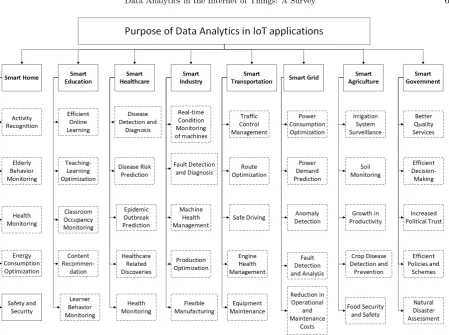
Fig. 3.1.Purpose of Data Analytics in IoT applications
IoT data analytics can be categorized into three groups, descriptive analytics, predictive analytics and prescriptive analytics [10]. Descriptive analytics delineates what has occurred and what is going on. It assists in perceiving novel business challenges and opportunities by utilizing data aggregation and data mining tech-niques. Descriptive analytics use-cases include energy consumption [22], urban designing [23], etc. Predictive analytics describes what will happen and why. It envisages future conditions and states precisely with the aid of statistical models and prediction techniques. Predictive analytics use-cases include disease prediction [24], predicting energy usage [25], machine failure prediction [26], anomaly prediction [27], etc. Prescriptive analytics characterizes what to do and why it needs to be done. It employs decision support systems to explore diverse possibilities and provides recommendations for decision-making using optimization and simulation algorithms. Prescriptive analytics use-cases include failure risk management in industrial IoT [28], clinical process design and optimization in healthcare [29], etc.
3.1. Smart Home. A smart home is an important development of IoT in which the dwellings are embodied with intelligence to provide smart services like user comfort, healthcare, security, remote monitoring and control of devices, energy conservation, etc. [30]. Smart homes provide a better standard of living by incorporating automation in the device access, control, and monitoring. The purpose of data analytics in smart home is to render intelligence in order to produce an interactive environment by utilizing foundational services like physiological and psychological state detection, image recognition, voice recognition etc. Analytics of smart home data help in tracking daily activities of the inhabitants, monitoring elderly behavior, optimization of energy consumption, ensuring security, health monitoring, etc.
3.2. Smart Healthcare. Increase in the number of long-term illness cases and regularly aging population is putting a consequential burden on nowadays healthcare organizations. Consequently, there is a dire need to alleviate the stress on healthcare organizations whilst continuing to dispense exorbitant healthcare services to patients. IoT has been recognized as a prospective panacea to reduce the stress on healthcare organizations, thereby transforming healthcare into smart healthcare [31]. The purpose of data analytics in smart healthcare is to provide intelligence in order to ensure remote health monitoring, assist in early disease diagnostics, make novel findings in disease trends, etc. by utilizing foundational services like physiological and psychological state detection, image recognition, voice recognition, etc.
3.3. Smart Industry. with the brisk advancement in communication, computing and manufacturing tech-nologies, production in industrial organizations is being shifted from digital to intelligent [32]. Smart Industry is a smart manufacturing system which integrates production and services together to meet the industrial re-quirements. The data generated from smart industry typically consist of data pertinent to machine logs and manufacturing processes. Analytics of such data results in services like condition monitoring of machines, fault detection and analysis, machine health management, production optimization, flexible manufacturing, etc. [32,33].
3.4. Smart Transportation. This system aims to exploit sturdy and leading sensing, computational and communication technologies in order to facilitate smart recognition, tracking, and monitoring of vehicles [4]. These technologies will capacitate vehicle-to-vehicle communication in a meticulous way without human arbitration. Moreover, incorporating IoT in transportation systems will provide smart services like traffic congestion management, route optimization, safe driving, etc. Furthermore, real-time information about the availability of parking slots, weather condition, road condition, engine health, equipment maintenance will also be provided [34].
3.5. Smart Grid. Smart Grid is another consequential advancement of IoT for administering and dis-seminating electricity between suppliers and consumers in order to ameliorate efficiency, safety, reliability with real-time tracking and control [4]. Integrating IoT with electrical systems will facilitate services like optimization of power system performance, fault detection and analysis, security, reduction in operational and maintenance costs [35]. Sensors deployed in smart Grid continuously emanate data pertinent to control loops and security and the data generated demands fast analytics in order to optimize power consumption, predict future power supply needs, detect anomalies, etc.
3.6. Smart Agriculture. Factors like increasing population and dwindling of cultivable land as a result of urbanization, demand extraction of the most out of available resources. Smart agriculture is a novel approach of accomplishing farming tasks by mitigating human endeavor and by efficient utilization of farming resources. Smart agriculture employs advanced sensing, communication, computing and actuating technologies in order to facilitate services like climate control based on harvesting requisites, growth in productivity, automatic irrigation system monitoring, crop disease detection and prevention, soil monitoring, livestock monitoring, etc. [36]. Sensors deployed in Smart agriculture generate data pertinent to moisture content of soil, diameter of the trunk of plants, climatic conditions, humidity conditions, etc. and the generated data demand real-time analytics in order to facilitate aforementioned services.
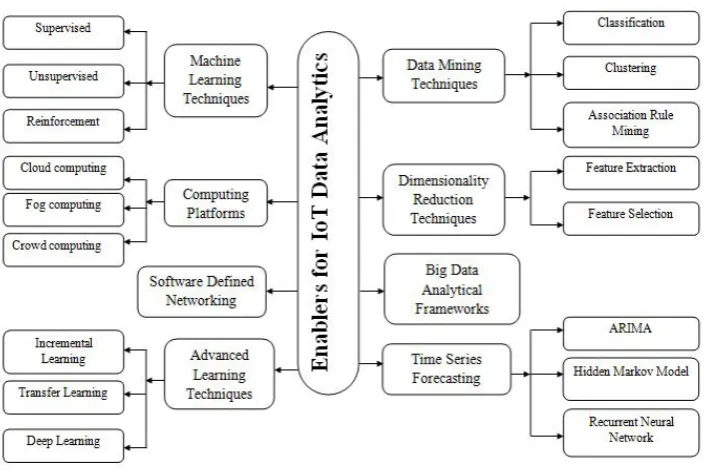
Fig. 4.1. Key Enablers for IoT data analytics
services, efficient decision-making, cost optimization, efficient policies and schemes, increase political trust, environmental monitoring, prediction and assessment of natural disasters, assessment of public demands, etc. [37].
3.8. Smart Education. IoT and data analytics contribute to the competence of education systems to a greater extent by enabling services like efficient online learning, teaching-learning optimization, classroom occupancy monitoring, content recommendation, learner behavior monitoring etc [38,39]. Moreover, Integrating IoT with education systems helps in motivating students, identifying weak and struggling students, learners progress assessment, and hence makes learning process efficient.
4. Key Enablers for IoT Data Analytics. From the discussion on IoT data analytics presented in section 2, it is apparent that recognizing and extracting the hidden information from IoT data is a pressing chore that surpasses the potential of conventional information processing and analyzing strategies. However, recent advancements in computational intelligence, data mining, and machine learning approaches are paving way for requisite data analytics in IoT. Fig 4.1 presents the key enablers for IoT data analytics. In the following subsections, we present an elucidation of these techniques in the realm of data analytics.
4.1. Data Mining Techniques. Data mining is utilized to discover concealed patterns and information from the data generated by IoT devices. The main objective of the data mining procedure is to reveal implicit knowledge from the data and mutate it into a valuable shape. Data mining techniques are of three types: classification, clustering and association rule mining.
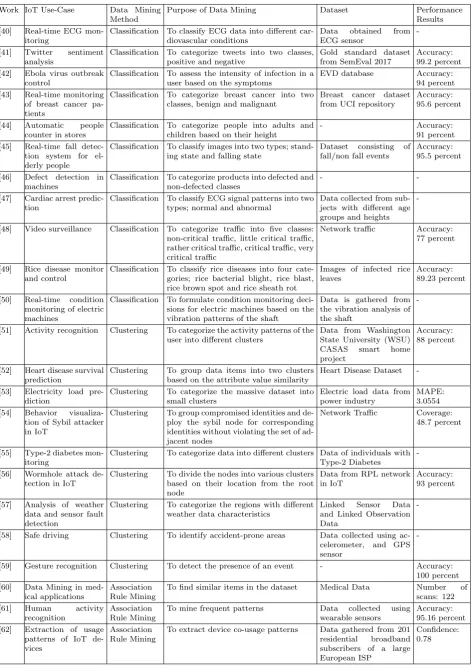
cardiac arrest prediction [47], video surveillance [48], rice disease monitor and control [49], real-time condition monitoring of electric machines [50], etc.
Clustering is an unsupervised learning procedure that groups data items with similar characteristics together into the same cluster [18]. In other words, data items in the same cluster have identical traits and data items in different clusters have highly disparate traits. Examples of IoT use-cases that utilized clustering include activity recognition [51], heart disease survival prediction [52], electricity load prediction [53], behaviour visualization of Sybil attacker [54], Type 2 diabetes monitoring [55], wormhole attack detection [56], weather data analysis [57], safe driving [58], gesture recognition [59], etc.
Association rule mining includes recognition of frequently occurring attribute-value relationships. It assists in the creation of more qualitative information for effective decision-making [18]. Association rule mining focuses on discovering all the frequently occurring associations from a set of data items. It has been used in diverse IoT use-cases including data mining in medical applications [60], human activity recognition [61], extraction of usage patterns of devices [62], etc.
Table 4.1 presents the purpose of data mining in the IoT use-cases mentioned in this sub-section.
4.2. Machine Learning Techniques. Machine learning offers the ability to systems to automatically learn and improve from experience without demanding the obligation of adhering to static program directions. Machines learning approaches craft an effective correlation among input data instances and the output actions and are competent of accomplishing forecasting and decision-making tasks in IoT applications [20]. These approaches are generally divided into three categories: supervised, unsupervised and reinforcement learning.
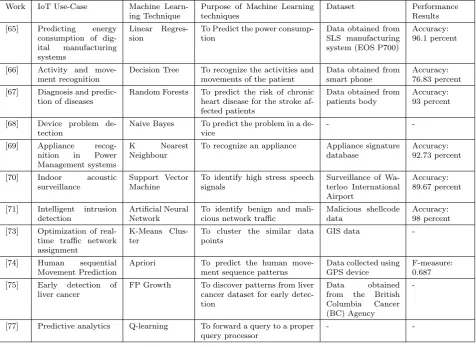
Supervised learning techniques model dependencies and associations between the target prediction outcome and the input attributes so that outputs for upcoming data instances are forecasted depending on the associations it learned from the dataset [63,64]. Techniques in this category include Linear Regression, Decision tree, Random Forests, Naive Bayes, K-Nearest Neighbour (KNN), Support Vector Machine (SVM) and Artificial Neural Network (ANN).
Regression is a supervised learning algorithm that is used to forecast a real-valued output from the cor-relations learned from the training data. Linear regression presumes a linear correlation between the input predictors and the target output. Example of IoT use-case that utilized linear regression is energy consumption prediction in digital manufacturing systems [65].
Decision tree follows a greedy strategy to classify data items by arranging them based on attribute values. Example of IoT use case that utilized decision tree is activity and movement recognition [66].
Random Forest is a supervised learning technique in which a myriad of decision trees are trained on different subsets of training set chosen randomly. Example of IoT use-case that utilized random forest is diagnosis and prediction of diseases [67].
Naive Bayes is a supervised learning technique for performing multi-class classification. It uses Bayes theorem for determining the probability of a class given a data item. Example of IoT use-case that utilized naive bayes is device problem detection [68].
KNN is a supervised learning technique in which outputs for new data instances are predicted by exploring K identical data instances in the dataset and taking the mode of their output values as the predicted output for the new data instance. Example of IoT use-case that utilized KNN is appliance recognition in power management systems [69].
SVM, a supervised learning technique is based on the concept of augmenting the margin, i.e., each of the two sides of a hyperplane that splits the linearly separable input variable space into two classes. Example of IoT use-case that implemented SVM is indoor acoustic surveillance [70].
Artificial Neuron is the elementary computational unit in an ANN. It accepts one or more inputs and performs their weighted sum, which is then passed as an input to a non-linear function called as activation function. Example of IoT use-case that implemented ANN is intelligent intrusion detection [71].
Unsupervised learning applies techniques on the input data instances to mine useful information, detect patterns and group the data instances so that valuable insights are obtained [63,72]. These techniques include K-Means Clustering, Apriori and FP Growth.
Table 4.1
Purpose of Data Mining in IoT use-cases.
Work IoT Use-Case Data Mining Method
Purpose of Data Mining Dataset Performance
Results [40] Real-time ECG
mon-itoring
Classification To classify ECG data into different car-diovascular conditions
Data obtained from ECG sensor
-[41] Twitter sentiment analysis
Classification To categorize tweets into two classes, positive and negative
Gold standard dataset from SemEval 2017
Accuracy: 99.2 percent [42] Ebola virus outbreak
control
Classification To assess the intensity of infection in a user based on the symptoms
EVD database Accuracy: 94 percent [43] Real-time monitoring
of breast cancer pa-tients
Classification To categorize breast cancer into two classes, benign and malignant
Breast cancer dataset from UCI repository
Accuracy: 95.6 percent
[44] Automatic people counter in stores
Classification To categorize people into adults and children based on their height
- Accuracy:
91 percent [45] Real-time fall
detec-tion system for el-derly people
Classification To classify images into two types; stand-ing state and fallstand-ing state
Dataset consisting of fall/non fall events
Accuracy: 95.5 percent
[46] Defect detection in machines
Classification To categorize products into defected and non-defected classes
-
-[47] Cardiac arrest predic-tion
Classification To classify ECG signal patterns into two types; normal and abnormal
Data collected from sub-jects with different age groups and heights
-[48] Video surveillance Classification To categorize traffic into five classes: non-critical traffic, little critical traffic, rather critical traffic, critical traffic, very critical traffic
Network traffic Accuracy: 77 percent
[49] Rice disease monitor and control
Classification To classify rice diseases into four cate-gories; rice bacterial blight, rice blast, rice brown spot and rice sheath rot
Images of infected rice leaves
Accuracy: 89.23 percent
[50] Real-time condition monitoring of electric machines
Classification To formulate condition monitoring deci-sions for electric machines based on the vibration patterns of the shaft
Data is gathered from the vibration analysis of the shaft
-[51] Activity recognition Clustering To categorize the activity patterns of the user into different clusters
Data from Washington State University (WSU) CASAS smart home project
Accuracy: 88 percent
[52] Heart disease survival prediction
Clustering To group data items into two clusters based on the attribute value similarity
Heart Disease Dataset
-[53] Electricity load pre-diction
Clustering To categorize the massive dataset into small clusters
Electric load data from power industry
MAPE: 3.0554 [54] Behavior
visualiza-tion of Sybil attacker in IoT
Clustering To group compromised identities and de-ploy the sybil node for corresponding identities without violating the set of ad-jacent nodes
Network Traffic Coverage: 48.7 percent
[55] Type-2 diabetes mon-itoring
Clustering To categorize data into different clusters Data of individuals with Type-2 Diabetes
-[56] Wormhole attack de-tection in IoT
Clustering To divide the nodes into various clusters based on their location from the root node
Data from RPL network in IoT
Accuracy: 93 percent
[57] Analysis of weather data and sensor fault detection
Clustering To categorize the regions with different weather data characteristics
Linked Sensor Data and Linked Observation Data
-[58] Safe driving Clustering To identify accident-prone areas Data collected using ac-celerometer, and GPS sensor
-[59] Gesture recognition Clustering To detect the presence of an event - Accuracy: 100 percent [60] Data Mining in
med-ical applications
Association Rule Mining
To find similar items in the dataset Medical Data Number of scans: 122 [61] Human activity
recognition
Association Rule Mining
To mine frequent patterns Data collected using wearable sensors
Accuracy: 95.16 percent [62] Extraction of usage
patterns of IoT de-vices
Association Rule Mining
To extract device co-usage patterns Data gathered from 201 residential broadband subscribers of a large European ISP
Table 4.2
Purpose of Machine Learning in IoT use-cases.
Work IoT Use-Case Machine Learn-ing Technique
Purpose of Machine Learning techniques
Dataset Performance Results [65] Predicting energy
consumption of dig-ital manufacturing systems
Linear Regres-sion
To Predict the power consump-tion
Data obtained from SLS manufacturing system (EOS P700)
Accuracy: 96.1 percent
[66] Activity and move-ment recognition
Decision Tree To recognize the activities and movements of the patient
Data obtained from smart phone
Accuracy: 76.83 percent [67] Diagnosis and
predic-tion of diseases
Random Forests To predict the risk of chronic heart disease for the stroke af-fected patients
Data obtained from patients body
Accuracy: 93 percent
[68] Device problem de-tection
Naive Bayes To predict the problem in a de-vice
-
-[69] Appliance recog-nition in Power Management systems
K Nearest Neighbour
To recognize an appliance Appliance signature database
Accuracy: 92.73 percent
[70] Indoor acoustic surveillance
Support Vector Machine
To identify high stress speech signals
Surveillance of Wa-terloo International Airport
Accuracy: 89.67 percent
[71] Intelligent intrusion detection
Artificial Neural Network
To identify benign and mali-cious network traffic
Malicious shellcode data
Accuracy: 98 percent [73] Optimization of
real-time traffic network assignment
K-Means Clus-ter
To cluster the similar data points
GIS data
-[74] Human sequential Movement Prediction
Apriori To predict the human move-ment sequence patterns
Data collected using GPS device
F-measure: 0.687 [75] Early detection of
liver cancer
FP Growth To discover patterns from liver cancer dataset for early detec-tion
Data obtained from the British Columbia Cancer (BC) Agency
-[77] Predictive analytics Q-learning To forward a query to a proper query processor
-
-that implemented K-Means clustering is optimization of real-time traffic network assignment [73].
Apriori is an extensively used algorithm for association rule mining. It is used for recognizing frequently occurring attribute-value relationships in the dataset. Example of IoT use-case that utilized apriori is human sequential movement prediction [74].
Another procedure for association rule mining is FP Growth. Apriori utilizes a breadth-first search approach to determine the set of frequently occurring data items and hence is quite expensive in terms of memory usage. While as FP Growth algorithm utilizes a depth-first search approach. Example of IoT use-case that utilized FP Growth is early diagnosis of liver cancer [75], etc.
Reinforcement learning algorithms learn incessantly from the experience of the environment in an iterative manner until they inspect the full range of feasible states [63, 76] e.g., Q-Learning.
Q-learning is a reinforcement learning algorithm that is based on value instead of policy. It is an easy method for agents to comprehend how to proceed efficiently in controlled environments. It operates by continuously advancing its evaluation measures of the quality of specific actions at specific states. Example of IoT use-case that utilized reinforcement learning is predictive analytics in smart cities [77].
Table 4.2 presents the purpose of machine learning in the IoT use-cases mentioned in this sub-section.
diverse data sets and transfer learning is mostly useful for scenarios with limited data sets while as incremental learning means real-time learning. It is appropriate for the scenarios where data arrive over time in a sequential fashion.
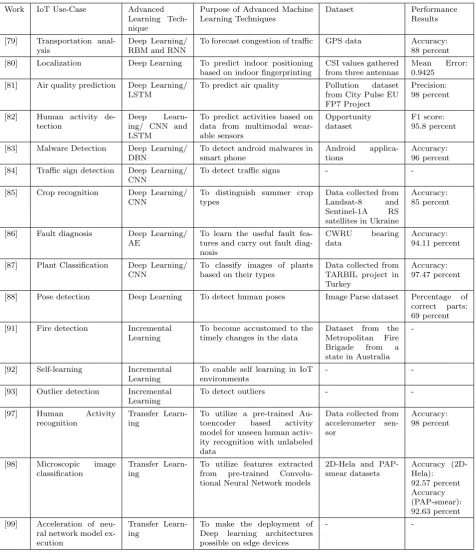
Deep learning is a representation learning approach that utilizes a hierarchical learning process to mine rep-resentations from data by making use of several hidden layers with non-linear transformations [78]. It offers an exemplary solution for various classification and recognition tasks as it encapsulates various levels of abstraction. It is appropriate for modeling complex behaviours of diverse datasets. Deep learning consists of diverse archi-tectures including Restricted Boltzmann Machine (RBM), Deep Belief Network (DBN), Convolutional Neural Network (CNN), Recurrent Neural Network (RNN), Long Short Term Memory (LSTM), Auto-Encoder (AE) etc. RBM and DBN capture high-level representations of input data in an unsupervised manner. CNN works exceptionally well with image data. RNN and LSTM are utilized for time series forecasting. AEs are utilized for dimensionality reduction of high dimensional data. Deep learning models have been utilized in numerous IoT use-cases including transportation analysis [79], localization [80], air quality prediction [81], human activity detection [82], malware detection [83], traffic sign detection [84], crop recognition [85], fault diagnosis [86], plant classification [87], pose detection [88], etc.
Incremental learning means real-time learning. It is appropriate for the scenarios where data arrive over time in a sequential fashion [20, 89]. By means of their sequential treatment, these learning settings offer an elegant inferencing scheme for processing big data. To make upcoming learning and data analytics effective and beneficial, data-rigorous use cases demand that the learning algorithms should have the ability of performing incremental learning so that knowledge base is built over time [90]. Examples of IoT use-cases that utilized incremental learning include fire detection [91], self learning [92], outlier detection [93], etc.
Transfer learning is mostly useful for scenarios with limited datasets. It is a machine learning approach in which the learning parameters of a modeled predictive task are exploited to improve generalization in a different but related problem with limited data [94, 95, 96]. Transfer learning ensures better performance by saving time while modeling a predictive problem. Given the massive resource requirements of deep learning models on large and challenging datasets, transfer learning is admired in deep learning. Transfer learning involves the following steps:
1. Select a related source task: A related predictive modeling problem with ample amount of data is chosen.
2. Develop a model for the chosen source task.
3. The model developed for the source task is then used as a starting point for developing a model on the actual task.
4. Tune model.
Examples of IoT use-cases that harnessed transfer learning include human activity recognition [97], micro-scopic image classification [98], acceleration of neural network model execution [99], etc.
Table 4.3 presents the purpose of advanced machine learning techniques in the IoT use-cases mentioned in this sub-section.
4.4. Dimensionality Reduction Techniques. Data pre-processing is a vital step for effectual machine learning and data mining. Most machine learning, time series forecasting, and data mining techniques may not be effective for high dimensional data. Dimensionality means the number of attributes in the input data instances of a dataset. When the number of attributes in the input data instances is very huge as opposed to the number of instances in the dataset, certain algorithms struggle to train effective and efficient models. This anomaly is known as the Curse of Dimensionality [100]. To combat this curse of Dimensionality phenomenon, data downsizing techniques have been designed. These techniques are broadly classified into two types: Feature Selection and Feature Extraction.
Feature extraction techniques create a new, smaller set of features that are able to capture most of the useful information [101]. These techniques consist of Principal Component Analysis (PCA), Linear Discriminant Analysis (LDA), and AEs.
Table 4.3
Purpose of Advanced Machine Learning in IoT use-cases.
Work IoT Use-Case Advanced Learning Tech-nique
Purpose of Advanced Machine Learning Techniques
Dataset Performance Results
[79] Transportation anal-ysis
Deep Learning/ RBM and RNN
To forecast congestion of traffic GPS data Accuracy: 88 percent [80] Localization Deep Learning To predict indoor positioning
based on indoor fingerprinting
CSI values gathered from three antennas
Mean Error: 0.9425 [81] Air quality prediction Deep Learning/
LSTM
To predict air quality Pollution dataset from City Pulse EU FP7 Project
Precision: 98 percent
[82] Human activity de-tection
Deep Learn-ing/ CNN and LSTM
To predict activities based on data from multimodal wear-able sensors
Opportunity dataset
F1 score: 95.8 percent
[83] Malware Detection Deep Learning/ DBN
To detect android malwares in smart phone
Android applica-tions
Accuracy: 96 percent [84] Traffic sign detection Deep Learning/
CNN
To detect traffic signs -
-[85] Crop recognition Deep Learning/ CNN
To distinguish summer crop types
Data collected from Landsat-8 and Sentinel-1A RS satellites in Ukraine
Accuracy: 85 percent
[86] Fault diagnosis Deep Learning/ AE
To learn the useful fault fea-tures and carry out fault diag-nosis
CWRU bearing data
Accuracy: 94.11 percent
[87] Plant Classification Deep Learning/ CNN
To classify images of plants based on their types
Data collected from TARBIL project in Turkey
Accuracy: 97.47 percent
[88] Pose detection Deep Learning To detect human poses Image Parse dataset Percentage of correct parts: 69 percent [91] Fire detection Incremental
Learning
To become accustomed to the timely changes in the data
Dataset from the Metropolitan Fire Brigade from a state in Australia
-[92] Self-learning Incremental Learning
To enable self learning in IoT environments
-
-[93] Outlier detection Incremental Learning
To detect outliers -
-[97] Human Activity recognition
Transfer Learn-ing
To utilize a pre-trained Au-toencoder based activity model for unseen human activ-ity recognition with unlabeled data
Data collected from accelerometer sen-sor
Accuracy: 98 percent
[98] Microscopic image classification
Transfer Learn-ing
To utilize features extracted from pre-trained Convolu-tional Neural Network models
2D-Hela and PAP-smear datasets Accuracy (2D-Hela): 92.57 percent Accuracy (PAP-smear): 92.63 percent [99] Acceleration of
neu-ral network model ex-ecution
Transfer Learn-ing
To make the deployment of Deep learning architectures possible on edge devices
-anomaly detection [106], machine health management [107], etc.
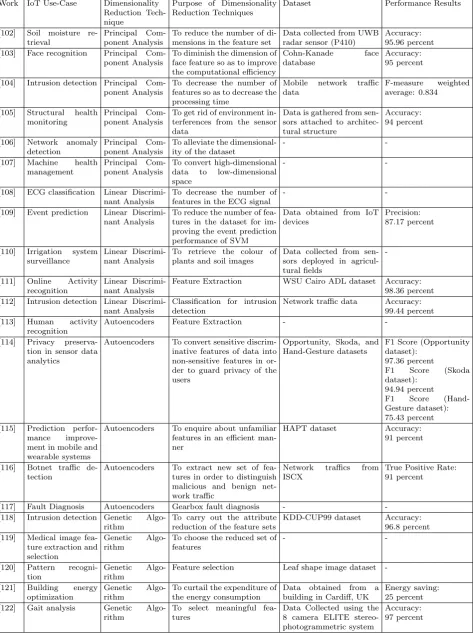
LDA also generates linear combinations of original attributes. However, contrary to PCA, LDA doesn’t maximize the explained variance. Rather, it augments the separability between classes. Examples of IoT use-cases that implemented LDA include ECG classification [108], event prediction [109], irrigation system surveillance [110], online activity recognition [111], intrusion detection [112], etc.
AEs are neural networks that are trained to regenerate their original inputs. The idea is to structure the hidden layer to have lesser neurons than the input/output layers. With the result, the hidden layer learns to build a smaller representation of the input. Examples of IoT use-cases that utilized AEs include human activity recognition [113], privacy preservation in sensor data analytics [114], prediction performance improvement in sensor and wearable systems [115], botnet traffic detection [116], fault diagnosis [117], etc.
Feature selection techniques filter irrelevant or redundant features from the dataset. These techniques include Genetic Algorithms. Genetic Algorithm accomplishes supervised feature selection. It efficiently selects features from high dimensional data sets where exhaustive search is not feasible. Examples of IoT use-cases that have utilized genetic algorithm include intrusion detection [118], medical image feature extraction and selection [119], pattern recognition [120], building energy optimization [121], gait analysis [122], etc.
Table 4.4 presents the purpose of dimensionality reduction techniques in IoT use-cases mentioned in this sub-section.
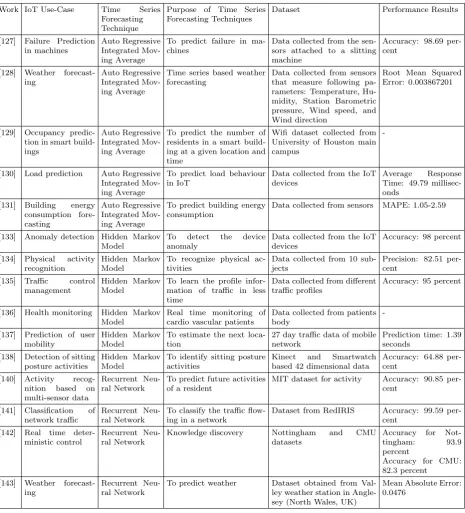
4.5. Time Series Forecasting. Most of the data produced by IoT devices are time-indexed [123]. And analyzing such data to extract relevant features, predict future instances, and to explore the relationship between multiple data streams is the main aim of time series modeling [124,125]. Time series data exhibit the property of autocorrelation i.e., the current value in the time series is correlated with the past values. In linear models, the current value depends linearly on the past observations while as in nonlinear models, the current value is a nonlinear function of past values. If the properties of a stochastic process fluctuate with time, it is hard to forecast the future values from its observed time series, this phenomenon is known as non-stationarity. Time series modeling techniques include Auto-Regressive Integrated Moving Average (ARIMA), Hidden Markov Model (HMM) and Recurrent Neural Network (RNN).
ARIMA is an extension of Auto-Regressive Moving Average [126]. Both of these techniques are used to forecast future instances in the series. However, ARMA cannot be applied in scenarios where data exhibit non-stationarity. In order to combat this problem, ARIMA was proposed. Since ARIMA is inherently linear, it is not able to model complex data patterns as opposed to approaches like HMM and RNN. ARIMA has been applied in various IoT use-cases including failure prediction in machines [127], weather forecasting [128], occupancy prediction in smart buildings [129], load prediction [130], building energy consumption forecasting [131], etc.
HMM is eminent for its competence in modeling short-term dependencies between adjoining observations. However, it is not suitable for scenarios with long-term dependencies [132]. Examples of IoT use-cases that have employed HMM include anomaly detection [133], physical activity recognition [134], traffic control management [135], health monitoring [136], prediction of user mobility [137], detection of sitting posture activities [138], etc. RNN and its variants are highly effective in modeling sequences with complex structures because of the following reasons:
• They can extract patterns in time series data with long time lags.
• They are Robust to noise and can perform prediction in the presence of missing values.
• They are inherently non-linear which makes them suitable for modeling complex data patterns. • They provide support for multi-variate and multi-step forecasting.
RNN suffers from vanishing/exploding gradient problem [139] due to which its performance gets degraded significantly while modeling long input sequences. To overcome this problem Long Short-Term Memory (LSTM), a variant of RNN was designed, that works exceptionally well for long input sequences. Examples of IoT use-cases that have used RNN include activity recognition based on multi-sensor data [140], network traffic classification [141], real-time deterministic control [142], weather forecasting [143], etc.
Table 4.4
Purpose of Dimensionality Reduction in IoT use-cases.
Work IoT Use-Case Dimensionality Reduction Tech-nique
Purpose of Dimensionality Reduction Techniques
Dataset Performance Results
[102] Soil moisture re-trieval
Principal Com-ponent Analysis
To reduce the number of di-mensions in the feature set
Data collected from UWB radar sensor (P410)
Accuracy: 95.96 percent [103] Face recognition Principal
Com-ponent Analysis
To diminish the dimension of face feature so as to improve the computational efficiency
Cohn-Kanade face database
Accuracy: 95 percent
[104] Intrusion detection Principal Com-ponent Analysis
To decrease the number of features so as to decrease the processing time
Mobile network traffic data
F-measure weighted average: 0.834
[105] Structural health monitoring
Principal Com-ponent Analysis
To get rid of environment in-terferences from the sensor data
Data is gathered from sen-sors attached to architec-tural structure
Accuracy: 94 percent
[106] Network anomaly detection
Principal Com-ponent Analysis
To alleviate the dimensional-ity of the dataset
-
-[107] Machine health management
Principal Com-ponent Analysis
To convert high-dimensional data to low-dimensional space
-
-[108] ECG classification Linear Discrimi-nant Analysis
To decrease the number of features in the ECG signal
-
-[109] Event prediction Linear Discrimi-nant Analysis
To reduce the number of fea-tures in the dataset for im-proving the event prediction performance of SVM
Data obtained from IoT devices
Precision: 87.17 percent
[110] Irrigation system surveillance
Linear Discrimi-nant Analysis
To retrieve the colour of plants and soil images
Data collected from sen-sors deployed in agricul-tural fields
-[111] Online Activity recognition
Linear Discrimi-nant Analysis
Feature Extraction WSU Cairo ADL dataset Accuracy: 98.36 percent [112] Intrusion detection Linear
Discrimi-nant Analysis
Classification for intrusion detection
Network traffic data Accuracy: 99.44 percent [113] Human activity
recognition
Autoencoders Feature Extraction -
-[114] Privacy preserva-tion in sensor data analytics
Autoencoders To convert sensitive discrim-inative features of data into non-sensitive features in or-der to guard privacy of the users
Opportunity, Skoda, and Hand-Gesture datasets
F1 Score (Opportunity dataset):
97.36 percent
F1 Score (Skoda dataset):
94.94 percent
F1 Score (Hand-Gesture dataset): 75.43 percent [115] Prediction
perfor-mance improve-ment in mobile and wearable systems
Autoencoders To enquire about unfamiliar features in an efficient man-ner
HAPT dataset Accuracy: 91 percent
[116] Botnet traffic de-tection
Autoencoders To extract new set of fea-tures in order to distinguish malicious and benign net-work traffic
Network traffics from ISCX
True Positive Rate: 91 percent
[117] Fault Diagnosis Autoencoders Gearbox fault diagnosis - -[118] Intrusion detection Genetic
Algo-rithm
To carry out the attribute reduction of the feature sets
KDD-CUP99 dataset Accuracy: 96.8 percent [119] Medical image
fea-ture extraction and selection
Genetic Algo-rithm
To choose the reduced set of features
-
-[120] Pattern recogni-tion
Genetic Algo-rithm
Feature selection Leaf shape image dataset
-[121] Building energy optimization
Genetic Algo-rithm
To curtail the expenditure of the energy consumption
Data obtained from a building in Cardiff, UK
Energy saving: 25 percent [122] Gait analysis Genetic
Algo-rithm
To select meaningful fea-tures
Data Collected using the 8 camera ELITE stereo-photogrammetric system
Table 4.5
Purpose of Time Series Forecasting in IoT use-cases.
Work IoT Use-Case Time Series Forecasting Technique
Purpose of Time Series Forecasting Techniques
Dataset Performance Results
[127] Failure Prediction in machines
Auto Regressive Integrated Mov-ing Average
To predict failure in ma-chines
Data collected from the sen-sors attached to a slitting machine
Accuracy: 98.69 per-cent
[128] Weather forecast-ing
Auto Regressive Integrated Mov-ing Average
Time series based weather forecasting
Data collected from sensors that measure following pa-rameters: Temperature, Hu-midity, Station Barometric pressure, Wind speed, and Wind direction
Root Mean Squared Error: 0.003867201
[129] Occupancy predic-tion in smart build-ings
Auto Regressive Integrated Mov-ing Average
To predict the number of residents in a smart build-ing at a given location and time
Wifi dataset collected from University of Houston main campus
-[130] Load prediction Auto Regressive Integrated Mov-ing Average
To predict load behaviour in IoT
Data collected from the IoT devices
Average Response Time: 49.79 millisec-onds
[131] Building energy consumption fore-casting
Auto Regressive Integrated Mov-ing Average
To predict building energy consumption
Data collected from sensors MAPE: 1.05-2.59
[133] Anomaly detection Hidden Markov Model
To detect the device anomaly
Data collected from the IoT devices
Accuracy: 98 percent
[134] Physical activity recognition
Hidden Markov Model
To recognize physical ac-tivities
Data collected from 10 sub-jects
Precision: 82.51 per-cent
[135] Traffic control management
Hidden Markov Model
To learn the profile infor-mation of traffic in less time
Data collected from different traffic profiles
Accuracy: 95 percent
[136] Health monitoring Hidden Markov Model
Real time monitoring of cardio vascular patients
Data collected from patients body
-[137] Prediction of user mobility
Hidden Markov Model
To estimate the next loca-tion
27 day traffic data of mobile network
Prediction time: 1.39 seconds
[138] Detection of sitting posture activities
Hidden Markov Model
To identify sitting posture activities
Kinect and Smartwatch based 42 dimensional data
Accuracy: 64.88 per-cent
[140] Activity recog-nition based on multi-sensor data
Recurrent Neu-ral Network
To predict future activities of a resident
MIT dataset for activity Accuracy: 90.85 per-cent
[141] Classification of network traffic
Recurrent Neu-ral Network
To classify the traffic flow-ing in a network
Dataset from RedIRIS Accuracy: 99.59 per-cent
[142] Real time deter-ministic control
Recurrent Neu-ral Network
Knowledge discovery Nottingham and CMU datasets
Accuracy for Not-tingham: 93.9 percent
Accuracy for CMU: 82.3 percent
[143] Weather forecast-ing
Recurrent Neu-ral Network
To predict weather Dataset obtained from Val-ley weather station in Angle-sey (North Wales, UK)
Mean Absolute Error: 0.0476
Table 4.6
Distinction between Cloud Computing and Fog Computing
Features Cloud computing Fog computing References
Size Server extremely large in size Servers small in size [151] Computational
Ca-pacity
Huge Limited [18]
Applications Appropriate for delay-tolerant and computationally exhaustive implementations
Appropriate for delay-critical appli-cations requiring minimal latency, real-time treatment
[18,151]
Communication Overhead
High, as devices are connected to the internet during the whole pe-riod
Low, because devices can acquire cached contents straight from edge gateway
[18]
Deployment Demands composite installation planning
Require ad-hoc installation with no or slight drafting
[18,151]
Operation Operate in environments fully guarded by cloud operators
Usually, operate in scenarios that are mainly determined by requirements of customers
[151]
Location Centralized Distributed over the large geograph-ical area
[151]
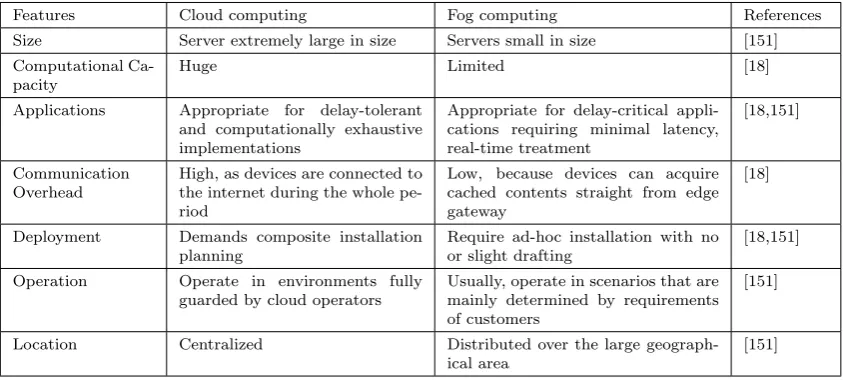
closer to the data source. This technology is referred to as Fog computing [147]. With the result network congestion is reduced and decision-making becomes fast. However, these fog devices generally do not have adequate storage and computational resources. Table 4.6 provides the comparison of these computing platforms. Examples of IoT use-cases that utilized cloud computing as the computing platform include industrial IoT big learning [148], hybrid systems for smart agriculture [149], disease diagnosis [150], disease prevention in precision agriculture [151], temperature control systems [152] etc.
Examples of IoT use-cases that harnessed fog computing as the computing platform include preventive healthcare and assisted living in smart ambient [153], video surveillance [154], asset provisioning for crowd sensing applications in IoT [155], crime assistance [156], data analytics in smart cities using big data [157], etc. [155] proposed a fog based computing scheme known as Mist computing that provides cost-effective resource provisioning for IoT crowd sensing applications.
Apart from cloud computing and fog computing, another emerging computing paradigm known as crowd computing can be utilized for managing the data produced by IoT systems. In crowd computing, IoT devices deployed close to each other and with related interests can share computing and power resources so as to optimize the performance of the IoT systems [158]. Crowd computing has got a massive potential in IoT applications.
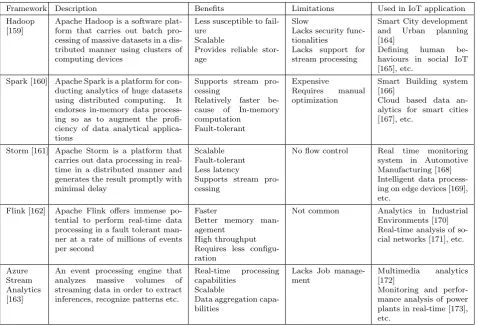
4.7. Big Data Analytical Frameworks. This section explores the big data analytical frameworks that can be utilized for analyzing humongous volumes of data produced from IoT environments. Applying the right data analytical framework is fundamental for the successful development of an IoT application. Depending on the analytical requirements of IoT application, data analytics can be performed either in Cloud or near the IoT data source (Fog nodes). Table 4.7 summarizes big data analytical frameworks.
4.8. Software Defined Networking. Software Defined Networking (SDN) is a novel technology that simplifies network administration by segregating the control plane from the data plane, thereby centralizing the network intelligence [174]. It enables virtualization within the network and enhances networking capability. SDN fulfils following fundamental requisites of IoT applications:
Table 4.7
Big Data Analytical Frameworks
Framework Description Benefits Limitations Used in IoT application
Hadoop [159]
Apache Hadoop is a software plat-form that carries out batch pro-cessing of massive datasets in a dis-tributed manner using clusters of computing devices
Less susceptible to fail-ure
Scalable
Provides reliable stor-age
Slow
Lacks security func-tionalities
Lacks support for stream processing
Smart City development and Urban planning [164]
Defining human be-haviours in social IoT [165], etc.
Spark [160] Apache Spark is a platform for con-ducting analytics of huge datasets using distributed computing. It endorses in-memory data process-ing so as to augment the profi-ciency of data analytical applica-tions
Supports stream pro-cessing
Relatively faster be-cause of In-memory computation
Fault-tolerant
Expensive
Requires manual optimization
Smart Building system [166]
Cloud based data an-alytics for smart cities [167], etc.
Storm [161] Apache Storm is a platform that carries out data processing in real-time in a distributed manner and generates the result promptly with minimal delay
Scalable Fault-tolerant Less latency
Supports stream pro-cessing
No flow control Real time monitoring system in Automotive Manufacturing [168] Intelligent data process-ing on edge devices [169], etc.
Flink [162] Apache Flink offers immense po-tential to perform real-time data processing in a fault tolerant man-ner at a rate of millions of events per second
Faster
Better memory man-agement
High throughput Requires less configu-ration
Not common Analytics in Industrial Environments [170] Real-time analysis of so-cial networks [171], etc.
Azure Stream Analytics [163]
An event processing engine that analyzes massive volumes of streaming data in order to extract inferences, recognize patterns etc.
Real-time processing capabilities
Scalable
Data aggregation capa-bilities
Lacks Job manage-ment
Multimedia analytics [172]
Monitoring and perfor-mance analysis of power plants in real-time [173], etc.
4.8.2. Efficient resource utilization. Efficient resource utilization is fundamental for improving the performance of the network [175]. SDN relieves the simpler edge devices from accomplishing the multifaceted networking tasks and utilizes the available resources efficiently [174].
4.8.3. Energy Management. Massive number of data centers are deployed to process the humongous magnitude of data sensed by IoT devices. Consequently, large quantity of energy is utilized to power these data centers. SDN plays an important role in optimizing the energy usage as it maps the traffic efficiently to the suitable servers and switches off the other unnecessary devices in the data center [175].
4.8.4. Security and Privacy. The utilization of flow-rule-based traffic forwarding concept in SDN facil-itates secure control of flows between the various devices in the network, which in turn improves the security and privacy of the data generated by IoT devices [175].
SDN has been applied in numerous IoT use-cases including efficient traffic management for emergency situations [176], intrusion detection [177], service delivery [178], traffic congestion avoidance [179], dynamic distribution of IoT analytics and effective utilization of network resources [180], low latency anomaly detection in smart city [181], etc.
5. Vision and Open Challenges. Data analytics has brought considerable benefits to IoT applications. However, in order to leverage the full potential of data analytics in IoT applications, following major challenges need to be addressed:
constrained nature of IoT sensors and intermittent loss of connectivity, the massive scale of IoT data contains more irregularities and uncertainties, thereby complicating data pre-processing. Moreover, IoT data may contain missing and incomplete values that lead to poor data quality. Ensuring completeness in IoT data is vital for its data quality. Efficient pre-processing techniques that can remove irregularities and uncertainties in the data and make it suitable for further processing should be researched.
5.2. Data compression and redundancy reduction. Not all the data generated from IoT environments are useful. Also, there exists a high level of redundancy in IoT data. The closely deployed sensor nodes in IoT tend to capture similar information that leads to redundancy in IoT data. Redundant data not only lead to energy wastage but also dissipate the storage space. Moreover, it also affects the feature extraction process. Hence, removing redundancy in IoT data and ensuring its uniqueness is crucial for its data quality. Effective data compression and redundancy reduction techniques need to be employed so as to alleviate the burden of storage and analytics in such systems.
5.3. Data Integration. How to integrate and analyze heterogeneous data arriving from distributed and diverse sources so that a unified view of these diverse data formats is created is an impediment to IoT data analytics. Deep learning is quite effective in analyzing heterogeneous data. However, the severe resource requirements of deep learning algorithm limit its use in IoT applications. Hence, investigating the ways that will reduce the computational requirements of deep learning models becomes crucial. However, this should be done while preserving the accuracy of deep learning models.
5.4. Visualization. Data visualization aims to make data more meaningful for further analysis and inter-pretation. However, inappropriate data visualization will diminish the significance of the original data and may even thwart efficient data analysis. Orchestrating visualization in IoT data is complex because of its massive scale. Moreover, visualization in case of highly heterogeneous and diverse IoT environments is a challenging task. Given the importance of appropriate data visualization, devising visualization techniques that are well-suited for the representation of highly complex IoT data becomes crucial.
5.5. Expandability and scalability. The sharply growing IoT data bring in the challenges of expand-ability and scalexpand-ability for the IoT analytical systems. Analytical paradigms that are proficient enough to deal with progressively growing complex datasets are highly required. Running analytical techniques on distributed systems with parallel processing is the potential solution for this problem.
5.6. Energy management. With the exponential growth of IoT data, transmission, storage, processing and analysis of such enormous data will certainly dissipate more energy. Energy consumption control and management solutions should be designed for such systems.
5.7. Security and Privacy. Data generated from IoT environs are susceptible to external intervention. Hence, Authentication, authorization, and encryption techniques should be utilized to ensure security of IoT systems. However, conventional data protection solutions are not applicable to the IoT data because of its massive scale and highly diverse nature. To this purpose, design of novel Security and Privacy solutions for such systems becomes inevitable.
REFERENCES
[1] M. Ge, H. Bangui, and B. Buhnova, Big data for internet of things: A survey, Future Generation Computer Systems, Elsevier, 2018.
[2] Gerd Kortuem, Daniel Fitton, and Vasughi Sundramoorth,Smart Objects as Building Blocks for the Internet of Things, IEEE Internet Computing, January/February, pp.44-51, 2010.
[3] Yunchuan Sun, Houbing Song, Antonio J. Jara, and Rongfang Bie, Internet of Things and Big Data Analytics for Smart and Connected Communities, IEEE Access, Vol. 14, No. 8, 2015.
[4] Mohsen Marjani, Fariza Nasaruddin, Abdullah Gani, Ahmad Karim, Ibrahim Abaker Targio Hashem, and Aisha Siddiqa,Ibrar Yaqoob, Big IoT Data Analytics: Architecture, Opportunities, and Open Research Challenges, IEEE Access, Vol. 5, pp. 5247-5261, 2016.
[5] Amy Nordrum,Popular Internet of Things Forecast of 50 Billion Devices by 2020 Is Outdated, https://spectrum.ieee.org/tech-talk/telecom/internet/popular-internet-of-things-forecast-of-50-billion-devices-by-2020-is-outdated, 2016.
[6] S. Yin, and O. Kaynak,Big data for modern industry: Challenges and trends, Proceedings of IEEE, Vol. 103, No. 2, pp. 143-146, 2015.
[7] Han Hu, Yonggang Wen, Tat-Seng Chua, and Xuelong Li,Toward scalable systems for big data analytics: A technology tutorial, IEEE Access, Vol. 2, pp. 652687, 2014.
[8] Simmhan Y., and Perera S.,Big Data Analytics Platforms for Real-Time Applications in IoT, Big Data Analytics, Springer, New Delhi, pp. 115-135, 2016.
[9] Eugene Siow, Thanassis Tiropanis, and Wendy Hall.,Analytics for the Internet of Things: A survey, ACM Computing Surveys (CSUR) Vol. 1, No. 1, 2018.
[10] Ejaz Ahmed, Ibrar Yaqoob, Ibrahim Abaker Targio Hashem, Imran Khan, Abdelmuttlib Ibrahim Abdalla Ahmed, Muhammad Imran, and Athanasios V. Vasilakos, The role of big data analytics in Internet of Things, Computer Networks, Elsevier, Vol. 129, pp. 459-471, 2017.
[11] Meng Ma, Ping Wang, and Chao-Hsien Chu, Data Management for Internet of Things: Challenges, Approaches and Opportunities, International Conference on Green Computing and Communications and IEEE Internet of Things and IEEE Cyber, Physical and Social Computing, IEEE, pp. 1144-1151, 2013.
[12] Tingli Li, Yang Liu, Ye Tian, Shuo Shen, and Wei Mao,A Storage Solution for Massive IoT Data Based on NoSQL, International Conference on Green Computing and Communications, Conference on Internet of Things, and Conference on Cyber, Physical and Social Computing, IEEE, Besancon, France , pp. 50-57, 2012.
[13] M. Chen, S. Mao, and Y. Liu,Big Data: A Survey, Mobile Networks and applications, Springer, Vol. 19, pp. 171-209, 2014. [14] Mervat Abu-Elkheir, Mohammad Hayajneh, and Najah Abu Ali,Data Management for the Internet of Things: Design
Primitives and Solution, Sensors, Vol. 13, pp. 15582-15612, 2013.
[15] Shikhar Verma, Yuichi Kawamoto, Zubair Md. Fadlullah, Hiroki Nishiyama, and Nei Kato,A Survey on Network Methodologies for Real-Time Analytics of Massive IoT Data and Open Research Issues, IEEE Communications Surveys and Tutorials, Vol. 19, No. 3, pp. 1457-1477, 2016.
[16] Sai Xie, and Zhe Chen, Anomaly Detection and Redundancy Elimination of Big Sensor Data in Internet of Things, https://arxiv.org/abs/1703.03225, 2017.
[17] Hongming Cai, Boyi Xu, Lihong Jiang, and Athanasios V. Vasilakos,IoT-based Big Data Storage Systems in Cloud Computing: Perspectives and Challenges, IEEE Internet of Things Journal, Vol. 4, No. 1, pp. 75-87, 2016.
[18] Chun-Wei Tsai, Chin-Feng Lai, Ming-Chao Chiang, and Laurence T. Yang,Data Mining for Internet of Things: A Survey, IEEE Communications Surveys and Tutorials, Vol. 16, No. 1, pp. 77-97, 2014.
[19] Furqan Alam, Rashid Mehmood, Iyad Katib, and Aiiad Albeshri,Analysis of Eight Data Mining Algorithms for Smarter Internet of Things (IoT), International Workshop on Data Mining in IoT Systems, Procedia Computer Science, Elsevier, 2016.
[20] Shree Krishna Sharma, and Xianbin Wang,Live Data Analytics With Collaborative Edge and Cloud Processing in Wireless IoT Networks, IEEE Access, Vol. 5, pp. 4621-4635, 2017.
[21] Mehdi Mohammadi, Ala Al-Fuqaha, Sameh Sorour, and Mohsen Guizani,Deep Learning for IoT Big Data and Streaming Analytics: A Survey, IEEE Communications Surveys and Tutorials, 2018.
[22] Albert Malama, Lilias Makashini, Henry Abanda, Austine Ngombe, and Priscilla Mudenda,A Comparative Analysis of Energy Usage and Energy Efficiency Behavior in Low- and High-Income Households: The Case of Kitwe, Zambia, Resources, Vol. 4, pp. 871-902, 2015.
[23] Lszl Lengyel, Pter Ekler, Tams Ujj, Tams Balogh, and Hassan Charaf,SensorHUB: An IoT Driver Framework for Supporting Sensor Networks and Data Analysis, International Journal of Distributed Sensor Networks, 2015.
[24] Min Chen, Yixue Hao, Kai Hwang, Lu Wang, and Lin Wang,Disease Prediction by Machine Learning Over Big Data From Healthcare Communities, IEEE Access, Vol. 5, pp. 8869-8879, 2017.
[25] Antorweep Chakravorty, Chunming Rong, Pal Evensen, and Tomasz Wiktor Wlodarczyk,A Distributed Gaussian-Means Clustering Algorithm for Forecasting Domestic Energy Usage, proceedings of SMARTCOMP, IEEE, China, 2014. [26] J.C. O’Brien, J.R. Leech, C.C. Wright, C.R. Reeves, N.C. Steele, and C.Y. Choi,Neural Networks for early prediction of machine failure, Colloquium on Advanced Vibration Measurements, Techniques and Instrumentation for the early prediction of failure, IEEE, UK, 1992.
[27] Aaron Waibel, Abdullah Ali Alshehri, Soundararajan Ezekiel,Anomaly Prediction in Seismic Signals Using Neural Networks, Proceedings of Applied Imagery Pattern Recognition Workshop, IEEE, USA, 2013.
[29] River Logic, 10 Use Cases for Prescriptive Analytics in Healthcare, https://blog.riverlogic.com/infographic-10-use-cases-prescriptive-analytics-in-healthcare, 2016.
[30] Muhammad Raisul Alam, Mamun Bin Ibne Reaz, and Mohd Alauddin Mohd Ali, A Review of Smart HomesPast, Present, and Future, IEEE Transactions On Systems, Man, And CyberneticsPart C: Applications And Reviews, Vol. 42, No. 6, pp. 1190-1203, 2012.
[31] Stephanie B. Baker, Wei Xiang, and Ian Atkinson,Internet of Things for Smart Healthcare: Technologies, Challenges, and Opportunities, IEEE Access, Vol. 5, pp. 26521-26544, 2017.
[32] Baotong Chen, Jiafu Wan, Lei Shu, Peng Li, Mithun Mukherjee, and Boxing Yin,Smart Factory of Industry 4.0: Key Technologies, Application Case, and Challenges, IEEE Access, Vol. 6, pp. 6505-6519, 2017.
[33] Hyoung Seok Kang, Ju Yeon Lee, SangSu Choi, Hyun Kim, Jun Hee Park, Ji Yeon Son, Bo Hyun Kim, and Sang Do Noh,Smart Manufacturing: Past Research, Present Findings, and Future Directions, International Journal Of Precision Engineering And Manufacturing-Green Technology Vol. 3, No. 1, pp. 111-128, 2016.
[34] Luo Qi,Research on Intelligent Transportation System Technologies and Applications, Workshop on Power Electronics and Intelligent Transportation System, IEEE, Guangzhou, China, 2018.
[35] Rabab Hassan, and Ghadir Radman,Survey on Smart Grid, International Conference on Emerging Trends in Engineering, Technology and Science (ICETETS), IEEE, Pudukkottai, India, 2010.
[36] Aqeel-ur-Rehman, and Zubair A. Shaikh,Smart Agriculture, Applications of Modern High Performance Networks, Bentham Science Publishers, pp. 120-129, 2009.
[37] Feng Chen, Pan Deng, Jiafu Wan, Daqiang Zhang, Athanasios V.Vasilakos, and Xiaohui Rong,Data Mining for the Internet of Things: Literature Review and Challenges, International Journal of Distributed Sensor Networks, 2015. [38] M.B.Ibanez, A.Di Serio, D.Villaran, and C.D.Kloos,Experimenting with electromagnetism using augmented reality
Im-pact on flow student experience and educational effectiveness, Computers and Education, Vol.71, pp. 1-13, 2014. [39] L.-f. Kwok,A vision for the development of i-campus, Smart Learning Environments, vol. 2, pp. 112, 2015.
[40] Granados J., Westerlund T., Zheng L., and Zou Z., IoT Platform for Real-Time Multichannel ECG Monitoring and Classification with Neural Networks, Research and Practical Issues of Enterprise Information Systems, CONFENIS 2017, Lecture Notes in Business Information Processing, Springer, Cham, Vol. 310, 2018.
[41] Salha M. Alzahrani,Development of IoT Mining Machine for Twitter Sentiment Analysis: Mining in the Cloud and Results on the Mirror, 15th Learning and Technology Conference, Jeddah, Saudi Arabia, IEEE, 2018.
[42] Sanjay Sareen, Sandeep K. Sood, and Sunil Kumar Gupta,IoT-based cloud framework to control Ebola virus outbreak, J Ambient Intell Human Comput., Springer, Vol. 9, pp. 459-476, 2016.
[43] A. Suresh, R. Udendhran, M. Balamurgan, and R. Varatharajan,A Novel Internet of Things Framework Integrated with Real Time Monitoring for Intelligent Healthcare Environment, Journal of Medical Systems, Springer, Vol. 43, 2019. [44] Viriyavisuthisakul S., Sanguansat P., Toriumi S., Hayashi M., and Yamasaki T.,An Automatic People Counter in Stores
Using a Low-Cost IoT Sensing Platform, Advances in Intelligent Information Hiding and Multimedia Signal Processing, IIH-MSP 2017, Smart Innovation, Systems and Technologies, Springer, Cham, Vol. 81, 2018.
[45] Xiangbo Kong, Zelin Meng, Naoto Nojiri, Yuji Iwahori, Lin Meng, and Hiroyuki Tomiyama,A HOG-SVM based fall detection IoT system for elderly persons using deep sensor, Procedia Computer Science, Vol. 147, pp. 276282, 2019. [46] Der-Chen Huang, Chun-Fu Lin, Chih-Yen Chen, and Jyh-Rou Sze,The Internet Technology for Defect Detection System
with Deep Learning Method in Smart Factory, 4th International Conference on Information Management, IEEE, Oxford, UK, 2018.
[47] AKM Jahangir Alam Majumder, Yosuf Amr ElSaadany, Roger Young Jr., and Donald R.Ucci,An Energy Efficient Wearable Smart IoT System to Predict Cardiac Arrest, Advances in Human-Computer Interaction, Hindawi, 2019. [48] Albert Rego, Alejandro Canovas, Jose M. Jimnez, and Jaime Lloret,An Intelligent System for Video Surveillance in
IoT Environments, IEEE Access, Vol. 6, pp. 31580-31598, 2018.
[49] Amrita A. Joshi, and B.D.Jadhav,Monitoring and Controlling Rice Diseases Using Image Processing Techniques, Interna-tional Conference on Computing, Analytics and Security Trends (CAST), IEEE, 2016.
[50] D.Ganga, and V. Ramachandran,IoT based Vibration Analytics of Electrical Machines, IEEE Internet of Things Journal, 2017.
[51] Serge Thomas, Mickala Bourobou, and Younghwan Yoo,User Activity Recognition in Smart Homes Using Pattern Clustering Applied to Temporal ANN Algorithm, Sensors, Vol. 15, pp. 11953-11971, 2015.
[52] Manish Joshi, Bramah Hazela, and Vineet Singh, An application of IoT on Hungarian database using Data mining Techniques: A collaborative approach, 3rd International Conference on Advances in Computing, Communication and Automation, IEEE, Dehradun, India, 2017.
[53] Xishuang Dong, Lijun Qian, Lei Huang,Short-Term Load Forecasting in Smart Grid: A Combined CNN and K-Means Clustering Approach, International Conference on Big Data and Smart Computing (BigComp), IEEE, 2017.
[54] Alekha Kumar Mishra, Asis Kumar Tripathy, Deepak Puthal, and Laurence T. Yang,Analytical Model for Sybil Attack Phases in Internet of Things, IEEE, Internet of Things Journal, 2018.
[55] John M Dennis, Beverley M Shields, William E Henley, Angus G Jones, and Andrew T Hattersley, Disease progression and treatment response in data-driven subgroups of type 2 diabetes compared with models based on simple clinical features: an analysis using clinical trial data, Lancet Diabetes Endocrinol, 2019.
[56] Prachi Shukla, ML-IDS: A Machine Learning Approach to Detect Wormhole Attacks in Internet of Thing, Intelligent Systems Conference, IEEE, London, UK, 2017.