Post-partum depression in mothers of children under 2 years in military barracks in Lagos, Nigeria
Alero Ann ROBERTS, Chisa Mariam NWORKA, Esther OLUWOLE, Ezekiel Sofela ORIDOTA
Dept of Community Health & Primary Care, Faculty of Clinical Sciences, College of Medicine University of Lagos
Corresponding author: Dr Alero Ann Roberts [email protected]
Abstract
Postpartum depression (PPD) has serious effects on maternal and infant morbidity and mortality. This study aimed to determine the prevalence of postpartum depression in mothers of under-twos in military barracks in Lagos. The Edinburgh Postnatal Depression Scale (EPDS) and a modified version of the General Help-Seeking questionnaire (GHSQ) were administered to 316 mothers of under-twos in 3 of 12 military barracks in Lagos, Nigeria to determine PPD and major depressive events (MDE). Risk of PPD was established at EPDS scores of >12. Good help-seeking practices were ascribed to scores of 20 or more on the GHSQ. Risk of PPD was found in 15.5% of respondents, and good help-seeking in 3.8% and 11.4% for personal/emotional and harming self/baby respectively. Bivariate analysis using Chi square showed statistically significant positive associations between lower scores for EPDS and higher educational levels of respondents, perception of partner support and being in lower wealth quintiles (p<0.05). Use of the EPDS was accepted among mothers of children aged under two years. Opportunities to educate pregnant women and new mothers about PPD using existing social networks, perinatal and infant screening programmes in the barracks can be leveraged upon to improve mental health delivery as part of maternity care. (200)
Key words: Postpartum depression, Edinburgh Postpartum Depression Scale, general help-seeking, mothers, military barracks
1 Introduction
Postpartum depression (PPD) is a common mental health problem associated with numerous medical and psychosocial problems in both mother and child.[1] PPD meets the criteria of the Diagnostic and Statistical Manual of Mental Disorders, Fourth Edition (DSM-IV) for depression with incidence rate of 11 to 42% varying from one population to another.[2] PPD is contrary to the condition called ‘maternity blues’, which is a common, benign, transitory condition occurs in a few days after delivery with incidence ranging from 30 – 80 %.[3,4] Postpartum depression occurs between one week and one month following childbirth and disturbs the maternal bond with the baby, with associated risk to baby’s development and wellbeing.[5,6] Studies show an increasing prevalence of childhood illness and stunted cognitive and growth development among infants of depressed mothers.[2,7–9] PPD is associated with poor support from significant partners, financial situations, stressful life events and maternal education.[10–12] The cause of postpartum depression is not well known, however, research has documented association to a variety of endocrinal root causes postpartum thyroid dysfunction, depression or anxiety during pregnancy, stressful recent life experiences, obstetric and pregnancy complications, low self-esteem, negative cognitive attributions, single marital status, poor relationship with partner and lower socioeconomic status including income.[13,14] Depressed mothers are more likely to stop breast feeding before the end of the sixth month compared to non-depressed mothers. Infants of depressed mothers are also more likely to have episodes of diarrhoea and other childhood illnesses compared to infants of non - depressed mothers because of the difficulty in parenting resulting in neglect of baby hygiene and infection which may lead to cases of diarrhoea and other illnesses in infants.[15]
The prevalence of major depressive events (MDE) have been documented in previous studies and reported to be associated with the use of substances harmful to both foetus and baby [16– 18] although the evidence whether major depressive events in the peri-partum period are somehow different from what obtains in non-pregnant women is not clear. However, systematic review of literature reported a strong association between MDE and other psychiatric conditions in the peri-partum period compared to non-pregnant women.[18] The Edinburgh Postnatal Depression Scale (EPDS) is a standardized self–reported questionnaire, used to identify women who have PPD. Scores of 13 or more indicate a higher risk of PPD. [19,20] EPDS is widely used because it is brief, free and available in 23 different languages and it is specifically designed for community sampling, however, there is still a lot of debate about the best cut-off point for measuring depression especially in low and middle income countries (LMICs).[21] Though the sensitivity and specificity varies across languages and cultures, a reasonable cut off for a positive screen in many LMICs is ≥ 13 out of a possible score of 30.[22–29] A study done in Nigeria reported the prevalence of PPD to be 30.6% at an Edinburgh Postnatal Depression scale (EPDS) cut off score of 10 and 15.0% at the higher cut-off score of 13.[30] That study sought to understand the knowledge and attitude of respondents to mental illness as distinct from PPD in postpartum women and found there was poor knowledge of causation with significant proportions of respondents attributing mental illness to use of drugs and alcohol.[30] Management by healthcare practitioners in Lagos was also found to be inadequate in another study which found a prevalence of PPD of 23% at EPDS score of >12 among the women who delivered there.[31]
2 the impact on PPD among women in Saudi Arabia, considered to be more culturally conservative.[33] However, this is an understudied problem in our local context and we sought to determine the prevalence of PPD and general help-seeking behaviour using the Edinburgh Postnatal Depression Scale (EPDS) and a modified version of the General Help-Seeking Questionnaire (GHSQ) adapted to local context.
Methodology
Study background and participant selection
Lagos is home to one of the largest divisions of the Nigerian army that are housed in 12 military barracks located in various parts of the city. This was a descriptive cross-sectional study done among mothers of children aged two years and under. The participants were selected from three out of 12 barracks using multistage sampling. Within each of the barracks, the number of blocks within which women of child-bearing age were determined and formed the sampling frame from which 3 blocks were selected. Within each block, the number of households where mothers of children under 2 years resided were identified and enumerated with the help of the magajias (leaders of the women in each of the 3 barracks) acting as guides. All eligible mothers of children less than 2 years in each of the households within the selected blocks were approached and asked to participate after obtaining informed consent. Only one woman of child-bearing age who fit the selection criteria was interviewed from each of the households. If there was more than one eligible woman, balloting was done to select one. Selected participants were mothers of singletons born healthy in the previous 24 months by spontaneous vaginal delivery, and who had not had any morbidity that required hospital-based care. Administering the questionnaire as an interview was designed to eliminate the differences in comprehension by respondents. Three interviewers were used of which one was on the research team. The two other interviewers had been trained by the researchers to ensure that there was harmony of comprehension in asking the questions.
Sociodemographic characteristics
The sociodemographic characteristics of the women examined were age as at last birthday in years. This was presented as 2 categories above and below 30 years, and the mean age and standard deviation were calculated. Religion was categorised as Christian, Moslem or others. Education of the respondents was recorded as the highest level of education completed and classed as ‘none’, ‘primary’, ‘secondary’, ‘tertiary’, ‘Qur’anic and vocational’. Wealth quintiles were calculated using the Nigeria Demographic & Health Survey (NDHS) indices adapted to the study and classified into 5 quintiles from poorest to richest.[34] The living conditions of the respondents were examined by asking whether they were ‘living with baby’s father’, ‘separated/widowed’ or ‘never married’. Other characteristics were the geo-political zone of origin classified as northern zones (North-east, north-west and north-central) and southern zones (south-south, south-east and south-west).
Maternal and obstetric characteristics
Data on maternal and obstetric characteristics included the parity of the respondents, number of children alive, place of ANC and delivery, whether they suffered illness in pregnancy, quality of ANC (immunizations and IPTp received)
Postpartum depression and major depressive event
3 Edinburgh Postnatal Depression Scale (EPDS) and the General Help Seeking Questionnaire (GHSQ) were adapted to local context and administered to determine the proportion of participants who were at risk of PPD and their GHS respectively. MDE was measured using 8 items that examined feelings of tiredness, emptiness, frustration, libido, isolation, insufficient resources and feelings of inadequacy. Respondents reported they had ‘always’, ‘sometimes’, ‘rarely’ or ‘never’ experienced any of the feelings since having their baby. MDE was classified as present for scores of 9 or more of a total score of 24. Data was analysed using Epi info (ver7) and presented as frequencies and percentages. Risk of PPD was determined for scores of 13 and more using the EPDS, while prevalence of MDE was ascribed to scores of 16 or more.
General help-seeking and postpartum partner support
General help-seeking (GHS) was assessed using the General Help-Seeking Questionnaire adapted for local context, based on responses to 8 questions of whom they were most likely to turn to in situations when they experienced personal/emotional problems or felt like harming themselves or their baby. The informal sources of help listed were ‘husband/baby’s father’, ‘mother/father/sibling’, ‘other blood relative’, ‘close female friend/family member’, ‘teacher/mentor’, and ‘religious leader’. The formal source of help in this local context was restricted to ‘healthcare professional’, as well as the option of ‘no-one’. GHS was assessed as ‘Good’ for scores of 17 or more out of 24, ‘Fair’ for scores between 9 and 16 and ‘Poor’ for scores of 8 or below.
Postpartum partner support was graded on responses to different situational contexts of how their partner supported them. The 16 items were graded on situational contexts as ‘always’, ‘sometimes’, ‘rarely’ and ‘never’; scoring between 0 for ‘never’ to 3 for ‘always’. Overall, postpartum partner support was categorized as ‘Good’ for scores of 33 or more out of 48, ‘Fair’ for scores of 17 to 32 and ‘Poor’ for scores of 16 and less. Bivariate analysis examined associations between the outcome variables and independent variables using Chi square and statistical significance was proven at p<0.05.
Ethical consideration
4 Results
Sociodemographic characteristics
Three hundred and sixteen questionnaires were administered, retrieved and checked for completeness. This yielded a response rate of 100% and all the questionnaires were submitted for analysis. Data was entered into Epi-info version 7.2.1.0 using an IBM-compatible personal computer. The interquartile age range of respondents was 27.0 to 35.0 years with a mean age of 31.1+6.9 years. Almost two-thirds were of the Christian faith (198/316, 62.7%), and had at least secondary education (256/316, 81.0%). Most women lived with the baby’s father (256/316, 81.0%), came from the southern geo-political zones (167/316, 52.8%), and were spouses of serving officers (230/316, 72.8%). Concerning the household composition, majority of women lived in households of 6 or less (261/316, 82.6%), with two or more people employed in 153/316 (48.4%) households. Almost a quarter of the women lived in households with more than 1 child aged under five years (86/316, 27.2%). One hundred and sixty-two women (51.3%) reported household incomes below N70,000 ($230) which translates to less than $1.90 per day. Using the Nigeria Demographic & Health Survey (NDHS) indices adapted to local context, 120/316 (38.0%) of respondents were in the fourth wealth quintile, and none were in the poorest. (Error! Reference source not found.)
Table 1: Characteristics of respondents
Characteristic Frequency (%age)
Age
<30 years 161 (50.9)
30 years and over 155 (49.1)
Religion
Christianity 198 (62.7)
Islam 111 (35.1)
Others 7 (2.2)
Wealth quintile
Richest 49 (15.5)
4 120 (38.0)
3 59 (18.7)
2 88 (27.8)
Poorest 0 (0.0)
Education
None 20 (6.3)
Primary 40 (12.7)
Secondary 122 (38.6)
Tertiary 100 (31.6)
Quranic & Vocational 34 (10.8)
Living conditions
Living with baby’s father 256 (81.0)
Never married 25 (7.9)
Separated/widowed 35 (11.1)
>1 child under-five in household 86 (27.2)
Geopolitical zone of origin
South-east/south-west/south-south 167 (52.8)
5 ANC and birth events
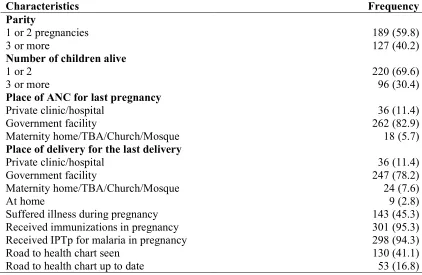
The majority of women registered for antenatal care (ANC) at either a government-run facility (262/316, 82.9%) or a private clinic/hospital (36/316, 11.4%). Of this proportion, the majority also delivered at either a government-run facility (247/316, 79.7%) or a private clinic/hospital (30/316, 9.7%). Almost all the women received tetanus toxoid immunization (301/316, 95.3%) and malaria intermittent preventive therapy (398/316, 94.3%) and 143 women (45.3%) reported illness during pregnancy. At the time of the study, 148 (46.8%) mothers had children less than 1 year, 175 (55.4%) of the index children were males and 130 (41.1%) had road-to-health charts (RTHC) available for inspection, however, only 53 (16.8%) had RTHC up to date. (Error! Reference source not found.)
Table 2: Maternity and obstetric history of respondents
Characteristics Frequency
Parity
1 or 2 pregnancies 189 (59.8)
3 or more 127 (40.2)
Number of children alive
1 or 2 220 (69.6)
3 or more 96 (30.4)
Place of ANC for last pregnancy
Private clinic/hospital 36 (11.4)
Government facility 262 (82.9)
Maternity home/TBA/Church/Mosque 18 (5.7)
Place of delivery for the last delivery
Private clinic/hospital 36 (11.4)
Government facility 247 (78.2)
Maternity home/TBA/Church/Mosque 24 (7.6)
At home 9 (2.8)
Suffered illness during pregnancy 143 (45.3)
Received immunizations in pregnancy 301 (95.3)
Received IPTp for malaria in pregnancy 298 (94.3)
Road to health chart seen 130 (41.1)
Road to health chart up to date 53 (16.8)
Prevalence of PPD and MDE
6 Figure 1: Prevalence of postpartum depression among respondents
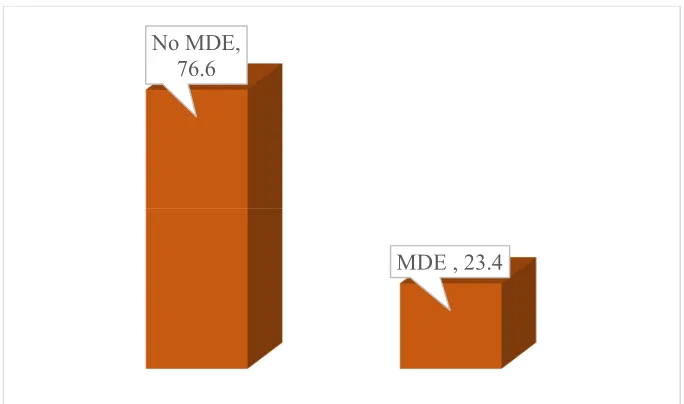
There was a major depressive event reported by 74 (23.4%) respondents. This translates to almost a quarter of respondents reporting that they ‘always’ or ‘sometimes’ experienced a negative post-partum feeling or event. (Error! Reference source not found.) Among the range of post-partum depressive feelings that respondents reported as occurring ‘always’, the largest majority (46/316, 14.6%) reported ‘always’ feeling ‘inadequate to care for their baby’.
Figure 2: Prevalence of a major depressive event among respondents
General help-seeking and postpartum support
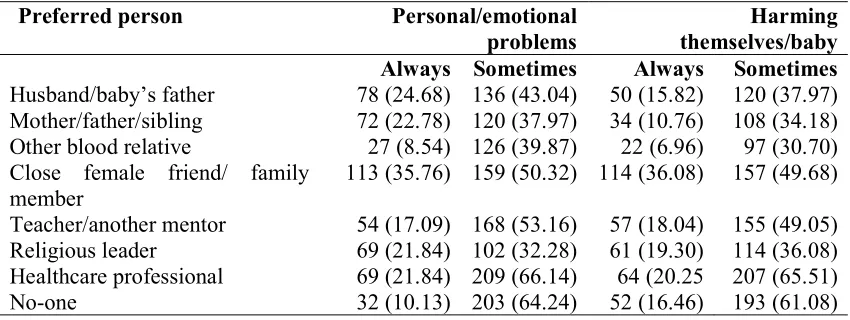
Respondents reported that they would ‘always/sometimes’ turn to a close female friend/family member (272/316, 86.1%) (Error! Reference source not found.). However, 235 (74.3%) would ‘always/sometimes’ not turn to anyone to seek help for personal/emotional problems. A
PPD absent, 84.5 PPD present,
15.5
No MDE, 76.6
7 sizeable number of respondents ‘rarely’ (52/316, 16.5%) or ‘never’ (50/316, 15.8%) turned to the baby’s father for support. Thirty-one (9.8%) respondents reported that they ‘never’ had no-one to turn to for support when they had personal/emotional problems. This is indicative of the proportion of respondents who had a strong social support network. Bivariate analysis showed that they had scored low on the EPDS, indicating an absence of PPD. Respondents were mostly categorized as having ‘fair’ help-seeking practices when they had personal/emotional problems (Error! Reference source not found.). When scored overall, however, only 12 (3.8%) respondents were characterised as having ‘good’ help-seeking practices, scoring 16 and higher with regards to ‘always’ having someone to turn to if they had personal/emotional problems.
Figure 3: General help-seeking score for personal/emotional problems
One hundred and fourteen respondents (36.1%) and 157 (49.7%) would ‘always’ or ‘sometimes’ turn to a ‘close female friend/family member’ respectively, if they felt like harming themselves or the baby. A substantial proportion (130/316, 41.1%) would also not turn to the baby’s father for support. Fifty-two respondents (16.5%) reported that they ‘always’ had no-one to turn to for support. (Error! Reference source not found.)
Table 3: General help-seeking for personal/emotional problems and harming themselves/baby
Preferred person Personal/emotional
problems
Harming themselves/baby Always Sometimes Always Sometimes Husband/baby’s father 78 (24.68) 136 (43.04) 50 (15.82) 120 (37.97) Mother/father/sibling 72 (22.78) 120 (37.97) 34 (10.76) 108 (34.18) Other blood relative 27 (8.54) 126 (39.87) 22 (6.96) 97 (30.70) Close female friend/ family
member 113 (35.76) 159 (50.32) 114 (36.08) 157 (49.68) Teacher/another mentor 54 (17.09) 168 (53.16) 57 (18.04) 155 (49.05) Religious leader 69 (21.84) 102 (32.28) 61 (19.30) 114 (36.08) Healthcare professional 69 (21.84) 209 (66.14) 64 (20.25 207 (65.51) No-one 32 (10.13) 203 (64.24) 52 (16.46) 193 (61.08)
Good, 3.8
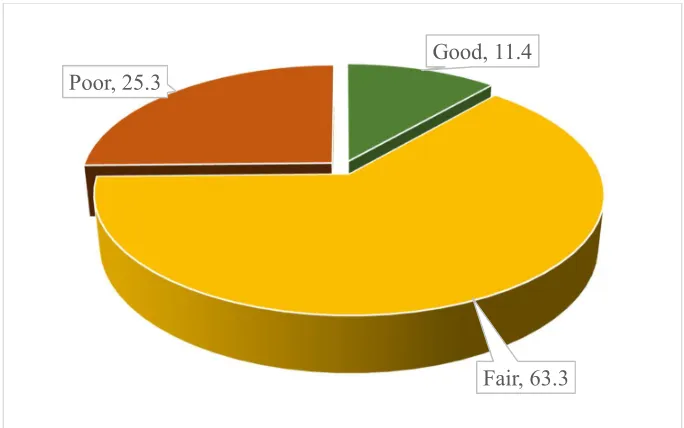
8 Almost two-thirds (200/316, 63.3%) of respondents reported mostly ‘fair’ help-seeking practices when they felt like harming themselves or their baby. Very few respondents (36/316, 11.4%) had ‘good’ help-seeking practices scoring 16 and higher with regards to ‘always’ having someone to turn to if they felt like harming themselves or their baby (Error! Reference source not found.).
Figure 4: General help-seeking score for harming themselves/baby
Respondents reported more frequently that they were ‘always’ or ‘sometimes’ satisfied with the support of their partner. However, the areas where respondents reported that the partner provided little or no support were in the areas of helping in household chores/shopping (67/316, 21.2%) and providing companionship to do other things (61/316, 19.3%). Only 23 respondents (7.3%) reported having ‘good’ post-partum partner support based on the 18 items examined (Error! Reference source not found.).
Good, 11.4
9 Figure 5: Reported partner support score of respondents
Factors associated with of PPD and MDE
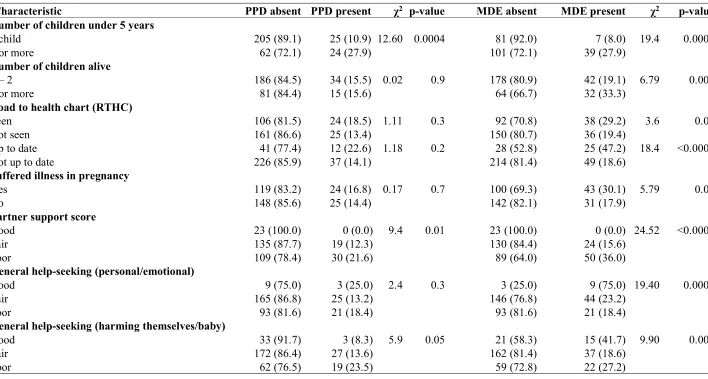
Bivariate analyses of prevalence of PPD and sociodemographic characteristics revealed statistically significant associations. Women more at risk of PPD were aged over 30 years, although there was no statistically significant association (p=0.08). Living with the baby’s father (p=0.02), married to enlisted officers (p=0.04), had tertiary education (p=0.01), hailed from the southern geopolitical zones (p<0.0001), higher wealth quintiles (p=0.03) were all statistically significantly positive associations with having PPD. However, the significant association disappeared when compared for educational level (p=0.7) and geopolitical zone of origin (p=0.5) and presence of an MDE. (Error! Reference source not found.Error! Reference source not found.)
Associations between maternal and obstetric factors and presence of PPD found that women with two or more additional children under five were positively associated with PPD (p=0.0004). PPD was also strongly associated with women who reported poor partner support (p=0.01) and poor general help-seeking (harming themselves/baby) (p=0.05). There were no statistically significant associations with either number of children alive or whether they had suffered illness in pregnancy (p=0.9 and 0.7 respectively). When considering MDE, however, all the maternal, obstetric and support factors had statistically significant associations. Women who reported MDE were significantly likely to have two or more additional children under five (p=0.0001), three or more children alive (p=0.009), suffered illness in pregnancy (p=0.02), report poor partner support (p<0.0001), and poor general help-seeking practices for personal/emotional problems (p=0.0001) or when they felt like harming themselves/baby (p=0.007) (Error! Reference source not found.).
Parity, place of ANC and delivery and quality of ANC were not significantly associated with prevalence of PPD or MDE. Child welfare, which was assessed using the RTHC seen and up to date, was also not associated with either PPD or MDE.
Poor, 44.0 Fair, 48.7
10 Table 4: Socio-demographic correlates of PPD and MDE in respondents
Characteristic PPD absent PPD present χ2 p-value MDE absent MDE present χ2 p-value
Aged <30 years 132 (88.6) 17 (11.4) 3.04 0.08 117 (78.5) 32 (21.5) 0.41 0.5
30 years and over 135 (80.8) 32 (19.2) 125 (74.9) 42 (25.1)
Marital status
Living with baby’s father 210 (82.0) 46 (18.0) 7.84 0.02 188 (73.4) 68 (26.6) 11.7 0.009
Never married 22 (88.0) 3 (12.0) 22 (88.0) 3 (12.0)
Separated & widowed 35 (100.0) 0 (0.0) 32 (91.4) 3 (8.6)
Occupational status
Enlisted officers 239 (84.4) 49 (15.6) 4.41 0.04 214 (74.3) 74 (25.7) 8.02 0.005
Spouses/other relatives 28 (100.0) 0 (0.0) 28 (100.0) 0 (0.0)
Educational level
No education 17 (70.8) 3 (12.5) 13.16 0.011 17 (85.0) 3 (15.0) 1.83 0.7
Primary education only 34 (82.9) 6 (14.6) 30 (75.0) 10 (25.0)
Secondary education 113 (88.3) 9 (7.0) 95 (77.9) 27 (22.1)
Tertiary education 75 (88.2) 25 (29.4) 73 (73.0) 27 (27.0)
Qur’anic/Vocational 28 (73.7) 6 (15.8) 27 (79.4) 7 (20.6)
Geopolitical zone of origin
Northern zones 140 (94.0) 9 (6.0) 17.94 <0.001 111 (74.5) 38 (25.5) 0.48 0.5
Southern zones 127 (76.0) 40 (24.0) 131 (78.4) 36 (21.6)
Wealth quintiles
Lowest* 0 (0.0) 0 (0.0) 0 (0.0) 0 (0.0)
2nd 82 (93.2) 6 (6.8) 9.24 0.03 78 (88.6) 10 (11.4) 17.7 0.00005
3rd 46 (78.0) 13 (22.0) 46 (78.0) 13 (22.0)
4th 96 (80.0) 24 (20.0) 90 (75.0) 30 (25.0)
Highest 43 (87.8) 6 (12.2) 28 (57.1) 21 (42.9)
11 Table 5: Maternal, obstetric and support correlates of PPD and MDE in respondents
Characteristic PPD absent PPD present χ2 p-value MDE absent MDE present χ2 p-value
Number of children under 5 years
1 child 205 (89.1) 25 (10.9) 12.60 0.0004 81 (92.0) 7 (8.0) 19.4 0.0001
2 or more 62 (72.1) 24 (27.9) 101 (72.1) 39 (27.9)
Number of children alive
1 – 2 186 (84.5) 34 (15.5) 0.02 0.9 178 (80.9) 42 (19.1) 6.79 0.009
3 or more 81 (84.4) 15 (15.6) 64 (66.7) 32 (33.3)
Road to health chart (RTHC)
Seen 106 (81.5) 24 (18.5) 1.11 0.3 92 (70.8) 38 (29.2) 3.6 0.06
Not seen 161 (86.6) 25 (13.4) 150 (80.7) 36 (19.4)
Up to date 41 (77.4) 12 (22.6) 1.18 0.2 28 (52.8) 25 (47.2) 18.4 <0.0001
Not up to date 226 (85.9) 37 (14.1) 214 (81.4) 49 (18.6)
Suffered illness in pregnancy
Yes 119 (83.2) 24 (16.8) 0.17 0.7 100 (69.3) 43 (30.1) 5.79 0.02
No 148 (85.6) 25 (14.4) 142 (82.1) 31 (17.9)
Partner support score
Good 23 (100.0) 0 (0.0) 9.4 0.01 23 (100.0) 0 (0.0) 24.52 <0.0001
Fair 135 (87.7) 19 (12.3) 130 (84.4) 24 (15.6)
Poor 109 (78.4) 30 (21.6) 89 (64.0) 50 (36.0)
General help-seeking (personal/emotional)
Good 9 (75.0) 3 (25.0) 2.4 0.3 3 (25.0) 9 (75.0) 19.40 0.0001
Fair 165 (86.8) 25 (13.2) 146 (76.8) 44 (23.2)
Poor 93 (81.6) 21 (18.4) 93 (81.6) 21 (18.4)
General help-seeking (harming themselves/baby)
Good 33 (91.7) 3 (8.3) 5.9 0.05 21 (58.3) 15 (41.7) 9.90 0.007
Fair 172 (86.4) 27 (13.6) 162 (81.4) 37 (18.6)
12
References
1. Shidhaye, P.; Giri, P. Maternal depression: a hidden burden in developing countries. Ann. Med. Health Sci. Res. 2014, 4, 463–5, doi:10.4103/2141-9248.139268.
2. Gelaye, B.; Rondon, M. B.; Araya, R.; Williams, M. A. Epidemiology of maternal depression, risk factors, and child outcomes in low-income and middle-income
countries. Lancet Psychiatry 2016, 3, 973–982, doi:10.1016/S2215-0366(16)30284-X. 3. Chinawa, J. M.; Odetunde, O. I.; Ndu, I. K.; Ezugwu, E. C.; Aniwada, E. C.; Chinawa,
A. T.; Ezenyirioha, U. Postpartum depression among mothers as seen in hospitals in Enugu, South-East Nigeria: an undocumented issue. Pan Afr. Med. J. 2016, 23, doi:10.11604/pamj.2016.23.180.8244.
4. TAKAHASHI, Y.; TAMAKOSHI, K. FACTORS ASSOCIATED WITH EARLY POSTPARTUM MATERNITY BLUES AND DEPRESSION TENDENCY AMONG JAPANESE MOTHERS WITH FULL-TERM HEALTHY INFANTS. Nagoya J. Med. Sci. 2014, 76, 129–138.
5. Mebrahtu, H.; Simms, V.; Chingono, R.; Mupambireyi, Z.; Weiss, H. A.; Ndlovu, P.; Malaba, R.; Cowan, F. M.; Sherr, L. Postpartum maternal mental health is associated with cognitive development of HIV-exposed infants in Zimbabwe: a cross-sectional study. AIDS Care 2018, 1–9, doi:10.1080/09540121.2018.1468015.
6. Surkan, P. J.; Kennedy, C. E.; Hurley, K. M.; Black, M. M. Maternal depression and early childhood growth in developing countries: systematic review and meta-analysis. Bull. World Health Organ. 2011, 89, 608-615E, doi:10.2471/BLT.11.088187.
7. Adewuya, A. O.; Ola, B. A.; Aloba, O. O.; Dada, A. O.; Fasoto, O. O. Prevalence and correlates of depression in late pregnancy among Nigerian women. Depress. Anxiety 2007, 24, 15–21, doi:10.1002/da.20221.
8. Rahman, A.; Iqbal, Z.; Harrington, R. Life events, social support and depression in childbirth: perspectives from a rural community in the developing world. Psychol. Med. 2003, 33, 1161–1167.
9. Wemakor, A.; Mensah, K. A. Association between maternal depression and child stunting in Northern Ghana: a cross-sectional study. BMC Public Health 2016, 16, doi:10.1186/s12889-016-3558-z.
10. Qobadi, M.; Collier, C.; Zhang, L. The Effect of Stressful Life Events on Postpartum Depression: Findings from the 2009–2011 Mississippi Pregnancy Risk Assessment Monitoring System. Matern. Child Health J. 2016, 20, 164–172, doi:10.1007/s10995-016-2028-7.
11. Mukherjee, S.; Coxe, S.; Fennie, K.; Madhivanan, P.; Trepka, M. J. Antenatal Stressful Life Events and Postpartum Depressive Symptoms in the United States: The Role of Women’s Socioeconomic Status Indices at the State Level. J. Womens Health 2002 2017, 26, 276–285, doi:10.1089/jwh.2016.5872.
12. Salm Ward, T.; Kanu, F. A.; Robb, S. W. Prevalence of stressful life events during pregnancy and its association with postpartum depressive symptoms. Arch. Womens Ment. Health 2017, 20, 161–171, doi:10.1007/s00737-016-0689-2.
13. Jones, E.; Coast, E. Social relationships and postpartum depression in South Asia: A systematic review. Int. J. Soc. Psychiatry 2013, 59, 690–700,
doi:10.1177/0020764012453675.
13 15. Brown, A.; Rance, J.; Bennett, P. Understanding the relationship between breastfeeding
and postnatal depression: the role of pain and physical difficulties. J. Adv. Nurs. 2016, 72, 273–282, doi:10.1111/jan.12832.
16. Buttner, M. M.; O’Hara, M. W.; Watson, D. The structure of women’s mood in the early postpartum. Assessment 2012, 19, 247–256, doi:10.1177/1073191111429388. 17. O’Hara, M. W.; Schlechte, J. A.; Lewis, D. A.; Wright, E. J. Prospective study of
postpartum blues. Biologic and psychosocial factors. Arch. Gen. Psychiatry 1991, 48, 801–806.
18. Le Strat, Y.; Dubertret, C.; Le Foll, B. Prevalence and correlates of major depressive episode in pregnant and postpartum women in the United States. J. Affect. Disord. 2011, 135, 128–138, doi:10.1016/j.jad.2011.07.004.
19. Teissedre, F.; Chabrol, H. [A study of the Edinburgh Postnatal Depression Scale (EPDS) on 859 mothers: detection of mothers at risk for postpartum depression]. L’Encephale 2004, 30, 376–381.
20. Alvarado, R.; Jadresic, E.; Guajardo, V.; Rojas, G. First validation of a Spanish-translated version of the Edinburgh postnatal depression scale (EPDS) for use in pregnant women. A Chilean study. Arch. Womens Ment. Health 2015, 18, 607–612, doi:10.1007/s00737-014-0466-z.
21. Shrestha, S. D.; Pradhan, R.; Tran, T. D.; Gualano, R. C.; Fisher, J. R. W. Reliability and validity of the Edinburgh Postnatal Depression Scale (EPDS) for detecting perinatal common mental disorders (PCMDs) among women in low-and lower-middle-income countries: a systematic review. BMC Pregnancy Childbirth 2016, 16,
doi:10.1186/s12884-016-0859-2.
22. Ahmed, H. M.; Alalaf, S. K.; Al-Tawil, N. G. Screening for postpartum depression using Kurdish version of Edinburgh postnatal depression scale. Arch. Gynecol. Obstet. 2012, 285, 1249–1255, doi:10.1007/s00404-011-2165-6.
23. Dindar, I.; Erdogan, S. Screening of Turkish Women for Postpartum Depression Within the First Postpartum Year: The Risk Profile of a Community Sample. Public Health Nurs. 2007, 24, 176–183, doi:10.1111/j.1525-1446.2007.00622.x.
24. Mohammed, E. S.; Mosalem, F. A.; Mahfouz, E. M.; Abd ElHameed, M. A. Predictors of postpartum depression among rural women in Minia, Egypt: an epidemiological study. Public Health 2014, 128, 817–824, doi:10.1016/j.puhe.2014.06.006.
25. El-Hachem, C.; Rohayem, J.; Bou Khalil, R.; Richa, S.; Kesrouani, A.; Gemayel, R.; Aouad, N.; Hatab, N.; Zaccak, E.; Yaghi, N.; Salameh, S.; Attieh, E. Early identification of women at risk of postpartum depression using the Edinburgh Postnatal Depression Scale (EPDS) in a sample of Lebanese women. BMC Psychiatry 2014, 14, 242, doi:10.1186/s12888-014-0242-7.
26. Mehta, S.; Mehta, N. An Overview of Risk Factors Associated to Post-partum Depression in Asia. Ment. Illn. 2014, 6, doi:10.4081/mi.2014.5370.
27. Matijasevich, A.; Munhoz, T. N.; Tavares, B. F.; Barbosa, A. P. P. N.; da Silva, D. M.; Abitante, M. S.; Dall’Agnol, T. A.; Santos, I. S. Validation of the Edinburgh postnatal depression scale (EPDS) for screening of major depressive episode among adults from the general population. BMC Psychiatry 2014, 14, doi:10.1186/s12888-014-0284-x. 28. Matthey, S.; Henshaw, C.; Elliott, S.; Barnett, B. Variability in use of cut-off scores and
formats on the Edinburgh Postnatal Depression Scale: implications for clinical and research practice. Arch. Womens Ment. Health 2006, 9, 309–315, doi:10.1007/s00737-006-0152-x.
14 30. Ukaegbe, C. I.; Iteke, O. C.; Bakare, M. O.; Agbata, A. T. Postpartum Depression
Among Igbo Women In An Urban Mission Hospital, South East Nigeria. Ebonyi Med. J. 2012, 11, 29–36.
31. Owoeye, A. O.; Aina, O. F.; Morakinyo, O. Risk factors of postpartum depression and EPDS scores in a group of Nigerian women. Trop. Doct. 2006, 36, 100–3,
doi:10.1258/004947506776593341.
32. Wilson, C. J.; Deane, F. P.; Ciarrochi, J. V.; Rickwood, D. Measuring help seeking intentions: Properties of the General Help Seeking Questionnaire. 16.
33. Almutairi, A. F.; Salam, M.; Alanazi, S.; Alweldawi, M.; Alsomali, N.; Alotaibi, N. Impact of help-seeking behavior and partner support on postpartum depression among Saudi women. Neuropsychiatr. Dis. Treat. 2017, 13, 1929–1936,
doi:10.2147/NDT.S135680.
34. National Population Commission (NPC) [Nigeria] and ICF International Nigeria
Demographic and Health Survey 2013.; Abuja, Nigeria, and Rockville, Maryland, USA: NPC and ICF International., 2013;
35. Fasola, O.; Abosede, O.; Fasola, F. A. Knowledge, attitude and practice of good
nutrition among women of childbearing age in Somolu Local Government, Lagos State. J. Public Health Afr. 2018, 9, doi:10.4081/jphia.2018.793.
36. Ebeigbe, P. N.; Akhigbe, K. O. Incidence and associated risk factors of postpartum depression in a tertiary hospital in Nigeria. Niger. Postgrad. Med. J. 2008, 15, 15–8. 37. Abiodun, O. A. Postnatal depression in primary care populations in Nigeria. Gen. Hosp.
Psychiatry 28, 133–6, doi:10.1016/j.genhosppsych.2005.11.002.
38. Chaudron, L. H.; Szilagyi, P. G.; Tang, W.; Anson, E.; Talbot, N. L.; Wadkins, H. I. M.; Tu, X.; Wisner, K. L. Accuracy of depression screening tools for identifying postpartum depression among urban mothers. Pediatrics 2010, 125, e609-617,
doi:10.1542/peds.2008-3261.
39. Tandon, S. D.; Cluxton-Keller, F.; Leis, J.; Le, H.-N.; Perry, D. F. A comparison of three screening tools to identify perinatal depression among low-income African American women. J. Affect. Disord. 2012, 136, 155–162,
doi:10.1016/j.jad.2011.07.014.
40. Bass, J. K.; Ryder, R. W.; Lammers, M.-C.; Mukaba, T. N.; Bolton, P. A. Post-partum depression in Kinshasa, Democratic Republic of Congo: validation of a concept using a mixed-methods cross-cultural approach. Trop. Med. Int. Health TM IH 2008, 13, 1534– 1542, doi:10.1111/j.1365-3156.2008.02160.x.
41. Kathree, T.; Selohilwe, O. M.; Bhana, A.; Petersen, I. Perceptions of postnatal depression and health care needs in a South African sample: the “mental” in maternal health care. BMC Womens Health 2014, 14, doi:10.1186/s12905-014-0140-7.
42. Obindo, T. J.; Ekwempu, C. C.; Ocheke, A. N.; Piwuna, C. G.; Adegbe, E. O.; Omigbodun, O. O. Prevalence and correlates of postpartum depression in a teaching hospital in Nigeria. Highl. Med. Res. J. 2013, 13, 71–75.
43. Golbasi, Z.; Kelleci, M.; Kisacik, G.; Cetin, A. Prevalence and correlates of depression in pregnancy among Turkish women. Matern. Child Health J. 2010, 14, 485–491, doi:10.1007/s10995-009-0459-0.
44. Ononokpono, D. N.; Odimegwu, C. O.; Imasiku, E.; Adedini, S. Contextual
determinants of maternal health care service utilization in Nigeria. Women Health 2013, 53, 647–668, doi:10.1080/03630242.2013.826319.
15 46. Dahiru, T.; Oche, O. M. Determinants of antenatal care, institutional delivery and
postnatal care services utilization in Nigeria. Pan Afr. Med. J. 2015, 21, 321, doi:10.11604/pamj.2015.21.321.6527.
47. Nithianandan, N.; Gibson-Helm, M.; McBride, J.; Binny, A.; Gray, K. M.; East, C.; Boyle, J. A. Factors affecting implementation of perinatal mental health screening in women of refugee background. Implement. Sci. IS 2016, 11, doi:10.1186/s13012-016-0515-2.
48. Noonan, M.; Doody, O.; Jomeen, J.; Galvin, R. Midwives’ perceptions and experiences of caring for women who experience perinatal mental health problems: An integrative review. Midwifery 2017, 45, 56–71, doi:10.1016/j.midw.2016.12.010.
49. Marks, L. Overview of challenges to implementation of good practice in perinatal mental health promotion and management, in universal primary care and community services. J. Public Ment. Health 2017, 16, 100–103, doi:10.1108/JPMH-03-2017-0009. 50. Baron, E. C.; Hanlon, C.; Mall, S.; Honikman, S.; Breuer, E.; Kathree, T.; Luitel, N. P.; Nakku, J.; Lund, C.; Medhin, G.; Patel, V.; Petersen, I.; Shrivastava, S.; Tomlinson, M. Maternal mental health in primary care in five low- and middle-income countries: a situational analysis. BMC Health Serv. Res. 2016, 16, 53-016-1291-z.
51. Adewuya, A. O.; Ola, B. O.; Aloba, O. O.; Mapayi, B. M.; Okeniyi, J. A. O. Impact of postnatal depression on infants’ growth in Nigeria. J. Affect. Disord. 2008, 108, 191– 193, doi:10.1016/j.jad.2007.09.013.
52. Patel, V.; DeSouza, N.; Rodrigues, M. Postnatal depression and infant growth and development in low income countries: a cohort study from Goa, India. Arch. Dis. Child. 2003, 88, 34–37, doi:10.1136/adc.88.1.34.
53. Wright, C. M.; Parkinson, K. N.; Drewett, R. F. The influence of maternal
socioeconomic and emotional factors on infant weight gain and weight faltering (failure to thrive): data from a prospective birth cohort. Arch. Dis. Child. 2006, 91, 312–317, doi:10.1136/adc.2005.077750.
54. Black, M. M.; Baqui, A. H.; Zaman, K.; Arifeen, S. E.; Black, R. E. Maternal depressive symptoms and infant growth in rural Bangladesh1234. Am. J. Clin. Nutr. 2009, 89, 951S-957S, doi:10.3945/ajcn.2008.26692E.
55. Grote, V.; Vik, T.; von Kries, R.; Luque, V.; Socha, J.; Verduci, E.; Carlier, C.;
Koletzko, B. Maternal postnatal depression and child growth: a European cohort study. BMC Pediatr. 2010, 10, 14, doi:10.1186/1471-2431-10-14.
56. Hendrick, V.; Smith, L. M.; Hwang, S.; Altshuler, L. L.; Haynes, D. Weight gain in breastfed infants of mothers taking antidepressant medications. J. Clin. Psychiatry 2003, 64, 410–412.
57. Baker-Henningham, H. The effect of early stimulation on maternal depression: a cluster randomised controlled trial. Arch. Dis. Child. 2005, 90, 1230–1234,
doi:10.1136/adc.2005.073015.
58. Heterogeneity of postpartum depression: a latent class analysis. Lancet Psychiatry 2015, 2, 59–67, doi:10.1016/S2215-0366(14)00055-8.
59. Patel, V.; Rahman, A.; Jacob, K. S.; Hughes, M. Effect of maternal mental health on infant growth in low income countries: new evidence from South Asia. BMJ 2004, 328, 820–823.
60. Ransjö-Arvidson, A. B.; Chintu, K.; Ng’andu, N.; Eriksson, B.; Susu, B.; Christensson, K.; Diwan, V. K. Maternal and infant health problems after normal childbirth: a
16 61. Atif, N.; Lovell, K.; Rahman, A. Maternal mental health: The missing “m” in the global
maternal and child health agenda. Semin. Perinatol. 2015, 39, 345–352, doi:10.1053/j.semperi.2015.06.007.
62. Bakare, M. O.; Okoye, J. O.; Obindo, J. T. Introducing depression and developmental screenings into the National Programme on Immunization (NPI) in southeast Nigeria: an experimental cross-sectional assessment. Gen. Hosp. Psychiatry 2014, 36, 105–112, doi:10.1016/j.genhosppsych.2013.09.005.
63. Bakare, M. O.; Bello-Mojeed, M. A.; Munir, K. M.; Duduyemi, O. O.; Orovwigho, A. O.; Odetunde, O. I.; Taiwo, O. G.; Olofinlade, J. A.; Omotoso, O. N.; Famurewa, O. H.; Omolabi, O. O.; Jejeloye, A. O. Improving access to interventions among mothers screened positive for post-partum depression (PPD) at National Programme on Immunization (NPI) clinics in south-western and south-eastern Nigeria – A service development report. Matters 2017, 2017.
64. Nigerian Army Redeploys Senior Officers Available online: http://aitonline.tv/post-nigerian_army_redeploys_senior_officers (accessed on Aug 18, 2018).