INFORMATION AND COMMUNICATION TECHNOLOGY USE AND PERFORMANCE OF SMALL AND MEDIUM ENTEPRISES IN KENYA:
SELECTED SME’S IN KAMUKUNJI SUB-COUNTY
MASENGE OUKO ISAAC C153/CTY/PT/26723/11
A RESEARCH PROJECT SUBMITTED TO THE DEPARTMENT OF PUBLIC POLICY AND ADMINISTRATION IN PARTIAL FULFILLMENT OF THE REQUIREMENTS FOR THE AWARD OF THE DEGREE OF MASTER OF PUBLIC POLICY AND ADMINISTRATION, KENYATTA UNIVERSITY
ii
DECLARATION
This study is my original work and has not been presented in any University or College for an award of certificate.
Sign ………... Date ………...
Masenge Ouko Isaac, C153/CTY/PT/26723/11
This project has been submitted for examination with our approval as University Supervisors
Sign ………... Date ………...
Dr. David Nzuki
Department of Management Science Kenyatta University
Sign ………... Date ………...
Mr. Weldon Ng’eno
iii
DEDICATION
iv
ACKNOWLEDGEMENTS
v ABSTRACT
vi
TABLE OF CONTENTS
DECLARATION ... ii
DEDICATION ... iii
ACKNOWLEDGEMENTS ... iv
ABSTRACT ... v
TABLE OF CONTENTS ... vi
LIST OF TABLES ... viii
LIST OF FIGURES ... ix
ABBREVIATION AND ACRONYMS ... x
CHAPTER ONE: INTRODUCTION ... 2
1.1 Background of the Study ... 2
1.2 Statement of the Problem ... 4
1.3 Research Objectives ... 5
1.4 Research Questions ... 5
1.5 Research Assumption ... 6
1.6 Justification of the Study ... 6
1.7 Scope of the Study ... 7
1.8 Research Limitations... 7
CHAPTER TWO: LITERATURE REVIEW ... 8
2.1 Introduction ... 8
2.2 Theoretical Framework: ... 8
2.3 Empirical Review ... 9
2.3.1 ICT use and SME Performance ... 9
2.3.2 ICT use and SME growth and expansion ... 11
2.3.3 ICT use and Quality of Goods and Services ... 13
2.3.4 ICT use and SME Cost Efficiencies... 14
2.4 Summary and Gaps to be filled by the Study ... 15
2.5 Conceptual Framework ... 16
CHAPTER THREE: RESEARCH METHODOLOGY ... 18
3.1 Introduction ... 18
vii
3.2.1 Target Population ... 18
3.2.2 Sampling Procedure and Sample Size ... 19
3.3 Data Sources and Instruments ... 19
3.3.1 Validity and Reliabi1ity of Research Instruments ... 19
3.3.2 Data Analysis and Presentation ... 19
3.4 Research Ethics ... 20
CHAPTER FOUR: RESEARCH FINDINGS AND DISCUSSIONS ... 21
4.1 Introduction ... 21
4.3 IT Resources Used in Business ... 23
4.4 ICT and SME Growth and Expansion ... 24
4.5 ICT and product/Service quality ... 26
4.6 ICT and Cost Efficiencies...27
CHAPTER FIVE: SUMMARY, CONCLUSION AND RECOMMENDATIONS ... 29
5.1 Introduction ... 29
5.2 Summary ... 29
5.3 Discussion ... 31
5.4 Conclusion ... 34
5.5 Recommendations ... 34
5.6 Suggestions for further Studies... 35
REFERENCES ... 36
APPENDICES ... 40
Appendix One: Questionnaire ... 40
viii
LIST OF TABLES
Table 3.1: Obtaining the study sample...21
Table 3.2: The Study Sample...22
Table 4. 1: Position held in business ... 21
Table 4. 2: Number of employees in the business ... 22
Table 4. 3: Age of the business ... 22
Table 4. 4: Average turnover annually in Kshs ... 22
Table 4. 5: Extent of investment in various forms of IT tools in the business ... 23
Table 4. 6: Whether the use of ICT led to growth and expansion of the business ... 24
Table 4. 7: Extent that the respondents believe the use of information and communication technology has led to the growth and expansion of the business ... 25
Table 4. 8: Whether the use of ICT led to better quality/ service in the business ... 26
Table 4. 9: Extent that the respondents believe use of information and communication technology has led to better quality of goods and services of your business ... 26
Table 4. 10: Whether use of ICT led to reduced cost of production in the business .... 27
ix
LIST OF FIGURES
x
ABBREVIATION AND ACRONYMS
GDP Gross Domestic Product
GoK Government of Kenya
ICT Information Communication and Technologies
2
CHAPTER ONE: INTRODUCTION 1.1 Background of the Study
The world economy is undergoing a fundamental structural change driven by the globalization of business on the one hand and by the revolution in information and communication technology on the other. The New Economy is the superior economic structure that is expected to arise as an outcome of these two forces (Mattii, 2002). With respect to emerging economies, the ICT revolution, by making more, better, cheaper and faster exchange of information possible globally, may have the effect of reducing the country-specific risks associated with the development of new products and services (Rao, 2001).
Today’s business world has been deeply influenced by Information and Communication Technologies (ICT) and the application of ICT among business is widespread. ICT is rapidly changing global production, work, business methods, trade and consumption patterns between enterprises and consumers. In the developed countries including Australia and United Kingdom Small and Medium Enterprises (SMEs) account for more than half of all business and over half of all employment (Kazi, 2009). Nowadays small businesses are increasingly using and adopting information and communication technology due to their cost-effectiveness and affordability. Alberto and Fernando (2007) argued that the use of ICT can improve business competitiveness with internet providing numerous opportunities for SMEs to compete equally with large corporations.
3
limited amount of research concerning ICT adoption and effects on SMEs has been indication of the fact that SMEs started to use ICTs relatively recently.
Research by center for development and research on use of ICTs in economic performance of SMEs in east Africa has shown that firms that have been able to effectively utilize ICT can provide small firms with a strategic advantage which can positively influence their competitiveness. The use of ICT can provide SMEs with valuable information, increase knowledge, improve performance, improve e- relations with customers and suppliers, increase efficiency, reduce cost of production among others. Big businesses have taken the opportunity of ICT to a get an edge over their competitors unlike the SMEs. There is strong evidence that ICT is the driver for economic growth reducing production and transaction costs and helping in expansion of market through e-advertising which helps to save time. Through this, governments all over are driving SMEs to adopt ICT.
4
The Government of Kenya has taken various measures to diversify the economy for sustainable development and one of the major steps is to transform Kenya into a digital society. The adoption of ICT will have significant positive consequences on SMEs and consequently on the economy of Kenya. Therefore, through this research, the effects of ICT usage on performance of SMEs in Kamukunji Sub-County will be determined. SMEs have played a key role in economies both in developed and developing countries in terms of turnover and level of employment. SMEs are often seen as the seeds for a vital entrepreneurial economy, the majority of the Kenyan workforce is employed by these SMEs. The role they play as a major source of innovation and growth has been emphasized in contemporary research (Bravnerhjelm, 2008).
1.2 Statement of the Problem
The growth in technological advancement has had strong effect on SMEs in most parts of the world including China and Brazil (Manyinka, 2011, Esselaar, 2006; Higon, 2011, Brynjolfsson and Hitt, (1995, 1996), this came by as a result of conscious Government efforts through the implementation of policies to make ICT available to SMEs. The government of Kenya is equally making such efforts by implementing policies to make the ICT sector more advanced through policies like digital broadcasting-management and the laptop programme for primary school pupils that is yet to be rolled out. The use of ICT in SMEs in Kenya still remains a challenge to SMEs. However, in large companies like financial institutions such as banks, insurance companies and Government Parastatals such as Kenya Revenue Authority are harvesting greatly from investing in ICT.
e-5
business complicating effective usage of the ICTs. Emphasis on impact of information and communication technology on increase in productivity is an issue of much concern to the government of Kenya. SMEs can maximize economic possibilities and benefits if well informed ICT strategy is embraced. Therefore, the focus of this research is to assess the degree to which the application of ICT has affected the productivity of SMEs in Kamukunji Sub-County that harbors a good number of SMEs.
Improved customer service can be enhanced through e-payments; e-delivery of invoices, delivery notes and receipts and also easy prediction of forces of demand and supply with all this benefits SMEs can take the advantage and explore new opportunities in the market. The objective of any business is to have maximum output using minimum input. ICT helps to cut costs of office messenger, courier services and offers a fair security of information on the business. The challenge though remains as the cost of installation and maintenance of ICT infrastructure.
1.3 Research Objectives
The general objective of this study was to assess the effect of ICT use on performance of SMEs. This built into the following specific objectives:-
1. To establish the effects of ICT use on growth and expansion of SMEs in Kamukunji sub-county.
2. To investigate the effect of ICT use on the quality of SMEs product/service in Kamukunji sub-county.
3. To establish the effect of ICT use on cost efficiencies of SMEs in Kamukunji sub-county.
1.4 Research Questions
In order to achieve the above objectives, this study sought to answer thefollowing research questions:-
6
2. What are the effects of ICT use on quality of product/ service of SMEs in Kamukunji sub-county?
3. What are the effects of ICT use on the cost of inputs and returns of SMEs in Kamukunji sub-county?
1.5 Research Assumption
1. Information and Communication Technology affects the growth and expansion of SMEs.
2. Information and Communication Technology affects the quality of product/service of SMEs.
3. Information and Communication Technology affects the cost efficiencies of SMEs.
1.6 Justification of the Study
Any business strives to earn an interest on all factors of production invested into the business. Likewise, beyond satisfying the entrepreneurs’ interest, survival of a business relies heavily on its position in the highly competitive and dynamic environment. The existence and the development of organizations depend on the achievement of adequate results in their operations and behavior. In order for an organization to achieve such results, it needs to fulfill at least two basic conditions for instance; to adequately use the available (given and potential) resources for the creation of its results and to achieve results meeting the needs and requirements of the customers (Potocan, 2006).Beyond having the right and well-motivated human resource, ICT enhances supplies, process and systems of a business.
7
use of ICTs by SMEs to enhance their competitiveness, sustainability and economic performance.
The private sector like business associations and government have a role, and can provide information about service available and when necessary improve coordination of government information on the benefits of adoption and use of ICT, for example case studies and good-practice demonstrations to tackle market failures in information supply(OECD, 2004).
1.7 Scope of the Study
The study focused on contribution of ICTs on performance of SMEs in Kamukunji Sub-County. The ICTs referred were those that are meant to ease in business operations rather than being central to business itself. Kamukunji sub-county has been picked as the case study where appropriate techniques were used to carry the study on a sample chosen to represent the study area. The study limited itself to performance improvement that is contributed or perceived to be contributed by adoption of ICTs by SMEs.
1.8 Research Limitations
The study sought to investigate usage of ICTs by SMEs and impact they create on performance. To begin with, ICTs are dynamic and form part of many resources a given firm relies on to enhance performance. Secondly, SMEs are vaguely defined with the definition being borrowed from developed economies case and locally from a definition that also addresses Micro enterprises. Thirdly, performance of any firm, depends on many other factors and sector of operations may be hardly be accentuated to ICTs.
8
CHAPTER TWO: LITERATURE REVIEW 2.1 Introduction
This chapter reviewed previous theories on ICT use in SMEs, studies on ICT use and SME performance; it also gives empirical studies and their findings on ICT use in SMEs and the conceptual framework that the study will adopt.
2.2 Theoretical Framework:
There are a number of existing prominent theoretical models that explain specifically the usage of ICT; in this study the theory of Technology Acceptance Model is reviewed.
Technology acceptance model (TAM) is designed to explain determinants of user acceptance of a wide range of end-user computing technologies (Davis, 1989). In addition, TAM is not only parsimonious but also can provide empirical support to explain determinants of ICT usage (Agarwal and Prasad, 1999). It claims that user’s adoption of ICT is determined by intention to use, which in turn is driven by the user’s attitude and belief about the system. TAM further explains that perceived usefulness and perceived ease of use are helpful in explaining difference in users’ intention (Davis, 1989). In short, it can be concluded that TAM emphasizes on three factors that can influence usage of technology, namely attitude, perceive usefulness and perceive ease of use. Attitude is a mental and neural state of readiness, organized through experience. Exerting a directive or dynamic influence upon the individual’s response to all objects and situations with which it is related (Horne, 1985).
9
Mahmood, (2000) where they stressed that attitude is an important part of ICT usage mainly because a positive attitude is usually an indicative of technology acceptance, thus will strengthen the people believe that ICT will assist and enhance his or her tasks performance. According to (Meso & Musa, 2008), perceived usefulness and perceived ease of use, greater reliability of the technology and easier access to ICT are the factors that contribute towards greater use of ICT. Furthermore, the available literatures provide evidence on the influence of perceived usefulness on intention to use ICT (Venkatesh & Morris, 2000; Argawal & Prasad, 1999). Besides, there has been extensive research that explores the relationship between perceived ease of use and intention to use ICT (Venkatesh & Davis, 1996). Interestingly, when a community perceived that ICT is useful, it will create a sustainable usage of ICT among the community (Rogers, 2003). Rogers (2003), furthermore explained that the perceived benefits must exist and continuous. In order for ICT to be perceived useful it must be low cost, has the ability to reach wider market, able to gather large information within a short time and lower cost of sending email (Laudon & Laudon, 2000). Technology acceptance model opens ways for better use of ICT which creates avenues for better performance of SMEs; Conservativeness in Communication can therefore be broken by the TAM model as one of the factors for technology use is perceived performance
2.3 Empirical Review
2.3.1 ICT use and SME Performance
10
Dalrymple, (2004) lists profitability, financial management, productivity, investment, growth, customer service, supplier management, innovation, people management and people satisfaction as some of performance measures of an SME. As is the case wit h all technologies, small businesses are slower thanlarge ones to adopt new ICTs (OECD, 2004). Information and Communication Technology influences flexibility of the organizations and companies, use of ICT increase the tendency of companies to perform better in market due to easier differentiation of products and services. Ollo-Lopez and Aramendia-Muneta, (2012) state that ICT adoption seems to have a positive effect on productivity, directly as well as indirectly, depending on the sectors and to have great potential to support a sustainable development. Furthermore, the use of e-mail, e-commerce, and social media network has significantly cut down on the physical transportation involved in sending mail, banking, advertising and buying goods (Manochehri, Al-Esmail & Ashrafi, 2012).
According to Brynjolfsson and Hitt (2000), ICTs can enhance enterprise performance through indirect cost savings such as labour costs and increased labour productivity, and direct cost reduction of firm’s input such as information costs. On top of these short-run impacts of ICT adoption in the production process, the use of ICTs in the transaction process can foster input and output market expansion. However, in the long run, ICT may have an even bigger impact as it can completely restructure the production process and transaction methods, increase flexibility and improve outputs. ICT is clearly considered as a key growth area in this century, specifically, in a dynamic business and highly competition environment which requires utilizing advanced ICT to improve efficiency and cost effectiveness, and to present high quality products and services to their customers (Allen and Morton, 2004). UNDP, (2001) claimed that ICT is considered as a tool of marketing and contacting customers and looking for possible customers, as well as presenting ICT services is distinguished as a potential service for customers (Werthner, and Klein, 2005).
11
management and knowledge management in organizations. ICT causes fundamental changes in the nature and application of technology in businesses. ICT can provide powerful strategic and tactical tools for organizations, which, if properly applied and used, could bring great advantages in promoting and strengthening their competitiveness (Buhalis, 2004). Hengst and Sol (2001), state that ICT enables organizations to decrease costs and increase capabilities and thus assist to shape inter-organizational coordination. The use of ICT can assist to lower coordination cost and increase outsourcing in organizations. ICT is used to exchange information and it provides a medium for learning. Ramsey (2003) noted that organizations generally stand to gain from ICT in areas such as reduced transaction costs, information gathering and dissemination, inventory control, and quality control.
Cost effectiveness and flexibility are critical assets contributed by ICT in this process, as they assist cost reductions and maximize efficiency. The influence of ICT on SMEs is pervasive, as information is critical for both day-to-day operations as well as the strategic management of organizations. On the strategic level, SMEs have to continuously assess all elements of their external environment, as well as their competition and customer needs, and consequently, adapt themselves in order to enhance their competitiveness (Kevin, 2006).
2.3.2 ICT use and SME growth and expansion
12
economy by facilitating connectivity; helping to create and deliver products and services on a global scale and providing access to new markets (Chyau, 2005).
ICT can significantly impact the market –oriented dimensions of products and services (Ritchie &Bridley, 2005). Market –oriented ICT include websites which display the goods, services and information of a firm on the world wide-web (WWW). It can also integrate the e-commerce functionality, such as offering the ability to place orders. The www is a powerful platform for expanding and reaching new markets for SMEs while the Internet is critical in enhancing a firm's market reach and operational efficiency. ICT offers SMEs flexibility in trading by enabling 24 hours of trading, borderless market space and leverage SMEs to compete against larger enterprises on the same platform. In addition, ICT facilitates remote access to knowledge, suppliers and a borderless environment, offering SMEs the ability to deliver products and services on a different platform that is easily accessible. Information and Communication Technology can be used to reduce barriers of entry into different market segments exposing SMEs to a wider customer base (Lloyd & Kroeze, 2008).
Mutula and Van Brakel (2006) noted that ICTs, especially the internet, have a significant impact on the operations of SMEs by facilitating their access to global markets, enabling them to sell to international customers, and to compete favourably with large corporations. Strategic use of ICTs is viewed as near solutions to firm’s problems. ICT has the potential to reduce the impacts of distance, reduce transaction costs, be used in information gathering and dissemination, inventory control, and quality control. Information and Communication Technology can enable SMEs to participate in the regional and international markets which are strategic for competitiveness, growth and further development (Ramsey, 2003).
13
provide small firms the Opportunity to effectively overcome the limitations of size and compete and/or in larger markets with bigger sized establishments. There is some evidence to suggest that the Internet has increased international opportunities for SMEs (Hanna, 2010).
2.3.3 ICT use and Quality of Goods and Services
Information and Communication Technology play an important role in enabling innovation. Gago and Rubalcaba (2007) find that businesses which invest in ICT, particularly those which regard their investment as very important, are significantly more likely to engage in good and service innovation. Van Leeuwen (2008) linked ICT use and investment with firm performance and find that e-commerce and broadband use affect productivity significantly through their effect on innovation output. Polder, (2009) finds that ICT investment is important for all types of innovation in services, while it plays a limited role in manufacturing, being only marginally significant for organizational innovation.
In contrast, the findings by (Spieza, 2011), support the hypothesis that ICT act an enabler of innovation, in particular for product and marketing innovation, both in manufacturing and services. Sterlacchini and Lucchetti’s (2004) found out that market-oriented ICT like (Web page, e-commerce and marketing management software or client relationship manager) represent an important source of acquisition and generation of market information.
14
success (Joshi & Sharma, 2004). Therefore, firms with client relationship manager system systems in use should experience significant advantages in product enhancement and design as they can stick to a rich database of customer information and adjust their production accordingly (Engelstätter, 2009).
2.3.4 ICT use and SME Cost Efficiencies
ICT also has the ability to transform global and local markets to become more efficient. Electronically mediated markets greatly impacts on the cost, speed and transparency of market-based transactions. As a result lower transaction cost and increased reach result in up to 15% lower costs to consumers, and up to 20% lower costs in business procurement. Business-to-business (B2B) net-based transactions are transforming supply chains across the globe, leading to the rise of new channels or net-based intermediaries, and enabling SMEs to pool resources and auction or collectively supply large multinationalsMarket prices act as coordinating signals for producers and consumers, where sources of information are limited basic ICT could play a major role in creating efficient markets, improving producer practices and speeding innovation, through the provision of information on market prices (Hanna, 2010).
15 2.4 Summary and Gaps to be filled by the Study
Information and Communication Technology offers benefits for a wide range of business processes and improves gaps in information and knowledge management within the firm, leading to better performance. Firms can manage their processes more efficiently and, as a consequence, they increase their operational efficiency. Moreover, ICT reduces the coordination costs of the firm because of lower procurement and inventory costs and closer coordination with suppliers (OECD, 2013). In addition, communication based on ICT and the internet can also improve external communication, reducing the inefficiencies resulting from lack of coordination between firms, and increasing the speed and reliability of information processing and transfer. In general, ICT reduces transaction and coordination costs, maximizing the value of transactions (OECD, 2004).
16
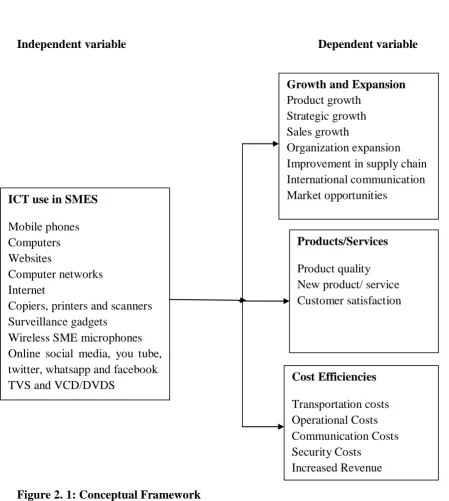
ICT management and competitive position process Source: Adapted from Soh and Markus (1997) 2.5 Conceptual Framework
17
functions in a firm. ICTs have and are changing the operations of any firm at a surprising rate. While they have been taken to be a necessity, ICTs have also point and operational costs involved in their adoption and use.
Independent variable Dependent variable
Figure 2. 1: Conceptual Framework Source: Researcher (2014)
ICT use in SMES
Mobile phones Computers Websites
Computer networks Internet
Copiers, printers and scanners Surveillance gadgets
Wireless SME microphones Online social media, you tube, twitter, whatsapp and facebook TVS and VCD/DVDS
Growth and Expansion
Product growth Strategic growth Sales growth
Organization expansion Improvement in supply chain International communication Market opportunities
Sales growth
Products/Services
18
CHAPTER THREE: RESEARCH METHODOLOGY 3.1 Introduction
This chapter outlines the research design and methodology that was used in the study. It described the population to be studied, area of study and the sampling design used. It also discussed the data collection and analysis techniques.
3.2 Research Design
The study adopted a descriptive survey research design. The design aimed to describe the essential findings in a rigorous way that was free from distortion and bias (Jones, 2010). Descriptive studies helped to discover new meaning, described what existed, verified the rate at which something occurred, and categorised the information. Thus the researcher chose this design for the study as it facilitated the precise actions the researcher aimed to achieve such as identifying any issues with current practice or justifying current practice.
3.2.1 Target Population
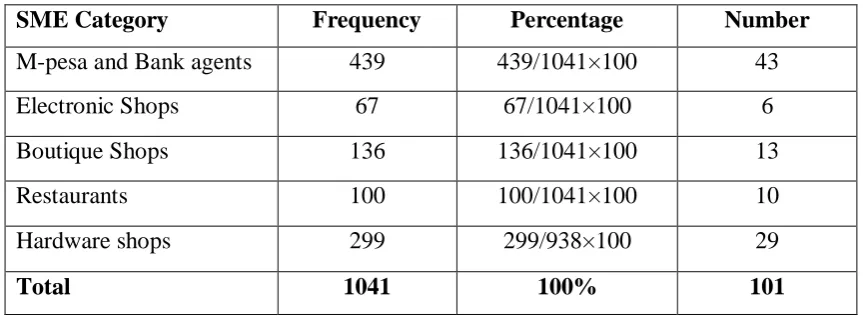
The target population under the study was the registered SMEs in Kamukunji sub-county, of the registered SMEs in Kenya an estimated 82,963 registered SMEs are located in Nairobi City County and 9,775 in Kamukunji Sub-County (Nairobi County Council, 2014). However the study targeted the SMEs in selected categories as tabulated below.
Table 3.1 Obtaining a Study Sample
SME Category Frequency Percentage Number
M-pesa and Bank agents 439 439/1041×100 43
Electronic Shops 67 67/1041×100 6
Boutique Shops 136 136/1041×100 13
Restaurants 100 100/1041×100 10
Hardware shops 299 299/938×100 29
19 3.2.2 Sampling Procedure and Sample Size
The sample was selected from the list of registered SMEs operating in Kamukunji Sub-County data obtained from the Nairobi City County Council. A sample of 101 SMEs was studied, obtained using 10% of the target population. Stratified random sampling was used to identify the respondents among the SMEs. In order to carry out a scientific study, convenience sampling was used to identify the respondents of each stratum.
Table 3.2 The Study Sample
Selected SME Number 10% of the total
M-pesa and bank agents 439 43
Electronic Shops 67 6
Boutique shops 136 13
Restaurants 100 10
Hardware shops 299 29
Total 1041 101
3.3 Data Sources and Instruments
The study relied on primary data sources and secondary data. Primary data was collected using questionnaires. A questionnaire was used because it is more objective and convenient to both the researcher and the respondent as it was administered through drop and pick method. Secondary source of data for the study included libraries, business articles and journals, internet sources, and SMEs published articles that were directly related the study area.
3.3.1 Validity and Reliabi1ity of Research Instruments
20
conducted on some SMEs to enable the researcher to be familiar with research content and location as well as administration procedure in order to identify items that required modification.
The reliability of a research instrument concerned the extent to which the instrument was consistent. Although unreliability was always present to a certain extent, there was generally a good deal of consistency in the results of a quality instrument gathered at different times.
3.3.2 Data Analysis and Presentation
Data analysis involved reducing the accumulated data to a manageable size, developing summaries, looking for patterns, and applying statistical techniques to generate information that was used to answer the research questions of the study and present results in understandable and convincing manner.
Descriptive statistics were used to analyze the data. Measures of central tendency (mean, mode and median) were used to find how the data tended to agree while measures of variability/dispersion (standard deviation and variance) were also used to determine the extent to which the data varied from a central position. Qualitative data was analyzed by use of content analysis and inferences made thereof. Data presentation was by use of frequency tables, percentages, pie charts and bar graphs.
3.4 Research Ethics
21
CHAPTER FOUR: RESEARCH FINDINGS AND DISCUSSIONS 4.1 Introduction
This chapter focused on data analysis, interpretation and presentation. The chapter covers the demographic characteristics, impact of ICT use on growth and expansion SMEs in Kamukunji sub-county, impact of ICT use on quality of product/ service of SMEs in Kamukunji sub-county and impact of ICT use on the cost of inputs and returns of SMEs in Kamukunji sub-county.
4.1.1 Response Rate
This research study had a sample size of one hundred and one (101) respondents from the five strata. Out of this sample size, 100 questionnaires were filled and returned to the researcher which represents a sample size of 99.0% response rate. This response rate was excellent and conforms to Mugenda and Mugenda (1999) stipulation that a response rate of 50% is adequate for analysis and reporting; a rate of 60% is good and a response rate of 70% and over is excellent. This commendable response rate can be attributed to the data collection procedure, where the researcher personally administered questionnaires and kept reminding the respondents to fill in the questionnaires through frequent phone calls and picked the questionnaires once fully filled.
4.2 Demographic Characteristics
The demographic characteristics of the SMEs were investigated in the first section of the questionnaire. They are presented in this section under position held in business, number of employees in the business, age of the business and average turnover.
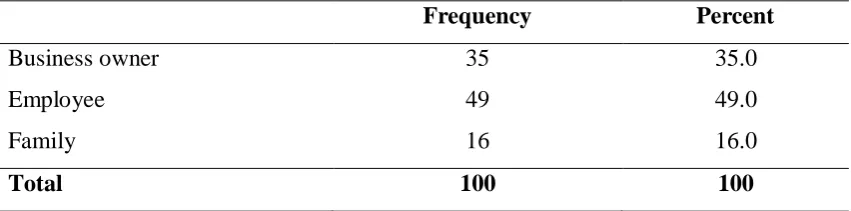
Table 4. 1: Position held in business
Frequency Percent
Business owner 35 35.0
Employee 49 49.0
Family 16 16.0
Total 100 100
22
Table 4. 2: Number of employees in the business
Frequency Percent
0-50 59 59.0
50-100 32 32.0
100-150 7 7.0
150-200 2 2.0
Total 100 100.0
From the findings in Table 4.2, majority of the businesses (59.0%) had 0-50 employees, 32.0% had 50-100 employees, and 7.0% had 100-150 employees while 2.0% had 150-200 employees.
Table 4. 3: Age of the business
Frequency Percent
0-2 years 20 20.0
2-5 years 48 48.0
5-10 years 27 27.0
10 years and above 5 5.0
Total 100 100.0
According to the findings in table 4.3, 48.0% of the businesses were aged 2-5 years, 27.0% were aged 5-10 years, 20.30% were aged 0-2 years while 5.0% of the businesses were aged 10 years and above.
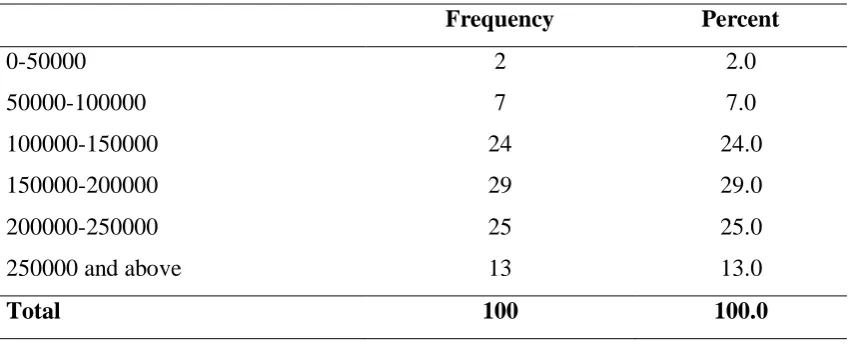
Table 4. 4: Average turnover annually in Kshs
Frequency Percent
0-50000 2 2.0
50000-100000 7 7.0
100000-150000 24 24.0
150000-200000 29 29.0
200000-250000 25 25.0
250000 and above 13 13.0
23
From the findings in Table 4.4, 29.0% of the businesses had an annual turnover of 150000-200000 Kshs, 25.0% 200000-250000 Kshs, 24.0% 100000-150000 Kshs, 13.0% 250000 Kshs and above, 7.0% 50000-100000 Kshs while 2.0% had an annual turnover of 0-50000 Kshs.
4.3 IT Resources Used in Business
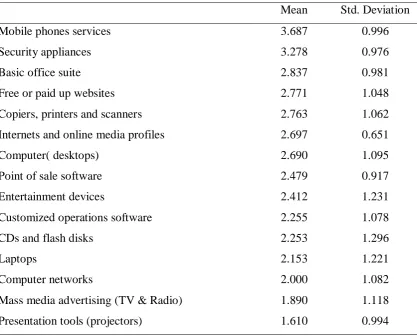
Table 4. 5: Extent of investment in various forms of IT tools in the business
Mean Std. Deviation
Mobile phones services 3.687 0.996
Security appliances 3.278 0.976
Basic office suite 2.837 0.981
Free or paid up websites 2.771 1.048
Copiers, printers and scanners 2.763 1.062
Internets and online media profiles 2.697 0.651
Computer( desktops) 2.690 1.095
Point of sale software 2.479 0.917
Entertainment devices 2.412 1.231
Customized operations software 2.255 1.078
CDs and flash disks 2.253 1.296
Laptops 2.153 1.221
Computer networks 2.000 1.082
Mass media advertising (TV & Radio) 1.890 1.118
Presentation tools (projectors) 1.610 0.994
24
score of 2.479, entertainment devices as expressed by a mean score of 2.412, customized operations software as shown by a mean score of 2.255, CDS and flash disks as expressed by a mean score of 2.253, laptops as shown by a mean score of 2.153, computer networks 2.000, mass media advertising (TV & radio) as expressed by a mean score of 1.890 and presentation tools (projectors) as indicated by a mean score of 1.610. These findings show that mobile phones are considered to contribute significantly to regional market expansion by most enterprises followed by fixed phones and faxes. ICT has a proven role in enabling SMEs to increase their productivity and access information and markets, but remain unaffordable.
4.4 ICT and SME Growth and Expansion
Table 4. 6: Whether the use of ICT led to growth and expansion of the business
Frequency Percent
Yes 99 99.0
No 1 1.0
Total 100 100
25
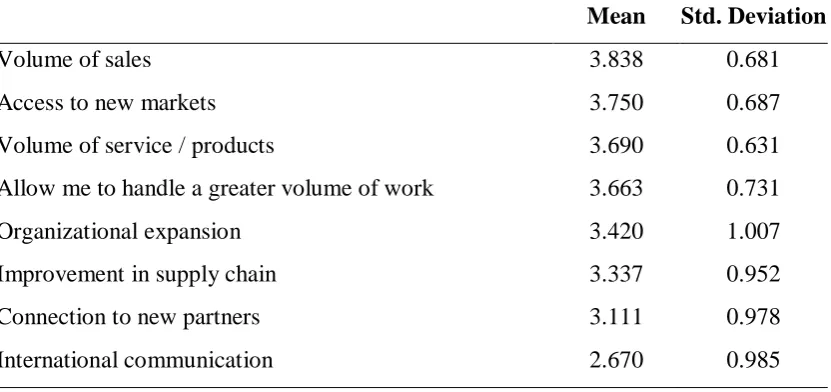
Table 4. 7: Extent that the respondents believe the use of information and communication technology has led to the growth and expansion of the business
Mean Std. Deviation
Volume of sales 3.838 0.681
Access to new markets 3.750 0.687
Volume of service / products 3.690 0.631
Allow me to handle a greater volume of work 3.663 0.731
Organizational expansion 3.420 1.007
Improvement in supply chain 3.337 0.952
Connection to new partners 3.111 0.978
International communication 2.670 0.985
26 4.5 ICT and product/Service quality
Table 4. 8: Whether the use of ICT led to better quality/ service in the business
Frequency Percent
Yes 99 99.0
No 1 1.0
Total 100 100
According to the findings in table 4.8, 99.0% of the respondents indicated that use of ICT led to better quality/ service in the business while 1.0% of the respondents indicated that use of ICT had not led to better quality/ service in your business. These findings concur with Van Leeuwen (2008) who linked ICT use and investment with firm performance and found that e-commerce and broadband use affect productivity significantly through their effect on innovation output. Polder, (2009) found that ICT investment is important for all types of innovation in services, while it plays a limited role in manufacturing, being only marginally significant for organizational innovation.
Table 4. 9: Extent that the respondents believe use of information and communication technology has led to better quality of goods and services of your business
Mean Std. Deviation
Customer satisfaction 3.734 0.851
New product/ service 3.690 1.023
Improved Product/Service quality 3.601 0.765
27
enhancement and design as they can stick to a rich database of customer information and adjust their production accordingly.
4.6 Cost Efficiencies
Table 4. 10: Whether use of ICT led to reduced cost of production in the business
Frequency Percent
Yes 97 97.0
No 3 3.0
Total 100 100
From the findings in table 4.10, majority of the respondents (97.0%) indicated that the use of ICT led to reduced cost of production in the business while 3.0% indicated that use of ICT had not led to reduced cost of production in the business. The findings are in line with Hanna (2010) who argues that ICT also the ability to transform global and local markets to become more efficient.Electronically mediated markets greatly impacts on the cost, speed and transparency of market-based transactions. As a result lower transaction cost and increased reach result in up to 15% lower costs to consumers, and up to 20% lower costs in business procurement.
Table 4. 11: Extent that the respondents believe use of information and communication technology has led to the reduced cost of production in the business
Mean Std. Deviation
Reduced operational costs 3.861 0.697
Reduced communication costs 3.859 0.796
Increased revenue 3.611 0.827
Reduced operational costs 3.553 0.925
Reduced security costs 3.357 0.987
28
29
CHAPTER FIVE: SUMMARY, CONCLUSION AND RECOMMENDATIONS 5.1 Introduction
This is the final chapter in this study which gives the summary of the findings, the conclusions and recommendations of the study based on the objective of the study. The chapter finally presents the suggestions for further studies.
5.2 Summary
The purpose of the study was to assess the effect of ICT use on performance of SMEs in Kamukunji sub-county. As such the study sought to establish what effect the use of ICT has on growth and expansion of SMEs in Kamukunji sub-county, effect of ICT use on quality of product/ service of SMEs in Kamukunji sub-county and effect of ICT use on the cost of inputs and returns of SMEs in Kamukunji sub-county. The questionnaire was designed in line with the objectives of the study. The task included; establishing the effects of ICT use on the performance of SMEs, establishing the influence of mobile phone technology on the performance SMEs, investigating the influence of handheld devices and computers on the performance of SMEs and establishing the influence of internet and website applications on the performance of SMEs.
30
Data was summarized into frequencies and percentages and presented in graphs, pie charts and tables. The study deduced that the forms of IT tools that the businesses had invested in to a good extent are mobile phones services as shown by a mean score of 3.687. The study also established that the use of ICT led to growth and expansion of the business.
The study further established that to a good extent that use of information and communication technology has led to the growth of the business through volume of sales as indicated by a mean score of 3.838, access to new markets as indicated by a mean score of 3.750, volume of service / products as expressed by a mean score of 3.690 and allow them to handle a greater volume of work as shown by a mean score of 3.663.
The study found out that use of ICT led to better quality/ service in the business. The study also found out that to a great extent use of information and communication technology has led to better quality of goods and services of your business by customer satisfaction as expressed by a mean score of 3.734, new product/service as indicated by a mean score of 3.690 and improving product/service quality as shown by a mean score of 3.601.
31 5.3 Discussion
This section comprises of discussion based on the specific research objectives of the study. The findings reveal that majority of the respondents were owners of the SMEs. The findings further reveal that half of the SMEs had operated between 2-5 years. The findings reveal that almost all the respondents agreed that use of ICT services has improved the performance of the SMEs. The study agrees with the statement that utilization of ICT tools has an important influence on organizations and all of its elements including people, culture, structure, process and tasks (Leavitt and Pondy, 1964). The study findings reveal that majority of the respondents gave the following as ways in which ICT has improved efficiency in the SMEs: there is great access to new markets, increased volume of products and services, increased sales, improved supply chain, better connection to new partners, improved communication, great organizational expansion, improved quality of products and services, greater customer satisfaction, greater innovation, reduced transportation, security and communication costs and improved returns.
32
remote access redundancy; and it has allowed for information to be shared across departments and stations which is required for decision making and other operations to be efficient.
The findings further show that majority of the respondents have mobile phones, computer applications, company laptops and desktops to perform their duties. The findings also reveal that the provision of SMEs mobile phones and communication networks has affected staff performance at the workplace.
The study deduced that the forms of IT tools that the businesses had invested in to a good extent are mobile phones services as shown by a mean score of 3.687. These findings show that mobile phones are considered to contribute significantly to regional market expansion by most enterprises followed by fixed phones and faxes. ICT has a proven role in enabling SMEs to increase their productivity and access information and markets, but remain unaffordable. The study also established that the use of ICT led to growth and expansion of the business. Market access in developing countries is a major challenge to small businesses due to market imperfections that can be attributed to lack of market information, lack of linkages between the actors in the supply chain, distortions or absence of input and output markets, high transaction cost and high presence of trade intermediaries. Different strategies exist for improving market access of which the use of ICT is one. Strategies that enhance market access greatly impacts on the performance of small enterprises.
33
economy by facilitating connectivity; helping to create and deliver products and services on a global scale and providing access to new markets.
The study found out that use of ICT led to better quality/ service in the business. These findings concur with Van Leeuwen (2008) who linked ICT use and investment with firm performance and found that e-commerce and broadband use affect productivity significantly through their effect on innovation output. The study also found out that to a great extent use of information and communication technology has led to better quality of goods and services of your business by customer satisfaction as expressed by a mean score of 3.734, new product/service as indicated by a mean score of 3.690 and improving product/service quality as shown by a mean score of 3.601. The study established that the use of ICT led to reduced cost of production in the business. The findings are in line with Hanna (2010) who argues that ICT also the ability to transform global and local markets to become more efficient. Electronically mediated markets greatly impacts on the cost, speed and transparency of market-based transactions. As a result lower transaction cost and increased reach result in up to 15% lower costs to consumers, and up to 20% lower costs in business procurement.
Finally, the study deduced that to a good extent use of information and communication technology has led to the reduced cost of production in the business through reduced operational costs as shown by a mea n score of 3.861, reduced communication costs as indicated by a mean score of 3.859, increased revenue as expressed by a mean score of 3.611 and reduced operational costs as indicated by a mean score of 3.553. These findings concur with Matambalya and Wolf (2007) information and communication technology causes fast accessibility to the market, increases selection power, improves communication, facilitates identification of markets, improves marketing and reduces business transaction costs.
5.4 Conclusion
34
Kenya. The study found that, the use of ICT services which the SMEs have adopted in a large extent has improved its performance. Some of the ways in which ICT has improved efficiency in the SMEs include; increased productivity and efficiency; faster processing of transactions hence greater customer satisfaction; immediate dissemination of information throughout the SMEs; faster sharing of data between different departments; processing of enormous amounts of data; easy accessibility of information at any time; speed and volume of work done; improved process management; improved lead times in service delivery; improved communication flow access to real time information; reduced communication costs; data accuracy through the use of industry standard communication platforms and using applications that validate against business rules; use of a website and related website technologies has assisted in increasing sales, reduced fraud cases and paperless environment reduces costs robust systems to support operations.
From the study findings, the study concludes that SMEs in Kamukunji sub-county have invested heavily on mobile phones services as the IT tool for business. Most of the businesses had mobile phones dedicated to maintain the link with the clients through various services available through the phone
From the study findings, the study concludes that information and communication technology which includes communication networks, mobile phone technology, handheld devices and Internet applications influence the performance of the SMEs in Kenya to a large extent.
5.5 Recommendations
35
improve the understanding of entrepreneurs on relevant ICT literacy required for supporting business performance.
Business support services in the country should work closely with the SMEs to improve ICT resource utilization in their businesses. They should also consider the various recommendations put forth by the end users of the technologies to come up with more capable but neutral technologies that can be easily adapted to the SME environment. They should progressively expand the knowledge base of the SMEs owners and operators by organizing more workshops and open days.
Small and Medium Enterprises (SME) management should consider scanning the environment to find the latest ICT equipment that could be useful in promoting service delivery efficiency and / or proper product mix / choice that suits customer needs. The management should also consider adopting variety of ICT equipment so as to be able to utilize available communication options.
5.6 Suggestions for further Studies
36
REFERENCES
Adeosun O. Adeosun, T. &Adetunde, I. (2009).Strategic Application of Information and Communication Technology for Effective Service Delivery In Banking Industry. Journal of Social Sciences, 47-51.
Agarwal R. & Prasad, J. (1999). Are Individual Differences Germane to the Acceptance of Information
Alam S. & Noor, M. (2009). ICT Adoption in Small and Medium Enterprises an Empirical Evidence of Services Sectors in Malaysia. International Journal of
Business Management., 154-158.
Aral S. & Weill, P. (2007). IT Assets, Organizational Capabilities & Firm Performance: How Resource Allocations and Organizational Differences Explain Performance Variation. Organization Science, 1-18.
Aramendia-Muneta & Ollo-Lopez, A. (2012). ICT Impact on Competitiveness, Innovation and Environment. Telematics and Infomation, 204-210.
Badescu M. &Garcés, C. (2009). The Impact of Information Technologies on Firm Level Productivity: Empirical evidence from Spain. Technovation, 121-129. Baldwin R. Jarmin S. & Tang, J. (2001). The Trend to Smaller Producers in manufacturing in Canada and the US. Statistics Canada working paper
155-170.
Bayo-Moriones, A. (2007). A Firm-Level Analysis of Determinants of Determination of ICT Adoption in Spain. Technovation, 352-366.
Brynjolffson E. &Hitt L. (1996). Paradox lost? Firm-level Evidence on the Returns to Information Systems Spending. Management Science, 541-558.
Buhalis D. (2004). eAirlines: Strategic and Tactical Use Of ICT In The Airline Industry. Information and Management, 805-825.
Chyau, C. (2005). Why Should Countries Embed ICT into SME policy?. APDIP e- Note Available at http://www.apdip.net/apdipenote/4.pdf
Dalrymple, J. F. (2004). Performance measurement for SME growth: A business profile benchmarking approach, Second World Conference on POM and 15th
37
Davis, F. D. (1989). Perceived usefulness, perceived ease of use, and user acceptance
of information technology. MIS Quart 13, 319 – 339.
Disterer & Fink, D. (2006). International Case Studies: To What Extent is ICT Infused into the Operations of SMEs? Journal of Enterprise Information
Management, 608-624.
Esselaar, S. (2006). ICT Usage and Its Impact on Profitability of SMEs in 13 African Countries. Independent Communications, 13-155.
Fishbein M. &Ajzen, I. (1975). Belief, Attitude, Intention and Behavior: An
Introduction to Theory and Research, 578.
Gago D. &Rubalcaba, L. (2007). Innovation And ICT Service Firms: Towards a multidimensional approach for impact assessment. Journal of
Evolutionary Economics, 25-44.
Government of Kenya (2007).Assistance to micro and small and medium enterprises
Programme: A Ministry of Trade Initiative. Nairobi: Government Printer.
Hanna, N. K. (2010). Enabling Enterprise Transformation. Business and Grassroots
Innovation for The Knowledge Economy. New York: Springer.
Houghton A. & Winklhofer, H. (2004).The Effect of Website and E-commerce
Adoption on the Relationship between SMEs and Their Export
Intermediaries, International Small Business Journal, 369-388.
Joshi A. W. & Sharma, S. (2004). Customer Knowledge Development: Antecedents and Impact On New Product Performance. Journal of Marketing, 47-59. Kazi, A. (2009). Next Generation Constraction. ITcon Editorial, 123-128.
Laudon K. &Laudon, J. (2003). Essentials of Management Information Systems. Prentice Hall: New Jersey.
Leeuwen G. &Luuk, K. (2006). On the contribution of innovation to multi- factor productivity growth. Economics of Innovation and New Technology, 367-390.
Lopez-Nicolas C. & Soto-Acosta, P. (2010). Analyzing ICT Adoption and Use Effects on Knowledge Creatio: An Emperical Investigation in SMEs.
38
Lucchetti R. &Sterlacchini, A. (2004). The Adoption of UCT among SMEs: Evidence from an Italian Survey, Small Business Economics, 151-168.
Mahmood M.A. Burn, J.M. Gemoets, L.A. &Jacquez, C. (2000). Variables affecting information technology end-user satisfaction: A meta-analysis of the
empirical literature, 751-771.
Manochehri, N. Al-Esmail R. & Ashrafi, R. (2012). Examining the Impacts of Information and Communication Technologies on Enterprise practices. The
Electronic Journal of Information Systems in Developing Countries, 234-138.
Mata F. Fuerst L. & Barney, B. (1995). Information Technology and Sustained Competitive Advantage.A Resource-Based Analysis, 487-505.
Matambalya, F. and Wolf, S. (2002). The Role Of ICT For The Performance of SMEs in East Africa.ZEF Discussion Papers on Development Policy, 42.
Mattii, P. (2002). The New Economy: Facts, Impacts and Policies. Information
Economics and Policy, 133-144.
Meso P. & Musa, P.F.( 2008). Extending the ICT technological culturation model: The role of accessibility and perceived socio-economic prospects on ICT diffusion. Proceedings of the PreICIS Workshop by SIG on Global
Development, (WSIGGD’ 08), Georgia State University, Paris, 1-21.
Michael, T. & Andrew, M. (2004). SMEs and e-business, Journal of Small Business and Enterprise Development, 280 – 289.
Mutula S.M. & van Brakel, P. (2006). E-readiness of SMEs in the ICT sector in Botswana with respect to information access.The Electronic Library, 402-17.
OECD. (2003). ICT and Economic Growth-Evidence from OECD Countries,
Industries and Firms. Paris: OECD Publishers.
OECD. (2004). Tthe Economic Impact of ICT Measurement, Evidence and
Implication Organization for Economic Co-operation and Development. Paris:
OECD.
39
Parahoo K (2006) Nursing Research: Principles, Process and Issues. 2nd edn.
Palgrave Macmillan, Houndmills Basingstoke
Potocan, V. (2006). Supply Chain Management And Virtual Organization. Efos, 223-233.
Ramsey E. Ibbotson, P. Bell, J. & Gray, B. (2003). E-opportunities of service sector SMEs: an Irish cross- border study, Journal of Small Business and Enterprise
Development, 250-64.
Rao, P. (2001). Internationalizanation of Technological Activity, and the Emerging Economies: Implications for Global Marketing. The ICT Revolution, 571-596. Republic of Kenya, (2012). Economic Survey. Nairobi Kenya: Government Printers. Ritchie, B. &Bridley, C. (2005). ICT adoption by SMEs: Implications for
relationships and management. New Technology, Work and Employment. Schindler P. Donald R. Cooper & Pamela, S. (2003). Business Research Methods.
McGraw Hill International Edition, Statistics and Probability Series, 55-58.
Shin, I. (2000). Use of Information Network and Organizational Productivity: Firm-level Evidence in Korea. Economics of Innovation and New Technology, 447-463.
Soh, C. Markus, M.L. (1995). How IT Creates Business Value: A Process Theory Synthesis Proceedings of the Sixteenth International Conference on
Information Systems, 29–41.
Spiezia, V. (2011). Are ICT Users More Innovative? An analysis of ICT-enabled innovation in OECD firms.OECD Journal: Economic Studies, 2011. Stephen, M. (2007). ICT Skils Readiness for the Emerging Global Digital Economy
Among Small Businesses in Developing Countries. Library Hi Tech, 231-245. Technologies? Decision Sciences, 361-391.
The free dictionary. (2014, March 5). The Free Dictionary. Retrieved from thefreedictionary: http://www.thefreedictionary.com
Venkatesh V. Davis, F.D. (1996). A theoretical extension of the technology acceptance model: Four longitudinal field studies, 186-204.
Werthner, H. & Klein, S. (2005). ICT‐enabled Innovation in Travel and Tourism.
40 APPENDICES Appendix One: Questionnaire
A: General information
This study is purely for academic purpose only. Confidentiality is highly respected. Please tick where appropriate giving correct information as much as possible.
1. Tick the position which you hold in the business? Business owner
Employee Family
2. How many employees does your business have? 0-50
50-100 100-150 150-200 200 and above
3. How old is your business? 0-2 years
2-5 years 5-10 years
10 years and above
4. What is your average turnover annually in Kshs? 0-50,000
41 B: IT resources used in business
1. Kindly tick in the appropriate box the level you have invested in the following forms of IT tools in your business. Where 5 = Great extent, 4 = Good extent, 3 = Moderate extent, 2 = Little extent and 1 = Not at all.
Computer hardware and Soft ware 5 4 3 2 1 Computers (desk tops)
Copiers, printers and scanners CDs and flash disks
Laptops
Entertainment devices Mobile phones services Presentation tools (projectors) Security appliances
Basic office suite
Customized operations software Point of sale software
Internets and online media profiles Free or paid-up websites
Computer networks
Mass media advertising (TV & Radio)
C: ICT and SME Growth and Expansion
1. Has the use of ICT led to growth and Expansion of your business?
Yes [] No []
42
5 4 3 2 1
Access to new markets Volume of service/product
Allow me to handle a greater volume of work Volume of sales
Improvement in supply chain International communication Connection to new partners Organizational expansion
D: ICT and product/Service quality
1. Has the use of ICT led to better quality/ service in your business?
Yes [] No []
2. To what extent do you believe use of information and communication technology has lead to better quality of goods and services of your business? (Please tick (√) in the appropriate box). Where 5 = Great extent, 4 = Good extent, 3 = Moderate extent, 2 = Little extent and 1 = No effect.
5 4 3 2 1
Improved Product/Service quality New Product/ Service
43 E. Cost Efficiencies
1. Has the use of ICT led to reduced cost of production in your business?
Yes [] No []
2. To what extent do you believe use of information and communication technology has lead to the reduced cost of production in your business? (Please tick (√) in the appropriate box). Where 5 = Great extent, 4 = Good extent, 3 = Moderate extent, 2 = Little extent and 1 = No effect
5 4 3 2 1
Reduced transportation costs
Reduced Communication Costs
Reduced Security Costs
Increased revenue
44 Appendix Two: Budget in Ksh
Photocopy 4000
Transport 2000
Lunch 2000