O R I G I N A L R E S E A R C H
Genetic characterization of two
vancomycin-resistant
Staphylococcus aureus
isolates in Kerman, Iran
This article was published in the following Dove Press journal: Infection and Drug Resistance
Mahsa Ziasistani1,2
Mohammad Reza
Shakibaie3,4
Davood Kalantar-Neyestanaki3
1Student Research Committee, Faculty of
Medicine, Kerman University of Medical Sciences, Kerman, Iran;2Pathology and
Stem Cell Research Center٫Faculty of Medicine, Kerman University of Medical Sciences, Kerman, Iran;3Department of
Microbiology and Virology, Faculty of Medicine, Kerman University of Medical Sciences, Kerman, Iran;4Research Center
for Infectious Diseases and Tropical Medicine, Kerman University of Medical Sciences, Kerman, Iran
Aim: The aim of this study was the genetic characterization of two clinical vancomycin-resistantStaphylococcus aureus(VRSA) isolates.
Materials and methods: Resistance to vancomycin was determined by phenotypic method. PCR was used for detection of mecA, vanA, ermA, ermB, ermC, msrA/B, aph(2” )-Ic,aph(3ʹ)-IIIa,pvl, Immune Evasion Cluster [sea, sep, chip, sakandscn] genes and biofilm operon icaABCD. On the other hand, multilocus sequence typing andagrtyping methods were performed for the determination of clonal relationship andvanoperon was detected and sequenced.
Results:Vancomycin-resistant Staphylococcus aureusstrain 1 (VRSA-1) was positive for
vanA, ermA, ermC, aph(2”)-Ic,aph(3ʹ)-IIIa,sea, sep, icaD genes, belonging toagrtype I; SCCmec type III; spa type t030; and ST239. However, the genetic characterization of Vancomycin-resistant Staphylococcus aureus strain 2 (VRSA-2) revealed the presence of various types of resistance genes vanA, ermA, ermC, aph(2”)-Ic,aph(3ʹ)-IIIa, sea, icaD, relating to agr type I; SCCmec type III; spa type t459; and ST239. The presence of transposon Tn1546 was determined by PCR sequencing.The Basic Local Alignment Search Tool analysis ofvanoperon in the VRSA isolates showed 99.6% sequence homology to Tn1546 in vancomycin-resistant enterococci, indicating the vanAoperon has an enter-ococcal origin.
Conclusion:In conclusion, the ST239 is one of the most common clones of MRSA isolates which involved the hospital-associated infections, therefore, the emergence of VRSA isolates with ST239 increased the spread of resistance to vancomycin in the hospital settings.
Keywords:VRSA, MLST, SCCmec,spa,agrtype,vanoperon
Introduction
Staphylococcus aureus is one of the most destructive causes of bacterial infections
in hospital settings.1The rapid spread of this type of bacterial infections has been accompanied by a rise in antibiotic-resistant strains.2The high-level vancomycin-resistantS. aureus(VRSA) was reported in 2002, Michigan, USA, for thefirst time and was subsequently detected in different hospitals around the world.3,4However, VRSA strains are rarely reported from all over the world.5So far, the VRSA strains have been reported, belonging to sequence types (STs) including ST1, ST5, ST8 ST85, ST231, ST239, ST250, ST371, ST923, and ST1283, and ST231.5–7 The VRSA strains belonging to ST5, ST8, ST239 and ST1283 were recently reported in Iran.6,7The sequence type 239 is the most common clone of methicillin-resistant Correspondence: Davood
Kalantar-Neyestanaki
Department of Microbiology and Virology, Afzalipour Faculty of Medicine, Kerman University of Medical Sciences, Imam Highway, Shahid Bahonar University, Kerman 7616914115, Iran Tel +98 343 325 7665
Fax +98 343 325 7665 Email [email protected]
Infection and Drug Resistance
Dove
press
open access to scientific and medical research
Open Access Full Text Article
Infection and Drug Resistance downloaded from https://www.dovepress.com/ by 118.70.13.36 on 22-Aug-2020
S. aureus(MRSA) which has been reported in the hospital settings around the world that would be resistant to the widespread antibacterial agents.8,9
Transposon Tn1546, a Tn3-related transposon,causing vancomycin resistance, was associated with a cluster of seven genes including vanS, vanR, vanH, vanA, vanX, vanY, and vanZ.10 Generally, the horizontal transfer of Tn1546transposon from vancomycin-resistant Enterococci
spp to S. aureus strains is responsible for resistance to
vancomycin in S. aureus strains as well as the emergence of VRSA.5Herein, we reported the genetic characterization of two vancomycin-resistant S. aureusstrains which were collected from hospitalized patients, Kerman, Iran.
Materials and methods
Patients and isolates sources
In our previous studies, from April 2015 to March 2017, we detected two VRSA strains from 205 non-duplicate of
S. aureusisolates. The two VRSA isolates were collected,
VRSA-1 belonged to spa type t030; SCCmec III and VRSA-2 belonged to spa type t459; SCCmec III. The minimum inhibitory concentration (MIC) of isolates to vancomycin was ≥64 µg/mL and the isolates were nega-tive for panton-valentine leukocidin (pvl) gene and were resistant to gentamicin, amikacin, erythromycin, clindamy-cin, tetracycline, ciprofloxacin, penicillin, cefoxitin, and trimethoprim/sulfamethoxazole11,12 The isolates were stored in Trypticase Soy Broth plus 15% Glycerol at
−80°C for more investigation.
The VRSA strains were isolated from two patients with a long history of hospitalization. Briefly, the VRSA-1 was associated with the bronchoalveolar lavage sample from a 76-year-old female patient, hospitalizing in ICU at Afzalipour hospital (425 beds) in Kerman along with clinical manifestations including pneumonia, fever, with a history of diabetes mellitus and hemodialysis,who died without including infections treated. The VRSA-2 isolate was obtained from a surgical wound infection of a 21-year -old male patient, hospitalized in orthopedic unit in Bahonar hospital (375 beds) in Kerman. (Other data about patient was not available.)
Antibiotic susceptibility test
The MIC of the isolates to linezolid and daptomycin was determined according to Clinical & Laboratory Standards Institute guidelines and also, disk diffusion
method was used for determination of susceptibility of isolates to rifampin.13
Detection of virulence, resistance genes,
and molecular typing of the VRSA isolates
In the following previous studies,11,12the isolates were confirmed by matrix-assisted laserdesorption/ioniza-tion time-of-flight (MALDI-TOF MS, Bruker,
Daltonics, Medical Microbiology and Clinical
Microbilogy Department of Umea University, Umea,
Sweden). Resistance genes including ermA, ermB,
ermC, msrA/B, aminoglycoside modifying genes [(aac
(6ʹ)-Ie-aph(2ʹ’)-I, aph(2ʹ’)-Ib, aph(2ʹ’)-Ic, aph(2ʹ’)-Id,
aph(3ʹ)-IIIa, ant(4ʹ)-Ia)], and agr type of the isolates were determined by PCR method in FlexCycler2 PCR-Thermocycler (Analytik Jena, Co, Jena, Germany). On the other hand, the virulence genes including sea, sep,
chip, sak, scn, icaABCD were detected by PCR.
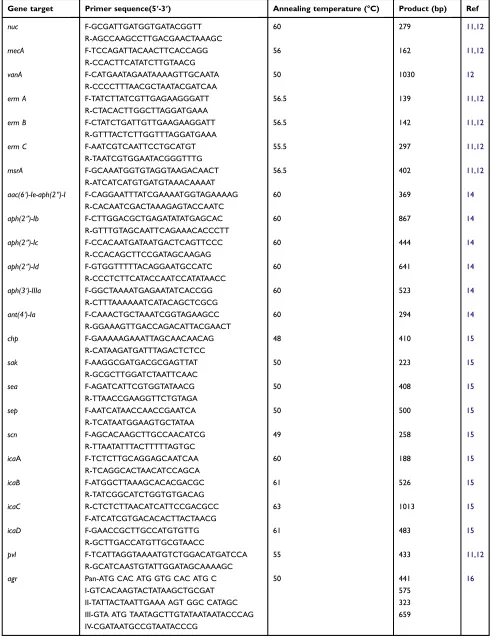
Table 1 shows the primers that were used in PCR amplification of virulence, resistance genes, and agr
typing. Multilocus sequence typing was performed by PCR sequencing of seven housekeeping genes (arc,
aro, glp, gmk, pta, tpi, and yqi) according to https://
pubmlst.org/saureus/.
Detection and sequencing of
van
operon
The van operon including vanR, vanS, vanH, vanA,
vanX, vanY, and vanZ were detected and sequenced
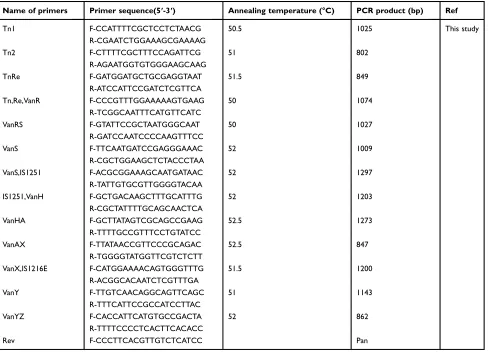
by primer walking method, using 12 specific primer pairs (Table 2) that were designed by primer designing tool in NCBI (https://www.ncbi.nlm.nih.gov/tools/pri-mer-blast) for different regions of Tn1546 by PCR technique. We used the Tn1546 sequences with
acces-sion numbers HM565172.1, M97297, KR349520,
KR047792, and KX496042.1 in GenBank for primer designing (https://www.ncbi.nlm.nih.gov/nuccore). The
PCR products for van genes were sequenced by
Applied Biosystems 3730/3730Xl DNA Analyzers
(Bioneer, Co, South Korea). The sequences were
assembled by Lasergene package software
(DNASTAR) and were analyzed by the basic local alignment search tool (BLAST) in NCBI (https://blast. ncbi.nlm.nih.gov/Blast.cgi). Open reading frames
(ORFs) of van genes were determined by Open
Reading Frame Finder software (https://www.ncbi. nlm.nih.gov/orffinder).
Infection and Drug Resistance downloaded from https://www.dovepress.com/ by 118.70.13.36 on 22-Aug-2020
Table 1The primer sequences were used in this study
Gene target Primer sequence(5ʹ-3ʹ) Annealing temperature (°C) Product (bp) Ref
nuc F-GCGATTGATGGTGATACGGTT 60 279 11,12
R-AGCCAAGCCTTGACGAACTAAAGC
mecA F-TCCAGATTACAACTTCACCAGG 56 162 11,12
R-CCACTTCATATCTTGTAACG
vanA F-CATGAATAGAATAAAAGTTGCAATA 50 1030 12
R-CCCCTTTAACGCTAATACGATCAA
erm A F-TATCTTATCGTTGAGAAGGGATT 56.5 139 11,12
R-CTACACTTGGCTTAGGATGAAA
erm B F-CTATCTGATTGTTGAAGAAGGATT 56.5 142 11,12
R-GTTTACTCTTGGTTTAGGATGAAA
erm C F-AATCGTCAATTCCTGCATGT 55.5 297 11,12
R-TAATCGTGGAATACGGGTTTG
msrA F-GCAAATGGTGTAGGTAAGACAACT 56.5 402 11,12
R-ATCATCATGTGATGTAAACAAAAT
aac(6ʹ)-Ie-aph(2ʹ’)-I F-CAGGAATTTATCGAAAATGGTAGAAAAG 60 369 14
R-CACAATCGACTAAAGAGTACCAATC
aph(2ʹ’)-Ib F-CTTGGACGCTGAGATATATGAGCAC 60 867 14
R-GTTTGTAGCAATTCAGAAACACCCTT
aph(2ʹ’)-Ic F-CCACAATGATAATGACTCAGTTCCC 60 444 14
R-CCACAGCTTCCGATAGCAAGAG
aph(2ʹ’)-Id F-GTGGTTTTTACAGGAATGCCATC 60 641 14
R-CCCTCTTCATACCAATCCATATAACC
aph(3ʹ)-IIIa F-GGCTAAAATGAGAATATCACCGG 60 523 14
R-CTTTAAAAAATCATACAGCTCGCG
ant(4ʹ)-Ia F-CAAACTGCTAAATCGGTAGAAGCC 60 294 14
R-GGAAAGTTGACCAGACATTACGAACT
chp F-GAAAAAGAAATTAGCAACAACAG 48 410 15
R-CATAAGATGATTTAGACTCTCC
sak F-AAGGCGATGACGCGAGTTAT 50 223 15
R-GCGCTTGGATCTAATTCAAC
sea F-AGATCATTCGTGGTATAACG 50 408 15
R-TTAACCGAAGGTTCTGTAGA
sep F-AATCATAACCAACCGAATCA 50 500 15
R-TCATAATGGAAGTGCTATAA
scn F-AGCACAAGCTTGCCAACATCG 49 258 15
R-TTAATATTTACTTTTTAGTGC
icaA F-TCTCTTGCAGGAGCAATCAA 60 188 15
R-TCAGGCACTAACATCCAGCA
icaB F-ATGGCTTAAAGCACACGACGC 61 526 15
R-TATCGGCATCTGGTGTGACAG
icaC R-CTCTCTTAACATCATTCCGACGCC 63 1013 15
F-ATCATCGTGACACACTTACTAACG
icaD F-GAACCGCTTGCCATGTGTTG 61 483 15
R-GCTTGACCATGTTGCGTAACC
pvl F-TCATTAGGTAAAATGTCTGGACATGATCCA 55 433 11,12
R-GCATCAASTGTATTGGATAGCAAAAGC
agr Pan-ATG CAC ATG GTG CAC ATG C 50 441
575 323 659
16
I-GTCACAAGTACTATAAGCTGCGAT II-TATTACTAATTGAAA AGT GGC CATAGC III-GTA ATG TAATAGCTTGTATAATAATACCCAG IV-CGATAATGCCGTAATACCCG
Infection and Drug Resistance downloaded from https://www.dovepress.com/ by 118.70.13.36 on 22-Aug-2020
Results
Genetic characterization of isolates
The isolates were resistant to rifampin and sensitive to linezolid and daptomycin with MIC≤0.5 µg/mL (antibio-tic resistance profile to other antibiotic is given in “Material and methods“section). The expected molecular size 1030 bp product referring to the vanA gene was detected and sequenced in both VRSA strains as shown inFigure 1. The sequence presented 100% identity with vanA gene of vancomycin-resistant enterococci (VRE), on Tn1546 as indicated in GenBank database. Furthermore, the VRSA strains were analyzed for the presence of resistance and virulence genes. VRSA-1 was positive for ermA, ermC, aph (2”)-Ic, aph (3ʹ)-IIIa, sea,
sep, icaD genes. The strain belonged to SCCmecIII,agrI,
spatype t030 and ST239. VRSA-2 was positive forermA,
ermC, aph (2”)-Ic, aph (3ʹ)-IIIa genes, as well as the
virulence genes including sea, icaD were detected. The VRSA-2 belonged to SCCmecIII,agrI,spatype t459, and ST239.
Molecular characterization of
van
operon
in VRSA strains
The amplification and sequencing of vanoperon showed
that the operon contains 9 ORFs, harboring
a transposase (tnp) and resolvase (rev) genes, corre-sponding to vanR, vanS, vanH, vanA, vanX, vanY, and
vanZ operon, respectively. The analysis of the sequence results indicated that it is closely related to Tn1546 in VRE. Similar to Tn1546sequence in VRE in the current work, the insertion sequences including IS1251 and
IS1216E were also distinguished. Phylogenetic and
dis-tance analyses in BLAST revealed that Tn1546 in our VRSA strains had 99.6% similarity to Tn1546 in VRE. The sequence of Tn1546 was submitted in GenBank under accession number MG592387 (https://www.ncbi. nlm.nih.gov/nuccore/mg592387).
Discussion
Recently, due to the rapid prevalence of MRSA, reporting in health care settings and also the exposure of selective
Table 2Primers used for amplification and sequencing ofvanoperon
Name of primers Primer sequence(5ʹ-3ʹ) Annealing temperature (°C) PCR product (bp) Ref
Tn1 F-CCATTTTCGCTCCTCTAACG 50.5 1025 This study
R-CGAATCTGGAAAGCGAAAAG
Tn2 F-CTTTTCGCTTTCCAGATTCG 51 802
R-AGAATGGTGTGGGAAGCAAG
TnRe F-GATGGATGCTGCGAGGTAAT 51.5 849
R-ATCCATTCCGATCTCGTTCA
Tn,Re,VanR F-CCCGTTTGGAAAAAGTGAAG 50 1074
R-TCGGCAATTTCATGTTCATC
VanRS F-GTATTCCGCTAATGGGCAAT 50 1027
R-GATCCAATCCCCAAGTTTCC
VanS F-TTCAATGATCCGAGGGAAAC 52 1009
R-CGCTGGAAGCTCTACCCTAA
VanS,IS1251 F-ACGCGGAAAGCAATGATAAC 52 1297
R-TATTGTGCGTTGGGGTACAA
IS1251,VanH F-GCTGACAAGCTTTGCATTTG 52 1203
R-CGCTATTTTGCAGCAACTCA
VanHA F-GCTTATAGTCGCAGCCGAAG 52.5 1273
R-TTTTGCCGTTTCCTGTATCC
VanAX F-TTATAACCGTTCCCGCAGAC 52.5 847
R-TGGGGTATGGTTCGTCTCTT
VanX,IS1216E F-CATGGAAAACAGTGGGTTTG 51.5 1200
R-ACGGCACAATCTCGTTTGA
VanY F-TTGTCAACAGGCAGTTCAGC 51 1143
R-TTTCATTCCGCCATCCTTAC
VanYZ F-CACCATTCATGTGCCGACTA 52 862
R-TTTTCCCCTCACTTCACACC
Rev F-CCCTTCACGTTGTCTCATCC Pan
Infection and Drug Resistance downloaded from https://www.dovepress.com/ by 118.70.13.36 on 22-Aug-2020
pressure of antibiotics, the emergence of VRSA strains, showing high level of resistance to antibiotics is unavoidable.
The emergence of VRSA isolates has been a major concern for the physicians and hospital management sys-tems; however, VRSA isolates are rarely reported around the world and the total reported VRSA strains in the world have been reported to be less than 20 strains since 2002.5 Long-time hospitalization, prolonged treatment with van-comycin, colonization with enterococcal as well as MRSA isolates, diabetes, chronic skin ulcers, and hemodialysis are the risk factors for colonization and infection by VRSA.17,18 This study showed VRSA isolates from two patients who suffered from diabetes, chronic skin ulcers, underlying long-time hospitalization, and prolonged van-comycin therapy. The Centers for Disease Control and Prevention reported 9 out of 13 VRSA strains in the USA that were isolated from diabetic patients.17,18
Thevan operon is commonly located on transposon Tn1546 and causes high-level resistance to vancomy-cin, initially reported in hospital strains VRE.8,9 In the present study, both the isolates carried vanR, vanS,
vanH, vanA, vanX, vanY, and vanZ genes on a van
operon. Furthermore, we align the van genes sequence in BLAST, and results indicated high identity with Tn1546 in VRE. Therefore, it has been suggested that the van operon has probably been transferred from VRE to S. aureus strains in simultaneous infections or colonization of VRE along with S. aureus, although we did not distinguish any evidence of mixed infection or colonization with VRE in this study. In the present work, the VRSA as well as VRE strains were not isolated from roommates, other patients, and also health care workers. Furthermore, the presence of the IS elements including IS1251 and IS1216E in Tn1546
confirmed the transfer of resistance to vancomycin from VRE to S. aureus. Similar to present study, some VRSA strains were reported in the USA, harbor-ing IS1251and IS1216Eon Tn1546.5,19A study which was carried out in Kerman hospitals showed that van-comycin resistant-Enterococcus faecalis isolates har-bored vanA gene.20
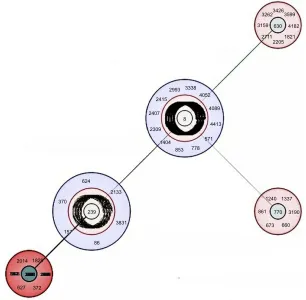
CC5 and CC8 are the most common MRSA clones around the world. ST239 from CC8, ST5 from CC5, and ST22 from CC22 are the most prevalent VRSA sequence types which were reported in Iran, USA, and Brazil.3–7The sequence type (ST) 239 from CC8 is the most common clone of MRSA in hospital-acquired infections in Asia.7 According to literature, the ST239 is the epidemic clone with resistance to a wide range of antibacterial agents in hospital settings around the world.7 In recent years, the VRSA isolates belonging to ST5, ST8, ST239, and ST1283 were reported in our country.6,7 According to eBURST results, ST8 and also ST1283 are the single locus variant of ST239, and these findings indicated that, in our country, the VRSA iso-lates are closely related to the same clone (Figure 2). Also in the present study, the molecular typing results indicated that the genetic background of the VRSA isolates (agr type I; SCCmec type III; ST239 and
pvl-negative isolates) was closely related to health-care-associated MRSA strains.
ST239 is the common clone of the MRSA isolates that involved the hospital-associated infections especially in ICU-associated infections, and so the emergence of VRSA isolate, belonging to ST239 in health care settings,
M
NC
1030bp
100bp
van
A
van
A
1
2
Figure 1 Agarose gel electrophoresis of vanA gene detected in two VRSA strains.
Infection and Drug Resistance downloaded from https://www.dovepress.com/ by 118.70.13.36 on 22-Aug-2020
would be prevalent more than the other clones of MRSA (another clone of MRSA). Therefore, clinical laboratories have an important role in the diagnosis, isolation, and infection control with VRSA strains. So, we suggest that the surveillance of long-time hospitalized patients and the use of vancomycin agar screening for detecting VRSA and VISA strains in different hospital wards especially in ICU which probability of MRSA carriage and prolonged van-comycin therapy in them is high.
Ethical statement
The S. aureus strains were originally taken as part of
routine hospital procedure, and then specifically recov-ered for this work. This study was approved by ethical numbers: IR.KMU.REC.1395.859 in ethical committee of Kerman University of Medical Sciences.
Acknowledgments
This research was supported by the research council and the student research committee of Kerman University of Medical Sciences, Kerman, Iran, and grant numbers: 94/ 677 and 95000434.
Author contributions
All authors made substantial contributions to conception and design, acquisition of data, or analysis and interpreta-tion of data; took part in drafting the article or revising it critically for important intellectual content; gave final approval of the version to be published; and agree to be accountable for all aspects of the work.
Disclosure
The authors report no conflicts of interest in this work.
References
1. Chen CJ, Huang YC. New epidemiology of Staphylococcus
aureus infection in Asia.Clin Microbiol Infect.2014;20(7):605–623. doi:10.1111/1469-0691.12705
2. McGuinness WA, Malachowa N, DeLeo FR. Focus: infectious
dis-eases: vancomycin resistance inStaphylococcus aureus.Yale J Biol
Med.2017;90(2):269–281.
3. Limbago BM, Kallen AJ, Zhu W, Eggers P, McDougal LK,
Albrecht VS. Report of the 13th vancomycin-resistant
Staphylococcus aureus isolate from the United States. J Clin Microbiol.2014;52(3):998–1002. doi:10.1128/JCM.02187-13 4. Whitener CJ, Park SY, Browne FA, et al. Vancomycin-resistant
Staphylococcus aureusin the absence of vancomycin exposure.Clin Infect Dis.2004;38(8):1049–1055. doi:10.1086/382357
2133
3831
86 157
2014 1828
372 627
370 239 624
861 770 1337 1240 778
571 4413 4089 4052
22051821 4182 3599 3426 3262 3159
2711 630
3338 2993 2415
2407
2309 8
1404 853
3190
660 673
Figure 2A population snapshot of the entireS. aureuswith 5 or more nearest match of seven allelic profiles with ST239 in http://bigsdb.pasteur.fr MLST database showing clonal complexes (CCs) viewed using eBURST.
Infection and Drug Resistance downloaded from https://www.dovepress.com/ by 118.70.13.36 on 22-Aug-2020
5. Rossi F, Diaz L, Wollam A, et al. Transferable vancomycin resistance
in a community-associated MRSA lineage. N Engl J Med.
2014;370:1524–1531. doi:10.1056/NEJMoa1303359
6. Azimian A, Havaei SA, Fazeli H, et al. Genetic characterization of a
vancomycin-resistantStaphylococcus aureusisolate from the
respira-tory tract of a patient in a University Hospital in Northeastern Iran. J Clin Microbiol.2012;50(11):3581–3585. doi:10.1128/JCM.01727-12 7. Shekarabi M, Hajikhani B, Chirani AS, Fazeli M, Goudarzi M.
Molecular characterization of vancomycin-resistantStaphylococcus
aureusstrains isolated from clinical samples: a three year study in
Tehran, Iran.PLoS One.2017;12(8):e0183607. doi:10.1371/journal.
pone.0183607
8. Cha HY, Moon DC, Choi CH, et al. Prevalence of the ST239 clone of
methicillin-resistantStaphylococcus aureusand differences in
anti-microbial susceptibilities of ST239 and ST5 clones identified in
a Korean hospital. J Clin Microbiol. 2005;43(8):3610–3614.
doi:10.1128/JCM.43.8.3610-3614.2005
9. Liu Y, Wang H, Du N, et al. Molecular evidence for spread of two
major methicillin-resistant Staphylococcus aureus clones with
a unique geographic distribution in Chinese hospitals. Antimicrob
Agents Chemother.2009;53(2):512–518. doi:10.1128/AAC.00804-08 10. Simjee S, White DG, McDermott PF, et al. Characterization of
Tn1546 in vancomycin-resistant Enterococcus faecium isolated
from canine urinary tract infections: evidence of gene exchange
between human and animal enterococci.J Clin Microbiol.2002;40
(12):4659–4665. doi:10.1128/jcm.40.12.4659-4665.2002
11. Fasihi Y, Saffari F, Mansouri S, Kalantar-Neyestanaki D. The
emer-gence of vancomycin-resistantStaphylococcus aureusin an intensive
care unit in Kerman, Iran. Wien Med Wochenschr. 2018;168(3–
-4):85–88. doi:10.1007/s10354-017-0562-6
12. Fasihi Y, Kiaei S, Kalantar-Neyestanaki D. Characterization of
SCCmecandspatypes of methicillin-resistantStaphylococcus aureus
isolates from health-care and community-acquired infections in
Kerman, Iran. J Epidemiol Glob Health. 2017;7(4):263–267.
doi:10.1016/j.jegh.2017.08.004
13. CLSI. Performance Standards for Antimicrobial Susceptibility
Testing. CLSI Supplement M100. 27th ed. Wayne, PA: Clinical and
Laboratory Standards Institute;2017.
14. Emaneini M, Bigverdi R, Kalantar D, et al. Distribution of genes encoding tetracycline resistance and aminoglycoside modifying
enzymes in Staphylococcus aureus strains isolated from a burn
center.Ann Burns Fire Disasters.2013;26(2):76–80.
15. Ahmadrajabi R, Layegh-Khavidaki SF, Kalantar-Neyestanaki D, Fasihi Y. Molecular analysis of Immune Evasion Cluster (IEC)
genes and intercellular adhesion gene cluster (ica) among
methicillin-resistant and methicillin-sensitive isolates of
Staphylococcus aureus. J Prev Med Hyg. 2017;58(4):E308–E314. doi:10.15167/2421-4248/jpmh2017.58.4.711
16. Gilot P, Lina G, Cochard T, Poutrel B. Analysis of the genetic variability of genes encoding the RNA III-activating components
Agr and TRAP in a population of Staphylococcus aureus strains
isolated from cows with mastitis. J Clin Microbiol. 2002;40
(11):4060–4067. doi:10.1128/jcm.40.11.4060-4067.2002
17. Centers for Disease Control and Prevention.CDC Reminds Clinical
Laboratories and Healthcare Infection Preventionists of Their Role in the Search and Containment of Vancomycin-Resistant Staphylococcus Aureus (VRSA). Atlanta: CDC;2012.
18. Cosgrove SE, Carroll KC, Perl TM. Staphylococcus aureus with
reduced susceptibility to vancomycin. Clin Infect Dis.
2004;39:539–545. doi:10.1086/422458
19. Périchon B, Courvalin P. VanA-type vancomycin-resistant
Staphylococcus aureus. Antimicrob Agents Chemother. 2009;53
(11):4580–4587. doi:10.1128/AAC.00346-09
20. Saffari F, Dalfardi MS, Mansouri S, Ahmadrajabi R. Survey for
correlation between biofilm formation and virulence determinants in
a collection of pathogenic and fecalEnterococcus faecalisisolates.
Infect Chemother.2017;49(3):176–183. doi:10.3947/ic.2017.49.3.176
Infection and Drug Resistance
Dove
press
Publish your work in this journal
Infection and Drug Resistance is an international, peer-reviewed open-access journal that focuses on the optimal treatment of infection (bacterial, fungal and viral) and the development and institution of preventive strategies to minimize the development and spread of
resis-tance. The journal is specifically concerned with the epidemiology of
antibiotic resistance and the mechanisms of resistance development and diffusion in both hospitals and the community. The manuscript manage-ment system is completely online and includes a very quick and fair peer-review system, which is all easy to use. Visit http://www.dovepress.com/ testimonials.php to read real quotes from published authors.
Submit your manuscript here:https://www.dovepress.com/infection-and-drug-resistance-journal
Infection and Drug Resistance downloaded from https://www.dovepress.com/ by 118.70.13.36 on 22-Aug-2020