ABSTRACT
HU, ZHOUJIAN. Elucidation of the structure of Cellulolytic Enzyme Lignin from loblolly pine (pinus taeda). (Under the direction of Dr. Hou-min Chang).
Milled Wood Lignin (MWL) preparation has long been used as a standard method for studies of lignin structure. However, ball milling reduces the degree of polymerization, creating new free-phenolic hydroxyl groups through cleavage of β-aryl ether linkages as well as increasing α-carbonyl groups via side-chain oxidation. In addition, the maximum yield of MWL from
protolignin is about 50%. Therefore, to what extent is milled wood lignin representative of total lignin in situ?
Cellulolytic Enzyme Lignin (CEL) preparation has not been used as widely as MWL in studies of lignin structure. CEL has higher molecular weight, lower condensation and higher β-O-4’ interlinkage compared to MWL. The higher yield of CEL extracted from wood helps
us understand the lignin structure as a whole.
To understand the effect of ball milling on lignin structure, CEL and MWL from loblolly pine prepared by three different ball-milling methods were investigated. The structure of CEL at various yields was compared with MWL using wet chemical analyses, FTIR and
solution-state NMR techniques. Ball milling of wood degrades β-O-4’ structures in lignin.
However, even after extensive ball milling, less than 25% of the β-O-4’ structures are
has similar structures, suggesting that the major fraction of lignin in the secondary wall is uniform in structure. Over 75% extractable yield of CEL, the residual enzyme lignin (REL) is structurally different from CEL and may originate mainly from the middle lamella. In present study, we propose a new procedure for the isolation of lignin for use in studies of lignin structure where the wood is sufficiently milled and successively extracted to produce three lignin fractions representing the total lignin in wood.
ELUCIDATION OF THE STRUCTURE OF CELLULOLYTIC ENZYME LIGNIN FROM LOBLOLLY PINE (Pinus taeda)
by
ZHOUJIAN HU
A thesis submitted to the Graduate Faculty of North Carolina State University
In partial fulfillment of the Requirement for the Degree of
Master of Science
WOOD AND PAPER SCIENCE
Raleigh
2006
APPROVED BY:
_______________________________ _______________________________
BIOGRAPHY
ACKNOWLEDGEMENTS
The author would like to express his best gratitude to his advisor, Dr. Hou-min Chang, for not only advising him on the technical matters with regard to his research but also supporting his new life here in the U.S. He also would like to express his appreciation to his committee members, Dr. Ronald R. Sederoff and Dr. Ilona Peszlen, for supporting the research project. In particular, the author appreciates all the advice and discussion on scientific research from Dr. Yuji Matsumoto, Dr. Takuya Akiyama, Dr. Ewellyn A. Capanema, Dr. Mikhail Balakshin, Dr. Bailian Li and Dr. John F. Kadla. It is very grateful to his friends in the Department of Wood and Paper Science, especially Dr. Ting-Feng Yeh, Dr. Tatsuhiko Yamada, Dr. Hongyang Li and Mrs Qirong Fu. Their assistance encouraged and inspired him to continue improving himself and spend a fulfilling time at NC State University. Also, he wishes to thank all the faculty, instructors, and staff who shared precious experiences with him while at NC State University.
Finally, the author expresses his deepest gratitude to his parents, for their love, patience, constant support and encouragement throughout this study.
TABLE OF CONTENTS
List of Figures ... vi
List of Tables ... vii
1. Introduction to lignin ... 1
1.1 Phenylpropane-the basic unit of lignin macromolecule... 2
1.2 Lignin biosynthesis ... 3
1.3 The structure, classification and distribution of lignin macromolecule... 8
1.4 Isolation of lignin... 13
1.4.1 Brauns lignins ... 13
1.4.2 Milled Wood Lignin ... 14
1.4.3 Origin of Milled Wood Lignin... 15
1.4.4 Cellulolytic Enzyme Lignin... 17
1.5 Characterization of the structure of lignin by degradation methods... 19
1.5.1 Nitrobenzene oxidation (NBO)... 19
1.5.2 Thioacidolysis (TA) and Derivative Followed by Reductive Cleavage (DFRC)20 1.5.3 Ozonolysis... 21
1.6 Ball milling effect on the structure of protolignin and isolated lignin... 24
1.7 Reference ... 25
2. Objective ... 31
3. Elucidation of the Structure of Cellulolytic Enzyme Lignin... 32
3.1 Abstract... 33
3.2 Introduction... 33
3.3 Materials and Methods... 36
3.3.1 Materials ... 36
3.3.2 Rotary ball-milling method... 37
3.3.3 Vibratory ball-milling method ... 37
3.3.4 Planetary ball milling method... 37
3.3.5 Lignin isolation method ... 38
3.3.6 Determination of lignin content, extractable yields of MWL and CEL ... 39
3.3.7 Ozonation... 40
3.3.8 NMR analysis... 41
3.3.9 FTIR Spectra... 41
3.3.10 Sugar composition, elemental and methoxyl analysis ... 42
3.4 Results and Discussion ... 42
3.4.1 Effect of Ball-milling on Extractable Yield of MWL and CEL ... 42
3.4.2 Effect of Ball-milling on β-O-4 Structure ... 43
3.4.3 Effect of Ball Milling on the Structure of MWL, CEL and REL ... 46
3.4.4 Elemental and Methoxyl Compositions of CEL and MWL ... 48
3.4.5 Spectroscopic Analyses of MWL and CEL ... 49
3.4.7 Morphological Origin of MWL, CEL and REL ... 52
3.4.8 A Suggested Lignin Isolation Procedure for the Structural Study of Lignin... 54
3.5 Conclusions... 56
3.6 Acknowledgements... 57
3.7 References... 57
List of Figures
Figure 1.1. A) The primary lignin precursors, B) Labeling convention for monolignols .. 2 Figure 1.2 Primary and secondary metabolic pathways leading to the biosynthesis of lignin
and other wood components ... 5 Figure 1.3 Phenylpropanoid and monolignol biosynthesis pathways... 6 Figure 1.4. Summary of the radical coupling mechanism and major structure units in lignin
macromolecule of gymnosperms ... 9 Figure 1.5 Transverse section of a spruce tracheid photographed in UV light... 11 Figure 1.6 yields of milled wood lignin (MWL) and lignin-carbohydrate complex (LCC) in
the ball milling of normal Douglas-fir wood ... 15 Figure 1.7. Major products from nitrobenzene oxidation ... 20 Figure 1.8 Schematic of the modified thioacidolysis (A) and DFRC (B) ... 22 Figure 1.9 Summary of the mechanism of ozonolysis. A, overall reaction for β-O-4, β-1 and
β-5 interlinkage; B, a mechanism of β-O-4 by ozonolysis... 23 Figure 1.10 correlation between phenolic β-O-4 and etherifed β-O-4 ... 25 Figure 3.1 Preparation of milled wood, MWL, CEL, and REL... 39 Figure 3.2 Dependence of the structure and yield of β-O-4 linkages in milled wood on the
extractable yield of Milled Wood Lignin (MWL) and Cellulolytic Enzyme Lignin (CEL) under different milling conditions ... 44 Figure 3.3 Dependence of the structure and yield of β-O-4 linkages in Milled Wood Lignin
List of Tables
Table 1.1 Examples of Dual meanings in lignin nomenclature ... 3
Table 1.2 Relative frequencies of linkages per C900 unit in lignins... 10
Table 1.3 Distribution of lignin in Loblolly pine tracheids as determined by bromination with SEM-EDXA... 12
Table 1.4 Structural characterization of MWL and CEL... 18
Table 3.1. Yield and Klason lignin content of MWL and CEL... 43
Table 3.2 Elemental analysis of MWL and CEL... 48
1. Introduction to lignin
In 1838, Anselme Payen was first to recognize the composite nature of wood. He found that treatment of wood with nitric acid removed part of the wood substance and left behind a fibrous material, which he named “cellulose”. The removed material had a higher carbon content than the cellulose, which had the same composition as starch. He described this carbon-rich substance, which embedded the cellulose in the wood, as an “encrusting material” (Payen, 1838). The term “ lignin”, which was introduced by Schulze in 1865, is derived from the Latin word “lignum” meaning wood. It is now known to be one of the major components of the cell wall of all vascular plants (Sarkanen et al., 1971). In 1907, Klason proposed that lignin is a high molecular weight substance consisting of coniferyl alcohol units joined together by ether linkages. Thus the era of modern lignin chemistry began (Sjöstrom, 1981).
1.1 Phenylpropane-the basic unit of lignin macromolecule
Lignin is formed by oxidative coupling of, primarily, 4-hydroxycinnamyl alcohols (Ralph et al., 2004). Generally, lignin includes three primary precursors: trans-p-coumaryl (A), trans-coniferyl (B), and trans-sinapyl (C) alcohols (Figure 1.1) (Sarkanen et al., 1971b). Hardwood lignin is composed of various proportions of coniferyl alcohol derived subunits and sinapyl alcohol derived subunits. Softwood lignin is derived mostly from coniferyl alcohol monomers. Lignin structure not only consists of subunits derived from these three precursors, in foliage, it also may contain derivatives of hydroxycinnamyl alcohol such as acylated hydroxycinnamyl alcohols and hydroxycinnamate esters (Ralph et al., 1997; Ralph et al., 2000; Ralph et al., 2004). Systematic evaluation or revisions of nomenclature has not been carried out, and the usage of certain terms here is not always consistent with the terms used elsewhere.
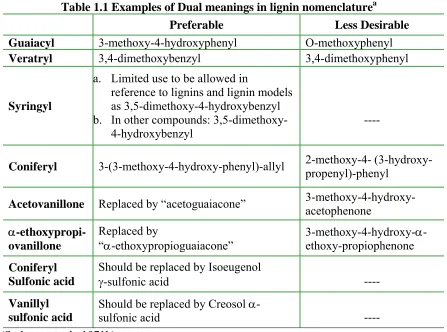
Dual meanings for the same term are common (Table 1.1). The common notation for carbon atoms in phenylpropane units was shown in Figure 1.1. For example, in lignin chemistry the basic name guaiacyl commonly means a 3-methoxy-4-hydroxyphenyl group (e.g. in guaiacylpropane). However, the proper name for “guaiacyl” is only for o-methoxyphenyl groups. This distinction forms a source of confusion to unfamiliar readers.
Table 1.1 Examples of Dual meanings in lignin nomenclaturea
Preferable Less Desirable
Guaiacyl 3-methoxy-4-hydroxyphenyl O-methoxyphenyl
Veratryl 3,4-dimethoxybenzyl 3,4-dimethoxyphenyl
Syringyl
a. Limited use to be allowed in
reference to lignins and lignin models as 3,5-dimethoxy-4-hydroxybenzyl b. In other compounds:
3,5-dimethoxy-4-hydroxybenzyl
----
Coniferyl 3-(3-methoxy-4-hydroxy-phenyl)-allyl 2-methoxy-4- (3-hydroxy-propenyl)-phenyl
Acetovanillone Replaced by “acetoguaiacone” 3-methoxy-4-hydroxy-acetophenone
α-ethoxypropi- ovanillone
Replaced by
“α-ethoxypropioguaiacone” 3-methoxy-4-hydroxy-α- ethoxy-propiophenone Coniferyl
Sulfonic acid
Should be replaced by Isoeugenol
γ-sulfonic acid ----
Vanillyl sulfonic acid
Should be replaced by Creosol α
-sulfonic acid ----
a (Sarkanen et al., 1971b)
1.2 Lignin biosynthesis
subsequently polymerized. From glucose to lignin precursors, biosynthesis follows the Shikimic acid pathway (a primary metabolic pathway) and the monolignol pathway (a secondary metabolic pathway) (Figure 1.2 and Figure 1.3).
The universal and efficient conversion of phenylalanine to lignins has been amply demonstrated by tracer methods (Freudenberg et al., 1958; Brown et al., 1959; Higuchi, 1962). Lignin shares a common precursor, phenylalanine, with many other minor components including flavonoids, coumarins, stilbenes, and lignans (Figure 1.2). Most of the genes involved in monolignol production have been cloned or are present in expressed sequence tag/genomic databases (Christensen et al., 2000; Boerjan et al., 2003; Raes et al., 2003). The lignin biosynthetic pathway has been the subject of many recent reviews (Baucher et al., 1998; Whetten et al., 1998; Grima-Pettenati et al., 1999; Lewis, 1999; Boerjan et al., 2003), but is still revised and updated to incorporate new results. In the pathway of monolignol biosynthesis the first step is the conversion of phenylalanine to cinnamic acid by phenylalanine ammonia-ligase (PAL), followed by a hydroxylation at the
para position by cinnamate-4-hydroxylase (C4H) resulting in p-coumaric acid. A series of alternating hydroxylation and methylation steps can convert the p-coumaric acid into the mono- and dimethoxylated analogs, ferulic acid and sinapic acid.
outlines a new proposed biosynthetic pathway, highlighted by blue color, from L-phenylalanine to the main lignin precursors, p-coumaryl alcohol, coniferyl alcohol and sinapyl alcohol (Li et al., 2000; Guo et al., 2002; Baucher et al., 2003).
Figure 1.3 Phenylpropanoid and monolignol biosynthesis pathways. CAD, cinnamyl alcohol dehydrogenase; 4CL, 4-coumarate: CoA ligase; C3H, p-coumarate 3-hydroxylase; C4H, cinnamate 4-3-hydroxylase; CCoAOMT, caffeoy-CoA O-methyltransferase; CCR, cinnamoyl-CoA:shikimate/quinate
p-hydroxycinnamoyltransferase; F5H, ferulate 5-hydroxylase; PAL,
phenylalanine ammonia-lyase; SAD, sinapyl alcohol dehydrogenase. The boxed area represents the most likely pathway to the production of
Monolignols are not abundant in their free form in lignifying tissues, but are found as monolignol glucosides, such as coniferin in gymnosperms (Gross, 1985). Meanwhile, some evidence has been found that glucosidases are attached to cell walls during the onset of lignin biosynthesis, suggested that monolignol glucosides represent the metabolic forms in which monolignols are excreted from the cytoplasm into the lignifying zone (Marcinowski et al., 1978; Sederoff et al., 1991).
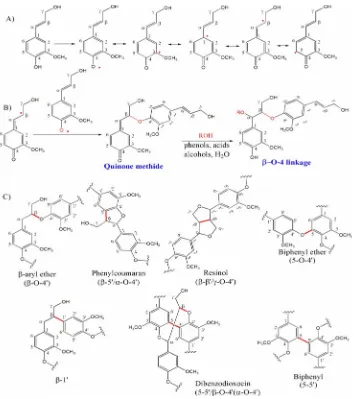
as reverse genetic (Boerjan et al., 2003). Most evidence supports the combinatorial model so far (Baucher et al., 2003; Ralph et al. 2004). A natural heterogeneity and a variation of the content and composition that exist in lignin differ not only among plant taxa, but also between different cell types of a single tissue and even within a single cell wall (Sarkanen et al., 1971a; Saka et al., 1985 Joseleau et al., 1997;). Hence, only facts can end this debate, whether monolignol coupling is a combinatorial or a highly orchestrated process. Figure 1.4 summarizes the mechanisms of radical coupling of the major structure units in lignin of gymnosperms (softwood).
1.3 The structure, classification and distribution of lignin macromolecule
softwood lignin, though generally the most abundant linkage in lignin is β-O-4’. The
frequency of a β-O-4’ interlinkage is approximately 45-50% of the phenylpropane units in
softwood lignin, while approximately 60-85% phenylpropane units in hardwood lignin (Chen, 1991). Table 1.2 shows an example of the relative differences in distribution of interlinkages between lignins isolated from spruce (softwood) and birch (hardwood).
Table 1.2 Relative frequencies of linkages per 100 C9 units in ligninsa.
β-O-4’ α-O-4’ β-5’ β-1’ 5-5’ 4-O-5’ β-β’
Spruce 48 6-8 9-12 7 9.5-11 3.5-4 2
Birch 60 6-8 6 7 4.5 6.5 3
a (Monties et al., 1985).
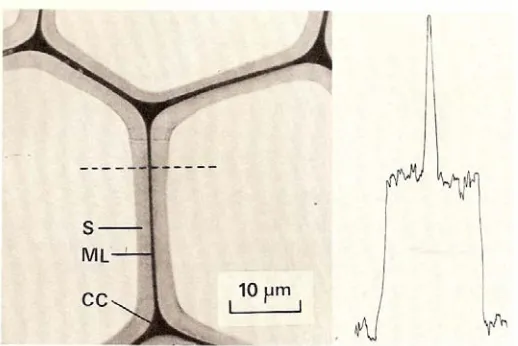
Figure 1.5 Transverse section of a spruce tracheid photographed in UV light (240nm) (the densitometer tracing has been taken across the tracheid wall along the dotted line.) S, secondary wall; WL, compound middle lamella; CC, cell corner.
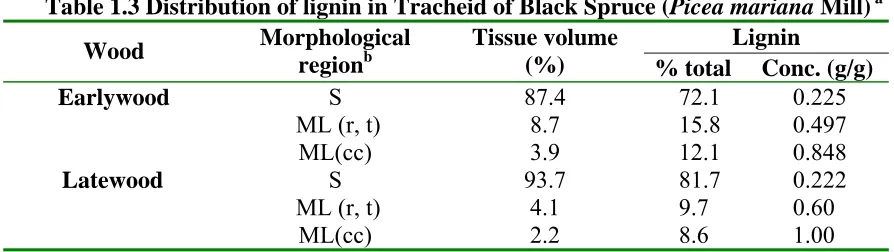
Table 1.3 Distribution of lignin in Tracheid of Black Spruce (Picea mariana Mill) a Lignin
Wood Morphological
regionb
Tissue volume
(%) % total Conc. (g/g) Earlywood
Latewood
S ML (r, t)
ML(cc) S ML (r, t)
ML(cc) 87.4 8.7 3.9 93.7 4.1 2.2
72.1 0.225 15.8 0.497 12.1 0.848 81.7 0.222 9.7 0.60 8.6 1.00 a (Fergus et al., 1969);
b S= Secondary wall; ML= middle lamella; r = radial; t = tangential; cc = cell corner.
that lignin in the middle lamella contains a substantial proportion of highly condensed p-hydroxyphenylpropane units (H-unit).
1.4 Isolation of lignin
Isolation of lignin from wood in a chemically unaltered form is one of barriers to elucidation of the structure of lignin. Lignins in plant tissues are not extractable by organic solvents and isolation of lignin free from carbohydrates is impossible. Separation of lignin from most carbohydrates was difficult unless some chemical or physical treatment before lignin extraction. The acid lignin preparations were exclusively used in the chemical characterization (Björkman, 1954). It, however, realized that that lignin differ from the original lignin as a higher condensation (Lai et al., 1971). Brauns lignin, Milled Wood Lignin (MWL) and Cellulolytic Enzyme Lignin (CEL) were thought to be the preparations with less chemical modification than acid preparations (Lai et al., 1971).
1.4.1 Brauns lignin
impurities, such as carbohydrates and extractive components (Lai et al., 1971). Compared to other preparations, such as Milled Wood lignin, Brauns lignin from conifers is characterized by similar elemental compositions, low molecular weight lignin, large amounts of ester groups and higher phenolic hydroxyl content (Lai et al., 1971).
1.4.2 Milled Wood Lignin
Staudinger and his coworkers made the first observations on the effect of milling on the solubility of wood (Lai et al., 1971). Björkman developed an isolation procedure to extract a larger proportion of lignin from wood. According to Björkman, when extractive-free wood meal of a woody species is ground for 48 hr or more in a vibratory ball mill under nitrogen atmosphere either with a non-swelling embedding liquid, such as toluene, or dry, the wood tissues disintegrate, and about 30-50% of lignin in the wood become extractable with aqueous dioxane, usually 90-96% (Björkman, 1954; Björkman, 1956; Björkman, 1957b). With some purification, the resulting lignin called Milled Wood Lignin (MWL) is a cream-colored powder free of ash and contains a few percent of carbohydrates for either gymnosperm or angiosperm.
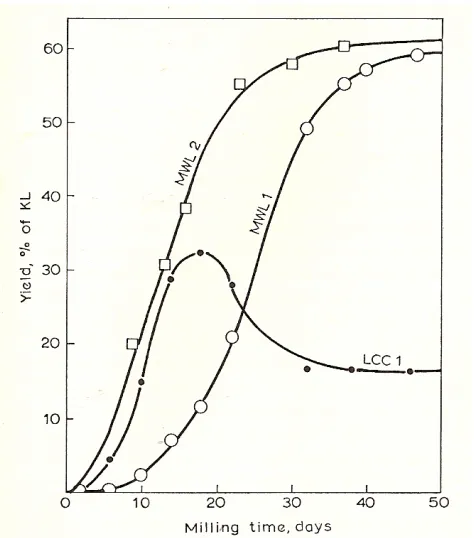
Figure 1.6 yields of milled wood lignin (MWL) and lignin-carbohydrate complex (LCC) in the ball milling of normal Douglas-fir wood. MWL1 and LCC1 yield using glass balls; MWL2 yield using steel balls.
1.4.3 Origin of Milled Wood Lignin
1.4.4 Cellulolytic Enzyme Lignin
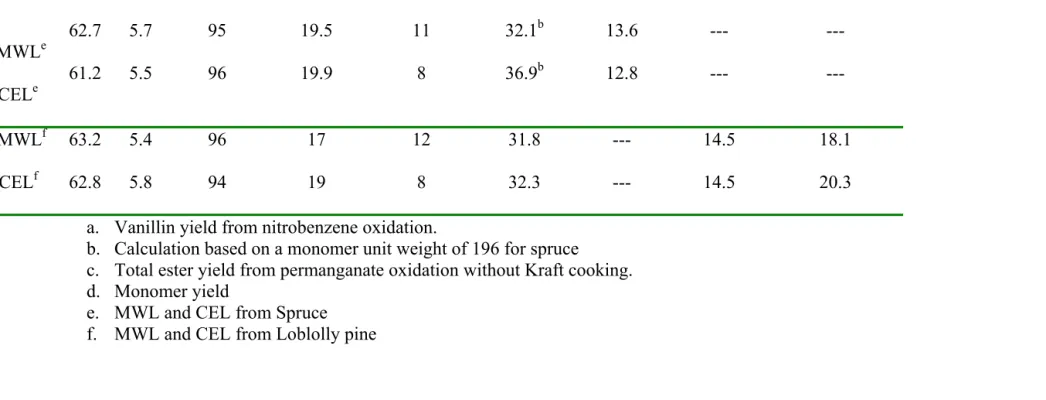
Table 1.4 Structural characterization of MWL and CEL Lignin C wt.% H wt.% OCH3 mol/100C9 Ph-OH mol/100C9 C=O mol/100C9 Vanillina mol/100C9
Ester c
mol/100C9 DFRCd mol/100C9 Thioacidolysisd mol/100C9 SpMWLe SpCELe 62.7 61.2 5.7 5.5 95 96 19.5 19.9 11 8 32.1b 36.9b 13.6 12.8 --- --- --- --- LpMWLf LpCELf 63.2 62.8 5.4 5.8 96 94 17 19 12 8 31.8 32.3 --- --- 14.5 14.5 18.1 20.3
a. Vanillin yield from nitrobenzene oxidation.
b. Calculation based on a monomer unit weight of 196 for spruce
c. Total ester yield from permanganate oxidation without Kraft cooking. d. Monomer yield
1.5 Characterization of the structure of lignin by degradation methods
Wet chemistry methods can be differentiated by functional group analysis (OMe, total OH, phenolic OH, carbonyl group, carboxyl groups) and degradation methods. The major advantage of degradation techniques is possibility of analyzing lignin without its isolation. The relative accuracy of degradation techniques is pretty high. The common degradation methods include Nitrobenzen Oxidation (NBO), Thioacidolysis (TA), Derivative Followed by Reductive Cleavage (DFRC), Permanganate Oxidation (PO) and Ozonolysis (Sarkanen et al., 1971a; Adler, 1977; Sakakibara, 1991; Chen, 1991; Lin et al., 1992).
1.5.1 Nitrobenzene oxidation (NBO)
presents in the lignin. It also can provide a relative measurement of the extent of condensation in the aromatic moieties of lignin. However, the detailed information about the structure of lignin by nitrobenzene oxidation is limited.
Figure 1.7 Major products from nitrobenzene oxidation
1.5.2 Thioacidolysis (TA) and Derivative Followed by Reductive Cleavage (DFRC)
Both thioacidolysis and DFRC share the same ideal to analyze the structure of lignin through
cleavage of β-aryl ether bonds, the most abundant interlinkage in lignin. Lapierre and
co-workers developed thioacidolysis to facilitate analysis of lignin structure by decreasing condensation reactions and hydrolysis products and increasing monomer yields from acidolysis (Lapierre et al., 1986). The thioacidolysis method utilizes nucleophilic ethanethiol,
which displaces the α-hydroxyl or α-alkoxyl group by a SN1 mechanism under catalytic
derived from consecutive β-O-4’ linkages. To change the malodoous chemicals, Lu and
Ralph (Lu et al., 1997; Lu et al., 1998a; Lu et al., 1998b; Lu et al., 1999; Ralph et al., 1998) introduced a new selective α, β-aryl ether cleavage protocol, derivertization followed by
reductive cleavage (DFRC). DFRC uses mild conditions and consists of three simple steps: bromination of the benzylic position and concomitant acetylation of free hydroxyl groups by acetyl bromide; reductive cleavage of the β-aryl ether bonds via zinc metal coordination;
acetylation of newly generated phenolic hydoxyl groups for quantification by gas chromatography. Like modified thioacidolysis, modified DFRC combines methylation, DFRC and propylation, which allows the quantitative determination of three different
monomers in lignin: the uncondensed phenolic β-O-4’ (unit A), the uncondensed α-O-4’
(unit B), and the uncondensed etherified β-O-4’ (unit C) structures (Figure 1.8). Although
DFRC can’t completely cleave β-aryl ether linkage in lignin and gives a lower monomer
yield compared to thioacidolysis, DFRC is still useful method for specific structural elucidation (Holtman et al., 2003).
1.5.3 Ozonolysis
Figure 1.8 Schematic of the modified thioacidolysis (A) and DFRC (B)
dicarboxylic acids. Therefore, the configurational structures (e.g., erythro and threo) of the side chain of lignin can be evaluated from the ozonation products. This method can be
extended to evaluate the configurational structures (e.g. erythro and threo in β-O-4’) and
quanitity of different types of interlinkages, such as β-O-4’, β-5’, β-1’, LCC, etc.
(Matsumoto et al., 1984; Matsumoto et al., 1986; Habu et al., 1990; Karlsson et al., 2000; Akiyama et al., 2002; Karlsson et al., 2004) (Figure 1.9).
1.6 Ball milling effect on the structure of protolignin and isolated lignin
Extracting lignin from finely ball-milled wood with aqueous dioxane has long been used as a standard method for the structure studies of lignin. Does this portion of lignin from wood represent protolignin? If yes, how does this portion of lignin represent the heterogeneous character of lignin in the woody cell wall? Does chemical modification exist during ball milling? If yes, what kinds of structural change during ball milling? Ball milling reduces the degree of polymerization, creating new free-phenolic hydroxyl groups through cleavage of β-aryl ether linkages as well as increasing α-carbonyl groups via side-chain oxidation (Lai et
al., 1971; Chang et al., 1975; Gellerstedt et al., 1989; Ikeda et al., 2002; Fujimoto et al., 2005). Based on nitrobenzene oxidation of lignin in the whole wood meal, both Fujimoto and Ikeda found out the total yield of aldehydes from hardwood or softwood is independent of the intensity of ball milling (Ikeda et al., 2002; Fujimoto et al., 2005). Thus, there was no modification of the aromatic ring during ball milling. On the other hand, the results of modified DFRC, an aryl-ether cleavage method, a significant correlation (Figure 1.10) can
be found between etherified β-O-4’ linkage and phenolic β-O-4’ linkage (Ikeda et al., 2002).
Strongly suggesting that the main effect of ball milling is cleavage of β-O-4’ ether bond.
Fujimoto also observed a steady decrease in β-O-4’ linkages with increasing ball milling
intensity (Fujimoto et al., 2005). In other words, β-O-4’ ether bond cleavage of lignin is the
R2 = 0.977 35 40 45 50 55 60 65 70 75
20 25 30 35 40 45 50
phenolic β-O-4, mol%
etherified
β
-O-4, mol%
phenolic beta-O-4 vs etherified beta-O4 Vibratory dry-milling
Linear (phenolic beta-O-4 vs etherified beta-O4)
Figure 1.10 correlation between phenolic β-O-4’ and etherifed β-O-4’ (Ikeda et al., 2002)
1.7 Reference
Adler, E. (1977). Lignin chemistry-past, present and future. Wood Science and Technology 11: 169-218.
Akiyama, T., Sugimoto, T., Matsumoto, Y., Meshitsuka, G. (2002). Erythro/threo ratio of beta-O-4 structures as an important structural characteristic of lignin. I: Improvement of ozonation method for the quantitative analysis of lignin side-chain structure. Journal of Wood Science 48: 210-215.
Baucher, M., Halpin, C., Petit-Conil, M., and Boerjan, W. (2003). Lignin: Genetic
Engineering and Impact on Pulping. Critical Reviews in Biochemistry and Molecular Biology 38: 305-350.
Baucher, M., Monties, B., Van, M. M., Boerjan, W. (1998). Biosynthesis and genetic engineering of lignin. Critical Reviews in Plant Sciences 17: 125-197.
Björkman, A. (1954) Isolation of Lignin from Finely Divided Wood with Neutral Solvents. Nature 174: 1057-1058.
Björkman, A. (1956). Svensk Papperstidn 59: 477.
Björkman, A. (1957a). Lignin and lignin-carbohydrate complexes. Industrial and Engineering Chemistry Research 49: 1395-1398.
Björkman, A. (1957b). Studie on finely divided wood. Part 5. The effect of milling. Svensk Papperstidn 60: 329-335.
Boerjan, W., Ralph, J., Baucher, M. (2003). Lignin biosynthesis. Annual Review of Plant Biology 54: 519-546.
Chang. H.-m., Cowling, E. B., Brown, W., Adler, E., Miksche, G. (1975). Comparative Studies on Cellulolytic Enzyme Lignin and Milled Wood Lignin of Sweetgum and Spruce. Holzforschung 29: 153-159.
Chen, C.L. (1988). Characterization of Lignin by Oxidation Degradation: Use of Gas
Chromatography-Mass Spectroscopy Technique. In Methods in Enzymology. Wood, W.A., Kellogg, S.T. Orlando, Florida, Academic Press. Vol 161B, pp 110-136. Chen, C.L. (1991) Lignins: Occurrence in Woody Tissues, Isolation, Reactions, and
Structure. In Wood Structure and Composition. Lewin, M., Goldstein, I.S. New York, Marcel Dekker, Inc., pp 183-261.
Chen, F., Yasuda, S., Fukushima, K. (1999). Evidence for a novel biosynthetic pathway that regulates the ratio of syringyl to guaiacyl residues in lignin in the differentiating xylem of Magnolia kobus DC. Planta 207: 597-603.
Christensen, J.C., Baucher, M., O'Connell, A.P., Van Montagu, M., Boerjan, W. (2000). Control of lignin biosynthesis. In Molecular biology of woody plants, Dordrecht, Kluwer Academic publishers, Vol 1, pp 227-267.
Davin, L.B., Wang, H. B., Crowell, A. L., Bedgar, D. L., Martin, D. M., Sarkanen, S., Lewis, N. G. (1997). Stereoselective bimolecular phenoxy radical coupling by an auxiliary (dirigent) protein without an active center. Science 275: 362-366.
Doree, C., Cunningham, M. (1913). The action of ozone on cellulose. III. Action on beech wood (lignocellulose). Journal of the Chemical Society 103: 677-686.
Eckert, R.C., Singh, R.P. (1980). Chemistry of delignification with oxygen, ozone, and peroxides. Uni Publishers Co. Ltd., Tokyo, Japan, pp 1-200.
Erdtmann, H. (1939). Oversikt over naturprodukter av diary-butan-typ. Sven. Papperstidn-Nordisk Cellulosa 42: 115-122.
Eriksson, T., Gierer, J. (1985). Studies on the ozonation of structural elements in residual kraft lignins. Journal of Wood Chemistry and Technology 5: 53-84.
Fergus, B.J., Goring, D. A. I. (1970a). Distribution of Lignin in Birch Wood as Determined by Ultraviolet Microscopy. Holzforschung 24: 118-122.
Fergus, B.J., Goring, D. A. I. (1970b). Location of Guaiacyl and Syringyl Lignins in Birch Xylem Tissue. Holzforschung 24: 113-117.
Fergus, B.J., Procter, A. R., Scott, J. A. N., Goring, D. A. I. (1969). Distribution of Lignin in Sprucewood as Determined by Ultraviolet Microscopy. Wood Science and
Technology 3: 117-138.
Freudenberg, K. (1939). Naturwiss 27: 227.
Freudenberg, K. (1965). Lignin- its constitution and formation from p-hydroxycinnamyl .alcohols. Science 148: 595-600
Freudenberg, K., Niedercorn, F. (1958). Anwendung Radioaktiver Isotope Bei Der Erforschung Des Lignins .8. Umwandlung Des Phenylalanins in Coniferin Und Fichtenlignin. Chemische Berichte-Recueil 91: 591-597.
Fujimoto, A., Matsumoto, Y., Chang, H. M., Meshitsuka, G. (2005). Quantitative evaluation of milling effects on lignin structure during the isolation process of milled wood lignin. Journal of Wood Science 51: 89-91.
Fukushima, K., Terashima, N. (1991). Heterogeneity in formation of lignin XIV. formation and structure of lignin in different xylem of Ginkgo Biloba. Holzforschung 45: 87-94. Gang, D.R., Costa, M. A., Fujita, M., Dinkova-Kostova, A. T., Wang, H. B., Burlat, V.,
of monolignol radical coupling: a now paradigm for lignin and lignan biosynthesis. Chemistry and Biology 6: 143-151.
Gellerstedt, G., Northey, R.A. (1989). Analysis of birch wood lignin by oxidative-degradation. Wood Science and Technology 23: 75-83.
Grima-Pettenati, J., Goffner, D. (1999). Lignin genetic engineering revisited. Plant Science 145: 51-65.
Gross, G.G. (1985). Biosynthesis and metabolism of phenolic acids and monolignols. In Biosyntheisis and Biodegradation of Wood Components. Higuchi, T. New York, Academic Press, pp 229-271.
Guo, D.J., Chen, F., Dixon, R. A. (2002). Monolignol biosynthesis in microsomal
preparations from lignifying stems of alfalfa (Medicago sativa L.). Phytochemistry 61: 657-667.
Habu, N., Matsumoto, Y., Ishizu, A., Nakano, J. (1990). The role of the diarylpropane structure as a minor constituent in spruce lignin. Holzforschung 44: 67-71. Hatfield, R., Vermerris, W. (2001). Lignin formation in plants. The dilemma of linkage
specificity. Plant Physiology 126: 1351-1357.
Higuchi, T. (1962). Studies of Lignin Biosynthesis Using Isotopic Carbon .10. Formation of Lignin from Phenylpropanoids in Tissue Culture of White Pines. Canadian Journal of Biochemistry and Physiology 40: 31-40.
Higuchi, T. (1985). Biosynthesis of lignin. In Biosynthesis and Biodegradation of Wood Components. Higuchi, T. Orlando, Academic Press, pp 141-160.
Holtman, K., Chang, H.-m., Jameel, H., Kadla, J. F. (2003). Elucidation of lignin structure through degradative methods: comparison of modified DFRC and thioacidolysis. Journal of Agricultural and Food Chemistry 51: 3535-3540.
Holtman, K.M., Chang, H. M., Kadla, J. F. (2004). Solution-state nuclear magnetic resonance study of the similarities between milled wood lignin and cellulolytic enzyme lignin. Journal of Agricultural and Food Chemistry 52: 720-726.
Ikeda, T., Holtman, K., Kadla, J. F., Chang, H. M., Jameel, H. (2002). Studies on the effect of ball milling on lignin structure using a modified DFRC method. Journal of Agricultural and Food Chemistry 50: 129-135.
Inoue, K., Sewalt, V. J. H., Ballance, G. M., Ni, W. T., Sturzer, C., Dixon, R. A. (1998). Developmental expression and substrate specificities of alfalfa caffeic acid 3-O-methyltransferase and caffeoyl coenzyme A 3-O-3-O-methyltransferase in relation to lignification. Plant Physiology 117: 761-770.
Joseleau, J.P., Ruel, K. (1997). Study of lignification by noninvasive techniques in growing maize internodes - An investigation by Fourier transform infrared cross-polarization magic angle spinning C-13-nuclear magnetic resonance spectroscopy and
immunocytochemical transmission electron microscopy. Plant Physiology 114: 1123-1133.
Kaneko. H., Hosoya, S., Iiyama, K., Nakano, J. (1983). Degradation of lignin with ozone-reactivity of lignin model compounds toward ozone. Journal of Wood Chemistry and Technology 3: 399-441.
Karlsson, O., Ikeda, T., Kishimoto, T., Magara, K., Matsumoto, Y., Hosoya, S. (2004). Isolation of lignin-carbohydrate bonds in wood. Model experiments and preliminary application to pine wood. Journal of Wood Science 50: 142-150.
Katahira, R., Nakatsubo, F. (2001). Determination of nitrobenzene oxidation products by GC and H-1-NMR spectroscopy using 5-iodovanillin as a new internal standard. Journal of Wood Science 47: 378-382.
Kim, Y.S., Koh, H.B. (1997). Immuno electron microscopic study on the origin of milled wood lignin. Holzforschung 51: 411-413.
Lai, Y.Z., Sarkanen, K.V. (1971). Isolation and structural studies. In Lignins: Occurrence, Formation, Structure and Reactions. Sarkanen, K.V., Cludwig, C.H. New York, Wiley interscience, pp 165-230.
Lapierre, C., Monties, B., Rolando, C. (1986). Preparative Thioacidolysis of Spruce Lignin - Isolation and Identification of Main Monomeric Products. Holzforschung 40: 47-50. Lapierre, C., Rolando, C. (1988). Thioacidolyses of Pre-Methylated Lignin Samples from
Pine Compression and Poplar Woods. Holzforschung 42: 1-4.
Leopold, B., (1952). Study on lignin. 25. Nitrobenzene oxidation of lignin-resorcinol condensation products, methylated with Diazomethane. ACTA chemical Scandinavica 6(8): 1294-1297.
Lewis, N.G. (1999). A 20th century roller coaster ride: a short account of lignification. Current Opinion in Plant Biology 2: 153-162.
Li, L., Popko, J. L., Umezawa, T., Chiang, V. L. (2000). 5-Hydroxyconiferyl aldehyde modulates enzymatic methylation for syringyl monolignol formation, a new view of monolignol biosynthesis in angiosperms. Journal of Biological Chemistry 275: 6537-6545.
Li, L., Popko, J. L., Zhang, X. H., Osakabe, K., Tsai, C. J., Joshi, C. P., Chiang, V. L. (1997). A novel multifunctional O-methyltransferase implicated in a dual methylation
pathway associated with lignin biosynthesis in loblolly pine. Proceedings of the National Academy of Sciences of the United States of America 94: 5461-5466. Lin, S.Y., Dence, C.W. (1992). Methods in lignin chemistry. Springer-Verlag, Berlin.
Lu, F., Ralph, J. (1997). DFRC method for lignin analysys. 1. New method for beta aryl ether cleavage: Lignin model studies. Journal of Agricultural and Food Chemistry 45: 4655-4660.
Lu, F., Ralph, J. (1998a). The DFRC method for lignin analysis. 2. Monomers from isolated lignins. Journal of Agricultural and Food Chemistry 46: 547-552.
Lu, F., Ralph, J. (1998b). The DFRC method for lignin analysis. Part 3. NMR studies. Journal of Wood Chemistry and Technology 18: 219-233.
Lu, F., Ralph, J. (1999). The DFRC method for lignin analysis. 7. Behavior of cinnamyl end groups. Journal of Agricultural and Food Chemistry 47: 1981-1987.
Marcinowski, S., Grisebach, H. (1978). Enzymology of lignification cell-wall-bound beta-glucosyltransferase in spruce (Picea abies) seedlings. European Journal of
Biochemistry 87: 37-44.
Martz, F., Maury, S., Pincon, G., Legrand, M. (1998). cDNA cloning, substrate specificity and expression study of tobacco caffeoyl-CoA 3-O-methyltransferase, a lignin biosynthetic enzyme. Plant Molecular Biology 36: 427-437.
Matsumoto, Y., Ishizu, A., Nakano, J. (1986). Studies on chemical structure of lignin by ozonation. Holzforschung 40: 81-85.
Maurer, A., Fengel, D. (1992a). On the origin of milled wood lignin. part 2. the solubility of lignin-studied by dioxane extraction of ultrathin sections. Holzforschung 46: 471-475. Maurer, A., Fengel, D. (1992b). On the origin of Milled Wood Lignin: part 1. The influence
of ball-milling on the ultrastructure of wood cell walls and the solubility of lignin. Holzforschung 46: 417-423.
Maury, S., Geoffroy, P., Legrand, M. (1999). Tobacco O-methyltransferases involved in phenylpropanoid metabolism. The different caffeoyl-coenzyme A/5-hydroxyferuloyl-coenzyme A methyltransferase and caffeic acid/5-hydroxyferulic acid 3/5-O-methyltransferase classes have distinct substrate specificities and expression patterns. Plant Physiology 121: 215-223.
Monties, B. (1985). Lignins. In Methods in plant biochemistry. Dey, P.M., Harborne, J.B. San Diego, CA, Academic Press, pp 284-290
Payen, A. (1838). Comptes Rendus De L Academie Des Sciences Serie Iii-Sciences De La Vie-Life Sciences 7: 1052-1054.
Pew, J.C. (1957). Properties of powdered wood and isolation of lignin by cellulolytic enzymes. TAPPI 40: 553-558.
Raes, J., Rohde, A., Christensen, J. H., Van de Peer, Y., Boerjan, W. (2003). Genome-wide characterization of the lignification toolbox in Arabidopsis. Plant Physiology 133: 1051-1071.
Ralph, J. (2000). Lignin structure as revealed by modern NMR. Abstracts of Papers of the American Chemical Society 219: 277-277.
Ralph, J., Lu, F. (1998). The DFRC method for lignin analysis. 6. A simple modification for identifying natural acetates on lignins. Journal of Agricultural and Food Chemistry 46: 4616-4619.
Ralph, J., Mackay, J., et al. (1997). Abnormal lignin in a loblolly pine mutant. Science 277: 235-239.
Ralph, J., Lundquist, K., Brunow, G., Lu, F., Kim, H., Schatz, P. F., Marita, J. M., Hatfield, R. D., Ralph, S. A., Christensen, J. H., Boerjan, W. (2004). Lignins: Natural polymers from oxidative coupling of 4-hydroxyphenylpropanoids. Phytochemistry Reviews 3: 29-60.
Saka, S., Goring, D.A.I. (1985). Localization of lignins in wood cell walls. In Biosynthesis and Biodegradation of Wood Components. Higuchi, T. Orlando, Florida, Academic Press, pp 51-85.
Saka, S., Thomas, R. J. (1982). A Study of Lignification in Loblolly-Pine Tracheids by the Sem-Edxa Technique. Wood Science and Technology 16: 167-179.
Sakakibara, A. (1991). Chemistry of lignin. In Wood and Cellulose Chemistry. Hon, D.-S., Shiraishi, N. New York, NY, Marcel Dekker Inc., pp 113-175
Sarkanen, K.V., Hergert, H.L. (1971a). Classification and distribution. In Lignins:
Occurrence, Formation, Structure and Reactions. Sarkanen, K.V., Ludwig, C.H. New York, NY, Wiley-interscience, pp 43-94
Sarkanen, K.V., Ludwig, C.H. (1971b). Definition and nomenclature. In Lignins:
Sederoff, R., Chang, H.-m (1991). Lignin Biosynthesis. In Wood structure and composition, Dekker, M. New York, NY, Marcel Dekker, Inc., pp 263-286
Sjöstrom, E. (1981). Wood chemistry: fundamentals and applications. New York, NY, Academic Press. pp 68-82
Stone, J.E., Blundell, M.J. (1951). Rapid micromethod for alkaline nitrobenzene oxidation of lignin and determination of aldehydes. Analytical chemistry 23: 771-774.
Terashima, K., Fukushima, K. (1988). Heterogeneity in formation of lignin XI. An
autoradiographic study of the heterogeneous formation and structure of Pine lignin. wood science and technology 22: 259-270.
Terashima, K., Fukushima, K., Imai, T. (1992). Morphological origin of milled wood lignin studied by radiotracer method. Holzforschung 46: 271-275.
Thomas, R.J. (1991). Wood: formation and morphology. In Wood Structure and
Composition. Lewin, M., Goldstein, I.S. New York, NY, Marcel Dekker, Inc., pp 1-47
Tsutsumi, Y., Islam, A., Anderson, C.D., Sarkanen, K.V. (1990). Acidic permanganate oxidations of lignin and model compounds: comparison with ozonolysis. Holzforschung 44: 59-66.
Wardrop, A.B. (1952). Formation of New Cell Walls in Cell Division. Nature 170: 329-329. Whetten, R.W., MacKay, J. J., Sederoff, R. R. (1998). Recent advances in understanding
lignin biosynthesis. Annual Review of Plant Physiology and Plant Molecular Biology 49: 585-609.
Whiting, P., Goring, D.A.I. (1981). The morphological origin of milled wood lignin. Svensk papperstidn 86: 120-122.
Whiting, P., Goring, D.A.I. (1982a). Chemical characterization of tissue fractions from the middle lamella and secondary wall of black spruce tracheids. wood science and technology 16: 261-267.
Whiting, P., Goring, D.A.I. (1982b). Relative reactivites of middle lamella and secondary wall lignin of black spruce wood. Holzforschung 36: 303-306.
Yang, J-M,, Goring, D.A.I. (1980). The phenolic hydroxyl content of the lignin in spruce wood. Can. J. Chem. 16: 2411-2414.
2. Objective
3. Elucidation of the Structure of Cellulolytic Enzyme Lignin
a aAccepted in Holzforschung (Apr 24, 2006)Zhoujian Hu1, Ting-Feng Yeh1, Hou-min Chang1*, Yuji Matsumoto2, and John F.Kadla3
(1) Department of wood and paper science, College of Natural Resources, North Carolina State University, Raleigh, North Carolina 27695-8005, U.S.A.
(2) Laboratory of Wood Chemistry, Department of Biomaterial Sciences, The University of Tokyo, 1-1-1 Yayoi, Bunkyo-ku, Tokyo 113-8657, Japan
3.1 Abstract
Cellulolytic Enzyme Lignin (CEL) and Milled Wood Lignin (MWL) were prepared by three different ball-milling methods. The structure of CEL at various yields was elucidated and compared with MWL using wet chemical analysis, FTIR and solution-state NMR techniques.
Results show that ball-milling of wood degrades β-O-4’ structures in lignin. However, even
after an extensive ball milling, less than 25% of the β-O-4’ structures are degraded. The
extent of degradation is less for softwood than for hardwood lignin. Extractable lignin yield, either MWL or CEL, is the best way to access the extent and effect of ball milling. CEL is preferred over MWL as it can be isolated in higher yield with less degradation. CEL was isolated with yields ranging from 20-86%. Over this range the CEL has similar structures, suggesting that lignin in the secondary wall is uniform in structure. The residual enzyme lignin (REL) is structurally different from CEL and may originate mainly from the middle lamella. In this paper we propose a new procedure for the isolation of lignin for use in structural studies wherein the wood is sufficiently milled and successively extracted to produce three lignin fractions representing the total lignin in wood.
KEYWORDS: Lignin; Cellulolytic Enzyme Lignin (CEL); Effect of Ball Milling; Ozonation; Method of Lignin Isolation; Quantitative 13C NMR spectroscopy
3.2 Introduction
however its structure and biosynthesis pathway have not yet to be completely elucidated (Ralph et al., 2004; Boerjan et al., 2003). A primary problem in the elucidation of the structure of native lignin is that it cannot be isolated in a chemically unaltered form. The first major advance towards isolating lignin in a relatively unaltered state was made by Björkman (Björkman, 1954), extracting lignin from finely ball-milled wood with aqueous dioxane. The resulting milled wood lignin (MWL) is considered to be a representative source of native lignin and has been extensively used in the elucidation of native lignin structure. However, concerns exist over the similarity between MWL and native lignin based on the low yields (25-50% of protolignin) and structural alteration due to ball milling. Ball milling reduces the degree of polymerization, creating new free-phenolic hydroxyl groups through cleavage of
β-aryl ether linkages as well as increasing α-carbonyl groups via side-chain oxidation (Lai et
al., 1971; Chang et al., 1975; Ikeda et al., 2002; Fujimoto et al., 2005; Gellerstedt et al., 1989). Recently, Ikeda et al. investigated the effects of several balling-milling methods on
the cleavage of β-aryl ether linkages in MWL using a modified DFRC (Derivatization
Followed by Reductive Cleavage) method in combination with nitrobenzene oxidation (Ikeda et al., 2002). It was found that the phenolic β-O-4’ structures increased continuously at the
expense of the etherified β-O-4’ structures during ball-milling. Based on the increase in
α-aryl ether groups, it was suggested that some condensation reactions may occur during the ball milling process, especially if the ball-milling is conducted in a vibratory ball mill without toluene (dry ball-milling). Ball milling primarily affects the side-chain structure of the C9 phenyl-propane units in lignin (Ikeda et al., 2002; Fujimoto et al., 2004).
The β-O-4’ inter-unit linkage is the main inter-unit linkage in lignin accounting for ~48% of
inter-unit linkage exists in two isomers, erythro and threo (Lundquist et al., 1980; Matsumoto et al., 1986). These isomers can be quantitatively analyzed by ozonation analysis (Matsumoto et al., 1986; Akiyama et al., 2002). The ratio of erythronic and threonic acids (E/T ratio), two
final products of ozonation, indicates the erythro/threo ratio of β-O-4’ structure while the
total yield of erythronic and threonic acids (E+T) gives information about the relative content of this structure in lignin. The ratios of erythro and threo diastereomers were determined to be about 1:1 in guaiacyl ethers and 3:1 in syringyl ethers (Ralph et al., 2004). Recently, Fujimoto et al. (Fujimoto et al., 2005) used ozonation to quantitatively analyze the change of
β-O-4’ linkages in sweetgum lignin of the whole wood meal under different ball-milling
conditions. They observed a steady decrease in β-O-4’ linkages with increasing ball milling
intensity. The ratio of erythronic and threonic acids (E/T) and the total yield of the two acids (E+T) decrease linearly with extractable MWL yield, suggesting that extractable MWL yield is a better indication of the extent of ball milling than milling time.
chemistry and modern NMR spectroscopy revealed that the MWL is slightly more condensed than the CEL, suggesting MWL may contain a higher proportion of lignin from the middle lamella (Ikeda et al., 2002; Holtman et al., 2004). In this paper we further explore the extent to which isolated cellulolytic enzyme lignin may be more representative of the total lignin in wood than MWL. Using three different milling methods MWL and CEL were isolated from sapwood of loblolly pine and characterized structurally using ozonation, elemental and methoxyl analyses, and advanced spectroscopic techniques including infrared (FTIR) spectroscopy, quantitative 13C NMR spectroscopy and two-dimensional HMQC NMR
spectroscopy.
3.3 Materials and Methods 3.3.1 Materials
DMSO-d6 was purchased from Cambridge Isotope Laboratories and used as received. 1,
4-Dioxane was purchased from Fisher Scientific and distilled over NaBH4 prior to use. Cation exchange resin, Dowex 50WX8-100, was purchased from Alfa Aesar. All other chemicals were purchased from Sigma-Aldrich and used as received.
3.3.2 Rotary ball-milling method
Wiley wood meal (3 x 100g) was ground for 1 week, 6 weeks and 8 weeks in a 1-gallon porcelain jar using glass balls under a nitrogen atmosphere. The resulting rotary ball-milled woods are labeled; rotary-ball-milled-wood-1-week (RB1), rotary-ball-milled-wood-6- week (RB6) and rotary-milled-wood-8-week (RB8), respectively.
3.3.3 Vibratory ball-milling method
Rotary-ball-milled-wood-1-week (2 x 10g) was ground in a vibratory ball-mill (Siebtechnik GMBH, 433 Mulheim 011380, Germany) with stainless steel balls in the presence of toluene for 48 hrs and 72 hrs to obtain ball-milled-wood-48-hour (VB48) and vibratory-ball-milled-wood-72-hour (VB72), respectively.
3.3.4 Planetary ball milling method
3.3.5 Lignin isolation method
Milled wood lignins (MWLs) were isolated according to the method of Björkman (Bjorkman, 1954), wherein vibratory-ball-milled-wood (VB48) 20g was extracted 2 times with dioxane/water (2 x 200 ml; 96:4, v/v) for 24 hours under a nitrogen atmosphere. The supernatant was collected by centrifugation after each extraction, combined, concentrated and freeze-dried to obtain crude MWL. The crude MWL (4g) (only VB48 sample) was purified according to the method of Björkman (Bjorkman, 1954).
Figure 3.1 Preparation of milled wood, MWL, CEL, and REL
3.3.6 Determination of lignin content, extractable yields of MWL and CEL
for 48 hours. The reactant was then centrifuged and 2 ml (VB72, PB08, PB15, RB6 and RB8) or 5 mL (VB48, PB04 and RB1) of the supernatant was carefully transferred into a 25 ml volumetric flask. One ml of alkaline sodium borohydride solution (1 mg sodium borohydride dissolved in one ml of 0.05 M sodium hydroxide) was added to the flask and kept overnight at room temperature. The solution was neutralized with 1 ml of glacial acetic acid and diluted to 25 ml with 96% aqueous dioxane. The lignin content was calculated from the absorbance at 280 nm using a UV spectrophotometer and gram absorptivity of 15.4 cm l/g (Chang et al., 1975).
Extractable CEL yield was determined using 0.5 ml of the CEL extract solution collected after dioxane/water extraction of the enzyme-treated ball-milled wood as described in the previous section. The CEL extract was transferred to a 50 ml (VB 48, PB04, PB08 and RB1) or 100 ml (VB72, and 250 ml for PB15, RB6 and RB8) volumetric flask and reduced with 1mg sodium borohydride in 1ml of 0.05M NaOH at room temperature for 24 hrs. As per the MWL, the reactions were neutralized with 1ml of glacial acetic acid, diluted to volume with 96% aqueous dioxane, and lignin content determined spectrophotometrically. All extractable lignin determinations were conducted in duplicate.
3.3.7 Ozonation
0.32 mm column (length × inside diameter). The carrier gas was helium with a flow rate of 2.0 ml/min. The injection temperature was 250 ºC with a split ratio of 30:1 and the FID detector temperature was 280 ºC. The oven temperature was held isothermally for 5 min at 120 ºC, raised at 4 ºC/min to 170 ºC, thereafter raised at 10 ºC/min to 280 ºC and finally held for 5 min. The amounts of erythronic acid and threonic acid were determined relative to erythritol as an internal standard using response factors derived from pure compounds.
3.3.8 NMR analysis
NMR spectra were recorded on a Bruker Avance 300MHz spectrometer at 300K using a 5 mm Symmetrical NMR Microtube (Shigemi, Inc.) and DMSO-d6 as a solvent. Chemical
shifts were referenced to TMS (0.0 ppm). Quantitative 13C-NMR was performed using a ca.
20% lignin solution and QNP 1H/13C probe. Chromium (III) acetylacetonate (0.01M) was
added to the lignin solution to decrease acquisition time. Conditions used included a 90º pulse width, a 1.2 s acquisition time, and a 1.7 s relaxation delay. Quantitative 1H-NMR
analysis of acetylated lignin was recorded at a lignin concentration of 5% in DMSO-d6, using
a 90º pulse width and a 1.7 s acquisition time. A 2 s relaxation delay was used and a total of 128 scans were collected. 1H -13C correlation 2-D HMQC NMR analysis was performed
using a 5% lignin solution. The experimental conditions used were a 90º pulse width, a 0.15 s acquisition time, a 1.4 s relaxation delay, and 1
JC-H of 147 Hz.
3.3.9 FTIR Spectra
NEXUS 670 Spectrometer (Thermo Nicolet Corporation, Madison, WI) at a resolution of 8 cm-1 with a total of 64 scans per measurement.
3.3.10 Sugar composition, elemental and methoxyl analysis
Carbohydrate composition of the lignin samples was determined by a modified alditol-acetate gas chromatographic method (Blakeney et al., 1983). Gas chromatography (GC) (Hewlett-Packard 5890) was performed using an RTX-225 (Hewlett-Packard) 15 m × 0.32 mm (length × inside diameter) column. The carrier gas was helium with a flow rate of 2.0 ml/min. The injection temperature was 220 ºC with a split ratio of 30:1, and the FID detector temperature was 240 ºC. The oven temperature was raised from an initial 210 ºC to 230 ºC at 2 ºC/min. The concentration of sugar monomers was determined relative to inositol as an internal standard using response factors derived from pure compounds.
Elemental analysis (C, H and N) was performed by the Analytical Service Laboratory, Department of Soil Science, North Carolina State University. Oxygen content was determined by difference, 100-(C+H+N), assuming no other elements were present. Methoxyl content was carried out according to the modified method of Zakis (Zakis, 1994).
3.4 Results and Discussion
3.4.1 Effect of Ball-milling on Extractable Yield of MWL and CEL
contents of the CEL and some MWL preparations. It should be noted that the extractable yields of MWL and CEL are based on UV method and indicated a pure lignin yield. As can be seen in Table 3.1, regardless of the ball milling method, at a given extent of ball-milling the extractable yield of CEL is much higher than that of MWL. Even without purification, the Klason lignin content of all CEL samples is higher than 80%.
Table 3.1. Yield and Klason lignin content of MWL and CEL
a: pooled standard error
b: Klason lignin content in original wood c: MWLVB48 was purified lignin
3.4.2 Effect of Ball-milling on β-O-4’ Structure
Ozonation was performed on all ball-milled wood samples. Figures 3.2 show the E/T and E+T values as functions of extractable MWL and CEL yields. Both E+T and E/T decrease linearly with increasing extractable yields of MWL and CEL, irrespective of the ball milling
methods employed. This confirms that β-O-4’ structures are degraded during the ball milling process and that the erythro isomer is preferentially degraded. These results are in full agreement with those of Fujimoto et al on sweetgum (Fujimoto et al., 2005) and confirm that
Extractable lignin yield Klason lignin content (%±1.7%)a
Sample name MWL CEL
(%±1.4%)a (%±1.9%)a MWL CEL Orig. wood RB1 RB6 RB8 VB48 VB72 PB04 PB08 PB15 ---- ----
6 12
35 65
42 75
22 34
36 53
10 23
30 56
46 86
extractable lignin yield, whether MWL or CEL, is a valid way to compare the effect of ball milling on the lignin structure for both softwoods and hardwoods (Fujimoto et al., 2005).
R2 = 0.88
R2 = 0.89
0.900 0.920 0.940 0.960 0.980 1.000 1.020
0 20 40 60 80 100
E/T Ratio
E/T ratio in wood vs. MWL yield
E/T ratio in wood vs. CEL yield
a)
R2 = 0.85 R2 = 0.88
14.0 15.0 16.0 17.0 18.0 19.0 20.0
0 20 40 60 80 100
Extractable Yield of Lignin, %
Y
ield of E
+
T (mol/C900 unit) %
E+T yield in milled wood vs. MWL yield
E+T yield in milled wood vs. CEL yield
b)
Figure 3.2 Dependence of the structure and yield of β-O-4’ linkages in milled wood on the extractable yield of Milled Wood Lignin (MWL) and Cellulolytic Enzyme Lignin (CEL) under different milling conditions
a) Erythro/Threo ratio (E/T ratio) of β-O-4’ structures of lignin in milled wood. Equation with extractable CEL yield: y=-0.00087x + 1.002 R2=0.89. Equation with extractable MWL yield: y=-0.00154x + 1.002 R2=0.88. Pooled Standard Error: ±0.007.
It is note worthy that the amount of β-O-4’ structures affected during the ball milling process
is small: E+T yield decreased less than 25% (18.4% to 14.5-15.0%) with extensive ball milling (CEL yield ~ 75% and 86 % for CELRB8 and CELPB15, respectively). This is
consistent with our previous work in which we observed a small decrease in etherified β
-O-4’ structures with a small increase in phenolic β-O-4’ during various ball-milling methods
using a modified DFRC technique (Ikeda et al., 2002). While the present results are in total agreement with those of Fujimoto et al on sweetgum (Fujimoto et al., 2005; Fujimoto et al.,
2004), the β-O-4’ structures in sweetgum appear to be degraded to a greater extent than in
loblolly pine. At an extractable MWL yield of 25%, 22% of the β-O-4’ structures in
sweetgum are degraded (Fujimoto et al., 2004), whereas only ~ 12% of the β-O-4’ structures
in loblolly pine are degraded (Figure 3.2). This may be due to the facts that hardwood lignin
has (i) a higher amount of β-O-4’ linkages than softwood lignin and (ii) hardwood lignin has a much higher E/T than softwood lignin, wherein the E isomer is preferentially degraded (Fujimoto et al., 2004).
The E/T and E+T of all extracted CEL as well as 3 MWL samples are shown in Figure 3. 3. It shows that the E/T ratios of the extracted CEL are lower than those of the original ball-milled wood from which they are extracted. Furthermore, the E/T ratios remain constant over the wide range of extractable CEL yields. By comparison the E/T ratios of the three MWL samples are even lower than the CEL, but also remain constant. As E/T ratios are an indication of the extent of cleavage of β-O-4’ structures (Fujimoto et al., 2005), these results
CEL, the E/T ratios of the REL remain essentially constant at the same values as the original wood, E/T = ~ 1, indicating the β-O-4’ structures of REL are minimally degraded.
Surprisingly, the E+T yields of CEL as well as MWL are high. Figure 3.3 shows the E+T yields of CEL are higher than the corresponding ball-milled wood. In fact, with exception of the two very low yield MWL and CEL, the E+T yields of CEL up to ~60% extractable yield are about the same as that of the original Willy wood. Beyond 60% extractable CEL yield the E+T yields decrease with increasing intensity of ball milling and eventually approach those of the ball-milled wood. As expected, The E+T yields of the REL are much lower than the corresponding CEL and ball-milled wood. Of particular interest is the RELPB15, the residual lignin left after the extraction of CELPB15 at 86% extractable lignin yield. RELPB15
showed a very low yield of E+T, indicating that the β-O-4’ content of RELPB15 is much lower than the CELPB15.
3.4.3 Effect of Ball Milling on the Structure of MWL, CEL and REL
It is clear that ball milling affects the structure of lignin, cleaving up to 25% of the β-O-4’
linkages in softwood lignin, and facilitates the release of lignin fragments extractable by 96%
dioxane. MWL and CEL have higher β-O-4’ contents and presumably less condensed
0.850 0.950 1.050 1.150 1.250
0 20 40 60 80 100
E/T Ratio
E/T ratio in CEL vs. CEL yield
E/T ratio in MWL vs. MWL yield
E/T ratio in REL vs. CEL yield
a)
R2 = 0.89
3.0 5.0 7.0 9.0 11.0 13.0 15.0 17.0 19.0 21.0
0 20 40 60 80 100
Extractable Yield of Lignin, %
Yield of E+T(mol/C900), %
E+T in CEL vs. CEL yield E+T in MWL vs. MWL yield E+T in REL vs. lignin yield
Linear (E+T in REL vs. lignin yield)
b)
Figure 3.3 Dependence of the structure and yield of β-O-4’ linkages in Milled Wood Lignin (MWL), Cellulolytic Enzyme Lignin (CEL), Residue lignin, and Residue Lignin (REL) on the extractable yield of MWL and CEL under different milling condition
a) E/T ratio (the ratio of erythronic acid to threonic acid) of β-O-4’ structures of lignin in MWL, CEL, and REL. Pooled Standard Error: ±0.008
b) Total E+T yield (sum of Erythronic and Threonic acid) of β-O-4’ linkages in MWL, CEL, and REL. Equation of REL with extractable yield of lignin (MWL and CEL): y = -0.1232x + 18.735 R2 = 0.89. Pooled Standard Error: ±0.3%. C900
unit molecular weight: 18200.
effect of CEL yield (CELPB4 – 22% and CELPB15 – 86%) on both the structure of CEL and the corresponding REL (RELPB15). RELPB15 is of special interest since it is the residue lignin of CELPB15 (86% yield), representing the last 14% of lignin in wood. The reference MWLVB48, on the other hand, was isolated according to the standard procedure of Björkman involving all purification steps (Björkman, 1954).
Table 3.2 Elemental analysis of MWL and CEL
Elemental composition (%±0.2%)a Sample name Sugar content %±1.7% a
100 C9 formulac OCH3
%±0.2%a C H O N
MWLVB48b CELPB04 CELPB15 3.8 16.6 14.1 C900H780O241(OCH3)95 C900H802O282(OCH3)90 C900H781O275(OCH3)86 16.0 14.7 14.3
65.0 5.8 29.2 0.02 62.8 5.7 31.5 0.02 63.5 5.6 30.9 0.02 a: pooled standard error
b: purified lignin
c: sugar content considered in the C900 calculation
3.4.4 Elemental and Methoxyl Compositions of CEL and MWL
associated with the sugar content determination. In fact, NMR analysis (described later) shows little difference in methoxyl content between MWL and CEL. It is quite surprising how similar the three lignin samples are in light of the fact that the isolation procedure is quite different between MWL and CEL, and the large difference in yield between the two CEL samples (23% vs. 86%).
2 0 3 0 4 0 5 0 6 0 7 0 8 0 9 0 1 0 0 1 1 0 1 2 0 1 3 0 1 4 0 1 5 0 1 6 0 1 70 1 8 0
1 9 0 p p m
CELPB15 CELPB04 MWLVB48
Figure 3.4. Quantitative 13C-NMR spectra of non-acetylated lignin preparations
3.4.5 Spectroscopic Analyses of MWL and CEL
Figure 3.4 shows the quantitative 13C-NMR spectra for the non-acetylated MWL and two
CEL preparations. Surprisingly, the three spectra appear quite similar. HMQC as well as
FTIR analysis (data not shown) also indicate very little difference between the three lignin
yield between the two CEL preparations, and the different isolation procedure used for MWL as compared to CEL. The close resemblance of the FTIR and 13C-NMR spectra is
remarkable, indicating that the lignin fraction released as a result of ball-milling process is uniform in its structure.
Quantitative analysis of the 13C-NMR data (Capanema et al., 2004) reveals little subtle
differences between the lignin preparations. Figure 3.5 and Table 3.3 summarize the estimated amounts of various inter-unit linkages and function groups. With exception of the β-O-4’ linkages very little difference is observed in the amounts of the major inter-unit
linkages among these three lignin preparations. As expected, CELPB15 has a slightly lower
amount of β-O-4’ linkages than the other two lignin preparations, consistent with the more
extensive ball-milling.
Table 3.3 Quantification of spectral region of the 13C NMR spectra Amount of moieties per 100 aromatic ring Spectral region
MWLVB48 CELPB04 CELPB15 RELPB15 Degree of condensation
Aromatic methine carbons Aromatic carbon-carbon Oxygenated aromatic carbons Carbon from carbonyl type OMe
Phenolic OH
p-hydroxyphenyl(H-unit)
40 37 42 --
262 251 249 --
171 160 160 --
218 202 207 --
11 9 7 --
95 97 97 72
29 30 31 --
5 5 6 20
3.4.6 Comparison of CELPB15 and RELPB15
structures. Similar differences in FTIR spectra features were also observed between CELRB8 (extractable CEL yield 75%) and RELRB8 but not in other pairs with lower extractable CEL yield. These results indicate that structure of CEL is different from REL once the extractable CEL yields exceed 75%.
Figure 3.6. FT-IR spectra of extracted lignin and residue lignin
3.4.7 Morphological Origin of MWL, CEL and REL
two recent findings. First, in the present study, CEL and MWL at extractable yields below 20% showed lower content of β-O-4’ structure (E+T) than the CEL at higher yields (cf.
Figure 3.3). Second, MWL gives lower yields of thioacidolysis products than the milled wood from which it is extracted (Onnerud et al., 2003; Holtman et al., 2003). In both studies, the yield of MWL was below 20%. Thus, it is suggested that CEL and MWL originate mainly from the secondary wall. However, at low yield, they may be contaminated by lignin from the compound middle lamella and/or from lignin that differs from the rest of lignin. The effect of contamination diminished as the yield increases.
3.4.8 A Suggested Lignin Isolation Procedure for the Structural Study of Lignin
Figure 3.7 A Proposed Procedure of Lignin Isolation
3.5 Conclusions
Ball milling of wood degrades β-O-4’ structures in lignin. The effect is less for softwood
-O-4’ structures are degraded. Extractable lignin yield, either as MWL or CEL, is the best way to measure the extent of ball milling. CEL is preferred over MWL since CEL can be isolated at higher yield with less degradation. It appears that CEL isolated with yields ranging from 20-86% have similar structures, suggesting that the lignin in the secondary wall is uniform in structure. The REL is structurally different from CEL and may originate mainly from the middle lamella. Based on these results, we propose a new procedure for the isolation of lignin for use in structural studies wherein the wood is sufficiently milled to obtain CEL in 75-80% yield, and successively extracted to produce three lignin fractions representing the total lignin in wood.
3.6 Acknowledgements
We acknowledge Drs. E. A. Capanema and M. Y. Balakshin for valuable discussion of the NMR results and Dr. T. Yamada, for helping in methoxyl analysis. The authors are grateful to US Dept. of Agriculture for a research grant in support of this research (CSREES grant No. 2001-52104-11224).
3.7 References
Adler, E. (1977). Lignin chemistry-past, present and future. wood science and technology 11:169-218.
Akiyama, T., Sugimoto, T., Matsumoto, Y. ,Meshitsuka, G. (2002). Erythro/threo ratio of β -O-4 structures as an important structural characteristic of lignin. I: Improvement of ozonation method for the quantitative analysis of lignin side-chain structure. Journal of Wood Science 48:210-215.
Bjorkman, A. (1954). Isolation of Lignin from Finely Divided Wood with Neutral Solvents. Nature 174:1057-1058.
Blakeney, A.B., Harris, P.J., Henry, R.J. ,Stone, B.A. (1983). A Simple and Rapid Preparation of Alditol Acetates for Monosaccharide Analysis. Carbohydrate Research 113:291-299.
Boerjan, W., Ralph, J. ,Baucher, M. (2003). Lignin biosynthesis. Annual Review of Plant Biology 54:519-546.
Capanema, E.A., Balakshin, M.Y., Heerman, M.L., Yeh, T.-F., Yu, Q., Nelson, C.D., Mckeand, S.E., Li, B., Jameel, H., Chang, H.-m. ,Mullin, T.J. 2005. Chemical properties in CAD-deficient Pine and their effect on pulping. Proceedings of 13th ISWPC, Auckland, New Zealand.
Capanema, E.A., Balakshin, M.Y. ,Kadla, J.F. (2004). A comprehensive approach for quantitative lignin characterization by NMR spectroscopy. Journal of Agricultural and Food Chemistry 52:1850-1860.
Chang, H.M., Cowling, E.B., Brown, W., Adler, E. ,Miksche, G. (1975). Comparative Studies on Cellulolytic Enzyme Lignin and Milled Wood Lignin of Sweetgum and Spruce. Holzforschung 29:153-159.
Dence, C.W. Methods in lignin chemistry. Springer-verlag Berlin/New York, 1992.
Fujimoto, A., Matsumoto, Y., Chang, H.M. ,Meshitsuka, G. (2005). Quantitative evaluation of milling effects on lignin structure during the isolation process of milled wood lignin. Journal of Wood Science 51:89-91.
Fujimoto, A., Matsumoto, Y., Meshitsuka, G. ,Chang, H.M. 2004. Effects of Milling Condition on the Structure of MWL. Proceedings of 2nd International Symposium on Techonologies of Pulping, Papermaking and Biotechnology on Fiber Plants, Nanjing, China, October 13 2004, pp144 - 146.
Fukushima, K. ,Terashima, N. (1991). Heterogeneity in formation of lignin XIV. formation and structure of lignin in different xylem of Ginkgo Biloba. Holzforschung 45:413-433.
Gellerstedt, G. ,Northey, R.A. (1989). Analysis of birch wood lignin by oxidative-degradation. wood science and technology 23:75-83.
Holtman, K., Chang, H.M., Jameel, H., Kadla, J.F. (2003). Elucidation of lignin structure through degradative methods: comparison of modified DFRC and thioacidolysis. Journal of Agricultural and Food Chemistry 51:3535-3540.
Holtman, K.M., Chang, H.M. ,Kadla, J.F. (2004). Solution-state nuclear magnetic resonance study of the similarities between milled wood lignin and cellulolytic enzyme lignin. Journal of Agricultural and Food Chemistry 52:720-726.
Ikeda, T., Holtman, K., Kadla, J.F., Chang, H.M. ,Jameel, H. (2002). Studies on the effect of ball milling on lignin structure using a modified DFRC method. Journal of Agricultural and Food Chemistry 50:129-135.
Lai, Y.Z. ,Sarkanen, K.V. 1971. Isolation and structural studies. Lignins: Occurrence, Formation, Structure and Reactions. Sarkanen, K.V.L., C.H. New York, Wiley interscience, pp 165-230.
Lundquist, K., Simonson, R. ,Tingsvik, K. (1980). Studies on lignin carbohydrate linkages in Milled Wood Lignin preparations. Sven. Papperstidn 83:452-454.