Evaluating performance of grammatical error detection to maximize
learning effect
Ryo Nagata
Konan University
rnagata @ konan-u.ac.jp.
Kazuhide Nakatani
Konan University
Abstract
This paper proposes a method for eval-uating grammatical error detection meth-ods to maximize the learning effect ob-tained by grammatical error detection. To achieve this, this paper sets out the following two hypotheses — imperfect, rather than perfect, error detection max-imizes learning effect; and precision-oriented error detection is better than a recall-oriented one in terms of learning ef-fect. Experiments reveal that (i) precision-oriented error detection has a learning ef-fect comparable to that of feedback by a human tutor, although the first hypothesis is not supported; (ii) precision-oriented er-ror detection is better than recall-oriented in terms of learning effect; (iii) -measure is not always the best way of evaluating error detection methods.
1 Introduction
To reduce the efforts taken to correct grammat-ical errors in English writing, there has been a great deal of work on grammatical error detec-tion (Brockett et al., 2006; Chodorow and Lea-cock, 2000; Chodorow and LeaLea-cock, 2002; Han et al., 2004; Han et al., 2006; Izumi et al., 2003; Nagata et al., 2004; Nagata et al., 2005; Nagata et al., 2006). One of its promising applications is writing learning assistance by detecting errors and showing the results to the learner as feedback that he or she can use to rewrite his or her essay. Grammatical error detection has greatly improved in detection performance as well as in the types of the errors it is able to detect, including errors in articles, number, prepositions, and agreement.
In view of writing learning assistance, how-ever, one important factor has been missing in
the previous work. In the application to writ-ing learnwrit-ing assistance, error detection methods should be evaluated by learning effect obtained by error detection. Nevertheless, they have been evaluated only by detection performance such as
-measure.
This brings up a further research question — are any of the previous methods effective as writ-ing learnwrit-ing assistance? It is very important to an-swer this question because it is almost impossible to develop a perfect method. In other words, one has to use an imperfect method to assist learners no matter how much improvement is achieved. In practice, it is crucial to reveal the lower bound of detection performance that has a learning effect.
Related to this, one should discuss the follow-ing question. Most error detection methods are adjustable to be recall-oriented/precision-oriented by tuning their parameters. Despite this fact, no one has examined which is better in terms of learning effect — recall-oriented or precision-oriented? (hereafter, this problem will be referred to as the recall-precision problem). Chodorow and Leacock (2000) and Chodorow et al. (2007) argue that precision-oriented is better, but they do not give any concrete reason. This means that the recall-precision problem has not yet been solved.
Accordingly, this paper explores the relation between detection performance and learning ef-fect. To do this, this paper sets out two hypothe-ses:
Hypothesis I : imperfect, rather than perfect, er-ror detection maximizes learning effect
Hypothesis II : precision-oriented is better than recall-oriented in terms of learning effect
suppose that we had a perfect method. It would detect all errors in a given essay with no false-positives. In that case, the learner would not have to find any errors by himself or herself. Neither would he or she have to examine the causes of the errors. In the worst case, they just copy the detection results. By contrast, with an imperfect method, he or she has to do these activities, which is expected to result in better learning effect. Be-sides, researchers, including Robb et al. (1986), Bitchener et al. (2005), and Ferris and Roberts (2001), report that the amount of feedback that learners receive does not necessarily correspond to the amount of learning effect. For instance, Robb et al. (1986) compared four types of feed-back ((1) error detection and correction, (2) error detection and error type, (3) error detection, and (4) number of errors per line) and reported that (1), the most-detailed feedback, did not necessar-ily have the highest learning effect.
Hypothesis II concerns the recall-precision problem. If a limited number of errors are detected with high precision (i.e., precision-oriented), learners have to carefully read their own essay to find the rest of the errors by examining whether their writing is correct or not, using sev-eral sources of information including (i) the in-formation that can be obtained from the detected errors, which is useful for finding undetected er-rors similar to the detected ones; (ii) their knowl-edge on English grammar and writing, and (iii) dictionaries and textbooks. We believe that learn-ing activities, especially learnlearn-ing from similar in-stances, have a favorable learning effect. By con-trast, in a recall-oriented setting, these activities relatively decrease. Instead, learners focus on judging whether given detection results are correct or not. Besides, learning from similar instances is likely not to work well because a recall-oriented setting frequently makes false-positives.
This paper proposes a method for testing the two hypotheses in Sect. 2. It conducts experiments based on the method in Sect. 3. It discusses the ex-perimental results in Sect. 4.
2 Method
We conducted a pre-experiment where ten sub-jects participated and wrote 5.6 essays on average.
We used the obtained data to design the method.
2.1 Target Errors
To obtain general conclusions, one has to test Hy-pothesis IandHypothesis IIagainst a variety of errors and also a variety of error detection meth-ods. However, it would not be reasonable or fea-sible to do this from the beginning.
Considering this, this paper targets errors in ar-ticles and number. The reasons for selecting these are that (a) articles and number are difficult for learners of English (Izumi et al., 2003; Nagata et al., 2005), and (b) there has been a great deal of work on the detection of these errors.
2.2 Error detection method
Among the previous methods for detecting errors in articles and number, this paper selects Nagata et al. (2006)’s method that detects errors in articles and number based on countability prediction. It has been shown to be effective in the detection of errors in articles and number (Nagata et al., 2005; Nagata et al., 2006). It also has the favorable prop-erty that it can be adjusted to be recall-oriented or precision-oriented by setting a threshold for the probability used in countability prediction. This subsection briefly describes Nagata et al. (2006)’s method (See Nagata et al. (2006) for the details).
The method, first, automatically generates training instances for countability prediction. In-stances of each noun that head their noun phrase (NP) are collected from a corpus with their sur-rounding words. Then, the collected instances are tagged with their countability by a set of hand-coded rules. The resulting tagged instances are used as training data for countability prediction.
noun in the sorted order until the first applicable one is found. The prediction is made by the first applicable one.
After countability prediction, errors in articles and number are detected by using a set of rules. For example, if the noun in question is plural and predicted to be non-count, then it is an error. Sim-ilarly, the noun in question has no article and is singular and is predicted to be count, then it is an error.
The balance of recall and precision in error de-tection can be adjusted by setting a certain thresh-old to the probabilities used to calculate the log-likelihood ratio1. If the probability of the applied
rule in countability prediction is lower than a cer-tain threshed, error detection is blocked. Namely, the higher the threshed is, the more precision-oriented the detection is.
2.3 Learning Activity
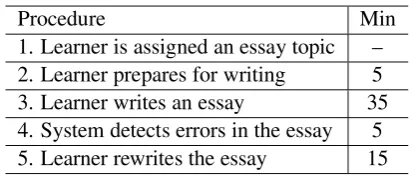
[image:3.595.308.515.94.182.2]The proposed method is based on a learning ac-tivity consisting of essay writing, error detection, and rewriting. Table 1 shows the flow of the learn-ing activity. In Step 1, an essay topic is assigned to learners. In Step 2, they have time to think about what to write with a piece of white paper for preparation (e.g., to summarize his or her ideas). In Step 3, they write an essay on a blog system in which the error detection method (Nagata et al., 2005) is implemented. This system allows them to write, submit, and rewrite their essays (though it does not allow them to access the others’ es-says or their own previous eses-says). They are not allowed to use any dictionary or textbook in this step. They are required to write ten sentences or more. In Step 4, the system detects errors in each essay. It displays each essay of which errors are indicated in red to the corresponding learner. Al-though the detection itself takes only a few sec-onds, five minutes are assigned to this step for two purposes: to take a short break for learners and to remove time differences between learners. Fi-nally, in Step 5, learners rewrite their essay using the given feedback. Here, they are allowed to use 1Setting a threshold to the probability is equivalent to set-ting a threshold to the log-likelihood and both has the same effect on the balance of recall and precision. However, we use the former because it is intuitive and easy to set a thresh-old
Table 1: Flow of learning activity
Procedure Min
1. Learner is assigned an essay topic – 2. Learner prepares for writing 5 3. Learner writes an essay 35 4. System detects errors in the essay 5 5. Learner rewrites the essay 15
a dictionary (Konishi and Minamide, 2007) and an A4 paper that briefly explains article and num-ber usage, which was made based on grammar books (Hirota, 1992; Iizuka and Hagino, 1997). They are informed that the feedback may contain false-positives and false-negatives.
2.4 How to Measure Learning Effect
Before discussing how to measure learning effect, one has to define the ability to write English. Con-sidering that this paper aims at the evaluation of error detection, it is reasonable to define the abil-ity as the degree of error occurrence (that is, the fewer errors, the better). To measure this, this pa-per uses error rate, which is defined by
Number of target errors in Step 3
Number of NPs in Step 3
(1)
Ones (“ ”) are added to the numerator and
de-nominator for a mathematical reason that will be clear shortly. The addition also has the advan-tage that it can evaluate a longer essay to be better when no errors occur.
Having defined ability, it is natural to measure learning effect by a decrease in the error rate. Sim-ply, it is estimated by applying the linear regres-sion to the number of instances of learning and the corresponding error rates.
Having said this, this paper applies an expo-nential regression instead of the linear regression. There are two reasons for this. The first is that it becomes more difficult to decrease the error rate as it decreases (in other words, it becomes more difficulty to improve one’s ability as one im-proves). The other is that the error rate is expected to asymptotically decrease to zero as learning pro-ceeds. The exponential regression is defined by
where
,
, and denote the number of instances
of learning, decrease in the error rate (learning ef-fect), and the ability before the learning starts, re-spectively. The parameters
and can be
esti-mated from experimental data by least squares. To examineHypothesis I and Hypothesis II, the learning effect parameter
must be estimated for several error detection conditions. To do this, detection performance (recall, precision, and -measure) is first defined. Recall and precision is defined by
Number of errors correctly detected
Number of errors (3) and
! Number of errors correctly detected
Number of errors detected "
(4)
respectively. Using recall and precision, -measure is defined by
#
$ %
(5)
With these, this paper compares four conditions. In the first condition, the system detects no error at all. Thus, it plays a role as a baseline. The sec-ond and third csec-onditions are recall-oriented and precision-oriented, respectively. The threshold that maximized -measure, which was 0.60, was computed by applying the error detection method to the essays obtained in the pre-experiment (in-creasing the threshold from 0 to 1, 0.05 at a time). This was selected as the recall-oriented condition. Then, the threshold for the precision-oriented con-dition was determined to be 0.90 so that its pre-cision became higher. The final condition corre-sponds to the perfect error detection. Because it was impossible to implement such error detection, a native speaker of English took this part. Here-after, the four conditions will be referred to as No-feedback, Recall-oriented, Precision-oriented, andHuman.
3 Experiments
As subjects, 26 Japanese college students (first to fourth grade) participated in the experiments. These 26 subjects were assigned to each condi-tion as follows: Human: 6; Recall-oriented: 7;
[image:4.595.330.492.95.253.2]Precision-oriented: 7;No-feedback6:.
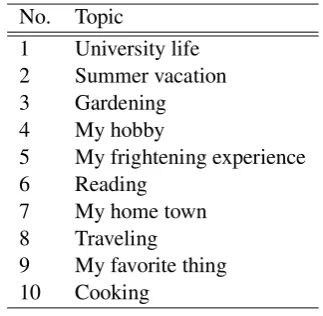
Table 2: Essay topics used in the experiments No. Topic
1 University life 2 Summer vacation 3 Gardening 4 My hobby
5 My frightening experience 6 Reading
7 My home town 8 Traveling
9 My favorite thing 10 Cooking
The number of learning activities was ten. Es-say Topics for each learning activity is shown in Table 2 They were selected based on a writing textbook (Okihara, 1985)& The experiments were
conducted from Oct. 2008 to Dec. 2008. The sub-jects basically did the learning activity twice a week on average. Some of them could not finish the ten-essays assignment during this term. Sub-jects who did not do the learning activity eight or more times were excluded from the experiments. As a result, 22 subjects were valid in the end ( Hu-man: 4;Recall-oriented: 7;Precision-oriented: 6;No-feedback: 5).
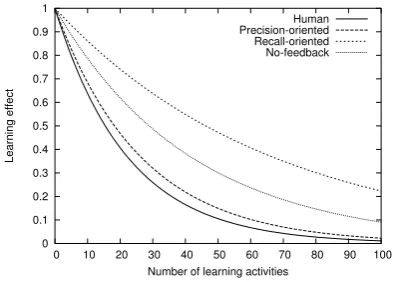
Figure 1 shows the experimental results. It shows the plots of Eq. (2) where
is calculated by averaging the estimated values of
over each condition (No-feedback: ')(+*
*
$-, ;
Recall-oriented: ./(+*
*
10 ; Precision-oriented: ! (+*
*3254
;Human: 67(+*
*
,98 ). The value of is
set to 0 for the purpose of comparison.
4 Discussion
AlthoughHypothesis I is not supported, the ex-perimental results reveal thatPrecision-oriented
has a learning effect comparable to Human. A concrete example makes this clearer. Precision-oriented takes 18 instances of learning to de-crease the error rate 32%, which is the average of the subjects at the beginning, by half. This is very near the 16 instances ofHuman. By contrast, No-feedbacktakes nearly double that (29 times), and
Recall-orientedfar more (47 times).
0 0.1 0.2 0.3 0.4 0.5 0.6 0.7 0.8 0.9 1
0 10 20 30 40 50 60 70 80 90 100
Learning effect
[image:5.595.82.279.102.243.2]Number of learning activities Human Precision-oriented Recall-oriented No-feedback
Figure 1: Experimental results
use precision-oriented error detection for writing learning assistance in a circumstance where feed-back by a human tutor is not fully available (e.g., writing classroom consisting of a number of stu-dents). According to Burstein et al. (1998), the best way to improve one’s writing skills is (i) to write, (ii) to receive feedback from a human tutor, (iii) to revise based on the feedback, and then re-peat the whole process as often as possible. How-ever, it is almost impossible to practice this in a writing classroom consisting of a number of stu-dents. In such circumstances, this can be done by using precision-oriented error detection. At the end, learners may have their essays corrected by a human tutor, which guarantees the quality of feed-back, still reducing the efforts of human tutors.
At the same time, it should be emphasized that this is not a general but a limited conclusion be-cause the experiments involve limited target er-rors and a limited number of subjects. In dif-ferent conditions (e.g., setting a higher thresh-old), Precision-oriented may outperform Hu-man, meaning that Hypothesis I is not conclu-sively rejected.
The experimental results supportHypothesis II
as we expected. The learning effect of Recall-oriented is even less than No-feedback. A possible reason for this is that false-positives, which Recall-oriented frequently makes, con-fused the subjects. By contrast, Precision-orientedachieved better learning effect because it detected a few errors with a high precision. To be
precise, Recall-oriented achieved a precision of
*
8
*
with a recall*
2
whereas a precision of 0.72
with a recall of 0.25 inPrecision-oriented. Be-sides, the fact thatRecall-orienteddetects errors more frequently with less precision (that is, the number of false-positives is higher) might make learners feel as if the precision is lower than is ac-tually. This might have discouraged the subjects inRecall-orientedfrom learning.
These results suggest interesting findings from another point of view. In the past, overall per-formance of error detection has often been eval-uated by -measure, which considers both re-call and precision. Following this convention, one comes to the conclusion thatRecall-oriented
( *
,
) is superior to Precision-oriented
( :*
23;
). Contrary to this, the experimen-tal results favor Precision-oriented over Recall-orientedin terms of learning effect. This suggest that -measure is not always the best method of evaluation.
To conclude this section, let us discuss some problems with the proposed method that the ex-periments have revealed. To obtain more gen-eral conclusions, the amount of experimental data should be increased. However, it appeared to be difficult for the subjects to do the learning activ-ity more than ten times; some subjects might have got bored with repeating the same learning activ-ities. This is the problem that has to be solved in its actual use in learning assistance. Another problem is that detection performance tends to de-crease relative to the original as learning proceeds because subjects improve (for instance, <*
,5,
for the first half and 7*
254
for the last half in
Recall-oriented). In order to investigate the rela-tion between detecrela-tion performance and learning effect more deeply, one should take this fact into consideration.
5 Conclusions
feedback by a human tutor, although the first hy-pothesis was not supported. Considering the find-ings, this paper has come to the conclusion that one should use precision-oriented error detection to assist writing learning in a circumstance where feedback by human tutors is not fully available. By contrast, the experiments supported the second hypothesis. They also showed that -measure was not always the best way of evaluation.
In future work, we will expand the experiments in terms of both the number of subjects and tar-get errors, such as errors in preposition, to obtain more general conclusions. The essays which are collected and error-annotated2in the experiments
are available as a learner corpus for research and education purposes. Those who are interested in the learner corpus should contact the author.
References
Bitchener, John, Stuart Young, and Denise Cameron. 2005. The effect of different types of corrective feedback on ESL student writing. Journal of
Sec-ond Language Writing, 14(3):191–205.
Brockett, Chris, William B. Dolan, and Michael Ga-mon. 2006. Correcting ESL errors using phrasal SMT techniques. In Proc. of 21th International Conference on Computational Linguistics and 44th Annual Meeting of the Association for
Computa-tional Linguistics, pages 249–256, Sydney,
Aus-tralia, July.
Burstein, Jill, Karen Kukich, Susanne Wolff, Chi Lu, Martin Chodorow, Lisa Braden-Harder, and Mary D. Harris. 1998. Automated scoring using a hybrid feature identification technique. InProc. of 36th Annual Meeting of the Association for Compu-tational Linguistics and 17th International
Confer-ence on Computational Linguistics, pages 206–210.
Chodorow, Martin and Claudia Leacock. 2000. An unsupervised method for detecting grammatical er-rors. InProc. of 1st Meeting of the North America
Chapter of ACL, pages 140–147.
Chodorow, Martin and Claudia Leacock. 2002. Tech-niques for detecting syntactic errors in text. In
IE-ICE Technical Report (TL2002-39), pages 37–41.
Chodorow, Martin, Joel R. Tetreault, and Na-Rae Han. 2007. Detection of grammatical errors involving
2Including not only errors in articles and number but also other types of error.
prepositions. InProc. of 4th ACL-SIGSEM Work-shop on Prepositions, pages 25–30.
Ferris, Dana and Barrie Roberts. 2001. Error feed-back in L2 writing classes: How explicit does it need to be? Journal of Second Language Writing, 10(3):161–184.
Han, Na-Rae, Martin Chodorow, and Claudia Leacock. 2004. Detecting errors in English article usage with a maximum entropy classifier trained on a large, di-verse corpus. InProc. of 4th International
Confer-ence on Language Resources and Evaluation, pages
1625–1628.
Han, Na-Rae, Martin Chodorow, and Claudia Leacock. 2006. Detecting errors in English article usage by non-native speakers. Natural Language Engineer-ing, 12(2):115–129.
Hirota, Shigeaki. 1992. Mastery (in Japanese). Kiri-hara Shoten, Tokyo.
Iizuka, Shigeru and Satoshi Hagino. 1997. Prestige. Buneido, Tokyo.
Izumi, Emi, Kiyotaka Uchimoto, Toyomi Saiga, Thep-chai Supnithi, and Hitoshi Isahara. 2003. Auto-matic error detection in the Japanese learners’ En-glish spoken data. InProc. of 41st Annual Meeting of ACL, pages 145–148.
Konishi, Tomoshichi and Kosei Minamide. 2007.
Genious English-Japanese dictionary, 4th ed.
Taishukan, Tokyo.
Nagata, Ryo, Fumito Masui, Atsuo Kawai, and Naoki Isu. 2004. Recognizing article errors based on the three head words. In Proc. of Cognition and Ex-ploratory Learning in Digital Age, pages 184–191.
Nagata, Ryo, Takahiro Wakana, Fumito Masui, Atsuo Kawai, and Naoki Isu. 2005. Detecting article er-rors based on the mass count distinction. InProc. of 2nd International Joint Conference on Natural
Lan-guage Processing, pages 815–826.
Nagata, Ryo, Astuo Kawai, Koichiro Morihiro, and Naoki Isu. 2006. A feedback-augmented method for detecting errors in the writing of learners of En-glish. In Proc. of 44th Annual Meeting of ACL, pages 241–248.
Okihara, Katsuaki. 1985. English writing (in Japanese). Taishukan, Tokyo.
Yarowsky, David. 1995. Unsupervised word sense disambiguation rivaling supervised methods. In
Proc. of 33rd Annual Meeting of ACL, pages 189–