ABSTRACT
WiMAX technology is global ability for Microwave Access in Wireless Communication IEEE 802.16e. Deployment of Video on Demand (VoD) services over the (WiMAX) has now become one of the strong concern subjects in research area, and is looked to be the primary revenue source in the future time and the efficiency of video streaming over fourth generation 4G is the key to making this. In this paper the performance of various QAM and QPSK modulation techniques by applying the many mobility patterns sch as static, ramdom, and trajectory for Video on Demand (VoD) over WiMAX Network . The work is done in terms of the traffic sent, throughput and traffic received by using OPNET simulator 14.5. Simulation result indicates that when nodes are moving by SVC codec scheme in WiMAX, the best result is obtained and total performance of QPSK modulation technique is better as compared to QAM modulation.
Keywords: VoD, QAM, QPSK, OPNET, SVC
I. INTRODUCTION
For Microwave Access, (WiMAX) technology is one of the best solution of fourth-generation wireless network which is capable of providing high Quality of Service (QoS) and offers high data rates for IP networks. The Quality of Service (QoS) and high data rate assurance offered by this technology has made it commercially feasible to support multimedia applications such as mobile TV broadcasting, video gaming, and video Telephony. The range provided by WiMAX base station for wideband wireless access is upto 3 to 10 miles (5 to 15 km) for mobile stations and 30 miles (50 km) for fixed stations with a utermost data rate of up to 70 Mbps [1- 3]. The WiMAX standard product is particularly for fixed and mobile services. It was reexamined to deal with full mobility applications. Thus, WiMAX supports full mobility for fixed and mobile systems. It provides the following characteristics [4]: provide high data rates; supports fixed, mobile and nomadic applications thereby meeting the mobile and fixed networks; and network architectures has flexibility; in summation to its easy and cost-effective to deploy. Furthermore, it can provide the support to point to point and point to multipoint connection, also provide the support to IP based architecture; and has optimized handover which provide support to full mobility applications i.e. Voice over Internet
Protocol. It also has the power saving process which enhances the battery life of handheld equipments.
Internet Protocol Television (IPTV) allows digital television services over internet protocol for business and residential users at a low cost. Furthermore,
________________________________________________
IPTV is a system, able of getting and showing a video stream using IP [5]. Users can obtain IPTV services anytime and anywhere to mobile devices. IPTV services can be categorized according to their type of content and services [6]: Video-on-Demand content: In this type of IPTV service, a client is permitted to surf an online movie book, to see trailers, and to choose a movie of interest. In this a client can request or cease the video content any time and is not limited by a specific TV schedule, unlike the case of live video. The playout of the chosen movie begins immediately on the client’s TV or PC. Live content: In this IPTV service a client is needed to access a specific channel for the content at a particular time, like to accessing a formal TV channel. A client cannot request to see the content from the starting if she or he joins the channel late. Like to a live satellite broadcast, live content over IPTV can be a show converted in real-time from a remote location or a show of a live event i.e. a soccer game. Managed services: It makes capable the video content to be provided by the phone companies who control the IPTV business or obtained from organized content suppliers, in which the content is normally well-managed in terms of the playout quality and coding, and also in the selection of video entitles. Bandwidth for delivery and client instruments are set up cautiously for serving the best quality and playout performance to the clients. Unmanaged services: In this type of service the technology of IPTV itself makes capable the playout of an on-demand or any live video content over the internet from any third party. Thus, nothing ceases a client from accessing video content directly online from any third party i.e. YouTube (or Google Video), an organization or individuals. With a broad range of options for content selection, clearly the unmanaged services have a benefit at the cost of non-guaranteed playout performance and quality.
II. LITERATURE REVIEW
Recently, some works have been done on performance studies of video streaming over WiMAX networks. Some researchers have explored WiMAX in the context of stored video applications and real time. For example, e J. Hamodi et al. [5] formulated a framework to dimension the network for IPTV service suppliers that proposes VoD(Video on Demand) services to their clients in heterogeneous surroundings. The proposed simulation and modelling technique permits us to decide the optimal deployment
A Comparative Performance Analysis of AODV and DSR
Routing Protocols for Vehicular Ad-hoc Networks
(VANETs)
Sheetal Goyal
M-Tech Student & Department of CSE & Delhi College of Technology & Management Palwal, Haryana, India
1[email protected] @gmail.com
Performance Analysis of IPTV over WiMAX using QAM and
QPSK Modulation
Pinki Chauhan 1, InderjeetYadav2
M-Tech Student1, Assit. Prof. 2 &Department of CSE & NGF College of Engineering &Technology Palwal, Haryana, India
1835 ISSN: 2278 – 7798 All Rights Reserved © 2015 IJSETR
conditions or terms for a given number of possible IPTV users while fulfilling predefined QoE measures. On the other hand, Md. Islam et al. [10] Talked about issues concerning challenges for providing IPTV over WiMAX. These issues also include the challenges of QoS needs. Also, they define the IPTV services transmission over WiMAX technology, and the affect of various parameters in WiMAX network when applying this service. An intelligent controller has been made based on fuzzy logic to examine QoS needs for giving IPTV over WiMAX in [11] is applied to study three parameters: losses, jitter and delays that affect the QoS (Quality of Service) for providing IPTV services. The objective is to determine a maximum value of link usage between links of the network.
H. Lee et al. [12] utilized OPNET Simulator to plan, characterize, and for the performance comparison of video streaming over ADSL and WiMAX. After simulation, the results points that ADSL shows behaviour neared to the ideal values for the defined performance metrics although WiMAX presents predicting behaviour within the limits of the defined metrics. The work in [13] is continuing the work in [12] to include integration and generation of a streaming audio constituent, also increases the protocol list to include the real time protocol layer, physical layer and characterization of WiMAX media access control (MAC). To integrate WiMAX mobility network topology is redesigned. Simulation assumptions are applied to detect the affect on the four performance metrics.
Gill et al. [14] applied OPNET Simulation for the comparison of performance metrics between WiMAX and ADSL by changing the dimensions of network objects i.e. traffic load and by specifying the physical features to change packet loss, BLER, jitter, delay, and throughput. Simulation results present considerable packet loss. ADSL shows significantly better performance as compared to WiMAX client stations.
Hamodi et al. [8] designed, characterized, and deployed the performance of video streaming over WiMAX under various video codec schemes ( AVC and SVC) by using the OPNET simulator. After simulation author shows that for video streaming over WiMAX. SVC video codec is a suitable video codec scheme. The work in [9] is continuing the work in [38] to inquire the performance WiMAX for video streaming under two dissimilar terrain surroundings i.e. Free Space, Outdoor to Indoor and Pedestrian. The simulation results show that, a simple path loss model is space path loss model with all other parameters associated to building and terrain density set as fixed.
However, lots of latest works study the WiMAX performance under various modulation and coding schemes. For instance, R. Gill et al. [15] examined the physical layer of WiMAX under various modulation techniques i.e. QPSK, BPSK, QAM and comparison of QPSK modulation with and without the use of Forward Error Correction techniques. Islam et al. [4] measured WiMAX system under various combinations of digital modulation techniques (QPSK, BPSK, 16-QAM and 64-QAM) and many fading channels (Rayleigh and Rician) and communication channels AWGN, and the Reed-Solomon (RS) encoder with Convolution encoder with ½ and 2⁄3 rated codes in FEC channel coding is also incorporated by the WiMAX system.
III. Fundamental Wimax Concepts
WiMAX systems have five important design sections [5]
A. Base Station (BS):
The base station (BS) is the hub that systematically connects wireless subscriber appliances to administrator systems. The administers access to the administrator systems and the BS maintains communication with subscriber appliances. A BS consists of the foundation constituents important to authorize wireless communications such as handsets, radio wires and other electromagnetic waves carrying gear. BSs are generally located hubs, still they might also be used as a important aspect of portable answers for example, a BS may be connected to a vehicle to provide communications to near-by WiMAX appliances.
B. Subscriber Station (SS):
The Subscriber station is a fixed WiMAX-expert radio model that provides communications with a base station.
C. Mobile Station (MS):
A mobile station is a SS that is designed to be used while as a component of movement at up to vehicular steps. In contrast of SSs, MSs generally are battery worked and in this manner, use improved force administration. MSs contain WiMAX radios installed in cellular telephones and cellular laptops.
D. Relay Station (RS):
Relay stations are SSs planned to forward movement in a multi-hop security Zone to dissimilar SSs or RSs. The Relay Stations may be in an varied area (e.g., attached to a building) or portable (e.g., installed in a vehicle).
E. Operator Network:
The administrator system covers infrastructure network functions that provide IP network administrations and radio access to WiMAX endorser. These abilities are characterized in WiMAX as the integration administration system (IP connectivity) and the entrance administration system (radio access).
IV. EXPERIMENTAL SETUP
In this we analysis the Effect of Mobility patterns of Mobile WiMAX Subscriber on Video on Demand (VoD) over WiMAX by using OPNET Simulator for QAM and QPSK modulation techniques. OPNET Simulator 14.5 was used to analyze the performance of Wimax. In these scenarios Subscriber is moving with different mobility patterns. In first scenario the mobility pattern of nodes is random, in second scenario the mobility pattern of nodes is along the trajectory and in third scenario some nodes are fixed and some nodes are moving randomly. These scenarios are repeated for different modulation techniques (QAM, QPSK). To compare this SVC code is used. In our simulation we had taken 7 Hexagonal cells. Each cell has a radius of 30 Km. In each cell there is one Base station and 10 mobile nodes. These nodes are circularly placed. The BS connected to the IP backbone via a SONET OC1 link. The server node is also connected to backbone using ppp-sonet-oct1 link.
RESULTS
Here results of different modulation techniques for different mobility patterns are given:
1. Throughput: Throughput shows the how much data can be transferred from one place to another place in a given amount of time.
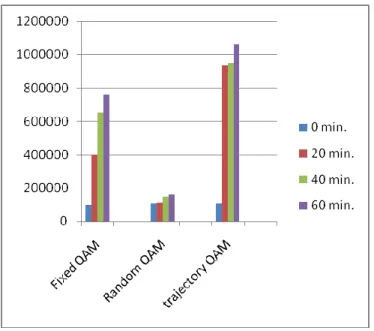
Fig 1: QAM 64 for different Mobility patterns
Fig 1 shows that when the mobile nodes that are moving according to our QAM trajectory gives large throughput as compared to fixed and random. When the some nodes move and some are fixed than the throughput is 760000 bits/sec and when it is moving randomly than throughput is 130000 bits/sec. These result shows that the performance of QAM under trajectory better than random and fixed.
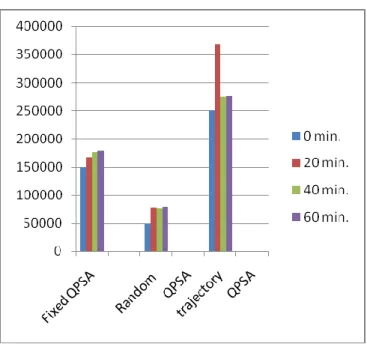
Fig 2: QPSK for different Mobility patterns
Fig 2 shows that when the mobile nodes are moving according to our trajectory throughput is large as compared to random and static.
2. Traffic Received
Fig 3: Traffic received for Mobility patterns using 64QAM3/4
Fig 3 shows that when the mobile nodes are moving on the fixed way the traffic received is 120 bits/sec. When they are moving and some are random then the traffic received are 61.23 and when they are moving in trajectory then the traffic received is 122. The result shows that when then nodes are moving under trajectory then the result is better than random and fixed.
Fig 4: Traffic received for Mobility patterns using QPSK Fig 4 shows that when the mobile nodes are moving on the fixed way the traffic received are 423 bits/sec. When they are moving and some are random then the traffic received are 700 bits/sec. and when the mobile nodes moving anywhere then the traffic received are 789 bits/sec. The result shows that when then nodes are moving under trajectory then the result is better than random and fixed.
1837 ISSN: 2278 – 7798 All Rights Reserved © 2015 IJSETR
Traffic Sent
Fig 5: Traffic sent for Mobility patterns using 64QAM3/4 Fig 5 shows that when the mobile nodes are moving on the fixed way the traffic sent are 178978 bits/sec. When they are moving and some are random then the traffic sent are 86756 bits/sec. and when the mobile nodes moving anywhere then the traffic sent are 363745 bits/sec . The result shows that when then nodes are moving under trajectory then the result is better than random and fixed.
Fig 6: Traffic sent for Mobility patterns using QPSK Fig 6 shows that when the nodes are moving on the way which is given by us the traffic sent is 65000. When they are moving and some are fixed then the traffic sent is 42000 and
when they are moving anywhere then the traffic sent is 48000. The result shows that when then nodes are moving under given way then the result is better than other mobility patter.
CONCLUSION
In this paper we analysis the performance of IPTV over Wimax by varying Mobility pattern of Wimax in terms of Traffic Sent Traffic Received and Throughput is carried out for QAM and QPSK modulation techniques. The motto of this research is to address the performance metrics of QoS for video streaming when deploying over WiMAX access technology. We using OPNET Modeler is used to design and characterize the performance parameters of SVC video streaming with QAM and QPSA modulation techniques to WiMAX video subscribers using QoS performance metrics for different mobility pattern of nodes. In our simulation we had taken mobile nodes are circular within hexagonal cell of radius 30 km and video streaming SVC codes are used. Simulation is carried out for 500 seconds. Our Simulation results showed that when the mobile nodes are moving in a given place the result is best, the result also shows that the performance of QPSK technique is better than other techniques. In Future we can do this work by applying VOIP and MPLS techniques for large scale.
REFERENCES
[1] W. Hrudey, and Li. Trajkovic, “Mobile WiMAX MAC and PHY layer optimization for IPTV”, Journal of Mathematical and Computer Modeling, Elsevier, Vol.53, pp. 2119–2135, 2011.
[2] R. Gill, T. Farah, and Li. Trajkovic, “Comparison of WiMAX and ADSL performance when streaming au-dio and video content”, Proc. OPNETWORK 2011, Washington, DC, Aug. 2011.
[3] J. Hamodi, and R. Thool, “Investigate The Perfor-mance Evaluation of IPTV over Wimax Networks”, International Journal of Computer Networks & Communications (IJCNC), Vol.5, No.1, pp. 81-95, 2013.
[4] J. Hamodi, and R. Thool, “Performance Evaluation of IPTV over WiMAX Networks Under Different Terrain Environments”, International Journal of Engineering Inventions, Vol.2, No.2, pp. 21-25, 2013.
[5] J. Hamodi, K. Salah, and R. Thool, “ Evaluating the Performance of IPTV over Fixed WiMAX”, Interna-tional Journal of Computer Applications, Vol.84, No.6, pp. 35-43, Dec. 2013.
[6] J. Hamodi, R. Thool, K. Salah, A. Alsagaf, and Y. Holba, “Performance Study of Mobile TV over Mobile WiMAX Considering Different Modulation and Cod-ing
Techniques”, Int. J. Communications,Network and System Sciences, Vol.7, No.1, pp. 10-21, Jan. 2014.
[7] P. Telagarapu, G. Naidu, and K. Chiranjeevi, “Analy-sis of Coding Techniques in WiMAX”, International Journal of Computer Applications, Vol.22, No.3, pp. 19-26, 2011.
[8] Md. Islam, R. Mondal, and Md. Hasan, “Performance Evaluation of WiMAX Physical Layer under Adaptive Modulation Techniques and Communication Chan-nels”, International Journal of Computer Science and Information Security, Vol.5, No.1, pp. 111–114, 2009.
[9] Md. Islam, and T. Isalm, “Performance of WiMAX Physical Layer with Variations in Channel Coding and Digital Modulation under Realistic Channel Conditions”, International Journal of Information Sci-ences and Techniques, Vol. 2, No. 4, pp. 39-47, 2012.
[10] A. Rehman, T. Khan, and S. Chaudhry, “Study of WiMAX Physical Layer under Adaptive Modulation Technique using Simulink”, International Journal of Scientific Research Engineering & Technology, Vol.1, No.5, pp. 05-11, 2012.
[11] A. Abdennour, “VBR Video Traffic Modeling and Synthetic Data Generation Using GA-Optimized Volterra Filters”, International Journal of Network Management, Vol.17, pp. 231-241, 2006.
[12] H. Lee, T. Kwon, and D. Cho, “An enhanced uplink scheduling algorithm based on voice activity for VoIP services in IEEE 802.16d/e systems”, IEEE Communications Letters, Vol.9, No.8, pp. 691–692, 2005.
[13] So-In. Chakchai, R. Jain, and A. Al-Tamimi, “A Scheduler for Unsolicited Grant Service (UGS) in IEEE 802.16e Mobile WiMAX Networks”, IEEE Systems Journal, Vol.4, No.4, pp. 487-494, 2010.
[14] W. Hrudey and Lj. Trajkovic, "Mobile Wimax MAC and PHY layer optimization for IPTV," Journal of Mathematical and Computer Modeling, Elsevier, Mar. 2011, vol. 53, pp. 2119–2135.
[15] R. Gill, T. Farah, and Lj. Trajkovic, “Comparison of WiMAX and ADSL performance when streaming audio and video content,” OPNETWORK 2011, Washington, DC, Aug. 2011.
[16] D.J. Reid, A. Srinivasan, and W. Almuhtadi, "QoS Performance Testing of Multimedia Delivery over WiMAX Networks," First International Conference on Data Compression, Communications and Processing (CCP), 2011, vol., no., pp. 271-274.