BIROn - Birkbeck Institutional Research Online
Berggren, Nick and Eimer, Martin (2016) The control of attentional target
selection in a colour/colour conjunction task.
Attention, Perception, &
Psychophysics 78 (8), pp. 2383-2396. ISSN 1943-3921.
Downloaded from:
Usage Guidelines:
Please refer to usage guidelines at or alternatively
1
Running Head: Attentional control of colour/colour conjunctions
The control of attentional target selection in a colour/colour conjunction task
Nick Berggren and Martin Eimer
Department of Psychological Sciences, Birkbeck College, University of London, Malet Street, London WC1E 7HX, UK
2 ABSTRACT
To investigate the time course of attentional object selection processes in visual search tasks
where targets are defined by a combination of features from the same dimension, we
measured the N2pc component as an electrophysiological marker of attentional object
selection during colour/colour conjunction search. In Experiment 1, participants searched for
targets defined by a combination of two colours, while ignoring distractor objects that
matched only one of these colours. Reliable N2pc components were triggered by targets and
also by partially matching distractors, even when these distractors were accompanied by a
target in the same display. The target N2pc was initially equal in size to the sum of the two
N2pc components to the two different types of partially matching distractors, and became
superadditive from about 250 ms after search display onset. Experiment 2 demonstrated that
the superadditivity of the target N2pc was not due to a selective disengagement of attention
from task-irrelevant partially matching distractors. These results indicate that attention was
initially deployed separately and in parallel to all target-matching colours, before attentional
allocation processes became sensitive to the presence of both matching colours within the
same object. They suggest that attention can be controlled simultaneously and independently
by multiple features from the same dimension, and that feature-guided attentional selection
processes operate in parallel for different target-matching objects in the visual field.
3 INTRODUCTION
When searching for targets in visual scenes, top-down attentional control is necessary
to detect and select task-relevant features and objects and to ignore irrelevant items. The
allocation of attention can be guided by features known to be associated with target stimuli.
For example, during search for a specific colour (e.g., red), attention will be rapidly biased
towards red objects and not towards objects in different colours, even when these are
perceptually salient (e.g., Folk & Remington, 1998). The maintenance of known featural
properties of target objects has been described as activating an attentional template (e.g.,
Desimone & Duncan, 1995; Duncan & Humphreys, 1989) or attentional control setting (e.g.,
Folk, Remington & Johnston, 1992). These templates are believed to be initially represented
in visual working memory, but may be transferred to a long-term memory store when
observers search for the same target features across a number of trials (e.g., Carlisle, Arita,
Pardo, & Woodman, 2011). Attentional templates can modulate neural activity in visual areas
prior to stimuli being presented, such as increasing activation in colour-selective versus
motion-selective visual areas when anticipating a target in one dimension versus another
(e.g., Shibata et al., 2008; see Eimer, 2014, 2015, for reviews). While attentional templates
have been shown to bias attention towards a particular feature (e.g., red) or a feature
dimension (e.g., colour; see e.g., Folk & Anderson, 2010; see also Müller, Heller, & Ziegler,
1995; Töllner, Gramann, Müller, Kiss, & Eimer, 2008), detecting a conjunctively defined
target (e.g., a red square among blue squares and red circles) is typically less efficient than
finding objects with a unique target-defining feature (Treisman & Gelade, 1980). Indeed,
these kinds of search are more akin to real-world scenes, where target objects are usually
composed of multiple features. Thus, the question how target templates may operate beyond
4
The mechanisms that may be involved in search for targets defined by a feature
conjunction have been described by a leading computational model of visual search (Guided
Search; Wolfe, 1994; 2007). According to this model, individual feature channels analyse the
properties of incoming sensory information from different dimensions in parallel across the
visual field. Signals from target-defining features are weighted more strongly than signals
from task-irrelevant features, and these weighted signals are then combined on a spatiotopic
saliency map, which controls where attention will be deployed. As a result, attention is most
likely to be allocated first to objects that match the greatest number of target-defining
features, because these stimuli trigger the highest activation on the salience map. Guided
Search assumes that the selection of particular objects in a search display operates in a serial
fashion, for one object at a time. At a subsequent stage of attentional processing where the
identity of selected objects and their status as targets or nontargets is determined, multiple
objects can be analysed in parallel (Wolfe, 2007). This hybrid model of attentional
mechanisms during visual search, where an early serial object selection stage is followed by a
parallel object identification stage, has been described in analogy to a carwash where cars
enter one-by-one but multiple cars can be processed at any one time (Moore & Wolfe, 2001).
According to Guided Search, signals from different target-defining features can be
combined to control the deployment of spatial attention during visual search for conjunctively
defined targets when these features come from different dimensions (e.g., during search for
red squares among blue squares and red circles). In contrast, the model assumes that no such
guidance of attention by multiple target features is available when targets are defined by a
combination of features from the same dimension (e.g., two different colours). According to
the most recent version of Guided Search (Wolfe, 2007), only a single input signal from a
particular feature dimension on the saliency map can be selectively weighted, and only one
5
search. This specific assumption is based on experiments demonstrating that search for
targets defined by a conjunction of two colours or two orientations is much less efficient than
search for colour/shape conjunctions (e.g., Wolfe et al., 1990; see also Wing & Allport,
1972). However, other studies have suggested that colour/colour conjunction search can be
relatively efficient (e.g., Carrasco, Ponte, Rechea, & Sampedro, 1998), and that pairs of
colour/colour conjunction targets can be processed in parallel (Linnell & Humphreys, 2001).
For example, Carrasco et al. (1998) showed that when all distractor objects share the same
non-target colour, practice led to highly efficient colour/colour conjunction search,
presumably due to the colour-based perceptual grouping of distractors and the subsequent
rapid rejection of these grouped non-target objects (see also Linnell & Humphreys, 2001;
2002, for further evidence of within-dimension grouping effects in this type of search task).
The assumption that colour/colour conjunction search cannot be guided by both
target-defining features has also been challenged by behavioural and electrophysiological results
from spatial cueing experiments (Irons, Folk, & Remington, 2012; Grubert & Eimer, in press)
which suggest that search templates for multiple colours can be activated simultaneously.
Thus, the question whether qualitatively different attentional guidance processes are activated
when target-defining features come from the same or from different dimensions remains
unresolved.
To obtain more precise insights into the cognitive and neural processes that are
involved in the attentional selection of conjunctively defined targets during visual search and
into the time course of these processes, event-related brain potential (ERP) measures can be
employed. In particular, the N2pc component has been used in many recent studies as an
electrophysiological marker for the attentional selection of objects with target-matching
features in visual search tasks. The N2pc is an enhanced negativity over occipito-temporal
6
space where a candidate target object is present among distractors in visual search displays,
and reflects the deployment of spatial selection of such objects (Eimer, 1996; Luck &
Hillyard, 1994). N2pc studies of visual search have typically used displays where only a
single object with target-matching features was present. To use the N2pc as a marker of
attentional selection processes that take place during search for conjunctively defined targets,
this component needs to be measured in response to displays that contain the target as well as
nontarget objects with some but not all target-defining features. This requires search displays
where some objects appear on the vertical meridian (i.e., above and below fixation). Because
the N2pc is always elicited contralaterally to objects with target-matching features in the left
or right visual field, no N2pc is triggered when such objects appear on the vertical meridian
(e.g., Woodman & Luck, 2003; Hickey, McDonald, & Theeuwes, 2006; Eimer, Kiss, &
Nicholas, 2011; Eimer & Grubert, 2014b). When a candidate target object is presented on the
vertical midline together with another potential target on the horizontal midline, the N2pc
will exclusively reflect the selection of the horizontal object, independent of the simultaneous
attentional processing of the vertical object.
Because the N2pc component is time-locked to the onset of a search display, it is most
suitable for investigating the time course of the attentional selection processes that are
elicited rapidly after display onset. For this reason, most N2pc studies of visual search have
used search displays where the detection and selection of possible target objects is relatively
straightforward (e.g., displays where such candidate targets are feature singletons or
otherwise perceptually salient, or displays with small set sizes). Even N2pc studies that
investigated the time course of multiple target selection processes (e.g., Woodman & Luck,
1999; Eimer & Grubert, 2014b; Grubert & Eimer, 2016) employed perceptually salient target
7
from distractors, the allocation of attention to candidate target objects is typically slower and
more variable in time, which results in small and temporally smeared N2pc components.
In a recent study from our lab (Eimer & Grubert, 2014a), the N2pc was used to
investigate how attention is deployed during visual search for a conjunction of features from
two different dimensions (colour and shape). Participants searched for targets that were
defined by a specific colour/shape combination (e.g., blue squares) in search displays that
contained two objects on the left and right side, and two objects on the vertical meridian
(above and below fixation). On no-competition trials, only one object with target-matching
features was present, and this could either be the target or a distractor object that matched the
target colour (e.g., a blue circle) or its shape (e.g., a red square). On competition trials, the
target and a partially matching distractor object were both present in the same display, and
one of these objects always appeared on a horizontal midline and the other on a vertical
midline. This made it possible to measure the N2pc as a marker of the attentional selection of
targets or of partially matching distractor objects on these competition trials. The early phase
of the N2pc elicited by target objects was identical in size and onset latency to the sum of the
two N2pc components triggered by colour-matching and shape-matching distractors. This
additivity of the N2pc suggests that attention was initially allocated independently to both
target-defining features. The observation that partially target-matching objects elicited
additive N2pc components, also on competition trials when they were accompanied by a
target in the same display, indicates that this initial feature-based deployment of attention
operates in parallel and independently for different objects with target-matching features.
However, between 225-250 ms after search display onset, the N2pc to targets became larger
than the summed contribution of the two N2pc components to colour-matching and
shape-matching distractors. This emergence of a superadditive target N2pc was interpreted as
8
and attentional control processes became object-based (see Eimer & Grubert, 2014a, for a
more detailed discussion).
These N2pc results suggest that the attentional selection of targets defined by a
conjunction of features from two different dimensions (colour and shape) is initially
controlled in a parallel feature-based fashion before it becomes sensitive to the presence of
feature conjunctions during a subsequent object-based phase of attentional selectivity. The
parallel nature of the initial feature-based phase of attentional object selection is not in line
with the architecture of attentional mechanisms proposed by the Guided Search model.
Although this model postulates that conjunction search is guided by a combination of signals
from different feature channels, the attentional selection of individual objects is assumed to
operate in a serial fashion (Wolfe, 2007). In the current study, we employed the N2pc
component to investigate the allocation of attention during visual search for targets that are
defined by a combination of features from the same dimension (colour), in order to find out
whether these processes are qualitatively similar or different from the attentional selection
mechanisms that operate when targets are specified across feature dimensions. The
procedures used in Experiment 1 were similar to those previously employed to investigate
colour/shape conjunction search (Eimer & Grubert, 2014a). Each search display contained
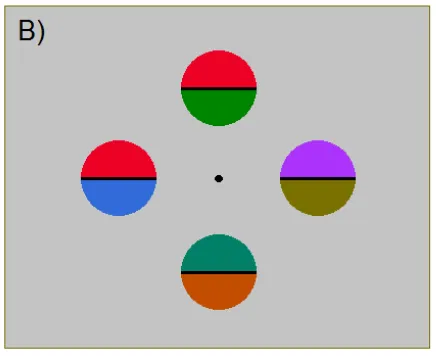
four circular objects with different colours in their top and bottom halves (Figure 1).
Participants had to detect the presence or absence of a target object that was defined by a
specific colour/colour combination (e.g., red above green). The small display set size reduces
the possibility that target selection was primarily based on the colour-based perceptual
grouping of distractors, as previously found for colour/colour conjunction search with dense
displays (e.g., Carrasco et al., 1998; Linnell & Humphreys, 2001). On no-competition trials,
one target-matching object (either the target or a distractor object that matched the top or
9
non-target objects. On competition trials, the target and a partially matching distractor object
were present in the same display, and one of these objects appeared on the horizontal midline
and the other on the vertical midline. N2pc components were measured for targets and
partially matching distractor objects, separately for no-competition and competition trials.
If attentional selection processes that are activated during colour/colour conjunction
search are similar to the processes that operate when targets are defined across different
feature dimensions, the pattern of N2pc results in Experiment 1 should be similar to that
observed in the previous colour/shape conjunction search experiment (Eimer & Grubert,
2014a). The two types of distractors with a target-matching colour in their top or bottom
halves should both elicit N2pc components, and the sum of these two N2pcs should initially
equal the size of the N2pc elicited by targets. This would show that the early rapid
deployment of attention was controlled in a feature-based fashion by independent guidance
signals associated with two different target-defining attributes within the same dimension.
Furthermore, partially target-matching distractors should elicit reliable and additive N2pc
components also on competition trials, in spite of the fact that a target object was
simultaneously present on these trials, indicating that attention was allocated independently
and in parallel to all objects with target-matching colours. During a later phase of attentional
processing, the target N2pc may become larger than the sum of the two N2pcs to partially
matching distractors, with the emergence of such a superadditive N2pc marking the transition
from independent feature-based to integrated object-based attentional control processes
(Eimer & Grubert, 2014a). An alternative possibility is that in contrast to search for targets
defined across different dimensions, attentional selection mechanisms cannot be guided
jointly by features from the same dimension, as proposed by the Guided Search model
(Wolfe, 2007). In this case, a different pattern of N2pc results should be observed in
10
differ in their ability to attract attention, N2pc components should be similar in size for these
two types of objects throughout the N2pc measurement window.
EXPERIMENT 1
Method
Participants
Fifteen paid participants were recruited for Experiment 1. Three participants were
excluded due to excessive artifacts during EEG recording (two for eye blinks on more than
50% of all trials, one for horizontal eye movements on more than 35% of all trials), leaving a
final sample of 12 participants (mean age = 31 years, SD = 6; six male; two left-handed). All
participants had normal or corrected-to-normal vision, reported normal colour vision, and
were naïve to the experimental hypotheses.
---
Insert Figure 1 about here
---
Stimuli and Procedure
E-Prime (Psychology Software Tools, Inc.) was used to create and execute the
experiment, presented on a 24 inch Samsung LCD monitor (100 Hz; 1280 x 1024 screen
resolution) at a viewing distance of about 90 cm, and controlled on an LG computer PC.
Participants’ manual responses were recorded via keyboard button presses. Each trial in the
experiment consisted of stimuli presented on a light grey background, with a black fixation
11
displays, four coloured circular objects were presented above, below, to the left, and to the
right of fixation at an eccentricity of 1.2°. Each object measured 1.2° x 1.2°, and contained
two equally large top and bottom portions that were presented in two different colours. The
colours used in the experiment were red (CIE x/y coordinates: .621/.333), orange (.550/.393),
gold (.401/.482), green (.270/.562), cyan (.217/.358), blue (.183/.183), magenta (.272/.164),
and dark grey (.288/.312). All colours were equiluminant (30 cd/m2), measured using a
Konica Minolta CS-100A luminance and colour meter. The centre of each colour object
contained a small horizontal black line separating the two colours (see Figure 1).
Each search array was presented for 100 ms. Participants’ task was to respond to the
presence or absence of a pre-defined colour object combination (e.g., red above green circle)
using the numeric keypad (‘1’ for present, ‘2’ for absent) as quickly and as accurately as
possible. The two target-defining colours were selected randomly and independently for each
participant, with the exception that dark grey never served as one of the target colours. The
different types of search displays are illustrated in Figure 1. Targets were present on 50% of
all trials. There were two types of task-irrelevant objects. Non-target objects contained two
task-irrelevant colours. Partially matching distractor objects contained one of the two
target-defining colours in its correct position within the object, but together with another
task-irrelevant colour (e.g., red above blue when the target was red above green). On
no-competition trials, search displays contained a single object with target-matching features,
which could either be the target itself or a partially matching distractor. The target or partially
matching distractor appeared with equal probability and unpredictably on the horizontal or
vertical meridian on no-competition trials. On competition trials, a target and partially
matching distractor both appeared in the same display together with two other non-target
objects. On half of these trials, the target appeared on the horizontal midline and the partially
12
half of all competition trials. With the exception of competition trials where a distractor
object shared one colour with the target, two identical colours never appeared within the
same display. No-competition and competition trials were presented in random order in all
blocks. Following search display offset, participants had to execute a response within a 2000
ms interval. Once a response was registered, there was an intertrial interval of 1500 ms before
the search display on the next trial was presented.
Participants completed a practice block of 12 trials, before undertaking 16
experimental blocks of 96 trials. Within each block, there were 48 target-present and 48
target-absent trials. On target-present trials, targets appeared equally often on the vertical
midline (24) or the horizontal midline (24). On 32/48 target-present trials, a partially
matching distractor was also present in the opposite axis to the target. On target-absent trials,
32/48 trials contained a partially matching distractor object, and the remaining 16 trials
contained four non-target objects with two task-irrelevant colours.
EEG Recording and Data Analysis
EEG was DC-recorded from 27 scalp electrodes, mounted on an elastic cap at sites
Fpz, F7, F8, F3, F4, Fz, FC5, FC6, T7, T8, C3, C4, Cz, CP5, CP6, P9, P10, P7, P8, P3, P4,
Pz, PO7, PO8, PO9, PO10, and Oz. A 500-Hz sampling rate with a 40 Hz low-pass filter was
used, with no other offline filters applied. Channels were referenced online to a left-earlobe
electrode, and re-referenced offline to an average of both earlobes. Trials with eye-movement
(exceeding ±30 µV in the HEOG channels), eye blink (exceeding ±60 µV at Fpz) and muscle
movement artifacts (exceeding ±80 µV at all other channels) were rejected. This resulted in
an average data loss of 10% of all trials (SD = 7). The remaining trials were segmented into
epochs from -100 ms prior to, and 500 ms post search array onset. For each type of search
13
horizontal midline, averaged ERP waveforms were computed. N2pc amplitudes were
quantified based on ERP mean amplitudes obtained between 190 and 290 ms after search
array onset at posterior electrode sites PO7 and PO8. N2pc onset latencies were determined
by assessing difference waveforms (contralateral minus ipsilateral ERPs) using a
jackknife-based analysis method (Miller, Patterson & Ulrich, 1998). Onset latencies were defined for
these difference waves using a relative onset criterion of 50% of N2pc peak amplitudes, and
onset latencies were compared using paired t-tests with t-values corrected according to the
formula described by Miller et al. (1998).
Results
Behavioural Data
Reaction times on trials with partially matching distractor objects did not differ as a
function of whether the matching colour appeared in the upper or lower portion, for either
target-present trials (M = 527 ms vs. 527 ms, t(11) < 1), or target-absent trials (M = 510 ms
vs. 504 ms, t(11) < 1). Therefore, the RT data were averaged across these trials. Data was
entered into a 2x2 repeated-measures Analysis of Variance (ANOVA) with the factors Target
(present, absent) and Partially Matching Distractor (present, absent). Analysis showed a main
effect of Target (F(1,11) = 29.53, p < .001, ηp2 = .73), with generally faster reaction times on
target-absent trials (M = 489 ms, MSE = 13 vs. M = 522 ms, MSE = 12). In addition, a main
effect of Partially Matching Distractor (F(1,11) = 64.49, p < .001, ηp2 = .85) showed that
reaction times were generally slowed on trials where a partially matching item was present
(M = 517 ms, MSE = 13 vs. M = 495 ms, MSE = 11). A significant interaction between these
two factors (F(1,11) = 117.88, p < .001, ηp2 = .92) was also found, demonstrating that the RT
14
target-absent (M diff = 35 ms; t(11) = 12.57, p < .001) than on target-present trials (M diff =
10 ms; t(11) = 2.90, p < .02).
Error rates were entered into a matching ANOVA model. As for reaction times, there
was no difference in error rates for partially matching distractors with a target-matching
colour in the upper or lower part on target-present (M = 2% vs. 3%; t(11) < 1) or
target-absent trials (M = 4% vs. 4%; t(11) < 1), and so these data were collapsed. Analysis showed a
main effect of Target (F(1,11) = 11.40, p < .01, ηp2 = .51), with more missed targets on
target-present trials than False Alarms on target-absent trials (M = 4% vs. 1%). A main effect of
Partially Matching Distractor (F(1,11) = 24.50, p < .001, ηp2 = .69) showed that response
errors were generally more frequent when a partially matching item was present (M = 3% vs.
2%). Finally, a significant interaction between both factors (F(1,11) = 6.53, p < .03, ηp2 = .37)
was due to the fact that the presence of partially matching items increased False Alarm rates
on target-absent trials (M diff = 2%; t(11) = 4.31, p = .001), but had no significant effect on
the percentage of missed targets on target-present trials (M diff = 1%; t(11) = 1.68, p > .10).
N2pc Components on No-Competition Trials
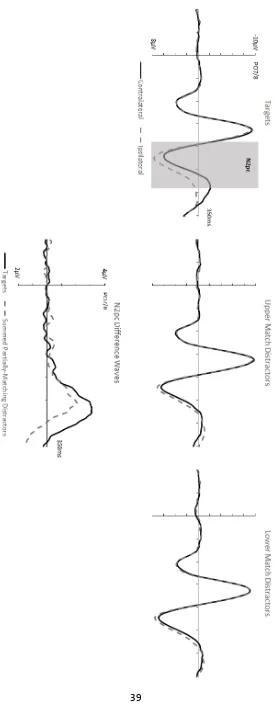
Figure 2 (top panel) shows ERPs triggered in response to search displays that
contained a target object or a partially matching distractor (shown separately for trials where
the target-matching colour was present in the top or bottom half of these objects). Clear N2pc
components were elicited by targets. Partially matching distractors also triggered N2pc
components, but they were reduced in size relative to the target N2pc. To assess the size of
N2pc components on no-competition trials, mean ERP amplitudes obtained in the 190 to 290
ms post-stimulus time window were entered into a 2x2 repeated-measures ANOVA with the
factors Item (horizontal target and horizontal partially matching distractor, averaged across
15
(ipsilateral, contralateral). There was no main effect of Item (F(1,11) = 1.04, p > .30, ηp2 =
.09). However, there was a significant main effect of Laterality (F(1,11) = 37.90, p < .001,
ηp2 = .78), reflecting the presence of reliable N2pc components (see Figure 2). Critically, a
significant Item x Laterality interaction (F(1,11) = 46.38, p < .001, ηp2 = .81) demonstrated
that N2pc components were larger for target stimuli than for partially matching distractors.
However, paired-sample t-tests showed that reliable N2pc components were in fact elicited to
both targets (M diff = -2.07 µV; t(11) = 6.69, p < .001) and partially matching distractors (M
diff = -.64 µV; t(11) = 4.20, p = .001).
---
Insert Figure 2 about here
---
To assess whether, and up to what point, the target N2pc equalled the sum of the
N2pc components to the two types of partially matching distractor objects, N2pc difference
waveforms (i.e., contralateral minus ipsilateral ERP waveforms) computed for distractors
with a target-matching colour at the top or bottom were summed and compared to the N2pc
difference waveforms obtained for target objects (as shown in Figure 2, bottom panel). A
jackknife-based onset latency comparison with a relative onset criterion (50% of N2pc peak
amplitudes) showed no significant difference between these N2pc waveforms (220 ms versus
214 ms post-stimulus for targets versus partially matching distractors; tc(11) < 1). As can be
seen in Figure 2 (bottom panel), the summed N2pc components to the two types of partially
matching distractors was initially equal in size to the target N2pc, before the N2pc to the
target started to become superadditive (i.e., larger than the sum of the two N2pc components
16
became superadditive, a double-difference N2pc waveform was created by subtracting the
summed distractor N2pc from the N2pc elicited by target stimuli. A jackknife-based onset
analysis using the same 50% peak amplitude criterion showed that the target N2pc started to
become larger than the summed partially matching distractor N2pc at a post-stimulus latency
of 262 ms. To obtain further evidence for this transition from additive to superadditive target
N2pc components, N2pc mean amplitudes (based on N2pc difference waveforms) to targets
and summed partially matching distractors were obtained within two post-stimulus time
windows (190-240 ms and 240-290 ms). A 2x2 ANOVA with the factors Item (target,
summed partially matching distractor) and Time Window (early, late) demonstrated a
significant Item x Time Window interaction (F(1,11) = 44.45, p < .001, ηp2 = .80), in line
with the observation that a superadditive target N2pc emerged during the late phase of the
N2pc component.
N2pc Components on Competition Trials
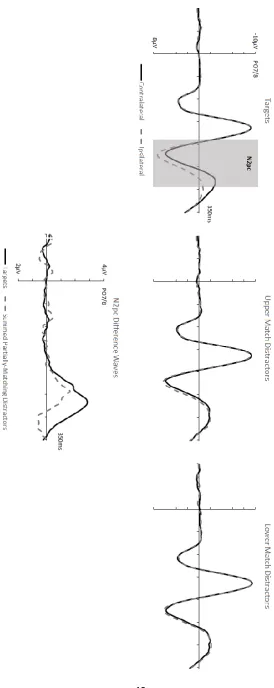
Figure 3 (top panel) shows ERPs triggered in response to search displays that
contained a horizontal target object and a partially matching distractor on the vertical midline,
and displays with a horizontal partially matching distractor (shown separately for objects with
the target-matching colour in the top or bottom half) and a vertical target. Targets triggered
clear N2pc components, and partially matching distractors also appeared to elicit an N2pc,
which was again reduced in size relative to the target N2pc. A 2x2 repeated-measures
ANOVA for N2pc mean amplitudes showed no main effect of Item (F(1,11) = 1.92, p > .10),
but a significant effect of Laterality (F(1,11) = 34.07, p < .001, ηp2 = .76). The presence of an
Item x Laterality interaction (F(1,11) = 51.36, p < .001, ηp2 = .82) showed that targets elicited
17
triggered not only by targets (M diff = -1.82 µV; t(11) = 6.55, p < .001), but, importantly,
also by partially matching distractors (M diff = -.40 µV; t(11) = 3.31, p < .01).
---
Insert Figure 3 about here
---
As can be seen in the N2pc difference waveforms shown for competition trials in
Figure 3 (bottom panel), the summed N2pc component to the two types of partially matching
distractors was initially similar in size to the target N2pc, before the N2pc to the target started
to become superadditive. N2pc onset latencies for targets and summed partially matching
distractors were compared using a jackknife-based procedure with a relative onset criterion
(50% of peak amplitude). Onset latencies were identical (221 ms) for the target N2pc and the
summed N2pc to partially matching distractors (tc(11) < 1). To determine the point in time
when the target N2pc became superadditive on competition trials, a double-difference N2pc
waveform was created by subtracting the summed N2pc to both types of partially matching
distractors from the target N2pc. A jackknife-based onset analysis using the same relative
onset criterion showed that the target N2pc started to become larger than the summed
partially matching distractor N2pc at a post-stimulus latency of 252 ms. To confirm this
observation, N2pc mean amplitudes (based on N2pc difference waveforms) to targets and
summed partially matching distractors were obtained and compared within two successive
post-stimulus time windows (early N2pc: 190-240 ms; late N2pc: 240-290 ms post-stimulus).
Similar to no-competition trials, this analysis revealed a significant Time Window x Item
18
amplitude differences between targets and summed partially matching distractors emerged
during the later phase of the N2pc component on competition trials.
Discussion of Experiment 1
The pattern of N2pc results obtained in Experiment 1 during colour/colour
conjunction search was very similar to the results previously observed in a colour/shape
conjunction search task (Eimer & Grubert, 2014a), suggesting that attentional selection
mechanisms operate in a qualitatively similar fashion when target objects are defined by
features from the same or two different dimensions. Reliable N2pc components were elicited
not only by target objects but also by distractors that matched one but not both target-defining
colours, demonstrating that these partially matching items were able to attract attention.
Importantly, N2pc components to distractor objects with a target-matching colour at the top
or bottom emerged at the same time as the target N2pc, and the sum these two N2pcs to
partially matching distractors was initially similar in size to the N2pc to target objects. At
around 250 ms after search display onset, the target N2pc became larger than the sum of the
N2pc components to partially matching distractors. This was the case not only on
no-competition trials where only a single object with target-matching features was present in the
search display, but also on competition trials where a target and a partially matching
distractor appeared simultaneously. This temporal pattern of an initially additive target N2pc
that then became superadditive matches the results from a previous study where targets were
defined by a combination of colour and shape (Eimer & Grubert, 2014a). These N2pc results
suggest that attention was at first allocated independently to individual target-matching
19
The fact that N2pc components to partially matching distractor objects that were
accompanied by a target in the same display emerged at the same time as the target N2pc, and
the observation that the sum of these components was initially equal in size to the target
N2pc, both suggest that the rapid allocation of attention to target-matching colours during
colour/colour conjunction search can operate simultaneously for multiple target colours in the
visual field. This finding is problematic for the assumption that attention can be guided by
only one feature per dimension (Wolfe, 2007), but is consistent with the alternative
hypothesis that attention can be set for multiple colours simultaneously (e.g., Irons et al.,
2012). Furthermore, the presence of reliable N2pc components to partially matching
distractors in competition trials strongly suggests that attention was deployed concurrently to
different objects with target-matching colours in the same search display. This is not in line
with the hypothesis that objects are selected in a strictly serial fashion for entry into a
subsequent object recognition system, and that attention is first allocated to the object that
produces the strongest activation on the saliency map (Wolfe, 2007). If this was the case,
partially matching distractors should not have attracted attention and therefore not have
triggered N2pc components under conditions where a stronger competitor for attentional
selection (the vertical target) was present in the same display. If the allocation of attention to
a partially matching distractor was entirely independent of a second parallel attentional
deployment to the target object in the same display, N2pc amplitudes to these distractors
should not differ between competition trials and no-competition trials where no such
additional attentional selection process was activated. In fact, N2pc components to partially
matching distractors were numerically larger on no-competition trials (M diff = -1.27 vs. -.81
µV). Although this difference only approached statistical significance (t(11) = 2.14, p =
.055), it indicates that the attentional selection of targets and partially matching nontargets
20
N2pc amplitudes on competition trials suggests the existence of competitive interactions
between two simultaneously active foci of spatial attention, which reduces the spatially
selective bias on visual processing at each attended location.
At around 250 ms after search display onset, the target N2pc became superadditive
(see Figures 2 and 3), demonstrating that during this later phase of attentional object
selection, the spatially selective activation elicited by target objects with both task-relevant
colours became stronger than the sum of the activations triggered by objects with only one
target-matching colour. Analogous to similar observations for colour/shape conjunction
search (Eimer & Grubert, 2014a), this shows that at some point during the spatially selective
attentional processing of these objects, attentional control processes can detect the presence
of multiple task-relevant features at a particular object location, and assign greater priority to
objects that possess all of these features. The emergence of a superadditive target N2pc
suggests that an initial parallel feature-based phase of attentional selectivity is followed by a
second phase where the deployment of attention starts to be controlled by the integration of
different target features within the same object. If attentional guidance was limited to a single
feature within a given dimension (e.g., Wolfe, 2007), no such superadditivity of the N2pc to
target objects should have been observed, as the integration of attentional processing across
two different target-defining colours requires that both features are simultaneously available
to attentional control processes.
The exact nature of the processes that are responsible for the emergence of a
superadditive target N2pc during visual search for colour/shape conjunctions (Eimer &
Grubert, 2014a) and for colour/colour conjunctions (the current Experiment 1) needs further
clarification. This effect could reflect the spatially selective facilitation of target processing,
but could also be linked to a reduction of the spatial bias triggered by distractors over time. A
target-21
matching features of the same object as an integrated object representation at an object-based
stage of attentional selectivity that follows the initial parallel feature-based stage.
Alternatively, the emergence of N2pc amplitude differences between targets and summed
partially matching distractors at around 250 ms after search display onset may reflect a
reduction in the size of the N2pc components triggered by these distractors at this moment in
time. For example, attention may start to be disengaged from objects that possess only one
target-matching feature once the status of these objects as task-irrelevant distractors has been
registered (see Kiss, Grubert, & Eimer, 2013, and Berggren & Eimer, in press, for evidence
of such attentional disengagement processes from spatial cueing experiments). Participants
may have had a strong incentive to rapidly disengage attention from partially matching
distractors because these objects were frequently accompanied by a fully matching target in
the same display. If this was the case, the superadditive target N2pc observed in Experiment
1 would be the result of the target N2pc component persisting and the initial N2pc to partially
matching distractor items declining as attention is withdrawn from their location.
Experiment 2 was conducted to test these alternative explanations for the
superadditivity of the target N2pc. Procedures were similar to Experiment 1, except that
objects with one or two target-matching colours were now both task-relevant. Participants
searched for target objects defined by two possible colours (e.g., red and green). On different
trials, search displays contained an object that matched one of these two colours
(single-feature targets; e.g., a red and blue object), or both colours (dual-(single-feature targets). Both types
of objects were designated as targets in Experiment 2. Participants’ task was to report
whether the target object on any given trial matched one or both target-defining colours.
These targets were accompanied by three objects with two task-irrelevant colours on each
trial. There were no nontarget trials, and no trials where single-feature and dual-feature
22
Experiment 1). N2pc components were measured separately for single-feature and
dual-feature targets. If the early phase of attentional selectivity during visual search for colour
conjunctions always operates independently for individual colours, the N2pc to dual-feature
targets should initially be equal in size to the sum of the N2pc components to the two
single-feature targets, analogous to Experiment 1. The critical new question was whether a
superadditive N2pc to dual-feature targets would still emerge in Experiment 2, in spite of the
fact that objects with one target colour were now also task-relevant and required a response.
If the superadditivity observed in Experiment 1 reflected the withdrawal of attention from
task-irrelevant partially target-matching distractor objects, no such withdrawal should be
found for single-feature target objects in Experiment 2. In this case, the summed N2pc
components to single-feature targets should remain equal in size (or perhaps even become
larger) than the N2pc to dual-feature targets. On the other hand, the presence of a
superadditive N2pc to dual-feature targets in Experiment 2 would rule out this attentional
withdrawal account, and would support an alternative interpretation in terms of object
integration.
EXPERIMENT 2
Method
Participants
Thirteen paid participants took part in Experiment 2. One participant was excluded
due to excessive alpha activity and eye blinks (removing more than 50% of all trials), leaving
23
All participants had normal or corrected-to-normal vision, reported normal colour vision, and
were naïve to the experimental hypotheses.
Stimuli and Procedure
Experiment 2 matched the setup of Experiment 1 with the following exceptions. The
experiment was presented on a 24-inch BenQ monitor (60 Hz; 1920 x 1080 screen resolution)
at a viewing distance of approximately 90 cm, and controlled on a SilverStone computer PC.
The colours used in the experiment were red (CIE x/y coordinates: .605/.322), orange
(.543/.409), gold (.405/.470), green (.296/.604), cyan (.227/.324), blue (.227/.324), magenta
(.270/.134), and dark grey (.305/.325). All colours were equiluminant (14 cd/m2). As in
Experiment 1, search displays contained four circular objects with two different colours in
their top and bottom halves that were presented in the left, right, top, and bottom positions.
There were again two pre-defined target colours for each participant, but task instructions
were different. Participants had to report on each trial whether the target object in the search
display matched one or both target colours, using the numeric keypad (‘1’ for single-feature
match, ‘2’ for dual-feature match). All search displays contained one target object among
three task-irrelevant non-targets, with single-feature and dual-feature targets presented in
random order and with equal probability in each block. To maximize the number of trials
available for measuring N2pc components, these two types of targets were always presented
on the left or right side, and never at the top or bottom positions. Participants completed two
blocked versions of this task. In five successive blocks, the two target colours occupied a
constant position within the respective target objects, as in Experiment 1 (e.g., red above
green for dual-feature targets, and red above blue or magenta above green for single-feature
targets). In the other five successive blocks, there were no fixed colour-location mappings
24
bottom positions of single-feature or dual-feature targets). Following practice, participants
completed 10 experimental blocks of 96 trials each (5 blocks with fixed colour-location
mappings followed by 5 blocks with varied mappings, or vice versa, counterbalanced across
participants). The two target-defining colours were selected randomly for each participant,
and remained the same in both versions of the task for each individual participant. Within
each block, dual-feature targets appeared on 50% of trials, and the two types of single-feature
targets appeared on the remaining 50% of trials.
EEG Recording and Data Analysis
EEG recording and analysis was identical to Experiment 1. The average rate of trials
removed due to artefact rejection was 9% (SD = 11). Averaged ERP waveforms were
computed for displays with dual-feature targets and for the two types of single-feature target
displays (labelled colour 1 and colour 2, with colour labels randomly assigned to each of the
two target colours for each participant), separately for the two blocked spatial configuration
conditions.
Results
Behavioural data
A two-way repeated-measures ANOVA conducted for RTs with the factors Target
(single-feature, dual-feature) and Configuration (set, varied) showed no main effect of
Configuration or an interaction between Configuration and Target (both F’s < 1). However,
there was a main effect of Target (F(1,11) = 33.51, p < .001, ηp2 = .75), as RTs were faster for
25
performed on error rates showed no main effect of Target (F < 1), Configuration (F(1,11) =
3.13, p > .10), and no interaction between these factors (F < 1).
N2pc components
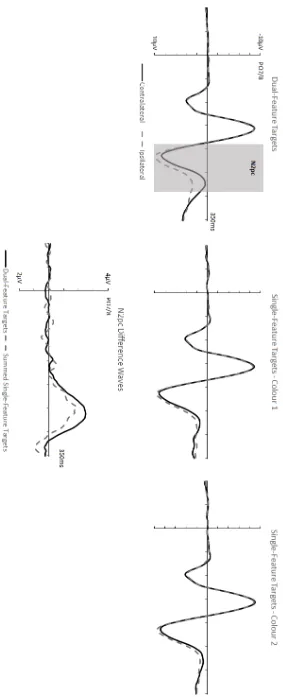
Figure 4 (top panel) shows ERPs triggered in response to search displays with
dual-feature targets and displays that contain one of the two single-dual-feature targets (colour 1 and
colour 2, randomly assigned for each participant). N2pc components were elicited by both
types of targets, but were larger for dual-feature as compared to single-feature targets. An
initial three-way repeated-measures ANOVA was conducted on mean ERP amplitudes
obtained in the 190 to 290 ms post-stimulus time window, with the factors Target
(single-feature, dual-feature), Configuration (set, varied), and Laterality (ipsilateral, contralateral).
As Configuration did not interact with Target (F < 1), Laterality (F < 1), or as part of a
three-way interaction (F(1,11) = 3.05, p > .10), subsequent analyses were based on ERP data that
were averaged across blocks with set and varied configurations of target colours. A new 2x2
ANOVA using the factors Target and Laterality showed no main effect of Target (F < 1) but
a significant Target x Laterality interaction (F(1,11) = 55.04, p < .001, ηp2 = .83). While both
types of targets elicited a significant N2pc component (t’s > 4.62, p’s ≤ .001), dual-feature
targets (M diff = -1.77 µV) elicited a larger N2pc as compared to single-feature targets (M
diff = -.59 µV).
---
Insert Figure 4 about here
26
To examine whether and up to which point in time the N2pc to dual-feature targets
equalled the sum of the two N2pc components to single-feature targets, the two N2pc
waveforms to the two types of single-feature targets (i.e., colours 1 and 2) were summed and
compared to the N2pc to dual-feature targets. The corresponding N2pc difference waveforms
to dual-feature and summed single-feature targets shown in Figure 4 (bottom panel) reveal a
pattern that is very similar to Experiment 1. Both N2pc waveforms started at the same time,
but the later phase of the N2pc to dual-feature targets was again superadditive (i.e., larger
than the summed N2pcs to single-feature targets). A jackknife-based onset latency
comparison with a relative onset criterion (50% of N2pc peak amplitudes) showed no
significant difference between these N2pc waveforms (216 ms versus 212 ms post-stimulus
for dual-feature and summed single-feature targets; tc(11) = 1.13, p > .25). To determine the
point in time when the dual-feature target N2pc became superadditive, a double-difference
N2pc waveform was created by subtracting the summed single-feature target N2pc from the
dual-feature target N2pc. A jackknife-based onset analysis using the same relative onset
criterion showed that the dual-feature target N2pc started to become larger than the summed
single-feature target N2pcs at a post-stimulus latency of 249 ms. The emergence of a
superadditive N2pc to dual-feature targets during the late phase of the N2pc was further
confirmed by an analysis of N2pc mean amplitudes to dual-feature targets and summed
single-feature targets that were obtained within two successive post-stimulus time windows
(early N2pc: 190-240 ms; late N2pc: 240-290 ms post-stimulus). As in Experiment 1, this
analysis revealed a significant Time Window x Target interaction (F(1,11) = 8.39, p < .02, ηp2
= .43).
27
Experiment 2 tested whether the emergence of a superadditive target N2pc observed
in Experiment 1 was linked to the integration of attentional processing across the two
task-relevant colours of target objects, or instead reflected the disengagement of attention from
partially matching distractor objects once these objects were recognized as task-irrelevant. In
Experiment 2, objects with one or two target colours were both task-relevant, and these two
types of objects never appeared in the same display. If the superadditive target N2pc in
Experiment 1 was due to a selective withdrawal of attention from distractor objects with one
target-matching colour, no such superadditivity should have been observed in Experiment 2
for the N2pc to dual-feature targets as compared to summed single-feature targets. In fact, the
temporal pattern of N2pc components in Experiment 2 was very similar to Experiment 1. The
dual-feature target N2pc emerged at the same time and was initially equal in size to the sum
of the two N2pc components to single-feature targets, and then became larger than the
summed single-feature N2pc components. These observations suggest that during the early
stage of target selection, attention was deployed independently to each of the two target
colours, with both colour selection processes generating separate N2pc components that
combined additively during the selection of dual-feature targets (see also Töllner,
Zehetleitner, Krummenacher, & Müller, 2011, for related N2pc evidence from a task where
participants had to detect colour singletons, orientation singletons, or redundantly defined
targets that were singletons in both dimensions). Critically, the subsequent emergence of a
superadditive N2pc to dual-feature targets in Experiment 2 mirrors the superadditive target
N2pc found in Experiment 1, in spite of the fact that objects with two or one target colours
now both required a response. This strongly suggests that this superadditivity is not the result
of a disengagement of attention from partially target-matching objects that have to be
ignored. Instead, the onset of a superadditive N2pc to dual-feature targets in Experiment 2 is
28
independently, and attentional control processes become sensitive to the joint presence of
target-defining features in the same object.
It could be argued that the similar pattern of N2pc components observed in
Experiments 1 and 2 was due to the fact that there were no systematic differences in the
attentional task sets adopted by the participants in these two experiments. As in Experiment
1, they may have primarily searched for objects with both target colours in Experiment 2. The
observation that RTs were faster for dual-feature as compared to single-feature targets is in
line with this interpretation. However, and in contrast to Experiment 1, single-feature target
objects always required a manual response in Experiment 2, and these objects were never
accompanied by an object with both target colours in the same display. For these reasons,
participants in Experiment 2 had no incentive to rapidly withdraw attention from
single-feature targets. The superadditivity of the dual-target N2pc observed in this experiment can
therefore not be attributed to such attentional disengagement processes. It should also be
noted that behavioural performance and the temporal pattern of N2pc components in
Experiment 2 were entirely unaffected by whether each of the two task-relevant colours
always occupied the same relative position within search display objects or whether these
colour-position mappings were variable. This suggests that information about the spatial
configuration of target colours has little if any impact on attentional guidance processes
during colour/colour conjunction search (see also Berggren & Eimer, in press).
GENERAL DISCUSSION
The goal of the present study was to investigate the time course of attentional
29
conjunction of two features within the same dimension (colour). Previous behavioural
experiments have found that this type of search is generally very difficult (e.g., Wolfe et al.,
1990; Wing & Allport, 1972). However, other studies have suggested that colour/colour
conjunction search can sometimes operate in a relatively efficient fashion (e.g., Carrasco et
al., 1998; Linnell & Humphreys, 2001, 2002). We employed the N2pc component as a
temporal marker of the deployment of attention to colour/colour conjunction targets and to
objects that matched one target-defining colour. Experiment 1 showed that attention was
initially allocated in parallel and independently to all objects with target-matching colours. At
a later stage that was marked by the emergence of a superadditive N2pc component to target
objects, attentional selection processes no longer operated in an independent feature-specific
fashion, suggesting that at this stage, information about the presence of multiple
target-defining attributes of the same object was combined across features. Experiment 2 ruled out
an alternative interpretation of the superadditive target N2pc in terms of a selective
withdrawal of attention from partially target-matching distractor objects.
Several aspects of these N2pc results appear inconsistent with the account of
attentional guidance mechanisms during colour/colour conjunction search that was postulated
by the Guided Search model (Wolfe, 2007). First, and most fundamentally, Guided Search
proposes a hybrid serial-parallel model of attentional processing, where individual objects are
selected serially, but can be processed in parallel during a subsequent object recognition stage
(e.g., Moore & Wolfe, 2001). The observation that N2pc components were triggered by
partially target-matching distractors in the competition trials of Experiment 1 where these
objects were accompanied by a target on the vertical meridian, and the fact that the sum of
these N2pcs to partially matching distractors were initially similar in size to the target N2pc,
are not in line with the hypothesis that feature-guided selection operates in a strictly serial
30
objects with target-matching colours in the same display (see also Eimer & Grubert, 2014a,
for analogous N2pc results indicative of parallel selection during colour/shape conjunction
search). It should be noted that the N2pc to partially matching nontargets in Experiment 1
tended to be larger on no-competition relative to competition trials. This observation suggests
that the simultaneous selection of two objects with target-matching colours on competition
trials may not have been entirely independent, as assumed by a strong version of a parallel
selection model. This tendency towards attenuated N2pcs on these trials may have been due
to competitive interactions between two concurrent attentional selection processes. Thus,
while the pattern of N2pc results observed on competition trials shows that attention was
allocated temporally in parallel to two target-colour objects, it does not provide unequivocal
evidence that these two selection processes operated in a fully independent fashion.
The rapid parallel feature-based selection processes found in the present study may be
based on the same mechanisms as the enhancements of neural activity for currently attended
features that are elicited in a spatially global fashion across the visual field (feature-based
attention, e.g., Serences & Boynton, 2007; see also Eimer, 2014, 2015, for further
discussion). In addition, the fact that in both experiments, the N2pc to objects with two target
colours was initially equal to the sum of the two N2pc components to objects with one or the
other of these colours appears inconsistent with the proposal that attention can only be guided
by a single feature within a given dimension at any point in time (Wolfe, 2007). This pattern
of N2pc results suggests that both target colours elicited parallel selection processes,
triggering separate N2pc components which combined additively during the attentional
selection of conjunctively defined target objects (Experiment 1) or dual-feature targets
(Experiment 2). If this interpretation was correct, it implies that attention can be guided
31
electrophysiological evidence for multiple-colour attentional task sets (Irons et al., 2012;
Grubert & Eimer, in press; Berggren & Eimer, in press).
The emergence of a superadditive N2pc to target objects defined by a particular
colour/shape conjunction has been interpreted as marking the transition from an early
feature-based phase of attentional control to a second object-feature-based phase where the allocation of
attention is controlled by an integration of target-defining object features across feature
dimensions (Eimer & Grubert, 2014a). The fact that a very similar temporal pattern of N2pc
components was found in the present study suggests that analogous integration processes also
operate for target features from the same dimension. The exact nature of the mechanisms
responsible for this type of feature integration remains to be determined. One possibility is
that spatially selective biases that are initially triggered in an independent feature-based
fashion at overlapping retinotopic locations interact in a facilitatory fashion, resulting in a
superadditive bias for objects with multiple target-matching features (see also Duncan,
Humphreys, & Ward, 1997, for a related ‘integrated competition’ account of attentional
object selection). In this case, the superadditive target N2pc would reflect feature integration
in the sense that signals from different task-relevant features of the same object start to
interact within or across dimensions. This does not necessarily imply that at this stage,
features are fully integrated and bound into a single phenomenologically accessible object file
(e.g., Treisman, 1988). Such fully integrated object representations should specify the
features of a particular object and their spatial arrangement within this object in a way that is
available to explicit top-down control and object recognition processes. In fact, results from a
recent ERP study of colour/colour conjunction search (Berggren & Eimer, in press) suggest
that attentional control processes are remarkably insensitive to colour configuration signals
from the same object. When a target defined by a specific spatial arrangement of two colours
32
configuration (e.g., green above red) appeared on opposite sides of the same search display,
no spatially selective modulations of occipito-temporal ERP waveforms were elicited at all
during the first 500 ms after search display onset, demonstrating that top-down attentional
control mechanisms were unable to differentiate between a target and a task-irrelevant
distractor object on the basis of their colour configuration. Such observations strongly
suggest that the type of feature integration process that emerges during conjunction search
around 250 ms after the onset of a search display reflects relatively early facilitatory
interactions between feature-based attentional biases in visual cortex, but not yet the
formation of fully explicit representations of the spatial-configural layout of target objects.
Overall, the present study provides new electrophysiological evidence that attentional
allocation processes during colour/colour conjunction search initially operate in parallel for
different task-relevant colours before they become sensitive to the presence of multiple target
colours in the same object. How far can these conclusions be generalised to more typical
behavioural conjunction search experiments where display set size is manipulated, RT search
slopes are the main dependent variable, and target detection is usually much harder than in
the present experiments? In many conjunction search experiments with large set sizes,
target-present and target-absent RTs are very slow (3000 - 5000 ms or even longer), and participants
usually move their eyes repeatedly to different regions of a search display before a target is
found (see Hulleman & Olivers, in press, for a recent argument that eye movements should
play a central explanatory role in theories of visual search). With large display set sizes,
colour/colour conjunction search is usually hard (e.g., Wolfe et al., 1990), whereas it can be
relatively efficient when search displays only contain few items (e.g., Linnell & Humphreys,
2001, 2002). N2pc experiments like the ones reported here typically employ search displays
with small set sizes, in order to ensure that targets or partially target-matching distractors can
33
of a search display, prior to any eye movements. The assumption is that the attentional
processes during this initial selection period are not qualitatively different from the processes
that are elicited in more difficult search tasks during subsequent episodes, where they are
initiated repeatedly after each new eye movement brings a different region of a search display
into the functional field of view (see Eimer, 2014, for further discussion).
If this is correct, the primary reason why colour/colour conjunction search was
inefficient in the study by Wolfe et al. (1990) may not have been display set size as such, but
instead the presence of multiple distractor objects that shared one feature with the target in
their experiments. The fact that targets were accompanied by only one distractor with a
target-matching colour in the competition trials of the present study is likely to have
facilitated a relatively rapid preferential allocation of attention to target objects, as reflected
by the emergence of a superadditive target N2pc. If attention was initially allocated in
parallel to all objects with target-matching colours, as suggested by the present N2pc results,
such a spatially selective attentional bias for target objects may appear substantially later
when displays include numerous distractors that share one of the two target-defining colours.
To test this prediction, future ERP studies should employ tasks where colour/colour
conjunction targets appear together with several distractor objects that all match one of the
two target colours. If the simultaneous deployment of attention to multiple objects with
target-matching features impairs the selective allocation of spatial attention to target objects,
search performance should be strongly impaired, and a superadditive target N2pc should