International Journal of Emerging Technology and Advanced Engineering
Website: www.ijetae.com (ISSN 2250-2459, ISO 9001:2008 Certified Journal, Volume 4, Issue 9, September 2014)
94
Prediction of Learner Perception and Acceptance of
E-Learning System for Learning with TAM
(Technology Acceptance Model) in King Khalid University,
Kingdom of Saudi Arabia
Vasanthi Muniasamy
1, Dr. Intisar Magboul Ejalani
2, Dr. M. Anandhavalli
31 Lecturer, 3Associate Professor, Department of Information Systems, King Khalid University, KSA 2 Asst. Professor, Department of Management, King Khalid University, KSA
Abstract - E-Learning has become an increasingly popular learning approach in higher Education institutions due to the rapid growth of Internet Technology in Saudi Arabia. In recent years, it has been integrated in many university programs and it is one of the new learning trends. Our King Khalid University is such a one rapidly growing institutions of using E-Learning System in higher education in Saudi Arabia. E-Learning is not intended to replace the traditional classroom setting, but to provide new opportunities and new virtual environment for interaction and communication between the students and teacher. The benefit of E-Learning System will not be maximized unless learners use the system even though e-learning is the main pillar of Learning. This study focuses on the individual learners’ perception and acceptance of the E-Learning System in KKU as an effective learning tool based on Technology Acceptance Model by evaluating the relationships among perceived usefulness, perceived ease of use, attitude towards using and behavioral intention to use the technology. TAM proposes that perceived ease of use and perceived usefulness predict application usage. The study investigated TAM with the E-Learning and used TAM as a basis for hypothesizing the effects of above specified variables on the use of E-Learning System as the learning application.
Keywords - Attitude towards using, Behavioral intention to use, E-Learning, KKU, Perceived ease of use, Perceived usefulness, TAM.
I. INTRODUCTION
Technology has inevitably become the most powerful tool in almost every aspect of human„s daily life. Technology is regarded as a major revolution and this has a significant impact on education. The use of Information Technology (IT) and the Internet are the new paradigm of learning in 21st century. These technological advancements allow people to easily access, gather, analyze, and transfer data & knowledge. This makes it possible for them to function as teachers, study-mates and more importantly, as tools to improve entire teaching and learning process [1].
Learning communities have evolved from the traditional classroom to online distance education settings in which students come together in a virtual environment to exchange ideas, solve problems, explore alternatives, and create new meanings along a connected journey.
International Journal of Emerging Technology and Advanced Engineering
Website: www.ijetae.com (ISSN 2250-2459, ISO 9001:2008 Certified Journal, Volume 4, Issue 9, September 2014)
95
Either because they do not see any benefits from using these systems or they see these systems too complex which cause a lot of troubles for them. E-Learning system is one of these new systems that can be accepted or rejected by end users. According to Ozkan and Koseler [3], E-learning systems are multidisciplinary, where the success of E-learning depends on two factors: [1] Technological factor, i.e. software and hardware that are used to build E-learning system. [2] Human factor, i.e. Students and Teachers
II. THEORETICAL FRAMEWORK
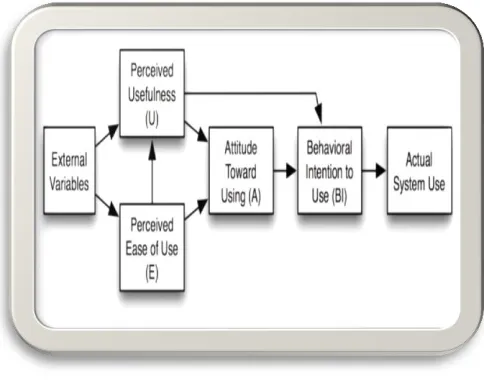
The Technology Acceptance Model (TAM) is one of the most widely applied models in studies of individual intention and the usage of any new technologies. TAM was adapted from more general human behavior, the Theory of Reasoned Action (TRA). The model was initially developed and validate by Davis (1986, 1989). Davis, et al. (1989) developed TAM as a theoretical basis to provide an explanation of the determinants human computer usage behaviour that is general directly from generic TRA (Fishbein & Ajzen, 1975). According to Davis (1986), this model is important in understanding use of the Information System as well as Information System Acceptance behaviours. TAM is an extension of the theory of reasoned action (TRA). However, the latter theory lacks distinction if the behaviour of users towards technology depends on intentions or attitudes (Klein, 1991). TAM believes that the individual‟s intention to use the technology depends on how useful the technology is to the user and how easily it can be used in terms of functionality. It is also believed that the usefulness of the technology is directly proportional to the ease of use (Davis, 1989). Perceived usefulness is also seen as being directly impacted by perceived ease of use.
TAM suggests that perceived ease of use and perceived usefulness of Information Technology (IT) are the main determinants factors of IT usage. Davis (1989, p. 447) defines perceived ease of use (PEU) as, “the degree to which an individual believes that using a particular system would be free of physical and mental effort”. Moreover, Davis (1989) defined perceived usefulness (PU) as “the degree of which a person believes that using a particular system would enhance his or her job
performance”. The two major key constructs of TAM, PU
and PEOU, have capability to predict an individual‟s attitude towards using a particular system. Both constructs PU and PEOU will influence an individual‟s attitude (A).
[image:2.612.329.571.276.471.2](Davis et al., 1989) defined attitude as individual‟s positive or negative assessment of the behavior and is a function of Perceived Usefulness and Perceived Ease of Use: Attitude (AT) will influence the Behavioral Intention (BI) of using particular system, and, in sequence, Actual use of use the system (AU). Actual use (AU) will be predicted by the individual‟s Behavioral Intention (BI) which is considered in this study as the E-learning Acceptance concept. The relationships between the mentioned constructs are presented in Figure 1, as shown below. Therefore, TAM model will be basic and theoretical grounds for the current study.
Figure I: TAM (Technology Acceptance Model)
The TAM model suggests that when users are presented with a new technology, a number of factors influence their decision about how and when they will use it, notably [8]:
Perceived usefulness (PU) - This was defined by Fred Davis as "the degree to which a person believes that using a particular system would enhance his or her job performance".
Perceived ease-of-use (PEOU) - Davis defined this as "the degree to which a person believes that using a particular system would be free from effort".
The research hypothesis based on the diagram of the TAM model shown in Figure I in the context of the e-learning are represented in Symbolic Form as well as statements in Figure II.
International Journal of Emerging Technology and Advanced Engineering
Website: www.ijetae.com (ISSN 2250-2459, ISO 9001:2008 Certified Journal, Volume 4, Issue 9, September 2014)
96
X may be PEOU, PU, AT. Y may be PU, AT, ITU
Figure II
Figure III: The Research Model
H1: Perceived ease of use (PEOU) towards perceived usefulness (PU) of using E-Learning H2: Perceived ease of use (PEOU) towards (ATU)
of using E-Learning System
H3: Perceived usefulness (PU) towards (ATU) of using E-Learning System
H4: Perceived usefulness (PU) towards behavioral intention (ITU) to use E-Learning System
H5: Attitude towards (AT) towards behavioral intention (ITU) to use E-Learning System
III. RESEARCH METHODOLOGY
A. Samples
A survey was conducted on Diploma students of the King Khalid University, Abha, Kingdom of Saudi Arabia to evaluate the application of Technology Acceptance Model (TAM) to the E-Learning System.
Using this E-Learning System the lectures are able to upload course outlines, schedules, and lecture notes for the students. The data was gathered via survey distributed to 160 Diploma students from the Department of Information Systems at the King Khalid University. Each participant is asked to fill out the questionnaire indicating her agreement or disagreement with each question on a 4-point Likert-type scale (Agree, Strongly Agree, Disagree and Strongly
Disagree) to measure the students‟ response. These
questions are adopted from previous information system research [9] and Figure III shows the research model employed in this study. It is a reduced TAM model, excluding actual system use and external variables.
B. Measures
Measurement validity in terms of reliability and construct validity was evaluated in this study. The reliability analysis measured the internal validity and consistency of questions used for each construct by calculating Cronbach‟s alpha coefficient [10].
PEOU
PU
AT
PU
AT
International Journal of Emerging Technology and Advanced Engineering
Website: www.ijetae.com (ISSN 2250-2459, ISO 9001:2008 Certified Journal, Volume 4, Issue 9, September 2014)
97
Cronbach‟s alpha of 0.6 to 0.7 was deemed the lower limit of acceptability. An alpha value more than 0.7 would indicate that the items are homogeneous and measuring the same constant.
Generally agreed lower limit for Cronbach‟s alpha may decrease to 0.60 in exploratory research [11]. In the survey used in this study, the Cronbach‟s alpha was higher than 0.7 as shown in Table I which implies that the questionnaire is a reliable measurement instrument.
To examine construct validity of measures, a factor analysis was adopted in this study. Four factors were requested, based on the fact that the questions were designed to index four constructs: perceived ease of use (PEOU), perceived usefulness (PU), and attitude toward using (ATU) and intention to use (ITU). All factor loadings were above 0.6, showing good convergent validity Chesney
[12] as shown in Table II. The results revealed the test was
an established instrument with high reliability and validity scores.
TABLE I
CRONBACH’S ALPHA (Reliability Analysis)
Items Number of
Items
Cronbach‟s Alpha
Perceived use of Use (PEOU) 4 0.84
Perceived Usefulness (PU) 4 0.84
Attitude towards usage (ATU) 4 0.81
Intention to use (ITU) 3 0.81
[image:4.612.44.561.98.664.2]Total 15
TABLE II
CONSTRUCT VALIDITY (Factor Analysis)
Scale Item PEOU PU ATU ITU
PEOU1 0.71
PEOU2 0.70
PEOU3 0.61
PEOU4 0.68
PU1 0.66
PU2 0.60
PU3 0.73
PU4 0.65
ATU1 0.87
ATU2 0.71
ATU3 0.68
ATU4 0.75
ITU1 0.67
ITU2 0.61
ITU3 0.74
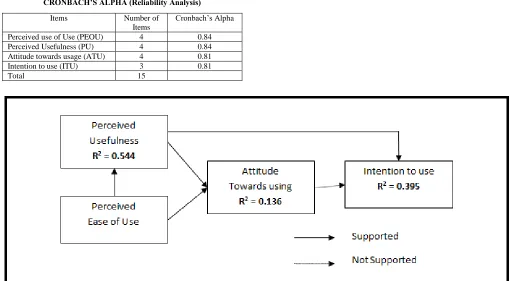
Figure IV: Regression Analysis Result
IV. RESULTS AND ANALYSIS
The research model shown in Fig. III was tested using SPSS (Statistical Package for the Social Sciences) Software.
[image:4.612.46.558.365.646.2]International Journal of Emerging Technology and Advanced Engineering
Website: www.ijetae.com (ISSN 2250-2459, ISO 9001:2008 Certified Journal, Volume 4, Issue 9, September 2014)
98
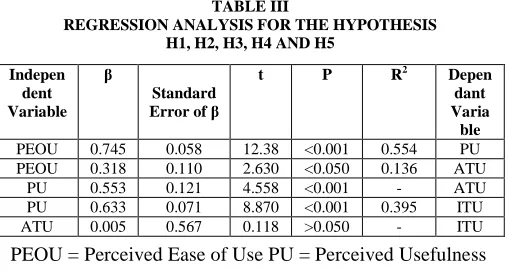
[image:5.612.312.575.163.509.2]Using a hypothesis approach, all the hypotheses are supported except H5 (p > 0.05) as shown in Table III and Table IV.
TABLE III
REGRESSION ANALYSIS FOR THE HYPOTHESIS H1, H2, H3, H4 AND H5
Indepen dent Variable
β
Standard Error of β
t P R2 Depen
dant Varia ble
PEOU 0.745 0.058 12.38 <0.001 0.554 PU
PEOU 0.318 0.110 2.630 <0.050 0.136 ATU
PU 0.553 0.121 4.558 <0.001 - ATU
PU 0.633 0.071 8.870 <0.001 0.395 ITU
ATU 0.005 0.567 0.118 >0.050 - ITU
PEOU = Perceived Ease of Use PU = Perceived Usefulness
ATU = Attitude towards using ITU= Intention to use Table IV summarizes the results of the Hypothesis testing and Figure IV above shows these analysis results.
1.For testing Hypothesis (H1), regression analysis is performed by considering PEOU as an independent variable and PU as a dependant variable. The result shows that perceived ease of use had a significant influence on perceived usefulness. (β = 0.745, p<0.001)
2.For testing Hypothesis (H2), regression analysis is performed by considering PEOU as an independent variable and ATU as a dependant variable. The result shows that perceived ease of use had a significant influence on attitude towards using the E - Learning. (β = 0.318, p<0.050)
3.For testing Hypothesis (H3), regression analysis is performed by considering PU as an independent variable and PU as a dependant fluence on perceived usefulness. (β = 0.745, p<0.001)independent variable and ATU as a dependant variable. The result shows that perceived usefulness had a significant influence on attitude towards using the E - Learning. (β = 0.553, p<0.001)
4.For testing Hypothesis (H4), regression analysis is performed by considering PU as an independent variable and ITU as a dependant variable. The result shows that perceived usefulness had a significant influence on intention to use E-Learning. (β = 0.633, p<0.001)
5.For testing Hypothesis (H5), regression analysis is performed by considering ATU as an independent variable and ITU as a dependant variable. The result shows that attitude towards using E-Learning had not a significant influence on intention to use. (β = 0.005, p>0.050)
TABLE IV
SUMMARY OF HYPOTHESIS TESTING
Hypothesis Relationships tested Results
H1
Perceived ease of use (PEOU) of E-Learning System will have a significant influence on perceived usefulness (PU) of using E-Learning System
Supported (p < 0.001)
H2
Perceived ease of use (PEOU) of E-Learning System will have a significant influence on attitude towards (ATU) using E-Learning System
Supported (p < 0.050)
H3
Perceived usefulness (PU) of E-Learning System will have a significant influence on attitude towards (ATU) using E-Learning System
Supported (p < 0.001)
H4
Perceived usefulness (PU) of E-Learning System will have a significant influence on behavioral intention (ITU) to use E-Learning System
Supported (p < 0.001)
H5
Attitude towards (ATU) of E-Learning System using will not have a significant influence on behavioral intention (ITU) to use E-Learning System
Supported (p > 0.05)
V. DISCUSSION
[image:5.612.43.297.177.313.2]International Journal of Emerging Technology and Advanced Engineering
Website: www.ijetae.com (ISSN 2250-2459, ISO 9001:2008 Certified Journal, Volume 4, Issue 9, September 2014)
99
In this context,
1. Providing proper user training is essential for directing and solidifying students‟ perception of the usefulness of the technology.
2. Furthermore, perceived usefulness and perceived ease of use were also found to have a significant effect on attitude towards using the technology. 3. Contrary to what TAM hypothesizes, attitude was
found to have no effect on intention to use. 4. These might reflect limitations of TAM‟s
applicability with respect to technologies, user populations, or both.
5. Compared with prior TAM studies, the model appeared to have relatively weaker utility for explaining students‟ attitude formation and intention development. TAM appears to lack adequate specificity to explain and enunciate attitude and intention of students. The results of this study show that TAM can be used to explain the student's acceptance of e-learning technology.
VI. CONCLUSION AND FUTURE WORKS
This research work indicated that the Technology Acceptance Model can play as a vital use to predict and understand user's behavior and intention to use the Learning Management Area. The final results of this study produce some interesting issues. First, the diploma students of King Khalid University are qualified to use the E-Learning System. Second, the results shown crystal clear that the perceived ease of use and perceived usefulness are directly affect the student's attitudes toward using the E-Learning System.
The author analysis indicates two recommendations. First, the study did not test a full TAM. Actual technology use was not included in the research model. Continued studies that incorporate actual technology use into the research model would enable an increasingly complete examination of the applicability of TAM in explaining or predicted IT acceptance by students. Second, future studies should also not be limited by the original TAM. Davis (1993) suggested additional factors to be included in the original TAM such as prior usage, user experiences, and user characteristics [External Variables and Actual System Use]. Accordingly, future studies should investigate the role of adding such variables to those originally used in the model.
REFERENCES
[1] Yee H., Luan W., Ayub A., & Mahmud R. (2009). A Review of the Literature: determinants of Online Learning among Students. European Journal of Social Sciences. 8, 2. 246.
[2] Al-Jarf, R. (2007, March). Cultural issues in online collaborative learning in EFL. Paper presented at the 3rd International Online Conference on Second and Foreign Language Teaching and Research.
[3] Ozkan, S. & Koseler, R. (2009). Multi-dimensional students‟ evaluation of e learning systems in the higher education context: An empirical investigation. Computers & Education (53) p. 1285– 1296. http://dx.doi.org/10.1016/j.compedu.2009.06.011
[4] Fishbein, M., & Ajzen, I. (1975). Belief, attitude, intention, and behavior: An introduction to theory and research. Reading, MA: Addison-Wesley.
[5] Davis, F. (1986). A technology acceptance model for empirically testing new end- user information systems: Theory and results.(Unpublished Doctoral dissertation). Massachusetts Institute of Technology, Massachusetts, USA.
[6] Davis, F. D. (1989). Perceived usefulness, perceived ease of use, and user acceptance of information technology. MIS Quarterly, 13(3), 319-339. doi: 10.2307/249008
[7] Klein, H. K., Hirschheim R., & Nissen H.E. (1991). A Pluralist Perspective of the Information Systems Research Arena. Elsevier, Amsterdam: Contemporary Approaches and Emergent Traditions Information Systems Research.
[8] Wikipedia,
http://en.wikipedia.org/wiki/Technology_acceptance_model [9] Masrom, M. (2007).Technology Acceptance Model and Elearning
12th International Conference on Education.
[10] Moolla, A. & Bisschoff, C. (2012). “Validating a Model to Measure the Brand Loyalty of Fast Moving Consumer Goods”. J. SocSci, 31 (2), pp.101-115.
[11] Hair, J., Black, W. C., Babin, B. J., & Anderson, R. E. (2010). Multivariate data analysis (7th ed.). Upper saddle River, New Jersey: Pearson Education International.
[12] Chesney, T. (2006). An acceptance model for useful and fun information systems. Human Technology, 2(2), 225-35
[13] Landry, B.J.L., Griffith, R. , & Hartman, S. (2006). Measuring student perceptions of blackboard using the technology acceptance model. Decision Sciences, 4(1), 87-99.
[14] Adams, D. A., Nelson, R.R. and Todd, P.A. (1992). Perceived usefulness, ease of use, and usage of information technology: A replication. MIS Quarterly, 16, 2, 227-247.
Acknowledgement