R E S E A R C H
Open Access
Peak-to-peak exponential direct learning of
continuous-time recurrent neural network
models: a matrix inequality approach
Choon Ki Ahn
1*and Moon Kyou Song
2*Correspondence:
1School of Electrical Engineering,
Korea University, 145, Anam-ro, Seongbuk-gu, Seoul, 136-701, Korea Full list of author information is available at the end of the article
Abstract
The purpose of this paper is to propose a new peak-to-peak exponential direct learning law (P2PEDLL) for continuous-time dynamic neural network models with disturbance. Dynamic neural network models trained by the proposed P2PEDLL based on matrix inequality formulation are exponentially stable, with a guaranteed exponential peak-to-peak norm performance. The proposed P2PEDLL can be determined by solving two matrix inequalities with a fixed parameter, which can be efficiently checked using existing standard numerical algorithms. We use a numerical example to demonstrate the validity of the proposed direct learning law.
Keywords: exponential peak-to-peak norm performance; training law; dynamic neural network models; disturbance; matrix inequality
1 Introduction
Remarkable progress has been made recently in the field of neural networks due to their advantages in overcoming several problems such as learning ability, parallel computation, fault tolerance, and function approximation. New and exciting applications appear fre-quently in combinatorial optimization, signal processing, control, and pattern recognition and most aim to improve the stability and performance of neural networks [].
The use of neural networks in applications such as optimization solvers or associative memories requires analysis of the stability of the neural networks. We have two main cate-gories in stability analysis of neural networks: stability of neural networks [–] and stabil-ity of learning laws [–]. This paper focuses on obtaining a new robust learning method for disturbed neural networks. Essentially, if identification or tracking errors in neural net-works are analyzed, stable learning methods for neural netnet-works can be obtained. Previous authors [] who used neural network models to simultaneously identify and control non-linear systems studied the stability conditions of learning laws. In [], a modification of the dynamic backpropagation was proposed underNLqstability constraints. In [, , , ], the passivity concept was applied to obtain learning laws for neural networks. Iden-tification or modeling errors always exist between neural network models and unknown nonlinear systems. Thus, extensive modification of either the backpropagation algorithm or the normal gradient algorithm is required [, , , ]. Despite these advances in sta-ble learning of neural networks, the previous research results were derived solely from neural networks without disturbances. However, in real physical systems, model
tainties and external disturbances always occur. Thus, obtaining learning algorithms for dynamic neural networks with external disturbances is of practical importance. Ahn [– ] recently proposed several robust training algorithms for dynamic neural networks, switched neural networks, and fuzzy neural networks with external disturbances.
The peak-to-peak norm approach (also known as the inducedL∞ norm approach in
control engineering) introduced in [–] is recognized as an efficient method for han-dling various systems with bounded noises or disturbances because we can obtain general stability results using bounded input and output measurements. This raises a question about the possibility of obtaining a peak-to-peak norm based learning algorithm for dy-namic neural networks. In this paper, we provide an answer to this interesting question. As far as we are aware, no result published on training law has yet considered the peak-to-peak norm performance for dynamic neural networks. Thus, this research topic still remains unresolved and challenging.
In this paper, we prove, for the first time, the existence of a new robust learning law that considers the peak-to-peak norm performance for dynamic neural networks with exter-nal disturbance. This new learning law is called a peak-to-peak exponential direct learning law (PPEDLL). A new matrix inequality condition for the existence of the PPEDLL is proposed to ensure that neural networks are exponentially stable with a guaranteed peak-to-peak norm performance. Based on matrix inequality formulation with a fixed param-eter, the proposed learning law can be designed by solving two matrix inequalities, which can be checked easily using standard numerical software [, ]. In contrast to the exist-ing work [, , , ] on learnexist-ing algorithms for continuous-time neural networks, the advantage of our work is that we can deal with the worst-case peak value of the state vector for all bounded peak values of external disturbance in learning algorithm effectively.
This paper is organized as follows. In Section , we propose a new peak-to-peak expo-nential direct learning law of dynamic neural networks with disturbance. In Section , a numerical example is given, and finally, conclusions are presented in Section .
2 Peak-to-peak exponential direct learning law
Consider the following neural network:
˙
x(t) =Ax(t) +W(t)θx(t)+V(t)θx(t–τ)+Gd(t), ()
wherex(t) = [x(t)· · ·xn(t)]T∈Rnis the state vector,d(t) = [d(t)· · ·dk(t)]T∈Rkis the dis-turbance vector,τ> is the time-delay,A∈Rn×nis the self-feedback matrix,W(t)∈Rn×p,
V(t)∈Rn×p are the weight matrices, θ(x) = [θ
(x), . . . ,θp(x)]T :Rn→Rp is the nonlin-ear vector field, andG∈Rn×k is a known constant matrix. The element functionsθ
i(x) (i= , . . . ,p) are usually selected as sigmoid functions.
In this paper, given a prescribed level of disturbance attenuationγ > , we find a new PPEDLL such that the neural network () withd(t) = is exponentially stable and
sup
t≥
exp(κt)xT(t)x(t)<γsup
t≥
exp(κt)dT(t)d(t) ()
under zero-initial conditions for all nonzerod(t)∈L∞[,∞), whereκis a positive con-stant.
Theorem Letκ be a given positive constant.For a given levelγ > ,assume that there exist matrices P=PT> ,Y and positive scalarsλ,μsuch that
(PA+Y)T+PA+Y+ (κ+λ)P PG
GTP –μI
< , ()
⎡ ⎢ ⎣
λP I
(γ –μ)I
I γI
⎤ ⎥
⎦> . ()
If the weight matrices W(t)and V(t)are updated as
W(t) = ⎧ ⎨ ⎩
P–Yx(t)
θ(x(t))+θ(x(t–τ))θT(x(t)), θ(x(t))+θ(x(t–τ))= ,
, θ(x(t))+θ(x(t–τ))= , ()
V(t) = ⎧ ⎨ ⎩
P–Yx(t)
θ(x(t))+θ(x(t–τ))θT(x(t–τ)), θ(x(t))+θ(x(t–τ))= ,
, θ(x(t))+θ(x(t–τ))= , ()
then the neural network()is exponentially stable with a guaranteed exponential peak-to-peak norm boundγ.
Proof The neural network () can be represented by
˙
x(t) =Ax(t) +
W(t) V(t) θ(x(t))
θ(x(t–τ))
+Gd(t). ()
Let
Kx(t) =
W(t) V(t) θ(x(t))
θ(x(t–τ))
, ()
whereK∈Rn×nis the gain matrix of the PPEDLL. Then we obtain
˙
x(t) = (A+K)x(t) +Gd(t). ()
One of the possible weight selections [W(t)V(t)] to fulfill () (perhaps excepting a sub-space of a smaller dimension) is given by
W(t) V(t)
=Kx(t)
θ(x(t))
θ(x(t–τ)) +
, ()
where [·]+ stands for the pseudoinverse matrix in the Moore-Penrose sense [, , ]. This learning law is just an algebraic relation depending onx(t), which can be evaluated directly. Taking into account that [, , ]
x+= ⎧ ⎨ ⎩
xT
x, x= ,
the direct learning law () can be rewritten as
W(t) = ⎧ ⎨ ⎩
Kx(t)
θ(x(t))+θ(x(t–τ))θT(x(t)), θ(x(t))+θ(x(t–τ))= ,
, θ(x(t))+θ(x(t–τ))= , ()
V(t) = ⎧ ⎨ ⎩
Kx(t)
θ(x(t))+θ(x(t–τ))θT(x(t–τ)), θ(x(t))+θ(x(t–τ))= ,
, θ(x(t))+θ(x(t–τ))= . ()
Consider the following Lyapunov function:L(t) =exp(κt)xT(t)Px(t). The time derivative ofL(t) along the trajectory of () is
˙
L(t) = exp(κt)x˙(t)TPx(t) +exp(κt)xT(t)Px˙(t) +κexp(κt)xT(t)Px(t)
=exp(κt)xT(t)(A+K)TP+P(A+K) +κPx(t) +exp(κt)x(t)TPGd(t)
+exp(κt)dT(t)GTPx(t)
=exp(κt)ηT(t)η(t) –λxT(t)Px(t) +μdT(t)d(t), ()
where
η(t) =
xT(t) dT(t)T, ()
=
(A+K)TP+P(A+K) + (κ+λ)P PG
GTP –μI
. ()
If< , then
˙
L(t) < –λexp(κt)xT(t)Px(t) +μexp(κt)dT(t)d(t) ()
= –λL(t) +μexp(κt)dT(t)d(t). ()
Thus,L˙(t) < holds wheneverL(t)≥ μλexp(κt)dT(t)d(t). SinceL() = under the zero-initial condition, this shows thatL(t) cannot exceed the valueμλexp(κt)dT(t)d(t)
exp(κt)xT(t)Px(t) =L(t) <μ
λexp(κt)d
T(t)d(t) ()
fort≥. From (), we have
γ exp(κt)x
T(t)x(t) –γexp(κt)dT(t)d(t)
=
γ exp(κt)x
T(t)x(t) – (γ–μ)exp(κt)dT(t)d(t) –μexp(κt)dT(t)d(t)
<
γ exp(κt)x
T(t)x(t) – (γ –μ)exp(κt)dT(t)d(t) –λexp(κt)xT(t)Px(t). ()
The matrix inequality () gives [, ]
γ
I
I
<
λP (γ–μ)I
If we pre- and post-multiply () byexp(κt/)[xT(t)dT(t)] andexp(κt/)[xT(t)dT(t)]T, respectively, we have
γ exp(κt)x
T(t)x(t) – (γ –μ)exp(κt)dT(t)d(t) –λexp(κt)xT(t)Px(t) < , ()
which ensures
γ exp(κt)x
T(t)x(t) –γexp(κt)dT(t)d(t) < ()
from (). Thus, we have
exp(κt)xT(t)x(t) <γexp(κt)dT(t)d(t). ()
Taking the supremum overt≥ leads to (). Whend(t) = , we have
˙
L(t) < –λL(t) < ()
from (). Thus, it implies thatL(t) <L() =xT()Px() for anyt≥. We also have
L(t)≥λmin(P)exp(κt)x(t)
, ()
whereλmin(P) is the minimum eigenvalue of the matrixP. It follows from () that
x(t)<
xT()Px()
λmin(P)exp(κt) =
xT()Px()
λmin(P)
exp
–κ
t
. ()
Thus, the exponential stability of the neural network () is guaranteed.
Introducing a change of variablePK=Y,< is equivalently changed into the matrix inequality (). Then the gain matrix of the PPEDLL is given by K=P–Y. The direct learning laws ()-() are changed into ()-(). This completes the proof.
Remark () and () are bilinear matrix inequalities (BMI). Thus, solving the feasibil-ity problem of () and () is difficult. A global optimization method, such as branch and bound, is required for guaranteed convergence to the global optimum of a BMI problem because the BMI problem is not convex []. However, we can solve the BMI problem by solving the LMI problem for a fixed variable. For a fixed positive scalarλ, () and () are linear matrix inequalities (LMIs). Several LMI problems can be solved efficiently by using recently developed convex optimization algorithms []. In this paper, we utilized MATLAB LMI Control Toolbox [] to solve the LMI problem.
3 Numerical example
Consider the neural network () with the following parameters:
x(t) =
x(t)
x(t)
, d(t) =
d(t)
d(t)
, A=
–
–
,
G=
.
, θx(t)=
+e–x(t)
+e–x(t)
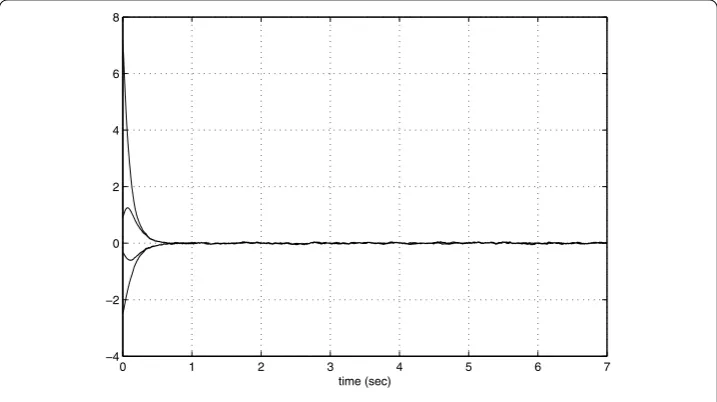
Figure 1 State trajectories of neural network.
We fixλ= . Solving ()-() withγ = . andκ= yields
P=
. –. –. .
, Y=
–. –. –. –.
, μ= ..
Figure shows state trajectories when the initial conditions are given by
x(σ) =
–. .
, σ∈
–τ
,
W() =
. –. . –.
, V() =
–. . –. –.
,
()
and the external disturbancedi(t) (i= , ) is given by a Gaussian noise with mean and variance . In Figure , we can see that the proposed PPEDLL attenuates the effect of the external disturbanced(t) on the state variablex(t). Figures and show the evolu-tions of the weightsW(t) andV(t), respectively. Since an external disturbanced(t) exists in the neural network (), the weights are bounded around the origin. This result is partic-ularly useful when we deal with robust identification and control problems using neural networks [].
4 Conclusion
Figure 2 Trajectories for elements of the weight matrixW(t).
Figure 3 Trajectories for elements of the weight matrixV(t).
delayed state information, but this needs a lot of memory/storage in hardware. Thus, a new and efficient implementation algorithm of the PPEDLL that will include the reduc-tion of memory/storage remains as a future emphasis.
Competing interests
The authors declare that they have no competing interests.
Authors’ contributions
All authors contributed equally and significantly in writing this paper. All authors read and approved the final manuscript.
Author details
1School of Electrical Engineering, Korea University, 145, Anam-ro, Seongbuk-gu, Seoul, 136-701, Korea.2Division of
Electronics & Control Engineering, Wonkwang University, 344-2 Shinyong-dong, Iksan, 570-749, Korea.
[image:7.595.120.480.83.529.2]References
1. Gupta, MM, Jin, L, Homma, N: Static and Dynamic Neural Networks. Wiley, New York (2003)
2. Kelly, DG: Stability in contractive nonlinear neural networks. IEEE Trans. Biomed. Eng.3, 241-242 (1990)
3. Matsouka, K: Stability conditions for nonlinear continuous neural networks with asymmetric connections weights. Neural Netw.5, 495-500 (1992)
4. Liang, XB, Wu, LD: A simple proof of a necessary and sufficient condition for absolute stability of symmetric neural networks. IEEE Trans. Circuits Syst. I45, 1010-1011 (1998)
5. Sanchez, EN, Perez, JP: Input-to-state stability (ISS) analysis for dynamic neural networks. IEEE Trans. Circuits Syst. I46, 1395-1398 (1999)
6. Chu, T, Zhang, C, Zhang, Z: Necessary and sufficient condition for absolute stability of normal neural networks. Neural Netw.16, 1223-1227 (2003)
7. Chu, T, Zhang, C: New necessary and sufficient conditions for absolute stability of neural networks. Neural Netw.20, 94-101 (2007)
8. Rovithakis, GA, Christodoulou, MA: Adaptive control of unknown plants using dynamical neural networks. IEEE Trans. Syst. Man Cybern.24, 400-412 (1994)
9. Jagannathan, S, Lewis, FL: Identification of nonlinear dynamical systems using multilayered neural networks. Automatica32, 1707-1712 (1996)
10. Suykens, JAK, Vandewalle, J, De Moor, B: Lur’e systems with multilayer perceptron and recurrent neural networks; absolute stability and dissipativity. IEEE Trans. Autom. Control44, 770-774 (1999)
11. Yu, W, Li, X: Some stability properties of dynamic neural networks. IEEE Trans. Circuits Syst. I48, 256-259 (2001) 12. Chairez, I, Poznyak, A, Poznyak, T: New sliding-mode learning law for dynamic neural network observer. IEEE Trans.
Circuits Syst. II, Express Briefs53, 1338-1342 (2006)
13. Yu, W, Li, X: Passivity analysis of dynamic neural networks with different time-scales. Neural Process. Lett.25, 143-155 (2007)
14. Rubio, JJ, Yu, W: Nonlinear system identification with recurrent neural networks and dead-zone Kalman filter algorithm. Neurocomputing70, 2460-2466 (2007)
15. Ahn, CK: Passive learning and input-to-state stability of switched Hopfield neural networks with time-delay. Inf. Sci.
180(23), 4582-4594 (2010)
16. Ahn, CK: Some new results on stability of Takagi-Sugeno fuzzy Hopfield neural networks. Fuzzy Sets Syst.179(1), 100-111 (2011)
17. Suykens, JAK, Vandewalle, J, De Moor, B:NLqtheory: checking and imposing stability of recurrent neural networks for
nonlinear modelling. IEEE Trans. Signal Process.45, 2682-2691 (1997)
18. Ahn, CK: AnH∞approach to stability analysis of switched Hopfield neural networks with time-delay. Nonlinear Dyn.
60(4), 703-711 (2010)
19. Ahn, CK:L2-L∞nonlinear system identification via recurrent neural networks. Nonlinear Dyn.62(3), 543-552 (2010) 20. Ahn, CK: A new robust training law for dynamic neural networks with external disturbance. Discrete Dyn. Nat. Soc.
2010, Article ID 415895, 14 pages (2010)
21. Ahn, CK: Robust stability of recurrent neural networks with ISS learning algorithm. Nonlinear Dyn.65(4), 413-419 (2011)
22. Ahn, CK: ExponentialH∞stable learning method for Takagi-Sugeno fuzzy delayed neural networks: a convex optimization approach. Comput. Math. Appl.63(5), 887-895 (2012)
23. Abedor, J, Nagpal, K, Poolla, K: A linear matrix inequality approach to peak-to-peak gain minimization. Int. J. Robust Nonlinear Control6, 899-927 (1996)
24. Scherer, C, Gahinet, P, Chilali, M: Multiobjective output-feedback control via LMI optimization. IEEE Trans. Autom. Control42, 896-911 (1997)
25. Ahn, CK, Lee, YS: Inducedl∞stability of fixed-point digital filters without overflow oscillations and instability due to
finite word length effects. Adv. Differ. Equ.2012, 51 (2012)
26. Ahn, CK, Kim, PS: New peak-to-peak state-space realization of direct form digital filters free of overflow limit cycles. Int. J. Innov. Comput. Inf. Control (2013, in press)
27. Boyd, S, Ghaoui, LE, Feron, E, Balakrishinan, V: Linear Matrix Inequalities in Systems and Control Theory. SIAM, Philadelphia (1994)
28. Gahinet, P, Nemirovski, A, Laub, AJ, Chilali, M: LMI Control Toolbox. The Mathworks, Natick (1995) 29. Albert, AE: Regression and the Moore-Penrose Pseudoinverse. Academic Press, San Diego (1972)
30. VanAntwerp, JG, Braatz, RD: A tutorial on linear and bilinear matrix inequalities. J. Process Control10, 363-385 (2000) 31. Hunt, KJ, Sbarbaro, D, Zbikowski, R, Gawthrop, PJ: Neural networks for control systems - a survey. Automatica28,
1083-1112 (1992)
doi:10.1186/1029-242X-2013-68