Towards the development of a clinically
effective interoperable epilepsy electronic
patient record
A Thesis Submitted to University of Dublin, Trinity College for the
Degree of Doctor of Philosophy
Louise Mc Quaid PhD, MSc, BSc.
ii
Declaration
I, Louise Mc Quaid, declare that the work described in this dissertation is, except
where otherwise stated, entirely my own work, and has not been submitted as an
exercise for a degree at this or any other university. I further declare that this
research has been carried out in full compliance with the ethical research
requirements of the School of Computer Science and Statistics.
Signed: ___________________
iii
Permission to lend and/or copy
I, the undersigned, agree that the Trinity College Library may lend or copy this
thesis upon request.
Signed: ___________________
iv
Abstract
eHealth including Electronic Patient Records1(EPRs), is a key enabler to effectively support
the coordinated approach to chronic disease management (CDM), including epilepsy, by improving information flow between patients and providers and among providers
themselves. The potential for eHealth applications to reduce medical error, improve patient outcomes and reduce healthcare costs is recognised.(1) However, it has been proven that
eHealth projects have failed to meet end-users requirements or are considered incomplete and not fit for purpose.(2) eHealth can benefit from employing a sociotechnical ethos that
views the human, organisational and technical components of a system as a network that must be managed collectively in order to realise improved healthcare. Enabling
interoperability, the ability to safely share and communicate information between eHealth applications across multiple healthcare providers regardless of geographical location, is also an important consideration for successful eHealth applications.
This research, conducted using a qualitative case study, examines how a sociotechnical approach to EPR requirements, design and deployment can be used to meet clinical
requirements. The findings suggest that an EPR based on an STS ethos results in a workable and usable system for end-users.This thesis also considers how existing EPRs can share and communicate information to support interoperability between eHealth applications. It
provides a methodology, which was validated using a case study, for mapping from an existing relational EPR to the Health Level Seven (HL7) Clinical Documents Architecture Standard (CDA). It also found that it is possible to map from an existing relational EPR to the HL7 CDA standard to enable interoperability subject to certain constraints such as involving both clinical and technical expertise.
This research has made a theoretical contribution to health informatics research and also has relevance to practice. Specifically, the study improved understanding in the area of design and deployment of EPRs using sociotechnical perspectives in a real world setting and contributes to the literature on healthcare interoperability standards.
v
Acknowledgements
I would like to sincerely thank my supervisors Professor Jane Grimson and Professor Lucy Hederman (Trinity College Dublin) for supervising my research and for their continued support and advice throughout this journey.
I would also like to thank all the staff in the epilepsy service, Beaumont Hospital for the assistance they provided during this research. In particular, Mary Fitzsimons and Professor Norman Delanty for their insightful contributions and their enthusiasm at all times. I would also like to thank all my colleagues in HIQA for their interest in this research.
The completion of this thesis would not have been possible without the immense support that I received at home. Special thanks to my parents, Jean and Maurice who have always encouraged and guided me. A special thank you to my sisters Michelle and Joanne for their willingness to help out at all times. I would also like to mention Nana Marie, who always took an interest in me completing my research. My heartfelt thanks to Darren who has always been there for me and Aoibheann my little inspiration.
Finally, I wish to thank the following organisations for the financial assistance towards this research including the Health Research Board (HRB), Beaumont Hospital Dublin, Trinity College Dublin (TCD) and the Health Information and Quality Authority.
vi
Table of Contents
Declaration ... ii
Permission to lend and/or copy ... iii
Abstract ... iv
Acknowledgements ... v
Table of Contents ... vi
List of Abbreviations ... xi
List of Tables ... xiii
List of Figures ... xiv
List of Appendices ... xv
Chapter 1 Introduction ... 2
1.1 Thesis Introduction ... 2
1.2 Background and Context ... 3
1.2.1 The epilepsy EPR and Role of the Business Analyst (BA) ... 4
1.3 Scope of Study, Research Questions and Objectives ... 4
1.4 Methodology ... 6
1.5 Outcomes and Contributions of the Research... 6
1.6 Thesis Outline ... 7
1.7 Publications and Presentations ... 9
Chapter 2 The role of the EPR in the management of epilepsy ... 10
2.1 Introduction... 10
2.2 Chronic Disease Management and eHealth ... 11
2.3 Electronic Health Records (EHRs) and Electronic Patient Records (EPRs) ... 13
2.4 The Epilepsy Exemplar ... 15
2.4.1 An overview of epilepsy ... 16
2.4.2 Classification of epilepsy ... 17
2.4.3 Selecting the correct anti-epileptic drug (AED) ... 18
2.4.4 Epilepsy Outpatient Clinics ... 20
vii
Chapter 3 Sociotechnical Requirements Engineering in Healthcare ... 23
3.1 Introduction... 23
3.1.1 Business Analyst (BA) role in Sociotechnical Requirements Engineering ... 24
3.2 Traditional Requirements Engineering ... 24
3.2.1 Requirements Engineering Process ... 25
3.3 Sociotechnical Requirements Engineering ... 28
3.3.1 Sociotechnical Systems Theory ... 29
3.3.2 STS in Healthcare ... 30
3.3.3 Defining STS ... 31
3.3.4 STS Principles ... 33
3.3.5 Defining STS Dimensions ... 34
3.3.6 From Design Principles to Practice ... 35
3.4 Ethnographic Methods in Clinical Setting for Requirements Elicitation and System Design ... 38
3.4.1 Prior research in usage of ethnography within software development process .... 41
3.5 Conclusions ... 42
Chapter 4 Design of an epilepsy EPR using a sociotechnical perspective ... 44
4.1 Introduction... 44
4.2 Description of the epilepsy EPR ... 44
4.2.1 Preliminary Research ... 45
4.2.2 Epilepsy clinic setting (Pre-implementation) ... 47
4.3 Epilepsy EPR Development lifecycle ... 50
4.3.1 Overview of the development lifecycle of the epilepsy EPR ... 50
4.4 STS approach to requirements engineering ... 54
4.4.1 An approach to sociotechnical requirements engineering ... 54
4.4.2 Analysis Stage ... 55
4.4.3 Data Collection for sociotechnical requirements ... 55
4.4.4 Requirements Engineering Process ... 57
4.4.5 Examples of Sociotechnical Requirements Engineering for the epilepsy EPR ... 60
4.5 Sociotechnical approach for System Design ... 63
4.5.1 Modelling ... 64
4.5.2 Wireframes ... 64
4.5.3 Screenflow ... 65
viii
4.5.5 Evolutionary Prototyping ... 67
4.5.6 Working Prototypes ... 68
4.5.7 Examples of Sociotechnical Design ... 70
4.6 The AED Module based on sociotechnical design ... 74
4.6.1 Design of the AED module ... 74
4.6.2 Description of the AED Module of the EPR ... 74
4.7 Conclusions ... 76
Chapter 5 Evaluation of the epilepsy EPR deployment ... 78
5.1 Introduction... 78
5.2 Study Design ... 79
5.3 Study Setting ... 82
5.3.1 Clinician Interaction with the AED module ... 83
5.3.2 Protocol - Hardcopy record of AED module use ... 84
5.4 Evaluation Methods of the AED module ... 87
5.4.1 Ethnography ... 87
5.4.2 Feedback Meetings for AED Pilot ... 92
5.4.3 Data Validation ... 93
5.5 Conclusions of the AED Pilot Study ... 95
5.5.1 Human ... 96
5.5.2 Organisational ... 97
5.5.3 Technical ... 99
5.6 Discussion and Conclusions ... 101
5.6.1 The epilepsy EPR is usable in practice in an epilepsy out-patient department ... 101
Chapter 6 HL7 Clinical Document Architecture (CDA)... 116
6.1 Introduction... 116
6.2 Healthcare Interoperability ... 116
6.2.1 Importance of eHealth Interoperability Standards ... 117
6.2.2 Clinical Coding of health information ... 118
6.2.3 EHR Architecture ... 119
6.3 Health Level Seven (HL7) Standards ... 120
6.3.1 Reference Information Model (RIM) ... 120
ix
6.4.1 Clinical Documents ... 122
6.4.2 Goal of the CDA Standard ... 124
6.4.3 Incremental Semantic Interoperability ... 124
6.4.4 CDA Structure ... 125
6.5 CDA Templates ... 127
6.6 Mapping from existing relational models to Object Oriented (OO) Models ... 128
6.6.1 Data Modelling ... 129
6.6.2 Data Models and Concepts ... 130
6.6.3 Physical Data Model Concepts ... 130
6.6.4 OO Data Model Concepts ... 130
6.6.5 Mapping from Physical Data Model ... 131
6.6.6 Matching Techniques ... 132
6.6.7 Taxonomy of Matches ... 133
6.7 Conclusion ... 134
Chapter 7 Mapping from an existing relational EPR database to the HL7 CDA Standard ... 136
7.1 Introduction... 136
7.2 CDA Implementation Guides and Rules for CDA Templates ... 136
7.3 Methodology for mapping ... 138
7.4 Case Study: Mapping from an existing relational epilepsy database to the HL7 CDA Standard ... 142
7.5 Discussion ... 153
7.5.1 Data Types ... 153
7.5.2 Challenges involved with mapping ... 156
Chapter 8 Discussion and Conclusions ... 158
8.1 Overview ... 158
8.1.1 Context ... 158
8.2 Research Questions, Objectives and Thesis Structure Revisited ... 158
8.3 Key Findings, Discussion and Conclusions ... 161
8.3.1 Discussion ... 162
8.4 Generalisability ... 171
8.5 Limitations and Suggestions ... 173
x
8.5.2 Limitations of mapping ... 175
8.6 Contributions ... 176
8.7 Conclusions and Final Thoughts ... 177
References ... 179
Appendix A Use Case Diagram for the epilepsy EPR ... 199
Appendix B Epilepsy EPR Demographics Physical Data Model ... 200
Appendix C Epilepsy EPR Medications Physical Data Model ... 201
xi
List of Abbreviations
AED Anti-Epileptic Drug
ATC Anatomical Therapeutic Chemical BA Business Analyst
BHIS Beaumont Hospital Information System CCM Chronic Care Model
CDA Clinical Document Architecture CDC Center for Disease Control CDM Chronic Disease Management CDSS Clinical Decision Support System
CEN Comité Européen de Normalisation - European Committee for Standardisation CLOB Character Large Object
CNS Clinical Nurse Specialist DTR Draft Technical Report EEG Electroencephalography EHR Electronic Health Record EMU Epilepsy Monitoring Unit EPR Electronic Patient Record
ESTI European Telecommunications Standards Institute GPMS General Practice Management System
HL7 Health Level Seven
HOT Human, Organisation and Technology HSE Health Service Executive
xii IHE Integrating the HealthCare Enterprise
IHTSDO International Health Terminology Standards Development Organisation ILAE International League Against Epilepsy
ISO International Standards Organisation
LOINC Logical Observation Identifiers Names and Codes OID Object Identifier
OO Object Oriented
OPD Out-Patient Department
PACS Picture Archiving and Communication System PHR Personal Health Record
PIPE Patient Information Profile Explorer RE Requirements Engineering
RIM Reference Information Model RMIM Refined Message Information Model RUP Rational Unified Process
SDO Standards Development Organisation
SNOMED CT Systematized Nomenclature of Medicine - Clinical Terms
STS Sociotechnical System
STSD Sociotechnical System Design SR Senior Registrar
UCUM Unified Code for Units of Measure URS User Requirements Specification UAT User Acceptance Testing
xiii
List of Tables
TABLE 1-1 SUMMARY OF THE THESIS STRUCTURE ... 7
TABLE 3-1 COMMON SOCIOTECHNICAL PRINCIPLES ... 33
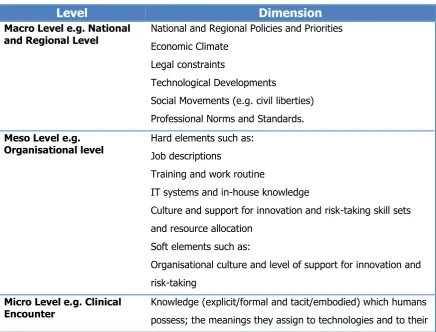
TABLE 3-2 SOCIO-TECHNICAL NETWORK SHOWING MULTIPLE LEVELS OF ANALYSIS ... 34
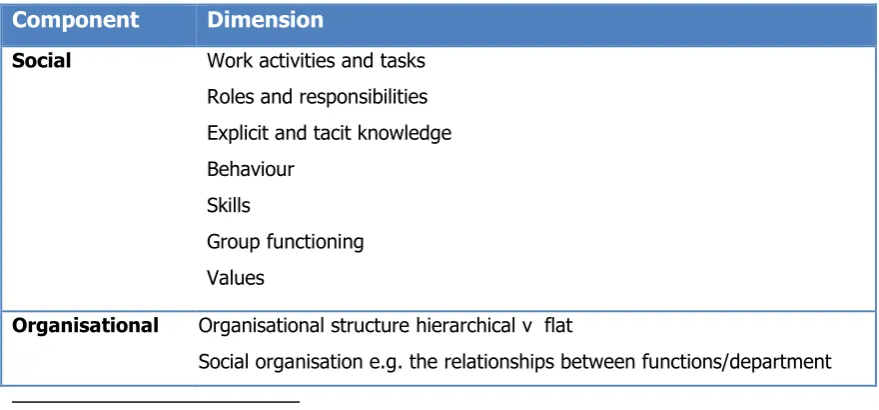
TABLE 4-1 SOCIOTECHNICAL DIMENSIONS TO GUIDE RE AND DESIGN ... 55
TABLE 5-1 OUTCOME MEASURES AND METHODS FOR PILOT OF AED DEPLOYMENT ... 79
TABLE 5-2 METHOD TO CROSS REFERENCE THE PAPER CHART AND AED MODULE ... 94
TABLE 6-1 APPROACHES TO AUTOMATIC SCHEMA MATCHING ... 133
TABLE 7-1 EXAMPLE OF THE MAPPING TABLE AND HEADINGS ... 141
TABLE 7-2 TOTAL EPSOS IG HEADER ELEMENTS ... 147
TABLE 7-3 MATCHING RESULTS OF REQUIRED ELEMENTS ... 148
TABLE 7-4 SCHEMA MATCHING FROM MEDICATION TABLE (SOURCE) TO THE CDA IG SCHEMA (TARGET) ... 150
xiv
List of Figures
FIGURE 3-1 DEFINITION OF STS INCLUDING COMPONENTS AND DIMENSIONS ... 32
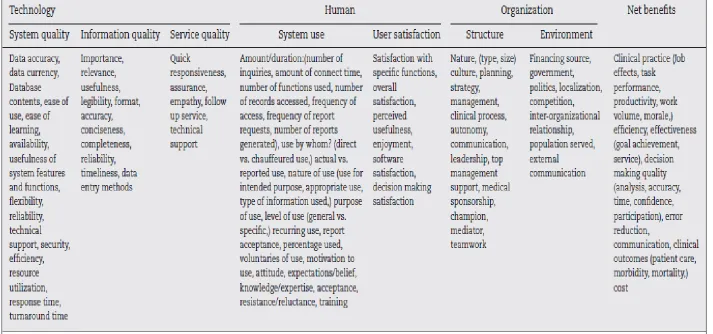
FIGURE 3-2 YUSOF’S EVALUATION FRAMEWORK... 37
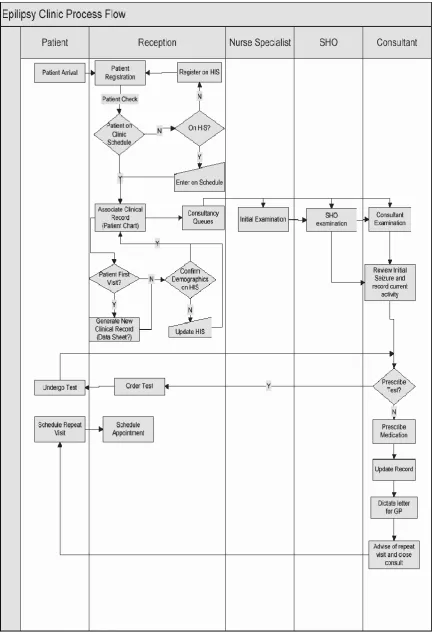
FIGURE 4-1 PROCESS FLOW THROUGH EPILEPSY OPD ... 46
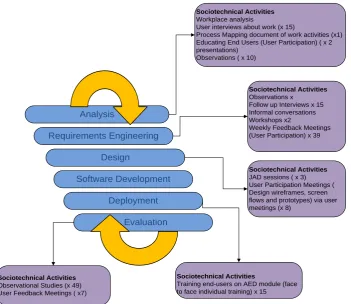
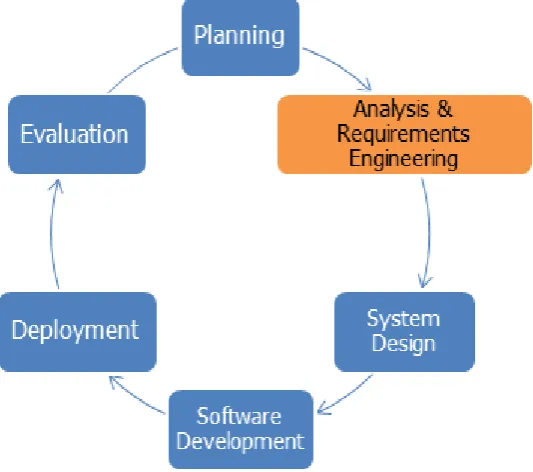
FIGURE 4-2 THE ITERATIVE STAGES OF THE EPILEPSY EPR DEVELOPMENT LIFECYCLE ... 51
FIGURE 4-3 SOCIOTECHNICAL ACTIVITIES ASSOCIATED WITH THE STAGES FOR THE DEVELOPMENT AED MODULE OF THE EPILEPSY EPR ... 51
FIGURE 4-4 ANALYSIS AND RE STAGE OF THE EPILEPSY EPR DEVELOPMENT LIFECYCLE ... 54
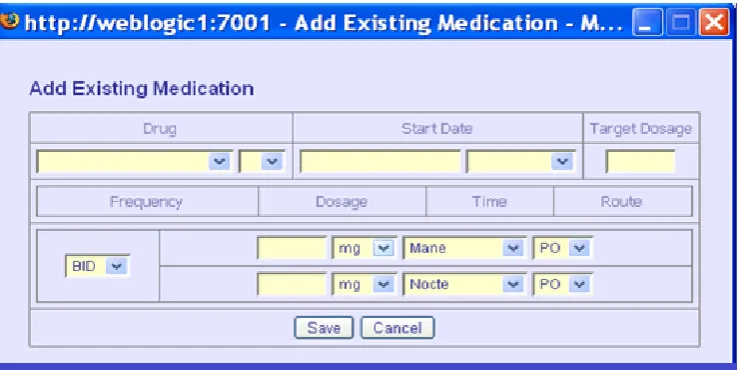
FIGURE 4-5 SCREENSHOT FROM A POP-UP BOX OF AN AED MODULE TO ADD EXISTING MEDICATION ... 62
FIGURE 4-6 SYSTEM DESIGN STAGE OF THE EPILEPSY EPR DEVELOPMENT LIFECYCLE ... 64
FIGURE 4-7 EXAMPLE OF WIREFRAME FOR SEIZURE HISTORY ... 65
FIGURE 4-8 EXAMPLE OF A SCREENFLOW FOR DIAGNOSIS OF EPILEPSY ... 66
FIGURE 4-9 DATA STRUCTURES AND DATA VALUES FOR AN EPILEPSY DIAGNOSIS ... 67
FIGURE 4-10 EXAMPLE OF FINAL PROTOTYPE FOR SEIZURES (POST DIAGNOSIS) ... 69
FIGURE 4-11 REQUIREMENTS TO CREATE AN EPILEPSY SUMMARY PAGE ... 71
FIGURE 4-12 A TRADITIONAL REQUIREMENT FOR VIEWING PRIOR MEDICATIONS ... 73
FIGURE 4-13 AN EXCERPT FROM THE MEDICATIONS USER REQUIREMENT SPECIFICATION ... 73
FIGURE 4-14 MEDICATION AED USER INTERFACE ... 77
FIGURE 5-1: EVALUATION STAGE: EVALUATING THE DEPLOYMENT OF THE EPILEPSY EPR ... 78
FIGURE 5-3: EXCERPT OF AN OBSERVATIONAL STUDY FOR A RETURN PATIENT WITH EPILEPSY AT THE BEAUMONT HOSPITAL EPILEPSY CLINIC ... 91
FIGURE 5-4 EXAMPLE OF A CODED SEGMENT ... 91
FIGURE 6-1 DIAGRAMMATIC REPRESENTATION OF THE ASSOCIATIONS BETWEEN RIM CLASSES ... 121
xv
List of Appendices
Appendix A Use Case Diagram for the epilepsy EPR
1
Part I
2
Chapter 1 Introduction
1.1 Thesis Introduction
The use of Information and Communication Technology (ICT) in healthcare, or as it is commonly referred to in Europe, eHealth, is a key enabler to effectively support the
coordinated approach to chronic disease management (CDM) and improve information flow between the patient and providers and among providers themselves. Over the years, there has been an international effort to more effectively manage chronic disease (3-5) using the
chronic care model (CCM) which importantly promotes the use of ICT as one of its core recommendations.(6-8) There is strong evidence to suggest that eHealth, including Electronic
Health Records2 (EHRs) and Electronic Patient Records3 (EPRs), can greatly support and
positively impact on chronic disease management (9-11) promising greater benefits for
patients.
The potential for eHealth applications to reduce medical error, improve patient outcomes and reduce healthcare costs is recognised.(1) It is well documented that EHRs/EPRs can
potentially add significant value to patient care in terms of improving quality, safety and efficiency.(12) Given the CCM recommendation and the evidence from literature, this thesis
assumes that CDM, in this case epilepsy, can benefit from the introduction of an EPR. However, adopting eHealth should not be seen as the solution to fixing all the problems of modern medicine.(13) The evidence suggesting that EPRs may more effectively manage CDM
is convincing. However, it has been proven that many eHealth projects have failed to meet end-users requirements or are considered incomplete and not fit for purpose.(2) The
difficulty in deploying eHealth initiatives may be attributed to the complexity of the healthcare environment. It is well documented that the business of healthcare is complex and unstable, information intensive, highly unpredictable, not routine and often involves ad hoc tasks and interruptions to workflow.(14) A further difficulty is the management of
requirements and system design and deployment of EPRs. Traditional requirements
development that focuses heavily on what technical features should be included in systems without considerations of users and organisational issues is not well-suited to the business
3
of healthcare most notably because ‘the underlying assumptions of traditional RE practice is that the domain the application is designed for is stable’.(2) A solution is to view EPR
development (including requirements, system design and deployment) from a broader sociotechnical perspective. A sociotechnical system (STS) includes dynamic networks of people and technologies and has three key components including social, organisational and technology that must be managed collectively in order to realise the promise of improved healthcare.(15) A sociotechnical approach was used in the requirements, design and
deployment stages of the epilepsy EPR development. This means considering the
interrelatedness of human, organisational and technical components when designing and building a system and not just focusing on the technology.
This thesis concentrates on how a sociotechnical approach to EPR requirements, design and deployment can be used to meet clinical requirements. The thesis also considers how EPRs can share and communicate information to support interoperability between EPRs across multiple healthcare providers regardless of geographical location. The epilepsy EPR was based on bespoke software rather than on any international eHealth standards or commercial product.
1.2 Background and Context
The Health Research Board (HRB) in Ireland funded a five year (2005-2010) research and development (R&D) programme to examine challenges to epilepsy management in both primary and specialist sectors and to consider how epilepsy management could be supported by the introduction of an epilepsy EPR.(16-18) This R&D programme was
undertaken by the epilepsy programme at Beaumont Hospital Dublin, of which the
development of the epilepsy EPR forms a part. A partnership was established between the Centre for Health Informatics and the Centre for Health Policy and Management at Trinity College Dublin together with Beaumont Hospital’s I.T. department. The research was approved by the Medical Research Ethics Committee at Beaumont Hospital. The broad objectives were to:
Manage and provide safe and quality patient care through improved health
4
Produce quality patient data by facilitating easier interrogation and reporting, updating, analysis and auditing of epilepsy information for the purposes of epilepsy research
Enable the integration of data from multiple sources to facilitate access to authorised users at multiple locations within and external to Beaumont Hospital (this is
addressed in part two of this research).
1.2.1 The epilepsy EPR and Role of the Business Analyst (BA)
This research is primarily based on the epilepsy electronic patient record (EPR), currently used routinely in a live clinical setting by a multidisciplinary team of healthcare professionals at one of the main teaching hospitals in Dublin. The epilepsy programme at Beaumont Hospital is the main referral centre for patients with epilepsy and related disorders in Ireland. It integrates clinical care and research through the work of a multidisciplinary team who provide services including an epilepsy out-patient department (OPD), a nurse specialist telephone advice service, the epilepsy pregnancy register, community services, and a long term monitoring unit. This work was conducted through a multidisciplinary team of 15 staff comprising administrative, clinical, researchers and healthcare professionals who are
referred to as the end-users throughout this thesis. The aim of the epilepsy programme is to continuously manage the care of patients with epilepsy. The diagnosis and treatment of epilepsy depends
on accurate integration and correlation of clinical data from multiple heterogeneous sources. The secure web-based epilepsy EPR was designed developed and deployed incrementally over 4 years to include clinic administration, demographics, social history, epilepsy history, anti-epileptic drugs (AED), allergies, OPD plan and clinical investigations modules.
The author played the role of business analyst (BA) in the analysis, requirements, design and deployment of the epilepsy EPR. A BA’s role is crucial in the software development lifecycle as they perform a liaison role between the business and technical team in order to effectively communicate the end-user requirements (see chapter 4).
1.3 Scope of Study, Research Questions and Objectives
5
secondly, the methodology for mapping from existing databases to enable standards compliant EPRs. The research questions are:
Part One: How can a sociotechnical approach be used to ensure that the design and deployment of an EPR meets clinical requirements?
Part Two: What methodology is required to map an extract (in this case a discharge summary) from a pre-existing relational EPR (in this case epilepsy) to make it conform to a corresponding template (for a discharge summary) defined according to the Health Level Seven Clinical Document Architecture (CDA)
There are two parts to this research. The first part describes the design and deployment of an EPR using a sociotechnical approach. The second part examines the feasibility of mapping an extract of data from an existing EPR to make it comply with the HL7 CDA standard. The research questions are related because there is a lot of investment locked up in existing EPRs and it is important to be able to share meaningful information with other systems. If an existing EPR is non-standards compliant, it is necessary to introduce standards to make the EPR interoperable with other systems.
In order to address these two related research questions, the following research objectives have been derived. Part one is covered by objectives A-D and part two is addressed by objectives E-F.
A. Research relevant academic and grey literature concerned with the condition of epilepsy and STS philosophy in requirements engineering, system design and deployment.
B. Examine the practicalities of how to design and deploy an epilepsy EPR using an STS perspective in a real world clinical environment.
C. Identify the sociotechnical clinical requirements needed to satisfy the design and deployment of the epilepsy EPR.
6
E. Research relevant academic and grey literature concerned with eHealth standards, specifically the HL7 CDA standard and literature on mapping from relational EPR data models to object oriented models.
F. Develop and validate a process for mapping an existing relational EPR extract to the HL7 CDA standard based on an internationally recognised CDA implementation guide and literature on mapping data models for interoperability.
1.4 Methodology
Part 1 of this study used a qualitative case study approach in order to address the research questions and objectives. It drew on a broad range of literature. Data collection for part 1, the sociotechnical design and deployment of the epilepsy EPR, was gathered through qualitative research methods such as, notes and memos from feedback meetings and workshops, interviews and informal conversations with end-users and analysis of existing documentation and participant observation. The author validated interviews and
observations that were captured in very busy interview and fieldwork settings through follow-up meetings and informal conversations. Part 2 of this study also used a case study approach to validate a mapping methodology from existing relational EPRs to the HL7 CDA document standard. This involved following the steps of the methodology by understanding, analysing and interpreting existing documentation for CDA implementation guides (IG), the CDA model called the RMIM and an epilepsy EPR relational database. It also involved the author liaising with the epilepsy technical team lead to gather information about the epilepsy EPR and feedback was documented as notes and meeting minutes.
1.5 Outcomes and Contributions of the Research
7
1. Demonstrates that the design and deployment of an EPR using an STS perspective in a real world clinical environment resulted in a workable and usable system.
2. Presents rich descriptions on how to design and deploy an EPR using an STS perspective and ethnography.
3.
Provides a methodology which was validated on the same case study (a medication section of discharge summary) for mapping from a relational EPR data model to the HL7 CDA RMIM.4. Identifies that the mapping from a relational EPR database model to the HL7 CDA RMIM requires input from both clinical and technical expertise.
1.6 Thesis Outline
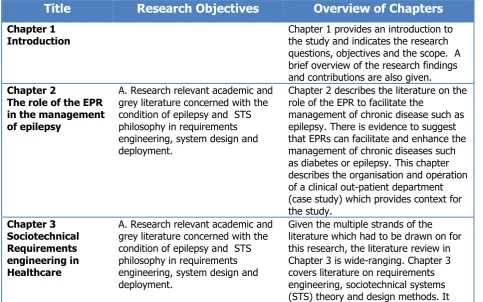
[image:22.595.65.549.463.765.2]This thesis consists of eight chapters. Table 1-1 below outlines the association between each chapter and the research objectives alongside a summary of what each chapter entails.
Table 1-1 Summary of the Thesis Structure
Title
Research Objectives
Overview of Chapters
Chapter 1
Introduction Chapter 1 provides an introduction to the study and indicates the research questions, objectives and the scope. A brief overview of the research findings and contributions are also given.
Chapter 2
The role of the EPR in the management of epilepsy
A. Research relevant academic and grey literature concerned with the condition of epilepsy and STS philosophy in requirements engineering, system design and deployment.
Chapter 2 describes the literature on the role of the EPR to facilitate the
management of chronic disease such as epilepsy. There is evidence to suggest that EPRs can facilitate and enhance the management of chronic diseases such as diabetes or epilepsy. This chapter describes the organisation and operation of a clinical out-patient department (case study) which provides context for the study. Chapter 3 Sociotechnical Requirements engineering in Healthcare
A. Research relevant academic and grey literature concerned with the condition of epilepsy and STS philosophy in requirements engineering, system design and deployment.
8
also reviews the field of ethnography, a qualitative research method that is strongly aligned with sociotechnical thinking. The literature suggests that STS principles and design and
ethnographic techniques are well suited to system design in healthcare.
Chapter 4 Design of an epilepsy EPR using a sociotechnical perspective
B. Examine the practicalities of how to design and deploy an epilepsy EPR using an STS perspective in a real world clinical environment.
C. Identify the sociotechnical clinical requirements needed to satisfy the design and deployment of the epilepsy EPR.
Chapter 4 gives a detailed account of the sociotechnical principles that were used to guide the EPR design. It also outlines the data collection methods used including observational studies of the clinic environment and people who worked there and interviews with end-users. The data collected provides rich descriptions to help design the EPR. This chapter concludes with a description of the Anti-Epileptic Drug (AED) module.
Chapter 5
Evaluation of the epilepsy EPR deployment
D. Evaluate the use and usability of the EPR using the AED module, a complex and core component of the EPR, as an exemplar.
Chapter 5 examines the use and usability of the AED module of an epilepsy EPR deployed in a live epilepsy clinic and categorises the findings under key sociotechnical components: human, organisational and technology. The findings suggested that end-users were able to use the EPR in a clinical
environment and that it met their clinical requirements.
Chapter 6 HL7 Clinical Document Architecture (CDA)
E. Research relevant academic and grey literature concerned with eHealth standards, specifically the HL7 CDA standard and literature on mapping from relational physical data models to object oriented models.
The second part of this research was concerned with mapping extracts from an existing database to an international eHealth interoperability standard called HL7 CDA. This provides an important step towards facilitating interoperability from relational non-standards compliant EPRs to a standards based EPR in order to share patient information.
Chapter 6 emphasises the importance of interoperability to achieve safe
electronic communication between eHealth systems such as EPRs alongside a comprehensive overview of health information standards and mapping from relational to OO models.
Chapter 7
Mapping from an existing relational EPR database to the HL7 CDA Standard
F. Develop and validate a methodology for mapping an existing relational EPR extract to the HL7 CDA standard based on an internationally recognised CDA implementation guide and literature on mapping data models for
interoperability.
Chapter 7 describes a methodology that was developed and validated for
mapping an existing epilepsy relational database to the CDA document standard based on an internationally recognised CDA implementation guide and literature around mapping.
9 Discussion and
Conclusions
returns to the research questions and objectives. Section 8.3 identifies and discusses the main findings and presents conclusions. Section 8.4 considers how the findings could be generalisable to other areas. The limitations of the study are outlined in section 8.5 and suggestions for future research are discussed. The
contributions that were achieved from the study are outlined in Section 8.6 and finally the final conclusion is presented in Section 8.7.
1.7 Publications and Presentations
The publications and presentations related to this thesis are outlined below:
Publications
Mc Quaid L, Breen, P, Grimson, J, Normand C, Dunne M, Delanty N, Kalra D, Fitzsimons M. Socio-technical considerations in epilepsy electronic patient record implementation. International Journal of Medical Informatics (2010);79:349–60.
Varley J, Delanty N, Normand C, Coyne I, McQuaid L, Collins C et al. Epilepsy in Ireland: Towards the primary–tertiary care continuum. Seizure. (2009);19 (1):47-52
Breen P, Mc Quaid L, Grimson, J, Delanty, N, Dunne M,Dunleavy B, Normand C, Fitzsimons M. Integrating clinical theory and practice in an epilepsy-specific electronic patient record. Stud Health Technol Inform. (2009);150(6):145.
Fahey P, Harney C, Kesava S, McMahon A, Mc Quaid L, and Kane B. Human computer interaction issues in eliciting user requirements for an Electronic Patient Record with multiple users. Proceedings of the 24th International Symposium on Computer-Based Medical Systems 2011; Bristol, UK: IEEE.
Presentations
Presentation to the Health Research Board (HRB) Programme Grant Mid-Term Review (2008) on “a consideration of sociotechnical challenges in EPR
implementation”.
Presentation to the annual Irish Neurological Association meeting (2006) on “embedding the e in neurology: the epilepsy EPR”.
Poster presentation at the Health Informatics Society of Ireland Annual Conference (2006) called “The Role of the Electronic Patient Record (EPR) in Epilepsy Research”
10
Chapter 2 The role of the EPR in the management of epilepsy
2.1 Introduction
This thesis uses epilepsy as an example of a chronic disease that can benefit from the use of eHealth. There are multiple types of epilepsy syndromes and seizure types. The diagnosis and treatment of epilepsy is complex involving input and the integration of information from multiple clinical disciplines such as neurology, neurosurgery, neuropsychology and pharmacy and non-clinical disciplines such as administration.
The evidence suggests that it is necessary to improve on the delivery of healthcare services by enhancing efficiency, access to services, and providing continuity of care.(19) Like other
chronic conditions, to optimally manage epilepsy, interoperability of clinical information is needed. This typically requires the integration of clinical information from various healthcare disciplines who are located in different healthcare settings such as general practice,
community based services and secondary and tertiary care.(20-24) The management of
chronic disease including epilepsy can improve with the use of eHealth and the secure exchange of standardised information between different healthcare providers and services such as the HL7 CDA standard as discussed in part two of this thesis.
Part one of this thesis (chapter 2 to chapter 5) is concerned with understanding how a sociotechnical approach can be used for the design and deployment of an EPR to meet clinical requirements. The epilepsy EPR at Beaumont Hospital was used as the case study for this research. Literature on eHealth, in particular EPRs, was reviewed and how it can
11
2.2 Chronic Disease Management and eHealth
Chronic diseases are a high priority for health services internationally and nationally as they are common, complex and costly to manage.(25, 26) In developed countries, they are the
leading cause of death and morbidity.(3) They are characterised as long term or recurrent
illnesses, non-communicable, difficult to cure and can lead to some form of functional impairment or disability.(27) Some of the most common chronic diseases include epilepsy,
asthma, cardiovascular disease, mental disorders and diabetes. An individual’s health outcome can be optimised through effective management of the condition.(28) This involves
a systematic approach from a diversity of healthcare disciplines including: medical, nursing, psychology, physiotherapy, laboratory and administration across a variety of healthcare settings (e.g. primary, secondary and community).
Advances in medical science, the use of more preventative care measures, improvement in treatments, better nursing and medical care and better socio-economic circumstances for individuals have led to a dramatic increase in life expectancy. These factors have contributed to a significant rise in the number of people living with comorbidity (multiple chronic
diseases) and polypharmacy (patient takes multiple medications).(10, 29) The financial costs
associated with chronic disease management (CDM) are a significant strain on health services with expenditure estimated at approximately 75% to 80% of total healthcare costs (US figures).(9) There is a similar situation in Ireland where the management of chronic
disease is difficult because of the current healthcare delivery model used in Ireland. This typically consists of fragmented services within hospitals and across organisational
boundaries. A document published in 2008 by the Department of Health and Children set out the “policy requirements for the future prevention and care of chronic disease in Ireland” and among the recommendations was the introduction of a shared chronic care modelto support a more collaborative approach to CDM and the development of clinical information systems to support CDM.(30)
The prevalence of chronic diseases is predicted to rise and will place even greater demands on health services in the future.(31) There has been an international effort to more effectively
manage chronic disease using the international recognised chronic care model (CCM) developed in the 1990s by Wagner et al. (1998) at the MacColl Institute for Healthcare Innovation (MacColl Institute).(3) This widely used shared care model aims to promote better
12
the development of proactive multidisciplinary care teams. Varley et al.,(2010)(18) conducted
research into the primary–tertiary care continuum for epilepsy in Ireland which “explained the need to shift from the current fragmented approach to a shared care model for the benefit of the patient with epilepsy and their families”. In addition to team based clinical care management, CDM models recommend the use of evidence-based treatments and the integration of clinical information through the use of ICT.(6, 8) The use of ICT in healthcare,
eHealth, is a key enabler to effectively support the coordinated approach to CDM and improve information flow between the patient and providers and among providers themselves. A comprehensive definition of eHealth is as follows:
“e-health is an emerging field in the intersection of medical informatics, public health and business, referring to health services and information delivered or enhanced through the Internet and related technologies…. the term characterizes not only a technical development, but also a state-of-mind, a way of thinking, an attitude, and a commitment for networked, global thinking, to improve health care locally, regionally, and worldwide by using information and communication technology”.(32)
eHealth has the potential to provide timely, quality information at the point of care to all those involved including patients and the multiple providers delivering care in many different settings.(11, 33-35) Dorr et al.,(2007)(9) conducted a comprehensive systematic literature
review of clinical information systems for CDM. They concluded that 67% of systems
reviewed were successfully implemented and associated with positive changes in outcomes.
As mentioned in chapter 1, there is evidence to suggest that eHealth, including EPRs, can support and positively impact on CDM (9-11) promising greater benefits for patients with
chronic disease. It is generally accepted that there is potential for eHealth applications such as EPRs to reduce medical error, improve patient outcomes and reduce healthcare costs.(1)
Ongoing research and development is required to effectively design and deploy eHealth applications such as EPRs to enhance patient care. Good evaluation around the delivery of eHealth systems such as EPRs is needed and the sociotechnical aspects of eHealth
applications must be understood and managed to achieve improved healthcare.(15) It is
13
healthcare(36) concluded that ‘despite support from policy makers, there was relatively little empirical evidence to substantiate many of the claims made in relation to eHealth
technologies’. They observed that eHealth applications contribute to the improvements in the quality and safety of healthcare but more rigorous evaluation of the impact of eHealth applications is required.
2.3 Electronic Health Records (EHRs) and Electronic Patient Records
(EPRs)
The use of eHealth solutions and in particular EPRs/EHRs, has the potential to greatly improve the quality and safety of healthcare.(37-39) There are many different terms and
definitions used throughout the literature to describe EPRs/EHRs.(40) This is possibly because
of the variation in EPRs/EHRs and the unavailability of standards and guidelines in the past. Hence, it has been difficult to develop an agreed comprehensive definition for the EHR and the EPR. A simple definition of an EHR is ‘a repository of information regarding the health status of a subject of care, in computer processable format’ (41) but this is considered
out-of-date as EHRs are viewed as more of an active record linked to knowledge such as clinical guidelines, protocols and alarms.(42)
The International Organisation of Standardisation (ISO) has proposed that records are differentiated according to whether they are shareable and interoperable, supporting integrated and continuity of care within and across organisation boundaries such as institutions and healthcare providers or are confined to single domain or speciality and are local to the facility e.g. detailed health information on the subject collected over a period of time and used typically within an institution. The ISO Technical Report ISO DTR 20514 Health Informatics: Electronic Health Record: Definition Scope and Context (ISO/DTR 20514) has provided an authorative definition of the shared-EHR or Integrated Care EHR (ICEHR), which is suitable for this research:
14
integrated health care and it contains information which is retrospective, concurrent and prospective’.(41)
The definition and differentiation between the different types of health records are defined as follows:
‘An electronic health record (EHR) is a longitudinal record of patient health information across multiple care settings
An electronic patient record (EPR) is a longitudinal record of patient health information within a single institution e.g. a GP practice or a single hospital, or confined to a single domain/disease
A personal health record (PHR) is a patient-held record owned and managed by the patient; it may include information provided by a healthcare provider as well as information provided by the patient’ (Taken directly from HIQA, 2011).(43)
It is widely believed that EPRs/EHRs may improve patient care by providing timely, secure access to better quality health information by multiple healthcare providers and patients in different locations. EPRs/EHRs have the capacity to reduce some of the financial costs associated with healthcare by enabling better coordination of treatment and elimination of duplicate tests.(37) The perceived benefits of EPRs/EHRs have been well documented
including:
Improved patient safety through eHealth initiatives such as ePrescribing solutions that are linked to an EPR/EHR.(44)
Improved effectiveness by enabling access to data at the right time and place to the right person, providing evidence-based care and improving adherence to clinical guidelines.(45)
Better management of chronic conditions which requires the ability to share information across different settings such as the community, primary and acute settings in order to facilitate an integrated service.(35)
Reduced costs as a result of the benefits from savings associated with unnecessary repetition of tests and the inability to access paper charts housed at multiple locations.(46)
15
However, alongside the perceived benefits are risks associated with the introduction of EPRs/EHRs such as the unknown consequences of changing from paper to electronic systems, privacy and confidentiality issues, network security issues and socio-technical issues. For example, a potential barrier to successful EPR implementation is the dependency on the traditional paper based chart. The paper chart is often characterised by its
disorganised, ambiguous, incomplete, illegible and inaccessible nature.(47) However, it
remains the principal tool to support shared communication between different healthcare professionals at different locations. The paper chart, often in tandem with an EPR/EHR and other disparate electronic clinical systems, must cater for complex clinical data. Data types include unstructured text, structured text, alphanumeric, diagnostic image data, sound and video. Working with both paper and electronic systems in parallel can pose significant challenges for healthcare professionals. Elicitation of clinical notes from two sources can lead to inconsistencies, missing documentation and ultimately lead to medical error.(48, 49)
Hence, the transition from paper to electronic should be awarded careful consideration.
At the most basic level, EPRs/EHRs can be used for data entry, storage, display, reporting and exchange of patient’s health information. They can support a diverse group of end-users such as clinicians, other healthcare professionals, administrators, managers and patients themselves and can interface to other systems such as Picture Archiving
Communication Systems (PACS), ePrescribing, Clinical Decision Support Systems (CDDS) and electronic ordering systems. However, they vary greatly in terms of their functionality, intended use and degree of sophistication including the extent to which they integrate with other systems.
2.4 The Epilepsy Exemplar
16 2.4.1 An overview of epilepsy
Epilepsy is one of the most common (prevalence 0.75–1%) chronic neurological conditions worldwide.(25) The condition is characterised by recurrent epileptic seizures and a diagnosis
is partly based on a person having suffered from two or more unprovoked epileptic seizures within a two year timeframe. The brain is the control centre for the body and is made up of neurons which are constantly transmitting and receiving messages which enable the body to work properly. A seizure may occur should there be a change in neurological functions triggered by abnormal electrical activity in the brain.(50)
Different epilepsy syndromes and seizure types have been identified and are classified according to the International League against Epilepsy (ILAE).(23) For an individual with
epilepsy and their families and carers, the condition is more complicated than solely managing seizures. Epilepsy can have a profound effect on an individual’s psychological, economic and social life.(24) Also, it is notable that a high proportion of people with epilepsy
may also have co-morbidities and suffer with one or more other chronic diseases compounding the challenge that is involved with epilepsy management.(51)
The treatment of epilepsy involves various methods including pharmacotherapy, neurosurgery as well as psychological and social support.(23) The goal of epilepsy
management is to achieve seizure remission, while minimising side-effects of drug therapy, and to enable patients to maintain a good quality of life.(21) It is important to establish the
correct diagnosis of epilepsy in order to provide the most effective treatment. Treatment of epilepsy, taking account of quality of life issues, involves the selection of the most
appropriate drug therapy.(23) In some individuals, who continue to have frequent seizures
and remain refractory to medication, surgical management is considered.(52) An alternative
to surgery is the implantation of electrical stimulation devices such as a vagal nerve stimulator (VNS).(20, 24)
For the majority of people who develop epilepsy, the prognosis can be good whereby the condition remits and its clinical manifestations may be short-lived. Long term remission is possible for two thirds of patients with epilepsy which decreases the chance of the patient experiencing subsequent relapses.(53) Non-compliance with AEDs or if a patient remains
17
The most important predictors for control and remission of seizures are based on a correct diagnosis and the patient’s response to the first prescribed AED.
2.4.2 Classification of epilepsy
An early and accurate diagnosis of epilepsy is fundamental to improve a patient’s
prognosis.(55) Patients who have recent-onset seizure activity (or where there is a clinical
suspicion of epilepsy) who experience multiple seizures before they receive a diagnosis and specialist treatment tend to have a worse outcome than patients who are reviewed and treated promptly.(56, 57) There is no gold standard for the diagnosis of epilepsy(58) and it can
be difficult to reach a confident, conclusive diagnosis. The diagnosis of epilepsy should be carried out by a clinical professional with expertise in epilepsy namely an epileptologist who can safely and proficiently determine the diagnosis. (58) The diagnosis of epilepsy involves
the epileptologist recording a detailed medical history from the patient and ideally obtaining an account of the seizure descriptions from a reliable witness to corroborate the patient’s account. Various diagnostic services are used in conjunction with recording a clinical history including computerized axial tomography (CAT), magnetic resonance imaging (MRI),
electroencephalography (EEG) and long-term video/EEG monitoring, therapeutic drug monitoring and neuropsychological services.(59)
Epilepsy is often misdiagnosed and therefore can at times be inappropriately treated.(60, 61)
There are various issues that may contribute to the misdiagnosis of the condition. It can be difficult to differentiate between certain types of seizures and other conditions, most notably cardiac syncope which is recognised as one of the main differentials for epilepsy.(62, 63)
People are often diagnosed with epilepsy after they have a major seizure but may have previously experienced seizures that were subtle and it may go unreported.(22) Finally, the
key symptoms and signs of epilepsy can be intermittent and brief and it is therefore possible that a patient will display no neurological signs associated with epilepsy at a particular point in time.(64) This can further complicate the process of achieving a correct diagnosis as
18
The issues above demonstrate the importance of recording the clinical history for the diagnosis of epilepsy.(65) Optimum use of eHealth such as the epilepsy EPR can support
epileptologists in making clinical decisions to inform as accurate a diagnosis of epilepsy as possible. For example, it is paramount for clinicians to have access to timely and up-to-date clinical information for the patient to ensure a diagnosis and treatment plan can be initiated and maintained for the patient. A patient with epilepsy relies on a multidisciplinary team of clinicians in diverse geographical healthcare settings including emergency care, primary care and tertiary specialist epilepsy services. There needs to be meaningful exchange of
information gathered at each site that can be consistently understood by the patient’s primary care givers. This can be achieved through the optimum use of standards-based epilepsy EPR.
The classification of epilepsy syndromes and seizures underpins the treatment of epilepsy. The classification of a patient’s seizure type is dependent on key criteria such as a patient’s age, the accuracy of the recording of their history and the quality of the investigations used. Seizures can be classified as partial, generalized, and unclassified. Partial seizures initiate in a specific or discrete region of the brain locally and then may or may not spread.
Generalised seizures affect the whole brain at onset.(66) Epilepsy is considered a condition
that has many aetiologies and should not be classed as a single disorder.
2.4.3 Selecting the correct anti-epileptic drug (AED)
This section outlines the type of AEDs currently available for administration, drug
interactions, the side-effects that specific AEDs have, and the methods used to introduce and taper AED medication. Also the literature highlighted how certain AEDs are more
effective for specific seizure types and also more suited to certain types of patient’s e.g. new onset epilepsy, the elderly, women of child bearing age.
For several decades, different types of anti-epileptic drugs (AEDs) have been available for the treatment of epilepsy. Although there are surgical options for the management of epilepsy, administering AEDs remains the primary basis of treatment.(67) The principal aim of
19
with limited side-effects.(68) There are several pharmacological treatments available
providing good opportunities for patients to receive tailored drug therapy. There is some debate around the effectiveness of newer AEDs that have become available over the last few decades and whether they are more or less toxic than the more established reliable drugs such as Phenytoin and Phenobarbital.(59) There is uncertainty around the effects the
drugs have on seizure frequency and whether they suppress seizures or “arrest” epilepsy over the long term. However, although the availability of newer AEDs may complicate management choices, it may also provide a new opportunity to better manage individual patients more effectively.(69)
The management of epilepsy using pharmacotherapy is complex. To achieve optimum management of epilepsy (e.g. seizure freedom), the clinician must choose the most appropriate AED or in some cases a combination of AEDs to suit the patient. It has been suggested that up to 70% of patients with epilepsy could live a life free from seizures assuming they are prescribed an appropriate selection of anti-epileptic drugs (AEDs) and that the patient medicates correctly i.e. is fully compliant.(70) Treatment selection should
reflect the patient’s syndrome/seizure type, lifestyle and their own unique clinical characteristics, including, for example, whether they have co-morbidities, their cause of epilepsy or mood disorders. The clinician will most likely consider the following factors when deciding on an appropriate drug for the patient: evidence around the efficacy and
effectiveness of the AED for the individual's “seizure type, the patient’s age, sex childbearing potential, history of adverse-effects, comorbidities and associated medications”.(71)
Ultimately the clinician will aim to get a balance between the correct AEDs for optimum seizure control with minimum adverse side effects for the patient. They also need to choose AEDs that help mitigate the consequences of long term treatment with AEDs.(72, 73)
Although a patient may have received appropriate medical treatment, it is estimated that 40% of patients with epilepsy do not attain seizure freedom.(74) It is suggested that more
than 30% of patients with epilepsy have a drug-resistance to seizures, also known as, pharmacoresistance, which impacts negatively on both the patient and the health service they interact with. It is important to identify early on if a patient is at risk of
20
It is recommended to start patients with new onset epilepsy on a single drug also known as monotherapy. Combination or polytherapy (more than one AED combined) should only be initiated should a patient fail to respond to monotherapy. Drug interactions (e.g. a
substance usually another drug that affects the activity of a drug when both are
administered together) are a common phenomenon observed during combined therapy. It is common for patients with epilepsy to have comorbidities making polypharmacy and
therefore drug interaction more likely.(71) Drug interactions are a major concern in the
clinical use of AEDS mainly because AEDs are prescribed over a long period of time and possibly over a patient’s lifetime.
One of the most important considerations in selecting a medication for a patient is to consider how well a patient will tolerate the medication to try to avoid adverse effects. The main adverse effects or side-effects to AEDs can be classified as reversible or dose
dependent, chronic and idiosyncratic. Examples of reversible side-effects include ataxia, sedation, cognitive dysfunction, chronic side effects that are not easily reversible include changes in body weight, hirsutism and idiosyncratic reactions such as skin rashes and liver toxicity. More serious side effects such as fatal liver toxicity (associated with an AED called Felbamate) and irreversible visual field defects (associated with Vigabitrin) are also possible and these AEDs are typically used only as a last resort in treatment(76).
It is imperative to try and control the symptoms of epilepsy and to minimise toxicity and the side effects of a medication.(77) Effective management is possible by gradually introducing a
medication in order to attenuate certain side effects and by carefully tapering the withdrawal of the medication.(78) There is no standard way of withdrawing an AED for patients who are
in remission as prognosis following withdrawal is different for each individual patient.(79)
2.4.4 Epilepsy Outpatient Clinics
21
primary healthcare providers in epilepsy. Sometimes other neurological conditions can mimic seizures. The main differential diagnosis for epilepsy is cardiac syncope.(22) Epilepsy
specialists collaborate with cardiologists to differentiate between the two conditions. Specialist epilepsy nurses in the OPD setting tend to focus on providing advice on the treatment and the condition of epilepsy alongside education services and counselling for patients with epilepsy to help mitigate the sociocultural issues that patients face which can contribute to inadequate treatment and recovery.(22)
The two main types of patients who attend an epilepsy OPD include: patients who return for review with an existing diagnosis of epilepsy (not necessarily a correct one) and new onset patients with a clinical suspicion of epilepsy or initial diagnosis of epilepsy. For patients who have a long history of epilepsy, the paper chart can contain hundreds of pages. This makes it difficult and time-consuming for a clinician to access the information that they require as locating the chart and sifting through the paper chart can be a tedious task.(80)
As with other chronic disease, good practice suggests that patients with epilepsy receive an annual review, access to nurse led clinics and optimum clinical management in the
community.(65)
Hadjikoutis et al. (2005)(22) discuss an approach to the patient with epilepsy in the
outpatient department. They aptly define the service that an epilepsy clinic delivers and describe in detail the routine events that take place in an epilepsy clinic including the type of patients reviewed, tasks performed and information recorded. In particular they outline the clinical history that is recorded for a patient with epilepsy. The type of information and the flow of information captured throughout a patient-clinician encounter at an epilepsy clinic, should include the following: history of seizures, drug treatment history, medical history, family history, social history, physical examinations, investigations, management, surgery, details about vagus nerve stimulation, information for patients on lifestyle and questions from patients.
2.5 Conclusions
22
23
Chapter 3 Sociotechnical Requirements Engineering in
Healthcare
3.1 Introduction
As outlined in chapter 1, the aim of part one of this thesis was to understand how to design and deploy an EPR to meet clinical requirements using a sociotechnical perspective. It is widely recognised that there is a need to manage the social and organisational aspects of technology in order to contribute to successful IT systems, including EPRs.(81, 82) EPRs are designed, developed and used by people who work within organisations. People inevitably have different perspectives and expectations on what the EPR should do and how it should connect and share information with other systems (as discussed in part two of this
research). People also have to work within a wider organisation that has its own culture and way of working with defined goals and rules. To help bridge the gap between technology and how people integrate technology into their work, a broader sociotechnical perspective is needed i.e. developing an EPR from a social, organisational and technical perspective.(83, 84)
This research adopted sociotechnical thinking, that is, a holistic approach to the design and deployment of the epilepsy EPR ensuring that the social and organisational issues were given equal attention alongside technology concerns.
This chapter is concerned with the literature on sociotechnical system (STS) to inform the design and deployment of the epilepsy EPR in a real world clinical environment. The requirements, design and deployment of the EPR were based on broad STS principles (see section 3.3.4) which were used to guide and influence the EPR design. Traditional
requirements engineering (RE) and ethnography were also used as methods for the design and deployment of the epilepsy EPR. This chapter describes sociotechnical systems, the theory behind STS and gives an overview of common sociotechnical principles. Literature on traditional requirements engineering is outlined in section 3.2. Section 3.3 describes
24
capture requirements that are richer in context, and therefore provides evidence to support how an STS approach can be used. This combined approach of sociotechnical requirements engineering and ethnography seeks to understand human beings and the nature of their transactions with each other (e.g. relationships) and their work environment alongside the technology that is used.
3.1.1 Business Analyst (BA) role in Sociotechnical Requirements Engineering
The business analyst (BA) plays an important role acting as a mediator in STS RE and may undertake tasks such as observations of the end-users work and interpreting this work which helps to inform and enhance requirements by providing rich descriptions about the requirements. Coiera and Tomb (1998) define observational studies as “an effective method for understanding clinical needs of users and to accommodate analysis of communication behaviour amongst healthcare workers”.(85) The BA records the results in a user
requirements specification or a series of analysis models.(86) It is important for business
analysts to gain a clear understanding of the user requirements and have the capability to communicate them effectively to ensure that a system fits with the end-users’ needs and expectations and to ensure a system is fit for purpose. The BA must explore the
environment that the system will be used in by observing the end-users’ work practices. It is well recognised that the likelihood of delivering requirements that match the end-users’ needs and expectations may only be realised when a system has been designed and is operational and evaluated from a socio-technical perspective.(87)
3.2 Traditional Requirements Engineering
The ultimate aim of any eHealth project, including EPRs, is to build a system that will do what the user expects and needs, to deploy the system on time and within budget. RE is a critical stage of the overall software development process(88) with several of the most
common reasons for failures in system development relating to inadequate requirements engineering.(89) Traditional requirements engineering has a clear and structured process.
25
methods and techniques for each activity.(90) RE aims to reduce ambiguity about what is
required by the end-user and help to produce clear and concise user requirement
specifications (URS), a blueprint that enables software developers to build a system which meets the expectations and needs of end-users.(91, 92)
3.2.1 Requirements Engineering Process
Requirements engineering (RE) outlines the processes involved in the requirements lifecycle and aims to certify that requirements are developed, managed and tested in an effective way.(83, 91) A requirement is “something that the system must do or a quality that the
product must have. Usually a requirement exists either because the type of system demands certain functions or qualities, or the client wants that requirement to be part of the delivered system”.(86) RE aims to specify what systems should accomplish rather than how they should
be accomplished.(93) Software engineering involves the process of how a system is built.
According to Boehm (1981)(94) RE is defined as “designing the right thing” as opposed to
software engineering which is “designing the thing right”.
A typical generic RE lifecycle is comprised of two core components namely requirements development and requirements management. The development stage of RE should include definitions of the business, user and system requirements. Requirements development activities occur in the early stages of the software development lifecycle. However,
requirements can evolve throughout the entire software lifecycle given that RE is an iterative process.
It is well recognised that there is no standard requirements engineering process that will fit all organisations. A complete requirements development process could include a set of activities such as elicitation, modelling and analysis, negotiation and validation of
26 3.2.1.1 Requirements elicitation
Requirements elicitation is the first and possibly the most important step in requirements development and is closely linked to the other RE activities as specified requirements need to be interpreted, analysed, modelled and validated.(95) It is particularly important when
designing complex, sociotechnical systems such as clinical information systems .The word elicitation is often used rather than to “record” requirements as there is more to capturing requirements than simply asking the right questions. The purpose of requirements elicitation is to collect requirements from a variety of stakeholders and sources such as end-users.
There is no best fit model for eliciting requirements and various elicitation techniques exist and are often used in conjunction with each other. Requirements of systems are rarely static and it is the role of the BA to decide on what the best techniques to use dependent on the domain and the software system that needs to be developed. As stated by Gougen and Linde(2003)(96) every method or technique has some limitation and a combination of various
methods can be useful and applied to particular problems. There are a number of reasons for using an assortment of elicitation techniques such as different stakeholders holding different viewpoints, dependent on the size, scope, complexity and amount of stakeholders involved in the software project.(97)
Some common elicitation techniques include interviews, questionnaires, analysis of existing documentation, scenario analysis, observation and analysis and prototyping.(96) Davis et al.
(2006)(98) conducted a systematic review on elicitation techniques and their effectiveness
which cited interviewing as one of the most valuable techniques for gathering requirements. Gougen (1993)(96) outlines some criticisms on certain requirements elicitation techniques
including how interviews, particularly questionnaires, are inconsistent as they have different meanings and are interpreted differently by the various people conducting them.
Gougen (1993)(99) believes requirements elicitation cannot be solved in a purely technical
way. Nytro, Sorby and Karpati (2009)(100) suggest that observation is a suitable approach to
27
qualitative method in the fields of human computer interfacing, computer supported
cooperative work and requirements engineering.(96) Savage (2000)(101) calls for there to be
more of an uptake for its use in healthcare. There are some good examples of where
ethnographic studies have been used to describe the communication, information needs and behaviour of healthcare staff and Berg in particular has published extensively in this area and has performed several ethnographic studies.(14, 102-104)
3.2.1.2 Requirements analysis
Requirements analysis aims to evaluate the quality of the requirements that were recorded during the elicitation stage of the RE process. The key objectives of requirements analysis are to examine requirements individually, identify and highlight any issues and discuss the issues and risks with end-users to agree solutions. Criteria used to analyse individual
requirements are analysed using a check-list to identify any potential errors include checking that the requirement is necessary, unambiguous, consistent, complete and feasible.
3.2.1.3 Requirements Negotiation
This negotiation usually between the BA and the end-users is an integral part of the analysis stage and helps to confirm that the correct requirements have been gathered and any changes that need to be made are agreed with the end-users helping to manage their expectations. Requirements analysis and negotiation combined is also known as validating the requirements. End-user meetings and wider stakeholder meetings if necessary are organised to discuss and negotiate on requirements. Difficulties arise in the negotiation process when stakeholders are not willing to compromise and have extreme viewpoints on a particular requirement. To overcome this, requirements are prioritised to help highlight what is the most critical. Elicitation, analysis and negotiation are very closely aligned, is a complex process and will involve numerous iterations.
3.2.1.4 Requirements Documentation
The output of the requirements analysisis a requirements document which once approved and signed off by relevant stakeholders is an important document with an overall objective to act as a contract between the software supplier/developers and the customer.