Synchronization and channel estimation in MIMO-OFDM
systems
Navid daryasafar
Department of Communication, Bushehr Branch, Islamic Azad University Bushehr, Iran
.
ABSTRACT
The aim of this survey is to investigate channel estimation method with carrier frequency offset in MIMO-OFDM systems. According to this, using maximum likelihood estimation algorithm (MLE), the carrier frequency offset (CFO) can be estimated. Then we estimate channel’s coefficients for these systems. To accurately estimate the channel’s coefficients, carrier frequency offset mitigation is necessary. The algorithm which is used for synchronization process with high accuracy and speed has the acceptable computational complexity. The efficiency of suggested method can be investigated by simulation and the results of estimation will come to a comparison.
Keywords
Multi-Input Multi-Output systems, Channel estimation, Synchronization, MLE algorithm.
1.
INTRODUCTION
MIMO-OFDM systems are one of the systems which have become the basis of many communication researches nowadays. A system with several high speed inputs and outputs in sending information or suitable diversity between transmitter and receiver; however the estimation of the channel in this connection is complex. In order to reveal the coherent of received signals, digital communication systems must have an exact estimation of the situation of exchange channel between transmitter and receiver. Since increasing the number of transmitter and receiver antennas causes an increase in the number of unknowns (coefficients of the channel between both antennas of transmitter and receiver) the estimation of channels in multi-antenna systems is a lot more challenging than in one-antenna ones.
A multi carrier orthogonal modulation system , using the immediate Fourier diversion technique creates interest range and changes the switch frequency to several flat sub channels; But lack of source and target and outbreak of delay by the channel decreases the function of this system. In other words, this kind of system has a high sensitivity toward time and frequency delays.
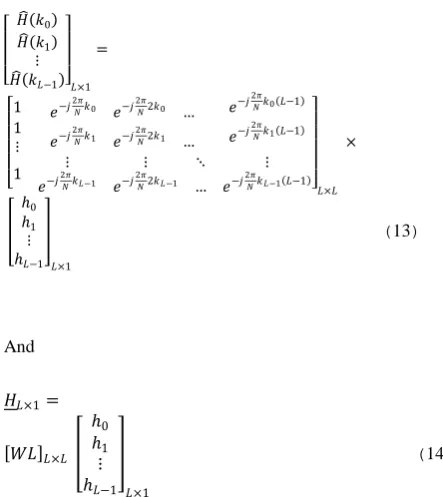
Orthogonal frequency division multiplexing (OFDM) techniques has widely been considered to be a very promising strategy to enhance data rate, capacity, and quality for broadband wireless systems over frequency-selective fading channels [1]. Along with this strategy, oscillator jitter and Doppler shift make carrier frequency offset (CFO) that degrades the performance of system remarkably [2].
More recently, due to mutually relation of channel impulse response (CIR) and CFO, joint channel and frequency offset estimation issue have received a lot of attentions in OFDM context [3].
MIMO-OFDM systems are one of the systems which have become the basis of many communication researches nowadays. A system is with several high speed inputs and outputs in sending information or suitable diversity between transmitter
and receiver; however the estimation of the channel in this connection is complex. In order to reveal the coherent of received signals, digital communication systems must have an exact estimation of the situation of exchange channel between transmitter and receiver. Since increasing the number of transmitter and receiver antennas causes an increase in the number of unknowns (coefficients of the channel between both antennas of transmitter and receiver) the estimation of channels in multi-antenna systems is a lot more challenging than in one-antenna ones.
The objective of this study is improving channel estimation accuracy in MIMO-OFDM system because channel state information is required for signal detection at receiver and its accuracy affects the overall performance of system and it is essential to improve the channel estimation for more reliable communications. MIMO-OFDM system was chosen in this study because it has been widely used today due to its high data rate, channel capacity and its adequate performance in frequency selective fading channels.
Further, in the second chapter the MIMO-OFDM systems are introduced. In the third chapter, the channel’s coefficients estimation methods and in the fourth chapter synchronizing methods are introduced. In the fifth chapter the maximum likelihood estimation(MLE) algorithm is presented in order to estimate CFO and in the sixth the suggested method for fading channel’s coefficients estimation in MIMO-OFDM systems will be described and finally, the simulation results will indicate the performance of suggested method.
2.
INTRODUCTION
OF
MIMO
OFDM
SYSTEMS
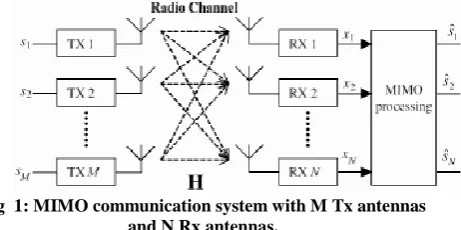
Fig 1: MIMO communication system with M Tx antennas and N Rx antennas.
According to the figure, the information in each antenna is sent after IDFT actions and addition of (CP) cyclic prefix. Each receiver antenna receives sum of noises and signals sent by the transmitter’s antenna. In each receiver antenna the revealing is done after removing CP and DFT actions.
3.
CHANNEL
ESTIMATION
METHODS
IN
MIMO
OFDM
SYSTEMS
The major considered estimating channel methods are as follows:
Using educational sequence methods
By putting samples in the sent symbol which are known by the receiver, we can reach the channel’s domain which is multiplied by sum symbol and shift results. Now by using the channels reached coefficients, we can reveal the rest of symbol samples which are the desired inputs and the receiver is unaware of them [5].
Blind methods
In this method which has no need of educational samples, using the covariance matrix, the receiver estimates the coefficients of channel and reveals the sent inputs by using them [6].
Halfblind methods
In this method the between up between properties of the two previous methods are used [7].
4.
SYNCHRONIZATION
METHODS
According to the surveys which have done until now, the first article with title synchronization in MIMO-OFDM systems has been published by Mody and Stuber in 2001.[8,9].In those articles, Mody and Stuber generalized synchronization algorithm, proposed by Schmidl , Cox[10],for OFDM systems with one sender antenna and one receiver antenna to MIMO-OFDM. Zelst and Schenk in source[11] with considering all the necessary changes in synchronization algorithm, channel estimation,…,have generalized the OFDM based standard of IEEE-802.11a to MIMO .
The most important intrinsic restriction of the OFDM technique is its high sensitivity toward synchronizing errors. The first creator factor is called the asynchronousity of carrier frequency offset (CFO). This causes the loss of orthogonality between subcarriers and outbreak of interference between carriers. Another factor of asynchronousity is inequality of sending and receiving rate of samples precisely, which is introduced as sampling frequency delay. The proposed synchronizing algorithms for OFDM based systems are categorized to the following two main groups [12]:
Before FFT algorithms
The above-mentioned algorithms are divided to two groups of input based algorithms and non input based algorithms as follows:
Non input based algorithms: this group of algorithms estimates the synchronization parameters using the special structure of
OFDM symbols. This group is also called cyclic prefix based methods [13] and [14].
Input based algorithms: this group of algorithms uses the educational symbols sent in information frames to estimate synchronization parameters [15], [16], [17] and [18].
After FFT algorithms
The algorithms of this group are also categorized in two groups of pilot based algorithms and direct decision algorithms. In comparing the two algorithms, before FFT algorithms are faster than after FFT algorithms, but after FFT algorithms has a higher throughput spectral.
5.
MAXIMUM
LIKELIHOOD
ESTIMATION
(MLE)
ALGORITHM
One of the principal disadvantages of OFDM is sensitivity to frequency offset in the channel. For example, the coded OFDM system developed by CCETT (Centre Commun. d'Etudes de Telediffusion et Telecommuications) for digital sound broadcasting to mobile receivers incorporates an AFC (automatic frequency control) loop in the receiver to reduce frequency offset caused by tuning oscillator inaccuracies and Doppler shift .
There are two deleterious effects caused by frequency offset; one is the reduction of signal amplitude in the output of the filters matched to each of the carriers and the second is introduction of IC1 from the other carriers which are now no longer orthogonal to the filter. Because, in OFDM, the carriers are inherently closely spaced in frequency compared to the channel bandwidth, the tolerable frequency offset becomes a very small fraction of the channel bandwidth. Maintaining sufficient open loop frequency accuracy can become difficult in links, such as satellite links with multiple frequency translations or, as mentioned previously, in mobile digital radiolinks that may also introduce significant Doppler shift.
The algorithm generates extremely accurate estimates even when the offset is great to demodulate the data values.The estimation error is insensitive to channel spreading and frequency selective fading.
The transmitter sends X(K) data for K=0,…,N-1:
𝑠 𝑛 = 𝑁1 𝑁−1𝐾=0𝑋 𝑘 𝑒𝑗2𝜋𝑁𝑘𝑛 ; 𝑛 = 0, … , 𝑁 − 1 )1( Adding the cyclic prefix(cp) and considering carrier frequency
offset estimation, the r(n) vector is formed as following:
𝑟𝑐𝑝 𝑛 = 𝑒𝑗 2𝜋∆𝑓𝑛× 𝑠𝑐𝑝 𝑛 ∗ ℎ 𝑛 + 𝑍 𝑛 ; 𝑛 = 0, … , 𝑁
𝑠− 1 )2(
Finally, we remove cp:
𝑟 𝑛 = 𝑒𝑗2𝜋∆𝑓𝑛𝑠𝑐𝑝 𝑛 ∗ ℎ 𝑛 + 𝑍 𝑛 ; 𝑛 = 𝑁𝑐𝑝 , … , 𝑁 𝑠−
1 )3(
To estimate the carrier frequency offset of r(n) vector, r1 and r2 vectors are formed as follow:
𝑟1 𝑛 = 𝑒𝑗2𝜋∆𝑓𝑁𝑐𝑝𝑒𝑗2𝜋∆𝑓𝑛 𝑠 𝑛 ∗ ℎ 𝑛 ; 𝑛 = 0 , … ,𝑁2−
1 )4(
And
r2 n = ej2π∆fNcpej2π∆fn s n ∗ h n ; n =N2 , … , N −
1 )5(
𝑟2∗. 𝑟1= 𝑒𝑗2𝜋∆𝑓 –
𝑁
2 𝑑 𝑛 2 )6(
Γ = 𝑟2∗.𝑟1
𝑟2∗.𝑟1 = 𝑒
𝑗2𝜋∆𝑓 –𝑁2 = 𝑒−𝑗2𝜋∆𝑓𝑁 =
cos 𝜋𝑁∆𝑓𝑗 𝑠𝑖𝑛𝜋𝑁∆𝑓 )7(
Finally the carrier frequency offset estimation is performed as follow:
− tan 𝜋𝑁∆𝑓𝑇 = 𝐼𝑚 (𝑅𝑒 (ΓΓ)) ⟹ ∆𝑓 =1𝜋 𝑡𝑎𝑛 −1(− 𝐼𝑚 Γ
𝑅𝑒 Γ ) )8(
6.
ESTIMATING
THE
CARRIER
FREQUENCY
OFFSET
AND
CHANNEL’S
COEFFICIENTS
6.1
Channel Estimation without
Synchronization
[image:3.595.60.304.340.424.2]Channel estimation for OFDM system:
Fig 2: Displaying a OFDM system.
The transmitter sends X(K) data for K=0,…,N-1:
𝑥 𝑛 = 𝑁1 𝑁−1𝑋 𝑘
𝑘=0 𝑒𝑗
2π
𝑁𝑘𝑛 ; 𝑛 = 0, … , 𝑁 − 1
(
9
)
Adding the cyclic prefix(cp) , the r(n) vector is formed as following:
𝑟𝑐𝑝 𝑛 = 1
𝑁 𝑋 𝑘 𝐻 𝑘 𝑒
𝑗2π𝑁 𝑘 𝑛−𝑁𝑐𝑝 + 𝑍 𝑛 𝑁−1
𝑘=0
= 0, … , 𝑁 + 𝑁𝑐𝑝 − 1
)10( Finally, we remove cp:
𝑟 𝑛 = 𝑁1 𝑁−1𝑘=0𝑋 𝑘 𝐻 𝑘 𝑒𝑗2π𝑁𝑘𝑛+ 𝑍 𝑛 )11(
In the receiver, the received signal is:
𝑦 𝑘 =𝑁1 𝑁−1𝑋 𝑖 𝐻 𝑖
𝑖=0 𝑒𝑗
2π 𝑁𝑛 𝑖−𝑘
𝑁−1
𝑛=0 + 𝑍 𝑘 )12(
A MIMO-OFDM system is supposed, with N transmitter antennas and M receiver antennas and K sub carrier which has the following diagram block.
Fig 3: Diagram block of MIMO-OFDM system’s transmitter.
Fig 4: Diagram block of MIMO-OFDM system’s receiver.
𝐻 𝑘0
𝐻 𝑘1 ⋮ 𝐻 𝑘𝐿−1 𝐿×1
=
1 𝑒−𝑗2𝜋𝑁𝑘0 𝑒−𝑗2𝜋𝑁2𝑘0 … 𝑒−𝑗 2𝜋 𝑁𝑘0 𝐿−1 1
⋮ 𝑒−𝑗
2𝜋 𝑁𝑘1 𝑒−𝑗
2𝜋
𝑁2𝑘1 … 𝑒−𝑗
2𝜋 𝑁𝑘1 𝐿−1
1 ⋮ ⋮ ⋱
𝑒−𝑗2𝜋𝑁𝑘𝐿−1 𝑒−𝑗2𝜋𝑁2𝑘𝐿−1 … ⋮ 𝑒−𝑗2𝜋𝑁𝑘𝐿−1 𝐿−1
𝐿×𝐿
×
ℎ0
ℎ1
⋮ ℎ𝐿−1 𝐿×1
)13(
And
𝐻𝐿×1=
𝑊𝐿 𝐿×𝐿
ℎ0
ℎ1
⋮ ℎ𝐿−1 𝐿×1
)14(
For a 2*2 MIMO-OFDM channel, the impact response under the channel between ith transmitter antenna and jth receiver is represented by hi,j[19]:
𝐻 𝐾 = 𝐿−1𝐿=0ℎ𝐿𝑒−𝑗
2𝜋
𝑁𝐾𝐿 𝑘 = 0, … , 𝑁 − 1 (15 )
In the receiver, the received signal under the kth carrier after the Fourier transform is:
𝑦𝑗 𝐾 = 𝑀𝑇 𝑋𝑖 𝑘 𝐻𝑖, 𝑗 𝑘 + 𝑊𝑗(𝑘)
[image:3.595.310.532.395.644.2]Where MT is the number of transmitter antennas, wj(K) represents White Gaussian Noise with an average of 0 for the jth receiver antenna in the kth sub-carrier. And for a 2*2 MIMO-OFDM system we have:
𝑦1𝑁×1= 𝑋1 𝑋2 𝑊𝐿 ℎ1= 𝐴𝑁×2𝐿ℎ12𝐿×1+
𝑍1𝑁×1 (17)
,
𝑦2
𝑁×1= 𝑋1 𝑋2 𝑊𝐿 ℎ2= 𝐴𝑁×2𝐿ℎ22𝐿×1+
𝑍2𝑁×1 (18)
Where:
h1=[h11;h21] , h2=[h12;h22] (19)
And WL is a matrix N × L consisting of all 𝑒−𝑗
2𝜋 𝑁𝐾𝐿𝐿.
That in the end Estimated channel coefficients is as follows:
𝑖𝑓: 𝑘 ∈ 𝑝𝑖𝑙𝑜𝑡2𝐿→ ℎ 12𝐿×1= 𝐴−1 𝑘 𝑦1 𝑘 , ℎ 22𝐿×1
= 𝐴−1 𝑘 𝑦
2 𝑘 (20)
6.2
Channel Estimation with
Synchronization
Signal model is as follows:
𝑠𝑐𝑝 𝑛 = 1
𝑁 𝑋 𝑘 𝑒
𝑗2𝜋𝑁 𝑘 𝑛−𝑁𝑐𝑝 𝑁−1
𝐾=0
;
𝑛 = 0, … , 𝑁 + 𝑁𝑐𝑝 − 1 )21(
Then vector r rate in the presence of carrier frequency offset is:
𝑟𝑐𝑝 𝑛 = 𝑒𝑗 2𝜋∆𝑓𝑛× 𝑠𝑐𝑝 𝑛 ∗ ℎ 𝑛 + 𝑍 𝑛 ; 𝑛 = 0, … , 𝑁 𝑠− 1
( 22 )
With eliminating cp and doing a series of operations ,we have:
𝑟 𝑛 = 𝑒𝑗2𝜋∆𝑓 𝑛+𝑁𝑐𝑝 1
𝑁 𝑋 𝐾
𝑁−1
𝑘=0 𝐿−1𝐿=0ℎ𝐿𝑒−𝑗
2𝜋 𝑁𝑘𝐿𝑒𝑗
2𝜋 𝑁𝑘𝑛+
𝑍 𝑛
(
23
)
Where Z (n) is White Gaussian Noise with an average of 0 . The output of the receiver is as follows:
𝑦 𝑛 = 𝑁1 𝑁−1𝑟 𝑛 𝑒−𝑗2𝜋𝑁𝑘𝑛 ; 𝑘 = 0, … , 𝑁 − 1
𝑛=0 )24(
Result
𝑦 𝑛 = 𝑒𝑗2𝜋∆𝑓𝑁𝑐𝑝 𝑁−1𝑥 𝑖
𝑖=0 𝐻 𝑖 𝛿𝑖,𝑘+ 𝑍 𝑘 )25(
And
𝛿𝑖,𝑘=𝑁1 𝑒𝑗
2𝜋
𝑁𝑛 𝐶𝐹𝑂+𝑖−𝑘
𝑁−1
𝑛=0 = 𝑠𝑖𝑛𝑐 𝐶𝐹𝑂 + 𝑖 −
𝑘 𝑒𝑗𝜋 𝐶𝐹𝑂+𝑖−𝑘 ; 𝑖, 𝑘 = 0 , … , 𝑁 − 1 )26(
Finally Channel’s coefficients estimation in MIMO-OFDM system is as follows:
𝑖𝑓: 𝑘 ∈ 𝑝𝑖𝑙𝑜𝑡2𝐿→ ℎ 1
2𝐿×1= 𝐴 −1 𝑘 𝑦
1 𝑘 , ℎ 2 2𝐿×1=
𝐴−1 𝑘 𝑦
2 𝑘 )27(
Where
h1=[h11;h21] ,h2=[h12;h22] (28)
And WL is a matrix N × Lconsisting of all𝑒−𝑗
2𝜋 𝑁𝐾𝐿𝐿.
7.
SIMULATION
RESULTS
In this chapter, a MIMO-OFDM system with 2 transmitter antennas and 1, 2 receiver ones is used for the simulation. The assumed system has a QPSK modulation. The total number of subcarriers, N, is 64,32 and L is the tap of channel.
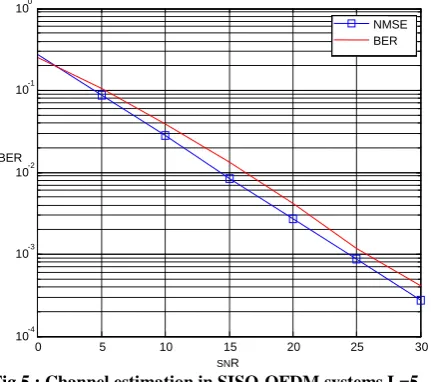
[image:4.595.51.273.122.277.2]The simulations in channel estimation in SISO-OFDM and MIMO-OFDM systems are as follows:
Fig 5 : Channel estimation in SISO-OFDM systems L=5 without synchronization.
Fig 6 : Channel estimation in 2*2 MIMO-OFDM systems L=4 and N=64 without synchronization.
0 5 1 15 2 2 3
1-2 1
-10
0 X: Y: 0.4683
SNR BER
X: Y: 0.3777
X: 20 Y: 0.09641
X: Y: X: 10
Y: 0.275 X: Y: 0.1753
X: 25 Y: 0.0417 channel estimation without synchronization
0 5 10 15 20 25 30
10-4 10-3 10-2 10-1 100
SNR BER
[image:4.595.324.540.338.529.2]Fig 7 : Channel estimation in 2*2 MIMO-OFDM systems L=4 and N=32 without synchronization.
Fig 8: Channel estimation in 2*2 MIMO-OFDM systems L=4 without synchronization.
[image:5.595.66.292.282.461.2]Fig 9: Channel estimation in 2*1 MIMO-OFDM systems L=4 without synchronization.
[image:5.595.319.551.289.477.2]Fig 10: Channel estimation in 2*2 MIMO-OFDM systems L=4 with synchronization.
Fig 11: Joint channel estimation and synchronization for SISO-OFDM systems.
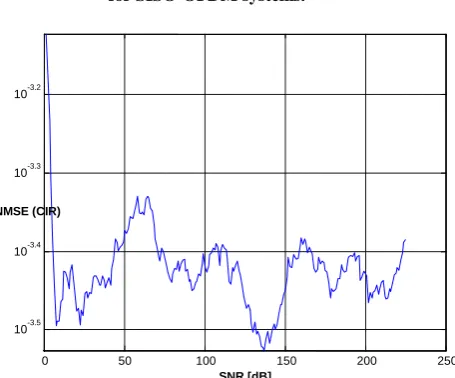
Fig 12: Synchronization for SISO OFDM systems.
0 50 100 150 200 250
10-3.5 10-3.4 10-3.3 10-3.2
SNR [dB] NMSE (CIR)
0 50 10 150 200 250
10
-10
-10
-10
-10 -10
-SNR [dB] NMSE (CIR)
0 5 10 15 20 25 30
10-3 10-2 10-1 100
X: 30 Y: 0.009859
SNR BER
X: 25 Y: 0.02955 X: 20
Y: 0.07971 X: 15
Y: 0.1668 X: 10
Y: 0.2825 X: 5
Y: 0.4004 X: 0
Y: 0.4983
channel estimation with synchronization
0 5 10 15 20 25 30
101 102 103 104
SNR [dB] NMSE (CIR)
Channel Estimation in 2*1 MIMO OFDM Systems L=4
0 5 10 15 20 25 30
100 101 102
SNR [dB] NMSE (CIR)
Channel Estimation in 2*2 MIMO OFDM Systems L=4
0 5 10 15 20 25 30
10-3 10-2
10-1
100
X: Y: 0.007859
SN BE
X: Y: 0.02394 X: 20
Y: 0.06458 X:
Y: 0.1584 X: 10
Y: 0.2984 X: 5
Y: 0.4396 X: 0
Y: 0.5348
[image:5.595.57.292.494.656.2] [image:5.595.323.551.501.690.2]Fig 13 : CFO estimation for SISO-OFDM systems with MLE algorithm, L=5.
Fig 14 : CFO estimation for 2*2 MIMO-OFDM systems with MLE algorithm,L=4.
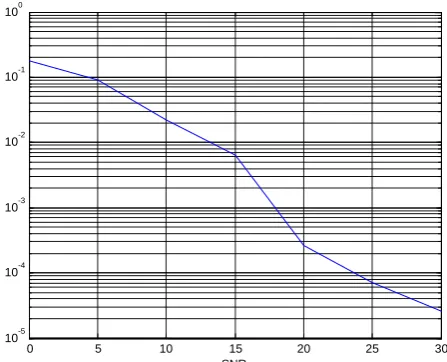
[image:6.595.53.247.622.731.2]Each of the figures 5 to 11 Show channel estimation in SISO- OFDM and MIMO-OFDM systems with LS method. Figure13,14 show CFO estimation in SISO-OFDM and MIMO-OFDM systems with MLE algorithm.
Table 1. Channel estimation in 2*2 MIMO-OFDM systems L=4 and N=64.
8.
CONCLUSION
Estimation of channel coefficients and synchronization parameters are two main challenges in realization of MIMO-OFDM systems which are practical. In almost all published references till no, estimation of cannel coefficients is done with the assumption of total frequency synchronously of transmitter and receiver. The created frequency synchronously between transmitter and receiver, in practice, is always exposed to risk due to presence of factors such as Doppler phenomenon and phase noise. The channel estimation techniques for OFDM systems based on pilot arrangement are investigated. That on this basis pilots were inserted among subcarriers in transmitter with distances emerged of sampling theory. Therefore for exact estimation of fading channel status, it’s necessary to keep the created frequency synchronously between transmitter and receiver, uninterrupted. This article dedicated to channel estimation in MIMO-OFDM systems. After describing the system’s model an estimation was proposed to estimate the channel coefficients. Rare articles with subject of channel coefficients estimation and carrier frequency offset in OFDM-based systems have been published so far. Simulation results proved the acceptable BER performance of channel estimation algorithm, which is closed to the ideal channel.
9.
REFRENCES
[1] G. L. Stuber, J. R. Barry, S. W. McLaughlin, Y. Li, M. A. Ingram, and T.G. Pratt, "Broadband MIMO–OFDM wireless communications, " in Proc. IEEE, Feb. 2004, vol. 92, pp. 271-294.
[2] Darryl Dexu Lin, Ryan A. Pacheco, Teng Joon Lim and Dimitrios Hatzinakos'" Joint Estimation of Channel Response, Frequency Offset, and Phase Noise in OFDM",IEEE Trans. On Signal Processing , VOL. 54, No. 9, Sep. 2006
[3] X. Ma, M.K. Oh, G. B. Giannakis, and D.J.Park, "Hopping Pilots for Estimation of Frequency-Offset and Multiantenna Channels in MIMO- OFDM", IEEE Trans. Oncommun., vol. 53, no. 1, pp. 162-172, Jan. 2005. [4] G. J. Foschini and M. Gans, “On limits of wireless
communications in a fading environment when using multiple antennas,” Wireless Pers. Commun., vol. 6, pp. 311–355, March 1998.
[5] Jin-Goog Kim and Jong-Tae Lim ," MAP-Based Channel Estimation for MIMO–OFDM Over Fast Rayleigh Fading Channels " , 2008 .
[6] Feifei Gao, Yonghong Zeng, Arumugam Nallanathan, Tung-Sang Ng, , " Robust Subspace Blind Channel Estimation for Cyclic Prefixed MIMO OFDM Systems: Algorithm,Identifiability and Performance Analysis " , 2008.
[7] Feng Wan, W.-P. ZhuM. N. S. Swamy, " A Semiblind Channel Estimation Approach for MIMO–OFDM Systems " ,2008
[8] A. N. Mody, and G. L. Stüber, “Synchronization for MIMO OFDM systems,” in Proc. IEEE Global Commun. Conf., vol. 1, pp.509–513, Nov 2001.
[9] A. N. Mody, and G. L. Stuber, “Receiver implementation for a MIMO OFDM system,” IEEE Global Telecommunications Conference, vol. 1, pp. 716-720, 17-21 Nov 2002.
With synchronization Without
synchronization SNR
0.4983 0.4683
0
0.4004 0.3777
5
0.2825 0.275
10
0.1668 0.1753
15
0.07971 0.09641
20
0.02955 0.0417
25
0.009859 0.01549
30
0 5 10 15 20 25 30
10-5 10-4 10-3 10-2 10-1
SNR
0 5 10 15 20 25 30
10-5 10-4 10-3 10-2 10-1 100
[10]T. Schmidl, and D. Cox, “Robust frequency and timing synchronization for OFDM,” IEEE Trans. Commun., vol. 45, pp. 1613-1621, Dec 1997.
[11]A. van Zelst, and Tim C.W. Schenk, “Implementation of a MIMO OFDM-Based Wireless LAN System”, IEEE Transactions on Signal Processing, vol. 52, No. 2, pp. 432- 438, Feb 2004.
[12]M. Speth, S.A. Fechtel, G. Fock, and H. Meyr, “Optimum Receiver Design for Wireless Broadband Systems Using OFDM, Part I,” IEEE Trans. Communications, vol. 47, No. 11, pp. 1668-1677, Nov. 1999.
[13]F. Classen, and H. Meyr, “Synchronization algorithms for an OFDM system for mobile communication,” in Codierung f¨ur Quelle, Kanal und U¨ bertragung: ITGFachbericht 130, Mu¨nchen. Berlin Offenbach: VDE-Verlag, ITG, pp. 105-114, Oct. 1994.
[14]F. Daffara, and O. Adami, “A novel carrier recovery technique for orthogonal multicarrier systems,” Eur. Trans. Telecommun., vol. 8, no. 4, pp. 323-334, July 1996.
[15]ETSI, “Radio broadcast systems; digital audio broadcasting (DAB) to mobile, portable and fixed receivers: Final draft pr ETS 300 401,” European TelecommunicationsStandards Institute, Tech. Rep., Nov. 1994.
[16]T. Keller, and L. Hanzo, “Orthogonal frequency division multiplex synchronization techniques for wireless local area networks,” in Proc. IEEE Int. Symp. Personal, Indoor,and Mobile Radio Communications, pp. 963-967, 1996.
[17]U. Lambrette, M. Speth, and H. Meyr, “OFDM burst frequency synchronization based on single carrier training data,” IEEE Commun. Lett., vol. 1, pp. 46-48, Mar. 1997.
[18]T. Schmidl, and D. Cox, “Robust frequency and timing synchronization for OFDM,” IEEE Trans. Commun., vol. 45, pp. 1613-1621, Dec. 1997.