S T U D Y P R O T O C O L
Open Access
Comparative Efficacy and Mechanisms of a
Single-Session Pain Psychology Class in
Chronic Low Back Pain: Study Protocol for a
Randomized Controlled Trial
Beth D. Darnall
1*, Maisa S. Ziadni
1, Anuradha Roy
1, Ming-Chih Kao
1, John A. Sturgeon
1, Karon F. Cook
2, Kate Lorig
1,
John W. Burns
3and Sean C. Mackey
1Abstract
Background:The Institute of Medicine (IOM) reported that chronic pain affects about 100 million U.S. adults, with chronic low back pain (CLBP) cited as the most prevalent type. Pain catastrophizing is a psychological construct shown to predict the development and trajectory of chronic pain and patient response to pain treatments. While effective treatment for pain catastrophizing typically includes eight-session groups of cognitive behavioral therapy (CBT), a single-session targeted treatment class yielded promising results which, if replicated and extended, could prove to efficiently and cost-effectively reduce pain catastrophizing. In this trial, we seek to determine the comparative efficacy of this novel session pain catastrophizing class to an eight-session course of pain CBT and a single-session back pain health education class. We will also explore the psychosocial mechanisms and outcomes of pain catastrophizing treatment.
Methods:In this trial we will randomize 231 individuals with CLBP to one of three treatment arms: (1) pain-CBT (eight weekly 2-h group sessions with home exercises and readings); (2) a single 2-h pain catastrophizing class; or (3) a single 2-h back pain health education class (active control). For the primary outcome of pain catastrophizing, the trial is designed as a non-inferiority test between pain-CBT and the single-session pain catastrophizing class, and as a superiority test between the single-session pain catastrophizing class and the health education class. Team researchers masked to treatment assignment will assess outcomes up to six months post treatment.
Discussion:If the single-session targeted pain catastrophizing class is found to be an effective treatment for patients with CLBP, this low cost and low burden treatment could dismantle many of the current barriers and burdens of effective pain care. Further, elucidation of the mechanisms of pain catastrophizing treatments will facilitate future research on the topic as well as further development and refinement of treatments.
Trial registration:ClinicalTrials.gov,NCT03167086. Registered on 22 May 2017.
Keywords:Back pain, Pain catastrophizing, Cognitive behavioral therapy, Chronic pain, Psychology, Treatment
* Correspondence:[email protected] 1
Department of Anesthesiology, Perioperative and Pain Medicine, Division of Pain Medicine, Stanford University School of Medicine, Stanford University, Stanford Systems Neuroscience and Pain Lab, 1070 Arastradero Road, Suite 200, MC 5596, Palo Alto, CA 94304, USA
Full list of author information is available at the end of the article
Background
The Institute of Medicine (IOM) recently reported that chronic pain affects about 100 million U.S. adults and costs the nation $635 billion annually in medical costs and lost productivity [1]. Chronic low back pain (CLBP) is cited as the most prevalent type of chronic pain [1] and rates continue to rise despite increased utilization of treatments such as surgery and pharma-cology. For instance, in North Carolina the prevalence of CLBP rose from 3.9% in 1992 to 10.2% in 2006, along with disability and healthcare costs [2]. Hoy et al. reported a low back pain one-year period prevalence of 38% [3]. This demonstrates the growing need for ef-fective interventions to prevent CLBP and better treat it once established. Multiple studies suggest that the greatest predictor for the development and progression of CLBP is pain catastrophizing (PC) [4]. PC is a cognitive-emotional response pattern involving nega-tive expectation and appraisal about actual or antici-pated pain and includes feelings of helplessness about pain [5]. Consistently across studies, PC is a primary predictor for the onset and worsening of CLBP, even among all surgical and clinical variables [4,6,7]. While PC is effectively treated with pain-cognitive behavioral therapy (CBT), access to care may be limited by several barriers, including the need for physician referral, poor reimbursement or no insurance, co-payment costs, and time and costs associated with the 6–10 group or indi-vidual pain-CBT treatment sessions. This study ad-dresses the critical problem of poor access to PC treatment among patients with CLBP.
A single-session targeted class was recently shown to reduce pain catastrophizing at four-week follow-up in a cohort of 57 mixed etiology chronic pain patients re-ceiving treatment at a tertiary referral, multidisciplinary chronic pain clinic [8]. The effectiveness of the class was found to be equivocal for patients with co-morbid anxiety and depression compared to those without these diagnoses. The results of this pilot study, while preliminary, are particularly promising because the intervention is efficiently delivered in a single 2-h class. If proven effective in a larger, randomized and con-trolled study, many of the barriers associated with trad-itional, multi-session pain-CBT would be eliminated for those seeking focal catastrophizing treatment.
Specific aims
Our two specific aims and their corresponding hypotheses are outlined below.
1. To implement a comparative efficacy trial of a single-session pain psychology (SPP) class that targets PC with the standard of care, eight-session
pain-CBT (8-CBT), and a single-session back pain health education class (Control).
Hypothesis 1a(Superiority): The SPP class will be superior to Control for Trait PC reduction.
Hypothesis 1b(Assay sensitivity): 8-CBT will be superior to Control for Trait PC reduction.
Hypothesis 1c(Non-inferiority): The SPP class will be non-inferior to 8-CBT for Trait PC reduction. Hypothesis 1d(Global improvement): The SPP class will be superior to Control and non-inferior to 8-CBT for longitudinal changes in PROMIS pain intensity and behavior, fatigue, and sleep disturbance.
Hypothesis 1e(Improvement in objective measurement of function): Reductions in PC in the SPP class is associated with improvements in objective physical function as measured by actigraphy.
2. To characterize the mechanistic influence of Daily PC on future pain, function, and Trait PC.
Hypothesis 2a(Level-1 PC effect): Daily PC will predict same-day and next-day levels of pain and activity. Hypothesis 2b(SPP/CBT moderation of Level-1 PC lagged effect): The relationships between Daily PC and same-day and next-day pain and activity are reduced by SPP and CBT interventions compared to the health education class.
Hypothesis 2c(Level-2 SPP effect): Daily PC mean changes (baseline to one-month post treatment) will predict mean change in pain, activity, sleep, and Trait PC in the SPP and 8-CBT groups at months 1–3. Hypothesis 2d(Level-1 SPP/CBT skills use lagged effect): Previous-day and same-day use of SPP/CBT skills will predict next day improvement in Daily PC.
Methods/Design Overview
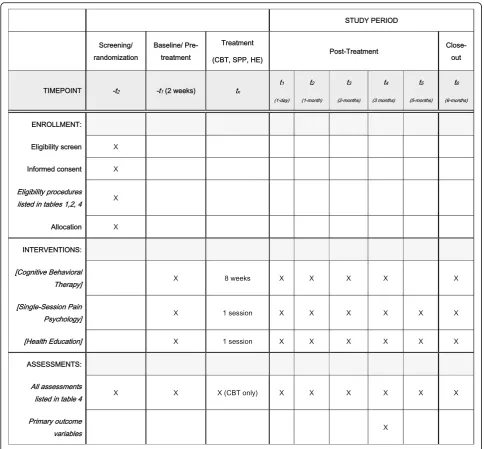
treatment, and after one, two, three, and five months (for SPP and health education [HE] only), and at six months post treatment. The primary outcome is Trait PC at three months post treatment. Secondary outcomes will include Trait PC at six months post treatment and PROMIS measures at three month post treatment in each of the core outcome domains for chronic pain clinical trials identified by the Initiative on Methods, Measurement, and Pain Assessment in Clinical Trials (IMMPACT) consensus panel [9] and the NIH Task Force on Research Standards for Chronic Low Back Pain [10]. These include pain inten-sity, physical functioning, and emotional functioning.
Additionally, secondary outcomes will include actigraphy data for function and sleep.
The protocol for this trial has been approved by the Stanford Institutional Review Board (IRB). All partici-pants will be required to give their informed consent at screening and before enrollment in the study. Con-sent will be obtained by trained study team members.
Study sample and setting
Participants for this trial will be recruited from social media marketing, the Stanford Systems Neuroscience and Pain Lab database, and local advertisements in
[image:3.595.60.538.85.573.2]clinics and in the community. All advertisements will direct interested individuals to complete an online screening form to assess for their eligibility. The study will enroll 231 adults (age 18–70 years) with axial low back pain without radicular symptoms who meet study criteria (Table 1). This sample size ac-counts for expected attrition. Eligibility will be assessed by the research staff.
Inclusion and exclusion criteria
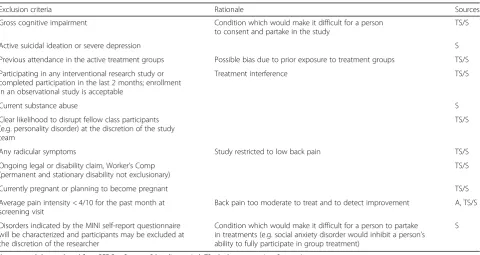
Tables 1 and 2 list the inclusion and exclusion criteria, respectively, as well as the rationale for each criterion and the sources where each criterion will be accessed. Additionally, we require that participants be willing and
available to participate in the full treatment session to which they are assigned (ranging from a single treatment session to eight treatment sessions over eight weeks). We also require that participants are able to complete daily measures and actigraphy and be able to respond to the post-treatment (0, 1, 2, 3, 5, 6 months) follow-up questionnaires.
Recruitment procedures
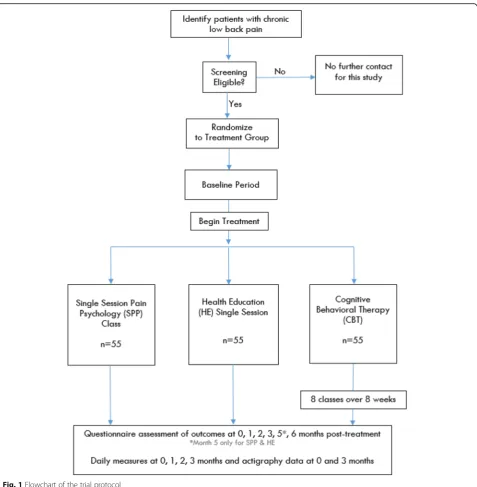
Because the study intervention involves classes, we are recruiting participants in cohorts consisting of 7– 12 participants per class cohort (minimum of four participants, maximum of 20 participants per cohort) for all three study arms.
[image:4.595.56.541.86.535.2]Interested individuals will be screened over the phone or will complete an online screening form. Potentially eligible individuals will be invited to an on-site screening visit where eligibility will be determined. The Mini Inter-national Interview (MINI 7.0) will be administered to ex-clude for suicidality and current substance abuse, and to characterize other psychiatric disorders. Eligible individ-uals will complete the consenting and enrollment proce-dures. Participants are randomized following eligibility confirmation and informed consent procedures.
Randomization
Enrolled participants will be randomized to one of three treatment arms: pain psychology class (SPP), eight-week CBT (pain-CBT), and back pain health edu-cation (HE). An automated program in REDCap will randomly assign a participant to a treatment arm when
enrolled and will ensure blinded randomization and equal numbers in all three treatment arms at the end of data collection.
Blinding
[image:5.595.56.539.96.217.2]Participants will not be blinded to the intervention they are randomized to. Treatment providers and study co-ordinators will not and cannot be blinded to treatment allocation. The study coordinator will be responsible for handling the randomization process through RED-Cap; however, they are blinded to the randomization scheme. This study coordinator will coordinate delivery of intervention; therefore, will not have access to data, data monitoring, or analysis of data. An alternative re-search team member will have access to the data and will be responsible for the data monitoring. The princi-pal investigators, co-investigators, and statisticians will
Table 2Exclusion criteria
Exclusion criteria Rationale Sources
Gross cognitive impairment Condition which would make it difficult for a person
to consent and partake in the study
TS/S
Active suicidal ideation or severe depression S
Previous attendance in the active treatment groups Possible bias due to prior exposure to treatment groups TS/S
Participating in any interventional research study or completed participation in the last 2 months; enrollment in an observational study is acceptable
Treatment interference TS/S
Current substance abuse S
Clear likelihood to disrupt fellow class participants (e.g. personality disorder) at the discretion of the study team
TS/S
Any radicular symptoms Study restricted to low back pain TS/S
Ongoing legal or disability claim, Worker’s Comp (permanent and stationary disability not exclusionary)
TS/S
Currently pregnant or planning to become pregnant TS/S
Average pain intensity < 4/10 for the past month at screening visit
Back pain too moderate to treat and to detect improvement A, TS/S
Disorders indicated by the MINI self-report questionnaire will be characterized and participants may be excluded at the discretion of the researcher
Condition which would make it difficult for a person to partake in treatments (e.g. social anxiety disorder would inhibit a person’s ability to fully participate in group treatment)
S
[image:5.595.58.539.472.727.2]Aautomated data gathered from REDCap Surveys,Bbaseline period,TStelephone screening,Sscreening Table 1Inclusion criteria
Inclusion criteria Rationale Sources
Axial low back pain without radicular symptoms Study restricted to low back pain A, TS/S
Pain duration≥6 months As per recent NIH Task Force on Research Standards
for Chronic Low Back Pain
A, TS/S
Average pain intensity≥4/10 for the past month at screening visit
Significant level of back pain to treat and to detect improvement
A, TS/S
English fluency A, TS/S
Men and women aged 18–70 years A, TS/S
PCS score≥20 Significant level for PC [4] TS/S
remain blinded through the data collection phase. The team will have access to the final un-identified dataset.
Study treatments
Both the SPP and HE group sessions consist of one 2-h class. The SPP treatment includes assigned home activ-ities. The pain-CBT group treatment consists of eight weekly 2-h sessions which will also be supplemented by home activities.
Cognitive-behavioral therapy (CBT)
CBT for chronic pain is well-documented in the litera-ture and has been found to be modestly to moderately effective in improving chronic pain [11–14]. For this study, we will be using the manualized CBT treatment manual utilized by Cherkin et al. [15,16].
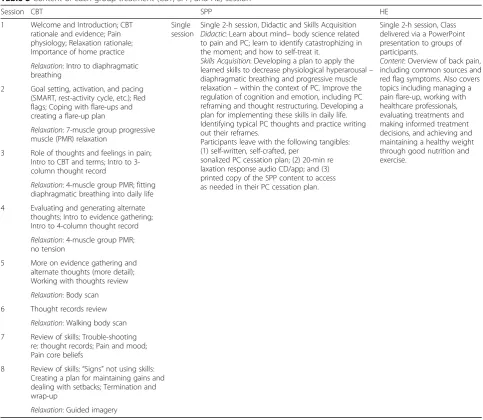
The CBT intervention (Table 3) will consist of eight weekly 2-h sessions that will provide: (1) education about the role of maladaptive thoughts and beliefs com-mon in people with chronic pain; and (2) instruction and practice in identifying and challenging negative thoughts, the use of thought-stopping techniques, the use of positive self-coping statements and goal-setting, relaxation techniques, and coping with pain flares. The intervention will also include education about activity pacing, relapse prevention, and maintenance of gains. During each session, participants will complete a per-sonal action plan for activities to be completed between sessions. These plans will be used as logs for setting spe-cific home practice goals to be reviewed at the next week’s session. Participants will be given a copy of The Pain Survival Guide: How to reclaim your life© 2005 by Turk & Winter [17] for optional reading. The threshold for pain-CBT completion is attendance at five of the eight classes.
Single-session pain catastrophizing class
The pain catastrophizing class is a unique intervention that specifically treats PC. Our pilot data show that the PC class significantly reduced PC one month post treat-ment, even in patients with co-morbid depression and anxiety [8]. For this study, SPP will be delivered via a PowerPoint presentation to groups of participants in a single 2-h class. SPP has two main components: didac-tics and skills acquisition (summarized in Table 3). Didactic content includes mind–body science as it re-lates to pain and PC. Participants learn how to identify catastrophizing in the moment and how to self-treat it. Participants self-tailor the information relayed during the class by developing their own comprehensive self-treatment plan to stop and prevent catastrophizing. Par-ticipants leave the class with the following tangibles: (1) their self-written personalized PC cessation plan; (2) an app with a 20-min guided relaxation response audio file;
and (3) a printed copy of the SPP class content. Cohort effects are expected to be minimal due to the single-session nature of the class, the fact that the class content is highly structured and manualized, and because partici-pant interaction is relatively minimal.
Back health education
The HE class will be delivered via a PowerPoint presen-tation to groups of participants in a single session lasting approximately 2 h. The HE class will provide the group with an overview of back pain, including common sources and red flag symptoms. Didactics will also cover topics including working with healthcare professionals, evaluating treatments and making informed treatment decisions, and achieving and maintaining a healthy weight through good nutrition and exercise. The back HE class serves to control for the non-specific effects of: (1) receiving a“treatment;”(2) participating in a research study; and (3) providing daily ratings for PC and pain. The 2-h HE group will match SPP on four important factors: duration; structure; format; and site [18].
Class sites
All treatment sessions will occur at approved clinical or research sites within the Stanford University School of Medicine and Stanford HealthCare.
Instructors
For the active psychological treatment groups, all in-structors will be doctoral level clinical psychologists trained in the treatment of chronic pain. The HE class will be expert-led by experienced health educators or chronic pain professionals (e.g. chronic pain physician assistant). The psychologist instructors for the CBT and the SPP will be mutually exclusive to enhance content distinction for the purposes of this comparative trial. In-structor effects will be examined analytically.
Training and monitoring of instructors
The research coordinator will directly observe the first three SPP classes and up to three SPP classes at random to ensure treatment fidelity. In addition, the research co-ordinator will complete the fidelity sheets for the HE class. Fidelity is built into the HE class as well with the use of PowerPoint that makes the curriculum very struc-tured and difficult to deviate from.
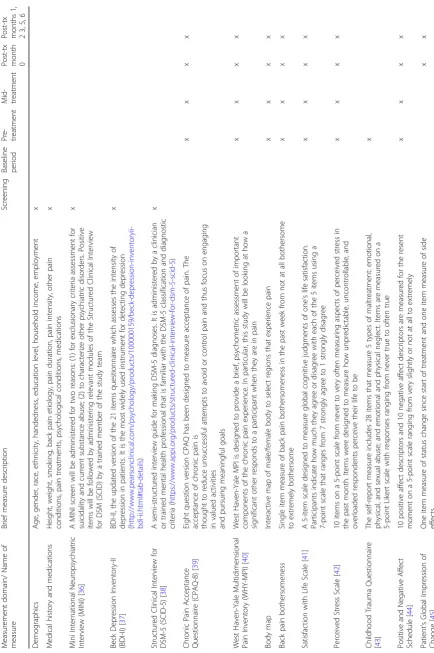
Measures
The M.I.N.I. International Neuropsychiatric Interview (M.I.N.I. 7.0) will be administered to exclude for suicidal-ity and current substance abuse and to characterize other psychiatric disorders. We will assess a variety of baseline characteristics, including sociodemographic characteristics and medical history and medications, in addition to treat-ment expectations. The Beck Depression Inventory-II
(BDI-II) and, if necessary, the Structured Clinical Inter-view for DSM-5 (SCID-5) will be administered to assess the severity of depressive symptoms (Table4).
Baseline period
Within 30 days of starting treatment, participants will complete a two-week baseline period of daily pain mea-sures. Participants will also wear the actigraphy unit to collect activity/rest/sleep measurements during this period.
Pre-treatment assessment
[image:7.595.56.540.94.514.2]Three days before treatment, participants will be ad-ministered an online pre-treatment assessment of pain symptoms, emotional functioning, PCS, and general health and wellbeing.
Table 3Content of each group treatment (CBT, SPP, and HE) session
Session CBT SPP HE
1 Welcome and Introduction; CBT rationale and evidence; Pain physiology; Relaxation rationale; Importance of home practice
Single session
Single 2-h session, Didactic and Skills Acquisition Didactic: Learn about mind–body science related to pain and PC; learn to identify catastrophizing in the moment; and how to self-treat it.
Skills Acquisition: Developing a plan to apply the learned skills to decrease physiological hyperarousal– diaphragmatic breathing and progressive muscle relaxation–within the context of PC. Improve the regulation of cognition and emotion, including PC reframing and thought restructuring. Developing a plan for implementing these skills in daily life. Identifying typical PC thoughts and practice writing out their reframes.
Participants leave with the following tangibles: (1) self-written, self-crafted, per
sonalized PC cessation plan; (2) 20-min re laxation response audio CD/app; and (3) printed copy of the SPP content to access as needed in their PC cessation plan.
Single 2-h session, Class delivered via a PowerPoint presentation to groups of participants.
Content: Overview of back pain, including common sources and red flag symptoms. Also covers topics including managing a pain flare-up, working with healthcare professionals, evaluating treatments and making informed treatment decisions, and achieving and maintaining a healthy weight through good nutrition and exercise.
Relaxation: Intro to diaphragmatic breathing
2 Goal setting, activation, and pacing (SMART, rest-activity cycle, etc.); Red flags; Coping with flare-ups and creating a flare-up plan
Relaxation: 7-muscle group progressive muscle (PMR) relaxation
3 Role of thoughts and feelings in pain; Intro to CBT and terms; Intro to 3-column thought record
Relaxation: 4-muscle group PMR; fitting diaphragmatic breathing into daily life
4 Evaluating and generating alternate thoughts; Intro to evidence gathering; Intro to 4-column thought record
Relaxation: 4-muscle group PMR; no tension
5 More on evidence gathering and alternate thoughts (more detail); Working with thoughts review
Relaxation: Body scan 6 Thought records review
Relaxation: Walking body scan 7 Review of skills; Trouble-shooting
re: thought records; Pain and mood; Pain core beliefs
8 Review of skills;“Signs”not using skills: Creating a plan for maintaining gains and dealing with setbacks; Termination and wrap-up
Relaxation: Guided imagery
Table
4
Baseline
and
follow-up
me
asures
(Co
ntinued)
Measuremen
t
dom
ain/
Name
of
measu
re
Brief
measu
re
descrip
tion
Screeni
ng
Bas
eline
pe
riod
Pre- treatmen
t
Mi
d-treat
men
t
Post-t
x
mont
h
0
Post-t
x
mont
hs
1,
23
,5
,6
Objec
tive
data
Sleep
and
activity
Actigrap
hy
de
vices
will
quantify
24
h
slee
p
and
activit
y
variables
includ
ing:
total
sleep
time
and
efficie
ncy,
ene
rgy
exp
endit
ure,
MET
rates,
steps
taken,
physical
activ
ity
intens
ity
→→
0
and
3
mos →
Guided
relaxation
(p
er
particip
ant
disc
retion/
goal
setting
s;
continu
ous
dat
a)
An
app
will
timestam
p
each
time
an
SPP
part
icipant
access
es
the
“
SPP
Relax
ation
Resou
rce
”
on
their
de
vice,
thus
providing
an
objecti
ve
measu
re
of
skil
ls
use
0
–
3
mos
(SPP) →
MINI
Mini
International
Neuropsychiatric
Interview,
WHYMPI/MPI
West
Haven
–
Yale
Multidimensional
Pain
Mid-treatment assessment
At four weeks, there will be a mid-treatment assessment for the pain-CBT group only. Daily pain measures and actigraphy data will also be collected from weeks 3–5 for CBT participants.
Post-treatment assessment
We will administer a core set of outcomes measures im-mediately following treatment, and at one, two, three, five (for SPP and HE only), and six months post treatment. Two-week daily measures will be collected immediately post treatment and at one, two, and three months post treatment. Actigraphy data will also be collected immedi-ately post treatment and at three months post treatment. The primary study endpoint is three months.
Participants may receive up to $300 for study completion.
Primary outcome measures Our primary outcome
measure is Trait PC at three months post treatment. Trait PC will be assessed using the sum score for the PCS [2, 19], a 13-item scale used to assess severity of Trait PC tendencies on a 5-point scale (0 = “not at all” to 4 = “all the time”). The PCS has three factors (help-lessness, magnification, rumination) and has good psy-chometrics [20].
NIH PROMIS [21] will be administered to assess mul-tiple variables of interest, including Pain Intensity, Pain Interference, Pain Behavior, Function, Depression, Anx-iety, Sleep Disturbance, Sleep Interference, Anger, Global Health, and Fatigue. NIH PROMIS measures have been successfully applied in pain research [14,22–24].
Participant self-confidence regarding their ability to par-ticipate in various life activities despite their pain will be assessed using the Pain Self-Efficacy Questionnaire (PSEQ) [25], a ten-item self-report instrument [23,24,26–29].
Daily measures All participants will complete daily
mea-sures for a two-week period at each of the following time points: pre-treatment baseline; mid-treatment (for eight-week CBT); immediately after treatment; and at one, two, and three months post treatment. Daily measures will in-clude the five-item Daily PCS, daily pain, mood, and func-tion quesfunc-tions. In a single quesfunc-tion for each theme, for the past 24 h, average back pain, highest level of back pain, pain interference, stress, positive emotions, negative emo-tions, and satisfaction with life are assessed. Skills use will be assessed by asking participants (SPP and CBT) to re-spond to three questions measuring frequency of use of cognitive, behavioral, and psychophysiological techniques over 24 h from 0 times to 5+ times. The pain-CBT group will complete these questions daily after the relevant material is covered in class.
Objective data Sleep and Activity will be assessed with
actigraphy devices that quantify 24-h sleep and activity variables including: total sleep time and efficiency; en-ergy expenditure; MET rates; steps taken; and physical activity intensity. A guided relaxation app will timestamp each time an SPP participant accesses the “SPP Relax-ation Resource” on their device, thus providing an ob-jective measure of skills use.
Data collection, quality control, and confidentiality
All questionnaires will be completed by participants in a REDCap database. Questionnaires collected on paper (due to unforeseen circumstances) will be stored as source data and a member of the study team will enter the data into the REDCap database. All staff will receive training on completing case report forms (CRFs) appropriately, reviewing CRFs for complete-ness, and maintaining participant confidentiality. We will collect information at every stage of recruitment, randomization, and treatment so that we can report patient flow according to the CONSORT (Consoli-dated Standards of Reporting Trials) guidelines [30].
Protection of human participants and assessment of safety
Protection of human participants
The Stanford University Institutional Review Board (IRB) approved this study.
Safety monitoring
This trial will be monitored for safety by an independent Data and Safety Monitoring Board (DSMB) composed of a clinical psychologist, a biostatistician, and a professor of psychiatry and behavioral medicine with expertise in chronic pain.
Adverse experiences
annual AE summary, the Independent Monitor(s) Report will state that they have reviewed all AE reports.
Stopping rules
The trial will be stopped if the DSMB determines that there is a risk of SAEs in one or more of the treatment arms. In this case, the DSMB can decide if one of the treatment arms needed to be terminated.
Statistical issues
Sample size and detectable differences
Our sample size was chosen to ensure adequate power to detect significant differences between each of the two treatment groups and the HE, as well as power to detect a statistically significant difference between the two treatment groups. The project will enroll 231 adults (ages 18–70 years) who meet criteria for axial low back pain without radicular symptoms.
To compare the mean difference in the SPP group against the HE group using a two-sample t-test, we con-servatively plan to enroll 231 participants and have 165 completers (55 per group). The proposed sample size ac-counts for attrition at 25% for single session treatments and 35% for eight-session CBT. With this, we achieve 90% power to reject the null hypothesis of equal means when the population mean difference is 5 (63% of that seen in the pain-CBT literature; 45% of that seen in Pre-liminary Study 1) and 80% power to reject the null when the population mean difference is 4.3 (54% of that seen in the pain-CBT literature; 40% of that seen in Prelimin-ary Study 1), with standard deviation (SD) for both groups of 8, α = 0.05, using a two-sided, two-sample equal-variance t-test.
For our primary analyses examining PCS scores at three months, the mean difference in the pain-CBT group is compared against the HE group using a two-sample t-test. The mean effect of pain-CBT on PCS is about 8 in the literature [14, 31]. Group sample sizes of 55 each in the pain-CBT and HE groups achieve 90% power to reject the null hypothesis of equal means when the population mean difference is 5 (63% of that seen in literature) and 80% power to reject the null when the population mean difference is 4.3 (53% of that seen in literature), with a SD for both groups of 8 and with a significance level (α) of 0.05 using a sided, two-sample equal-variancet-test.
For assessing whether SPP provides durable and sub-stantial reduction in PC non-inferior to pain-CBT, a group sample size of 55 in each group achieve 80% power with margin of non-inferiority 4.3. The true dif-ference between the means is assumed to be 0, the sig-nificance level (alpha) of the test is 0.025, and the population SD is 8 in both groups. Given the effect of eight-week CBT on PCS is about 8 [14, 31], this
non-inferiority margin would imply the single-session SPP re-tains half of the effect of the eight-session pain-CBT on PCS, a clinically well-accepted level of superiority reten-tion [32–34].
The association between changes in PC provided by SPP and objective physical function will be measured with correlation coefficient between changes from base-line to primary endpoint in PC and in each of the acti-graphy measures for physical activity and for sleep. A sample size of 55 achieves 90% power to detect a correl-ation coefficient of 0.42 and 80% power to detect a coef-ficient of 0.37, using a two-sided hypothesis test with a significance level of 0.05. Multiple comparison adjust-ments will be made to protect the false discovery rate.
Statistical analyses
Primary analyses
We intend to use an intention-to-treat (ITT) approach in all analyses; that is, the assessment of individuals will be analyzed by randomized group, regardless of partici-pation in any classes. This approach will protect the ef-fects of randomization from confounding introduced by subject dropout and crossover.
Compared to per protocol (PP) analysis, ITT is also considered conservative in the context of superiority hy-pothesis testing (Hypotheses 1 and 2, which are used to power this study). A main analysis will be performed of all valid observed data under a plausible assumption about the missing data. This will be followed by sensitiv-ity analyses that accounts for all randomized patients, to explore the effect of departures from the assumption made in the main analysis. In addition, we note that in the context of non-inferiority hypothesis testing (Hy-pothesis 1c), the use of ITT instead of being conserva-tive may bias the results toward non-inferiority. We will, thus, for Hypothesis 1c perform PP analysis as well as ITT analysis. Non-inferiority will be achieved only if both analyses afford the same inference of non-inferiority.
baseline to primary endpoint in PC and in each of the actigraphy measures for physical activity and for sleep.
Secondary objectives
Multi-level modeling (MLM) will be used to characterize treatment effects on Daily PC fluctuations, and the im-pact of Daily PCS changes on Trait PC, longitudinal PROMIS measures, actigraphy (activity and sleep). For example, MLM will be used to account for subject-level (level 2) effects, particularly the effect of the intervention as well as daily level variations in PC. In addition, MLM will be used to test whether the relationship between daily PC and levels in same-day and next-day pain and activity is reduced by SPP and CBT interventions com-pared to the HE group, using the intervention as the moderator of Daily PC effect on next-day pain and activ-ity. An analysis of level-2 variance will be performed in the MLM framework to test whether Daily PC mean changes from baseline to one month post treatment will predict mean change in pain, activity, sleep, and Trait PC from one to three months post treatment (for the SPP and CBT groups). Finally, MLM will be used to test whether previous-day use of SPP / CBT skills will predict next day improvement in Daily PC. The analysis will ac-count for subject-level (Level 2) effects, particularly daily level variations in use of SPP skills.
Discussion
In this trial, we will seek to determine whether a single-session targeted PC class is an effective treatment option for persons with chronic back pain. The efficient format of SPP will facilitate application across a variety of set-tings, such as in primary care or in pre-surgical popula-tions where PC treatment stands to prevent the development of CLBP [7, 25, 35]. The SPP intervention is highly scalable and easily lends itself to broad dissem-ination across settings—outpatient, inpatient, pre-surgical, and community through various technologies (e.g. DVD or a web-based video class). In this trial, we will compare the effectiveness of a single-session PC class with that of CBT, which has been found to be ef-fective for back pain but is not widely available. The study will also characterize how reduced variability in Daily PC and mean levels of Daily PC influence future Trait PC, thereby revealing the mechanisms that facili-tate enduring changes in PC. Such critical knowledge will facilitate the development of interventions that spe-cifically target the factors that facilitate positive cognitive and emotional neuroplasticity. Additional validation studies will be required before implementation in other patient populations. If the single-session PC class is shown to be an effective treatment for patients with CLBP, with its low cost and low burden, this treatment
could dismantle many of the current barriers and bur-dens of effective pain care Additional file1.
Trial status
Protocol (NCT03167086) was registered on 22 May 2017 and recruitment began in June 2017. The first participant was enrolled in the study on 8 June 2017. Recruitment will be completed in May 2020.
Additional file
Additional file 1:SPIRIT 2013 Checklist. (DOC 123 kb)
Acknowledgements
The National Center for Complementary and Integrative Health (NCCIH) provided funding for this trial (grant R01 AT008561). Also, thanks to the National Institute of Health for providing funding (NIH T32 035165). The design of this clinical trial was approved by the NCCIH Office of Clinical and Regulatory Affairs.
Funding
NIH R01 AT008561 (BDD, SCM), 5K24DA029262–07 (SCM), and NIH T32 035165 (MZ). All study protocol and instruments were approved by The National Center for Complementary and Integrative Health (NCCIH). In addition, NCCIH commissions Westat to conduct an initiation visit and subsequent internal annual audits.
Availability of data and materials
Data will be available onclinicaltrials.gov(NCT03167086) under“Single Session Pain Catastrophizing Treatment: Comparative Efficacy and Mechanisms.”
Authors’contributions
BDD and SCM conceived of the trial. BDD created the single-session pain catastrophizing intervention and KL developed the Health Education Control materials. BDD, JWB, JAS, KFC, SCM, CJT, and AR refined the protocol and selected measures. MCK and KFC developed plans for the statistical analyses. JWB and JAS developed plans for mediator analyses. MSZ, AR, and BDD drafted the manuscript. All authors read and approved the final manuscript.
Ethics approval and consent to participate
The study was approved by Stanford’s Institutional Review Board (protocol no. 34631), 3000 El-Camino Real, Five Palo Alto Square, 4th Floor, Palo Alto, CA 94306, USA. We are obtaining informed consent from all participants in the study.
Consent for publication
Not applicable.
Competing interests
The authors declare that they have no competing interests.
Publisher’s Note
Springer Nature remains neutral with regard to jurisdictional claims in published maps and institutional affiliations.
Author details
1Department of Anesthesiology, Perioperative and Pain Medicine, Division of
Pain Medicine, Stanford University School of Medicine, Stanford University, Stanford Systems Neuroscience and Pain Lab, 1070 Arastradero Road, Suite 200, MC 5596, Palo Alto, CA 94304, USA.2Feinberg School of Medicine,
Northwestern University, Evanston, IL, USA.3Department of Behavioral
Received: 21 August 2017 Accepted: 8 February 2018
References
1. Simon LS. Relieving pain in America: A blueprint for transforming prevention, care, education, and research. J Pain Palliat Care Pharmacother. 2012;26:197–8.
2. Freburger JK, Holmes GM, Agans RP, Jackman AM, Darter JD, Wallace AS, et al. The rising prevalence of chronic low back pain. Arch Intern Med. 2009; 169:251–8.https://doi.org/10.1001/archinternmed.2008.543
3. Hoy D, Bain C, Williams G, March L, Brooks P, Blyth F, et al. A systematic review of the global prevalence of low back pain. Arthritis Rheum. 2012;64: 2028–37.https://doi.org/10.1002/art.34347
4. Wertli MM, Burgstaller JM, Weiser S, Steurer J, Kofmehl R, Held U. Influence of catastrophizing on treatment outcome in patients with nonspecific low back pain: a systematic review. Spine. 2014;39:263–73.https://doi.org/10. 1097/BRS.0000000000000110
5. Sullivan MJ, Bishop SR, Pivik J. The pain catastrophizing scale: development and validation. Psychol Assess. 1995;7:524.https://doi.org/10.1037// 10403590.7.4.524
6. Burton AK, Tillotson KM, Main CJ, Hollis S. Psychosocial predictors of outcome in acute and subchronic low back trouble. Spine. 1995;20:722–8. 7. Picavet HSJ, Vlaeyen JW, Schouten JS. Pain catastrophizing and
kinesiophobia: predictors of chronic low back pain. Am J Epidemiol. 2002; 156:1028–34.https://doi.org/10.1093/aje/kwf136
8. Darnall BD, Sturgeon JA, Kao M-C, Hah JM, Mackey SC. From catastrophizing to recovery: a pilot study of a single-session treatment for pain
catastrophizing. J Pain Res. 2014;7:219.https://doi.org/10.2147/JPR.S62329
9. Turk DC, Dworkin RH, Allen RR, Bellamy N, Brandenburg N, Carr DB, et al. Core outcome domains for chronic pain clinical trials: IMMPACT recommendations. Pain. 2003;106:337–45.https://doi.org/10.1016/j.pain.2003.08.001
10. Deyo RA, Dworkin SF, Amtmann D, Andersson G, Borenstein D, Carragee E, et al. Report of the NIH Task Force on research standards for chronic low back pain. Pain Med. 2014;15:1249–67.https://doi.org/10.1016/j.jpain.2014.03.005
11. Aggarwal VR, Lovell K, Peters S, Javidi H, Joughin A, Goldthorpe J. Psychosocial interventions for the management of chronic orofacial pain. Cochrane Database Syst Rev. 2011;11:CD008456.https://doi.org/10.1002/ 14651858.CD008456.pub2
12. Glombiewski JA, Sawyer AT, Gutermann J, Koenig K, Rief W, Hofmann SG. Psychological treatments for fibromyalgia: a meta-analysis. Pain. 2010;151: 280–95.https://doi.org/10.1016/j.pain.2010.06.011
13. Henschke N, Ostelo RW, van Tulder MW, Vlaeyen JW, Morley S, Assendelft WJ, et al. Behavioural treatment for chronic low-back pain. Cochrane Database Syst Rev. 2010;7:CD002014.https://doi.org/10.1002/14651858. CD002014.pub3
14. Williams ACC, Eccleston C, Morley S. Psychological therapies for the management of chronic pain (excluding headache) in adults. Cochrane Database Syst Rev. 2012;11:CD007407.https://doi.org/10.1002/14651858. CD007407.pub3
15. Cherkin DC, Sherman KJ, Balderson BH, Cook AJ, Anderson ML, Hawkes RJ, et al. Effect of mindfulness-based stress reduction vs cognitive behavioral therapy or usual care on back pain and functional limitations in adults with chronic low back pain: a randomized clinical trial. JAMA. 2016;315:1240–9.
https://doi.org/10.1001/jama.2016.2323
16. Cherkin DC, Sherman KJ, Balderson BH, Turner JA, Cook AJ, Stoelb B, et al. Comparison of complementary and alternative medicine with conventional mind–body therapies for chronic back pain: protocol for the Mind–body Approaches to Pain (MAP) randomized controlled trial. Trials. 2014;15:211.
https://doi.org/10.1186/1745-6215-15-211
17. Turk DC, Winter F. The pain survival guide: How to reclaim your life. Washington, DC: American Psychological Association; 2006.
18. Kinser PA, Robins JL. Control group design: enhancing rigor in research of mind-body therapies for depression. Evid Based Complement Alternat Med. 2013;2013:140467.https://doi.org/10.1155/2013/140467
19. Papaioannou M, Skapinakis P, Damigos D, Mavreas V, Broumas G, Palgimesi A. The role of catastrophizing in the prediction of postoperative pain. Pain Med. 2009;10:1452–9.https://doi.org/10.1111/j.1526-4637.2009.00730.x
20. Martel M, Wasan A, Jamison R, Edwards RR. Catastrophic thinking and increased risk for prescription opioid misuse in patients with chronic pain. Drug Alcohol Depend. 2013;132:335–41.https://doi.org/10.1016/j.drugalcdep. 2013.02.034
21. Linton SJ. Do psychological factors increase the risk for back pain in the general population in both a cross-sectional and prospective analysis? Eur J Pain. 2005;9:355.https://doi.org/10.1016/j.ejpain.2004.08.002
22. Burns J, Glenn B, Bruehl S, Harden R, Lofland K. Cognitive factors influence outcome following multidisciplinary chronic pain treatment: a replication and extension of a cross-lagged panel analysis. Behav Res Ther. 2003;41: 1163–82.https://doi.org/10.1016/S0005-7967(03)00029-9
23. Burns JW, Kubilus A, Bruehl S, Harden RN, Lofland K. Do changes in cognitive factors influence outcome following multidisciplinary treatment for chronic pain? A cross-lagged panel analysis. J Consult Clin Psychol. 2003; 71:81.https://doi.org/10.1037/0022-006X.71.1.81
24. Turner JA, Holtzman S, Mancl L. Mediators, moderators, and predictors of therapeutic change in cognitive–behavioral therapy for chronic pain. Pain. 2007;127:276–86.https://doi.org/10.1016/j.pain.2006.09.005
25. Abbott AD, Tyni-Lenné R, Hedlund R. Leg pain and psychological variables predict outcome 2–3 years after lumbar fusion surgery. Eur Spine J. 2011;20: 1626–34.https://doi.org/10.1007/s00586-011-1709-6
26. Brister H, Turner JA, Aaron LA, Mancl L. Self-efficacy is associated with pain, functioning, and coping in patients with chronic temporomandibular disorder pain. J Orofac Pain. 2006;20:115–24.
27. Jerant A, Moore M, Lorig K, Franks P. Perceived control moderated the self-efficacy-enhancing effects of a chronic illness self-management intervention. Chronic Illn. 2008;4:173–82.https://doi.org/10.1177/1742395308089057
28. Lorig K, Chastain RL, Ung E, Shoor S, Holman HR. Development and evaluation of a scale to measure perceived self-efficacy in people with arthritis. Arthritis Rheum. 1989;32:37–44.https://doi.org/10.1002/anr.1780320107
29. Marks R, Allegrante JP. A review and synthesis of research evidence for self-efficacy-enhancing interventions for reducing chronic disability: implications for health education practice (part II). Health Promot Pract. 2005;6:148–56.
https://doi.org/10.1177/1524839904266792
30. Boutron I, Moher D, Altman DG, Schulz KF, Ravaud P. Extending the CONSORT statement to randomized trials of nonpharmacologic treatment: explanation and elaboration. Ann Intern Med. 2008;148:295–309.https://doi. org/10.7326/00034819-148-4-200802190-00008
31. Thorn BE, Day MA, Burns J, Kuhajda MC, Gaskins SW, Sweeney K, et al. Randomized trial of group cognitive behavioral therapy compared with a pain education control for low-literacy rural people with chronic pain. Pain. 2011;152:2710–20.https://doi.org/10.1016/j.pain.2011.07.007
32. D’Agostino RB, Campbell M, Greenhouse J. Non-inferiority trials: continued advancements in concepts and methodology (special papers for the 25th anniversary of Statistics in Medicine25 (7)). Stat Med. 2006;25:1097–9.
https://doi.org/10.1002/sim.2553
33. D’Agostino RB, Massaro JM, Sullivan LM. Non-inferiority trials: design concepts and issues–the encounters of academic consultants in statistics. Stat Med. 2003;22:169–86.https://doi.org/10.1002/sim.1425
34. Jones B, Jarvis P, Lewis J, Ebbutt A. Trials to assess equivalence: the importance of rigorous methods. BMJ. 1996;313:36.https://doi.org/10.1136/ bmj.313.7048.36
35. Severeijns R, Vlaeyen JW, van den Hout MA, Weber WE. Pain catastrophizing predicts pain intensity, disability, and psychological distress independent of the level of physical impairment. Clin J Pain. 2001;17:165–72.
36. Lecrubier Y, Sheehan DV, Weiller E, Amorim P, Bonora I, Sheehan KH, et al. The Mini International Neuropsychiatric Interview (MINI). A short diagnostic structured interview: reliability and validity according to the CIDI. Eur Psychiatry. 1997;12:224–31.https://doi.org/10.1016/S0924-9338(97)83296-8
37. Beck AT, Steer RA, Brown GK. Beck depression inventory-II. San Antonio, TX: Psychological Corporation; 1996.
38. First M, Williams J, Karg R, Spitzer R. Structured clinical interview for DSM-5—Research version (SCID-5 for DSM-5, research version; SCID-5-RV). Arlington, VA: American Psychiatric Association; 2015.
39. Fish RA, McGuire B, Hogan M, Morrison TG, Stewart I. Validation of the Chronic Pain Acceptance Questionnaire (CPAQ) in an Internet sample and
development and preliminary validation of the CPAQ-8. Pain. 2010;149:435–43.
https://doi.org/10.1016/j.pain.2009.12.016
40. Martin S. West Haven-Yale Multidimensional Pain Inventory: psychometrische Eigenschaften und Anwendungsmöglichkeiten in der Praxis; Überprüfung, Beurteilung, Vorschläge. na; 1993.
41. Diener E, Emmons R, Larsen R, Griffin S. The Satisfaction With Life Scale. J Pers Assess. 1985;49:71–5.
43. Bernstein DP, Ahluvalia T, Pogge D, Handelsman L. Validity of the Childhood Trauma Questionnaire in an adolescent psychiatric population. J Am Acad Child Adolesc Psychiatry. 1997;36:340–8. https://doi.org/10.1097/00004583-199703000-00012
44. Watson D, Clark LA, Tellegen A. Development and validation of brief measures of positive and negative affect: the PANAS scales. J Pers Soc Psychol. 1988;54:1063.https://doi.org/10.1037/0022-3514.54.6.1063
45. Dworkin RH, Turk DC, Farrar JT, Haythornthwaite JA, Jensen MP, Katz NP, et al. Core outcome measures for chronic pain clinical trials: IMMPACT
recommendations. Pain. 2005;113:9–19.https://doi.org/10.1016/j.pain.2004.09.012
46. Tracey TJ, Kokotovic AM. Factor structure of the working alliance inventory. Psychol Assess. 1989;1:207.https://doi.org/10.1037/1040-3590.1.3.207
47. Younger J, Gandhi V, Hubbard E, Mackey S. Development of the Stanford Expectations of Treatment Scale (SETS): a tool for measuring patient outcome expectancy in clinical trials. Clin Trials. 2012;9:767–76.https://doi. org/10.1177/1740774512465064
48. Devilly GJ, Borkovec TD. Psychometric properties of the credibility/ expectancy questionnaire. J Behav Ther Exp Psychiatry. 2000;31:73–86.
https://doi.org/10.1016/S0005-7916(00)00012-4
49. Revicki DA, Chen W-H, Harnam N, Cook KF, Amtmann D, Callahan LF, et al. Development and psychometric analysis of the PROMIS pain behavior item bank. Pain. 2009;146:158–69.https://doi.org/10.1016/j.pain.2009.07.029
50. Hung M, Hon SD, Franklin JD, Kendall RW, Lawrence BD, Neese A, et al. Psychometric properties of the PROMIS physical function item bank in patients with spinal disorders. Spine (Phila Pa 1976). 2014;39:158–63.https:// doi.org/10.1097/BRS.0000000000000097
51. Lai JS, Cella D, Choi S, Junghaenel DU, Christodoulou C, Gershon R, et al. How item banks and their application can influence measurement practice in rehabilitation medicine: a PROMIS fatigue item bank example. Arch Phys Med Rehabil. 2011;92:S20–7.https://doi.org/10.1016/j.apmr.2010.08.033
52. Revicki DA, Cook KF, Amtmann D, Harnam N, Chen WH, Keefe FJ. Exploratory and confirmatory factor analysis of the PROMIS pain quality item bank. Qual Life Res. 2014;23:245–55. https://doi.org/10.1007/s11136-013-0467-9
53. Fries JF, Bruce B, Cella D. The promise of PROMIS: using item response theory to improve assessment of patient-reported outcomes. Clin Exp Rheumatol. 2005;23:S53–7.
54. Turner JA, Mancl L, Aaron LA. Brief cognitive-behavioral therapy for temporomandibular disorder pain: effects on daily electronic outcome and process measures. Pain. 2005;117:377–87.https://doi.org/10.1016/j. pain.2005.06.025
• We accept pre-submission inquiries
• Our selector tool helps you to find the most relevant journal
• We provide round the clock customer support
• Convenient online submission
• Thorough peer review
• Inclusion in PubMed and all major indexing services
• Maximum visibility for your research
Submit your manuscript at www.biomedcentral.com/submit