Gerontology Theses Gerontology Institute
Summer 8-1-2011
Decision-Making Processes of Primary Informal Caregivers
Decision-Making Processes of Primary Informal Caregivers
Regarding Care Recipients' Moves to Memory Care
Regarding Care Recipients' Moves to Memory Care
Vicki J. Stanley
Follow this and additional works at: https://scholarworks.gsu.edu/gerontology_theses
Recommended Citation Recommended Citation
Stanley, Vicki J., "Decision-Making Processes of Primary Informal Caregivers Regarding Care Recipients' Moves to Memory Care." Thesis, Georgia State University, 2011.
https://scholarworks.gsu.edu/gerontology_theses/25
by
VICKI JOY STANLEY
Under the Direction of Mary M. Ball
ABSTRACT
Most persons with a dementia are cared for in the home by family members who
experience a broad and considerable amount of stress and whose caregiving careers may include
planning for or initiating moves to memory care units (MCUs). This study examines the
decision-making processes of primary informal caregivers regarding their care recipients‘ moves
to MCUs. Grounded theory methods were used to collect and analyze data in two long-term care
(LTC) facilities varying characteristics including capacity, state licensure, costs and resident
profiles. Specific aims are two-fold: 1) advance an understanding of how primary informal
caregivers of persons with a dementia made decisions for formal memory care, and 2) identify
the important factors related to the decision-making process.
by
VICKI JOY STANLEY
A Thesis Submitted in Partial Fulfillment of the Requirements for the Degree of
Master of Arts
in the College of Arts and Sciences
Georgia State University
Copyright by Vicki Joy Stanley
by
VICKI JOY STANLEY
Committee Chair: Mary M. Ball
Committee: Molly M. Perkins
Candace L. Kemp
Electronic Version Approved:
Office of Graduate Studies
College of Arts and Sciences
Georgia State University
In loving appreciation of
Richard
for his unconditional support,
endless enthusiasm,
and unquestionable ability to embrace my goals;
and
in loving memory of
June and Charles
ACKNOWLEDGEMENTS
I gratefully acknowledge
Mary Ball
for her guidance and expertise during the study process
and
Molly Perkins and Candace Kemp
whose classroom instruction and project support have proved invaluable during this endeavor.
I also am deeply indebted to the
facility administrators and staff members
who sponsored my presence in their work communities.
I am especially obliged to the family caregivers
who so eloquently shared their stories.
Their contributions are the cornerstone of this study.
TABLE OF CONTENTS
ACKNOWLEDGEMENTS……….v
LIST OF TABLES………..……. 1 INTRODUCTION...1
Statement of the Problem………...………..1
Research Aims………..2
Literature Review………...4
Background and Significance………...4
Impact of Longevity on Rising Rates of Dementia………..4
Prevalence of Dementia………...7
Distinguishing Between Three Cognitive Disorders………....9
Alzheimer‘s Disease………...13
The Caregiving Role ……….17
The Caregiving Career………...20
The Costs of Dementia Care………..21
Long-Term Care……….28
Conceptual Model…………... ………..54
Research Aims and Questions………55
2 RESEARCH METHODS………57
Role of the Researcher………...57
Study Approach………..57
Data Collection Methods..……….59
Data Analysis ………65
3 DESCRIPTIONS OF STUDY SITES………67
Smithville Retirement Home and Nursing Care………...67
Meadow Manor……….74
4 CHARACTERISTICS AND PROFILES OF PRIMARY INFORMAL CAREGIVERS………..77
Study Participant Characteristics ...77
Profiles of Spousal Informal Caregivers and Their Care Recipients ……….81
Profiles of Non-Spousal Informal Caregivers and Their Care Recipients ………....93
5 CAREGIVING FOR PERSONS WITH A DEMENTIA………..107
Becoming a Caregiver ...107
Being a Caregiver ……….114
Summary ………..134
6 MAKING THE DECISION………...136
The Process of Decision-Making ……….136
Who Made the Decision ………...147
Site Selection ……….153
Summary ………164
7 CONCLUSION ………..168
Discussion ……….168
Policy and Practice Limitations ………178
Future Research ………181
REFERENCES ………182
APPENDICES………...198
Appendix A: Informed Consent………198
Appendix B: Demographic Questions ………..201
Appendix C: Guided Interview ………203
LIST OF TABLES
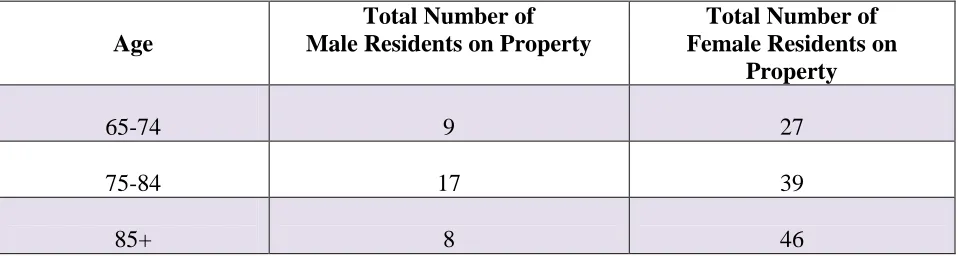
Table 3.1 Smithville RHNC September 2010 Census………...70
Table 3.2 Meadow Manor February 2011 Census……….75
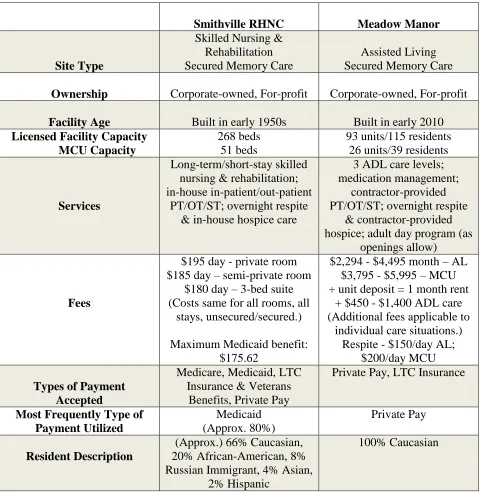
Table 3.3 Summary of Study Sites' Characteristics………..…….76
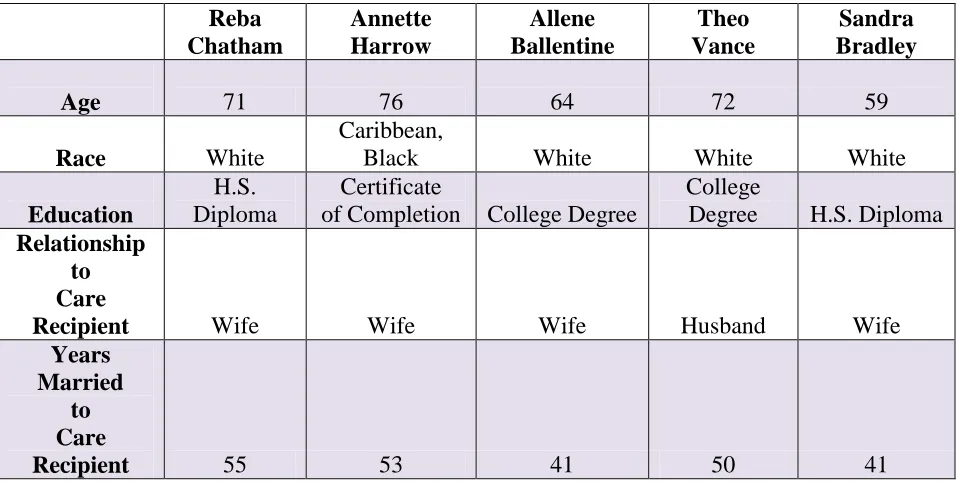
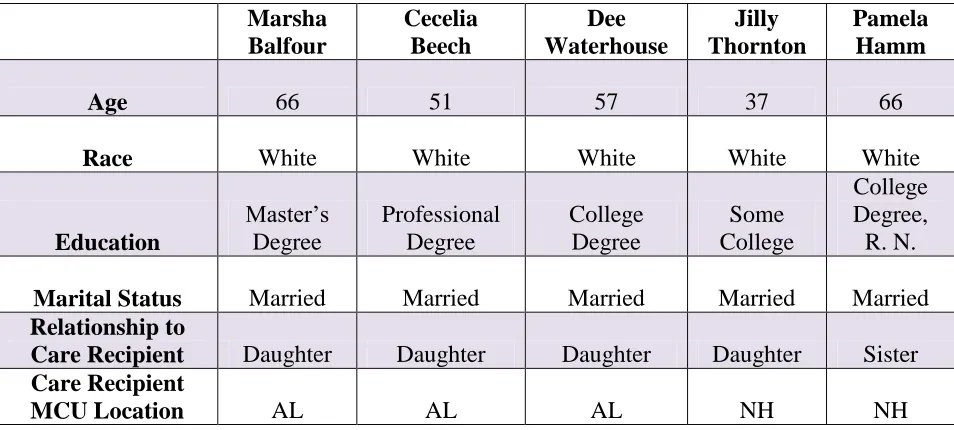
Table 4.1 Spousal Caregiver Characteristics……..………...78
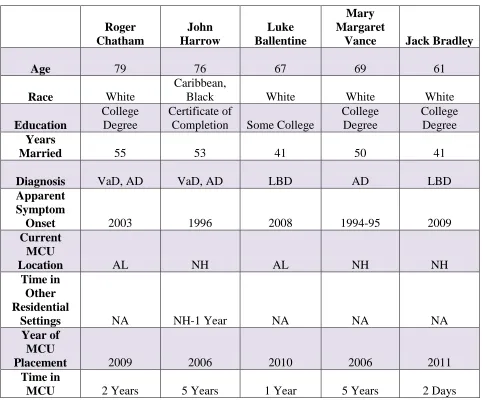
Table 4.2 Spousal Care Recipient Characteristics……….79
Table 4.3 Non-Spousal Caregiver Characteristics………...80
Table 4.4 Non-Spousal Care Recipient Characteristics……….81
Table 5.1 Care Recipient‘ Living Arrangements at Apparent Onset of Dementia………...108
Table 5.2 Spousal Care Tasks ……….116
Table 5.3 Spousal Caregivers‘ Informal Assistance ………...124
Table 5.4 Spousal Caregivers‘ Formal Care Services ………126
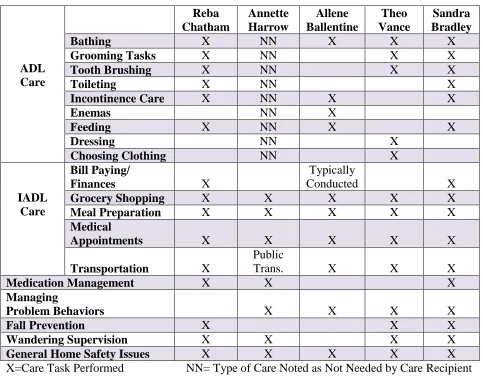
Table 5.5 Non-Spousal Care Responsibilities ………128
Table 5.6 Assistance Provided by Other Informal Caregivers ………...133
Table 5.7 Formal Care Services in Non-Spousal Situations ………..134
Table 6.1 Spousal Secondary Decision-Makers in Initial Moves ………..148
Table 6.2 Non-Spousal Secondary Decision-Makers in Initial Moves ……….150
CHAPTER 1
Introduction
Statement of the Problem
More Americans are living longer (Alzheimer‘s Association, 2010b, March; Vincent &
Velkoff, 2010, May). The U. S. Census Bureau (2010, February) projects that between 2008 and
2050, the population aged 65 and older will grow from approximately 38.7 million Americans to
roughly 88.5 million. By 2050, older Americans are expected to encompass a full 20 percent of
the general population (Vincent & Velkoff, 2010, May). Growth of the older population is
fueled in part by the large cohort of aging baby boom members, those born between the years
1946 and 1964 (Alzheimer‘s Association, 2010a, March). Medical advances and socio economic
improvements since the births of baby boomers contribute to increased longevity (Alzheimer‘s
Association, 2010b, March; Johnson, Toohey, & Wiener, 2007; Plassman, et al., 2007; Suh &
Shah, 2001). Longevity, however, is a risk factor for developing a dementia (Alzheimer‘s
Association, 2010b, March; Johnson, et al., 2007; Plassman, et al., 2007; Suh & Shah, 2001).
Over the general course of a lifetime, individuals may be expected to accrue co-morbidities and
chronic disabilities. Coupled with the onset of a dementia, a greater number of aging adults will
require increasing numbers of caregivers and care options creating a complex matrix of problems
and problem-solving for multiple needs (Johnson, et al., 2007; Alzheimer‘s Association, 2010c,
May). While these factors are staggering on their own, it is important to delve deeper and take a
closer look at the substantial changes American society is facing in issues related to dementia.
Most persons with a dementia are cared for by family members, known as informal or
―unpaid‖ caregivers (Alzheimer‘s Association, 2010b, March, p. 23). In the year 2009, the
provided care for a person or persons with a dementia (2010b, March). Among those with a
dementia, most of whom have AD, approximately 70 percent are cared for in the home
(Alzheimer‘s Association, 2010b, March).
During their caregiving careers, family caregivers of persons with a dementia experience
considerable stress and adverse effects associated with stress (Alzheimer‘s Association, 2010a,
March; Alzheimer‘s Association, 2010b, March; Alzheimer‘s Association, 2010c, May;
Gwyther, 1998; McCallion, Toseland, Gerber, & Banks, 2004). Stressors may include strained
family relations and financial burden, as well as emotional and physical tolls that affect
caregivers‘ quality of life and general well-being (Alzheimer‘s Association, 2010a, March;
Alzheimer‘s Association, 2010b, March; Alzheimer‘s Association, 2010c, May; Armstrong,
2000; Gwyther, 1998; Houser & Gibson, 2008; McCallion, et al, 2004.; Rhee, Degenholtz, Lo
Sasso, & Emanuel, 2009; Spitznagle, Tremont, Davis, & Foster, 2006).
Decision-making related to the care of persons with dementia is especially stressful and
may include planning for or initiating moves to memory care units (MCUs) or other institutional
settings (Armstrong, 2000; Kelsey, Laditka, & Laditka, 2010; Spitznagle, et al., 2006; Yaffe, et
al., 2002). Although a substantial literature examines the decision-making processes surrounding
placing a relative with dementia into a nursing home, less research focuses on making a move
into a separate secured MCU (Kelsey, et al., 2010; Yaffe, et al., 2002). This research will make
an important contribution to the currently limited literature and inform policy and practice.
Research Aims
The goals of the project were two-fold: (1) Explore the decision-making processes of
primary informal caregivers regarding their care recipients‘ moves into MCUs in LTC facilities
decisions for memory care during the caregiving career, what locations they considered for
memory care, and why they were making decisions for memory care as a LTC option; and (2)
Identify the individual-, facility-, and community-level factors that influence those processes,
including what individual factors of socio-demographics, health characteristics, and living
situations of both caregiver and recipient influenced decision-making, who the network support
members were and what network support factors influenced decision-making, what facility-level
factors, such as fees, size, location, and staffing influenced decision-making, and what
community-level factors, including regulations, reimbursement policies, and availability
Literature Review
Background and Significance
The topic of dementia is broad, but relevant to numerous current changes in American
society, including population demographics, personal financial, medical, and emotional health,
and societal and economic costs of caregiving. The term dementia itself is a general expression
for a number of individual neurological disorders in which cognitive change or decline is chief.
Alzheimer‘s disease is the most commonly occurring of the dementias, but a discussion of AD
alone would neglect to present a more accurate effect of dementia on American lives and society.
Therefore, an overview of the different types of dementia is included to provide background and
context for the present study as well as to assist in illustrating the impact of dementia on the
larger societal matters discussed. Though this overview is by no means exhaustive, it helps
convey the complexity of issues that caregivers face when challenged to care for and make
decisions, such as for moves to memory care, for family members with any dementia.
Impact of Longevity on Rising Rates of Dementia
An unprecedented aging of the U. S. population is taking place due to the sizeable
number of baby boom members reaching their 65th birthdays between the years 2010 and 2030
(Administration on Aging [AoA], 2009, Alzheimer‘s Association, 2010a, March). At the same
time, and just as important, the growth rate of the 85 and older population is increasing at an
even faster pace (Vincent & Velkoff, 2010, May). According to a U. S. Census Bureau report,
this subset of older Americans, the oldest old, is projected to more than triple in number between
the years 2010 and 2050, from approximately 5.7 million to more than 19 million (Vincent &
Velkoff, 2010, May). At this rate, by the year 2050, those aged 85 and older will account for
significance of these figures is more fully appreciated when coupled with rates of dementia and
interrelated factors.
According to the Alzheimer‘s Association, (2010b, March), approximately 5.1 million
people aged 65 or older are currently living with AD in the United States, accounting for an
incidence rate of roughly ―one in eight people‖ (p. 10). Extrapolating from available data they
estimate that of these, approximately 2.4 million individuals aged ―85-years-and-older‖ currently
have AD (Hebert, Scherr, Bienias, Bennett, & Evans, 2003, as cited in Alzheimer‘s Association,
March, 2010b, p. 14). An additional 500,000 persons under the age of 65 are estimated to
already have one form or another of dementia, with nearly 200,000 of these persons estimated as
having younger-onset AD, a form that occurs prior to the age of 65 (Alzheimer‘s Association,
2010b, March). By the year 2050, an approximate total of 13.5 million persons at age 65 or
above (16 percent of the age 65 and older population at that time) are anticipated to have
developed AD (Alzheimer‘s Association, 2010b, March). Of those, ―an estimated 3.5 million
people aged 85 and older will have Alzheimer‘s (Hebert, et al., 2003, as cited in Alzheimer‘s‖
Association, 2010b, March, p. 14).
These figures may be considered modest, however, because current estimates utilized by
the Alzheimer‘s Association calculating the approximate numbers of those with AD or some
other form of dementia are based upon a limited definition of those conditions (Alzheimer‘s
Association, 2010a, March). According to the Alzheimer‘s Association (2010a, March), their
figures rely upon a definition framed in the Framingham Study limiting dementias, including
AD, solely to those documented as being in the ―moderate to severe‖ range (p. 12). The
mildest stages of dementia or AD, and therefore project a lower number of individuals that are
affected (Alzheimer‘s Association, 2010a, March).
Several forms of dementia are known to exist, all of which appear to strike with
dissimilar frequency (Mendez & Cummings, 2003; Plassman, et al., 2007). Among all types of
dementia, however, AD is considered to be the most common and presents a particularly grave
health crisis (Alzheimer‘s Association, 2010b, March; Mendez & Cummings, 2003; Plassman, et
al., 2007). A 2010 report states that currently AD is the ―seventh leading cause of all deaths in
the United States‖ (Alzheimer‘s Association, 2010a, March, p. 158). For those who are 65 and
older the assertion is more striking (Alzheimer‘s Association, 2010a, March). Not only is AD
the fifth leading cause of death for Americans aged 65 and older (Minino, Xu, Kochanek,
Tejada-Vera, 2009), but deaths from AD are mounting when at the same time deaths from other
leading causes are decreasing (Alzheimer‘s Association, 2010a, March, p. 158).
Viewed from another perspective, figures related to AD predict both a broad range of
care needs as well as an escalating necessity for more intense care over time (Alzheimer‘s
Association, 2010b). Those with AD are experiencing the disease in different phases dictating
multiple intensities of care needs (Alzheimer‘s Association, 2010b). For the year 2010, those in
the earlier or milder phase roughly numbered 28 percent of all those with AD; while
approximately 31 percent were found to be in the middle phase; and nearly 41 percent of
individuals were experiencing the most acute phase of AD (Alzheimer‘s Association, 2010b,
March). As the cohort of baby boomers advance in age between the years 2010 and 2050 these
figures are expected to change (Alzheimer‘s Association, 2010a, March). By the year 2050,
about 23 percent of individuals with AD are expected to be in the milder phase of AD, while
experiencing AD‘s most acute phase requiring the most comprehensive and perhaps most intense
form of care (Alzheimer‘s Association, 2010b, March). AD is a disease that develops gradually
and imperceptibly, running a course of between 2 and 20 years, causing the potential growth of
AD‘s impact among all dementias within families and society to be astounding (Mendez &
Cummings, 2003). Understanding AD‘s prevalence within a broad set of dementias, therefore, is
valuable for grasping the implications correlated with the future needs of older Americans who
develop a dementia.
Prevalence of Types of Dementia
Mendez and Cummings (2003) state that among those developing a dementia AD occurs
as a single diagnosis approximately 35 percent of the time. At the same time, they note that an
additional 15 percent of individuals develop Alzheimer‘s in conjunction with the second most
commonly occurring type of dementia, vascular dementia (Mendez & Cummings, 2003). More
recent findings from the Aging, Demographics, and Memory Study (ADAMS) sample taken
from the larger Health and Retirement Study (HRS), determined the prevalence of AD to be
higher (Plassman, et al., 2007). Their findings concluded that ―AD accounted for approximately
69.9 percent of all dementias, while vascular dementia (VaD) accounted for 17.4 percent‖
(Plassman, et al., 2007). The Alzheimer‘s Association (201l) relying in part upon the ADAMS
sample and data from the Framingham Study, states that AD accounts for approximately ―60 to
80 percent of cases‖ of dementia (p. 5). They agree with earlier findings that VaD occurs second
most often, and mixed dementias are now believed to be ―more common than previously
thought,‖ consisting typically of AD and ―most commonly VaD, but also other types, such as
One recent study provides an emerging perspective for understanding the prevalence of
AD and VaD (Viswanathan, Rocca, & Tzourio, 2009). Viswanathan and colleagues (2009)
suggest that the relationship between AD and VaD may be less of two distinct disease processes
co-occurring than that of one disease range encompassing both AD and VaD in which an overlap
between the two occurs at midrange.
The relative prevalence of other types of dementia follows, providing some perspective
of how often they may be found in the general population. Dementia with Lewy bodies (DLB),
also referred to as Lewy Body Dementia, occurs in about 15 percent of instances, while VaD
without AD develops about 10 percent of the time (Mendez & Cummings, 2003). A group of
dementias related to ―degeneration of the frontal lobes‖ is found in about 5 percent of cases of
dementia and includes frontotemporal dementia (FTD), a type of dementia that occurs more
often just prior to the age of 60 (Mendez & Cummings, 2003, p. 179). A group of other
lesser-occurring types of dementia, a few of which are potentially correctable, account for
approximately 20 percent or less of cases (Mendez & Cummings, 2003). These include normal
pressure hydrocephalus, resulting from blocked ―cerebrospinal fluid‖ flow and
Wernicke-Korsakoff syndrome, resulting from a ―severe thiamine (vitamin B1) deficiency‖ related to
alcoholism, as well as other types of ―toxic-metabolic‖, ―psychiatric‖, ―infectious‖, and ―moving
disorder‖ dementias (Mendez & Cummings, 2003, pp. 8,421, 423).
A relatively new concept regarding the prevalence of dementias is gaining more attention
among researchers (Alzheimer‘s Association, 2010a, March). Schneider and colleagues (as cited
in Alzheimer‘s Association, 2010a, March) find indications that mixed types of dementia are
common among ―most older community-dwelling people,‖ blurring the line of demarcation
164). In an investigation utilizing samples from 3,303 persons with a dementia using data from
nine BrainNet Europe study locations in Europe and the United Kingdom, Kovacs and associates
(2008) found evidence that among those with AD, and some other dementias, 53.3 percent of
persons also had a co-occurring type of dementia (Kovacs, et al., 2008). In 89.6 percent of AD
cases alone, mixed dementia was indicated (Kovacs, et al., 2008). The growing awareness of
instances of mixed dementia is significant for two reasons. One, it is significant for
understanding the difficulties in discovering and applying treatments, cures, and preventative
measures within the general population. Two, it is important for appreciating the complexity of
caring for persons with a dementia either as a lay person or a professional. Coupling this
overview with a brief description of dementia and similar disorders is beneficial for more fully
comprehending dementia‘s impact not only within society, but upon the family and those
individuals who receive a dementia diagnosis.
Distinguishing Between Three Cognitive Disorders
Dementia
Generally noted as ―a health care problem of epidemic proportions‖ (Mendez &
Cummings, 2003, p. 2), dementia is the broad term generally used to describe the wide group of
―acquired, persistent‖ (Mendez & Cummings, 2003, p. 4) and ―neurodegenerative‖ (U. S.
Department of Health and Human Services: National Institute of Aging/National Institutes of
Health [NIA/NIH], 2008, September, p. 42) conditions previously discussed, typically affecting
many areas, including memory, decision-making skills, behaviors, speech and language, and
mental and physical abilities of individuals. Ellison (2008) notes that ―dementia sets in motion
employment, income, medical care, residential decisions, and plans for the future (pp.
1568-1569).
Various forms of dementia have distinct patterns which may be discerned clinically and
through medical examinations, yet a differential diagnosis may not always be easily attained as
different forms of dementia can coincide, such as with mixed dementia (Alzheimer‘s
Association, 2010b, March; Jellinger, 2007; Mendez & Cummings, 2003). The presence of
unrelated illnesses and conditions, some of which may be previously undiagnosed, or problems
resulting from medications or other substances can further confound the identification of a
dementia (Alzheimer‘s Association, 2010b, March; Mendez & Cummings, 2003). However,
obtaining a correct dementia diagnosis is important as treatments, including medications, differ
enough between some types of dementia that an incorrect treatment plan can cause or increase
difficulties for the patient that may be quite serious in some instances (Mendez & Cummings,
2003).
A dementia diagnosis is currently a process that includes a ―complete diagnostic
work-up‖ consisting of several types of examinations including physical, mental, neurological, blood
and urine labs, imaging, and social history, often with the help of an informant (Mendez &
Cummings, 2003, p. 41). This path of diagnosis generally functions to rule out the existence of
other diseases and conditions responsible for the symptoms (Mendez & Cummings, 2003).
Advances in diagnostics are being made of late, however. Those particularly related to AD are
discussed in a forthcoming section. Distinctly different from dementia, yet often confused with
Delirium
Unlike dementia, delirium is a temporary disorder of sudden onset (Mendez &
Cummings, 2003). The development of delirium causes a noticeably diminished capacity for
focusing and maintaining attentive concentration and can include instances of hallucinations and
confusion (Mendez & Cummings, 2003). Older adults, particularly those who are hospital
patients, are especially susceptible to experiencing delirium (Mendez & Cummings, 2003). It
can be caused by ingesting or inhaling toxic substances, experiencing a serious illness, condition,
or disease or an infection in the brain, or because of a medication reaction or toxicity (Mendez &
Cummings, 2003). Though more often occurring in older adults, neither delirium nor dementia
is considered part of the normal aging process (Mendez & Cummings, 2003). A diagnosis is
achieved through clinical examinations including patient ―history‖, blood and cerebrospinal
fluids, and less frequently, ―neuroimaging‖ (Mendez & Cummings, 2003, p. 49). Another
condition often closely associated with dementia is MCI.
Mild Cognitive Impairment
Though generally discussed in conjunction with dementia, and with AD in particular,
mild cognitive impairment (MCI) is distinctly different (Mendez & Cummings, 2003). Mendez
and Cummings (2003) state that MCI is not the same as age-associated memory impairment, i.e.,
normal aging, nor is it cognitively debilitating in all of the same ways as AD. Among a number
of memory complaints older adults may experience, MCI is described as a specific ―syndrome‖
in which ―activities of daily living‖ may remain fundamentally unaffected in a lifestyle of
―minimal functional impairment‖ (Ellison, 2008, p. 1568,1569). Persons with MCI may be
found to score outside the normal cognitive range, yet may continue functioning relatively
Ellison (2008), however, suggests that because subtypes of MCI appear to exist with clinically
different attributes, different levels of impairment impact otherwise normal abilities. He
suggests that persons with MCI must eventually confront ―issues of driving, employment,
finances, long-term residential planning, and decision-making autonomy‖ (Ellison, 2008, p.
1571).
Following avenues of research exploring the possibility that MCI could be a very early
and detectable phase of AD (Mendez & Cummings, 2003; Mitchell & Shiri-Feshki, 2009; Torpy,
et al., 2009), on April 19, 2011, the National Institutes of Health and the Alzheimer‘s
Association announced the release of new ―clinical diagnostic criteria for AD‖ that included
information specifically addressing MCI (U. S. Department of Health and Human Services,
2011, p. 1). The new criteria state that MCI is distinct stage of AD, the second of three stages,
following a preclinical stage of ten to twenty years, in which individuals ―may or may not
progress to Alzheimer‘s dementia‖ (U. S. Department of Health and Human Services, 2011;
Jack, et al., 2011). Prior to the announcement, MCI was already linked with a higher risk of
developing a dementia, as just over a tenth of those with MCI have been found to later develop
dementia (Ellison, 2008).
In a meta-analysis of 41studies, Mitchell and Shiri-Feshki (2009) found varying degrees
of MCI to AD conversion leading them to support the view that MCI is not a ―unified disease but
[a] heterogeneous disorder with subtypes yet to be fully defined‖ (p. 263). Among the studies in
the meta-analysis indications were found that some individuals diagnosed with MCI improve,
some cognitively decline, while others remain relatively unchanged (Mitchell & Shiri-Feshki,
2009). Overall, however, fewer than 50 percent of those with MCI were found to develop a
Cummings (2003), who note that the range of conversion from MCI to AD is approximately 4 to
36 percent per year with the averages of about 12 to 17 percent, as well as Ellison‘s (2008)
findings noted earlier.
Diagnosis of MCI, according to newly released diagnostic guidelines, is made primarily
in the clinical setting following complaints of cognitive changes with ―impairment in one or
more cognitive domains,‖ while retaining ―functional abilities‖ without the presence ―social or
occupational functioning‖ (Albert, et al., 2011, pp. 271, 272). Areas of cognitive impairment
may include, in addition to memory problems, difficulties with decision-making and
―reasoning‖, use of language, ―visuospatial skills, and attentional control‖ (Albert, 2011, p. 272).
Alzheimer‟s Disease
Description of the Disorder
First described by German physician Alois Alzheimer in 1906, AD is characterized by
two distinct microscopic features found in abundance in affected brains, beta-amyloid protein
plaques and neurofibrillary tangles of the protein tau (U. S. Department of Health and Human
Services: NIA/NIH, 2008, September). In AD, beta-amyloid plaques are believed to disrupt and
prevent vital communication between the brain‘s neurons causing them to die while tau protein
tangles have been found to destroy neurons from within (U. S. Department of Health and Human
Services: NIA/NIH, 2008, September). In slow progression, neuronal cell death leads to
growing areas of brain atrophy, eventually contributing to shrinkage of the brain‘s general mass
and enlargement of its naturally-occurring fluid-filled spaces, the ventricles (U. S. Department of
Health and Human Services: NIA/NIH, 2008, September). At this same time, internal changes
gradually produce cognitive dysfunction manifesting in a wide array of changes perceived by
NIA/NIH, 2008, September). These changes include a continuing and escalating ―loss of
abilities‖ and shifts away from previously normal behaviors (Krull, 2005).
Because many forms of dementia share similar characteristics, such as loss of memory
and decision-making skills, and changes in language use among others, it is tempting to assume
that AD, as well as other dementias, follows an exact disease course (U. S. Department of Health
and Human Services: NIA/NIH, 2008, September). In reality, however, each experience of AD
is individual (U. S. Department of Health and Human Services: NIA/NIH, 2008, September).
Age of onset and duration vary as do the number and severity of the problems experienced (U. S.
Department of Health and Human Services: NIA/NIH, 2008, September). What is comparable
among persons with AD is a disease progression through similar, but broad ―stages‖ beginning in
a ―preclinical‖ and undetectable period that may last up to two decades to a neurological decline
leading to death (U. S. Department of Health and Human Services: NIA/NIH, 2008, September,
pp. 28-29). Throughout, persons with AD gradually lose numerous abilities, including those that
are life-sustaining, eventually leaving them completely dependent upon others for their health,
safety, and well-being (U. S. Department of Health and Human Services: NIA/NIH, 2009b,
May).
Diagnosis of Alzheimer‟s Disease
Diagnosis of AD begins with clinical examinations for dementia, necessary for ruling out
the presence of other diseases and conditions that might account for the symptoms being
presented (Mendez & Cummings, 2003). Diagnostic criteria, however, previously based on
research and findings from twenty-seven years ago, changed in 2011 (Jack, et al, 2011).
Accordingly, the new diagnostic protocol begins with a dementia diagnosis in which ―cognitive
functional inability in numerous environments, ―not explained by delirium or major psychiatric
disorder‖, and a diagnosis of ―cognitive impairment‖ in at least two areas (McKhann, et al.,
2011, p. 265). Following a dementia diagnosis, AD is confirmed when gradually occurring and
worsening symptoms are established with the presence of memory dysfunction and/or additional
problems, which may include one or any combination of ―language‖, ―visuospatial‖, or
―executive function‖ disabilities (McKhann, et al., 2011, p. 265). Trained, experienced
physicians are able to distinguish AD from other dementias with an ―up to 90 percent accuracy‖
using a prescribed set of clinical techniques and medical examinations (U. S. Department of
Health and Human Services: NIA/NIH, 2008, September, p. 48). Research advances in the area
of diagnostics are especially productive and out-distancing research for both an AD cure and
preventative measures, presenting challenges for patients seeking diagnoses and the clinicians
evaluating and treating them (Petersen & Trojanowski, 2009).
Since 2004, the NIA, in cooperation with other partners, has been exploring the use of
neuroimaging techniques to advance the detection AD at earlier points in time (AD
Neuroimaging Initiative [ADNI], 2010). In 57 sites located throughout the U. S. and Canada
ADNI is focused on correctly identifying AD before it fully manifests in the generally
recognizable debilitating characteristics of dementia (Petersen & Trojanowski, 2009). In one
ADNI study, Petersen and colleagues (2010) successfully predicted the progression of AD and
the conversion from MCI to AD in neuroimaging tests with cerebrospinal fluid among a total of
819 participants, including those who were diagnosed as ―cognitively normal‖, others who were
diagnosed ―with MCI‖, and a third group who had an AD diagnosis (p. 201). In a related study,
researchers using a similar mixed modeling method of participants who were ―cognitively
pinpointed by testing for beta-amyloid and tau protein ―biomarkers‖ in the cerebrospinal fluid of
study participants (DeMeyer, et al., 2010, p. 949). While progress in screens and diagnostics for
AD are clearly advancing, challenges still exist for treatment once a diagnosis is been made.
Treatment of Alzheimer‟s Disease
While no cure or preventative treatment for AD for currently exists, several prescription
drugs are approved for therapeutic, though short-lived use (Alzheimer‘s Association, 2010a,
March; Mendez & Cummings, 2003; U. S. Department of Health and Human Services:
NIA/NIH, 2008, September). To date, five U. S. Food and Drug Administration approved
medications, marketed under the names Razadyne, Exelon, Aricept, Cognex, and Namenda, have
been shown to provide only a brief delay of approximately one year or less in the disease‘s
progression (Alzheimer‘s Association, 2010b, March ; U. S. Department of Health and Human
Services: NIA/NIH, 2010c, July). Prescriptions for Cognex are written infrequently, however,
as questions exist about its safe use (U. S. Department of Health and Human Services:
NIA/NIH, 2010c, July).
Other potential medications in government and private industry research pipelines are
presently in one of the three required and rigorous phases of clinical trials before FDA approval
can be granted (U. S. Department of Health and Human Services: NIA/NIH, 2009a, February).
According to the Alzheimer‘s Association, ―approximately 90 experimental therapies aimed at
slowing or stopping the progression of Alzheimer‘s are [currently] in clinical testing in human
volunteers‖ today (2010b, March, p. 8).
Additional recent developments address long-standing recommendations for prevention
and treatment of AD which have consistently emphasized healthy lifestyle choices revolving
Association, 2010b, March). Findings from a recently-convened NIH panel report that while
such healthy lifestyle choices promote overall good health and reduce the risk for other health
conditions, their associated value in preventing AD has not been proven through rigorous enough
scientific methods and, as a result, further studies are warranted (U. S. Department of Health and
Human Services: NIA/NIH, 2010b, April). While the Alzheimer‘s Association accepts the NIH
panel findings, and agrees that the ―relationship between heart health and brain health‖ is one
area in which additional investigation is needed to fully understand the connection between
them, it encourages individuals to continue pursuing healthy lifestyles to promote good health
and reduce known risk factors associated with chronic illness and diseases such as diabetes that
contribute to poor health outcomes (Alzheimer‘s Association, 2010e, September).
The Caregiving Role
The Caregiving Relationship
According to Calasanti and Slevin (2001) informal care work is two-fold, caring ―for‖
another person and caring ―about‖ that person, implying and involving a connection or bond (p.
145). Pearlin and associates (1990) refer to this bond as the ―affective component of one‘s
commitment to the welfare of another‖, where the act of ―caregiving is the behavioral expression
of this commitment‖ (p. 583). The relationship between caregiver and care recipient is at the
core of the commitment where both ―physical labor‖ and ―emotion work‖ are primary elements
of the caregiving bond (Calasanti & Sleven, 2001, p. 145). Aneshensel and colleagues (1995),
however, stress that caregiving relationships are not solely derived from ―emotional attachment‖
as a broad number of factors may bring the caregiver and care receiver together including
feelings of obligation and family norms, or a lack of options or a lack of affordable options (p.
more likely than others to engage in caregiving (Aneshensel, Pearlin, Mullan, Zarit, Whitlatch,
1995).
Gender Norms
Connidis and Kemp (2008) found gender to be an influence within caregiving families
and on caregiving roles according to ―structural factors‖ based upon gender (p. 236). They
suggest that selecting or ―excusing‖ members for caregiving responsibility is an implicit
negotiation between family members in which ―socially structured gender relations‖ are a factor
(Connidis & Kemp, 2008, p. 236). Calasanti and Slevin (2001) add that carework is primarily
the domain of females who engage in care of both young and old family members, and in part by
default. Spouses of either gender, they note, are the typical caregiver with longer female life
spans tending to place wives in caregiving roles more than husbands (Calasanti and Slevin,
2001). Still, among other family members, the next choices tend to be daughters and
daughters-in-law before sons and sons-daughters-in-law (Calasanti and Sleven, 2001). Finally, Stoller (1993)
suggests that a combination of factors influence gender norms for caregiving role selection.
―Family caregiving, as an experience of obligation, [is] structured by the gender-based division
of domestic labor, the invisibility of devaluing of unpaid work, occupational segregation in the
work force, and an implicitly gendered work place‖ (Stoller, 1993, p. 166).
Spillover
Providing care for a person with a dementia impacts caregivers in various ways and in
numerous areas (Aneshensel, et al., 1995; Zarit, 2008). Adults may already be engaged in
multiple roles and ―spheres‖, such as with parenting and paid work, when the additional role of
caregiving for an elder is acquired (Mennino, Rubin, & Brayfield, 2005, p. 107). While
role, caregivers may find the effects of ―experiences in one role often spill over to affect
experiences in another role‖ (Martire, Stephens, & Atienza, 1997, p. 279). Such a spillover
effect may be ―positive‖, as when caregivers who also are involved in paid work roles experience
decreases in ―caregiving stress‖ from ―greater financial, social, and psychological resources‖
(Martire, et al., 1997, p. S286). But, ―negative spillover‖ effects also may occur if conflict
between competing ―domains‖ develops (Mennino, et al., p. 107). The combination of paid and
unpaid roles, domains, and responsibilities, in particular, may involve conflict as they represent
competing interests and demands (Aneshensel, et al., 1995; Frone, Yardley, & Markel, 1997;
Martire, et al., 1997; Mennino, et al., 2005).
Frone and colleagues found that ―the obligations of one role frequently interfere with the
enactment of a second role‖ by affecting role ―performance‖ (1997, p. 163). Referring to a
―work – family interface‖, they suggest that these spheres have an ―indirect reciprocal‖
relationship (Frone, et al., 1997, p. 162). They agree that while a positive spillover effect may
develop because of ―work-related support‖ or ―family-related support‖, the reverse may also be
true due to ―work-to-family conflict‖ and ―family-to-work conflict‖ (Frone, et al., 1997, p. 162).
Time, and its availability or constraints, as well as an ability to focus on the task at hand are two
issues that may work to create conflict between domains and stress for the caregiver
(Aneshensel, et al., 1995; Martire, et al., 1997; Mennino, et al., 2005). Aneshensel and
associates relate conflict and subsequent experiences of stress to ―role overload‖, an ―internal
experience‖ of ―being overwhelmed‖ (1995, p. 80). Role overload can contribute to caregiver
burden, a topic discussed in more detail in a later section.
Gender also may influence spillover and the prioritization of responsibility within
exacerbate conflicts individuals experience within their paid and unpaid work domains or
between them (Minnino, et al., 2005). Minnino and associates found that the culture of the paid
workplace may influence the degree to which employees experience negative spillover effects
from one domain to another as ―company policies, in the absence of changed normative
expectations,‖ are not enough to prevent negative spillover (2005, p. 124). Workplace norms
according to gender may dictate expectations for responsibility and choice (Minnino, 2005).
Aneshensel and associates observed that work, both unpaid and paid, varies according to
―gender‖ (1995, p. 22). They explained that ―caregiving careers may well impede the
occupational attainments of women, sustaining the very gender stratification of the occupational
sphere that channels women into caregiving‖ (1995, p. 22).
The Caregiving Career
The sphere of informal or unpaid caregiving for an individual with a dementia has been
conceptualized as a ―career‖ that entails a reorganization of personal ―responsibilities and
activities‖ over a period of time (Aneshensel, et al., 1995, p. 16). It usually evolves in ―multiple
stages‖ with corresponding adjustments (p. 17).
Though the term career is often associated with occupations, the work of caregiving can
be thought of as a career as well because of its required dedication to the focused activity, which
may be long-term. Still, marked differences exist between the two. While an occupational
career may be known for its distinct features such as advancements, rewards, and benefits
coinciding with achievements and planned stages and goals, a caregiving career lacks these
formalities as well as the earned wages that contribute to a ―social evaluation‖ (p. 87).
Caregiving careers are inexplicably linked to familial obligations. Caregivers, in meeting
including the timing of careers‘ beginnings and endings (p. 22). Though benefits of caregiving
careers may exist and are noted in a following section, the work of caregiving generally is not
without the risk or sacrifice of personal stability in matters of finances, and medical and social
well-being, generally described as ―costs‖ (p. 334). Aneshensel and colleagues describe the
origin of these costs in terms of ―stressors‖ (p. 69). ―The conditions, experiences, and activities
that are problematic for people, threatening them, thwarting their efforts, fatiguing them, and
defeating their dreams‖ are the stressors that link to both ―internal‖ and ―external‖ causes (p. 69).
The Costs of Dementia Care
Costs of Informal Caregiving: Financial Health
Informal caregivers bear a tremendous personal responsibility for persons with a
dementia and absorb numerous costs (Alzheimer‘s Association, 2010b, March; Aneshensel,
Pearlin, Mullan, Zarit, & Whitlatch, 1995; Rhee, Degenholtz, Lo Sasso, & Emanuel, 2009). For
the year 2009, unpaid caregivers contributed approximately 12.5 billion hours in their roles,
amounting to a value of nearly $144 billion, when based upon an $11.50 hourly rate
(Alzheimer‘s Association, 2010b, March). According to the National Alliance for Caregiving
(NAC) in conjunction with the American Association of Retired Persons (AARP) for the year
2009 (as cited by the Alzheimer‘s Association, 2010b, March), 6 out of 10 informal care
providers were at the same time wage workers employed in full or part-time jobs. One result of
this dual role is that over time, individuals productive in dementia caregiving may come to be, by
default, less productive in other endeavors as caregiving roles typically require increasing hours
to meet advancing dementia needs and decreasing care recipient independence (Rhee, et al.,
have been found to modify starting and ending times of workdays, as well as total work hours,
due to multiplying caregiving responsibilities (Alzheimer‘s Association, 2010b, March).
Informal caregivers generally vary in age but most are female, accounting for 66 percent
of all caregivers (NAC/AARP, 2009). Of the approximate 25 percent of persons with a dementia
who are married, only about 6 percent receive care provided by a spouse (Alzheimer‘s
Association/NAC, 2004, p. ii). For ―seven out of ten‖ families, care for a person with a dementia
is provided by several family members (Alzheimer‘s Association/NAC, 2004, p. ii). Among
―caregiving relationships‖, approximately 57 percent of recipients are cared for by offspring
(Alzheimer‘s Association/NAC, 2004, p. 1). Thirty-six percent of caregiving offspring care for
the ―mother‖, 11 percent provide care for the ―mother-in-law,‖ 8 percent care for the ―father,‖
and 2 percent care for the ―father-in-law‖ (Alzheimer‘s Association/NAC, 2004, p. 1). Of
caregivers aged 35 or younger, approximately 14 percent care for persons with AD; of those
aged 35 to 49, about 26 percent are AD caregivers; of those between the ages of 50 and 64,
nearly 46 percent are caring for individuals with AD; and of those age 65 or older about 13
percent are caring for someone with AD (NAC/AARP, 2009, as cited by the Alzheimer‘s
Association, 2010b, March).
Two implications are immediately noticeable in these statistics. First, as the NAC and
AARP point out, a significant number of Alzheimer‘s caregivers are of wage-earning age
(NAC/AARP, 2009, as cited by the Alzheimer‘s Association, 2010b, March). Second, women
appear to be particularly subject to the dual, if not opposing, demands of caregiving and
employment, affecting both their current and future earnings (NAC/AARP, 2009, as cited by the
Alzheimer‘s Association, 2010b, March). For families in which two-wage earners are important,
Association, 2010b, March, p. 30). One estimate finds that informal caregivers assume
approximately $219 each month in ―out-of-pocket‖ expenses (Alzheimer‘s Association, 2010b,
March, p. 30). Another estimate reports that annual caregiver ―out-of-pocket expenses‖ average
approximately $5,885 for ―co-residents‖ to as high as $8,728 for caregivers not residing together
(Houser & Gibson, 2008, p. 3).
Costs of Informal Caregiving: Caregiver Burden
Defining Caregiver Burden. Other costs of a personal nature exist for informal dementia
caregivers (Alzheimer‘s Association, 2010b, March). These personal costs are sometimes
referred to as ―caregiver burden‖ (Croog, Burleson, Sudilovsky, & Baume, 2006; Dang, Badiye,
& Kelkar, 2008; Spitznagel, et al., 2009; Zarit, 2008, p. 101). Caregiver burden is a complex
combination of feelings, thoughts, and encounters related to the work of caregiving (Georges, et
al., 2008). Zarit (2008) describes burden in the dual context of ―stressors‖, both ―objective‖ and
―subjective‖, that impact caregiving individuals in a broad range of experiences (p. 101).
Objective stressors are those with direct connection to the care recipient‘s disease process itself,
while subjective stressors are caregiver experiences related to that disease process that are
problematic for the caregiver (Zarit, 2008). Caregiver burden, linked to problems specifically
associated with carework, includes a higher associated risk of depression, as well as increased
other psychological and physical problems related in part to the length of ―caregiving careers,‖
(Aneshensel, 1995; Dang, et al., 2008; Papastavrou, Kalokerinou, Papacostas, Tsangari, &
Sourtzi, 2007; Schulz, O‘Brien, Bookwala, & Fleissner, 1995). While objective stressors may
not be modifiable, subjective stressors may be able to be addressed through interventions and
strategies such as use of brief or long-term formal care options for the care recipient and
Psychological and Emotional Effects. One report found ―emotional stress‖ associated
with caregiver burden among Alzheimer‘s caregivers to be high (Alzheimer‘s Association/NAC,
2004, p. 2). In this report, 41percent of AD caregivers identified ―their stress as a four or five‖
on a ―five point scale‖ (Alzheimer‘s Association/NAC, 2004, p. 2). Croog and colleagues (2006)
found that among a number of reactions spouses of persons with AD have to caregiving, ―anxiety
about the future and feeling the need to do more‖ were most common (p. 95). In regard to
responses to specific dementia characteristics, care recipients‘ behaviors and emotionality
elicited the strongest caregiver reactions, more so than care recipients‘ problems with cognition
(Croog, et al., 2006; Etters, Goodall, & Harrison, 2008; Papatavrou, et al., 2007).
Burden-inducing characteristics were found to involve aggressive or agitated behavior and incidences of
―nighttime wandering‖ (Etters, et al., 2008, p. 425). In one study, caregivers were most likely to
react to such behaviors by becoming angry at and resentful of their care recipients (Croog, et al.,
2006).
Other psychological and emotional experiences of burden are associated with relationship
role changes (Adams, 2006). Give and take, shared responsibilities and intimacies, and reliance
between couples, as well as parents and adult children, all become redefined by the progressing
limitations of the dementia (Adams, 2006). Providing care to a person with a dementia ―can
have a strong influence on family relationships‖ (Etters, et al., 2008). Relationship changes may
occur not only between caregiver and care recipient, but in a larger scope, the extended family
members (Aneshensel, et al., 1995).
―Conflict‖ may be one outcome of stress within a family when members are involved in
caregiving and care receiving (Aneshensel, et al., 1995, p. 85). Gwyther (1998) suggests that
adaptations must be made by the family‖ (p. 17S). Disagreements may revolve around
individual members‘ assessments of the care recipients‘ disease, caregivers‘ assessments of
family members‘ involvement, and issues related to caregiver recognition (Aneshensel, et al.,
1995). Dual and simultaneous caregiving responsibilities for both persons with AD and minors
younger than ―age 18,‖ represent another potential type of family conflict (Alzheimer‘s
Association, 2010b, March, p. 26; Dang, et al., 2008). Altogether, family disagreements about
how to help, or how and when to seek assistance, may lead to caregiver isolation and
psychological effects of burden (Lyons, et al., 2000).
In many respects, aspects of caregiver burden may be similar for caregivers of elders as a
whole and dementia caregivers. A longitudinal study utilizing a sample of 37,742 participants
from the original Nurses‘ Health Study found that caregivers new to caring for spouses or
parents tended to experience ―declines in mental health status‖, including depression and anxiety,
more than non-caregivers, current caregivers, and those who were no longer providing care to
similar recipients (Cannuscio, et al., 2002, p. 1307). The amount of time committed to
caregiving responsibilities was also found to correlate to an increased risk to mental health status
among all caregivers (Cannuscio, et al., 2002). Gaugler and Teaster (2006) refer to this risk as
the ―wear and tear hypothesis‖ (p. 143). Mental health status is also associated with physical
health status so that caregiving careers may pose other health risks to a substantial proportion of
Americans (Cannuscio, et al., 2002).
Physical Effects. In a meta-analysis of literature regarding caregiver burden related to
caring for individuals with some form of dementia, Schulz and colleagues (1995) reported
findings from 41 studies. They noted that ―health care utilization‖ was more informative about
caregivers of persons with a dementia received physical healthcare services more often than
other caregivers, including hospitalizations and ―physical exams‖ (p. 781). Conditions reported
ranged from difficulty sleeping to declining immunity and several heart-health related factors,
including higher ―systolic blood pressure‖ and ―triglycerides, and ―lower high-density
lipoprotein [HDL] cholesterol‖ levels (p. 782). They also reported that physical effects of
caregiving also had some effect on psychological health, as caregivers with ―poorer physical
health‖ experienced more ―psychological distress‖ (p. 783).
Results from the later Framingham Coronary Heart Disease (CHD) Risk Score also report
that caregivers of persons with a dementia are at greater risk for poorer physical health, including
CHD (von Kanel, et al., 2008). Participants in this study were found to have higher blood
pressures, even when medications to control the condition were routinely used. They were also
found to have more symptoms of depression and ―role overload‖ than those not engaged in
caregiving (p. 134).
Social Effects. Etters and associations (2008) found that caring for a person with a
dementia is linked with a decline of ―social support‖ and ―social life,‖ limiting caregiver
well-being and increasing caregiver burden (p. 425). Sanders (2007) agreed, finding that caregivers
experienced waning support as their care-receivers‘ dementias progressed.
Other effects may arise from experiences of stigma, defined as a diminished value
assigned to persons exhibiting unwelcome traits (Corrigan, Markowitz, Watson, Rowan, &
Kubiak, 2003). One qualitative study of 30 care-receiver/caregiver dyads found a correlation
between a diagnosis of dementia and stigma (Aminzadeh, Byszewski, Molnar, & Eisner, 2007).
Both care-receivers and caregivers acknowledged that revealing a dementia diagnosis created
diagnoses (Aminzadeh, et al., 2007). Werner and Heinik (2008) also found a change in
demeanor of others toward the person with dementia in their qualitative study of 61 AD
caregivers. Caregivers were also found to actively suppress revealing a dementia diagnosis to
people they knew (Werner & Heinik, 2008).
Mediating Positive Effects. Some caregivers, regardless of caregiving situation,
experience fewer negative or stressful effects (Pearlin, et al., 1990). Sense of ―satisfaction,‖ may
be one mediating factor according to Andren and Elmstahl (2005) who found that among
dementia caregivers, satisfying caregiving experiences may act as a foil against negative
experiences of burden (p. 165). Campbell and colleagues (2008) note that some positive feelings
are rooted in caregivers‘ own ―coping‖ skills and the ―relationship quality‖ with their
care-receivers (p. 1082). Positive caregiving experiences also may be related to feelings of
enrichment as caregivers develop deepening relationships to their care-receivers and increased
skill in their ―role[s]‖ (Dang, et al., 2008, p. 1247). Cooper and associates suggest that caregiver
use of ―coping strategies‖ is important, finding that differences exist among strategy types
(2008). ―Coping‖ may be defined as ―behaviors and practices‖ caregivers use for their own
benefit (Pearlin, et al., 1990, p. 590). Caregivers‘ use of strategies to address care recipient
behaviors, however, may be less effective than strategies used to address care recipient emotions
and therefore more effective in providing stress reduction for caregivers (Cooper, Katona, Orrell,
& Livingston, 2008).
Societal and Economic Cost of Caregiving
The Alzheimer‘s Association notes that persons who have AD utilize formal or paid care
services at a higher rate than others who require formal care (May, 2010c). They report that
expenses for AD care will rise dramatically from $172 billion in 2010 to surpass the $1 trillion
mark by the year 2050 (Alzheimer‘s Association, 2010c, May). At the same time, costs
associated with Medicare may be expected to rise to more than 600 percent, from approximately
$88 billion at the present time to roughly $627 billion by 2050 (Alzheimer‘s Association, 2010c,
May). Medicaid expenses in the same period may be expected to rise about 400 percent from
$34 billion today to about $178 billion (Alzheimer‘s Association, 2010c, May). Crucial to
understanding these figures is the fact that by 2050 approximately 48 percent of those predicted
to have AD will have progressed to the most acute phase of the disease when costlier and more
demanding care can also be predicted to be required (Alzheimer‘s Association, 2010c, May).
Other societal costs associated with dementia which may be expected to occur include an
insufficient number of available formal care providers such as geriatricians, geriatric
pharmacists, and nursing and social service workers, and the services that they offer
(Alzheimer‘s Association, 2010b, March). The 2008 Institute of Medicine Report (as cited by
the Alzheimer‘s Association, 2010b, March), notes that for the year 2007, geriatric MDs
numbered 7,128 and geriatric psychiatrists totaled 1,596. Growth of the age 65 and older
population will necessitate growth within the medical profession, such that an estimated 36,000
geriatric physicians alone will be needed by the year 2030 (Alzheimer‘s Association, 2010b,
March).
Long-Term Care
Defining and Describing
Long-term care may be defined as care that is supportive rather than curative and that
seeks to address a broad range of needs for individuals unable to meet those needs on their own,
(Chen, 2006, p. 870). Generally, individuals may receive LTC to address needs resulting from a
wide array of causes, including those directly associated with development of a dementia.
Several different types of care exist that may be described as LTC (Johnson, et al., 2007; Kelsey,
et al., 2010). These vary from informal care, such as family caregivers, to use of in-home paid
caregivers to residential care in locations outside the home, such as ―assisted living facilities
[ALFs] and nursing homes [NHs]‖, among others (Johnson, et al., 2007, p. 4). LTC also
includes respite care and hospice, or end-of-life care, two types of formal services providing
broad scopes of care taking place either in the home or other residential setting (Wacker &
Roberto, 2008). Respite care services provide temporary targeted care to recipients while at the
same time addressing needs caregivers have for interval breaks from carework responsibilities
and associated caregiver burden (Wacker & Roberto, 2008). Hospice services address the
end-of-life supportive care needs of both individuals with terminal illnesses and their families and is
typically short-term in nature, averaging ―59 days‖ or less (Wacker & Roberto, 2008, p. 343).
The topics in this section will focus on formal LTC alternatives to informal caregiving, as these
may be choices that informal caregivers consider when contemplating or choosing assistance.
In-Home Long Term Care
Choices of formal care in the home setting may include the use of trained home health
aides or ―nonmedical‖ assistants for routine, intermittent (respite), or hospice services (Wacker
& Roberto, 2008, p. 331). In-home LTC choices may provide care that is less expensive than
LTC outside the home, depending on the level of care required, the number of services provided,
and the length of time formal care assistance is required (Wacker & Roberto, 2008). Wacker and
Roberto (2008) note that among many older individuals, in-home residential care is favored over
Recent surveys found that 10,800 providers of home health services, 2,200 providers of
hospice services, and 1,400 providers of a combination home health and hospice services
(Centers for Disease Control [CDC], 2007a) were caring for a total of 1.46 million clients (CDC,
2007b). At the same time, Medicare was found to most frequently provide payment to home
health services and a combination of home health and hospice providers, by 56 percent and 66
percent respectively (CDC, 2007a). Twelve percent of home health services were found to be
covered by individual insurance plans, while 17 percent of clients self-paid providers of a
combination services (CDC, 2007a). The survey noted that Medicaid provided 22 percent of
payments to home health providers, but only 10 percent of payments to providers of combination
services (CDC, 2007a). For providers of hospice-only services, Medicare was found to pay 81
percent of charges versus 66 percent of charges for combination service providers (CDC, 2007a).
Adult Day Services.
Adult day services may be described as group programs that provide temporary
supervision outside the home setting (National Adult Day Services Association [NADSA],
2010). They may address care recipient socialization, and in some instances, health-related
matters (NADSA, 2010). Programs of this type are a unique form of respite LTC in which care
recipients continue to live at home, but receive formal services outside the home (NADSA,
2010). According to NADSA (2010), 4,601 U. S. programs currently provide adult day services
to more than 150,000 individuals daily, of whom approximately 52 percent are cognitively
impaired. Of these programs, about 22 percent operate privately, while the bulk of them operate
publicly with third party financial assistance, including donations and municipal funds (NADSA,
2010). Fees among all adult programs nationally average about $61 daily for a typical 8 to 10
$60 in the greater metropolitan Atlanta area, with an average daily fee range in the rest of the
state found between $57 and $63 (MetLife, 2008a).
ResidentialLong Term Care Outside the Home
Residential LTC existing outside the home includes numerous types of settings from
which a choice may be made for those requiring assistance to meet their needs, including needs
associated with a dementia. Assisted living facilities, NHs, and MCUs, existing as stand-alone
facilities or associated with either an ALF or NH, are among the variety of choices that may be
considered (Kelsey, et al., 2010; Wacker & Roberto, 2008). Typical supportive services found in
both ALF and ALF-associated MCU settings generally include supervised oversight around the
clock, assistance with ADLs and IADLs, meal services, opportunities for socializing, and
minimal health support (Wacker & Roberto, 2008). Nursing homes and NH-associated MCUs
typically offer a variety of in-residence services, including ―restorative, rehabilitative, and
medical‖ care which may be received along with meal services, and supervision (Wacker &
Roberto, 2008, p. 365). Because ALFs, NHs, and MCUs are most closely associated with the
present study, these settings are included here and described in greater detail.
ALFs. A LTC option modeled after elder care in Scandinavia, ALFs first began
appearing in the U.S. mid-decade in the 1980s (National Center for Assisted Living [NCAL],
2001). ALFs in this country today are known for offering a range of long-term assistance and
caregiving in ―congregate settings‖ (Johnson, et al., 2007). Ball and associates (2009) describe
assisted living as a ―middle-ground alternative‖ between the home and nursing home care (p.
104). Noting that assisted living is difficult ―to define,‖ Polivka (2010) explains that assisted
living encompasses a broad assortment of types according to variables such as ―size, service
diversity, he continues, is part of what makes uniformly defining assisted living difficult for
researchers or regulating bodies (Polivka, 2010). Another perspective of assisted living
describes it as being more of ―an approach‖ toward ―long-term care‖, rather than a place for
LTC, where respect for impaired individuals and their autonomy is a key element (Hyde, Perez,
& Reed, 2008, p. 48). One aspect of the LTC approach is the availability of focused support for
residents‘ desires and needs ―to maintain a sense of continuity‖ even as they experience life
changes (Perkins, Ball, Hollingsworth, & Whittington, Manuscript submitted for publication).
Presently, nearly one million individuals reside in roughly 38,000 ALFs across the country that
are individually categorized, defined, and regulated by their home state regulatory bodies
(NCAL, 2010a; NCAL, 2010b, March).
In the state of Georgia, ALFs are identified as a type of ―personal care home [PCH]‖
(Department of Community Health, Division of Healthcare Facility Regulation [DCH, DHFR],
Georgia, 2009; Georgia Assisted Living Federation of America [ALFA], 2010). Though a
variety of congregate living arrangements are included in the PCH designation, all fall under this
state of Georgia general definition:
Any dwelling, whether operated for profit or not, which undertakes through
its ownership or management to provide or arrange for the provision of housing,
food service and one or more personal services for two or more adults who are
not related to the administrator by blood or marriage (DCH, DHFR, Georgia, 2009, p.
45).
PCHs in the state of Georgia exclude the direct provision of skilled nursing services, the
―Personal care services‖ are comprised of, though ―not limited to, individual assistance
with or supervision of self-administered medication, assistance with ambulation and transfer, and
essential activities of daily living such as eating, bathing, grooming, dressing, and toileting‖
(DCH, DHFR, 2009, Georgia, p. 45). An ―adult‖ for the purpose of the PCH definition is
identified as a person of the age of 18 or older (DCH, DHFR, 2009, p. 44).
The number of PCHs in the state of Georgia has grown steadily over the years (Mollica,
Sims-Kastelein, & O‘Keeffe, 2007). For the year 2002, available statistics show that 1,648
facilities (25,563 units) were in operation and that by 2007 those numbers had increased to 1,860
facilities offering 26,500 units (Mollica, et al., 2007). According to Georgia‘s DCH, DHFR
(2009), as of August 30, 2010, approximately 2,222 PCHs were operating in Georgia (Personal
communication, 2010, August 30).
Though AL may be paid for in a number of ways, most rates and fees are paid through
private funds (Assisted Living Federation of America [ALFA], 2008). The ALFA states that
approximately 50 percent of ―payment sources‖ are self-pay, while approximately 33 percent of
payments are made through family sources (2008, p. 8). Qualifying yearly incomes of $25,000
to $35,000 are found to be average for residents according to one source (Dixon Hughes, 2009).
The ALFA, however, notes that the ―median income‖ of residents is $15,686, while residents‘
―median assets‖ is approximately $250,000 (2008, p. 4). Though used less often, other sources of
payment are found, including Medicaid state reimbursement, which is estimated to occur in just
over 8 percent of instances (ALFA, 2008). Additional types of payment that may be used
include insurance policies, used in approximately 3 percent of instances, Supplemental Security