0095-1137/05/$08.00
⫹
0
doi:10.1128/JCM.43.9.4382–4390.2005
Copyright © 2005, American Society for Microbiology. All Rights Reserved.
Development of a Multilocus Sequence Typing Scheme for
Characterization of Clinical Isolates of
Acinetobacter baumannii
Sergio G. Bartual,
1* Harald Seifert,
2Corinna Hippler,
2M. Angeles Domı´nguez Luzon,
3Hilmar Wisplinghoff,
2and Francisco Rodrı´guez-Valera
1Division de Microbiologia and Evolutionary Genomics Group, Campus de San Juan, Universidad Miguel Hernandez, Apartado 18,
03550 San Juan de Alicante, Alicante, Spain
1; Institute for Medical Microbiology, Immunology, and Hygiene, University of
Cologne, Cologne, Germany
2; and Servicio de Microbiologı´a, Hospital Universitari de Bellvitge, Barcelona, Spain
3Received 18 March 2005/Returned for modification 2 May 2005/Accepted 20 June 2005
In this study a multilocus sequence typing (MLST) scheme for
Acinetobacter baumannii
was developed and
evaluated by using 40 clinical
A. baumannii
isolates recovered from outbreaks in Spanish and German
hospitals during the years 1990 to 2001, as well as isolates from other European hospitals and two DSMZ
reference strains of
A. baumannii
. For comparison, two isolates of
Acinetobacter
species 13 (sensu Tjernberg and
Ursing), two clinical isolates, and three DSMZ strains of
A. calcoaceticus
(both belonging to the
A
.
calcoaceti-cus
-
A. baumannii
complex) were also investigated. Primers were designed for conserved regions of
housekeep-ing genes, and 305- to 513-bp internal fragments of seven such genes—
gltA
,
gyrB
,
gdhB
,
recA
,
cpn60
,
gpi
, and
rpoD
—were sequenced for all strains. The number of alleles at individual loci ranged from 6 to 12, and a total
of 20 allelic profiles or sequence types were distinguished among the investigated
A. baumannii
strains. The
MLST data were in high concordance with the epidemiologic typing results generated by pulsed-field gel
electrophoresis and amplified fragment length polymorphism fingerprinting. The MLST scheme provides a
high level of resolution and an excellent tool for studying the population structure and long-term epidemiology
of
A. baumannii
.
Bacteria of the genus
Acinetobacter
are ubiquitously
distrib-uted in nature and often involved in the colonization and
infection of hospitalized patients, particularly those in
inten-sive care units (4, 10). The taxonomy of the genus
Acineto-bacter
has a long and complicated history. In 1986, Bouvet and
Grimont divided the genus into 12 genomic species based on
DNA-DNA hybridization and proposed a variety of
biochem-ical tests for phenotypic species identification (5). Three years
later, Bouvet and Jeanjean reported new proteolytic
Acineto-bacter
strains designated genomic species 13, 14, 15, and 17 (6).
At the same time, three additional genomic species were
pro-posed by Tjernberg and Ursing and designated
Acinetobacter
genomic species 13TU, 14TU, and 15TU (37). Currently, at
least 32 genomic species are recognized among the genus
Aci-netobacter. This classification opened the possibility to analyze
the epidemiology of this diverse genus. However, conventional
or commercially available biochemical test systems are not able
to identify unambiguously most genomic species (4, 23). In
particular, isolates belonging to genomic species 1
(Acineto-bacter calcoaceticus), 2 (A. baumannii), 3, and 13TU are almost
indistinguishable by biochemical tests (17). In 1992, the
desig-nation
A. calcoaceticus-A. baumannii
complex was therefore
suggested for these genotypically distinct but phenotypically
very similar bacterial species (16).
Numerous studies have supported the observation that
A.
baumannii
is the species most commonly involved in
nosoco-mial infections such as pneumonia, wound infection, and
bloodstream infection (4, 7, 15). The implication of
A.
bau-mannii
in hospital outbreaks of nosocomial infection (8, 10, 29)
has been attributed to their increasing antimicrobial resistance
(21, 39), and their ability to survive on inanimate and dry
surfaces (2, 24), both contributing to an increased survival time
in the hospital environment.
To better understand the epidemiology and in particular the
mode of spread of
A. baumannii, a number of molecular typing
systems have been developed, including PCR-based methods
such as random(ly) amplified polymorphic DNA analysis (20),
integrase gene PCR (25), infrequent-restriction-site PCR (42),
ribotyping (16, 35), amplified fragment length polymorphism
(AFLP) analysis (9), and pulsed-field gel electrophoresis
(PFGE) (18, 35). PFGE restriction analysis of chromosomal
bacterial DNA has been used with excellent results in
epide-miologic studies of numerous
A. baumannii
outbreaks and is
currently regarded as the gold standard for epidemiologic
typ-ing (8, 18).
Some of the genomic methods, in particular ribotyping and
AFLP, are able to resolve bacteria of the
A. calcoaceticus-A.
baumannii
complex at the species level with a high degree of
discrimination (9, 16). All of these methods rely on the
gen-eration of a distinct pattern or DNA “fingerprint” that is
usu-ally visualized by ethidium bromide staining or nucleic acid
hybridization. So-called comparative typing systems, i.e.,
meth-ods that depend on comparisons of DNA fragment patterns on
gels, such as PFGE and random(ly) amplified polymorphic
* Corresponding author. Mailing address: Division de Microbiologia
and Evolutionary Genomics Group, Campus de San Juan, Universidad
Miguel Hernandez, Apartado 18, 03550 San Juan de Alicante,
Ali-cante, Spain. Phone: (94) 965919313. Fax: (94) 965919576. E-mail:
[email protected].
4382
on May 15, 2020 by guest
http://jcm.asm.org/
Downloaded from
on May 15, 2020 by guest
http://jcm.asm.org/
Downloaded from
on May 15, 2020 by guest
http://jcm.asm.org/
DNA analysis, are well suited for local outbreak investigation.
For a global epidemiologic analysis, however, comparison of
the results obtained at different laboratories would be
re-quired, but poor interlaboratory reproducibility remains a
crit-ical and unresolved issue.
Multilocus sequence typing (MLST) is a highly
discrimina-tive method of typing microorganisms (28) and has been
ap-plied successfully for the epidemiologic characterization of a
variety of clinically important bacterial pathogens including
Neisseria meningitidis
(28),
Streptococcus pneumoniae
(14),
Streptococcus pyogenes
(13),
Staphylococcus aureus
(12, 19),
Campylobacter jejuni
(11),
Enterococcus faecium
(22),
Vibrio
cholerae
(26), and
Haemophilus influenzae
(30).
MLST is based on the same principles as multilocus enzyme
electrophoresis but relies directly on DNA sequence
compar-ison of internal fragments of protein encoding housekeeping
genes. These housekeeping genes are chosen for analysis
be-cause their products play vital function, being present in all
isolates of a given species, and mutations within them are
assumed to be neutral. For each gene fragment, the different
sequences are assigned as distinct alleles, and each isolate is
defined by the alleles at each of the housekeeping loci (the
allelic profile or sequence type [ST]). MLST offers the
possi-bility to transfer typing data from laboratory to laboratory or
compare results via the internet (http://mlst.zoo.ox.ac.uk), thus
providing a powerful tool for global epidemiologic studies, as
well as for studies of the population biology of bacterial
spe-cies. We describe here an MLST scheme for
A. baumannii
based on the nucleotide sequences of seven housekeeping loci.
MATERIALS AND METHODS
Bacterial isolates.A total of 49Acinetobacterisolates were used in the present study: 42A. baumanniiisolates, including reference strains DSM 30008 and DSM 30007 (A.baumanniitype strain ATCC 19606) from the Deutsche Sammlung von Mikroorganismen und Zellkulturen (DSMZ); 2 clinicalAcinetobactergenomic species 13TU isolates; and 5A. calcoaceticusisolates, including reference strains DSM 1139, DSM 7324, and DSM 30006 (Table 1).A.baumanniiisolates were selected to represent the major strain types involved in hospital outbreaks that were observed in different Spanish and German hospitals between 1990 and 2002; also included were three isolates from The Netherlands and from Sweden to represent other geographic locations. All isolates had been identified previ-ously by routine phenotypic tests and assigned to theA. calcoaceticus-A. bau-manniicomplex. Species identification was confirmed by 5⬘-end sequencing of the 16S rRNA gene of all Spanish, Dutch, and Swedish isolates (data not shown) (31) and by ribotyping of the German isolates (35).
DNA extraction.Strains were maintained at⫺70°C in 20% (vol/vol) glycerol in LB medium to preserve genetic variation during storage and were grown over-night on MacConkey agar at 37°C. A loopful from a colony was suspended in 500
l of distilled water. DNA extraction was carried out by using InstaGene Matrix (Bio-Rad Laboratories, Hercules, CA) in accordance with the manufacturer’s instructions. DNA was stored at⫺20°C until further use.
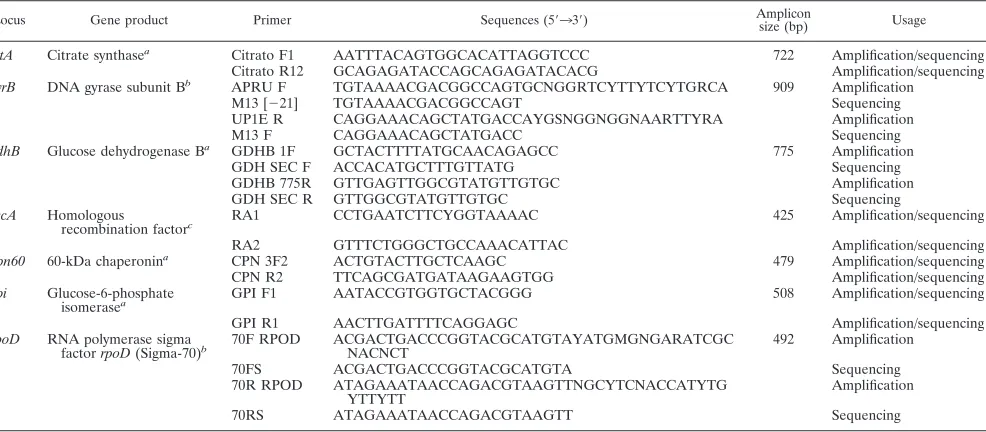
MLST.The housekeeping genes for the MLST scheme were selected on the basis of their sequence availability in GenBank and prior studies of the phylo-genetic relationships for the genusAcinetobacterand their presence in other MLST schemes available for other bacterial species (22, 26, 28, 30). PCR primers were chosen from previous studies or were designed for amplification of the 10 selected genes: citrate synthase (gltA), DNA gyrase subunit B (gyrB), glucose dehydrogenase B (gdhB), homologous recombination factor (recA), 60-kDa chaperonin (cpn60), glucose-6-phosphate isomerase (gpi), RNA polymerase70
factor (rpoD), phospho-glucomutase (pgm), quinate shikimate dehydrogenase (quiA), and coenzyme A thiolase (pcaf) (Table 2).
All PCR amplifications were carried out in a MasterCycler gradient (Eppen-dorf, Hamburg, Germany) under the following conditions: 30 cycles (denatur-ation at 94°C for 1 min, annealing at 55°C for 1 min, and extension at 72°C for 2 min) preceded by a 2-min denaturation at 94°C and followed by a 2-min extension at 72°C. PCR products were directly purified from the reaction mixture
with the QIAquick PCR purification kit (QIAGEN GmbH, Hilden, Germany) according to the manufacturer’s recommendations. Sequencing of internal frag-ments of about 450 bp of the selected housekeeping genes was performed in an ABI Prism 377 sequencer using the ABI Prism BigDye terminator cycle sequenc-ing ready reaction kit V2 (PE Applied Biosystems, Foster City, CA) accordsequenc-ing to the manufacturer’s recommendations. Specific sequencing primers and amplifi-cation lengths for each gene are listed in Table 2. Sequence data were aligned by CLUSTALX and manually corrected by using the BioEdit program version 5.09 (www.mbio.ncsu.edu/BioEdit/bioedit.html).
For each locus, distinct allele sequences were assigned an arbitrary allele number for identification; these were in-frame internal fragments of the gene which contained an exact number of codons. Each isolate was characterized by a pattern of numbers defining its allelic profile or ST. The similarities between the allelic profiles were obtained by the UPGMA (unweighted pair-group method with arithmetic averages) method available in the MEGA suite programs (ver-sion 2.1 [http://www.megasoftware.net]). This set of programs was also used to calculate the maximum percent nucleotide divergence between pairs of alleles at a given locus. The dN/dSratios, dN being the proportion of nonsynonymous
substitutions and dSbeing the proportion of synonymous substitutions per site,
were calculated by using ST analysis and recombinational tests (START; version 1.05 http://outbreak.ceid.ox.ac.uk/software.htm). We also used this program to obtain the index of association (Ia) and the number of polymorphic nucleotide
sites. TheIais defined as the observed variance in the distribution of allelic
mismatches in all pairwise comparisons of the allelic profiles divided by the expected variance in a freely recombining population, minus 1. When the alleles are in linkage disequilibrium theIais expected not to deviate significantly from
zero.
AFLP fingerprinting.The AFLP fingerprinting was performed according to the method of Nemec et al. (32). DNA digestion was carried out with 5 U of EcoRI and 1 U of MseI, while ligation of EcoRI and MseI adaptors was per-formed simulteously with 1 U of T4 ligase (Invitrogen, Carlsbad, CA) in a final volume of 20l at 37°C overnight. Selective PCRs with fluorescently labeled primer EcoRI-C (NED) and unlabeled primer MseI-T were performed in a MasterCycler gradient with the reagents supplied with the AFLP Microbial Fingerprinting Kit (PE Applied Biosystems) according to the manufacturer’s recommendations. The resulting products were denaturalized and charged on to an ABI Prism 377 sequencer for fragment separation. Normalization and frag-ment sizing was carried out by using GeneScan software (PE Applied Biosys-tems) in combination with Genographer software (version 1.6.0 [http://hordeum .oscs.montana.edu/genographer]). A similarity matrix for the presence or ab-sence of bands was obtained by using the program Restdist in the PHYLIP 3.63 package. UPGMA was used for grouping and the Pearson product-moment coefficient (r) was used as the measure of similarity.
PFGE.Twenty-nine of the fortyA. baumanniiclinical isolates included in the present study, as well as the twoAcinetobactergenomic species 13TU isolates, were also characterized by PFGE as described previously (18). For this analysis, two low-frequency cutting restriction enzymes, SmaI and ApaI, were used sep-arately according to the manufacturer’s specifications (New England Biolabs, Beverly, MA). DNA restriction fragments were separated in a CHEF-DR III unit (Bio-Rad Laboratories) for 20 h at 14°C and 6 V/cm, with pulse times ranging from 0.5 to 15 s when SmaI was used for restriction and from 1 to 30 s after ApaI restriction. Strain relatedness was assigned in accordance with pub-lished criteria (36).
Genome location.To locate the selectedA. baumanniigenes in the recently annotated sequence ofAcinetobacterADP1, a local protein database was created with the published open reading frame (ftp://ftp.ncbi.nih.gov/genomes/Bacteria /Acinetobacter_sp_ADP1). The amino acid sequences fromA. baumannii am-plified PCR products were launched onto this database using BlastP to obtain the genome position of the homologous ADP1 genes (1).
Nucleotide sequence accession numbers.GenBank accession number ranges for the sequences used in this study are as follows: forcpn60, D156565 to DQ156613; forgdh, from DQ156614 to DQ156661; forgpi, from DQ156662 to DQ156709; forgt1A, from DQ156710 to DQ156758; forgyrBfrom Q156759 to DQ156806; for recA, from DQ156807 to DQ156855; and for rpoD, from DQ156856 to DQ156904.
RESULTS
Sequencing of housekeeping gene fragments.
Ten metabolic
genes were initially selected to develop the MLST scheme. For
two of the selected genes, phospho-glucomutase (pgm) and
quinate shikimate dehydrogenase (quiA), the primers failed to
on May 15, 2020 by guest
http://jcm.asm.org/
amplify the fragment in some of the
A. baumannii
isolates.
Examination of the sequence traces of the beta-ketoadipyl
CoA thiolase gene (pcaf) showed that there were two
overlap-ping peaks, suggesting two different nucleotides at a few sites.
For the remaining seven genes, the results were satisfactory,
i.e., all strains produced one single amplicon and the number
of different alleles appeared to be sufficiently discriminative to
be used for typing (Table 3). The selected gene fragments were
sequenced from each of the 40 clinical
A. baumannii
isolates
and the two reference strains, DSM 30007 (ATCC 19606) and
DSM 30008. All sequences had the same size for each gene
ranging in length from 305 bp (gpi) to 513 bp (rpoD) (Table 3).
Obtained alleles were defined as distinct if they differed at a
single nucleotide site and were numbered consecutively for
identification. Homologous genes in the
Acinetobacter
genomic
species 13TU and
A. calcoaceticus
isolates were also sequenced
to be used as outgroups in the dendrogram construction.
A.
calcoaceticus
strains 21, 29, and 32 were not used in the MLST
scheme because sequences could not be obtained for all loci
(Table 1). In
A. baumannii
isolates, the number of alleles at
each locus ranged from 6 alleles for
gltA
to 12 alleles for
gpi.
The overall mean value for
A. baumannii
isolates was 10 alleles
[image:3.585.46.542.80.522.2]per locus, and the percent variable nucleotide sites for these
housekeeping genes ranged from 2.13% (cpn60) to 18.03%
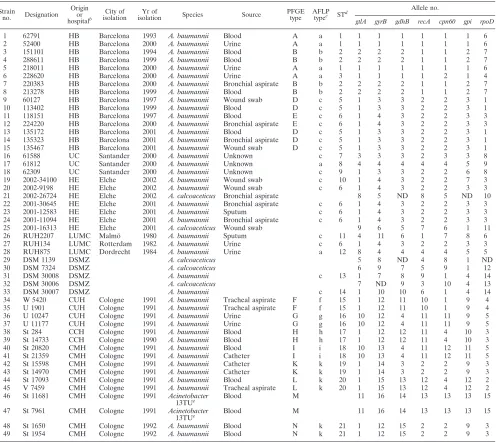
TABLE 1. Epidemiologic characteristics of
Acinetobacter
isolates used in the present study
aStrain
no. Designation Origin
or hospitalb
City of isolation
Yr of
isolation Species Source
PFGE type
AFLP typec STd
Allele no.
gtlA gyrB gdhB recA cpn60 gpi rpoD
1 62791 HB Barcelona 1993 A. baumannii Blood A a 1 1 1 1 1 1 1 6
2 52400 HB Barcelona 2000 A. baumannii Urine A a 1 1 1 1 1 1 1 6
3 151101 HB Barcelona 1994 A. baumannii Blood B b 2 2 2 2 1 1 2 7
4 288611 HB Barcelona 1999 A. baumannii Blood B b 2 2 2 2 1 1 2 7
5 218011 HB Barcelona 2000 A. baumannii Urine A a 1 1 1 1 1 1 1 6
6 228620 HB Barcelona 2000 A. baumannii Urine A a 3 1 1 1 1 2 1 4
7 220383 HB Barcelona 2000 A. baumannii Bronchial aspirate B b 2 2 2 2 1 1 2 7
8 213278 HB Barcelona 1999 A. baumannii Blood B b 2 2 2 2 1 1 2 7
9 60127 HB Barcelona 1997 A. baumannii Wound swab D c 5 1 3 3 2 2 3 1
10 113402 HB Barcelona 1999 A. baumannii Blood D c 5 1 3 3 2 2 3 1
11 118151 HB Barcelona 1997 A. baumannii Blood E c 6 1 4 3 2 2 3 3
12 224220 HB Barcelona 2000 A. baumannii Bronchial aspirate E c 6 1 4 3 2 2 3 3
13 135172 HB Barcelona 2001 A. baumannii Blood D c 5 1 3 3 2 2 3 1
14 135323 HB Barcelona 2001 A. baumannii Bronchial aspirate D c 5 1 3 3 2 2 3 1
15 135467 HB Barcelona 2001 A. baumannii Wound swab D c 5 1 3 3 2 2 3 1
16 61588 UC Santander 2000 A. baumannii Unknown c 7 3 3 3 2 3 3 8
17 61812 UC Santander 2000 A. baumannii Unknown a 8 4 4 4 4 4 5 9
18 62309 UC Santander 2000 A. baumannii Unknown c 9 1 3 3 2 2 6 8
19 2002-34100 HE Elche 2002 A. baumannii Wound swab c 10 1 4 3 2 2 7 3
20 2002-9198 HE Elche 2002 A. baumannii Wound swab c 6 1 4 3 2 2 3 3
21 2002-26724 HE Elche 2002 A. calcoaceticus Bronchial aspirate 8 5 ND 8 5 ND 10
22 2001-30645 HE Elche 2001 A. baumannii Bronchial aspirate c 6 1 4 3 2 2 3 3
23 2001-12583 HE Elche 2001 A. baumannii Sputum c 6 1 4 3 2 2 3 3
24 2001-11094 HE Elche 2001 A. baumannii Bronchial aspirate c 6 1 4 3 2 2 3 3
25 2001-16313 HE Elche 2001 A. calcoaceticus Wound swab 9 6 5 7 6 1 11
26 RUH2207 LUMC Malmo¨ 1980 A. baumannii Sputum c 11 4 11 6 1 7 8 6
27 RUH134 LUMC Rotterdam 1982 A. baumannii Urine c 6 1 4 3 2 2 3 3
28 RUH875 LUMC Dordrecht 1984 A. baumannii Urine a 12 8 4 4 4 4 5 5
29 DSM 1139 DSMZ A. calcoaceticus 5 8 ND 4 8 1 ND
30 DSM 7324 DSMZ A. calcoaceticus 6 9 7 5 9 1 12
31 DSM 30008 DSMZ A. baumannii c 13 1 7 8 9 1 4 14
32 DSM 30006 DSMZ A. calcoaceticus 7 ND 9 3 10 4 13
33 DSM 30007 DSMZ A. baumannii c 14 1 10 10 6 1 4 14
34 W 5420 CUH Cologne 1991 A. baumannii Tracheal aspirate F f 15 1 12 11 10 1 9 4 35 U 1901 CUH Cologne 1991 A. baumannii Tracheal aspirate F f 15 1 12 11 10 1 9 4
36 U 10247 CUH Cologne 1991 A. baumannii Urine G g 16 10 12 4 11 11 9 5
37 U 11177 CUH Cologne 1991 A. baumannii Urine G g 16 10 12 4 11 11 9 5
38 St 284 CCH Cologne 1991 A. baumannii Blood H h 17 1 12 12 11 4 10 3
39 St 14733 CCH Cologne 1990 A. baumannii Blood H h 17 1 12 12 11 4 10 3
40 St 20820 CMH Cologne 1991 A. baumannii Blood I i 18 10 13 4 11 12 11 5
41 St 21359 CMH Cologne 1991 A. baumannii Catheter I i 18 10 13 4 11 12 11 5
42 St 15598 CMH Cologne 1991 A. baumannii Catheter K k 19 1 14 3 2 2 9 3
43 St 14970 CMH Cologne 1991 A. baumannii Catheter K k 19 1 14 3 2 2 9 3
44 St 17093 CMH Cologne 1991 A. baumannii Blood L k 20 1 15 13 12 4 12 2
45 V 7459 CMH Cologne 1991 A. baumannii Tracheal aspirate L k 20 1 15 13 12 4 12 2 46 St 11681 CMH Cologne 1991 Acinetobacter
13TUe Blood M 11 16 14 13 13 13 15
47 St 7961 CMH Cologne 1991 Acinetobacter
13TUe Blood M 11 16 14 13 13 13 15
48 St 1650 CMH Cologne 1992 A. baumannii Blood N k 21 1 12 15 2 2 9 3
49 St 1954 CMH Cologne 1992 A. baumannii Blood N k 21 1 12 15 2 2 9 3
aND, the sequence could not be determined.
bHB, Hospital Bellvitge; UC, Universidad de Cantabrı´a; HE, Hospital General de Elche; LUMC, Leids Universitair Medisch Centrum; CUH, Cologne University
Hospital; CCH, Cologne Childrens Hospital; CMH, Cologne Community Hospital.
cAFLP type, determined forA. baumanniiisolates only. dST, determined forA. baumanniiisolates only. eAcinetobactergenomic species 13TU.
on May 15, 2020 by guest
http://jcm.asm.org/
(gpi) (Table 3). The d
N/d
Sratio was calculated for all loci and
ranged from 0.0318 for
gtlA
to 0.2570 for
cpnd60
(Table 3). The
index of association (I
a) was used to test for linkage
disequi-librium between alleles at the seven housekeeping genes. For
the entire
A. baumannii
population the
I
avalue was 2.592.
Using only one representative strain for each ST this value was
reduced to 1.393 but was still greater than 1. A concatenated
loci alignment for each of the strains was used to construct the
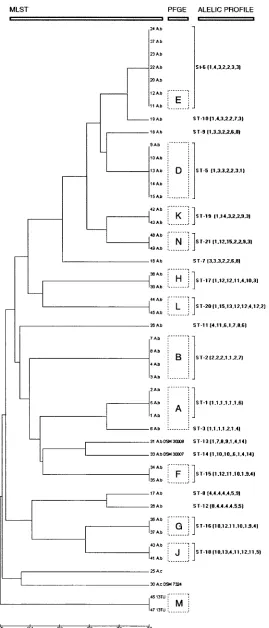
dendrogram with the UPGMA method (Fig. 1).
Mapping of the selected genes.
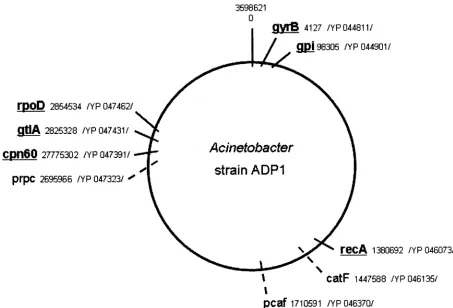
The only available genome
sequence of the genus
Acinetobacter,
Acinetobacter
sp. strain
ADP1 (3), was used to estimate the genome position of the
seven selected
A. baumannii
genes (Fig. 2). Five of these genes
(gyrB,
recA,
gpi,
cpn60, and
rpoD) were found to have one copy
within the ADP1 genome. The citrate synthase gene (gtlA)
seems to have a paralogous gene (prpC) with homologous
function. Although both genes are present within the ADP1
genome, the nucleotide differences between the
gtlA
and
prpC
genes (sequence identity 47%) are sufficient to be
differenti-ated by standard PCR. No homologous nucleotide or protein
sequence with the
gdhB
gene was detected in the ADP1
ge-nome. As had been expected from our sequence data the
genome analysis also revealed the presence of two highly
con-served copies of the beta-ketoadipyl CoA thiolase gene (98%
nucleotide sequence identity) within the ADP1 genome (pcaf
and
catF), precluding its use for further analysis.
Evaluation of the
A. baumannii
MLST scheme.
Table 1
shows the 20 different allelic profiles or STs identified among
the 42
A. baumannii
isolates. The MLST scheme was evaluated
by comparing allelic profiles with restriction fragment patterns
generated by AFLP and PFGE.
All
A. baumannii
isolates, including 13 isolates that were not
characterized by PFGE, the two
Acinetobacter
genomic species
13TU isolates, and also the five
A. calcoaceticus
isolates, were
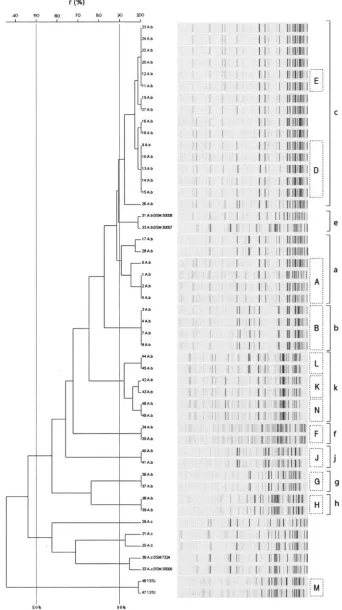
analyzed by AFLP (Fig. 3). Using a similarity cutoff value of
50% for species delineation (9), the strains were grouped into
three distinct clusters, one including the reference strain
A.
[image:4.585.48.541.81.297.2]baumannii
DSM 30007 and all
A. baumannii
clinical isolates, a
TABLE 2. Details of loci and oligonucletide primers used in the present study
Locus Gene product Primer Sequences (5⬘33⬘) Ampliconsize (bp) Usage
gltA Citrate synthasea
Citrato F1 AATTTACAGTGGCACATTAGGTCCC 722 Amplification/sequencing Citrato R12 GCAGAGATACCAGCAGAGATACACG Amplification/sequencing
gyrB DNA gyrase subunit Bb
APRU F TGTAAAACGACGGCCAGTGCNGGRTCYTTYTCYTGRCA 909 Amplification
M13 [⫺21] TGTAAAACGACGGCCAGT Sequencing
UP1E R CAGGAAACAGCTATGACCAYGSNGGNGGNAARTTYRA Amplification
M13 F CAGGAAACAGCTATGACC Sequencing
gdhB Glucose dehydrogenase Ba
GDHB 1F GCTACTTTTATGCAACAGAGCC 775 Amplification
GDH SEC F ACCACATGCTTTGTTATG Sequencing
GDHB 775R GTTGAGTTGGCGTATGTTGTGC Amplification
GDH SEC R GTTGGCGTATGTTGTGC Sequencing
recA Homologous
recombination factorc RA1 CCTGAATCTTCYGGTAAAAC 425 Amplification/sequencing
RA2 GTTTCTGGGCTGCCAAACATTAC Amplification/sequencing
cpn60 60-kDa chaperonina CPN 3F2 ACTGTACTTGCTCAAGC 479 Amplification/sequencing
CPN R2 TTCAGCGATGATAAGAAGTGG Amplification/sequencing
gpi Glucose-6-phosphate
isomerasea GPI F1 AATACCGTGGTGCTACGGG 508 Amplification/sequencing
GPI R1 AACTTGATTTTCAGGAGC Amplification/sequencing
rpoD RNA polymerase sigma
factorrpoD(Sigma-70)b 70F RPOD ACGACTGACCCGGTACGCATGTAYATGMGNGARATCGCNACNCT 492 Amplification
70FS ACGACTGACCCGGTACGCATGTA Sequencing
70R RPOD ATAGAAATAACCAGACGTAAGTTNGCYTCNACCATYTG YTTYTT
Amplification
70RS ATAGAAATAACCAGACGTAAGTT Sequencing
aPrimers for citrate synthase (accession no. M33037), glucose dehydrogenase B (gdhB; accession no. X15871), 60-kDa chaperonin (cpn60; accession no. AY123669),
and glucose-6-phosphate isomerase (gpi; accession no. X89900) were constructed by using availableAcinetobactersequences from conserved regions of each gene.
bPrimers for DNA gyrase subunit B (gyrB) and RNA polymerase sigma factor rpoD (Sigma-70) (rpoB) were selected and used as described previously (41). cHomologous recombination factor (recA) primers were selected and used as described previously (33).
TABLE 3. Variation in loci used in the present
A. baumannii
MLST scheme
Locus Fragment size (bp)
No. of alleles
No. of polymorphic nucleotide sites
% Variable sites
% Nucleotide divergence between
pair of alleles dN/dS
a
Max Avg
gltA
484
6
45
9.29752
0.093
0.033
0.0318 (0.0273)
gyrB
457
11
22
4.81400
0.031
0.017
0.0786 (0.0275)
gdhB
396
11
23
5.80808
0.038
0.019
0.0594 (0.0520)
recA
371
8
9
2.42588
0.016
0.009
0.0561 (0.0094)
cpn60
421
7
9
2.13777
0.083
0.025
0.2570 (0.0483)
gpi
305
12
55
18.03280
0.141
0.060
0.0415 (0.0327)
rpoD
513
10
8
1.55945
0.022
0.009
0.1232 (0.0826)
aThe d
N/dSvalues for allAcinetobactergene sequences obtained in this study are given in parentheses. Max, maximum.
on May 15, 2020 by guest
http://jcm.asm.org/
[image:4.585.43.546.600.716.2]FIG. 1. Dendrogram constructed by UPGMA cluster analysis based on the nucleotide differences obtained by sequencing of
gltA
,
gyrB
,
gdhB
,
recA
,
cpn60
,
gpi
, and
rpoD
gene fragments. From left to right are indicated isolate number, species identification (A.b,
A. baumannii
; 13TU,
Acinetobacter
genomic species 13TU; A.c,
A. calcoaceticus
), PFGE type (boxed capital letters), ST, and allelic profile.
on May 15, 2020 by guest
http://jcm.asm.org/
second cluster contained all
A. calcoaceticus
isolates, and the
third cluster comprised the two
Acinetobacter
genomic species
13TU isolates. Within the
A. baumannii
cluster, using a
clus-tering level of 90% (9), analysis of AFLP fingerprints showed
nine different clusters. The largest cluster contained strain 27
(RUH134), a representative of the so-called European clone
II, and 14 Spanish isolates from Barcelona, Elche, and the
University Hospital of Cantabria. Among these isolates, six
different STs (ST5, ST6, ST7, ST9, ST10, and ST11) were
identified that differed from each other at one to four loci with
one exception; strain 26 (ST 11) differed from strain 27
(RUH134) at all seven loci. Strain 28 (RUH875), the reference
strain for European clone I, clustered with outbreak strains
from Barcelona and the University Hospital of Cantabria.
Among these strains, four different STs were identified (ST1,
ST3, ST8, and ST12), with ST1 and ST3, as well as ST8 and
ST12, being double-locus variants each. In contrast, most of
the German outbreak isolates, the two
A. baumannii
reference
strains (both environtmental isolates), and one group of
out-break-related isolates from Barcelona exhibited different STs
and also clustered distinct from each other by AFLP. Three
German epidemic strains exhibiting three STs (ST19, ST20,
and ST21, two of them being double-locus variants) clustered
together by AFLP.
PFGE analysis of 29 of the
A. baumannii
clinical isolates
generated 11 different PFGE patterns (Table 1). Fifteen of
these isolates were representative of the main clonal types
(PFGE types A, B, D, and E) involved in a sustained outbreak
in Hospital Universitari de Bellvitge (Barcelona) that took
place between 1993 and 2001. Another 14
A. baumannii
iso-lates (PFGE types F to L and N), as well as two
Acinetobacter
genomic species 13TU isolates (PFGE type M), were from
eight major outbreaks in various hospitals in Cologne,
Ger-many, that occurred between 1990 and 1992. Epidemiologic
details of these strains have been described previously (35).
The PFGE clusters were in high concordance with the
dendro-gram constructed by using MLST data for these strains (Fig. 1).
The Barcelona isolates exhibited four different PFGE types
and clustered into five different STs, while seven different
PFGE types and seven STs were identified among the Cologne
isolates. One of the Barcelona epidemic strains (ST6) was also
responsible for the outbreak observed in Elche General
Hos-pital in 2001 and 2002. The two
Acinetobacter
genomic species
13TU isolates, as well as the
A. calcoaceticus
isolates, clustered
distantly from the
A. baumannii
isolates by MLST.
DISCUSSION
A. baumannii
has emerged as an important nosocomial
pathogen in various countries in Europe, Asia, the United
States, and Latin America (27, 39). This organism is known for
its involvement in hospital outbreaks and has sometimes
caused interinstitutional spread (27). Whereas several
re-searchers emphasized the genetic heterogeneity among
epi-FIG. 2. Relative location of the selected housekeeping genes used in the present study on a schematic map of the genome of
Acinetobacter
strain
ADP1 (NC_005966.1). The
A. baumannii cpn60
gene is homologous to chaperone Hsp60 from ADP1. Genes used in the present MLST scheme
are underlined. The coordinates are given in bases, and the protein accession numbers are indicated.
on May 15, 2020 by guest
http://jcm.asm.org/
[image:6.585.63.516.67.375.2]FIG. 3. Fluorescently labeled AFLP patterns and UPGMA/product-moment cluster analysis of the 49
Acinetobacter
strains. Twenty-seven
different patterns were obtained after PCR with EcoC and MseT templates among all isolates. Levels of correlation are expressed as percentages
of similarity. The known PFGE types are indicated inside boxes in capital letters for comparison. AFLP types are indicated at the far right side.
on May 15, 2020 by guest
http://jcm.asm.org/
demic
A. baumannii
strains (34, 35, 40), recent data indicate
that a few successful epidemic
A. baumannii
strains (clones)
circulate in Europe, including the so-called EU clones I and II
that have been isolated in northern Europe (9, 32), and the
geographically more widespread EU clone III (38). The
con-tribution of these widespread clones to the overall burden of
epidemic
A. baumannii
strains remains to be determined. In
view of the worldwide expansion of multidrug and even
pan-resistant epidemic
A. baumannii
strains, a better
understand-ing of the global epidemiology of this the species is urgently
needed. For early recognition of epidemic
A. baumannii
strains
a typing system is required that is characterized by excellent
discriminatory power but even more importantly by high
inter-laboratory reproducibility that permits the development of a
central databank of strain patterns. After local analysis, typing
data can then be submitted to the central databank and
com-pared to other patterns of known epidemic strains, thus
alert-ing the investigator if an epidemic strain or a strain with
par-ticular virulence properties has been detected.
The main objective of the present study was to develop a
new typing scheme for
A. baumannii
that allows unambiguous
comparison of typing data generated at different laboratories.
A major advantage of MLST compared to other typing
meth-ods results from the use of nucleotide sequence data that offer
the possibility of data exchange via an electronic platform. This
feature makes this technique ideally suited for national or
international surveillance programs involving multiple
labora-tories and for monitoring the spread of drug-resistant clones.
The
A. baumannii
MLST scheme described here is based on
the allelic variations in seven housekeeping genes of
A.
bau-mannii
by using a sample of 40 clinical isolates and 2 reference
strains of
A. baumannii
and 7 other isolates belonging to the
A.
calcoaceticus-A. baumannii
complex. Several candidate loci
were eliminated, since the chosen gene fragments could not be
readily amplified from all initial test isolates. The internal
fragments of the seven loci that were selected for the final
MLST scheme—gltA,
gyrB,
gdhB,
recA,
cpn60,
gpi, and
rpoD—
could be amplified from all isolates that were investigated. The
d
N/d
Sratio was less than 1 for all of the selected housekeeping
genes, indicating a very low contribution of environmental
selection to variation in these genes. The allele diversity ranged
from 2.1 to 18% and was relatively large. For comparison, in
N.
meningitidis
the allelic diversity ranged from 5.6% (gdh) to
33.9% (aroE) (28). Considering the smaller number of strains
investigated, our data are comparable and consistent with a
species of average genetic diversity. Therefore, the selected
housekeeping genes are probably adequate for
population-genetic studies of
A. baumannii
(11).
The clustering of
A. baumannii
isolates achieved by MLST
was in good agreement with strain grouping obtained by AFLP
and PFGE; both techniques have proven their discriminatory
power for
A.
baumannii
in previous studies. Although our
strain collection comprised 20 STs, 9 AFLP types were
iden-tified. Similarly, among the 29 isolates subjected to PFGE, 11
PFGE types were discernible, corresponding to 12 STs. The
MLST scheme was validated by showing that pairs of isolates
with the same allelic profile produced identical or very similar
fragment patterns by PFGE. The collection of isolates that we
examined included the type strains for EU clone I (RUH 875;
ST12) and EU clone II (RUH 134; ST6) (9). Although ST12
was not identified among the remaining isolates, ST6 was the
strain type involved in hospital outbreaks in Barcelona and in
Elche, confirming the widespread occurrence of this successful
epidemic
A. baumannii
clone over a period as long as two
decades. Thus, the
A. baumannii
MLST scheme provides a
promising method for unambiguous epidemiologic strain
char-acterization.
Our study is based on only a limited number of
A. baumannii
isolates from different hospitals distributed throughout Spain,
as well as from Germany and from a few other European
locations. Overall, these isolates should represent a significant
fraction of the European variability within this species. To
broaden our understanding of the molecular epidemiology of
A. baumannii, the present study should be expanded to larger
strain collections from diverse locations around the world. It
would also be warranted to extend MLST typing of
Acineto-bacter
species 13TU. Since conventional identification of
acin-etobacters does not permit one to discern this species from
A.
baumannii, it would considerably add to the usefulness of our
MLST scheme if
Acinetobacter
species 13TU isolates could be
unambiguously characterized and separated from
A.
bauman-nii
by MLST without prior species identification. The only
Acinetobacter
species 13TU strain investigated in the present
study differed from all
A. baumannii
isolates at all loci, thus
holding promise that our MLST scheme might also be
appli-cable for this species.
In summary, the
A. baumannii
MLST scheme developed in
the present study provides a powerful tool for molecular
epi-demiologic studies of clinical strains of
A. baumannii
and offers
a new way to study the population biology of this pathogen.
The discriminatory power of the MLST typing system is
com-parable to both PFGE and AFLP. It provides a portable
method that is suitable for global epidemiologic study and
allows the recognition of epidemic, multiresistant, and virulent
clones and monitoring of their international spread.
Investiga-tions with more strains from widespread origins will allow a
better understanding of the population genetics of this
impor-tant nosocomial pathogen.
ACKNOWLEDGMENTS
This study was funded by grant PM99-0078 of the Spanish Ministry
of Science and Technology.
We are grateful to Lenie Dijkshoorn, Leids Universitair Medisch
Centrum (The Netherlands) and to Monserrat Ruiz and Juan Carlos
Rodrı´guez, Servicio de Microbiologı´a, Hospital General Universitari
d’Elx (Spain), for providing some of the clinical isolates of
A.
bauman-nii
and
A. calcoaceticus
.
REFERENCES
1.Altschul, S. F., W. Gish, W. Miller, E. W. Myers, and D. J. Lipman.1990. Basic local alignment search tool. J. Mol. Biol.215:403–410.
2.Aygun, G., O. Demirkiran, T. Utku, B. Mete, S. Urkmez, M. Yilmaz, H. Yasar, Y. Dikmen, and R. Ozturk.2002. Environmental contamination dur-ing a carbapenem-resistantAcinetobacter baumanniioutbreak in an intensive care unit. J. Hosp. Infect.52:259–262.
3.Barbe, V., D. Vallenet, N. Fonknechten, A. Kreimeyer, S. Oztas, L. Labarre, S. Cruveiller, C. Robert, S. Duprat, P. Wincker, L. N. Ornston, J. Weissen-bach, P. Marliere, G. N. Cohen, and C. Medigue.2004. Unique features revealed by the genome sequence ofAcinetobactersp. ADP1, a versatile and naturally transformation competent bacterium. Nucleic Acids Res.32:5766– 5779.
4.Bergogne-Berezin, E., and K. J. Towner.1996.Acinetobacterspp. as noso-comial pathogens: microbiological, clinical, and epidemiological features. Clin. Microbiol. Rev.9:148–165.
5.Bouvet, P. J., and P. A. Grimont.1986. Taxonomy of the genusAcinetobacter
on May 15, 2020 by guest
http://jcm.asm.org/
with the recognition ofAcinetobacter baumanniisp. nov.,Acinetobacter hae-molyticussp. nov.,Acinetobacter johnsoniisp. nov., andAcinetobacter juniisp. nov., and emended description ofAcinetobacter calcoaceticusand Acineto-bacter lwoffii.Int. J. Syst. Bacteriol.36:228–240.
6.Bouvet, P. J., and S. Jeanjean.1989. Delineation of new proteolytic genomic species in the genusAcinetobacter. Res. Microbiol.140:291–299. 7.Cisneros, J. M., and J. Rodriguez-Bano.2002. Nosocomial bacteremia due
toAcinetobacter baumannii: epidemiology, clinical features, and treatment. Clin. Microbiol. Infect.8:687–693.
8.Corbella, X., A. Montero, M. Pujol, M. A. Dominguez, J. Ayats, M. J. Argerich, F. Garrigosa, J. Ariza, and F. Gudiol.2000. Emergence and rapid spread of carbapenem resistance during a large and sustained hospital out-break of multiresistantAcinetobacter baumannii.J. Clin. Microbiol.38:4086– 4095.
9.Dijkshoorn, L., H. Aucken, P. Gerner-Smidt, P. Janssen, M. E. Kaufmann, J. Garaizar, J. Ursing, and T. L. Pitt.1996. Comparison of outbreak and nonoutbreakAcinetobacter baumanniistrains by genotypic and phenotypic methods. J. Clin. Microbiol.34:1519–1525.
10.Dijkshoorn, L., R. van Dalen, A. van Ooyen, D. Bijl, I. Tjernberg, M. F. Michel, and A. M. Horrevorts.1993. EndemicAcinetobacterin intensive care units: epidemiology and clinical impact. J. Clin. Pathol.46:533–536. 11.Dingle, K. E., F. M. Colles, D. R. Wareing, R. Ure, A. J. Fox, F. E. Bolton,
H. J. Bootsma, R. J. Willems, R. Urwin, and M. C. Maiden.2001. Multilocus sequence typing system forCampylobacter jejuni.J. Clin. Microbiol.39:14– 23.
12.Enright, M. C., N. P. Day, C. E. Davies, S. J. Peacock, and B. G. Spratt.2000. Multilocus sequence typing for characterization of methicillin-resistant and methicillin-susceptible clones ofStaphylococcus aureus.J. Clin. Microbiol.
38:1008–1015.
13.Enright, M. C., B. G. Spratt, A. Kalia, J. H. Cross, and D. E. Bessen.2001. Multilocus sequence typing ofStreptococcus pyogenesand the relationships betweenemmtype and clone. Infect. Immun.69:2416–2427.
14.Feil, E. J., J. M. Smith, M. C. Enright, and B. G. Spratt.2000. Estimating recombinational parameters inStreptococcus pneumoniaefrom multilocus sequence typing data. Genetics154:1439–1450.
15.Garnacho, J., J. Sole-Violan, M. Sa-Borges, E. Diaz, and J. Rello.2003. Clinical impact of pneumonia caused byAcinetobacter baumanniiin intu-bated patients: a matched cohort study. Crit. Care Med.31:2478–2482. 16.Gerner-Smidt, P.1992. Ribotyping of theAcinetobacter
calcoaceticus-Acine-tobacter baumanniicomplex. J. Clin. Microbiol.30:2680–2685.
17.Gerner-Smidt, P., I. Tjernberg, and J. Ursing.1991. Reliability of pheno-typic tests for identification of Acinetobacterspecies. J. Clin. Microbiol.
29:277–282.
18.Gouby, A., M. J. Carles-Nurit, N. Bouziges, G. Bourg, R. Mesnard, and P. J. Bouvet.1992. Use of pulsed-field gel electrophoresis for investigation of hospital outbreaks ofAcinetobacter baumannii.J. Clin. Microbiol.30:1588– 1591.
19.Grundmann, H., S. Hori, M. C. Enright, C. Webster, A. Tami, E. J. Feil, and T. Pitt.2002. Determining the genetic structure of the natural population of
Staphylococcus aureus: a comparison of multilocus sequence typing with pulsed-field gel electrophoresis, randomly amplified polymorphic DNA anal-ysis, and phage typing. J. Clin. Microbiol.40:4544–4546.
20.Grundmann, H. J., K. J. Towner, L. Dijkshoorn, P. Gerner-Smidt, M. Ma-her, H. Seifert, and M. Vaneechoutte.1997. Multicenter study using stan-dardized protocols and reagents for evaluation of reproducibility of PCR-based fingerprinting ofAcinetobacterspp. J. Clin. Microbiol.35:3071–3077. 21.Higgins, P. G., H. Wisplinghoff, D. Stefanik, and H. Seifert.2004. Selection of topoisomerase mutations and overexpression of adeB mRNA transcripts during an outbreak ofAcinetobacter baumannii.J. Antimicrob. Chemother.
54:821–823.
22.Homan, W. L., D. Tribe, S. Poznanski, M. Li, G. Hogg, E. Spalburg, J. D. Van Embden, and R. J. Willems.2002. Multilocus sequence typing scheme forEnterococcus faecium.J. Clin. Microbiol.40:1963–1971.
23.Ibrahim, A., P. Gerner-Smidt, and W. Liesack.1997. Phylogenetic relation-ship of the twenty-one DNA groups of the genusAcinetobacteras revealed by 16S ribosomal DNA sequence analysis. Int. J. Syst. Bacteriol.47:837–841. 24.Jawad, A., H. Seifert, A. M. Snelling, J. Heritage, and P. M. Hawkey.1998.
Survival ofAcinetobacter baumanniion dry surfaces: comparison of outbreak and sporadic isolates. J. Clin. Microbiol.36:1938–1941.
25.Koeleman, J. G., J. Stoof, M. W. Van Der Bijl, C. M. Vandenbroucke-Grauls, and P. H. Savelkoul.2001. Identification of epidemic strains ofAcinetobacter baumanniiby integrase gene PCR. J. Clin. Microbiol.39:8–13.
26.Kotetishvili, M., O. C. Stine, Y. Chen, A. Kreger, A. Sulakvelidze, S. Sozha-mannan, and J. G. Morris, Jr.2003. Multilocus sequence typing has better discriminatory ability for typingVibrio choleraethan does pulsed-field gel electrophoresis and provides a measure of phylogenetic relatedness. J. Clin. Microbiol.41:2191–2196.
27.Landman, D., J. M. Quale, D. Mayorga, A. Adedeji, K. Vangala, J. Ravis-hankar, C. Flores, and S. Brooks.2002. Citywide clonal outbreak of mul-tiresistantAcinetobacter baumanniiandPseudomonas aeruginosain Brook-lyn, N.Y.: the preantibiotic era has returned. Arch. Intern. Med.162:1515– 1520.
28.Maiden, M. C., J. A. Bygraves, E. Feil, G. Morelli, J. E. Russell, R. Urwin, Q. Zhang, J. Zhou, K. Zurth, D. A. Caugant, I. M. Feavers, M. Achtman, and B. G. Spratt.1998. Multilocus sequence typing: a portable approach to the identification of clones within populations of pathogenic microorganisms. Proc. Natl. Acad. Sci. USA95:3140–3145.
29.Maragakis, L. L., S. E. Cosgrove, X. Song, D. Kim, P. Rosenbaum, N. Ciesla, A. Srinivasan, T. Ross, K. Carroll, and T. M. Perl.2004. An outbreak of multidrug-resistantAcinetobacter baumanniiassociated with pulsatile lavage wound treatment. JAMA292:3006–3011.
30.Meats, E., E. J. Feil, S. Stringer, A. J. Cody, R. Goldstein, J. S. Kroll, T. Popovic, and B. G. Spratt.2003. Characterization of encapsulated and non-capsulatedHaemophilus influenzaeand determination of phylogenetic rela-tionships by multilocus sequence typing. J. Clin. Microbiol.41:1623–1636. 31.Mellmann, A., J. L. Cloud, S. Andrees, K. Blackwood, K. C. Carroll, A.
Kabani, A. Roth, and D. Harmsen.2003. Evaluation of RIDOM, MicroSeq, and GenBank services in the molecular identification ofNocardiaspecies. Int. J. Med. Microbiol.293:359–370.
32.Nemec, A., L. Dijkshoorn, and T. J. van der Reijden. 2004. Long-term predominance of two pan-European clones among multi-resistant Acineto-bacter baumanniistrains in the Czech Republic. J. Med. Microbiol.53:147– 153.
33.Nowak, A., and J. Kur.1995. Genomic species typing of acinetobacters by polymerase chain reaction amplification of therecAgene. FEMS Microbiol. Lett.130:327–332.
34.Rodriguez-Bano, J., J. M. Cisneros, F. Fernandez-Cuenca, A. Ribera, J. Vila, A. Pascual, L. Martinez-Martinez, G. Bou, and J. Pachon.2004. Clinical features and epidemiology ofAcinetobacter baumanniicolonization and in-fection in Spanish hospitals. Infect. Control Hosp. Epidemiol.25:819–824. 35.Seifert, H., and P. Gerner-Smidt. 1995. Comparison of ribotyping and
pulsed-field gel electrophoresis for molecular typing ofAcinetobacter iso-lates. J. Clin. Microbiol.33:1402–1407.
36.Tenover, F. C., R. D. Arbeit, R. V. Goering, P. A. Mickelsen, B. E. Murray, D. H. Persing, and B. Swaminathan.1995. Interpreting chromosomal DNA restriction patterns produced by pulsed-field gel electrophoresis: criteria for bacterial strain typing. J. Clin. Microbiol.33:2233–2239.
37.Tjernberg, I., and J. Ursing.1989. Clinical strains ofAcinetobacterclassified by DNA-DNA hybridization. APMIS97:595–605.
38.van Dessel, H., L. Dijkshoorn, T. van der Reijden, N. Bakker, A. Paauw, P. van den Broek, J. Verhoef, and S. Brisse.2004. Identification of a new geographically widespread multiresistant Acinetobacter baumannii clone from European hospitals. Res. Microbiol.155:105–112.
39.Van Looveren, M., and H. Goossens.2004. Antimicrobial resistance of Aci-netobacterspp. in Europe. Clin. Microbiol. Infect.10:684–704.
40.Wisplinghoff, H., M. B. Edmond, M. A. Pfaller, R. N. Jones, R. P. Wenzel, and H. Seifert.2000. Nosocomial bloodstream infections caused by Acineto-bacterspecies in United States hospitals: clinical features, molecular epide-miology, and antimicrobial susceptibility. Clin. Infect. Dis.31:690–697. 41.Yamamoto, S., P. J. Bouvet, and S. Harayama.1999. Phylogenetic structures
of the genusAcinetobacterbased ongyrBsequences: comparison with the grouping by DNA-DNA hybridization. Int. J. Syst. Bacteriol.49(Pt. 1):87–95. 42.Yoo, J. H., J. H. Choi, W. S. Shin, D. H. Huh, Y. K. Cho, K. M. Kim, M. Y. Kim, and M. W. Kang.1999. Application of infrequent-restriction-site PCR to clinical isolates of Acinetobacter baumannii and Serratia marcescens.
J. Clin. Microbiol.37:3108–3112.