Rajkumar. World Journal of Engineering Research and Technology
FOCUS-RRK FEATURE SELECTION TECHNIQUE FOR
ENHANCING THE ACCURACY IN SOCIAL NETWORK DATA
Rajkumar Ramasamy*
RVS Nagar, Kajamalai Post, Tiruchirapalli, Tamilnadu, India.
Article Received on 29/10/2016 Article Revised on 18/11/2016 Article Accepted on 08/12/2016
ABSTRACT
Feature Selection is an effective technique in reducing the
dimensionality of features in many applications where Online Social Network’s datasets involve hundreds or thousands of features. The raw
data are usually with inferior qualities such as redundancy and
unreliability. Mining raw data for a given task has proved to be deteriorating in efficiency.
There are many algorithms in data mining which can be used in dealing with redundant or
missing data. Before the mining process begins those instances with missing value are
considered insignificant to the result and thus can be eliminated from the dataset. The
purpose of this research paper is twofold: Identifying and removing the redundant features
with their latest solutions for Consistency Measure in an Online Social Network.
KEYWORDS: Online Social Network, Redundant features, Consistency.
1. INTRODUCTION
Online Social Network represents an emerging area which also brings many challenges and
research Opportunities besides numerous socializing facilities. This research paper focuses on
the Consistency Measure. By definition, data mining is a process of discovering interesting
knowledge from large amounts of data stored in databases, data warehouses, or other
repositories. Large parts of those data are with inferior qualities such as redundancy and
unreliability. Data mining implements various useful information by looking at a small
fraction of a large amount of data.
World Journal of Engineering Research and Technology
WJERT
www.wjert.org
SJIF Impact Factor: 3.419*Corresponding Author Rajkumar Ramasamy
2. ONLINE SOCIAL NETWORK
Online Social Network like Facebook, Twitter, LinkedIn etc., became the popular interaction,
recreation and Socializing facility on the net. Users pick more engaging sites, anyplace they
may note acquainted faces like friends, relatives or colleagues.
2.1 Social media vs. Social networking
It’s fascinating to notice that though individuals use Social networking and Social media
interchangeably, they are not exactly the identical. Social networking will share some of the
common Social media terminology. However, there’s a small difference between those types
of Online Communication. Social networking is an outlet to make online connection with
other people, while Social media provides a venue for broadcasting facts. LinkedIn is an
example of a Social networking site, whereas YouTube and Flicker are Social media
websites.
Various existing algorithms and techniques have lot of drawbacks with lesser accuracy over
the one of a kind datasets. consequently, in the present work, the use of Consistency
measuring for removing feature selection for improves overall data quality for Online social
network.
3. FEATURE SELECTION
As part of the data preprocessing procedure feature selection uses certain algorithms preserve
only useful features and remove redundant and noisy information, at the same time enhancing
efficiency without significantly reducing the accuracy of the classifier.
3.1 Feature Subset Selection
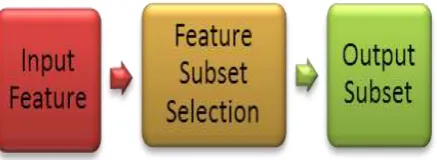
Figure 3.1 The Basic Structure of Feature Selection
The figure shows the basic structure of feature subset selection can be analyzed the practice
of identifying and removing as lot of inappropriate and unnecessary features as achievable.
4. REDUNDANT FEATURES
To eliminate the redundant features from the dataset, the redundant features is removed via
constructing the minimal spanning tree and separate the tree having the edge distance more
than its neighbor to form the separate clusters, from the clusters features which might be
strongly associated with the target features are selected to form the subset of features. Many
feature subset selection algorithms, a few can efficaciously do away with irrelevant features
however fail to address redundant features yet some of others can eliminate the irrelevant
whilst taking care of the redundant feature.
Relief method
Relief is ineffective at removing redundant features as two predictive but notably correlated
features are in all likelihood each to be pretty weighted. Relief cannot eliminate the redundant
features. Relief-F- extends Relief, permitting this method to work with noisy and incomplete
data sets and to deal with multiclass problems.
Koller and sahmi method
Koller and sahmi method eliminate any feature that doesn’t contribute any additional
information to the relaxation of the features.
Correlation based Feature Selection algorithm
The later removes redundant features from relevant ones via choosing representatives from
classifier results and thus produces the final subset using CFS algorithm. The redundant
feature elimination is a piece of sophisticated. Redundant features are assembled and
representative feature may be taken out of the classifier results. Hence, notions of feature
redundancy are commonly in terms of feature correlation and feature target concept
correlation. As a result, most effective a totally small numbers of discriminative features are
selected.
5. SEARCH PROCESS
The search process typically specializes in three aspects: where to begin, how to produce the
primarily subsequent candidate subset and when to stop. Based on these elements, the
exhaustive search generates every feasible combination of subsets. Search techniques are
very crucial. A good search method can lessen the computational cost while enhancing the
6. Exhaustive Search
Consistent with exceptional looking nature, the exhaustive search uses the algorithm to
generate every possible combination of feature subset and compute Consistency rate for each
of them. A threshold is setup at the start in step with the Consistency rate calculated for the
first selected feature subset which is also set to be the current best subset. As the algorithm
proceeds, the current best subset may be replaced by using the one with higher Consistency
rate and smaller size of feature set wherein case the threshold is also replaced. The exhaustive
search can start with either a set with one feature and carry out by adding features in to set or
with a complete feature set and subtract features form it. It’s evident that exhaustive search is
time consuming and computational expensive as it calculates every combination many of
which may be redundant and could be avoided if a learning process is involved.
An example for the exhaustive search is FOCUS RRK. Under is the exhaustive search
algorithm in which Concal() is a function to calculate the Consistency rate for a given dataset
D. S is the full feature set for the D.
Algorithm
Input: Data D, Feature set fs
Output: Consistent Feature Subset.
1. BestSet =
2. BestConsistencyRate= -
3. For i= 1 to |fs|
4. Begin
5. fs’ where |fs’| = i and fs’ fs
6. ConCal (fs’,D)
7. if BestConsistency Rate
8. if |BestSet| |fs|
9. BestSet = fs’
10.BestConsistencyRate =
11.End
7. DATA SET
7.1
The algorithm obtains features relevant to the target concept by eliminating
redundant features.
CONCLUSION
We present that greater concept on feature subset selection, using algorithm for
There are many exhaustive search strategies in exercise which includes is most
time efficient, close to optimal. Algorithm is used while there may be no known
manner to locate an optimal solution in which case the goal is to expand an easy process with
provable better running time and an improved solution. Also algorithm removing
the redundant features and targeted data result can be achieved.
REFERENCES
1. Vipin kumar and Sonajharia minz. Feature Selection: A literature Review., June 2014.
2. Velavan.P and Subashini.S. Correlation Based Feature Selection., April 2014; 3.
3. Ghazi Fuad Khamis and Ramadas Naik.T., Identifying and removing irrelevant and
redundant features in high dimension data using feature subset., 2: 2015.
4. Harshali. D and Gangurde., Feature Selection using Clustering Approach for Big Data.
ITCCE., 2014.