DYNAMIC AUDIT SERVICES FOR ACHIEVING
CONSISTENCY AS A SERVICE IN AUDITING CLOUD
COMPUTING
Sowmya B
1, Santhosh S
2, Dr Y.P.Gowramma
3 1M.Tech Scholar,
2Assistant Professor of CS &E,
3Professor& H.O.D of CS &E,
Kalpataru Institute of Technology, Tiptur, Karnataka, (India)
ABSTRACT
Cloud storage services became commercially in style because of their overwhelming blessings. to supply present always-on access, a cloud service supplier (CSP) maintains multiple replicas for every piece of information on geographically distributed servers. A key drawback of victimization the replication technique in clouds is that it\\\'s terribly costly to realize robust consistency on a worldwide scale. During this paper, we tend to 1st gift a unique consistency as a service (CaaS) model, that consists of an outsized information cloud and multiple little audit clouds. In theCaaS model, a knowledge cloud is maintained by a CSP, associated a bunch of users that represent an audit cloud will verify whether or not the info cloud provides the secure level of consistency or not. we tend to propose a two-level auditing design, that solely needs a loosely synchronous clock on the audit cloud. Then, we tend to style algorithms to quantify the severity of violations with 2 metrics: the commonality of violations, and therefore the staleness of the worth of a scan. Finally, we tend to devise a heuristic auditing strategy (HAS) to reveal as several violations as potential. in depth experimentswere performed employing a combination of simulations and real cloud deployments to validate HAS.
Index Terms: Cloud Storage, Consistency As A Service (CAAS), Two-Level Auditing, Heuristic
Auditing Strategy (HAS).
I. INTRODUCTION
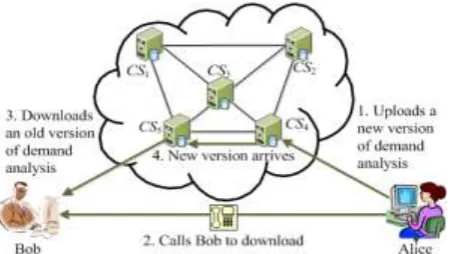
Fig. 1 Associate In Nursing Application That Needs Causative Consistency
II. OVERVIEW
2.1 Distributed Computing: Utilities, Grids & Clouds
The unfold of high-speed broadband networks in developed countries, the continual increase in computing power, and the growth of the net have modified the means within which society manages info and data services. Geographically distributed resources, equivalent to storage devices, information sources, and supercomputers, ar interconnected and might be exploited by users round the world as single, unified resource. To a growing extent, repetitive or resource-intensive IT tasks will be outsourced to service suppliers that execute the task and infrequently offer the results at a lower price. a brand new paradigm is rising within which computing is obtainable as a utility by third parties whereby the user is beaked just for consumption. This service-oriented approach from organizations giving an outsized portfolio of services will be scalable and versatile.This report describes the appearance of recent varieties of distributed computing, notably grid and cloud computing, the applications that they permit, and their potential impact on future standardization. The thought of distributing resources at intervals pc networks isn\\\'t new.
2.2 Shared resources
The main goal of a distributed automatic data processing system is to attach users and IT resources in a very clear, open, efficient, reliable and scalable means.The resources which will be shared in grids, clouds and different distributed computing systems embrace.
Physical resources
procedure power
Storage devices
Communication capability
Virtual resources, which might be changed and ar freelance from its physical location; like store
operational systems
computer code and licenses
Tasks and applications
Services
2.3 Grid computing
2.4 Utility computing
The thought of utility computing is simple: instead of operational servers in-house, organizations subscribe Associate in Nursing external utility computing service supplier and pay just for the hardware and computer code resources.
2.5 Essential Characteristics
2.5.1On-Demand Self-Service
A client will unilaterally provision computing capabilities, equivalent to server time and network storage, as required mechanically while not requiring human interaction with every service supplier.
2.5.2Broad Network Access
Capabilities ar on the market over the network and accessed through normal mechanisms that promote use by heterogeneous skinny or thick consumer platforms (e.g., mobile phones, tablets, laptops, and workstations).
2.5.3Resource Pooling
The provider’s computing resources ar pooled to serve multiple shoppers employing a multi-tenant model, with
totally different physical and virtual resources dynamically allotted and reassigned in keeping with client demand.
2.5.4Rapid Elasticity
Capabilities will be elastically provisioned and free, in some cases mechanically, to scale chop-chop outward and inward commensurable with demand.
III. LITERATURE SURVEY
“Analyzing Consistency Properties for Fun and Profit’[1],Motivated by the increasing quality of eventually
consistent key-value stores as an ad service, we have a tendency to address 2 necessary issues involving the consistency properties in a very history of operations on a read/write register (i.e., the beginning time, end time, argument, and response of each operation). First, we have a tendency to contemplate the way to notice a consistency violation as shortly collectively happens. to the current finish, we have a tendency to formulate a specification for on-line verification algorithms, and that we gift such algorithms for many well-known consistency properties. Second, we have a tendency to contemplate the way to quantify the severity of the violations, if a history is found to contain consistency violations. we have a tendency to investigate 2 quantities: one is that the staleness of the reads, and also the different is that the commonality of violations. For staleness, we have a tendency to more contemplate time-based staleness and operation-count-based staleness. we have a tendency to gift economical algorithms that calculate these quantities.
“Auditing Cloud Consistency”[2],Cloud storage services became commercially fashionable because of their
style algorithms to quantify the severity of violations with 2 metrics: the commonality of violations, and also the staleness of the worth of scan. Finally, we have a tendency to devise a heuristic auditing strategy (HAS) to reveal as several violations as potential. intensive experiments were performed employing a combination of simulations and real cloud deployments to validate HAS.
“A read of Cloud Computing”[3],Cloud computing, the long-held dream of computing as a utility, has the
potential to rework an oversized a part of the IT business, creating package even a lot of enticing as a service and shaping the approach IT hardware is intended and purchased. Developers with innovative concepts for brand spanking new net services not need the massive capital outlays in hardware to deploy their service or the human expense to control it. they have not agonize concerning overprovisioning for a servicewhose quality doesn\\\'t meet their predictions, therefore wasting expensive resources, or below provisioning for one that becomes wildly fashionable, therefore missing potentialcustomers and revenue.
“Distributed Computing: Utilities, Grids & Clouds”[5], The unfold of high-speed broadband networks in
developed countries, the continual increase in computing power, and also the growth of the web have modified the approach within which society manages info and data services. Geographically distributed resources, like storage devices, information sources, and supercomputers, area unit interconnected and might be exploited by users round the world as single, unified resource. outsourced to service suppliers, that execute the task and sometimes give the results at a lower price.
IV. EXISTING SYSTEM
An existing system the file transfered in cloud that not signed by user in anytime of upload. in order that integrity of shared information isn\\\'t potential in existing system. However, since the cloud isn\\\'t within the same trustworthy domain with every user within the cluster, outsourcing each user’s personal key to the cloud
would introduce important.
V. SYSTEM ARCHITECURE
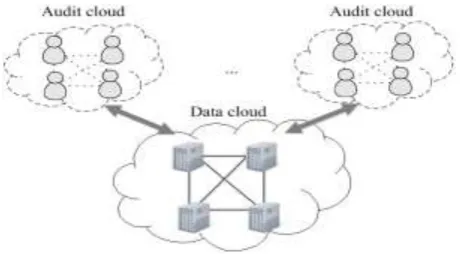
Fig 2: An Audit and Data Cloud Consistency
5.1 Consistency as a Service (CAAS) Model
As shown in Fig. 2, the CaaS model consists of a data cloud and multiple audit clouds. The data cloud, maintained by the cloud service provider (CSP), is a key-value data storagesystem, where each piece of data is identified by a uniquekey. (UOT), which is referred to as a local trace of operations in this paper.
Local auditingcan be performed independently by each user with his own UOT; periodically, an auditor is
elected from the audit cloud. In this case, all other users will send their UOTs to the auditor.
globalauditingwith a global trace of operations.We simply let each user become an auditor in turn, and we
will provide a more comprehensive solutionin Section VIII. The dotted line in the audit cloud means thatusers are loosely connected.
5.2 User Operation Table (UOT)
Each user maintains a UOT for recording local operations. Each record in the UOT is described by three elements: operation, logical vector, and physical vector. Therefore, we have the following properties:
(1) A read must have a unique dictating write. A write may have zero or more dictated reads
(2) From the value of a read, we can know the logical and physical vectors of its dictating write. Each user will maintain a logical vector and a physical vector to track the logical and physical time when an operation happens, respectively.
5.3 Overview of Two-Level Auditing Structure
Consistency models provided by commercial cloud systems. Following their work, we provide a two-level auditing structure for the CaaS model. At the first level, each user independently performs local auditing with his own UOT.
The following consistencies should be verified at this level:
Monotonic-read consistency. If a process reads the value of data K, any successive reads on data K by that
process will always return that same value or a more recent value.
Read-your-write consistency. The effect of a write by a process on data K will always be seen by a successive
read on data K by the same process. Causal consistency. Writes that are causally related must be seen by all processes in the same order. Concurrent writes may be seen in a different order on different machines.
VI. MODULES
1. User Module.
2. Auditor module.
3. Admin Module.
Modules Description
6.1 User Module
In this module, user should register their details and get the secret key for loggin …… and user can upload the file regarding the auditing …….. User first has to register in the application and according to his/her system ip
6.2. Auditor Module
In cloud computing there are two audit mechanism
Internal audit scheme inspects the internal behavior and processing service providers and try to avoid violation
of SLA of understanding the service providers. When the internal audit starts, auditor and comprehensive understanding of risk in storage service and good measures about dealing with them in industry.
External audit provides end-to-end service quality metrics using SLA. The main purpose is to ensure data
integrity in storage services. Through the APIs offered by the service providers, external audit can examine the data stored in the service providers by sampling and ensure their integrity, for example using the APIs provided by Amazon S3 to realize data access.
Phases of third party auditing:
There are two phases of third party auditing namely
1).Audit planning phase: First need to make sure the audit content, the audit details and so on and then
determine the audit schedule.
2) Execute audit phase: It evaluates the superiority and insufficiency of current safety strategy during this
phase. Auditors evaluate the matching degree between the methods used to solve the existing security threats and the internal and external security standard.
6.3. Admin Module
In this module admin can view all the user details , user uploads details, And TPA activities….regarding the auditing strategy. Admin is the person who manages this application. Admin is having rights to maintain cloud servers. Admin is able to perform global auditing for make the system consistent.
VII.CONCLUSION
In this paper, we presented a consistency as a service (CaaS) model and a two-level auditing structure to help users verify whether the cloud service provider (CSP) is providing the promised consistency, and to quantify the severity of the violations, if any. With the CaaS model, the users can assess the quality of cloud services and choose a right CSP among various candidates, e.g., the least expensive one that still provides adequate consistency for the users’ applications. For our future work, we will conduct a thorough theoretical study of
consistency models in cloud computing.
REFERENCES
[1] M. Armbrust, A. Fox, R. Griffith, A. Joseph, R. Katz, A. Konwinski, G. Lee, D. Patterson, A. Rabkin, I. Stoica, et al., “A view of cloud computing,” Commun. ACM, vol. 53, no. 4, 2010.
[2] P. Mell and T. Grance, “The NIST definition of cloud computing (draft),”NIST Special Publication 800-145 (Draft), 2011.
[3] E. Brewer, “Towards robust distributed systems,” in Proc. 2000 ACM PODC.
[4] “Pushing the CAP: strategies for consistency and availability,”Computer, vol. 45, no. 2, 2012.
[5] M. Ahamad, G. Neiger, J. Burns, P. Kohli, and P. Hutto, “Causal memory: definitions, implementation, and programming,” DistributedComputing, vol. 9, no. 1, 1995.
[6] W. Lloyd, M. Freedman, M. Kaminsky, and D. Andersen, “Don’t settle for eventual: scalable causalconsistency for wide-area storage with COPS,” in Proc. 2011 ACM SOSP.