Vascular Health and Risk Management
Dove
press
O R i g i n a l R e s e a R c H
open access to scientific and medical research
Open access Full Text article
Heart rate variability and arrhythmic patterns
of 24-hour Holter electrocardiography among
nigerians with cardiovascular diseases
Rasaaq ayodele adebayo amanze nkemjika ikwu Michael Olabode Balogun anthony Olubunmi akintomide
Olufemi eyitayo ajayi Victor Oladeji adeyeye Tuoyo Omasan Mene-afejuku
Olaniyi James Bamikole suraj adefabi Ogunyemi adeola Olubunmi ajibare Omolola abiodun Oketona
cardiology Unit, Department of Medicine, Obafemi awolowo University Teaching Hospitals complex (OaUTHc), ile-ife, Osun state, nigeria
correspondence: Rasaaq ayodele adebayo
cardiology Unit, Department of Medicine, Obafemi awolowo University, PO Box 1961, ile-ife, Osun state, nigeria Tel +234 80 3714 9610
email [email protected]
Background: Facilities for Holter electrocardiography (ECG) monitoring in many Nigerian hospitals are limited. There are few published works in Nigeria on the use of 24-hour Holter ECG in cardiac arrhythmic evaluation of patients with cardiovascular diseases.
Objective: To study the clinical indications, arrhythmic pattern, and heart rate variability (HRV) among subjects referred for 24-hour Holter ECG at our Cardiac Care Unit.
Methods: Three-hundred and ten patients (134 males and 176 females) were studied consecu-tively over a 48-month period using Schiller type (MT-101) Holter ECG machine.
Results: Out of the 310 patients reviewed, 134 were males (43.2%) and 176 were females (56.8%). The commonest indication for Holter ECG was palpitation followed by syncope in 71 (23%) and 49 (15.8%) of subjects, respectively. Premature ventricular complex and pre-mature atrial complex were the commonest types of arrhythmia in 51.5% and 15% subjects, respectively. Ventricular arrhythmia was more prevalent in dilated cardiomyopathy patients (85.7%). The HRV of subjects with palpitation, stroke, and diabetes mellitus with autonomic neuropathy, using standard deviation of normal to normal intervals average (milliseconds), were 107.32±49.61, 79.15±49.15, and 66.50±15.54, respectively. The HRV, using standard deviation of averages of normal to normal intervals average (milliseconds), of patients with palpitation, stroke, and diabetes mellitus with autonomic neuropathy were 77.39±62.34, 57.82±37.05, and 55.50±12.71, respectively.
Conclusion: Palpitation and syncope were the commonest indications for Holter ECG among our subjects. The commonest arrhythmic patterns were premature ventricular complex and prema-ture atrial complex, with ventricular arrhythmia being more prevalent in dilated cardiomyopathy. There was a reduction in HRV in patients with stroke and diabetic autonomic neuropathy. Keywords: heart rate, arrhythmia, Holter electrocardiography, cardiovascular diseases, Nigerians
Introduction
Cardiac arrhythmias are disorders of the rate, rhythm, and conduction of cardiac impulses.1 Abnormalities of cardiac rhythm are most often, but not invariably a
symptom of cardiac disease. Ambulatory Holter electrocardiography (ECG) was first introduced by the biophysicist Norman J Holter in 1949 to allow ambulatory home ECG monitoring of patients with suspected cardiac arrhythmias, and has been found useful in evaluating heart rate variability (HRV) pattern, ST segment analysis in cardiac ischemia, efficacy and safety of anti-arrhythmic or non-pharmacological therapies, among other uses.2–4 However, facilities for Holter ECG monitoring in
many Nigerian hospitals are limited and there are very few published works on the
Vascular Health and Risk Management downloaded from https://www.dovepress.com/ by 118.70.13.36 on 27-Aug-2020
For personal use only.
Number of times this article has been viewed
This article was published in the following Dove Press journal: Vascular Health and Risk Management
Dovepress
adebayo et al
use of 24-hour Holter ECG in evaluating cardiac arrhythmia in patients with cardiovascular diseases.5–8
We therefore prospectively studied the clinical indica-tions, arrhythmic pattern, and HRV among the subjects referred for 24-hour Holter ECG at the Cardiac Care Unit of Obafemi Awolowo University Teaching Hospitals Complex (OAUTHC), Ile-Ife, Osun State, Nigeria. This will assist in determining the pattern of Holter ECG in these subjects, and the information obtained will also contribute to the Nigerian and global database on 24-hour Holter ECG.
Materials and methods
This is a descriptive cross-sectional study in which 310 con-secutive patients referred for 24-hour Holter ECG over a 48-month period were studied using Schiller type (MT-101) Holter ECG machine. Ethical approval was obtained from ethics and research committee of OAUTHC and all partici-pants gave informed consent.
A thorough explanation of the nature of the test and handling of the recorder was given to each subject, and the Holter monitor was strapped to the subject’s waist with the channel leads appropriately placed on the chest.9 The subjects
were told to go home, continue their normal activities, and to return after 24 hours with the Holter monitor. The record-ings were subsequently analyzed using Schiller’s Cardiovit CS-200 digital ECG computer system. Each Holter ECG event recording was also manually analyzed according to standards10 by an experienced cardiologist and two senior
registrars. HRV, using standard deviation of normal to normal
intervals (SDNN) of ECG recordings and standard deviation of averages of normal to normal intervals (SDANN) in all 5-minute segments of the entire ECG recording, and ST seg-ment changes were also analyzed according to standards.10
The normal values of HRV used for this study were as follows:10 SDNN (141±39 milliseconds [ms]) and SDANN
(127±39 ms).
The data were then entered into the computer for statis-tical analysis using SPSS version 16 software. Data were represented using descriptive statistics such as tables, graphs, and bar charts. Categorical variables were expressed as pro-portions and percentages while continuous variables were expressed as means ± standard deviations (SDs).
Results
Demography and clinical indications
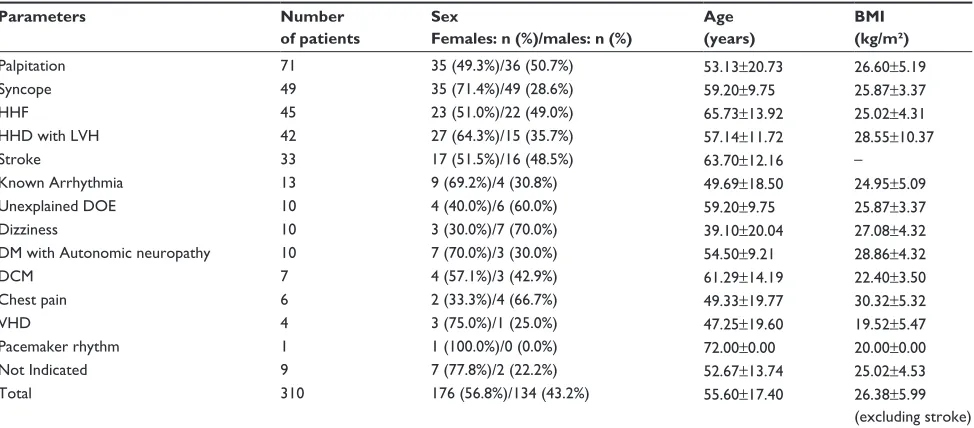
Demography and clinical characteristics of the studied patients are shown in Table 1. Out of the 310 patients reviewed, 134 were males (43.2%) while 176 were females (56.8%). The mean ± SD age in years and mean body mass index (BMI) ± SD (excluding stroke patients) in kg/m² of the study group was 55.60±17.40 and 26.38±5.99, respectively. The mean ± SD age (years) for males and females was 57.40±17.98 and 54.23±16.87, respectively while the mean ± SD BMI (kg/m²) for males and females was 25.70±4.56 and 26.88±6.83, respectively.
Clinical indications for Holter ECG are shown in Table 2. The commonest indication for Holter ECG was palpitation found in 71 (23%) of the studied patients. Rare
Table 1 clinical characteristics of the studied groups
Parameters Number
of patients
Sex
Females: n (%)/males: n (%)
Age (years)
BMI (kg/m²)
Palpitation 71 35 (49.3%)/36 (50.7%) 53.13±20.73 26.60±5.19
syncope 49 35 (71.4%)/49 (28.6%) 59.20±9.75 25.87±3.37
HHF 45 23 (51.0%)/22 (49.0%) 65.73±13.92 25.02±4.31
HHD with lVH 42 27 (64.3%)/15 (35.7%) 57.14±11.72 28.55±10.37
stroke 33 17 (51.5%)/16 (48.5%) 63.70±12.16 –
Known arrhythmia 13 9 (69.2%)/4 (30.8%) 49.69±18.50 24.95±5.09
Unexplained DOe 10 4 (40.0%)/6 (60.0%) 59.20±9.75 25.87±3.37
Dizziness 10 3 (30.0%)/7 (70.0%) 39.10±20.04 27.08±4.32
DM with autonomic neuropathy 10 7 (70.0%)/3 (30.0%) 54.50±9.21 28.86±4.32
DcM 7 4 (57.1%)/3 (42.9%) 61.29±14.19 22.40±3.50
chest pain 6 2 (33.3%)/4 (66.7%) 49.33±19.77 30.32±5.32
VHD 4 3 (75.0%)/1 (25.0%) 47.25±19.60 19.52±5.47
Pacemaker rhythm 1 1 (100.0%)/0 (0.0%) 72.00±0.00 20.00±0.00
not indicated 9 7 (77.8%)/2 (22.2%) 52.67±13.74 25.02±4.53
Total 310 176 (56.8%)/134 (43.2%) 55.60±17.40 26.38±5.99
(excluding stroke)
Abbreviations: BMi, body mass index; HHF, hypertensive heart failure; HHD, hypertensive heart disease; lVH, left ventricular hypertrophy; DOe, dyspnea on exertion; DM, diabetes mellitus; DcM, dilated cardiomyopathy; VHD, valvular heart disease.
Vascular Health and Risk Management downloaded from https://www.dovepress.com/ by 118.70.13.36 on 27-Aug-2020
Dovepress 24-hour Holter ecg assessment of arrhythmia among nigerians with cVD
indications are chest pain (1.9%), valvular heart disease (1.3%), and pacemaker rhythm (0.3%) as shown in Figure 1. According to the recommendations of American College of Cardiology/American Heart Association (ACC/AHA) guidelines10 for ambulatory ECG; 131 patients (43.2%)
had class I indication, 81 patients (26.1%) and 89 patients (28.7%) had class IIb and class III indications for Holter ECG, respectively.
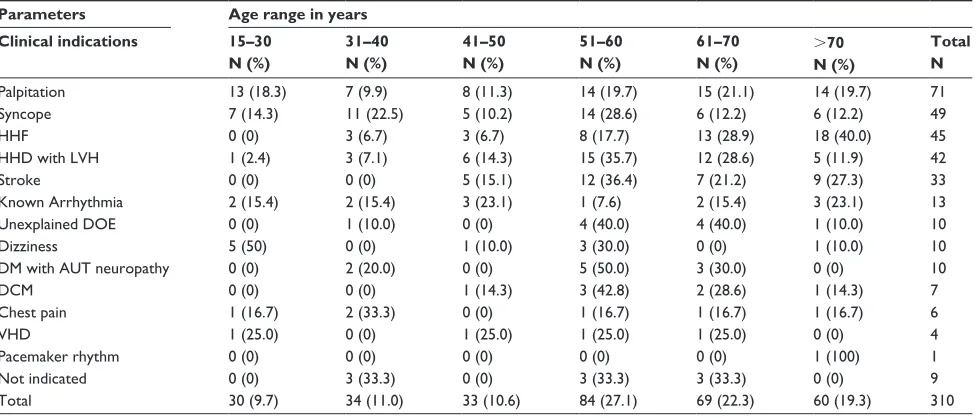
Table 3 shows the distribution of clinical indications for Holter ECG by age group. Of the studied patients, 27.1% are between the ages of 51 and 60 years while 9.7% of the studied patients are between the ages of 15 and 30 years.
Holter ECG findings
Premature ventricular complex (PVC) was the commonest type of arrhythmia accounting for 51.5% among patients with arrhythmia, followed by premature atrial complex 15%, as shown in Table 4. The male to female ratio of PVC among the studied patients is 0.9:1.1. Nineteen point six percent of patients 50 years had PVC while 31.2% of patients $50 years had PVC. Ventricular arrhythmia was found more prevalent in dilated cardiomyopathy (DCM) patients (85.7%), hypertensive heart failure (HHF) patients (40.1%), stroke patients (36.3%), and patients with palpi-tation (32.8%). Eighty percent of diabetes mellitus (DM) patients with autonomic neuropathy and 71.4% of hyperten-sive heart disease (HHD) patients had normal Holter ECG findings. Six (1.9%) out of the studied patients had sustained ventricular tachycardia (VT) (Figure 2), while eleven patients (3.6%) had severe bradycardia (heart rate [HR] 40 beats per minute). Eleven patients (3.6%) had atrial fibrillation (AF) with 45.5% of them being HHF patients. Two point two percent of patients 50 years had AF while 4.1% of patients
$50 years had AF. One patient (0.3%) had pacemaker tachycardia. Ninety-two (29.7%) patients had significant sinus pauses. Seventy-six (24.5%) patients had multiple ST depression in channel 1.
Applying Lown’s grading of PVCs11 among patients
with PVC; Lown’s grade 4 was more prevalent in DCM patients (66.7%), patients with palpitation (61%), and HHF patients (55.2%), while Lown’s grade 2 was more common in patients with dizziness (60%), stroke patients (46%), and HHD patients (29.4%), respectively.
Palpitation, 22.9 Syncope, 15.8 HHF, 14.5 HHD with LVH, 13.5 Stroke, 10.6 Arrhythmia, 4.2 Une DOE, 3.2 Dizziness, 3.2
DM with AUT Nero, 3.2 DCM, 2.3
Chest pain, 1.9 VHD, 1.3 Pacemaker, 0.3 Not Indicated, 2.9
Percentage
Indication
Figure 1 Bar chart showing the clinical indications for Holter ecg.
Abbreviations: ecg, electrocardiography; HHF, hypertensive heart failure; HHD, hypertensive heart disease; lVH, left ventricular hypertrophy; Une DOe, unexplained dyspnea on exertion; DM, diabetes mellitus; aUT nero, autonomic neuropathy; DcM, dilated cardiomyopathy; VHD, valvular heart disease.
Table 2 clinical indication
Clinical indication Number of patients (N=310)
%
Palpitation 71 23.0
syncope 49 15.8
HHF 45 14.5
HHD with lVH 42 13.6
stroke 33 10.6
Known arrhythmia 13 4.2
Unexplained DOe 10 3.2
Dizziness 10 3.2
DM with aUT neuropathy 10 3.2
DcM 7 2.3
chest pain 6 1.9
VHD 4 1.3
Pacemaker rhythm 1 0.3
not indicated 9 2.9
Total 310 100
Abbreviations: HHF, hypertensive heart failure; HHD, hypertensive heart disease; lVH, left ventricular hypertrophy; DOe, dyspnea on exertion; DM, diabetes mellitus; aUT, autonomic; DcM, dilated cardiomyopathy; VHD, valvular heart disease.
Vascular Health and Risk Management downloaded from https://www.dovepress.com/ by 118.70.13.36 on 27-Aug-2020
Dovepress
adebayo et al
HRV
The mean (SD) minimum and maximum HR of the studied patients was 45.70±16.60 and 153.34±47.68, respectively. The mean (SD) minimum and maximum HR for females was 44.59±16.38 and 159.57±49.58 while for males, the mean (SD) minimum and maximum HR was 47.16±16.82 and 145.15±43.91, respectively.
The HRV using SDNN average (ms) and SDANN aver-age (ms) of the studied patients was 107.34±52.74 and 75.47±48.63, respectively. Using SDNN average (ms), the HRV of patients with palpitation, HHF patients, stroke patients, and DM patients with autonomic neuropathy were 107.32±49.61, 117.20±65.93, 79.15±49.15, and 66.50±15.54, respectively. The HRV using SDANN average (ms) of patients with palpitation, HHF patients, stroke patients, and DM patients with autonomic neuropathy were 77.39±62.34, 69.00±33.09, 57.82±37.05, and 55.50±12.71, respectively. Using SDNN, there was a significant difference in the HRV of stroke and HHF, DM with autonomic neuropathy and HHF, and DM with autonomic neuropathy and palpitation patients, (F=4.896, P0.05).
Discussion
Palpitation of unknown etiology was the commonest indi-cation in our study (23%). Katibi et al5 reported palpitation
as the commonest indication (25%). This study shows that cardiac arrhythmia was prevalent in the study group (54.2%), with more females affected than males and that prevalence increases with age. Omotoso et al12 reported that females
were slightly more affected with arrhythmia than males and that prevalence of arrhythmia increases with age especially after the fourth decade. The clinical indication in 89 patients (28.7%) of the study group was class III according to the recommendations of ACC/AHA guidelines10 for ambulatory
ECG. Piccirilli et al13 reviewed the clinical indications of
2,489 consecutive Holter ECG recordings and reported that 1,298 (52%) were clearly appropriate (class I), 311 (13%) as probably or possibly appropriate, and 880 (35%) as inap-propriate (class III).
Eighty-seven out of 310 (28.1%) of our study group were hypertensive patients. Hypertension has two major consequences on the heart – left ventricular hypertrophy (LVH), morphological and functional alterations of the coronary macro- and micro-vessels. These anatomical and tissue changes caused by hypertension account for the higher incidence of atrial and ventricular arrhythmias as compared to normal population.14,15
PVC was the commonest arrhythmic pattern accounting for 51.5% among patients with arrhythmia. Katibi et al5 also
reported PVC (47.6%) as the commonest arrhythmic pattern in his study. Talib et al,16 in a study of 75 healthy individuals
using Holter ECG, reported ventricular arrhythmias as the commonest (45.3% had ventricular ectopic beats [VEBs]). Sultana et al,15 in a study of cardiac arrhythmia and LVH
in systemic hypertension, reported ventricular arrhythmias (PVCs) as the commonest arrhythmic pattern (25.6% in males, 21.8% in females). The lower proportion reported in the study by Sultana et al may be attributable to the fact
Table 3 Distribution of clinical indications for Holter ecg by age group
Parameters Age range in years
Clinical indications 15–30 N (%)
31–40 N (%)
41–50 N (%)
51–60 N (%)
61–70 N (%)
.70 N (%)
Total N
Palpitation 13 (18.3) 7 (9.9) 8 (11.3) 14 (19.7) 15 (21.1) 14 (19.7) 71
syncope 7 (14.3) 11 (22.5) 5 (10.2) 14 (28.6) 6 (12.2) 6 (12.2) 49
HHF 0 (0) 3 (6.7) 3 (6.7) 8 (17.7) 13 (28.9) 18 (40.0) 45
HHD with lVH 1 (2.4) 3 (7.1) 6 (14.3) 15 (35.7) 12 (28.6) 5 (11.9) 42
stroke 0 (0) 0 (0) 5 (15.1) 12 (36.4) 7 (21.2) 9 (27.3) 33
Known arrhythmia 2 (15.4) 2 (15.4) 3 (23.1) 1 (7.6) 2 (15.4) 3 (23.1) 13
Unexplained DOe 0 (0) 1 (10.0) 0 (0) 4 (40.0) 4 (40.0) 1 (10.0) 10
Dizziness 5 (50) 0 (0) 1 (10.0) 3 (30.0) 0 (0) 1 (10.0) 10
DM with aUT neuropathy 0 (0) 2 (20.0) 0 (0) 5 (50.0) 3 (30.0) 0 (0) 10
DcM 0 (0) 0 (0) 1 (14.3) 3 (42.8) 2 (28.6) 1 (14.3) 7
chest pain 1 (16.7) 2 (33.3) 0 (0) 1 (16.7) 1 (16.7) 1 (16.7) 6
VHD 1 (25.0) 0 (0) 1 (25.0) 1 (25.0) 1 (25.0) 0 (0) 4
Pacemaker rhythm 0 (0) 0 (0) 0 (0) 0 (0) 0 (0) 1 (100) 1
not indicated 0 (0) 3 (33.3) 0 (0) 3 (33.3) 3 (33.3) 0 (0) 9
Total 30 (9.7) 34 (11.0) 33 (10.6) 84 (27.1) 69 (22.3) 60 (19.3) 310
Abbreviations: ecg, electrocardiography; HHF, hypertensive heart failure; HHD, hypertensive heart disease; lVH, left ventricular hypertrophy; DOe, dyspnea on exertion; DM, diabetes mellitus; aUT, autonomic; DcM, dilated cardiomyopathy; VHD, valvular heart disease.
Vascular Health and Risk Management downloaded from https://www.dovepress.com/ by 118.70.13.36 on 27-Aug-2020
Dovepress 24-hour Holter ecg assessment of arrhythmia among nigerians with cVD
Table
4
2
4-hour Holter electrocardiogram rhythm distribution
Parameters
Clinical indication
Rhythm
Palp N (%) Syncope N (%) HHF N (%) HHD N (%) Stroke N (%) Known arrhythmia N (%) Unexplained DOE N (%) Dizziness N (%) DM (AUT neuropathy) N (%) DCM N (%) Chest pain N (%) VHD N (%) Pacemaker N (%) Not indicated N (%) Total N (%)
n ormal 37 (52.1) 23 (46.9) 10 (22.2) 30 (71.4) 18 (54.6) 1 (7.7) 2 (20) 5 (50) 8 (80) 1 (14.3) 2 (33.3) 0 (0) 0 (0) 5 (55.6) 143 (45.8) PV c 17 (23.9) 11 (22.5) 13 (28.9) 7 (16.6) 10 (30.3) 5 (38.4) 4 (40) 5 (50) 1 (10) 4 (57.1) 3 (50) 3 (75) 0 (0) 3 (33.3) 86 (27.7) Pac 7 (9.9) 5 (10.2) 6 (13.3) 1 (2.4) 1 (3.0) 2 (15.4) 1 (10) 0 (0) 0 (0) 0 (0) 1 (16.7) 1 (25) 0 (0) 0 (0) 25 (8.1) ns VT 5 (7.1) 5 (10.2) 4 (9.0) 2 (4.8) 1 (3.0) 1 (7.7) 1 (10) 0 (0) 0 (0) 1 (14.3) 0 (0) 0 (0) 0 (0) 1 (11.1) 21 (6.8) sustained VT 2 (2.8) 0 (0) 1 (2.2) 0 (0) 1 (3.0) 1 (7.7) 0 (0) 0 (0) 0 (0) 1 (14.3) 0 (0) 0 (0) 0 (0) 0 (0) 6 (1.9) sVT 0 2 (4.1) 1 (2.2) 0 (0) 2 (6.1) 2 (15.4) 0 (0) 0 (0) 0 (0) 0 (0) 0 (0) 0 (0) 0 (0) 0 (0) 7 (2.2) a F 1 (1.4) 1 (2.0) 5 (11.1) 1 (2.4) 0 (0) 1 (7.7) 2 (20) 0 (0) 0 (0) 0 (0) 0 (0) 0 (0) 0 (0) 0 (0) 11 (3.6)
severe bradycardia
2 (2.8) 2 (4.1) 5 (11.1) 1 (2.4) 0 (0) 0 (0) 0 (0) 0 (0) 1 (10) 0 (0) 0 (0) 0 (0) 0 (0) 0 (0) 11 (3.6)
Pacemaker tachycardia
0 (0) 0 (0) 0 (0) 0 (0) 0 (0) 0 (0) 0 (0) 0 (0) 0 (0) 0 (0) 0 (0) 0 (0) 1 (100) 0 (0) 1 (0.3) Total 71 (100) 49 (100) 45 (100) 42 (100) 33 (100) 13 (100) 10 (100) 10 (100) 10 (100) 7 (100) 6 (100) 4 (100) 1 (100) 9 (100) 310 (100) Abbreviations: Palp, palpitation; HHF, hypertensive heart failure; HHD, hypertensive heart disease; DO e, dyspnea on exertion; DM, diabetes mellitus; a UT, autonomic; D c M, dilated cardiomyopathy; VHD, valvular heart disease; PV c ,
premature ventricular complex; PAC, premature atrial complex; NSVT, non-sustained ventricular tachycardia; VT, ventricular tachycardia; SVT, supraventricular tachycardia; AF, atrial fibrillation.
that 24-hour Holter ECG was carried out only on patients who complained of palpitation. Ventricular arrhythmia was found more prevalent in DCM patients (85.7%), HHF patients (40.1%), stroke patients (36.2%), and patients with palpita-tion (32.8%). Heart failure irreversibly damages myocardial fibers which may serve as foci for various forms of arrhyth-mias.17,18 Lasisi et al7 reported that ambulant outpatients with
chronic heart failure have significantly higher prevalence of ventricular arrhythmia and narrow HRV compared to healthy individuals of comparable age and sex. Adebayo et al8
reported ventricular arrhythmia in 47% of HHF patients. The atherosclerotic risk in communities (ARIC) study19 of more
than 15,000 African-American and White men and women reported that frequent or complex VEBs are also associated with hypertension, and that VEBs increase with increased electrocardiographic estimate of left ventricular mass. LVH and complex ventricular arrhythmias are significant predictors of sudden cardiac death.20–22 Ajayi and Ajayi,23 in
a study of 24-hour Holter arrhythmic patterns of 37 HHF patients with or without valvular heart disease, reported that LVH increases arrhythmias but multi-valvular regurgitation predisposes to greater supraventricular tachy cardia and complex ventricular arrhythmias. Three point six percent of studied patients had AF. AF is the most commonly sustained arrhythmia in adults and is associated with an increased risk of cardiovascular morbidity, mortality, and stroke.24,25
Hyper-tension is one of the important independent risk factors for the development of AF.26 Omotoso et al12 reported 5.2% in
a study of 2,017 Nigerians with HHD using resting ECG. The higher proportion in his study may be attributable to the fact that his study groups had a pre-existing heart disease. Familoni et al27 reported that AF was associated with
increased mortality rates among patients with advanced heart failure. Most ECG monitoring data from acute stroke units indicate a frequency of arrhythmia of 40%–60%.28 It is most
significant to note that six patients (1.9%) with PVC in this study had periods of sustained VT. Some studies11,29 reported
that VT can degenerate to malignant ventricular arrhythmia and that it is also a risk factor for sudden cardiac death.
Figure 2 seventy year-old woman, known hypertensive with an episode of ventricular tachycardia during 24-hour Holter ecg.
Abbreviation: ecg, electrocardiography.
Vascular Health and Risk Management downloaded from https://www.dovepress.com/ by 118.70.13.36 on 27-Aug-2020
Dovepress
adebayo et al
The HRV using SDNN was reduced in DM patients with autonomic neuropathy (66.50±15.54) and stroke patients (79.15±49.15). Adebayo et al8 reported significantly reduced
HRV in type II DM patients (81.03±26.33) when compared with hypertensive patients. Boer-Martins et al30 reported that
decreased HRV in type II DM patients with resistant hyper-tension, when compared with non-type II DM group. Korpe-lainen et al31 reported that stroke patients have an impaired
autonomic control as evidenced by abnormality of HRV, which may have unfavorable prognosis in acute stroke.
Conclusion
Palpitation and syncope were the commonest indications for Holter ECG among our subjects. The commonest arrhyth-mic patterns were PVC and premature atrial complex, with ventricular arrhythmia being more prevalent in DCM and HHF patients. There was a reduction in HRV in patients with stroke and diabetic autonomic neuropathy.
Disclosure
The authors have no conflicts of interest to disclose.
References
1. Araoye MA. Basic Electrocardiography. Ilorin Nigeria: Nathadex Publishers Ltd; 2004:85–134.
2. Zimetbaum P, Goldman A. Ambulatory Arrhythmia Monitoring: Choosing the Right Device. Circulation. 2010;122(16):1629–1636. 3. Takase B, Kurita A, Noritake M, et al. Heart Rate Variability in Patients
with Diabetes Mellitus, Ischemic Heart Disease and Congestive Heart Failure. J Electrocardiol. 1992;25(2):79–88.
4. Gasilin VS, Stetsenko AE, Kruglov VA, Boĭkova OI, Chernysheva GV. [Possibilities of Holter ECG Monitoring in Detecting Arrhythmias and Myocardial Ischemia in Persons with Ischemic Heart Disease Risk Factors]. Kardiologiia. 1989;29(3):10–13. Russian.
5. Katibi IA, Beshir S, Mudashiru Z. Ambulatory 24-hour Holter Electrocardiography among Nigerians: Our Experience at a Referral Cardiac Centre in Lagos, Nigeria. Nigerian Medical Journal. 2006; 47(2):25–27.
6. Adebola AP, Daniel FA, Lasisi GT, et al. 24-hour Holter Moni toring at the Lagos State University Teaching Hospital-a report of 85 cases. Nigerian Journal of Clinical Medicine. 2009;2(2).
7. Lasisi GT, Adebola AP, Ogah OS, Daniel FA. Prevalence of Ventricular Arrhythmia and Heart Rate Variability Pattern in Chronic Heart Failure. Niger Postgrad Med J. 2012;19(3):157–162.
8. Adebayo RA, Ikwu AN, Balogun MO, et al. Evaluation of the Indica-tions and Arrhythmic Patterns of 24-hour Holter Electrocardiography among Hypertensive and Diabetic Patients seen at OAUTHC, Ile-Ife Nigeria. Diabetes Metab Syndr Obes. 2014;7:565–570.
9. MT-101/MT-200 [package insert]. Baar, Switzerland: Schiller; 2004. 10. Crawford MH, Bernstein SJ, Deedwania PC, et al. ACC/AHA Guide lines
for Ambulatory Electrocardiography. A report of the American College of Cardiology/American Heart Association Task Force on Practice Guidelines (Committee to Revise the Guidelines for Ambula tory Electrocardiography). Developed in collaboration with the North American Society for Pacing and Electrophysiology. J Am Coll Cardiol. 1999;34(3):912–948.
11. Lown B, Wolf M. Approaches to Sudden Death from Coronary Heart Disease. Circulation. 1971;44(1):130–142.
12. Omotoso AB, Opadijo OG, Araoye MA. Arrhythmias in Hypertensive Heart Disease: A Study of 2,017 Nigerian Patients. Nig Qt J Hosp Med. 1997;7(4):310–313.
13. Piccirilli S, Gallagher MM, Vellini M, et al. Appropriateness of ECG Holter Request in Outpatient Services: A Prospective Study. J Cardiovasc Med (Hagerstown). 2007;8(7):517–520.
14. Yiu KH, Tse HF. Hypertension and Cardiac Arrhythmias: a Review of the Epidemiology, Pathophysiology and Clinical Implications. J Hum Hypertens. 2008;22(6):380–388.
15. Sultana R, Sultana N, Rashid A, et al. Cardiac Arrhythmia and Left Ventricular Hypertrophy in Systemic Hypertension. J Ayub Med Coll Abbotabad. 2010;22(4):155–158.
16. Talib SH, Mulay PY, Patil AN. Twenty-four Hour Ambulatory Holter Monitoring and Heart Rate Variability in Healthy Individuals. JIACM. 2005;6(2):136–141.
17. Pohwidz SM, Corr PB. Biochemical and Electrophysiological Altera-tions Underlying Ventricular Arrhythmias in the Failing Heart. Eur Heart J. 1994;15 Suppl D:145–154.
18. Araoye MA, Olowoyeye JO. The Clinical Spectrum of Hypertensive Heart Failure: A Point-score System for Solving an Old Problem. East Afr Med J. 1984;61(4):306–315.
19. Simpson RJ Jr, Cascio WE, Schreiner PJ, Crow RS, Rautaharju PM, Heiss G. Prevalence of Premature Ventricular Contractions in a Popula-tion of African-American and White Men and Women: the Atheroscle-rotic Risk in Communities (ARIC) Study. Am Heart J. 2002;143(3): 535–540.
20. Schillaci G, Verdechia P, Borgioni C, et al. Association Between Persistent Pressure Overload and Ventricular Arrhythmias in Essential Hypertension. Hypertension. 1996;28(2):284–289.
21. Saadeh AM, Jones JV. Predictors of Sudden Cardiac Death in Never Previously Treated Patients with Essential Hypertension: Long Term Follow-up. J Hum Hypertens. 2001;15(10):677–680.
22. Dzudie A, Milo O, Edwards C, et al. Prognostic Significance of Elec-trocardiographic Abnormalities for Mortality Risk in Acute Heart Failure: Insight from sub-Saharan Africa Survey for Heart Failure (THESUS-HF). J Card Fail. 2014;20(1):45–52.
23. Ajayi OE, Ajayi AA. Valvular Regurgitations may Increase the Risk of Arrhythmias in Hypertensive Heart Failure in Nigerians. J Cardiovasc Med (Hagerstown). 2013;14(6):453–460.
24. Benjamin EJ, Wolf PA, D’Agostino RB, Silbershatz H, Kannel WB, Levy D. Impact of Atrial Fibrillation on the Risk of Death: the Framing-ham Heart Study. Circulation. 1998;98:946–952.
25. Stewart S, Hart CL, Hole DJ, McMurray JJ. A Population-based Study of the long-term Risks associated with Atrial Fibrillation: 20-year follow-up of the Renfrew/Paisley study. Am J Med. 2002;113(5):359–364. 26. Benjamin EJ, Levy D, Vaziri SM, et al. Independent Risk Factors for
Atrial Fibrillation in a Population-based Cohort: The Framingham Heart Study. JAMA. 1994;271(11):840–844.
27. Familoni OB, Olunuga TO, Olufemi BW. A Clinical Study of Pattern and Factors Affecting Outcome in Nigerian Patients with Advanced Heart Failure. Cardiovasc J Afr. 2007;18(5):308–311.
28. Norris JW, Froggatt GM, Hachinski VC. Cardiac Arrhythmias in Acute Stroke. Stroke. 1978;9(4):392–396.
29. Snyder DW, Sheridan DJ, Sobel BE. Premature Ventricular Complexes; Therapeutic Dilemmas and Decisions. Adv Cardiol. 1980;27: 322–342.
30. Boer-Martins L, Figueiredo VN, Demacq C, et al. Relationship of Auto nomic Imbalance and Circadian Disruption with Obesity and Type 2 Diabetes in Resistant Hypertension Patients. Cardiovasc Diabetol. 2011;10:24.
31. Korpelainen J, Sotaniemi K, Maikikallio A, Huikuri HV, Myllylä VV. Dynamic Behaviour of Heart Rate in Ischemic Stroke. Stroke. 1999;30(5):1008–1013.
Vascular Health and Risk Management downloaded from https://www.dovepress.com/ by 118.70.13.36 on 27-Aug-2020
Vascular Health and Risk Management
Publish your work in this journal
Submit your manuscript here: http://www.dovepress.com/vascular-health-and-risk-management-journal Vascular Health and Risk Management is an international,
peer-reviewed journal of therapeutics and risk management, focusing on concise rapid reporting of clinical studies on the processes involved in the maintenance of vascular health; the monitoring, prevention and treatment of vascular disease and its sequelae; and the involvement of
metabolic disorders, particularly diabetes. This journal is indexed on PubMed Central and MedLine. The manuscript management system is completely online and includes a very quick and fair peer-review system, which is all easy to use. Visit http://www.dovepress.com/ testimonials.php to read real quotes from published authors. Dovepress
Dove
press
24-hour Holter ecg assessment of arrhythmia among nigerians with cVD
Vascular Health and Risk Management downloaded from https://www.dovepress.com/ by 118.70.13.36 on 27-Aug-2020