Digital Commons@Georgia Southern
Electronic Theses and Dissertations Graduate Studies, Jack N. Averitt College ofSpring 2012
The Effect of Classroom Structure and Practice on
Transition to Middle School
Eric Paul Schexnaildre
Follow this and additional works at: https://digitalcommons.georgiasouthern.edu/etd
Recommended Citation
Schexnaildre, Eric Paul, "The Effect of Classroom Structure and Practice on Transition to Middle School" (2012). Electronic Theses and Dissertations. 403.
https://digitalcommons.georgiasouthern.edu/etd/403
This dissertation (open access) is brought to you for free and open access by the Graduate Studies, Jack N. Averitt College of at Digital Commons@Georgia Southern. It has been accepted for
inclusion in Electronic Theses and Dissertations by an authorized administrator of Digital Commons@Georgia Southern. For more information, please contact
AND PRACTICE ON TRANSITION TO MIDDLE SCHOOL by
ERIC SCHEXNAILDRE
(Under the Direction of Teri Denlea Melton) ABSTRACT
The passage from elementary school to middle school, along with physical, social, and emotional changes associated with adolescence, often results in personal and social, organizational, and academic declines. The classroom structure of elementary school varies between a team teaching setting and a self-contained setting, and each instructional environment has the potential to impact all areas of development for each student. The purpose of this study was to examine the relationship between fifth grade classroom setting (team teaching vs. self-contained) and sixth grade student behavior. The gender and the socio-economic status of transitioning students also served as variables of the study. A secondary purpose of the study was to examine middle school students’ perceptions of their transition from elementary school to middle school based on elementary classroom structure. Results from this study indicated that males, socio-economically disadvantaged students, and students from a self-contained elementary classroom experienced significantly higher levels of discipline referrals during the transition to middle school. Using the Student Transition Questionnaire (Akos, 2002), there were no statistically significant differences found between the self-contained and team teaching classroom structures on the social and personal, organizational, and academic constructs of middle school transition. The findings from this study suggest
middle school. Suggestions regarding the implementation of effective transition strategies are provided along with recommendations concerning future research on the relationship between elementary classroom structure and middle school transition.
INDEX WORDS: Elementary classroom structure, Middle school transition, Team teaching classroom structure, Discipline referrals, Student perceptions.
THE EFFECT OF CLASSROOM STRUCTURE AND PRACTICE ON TRANSITION TO MIDDLE SCHOOL
by
ERIC PAUL SCHEXNAILDRE
B.S., University of Tennessee at Chattanooga, 2001 M.A., Tennessee Technological University, 2003 E.D.S., Tennessee Technological University, 2004
A Dissertation Submitted to the Graduate Faculty of Georgia Southern University in Partial Fulfillment of the Requirements for the Degree
DOCTOR OF EDUCATION STATESBORO, GEORGIA
iv © 2012
ERIC SCHEXNAILDRE All Rights Reserved
iv
THE EFFECT OF CLASSROOM STRUCTURE
AND PRACTICE ON TRANSITION TO MIDDLE SCHOOL by
ERIC SCHEXNAILDRE
Major Professor: Teri Denlea Melton Committee: Linda M. Arthur Paul M. Brinson, Jr.
Electronic Version Approved: May 2012
v DEDICATION
I would like to dedicate this dissertation to my loving and supportive wife, Ashley and my beautiful daughters, Annabell and Ella Schexnaildre. This accomplishment would not have been possible without their love, support, encouragement, and inspiration.
vi
ACKNOWLEDGEMENTS
I WOULD LIKE TO THANK MY PARENTS, BROTHER, AND SISTER FOR THEIR LOVE AND INSPIRATION THROUGHOUT MY LIFE. I HAVE BEEN BLESSED TO HAVE A WONDERFUL AND LOVING FAMILY.
I COULD NOT HAVE COMPLETED THIS PROCESS WITHOUT MY GOOD
FRIEND, DR. TREY BURDETTE. HE HAS BEEN AN UNWAVERING SOURCE OF GUIDANCE, KNOWLEDGE, AND ENCOURAGEMENT THROUGHOUT THIS PROCESS. OUR FRIENDSHIP HAS BEEN INVALUABLE TO ME.
I WOULD LIKE TO RECOGNIZE AND THANK MY ADVISOR AND COMMITTEE CHAIR, DR. TERI MELTON, FOR HER INCREDIBLE SUPPORT THROUGHOUT THIS DIFFICULT PROCESS. HER WISDOM, EXPERTISE, AND PATIENCE HAVE GUIDED ME THROUGH THIS PROCESS AND I AM GRATEFUL FOR HER
LEADERSHIP.
I AM ALSO GRATEFUL FOR DR. LINDA ARTHUR AND DR. PAUL BRINSON FOR JOINING MY DISSERATTION COMMITTEE AND INFUSING GREAT IDEAS THROUGHOUT THE PROCESS.
I WAS FORTUNATE TO MEET AND DEVELOP FRINDSHIPS WITH MY
INCREDIBLE “MINI-COHORT” OF DEBBIE COLLINS, WENDY METCALF, AND ALEXIS SMITH. OUR SATURDAY DRIVES TO AUGUSTA WERE EXTREMELY HELPFUL TO ME. OUR EMAILS AND MEETINGS THROUGHOUT THIS
PROCESS KEPT ME ON PACE. WE DID IT GIRLS!
I WOULD ALSO LIKE TO THANK MARK AND KELLY SCHEXNAILDRE FOR THEIR SUPPORT AND ENCOURAGEMENT DURING MY EARLY GRADUATE WORK.
A BIG THANKS TO DR. CAROL THURMAN FOR HER GREAT WORK WITH ASSISTING MY RESEARCH PROCESS.
LASTLY, I WOULD LIKE TO THANK ANNE AKINS FOR HER HARD WORK AND SUPPORT.
vii TABLE OF CONTENTS ACKNOWLEDGEMENTS ... vi LIST OF FIGURES ...x LIST OF TABLES ...x CHAPTER 1. INTRODUCTION ...1 Problem Statement ...7 Research Questions ...9 Conceptual Framework ...9
Significance of the Study ...10
Procedures ...11
Limitations, Delimitations, and Assumptions ...12
Definitions of Terms ...13
Chapter Summary ...15
2. REVIEW OF THE LITERATURE ...17
Team Teaching...22
Discipline ...29
Personal and Social Factors ...32
Organizational Factors ...40
Academic Factors...42
Chapter Summary ...47
3. METHODOLOGY ...49
viii
Research Design...51
Sample and Sampling ...53
Instrumentation ...55
Data Collection ...58
Data Analysis ...62
Chapter Summary ...63
4. REPORT OF DATA AND DATA ANALYSIS ...65
Research Questions ...66
Research Design...67
Description of Respondents ...68
Findings...69
Response to Research Questions ...75
Chapter Summary ...81
5. SUMMARY, CONCLUSIONS, AND IMPLICATIONS ...82
Summary ...82 Analysis of Findings ...83 Conclusions ...91 Recommendations ...93 Dissemination ...95 REFERENCES ...97
ix APPENDICES
A. STUDENT TRANSITION QUESTIONNAIRE ...107 B. AMENDMENTS TO THE STUDENT TRANSITION
QUESTIONNAIRE………...110 C. STUDENT TRANSITION QUESTIONNAIRE ITEM ANALYSIS……...112 D. CONSTRUCT ALIGNMENT TO THE STUDENT TRANSITION
QUESTIONNAIRE………...115 E. DESCRIPTIVE STATISTICS FROM STUDENT TRANSITION
x
LIST OF FIGURES
Figure 1. Person-Environment Fit ...21 Figure 2. Descriptions of Co-Teaching Structures ...28
xi
LIST OF TABLES
Table 1. Multivariate Test One ...71
Table 2. Multivariate Test Two...77
Table 3. Test of Between Subject Effects ...78
1 CHAPTER 1 INTRODUCTION
The middle school experience is a crucial period in an adolescent’s life when many students start assuming the role of young adults. Middle school is a time when lifelong friendships are formed and talents are both discovered and developed. It is a three-year period which proves to be an experience that serves as a spring board for the academic and personal future for students as they move onto high school.
For many fifth grade students, the comfort of being in the highest grade level and serving as leaders in a school with familiar faces often proves to be a wonderful
experience of growth and happiness during their last year in elementary school. Each school year, adolescents leave the smaller, nurturing elementary surroundings and enter a middle school larger in size and student population, and with a much more competitive environment. The myriad of issues created by the concurrent personal and social,
organizational, and academic developments of these adolescents are amplified by foreign surroundings.
Akos (2006) explained that the personal transformations during puberty and ecological differences between elementary and middle schools are intense. Along with adjusting to a new social environment, students transitioning from an elementary to a middle school must adjust to different academic expectations, a reorganized school day, and multiple teachers (Schielack & Seeley, 2010). When adolescents move into middle school, anxiety levels generally increase due to normative changes such as puberty, social and emotional development, the growing importance of peer relationships, and the
2
transition into middle school, a loss of student motivation to achieve can often be seen (Cauley & Jovanovich, 2006; Parker, 2009). Needless to say, the transition into middle school brings multiple complex issues along with positive opportunities for students.
In order to better understand the middle school transition experience of students, information about the development of the middle school concept is appropriate.
Concerned about the lack of appropriate fit between the needs of adolescence and learning environment provided by schools, the Carnegie Council on Adolescent Development (Carnegie) released a groundbreaking position paper focusing on middle reform, Turning Points: Preparing American Youth for the 21st Century (1989). Carnegie’s Turning Points focused on improving education for middle schools by
providing steps of action for schools, communities, and government officials to reform American middle schools. In the mid-1980s, a committee of educators, counselors, and administrators began exploring the concept of a sixth through eighth grade middle school that would better fit and address the learning needs of adolescents in those grades. The implementation of the middle school model proved to successfully impact the academic, behavioral, and social aspects of middle school students (Carnegie, 1989).
A later review of the evolution of the middle school model and updated objectives concerning young adolescents was The Carnegie Corporation’s Turning Points 2000: Educating Adolescents in the 21st Century (Jackson & Davis, 2000). The foundation of effective middle schools is built on three concepts: academic excellence, social equity, and developmental responsiveness. Jackson and Davis stated that the objectives of the middle school model included teaching a standards-based curriculum with differentiated instructional methods along with varying strategies of assessment that better fit the
3
developmental needs young adolescents. Advisory programs were established in middle schools that allowed teachers to assist students with study skills, organizational issues, and to provide an opportunity for students to discuss school-related social issues with their teacher and peers. Elective classes such as physical education, music, art, and foreign languages were added and students were often allowed to choose the elective classes they wanted to enroll in. Another goal of the middle school structure was creation of a sense of community that would allow close relationships between teachers and students, fostering positive social interactions and promoting collaboration within a safe, positive environment (Jackson & Davis, 2000).
Most recently, the National Middle School Association (NMSA) released This We Believe (2010) which focuses on middle school reform and highlights several
components of successful middle schools. At the core of American middle schools is the challenge to recognize the rapid changes affecting young adolescents in many areas of development (personal and social, organizational, and academic) and creating an environment where student achievement is accomplished through addressing student needs on all levels. The NMSA listed the four essential attributes of successful educational programs for young adolescents as being developmentally responsive, challenging, empowering, and equitable. Developmentally responsive aspects include school organization, policies, curriculum, and instructional practices that appropriately address adolescent needs. Middle schools must challenge all members of the learning community to reach high levels of achievement and empower students with the
knowledge and skills to become successful members of society. The school environment within middle schools must be equitable in order to provide equal opportunities for all
4
students with various backgrounds and skill levels to grow and learn together (NMSA, 2010).
Jackson and Davis (2000) explained that the transformation from the
departmentalized structure of teachers to the interdisciplinary structure, often referred to as team teaching, was found to more effectively meet the learning needs of adolescents than the traditional junior high structure. In the interdisciplinary model, there are teams of two to five teachers who are assigned the same group of students for the academic year. Core subject teachers in mathematics, language arts, science, and social studies are able to specialize in their subject content and collaborate with team members during planning time. Common planning among interdisciplinary teams is beneficial to teachers for sharing instructional strategies, handling discipline issues, and collaboration within subject areas (Cook & Faulkner, 2010). Jackson and Davis (2000) stated that the team teaching structure created a more nurturing environment providing students with the familiarity of their teachers and classmates and an appropriate setting for the
developmental stage of early adolescence. Team teaching creates the foundation for successful, highly-functional middle schools by creating small learning communities characterized by a sense of family (NMSA, 2010).
In order to better understand the relationship between team teaching and the transition into middle school, fifth grade classroom structures must be considered. Given the complexity of the development of early adolescence, creating an appropriate
instructional climate designed to address the unique developmental needs of young students is crucial for appropriate student development (Jackson & Davis, 2000). While the research is limited to specific reasons for implementation of each teaching structure,
5
elementary schools utilize both self-contained and team teaching structures. Elementary teachers are commonly trained to be generalists who teach all subjects (math, science, social studies, and language arts) throughout the school year. In this traditional, self-contained setting, teachers can effectively connect various subjects into a single standard with the same students throughout the day and school year (Hood, 2008).
Nelson and Landel (2007) explained that few elementary teachers have degrees or extensive training in math and science instruction and few are hired to teach those subjects. With the majority of the instructional time devoted to writing and reading, elementary students often receive inadequate instruction in math and science in the self-contained teaching structure.
Hood (2008) noted that with the increased pressure of standardized testing in language arts, math, and science in elementary school, the team teaching model of specializing in a specific subject has become more common. The NMSA (2010) stated that effective team teaching leads to increased student achievement, an enhanced school climate, and positive student attitudes. By utilizing the team teaching structure in elementary school, students acquire deeper content knowledge within each subject and may benefit by being more prepared for the transition into middle school than those students in the traditional self-contained structure (Nelson & Landel, 2007).
Along with elementary classroom structure, the socioeconomic status (SES) and gender of students serve as factors influencing student achievement and discipline referrals. As part of the middle school design, there is a requirement for equity in outcomes involving all students, regardless of race, ethnicity, gender, or family income (Jackson & Davis, 2000). Research has shown that academic achievement is related to
6
student SES and gender, with boys and low–SES students being lower academic achievers than girls and high-SES students (Cook, 2006). Students with increased discipline referrals achieve lower scores regarding student achievement compared to students with fewer discipline referrals (Freiberg, Huzinec, & Templeton, 2009). The number of discipline referrals during the transition from elementary to middle school increased significantly for low-SES students compared to high-SES students (Malaspina & Rimm-Kaufman, 2008).
Rusby, Taylor, and Foster (2007) reported that students who were identified by their kindergarten teacher as at-risk because of their behavior had significantly lower SES levels. Students identified as at-risk are more likely to experience academic and
behavioral problems including low test scores, increased retention rates, increased discipline referrals, and higher dropout rates (Hickman, Bartholomew, Mathwig, & Heinrich, 2008). Malaspina and Rimm-Kaufman (2008) noted that socio-emotional and behavior problems account for a decline in academic achievement, and that over time, students exhibiting those behaviors fell further behind their peers academically. Friend and Degen (2007) found large discrepancies between all students and the percentage of low-SES students enrolled in advanced science and English classes in the sixth and seventh grades. Interestingly, teachers exhibited lower academic expectations for low-SES students and judged low-low-SES students less favorably than high-low-SES students (Auwarter & Arugute, 2008).
Research has shown that the middle school concept is difficult for some students as they transition into the sixth grade. Many middle school students have shown declines in academic achievement and motivation while developing negative perceptions toward
7
their school environment (Jackson & Davis, 2000). Students are allotted fewer
opportunities to participate in class, are subjected to increased whole-class instruction, and experience limited freedom regarding decision making within classroom instruction (Eccles et al., 1993). The achievement gaps between high school graduates and dropouts widen greatly during the transition into middle school, and “as students progressed from kindergarten to middle school, they evolved into two disparate groups” (Hickman et al., 2008, p. 12). Eccles et al. added that ability grouping and comparison of student ability within the middle school environment are detrimental to self-esteem and school
motivation. Furthermore, increases in negative behaviors occur in middle school, including referrals, apathy, and truancy, compared to elementary school (Jackson & Davis, 2000). Given these data for students who struggle during their transition into middle school, further analysis of the middle school environment, in particular classroom structure, should be conducted regarding the transition experience for adolescents.
Problem Statement
The transition into middle school brings a myriad of complex issues and opportunities for students. School leaders must have effective transition programs in place in both elementary and middle school in order to promote a successful transition into middle school. Previous research has covered several aspects of the three identified themes of middle school transition. The studies identified under the personal and social, organizational, and academic themes provide a wealth of information regarding the stressors and issues that impact the academic achievement of students during their transition to middle school.
8
While various studies have been analyzed, few studies, if any, have focused on the impact of the fifth grade classroom structure and its relationship to students’ adjustment to the team teaching classroom structure of middle school. The gap in the research is due partly to more elementary schools recently implementing the team teaching setting in the fifth grade. While past research has examined the relationship between student behavior and academic achievement, there is little research on the impact of student behavior and elementary classroom structure specific to gender and socio-economic status of students.
As a middle school teacher, the researcher has seen many students enter middle school without the needed supports in place and witnessed sixth grade students struggle to adapt to their new school climate. The varying classroom structures at feeder
elementary schools can create a disadvantage for some sixth grade students who must adjust to the team teaching structure in middle school.
By attaining a better understanding of the specific factors that cause increased negative student perceptions of middle school, school leaders may be better prepared to handle the discipline issues associated with middle school transition. Therefore, the purpose of this study was to examine the relationship between fifth grade classroom setting (team teaching vs. self-contained) and sixth grade student behavior. The gender and the socio-economic status of transitioning students also served as variables of the study. A secondary purpose of the study was to examine middle school students’ perceptions of their transition from elementary school to middle school based on elementary classroom structure.
9
Research Questions
The primary focus of this study centered on different organizational structures that adolescent students experience as they transition to middle school from elementary school. In particular, this study focused on the relationship between elementary
classroom structure and middle school student behavior and perceptions during their transition experience. The following overarching question guided this study: What is the relationship between elementary classroom structure and practice and middle school students’ perceptions and behavior? In addition, the following research questions were examined:
1. What is the relationship between elementary school classroom structure and practice and middle school students’ discipline referrals?
2. What is the relationship between elementary school classroom structure and student disciplinary referrals based on gender and student socio-economic status? 3. What is the relationship between elementary school classroom structure and
middle school students’ personal and social perceptions?
4. What is the relationship between elementary school classroom structure and middle school students’ organizational perceptions?
5. What is the relationship between elementary school classroom structure and middle school students’ academic perceptions?
Conceptual Framework
The issues for school leaders and students associated with the transition to middle school may be best described by the person-environment fit theme developed by Eccles
10
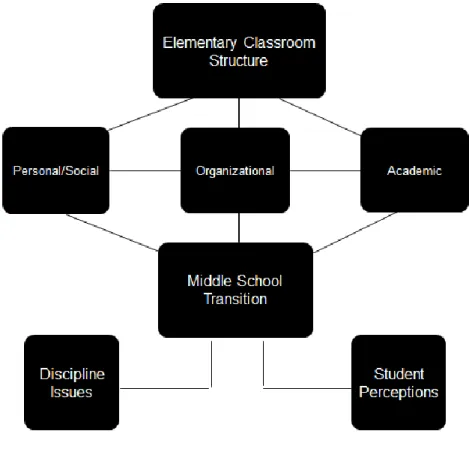
and Midgley (1989). The person-environment fitrelates to the interaction of the developmental needs of adolescents with the developmental opportunities of the
environment provided and the social opportunities given by adults. Eccles et al. (1993) suggested that a negative person-environment fit was found to exist between most middle school environments and the individual maturation needs of students. This mismatch between student developmental needs and elements of middle school results in declines in academic motivation and negative attitudes toward school which may result in a negative transition experience into middle school (Eccles & Midgley, 1989). The person-environment fit theory is the appropriate framework for this study as it suggests the importance of exploring the developmental needs of adolescents and the middle school environment. Furthermore, due to this study’s focus on elementary classroom structure and its impact on student behavior and the overall transition experience of each student, the person-environment fit served a practical purpose in determining the outcomes of this study.
Significance of the Study
A study of fifth grade classroom structure and its impact on sixth grade student behavior during the transition to middle school was important for several reasons. The discipline referral data of sixth grade students informed elementary and middle school principals about the impact of the elementary classroom setting and its effect on the team teaching structure of middle school. Additional data may provide an opportunity for further collaboration between elementary and middle school leaders to create a more nurturing and supportive transition process for all students. Although a few studies have been conducted on the impact of elementary classroom settings on sixth grade student
11
behavior, they were not specific to gender and the socio-economic status (SES) of students. Acquiring a deeper understanding of students' perceptions of their middle school transition experience may allow school leaders to implement needed assistance or supports that promote a positive transition experience for students. This study may also be significant in addressing the high school dropout rate issue. Few studies, if any, have analyzed student perceptions of their middle school transition experience as a stumbling block regarding their behavioral motivation. By identifying potential at-risk students at an earlier behavioral stage, transition programs that may serve as effective dropout preventions may be put in place by school leaders as students enter high school.
Procedures
This study was a non-experimental quantitative design using an anonymous survey. The purpose of this study was to examine the relationship between fifth grade classroom setting (team teaching vs. self-contained) and sixth grade student behavior. The gender and the socio-economic status of transitioning students served as variables of the study. A secondary purpose of the study was to examine middle school students’ perceptions of their transition from elementary school to middle school based on
elementary classroom structure. The study was conducted in a small, rural school district in the Southeastern region of the United States. The sample consisted of 230 sixth grade students who were selected using a convenience sampling technique.
For the first aspect of the study, the relationship between elementary classroom structures, gender, and student socio-economic status and student behavior were analyzed. The Student Transition Questionnaire (Akos, 2002) (Appendix A) was administered to sixth grade students at Green Middle School anonymously in order to
12
compare student perceptions of the middle school transition experience based on two different fifth grade classroom structures, team teaching or self-contained. Of the 230 sixth grade students at Green Middle School, 164 students returned the parent consent and student assent forms signed and participated in taking the Student Transition Questionnaire (Akos, 2002). Students were identified by their fifth grade classroom structure and the results from the data on their perceptions were organized into tables and discussed in the findings. The results from this study added suggestions to the existing research regarding the relationship between fifth grade classroom structures and the transition into middle school.
Limitations, Delimitations, and Assumptions
There were several limitations to this study that should be considered. The quantitative nature of the study limited the opinions of the selected participants in the study. The School Transition Questionnaire (Akos, 2002) contained items related to middle school transition based on previous literature. There may have been important aspects of the participants’ middle school transition experience not included on the survey which would have limited authentic data from the perceptions of the participants. The discipline practices among the feeder elementary schools in this study may have varied. Discipline referral data was essential to this study and any inconsistencies that may have existed among elementary principals would have impacted the study. The convenience sampling of the subjects limited the generalizability of the findings due to the small number of participants and the lack of minority students. The students’ perceptions of their middle school experience were limited to the first semester of their sixth grade school year. A longitudinal design that assessed the students’ perceptions
13
both before and after their transition into middle school would have minimized the limitations. A myriad of factors impact student achievement and behavior during the middle school transition experience and this study did not attempt to control those various variables.
The delimitations of this study included the selection of only one middle school and three feeder elementary schools. Also, the selected school district is a small, rural setting in the Southeastern region of the United States. Participation in the survey was limited to only those students who returned consent forms signed by their parent(s) or guardians. All special education students in inclusion classroom settings and who had no environmental setting accommodations were included in the survey. Special education students who received an alternate setting throughout the school day which were not included in the self-contained and team teaching models were not included in the study.
The researcher assumed that students responding to the survey were honest regarding their perceptions of their middle school transition experience. While the School Transition Questionnaire (Akos, 2002) had been administered in a previous study and altered specifically for this study, it was assumed the survey measured what it purports to measure regarding middle school transition. The researcher assumed to have access to pertinent subject data.
Definition of Terms
Academic Construct. The academic construct is a variable consisting of factors that affect the learning process and student achievement of a student during the middle school transition experience.
14
Core-Content Subjects. The core-content subjects are Mathematics, Reading, Language Arts, Science, and Social Studies.
Elementary Classroom Structure. The elementary classroom structure of a student refers to the fifth grade instructional organizational model. The classroom structures are self-contained and team teaching.
Middle School Transition. The middle school transition is the process of students completing their fifth grade in an elementary school building and then moving to a different building for sixth grade in a sixth through eighth grade middle school.
Organizational Construct. The organizational construct is a variable consisting of factors involving procedural issues such as changing classes, new rules, and school expectations during the middle school transition experience.
Personal and Social Construct. The personal and social construct is a variable consisting of factors involving pubertal developments, peer relationships, and emotional changes of adolescents during the middle school transition experience. Self-Contained Classroom Structure. The self-contained classroom structure is the
regular education classroom in which one teacher delivers the majority of the instruction of the core content subjects to the same group of students throughout the school year. Students generally are in the same classroom each day with the same teacher.
Socio-Economic Status (SES). The SES for this study is defined by those subjects qualifying for free or reduced lunch status. If a subject is eligible and receives a free or reduced lunch, he or she is classified as economically disadvantaged.
15
Team Teaching Classroom Structure. The team teaching classroom structure is the regular education classroom which involves two or more teachers responsible for the core content subjects for the same group of students throughout the school year. Students usually change classroom locations for each class.
Chapter Summary
As students transition into middle school, it is critical that they are well-prepared to address the upcoming challenges of middle school. Fortunately, many students experience a smooth transition into middle school and are successful in adapting to their new surroundings. However, some students struggle with the social and personal, organizational, and academic changes associated with moving into a middle school. For many sixth grade students, the middle school transition can be full of anxiety and stress as they adjust to their new surroundings. However, by analyzing the impact of
elementary classroom structures on student behavior and student perceptions of their transition experience, school leaders may be better informed to create positive learning environments for fifth grade students which promote a successful transition to middle school. By using the person-environment fit theory as a guide for this study, the researcher analyzed the relationship between fifth grade classroom structure (team teaching and self-contained) and student behavior, accounting for gender and socio-economic status of each student. Using Akos’ Student Transition Questionnaire, the study gave insight into student perceptions of their transition experience, and data may allow school administrators to better understand the process of middle school transition and the many facets that affect each student. It is hoped that the study will fill the gap in
16
the research concerning elementary classroom structures and the impact on student transition into middle school.
17 CHAPTER 2
REVIEW OF THE LITERATURE
The transition to a new learning environment can be an exciting and challenging process for adolescent students. For sixth grade students making the transition into middle school, progress and success during the sixth grade year varies as much as the personalities and behaviors of individual students. Some students flourish when presented with the opportunities of a different building, meeting new friends, and establishing a new identity after elementary school. An infusion of self-confidence and excitement prompts many students to excel in activities, such as band, athletics, and other school organizations that were not offered in elementary school.
In order to better understand the transition into middle school, one must first understand the common practices associated with the middle grades experience. Early adolescence is a time of rapid physical, intellectual, emotional, and social change that occurs at different times and rates for each adolescent. As young people enter puberty, growth and development is more rapid during this period than during any other
developmental stage other than infancy (Carnegie, 1989). For the first time in their lives, adolescents are given opportunities to create their own identity, progress into new social roles, and develop their own code of ethics to guide their behavior. The capacity for creative thinking increases significantly for young people, and they begin acquire the skills and mental capability to participate in expanded activities (Jackson & Davis, 2000). The changes in thinking practices include individual reflection, personal application to worldly issues, and changes in their perceptions of their environment. With adolescent
18
cognitive growth occurring continuously, middle school students require multiple forms of instruction and experimental learning in order to fully develop (NMSA, 2010).
Many innovations were made during the middle school movement to
accommodate the unique needs of young adolescent individuals. Team teaching, as the common component of the middle school learning environment, is the key to
academically successful schools because teams provide a foundation for a sense of family and a strong learning community (NMSA, 2010). Advisory periods can provide
opportunities for development of interpersonal bonds between teachers and students, strengthening organizational and study skills and various activities associated with individual development (Jackson & Davis, 2000). NMSA (2010) noted that
developmentally responsive middle schools include “school-wide services and programs such as guidance, clubs and interest groups, music and drama productions, student government, service activities, and sports” (p. 17). Middle school students who
experience positive peer relationships (Nelson & DeBacker, 2008), strong connections to their school (LaRusso et al., 2008), and engage in cooperative learning activities
generally attain higher levels of student achievement (Roseth et al., 2008).
However, for other students, the transition to middle school can prove to be a period of difficulty, awkwardness, and an overall struggle in adolescent life.
Unfortunately, many young adolescents struggle through their experience in middle school and do not satisfy basic human needs such as caring relationships with adults, guidance with dealing with psychological and biological changes of puberty, and establishing positive peer relationships (Carnegie, 1989). Middle school students may develop negative perceptions of their school climate and surroundings which contribute
19
to declines in academic achievement and motivation (Jackson & Davis, 2000). Following the transition into middle school, many students find their new surroundings less
supportive than elementary school and often experience losses in self-esteem and student achievement (Eccles & Midgley, 1989).
The prominent theme that will guide this research on middle school transition involving adolescents is the person-environment fittheory developed by Eccles and Midgley (1989). Many associate the challenges of middle school transition with two simultaneous changes for adolescents: puberty and a new school environment. Eccles and Midgley (1989) identified several cognitive, physical, and social-emotional needs of young adolescents and stage-specific developmental needs as students enter middle school. Specifically, (a) opportunities for decision-making to develop their intellectual skills and fulfill their desire for personal autonomy; (b) the need for continuity of classmates throughout the school day to promote positive friendship and peer bonding; (c) extensive interaction with teachers to fulfill the need for non-parental role models due to the increased feeling of emotional independence from parents; and (d) a need for academic development in a relatively non-competitive environment due to puberty and changes related to self-perception that cause insecurities and vulnerability to competition and peer comparison.
Eccles et al. (1993) provided a framework for later research and developments regarding middle school transition. The developmental and learning needs of young adolescents, as suggested by Eccles and her colleagues, within the framework of the middle school environment are further discussed in the review of the literature under
20
team teaching, discipline, personal and social, organizational, and academic factors of middle school transition.
After adolescent developmental needs were identified, Eccles and Midgley (1989) then studied the instructional and social changes that young adolescents experience during the transition into middle school. The following normative changes in the middle school classroom environment were identified as related to adolescent developmental needs: (a) less intimate and supportive student-teacher relationships due to the larger class sizes; (b) increased teacher-centered instruction and tougher discipline policies; (c) limited opportunities for student autonomy of classroom assignments; (d) increased academic standards, broader curriculum, and less instruction differentiation; and (e) tougher grading policies by classroom teachers. In sum, the negative factors of middle school include increases in ability grouping, whole-class task instruction and
organization, and comparative and public evaluation which all contribute to a negative fit in relation to adolescent development needs (Eccles & Midgley, 1989).
Contemporary research is included in the following literature review of middle school transition research and provides connections to the person-environment fit theory. With this study focusing on the effect of elementary classroom structures on student behavior and student perceptions of their transition experience, the person-environment fit provides the appropriate framework to guide the study.
21
Figure 1. The study of student perceptions of the middle school transition experience and student behavior within varying classroom structures will be guided by the person-fit environment theory (Eccles & Midgley, 1989).
22
The following literature review will focus on many aspects of middle school transition, including the various models and components of team teaching, discipline, and the three themes of personal/social, organizational, and academic transition factors. Each theme highlights issues associated with middle school transition and how it impacts student achievement and the experience across the transition into middle school.
Team Teaching
For nearly a century, researchers and educators concerned with improving the educational quality of school climates, have periodically focused on the serious
mismatches between the needs of young adolescents and the educational organization of schools (Eccles et al, 1993; Erb, 2001; Jackson & Davis, 2000). When reviewing the middle school movement from a historical standpoint, the implementation of team teaching was the first organizational step toward increasing student achievement by increasing the sense of belonging for students (Jackson & Davis, 2000). Erb (2001), having studied team teaching extensively, reported that benefits of team teaching for students include improvements in attitude toward school and learning. Teaming helped change public perceptions of schools as the new middle schools were viewed as more nurturing for students who were in the development stage of early adolescence (Friend & Thompson, 2010). The NMSA (2010) emphasized the importance of interdisciplinary teams that build a sense of community and increased curriculum integration. Effective team teaching has been shown to improve academic achievement for students with different types of backgrounds and across many grade levels (Jackson & Davis, 2000; Erb, 2001; NMSA, 2010).
23
While the structure and dynamics of a team can vary, the common understanding of team teaching can be described as two or more teachers sharing responsibility for the curriculum, instruction, and assessment of a common group of students (Jackson & Davis, 2000; NMSA, 2010). Team teaching is commonly referenced as interdisciplinary teaching or teaming, and the common group of teachers and students in the team teaching structure are called teams or pods (Jackson & Davis, 2000). Often large middle schools are subdivided into schools-within-a-school and this model is associated with the smaller learning community movement (NMSA, 2010). Based on observations, the ratio should not exceed 25 students to one teacher on a team in order to maintain positive student outcomes. Effective research-based principals of team teaching include providing sufficient planning time for each team, declaring team areas within the school building, and ensuring continuity among team teachers over a number of years (Erb, 2001).
When evaluating the effectiveness of team teaching in middle school, the importance of relationships between teachers and students is evident. Erb (2001) emphasized that the connectedness between students and teachers has been shown to improve teacher morale as well as the organizational climate and support for students. In the team teaching setting, teachers successfully establish supportive relationships with individual students and provide motivation for student development in many areas of their academics (Strahan, 2008). Wallace (2007) stated that smaller numbers of students on teams allows for more time to develop relationships and increases social bonding between students and teachers. Instead of using academic tracking, middle schools use cooperative learning groups, enrichment programs, and independent study periods in order to accommodate the variety of student competencies, interests, and abilities
24
(NMSA, 2010). The cookie cutter approach to the organizational structure of middle schools proved to provide an inappropriate learning environment for early adolescence (Jackson & Davis, 2000). Teachers on established and successful teams reported high levels of morale and peer cohesiveness, a unified system in supporting their students, and open communication as key components to their success (Cook & Faulkner, 2010).
A key issue for all middle school administrators and teachers is a lack of common planning time within interdisciplinary teams. Teachers need the time to plan and develop assessments appropriate for curriculum, refine instructional strategies, and collaborate with team members to improve student achievement (Jackson & Davis, 2000). Cook and Faulkner (2010) explained that common planning among teams can include three types of planning (interdisciplinary team, grade level, and professional learning) with each
functioning to address all concerns and needs within the team.
The interdisciplinary planning focused on individual student academic and behavior issues, parent conferences, guidance and support, and planning integrated lessons of instruction. During grade level planning, teachers address school policies and common assessment demands, homework procedures, and tasks such as field trips and special programs. Curriculum alignment, discussion of student assessment data, and the development of common assessments were all aspects of professional learning planning activities (Cook & Faulkner, 2010).
Friend and Thompson (2010) noted that common planning among teams allowed opportunities for teachers to discuss and develop specific plans for student learning needs, including low and high achieving students. Through collaboration,
25
thinking skills and involve hands on activities. Common planning is essential for team teaching to be successful (Erb, 2001).
Recent studies have shown that team teaching has not only improved the morale of teachers (Cook & Faulkner, 2010), but it has promoted professional growth among young teachers in various areas of effective teaching. Strahan and Hedt (2009) conducted a case study of two first-year teachers who worked together on a two-teacher team. With the assistance of the school’s literacy coach, the teachers took part in collaborative activities during their planning time which included assessing student needs, discussing instructional strategies, developing cross-curricular interdisciplinary units, and
identifying available teacher resources. The professional growth patterns of the teachers and documented student accomplishments suggest the possibilities of promoting
professional development of teachers through interdisciplinary team teaching. Graham (2007) conducted a study in which middle school teachers from the same grade level and subject area engaged in weekly professional learning activities focusing on improving teachers’ skills, knowledge of their curriculum content, and teacher classroom practices. Results indicated that professional learning activities have the potential to achieve significant improvement in teacher effectiveness.
There are various configurations regarding team teaching and how a team can be put together. Wallace (2007) explained that the four-teacher team is the most common and logical design with one teacher specialist in each of the core subject areas. In this arrangement, teachers have the opportunity to engage in interdisciplinary teaching and common planning allows for collaboration and addressing student learning needs. The
26
four-teacher team is best utilized with teachers who have a strong content background and preparation in one subject.
The two-teacher team is commonly used in sixth grade to assist in providing a positive transition from the one teacher, self-contained classroom commonly found in elementary schools to the four- and five-teacher designs found in many seventh and eighth grades in middle school. Subject areas are taught according to the strengths and interests of each teacher. In this design, one teacher may have primary responsibility for science and math while the other teacher handles social studies and science (Wallace, 2007). The two- or three-teacher teams require teachers to teach more than one subject which enhances opportunities for curricular integration (Jackson & Davis, 2000). Wallace (2007) added that the two-teacher setup allows teachers and students to spend more time together throughout the day and strengthens the social bonds between teachers and students as well as increasing peer interaction opportunities. However, Jackson and Davis (2000) stated that negative factors involving the two-teacher team include the requirement for teachers to be certified in more than one subject and the limited number of expert teachers in two or more subjects.
The term team teaching has a different meaning when considering students with special learning needs. Co-teaching, also referred to as inclusion, is another method of team teaching which is the sharing of instruction between a general education teacher and a special education teacher within a classroom that contains students with diverse
learning needs, including students with learning disabilities (Friend, Cook, Hurley-Chamberlain, & Shamberger, 2010).
27
Important responsibilities accompany team teaching students with special learning needs, including planning and teaching lessons, organizing instructional materials, and appropriately modifying assessments according to student disabilities. These
responsibilities must be clearly delegated between the two teachers. Co-teachers must be willing to compromise and collaborate on all aspects of instruction in order for a healthy teaching relationship to develop. Effective communication is essential for co-teachers to effectively meet student academic and social developmental needs (Sileo, 2011).
Friend et al. (2010) explained that interest and attention to co-teaching has intensified recently in education, mostly due to two factors. When the No Child Left Behind Act (NCLB) of 2001 was enacted, great commitment was made to students with learning disabilities. This commitment included: (a) a requirement for all students to have equal access to the general curriculum; (b) all teachers being required to be highly qualified; and, (c) accountability to ensure special education students’ performance is included in state standardized testing scores. The second factor intensifying interest and attention to co-teaching was the recent reauthorization of the Disabilities Education Act of 2004 that requires special education students to be instructed in a least restricted classroom environment, which includes a co-teaching classroom. Friend and Thompson (2010) noted that many schools paired special education resource teachers with
interdisciplinary teams in order to better communicate and meet the needs of students with Individualized Education Plans (I.E.P.).
While specific components of co-teaching can vary as much as teacher
personalities, there are six widely accepted co-teaching structures that teachers utilize based on student needs and the intended purpose of the instruction (Friend et al., 2010).
28
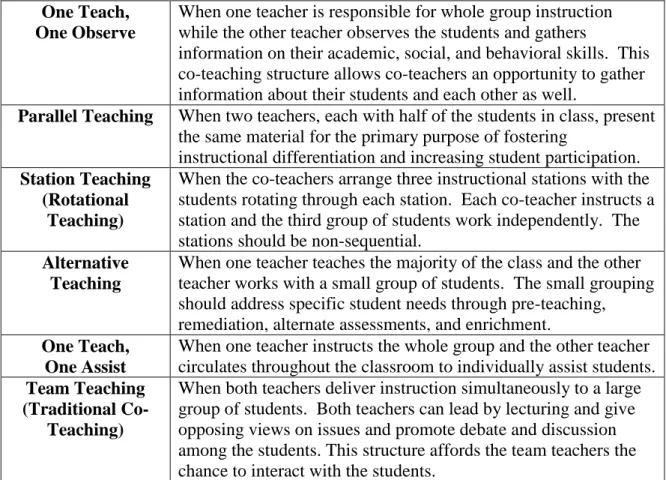
The six approaches and variations of the co-teaching models that are discussed in various studies (Friend et al., 2010; Sileo, 2011) are shown in Figure 2.
One Teach, One Observe
When one teacher is responsible for whole group instruction while the other teacher observes the students and gathers
information on their academic, social, and behavioral skills. This co-teaching structure allows co-teachers an opportunity to gather information about their students and each other as well.
Parallel Teaching When two teachers, each with half of the students in class, present the same material for the primary purpose of fostering
instructional differentiation and increasing student participation. Station Teaching
(Rotational Teaching)
When the co-teachers arrange three instructional stations with the students rotating through each station. Each co-teacher instructs a station and the third group of students work independently. The stations should be non-sequential.
Alternative Teaching
When one teacher teaches the majority of the class and the other teacher works with a small group of students. The small grouping should address specific student needs through pre-teaching, remediation, alternate assessments, and enrichment. One Teach,
One Assist
When one teacher instructs the whole group and the other teacher circulates throughout the classroom to individually assist students. Team Teaching
(Traditional Co-Teaching)
When both teachers deliver instruction simultaneously to a large group of students. Both teachers can lead by lecturing and give opposing views on issues and promote debate and discussion among the students. This structure affords the team teachers the chance to interact with the students.
Figure 2. Descriptions of co-teaching structures.
By using these models, co-teachers can vary instructional strategies and
classroom structure to address the I.E.P. goals and objectives of students with disabilities while challenging the remaining students within the classroom (Friend et al., 2010). By instructing all students with various learning strengths and weaknesses within the same setting, effective co-teaching practices ensure that every student is academically
29 Discipline
When analyzing student behavior and its relationship with the transition into middle school, the connection between discipline referrals and student achievement should be considered. When students misbehave, they are disruptive to classmates, less connected to their teacher and instruction, and consequently perform poorly academically (Freiburg, 2009). Research indicates a dramatic increase in discipline problems in middle school compared to elementary school (Algozzine, Christian, Marr, McClanahan, & White, 2008; Malaspina & Rimm-Kaufman, 2008; Theriot & Dupper, 2010; Spaulding et al., 2010). In their study elementary and middle school discipline referrals, Theriot and Dupper (2010) found that only 8% of fifth graders received discipline referrals while 26% of sixth graders were written up for an infraction, indicating an 18% increase in the number of referrals from fifth to sixth grade. Of all students who received a discipline referral, 8% of the fifth graders received in-school suspension (ISS) while 67% of sixth graders received ISS. However, comparing the same groups, 71% of elementary students with write-ups received out-of-school suspension (OSS) compared to 43% of sixth grade students who received a write-up (Theriot & Dupper, 2010).
In following discipline patterns among students, Spaulding et al. (2010) reported that the majority of students in all grade levels received very few discipline referrals. Of students in grades K-12, 89% of elementary, 73% of middle school, and 67% of high school students received one or zero referrals. In a similar study, Algozzine et al. (2008) reported that approximately 4% of the school population accounted for nearly half (46%) of the school’s discipline referral total. Of the 38 teachers at the school in the study, eight teachers were responsible for approximately half of the school discipline referrals.
30
Between kindergarten and fifth grade, the number of discipline referrals increased overall as students moved up grade levels, with fifth graders receiving the highest number of referrals.
The types of problem behaviors were analyzed, and Algozzine et al. (2008) reported that the problem behaviors that most often occurred were disruption, disrespect, and aggression/fighting, with 42% of the referrals being for disruption. Spaulding et al. (2010) noted that problem behaviors resulting in referrals “changed from peer-directed behavior (i.e., predominantly fighting) in elementary school to more adult-directed behavior (i.e., defiance and disruption) in middle school” (p. 79). Both elementary and middle school students received more discipline referrals in the afternoon, occurring around and immediately following lunchtime.
The impact of student perceptions of school climate on discipline issues was studied. Research shows that adolescents’ positive perceptions of school climate are both directly and indirectly related to fewer behavioral problems, including substance abuse and bullying (LaRusso, Romer, & Selman, 2008). Wang, Selman, Dishion, and
Stormshak (2010) found that middle school students reported a gradual decrease in their perceptions of a positive school climate from grades six through eight. As the positive perceptions of school climate decreased through their middle school years, the level of problem behavior increased.
Of all discipline referrals reported, approximately 75% occurred within the classroom (Algozzine et al., 2008; Spaulding et al., 2010). Wang et al. (2010) explained that the correlation between perception of school climate and problem behavior were found to be significant since lower levels of problem behavior were associated with
31
positive perceptions of school climate. Algozzine et al. (2008) noted that the increased discipline infractions within the classroom may have resulted from students attempting to avoid completing difficult academic tasks and assignments. Males showed higher levels of behavior problems and reported increased negative perceptions of school climate than females; but, overall, both showed a gradual increase in problem behaviors and decreased positive perceptions of school climate in grades six through eight (Wang et al., 2010).
The factors associated with pubertal development may play a role in increased discipline referrals for young adolescents. Carnegie (1989) explained that adolescent development is a period “of trial and error, of vulnerability to emotional hurt and humiliation, of anxiety and uncertainty that are sources of unevenness of emotions and behavior associated with the age” (p. 21). As middle school students attempt to establish new social roles and an evolving identity, inconsistent behavior patterns may emerge for adolescents who struggle to balance the physical and emotional changes that accompany puberty. Young people develop greater capacity for complex thinking and are better equipped to make decisions when faced with new circumstances; but their lack of
experience can result in poor decisions and negative behaviors (Jackson & Davis, 2000). As young adolescents desire peer acceptance and attempt to associate themselves with certain social groups, their behavior is influenced by their environment and outside influences such as the media. Young people, in their quest for independence, may test the boundaries of appropriate and inappropriate behavior and struggle between choosing right and wrong (NMSA, 2010).
When the social environment of the transition year does not fit the psychological needs of adolescents, students may experience a loss of motivation and interest in school,
32
and student behavior will be negatively impacted (Eccles et al., 1993). When analyzing student demographics and discipline referrals, there were increased discipline referrals involving males (Algozzine et al., 2008; Rusby et al., 2007; Wang et al., 2010), students of lower socio-economic status, and ethnic minority students (Malaspina & Rimm-Kaufman, 2008; Theriot & Dupper, 2010). However, Theriot and Dupper (2010) added that the comparison of the number of subjective and objective infractions raises questions about whether the misbehavior of middle school students increases or the middle school environment is more punitive and has harsher discipline policies for misbehavior.
Personal and Social Factors and School Transition
Perhaps the most unpredictable changes that occur during the transition to middle school involve the personal and social aspects of adolescents. Students may struggle with establishing an identity in their new surroundings in middle school, and these personal factors can have a negative impact on the transition experience. The factors associated with the personal and social theme of middle school transition are puberty, self-concept, peer acceptance, school connectedness, bullying, and peer aggression. As the personal and social factors are considered regarding middle school transition, the
person-environment fit theory notes that the pubertal development associated with the
psychological changes for adolescents includes a concept of self, peer relationships, and desired intimate relationships (Eccles et al., 1993).
Early adolescence can be characterized by the rapid physical and emotional changes caused by pubertal growth. As young people develop, hormonal shifts trigger physical changes such as increases in weight and height, abrupt muscle and bone growth, and changes in complexion, hair, and voice (NMSA, 2010). Dramatic physical,
33
emotional, and social changes emerge due to sexual development and a growing capacity to have sexual relations and reproduce (Carnegie, 1989). Females generally experience physical maturation earlier than males and the varying growth rates for each individual may cause awkwardness and embarrassment during the various developmental stages (NMSA, 2010). Amid the many concurrent physical and emotional transformations, adolescents are attempting to establish their own identity, adapt to new social
relationships, and create their own individual temperament (Jackson & Davis, 2000). Self-concept is defined as an individual’s beliefs about and evaluation of his or her characteristics, roles, abilities, and relationships. Early adolescents clearly define their sense of ability in different areas, and the doubts of sixth grade students are
generally more deep-seated than in elementary school (Wigfield &Wagner, 2005). Esch and Zullig (2008) reported middle school students who considered themselves
overweight had negative self-perceptions of their appearance and abilities. In the study, females with self-perceptions of being overweight often ate less food and took diet pills to lose weight. Overall, students with negative self-perceptions of their weight reported significantly higher levels of life dissatisfaction than students considered to be about the appropriate weight (Esch & Zullig, 2008). Physical appearance was the most powerful predictor of self-esteem levels for adolescents, and self-esteem showed to predict levels of school performance (Kutob, Senf, Crago, & Shisslak, 2010).
Although slightly outdated, Barber and Olsen (2004) conducted a study that provided insightful findings on adolescents’ self-concept during their middle school transition experience. Their study revealed positive effects of the middle school
34
featured small, family-like pods, and students experienced increased support from teachers, higher self-esteem, and less depression. Interestingly, students progressing from the sixth grade to the seventh at the same school experienced significant negative experiences involving school environment, psychological functioning, behavior issues, and interpersonal competence. This decrease in positive effects was associated with the move from the small pod atmosphere of sixth grade to a more traditional middle school setting for the seventh grade, which included more teachers, lower quality relationships with teachers and students, and less support from teachers and administration (Barber & Olsen, 2004). Parker (2009) deduced that groups of adolescent students experienced stable ratings of self-concept as they entered middle school, then experienced positive increases as their sixth grade year progressed, including a decrease in anxiety.
Another predictor of adjustment to middle school transition is the role of peer acceptance, social withdrawal, and the quality of friendships. As students transition into middle school, the role of peer relationships increases in the adolescent’s life. Both intensity and intimacy increase in peer relationships as adolescents attempt to establish their identity within their new school climate (Eccles et al., 1993). Young adolescents’ need for peer acceptance is often strong and the desire to be included in social groups can lead to a shift in allegiance from adults to peers (NMSA, 2010). Oh et al. (2008) found that 7% of sixth graders experience increased social withdrawal during the transition to middle school. Kingery and Erdley (2007) found that students with low levels of peer acceptance, fewer friends, and/or low quality of friendships in fifth grade generally had increased feelings of loneliness and lower levels of school involvement prior to
35
transition. Students who felt valued and respected by their peers reported higher motivation levels toward academic achievement (Nelson & DeBacker, 2008).
Early social competence predicted reduced discipline issues as students who were rated by their teachers as more socially competent were less likely to show discipline referral increases during transition (Malaspina & Rimm-Kaufman, 2008). Adolescents who were socially competent displayed positive attitudes toward school and adjusted to new experiences and surroundings more effectively than students with lower levels of social competence (Prelow, Loukas, & Jordan-Green, 2007). The inability to socialize with peers and adults can interfere with an adolescents’ normative development and consequently with their social, behavioral, and academic adjustment (Obradovic, Burt, Long, & Masten, 2008).
Veronneau and Dishion (2010) found that children who are rejected by their peers experience reduced accessibility to well-balanced peers from whom they could learn and acquire self-control, coping skills, and social competence. The rejected adolescents, particularly among male students, often feel angry and display aggressive behaviors toward their peers (Veronnean & Dishion, 2010). Bellmore (2011) found that the GPAs of socially rejected students were consistently lower than those of students who were socially accepted. The perceived level of a best friend’s academic valuing was found to impact a student’s learning, responsibility, and approval goals (Nelson & DeBacker, 2008). Oh et al. (2008) suggested that students making the transition to middle school who had a socially withdrawn best friend experienced an increase in social withdrawal over time. This finding revealed the significance of the impact of characteristics of friendships and predicting developmental trajectories regarding social withdrawal (Oh et
36
al., 2008). Furthermore, peer rejection and unpopularity in the fifth grade contributed to lower GPAs for students during the sixth grade, indicating that the effects of peer experiences in elementary school may carry over to middle school (Bellmore, 2008). Students with low peer acceptance are more likely to experience academic (Bellmore, 2008), behavioral (Malaspina & Rimm-Kaufman, 2008), emotional, and peer difficulties during transition to middle school (Kingery & Erdley, 2007).
Peer acceptance was highly stable during transition, but the number of friends for both boys and girls decreased significantly across time. Specific interventions for
students with low peer acceptance should focus on coping skills, problem solving, and social skills (Kingery & Erdley, 2007). However, the classroom structure that students are placed in may affect peer interactions and friendships. Wallace (2007) reported that students in a two-teacher, 50-student team score significantly higher on measures of social bonding to their classmates than a four-teacher, 100-student team. The smaller number of students and minimal changing of classes benefited students in a smaller setting in regard to social bonding. Students in the smaller interdisciplinary team also felt closer to their teachers than students in the larger, four-teacher configuration (Wallace, 2007).
The school connectedness of a student may impact his or her perceptions of the middle school transition experience. Using the Student Transition Questionnaire (Akos, 2002), Akos and Galassi (2004) studied student perceptions of their middle school and high school transition and how connected they felt toward their school. Overall, gender as a variable did not differ significantly regarding the perceived difficulty of school transition. However, girls were found to feel more connected to school during the middle
37
school transition whereas boys felt stronger school connectedness during the transition to high school (Akos & Galassi, 2004a). Research indicates that students who perceive their teachers as supportive and sensitive to their needs are more likely to feel stronger connections to their school and peers (LaRusso et al., 2008). Adolescents who felt valued in the classroom and experienced strong feelings of class belongingness “reported higher self-efficacy and mastery, performance-approach, intimacy, and responsibility goals” (Nelson & DeBacker, 2008, p. 183).
Hines’ (2007) work on the impact of divorce on student transition showed that adolescent girls were overall more adjusted than male students. Specifically, girls were better adjusted to dealing with peer pressure, following school rules, and most of the statistically significant academic characteristics. Boys from divorced families were found to struggle with homework, English, math, and adjusting to a larger building. However, boys were more adjusted in building relationships with their classmates, both male and female. Adolescent males also showed more adjustment to physical education than females (Hines, 2007).
Students who are victims of bullying or who bully other students themselves generally have a negative perception of the school’s psychosocial environment. Given the negative view of the psychosocial environment of school, these students are more likely to engage in aggressive behavior such as carrying weapons and performing acts of violence than students who do not experience bullying. Students with bullying
experiences show higher rates of skipping school and missing classes (Meyer-Adams & Conner, 2008).