SURGICAL SIMULATION: A FRAMEWORK BASED ON CORRELATING
PROCEDURE AND OUTCOME
von Myat Su Yin
Dissertation
zur Erlangung des Grades eines Doktors der Ingenieurwissenschaften
- Dr.-Ing. -
Vorgelegt im Fachbereich 3 (Mathematik & Informatik) der Universität Bremen
Gutachter: Prof. Dr. Christian Freksa (Universität Bremen) Prof. Dr. Peter Haddawy (Mahidol University)
I would like to express my deep gratitude to my advisor Prof. Dr. Peter Haddawy for his inspiring and invaluable guidance, infinite advice, motivation, and con-tinuous support throughout my Ph.D. journey. I owe my gratitude and thanks to Prof. Dr. Christian Freksa for his advice and guidance in developing this thesis. I would like to express my appreciation to both advisors for providing me for the opportunity to join the dual degree program and for their time and endless efforts from my admission until graduation from the program. I would like to acknowledge with gratitude to Prof.Dr. Siriwan Suebnukarn for her expert’s advice and extraordinary support in this thesis pro-cess.
I wish to express my appreciation to thesis committee members, Assoc.Prof Matt Dailey, Asst. Prof. Worapan Kusakunniran and Dr.Mores Prachyabrued for the valuable suggestions to improve my research work. I would like to thank Prof.Dr.Gabriel Zachmann, Prof.Dr.Rainer Malaka, Prof.Dr.Johannes Schoening for joining my defense presentation and for very constructive discussions. I would like to thank Dr.Pattanaphon Rhienmora for the wonderful collaboration.
This thesis would have been impossible without the scholarship and the fi-nancial aids from the Faculty of ICT. I would like to express my sincere gratitude to Prof.Dr. Supachai Tangwongsan, Assoc. Prof. Dr. Jarernsri L. Mitrpanont and Asst. Prof. Dr. Boonsit Yimwadsana for giving me with the opportunity to study in the pro-gram and their supports throughout my journey. My special thanks are extended to all the faculty members and the staffs from the Faculty of ICT. I would like to express my special thanks of gratidue to Dr.Songsri Tangsripairoj and Dr. Benjarath Pupacdi for their encouragement, support and advice on my early works. I also would like to thank the faculty members, the staffs and the students from the Faculty of Dentistry, Tham-masat University for their assistance in experiments. In addition, I have to thank the undergraduate students group who were involved in the development of portion of feed-back system in this thesis.
I would like to offer my special thanks to Holger Schultheis for his valuable advice and discussions for my research. I am extending my heartfelt thanks to all the members of Bremen Spatial Cognition Center and Cognitive Systems (CoSy) Lab for inspiring me to pursue a career in research. I am also grateful to Gracia Kanz, the staffs members from FB3 and International Office from the University of Bremen for their administrative supports. I would like to offer my special thanks to the Schroder and Fischer families for a home away from home while I was developing this thesis. Most especially, I must express my very profound gratitude to my parents, my sisters, and my brother for providing me with unfailing support, unconditional love and extraordinary care throughout my study. I would like to thank my husband for his continuous sup-port and encouragement, and for standing by me. Also thank to my fantastic seven for brightening my days.
OBJECTIVE ASSESSMENT AND FEEDBACK GENERATION IN DENTAL SURGICAL SIMULATION: A FRAMEWORK BASED ON CORRELATING PROCEDURE AND OUTCOME
MYAT SU YIN 5338194 ITCS/D Ph.D. (COMPUTER SCIENCE)
THESIS ADVISORY COMMITTEE: PETER F. HADDAWY, Ph.D., CHRISTIAN FREKSA, Ph.D., SIRIWAN SUEBNUKARN, Ph.D., WORAPAN KUSAKUNNIRAN, Ph.D., MORES PRACHYABRUED, Ph.D.
ABSTRACT
Fine motor skill is indispensable for a dentist. As in many other medical fields of study, the traditional surgical master apprentice model is widely adopted in dental education. Recently, virtual reality (VR) simulators have been employed as supplementary components to the traditional skill-training curriculum, and numerous dental VR systems have been developed academically and commercially. However, the full promise of such systems has yet to be realized due to the lack of sufficient support for formative feedback. Without such a mechanism, evaluation still demands dedicated time of experts in scarce supply. With the aim to fill the gap of formative assessment using VR simulators in skill training in dentistry, this thesis presents a framework to objectively assess the surgical skill and generate formative feedback automatically. VR simulators enable collecting detailed data on relevant metrics throughout a procedure. Our approach to formative feedback is to correlate procedure metrics with the procedure outcome in order to identify the portions of a procedure that need to be improved. Prior to the correlation, the procedure outcome needs to be evaluated. The scoring algorithm designed in this thesis provides an overall score and identifies specific errors and their severity. Building upon this, we developed techniques to identify the portion of the procedure responsible for the errors. Specifically, for the errors in the outcome the responsible portions of the procedure are identified based on correlation of location of the error. For some types of feedback one mode may be more suitable than another. Tutoring formative feedback are provided using the video- and haptic- modalities. The effectiveness of the feedback systems have been evaluated with the dental students with randomized controlled trials and the findings show the feedback mechanisms to be effective and have potentials to use as valuable supplemental training resources.
KEY WORDS: SURGICAL SIMULATION / FORMATIVE FEEDBACK / AUTOMATED OUTCOME ASSESSMENT / FORCE FEEDBACK / VIDEO-BASED FEEDBACK
Page
ACKNOWLEDGEMENTS . . . iii
ABSTRACT . . . iv
LIST OF TABLES . . . viii
LIST OF FIGURES . . . ix
CHAPTER I INTRODUCTION . . . 1
1.1 Scope of the Thesis . . . 3
1.2 Contributions . . . 4
CHAPTER II BACKGROUND AND RELATED WORK . . . 7
2.1 Dental Surgical Skill . . . 7
2.2 Assessment and Feedback in Skill Learning Theories . . . 8
2.3 Dental Surgical Skill Training and Assessment . . . 10
2.4 Simulation based Skill Training and Assessment . . . 12
2.4.1 Assessment of Skill using Procedure Analysis . . . 15
2.4.2 Assessment of Skill using Outcome Analysis . . . 16
2.4.3 Assessment of Skill using Both Procedure and Outcome Analysis 18 2.5 Feedback . . . 19
2.5.1 Feedback in Motor Skill Training . . . 21
2.5.2 Structure and Timing of Feedback . . . 23
2.6 Root Canal Treatment . . . 26
CHAPTER III OBJECTIVE ASSESSMENT AND FEEDBACK GENERATION FRAMEWORK . . . 29
3.1 Framework Overview . . . 29
3.1.1 Automated Outcome Scoring System . . . 31
3.1.2 Correlating Procedure and Outcome . . . 32
3.1.3 Feedback System . . . 34
Page
CHAPTER IV AUTOMATED OUTCOME SCORING SYSTEM . . . 39
4.1 Outcome Scoring System . . . 40
4.2 Experimental Evaluation . . . 45
4.3 Results . . . 47
4.3.1 Bland-Altman plots . . . 47
4.3.2 Information-based disagreement . . . 49
4.3.3 Mean Absolute Errors . . . 51
4.3.4 Perceptual effects . . . 52
4.3.5 Discriminatory Power of the AOS Scores . . . 53
4.4 Discussion . . . 53
CHAPTER V CORRELATOR: CORRELATING PROCEDURE AND OUTCOME . . . 57
5.1 Error Regions in the Outcome . . . 59
5.2 Types of Errors and Causes . . . 60
5.3 Procedure and Outcome Correlation . . . 63
CHAPTER VI VIDEO-BASED FORMATIVE FEEDBACK SYSTEM . . . 69
6.1 Video-based Formative Feedback System . . . 70
6.1.1 User Interface Design . . . 70
6.1.2 Video control panel . . . 71
6.1.3 Simulation panel . . . 73
6.1.4 Mode control panel . . . 74
6.1.5 Viewing aspect control panel . . . 75
6.2 Experimental Evaluation . . . 77
6.3 Results . . . 82
6.4 Discussion . . . 86
CHAPTER VII FORCE FEEDBACK . . . 89
Page
7.2 Haptic Formative Feedback . . . 95
7.3 Experimental Evaluation . . . 96
7.4 Results . . . 98
7.5 Discussion . . . 99
CHAPTER VIIICONCLUSIONS AND FUTURE RESEARCH . . . 101
8.1 Automated Outcome Scoring System . . . 101
8.2 Video-based Formative Feedback . . . 103
8.3 Haptic-based Feedback . . . 104
8.4 Correlator and Formative Feedback Framework . . . 105
8.5 Conclusion . . . 108
Table Page 2.1 Examples VR dental simulators . . . 12 2.1 Examples VR dental simulators (cont.) . . . 13 2.2 Metrics used for objective assessment of dental surgical skill . . . 15 4.1 Mean and standard deviation values for the scores of AOS and human
raters in all experiments . . . 47 4.2 Information-based disagreement between AOS and human raters with
confidence intervals . . . 49 4.3 Information-based disagreement between human raters R2 vs. R3, R4, R5 . 50 4.4 Information-based disagreement between human raters R3 vs. R4, R5, and
R4 vs. R5 . . . 50 4.5 Mean Absolute Error of pairs of AOS and human rater scores . . . 51 4.6 Chi-square values from Kruskal-Wallis tests for R2, R3, R4, R5
(Significant results are indicated with the bold-faced fonts . . . 52 4.7 ROC AUC values for AOS scores over all grades in all experiments . . . . 54 6.1 Intra-class correlation coefficient (ICC) between two evaluators (95%
confidence interval) . . . 82 6.2 Descriptive Statistics of Scores . . . 83 7.1 Pre-training and post-training outcome scores between control and
Figure Page 2.1 A saggittal cross-section of a tooth with an infected pulp
(Source:www.medindia.net) . . . 26
2.2 Tooth surfaces . . . 27
3.1 Objective assessment and formative feedback framework . . . 30
3.2 Framework components . . . 31
3.3 Automated outcome scoring . . . 32
3.4 Correlator overview . . . 33
3.5 Feedback system overview . . . 34
3.6 Simulator interface . . . 36
3.7 Evaluation plan . . . 37
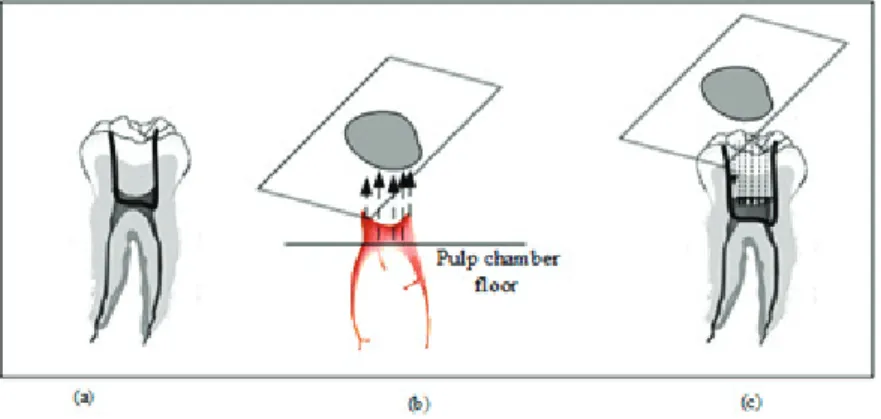
4.1 Virtual optimal template creation(a) pulp chamber location (b) projection from pulp chamber (c) removal of tooth mass for projected area . . . 41
4.2 Portion of score cube between surface and Max template . . . 41
4.3 Score cube z-axis cross-sectional view . . . 42
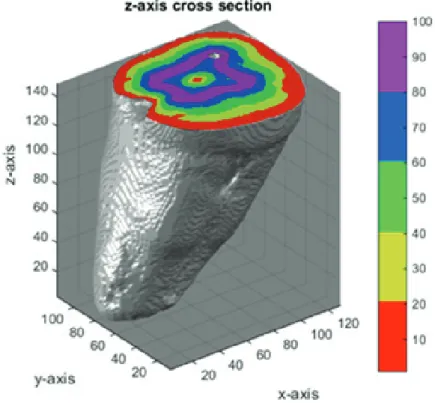
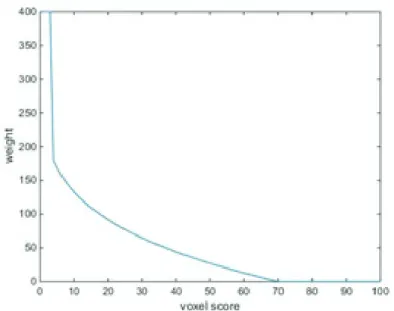
4.4 Non-linear weight function . . . 43
4.5 Tooth walls . . . 44
4.6 Segmentation of tooth into four axial walls (a) Original tooth walls (b) Adjusted tooth walls . . . 44
4.7 Wall score computation . . . 45
4.8 Example views the experiments . . . 46
4.9 Min, Max and Optimal templates overlaid on student’s drilling area from the lingual wall and occlusal view . . . 46
4.10 Bland-Altman plots of scores between AOS and human raters in three experiments . . . 48
4.11 Mean Absolute Error between AOS and human raters . . . 51
Figure Page
5.2 Operative errors . . . 60
5.3 Overcut example . . . 61
5.4 Undercut example . . . 62
5.5 Perforation example . . . 63
5.7 Outcome scores, errors and temporal information in procedure . . . 64
5.6 Procedure and outcome correlation flow . . . 65
5.8 Mapping between error information and collided voxels log . . . 66
5.9 Portion of the analysis of wall, error occurrence in time (Note: Occurrences of overcut errors are marked in red color.) . . . 67
5.10 Pseudo code of the correlator component . . . 68
6.1 Video playback user interface . . . 71
6.2 Video control panel . . . 71
6.3 Example view of video progress with different types of error . . . 72
6.4 Stage Borders on the video progress bar . . . 72
6.5 Example undercut error region on the tooth in the Simulation Panel . . . 73
6.6 Example kinematic graphs (top: Orientation, below: Force) . . . 74
6.7 Student and expert windows in the Replay mode . . . 75
6.8 Viewing aspects control panel . . . 75
6.9 The Buccal wall view . . . 76
6.10 Magnified view of the simulated tooth . . . 76
6.11 Flowchart of participants through trials . . . 80
6.12 Artificial teeth (a) Before preparation (b) Mounted on the artificial jaw (c) During preparation (d) After preparation . . . 81
6.13 Plot of the change [(post-training overall score) (pre-training overall score)] vs. pre-training overall score. . . 85
7.1 Opposite force training . . . 96 7.2 Comparison of force used in mesial wall between expert and novice in stage 3 97
Figure Page 8.1 Five aspects in fillet weld [208] . . . 103
CHAPTER I
INTRODUCTION
Precise psychomotor skills are essential for dentists in performing everyday tasks. Dental schools have allocated a significant portion of curriculum to skill training. Similar to the other disciplines of medicine, the mainstream approach to surgical skill training in dentistry is in the form of master-apprentice model along with practice and feedback. Trainees perform procedures under direct observation of an experienced sur-geon who can give feedback and assess their psychomotor skills. The assessor usually identifies errors made by the student during the procedure and provides formative feed-back on the outcome. A significant amount of time and resources are required in this classic approach to skill training. Usually, students use either the extracted teeth from patients or the plastic teeth in skill training laboratories. Due to anatomical variations in human teeth, the use of extracted teeth yields unstandardized training content which often leads to the different knowledge and skills acquired by the students. In contrast, artificial teeth facilitate the standardized training experiences, however, students have limited or no opportunities to train with rare cases as there is no pathological variation in plastic teeth. Regarding assessment, the assessor usually observes the students work provide the score and the verbal feedback on their preparation. With an increasing num-ber of enrollment in dental schools and a large student to faculty ratio, students are not receiving the feedback as much supervised training as would be desirable.
In response to these limitations, virtual reality (VR) simulators have been recently introduced into skill training and assessment areas of surgical curricula. As vir-tual procedures provide standardized training contents, VR simulators have been used in adjunct with extracted and artificial teeth benefiting to the students as they can be trained to learn from errors without consequences. VR simulators can collect all the kinematics variables while the users perform the procedure. A plethora of work has been established the objective assessment using metrics obtained from the simulators.
Existing studies mainly address the validity and reliability of simulators and metrics for assessment while paying less attention to the formative aspect of the assessment. With the summative assessment feedback currently available in most of the dental VR simu-lators, the skills training using VR simulators still demands the presence of instructors during the training and the trainees are still receiving the quality and quantity of feed-back before the simulators are included in preclinical training laboratories.
The formative assessment identifies the gap between the target and student performance and provides feedback on where, when, and how elements of students’ er-rors which can help the trainee to rectify or modify their performance on the next trial and increase the likelihood of achieving the desired outcome. Beyond the simple anal-ysis of kinematics, the procedure analanal-ysis on VR simulators can be extended by incor-porating the information from outcome analysis. The combined procedure and outcome analysis could be instrumental in generating the formative feedback for skill training. VR simulators are considered to be the perfect platform to investigate the formative assessment feedback as they facilitate the analysis of both procedure and outcome.
For a virtual procedure performed on a simulator, the resulting outcome is available at the end of a training task for further analysis. This outcome needs to be evaluated with an appropriate outcome assessment system to provide formative feed-back. Ideal procedure outcome from experts using VR simulator is easily accessible, yet the objective assessment of outcome is not a trivial task for 3D voxel structure com-monly used in VR dental simulators. The challenge lies in the assessment at a sufficient level of detail to allow for the identification of the performance gap in irregular 3D anatomy objects given the procedure specific evaluation requirements. Specifically, in the identification of the cause of the errors to determine which lead to the performance score. The content of the formative feedback could be generated from the combined analysis of procedure and outcome, other elements in the provision of feedback such as choosing the appropriate modality and the right timing to provide the feedback pose as challenges.
With the aim to fill the gap of formative assessment using VR simulators, we present a framework to objectively assess the surgical skill and generate feedback automatically using a VR simulator. To identify and localize error in a students
perfor-mance, we first obtain the flaws in the outcome by assessing outcome. In the subsequent step, we identify the portions of the procedure which are considered to be responsible for each fault and correlate them as the sources of errors. Finally, formative feedback is generated using the resulting correlation information on the error and the identified sources. The tutoring feedback generated enables students to learn to associate their actions with the resulting performance which is of importance in skill acquisition.
The framework addresses the problem of objective performance assessment and feedback generation in skill training using VR simulators. Relying solely on analy-ses performed on the data obtained from the simulator, the automated asanaly-sessment frame-work achieves an objective assessment of surgical skill that is free from subjectivity. Objective formative assessment feedback is generated by establishing the correlation between the way the procedure is performed and the resulting outcome.
1.1
Scope of the Thesis
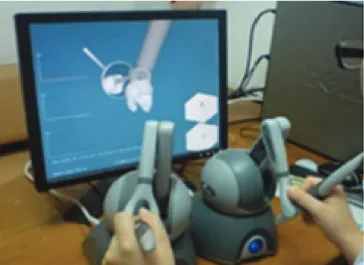
This thesis focuses on the objective assessment of skill and automatic feed-back generation for surgical skill training using a VR simulator. While we are interested in developing general techniques, a specific domain is required to formulate and validate the problem in a systematic way. We choose the area of surgical skill training using a dental VR skill simulator. The existing VR simulator is employed in this thesis to focus our attention mainly on the objective assessment and feedback and to a lesser extent on other technical and nontechnical aspects of simulations.
The dental simulator is selected because the evaluation scheme for the sim-ulation outcome can be set up in a straightforward manner in accurately deformed hard-tissue objects in the VR simulator. The focus is further narrowed to the access opening procedure of the root canal treatment procedure in endodontics.
The root canal endodontic treatment is necessary when the dental pulp is infected. In the access opening stage, a small hole is drilled out from the tooth surface to get access to the pulp chamber, the root canals, and the roots. The access opening is considered as the most important stage in the root canal treatment as the successful completion of the treatment relies on the shape and the size of the drilled area in this
stage. Accurate shape and size of outcome demand the precise fine motor skills of the dentists. While the frameworks design is based on a dental surgical procedure, many of the techniques implemented should generalize well to other surgical areas.
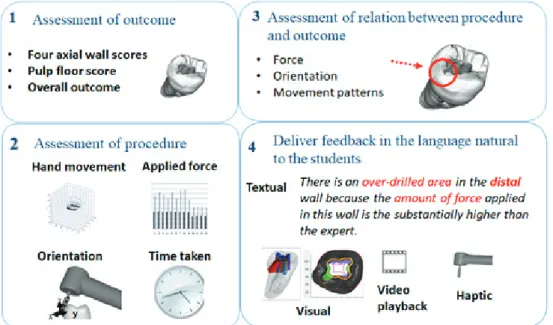
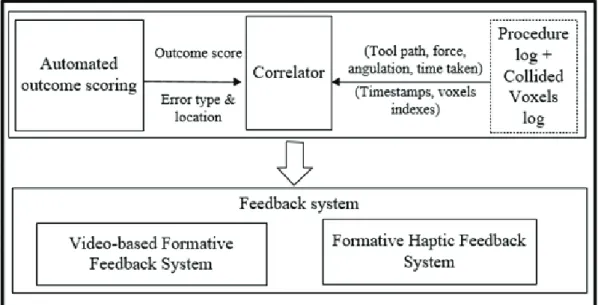
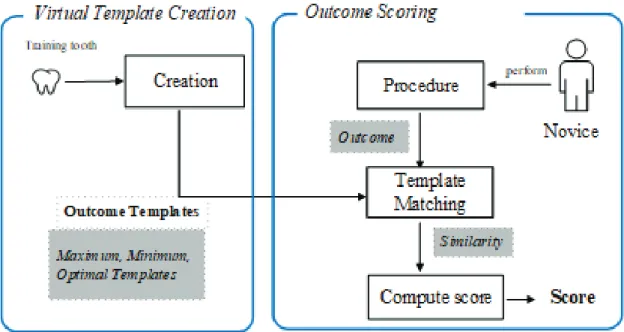
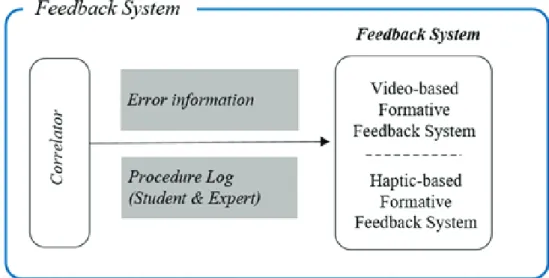
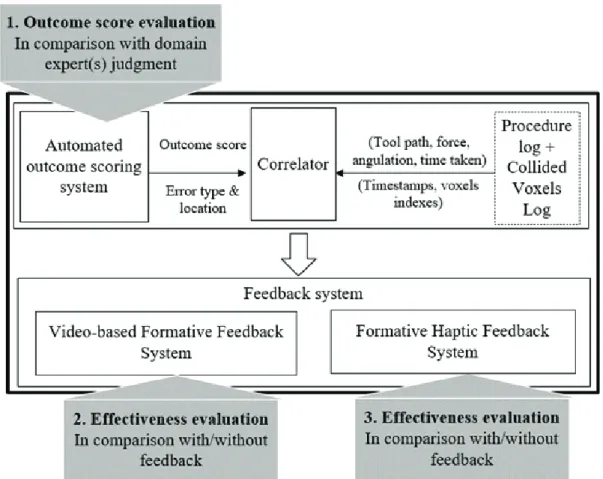
Firstly, the components of the objective assessment and feedback work are identified along with their input/output and define the structure of the frame-work (Chapter 3). Using a VR dental surgical skill training simulator, and the simulated procedure, an automated outcome scoring system is implemented. The outcome scores from the system are validated in comparison with the human experts (Chapter 4). The er-ror information from outcome scoring system is combined with the procedural analysis information, to associate the errors in the outcome with the procedure portions that are responsible for them. The formative feedback output from the correlator component is provided to the student in the form of video-playback (Chapter 5). The effectiveness of video-based formative feedback is evaluated in comparison with the traditional training approach without using the simulator and training using the simulator without feedback. The extended use of correlation information in the formative feedback is demonstrated with the use of haptic feedback as a means to train the correct application of force in a dental procedure (Chapter 7)
1.2
Contributions
The thesis contributes in a number of ways to the body of knowledge of the field. Effective formative feedback requires the ability to correlate procedure metrics with the procedure outcome in order to identify the portions of a procedure that need to be improved. The automated objective assessment and feedback generation framework in this thesis is based on correlating procedure and outcome. Indeed, determining the correlation between procedure and outcome has been identified as one of the important outstanding problems in surgical simulation [1,2]. We designed and developed a general purpose outcome scoring technique for dental surgery and implemented a prototype for scoring of outcomes in access opening for root canal procedure. This is the first scoring algorithm for endodontic surgery and can more precisely identify errors in the outcome than other commonly used techniques for outcome assessment in dental simulators. The
scoring algorithm provides an overall score and identifies specific errors and their sever-ity. Building upon this, we identified the portions of the procedure responsible for the errors. Responsible portions of the procedure are identified based on correlation of loca-tion of the error and the procedure kinematics variables. This problem is an instance of the well-known credit assignment problem [3]. We have contributed a tractable solution to the credit-assignment problem provided that the immediate effect of the actions are available. Once the tooth is drilled, the effects of drilling actions are available immedi-ately in the outcome. If the drilling actions lead to an error in the outcome, both spatial and temporal error information can be localized in a straightforward manner. Using the localized error information, we correlate the portion of procedure and error in the outcome, and the integrated information is translated into the precise and objective lan-guage using dental terminology and notation with which the trainee dentists are familiar as formative feedback.
The video-based formative feedback system presented in this study visual-izes the errors in the outcome and provides the trainee with an opportunity to review their performance to comprehend when and what aspects of the errors in the outcome. To the best of our knowledge, this is the first use of replay with visualization techniques to provide feedback in dental surgery. The video playback provides a large amount of information to the user in an easily intelligible form. We show the effectiveness of formative feedback using video-modality in motor skill training.
Additionally, we have demonstrated the extended use of formative feedback to train correct application of force in endodontic surgery with haptic feedback modality. The force-feedback represents the first time that haptics have been used to teach correct application of force in dental surgery. The haptic training is one of the current research issues in human computer interaction studies involving computer-based simulators and haptic devices [4–8]. A commonly used approach to haptic training consists of two phases. In the first phase, the expert’s movement is recorded in terms of position, veloc-ities, and force patterns. In the subsequent phase, the recorded movements are haptically and visually displayed to learners during the playback mode training. Playback can be either passive or active mode. In the passive playback mode, the trainees have to grasp the end-effector of the haptic device and are physically guided through the ideal motion
through a desired trajectory to acquire the kinesthetic understanding of what is required. In contrast, the trainee moves the end-effector through a desired trajectory at his/her speed in the active playback mode. Our approach deviates from the traditional haptic training approaches in utilizing the correlated information (formative feedback) from the correlator component. For the procedure stage containing portions of the procedure which are labeled as the portion responsible for a certain error region in the outcome, trainee has to undergo the haptic training. Using the expert’s force in the identified pro-cedure stage, the expert’s force is rendered to the student via a haptic device and the student has to cancel it with the opposite force. Training on the proper use of force is more meaningful with the sense of touch (haptic cues) involved in the countering force. The initial evaluation with dental students revealed significant changes in the applied force in post training performance.
Evaluation of both feedback components show that the methods significantly improve learning outcomes. While our work is implemented using a VR dental surgi-cal simulator, many of the components generalize beyond the domain of dental surgery, making the work of importance to many problems that involve training of complex psy-chomotor skills.
CHAPTER II
BACKGROUND AND RELATED WORK
This chapter includes background on relevant concepts from dental surgery, the existing approaches to skill training and assessment in medical and dental education with or without using computer-based simulators.
2.1
Dental Surgical Skill
Surgery is the branch of medicine that is concerned with diagnosis and treat-ment of injuries or diseases using operative procedures. Surgical competency consists of a combination of cognitive capacity, technical skill and non-technical skills such as communication, decision-making and leadership skills. The term, technical skill refers to the manual/physical skill that requires the individuals capacities in visual and haptic perception, fine-grained physical and temporal movement, and manipulation of instru-ments, while actively monitoring the overall task at hand [9]. Psychomotor skill is of paramount importance to the trainees as it serves as the basis for the successful comple-tion of adequately planned surgery. Spencer et al. [10] reported that 25% of a skillfully performed operation is thought to be attributed to manual dexterity. This 25% cannot be learned or improved by studying textbooks or visiting lectures [11] and has to be acquired by practicing the related movements numerous times.
Not limited to surgery, but almost all activities performed by dentists involve the use of instruments, like high-speed handpieces that can cut through and potentially harm any tissue in contact with the tool. Usually, these instruments are used in intraoral environments that have limited access challenges, offer less than optimal light and are often obscured by blood and saliva. Lastly, most procedures performed on teeth are irre-versible, and harm to the patient can occur if the procedures are performed incorrectly. Given these circumstances, a significant proportion of dental education is dedicated to
training psychomotor skills.
2.2
Assessment and Feedback in Skill Learning Theories
To provide training feedback, it is essential to understand how trainees learn to acquire skills and progress from novice to expert. Various learning theories exist, aimed at explaining and understanding how people acquire knowledge and skills such as those of Dreyfus and Dreyfus [12], Fitts and Posner [13], and Bloom [14]. The five-stage skills acquisition model by Dreyfus [12] has been applied to many disciplines in medical education [15–18]. The five stages, which individuals progress through in their acquisition of skills, are novice, advanced beginner, competent user, proficient user, and an expert. As a novice, an individual follows the given rules or plans in approaching the task mechanistically and needs supervision to complete them. To move to advanced beginner, individuals must have practice by applying the facts and rules to real situations along with proper feedback on the performance. After having considerable experience, competence develops in advanced beginners, and they learn to organize principles to ac-cess the particular rules that are relevant to the specific given task. Proficient individuals use intuition in decision-making and develop their own rules to formulate plans. At the expert stage, individuals act intuitively and produce a fluid performance that happens unconsciously, automatically, and no longer depends on explicit knowledge.
Fitts and Posner [13] described three stages that individuals undertake when learning a new skill as cognitive, associative and an autonomous. The learner gains a better understanding of the skill, and build the ability to execute the skill as he progresses through the phases. The cognitive phase involves the identification and development of the components and mechanics of the task. During this stage, the novice gathers and brings together reasoning abilities and experiences, which appear to relate to the performance of the task. In particular, the learner places great emphasis on the required responses and their ordering. In the subsequent associative phase, the prior cognitive activities begin to fade out. The learner links the parts into a smooth action via skill practices with feedback to perfect the skill. Major errors are significantly reduced as the learner refines responses. The learner focuses on better coordination and integration
by identifying redundant or inefficient responses. During this phase, feedback plays a significant role. In the automated stage, the essential elements of the skills have become so highly integrated that they are retained as an intact unitary skill. The acquired skill is deeply ingrained in the learner, and it could appear automatic or second nature to him. At this stage, errors have been greatly reduced, and less attention is required for the learner to perform the task. Regarding assessment, Millers pyramid conceptual model [19] provides a framework for assessing clinical competence in medical education. At the lowest level of the pyramid is cognitive levels of knowledge (knows), followed by application of knowledge/competence (knows how), demonstrated performance (shows how), and how a doctor (or dentist) performs in practice with patients/action (does). In the context of dentistry, consider the following as an example of the student passing through the stages of Millers pyramid. A dental student may first learn tooth anatomy and morphology, then learn how to recreate this knowledge using a material such as composite cast models. Afterward, they demonstrate that they can perform this skill in a simulated setting such as a plastic tooth or extracted patient tooth followed by being able to complete the same task for a patient.
Miller’s pyramid model has been used to match assessment methods to the competency being tested. It helps in formulating the objectives for a particular train-ing session with consideration on the achievement target. As an example, consider a training session on application of local anesthesia stage in a root canal treatment. The following are the examples of objectives and the level of Millers pyramid being repre-sented: (a) Understanding what is meant by cardiac risk from anesthesia and why its crucial (knows) (b) Knowing what to do if the risk is too high (knows hows), and (c) Be-ing able to demonstrate the application of local anesthesia on a patient (shows). Millers pyramid model for medical competence overlaps Blooms taxonomy of educational ob-jectives [14] which was revised by Anderson et al. [20]. Traditionally assessment meth-ods have been developed to test learning objectives within the cognitive domain and less commonly the psychomotor domain [21]. Bloom and colleagues [14] classified learn-ing objectives into one of three domains cognitive, affective and psychomotor. The stages in Blooms concept of the Psychomotor domain which were further developed by Dave [22] include imitation, manipulation, precision, articulation, and naturalization. In
the context of dentistry, William et al. [9] view that it is possible to reach precision by training using phantom heads while the fourth articulation level would refer to training in a clinical setting. The naturalisation stage relates to the skills of the competent prac-titioner which could be equivalent to the shows level of Millers model, while it would seem to be more likely to be observed as part of does or performance [21]. Theories of acquisition of motor skills differ, however, one unifying aspect is the importance of feedback in skill mastery [23].
2.3
Dental Surgical Skill Training and Assessment
In traditional curricula, dental students acquire the required psychomotor skills in the early stage by consciously following detailed textual and verbal instruc-tions, observing from demonstrations and simulated clinical activities showing how to carry out motor skill tasks. Then the students go through preclinical activities by assist-ing mentors in providassist-ing care to patients in the clinic. As the trainee gains experience, training involves performing irreversible operative procedures on patients under the su-pervision of experienced clinicians [24]. At this point, the training process typically centers on the provision of patient care; it still includes several practice sessions with su-pervisors in both laboratory and clinical sessions until they can perform independently. Repetition of clinical procedures to achieve clinical competence is widely accepted and adopted in dental education [25].
Laboratory training includes a wide range of exercises that require the in-tegration of theoretical knowledge to practice. Procedures are practiced on benchtop models such as typodont plastic teeth, extracted teeth from patients on manikin heads, and animal jaws (porcine or ovine) which closely resemble the dentistry of the human jaw. As there are no two identical teeth, variable external and internal anatomy when using the extracted teeth is an obstacle to deliver the standardized means of training and assessing surgical performance. Little or no mechanism to control anatomic variation or the presence of specific pathology means training is often done in a non-uniform fashion. Inconsistent learning experiences [26] and inconsistent feedback from different tutors [27] are the known issues associated with the use extracted teeth in dental skill
training.
Another drawback of plastic teeth and extracted teeth is that the practice can-not be repeated. Additionally, the look and the feel of artificial teeth are different from natural extracted teeth and usually have neither simulated anatomy nor pathology; those that do exhibit either of them are expensive [28]. With limited internal anatomical and pathological variations available in plastic teeth, the trainees opportunity for exposure to a range of examples with anatomical variation during training, an essential aspect of the skill training [29, 30], is restricted. In addition, the simulated activities in the laboratory are associated with high costs and are time-consuming to set up. Students interact with the supervising dentist on a one-to-one basis at the chairside while providing patient care; the presence of the patient in clinical learning environment adds extra stress and pressure to the students [31].
Assessment using typodont teeth is an almost universal competency assess-ment method of dental students before allowing them to perform procedures on a patient. Dental educators still rely upon the assessment of directly observed clinical procedures carried out under supervision (glance and mark) in assessing skill [21, 32, 33]. Incon-sistencies can occur between and within examiners which is a well-recognized problem in dental education [34]. The findings from studies by Satterthwaite and Grey [35] and Goepferd and Kerber [36] highlight the presence of inter-rater variations in dental pre-clinical laboratories. Satterthwaite and Grey [35] found the intra-examiner agreement of two experienced assessors to be 0.53 when assessing typodont preparations. Other studies relating to clinical and laboratory assessments in dentistry, inter-examiner agree-ment scores are found to be ranged between 0.012-0.94 [35–44]. Jenkins et al. [32] found that assessment scores of Class II cavities vary up to seven marks out of a thirteen point grading scheme. They also found out when the assessors are reluctant to give high grades if they think the preparation is the students work [34].
Another observation based assessment method that has been widely used in clinical skill evaluation in general medicine, albeit with lesser frequency in dentistry, is assessment via video recordings. In the video-based assessment, a student’s per-formance is video recorded as he performs the tasks and the examiners evaluate the performance later from the videos. Hassanpour et al. [45] compared video observation
of procedural skills (VOPS) to direct observation of procedural skills (DOPS) using a 10-point Likert scale. VOPS and DOPS scores are highly correlated and high intra-observer reliability is observed in their study. As the assessment can be done at a later time, multiple assessors can be included in VOPS conveniently.
2.4
Simulation based Skill Training and Assessment
In dentistry, a handful of VR simulators are dedicated to teaching psychomo-tor skills. Table 2.1 lists a few examples of the pedagogical use of virtual reality sim-ulations (both commercial products and academic prototypes) in various branches of dentistry. One advantage of the simulator is the facility to point out to trainees their errors after every procedure or allow them to assess their procedural mistakes.
Table 2.1: Examples VR dental simulators
No. Studies Branch Procedures Evaluation
1 VRDTS
[46]
Endodontics Drilling, caries removal and cavity preparation. Filling cav-ities
2 IDSS [47] Endodontics Detection of carious lesions Y 3 VDP [48] Periodontics Pocket probing, calculus
prob-ing, and removal
4 Voxel-Man
Dental [49]
Endodontics Cavity preparation, Carious le-sion removal
5 Forsslund [50]
Endodontics Drilling, Wisdom teeth extrac-tion
Y
6 Simodont
[51]
Endodontics, Drilling, decay removal, cavi-ties filling
Y ProsthodonticsCrown and bridge removal
7 Periosim [52]
Periodontics Pocket probing, calculus detec-tion and removal, scaling and root planing
Y
8 HapTel
[53]
Endodontics Drilling, caries removal and cavity preparation
Y
9 VirDenT
system
ProsthodonticsTooth preparation (crown and bridges), teeth grinding
Y 10 iDental [54] Endodontics, Peri-odontics
Drilling, decay removal
Pocket probing, calculus detec-tion, and removal
Table 2.1: Examples VR dental simulators (cont.)
Studies Branch Procedures Evaluation
11 VirTeasy [54] Odontology, En- dodon-tics, Prosthodon-tics, Implan-tology
Drilling, caries removal, Im-plant
Y
12 Simulator used in this study [55]
Endodontics Drilling, access opening, crown preparation
The Virtual Reality Dental Training System (VRDTS) prototype [46] allows the trainee to practice cavity preparation and virtual restoration of teeth using the haptic devices. The system is at an early stage of development, and the detailed technical infor-mation is not available [56]. The Iowa Dental Surgical Simulator (IDSS) [47] supports the detection of carious lesions (cavities) on the surface of teeth using a haptic prob-ing system. Originally, it was designed to support the virtual simulation of the clinical evaluation of tooth decays using a probe, and then the focus changed on prosthodontic restorations (crowns). The virtual Dental Patient (VDP) by Marras et al. [48] aims to as-sist trainees in familiarizing themselves with tooth anatomy and handling of instruments used for drilling as well as challenges associated with the drilling procedure [57]. The trainee can perform virtual tooth drilling within the oral cavity which is constructed us-ing anatomical data [57]. The Voxel-man dental simulator [49] supports trainus-ing manual dexterity and problem-solving skills in using virtual teeth models with carious lesions. The Forsslund Dental system [50] supports wisdom teeth extraction training using the haptic devices. The MOOG Simodont Dental Trainer [51] is an immersive virtual re-ality unit that allows dental students to be trained in operative dental procedures with haptic, visual, and audio sensory feedback. Teeth are simulated with pathological dental conditions and and it includes simulation of drilling, removal of tooth decay, restoring cavity preparations, crown and bridge preparations as well as a mirror reflection. In addition to practicing manual dexterity skills, the system allows users to select virtual
patient profiles, supports to perform diagnosis, treatment planning and provides auto-matic user evaluation [58]. The PerioSim [52] simulator is the first VR simulator that includes training and assessment of performance in periodontics procedure. Students can perform periodontal pocket probing, calculus detection, and calculus removal using the haptic device. The HapTel [53] consists of a haptic unit adapted from a computer gaming device, includes two screens that enable the user to look down onto a simu-lated jaw as if they were treating a real patient. The simulator supports caries removal cases with different difficulty levels. The Virdent [59] is designed for training users on restorative dental procedures, particularly in how to prepare teeth (crowns and bridges) in fixed prosthodontics [59–61]. No additional technical information is available re-garding feedback and evaluation for the Virdent simulator. The iDental simulator uses the voxel-based modeling based on the linear list for drilling simulation [54], and per-formance metrics are defined for the quantitative assessment of three periodontics pro-cedures. VirTeasy simulator [54] is designed for teaching implantology. Trainees can obtain an objective evaluation of an action and review them at any time while perform-ing the procedure and is also possible to save the information for the subsequent review and assessment. Automatic skills assessment is said to include process and result of a student preparation, objective evaluation is based on predefined standards such as a reference preparation of a cavity or a crown.
Recently, robotic patients (DENTAROID [62]) have been introduced into dental education. Automatic dialogue features enable the robotic patient to communi-cate with the trainee just like with an actual patient [63]. Medical emergencies can be simulated with robotic patients [64] permitting the trainees to gain clinically realistic experiences [62].
Using simulators, dental students technical skill can be evaluated from the way the procedure is executed (procedure analysis) and from the quality of procedure outcome. In this regard, we categorized existing objective assessment using VR simula-tors into three groups as (a) assessment of skill using procedure analysis (b) assessment of skill using outcome analysis (c) assessment of skill using both procedure and outcome analysis.
2.4.1 Assessment of Skill using Procedure Analysis
The assessment of skill by procedure analysis using a VR simulator usu-ally begins with the identification of interesting metrics, which are likely to distinguish expert behavior from novice behavior and can be acquired from the simulators while operators perform surgical tasks. Statistical models are then created using the acquired metrics to characterize the factors that constitute the difference between expert, compe-tent, and novice. The assessment of student performance is carried out by computing the statistical similarity between the student’s model and the prior ones. While the primary function of metrics is to provide the novice with objective feedback on performance, they also allow the trainer to provide formative feedback to aid the trainee in acquiring the skill [65]. A number of metrics useful for objective assessment can be extracted from simulators. Metrics commonly used in the objective assessment of dental surgical skill are summarized in Table 2.2.
Table 2.2: Metrics used for objective assessment of dental surgical skill
Metrics Description
Traveling distance Total traveling distance with respect to handpiece move-ment
Force Force utilization in the x, y, and z-axes (x: mesio-distal di-rection; y: facio-lingual didi-rection; and z: long axis of the tooth)
Task completion time The total time taken to complete the task
Outcome score Based on errors found in the incisal, incisal, labial-gingival, and marginal regions of the tooth.
Tooth mass loss The difference between the amount of tooth mass measured in grams before and after procedure
Mirror position A measure to quantify the extent of bimanual dexterity through evaluation of the direct relationship between the mirror position and the handpiece
Objective feedback in skill assessment in dentistry using VR simulator was first introduced by Buchanan et al. [66] using the DentSim simulator [67]. The DentSim simulator consists of a phantom head with plastic teeth, a set of dental instruments, in-frared sensors and an overhead inin-frared camera with a monitor and two computers [57]. As the student performs a procedure, the location of the instrument and the resulting outcome are displayed on the monitor while real-time evaluation is done in comparison
with the optimal performance kept in the repository. With limited anatomical and patho-logical variations available in plastic teeth, trainees are exposed to the general cases only. As the sensors are used, the tracking can be interfered from the way the handpieces are handled. In the Voxel-man dental simulator [49], the percentage of caries removed, the portion of healthy tissue removed are taken into consideration in computing the scores. To evaluate the wisdom teeth extractionm the Forsslund Dental system [50] measures the removed amount of bone, enamel, dentin, and pulp on the virtual tooth. Likewise, Haptel simulator [53] measures the percentage of caries removed and the percentage of hard tissue removed and provide as a performance score [57].
The haptic dental VR simulator developed by Rhienmora et al. [55] is used in this study. The simulator supports the simulation of the dental procedures which involves the drilling acts. The simulator collects various kinematics variables while the user performs the procedure. The collected variables have been used to assess the quality of the performed procedure using hidden Markov models [55]. The details of the simulator is provided in Chapter 3. Rhienmora et al. [55] also presented a mechanism for objective feedback in skill assessment using an intelligent dental skill-training simulator. In their approach, once the student finished performing the procedure, the performance is classified as either novice or expert. User performance is modeled using the hidden Markov model (HMM) built from the kinematic variables such as the force applied, tool position, and tool orientation. The findings indicate their approach achieved high accuracy in classifying users into novice and expert and the generated feedback also received a high acceptance from experts.
2.4.2 Assessment of Skill using Outcome Analysis
In skill laboratories, students observe demonstrations of a task and perform supervised practice with mentors. To assess the performance, the mentor observes the students actions throughout a procedure. Assessment of the procedure outcome is usu-ally carried out at the end of training session, and the mentor provides feedback regard-ing errors present in the result and suggestions to improve the procedure.
The idea of using the operative product as a measure of technical compe-tence using bench model representation was first presented by Szalay et al. [68]. Their
study evaluated the quality of final product across six benchtop stations. The authors conclude that the method possessed construct validity. Additionally, they found a corre-lation between OSATS (Objective Structured Assessment of Technical Skills) and prod-uct analysis based assessment. Their finding is later reinforced by the study in Datta et al. [69]. Datta and colleagues [69] assessed the outcome of a vascular anastomosis on a bench model by measuring the leakage across the anastomosis and the cross-sectional area at the narrowest point of anastomosis. They found a significant correlation between these outcome measures and surgical dexterity.
Wierinck et al. [70] published the first study involving the evaluation of preparation using the dental VR simulator. In their research, Class II amalgam prepara-tion on the lower left second premolar was performed, evaluated and graded on DentSim simulator [67]. An initial overall preparation score of 100 was assigned to each tooth preparation. The preparation was assessed by three parameters, namely, outline shape, cavity floor, and cavity walls. The error score of these parameters was later deducted from the initial maximum score. The passing grade for this task was defined at 60 by the grading system.
The E4D Compare software in its Beta version presented by Renne et al. [71, 72] evaluated students all-ceramic preparations compared to three calibrated clini-cians. The gold standard preparation was agreed upon by the calibrated faculty mem-bers involved in prosthodontics course. The ideal and the student’s preparations were scanned into the program with a laser scanner resulting in high-quality 3-D models. The two digital models were aligned based on common anatomical features of the adja-cent teeth. Using the aligned teeth, the faculty member marked the finished line of the student preparation and the ideal standard, utilizing intuitive automatic margin finding tools and further refinement with manual tools. The areas of discrepancy in reduction (over-reduction or under-reduction) between two outputs were presented as color-coded regions, and the percent surface area of each color was calculated and responded back as the numerical value. The distance threshold between the ideal and the student’s prepa-ration was defined as 300 , the student’s work varied from the ideal prepaprepa-ration within this range was considered as acceptable. The findings indicated that E4D software is significantly more precise method than the hand-grading method.
Zou and colleagues [73] presented a laser-scanning Cavity Preparation Skill Evaluation System (CPSES) for cavity preparation evaluations. The system scans evalu-ated and provided the scores on the outline form and depth of cavity preparations against a theoretical ideal. Firstly, the ideal cavity preparation was scan into the program, which was subsequently used to compare with the work prepared by the student. The CPSES measured over drilling or under-drilling (insufficient drilling) and displayed the discrep-ancies using different colors. The outline form score calculation is mainly based on the measurements associating with the width and depth of the prepared cavity and desired cavity. The student outline form score was computed from the outline form over drilling, and outline form drilling insufficiency score. And the depth score was calculated from over drilling and drilling insufficiency of the preparation depth data. The total score consisted of the score combined with form and depth scores. The authors noted the need for training before usage and the cost as drawbacks.
Currently, several computer-based evaluation systems are used in preclini-cal training, including the NISSIN Fair Grader 100 (Japan), KaVo PrepAssistant (Ger-many) [74], [75]. These systems can rapidly scan students cavity preparation samples, accurately compare them with standardized cavity preparation models, and then gener-ate objective 2D or 3D feedback data on screen for the student.
2.4.3 Assessment of Skill using Both Procedure and Outcome Analysis The assessment of clinical skill performance of experts and novices using both process and outcome is found in a study Suenukarn et al. [76]. In their study, the assessment of performance process was based on the couples of kinematic measures gathered from the simulator while the user performs the procedure. The experiment was set up for the tooth preparation of a metal-ceramic crown on the upper left central incisor. Suebnukarn et al. [76] performed a comprehensive evaluation of all process measures including angulations of the instrument; force used, and task completion time. The re-sults were saved and were graded by an experienced expert using a haptic VR simulator as the measurement can be made using the virtual bur and adjacent tooth. All tooth sur-faces (incisal, facial, mesial, distal and lingual) were evaluated and graded using three evaluation parameters: depth, inclination, smoothness. Three-point scales (with 2 on
the scale defined as ”reference”, 1 as ”acceptable”, and 0 as ”unacceptable”) were em-ployed. Thus, the maximum score for each surface was 6, and the total maximum score was 30. The findings indicated that task completion time and differences in preparation outcome successfully distinguished between novice and expert performance.
Their work was later expanded to assess outcome variables with the inclu-sion of bimanual coordination and force utilization in [77]. The study task was an ac-cess opening procedure on the upper right molar with a haptic VR system [76]. An expert graded the outcome of the preparation. The four-point scale used in their study is with four on the scale defined as ”minimally extended cavity affording unimpeded access to/and visibility of the orifices of all canals presents”; three as ”a coronal cavity permitting effective debridement of the canal system without prejudice to subsequent restoration; two as ”incomplete removing of pulp chamber roof and/or inadequate reten-tion form for the maintenance of an effective dressing”; and one as ”unidentified canals and/or perforation”. The referenced templates in the outcome scoring system presented in this thesis are designed based on their grading scheme which we will discuss in detail in Chapter 4.
2.5
Feedback
Feedback is the information a trainee receives about his performance of a motor skill during or after the performance. Van de Ridder and colleagues [78] de-fined clinical feedback as specific information about the comparison between a trainees observed performance and a standard, given with the intent to improve the trainees per-formance. Evidence in motor learning indicates that feedback is essential and some form of feedback is necessary for learning to take place [79–85], and it has been suggested that its absence can prevent progress [86]. Among several possible channels used in the provision of feedback, the verbal feedback given during the surgical task is of prime im-portance in skill training. Based on the findings of Kannappan et al. [87], both positive and negative verbal feedback could be the potent stimulants for improved performance and motivation. Porte et al. [88] argue that the verbal input from an expert instructor could lead to lasting improvements in technical skill performance. Despite the known
benefits of feedback, instructors often hesitate in giving feedback, specifically in the ver-bal format of the sensitivity of verver-bal feedback aspects such as the tone, the timing, and the composition which could alter the positive feedback into negative one instantly [89]. Feedback, whether summative or formative, is an essential component of skill acquisition [90]. Summative feedback describes how well a student achieves a result in the form of scores or grades. With its nature as a measure for an assessment of learning, the advice the expert would make to the trainee is not adequately captured with the summative feedback. Formative feedback is considered as an assessment for learning, and it is the information communicated to the learner in response to some action on the learners part. Learners can use the formative feedback to modify their thinking or behavior to improve their skills. The various information can be conveyed as formative feedback (e.g., verification the action, explanation of the correct answer, hints) and can be administered at various times during the learning process (e.g., right after an answer, at the particular interval). Formative assessment in the form of paper feedback after the procedure is currently the gold standard in providing feedback to surgical trainees [89]. Although this approach is cheap, fast, and easily reproducible, due to its retrospective post-procedural timing, the precision and accuracy of the content heavily rely on the information being retrieved from experts memory.
In dental education, practice teeth prepared by students in clinical laboratory sessions are usually evaluated by experienced dentists primarily using visual inspection. During clinical laboratory sessions, the trainees require feedback on their work to move onto the next procedure. Consistent and accurate feedback from the faculty is vital for the students to achieve a higher level of performance before advancing to the clinics. However, the degree of consistency and accuracy of feedback could vary considerably, with many sources contributing to disagreement about student work, including the raters understanding on the grading scale, rater calibration, training for assessment, and per-sonal influences [91].
2.5.1 Feedback in Motor Skill Training
The acquisition of motor skill is a specialized process involving many recep-tors. Information received through sensory receptors is referred to as somatic sensation
which includes both exteroception and proprioception [92]. Thus, two types of feed-back for motor skill acquisition are task-intrinsic and task-extrinsic feedfeed-back. Intrinsic feedback is sensory information inherently produce as a natural consequence of a move-ment. This feedback could originate from sources outside of the body (exteroception), or from within the body (proprioception). Extrinsic feedback is provided to the learner by sources external to the learner but from the environment. It is usually the informa-tion about the outcome of the movement that performers cannot obtain on their own. Extrinsic feedback is divided into the knowledge of their results (KR) or knowledge of performance (KP). KR provides a performer with information about the success in reaching the desired outcome. Without KR, it is difficult for students to know if their performance is close or far from the desired outcome. The error information is obtained from a comparison of the desired and actual outcomes and then may be provided by a trainer as KR (e.g., the pulpal depth was 1mm too deep) [76]. Feedback provided by an instructor when the student has completed all or part of the dental task, such as cavity preparation [93, 94] as an example of KR. The availability of KR feedback dur-ing simulated practice has been identified as one of the most critical factors that lead to effective motor learning [93, 95–98]. KP provides the performer with information about the quality and quantity of their actions. It represents information about the kine-matics (pattern or speed). This information is gathered from the comparison between the desired parameters of the movement with the actual parameters (e.g., was the hand-piece held perpendicular to the long axis of the tooth when it should have been) [76]. Information about the quality of performance and movement characteristics known as knowledge of performance (KP) [93, 95–98]. With KP and KR, the performer can make appropriate adjustments to the movement on the next stage and increase the likelihood to achieve the desired outcome. On this basis, we can consider proprioceptors and exte-roceptors as sources of data that the performer can access to regulate and modify their performance during the learning process. In general,
• proprioceptorsprovide sensory feedback that accompanies the movement of one’s own body, such as signals of body and limb movement, and position.
ob-jects on the environment, mainly from the organs such as the eyes and ears.
Each time a motor response is made, the relationships between its contained sensory components (proprioceptive and exteroceptive) consequences and the initial conditions (e.g., tooth anatomy, the location of the tooth in the mouth, the posture of the operator, etc.) are established. This relationship is registered along with the perfor-mance outcome in the operator. Through practice, the operator comes to associate the movement with particular sensory consequences and the output product. During train-ing, the availability of (KR) and (KP) enable connecting motor response to the output and accelerate the formation of an optimal association between them.
Feedback is the most crucial instructional component for simulation-based medical education, which centered at procedural skills training at its core. The simula-tion setting is considered as an ideal environment for providing feedback as trainees can practice the essential physical movements without risking the patient safety. Without the feedback, the trainee trained with the simulator might be unaware of committing an error and persists in this error, which might be, repeated or deliberately practice leading to the reinforcement of undesirable behavior rather than corrected [99]. With VR simu-lators, the delivery of feedback no longer relies on the availability of the expert during or after the skill training. It can be more explicit and more objective than human ex-pert feedback. Several studies have investigated the impact of feedback on skill training using simulators; and the results are reportedly mixed between studies.
The role of feedback in dental skill training has been investigated using conventional phantom heads [94], computer-assisted simulators [100], and VR simu-lators [101, 102]. In operative dentistry training, using the DentSim simulator [67], Buchanan [66] shown the effectiveness of simulators in providing objective formative evaluation and in enhancing the rate of acquisition. Using the plastic teeth and dental handpiece, the students perform procedures on the Dentsim. Augmented visual feed-back is generated based on the information from the motion tracking sensors and the students work compared to the standard preparation. In a study by Wierinck and col-leagues [100], using DentSim simulator [67], they reported that when only the visual feedback from the simulator is provided to novices, short-term enhancement in perfor-mance is observed which is not found in retention. In the subsequent study by the same
authors [103] found that standardized feedback from an expert during the training ses-sion found to be more effective for retention and transfer of skill in relative to the VR feedback alone. In endodontic education, Suebnukarn et al. [101] demonstrated that augmented kinematic feedback from a simulator on movement patterns during the ac-cess opening for root canal treatment resulted in an enhanced performance at the early stages of training. Amid having the mixed results, feedback from the VR simulators is found to be useful as a means of improving performance and the combined feedback from experts and the simulator during the training are found to be useful in the early stages of skill learning and assisted in retention to a certain level. The findings from existing study suggest that a combination of instructor and visual display (VR)-driven feedback method could result in faster skill acquisition relative to VR alone [93], which leads to the studies to investigate the use VR dental simulators as adjuncts to traditional training approaches [44, 104–106].
2.5.2 Structure and Timing of Feedback
Feedback can be in the form of textual, verbal or tactile based on the context in which it is generated. Content presented in textual format could be the simplest form of feedback. However, feedback consisting of a significant amount of textual informa-tion could distract the student. Also, it may not be adequate for motor skills, as learners do not receive visual cues on task-relevant movement. During the training process, while the primary display is rendering the simulated environment (such as operating site in surgery), the appearance of a large number of text messages on screen during training could also distract the operator. To enhance the student’s direct perception of errors and the desired outcome, and to retain the knowledge longer in memory, graphics information can be incorporated in the feedback. In addition to the textual and graphical feedback, auditory and haptic feedback are available in computer-based simulations. It is particularly suitable for VR dental simulators which are equipped with haptic devices as the haptic feedback can be provided efficiently without distracting the trainee’s at-tention from the working area. In DentSim simulator [67], instant feedback messages are delivered for critical, non-correctable errors throughout the procedure. In addition, the user can request feedback at any point of execution. At the end of the procedure, an
extensive evaluative feedback report is presented in graphical and textual forms, includ-ing a numerical grade on the performance outcome. Rhienmora et al. [55] describe a mechanism for providing objective skill assessment and tutoring feedback during crown preparation procedure. Unique characteristics of force, position, the orientation of in-strument observed by the simulator during student’s preparation are compared to gold standards to generate useful feedback. The quality of the produced tutoring feedback is comparable to the feedback provided by human tutors.
Another essential factor to determine is the timing of the feedback. Ac-cording to Shute [107], the feedback timing may independently influence its effective-ness. Typically, it is feedback given less than 100% of the time is considered optimal while there is no such the ideal combination of when and how feedback should be de-livered [108]. Existing evidence suggests that efficacy and timing should be determined by the training objectives and the difficulty/complexity level of the task [109] and the competency level of the trainees themselves. Recently, the feedback related studies are moving towards the study of the optimal frequency and type of feedback [110].
In general, feedback can be immediate, delayed, and on-demand [111]. In-stant feedback is given at the end each step, delayed feedback is provided after the task is completed, and on demand, feedback is presented in response to a request by the student. In motor skill training, Catania [112] argues that for optimal learning and prac-tice, the operator needs feedback on procedure performance proximate to task execution, particularly for metrics errors [112]. Gallagher et al. [113] also considered that proxi-mate feedback is particularly helpful in motor skill training because when it is provided closer to the event, it has more clarity and relevance for the recipients over the delayed feedback.
Concurrent/Immediate/Proximate feedback is given while the task is being carried out may be advantageous for a novice learner. Based on the analysis of learning curve, novice learners can gain advantages from the feedback provided while the task is being carried out. As the trainee can immediately correct the mistakes or miscon-ceptions [114], the learners can directly improve their performance [115]. Immediate feedback is considered useful in short-term and for supporting the development of pro-cedural skills [109]. Novices are found to be benefited from the feedback given during
the execution of the procedure at the early stages of the training [43]. McGahie et al. [133] argue that direct improvement in clinical performance from immediate feedback might result from its nature of the instant correction of misperceptions [43]. Otherwise, immediate/proximate feedback can interrupt trainees from the task at hand [43], and it could also lead another issue that the trainees become dependent on the feedback during procedure execution. Boyle et al. [116] assessed the effect of proximate or immedi-ate feedback laparoscopic colectomy procedures. They concluded that the provision of standardized feedback during training was associated with significantly fewer errors and an improved learning curve.
On the other hand, immediate delivery of feedback as soon as a slight de-viation or error is detected can interrupt trainees from the task at hand [108], and can lead to the reliance on feedback [117] which may detrimentally affect task resilience as well [95, 118]. Hence, immediate feedback should gradually be fade out or reduced in favor of delayed feedback given at the specific point of the procedure (such as the end of a stage/task) and terminal feedback presented at the end of the performance [108, 119].
Being postponed until the end of the procedure, the learners are supported with fewer interruptions during the task with delayed feedback. Trainees who already mastered the necessary skills may benefit from delayed feedback. Whether this is prox-imate or terminal, it is important to note that both the way the feedback is delivered and the way the reception of feedback determines its effectiveness. The feedback that is given in a standardized and structured manner could lead to in an improvement in trainee performance [116]. On the other hand, the feedback can not necessarily pro-mote learning if the recipients do not receive it mindfully [120]. Archer [121] stated the circumstances that could lead to the mindless feedback including when the feedback (answers) is provided before the recipient has had time to think, when the challenge is too easy or too complicated, or when the process is random or inconsistent.
2.6
Root Canal Treatment
As described in the scope of the thesis in Chapter 1, this thesis focuses on the area of motor skill training in endodontic surgery in dentistry. We will briefly describe
the background on the endodontic root canal treatment in this section.
Root canal treatment is a endodontic procedure used to treat infection at the root canal system inside the tooth due to the disease and injuries related to dental pulp. The treatment requires attention and precision while working in a confined space such as the root canal system of the tooth [122]. Learning a fine motor skill in endodontics requires the trainee to establish control of instruments as well as the integration of pos-ture, motion, and muscle stimulation that, in turn, allows them to execute a variety of motor behaviors that are controlled by a range of task requirements [123] [124]. In the field of dentistry, endodontics is regarded as a stressful and challenging discipline by dental students. The complex anatomical diversity of teeth and the reliance on indirect vision to visualize the root canal, the dependence on tactile feel, and the array of in-struments and materials tends to make some students feel inadequately prepared to deal with endodontic treatment procedures [125].
Figure 2.1: A saggittal cross-section of a tooth with an infected pulp (Source:www.medindia.net)
The root canal system primarily consists of the pulp chamber and the root canals. The pulp chamber comprises blood vessels, nerves, and connective tissues. As shown in Figure 2.1 when the pulp is injured or infected, the pulp tissues die. If the necrotic pulp is not removed, the tissues around the root of the tooth can become in-fected. During the root canal treatment, the pulp tissues are removed, the pulp chamber is cleaned and sealed using a root filling. As the roots are located at a lower portion of the tooth concealed by the crown, to perform root canal treatment, the route to access the roots needs to be prepared first. This preparation step is commonly known as the access opening phase. In this stage, the endodontist drills a small access hole through