Concordia University St. Paul Concordia University St. Paul
DigitalCommons@CSP
DigitalCommons@CSP
CUP Ed.D. Dissertations Concordia University Portland Graduate Research
1-1-2020
Study of the Perceptions and Attitudes Regarding Online Student
Study of the Perceptions and Attitudes Regarding Online Student
Services
Services
David R. NicholsConcordia University - Portland, [email protected]
Follow this and additional works at: https://digitalcommons.csp.edu/cup_commons_grad_edd Part of the Education Commons
Recommended Citation Recommended Citation
Nichols, D. R. (2020). Study of the Perceptions and Attitudes Regarding Online Student Services (Thesis, Concordia University, St. Paul). Retrieved from https://digitalcommons.csp.edu/
cup_commons_grad_edd/475
This Dissertation is brought to you for free and open access by the Concordia University Portland Graduate Research at DigitalCommons@CSP. It has been accepted for inclusion in CUP Ed.D. Dissertations by an authorized
Concordia University - Portland Concordia University - Portland
CU Commons
CU Commons
Ed.D. Dissertations Graduate Theses & Dissertations
2020
Study of the Perceptions and Attitudes Regarding Online Student
Study of the Perceptions and Attitudes Regarding Online Student
Services
Services
David R. NicholsConcordia University - Portland
Follow this and additional works at: https://commons.cu-portland.edu/edudissertations Part of the Education Commons
CU Commons Citation CU Commons Citation
Nichols, David R., "Study of the Perceptions and Attitudes Regarding Online Student Services" (2020). Ed.D. Dissertations. 476.
https://commons.cu-portland.edu/edudissertations/476
This Open Access Dissertation is brought to you for free and open access by the Graduate Theses & Dissertations at CU Commons. It has been accepted for inclusion in Ed.D. Dissertations by an authorized administrator of CU
Concordia University–Portland College of Education Doctorate of Education Program
WE, THE UNDERSIGNED MEMBERS OF THE DISSERTATION COMMITTEE CERTIFY THAT WE HAVE READ AND APPROVE THE DISSERTATION OF
David R. Nichols
CANDIDATE FOR THE DEGREE OF DOCTOR OF EDUCATION
William Boozang, Ed.D., Faculty Chair Dissertation Committee Matthew Basham, Ph.D., Content Specialist
Study of the Perceptions and Attitudes Regarding Online Student Services
David R. Nichols Concordia University–Portland
College of Education
Dissertation submitted to the Faculty of the College of Education in partial fulfillment of the requirements for the degree of
Doctor of Education in Higher Education
Bill Boozang, Ed.D., Faculty Chair Dissertation Committee Matthew Basham, Ph.D., Content Specialist
Andrea Wilson, Ph.D., Content Reader
Concordia University–Portland
Abstract
Online education continues to grow as a delivery method for higher education. Institutions of higher learning have implemented effective support services for on campus students. The problem is whether institutions have implemented equally effective support services for online students. Although the number of online students continues to grow, institutions of higher learning struggle with the delivery of online education and support services offered to online students. For online students to persist and succeed, online support services must be equivalent to those offered to on campus students. This qualitative research study was conducted to determine the perceptions of online students regarding the support services provided. In this study, online students in the Organizational Leadership Program (ORGL) at a large public university in South Central United States responded to a confidential Qualtrics survey and participated in a
telephone interview. The students answered questions about their real-life experiences with online support services. The majority of the online students were challenged in establishing a connection with the institution necessary for student success. Online students require distinct services from brick and mortar students. The online student faces challenges not encountered by brick and mortar students. Online students not receiving adequate online services may
experience persistence issues and a lack of student success.
Dedication
This dissertation is dedicated to my wife, Mary Anne, whose encouragement was probably more responsible for the completion of this degree than any other single factor. Your sacrifice of time, patience, and your support during my educational pursuits have meant so much to me. To my sons, Robert, and David I offer my sincere appreciation for your support throughout this educational journey.
Acknowledgments
I would like to recognize and thank Dr. Eloy Chavez for his encouragement and assistance during data collection. I would also like to thank the students of the ORGL program for
participating in the research study. I would like to thank Dr. Wilson for her thoughtful criticism and support. I would finally like to extend a heartfelt thanks to Dr. Bill Boozang for his guidance and encouragement through this process, without whose assistance this process might well have remained a work in progress.
Table of Contents Abstract ... ii Dedication ... iii Acknowledgments... iv List of Tables ... ix List of Figures ... x Chapter 1: Introduction ... 1
Background, Context, History, and Theoretical Framework of the Problem ... 2
Conceptual Framework ... 4
Statement of the Problem ... 5
Purpose of the Study ... 6
Research Questions ... 6
Rationale, Relevance, and Significance of the Study ... 7
Definition of Terms... 8
Online education ... 8
Brick and mortar ... 8
Face to face instruction ... 8
Retention ... 8
Social constructionism ... 8
Assumptions, Delimitations, and Limitations ... 9
Assumptions ... 9
Delimitations and limitations ... 9
Chapter 2: Literature Review ... 10
Introduction ... 10
Conceptual Framework ... 11
Review of Research Literature and Methodological Literature ... 15
Course design ... 16
Online equivalent to in person instruction ... 19
Economic value to the student ... 21
Peer and faculty interaction ... 22
Online orientation ... 23
College readiness ... 24
Review of Methodological Issues ... 27
Synthesis of Research Findings ... 31
Critique of Previous Research ... 34
Summary and Conclusion ... 38
Chapter 3: Methodology ... 40
Introduction ... 40
Research Questions ... 42
Purpose and Design of the Study ... 43
Research Population and Sampling Method ... 46
Instrumentation ... 47
Data Collection ... 48
Identification of Attributes ... 49
Limitations of Research Design ... 52 Validation ... 53 Credibility ... 54 Dependability ... 55 Expected Findings ... 56 Ethical Issues ... 57
Conflict of interest assessment... 57
Researcher’s position ... 57
Ethical issues in the study ... 57
Summary ... 57
Chapter 4: Data Analysis and Results ... 59
Introduction ... 59
Description of the Sample ... 59
Research Methodology and Analysis... 61
Summary of the Findings ... 64
Presentation of the Data and Results ... 66
Services Essential for Success ... 67
Equivalent to Brick and Mortar Education ... 70
Greater Interaction ... 72
Convenience and Flexibility ... 75
Summary ... 77
Chapter 5: Discussion and Conclusions ... 79
Summary of the Results ... 80
Discussion of the Results ... 81
Services Essential to Success ... 83
Equivalent to Brick and Mortar ... 88
Greater Interaction ... 90
Convenience and Flexibility ... 93
Discussions of the Results to the Literature ... 95
Limitations ... 97
Implication of the Result for Practice, Policy, and Theory... 97
Practice ... 98
Policy ... 98
Theory ... 99
Conclusion ... 101
References ... 103
Appendix A: Interview Protocol ... 109
Appendix B: Invitation Email ... 112
Appendix C: Reminder to Participate ... 115
List of Tables
Table 1. Essential Online Services: Perceptions and Attitudes Regarding Online Student Services ... 65 Table 2. Demographics of Research Study: Perceptions and Attitudes Regarding Online Student Services ... 74 Table 3. Services Utilized: Perceptions and Attitudes Regarding Online Student Services ... 85
List of Figures
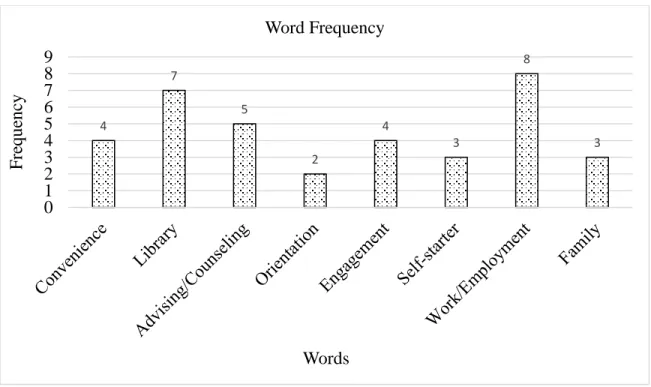
Figure 1. Demographics of the target population ... 60 Figure 2. Demographics of the participant sample ... 61 Figure 3. Word frequency of common word patterns among participants ... 63
Chapter 1: Introduction
The growth of online education has prompted the debate on the quality of education provided by institutions of higher learning and the degree of satisfaction of students with the services offered. The ability of the institutions of higher learning to successfully implement and maintain online education programs is key to the success of the online student.
Online education offers more flexibility for students enabling more students to participate in higher education. As of fall 2014, approximately six million students were enrolled in online education classes, with total enrollment in post-secondary institutions expected to rise 15% by the year 2025 (NCES, 2014). Student support services are essential to the online student for success and persistence to graduation. Online students require services that create a sense of inclusion and belonging; without these services, an online student is more likely to fade away from higher education (Bailey & Brown, 2016). As the number of online learners continue to grow, it is essential to understand how to support online learners so that they may achieve their goals (Stavredes & Herder, 2013).
Institutions of higher learning should ensure that the services and products delivered to online students promote success and persistence to graduation. The education that the student is expecting is an education that will not only prepare them for success in the classroom but prepare them for success in their careers and their communities outside of the classroom. Institutions of higher learning have been challenged to provide services that promote success and retain students in programs to graduation (Fullan & Scott, 2009).
Stavredes and Herder (2013) have identified five skill areas that online students must master to be persistent and successful. The skill areas identified are as follows; “computer literacy, information literacy, time management, reading, and writing, and computer-based
interaction” (Stavredes & Herder, 2013, p. 26). Online students will vary in their abilities within the five skill areas requiring institutions of higher learning to provide specialized services to online students in order to promote persistence and success. The challenges for institutions of higher learning, is in designing and implementing services that will encourage the participation of online students to successfully graduate.
As businesses have adapted to changes in consumer trends, institutions of higher learning will need to respond to student demands. “History is littered with examples of industries that, at their peril, failed to respond-or even to notice-changes in the world around them, from railroads to steel manufacturers” (Christensen, 2011, p. 3). Institutions of higher learning that have made the choice not to implement online education programs designed to assist online students in their success. Institutions of higher learning need to embrace the challenges of the digital age to raise the overall standards of online education to ensure that the programs and services that offered are equal to traditional instruction (Christensen, 2011). Online students should expect services that create an environment of inclusion that promote success and persistence to graduation.
Background, Context, History, and Theoretical Framework of the Problem
The growth of online education has prompted the debate on the quality of education provided by institutions of higher learning and the degree of satisfaction of students with the services provided. The ability of the institutions of higher learning to successfully implement and maintain online education programs is key to the success of the online student. Through
implementation and maintaining online programs, the services offered to the online students must be explicitly designed for the online student to ensure success and retention to graduation.
College and universitie leaders will be challenged to provide students with engaging, interactive online courses while maintaining the core values of the institution. Online education
provides institutions of higher learning with an opportunity to reach more students
supplementing declining enrollment. Implementing new programs and delivery methods should not negatively impact the values and ideals of the institution (Bowen, 2013). Institutions of higher learning must provide services designed for online students that foster success and persistence. Student services that are provided to on campus students may not be sufficient to meet the needs of the online student. Colleges and universities must adapt to the changing demands of technology to provide the services that online students will demand. Online students rely on technology to connect with the institution, faculty, and peers. Online students rely on technology for their education as well as, a tool to communicate with the institution. As the world continues to become a global environment, students will have the option of attending online universities across the globe. Online students will have the ability to attend universities that offer student services specifically designed for online students. Services that encourage engagement with the institution, faculty, and peers.
Universities need to upgrade its technology to prepare students for careers that utilize technology or face being left behind other countries, which could draw students into a global environment. “Private sector respondents are particularly concerned, with 46% expressing worry that the U.S. is lagging behind other countries in its ability to produce high quality professional” (Glenn, 2008, p. 10). Universities have the opportunity to partner with the business to innovate and develop. Institutions that cannot overcome barriers to innovation may encounter a decreased in enrollment resulting in economic hardships. Institutions that invest in technology will open lines of communication with online students encouraging engagement and creating a
co-operative environment resulting in greater inclusion. Online students will search for institutions that offer services contribute to their success.
Online students are physically removed from the campus environment; therefore, support services are critical to their success. Online courses should engage and connect the student with the institution (Shackelford & Maxwell, 2012). Employers value the team aspect of work. Institutions offering online courses and programs will need to develop courses that provide online students the opportunity to interactive academically and socially. Siebold (2007) concluded that employers did not believe that online education was equivalent to face to face instruction and that online education did not provide the essential social skills necessary to be a productive team member. In order to compete in the marketplace, online students must be afforded similar services to compete with their on-campus counterparts and to satisfy employer demands.
Conceptual Framework
The literature search was conducted to generate background information on whether services delivered in an online format promoted success and retention. Numerous studies exist regarding the quality of online services provided to students enrolled in these formats. The literature that is of most interest for this study is the negative perception that the online student formed regarding their relationship with the college or university. The literature revealed that online students need to connect with the faculty, peers, and the institution to be successful.
The literature will be examined from a social constructionist perspective. Social constructionism maintains that knowledge is not derived from nature but rather from social interactions (Burr, 2015). Social interactions provide an opportunity for individuals to construct knowledge (Burr, 2015). The quality of online education is related to the interaction between peers and the professor. On-campus delivery offers the opportunity for interaction between students and faculty; online delivery must be designed with communication as a primary goal.
Shackleford and Maxwell (2012) focused on how the course design has engaged students. Online students should feel a connection with the course through interaction, which develops a sense of community and belonging (Shackleford & Maxwell, 2012). Saul (2013) advocated that faculty may need professional assistance in creating online courses to ensure strong student interaction. Interaction increases student persistence and the probability of student success (Saul, 2013). Interaction is a concern for employers of online students. Siebold (2007) identified that employers value a team approach to problem-solving. The concern of employers is that online delivery does not provide for the development of face to face communication skills, which are necessary to be successful beyond the classroom (Siebold, 2007).
Student support services are essential in establishing a sense of community for the online student. The connection to the institution provides stability to the student increasing the
persistence and success of the student (Nolan, 2013). The literature provided information that students deemed critical for success, as researched by Linardopoulos (2010). The services which are valued by students help establish the bond between the online student and the university.
The literature has illustrated the concerns surrounding the quality of online education focus on relationships and interaction. The social constructionist would draw attention to the fact that interaction is essential for the success of the online student. “The goings-on between people in the course of their everyday lives are seen as the practices during which our shared versions of knowledge are constructed” (Burr, 2015, p. 5).
Statement of the Problem
The main issue is whether institutions of higher learning are providing services to online students that ensure student success and persistence. Institutions of higher learning have been challenged to provide services that meet the needs of the online students that will result in the
success of the student and the institution. Persistence matters as the opportunities that become available in life increase noticeably with the completion of a degree (Fullan & Scott, 2009).
Colleges and universities have been tasked with providing online students with services that promote success and persistence and to continually adapt to advancing technologies. Online students expect to receive equivalent services to ensure success in the classroom and beyond. Traditional student services may not fulfill the unique requirements of the online student. The success of colleges and universities to remain sustainable will mirror the success of the online student. Online students will be attracted to those institutions that offer services that the online student deems effective in encouraging student success.
Purpose of the Study
The purpose of this study was to investigate the perceptions and attitudes of online students about the services which were provided by institutions of higher learning. The study focused on; whether the students perceived that the services were effective, valuable, and sufficient for success and persistence in their studies. This study expanded on previous research studies on the perception of students towards online learning. Absent from previous literature and research regarding on-line education was the determination of which services were most beneficial for success and retention to the on-line students. This researcher investigated the services offered to an online student by institutions of higher learning to identify those services the students perceived were effective to their success. The findings from this research offered insight to institutions of higher learning as to the perceived effectiveness of online services.
Research Questions
The following research questions guided this study in relationship to the perception of online students regarding services provided by the institutions.
The research questions are:
1. What remote services are the most effective in promoting success and persistence from the perspective of the online student?
2. What are the perceptions of online students regarding the quality, value, and accessibility of the services provided?
3. From a student perspective, how can institutions of higher learning improve remote services to online students?
Rationale, Relevance, and Significance of the Study
The researcher was personally interested in the quality of online education as the researcher obtained a master’s degree completely online and pursued a doctorate online. In addition to my interest, there is concern that some institutions may view online education as solely a revenue-generating proposition their core purpose in providing quality education to students regardless of the mode of instruction. Attracting new students has become less important than retaining students through graduation (Fullan & Scott, 2009). Institutions of higher learning have a moral obligation to the students to offer services that will assist students to persist and succeed.
The literature available on the experience of online students suggests that institutions of higher learning have experienced a growth in online education, which has presented the
institutions with unique challenges. Institution administrators have struggled to provide
equivalent services and to keep pace with technological advances. Substitutes for synchronous instruction have challenged the faculty to provide more immediate feedback and to design more robust lessons that will engage the students providing the opportunity for interaction. The challenge centers around the cost of providing these services to the students.
Institutions have faced challenges that will implement online services that are affordable. Student debt has risen, and many students are faced with borrowing as the only option to pay for higher education (Bowen, 2013). When viewed as consumers, students expect value for their educational dollars and will search for institutions that offer services promoting success for the online student.
Information from the research has identified the importance of services to online students require to be successful in and beyond the classroom. College and university administrators have been able to concentrate on those services, ensuring student persistence leading to student
success, and the success of the institution.
Definition of Terms
Online education. “A virtual campus environment composed solely of technology where presence is elusive, communication is electronic, and interactions take place in cyberspace.” (Lehman, Conceição, & Conceio, 2013, p. 22).
Brick and mortar. A traditional college campus where students live on campus, attend classes in person, and interact with peers and instructors (Lehman et al., 2013).
Face to face instruction. Students attend classes in person, and interact with peers and instructors (Lehman et al., 2013).
Retention. The continued participation in an online beginning at enrollment and lasting through completion (Gazza & Hunker, 2014).
Social constructionism. A singular definition for social constructionism is difficult to ascertain; however, key elements include; gaining knowledge through social interaction, and social interaction is a significant component in gaining knowledge (Burr, 2015).
Assumptions, Delimitations, and Limitations
Assumptions. There is an assumption that online students are interested in examining the effectiveness of student services on success and persistence. It is also assumed that the
participants in the study provided honest answers based on their personal experiences with online education. It is assumed that online students understand the changing nature of education and, as such, the changing nature of services provided to students.
Delimitations and limitations. The limitation of this study was the availability and size of the target population. The study used sample participants from online university programs. The study was a qualitative study dependent on the honest responses of the participants.
Researcher bias is a potential limitation in the study. Personal experiences, as a student, in online education, have shaped my opinions and beliefs regarding online education. The researcher acknowledged this limitation and will endeavor to remain open-minded throughout the research study.
Chapter Summary
The growth of online education focused on debates on the quality of education and services provided to online students. Concern over the success and retention of online students prompted deliberation as to whether colleges and universities are providing adequate services to online students.
This research study was limited to students who have completed or participated in an online course or online program. The purpose of this qualitative research study was to explore whether institutions of higher learning are providing services to online students that promote success and persistence. Chapter 2 is a review of previous studies and literature concerning services provided to online students.
Chapter 2: Literature Review Introduction
There has been growing concern regarding the success and persistence of online students in institutions of higher learning. “In 2-year, institutions 47% of students age 26 and older are enrolled in online courses, with 52% of the 18 to 25-year old students enrolled in online courses” (Hoskins, 2011, para. 2). The purpose of this research study was to investigate the perceptions and attitudes of online students about the support services which were provided by institutions of higher learning. The study focused on whether the services provided were effective in promoting student success and persistence. Several studies have been conducted to track the services that colleges and universities provide to online students (Kinkle, 2010; LaPadula, 2003; Nolan, 2013; Saul, 2013; Shackleford & Mawell, 2012; Woods, 2008). Some limitations of the research were free to form responses from online students regarding which services would be most valuable, considering success and persistence in online education.
Online students are usually physically remote from the campus, which necessitates a separate range of services required for success. Colleges and universities administrations have generally been slow to implement change. Numerous colleges and universities administrations are change-resistant (Fullan & Scott, 2009). College students have evolved at a quicker pace than college faculty in using technology. Online education has changed the demographics of the college offering and the expectations of the college student. Faculty members tend to respond at a slower pace, creating a disparity of expectations between students and faculty (Borden & Evenback, 2007). To meet the demands of the online student, universities and colleges will need to implement a 21st-century solution. The traditional model of institutions may not be capable of addressing the needs of tomorrow’s students and needs Marx (2006). Institutions of higher
learning will be challenged to implement programs that foster the success and retention of online students. Services designed for traditional education may not transfer to the online environment. Colleges and universities will need to focus on services specifically designed for the various educational delivery methods that exist.
This chapter focused on previous literature that incorporated the services and support that is provided to online students and the value of those services. Literature was gathered from various sources such as; ProQuest, ERIC, Taylor and Francis Online, and the library at Concordia University Online. Previous research did not allow for free form responses from students and did not attempt to generate an inventory of support services institutions of the higher learner should provide to online students. This study has incorporated free form responses from students to investigate services that institutions may implanted to ensure student success and the success of an online program.
Conceptual Framework
The failure of business to respond to the ever-changing conditions in society can be seen throughout the history of the United States (Christensen, 2011). Institutions of higher learning that have decided to implement online education programs and services may find that they will join those industries that litter the business history of the United States. Institutions of higher learning should embrace the challenges of the digital age to raise the standards of online education to ensure that the programs offered are equal to face to face instruction meeting the needs of the student and the institution (Christensen, 2011).
This researcher has not only completed many online courses and completed an entire master’s program online without any residency requirements. Some skepticism exists as to whether online programs are offering equivalent educational products and services compared to
traditional on-campus offerings. Students have become more consumer-oriented, demanding services that meet their expectations. Students will demand an education that meets their schedules and meets their expectations. Students are more consumer-oriented, requiring institutions to provide the services and products promised in their prospectus or suffer the consequences of a transfer or withdrawal from their institution (Fullan & Scott, 2009).
Institutions of higher learning must offer services to online students that are specific to the online student needs or suffer economic consequences, which could jeopardize the existence of the institution.
Online education continues to grow, that is attributed to the needs of students and how supports are used to support their success. An advisor is essential for college students but more so for the online student. An advisor is a connection between the student and the institution. Students prefer an advisor who is consistent and remains a support throughout the life of the program as their role is the connection to both the institution and the program (Nolan, 2013). Students who were afforded the services of an advisory were more likely to continue in the program, increasing the retention rate for the college (Nolan, 2013).
Online education offers more flexibility for students enabling more students to participate in higher education. As of the fall of 2014, approximately six million students were enrolled in online education classes, with total enrollment in post-secondary institutions expected to rise to 15% by the year 2025 (NCES, 2014). Notwithstanding the growth of online education, the extent of student satisfaction varies. The extent of satisfaction or dissatisfaction depends on a number of factors, as concluded in a study by Chyung and Vachon (2013). The factors that determine student satisfaction or dissatisfaction are variables that can reside with the student or are external variables that reside with the institution of higher learning (Chyung & Vachon, 2013).
Developing a sense of community in an online course is critical for student satisfaction (Shackleford & Maxwell, 2012). Students need to feel a sense of inclusion in the course or the program and that they are not alone in their studies (Shackleford & Maxwell, 2012). Students will model their behavior in correlation to the faculty member to create a sense of community in an online environment community (Shackleford & Maxwell, 2012). Students in a traditional on-campus setting interact with the instructor to create a sense of community; therefore, the need to capture the same in an online setting is equally important. Online students, normally, do not have the same opportunity to see their instructor through recorded lectures or synchronous interaction. The instructor must create opportunities for interaction, which compensates for the loss of visual interaction. The interaction between student and faculty connects the student to the institution allowing for an exchange of knowledge as expressed by the social constructionist theory (Shackleford & Maxwell, 2012). A high level of interaction between the student and the
instructor will lead to a positive experience for the student. Students with a positive experience in online education are more likely to persist with their program to graduation.
Colleges and universities’ administrators have created a new generation of students, online learners. The creation of the new generation of students challenges the faculty to design successful online courses (Saul, 2013). Faculty members may be challenged by converting traditional format courses into online courses (Saul, 2013). The methods utilized in a traditional classroom setting might not be as effective when delivered online. Faculty members may not have the training to develop online courses that are both engaging and interactive. The
interactivity between students and faculty is important to the construction of knowledge. Without adequate training, the course will not meet the expectations of the student and the institution. The design of the online course can impact the retention rate and the persistence rate of the online
student (Saul, 2013). Faculty members may require the assistance of external experts to design courses to deliver their course content to the student. The online environment is subject to more rapid change than the traditional on-campus delivery method. Technologies change rapidly, and the faculty may want to evaluate the effectiveness of the course to ensure that it continues to meet the needs of the student and the institution (Saul, 2013).
Cell phones have more computing power than ever before, allowing users to accomplish a multitude of functions. Technology is a part of everyday life and will continue creative minds develop more functionality, which the public demands. Online education provided institutions of higher learning with an opportunity to reach more students supplementing declining enrollment. In creating the opportunity for the growth of the institution, the administration must maintain its core values and provide services to all students (Bowen, 2013). Institutions of higher learning must provide services to online students that encourage exchanges between students and faculty. Institutions of higher learning must adapt to the changing demands of technology in order to provide the services that online students will demand.
The literature available on the experience of online students suggested that institutions of higher learning have experienced a growth in online education, which has presented the
institution’s administrators with unique challenges. Administrators have struggled to provide equivalent services and to keep pace with technological advances. One result of Kinkle’s (2010) research asserts that the administrators and faculty had limited knowledge of online education. Substitutes for synchronous instruction have challenged the faculty to provide more immediate feedback and to design more robust lessons that will engage the students providing the
opportunity for interaction. The challenge also centers around the cost of providing these services to the students. Linardopoulos (2010) studied the perspectives of faculty and students
regarding online education. Faculty who did not have a positive view of online education believed that the university was focusing on profit rather than the quality of academic delivery (Linardopoulos, 2010).
Institution administrators are challenged to implement and provide affordable online services. Student debt has risen, and many students are faced with borrowing as the only option to pay for higher education (Bowen, 2013). When viewed as consumers, students will expect value for their money and will search for institutions that offer value for their money.
The social constructionist theory is concerned with learning as the main goal of human activities (Loseke, 2011). Learning has its basis in social interactivity, and that understandings must be shared to fully develop (Loseke, 2011). The research that I conducted drew on the social constructionist theory as a key concern of online education is the lack of interactivity. The course design, presentation, and student experience must include social interactions for the online student to be fully successful. The administration must be aware of this requirement for student success, and the faculty needs training to present interactive lessons.
Through this research study this researcher investigated the satisfaction, and perception, of online students with the product and services received from institutions of higher learning. The data from the research was intended to assist institutions of higher learning in providing the services students demand. The data has contributed to assisting institutions in the design and delivery of lessons to the students to maximize production and student achievement.
The implementation of online education is the beginning of an institution’s challenge to offer services to a broader pool of students. The ability to remain current with technology and student demands is the ongoing challenge that the institutions will encounter.
There is considerable literature regarding online education. The literature focused on the services offered to online students and the perception that online students provided about their experiences. The literature search was conducted to yield information on whether the services, and product, delivered to online students was equivalent to those services offered to on-campus students. For the online student to be successful, the quality of online instruction must be equal to the services and product of on-campus instruction.
The growth of online education has prompted the debate on the quality of education provided by institutions of higher learning and the degree of satisfaction of students with the services provided. The ability of the institutions of higher learning to successfully implement and maintain online education programs is key to the success of the online student. The study of services provided by institutions of higher learning will aid in identifying those services that are critical for institutions to employ to ensure student success in online education.
Course design. Online students, generally, are not physically present on campus, which creates a challenge in building a sense of community and belonging to other students, faculty, and the institution. Most students tend to learn at a higher rate when actively engaged with peers and the faculty of the institution. Active engagement in course work in collaboration with peers, and faculty, create a positive environment for learning and a sense of community (Shackleford & Maxwell, 2012; Wildavsky, Kelly, & Carey, 2015). Creating an atmosphere of engagement and community is an element of course design and function of the online instructor (Kegelman, 2011; Shackleford & Maxwell, 2012, Smith, 2013).
Research conducted by Kegelman (2011) indicates that the asynchronous design of most online courses adds to the obligations of online students. The flexibility of online education provides an ideal format for students working full-time that may find it difficult to attend college
or university. However, while convenient, there are additional responsibilities for online
students. Online students must find the time to; study, seek academic assistance and interact with peers and instructors through written communication (Kegelman, 2011). On campus, students have one advantage of being able to interact with their peers. The ability to verbally interact on a regular basis provides an opportunity for on-campus students to discuss concerns, provide support to one another, and the ability to interact with faculty. These opportunities may not be readily available to the online student. These types of interactions between peers may act as a form of advisory, which, as Nolan (2013) identified, was critical for the success and persistence of online students. Online programs will need to develop delivery methods that allow for synchronous communication to assist the online student in engagement and to establish a sense of community.
Online instructors need to create an atmosphere of interaction to develop a sense of community, promote learning, and increase persistence in online learning. The online instructor must remain present in online discussions, encouraging peer discussion through questioning and comments. Regardless of the format, synchronous or asynchronous instructor engagement is critical in creating a positive learning environment (Shackleford & Maxwell, 2012).
Administrators will need to make certain that the faculty has the training and resources to create lessons that engage students. Online students engaged in course work will create an atmosphere of inclusion leading to success and persistence. A shift in from full-time faculty to adjunct faculty is a concern when considering training in online course design (Kinkle, 2010; Saul, 2013; Smith, 2013). Adjunct faculty may not have the training to design lessons for online students that encourage interaction. Adjunct faculty are part-time employees; many have full time positions elsewhere with insufficient time to devote to assisting online students (Smith,
2013). Adjunct and full-time faculty members may not have the training to develop online courses that are engaging and interactive.
While a student needs the discipline to complete an online course successfully, faculty have the responsibility of designing lessons that promote the interaction of students. Smith (2013), in a series of interviews with faculty, found that faculty possessed positive attitudes towards online education but were concerned with the amount of student interaction. One concern is a shift from full time faculty to adjunct faculty. To meet the demands of students and
ensure student success, institutions of higher education administrators will find it necessary to provide training or employ outside agencies to develop courses that create student interaction.
Faculty members may be challenged by converting traditional format courses into online courses (Saul, 2013). The methods utilized in a traditional classroom setting might not be as effective when delivered in an online setting. The development of online courses has become an industry of its own existing to assist online faculty in designing courses that are engaging (Saul, 2013). Without adequate training, the course will not engage the student resulting in poor academic achievement that may result in the withdrawal of the student from the institution. The design of the online course may have a direct impact on retention rates and the persistence rate of the online student (Saul, 2013). Faculty members may require the assistance of external experts to design courses to deliver their product to the student. The online environment is subject to more rapid change than the traditional on-campus delivery method. Technologies change rapidly, and the faculty may want to evaluate the effectiveness of the course to ensure that it continues to meet the needs of the student and the institution (Saul, 2013).
Kinkle (2010) recommended training for faculty to implement online education and to take advantage of the benefits of online education. Online students value peer and faculty
interaction in creating an inclusive environment in an online course (Shackleford & Maxwell, 2012). A high level of interaction between the student and the instructor will lead to a positive experience for the student. Students with a positive experience in online setting are more likely to persist, leading to graduation. This interaction is present in an on-campus experience;
however, it might not be as prevalent in an online setting leaving the student at a disadvantage as compared to the traditional on campus student. Existing faculty may or may not have the
expertise to design courses to incorporate the interaction that most students require to learn at an optimal level. Interaction becomes a key to student success and student achievement in online courses and in on campus courses. Kinkle (2010) recommended that the university
administrators implement faculty training, concentrate on the benefits of online education, and employ quality assurance to meet the needs of online students. Institutions that chose to participate in online education must invest in the resources to enable the online students to be successful. Administrators and faculty will need to recognize the value of online education and respond to the demands placed on the institution by online students.
Online equivalent to in person instruction. The perception that online education may not be equivalent to the education delivered in a traditional setting has been a concern to
students, faculty, and employers (Kinkle, 2010; Linardopoulos, 2010; Siebold, 2007;). One result of Kinkle’s (2010) research asserts that the administrators and faculty had limited knowledge of online education. Additionally, administrators and faculty had a negative view of online
education, believing it was inferior to face to face instruction at a brick and mortar institution. The university administration implemented an online program but failed to recognize the importance of online education or offer the services that the students required to be successful.
Employers are aware of the interaction of staff members in daily team settings. While employers generally had positive opinions of online education, employers are concerned about the lack of interactivity in online courses. Institutions of higher learning need to ascertain the qualities that employers are seeking and design courses that will develop those qualities in online students (Siebold, 2007). “When viewed from a sociological standpoint, online education may not be on the same echelon as traditional forms of educational delivery” (Sieblold, 2007, p. 2). Online education provides students with the flexibility that students are seeking; however, it might lack some elements that employers deem valuable in an employee. A traditional delivery method of education allows for student and faculty interaction. Providing for the development of skills that are necessary for a team approach to problem-solving (Siebold, 2007). Employers value the team aspect of work. Institutions offering online courses and programs must develop courses that provide online students the opportunity to interactive academically and socially. Siebold (2007) concluded that employers were in disbelief that online education was equivalent to traditional class face-to-face instruction and that online education lacked the essential social skills that are necessary to be successful in a team-oriented environment. The employers that were surveyed did not believe that online education provided equivalent levels of interactivity and did not provide for the development of team-building or networking skills (Siebold, 2007).
Linardopoulos (2010) studied the perspectives of faculty and students regarding online education. Faculty who did not have a positive view of online education believed that the university was focusing on profit rather than the quality of academic delivery (Linardopoulos, 2010). The majority of the students surveyed indicated their interest in taking another online course. The study identified the top 28 factors that students considered important in deciding whether to enroll in an online course. Included in the top five reasons were as follows: timely
feedback and presentation of coursework (Linardopoulos, 2010). The negative attitude of the faculty towards online education may contribute to the student’s decision not to consider enrolling in an online course. The effect could result in a decrease in retention and possible loss of faculty positions. Online students value the timely feedback from faculty. The faculty must have a positive opinion of online education to ensure that student needs are being met as the institutions embrace changing attitudes and technology while providing value to the student.
Economic value to the student. Students are seeking value for the dollars spent on education (Bowen, 2013; Fullan & Scott, 2009). Retention is an important consideration as institutions of higher learning implement and maintains online programs. Fullan and Scott (2009) noted that the student had become more of a consumer seeking quality education just as a
customer would expect quality when shopping for any product. Students are increasingly more likely to leave an institution if the student feels that the institution is not providing full value for the dollars expended on education (Fullan & Scott, 2009). Students will demand an education that meets their specific schedules and expectations; otherwise, they will explore the resources offered through other higher educational institutions. “The student-as-consumer trend is also now resulting in a growth in truth in advertising litigation against universities, as students sue
postsecondary institutions under provisions of statutes like contract law for not delivering what was promised in their prospectus” (Fullan & Scott, 2009, p 16). Students will seek out those institutions that provide the services they demand. Administrators who choose not to embrace online education will find that their programs will not be successful in the long run.
The literature available on the experience of online students suggests that institutions of higher learning have experienced a growth in online education, which has presented the
providing technical support to meet the current needs of students and face some difficulty keeping up with the constant technological advances. Substitutes for synchronous instruction have challenged faculty in providing more immediate feedback to the student by designing robust lessons that will engage the students effectively.
Online education has the potential to provide quality education with reduced costs without negatively impacting the educational results (Bowen, 2013). One challenge for institutions is the activity of implementing and delivering quality education that potential students find equitable. Students confronted with student debt, as a result of limited options to finance education, will be expecting value for dollars borrowed (Bowen, 2013). The fundamental beliefs of social constructionism are that “People are sense-making creatures, the meaning is socially constructed through language, and meaning construction is contextualized and embedded” (Loseke, 2011, p. 379). According to Loseke (2011), learning is realized through interaction. The researcher relied on the social constructionist theory as a lens to view the interactivity between students and instructors. Interactivity among students and professors is a concern that intuitions of higher learning will need to address.
Peer and faculty interaction. The literature indicated that there is a concern over the interactivity of students in online education programs. The studies revealed that some form of the social contract is valued by the students and employers. This social contact seemed to be
essential to the success of the students in online education. Administrators and faculty of
institutions of higher learning have to consider the course design and presentation to ensure that online interactivity. Employers and students are concerned with the lack of interactivity and its negative effect on the quality of online education at the post-secondary level. Interaction between students and faculty is considered an integral component of education by social constructionists.
Online learning, when viewed through the lens of a social constructionist, is dependent on interaction. The social constructionist does not believe that knowledge is derived from natural but from the interactions of others (Burr, 2015). “It is through the daily interactions between
people in the course of social life that our versions of knowledge become fabricated” (Burr,
2015, p. 4). Communication then becomes an important element of learning as humans have created knowledge through interactions with others. The social constructionism theory validated the findings of Wildavsky et al. (2015) that students learn best when they are actively engaged with other students and with the faculty. Faculty and administrators designing online classes or programs must incorporate interactivity into the curriculum.
According to Burr (2015), the thoughts and the types of concepts humans develop are dependent on language. The way a person thinks and formulates ideas and concepts is provided by the language. The language provides the foundation for human thought (Burr, 2015). Since language is an important element of the development of thought, the pursuit of higher education should include the opportunity to interactive with others to develop more advanced concepts. The ability to interact with peers and faculty should not be confined to the on-campus
experience. Online students should have the opportunity to actively participate in discussions. The feeling of isolation through a lack of interaction with fellow students and with faculty may add to the responsibilities of the online student. While online education programs have increased the opportunities for participating in higher education, online education may have added to the responsibilities of those students choosing online education.
Online orientation. Student services are an integral component of amenities offered by the institution to students (LaPadula, 2003; Valle, 2016). Valle (2016) proposed that an online orientation program could increase the probability of success for the online student. It is
important for administrators and faculty to recognize that not all students will be familiar with the institution’s online format. Students who are enrolling in their first online course would benefit from some form of orientation, whether they are freshmen or graduate students (Valle, 2016). As online education becomes more commonplace, the need for orientation will not subside. Changes in technology, along with changes in curriculum, will necessitate that student orientations continue as online education continues to evolve. The orientation process should be regarded as a required service offered by the college or university.
Student support services are considered an essential part of the educational process and are assumed to be available to all students attending college or university. LaPadula (2003) noted that these services have not necessarily been part of the implementation of online programs. “A student’s distance learning experience is often shaped by the quality of the services that support the educational process” (LaPadula, 2003, p. 120). The services that online students receive should be designed to fulfill the needs of the online student, and these resources can be separated from those services that are offered to on-campus students (LaPadula, 2003). The needs of online students are unique, and the services offered to the students should be unique to facilitate student success. Online students do not travel to the campus to receive an education; therefore, the likeliness of these students traveling to the campus to attain support services (LaPaudula, 2003). The services provided by the institution must be as flexible as the programs offered and required services for online students.
College readiness. The literature review substantiated that there is a genuine concern regarding the college readiness of students. The main concern in online programs where services may not be readily available or adapted to the needs of the online student. Tutoring is easily available to those students who attend the brick and mortar institution; therefore, these services
are equally essential for the online student. The majority of college students lack the academic skills necessary to be successful at the college level (Bantum, 2013). Online students must have access to tutoring services that are flexible and constructed to meet their schedules.
Administrators and faculty will need to be mindful of the relationship between the services offered to the students and student success (Bantum, 2013). Student success leads to student retention, which benefits the student and sustains the institution.
Milman, Posey, Pintz, Wright, and Zhou (2015) identified services that were important to online graduate students. These findings indicated that online graduate students valued;
interactions with the faculty, support from individual faculty, library services, and support that was implanted in the course (Milman, Posey, Pintz, Wright, & Zhou, 2015). These support services were utilized daily and were essential to the successful completion of coursework. Services that were not utilized as frequently were of lesser importance to the students. The services identified as important are readily available to on-campus students institutions need to implement procedures to make these services available to all students regardless of delivery method.
The research investigated the overall satisfaction of online students with the product and services received from institutions of higher learning. The research focused on the services provided by institutions of higher learning to online students. The research explored how the services offered to online students promote success and persistence. The concern is student success and retention to graduation. Kegelman (2011) noted, “There is no consistent reporting format, but there is consistency in reports that online students are generally less successful than their face-to-face counterparts” (p. 4). The goal of the research was to identify those services
that, if provided, will ensure that the online student will be as successful and persist to graduation.
The data from the research was intended to assist institutions of higher learning in implementing and maintain the services students demand and to provide equivalent services to online students. The data can assist institutions in the design and delivery of lessons to the
students to maximize production and student achievement. “It is no longer possible for university administrators to continue to operate in a vacuum and ignore the basic tenets of market
competition” (Robinson, 2017, para. 3). Competition for online students should contribute to the growth of services for online students. Universities will need to be competitive, offering quality programs and services to all students.
The implementation of online education is the beginning of an institution’s challenge to offer services to a broader pool of students. The ability to remain current with technology and student demands is the ongoing challenge that the institutions will face. The research will assist the institutions in remaining current with student demands. To be successful, institutions of higher learning will need to provide quality services and products to online students. Student success and retention are equally important to institutions and students.
Review of Methodological Issues
The purpose of this study was to examine whether institutions of higher learning are providing services to students that promote success and persistence regardless of the delivery format. There was considerable literature available that examined services provided to online students and assessed student satisfaction with the services provided. This study explored what services are deemed critical to student success in the online delivery format with the intent of providing institutions statistical data to assist in the implementation of services to support online students.
A review of previous methodologies revealed that the researchers employed a variety of research methods to obtain data from the participants. “Research approaches are the plans and the procedures for research that span the steps from broad assumptions to detailed methods of data collecting, analysis, and interpretation” (Creswell, 2014, p. 3). Creswell (2014) illustrated three predominant approaches to research; qualitative, quantitative, and mixed methods. A review of the prior research indicates that researchers relied on the three approaches as outlined by Creswell (2014).
The principal method of obtaining data from the participants, in previous studies, was through the application of surveys. The purpose of the survey, from the researcher’s point of view, was to acquire data from the participants regarding their experiences and perceptions of online education. The purpose of the research was to gain generalized information from the target population and draw inferences from that sample regarding their opinions and perceptions of online education (Creswell, 2014). The interview design is such as to illicit qualitative data, which the researcher will use to develop beliefs regarding the research topic. The design of educational research explored a particular research topic (McKenny & Reeves, 2012). Prior
research sought to identify trends rather than to verify or refute a known theory. Woods (2008) employed an online survey to determine student satisfaction between traditional delivery format and online format. Woods (2008) was not attempting to establish student satisfaction, not validating or refuting a known theory.
Surveys provided a convenient method of obtaining data from a population. Creswell (2014) noted that a survey provides a relatively inexpensive and quick method of collecting data. Qualitative research often relies on interviews in the field by the researcher, which provides an opportunity to observe people as data is collected by the researcher. The researcher uses an instrument of data collection rather than a survey or questionnaire (Creswell, 2014) Shackleford and Maxwell (2012) sampled approximately 1600 online students rendering interviews
impractical. The advantage of such a large sample is that it would provide for a diverse sample of the population.
Shackleford and Maxwell (2012) sample represented approximately 1,600 students from 110 different professors. Shackelford and Maxwell (2012) employed a single sample technique to obtain research data. A single sample process is a researcher who has direct access to people in a target population, enabling the research to contact people directly (Creswell, 2014). The size of the sample also impacts the ability of the researcher to collect the necessary permission from the participants.
The participants were voluntary, and the purpose of the research was communicated to the participants (Creswell, 2014). Several of the researchers studied employed the internet to deliver the surveys to the participants. In order to utilize internet responses, permission was required from the participants (Creswell, 2014). The internet provides a convenient and fast method to sample a population while providing the means to gain permission before the study. A
smaller sampling, such as conducted by Kinkle (2010), does not present such an issue. Kinkle (2010) interviewed a total of 10 participants. The interview presented Kinkle (2010) with the opportunity to explain the study in person and obtain written permission. Obtaining informed consent was an important element of the data collection process.
The participants must be aware of a number of components related to the research study. The participants were provided with the following the purpose of the study, the commitment of the participant, the nature of the study, the fact that the participant can withdraw at any time, the benefit to the participant, the researcher’s information, and the assurance of confidentiality of the research (Creswell, 2014). These elements were communicated to the participants prior to data collection, regardless of the form of data collection.
The majority of the prior research was conducted using a qualitative research approach. The researchers made an attempt to determine the significance of online education to the student and the institution. The researchers were not attempting to prove a particular theory related to online education. “Qualitative research is an approach for exploring and understanding the meaning individuals or groups ascribe to a social or human problem” (Creswell, 2014, p. 4). Previous research studies were endeavoring to establish the thoughts, impressions, and value of online education as held by various individuals. The problem researched was the notion that online education was an inferior form of delivery than face to face instruction, which negatively impacted the online student. Valle (2016) employed a quantitative approach to evaluate the services offered by institutions of higher learning to online students. Valle (2016) was mainly concerned with ranking the services according to usefulness, and a quantitative approach allowed for the comparison of the variables (services) provided. “A theory in quantitative research is an interrelated set of constructs (or variables) formed into propositions, or hypotheses, that specify
the relationship among variables (typically in terms of magnitude or direction)” (Creswell, 2014, p. 54). Valle (2016) made the inquiry to determine the importance of individual services
(variables) to one another as they related to the success of the online student.
Orosz (2016) used a mixed-method approach to researching student outcomes from online courses versus face to face instruction. Creswell (2014) described a mixed-method approach as an approach that necessitates collecting both quantitative and qualitative data from participants and merging the data. The mixed-method approach allows for a more in-depth view of the research problem (Creswell, 2014). The qualitative piece would explore the factors that lead to success for the online student (Creswell, 2014). The purpose of this study was to explore the services that promote success and persistence at the college level. A qualitative study would provide the greatest range of data to determine the effectiveness of services offered from a student’s perspective. Regardless of the method employed, the use of theory is incorporated into the research at some point.
The data gathered was utilized for several purposes. The data was used to explore experiences or can be used to implement change (McKenny & Reeves, 2012). This research study into the satisfaction and success of online students was not testing a known theory. The research was more likely to yield evidence as to which services are most effective, for success and persistence, from a student’s perspective. In attempting to determine if institutions of higher learning are offering services that promote success and persistence, a theoretical view of the data was implemented (Creswell, 2014). This theoretical view was used in molding the questions asked of the participants and was used to influence the data analysis (Creswell, 2014). The research study would not validate any known theory but rather identify services that online students deemed effective in promoting success and persistence. These services could then be
implemented, or refined, by institutions of higher learning to empower online students to succeed.
Most of the prior research was from a qualitative approach, which is understandable since the researchers were attempting to identify generalizations and form a grounded theory from the data provided by the participants (Creswell, 2014). The researchers employed qualitative
approaches to provide data on the experiences of students to come to an understanding of the perceptions of students regarding online education. The prior research would indicate that a qualitative approach with a theoretical lens would be the preferred research method. Qualitative research usually is conducted in person in the participants setting (Creswell, 2014). This study was limited in obtaining information from the participants through a survey instrument.
Quantitative research normally is conducted via a survey; however, the addition of free response questions will allow the researcher to obtain data understanding how the participants interpreted their online experiences (Merriam & Tisdell, 2016).
Synthesis of Research Findings
The prior research reviewed consisted of a variety of topics concerning online education as opposed to traditional face-to-face instruction. The research focused on services provided to students of online education by institutions of higher learning. Taken as a whole, the prior research provided information and concerns regarding the state of online education as provided by institutions of higher learning.
The previous research, reviewed, does not address the question as to whether online students are receiving services that lead to success and persistence in education. The research has broadened the knowledge of online instruction as related to the success of the online student.
This new research has increased knowledge as to how students perceive online education (Creswell, 2014).
The overarching issue revealed in previous research was the concern over interaction or a sense of belonging in online education. This issue was found in previous research of; faculty, students, and potential employers. The lack of interaction between peers and instructors presents a challenge to institutions to engage online students through instruction or services offered.
Students need to feel a sense of community, as evidenced in Shackleford and Maxwell’s (2012) research study. Shackleford and Maxwell (2012) concluded that this could be
accomplished through course design. To effectively design engaging online courses, faculty may need additional training or work in conjunction with other professionals in course design.
Engaging online courses create a connection with the professor and the institution.
Nolan (2013) determined that a connection to the institution was an essential factor in the success of the online student. Research conducted by Nolan (2013) established that students who were afforded the services of a single advisory during their studies were more likely to persist and complete their course of studies. An advisor is an important, if not essential, connection for the student. An online student often relies on this advisor as their connection to the institution (Nolan, 2013). The connection to the institution was made through the services of an advisory. A connection to the institution can be made through peer to peer contact or through contact with the faculty.
Burney (2002) resolved that timely feedback from faculty was an important element of instruction that online students valued. Burney’s 2002 study validates the position of Wildavsky et al. (2015) that students learn best when they are actively engaged with other students and with the faculty. Faculty can aid in making the connection between the institution and the online