by Stephen Siwila
Dissertation presented for the Degree of Doctor of Philosophy in the Faculty of Engineering at Stellenbosch University
Supervisor: Dr. Isobel C Brink
i
Declaration
By submitting this dissertation electronically, I declare that the entirety of the work contained therein is my own, original work, that I am the sole author thereof (save to the extent explicitly otherwise stated), that reproduction and publication thereof by Stellenbosch University will not infringe any third party rights and that I have not previously in its entirety or in part submitted it for obtaining any qualification.
This dissertation includes 5 original papers published in peer-reviewed journals or books, 1 conference paper and 2 unpublished publications. The development and writing of the papers (published and unpublished) were the principal responsibility of myself and, for each of the cases where this is not the case, a declaration is included in the dissertation indicating the nature and extent of the contributions of co-authors.
Date: December 2019
Copyright © 2019 Stellenbosch University All rights reserved
ii
Plagiarism declaration
iii
Abstract
Access to safe drinking water is still limited in many rural and suburban areas of developing countries. Point-of-use (PoU) water treatment is the most feasible solution to fight waterborne diseases which pose a serious threat in such areas. Only user friendly, affordable and grid-independent but effective approaches are deemed feasible for poorer communities. Although efforts to develop cost-effective PoU technologies are underway globally, challenges still exist. This study was aimed at developing a combined small-scale low-cost gravity-driven PoU system able to provide bacteriologically safe and aesthetically acceptable drinking water.
A range of PoU system configurations were developed and tested. Knowledge gained culminated in the development of a final novel PoU system incorporating silver-coated ceramic granular media (SCCGM) for filtration and inbuilt disinfection, geotextile for pre-filtration (to significantly reduce particulate loads in the water before it passes through the SCCGM thereby increasing pathogen contact with the silver), granular activated carbon (GAC) as an adsorption media (for improving aesthetic aspects and removal of selected heavy metals), and a built-in storage compartment for treated water. No chemical addition is needed. It is a replicable, scalable, and user and environmentally friendly cost-effective technology primarily for particle and bacterial removal and aesthetic improvement. Geotextile and GAC filtration steps enhanced the system’s ability to treat a broader variety of raw water and extended filter runs. Laboratory tests on the system showed high potential for significant E.coli and fecal coliforms removal (>99.99%) at an optimum flow of 2 L/h. In addition, the system exhibited substantial improvements of aesthetic aspects (color, odor and taste) with average turbidity removals of 99.2%.
Mathematical modelling was done using E.coli as an indicator organism to aid in optimization of the final novel PoU system and to support future research in terms of configuration, process combination, flow rate, material combination, etc. The system was modelled as a series of three compartments using suitable disinfection kinetic models for silver inactivation and specialized colloidal filtration theory models for fibrous and granular filtration. The modelling demonstrated that suitable removal mechanisms can be applied integrally to model a combined PoU system to predict overall effluent bacterial quality. Such modelling can be used to optimize similarly combined systems by allowing engineers to systematically vary design parameters until desired system effectiveness is attained.
The system was developed after investigation and evaluation of local treatment materials and approaches over a period of 18 months, which resulted in three simple, yet innovative water treatment systems namely the: (i) modified intermittently operated slow sand filtration system incorporating geotextile and GAC (ISSFGeoGAC), (ii) eight-layer four-pot bidim sequential filtration (BidimSEQFIL) system, and (iii) wood filtration system combined with GAC (WFSGAC). The ISSFGeoGAC and WFSGAC were designed for removal of bacteria, particles, color, taste, odor and selected heavy metals while BidimSEQFIL was designed for particle and bacterial removal. These were then comparatively evaluated alongside two commercially available PoU systems using a comparison framework developed in this study for evaluating low-cost PoU technologies.
The findings will be helpful to engineers, NGOs, etc. for possible application of the novel systems, modelling and optimization of combined PoU systems, and comparative evaluation of low-cost PoU systems.
iv
Opsomming
Toegang tot veilige drinkwater is steeds beperk in baie landelike en stedelike gebiede van ontwikkelende lande. Gebruikspunt (GP) watersuiwering is die mees haalbare oplossing om wateroordraagbare siektes te beveg wat 'n ernstige bedreiging is in sulke areas. Slegs gebruikersvriendelike, bekostigbare en formele sisteem onafhanklike, maar effektiewe benaderings word as haalbaar beskou vir armer gemeenskappe. Hoewel pogings om kostedoeltreffende GP-tegnologieë wêreldwyd te ontwikkel tans bestaan, is daar steeds uitdagings. Hierdie studie was daarop gemik om 'n gekombineerde lae-koste swaartekrag-aangedrewe GP-stelsel op klein skaal te ontwikkel wat in staat is om bakteriologies veilige en esteties aanvaarbare drinkwater te voorsien.
‘n Reeks GP-stelsel konfigurasies was ontwikkel en getoets. Kennis hierdeer verkry was verder gebruik in die verdere ontwikkeling van ‘n nuwe GP-stelsel bestaande uit silwerbedekte keramiek granulêre media (SBKGM) vir filtrasie en ingeboude ontsmetting, geotekstiel vir prefiltrasie (om partikels in die water aansienlik te verminder voordat dit deur die SBKGM beweeg, waardeur die kontak met die silwer verhoog word), granulêre geaktiveerde koolstof (GAK) as 'n adsorpsiemedium (vir die verbetering van estetiese aspekte en verwydering van geselekteerde swaar metale), en 'n ingeboude stoorkompartement vir behandelde water. Geen chemikaliese toevoeging is nodig nie. Die ontwikkelde stelsel is 'n herhaalbare, skaalbare, gebruikersvriendelike en omgewingsvriendelike koste-effektiewe tegnologie. Dit kan hoofsaaklik vir verwydering van partikels en bakterieë sowel as estetiese verbetering van drinkwater toegepas word. Geotekstiel en GAK-filtrasiestappe het die stelsel se vermoë verbeter om 'n groter verskeidenheid rou water en uitgebreide filterlopies te behandel. Laboratoriumtoetse op die stelsel het 'n potensiaal uitgewys vir beduidende verwydering van E.coli en fekale koliforme (> 99,99%) met 'n optimale vloei van 2 L/h. Boonop het die stelsel aansienlike verbeterings aan estetiese aspekte (kleur, reuk en smaak) getoon, met 'n gemiddelde verwydering van troebelheid van 99,2%.
Wiskundige modellering is gedoen met gebruik van E.coli as 'n indikatororganisme om die finale nuwe GP-stelsel te optimaliseer en om toekomstige navorsing ten opsigte van konfigurasie, proseskombinasie, vloeitempo, materiaalkombinasie, ens. te ondersteun. Die stelsel is gemodelleer as 'n reeks van drie kompartemente met gebruik van geskikte ontsmettings kinetiese modelle vir inaktivering met silwer sowel as gespesialiseerde kolloïdale filtrasie teorie modelle vir vesel- en granulêre-filtrasie. Die modellering het aangetoon dat geskikte verwyderings meganismes integraal toegepas kan word om 'n gekombineerde GP-stelsel te modelleer om die uitvloeiwater bakteriele inhoud te voorspel. Hierdie tipe modellering kan gebruik word om soortgelyke gekombineerde GP-stelsels te optimaliseer deur ingenieurs in staat te stel om die ontwerpparameters stelselmatig te wissel totdat die gewenste stelseldoeltreffendheid bereik word. Die finale GP-stelsel is ontwikkel na die ondersoek en evaluering van plaaslike behandelingsmateriaal en benaderings oor 'n periode van 18 maande. Dit het gelei tot drie nuwe eenvoudige, dog innoverende waterbehandelingstelsels, naamlik: (i) ‘n gewysigde, tussenpose bedryfde, stadige sandfiltrasiestelsel met geotekstiel en GAK (TSSFGeoGAK), (ii) ‘n ag-laag, vier pot “bidim” opeenvolgende filtrasie stelsel (BidimOFIL), en (iii) ‘n houtfiltrasiestelsel gekombineer met GAK (HFSGAK). Die TSSFGeoGAK en HFSGAK was ontwerp vir die verwydering van bakterieë, partikels, kleur, smaak, geur en geselekteerde swaar metale; terwyl BidimOFIL ontwerp is vir die verwydering van partikels en bakterieë. Hierdie sisteme was vergelykend geëvalueer saam met twee kommersieel beskikbare GP-stelsels met behulp van 'n vergelykingsraamwerk wat in hierdie studie ontwikkel is vir hierdie doel.
v
Die bevindinge is nuttig vir ingenieurs, NROs, ens. vir die moontlike toepassing van die nuwe GP-stelsels, modellering en optimalisering van gekombineerde GP-stelsels, en vergelykende evaluering van lae-koste GP-stelsels.
vi
Acknowledgements
First and foremost, I greatly thank my creator Jehovah God Almighty (the God of Abraham, Isaac and Jacob; covenant keeper) for this far He has helped me. It hasn’t been easy, but God Almighty by His mercies and majestic hand of sovereignty has seen me through. To God Almighty I say thank you my LORD! God’s presence, favor and strength have been more than sufficient. Isaiah 41:10-14; 45:1-3
I wish to express my gratitude to my supervisor Dr. Isobel Brink for her valuable advice, input and guidance throughout my PhD journey. Thank you very much for your wonderful guidance, support and critical comments during my research and thesis write up.
I am also very thankful to the African Development Bank (AfDB) for their financial support through the Copperbelt University and Zambia’s Ministry of Higher Education. Greatly appreciated.
Last, but not least, my thanks go to my immediate family, parents, brothers, sisters, nieces and nephews, etc. and my in-laws for their encouragement, prayers and support.
vii
Dedication
This PhD dissertation is especially dedicated to Jehovah God Almighty for His Tender Mercies, Unmerited Favor, Gracious Love, Provision and Protection. 1 Chronicles 29:11-13.
And to
My wife and children for their love and support as well as for wholeheartedly and blessedly staying with me in South Africa throughout my study period. Jude 1:25.
viii
Table of Contents
Declaration... i Plagiarism declaration ... ii Abstract ... iii Opsomming ... iv Acknowledgements ... vi Dedication ... viiTable of Contents ... viii
List of Figures ... x
List of Tables ... xii
List of Abbreviations ... xiii
List of Symbols ... xv
Chapter 1: Introduction ... 1
1.1 Background and motivation ... 1
1.2 Problem and Thesis statement ... 5
1.3 Research aim and objectives ... 6
1.4 Research Significance ... 6
1.5 Delineations and limitations ... 8
1.6 Main assumptions ... 10
1.7 Chapter overview ... 11
Chapter 2: Comparative analysis of two low cost point-of-use water treatment systems ... 13
Chapter 3: A small-scale low-cost water treatment system for removal of selected heavy metals, bacteria and particles ... 27
Chapter 4: Low cost drinking water treatment using nonwoven engineered and woven cloth fabrics ... 44
Chapter 5: Drinking water treatment using indigenous wood filters combined with granular activated carbon ... 63
ix
Chapter 6: Comparison of five Point of Use drinking water technologies using a specialized
comparison framework ... 83
Chapter 7: A novel low-cost multi-barrier system for drinking water treatment in rural and suburban areas ... 106
Chapter 8: Modelling of Escherichia coli removal by a low-cost combined drinking water treatment system ... 126
Chapter 9: Conclusion ... 152
9.1 Summary of findings ... 152
9.2 Recommendations ... 156
9.3 Research Contributions ... 157
9.4 Proposed future research ... 160
References for Chapters 1 and 9 ... 162
Appendix A: Conference paper: Point of Use water treatment through use of activated carbon and geotextile layered within an intermittently operated slow sand filter ... 167
Appendix B: Permissions to include published journal articles in the dissertation ... 181
x
List of Figures
Figure 2-1: Kromrivier sampling point, Stellenbosch (Google Map 2017) ... 16
Figure 2-2: The GWS in operation (left) and schematic (right) ... 16
Figure 2-3: DFS in operation (left) and schematic (right) ... 17
Figure 2-4: Key treatment steps for the tap water supply (adapted from Enviro Metsi Pty Ltd (2017)) ... 18
Figure 2-5: E.coli removal by the PoUs during the study ... 20
Figure 2-6: Fecal coliform removal by the PoUs during the study ... 20
Figure 2-7: TSS removal by GWS and DFS, and comparison with tap water over the study period. ... 21
Figure 2-8: TSS removal percentage by GWS and DFS over the study period ... 22
Figure 2-9: Turbidity removal by GWS and DFS, and comparison with tap water over the study period ... 22
Figure 2-10: Turbidity removal percentage by GWS and DFS over the study period... 22
Figure 2-11: DO Trend for GWS and DFS effluent and source water, compared to tap water over the study period23 Figure 2-12: pH Trend for GWS and DFS effluent and source water, compared to tap water over the study period 23 Figure 3-1: Schematic diagram of the laboratory scale systems; ISSF-1 (left) and ISSF-2 (right) ... 32
Figure 3-2: E.coli removal proportions by the two filter systems ... 36
Figure 3-3: Fecal coliform removal proportions by the two filter systems ... 36
Figure 3-4: TSS removal proportions by ISSF-1 and ISSF-2 ... 37
Figure 3-5: Turbidity removal proportions by ISSF-1 and ISSF-2 ... 37
Figure 3-6: pH for ISSF-1 and ISSF-2 effluents, and raw water... 39
Figure 3-7: DO concentration of ISSF-1 and ISSF-2 effluents, and raw water ... 39
Figure 3-8: Conductivity of ISSF-1 and ISSF-2 effluents, and raw water ... 40
Figure 3-9: TDS of ISSF-1 and ISSF-2 effluents, and raw water ... 40
Figure 4-1: General filtration set-up (left) and schematic with movable lid added for flow rate measurement (right). ... 49
Figure 4-2: Average percentage turbidity remaining in the effluent from each fabric during the baseline study... 53
Figure 4-3: Model verification plots: observed and predicted turbidity removal percent values as a function of number of layers. ... 54
Figure 4-4: Ordinary (left) and four-pot (right) sequential filtration effluent turbidity as a function of run number. 55 Figure 4-5: Visual comparison of four-pot sequentially treated water by geotextile 1; from raw water through first to last set. ... 57
Figure 4-6: Correlation between bacteria and turbidity in treated effluent for geotextile1 four-pot sequential filtration. ... 58
Figure 5-1: Combined wood and GAC filtration: (a) process schematic diagram, and (b) designed filter system .... 68
Figure 5-2: Fresh wood (top left), wet preserved wood (top right) and dry preserved wood (bottom); Combretum erythrophyllum, Tarchonanthus camphoratus, Leonotis leonurus and Salix mucronata left to right respectively. .... 69
Figure 5-3: Raw water and corresponding treated effluents: (a) fresh wood, (b) wet preserved wood and, (c) dry preserved wood ... 69
Figure 5-4: Baseline study: Bacterial removals by fresh and preserved wood filters ... 72
Figure 5-5: Baseline study: Percentage turbidity removals by fresh, wet preserved and dry preserved wood filters 73 Figure 5-6: Baseline study: Percentage TSS removals by fresh, wet preserved and dry preserved wood filters ... 73
Figure 5-7: GAC effect on produced water and assessment of the period after which the filter elements should be replaced ... 80
Figure 6-1: An overview of the specialized comparison framework evaluation procedure ... 92
Figure 6-2: Schematic diagram of the ISSFGeoGAC filter system ... 93
Figure 6-3: General filtration Setup with movable lid for flow rate measurement (left); four-pot Sequential Filtration (right) ... 94
Figure 6-4: Combined wood and GAC filtration: (a) process schematic diagram, and (b) designed filter system .... 95
xi
Figure 6-6: The evaluated novel technologies comparatively ranked from best to least promising (left to right) .... 101
Figure 7-1: Novel filter system: (a) designed multi-barrier system, (b) control system, and (c) process schematic diagram... 112
Figure 7-2: (a) Scanning electron micrograph showing silver deposits on SCCGM, (b) Energy dispersive spectroscopy X-ray spectrum showing localized silver deposits on a clay particle; source (TAM ceramics 2019) .. 112
Figure 7-3: Triaxial diagram working area for the designed small scale PoU system ... 113
Figure 7-4: Raw water versus treated water quality: Turbidity, pH, DO and Conductivity for the multi-barrier (designed) and control systems. ... 117
Figure 7-5:Heavy metal percentage removals by the multi-barrier (designed) and control systems for each run number ... 121
Figure 8-1 Novel multi-barrier filter system, (a) designed system, and (b) process schematic diagram (Siwila and Brink 2019) ... 130
Figure 8-2: Definition sketch for modelling the multi-barrier system’s E.coli removal using compartments in series ... 131
Figure 8-3: Schematic element for the plug flow model ... 132
Figure 8-4 Graphical visualization of predicted and measured E.coli log removal values ... 144
Figure 8-5 Effect of modelling E.coli removal by disinfection only ... 145
Figure 8-6 Effect of contact time, filtration rate, collector diameter and microbial particle (E.coli) size ... 146
Figure A-1: Schematic diagrams of the filter systems: FS1 (left), FS2 (middle) and FS3 (right) ... 170
Figure A-2:TSS removal Trend of each filter system over the study period ... 176
Figure A-3: Turbidity removal Trend of each filter system over the study period ... 176
Figure A-4: E.coli removal by each filter system over the study period ... 177
Figure A-5: Fecal coliform removal by each filter system over the study period... 177
Figure A-6: pH Trend for each filter effluent and raw water over the study period ... 178
xii
List of Tables
Table 2-1: Source water quality compared to WHO and SANS 241 Standards ... 19
Table 2-2: Comparative summary of GWS and DFS ... 24
Table 2-3: Average raw water quality for the PoUs vs treated water quality (June 2017-October 2017) ... 25
Table 3-1: Filter material depths highlighted from top to bottom layers for each system ... 31
Table 3-2: Raw water quality compared to WHO guidelines and SANS 241 Standards ... 35
Table 3-3: Heavy metal removal by the two units on the sampling days ... 38
Table 4-1: Properties of the nonwoven engineered and woven cloth fabrics ... 51
Table 4-2: Turbidity removal prediction models for each fabric ... 55
Table 4-3:Bacterial removal by geotextile 1 and brushed cotton (normal eight-layer and ordinary sequential filtration)... 56
Table 4-4: Bacterial removal by the four-pot eight-layer sequential filtration method ... 57
Table 4-5: Associated risk for fecal contamination in drinking water (CAWST 2013) ... 58
Table 4-6: Estimated flow rate values for geotextile 1 and brushed cotton as a function of the number of layers ... 59
Table 5-1: Wood filter systems and corresponding wood species used (SANBI 2018; SUBGSA 2018): ... 68
Table 5-2: Baseline: average heavy metal removal by fresh wood filters ... 74
Table 5-3:Heavy metal removal by wet and dry preserved wood filters ... 75
Table 5-4: Effect of GAC on heavy metal removal by the filter systems ... 78
Table 5-5: Bacteriological and physical parameters raw water, systems with and without GAC, and drinking water standards ... 79
Table 6-1: (a) Summary of key PoU technology characteristics and evaluation criteria as extracted from content and text analysis of various literature and, (b) the framework evaluation criteria ... 88
Table 6-2: Score definitions with respect to each of the PoU specialized comparison framework’s evaluation criteriaa ... 89
Table 6-3:Test organisms of the WHO Scheme and recommended microbiological performance criteria (WHO 2016) ... 90
Table 6-4: Quantitative comparison of the PoU water treatment systems ... 99
Table 6-5: Qualitative comparison of the PoU water treatment systems ... 99
Table 6-6: Comparison framework decision matrix ... 100
Table 7-1: Flow rate used, and volume of water treated for each run ... 114
Table 7-2: Bacterial removal by the designed (multi-barrier) and control systems ... 118
Table 7-3: Bacteriological and physical parameters: raw water vs multi-barrier (designed) and control system effluents... 120
Table 8-1: Key input parameter values used in the numerical computations ... 134
Table 8-2: Definitions of the TE model SCE equations and parameters adapted from MWH (2012) and Tobiason et al. (2011) ... 136
Table 8-3: Summary of the E.coli removal prediction combined mathematical models... 140
Table 8-4: Measured and predicted E.coli log removal values for each run number ... 143
Table 8-5: Model performance assessment for measured vs predicted values ... 143
Table A-1: Filter material depths highlighted from top to bottom layers for each system respectively ... 170
xiii
List of Abbreviations
BidimSEQFIL Bidim sequential filtration
CAWST Center for Affordable Water and Sanitation Technology
CCF Ceramic Candle Filter
CFU Colony Forming Units
CPF Ceramic Pot Filter
DBPs Disinfection by-products
DFS Drip Filter System
DO Dissolved oxygen
E. coli Escherichia coli
EAWAG Swiss Federal Institute of Aquatic Science & Technology
EBCT Empty bed contact time
ES Effective Size
GAC granular activated carbon
Geo Geotextile fabric
GWI Gift of Water Inc.
GWS Gift of Water System
HAAs Halo acetic acids
HClO Hypochlorous acid
HWTS Household water treatment and safe storage ISSF intermittently operated slow sand filtration
ISSFGeoGAC ISSF system incorporating geotextile fabric and GAC IWA International Water Association
JMP Joint Monitoring Programme for Water Supply and Sanitation
LoD Limit of Detection
LRV Log removal value
NaDCC Sodium Dichloroisocyanurate
xiv
NOM Natural Organic Matter
NTU Nephelometric Turbidity Units
P & G Procter and Gamble Company
PET Polyethylene Terephthalate
PoU Point of Use
PoUs Point of Use systems
PSD Particle size Distribution
PVC Polyvinyl Chloride
RO Reverse osmosis
RSF Rapid Sand filter
SANDEC Department of Water and Sanitation in Developing countries of EAWAG SANS South African National Standards
SCCGM Silver-coated ceramic granular media
SCE Single collector efficiency
SSF Slow sand filtration
TDS Total Dissolved Solids
TE model Tufenkji and Elimelech model
THMs Trihalomethanes
TSS Total Suspended Solids
UC Uniformity Coefficient
USD United States dollars
WEF Water Environment Federation
WFS Wood filtration system
WFSGAC Wood filtration system combined with GAC
WHO World Health Organization
WISA Water Institute of Southern Africa
xv
List of Symbols
cs Cunningham correction factor [-]
DBM Brownian diffusivity (m2/s) d𝑐 Collector diameter (m) d𝑓 Fiber diameter (m) d𝑝 Particle diameter (m) H𝑎 Hamaker constant (J) kB Boltzmann constant (1.381 × 10⁻²³J/K) Npe Peclet number [−]
𝐴𝑠 A hydrodynamic parameter for the Kuwabara cylinder-in-cell model
𝐷𝐿 Diffusion coefficient (m2/s)
𝑁𝐴 Attraction number [-]
𝑁𝐺 Gravitational parameter [-]
𝑁𝐿𝑂 London–van der Waals force parameter [-]
𝑁𝑅 Interception parameter [-]
𝑁𝑒 Effluent E.coli count [CFU/100 ml]
𝑁𝑜 Influent E.coli count [CFU/100 ml]
𝑁𝑣𝑑𝑤 van der Walls number [-]
𝑉𝐹 GAC filtration rate (m/s)
𝑉𝑠 Stokes’ settling velocity (m/s)
𝑎𝑝 Particle radius (m)
𝑘𝑜 Mortality or inactivation rate (CFU inactivated/ min)
𝑢𝑠 Geotextile filtration velocity (m/s)
𝜂𝐷 Collection efficiency due to diffusion [-]
𝜂𝐺 Collection efficiency due to gravity [-]
𝜂𝐼 Collection efficiency due to interception [-]
𝜌𝑝 Particle density (kg/m3)
𝜌𝑤 Density of water (kg/m3)
∆H Total head loss in m A Filter cross-sectional area (m2)
xvi C Concentration of disinfectant [mg/L]
C1, C2, C3, C4 hydrodynamic coefficients of the fibrous media stream function Ce Concentration of contaminant in treated water
Ci Concentration of contaminant in untreated water D Internal pipe diameter in m
dx Filter element length (m) f Darcy friction factor
g Gravitational acceleration (m/s2) h Filter bed height (m)
H Head loss in m
Kcw Specific lethality [L/(mg.min)] L Pipe length in m
Lf Fibrous filter thickness (m) N E.coli count (CFU/100 ml) P Applied pressure in Pa Q Flow rate in m3/s Re Reynolds number T Absolute temperature, K (273+o C) t Contact time [s] v Filtration velocity (m/h)
VGAC Volume of granular activate carbon
Vmedia Column volume occupied by filter media (m3) α Attachment efficiency or adhesion probability [-] γ Porosity coefficient [-]
ε Porosity of filter media [-] η Collector efficiency [-]
μ Absolute viscosity of water (kg/m-s) ρ Density of water in kg/m3
Φ Solidity (packing density) (m3/ m3) = 1-ε 𝓵 Mean free path of water molecules (m) 𝜆 Filter coefficient (m-1)
1
Chapter 1: Introduction
1.1 Background and motivation
Availability of safe drinking water is a challenge in rural and suburban areas of developing countries (Pandit and Kumar 2019; Treacy 2019). Many such communities do not have access to safe drinking water supplies and fecal contamination is widespread (Gadgil 1998; Supong et al. 2017). Poor hygienic practices like open drainage systems, open defecation, careless garbage disposal, washing and bathing near or at drinking water sources are prevalent (Harvey et al. 2019; Kausley et al. 2015), causing a range of pollutants to enter water sources (Pandit and Kumar 2019; Treacy 2019). Mortality rates from contaminated water are correspondingly high, with communicable diseases a serious threat (Demena et al. 2003; Eitner and Kondruweit-Reinema 2019). Governments in developing countries worldwide struggle with inadequate resources and infrastructure to meet drinking water needs for all citizens (Savage 2018) and some people have to walk long distances to find drinking water (Savage 2018). Point-of-use (PoU) drinking water treatment technologies are a viable solution to fight waterborne diseases in under-resourced rural and suburban areas (Kausley et al. 2018).
While PoU systems are not a replacement for formalized provision of safe drinking water, they are considered to be important interim and immediate solutions for communities where centralized treatment systems are not feasible, difficult or costly (Brown et al. 2019; WHO 2016). Centralized treatment is usually expensive in rural areas due to remote locations, lack of trained personnel and skilled labour, as well as limited energy and financial resources (Baig et al. 2011; Pandit and Kumar 2019). Although some suburban areas in poor countries are serviced with piped water from centralized treatment systems, the quality of the supplied water is often suspect due to insufficient treatment or recontamination during distribution or storage (Chaudhuri and Sattar 1990). PoU systems are also valuable to areas with intermittent water supply (IWS) (Bivins et al. 2017). IWS systems are exposed to higher bacterial contamination and pose risk of waterborne diseases (Bivins et al. 2017). This is due to water intrusion from outside the supply pipes during low-pressure events, biofilm scouring during re-pressurization, bacterial regrowth during stagnant periods, and water storage due to erratic supply (Bivins et al. 2017; Kumpel and Nelson 2014). Additionally, PoU systems are useful during natural disasters such as floods, earthquakes, and hurricanes, which often damage water supply infrastructure and disrupt safe water delivery or impair its quality (Brown et al. 2019; Gerba and Naranjo 2000; Ray and Jain 2014).
Although the priority of most PoU water treatment systems is to produce microbiologically safe water (CAWST 2017a; McAllister 2005; WHO 2017a), the water must be aesthetically acceptable and therefore free from apparent turbidity, color, odor and objectionable taste (CAWST 2017a; Hammer and Hammer 2012; Nathanson and Schneider 2015). In addition, particles that cause turbidity often hinder bacterial disinfection (Nathanson and Schneider 2015; WHO 2017b). Furthermore, turbidity, color, odor and taste in water can motivate people to use water from sources that, while aesthetically more acceptable, may be of poorer quality and unsafe (CAWST, 2017a; WHO, 2017b, 2017a). Similarly, iron and manganese may not cause health problems but can impart a bitter taste or odor to treated water as well as discoloration (CAWST 2017a; Nathanson and Schneider 2015; WHO 2017a). Efforts should therefore be made to enhance PoU system removal of said contaminants by a careful combination of water treatment materials or steps that can remove them.
2
Some technologically advanced commercial PoU systems such as reverse osmosis, nanofiltration, ozonation, ion-exchange, pasteurization and ultraviolet disinfection exist (de Moel et al. 2007; Gadgil 1998; Lykins and Clark 1992; Pizzi 2010; Ritter 2010; WHO 2017a, 2016). They can treat various types of raw water but are expensive and often unsuitable for application in poorer communities (Chaudhuri and Sattar 1990; Kausley et al. 2015; McAllister 2005). These types of PoU systems normally require electricity and adequate tap water pressure, which are often unreliable or absent in poor communities. They are generally costly to run and difficult to operate and maintain (Kausley et al. 2015; Kim et al. 2016). Conversely, simple but effective, affordable, grid-independent and user friendly systems, such as PoU systems, can be more feasible for application in poorer communities (Kausley et al. 2018; Pandit and Kumar 2019). A few promising PoU water technologies appropriate to poorer groups exist which have varying degrees of success (see CAWST 2017b; Kausley et al. 2018; Pandit and Kumar 2019; Treacy 2019; WHO 2017a). These include ceramic pot filters (CPFs), ceramic candle filters (CCFs), biosand filters (BSFs), boiling, chlorine tablets or liquids, cloth filtration, solar disinfection and sedimentation. However, these have been shown to have numerous limitations in consistently supplying safe water and are normally applied as singular steps, which reduces their contaminant removal potential. The recontamination potential for most of these systems is high especially in the absence of built-in storage. This minimizes the intended health impact. In addition, water treatment methods that chiefly rely on continuous chemical addition to deliver safe water pose a possible health hazard in most developing communities (Ellis 1991). Daily use of chemicals also increases running costs and presents a supply chain dependency (Harvey et al. 2019), which may not be sustainable in poorer groups. Therefore, a PoU system with an inbuilt disinfection step is preferred.
CPFs and CCFs vary in quality when made locally, are easily breakable, clog quickly and therefore, require frequent cleaning, have no residual disinfectant and their pathogen removal performance is often poor (Kausley et al. 2015, 2018). Turbid water slows down their filtration rates (Zinn et al. 2018). In addition, user education is vital for correct filter cleaning to minimize clogging and avoid biofilm buildup (Mihelcic et al. 2009; Zinn et al. 2018). Similarly, BSFs have various limitations such as (CAWST 2011, 2010; Lantagne et al. 2006; Singer et al. 2017): (i) there is a need for biolayer growth and its proper management, (ii) there is need for a 30 day waiting period for the biolayer to develop to maturity before significant pathogen removals, (iii) without a pause period bacterial removal rate is low, (iv) aesthetic improvement in the treated water is inconsistent, (v) virus removal is ineffective, (vi) scraping or “swirl and dump” cleaning techniques are quite tedious, (vii) after surface maintenance the filter takes some time before recovery in flow rate and bacterial removal efficiency (Singer et al. 2017), and (viii) recontamination potential is high if sand replacement is not done on time or if bacterial inactivation is insufficient (Zinn et al. 2018). Boiling destroys nearly all pathogens. However, it uses a lot of energy (charcoal, wood or electricity), does not improve aesthetic aspects of water, and it is time consuming to boil and cool down the water (Backer 2002; Kausley et al. 2018; Sodha et al. 2011). Boiled water tastes flat and is susceptible to recontamination due to unsafe handling and need for separate storage (Jagals et al. 2003; Kausley et al. 2018; Supong et al. 2017; WHO 2016), and the water to be boiled needs to be clear, often necessitating pretreatment. Additionally, boiling uses stoves and fuels, which lead to environmental impacts including contribution to climate change (Sodha et al. 2011; WHO 2016). It also has high risk for burn injuries and respiratory diseases from indoor fires or stoves (Lantagne and Clasen 2009). Chances of incomplete pathogen removal increase if water is not brought to full boiling temperature (Lantagne and Clasen 2009).
3
Chlorine tablets or liquids used to disinfect water are appropriate to poorer communities. However, these (Backer 2000; Harvey et al. 2019; Kausley et al. 2015, 2018; Lantagne et al. 2006; Supong et al. 2017): (i) are not effective against protozoan cysts, (ii) require some level of education to ensure correct dosing, (iii) often impart unpleasant taste and smell to the water and the chlorinated water may therefore be rejected by users who have not been well informed, (iv) may at times cause some consumers to think a chlorine taste in the water signifies that it has been disinfected, while water can still taste of chlorine even if the chlorine amounts added are not enough to disinfect the water, (v) generally require water of low turbidity and organics to be effective, (vi) have running costs (i.e. need continuous supply of chemicals) and availability limitations, (vii) require proper storage and handling because chlorine is very toxic, hence might not be safe to uneducated users, and (viii) have potential for carcinogenic effects due to disinfection by-products especially if continuously overdosed (Kausley et al. 2018; Lantagne et al. 2006; Ray and Jain 2014). Cloth filters such as cotton and silk are also applicable to poor communities and can be used to reduce turbidity and remove larger microbes (e.g. protozoa and helminths), thereby preventing illnesses such as cholera and Guinea worm (Mihelcic et al. 2009; Thompson 2014). However, cloth filters may possibly not reliably supply safe water due to pore sizes being too large to adequately remove bacteria and viruses (Mihelcic et al. 2009; Thompson 2014). In addition, cloth fabrics normally loosen significantly the more they are used and washed, increasing their pore size and becoming less effective (Mihelcic et al. 2009; Shrestha and Spuhler 2018; SWICH 2018). Cloth fabrics also have to be disinfected after every use and must be used with the same side up (Mihelcic et al. 2009) making it tedious for many users.
Solar disinfection is another technique applicable to poor communities. Plastic bottles are filled with water and exposed to sunlight for about six hours (CAWST 2011; Harvey et al. 2019; Kausley et al. 2018). The method has various limitations such as (CAWST 2011; Kausley et al. 2018; Lantagne et al. 2006): (i) it is only effective on clear water (even water that is slightly dirty has to be pretreated), (ii) it treats small volumes of water about 0.25-5 L over a long waiting period (Kausley et al. 2018), (iii) needs a continued supply of clean, intact and properly sized plastic bottles, (iv) it depends on sunshine intensity which differs across regions and seasons, (v) sunlight transmission and inactivation efficiency are reduced if the bottles are scratched, or due to labels on reused bottles or their remnants (Thompson 2014), (vi) bacterial regrowth and cross contamination if disinfection is weak (Thompson 2014), (vii) determination of the point at which the water treatment should end is difficult on cloudy days, (viii) treated water needs to be cooled before consumption, (ix) cannot be used during times of continuous rainfall, and (x) possible leaching of bottle material and introduction of photoproducts into treated water (Thompson 2014).
Sedimentation (or three-pot settling) is another water treatment method applicable to poorer groups whereby suspended particles able to settle by gravity (e.g., sand, silt, and large microbes) are removed from the raw water by allowing them to settle to the bottom of a water storage container (Backer 2002, Mihelcic et al. 2009). This is done by letting the container sit undisturbed for a minimum of one hour until a layer of sediment has formed at the bottom and decanting the supernatant (clear water) into a clean container (Backer 2002, Mihelcic et al. 2009). Usually three containers are used in which case the clarified water is decanted from the first through the second to the last container which then stores the treated (clear) water. However, the method (Backer 2002, Mihelcic et al. 2009): (i) does not reliably remove bacteria or small particles, (ii) requires a very long time (up to 48 hours) for appreciable amounts of suspended matter to settle out, (iii) usually requires transparent containers for easy process monitoring, (iv) needs frequent and proper cleaning of the containers; improper cleaning or disinfection may lead to recontamination, (v)
4
requires careful handling to ensure that the layer of sediment is not disturbed so that settled particles are not resuspended, (vi) always requires disinfection by e.g. chlorination or boiling for its clarified water. Since filtration based methods are generally cheaper, simpler, and more robust than other treatment techniques (Moran 2018), systems using appropriate combinations of filtration methods are attractive for applications in poor communities. Consequently, filtration based PoU systems are often more appropriate and preferable in poor communities. It was therefore decided to primarily investigate and optimize filtration based PoU systems in this research. Moreover, affordable materials such as sand, charcoal, biochar, rice husk ash, fly ash and cloth fabrics are feasible filtration media for water treatment in developing countries (Kausley et al. 2018). Additionally, ceramic granular media (Choi et al. 2014; Harvey et al. 2019), wood xylem filters (Boutilier et al. 2014; Sens et al. 2013; Siwila and Brink 2018a) and non-woven geotextile (Siwila and Brink 2018b) are emerging effective filter media with high potential for low-cost applications. However, filter materials are generally more effective for removal of particles and less effective for removal of other contaminants (Kausley et al. 2018). Conversely, PoU systems made from impregnating effective filter media with metal disinfectants such as copper and silver (Bell 1991; Kausley et al. 2018; Rossainz-Castro et al. 2016; Singh et al. 2019) can conceivably be effective for combined removal of microbes and particles. Furthermore, it was thought in this study that, additional steps employing pre-filtration by fabrics such as bidim geotextile and further filtration by adsorption media such as granular activated carbon (GAC) can substantially improve aesthetic aspects (turbidity, color, taste and smell) and removal of other contaminants such as iron and manganese as well as excessive disinfectants added to water. It was consequently determined to incorporate the said materials and steps in the final developed system of this research. This was primarily based on knowledge gained from an intensive literature review on the applications as well as strengths and weaknesses of available low-cost PoU systems, laboratory comparisons of two similarly combined commercial PoU systems (presented in Chapter 2) and research on a wider range of local PoU filtration materials and methods (presented in Chapters 3, 4, 5 and appendix A). The South African National Standards (SANS) 241 and the World Health Organization (WHO) guidelines recommend 0 CFU/100 ml of E.coli and fecal coliforms in drinking water. Therefore, an appropriately combined and optimized low-cost PoU system is expected to consistently and affordably supply water of good aesthetic quality with turbidity < 5 NTU and 0 CFU/100 ml E.coli and fecal coliforms.
Therefore, in this study, a range of low-cost treatment methods and technologies for application in Point of Use systems were investigated, specifically for application in the Southern African region. Local materials were sourced and different PoU system configurations were experimented with. Knowledge gained from these experiments was further used to develop a specialized comparison framework to aid in the choice of materials and systems to use depending on the application. The experimental work further led to the design, optimization and modelling of a final novel combined PoU system.
The experimental investigation of locally available materials and locally applicable processes initially resulted in the development of three simple, yet innovative water treatment systems namely the: (i) Modified intermittently operated slow sand filtration system incorporating geotextile and GAC for removal of bacteria, particles, color, taste, odor and selected heavy metals, (ii) eight-layer four-pot bidim sequential filtration system for bacteria and particle removal and, (iii) indigenous wood filtration combined with GAC for removal of bacteria, color, taste, odor, particles and selected heavy metals. These were then
5
comparatively evaluated using the novel comparison framework developed in this study as mentioned above.
Finally, the knowledge gained in the experimental investigation and comparison framework results was further applied in developing a novel combined PoU system incorporating non-woven geotextile fabric, silver-coated ceramic granular media (SCCGM), Granular Activated Carbon (GAC) and a built-in safe storage compartment. It has been developed and optimized to produce bacteriologically safe water at an optimized filtration rate of 2 L/h. SCCGM was used for filtration and inbuilt disinfection; and non-woven geotextile fabric was used for pre-filtration (to remove debris and larger microbes e.g. helminths and protozoa) as well as reduce particulate loads in the water before it passes through the SCCGM, thereby increasing pathogen contact with the silver. GAC was used as an adsorption media for improving aesthetic aspects and possible removal of selected heavy metals. The storage compartment was used for storing treated water to minimize recontamination. A range of numerical modelling approaches were furthermore tested on the data generated by this system and applicable modelling approaches were presented.
1.2 Problem and Thesis statement Problem statement
Access to safe drinking water is still limited in developing countries. Globally, around 780 million rural and 136 million urban dwellers lack access to improved drinking water supply (RWSN 2010). In sub-Saharan Africa, the discrepancy is even bigger with 272 million rural population lacking access to safe water, compared to 54 million in urban areas (RWSN 2010). Consumption of contaminated water can result in outbreaks of diseases such as cholera, dysentery, diarrhea, and typhoid. Point-of-use water treatment is a feasible solution to this problem. Furthermore, little investigation has been done towards improving low-cost PoU water treatment systems using locally applicable or available materials and process combinations in Southern Africa. Investigation towards development of optimized combinations of low-cost PoU systems for the Southern African region, using appropriate low-cost materials and locally applicable treatment steps coupled with inbuilt disinfection and safe storage could help increase bacterial and particle removal effectiveness and minimize post treatment recontamination. This can conceivably be more attractive to many users, avoid chemical use and improve the safety of drinking water, hence, make significant contributions to human health in poorer communities.
Thesis statement
The thesis statement reads as follows:
Optimized combinations of low-cost PoU methods using appropriate low-cost materials and locally applicable treatment methods coupled with an inbuilt disinfection step and safe storage could increase bacterial and particle removal effectiveness as well as substantially improve the aesthetic aspects of the treated water and minimize post treatment recontamination.
6 1.3 Research aim and objectives
The aim of this study was to develop and optimize a combined small-scale low-cost point-of-use system for water treatment in rural and suburban areas of Southern Africa. The specific study objectives included: 1. To comparatively analyze commercially available low-cost PoU systems with similar process and material combination and assess whether the quality of their treated water is sufficiently comparable to good quality tap water municipal supply.
2. To investigate and optimize simple, locally sourced low-cost water treatment materials and techniques for bacterial and particle removal in poverty stricken communities.
3. To develop and demonstrate a specialized comparison framework for qualitative and quantitative evaluation of low-cost PoU technologies.
4. To develop, evaluate and optimize a combined PoU system with an inbuilt disinfection step coupled with a safe storage compartment to avoid chemical addition by prospective users.
1.4 Research Significance
PoU systems that supply water with good aesthetic quality have higher acceptance potential, and hence present higher likelihood for achieving the desired health impact (CAWST 2017a; Nathanson and Schneider 2015; WHO 2017b, 2016). PoU methods that use safe storage are indicated to reduce waterborne disease occurrences (CAWST 2011; Lantagne et al. 2006; Luh and Bartram 2017). Therefore, combined low-cost PoU systems, which can remove particles and bacteria, improve aesthetic aspects and remove some additional pollutants e.g. iron and manganese (which impart taste and color to drinking water) coupled with safe storage are needed. Little investigation has been done towards improving low-cost PoU water treatment systems using appropriate material and process combinations in Southern Africa. In this research, a combined three-step low-cost gravity driven system able to substantially remove particles and bacteria, improve aesthetic aspects and substantially remove iron and manganese due to its material and process combination, was developed. The system also contained a built-in safe storage compartment for treated water to minimize recontamination which usually occurs when PoU methods are used as stand-alone items. No chemical addition was needed due to the presence of an inbuilt disinfection step provided by silver coating, thereby reducing running costs. It must be noted, however, that only indicator bacteria were tested. Viruses were not included in the study and may form part of future research. The developed system is replicable, scalable and environmentally friendly.
Low-cost PoU devices are normally not scalable due to various limitations. The developed system can be scaled up to serve institutions (e.g. rural health centers, rural schools, refugee camps, rural markets, etc.) or even larger groups of people with possible installation of multiple taps for drawing treated water from the system. The proposed novel system is scalable essentially because the ceramic media (SCCGM) which is the main disinfection step is granular thereby readily scalable to filter systems of any size. The SCCGM can be easily poured into a system containment of any shape and size made of PVC pipes, plastic lined concrete tanks, plastic buckets, etc. depending on the designer and needs of users (TAM ceramics 2019). By contrast all other existing ceramic based filter systems (e.g. CCFs and CPFs) are monolithic, which is to say, ‘one piece.’ Being one piece, implies that they must be mounted into filter systems of specific sizes and for this reason they are not so flexible to scaling (TAM ceramics 2019).
7
Similarly, most low-cost PoU systems (e.g. solar disinfection, boiling, etc.) including those investigated in Chapter 2 (the GWS and DFS) cannot be easily scaled up due to several technical limitations. Moreover, CCFs and CPFs have specified mould sizes for their production and due to their high susceptibility to breaking, large scale sizes are impractical. They are therefore limited to small sized units and are as a result only suited to household applications. Likewise, solar disinfection normally uses bottle sizes of only up to 5 L for effective bacterial inactivation and is therefore more appropriate to household level water treatment (Kausley et al. 2018). Boiling is energy intensive and is therefore more suited to household water treatment. Available institutional and community level water treatment systems such as the Lifestraw community level water filter and RO based community level water filters (Kausley et al. 2018) are technologically advanced and hence complex and expensive. Therefore, scalability of the designed system may make it more attractive for low-cost applications at institutional and community level. According to Luh and Bartram (2017), the sustainable development goals (SDGs) target on clean water and sanitation for all is not only confined to household sized water treatment systems, but also extends to institutional settings, such as rural health centers, rural schools, refugee camps, etc. The scalability of the developed system can therefore enhance its adoption and implementation potential by NGOs and engineers.
Geotextile and GAC filtration steps enhanced the system’s ability to treat a broader variety of raw water and extended filter runs. The system is appropriate to rural and suburban areas due to its low-cost, simple design, ease of maintenance and user-friendliness. Modelling E.coli removal showed that suitable removal mechanisms can be applied integrally to model a combined PoU system to predict overall effluent bacterial quality. Such modelling can be used to optimize similarly combined systems by allowing engineers to systematically vary design parameters until desired system effectiveness is attained.
Additional to the final developed combined PoU system, three novel simple, yet innovative water treatment systems were designed and tested during the experimentation phase. These were the: (i) modified intermittently operated slow sand filtration system incorporating geotextile and GAC (ISSFGeoGAC), (ii) eight-layer four-pot bidim sequential filtration system (BidimSEQFIL), and (iii) wood filtration system combined with GAC (WFSGAC). ISSFGeoGAC and WFSGAC are for removal of bacteria, particles, color, taste, odor and selected heavy metals while BidimSEQFIL for particle and bacterial removal. The water treatment techniques designed and investigated in this research may find possible application in PoU water treatment implemented by governmental or non-governmental organizations for the rural and suburban poor of Southern Africa with little or no access to formal drinking water supplies. The systems were then comparatively evaluated alongside two commercially available PoU systems using a novel specialized comparison framework developed in this study for evaluating low-cost PoU technologies. Although it is difficult to choose which type of PoU technology is best for all applications due to many factors required for different situations and resource availability, the comparative evaluation showed that it is possible to qualitatively and quantitatively compare low-cost PoU technologies, thereby helping decision making.
Investigation of the ISSFGeoGAC demonstrated that modified ISSF systems incorporating pre-filtration by geotextile and further filtration by GAC can together with the other removal mechanisms by ISSF systems (predation, natural die-off, straining and adsorption), substantially enhance the removal effectiveness of multiple contaminants. Combined with a correct pause period, this can in turn enable the combined system to provide safe water of good aesthetic quality. Similarly, the gravity-driven wood filtration system using indigenous wood filters showed significant potential for turbidity and bacterial removal. The indigenous wood species studied were found to be a valid technological research area for low-cost water filtration and
8
future research into this area is warranted, more so, when combined with GAC to further improve other aesthetic aspects (odor, color and taste) and selected heavy metals. Investigation of wood filtration also presented simple but valid and novel possibilities of using and preserving wood filters for drinking water treatment in rural areas of Southern Africa. The BidimSEQFIL is an optimized and very promising novel fabric filtration technology and recorded significant bacterial removals (>99.9%). Modelling of particle and bacterial removal on the geotextile and cloth fabrics presented a unique method of aiding fabric filtration optimization.
Adequate search for appropriate literature on the topics of interest was done, leading to a good understanding of the research topic, and identification of research gaps in utilization of low-cost PoU water treatment methods. Furthermore, critical evaluation of the literature was performed keeping the research aim in mind. Knowledge gained from literature and each research stage or case study was applied in the next research stages or case studies.
1.5 Delineations and limitations
This research was focused on combining appropriate locally applicable and available PoU water treatment materials and methods to improve drinking water quality in rural and suburban areas of Southern Africa. The developed system was optimized to remove indicator bacteria (E.coli and fecal coliforms), particles (turbidity and suspended solids), color, taste and odor. Although the investigated systems mostly had added benefits of being able to substantially remove iron and manganese, which impart taste and color to drinking water, they were not optimized towards removal of heavy metals. Additionally, other parameters like nitrate, nitrite, fluoride, chloride, alkalinity, and hardness may also affect drinking water quality but were beyond the scope of this study.
Although the WHO recommends testing three classes of pathogens in water (bacteria, virus and protozoa) for microbial safety (WHO 2017a, 2016), only fecal indicator bacteria (E.coli and fecal coliforms) were used in this study. This was mainly due to funding limitations. The choice was made to test for indicator bacteria over the other pathogens because E.coli and, to some degree fecal coliforms, are accepted to best meet the criteria for an ideal fecal contamination indicator (Cabral 2010; CAWST 2017a; Fewtrell and Bartram 2013; Gruber et al. 2014; Horan 2003; WHO 2017a). The presence of these signals that pathogens are present, and the water can therefore be regarded as being unsafe. Moreover, protozoa are indicated to be readily removed by filtration technologies such as those evaluated in this study (Cahoon 2019; DrinC 2017; Gift of Water Inc. 2017) and viruses can be inactivated by most disinfectants (WHO 2016). In addition, viruses have been associated with fewer health indices or lower illness rates to date than bacteria as a result of drinking untreated water (Ashbolt 2004; Hunter and Bartram 2015; McAllister 2005; WHO 2011). However, making use of surrogates (bacteriophages for viruses, cryptosporidium or giardia species for protozoan parasites and E.coli or enterococcus for bacteria) is still recommended for future tests on the investigated systems. This is because other organisms may respond differently as well as to fully comply with the WHO recommendations.
The study was limited to household sized PoU systems (i.e. for about 5 to 10 people) particularly low-cost systems appropriate to poor communities because they are: easily adoptable, more affordable, normally user friendly and more appropriate for treating smaller volumes of water. Additionally, it is theorized that users may take more ownership with cost-effective PoU systems than is usually the case with centralized or sophisticated water treatment systems.
9
Although the main study goal was to improve the quality of water for drinking purposes, the investigated PoU systems were envisioned to primarily be able to meet drinking water needs of 2.5–3 L/person/day and basic water needs of 7-15 L/person/day (The Sphere Project 2011). The developed systems were also expected to: (i) mainly use locally applicable or available materials, (ii) be user friendly, easy to construct with minimal training, grid-independent, and sustainable as well as affordable (costing ≤ 50 US$/unit). The PoU system evaluation studies were done under laboratory conditions over specific time periods. Therefore, the results may not be directly transferable to field settings or other time periods. A combination of lab and field testing to ascertain removal performance sustainability and other criteria e.g. flow rates, user acceptability and maintenance requirements is recommended for future research. Although research outcomes for improving safe water needs in poor communities are primarily met by development of novel low-cost drinking water systems, field testing helps to establish suitability, field performance and sustainability of novel technologies in satisfying the needs of intended users.
Investigation of gravity driven wood filtration as a novel low-cost drinking water technology was done using Southern African indigenous tree species namely: Combretum erythrophyllum, Tarchonanthus camphoratus, Leonotis leonurus and Salix mucronata. Additionally, not all indigenous species were investigated due to time and resource constraints. Therefore, the results may not be directly transferable to tree species not investigated in this study. Similarly, BidimSEQFIL was tested using bidim geotextile manufactured by Kaytech Engineering, South Africa. Hence, the results may not be directly transferable to use of geotextile manufactured elsewhere.
The use of microscopy and image analysis equipment such as the scanning electron microscope (SEM) before and after filtration to: (i) visualize the longitudinal and cross-sectional characteristics (such as tracheids and vessels and pits and pit membranes) of the indigenous wood filters, (ii) approximate the pore diameter and densities of the investigated indigenous wood filters, and (iii) identify the actual filter features responsible for bacterial and particle removal) was not done to due to funding limitations. Identification of the main features responsible for contaminant removal and estimation of characteristics such as the pore diameter and pore densities for each species may help in comparative assessment of various indigenous wood species and in further optimization of the wood filters during future research.
Raw water samples for the evaluation tests were collected from the Kromrivier, a polluted urban river in Stellenbosch, Cape Town, during varying seasons. Although this river’s water was considered representative of surface waters found in rural and suburban areas, which are typically contaminated with bacteria, suspended particles, color, taste and odor, the water quality results may not be directly transferable to other surface waters and seasons. Furthermore, chemicals and immiscible liquids (i.e. oil and grease) and emerging drinking water contaminants (e.g. disinfection byproducts (such as trihalomethanes), antibiotics, human hormones, pharmaceuticals, personal care products (PCPs), pesticides and polychlorinated biphenyls (PCBs)) were beyond the scope of this study.
Overall, the study limitations included (i) limited research funding, (ii) cost for raw materials which limited the number of experimental runs, (iii) cost of bacteriological and metal tests which to a large extent dictated the frequency of testing, (iv) limited time of carrying out the research, and (v) availability of literature on the subject, which was found to be highly limited.
10 1.6 Main assumptions
General assumptions are stated here, while assumptions specific to each research objective were stated within the relevant Chapters. It was assumed that the novel clay based silver-coated ceramic granular media currently produced by TAM ceramics in Niagara Falls, N.Y (TAM ceramics 2019) will in the near future be produced locally from existing raw material sources in Southern Africa and elsewhere when demand is established. This will in turn make the SCCGM media more affordable. This assumption was considered to be reasonable because clay is an abundant material found almost everywhere in the Southern African region and, according to TAM ceramics (2019), only small amounts of silver are needed. Pending determination of the actual price, there is an assurance that the cost of the SCCGM will be inexpensive (TAM ceramics 2019), especially when produced locally.
It was assumed that at an optimal flow rate of 2 L/h the developed system will consistently inactivate bacteria in the water through contact with silver and thereby prevent bacterial regrowth in the GAC column, which normally happens if bacterial inactivation is inadequate. It was also assumed that silver leaching from the SCCGM will be marginal, such that the material should not cause a silver toxicity problem in the produced water or reduce system efficacy.
In addition, the South African National Standards (SANS) 241 and the World Health Organization (WHO) guidelines recommend 0 CFU/100 ml of E.coli and fecal coliforms in drinking water. Therefore, the developed and optimized systems were assumed to be able to supply water of 0 CFU/100 ml E.coli and fecal coliforms and aesthetically acceptable with turbidity of < 5 NTU. However, in resource limited situations, water that is of reasonable quality (0-10 CFU/100 ml E.coli levels) and relatively safe (11-100 CFU/100 ml E.coli levels) may be consumed as is (CAWST 2013; Harvey 2007; WHO 1997). Additional solar and/or chemical disinfection according to WHO guidelines for drinking-water quality (WHO 2017a) is, however, still recommended to ensure complete elimination of pathogens.
Furthermore, for all the methods incorporating GAC, it was assumed that in areas where GAC is not available, normal charcoal may be a possible alternative with slightly deeper sections than GAC; however, further investigation of this application is warranted. It was further assumed that, in places where geotextile fabric is inaccessible, cloth material multiply layered e.g. folded about 6 to 8 times can be used in place of geotextile, future investigation into this application is needed.
With respect to wood filtration, it was assumed that enough safe indigenous wood species (species that may not introduce toxicity into the treated water) are found in many rural areas of Southern Africa and can be safely and sustainably accessed.
It was assumed that the raw water used in the experiments obtained from the Kromrivier stream could be used as a reasonable proxy for polluted surface waters. This assumption was supported by the high range of pollution parameters yielded by the stream including bacteria, suspended particles, color, taste and odor, which were deemed to cover the range of such parameters that may be expected in other areas.
It was assumed that the development of a well-functioning PoU system affordably producing water of good aesthetic quality and having a safe storage can increase adoptability and user acceptability of such a system. This reasoning is supported by literature indicating that PoU systems that supply water with good aesthetic quality have higher acceptance potential (CAWST 2017a; Nathanson and Schneider 2015; WHO 2017b,
11
2016), while PoU methods that use safe storage reduce waterborne disease occurrences (CAWST 2011; Lantagne et al. 2006; Luh and Bartram 2017).
1.7 Chapter overview
This dissertation is presented in manuscript format and consists of 5 papers published in peer-reviewed journals (Chapters 2, 3, 4, 5 and 6), 1 conference paper (Appendix A) and 2 unpublished works (Chapters 7 and 8). The manuscripts for Chapters 7 and 8 have been submitted for publication to the Journal of Water practice and Technology and are currently under review.
Chapter 1 presents the study background and highlights the major challenges, which limit or discourage the use of existing PoU technologies in poor communities of Southern Africa and other developing countries thus necessitating a need to develop locally viable affordable and sustainable PoU systems with user acceptability potential in such settings to achieve the intended health impact.
Chapter 2 presents study results on comparative analysis of two commercially available relatively affordable PoU systems. Most PoU technology studies focus on bacterial removal and generally neglect particle and aesthetic improvement. In addition to bacterial removal, PoU systems must make the water aesthetically acceptable so that users do not opt for water that looks aesthetically better but is actually contaminated. The study was therefore designed to compare the PoUs ability to improve the bacterial and aesthetic quality of water in addition to other factors such as cost, pore size, flow rate, operation and maintenance (O & M) needs, life span and installation difficulty. Additionally, the study assessed whether the quality of the PoU system’s treated water was sufficiently comparable to good quality tap water municipal supply at Stellenbosch University over the study period. This can build user confidence for such systems and assess adoptability and acceptance.
Chapters 3, 4, 5 and 6 present results of broader investigation into simple, low-cost and novel water treatment materials and techniques that might be feasible for PoU applications in poorer groups based on the experimentations and appropriate literature. This was aimed at fulfillment of objective 2 as stated above. Chapter 3 presents study results on two small-scale, low-cost, sand filtration systems incorporating GAC, non-woven geotextile and filter mats for removal of selected heavy metals, bacteria and particles from water. They were exposed to a single surface water source for five months and three weeks, a period that covered seasonal variations in the raw water quality, as it ran from winter through spring to summer. This Chapter was preceded by the work in the conference paper presented in Appendix A. The studies in Chapter 3 and Appendix A resulted in a simple, yet innovative combined PoU water treatment system namely the ISSFGeoGAC.
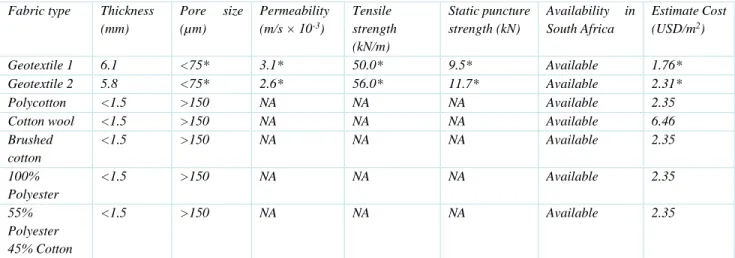
Chapter 4 presents results from an investigation on two engineered non-woven fabrics and five cloth fabrics that are locally available for low-cost PoU drinking water treatment. The focus was to attain the best process configuration to achieve the best possible contaminant removal, while preventing recontamination. Numerical models for predicting turbidity removal efficiency were developed for each fabric as support tools for selecting optimal process configuration. This study resulted in an optimized simple, yet innovative PoU water treatment system namely the eight-layer four-pot bidim sequential filtration system (BidimSEQFIL).