University of South Florida
Scholar Commons
Graduate Theses and Dissertations Graduate School
7-15-2016
An Information and Communication Technologies
for Development (ICT4D) Decision Framework
for Building an Information Economy in
Developing Countries: The Case of Palestine
Hasan NuseibehUniversity of South Florida, [email protected]
Follow this and additional works at:http://scholarcommons.usf.edu/etd
Part of theBusiness Administration, Management, and Operations Commons,Library and Information Science Commons, and thePublic Administration Commons
This Thesis is brought to you for free and open access by the Graduate School at Scholar Commons. It has been accepted for inclusion in Graduate Theses and Dissertations by an authorized administrator of Scholar Commons. For more information, please [email protected].
Scholar Commons Citation
Nuseibeh, Hasan, "An Information and Communication Technologies for Development (ICT4D) Decision Framework for Building an Information Economy in Developing Countries: The Case of Palestine" (2016).Graduate Theses and Dissertations.
An Information and Communication Technologies for Development (ICT4D) Decision Framework for Building
an Information Economy in Developing Countries: The Case of Palestine
by
Hasan Z. Nuseibeh
A dissertation in fulfillment of the requirements for the degree of
Doctor of Philosophy
Department of Information Systems & Decision Sciences College of Business
University of South Florida
Co-Major Professor: Alan Hevner Ph.D. Co-Major Professor: Rosann Collins, Ph.D.
Donald Berndt, Ph.D. Jamil Jreisat, Ph.D.
Date of Approval: July 5, 2016
Keywords: decision support system, global IT, developing economies, decision making, ICT sector, contingency theory
DEDICATION
This Dissertation is dedicated to:
My Father, who passed away, believing in me and hoping for this day to come. My amazing Wife, who supported me every single day and gave me strength to go on.
My Daughter, my angel, who always managed to make me smile in difficult times. My Mother, whom I miss more than anything for all her love and care.
ACKNOWLEDGMENT
I would like to express my deepest gratitude to my Co-Major advisors Prof. Alan Hevner, and Prof. Rosann Collins for all their patience and continuous support, throughout this long and wonderful journey. I truly feel blessed for having them as my major professors.
Also, I would like to thank my advisors Prof. Don Berndt, and Prof Jamil Jreisat for all their precious advices, help, and encouragement.
Many thanks to all my professors in the ISDS department for the enriching environment they provided, special thanks to Nadia Khoury for all her help and care.
Thank you Dr. Waynne James from the college of Education for all your help.
I had this wonderful opportunity to get my Ph.D. degree in the U.S after winning the Fulbright Foreign Student Scholarship. I would like to thank every single person that made this possible. I belive that the best way to bringing people together is through Sciense and Education.
I couldn’t have completed my dissertation without the love, care, time, resources, and patience of my wonderful wife Heba, I am blessed to have her by my side.
I deeply appreciate the support of my wonderful family back home: my mother Ikhlas, my brother Munir, and my lovely sister Sahar, they supported me with their continued love, resources, and positive energy, special thanks for Sahar for all her help.
I would like to thank my friend Mr. Aref Husseini in Palestine for his valuable feedback and resourcefulness.
Last but not least, I would like to thank my great friends and colleagues who accompanied and helped me throughout this journey. Thank you Abedelrahman, Arash, Raneem, Tala’at, Khaled, and Shankar.
TABLE OF CONTENTS
LIST OF TABLES ... iv
LIST OF FIGURES ... vi
ABSTRACT ... vii
CHAPTER 1: INTRODUCTION AND MOTIVATION ... 1
1.1. Contingency Theory and Frontier Analysis ... 3
1.2. Research Problem and Research Questions ... 6
1.3. Dissertation Structure... 8
CHAPTER 2: LITERATURE REVIEW AND FRAMEWORK BUILDING ... 11
2.1. Understanding Development ... 11
2.2. Countries Development Classification ... 12
2.3. Information and Communication Technology for Development ... 13
2.4. Digital Divide... 17
2.5. Transfer and Diffusion of ICT Innovations ... 17
2.6. Critical Success Factors ... 18
2.7. SWOT Analysis ... 29
2.8. Framework Building ... 30
2.9. Decision Framework ... 32
2.10. Walking the Framework ... 35
2.10.1. Vertical Scanning ... 36
2.10.2. Horizontal Scanning... 37
CHAPTER 3: RESEARCH DESIGN ... 40
3.1. Study 1: Decision Framework ... 40
3.2. Study 2: The Case of Palestine, Finding the Sweet Spots ... 41
3.3. Study 3: Opportunities for Change ... 42
CHAPTER 4: THE CASE OF PALESTINE, FINDING THE SWEET SPOTS ... 45
4.1. Specific Cases: Palestinian ICT Companies ... 46
4.1.2. Yamsafer ... 47
4.1.3. Souktel ... 48
4.2. Government Policies ... 48
4.3. Infrastructure ... 49
4.3.1. ICT Infrastructure ... 49
4.3.2. Educational System and Human Capital... 53
4.4. Sociocultural Factors ... 57
4.4.1. Diaspora ... 57
4.5. Global Markets... 59
4.5.1. Target Markets and Competition ... 59
4.5.2. Image\Trust ... 60 4.5.3. Physical Presence ... 60 4.6. Exogenous Factors ... 61 4.6.1. Palestinian Economy ... 61 4.6.2. Political Reality ... 63 4.6.3. International Support ... 65
4.7. Back to the Framework ... 66
4.8. Create and Super Factors Interactions. ... 71
4.8.1. Exogenous Factors: ... 72
4.8.2. Global Markets... 72
4.8.3. Infrastructure ... 73
4.8.4. Government Policy ... 74
4.9. Potential Opportunity ... 75
CHAPTER 5: OPPORTUNITIES FOR CHANGE ... 76
5.1. Data Collection and Analysis... 76
5.2. Scan 1: Create Value Chain Activities... 80
5.2.1. Intellectual Property (IP) Laws ... 82
5.2.2. Corporate Regulations ... 83
5.2.3. SWOT Analysis ... 85
5.2.4. Controls and Impacts ... 86
5.3. Scan 2: Education Infrastructure Factors ... 87
5.3.1. Need for Curriculum Reform. ... 89
5.3.2. Need for Better Skills Education. ... 92
5.3.3. SWOT Analysis ... 94
5.3.4. Controls and Impacts ... 94
5.4. Scan 3: ICT Stakeholders... 95
5.4.1. Coordination Among Stakeholders ... 97
5.4.2. Coordination Efforts ... 99
5.4.3. Opportunities... 101
5.4.4. SWOT Analysis ... 103
5.4.5. Controls and Impacts ... 103
5.5. Scan 4: Exogenous Factors ... 104
5.5.1. International Support ... 105
5.5.2.1. Restrictions on Movement ... 111
5.5.2.2. Technical Restrictions ... 113
5.5.2.3. Opportunities... 115
5.5.3. SWOT Analysis ... 117
5.5.4. Controls and Impacts ... 118
5.6. Scan 5: Make Value Chain Activity ... 118
5.6.1. Brand Image and Trust... 120
5.6.2. Diaspora ... 123
5.6.3. SWOT Analysis ... 126
5.6.4. Controls and Impacts ... 127
CHAPTER 6: DISCUSSION AND IMPLICATIONS ... 129
CHAPTER 7: EXPECTED CONTRIBUTION AND FUTURE RESEARCH ... 138
7.1. Contribution ... 138
7.2. Limitations ... 139
7.3. Future Research ... 140
BIBLIOGRAPHY ... 142
APPENDICES ... 151
Appendix A: Theoretical Basis for The Factors ... 151
Appendix B: Mapping Factors to Super-factors ... 152
Appendix C: Interview Script ... 153
Appendix D: Consent Form ... 158
Appendix E: Interview Protocol ... 162
Appendix F: Coding Scheme ... 172
Appendix G: Coding Examples ... 175
Appendix H: IRB Approval ... 187
LIST OF TABLES
Table 1: Developed\Developing Countries Classification (Nielsen, 2011) ... 14
Table 2: Prior Studies Adapted from (Techatassanasoontorn et al., 2011) ... 20
Table 3: Decision Framework Super Factors ... 32
Table 4: Dissertation Studies ... 41
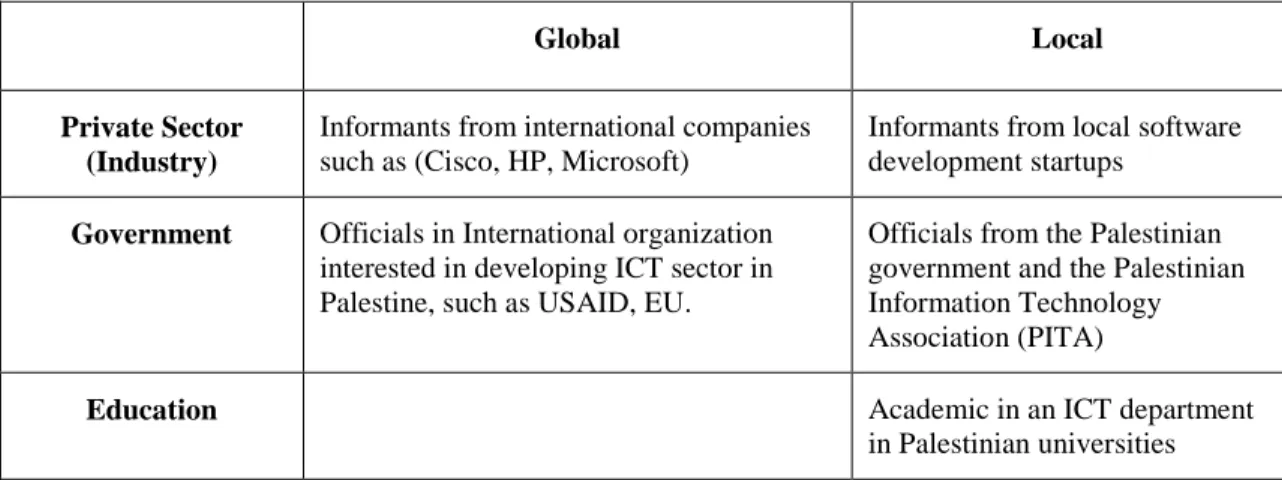
Table 5: Key Informants ... 43
Table 6: Super Factors in Palestine ... 46
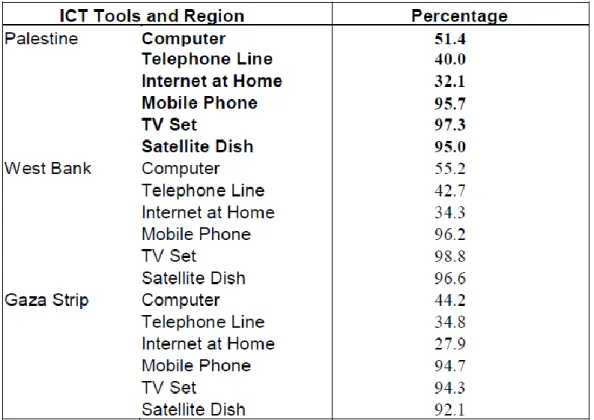
Table 7: Availability of ICT Tools by Region ... 52
Table 8: Benchmarking Stanford University vs. Palestinian Universities ... 55
Table 9: Business and Soft Skills that Universities Provide ... 56
Table 10: Skills of Graduates as Perceived by ICT Companies ... 58
Table 11: World Bank Data for Palestine 2009-2013. ... 61
Table 12: Main Economic Activities by Major Characteristics... 63
Table 13: Enablers and Constraints for the Case of Palestine ... 68
Table 14: Interviewee’s Experience... 77
Table 15: Enablers-Hurdles vs. Super Factors ... 79
Table 16: Enablers-Hurdles vs. Infrastructure Sub Factors ... 79
Table 17: Opportunities for Change vs. Super Factors ... 80
Table 18: Opportunities for Change vs. Infrastructure ... 80
Table 21: SWOT Analysis of Stakeholder Coordination Issues ... 103
Table 22: SWOT Analysis of International Support Factor ... 117
Table 23: SWOT Analysis of Occupation Factor ... 117
Table 24: SWOT Analysis of Make Activity Factors ... 127
Table 25: Opportunities for Change ... 137
Table A1: Theoratical Basis for the Factors ... 151
Table A2: Mapping Factors to Super-factors... 152
Table A3: Coding Scheme ... 172
Table A4: Coding Examples ... 175
LIST OF FIGURES
Figure 1: Changing ICT4D Issues Over Time © [2008] IEEE ... 16
Figure 2: Changing Strategic View on ICT and Development © [2008] IEEE ... 16
Figure 3: Factors Affecting IT Industry Success (Ein-Dor et al., 1997) ... 21
Figure 4: IT Industry Success Model (Ein-Dor et al., 2004) ... 22
Figure 5: Typology of IT sector (Heeks, 2006) ... 23
Figure 6: Software Export Success Model (Heeks & Nicholson, 2004) ... 25
Figure 7: Thailand’s IT Industry Success (Tan & Leewongcharoen, 2005) ... 26
Figure 8: Influence-Impact Model (Techatassanasoontorn et al., 2011) ... 27
Figure 9: Conceptual Framework of Information Economy (Wong, 1998) ... 28
Figure 10: Proposed ICT4D Decision Framework ... 34
Figure 11: Palestinian Economy by Sector 2013 ... 62
Figure 12: Unemployment in Palestine 2005-2013 ... 64
Figure 13: Scan 1-Create Value Chain Activity Focusing on Policies ... 82
Figure 14: Scan 2-Education Infrastructure Factor ... 88
Figure 15: Scan 3-Stakeholder View ... 96
Figure 16: Scan 4- Focus on Exogenous Factors ... 105
ABSTRACT
Building a thriving information economy is a goal for many developing countries. This research helps identify the factors (inhibitors and motivators) that can be used to leverage the Information and Communication Technology (ICT) sector in a developing country to build a sustainable information economy that benefits other sectors of the economy. This is done by studying the current literature on this topic and then synthesizing the theoretical models to create a unified decision framework to help developing countries set their path to building a sustainable information economy.
Drawing on past literature and extant theory, a novel ICT4D decision framework is built that provides a three-dimensional view based on 1) the ICT value chain, 2) key factors (e.g. infrastructure, policies, markets), and 3) stakeholders (e.g. industry, government, academia). This decision framework is then used to study the case of Palestine, where secondary and primary data are used to compare the critical success factors for Palestine with the general framework. This synthesized framework and critical success factors superset is expected to advance the field’s understanding of how both controllable and non-controllable country characteristics contribute to or inhibit the growth and development of an ICT sector in developing countries. In addition, the framework and identified success factors help in setting a future path for development.
Results from both secondary data sources demonstrate the usability of the framework to analyze the current setting of the ICT sector, in addition, to help investigate a range of possible opportunities for action to reach a higher level of ICT success. Then, via a targeted set of interviews
with academic, industrial, and governmental sources who are experts in the Palestinian ICT arena, an exploratory study was performed that focused on key critical success factors for future development of the ICT economy. Controllable factors that have the potential for sustainable action were identified.
In the case of Palestine, it appears that despite having many challenges that are out of control, there seem to be many opportunities for change specifically in government and educational policies that can help the ICT sector in specific, and the Palestinian economy in general reach its real potential. Given the current political situation in Palestine, it was found that there is a great potential in creating new software products for export. The challenges in this particular area in the case of Palestine lies in the lack of adequate business skills to research the global market and to market products and services that can be offered by the Palestinian ICT sector.
The findings should also help stakeholders see if the challenges to developing an ICT sector in Palestine are the same as those for any developing country, and where they are truly unique. The outcomes of this research have the potential to frame and inform economic development decisions that could define the future of the Palestinian state.
CHAPTER 1: INTRODUCTION AND MOTIVATION
Building a sustainable information economy is a goal for many developing countries across the globe (Brynjolfsson, 1993; J. Humphrey, Mansell, Paré, & Schmitz, 2003; Lichtenberg, 1995). These countries observe the success of other developing countries that have leveraged a strong ICT sector to drive economic productivity. Studies have shown that there is a strong link between the production and use of ICT and the development of a sustainable and effective information economy (Techatassanasoontorn, Huang, Trauth, & Juntiwasarakij, 2011).
Building an information economy is particularly urgent for countries that do not have sufficient natural resources upon which to base an export economy. Such countries can choose to invest in and later utilize their human capital to offer value to the global information market in the form of technical support, software development, and hardware development (Masten & Kandoole, 2000). Also, a developed ICT sector would play a major role in supporting and enhancing other sectors of the economy, and therefore help further the country’s overall economic development process by improving productivity and increasing the return on investment in other sectors (Kraemer & Dedrick, 1994).
The importance of building a developing country’s information economy stimulates academic interest in understanding the different factors that can influence the success or failure of this endeavor. Several countries provide successful models such as India, Israel, Thailand, Malawi, and South Africa (Indjikian & Siegel, 2005; Masten & Kandoole, 2000; Moodley, 2002; Paul & Siegel, 2001). The study of these countries creates an opportunity for academics since the
enablers and inhibitors to building an information economy in the model countries can be identified, compared, and contrasted to understand better the critical success factors for developments of this type. Prior research has established that there is a wide range of factors that can play a role at a country level, including political, economic, geographical, and sociocultural factors (Ein-Dor, Myers, & Raman, 1997; Tan & Leewongcharoen, 2005; Techatassanasoontorn et al., 2011). Some of these factors can be changed or influenced by governments or the private sector to facilitate the transition, and others can be considered as exogenous factors that need to be understood and adapted to (such as geographical location and country size) (Tan & Leewongcharoen, 2005). The sum of factors synthesized from the literature can help determine the development path that a country can take to build a sustainable information economy (J. Humphrey et al., 2003; Masten & Kandoole, 2000).
A number of studies have been done on how growth in the ICT sector affects the economic growth in developed countries positively (Colecchia & Schreyer, 2002; Daveri, 2002; Jorgenson, Ho, & Stiroh, 2002; Lightfoot, 2004; Oliner & Sichel, 2000; Van Ark, Melka, Mulder, Timmer, & Ypma, 2002). However, when it comes to developing countries, there seem to be inadequate studies as reported in the literature (Baliamoune-Lutz, 2003; Harbi, Amamou, & Anderson, 2009; Tan & Leewongcharoen, 2005; Yousefi, 2011).
Models of information economy enablers and inhibitors have been developed in a number of studies for different regions and environments (J. Humphrey et al., 2003; Indjikian & Siegel, 2005; Masten & Kandoole, 2000; Moodley, 2002; Paul & Siegel, 2001; Techatassanasoontorn et al., 2011). However, it has been argued that there is no single model available for understanding information economy development in developing countries (Tan & Leewongcharoen, 2005). Therefore, it is important to study every country as a separate case to understand what specific
factors contribute to its economic development process (Techatassanasoontorn et al., 2011). This may be a particularly important approach when a country has one or more extreme characteristics, including both exogenous factors that cannot be controlled as well as those that are influenced by a country’s government or private sector.
Case research method was chosen for the second part of this study, since case research is most appropriate in certain situations that apply to this study (Yin, 2013) such as:
In context-rich environments and when there are many variables. For how or why research questions.
When the focus of the study is on contemporary events, rather than historical events, and when there is little chance for manipulating factors.
Another decision in case research design is whether to have one or multiple cases for the study. Single-case studies are useful for unique and extreme cases, and when building a theory or testing a critical case with a well-formulated theory where the factors being tested are well established in the literature (Yin, 2013). For the purpose of this study an extreme and unique case was selected (the case of Palestine) as will be explained next, also, pre-established factors from literature were used.
1.1. Contingency Theory and Frontier Analysis
One of the theoretical lenses that has been used by scholars studying decision-making in developing countries is contingency theory (Avgerou, 2010; Conteh & Ohemeng, 2009; Heeks, 2002). The theory is originally an organizational and leadership theory that contends that there is no best way of leadership that fits all organizations and that an organization requires an
understanding and a proper fit between internal resources, subsystems, and environment; therefore, the theory values uniqueness (Fiedler, 1967). The theory has been used in several information systems studies (Umanath, 2003; Weill & Olson, 1989) in several contexts such as understanding the factors or success or failure of information systems in developing countries (Heeks, 2002).
One of the challenges to understanding complex systems using contingency theory is that in many cases there are a large number of subsystems within an organization or a country (in our case), in addition to internal and external factors at play. This makes it difficult to study each subsystem or set of factors individually using a reductionist approach, due to the interaction between those subsystems and factors. A holistic approach can be used instead to study a system as a whole. One example of a holistic method was introduced in a study of the work systems within and between organizations (Sinha & Van de Ven, 2005) where an extension to contingency theory was proposed by adding two theoretical perspectives:
Configuration perspective (Meyer, Tsui, & Hinings, 1993) examines the different contingencies and design alternatives of the subsystems. Therefore rather than studying each subsystem and how it affects the whole system’s productivity in detail; it looks at different configurations (design alternatives) of the subcomponents to improve the performance of the system as a whole by understanding the interaction between the subsystems. The configuration perspective promotes an internal fit between components, in addition to an external fit between the environment and the system.
Complexity perspective (Anderson, 1999) views the problem of finding an optimal configuration as an optimization problem. It starts by searching through a fitness landscape for an optimal solution internally (shape of the peak) and externally (the
height of peak). The search can be done by incremental changes in the configuration (hill climbing) or by dramatic changes (hill jumping).
Contingency theory supplemented by the configuration and complexity perspectives applied at the country level is useful in our case to understand the need for analyzing a country’s unique situation in detail in regards to its internal resources, subsystems, and global environment. However, one challenge arises that is related to finding an optimal configuration both regarding external and internal fit that would lead to increased efficiency and productivity from the ICT sector resulting in an improvement in the economy in general. An attempt to improve a subsystem or a set of factors may affect another subsystem negatively (Sinha & Van de Ven, 2005). For instance, the case of Palestine, a change in taxation policies for foreign investment may lead to improvements by encouraging foreign investors to invest more in startups in the ICT sector, but may pose a challenge to existing local businesses that have limited resources. The interaction and complexity between the different subcomponents can make the comparison of different configurations more difficult in an empirical study.
One solution to this challenge that was proposed at an organizational scale by (Sinha & Van de Ven, 2005) is to use a frontier analysis. A frontier analysis targets an outlier in a sample rather than the average cases; which could set the ceiling or basement levels for impacts. It starts by identifying outliers on certain dimensions and then selecting one of those outliers for a deeper analysis to understand the contingencies of the outliers. The understanding of an outlier helps in understanding how the different factors or subsystems interact together in extreme cases. Usually, a frontier case is an outperforming system in terms of maximizing outputs subject to inputs and constraints that is studied to understand its deviation from other configurations.
With the same reasoning of frontier analysis, an outlier was selected for the case to get a deeper understanding of the factors and the subsystems that contribute to the ICT sector. The case of choice for this study is an underperforming outlier, namely the case of Palestine, which offers a unique opportunity for study because of the additional constraints and complexities it faces compared to other average developing countries. The uniqueness of the Palestinian case is discussed further in Chapter 4. The additional constraints caused by the political reality of Palestine add to the complexity of its particular configuration. A deep understanding of the unique case of Palestine constitutes a unique opportunity to get additional insights on how those additional complexities can be managed and manipulated to improve ICT sector’s performance. These insights can contribute to the academic and practical knowledge for developing countries that may face some of those constraints.
Another opportunity that contributes to the choice of Palestine as a study case for the purpose of this research is that one of the researchers is uniquely qualified, being a Palestinian, and therefore had an insider view that helps understand the sociocultural perspective of the country. In addition, he had strong contacts throughout the academic, industrial, and government sectors in Palestine which constitute the population of the potential informants for this study.
1.2. Research Problem and Research Questions
Our research study is grounded on a synthesis of the different models from the literature to create a superset of critical factors and their effects on building an information economy. This synthesis is represented in a higher-level framework that reflects both commonality and variation between studies, countries, and regions. This framework is based on existing literature and is elaborated upon and refined based on the secondary and primary data collection. The superset of
factors and general framework guided the current investigation in our case study, to identify the most promising areas of improvements or sweet spots to make progress in the path of an information economy.
The particular country studied is Palestine, which is a developing country trying at this stage to build an information economy with the help of private sector funding and foreign aid. Palestine offers an interesting case context because of its unique political, historical, and geographical situation, and therefore it can serve as a useful source of data for comparison and testing of the synthesized framework. Palestine is extreme on several country characteristics because of its unique political situation that poses a challenge to policymakers.
The proposed research questions for this study are:
RQ1. What are the factors affecting the ICT Sector in a developing country that is on the path of building an information economy?
RQ2. How to best model critical factors of an information economy in developing countries?
RQ3. In the case of Palestine, what are the unique aspects of the country that are particularly enabling or inhibiting the development of the ICT sector to set the path to an information economy?
RQ4. In the case of Palestine, what are the promising areas of improvements in the current configuration to help build an information economy?
RQ5. In the case of Palestine, how can the current configuration be changed to capture the opportunities in the promising areas identified?
This dissertation addresses the research questions in three studies. RQ1 and RQ2 are covered in the first study where a decision framework is built based on the identified potential
factors from prior literature. The second study answers RQ3 and RQ4 using the decision framework to guide the collection of secondary data for the case of Palestine, which is used then identify sweet spots in the framework to be improved. Finally, study three uses the identified sweet spots to guide primary data collection to answer RQ5.
1.3. Dissertation Structure
The goal of this dissertation is to develop and test a decision-making framework to help researchers and policymakers analyze the current status of an ICT sector in a developing country and then help build a roadmap for further improving and developing of the ICT sector to contribute towards creating an information economy.
Chapter 2 presents the first study in this dissertation, which is designed to answer RQ1 and RQ2. It starts with a literature review to introduce several issues related to Information and Communication Technology for Development (ICT4D), beginning with an investigation of the different classifications used by three international organizations to classify countries according to their development status. This is followed by additional topics within ICT4D such as digital divide, transfer, and diffusion of ICT innovations, and finally the contributors to ICT4D from academic literature. Three types of contributors are identified: factors, supply chain view of ICT, and stakeholders which contribute to the production of different types of ICT outputs (hardware, software, and contents) that are produced by an ICT sector.
The contributors to ICT4D identified from the literature review are then incorporated into a unified ICT4D decision framework, where the different factors are categorized into super factors and set to one dimension, and the supply chain view on the other dimension. Finally, different ways to use the unified decision-making framework are discussed in the last section.
The research design is discussed in Chapter 3. It starts with a review of the findings from study one. Next, the framework from that study is incorporated into the case of Palestine in two steps. Study two uses secondary data from several sources about Palestine to help evaluate the current status or configuration of the ICT sector within the Palestinian economy and identify sweet spots. Finally, in the third study, the researchers demonstrate the process of doing the interviews with stakeholders in the ICT sector in Palestine to better understand the identified opportunities from the secondary data study, and to find what can be changed to reach those goals. Additional details of the data collection and analysis steps are included in this chapter.
Chapter 4 is the starting point for study 2, where the decision framework is used as a guiding framework to collect information about Palestine and to help answer RQ3 and RQ4. The case of Palestine is discussed in detail, offering an understanding of its current configuration concentrating on the most important contributing factors to its ICT sector including political reality, economy, education, and the current state of ICT sector and infrastructure. The decision framework is then used along with the secondary data in order to find opportunities for change and evaluate the current ICT development path, in addition to offering recommended changes to the current configuration to help build an information economy.
Chapter 5 presents study 3. It starts with an explanation of the data collection and analysis process. Then the interview data is used to get a deeper understanding of specific areas of interest that are investigated through the decision framework. Five different scans of the framework are presented, (Create value chain activities, educational Infrastructure, ICT stakeholder’s roles, exogenous factors, and Make value activities). Each of the scans is followed by a SWOT analysis table summarizing the main findings.
In Chapter 6 a general discussion of the results and the implications of the dissertation are presented. The anticipated contribution of this research is presented in Chapter 7, in addition to future research plans based on the decision framework.
CHAPTER 2: LITERATURE REVIEW AND FRAMEWORK BUILDING
This chapter is divided into two main parts:
The literature review: which covers a number of areas related to this study starting with a general understanding of the development classification used by several international organizations, in addition to a number of relevant topics for the purpose of the study, such as ICT4D, digital divide and the transfer and diffusion of ICT innovations.
Framework building: starts with a survey of the academic literature to find the different contributors and factors to the success of an ICT sector. Those factors are used then to build an information economy decision-making framework. Finally, a number of ways to make use of the introduced model are discussed in the last section.
2.1. Understanding Development
About 75% of the world population lives in developing countries, and it is also estimated that most growth in human population will be in those countries (Jreisat, 2011).
The concept of development can be traced back to the mid-20th century. After an era of colonization, newly independent countries started investigating ways to build\adjust their political, economic and social structures for building their states. The initial view followed “modernization theory” where the idea was that less developed countries should follow the steps of more developed
countries in their path for advancement through the employment of advanced technology and science by the state to control the physical and social environment of people through a comprehensive development plan or (blueprint). This view was criticized for not taking into account the sociocultural and history of those developing countries in addition to the time gap between the development of the developed (model) countries and the time of development of the new states (Jreisat, 2011).
2.2. Countries Development Classification
The divide between countries in term of development can be a controversial one since it depends on the organization that makes such classifications (OECD, 2015). Some of the world organizations that make such classifications are World Bank, United Nations (UN), and the International Monetary Fund (IMF). Each of these organizations has its own criteria and classification and even its own naming convention. Although economists may easily categorize certain countries as being either developed or developing such as the United States (US) or Japan as being developed countries, other countries are more difficult to categorize such as Russia, which may fall into any of the categories. The categorization depends on what can be meant by the level of development, and what threshold is used to make such a classification. One of the most basic indicators used is the Gross National Income (GNI) per capita which is used mainly by the World Bank that categorizes economies to low and middle-income countries as developing countries, and high-income countries as developed countries.
The United Nations uses a more complex index that was developed to measure development from a more detailed perspective, namely the Human Development Index (HDI). The index reflects the capabilities of the people in a particular country, rather than just the growth
rate of an economy. This approach, therefore, helps policy makers compare two or more economies with a deeper understanding. The index is composed of three dimensions, health measured by life expectancy, knowledge measured by years of schooling of adults and children, and standard of living measured by gross national income per capita (Jahan, 2015).
Finally, the International Monetary Fund uses per capita income level, export diversification, and degree of integration into the global financial system to determine a country’s classification. (World Bank, 2015).
Table 1: Developed\Developing Countries Classification (Nielsen, 2011) summarizes these three different classifications system. It also includes information about the various thresholds and naming conventions.
The use of one or other classification system depends on the purpose of the classifications, Palestine is considered among the three classifications to be a developing country, and according to the World Bank, it is considered among the lower middle-income countries. Therefore, it is regarded as a developing country throughout the dissertation.
2.3. Information and Communication Technology for Development
The potential role that ICT can play in development (ICT4D) has been an open area of research in many disciplines including Information Systems (Baliamoune-Lutz, 2003; Heeks, 2008; Techatassanasoontorn et al., 2011) and development studies. Many studies assume that improving ICT would help in development at many levels (Avgerou, 2010; Mann, 2003; Walsham, Robey, & Sahay, 2007). Such as GDP growth (Baliamoune-Lutz, 2003; Dedrick, Gurbaxani, & Kraemer, 2003; Jalava & Pohjola, 2002; Kraemer & Dedrick, 1994), in addition to the reduction
of poverty, increase productivity, economic growth, improve accountability and governance (The World Bank, 2012).
Table 1: Developed\Developing Countries Classification (Nielsen, 2011)
A few other researchers argue that this is not the whole story, and the development that results from ICT does not benefit all sectors of the community equally or doesn’t affect developing countries in the same way as developed countries (Baliamoune-Lutz, 2003; Yousefi, 2011). Therefore some researchers argue that other sorts of development should be prioritized and that developing countries should concentrate on the use rather than the production of ICT (Avgerou, 2008).
The assumption that ICT is beneficial for development is shared among many international organizations such as the Organization for Economic Co-operation and Development (OECD) (OECD, 2010) the UN (Celik, 2007), the World Bank (The World Bank, 2012), and the European Union (Piatkowski, 2005). This assumption is based on the observations of the effects of ICT on the development of both developed and developing countries. Many of those international organizations have projects in developing countries to improve ICT diffusion and use to contribute to the overall development.
The role of ICT for development has changed over time, starting with what can be called ICT4D 0.0 where the role of ICT was totally ignored or isolated in development. Moving towards ICT4D 1.0 where the potential role of ICT in development was seen in the effects of ICT diffusion in a country; and in attempting to gap the digital divide and improve infrastructure to maintain a continuous supply of ICT products for users, in addition to increasing awareness (Heeks, 2008). This version of ICT4D sees ICT as a tool to be used to improve productivity in various sectors. See Figure 1: Changing ICT4D Issues Over Time © [2008] IEEE adapted from (Heeks, 2008).
More recently the ICT has been playing a more advanced role in development. See Figure 2: Changing Strategic View on ICT and Development © [2008] IEEE adapted from (Heeks, 2008). ICT4D 2.0 views ICT as a platform for development that starts with a higher level of implementation and applications of ICT towards innovation that can produce an impact on social and economic development goals.
The research area of ICT4D is broad and includes different development areas in a society such as education, health, agriculture. In fact, each one of these subareas opens further doors to study how ICT can affect development.
Figure 1: Changing ICT4D Issues Over Time © [2008] IEEE
Figure 2: Changing Strategic View on ICT and Development © [2008] IEEE
Given the general consensus among scholars and international organizations as discussed above, this study adopts the assumption that ICT is beneficial for the growth and development of developing countries.
2.4. Digital Divide
Digital divide is a term that has been used in its most basic definition to refer to the gap in the accessibility to the internet between different groups. The term has been used broadly to refer to various technologies, at different levels, and at different utilization levels of technologies. For instance, the term “global digital divide” has been used to refer to the difference in accessibility to technologies mainly the internet between different countries, while the term social divide is used to describe that gap when it occurs within a particular country in the society (Norris, 2001). Other levels of digital divide include individuals, organizational and regions. (Hilbert, 2011).
Although narrowing the accessibility gap can be seen as a goal at the different levels, it may not be enough to help describe and understand the development gap. Therefore many researchers include other important dimensions to the problem. For example, bridging the gap in the knowledge and utilization of the different technologies (Hilbert, 2011) may pose more challenges than bridging the accessibility gap.
Therefore, for the purpose of this dissertation, the focus is on finding ways to bridging the gap of effective utilization of Information Technology between countries which is assumed to help in the development of those countries.
2.5. Transfer and Diffusion of ICT Innovations
Realizing the existence of a digital divide between countries, and understanding the role that ICT can play in development, the next step would be to understand the mechanisms for effective transfer and use of those technologies. This opens a door to another discussion about the possibility of transferring those technologies along with the knowledge and the mechanisms in which those technologies operate.
The main challenge here is that the transfer of technologies in most cases happens between two different environments. Therefore the process may not be seen as a process of just transferring ICT innovations between two environments, but as a process of giving birth to a similar ICT innovation that fits the new environment, that can adapt to the different parameters and conditions of this new environment. The term social embeddedness is sometimes used to refer to this perspective (Avgerou, 2008) compared to the concept of transfer and diffusion of ICT innovation. The social embeddedness perspective agrees with the premises of contingency theory (Fiedler, 1967). ICT for development should not be thought of as merely a transfer of ICT innovations between two different countries. It should instead start from an understanding of the contingencies of the developing country understudy, and then work on “constructing new techno-organizational structures within a given local social context and places research emphasis on exploring local meanings and working out locally appropriate techno-organizational change”.
The social embeddedness view can be thought of as the highest level of ICT4D discussed earlier. It goes beyond diffusion and integration of ICT towards encouraging innovation that gets born within the socio-cultural context of the developing country.
2.6. Critical Success Factors
This takes us to our specific context of this study, namely understanding the factors that contribute to the success or failure of building an ICT sector that would help in the development of a country.
There are several ways to look at the factors contributing to building an ICT sector and its relation to overall development, and several studies looked at this problem from different perspectives. A summary of those papers was compiled by (Techatassanasoontorn, Huang, Trauth,
& Juntiwasarakij, 2011) and is adapted and summarized in Table 2: Prior studies adapted from (Techatassanasoontorn et al., 2011)
Some studies looked at the factors affecting IT industries in developed countries including (Asian Pacific Countries, Israel, India, Singapore, Ireland, Russia, China, Finland, and New Zealand), and those studies and the factors that they found are discussed below.
In a paper that studies the factors influencing investment in information technology, and the payoffs from investment in IT use on productivity and economic growth (Dedrick & Kraemer, 1995), it was found that there is a positive correlation between growth in IT investment and growth in GDP and productivity in 12 Asia-Pacific countries over the period of seven years. The study also found that a number of factors contribute to the development of computer industry, namely (human resources, complimentary industries, R&D investment and government plans). It is also suggested that IT use (as opposed to IT production) may have a better economic effect that would be reflected in increased productivity and growth. They argue that for a country to be able to produce it needs sophisticated users as a market and to interact with developers to improve development. Also, the study reflected on the success of certain countries (Singapore, Taiwan, and Korea) in investing in IT production, by stating that they succeeded in attracting foreign investments in production facilities (Dedrick & Kraemer, 1995).
In two studies (Ein-Dor et al., 1997; Ein-Dor, Myers, & Raman, 2004) authors argue that small countries are not at an economic disadvantage to larger countries in regards to the development of IT industries. Both studies develop a theoretical model to find factors that contribute to the success of an IT industry in small countries.
Table 2: Prior studies adapted from (Techatassanasoontorn et al., 2011)
Reprinted by permission of the publisher, see Appendix I
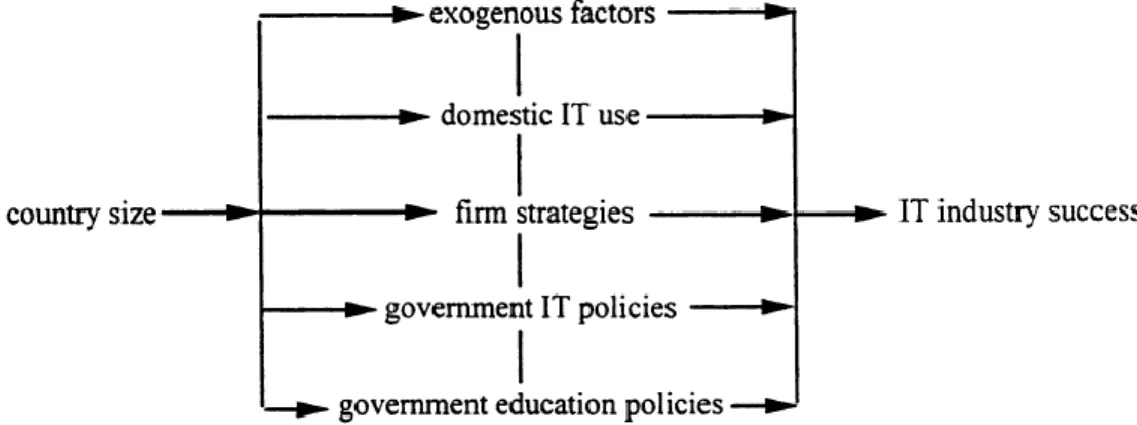
In the first study (Ein-Dor et al., 1997) compare three small developed countries (Israel, New Zealand, and Singapore) to understand the factors that helped in building a successful IT production industry. They developed a model to compare those three countries and to understand
(Ein-Dor et al., 1997) The study found that Government IT Policy, Government Education Policies, Supporting IT Industries R&D were key enablers. Also in the case of Singapore that government intervention in promoting the domestic use of IT had a positive effect on IT production.
Figure 3: Factors Affecting IT Industry Success (Ein-Dor et al., 1997)
In the next study, seven years later (Ein-Dor et al., 2004) further developed the model and used longitudinal and time slice data between 1994 and 1998, and included one more country (Finland) to their list. The model incorporated an additional perspective from New Growth economics to the original model. See Figure 4: IT Industry Success Model (Ein-Dor et al., 2004). The study found that in addition to the factors mentioned in earlier studies, Capital Availability and Firm Strategies were additional significant factors contributing to the success of the IT industry. On the other hand, it found that domestic IT use and education had little impact. This may be due to the fact that local IT markets are not the targeted by the sector. Therefore domestic IT use may not be that significant. Regarding education, the study attributed the little impact to small sample size and to the nature of one country (Israel) that had many immigrants.
Figure 4: IT Industry Success Model (Ein-Dor et al., 2004) Reprinted by permission of the publisher, see Appendix I
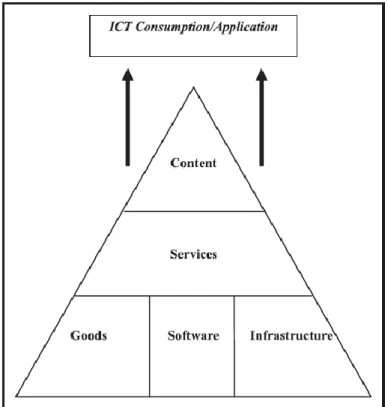
The studies above all looked at the IT industry as a whole, while other studies made some distinction between the different subsectors within IT sector. For instance, (Heeks, 2006) viewed the IT sector to be comprised from several overlapping subsectors (content, services, goods, software and Infrastructure), and adopted a topology from previous studies of the IT subsectors showing the overlap between the different parts. The topology can be seen in Figure 5: Typology of IT sector (Heeks, 2006). This distinction is of importance for this study since it looks closer into the subsectors in a supply chain model. The study looked closer into the software industry subsector in India, using competitive advantage theory (Porter, 2007) to understand the success of this industry in India. It found that the following factors are the sources of the competitive advantage In India: advanced skills base, skill development institutions, clustering (supporting locational clusters through infrastructure investments), domestic competition, and government policy.
Figure 5: Typology of IT sector (Heeks, 2006)
Reprinted under Creative Commons Public License, see Appendix I
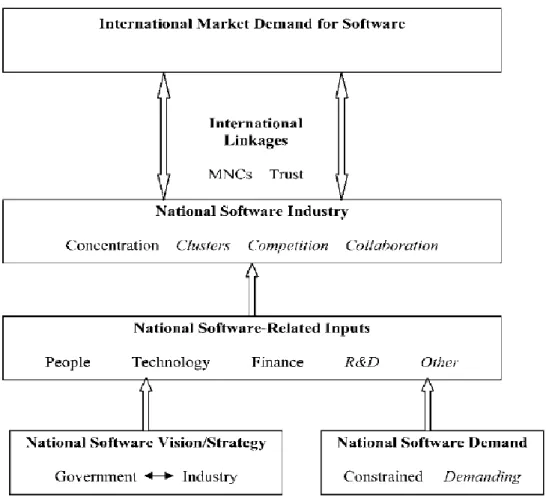
In another study (Heeks & Nicholson, 2004) about the success factors of the software export industry in what it called the three largest software followers the 3Is (Ireland, Israel, and India). The study developed a “Software Export Success Model” and then used it to help analyze other second-tier follower countries namely Russia and China. Using ‘template analysis’ from interviews and secondary sources the author identified five main category factors, that are listed below:
Global and local Demand.
National vision and strategy: Goals and interventions International linkages: reputational effects and trust.
Supply factors and infrastructure: Human capital, technology, and finance.
These factors were incorporated into the model in Figure 6: Software Export Success Model (Heeks & Nicholson, 2004). The model was then used to analyze the software industry in both Russia and China using interviews and secondary data, and weaknesses points identified for instance in government interventions and lack of trust from western clients for both countries. The study also used strategies such as low-cost, differentiation and re-scoping from business literature (Porter, 2007). Regarding intervention, the study offered intervention recommendations based on 6 points (People, Technology, Finance, R&D, Information, and other).
Another stream of studies tries to understand the factors that affect developing countries. Although some factors are effective for both categories, research, in general, concentrated on developed countries. The developing countries IT industry success is relatively a newer stream of research. A review of a number of studies in developing countries follows.
Many studies make use of the developed countries literature as a starting point to understand some of the factors that may affect both categories. For instance (Tan & Leewongcharoen, 2005) uses the model from (Ein-Dor et al., 1997) model that was earlier to develop it further and adapt it to fit developing countries instead.
The model first recognizes that there are exogenous and endogenous factors that would affect the IT industry success, and then some factors were added since they were more relevant to developing countries such as political stability (Katz, 1988) as a control variable.
Also in this model, the five mediating factors influence the FDI, which in effect would affect the IT industry success. Firm Strategies factor was removed from the new model since this factor was not found to be significant, in addition to the fact that there is difficulty in generalizing
a firm strategy for a whole country. R&D was included under Government Policy, and Education Policy under Human Resources factor, Infrastructure became a separate factor because of its importance in this context. Finally, Foreign Investment was added as an additional factor.
Figure 6: Software Export Success Model (Heeks & Nicholson, 2004)
This model was then tested on one developing country, Thailand. Success was measured in terms of Production and Export of IT goods. Each category of factors was divided into subfactors, and then for the sake of operationalizing “table shells” were used to match factors, with subfactors with measurable variables. Those variables were populated using interviews and secondary data. The results of testing this model can be seen in Figure 7: Thailand’s IT Industry Success (Tan & Leewongcharoen, 2005).
Figure 7: Thailand’s IT Industry Success (Tan & Leewongcharoen, 2005)
The model shows that five factors directly supports FDI, which in effect affects IT industry success. However in terms of direct effect, it seems that only Location and FDI directly affected the IT industry success. It can also be noted that Location appeared to be a significant factor for developing countries, while it was not relevant to developed countries. One of the limitations of this study as recognized by the authors was that the success was measured using IT production and exports without considering the depth of technology and breadth of production.
One of the general models that is used in the literature to explain the process of technology interaction with other factors within a society is the Influence-Impact model of technology-society interaction (Trauth, 2000, 2001). See Figure 8: Influence-Impact Model (Techatassanasoontorn et al., 2011).
This model suggests the process of creating an information economy is reciprocal, where (Policy, Infrastructure, Economy, and Culture) factors interact together to build and influence an information economy which would, in turn, affect those same factors. Those four factors are
considered high-level concepts that are operationalized into measurable variables identified in the (Trauth, 2000) study that depends on the specific country.
Figure 8: Influence-Impact Model (Techatassanasoontorn et al., 2011) Reprinted by permission of the publisher, see Appendix I
A different view for developing ICT sector can be seen in an older study (Wong, 1998) that uses a supply chain model that looks at the creation of information economy in Singapore, see Figure 9: Conceptual Framework of Information Economy (Wong, 1998). The model first recognizes three different types of products of ICT, namely (network infrastructure, ICT goods, and content industry).
The significance of this model is that it incorporates different dimensions of the ICT industry, and there seems to be a certain value at every level of the supply chain. It can be seen from studies discussed earlier (Kraemer & Dedrick, 1994) that the use of ICT has its own added value on growth, and that some countries may choose to make better use of technology to improve productivity rather than create or produce ICT products. Within this process, each country can decide to make a contribution to the global economy based on its capabilities.
Figure 9: Conceptual Framework of Information Economy (Wong, 1998) Reproduced with permission. Copyright, INFORMS, http://www.informs.org.
The model also looks at the information economy as a supply chain, where the following different phases of the supply chain are used:
Create: Refers to the first step in the process, to innovate and design artifacts whether it was software, hardware, or content.
Make: The actual process of making or manufacturing of concepts created. Ex: manufacture hardware, software.
Move: Logistics that would enable the delivery of product and services to target. Ex: exporting/importing.
Integrate/Transact: integrating components, work on applying ICT. Ex: consultancy, offer technical support.
Use: Making effective use of the ICT services and products, therefore enhancing productivity. Ex: adopt and use of ERP or a government system.
2.7. SWOT Analysis
One tool that is used in the literature for analyzing the external environment and the internal strengths and weakness at different levels such as sector, organization, or project, is the Strengths, Weaknesses, Opportunities, and Threats (SWOT) Analysis and planning method (A. S. Humphrey, 2005). It has been used for instance to analyze the ICT sector in India (Nair & Prasad, 2004), and to analyze e-commerce adoption is southeastern Europe to make policy recommendations (Papazafeiropoulou, 2004).
SWOT analysis is used therefore along with the ICT4D decision framework, to understand the external and internal factors affecting developing countries by finding:
Strengths – Characteristics of the country for the given activity, factor, and stakeholder that gives it an advantage over other countries.
Weaknesses - Characteristics of the country for the given activity, factor, and stakeholder that places it at a disadvantage relative to other countries.
Opportunities - Characteristics of the country for the given activity, factor, and stakeholder that can be exploited to give it an advantage over other countries.
Threats - Characteristics of the country for the given activity, factor, and stakeholder that can cause trouble or provide other countries the advantage. Based on control theory, two further items for analysis were added (Ouchi, 1979):
Control: The amount of control the country has to manipulate the factors in this cell.
Impact: The expected cost/benefit of manipulating the factors in this cell.
Those tools are used in two phases, in the first phase SWOT analysis is used to analyze the current situation and direct environment surrounding a specific set of factors understudy. The second phase (CI) is used to find specific controls (changes) that potentially have high impact for improving the ICT sector.
2.8. Framework Building
The problem of building an information economy, as can be seen from the previous studies, is that it has different dimensions, such as:
Factors related to the IT sector or one subsector (Ein-Dor et al., 1997, 2004; Kraemer & Dedrick, 1994)
Subsectors such as contents, services, goods, software, and infrastructure. (Heeks, 2006; Wong, 1998)
Markets: including international and national markets (exports and imports). (Heeks & Nicholson, 2004)
Value chain: looking at the different roles that can be played including by an ICT sector such as to Create, Move, Transact and Use. (Wong, 1998)
Process: Namely society and technology interaction that goes in both directions. (Trauth, 2000)
Finally, it is important to identify the essential stakeholder classes for the country under study. For the purposes of this research, the ‘triple helix’ of innovation stakeholders – academic, industry, and government (Etzkowitz & Leydesdorff, 2000) was adopted.
Therefore, the challenge was trying to capture all or most of those dimensions of the problem in a single unified model that can be used to help decision makers identify potential opportunities and points of weakness where they can make a change in their ICT sector.
Some of the models from the literature had a hybrid nature in the sense that it was able to capture more than one dimension. For instance, (Wong, 1998) was able to capture the value chain view which contained the subsectors of ICT in addition to the process view and the international\national market view. However, his model did not include other factors that can enable the information economy which were identified in other studies.
This challenge was approached by incorporating a superset of factors to the value chain model by (Wong, 1998), creating a decision framework to help policymakers analyze their local economy. The next step was in identifying points of strengths, weakness, opportunities and threats in the current position and understood the points of impact within reach. The next section discusses the proposed decision-making framework.
2.9. Decision Framework
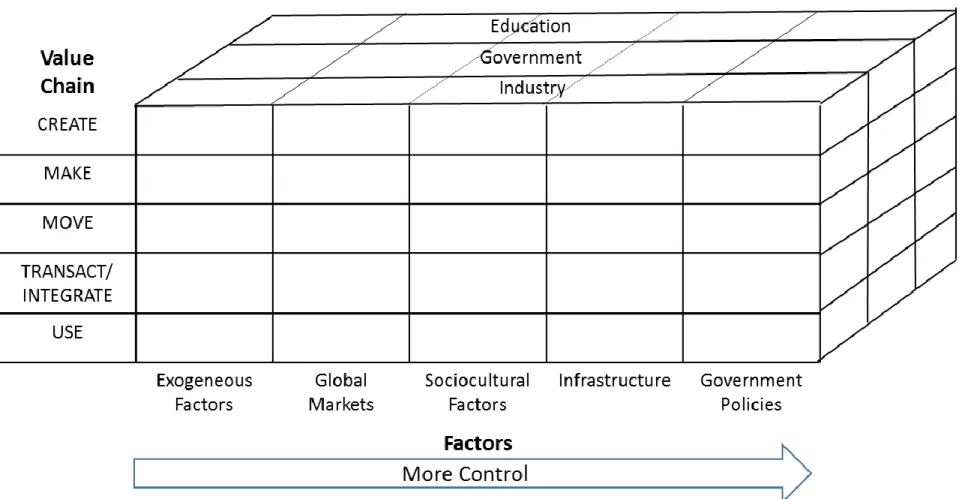
There are mainly three dimensions for the framework: (1) a value chain view of the problem adopted from (Wong, 1998); (2) the factor view; and (3) stakeholders.
The main idea behind the first dimension is that it looks at the ICT sector as a value chain, and identifies five dimensions for an information economy, namely (Create, Make, Move, Transact, Use).
The second view of the framework is the factor view. Based on previous research, a superset of factors was identified as being relevant, see Table 3: Decision Framework Super Factors. These factors were arranged by the level of control a country can exercise on each of the factors. A more detailed list of factors identified in the literature and their theoretical basis can be found in Appendix A. Also, a more comprehensive map between the superset factors and identified factors can be seen in Appendix B.
Table 3: Decision Framework Super Factors
Control Superset Factor Examples of Subfactors
Government Policy Economy, taxation, trade policies, ICT policies, educational and employment policies, vision and strategy.
Infrastructure Human resources, telecommunication, ICT infrastructure, R&D expenditure.
Sociocultural Factors History, culture (including innovation culture), unique factors.
Global Markets Trust, FDI, global demand.
Exogenous Factors Location, political reality, country size.
Les
s Co
n
tro
The third dimension used for building the framework was the stakeholder view, as identified above, the potential role of three main stakeholders, namely: Academic, Industry, and government are Studied.
For every country, there are a unique set of factors that can affect its position in the global market. For each factor and value chain step, countries need to find the opportunities, enabler, constraints and choice that can make the most impact on the economy.
A definition of those terms is given below.
o Opportunity [O]: A Chance to make a positive difference that has an Impact, based on the unique factors affecting the country.
o Enablers [E]: Are the factors that act in the favor of an emerging country. (Ex: Human Capital, location, language)
o Constraints [X]: Are the realities that act against an emerging economy, and that cannot be changed. (Ex: Political Reality, location, natural resources)
o Choice [C]: Is the area where an emerging country can make a difference to build its information economy.
o Impact [I]: The expected effect of that choice\area on the overall economy. Based on the above, our proposed framework can be seen in Figure 10: Proposed ICT4D Decision Framework. Next section presents different ways to navigate the decision framework to analyze the ICT sector of a developing country, to find opportunities for change.
2.10. Walking the Framework
To put the framework into work, we walk through a set of factors in the value chain. There are several ways that an investigator can walk the framework to identify potential areas of change to build an information economy using the SWOT-CI analysis and also to attempt to find the most influential stakeholders that could help make the change.
It is possible to scan the framework either horizontally or vertically based on a general understanding of the current state of a country.
1. Vertical Scanning: to scan each row vertically up-down (vertical scanning) to identify a value chain process to concentrate on by manipulating the different super factors (vertically)., therefore trying to find the most effective value chain processes to try to improve, and the stakeholders that would contribute to making these improvements.
2. Horizontal Scanning: It is also possible to walk the framework horizontally left-to-right (horizontal scanning) trying to find opportunities by changing some of the super factors to improve the value chain processes. By fixating on each of the super factors at once and trying to think about possible changes to improve some or all of the value chain processes.
3. Cell Scanning: A more thorough analysis is possible that would require studying each cell separately to find potential opportunities in each cell find opportunities.
2.10.1.Vertical Scanning
One way to walk the framework is by starting with a general understanding of the economic situation and the general restrictions for building an information economy. Having this picture in mind, it would be possible then to form questions using vertical scanning at the framework to identify potential opportunities for change.
This method would require an understanding of the current position and economic situation of a given country including the different exogenous factors, global markets, sociocultural factors, infrastructure, and the current policies of the particular country.
With this understanding in mind, an investigator would then try to identify one of the value chain processes (rows) to elect for improvement by changing one or more of the factors. Therefore concentrating on that particular process to try to understand deeply the possible ways to make changes and the potential impact that it may yield, a question can be formed in the following manner:
Based on the current understanding of the state of the country and its economic situation, what are the value chain processes among (Create, Make, Move, Integrate, and Use) that have the most potential to generate a positive change towards an Information economy by manipulating one or more of the super factors?
Further analysis of the potential of each row can lead to more specific question for each row, in the following manner:
Based on the current understanding of the state of the country and its economic situation, what are the possible opportunities to make changes by manipulating the different factors
(horizontal factors) that would have an impact to facilitate the CREATION of new ICT products and services that would contribute towards building an information economy?
The same method can be used to ask a similar question on each of the other rows, trying to find the most suitable role\s that a country can play in the value chain based on the current situation. Therefore, more questions would emerge in the following manner:
Based on the current understanding of the state of the country and its economic conditions, what are the possible opportunities to make changes by manipulating the different factors (horizontal factors) that would have an impact to facilitate making previously designed/created ICT products and services that would contribute towards building an information economy?
More questions can be formed in a similar manner by plugging-in to the question each one of remaining value chain processes (Move, Integrate, and use) in place of the bolded text.
2.10.2.Horizontal Scanning
Horizontal scanning requires the investigator to move horizontally through our framework scanning through the different super factors trying to find potential opportunities to improve some or all the value chain processes. As an example, we navigate through one of the columns. We use the policies set of factors as an example. Policies may be among the easiest tools of control among all the other set of factors at least from a policy maker’s point of view. Policies also can have a significant impact on the development of the ICT sector on the long run. Some of the most relevant policies are economic, taxation, trade, ICT, educational and employment, vision, and strategy. To use the decision, framework a number of experts can start by reading and understanding the framework, and selecting the most promising areas. Then they need to go through each item of the
value chain and evaluate it in terms of the opportunities, enablers, constraints, choice, and impact. We can start with Create, a question can be asked for each cell:
Policy and Create: Creating or designing ICT products
What are the opportunities that may arise from changing the current policies (such as economic, taxation trade,) to enable or improve the creation or design of new ICT products including (Software, Hardware, Content, and Infrastructure), and what are the expected impact of those policies given the current constraints?
The question can also be rephrased to start with a SWOT analysis for the position of that particular value chain using a question like:
What is the current position regarding Strengths, Weaknesses, Opportunities, Threats for creating new or improve the creation of ICT products?
How can the policies that need to be changed to take advantage of those opportunities, given the constraints and the expected impact of those changes?
Policy and Make: Manufacturing or implementing the designs
What is the current position regarding Strengths, Weaknesses, Opportunities, and Threats for manufacturing/implementing new ICT products?
How can we change the current policies in order to take advantage of those opportunities, given the constraints and the expected impact of those changes?
Policy and Move: Logistics that includes exporting\importing
What is the current position regarding Strengths, Weaknesses, and Opportunities, and Threats for exporting or importing or moving ICT products?
How can we change the current policies in order to take advantage of those opportunities, given the constraints and the expected impact of those changes?
Policy and Integrate: Integrating and supporting services locally or abroad
What is the current position regarding Strengths, Weaknesses, and Opportunities, and Threats, for integration services locally or globally (consultation or Technical support)?
How can we change the current policies in order to take advantage of those opportunities, given the constraints and the expected impact of those changes?
Policy and Use: Local utilization of Technology
What is the current position regarding Strengths, Weaknesses, and Opportunities, and Threats, for improving the utilization of technology?
How can we change the current policies in order to take those opportunities, given the constraints and the expected impact of those changes?
In fact, each one of those questions requires a deep analysis starting from the current situation trying to identify the potential opportunities; policy makers would need first to go over the table to determine general areas of interest rather than answering all the questions in all the cells.
![Figure 2: Changing Strategic View on ICT and Development © [2008] IEEE](https://thumb-us.123doks.com/thumbv2/123dok_us/11020211.2989311/28.918.159.710.133.402/figure-changing-strategic-view-ict-development-ieee.webp)