Over the last decade there has been a growing realisation that humanitarian assistance sometimes feeds conflict rather than alleviates it, and that development aid sometimes exacerbates tensions. This has led to the development of tools to understand the relationship between programming and conflict.
This Resource Pack seeks to document current practice, available frameworks and lessons learned. At its heart is the concept of “conflict sensitivity” – the notion of systematically taking into account both the positive and negative impact of interventions, in terms of conflict or peace dynamics, on the contexts in which they are undertaken, and, conversely, the impact of these contexts on the interventions (seeChapter 1for definitions). The first edition of the Resource Pack is the result of extensive consultations on conflict sensitivity undertaken in Kenya, Uganda and Sri Lanka by a consortium of Southern and Northern NGOs, during 2002-2003. Input has been received in the form of:
l extensive mapping of conflict sensitive practice in these three countries among development, humanitarian and peace building actors
l discussions with representatives from government, civil society and donors both on the proposed structure and content of the Resource Pack
l further feedback on various drafts of the Pack. Similar processes were undertaken beyond these three countries with the headquarters of development, humanitarian and peacebuilding organisations, and experts in the field of conflict prevention.
The project has made great efforts to reach out and raise awareness on conflict sensitivity, as well as to record indigenous and international practice. Through this work and the partnerships it has engendered, the project has provided a bridge between North and South, involving southern agencies not as mere recipients of conflict sensitive knowledge, but as shapers of the conflict sensitivity agenda.
The partner organisations are grateful for the feedback they have received, and invite further comments on the current edition. A subsequent edition is envisaged incorporating lessons learned and further applications of conflict-sensitive approaches. Additional resources such as a trainers guide to supplement this Resource Pack will also be produced. More information on the project progress and activities in Kenya, Uganda and Sri Lanka can be found at:www.pcia.fewer.org.
1.
Understanding conflict
Central to this Resource Pack and the concept of conflict sensitivity is the definition ofconflict.Conflict is an ambiguous concept that takes on different meanings for different groups and in different contexts. In particular, conflict tends to be understood as a negative phenomenon, synonymous with violence. Within the framework of the Resource Pack, a broader and more positive approach to understanding conflict has been adopted: it regards conflict as a natural multidimensional phenomenon that is typically indicative of change within society. In this sense, the issue of prevention will focus primarily on the prevention ofviolent conflict, or the need to strengthen structures, processes and mechanisms within society that enable the peaceful and constructive management of differences.
Conflict occurs when two or more parties believe that their interests are incompatible, express hostile attitudes or take action that damages other parties’ ability to pursue their interests. It becomes violent when parties no longer seek to attain their goals peacefully, but resort instead to violence in one form or another.
Violent conflicts are thus not inevitable, nor do they happen overnight; conflict is a dynamic process, which may take differing forms and run through various stages of escalation and de-escalation, resulting from the complex combination and overlap of the various causes of conflict (seeChapter 2). The Resource Pack is concerned with the spectrum of conflict intensity from structural violence to violent conflict (see Box 1).
BOX 1
The spectrum of conflict intensity
Conflict is a complex term that is often used interchangeably with ‘violence’. The Resource Pack approach understands conflict as a “multi-dimensional social phenomena1”
essential to social change, and transformation. Conflict may be violent or latent; the latter is often referred to as
structural violence.
Violent conflict is used to describe acts of open hostility. In
conflict theory it is but one stage of a dynamic conflict cycle, which may proceed from a situation of tensions, escalation, crisis phase (manifestations of violence), possibly resulting
Introduction to the Resource Pack
in a stalemate or de-escalation. A de-escalation may lead to a settlement/resolution and reconstruction/reconciliation, or alternatively to an unstable peace.
Latent conflict is used to describe situations of tensions,
which may escalate into violence. One form of latent conflict is structural violence, defined by Galtung to describe situations where unequal, unjust and unrepresentative structures prevent humans from realising their full potential, thus extending the definition of violence beyond direct physical harm to the organization of society2.
Note:Chapter 2builds on this spectrum of conflict intensity and describes the various causes of conflict.
2.
About the Resource Pack
The Resource Pack is designed for governments, donors and civil society (local and international) involved in development, humanitarian assistance and peace building. It does not assume that the reader has extensive knowledge of conflict transformation nor is it an academic discussion of conflict and related concepts.Its primary concern is to provide an understanding of current practice, available frameworks and lessons learned in relation to conflict sensitivity. It is a broad umbrella capturing different approaches such as ‘Peace and Conflict Impact Assessment’ (PCIA) and ‘Do No Harm’, as well as less-known organic approaches developed by practitioners in the South. In this sense, it does not offer new tools but rather presents broad recommendations on
conflict-sensitive practice that organisations will need to further adapt in the light of their operating context, their needs, and their operational structures.
The Resource Pack is organised in separate stand-alone units and does not need to be read from cover to cover. It is structured as follows:
Chapter 1: An Introduction to conflict-sensitive approaches to development, humanitarian assistance and
peacebuildingprovides an operational definition of conflict sensitivity and related principles. It situates conflict sensitivity within the current debates in the fields of development, humanitarian assistance and peace building.
Chapter 2: Conflict analysisdescribes what is in effect the central component of conflict sensitivity. Building on a compendium of tools and the lessons learned from their application, the chapter presents key elements of conflict analysis, and guidance on how to undertake it.
Chapter 3: Applying conflict sensitivity at project and programme leveldefines the project cycle, linking the conflict analysis to each constituent step of planning, implementation, monitoring and evaluation. It describes how to undertake each step in a conflict-sensitive fashion, and the major challenges faced in doing so.
Chapter 4: Integrating conflict sensitivity into sectoral approachesdefines sector-wide approaches and presents a framework for integrating conflict sensitivity into the programming cycle.
Chapter 5: Institutional capacity building for conflict sensitivityrecommends processes and strategies for mainstreaming conflict sensitivity in implementing organisations and their partners.
3.
Acknowledgements
The Resource Pack is drawn from diverse sources,including organisations that participated in our workshops and mapping process and commented on the various drafts in Kenya, Uganda, Sri Lanka and beyond. We are hugely indebted to these sources for their energy, input and enthusiasm. We are also grateful for the guidance and support provided by the Steering Committee and the project donors:International Development Research Centre(IDRC),Canadian International Development Agency(CIDA),The Netherlands Ministry of Foreign Affairs(Minbuza),Deutsche Gesellschaft für
Technische Zusammenarbeit(GTZ) andStyrelsen för Internationellt Utvecklingssamarbete(SIDA). Special thanks are due to the contributors and project team on the Resource Pack: in particular,
Contributors:
Christian Barbero, Sarah Bayne, Emery Brusset, Susanna Campbell, Jos de la Haye, and Manuela Leonhardt.
Additional Contributions:
Adam Barbolet, Rachel Goldwyn, Maria Lange, Celine Moyroud, Andrew Sherriff, and Leyla-Claude Werleigh.
Core Project Team:
Adam Barbolet, Rachel Goldwyn, Jos de la Haye, Celine Moyroud, Elizabeth Mutunga, Rose Othieno, Priyanka Samarakoon, and Leyla-Claude Werleigh.
Project Team:
Africa Peace Forum(APFO) – Elizabeth Mutunga and Ambassador Philip Mwanzia.
Center for Conflict Resolution(CECORE) – Betty Mutesa, Freeda Nkuutu, Rose Othieno, and Stella Sabiiti. Consortium of Humanitarian Agencies(CHA) – Yameena Mubarak, Priyanka Samarakoon, Jeevan Thiagarajah, and Tanujah Vijeyashanthan.
Forum on Early Warning and Early Response(FEWER) – David Nyheim, Silja Paasilinna, Shelly Ross, and Leyla-Claude Werleigh.
International Alert– Adam Barbolet, Rocco Blume, Jos de la Haye, Rachel Goldwyn, Maria Lange, Alberto
Masetti-Zannini, Eugenia Piza-Lopez, Andrew Sherriff, and Mihirini Sirisena.
Saferworld– Marie Duboc, Paul Eavis, Hesta Groenewald, Sue Maskell, Sue Le Mesurier, and Celine Moyroud.
Copy Editor:
Colin Roth
Database Programming, Print Production and Web Design: Jez Humble Graphic Designer: Jane Stevenson
4.
Glossary
Actors Individuals, groups and institutions who:
l contribute to conflict; and / or
l are affected by conflict (in a positive or negative manner); and/or l are engaged in dealing with conflict.
Advocacy Third party entreaties to external decision makers and power brokers.
Advocacy campaigns Campaigns that raise awareness about particular issues (eg landmines) or conditions, and aim to bring about policy changes3.
Beneficiaries Participants in and recipients of interventions by the national or international community. (A controversial term that some practitioners find objectionable).
Capacities Actors’ potential to affect the context, positively or negatively. Potential can be defined in terms of resources, access, social networks and constituencies, other support and alliances, etc.
Causes (3 types) Factors which contribute to people’s grievances. Causes may be:
l Structural: pervasive factors that have become built into the policies, structures and fabric of a society
and which may create the pre-conditions for violent conflict
l Proximate: factors contributing to a climate conducive to violent conflict or its further escalation l Triggers: single key acts, events, or their anticipation that will set off or escalate violent conflict.
Civil Society A domain parallel to, but separate from the state and the market, in which citizens freely group together according to their own interests. It can include for example non-governmental organisations (NGOs), community-based organisations, religious bodies, professional associations, trade unions, student groups, cultural societies, etc4.
Conflict The result of parties disagreeing eg about the distribution of material or symbolic resources and acting on the basis of these perceived incompatibilities5.
Conflict (Violent) Resort to psychological or physical force to resolve a disagreement.
Conflict Prevention Actions, policies, procedures or institutions intended to avoid the threat or use of armed force and related forms of coercion by states or groups to settle political disputes, or to avoid the recurrence of violent conflict6.
Conflict sensitivity This means the ability of your organisation to:
l understand the context in which you operate;
l understand the interaction between your intervention and the context; and
l act upon the understanding of this interaction, in order to avoid negative impacts and maximise
Note: the word ‘context’ is used rather than ‘conflict’ to make the point that all socio-economic and political tensions, root causes and structural factors are relevant to conflict sensitivity because they all have the potential to become violent. ‘Conflict’ is sometimes erroneously confused with macro-political violence between two warring parties (as with a civil war between a national government and a non-state actor).
Context The operating environment, which ranges from the micro to the macro level (eg community, district / province, region(s), country, neighbouring countries). For the purposes of this Resource Pack, context means a geographic or social environment where conflict exists (see the Introduction for a description of the various elements in the conflict spectrum) and is comprised of actors, causes, profile and dynamics.
Development Long-term efforts aimed at bringing improvements in the economic, political and social status, environmental stability and the quality of life of all segments of the population7.
Donor An institution that provides grants and other forms of financial contribution or assistance in kind to organisations such as governments, and civil society (local and international). A donor may be a bilateral agency (eg CIDA in Canada), a multilateral agency (e.g. the World Bank or the UN) or a philanthropic organisation (e.g. foundations)8. Some NGOs and INGOs periodically assume a donor-like role. Dynamics The interaction between the conflict profile, the actors, and causes.
Evaluation A one-off assessment that typically takes place at the end of a project, although it can also be undertaken as a mid-project review. On the basis of systematically applied objective criteria, it seeks to assess an on-going or completed project, its design, implementation and overall results in relation to its stated goals and objectives.
Evaluation (conflict sensitive)
This incorporates a detailed understanding of the operating context in terms of historical, actual or potential conflict into traditional evaluation activities and processes. Conflict sensitive evaluations are used to understand the overall impact a given intervention has had on this context, and the context on the intervention. These evaluations can then be used to adjust subsequent phases of an ongoing initiative, or gain lessons for future initiatives.
Fungibility Refers to the fact that donor funding of a project that government would have undertaken anyway (even if donor funding were not available) has the effect of freeing government resources to be used for other purposes (eg military)9.
Goals Actors’ long term objectives.
Government The machinery or system of rules that exercises public authority over a given territory. Governments operate at various levels – eg national, regional, provincial, district. Governments seek to determine and implement public policy, to defend the country and maintain order, and to provide public services. They are responsible for raising revenue and managing public expenditure.
Note: Where the formal machinery of government has broken down, authority may be exercised by others (eg local warlords) who assume the role of the governing power.
Humanitarian Assistance
Activities designed to rapidly reduce human suffering in emergency situations, especially when provided by outside agencies to supplement local efforts10.
Impacts – Negative / Positive
These describe an interaction in terms of its contribution to exacerbating or mitigating violence or the potential for violence.
Implementation The process of realising objectives by enacting the activities designed in the planning process – the operationalisation of the proposal. Implementation involves regular progress reviews to enable plans to be adjusted if necessary.
Implementation (Conflict Sensitive)
Conflict-sensitive implementation involves close scrutiny of the operational context through regularly updating the conflict analysis, in order to avoid negative impacts and maximise positive impacts on the context.
Indicators (conflict) Specify what to measure in order to monitor and evaluate the evolution of conflict factors and dynamics that impact a given context.
Indicators (interaction) Specify what to measure in order to monitor and evaluate the interaction between a project or intervention and conflict factors and dynamics.
Indicators (project / intervention)
Specify what to measure in order to monitor and evaluate the performance of policies, projects and programmes11.
Interaction This refers to the two-way relationship between an intervention and the context in which it is situated, ie the impact of the intervention on the context and the impact of the context on the intervention.
Interests The underlying motivations of the actors.
Intervention This refers to a range of activities, falling within one or other of the categories listed inChapter 1 Box 1. An intervention can be very small (eg helping villagers build wells) or very large (eg a peace process or setting up a new government structure). It may be at project level (seeChapter 3) or at sectoral level (see
Chapter 4).
Management (project / programme)
Management involves supervising the entire process of implementation and making operational decisions. Good management requires the ability to see the bigger picture: how all the elements of the intervention, its operational context and the interaction between the two, fit together.
Monitoring The regular process of examining a project’s actual outputs and impacts. Carried out during the implementation phase, monitoring seeks to provide the project team with current information that will allow them to assess progress in meeting project objectives, and to adjust implementation activities if necessary. Additionally, monitoring generates data that can be used for evaluation purposes.
Monitoring (conflict sensitive)
Conflict-sensitive monitoring incorporates an understanding of conflict actors, profile, causes and dynamics into traditional monitoring processes and activities, with the intention of better understanding the context and the intervention, as well as the interaction between the two. Conflict-sensitive monitoring is used to inform adjustments and changes to project or programme activities so that the intervention has the optimum impact on conflict dynamics.
Partnership environment
The relationships between different stakeholders who are working together.
Peacebuilding Measures designed to consolidate peaceful relations and strengthen viable political, socio-economic and cultural institutions capable of mediating conflict, and to strengthen other mechanisms that will either create or support the necessary conditions for sustained peace12.
Planning The process through which certain problems are identified, their causal linkages analysed, and effective solutions developed. The result of this process is often embodied in a programme designed with predefined objectives, activities, implementation process and verifiable indicators of progress.
Planning – Conflict sensitive
Conflict-sensitive planning incorporates the conflict analysis (the profile, causes, actors, and dynamics of a conflict situation) into traditional planning. The intention is to have a constructive impact on the context to avoid further deterioration and promote more peaceful and effective solutions.
Positions Refer to the actors’ stances on key and emerging issues in a given context.
Profile A brief characterisation of the context within which the intervention will be situated.
Programme A proposed plan with a medium to long-term horizon and possibly without a defined end, often incorporating strategic objectives, multiple projects and activities13.
Project A set of time-bound activities typically contributing to a larger programmatic objective, which are planned, implemented, monitored and evaluated in relation to issue(s) that they seek to address14. Project Cycle Provides a systematic framework for the planning, implementation and evaluation of projects and
programmes15.
Region A geo-politically defined area at the sub-national level (eg an area comprising several districts). Also used to refer to a collection of contiguous countries (eg the Eastern region of Africa).
Relationships The interactions between actors at various levels, and their perception of these interactions.
Rights-based Approach A conceptual framework for the process of human development that is normatively based on international human rights standards and operationally directed to promoting and protecting human rights. Essentially, it integrates the norms, standards and principles of the international human rights system into the plans, policies and processes of development16.
Scenarios Provide an assessment of what will happen next in a given context according to a specific timeframe.
Sector A part or division (eg of the national economy: private sector, public sector, education sector).
In the context of Sectoral or Sector-wide approaches, a core government function, which is related to a particular ministry and spending programme (eg health, education and roads)17.
Spoilers Individuals and organisations that believe peace threatens their power, worldview and interests, and who seek to undermine attempts to achieve it18.
Triangulation The verification of each piece of information with at least two corroborative or complementary sources, to obtain data that eventually “matches up”.
5.
Abbreviations/Acronyms
ACP Africa, Caribbean and Pacific countries
APFO Africa Peace Forum
ASEAN Association of South East Asian Nations
AU African Union
CECORE Center for Conflict Resolution
CHA Consortium of Humanitarian Agencies
CIDA Canadian International Development Agency
CCA Common Country Assessment framework
DAC Development Assistance Committee
DFID Department for International Development (UK)
EU European Union
FEWER Forum on Early Warning and Early Response
GTZ Ministry of Technical Cooperation (Germany)
HIPC Heavily Indebted Poor Countries Initiative
ICRC International Committee of the Red Cross
IDRC International Development Research Centre
IGAD Intergovernmental Authority on Development (Horn of Africa countries)
INGO International NGO
IPCR Institute for Peace and Conflict Resolution (Nigeria)
LICUS Low Income Countries Under Stress
MDGs Millenium Development Goals
NEPAD New Partnership for African Development
OECD Organisation for Economic Cooperation and Development
PRSP Poverty Reduction Strategy Paper
SCA Strategic Conflict Assessment
SIDA Swedish International Development Agency
UN United Nations
UNDAF United Nations Development Assistance Framework
UNDP United Nations Development Programme
USAID United States Agency for International Development
6.
Endnotes
1International Alert,Resource Pack for Conflict
Transformation, London: March 2003 section 2:3.
2International Alert, 2003: 5.
3Adapted from Alex P. Schmid, “Thesaurus and Glossary of
Early Warning and Conflict Prevention Terms” (Abridged Version), Synthesis Foundation / FEWER, May 1998.
4Adapted from Stephen Jones and Gareth Williams, “A
Common Language for Managing Official Development Assistance: A Glossary of ODA Terms”, Oxford Policy Management, 2002.
5International Alert, 2003: section 2:3. 6Schmid, 1998.
7Adapted from Payson Conflict Study Group, “A Glossary
on Violent Conflict: Terms and concepts used in conflict prevention, mitigation, and resolution in the context of disaster relief and sustainable development”, 4thEdition,
Payson Center for International Development and Technology Transfer, Tulane University, May 2001: 24.
8Adapted from National Philanthropic Trust, “Glossary”
www.nptrust.org/.
9Jones, 2002:9.
10Thomas G. Weiss and Cindy Collins,Humanitarian
Challenges and Intervention: World politics and the dilemmas ofhelp. Boulder, Co: Westview, 1996: 219. Alex P. Schmid, “Thesaurus And Glossary of Early Warning And Conflict Prevention Terms (Abridged Version), FEWER, May 1998: 15.
11Jones, 2002. 12
Adapted from International Alert, 2003.
13Adapted from Local Government and Public Service
Reform Initiative, “Glossary of Terms”www.osi.hu.
14Adapted from
www.osi.huand Polaris Grant, “Glossary” www.polarisgrants.org. 15Jones, 2002:4. 16 http://www.unhchr.ch/development/ approaches-04.html 17Jones, 2002: 12.
Purpose of chapter
This chapter explains
l what is meant by conflict sensitivity l who needs to have it, and when
l how to place conflict sensitivity within development, humanitarian assistance and peacebuilding, and current debates within these fields
Who should read it
All those with responsibility for, or interest in,
development, humanitarian assistance and peacebuilding, in areas at risk of or affected by violent conflict.
Why they should read it
To understand the relevance of conflict sensitivity within the framework of their work, even where it may appear foreign to their fields of intervention.
To help them situate conflict sensitivity within their policies and operations.
To enable them to see that conflict sensitivity is not necessarily a new approach, or an additional component to their work.
Contents
1. Introduction to key concepts 2. Development and conflict
3. Humanitarian assistance and conflict 4. Conflict sensitive partnerships 5. Peacebuilding and conflict 6. Endnotes
Annex 1: Further reading
1.
Introduction to key
concepts
1.1
Some definitions
Conflict sensitivity
This means the ability of your organisation to: l understand the context in which you operate; l understand the interaction between your intervention
and the context; and
l act upon the understanding of this interaction, in order to avoid negative impacts and maximise positive impacts.
Note: the word ‘context’ is used rather than ‘conflict’ to make the point that all socio-economic and political tensions, root causes and structural factors are relevant to conflict sensitivity because they all have the potential to become violent. ‘Conflict’ is sometimes erroneously confused with macro-political violence between two warring parties (as with a civil war between a national government and a non-state actor).
Context
This refers to the operating environment, which ranges from the micro to the macro level (eg community, district / province, region(s), country, neighbouring countries). For the purposes of this Resource Pack, context means a geographic or social environment where conflict exists (see theIntroductionfor a description of the various elements in the conflict spectrum) and is comprised of actors, causes, profile and dynamics.
Government
The machinery or system of rules that exercises public authority over a given territory. Governments operate at various levels – national, regional, provincial, district, etc. Governments seek to determine and implement public policy, to defend the country and maintain order, and to provide public services. They are responsible for raising revenue and managing public expenditure.
Note: Where the formal machinery of government has broken down, authority may be exercised by others (eg local warlords) who assume the role of the governing power. Donor
An institution that provides grants and other forms of financial contribution (or assistance in kind) to
organisations such as governments or to civil society (local and international). A donor may be a bilateral agency (eg DFID in the UK), a multilateral agency (eg the World Bank or the UN), a philanthropic organisation (eg a
foundation), or an INGO providing funding for a local partner.1
Civil society
A domain parallel to, but separate from the state and the market, in which citizens freely group together according to their own interests. It encompasses a self-initiated and voluntary sector of formally associated individuals who pursue non-profit purposes in non-governmental organisations (NGOs), community-based organisations, religious bodies, professional associations, trade unions, student groups, cultural societies, etc.2
Intervention
This refers to a range of activities, falling within one or other of the categories listed in Box 1. An intervention can be very small (eg helping villagers build wells) or very large (eg a peace process or setting up a new government structure). It may be at project level (seeChapter 3) or at sectoral level (seeChapter 4).
BOX 1
Types of intervention Development
Long-term efforts aimed at bringing improvements in the economic, political and social status, environmental stability and quality of life of the population especially the poor and disadvantaged.
Humanitarian assistance
Activities designed to rapidly reduce human suffering in emergency situations, especially when local authorities are unable or unwilling to provide relief.3
Peacebuilding
Measures designed to consolidate peaceful relations and strengthen viable political, socio-economic and cultural institutions capable of mediating conflict, as well as strengthen other mechanisms that will either create or support the creation of necessary conditions for sustained peace.4
Interaction
This refers to the two-way relationship between an intervention and the context in which it is situated, ie the impact of the intervention on the context and the impact of the context on the intervention.
Negative / positive impacts
These describe the above interaction, in terms of its contribution to exacerbating or mitigating violence or the potential for violence.
1.2
Operationalising conflict sensitivity
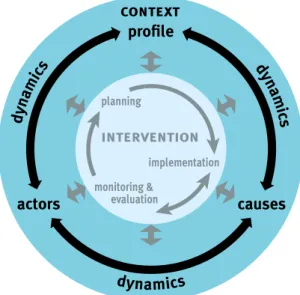
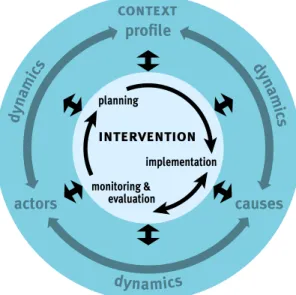
Conflict analysis (explained in detail inChapter 2) is the central component of conflict-sensitive practice. It provides the foundation to inform conflict sensitive programming, in particular in terms of an understanding of the interaction between the intervention and the context. The approach is summarised in Table 1. The following sequence represents the key stages of understanding the interaction between a project and a given context. The sequence is composed of three elements:
Diagram 1 The outer circle represents a conflict analysis of the pre-existing context, organised as profile, actors, causes and their dynamic interaction (seeChapter 2)
Diagram 2 The inner project circle represents the project cycle of the proposed intervention, organised as planning, implementation and monitoring and evaluation
components (seeChapter 3)
Diagram 3 The large arrows represent the assessment of the interaction between the context, and the project (see Chapter 3)
TABLE 1
The “What” and “How” of conflict sensitivity
What to do How to do it
l Understand the context in which you operate l Carry out a conflict analysis, and update it regularly
l Understand the interaction between your intervention and the
context
l Link the conflict analysis with the programming cycle of your
intervention
l Use this understanding to avoid negative impacts and
maximise positive impacts
l Plan, implement, monitor and evaluate your intervention in a
conflict-sensitive fashion (including redesign when necessary)
Guiding principles
The principles below relate to the process of implementing a conflict-sensitive approach. They may require further qualification, depending on the context.
l Participatory process
l Inclusiveness of actors, issues and perceptions l Impartiality in relation to actors and issues l Transparency
l Respect for people’s ownership of the conflict and their suffering
l Accountability for one’s own actions l Partnership and co-ordination l Complementarity and coherence l Timeliness.
Assumptions for those wanting to apply conflict sensitivity
These relate to institutional pre-requisites for conflict sensitivity.
l Willingness and ability to implement conflict sensitivity l Openness to continuous learning and institutional
adaptability to reflect conflict sensitivity l Ability to deal with uncertainty, as there is no
one-fits-all recipe for conflict sensitivity
l Honesty and humility in recognising the extent or limitation of the impact of interventions
l Recognition of the complexity and interdependence of the wider system in which institutions operate.
1.3
Time and resource implications
Integrating conflict sensitivity into development means thinking differently about programming, and adopting a new institutional mind-set. At the outset this may require more resources (both human and financial). Over time, as conflict sensitive practice becomes embedded within the framework, structures and processes of organisations, these resource requirements will decrease. They are in any case not large compared with the potential costs of failing to be sensitive to conflict issues:
l wasting resources on trouble-shooting and fire-fighting l unsustainable programming
l forced project closure or withdrawal to a safe area l inability to implement activities or entire projects l endangering staff and beneficiaries.
Further, an intervention which is not conflict sensitive – even if it meets its objectives in other respects (eg constructing X kilometres of road) – can lead to renewed or exacerbated conflict, which costs human lives and suffering and causes material, institutional and economic damage (see Box 2 andnext section).
BOX 2
Humanitarian aid gone wrong
The classic example of development, humanitarian and peacebuilding work gone wrong is the case of the Rwanda genocide in 1994.
“By and large, relief agencies had only a very limited understanding of the structures of Rwandese society and very little account had been taken of the views of the beneficiaries in the design and implementation of programmes. … [During] the first weeks of the refugee crisis … traditional structures of authority had been used to organize food distribution and very high levels of diversion had occurred and vulnerable groups often received very little. … Attempts to rectify these failings were met with sometimes violent resistance.”5
Even if the food distribution had been more effective, the high levels of insecurity and violence within the refugee camps and the negative impact the camps had on the surrounding populations would have precluded this intervention from being considered a success.
2.
Development and conflict
Conflict sensitivity in development assistance can serve not only to decrease levels of violent conflict or the potential for violent conflict, but also to increase the effectiveness of the assistance. Development assistance without conflict sensitivity can inadvertently encourage conflict, and end up doing more harm than good.BOX 3
Links between conflict and development Key findings
l Conflict and violence increase poverty. Poverty is
frequently the result of structural violence.
l Conflicts usually emerge as a result of concrete
grievances, but individual economic interests (‘war economy’) gain influence during their course. These economic interests are usually major obstacles to making peace.
l Development (generally intended to impact poverty) can
help prevent violent conflict, yet sometimes contributes to it.
Key recommendations for conflict-sensitive development l Address conflict and its causes in order to tackle poverty
(conflict analysis, conflict sensitive planning)
l Address the economic dynamics (eg inequality, war
economy) fuelling violent conflict (conflict analysis, conflict sensitive planning)
l Identify approaches that will address the potentially
conflict-generating impact of development (conflict sensitive project planning, implementation, monitoring and evaluation).
Since the main objective of development is to eliminate poverty, this section focuses primarily on the interaction between poverty and conflict, and seeks to demonstrate how politically informed poverty reduction and conflict prevention policies can effectively reinforce each other. Violent conflicts lead to poverty, particularly where protracted and associated with the collapse of state institutions. Beyond their direct consequences (eg military and civilian deaths, displacement and disablement of populations), conflicts have long-term political, economic, environmental and social costs. These include:
l erosion of political institutions
l reduced state capacity to provide basic social services l destruction of production base
l loss of food production (conflict-related annual agricultural production losses are estimated at 12% across Africa throughout the 1990s6)
l destruction or depletion of natural resources l disruption of social networks.
2.1
Human security and human rights
Pro-poor development has a number of facets. Human security and human rights are key aspects with links to conflict.
BOX 4
Human security
As defined by the United Nations in the mid 1990s, human security embraces the twin objectives of “freedom from fear” (referring to the threat of violence, crime, and war) and “freedom from want” (referring to economic, health, environmental and other threats to people’s well-being).7
In a more radical interpretation, individual human security is defined as superseding the security of the state. Such an approach can legitimise military “humanitarian” intervention where the state is unwilling or unable to guarantee the security of its citizens.8
A human security approach takes a holistic view of poor people’s needs, increasing the efficacy of development initiatives. Conflict puts both the twin objectives in jeopardy, and by definition the approach demands conflict sensitivity.
BOX 5
A human rights-based approach
This approach explicitly links economic, social and cultural development to the achievement of political and civil rights. It can provide a useful conceptual framework for
conflict-sensitive development. Particularly relevant elements of the approach include:
l holistic approach to poverty: human rights provide a
holistic framework for analysing a given poverty situation, which takes account of political factors, insecurity and conflict. Based on the indivisibility of rights, it helps develop strategies that address the economic, political and security dimensions of poverty in a comprehensive manner
l conflict and rights: rights-based development is
particularly concerned with poverty that results from inequality and a denial of rights by powerful groups, since this contradicts the principle of universal rights. In violent conflicts, the rights of ordinary people are systematically infringed by the warring parties as well as by all those taking advantage of the conflict to promote their own economic and political interests. The rights-based response aims at enabling people to achieve their rights. This is likely to undermine the power structure on which
conflict has been built. On the face of it that should reduce conflict, but there is the risk that it will provoke elites to fight back to retain the power structure that supports them, with the opposite effect. It is thus clear that a rights-based approach needs to be conflict sensitiveparticipation and accountability: a rights-based approach demands that all development actors act accountably and encourage participation. Accountability, participation, inclusion and supporting local capacities also represent preconditions for the peaceful
management of conflicts. Enhancement of these qualities in the development context should help strengthen society’s capacity to deal with conflicts in a non-violent manner.
2.2
Political economy of conflict
Conflict can benefit certain sectors of society, thus creating vested interests in perpetuating conflict and impeding peace. The political economy of conflict is thus an important consideration in implementing conflict sensitivity.
Many conflicts are understood to have their origin in an unaddressed “grievance”, for example ethnic or religious discrimination, horizontally unequal distribution of resources and dramatic increases in unemployment. Researchers9have recently begun to emphasise the role of
“greed” in conflicts, and draw attention to the benefits that accrue from participation in conflict – employment in armed forces, access to scarce resources, power. Rarely is the political economy of conflict clearly delineated as simply “greed” or “grievance”; often, one can observe a shift over time from “grievance” to “greed”.10For example
insurgents need funds for food and supplies, which they often have to raise by illegal commercial activity or “taxes” (eg ransoms from kidnappings); this fundraising can cease being a means to an end and become an end in itself. Many observers argue that in Colombia, for instance, warring factions are now less concerned with addressing outstanding grievances than with controlling the illicit narcotics trade.
Over time, violent conflict encourages the emergence of a war economy dominated by politicians, commanders and fighters, whose interests are to generate new forms of profit, power and protection11. Key activities include the
taxation of legitimate and illicit economic activities, asset stripping and looting, and the economic blockade of dissenting areas.
At the same time, a shadow economy emerges to make high profits at the margin of the conflict. Political and other entrepreneurs benefit from the general insecurity and lack of rule of law to extract precious natural resources, to trade in illicit goods (eg drugs), and to smuggle high value commodities.
The results of all this are concentrations of power and wealth, the destruction of economic assets, and impoverishment of vulnerable groups. Without conflict sensitivity, international assistance can make matters worse by adding to the vested interests who benefit from prolonging the war: for example local leaders, who usually come to control, and profit from, at least part of the conflict-related relief; and otherwise unemployable educated youth, offered well-paid jobs by development agencies. The economic structures created by conflict are among the most powerful blockages to making peace. Development agencies, then, need to factor the political economy of conflict into their strategies and approaches to ensure they do not fuel existing conflicts through boosting war economies. Because over time there is a propensity for conflict to shift from “grievance” to “greed”, all parties including development agencies need to focus on the early treatment of grievances. Addressing the political economy early and effectively is key to ensuring conflict sensitivity. Chapter 3 Module 1on planning provides some specific suggestions for how to approach this work.
2.3
Inequality and discrimination as
sources of conflict
Poverty, together with economic and human security factors, plays an important role in development agendas. There is a widespread assumption that poverty is a source of violence, despite there being no direct causal
relationship between the two. Although today most violent conflicts take place in poor countries, they do not necessarily occur in the poorest of them, nor are all poor countries involved in conflict. Research has shown that poverty and particularly extreme inequalities between rich and poor become sources of conflict where they are linked to the real or perceived oppression of certain groups (eg social, religious, ethnic).
The state can be an instrument of discrimination and private enrichment in the hands of a powerful elite and its followers, or it can mediate between different interest groups through inclusive political processes and the redistribution of resources. External factors such as world market prices, indebtedness and aid conditionality affect the state’s ability to fulfil this role as much as internal political dynamics. Civil society can complement, but should not by-pass and weaken the state in its function as mediator.
Addressing unequal and discriminatory root causes of poverty both horizontally (across social, religious and ethnic groups) and vertically (grassroots, civil society and government) is vital to ensuring both development goals and conflict sensitivity.
2.4
The impact of external assistance on
poverty and conflict
The impact of external development assistance on the dynamics of poverty and conflict is often ambiguous. Development assistance can contribute to stability when states use it to address human security needs, the political economy of conflict, and inequality and discrimination, and also for debt servicing and paying the state bureaucracy. However, development assistance can also exacerbate conflict, for example, through supporting corruption or helping to perpetuate an unjust status quo or by putting too much emphasis on debt servicing.
Additionally, conditionalities attached to development assistance (eg structural adjustment policies) can increase tensions, particularly where, without compensatory measures, they require lay-offs in the public sector and cuts in state subsidies for basic consumer goods.
The first principle for aid policy makers – as set out in the OECD-DAC Guidelines on “Helping Prevent Violent Conflict”12– is “to do no harm and to guard against
unwittingly aggravating existing or potential conflicts”, as well as effectively addressing the underlying causes of poverty and conflict. Effectively ensuring that development assistance does no harm will improve the impact of assistance on poverty mitigation. It clearly demands conflict sensitivity.
When conflict sensitive aspects of development assistance (such as promoting human security, and addressing the political economy of conflict, and addressing the sources of inequality and discrimination) are taken into account, development assistance can help mitigate violent conflict. Because conflict and poverty are inextricably linked, decreasing violent conflict will also serve to address many of the underlying causes of chronic poverty. Making development assistance sensitive to conflict should improve its overall impact on development goals and objectives as well as on decreasing violence.
3.
Humanitarian assistance
and conflict
BOX 6
How humanitarian assistance can exacerbate conflict Key findings
l Humanitarian assistance is at risk of becoming an
instrument of war – at the local level through the manipulation of aid resources by warlords, at the global level through its instrumentalisation for partisan political interests.
l In some particularly complex situations, external
interventions are limited to humanitarian assistance. In the absence of concurrent sustained development or peacebuilding interventions, the potentially negative impact of such humanitarian assistance is far greater – heightening the need for conflict sensitivity.
l Many humanitarian agencies are increasingly aware of
the risks of their interventions exacerbating conflict and some have been developing methodologies and mechanisms for addressing this.
Key recommendation for conflict sensitive humanitarian assistance
l Conflict sensitivity can help humanitarian organisations
deal with the challenges of politicisation. It involves: politically informed neutrality, a conflict prevention perspective (Do Some Good, Do No Harm), coherence and complementarity (seeChapters 2and5).
l Due to the often urgent nature of humanitarian assistance
interventions, a solid institutional framework for conflict sensitivity at all stages of the intervention cycle needs to be established in order to formulate contingency plans and respond rapidly to changing circumstances.
During the post-Cold War period the nature of violent conflict changed as the number of wars within states overtook the number of wars between states, and during the first half of the 1990s the prevalence and intractability of violent intrastate conflicts rose quite dramatically.14In
this environment of new and protracted intra-state wars, humanitarian principles became difficult to uphold. Where states lack legitimacy, the civil population is a deliberate target of violence, and the perpetrators are often
indistinguishable from the wider population. Additionally, evidence emerged that humanitarian aid can
unintentionally contribute to conflict. Aid deliveries sometimes precipitate raiding (eg Mozambique), food is diverted to feed combatants, while high diversion rates and violence against humanitarian workers precipitate the
use of security and transport contractors whose interests lie in maintaining violence (eg Somalia).
Conflict sensitivity has an important role in ensuring that humanitarian assistance fulfils its humanitarian objectives and does not inadvertently fuel conflict.
3.1
The politicisation of humanitarian
assistance
Humanitarian actors face an increasing politicisation of their work. There is concern among some humanitarians – what some have called the“neutrality elevated”school15–
that humanitarian assistance is becoming the policy instrument of choice in situations where Western
governments do not wish to engage politically, but morally feel compelled to act. Some even suggest that relief has become the continuation of politics by other means16. In
places such as Sudan and Burundi, humanitarian assistance has come to replace development aid due to a lack of sustainable commitment by the international community–an approach that is typical for long-term, low-intensity conflicts in non-strategic areas of the global south. The “War on Terrorism” is another manifestation of the increasingly political operating environment for humanitarian agencies. One particularly compelling recent example of this was the attempt to win Afghans’ “hearts and minds” through food drops and the
deployment of special military units in civilian clothes for bridge building and digging wells. For some agencies, humanitarian assistance contracts offered by USAID in Iraq facilitate war, and so bidding on the contracts would have represented an unacceptable compromise of their organisational principles and values. The main risk of politicised humanitarian assistance lies in fuelling war economies and undermining local coping strategies particularly where the assistance is provided over years and even decades.
Recently there have been a number of attempts – what some have termed the “neutrality abandoned” school17– to
place conditionality on humanitarian assistance in an effort to modify the political behaviour of a regime or armed group. Examples include the attempt by the US government to tie food aid to political concessions during the 1995 famine in North Korea; the selective provision of aid to opposition-held areas in Serbia (1999); and withholding assistance funds to Sierra Leone (1997) and Afghanistan (1998-2001). Given the universal character of humanitarian assistance, these experiments were highly controversial and proved largely ineffective. There is a growing consensus within the donor community to abstain from such efforts.
What some have called the “third-way humanitarianism” school18argues for a stronger role of humanitarian aid in
peacebuilding and addressing the root causes of violent conflict. This approach argues that aid agencies should
avoid taking sides on the politicisation of humanitarian assistance, and instead make strategic use of their resources to contribute to conflict reduction and peacebuilding.
Depending on one’s perspective then, conflict sensitivity is either key to ensuring humanitarian aid efficacy in an increasingly political operating environment (the
“neutrality elevated”and “neutrality abandoned”schools) or synonymous with it (the “third way humanitarianism” school).
3.2
Conflict-sensitive humanitarian
assistance
The significant challenges to the principles and practice of humanitarian agencies outlined above have triggered an intensive search for new approaches to the delivery of humanitarian aid. Initially, these new approaches focussed on “minimalist” and “maximalist” positions19. The former
asked for a return to the original humanitarian principles, while the latter argued for a broadening of the
humanitarian mandate. As a consequence of this debate, the Sphere handbook was revised to include a suggestion that understanding the nature and source of conflict helps to ensure that aid is distributed in an impartial way and reduces or avoids negative impact. (see Box 7, and Chapter 2on conflict analysis)
BOX 7
The Sphere Project
The Sphere Project was launched in 1997 by a group of humanitarian NGOs and the Red Cross and Red Crescent movement. A two-year process of inter-agency collaboration saw Sphere frame a Humanitarian Charter and identify Minimum Standards to be attained in disaster assistance, in each of five key sectors (water supply and sanitation, nutrition, food aid, shelter, and health services. The Charter and the Minimum Standards are contained in the Sphere Project Handbook: Humanitarian Charter and Minimum Standards in Disaster Response
http://www.sphereproject.org/handbook_index.htm
A conflict-sensitive approach to humanitarian assistance, then, recognises the political nature of assistance and incorporates a contextual understanding through the following elements:
l politically informed neutrality: given widespread attempts to manipulate aid for political purposes, a recognition by agencies that neutrality requires an in-depth understanding of the global and local conflict environment
l conflict prevention perspective (Do Some Good): an understanding of underlying tensions and latent
conflict to help agencies respond to these more effectively
l Do No Harm: an attempt by agencies to monitor the intended and unintended impact of their work to avoid contributing to instability and violence
l coherence and complementarity: development of structures that allow agencies with different mandates (humanitarian, development, peacebuilding) to complement each other’s work. This may involve joint assessments and planning. (conflict analysis, planning).
4.
Conflict-sensitive
partnerships
This section examines the new forms of partnership emerging in international co-operation – between Southern and Northern governments, and between governments, civil society and the private sector – regarding their responsiveness to violent conflict. The main development cooperation agreements are described in Box 8.
BOX 8
Development co-operation agreements
World Bank Poverty Reduction Strategy Papers (PRSPs)
Poverty Reduction Strategies have become the main framework for co-ordinating donor assistance to the poorest countries. Initiated in 1999 by the World Bank in response to the Heavily Indebted Poor Countries (HIPC) Initiative, PRSPs are a pre-condition for accessing debt relief and new IMF and World Bank credits. They are expected to be nationally owned through comprehensive stakeholder consultation. They comprise an in-depth poverty analysis, an indication of priority areas for action, an indication of financing
requirements, an implementation plan, and impact indicators to measure performance. Bilateral donors increasingly orientate their aid towards PRSP priorities. Of the 52 countries engaged in the process as of August 2003, the World Bank considered 25 as conflict-affected, while many others had social and economic conditions that put them at risk of conflicts escalating into large-scale violence. The Bank, in collaboration with other partners, has embarked on a working programme aimed at ensuring effective poverty reduction in conflict-affected countries.20
EU-ACP Cotonou Agreement
The EU-ACP Cotonou Partnership Agreement is a comprehensive trade and aid engagement between 78 African, Caribbean and Pacific (ACP) countries and the European Union (EU) signed in 2000, which involves an aid package of € 15.2 billion for the years 2000-2005. Cotonou emphasises the political dimension of the EU-ACP partnership and institutionalise scivil society consultation on key policy issues. Article 11 of the Agreement outlines the partners’ commitment to conflict prevention and peacebuilding and provides the legal basis for using European Development Fund money for this purpose.
The New Partnership for African Development (NEPAD)
With the NEPAD initiative led by South Africa, Nigeria, Senegal, Egypt and Algeria, formally launched in 2001, African leaders agreed to deepen co-operation among themselves and with donors to combat poverty and promote development on the African continent. NEPAD also aims to enhance economic and political governance through peer review mechanisms comparable to those of the OECD. This will help create the conditions for enhanced partnership with donor governments, which are offered in a framework of mutual accountability. NEPAD includes a “Peace and Security Initiative” aimed at promoting long-term conditions for development and security (by addressing the underlying causes of conflict) and strengthening African peace and security institutions (eg sub-regional organisations). As a programme of the African Union (AU), NEPAD is also envisaged to complement and strengthen the AU’s peace and security initiatives.
4.1
The problem of "poor performers"
It has become common donor practice to link high levels of partnership and assistance to economic and political performance criteria. This has resulted in higher aid flows to so-called high potential areas, and the neglect of “poor performers” – countries whose governments lack the capacity and often the will to implement pro-poor policies. Many of these “poor performers” are involved in or recovering from armed conflict.
The poor performers, or LICUS (low-income countries under stress) countries, have been the subject of a number of studies (eg World Bank work on LICUS countries, OECD/DAC work on “difficult partnerships”). In the light of the Millennium Development Goals21, it is argued that poor
government performance cannot justify withholding aid from the millions of poor people who live in these countries. It has been noted that LICUS countries have a proclivity to become failed states and terrorist havens, causing instability throughout their respective regions and beyond. From a global security point of view, renewing development co-operation with these countries could become part of a civilian strategy to reduce conflict at a global level.
5.
Peacebuilding and
conflict
Peacebuilding organisations may find it particularly difficult to acknowledge the need to be conflict sensitive. This may be for a number of reasons, but mainly because their mandate to build peace leads them to assume that their activities are bound to contribute to the creation of peaceful environments. This assumption may lead to a non-systematic analysis of the context in which the organisations operate; a lack of planning when
implementing peace- building projects; an uncoordinated or non-integrated approach to peacebuilding; as well as dubious claims of success based on assumptions about peacebuilding project achievements that are premised on questionable cause-and-effect scenarios.
BOX 9
How peacebuilding can aggravate conflict Key findings
l Peacebuilding interventions, as development and
humanitarian interventions, can inadvertently exacerbate conflict.
l International intervention in peacebuilding does not
always achieve full complementarity with local efforts for peace, particularly when a limited number of local actors have been consulted or involved.
l Conflict-sensitive peacebuilding is better peacebuilding. l Promoting a co-ordinated effort is a key principle of
successful peacebuilding initiatives.
Key recommendations for conflict-sensitive peacebuilding l Peacebuilding organisations will be most effective when
they link their planning directly and explicitly to a comprehensive conflict analysis.
l To avoid working at cross-purposes, local, national and
international peacebuilding actors should work together to gain a clearer understanding of their respective roles (planning, implementation).
While it may be difficult for peacebuilding organisations, just as with humanitarian and development agencies, to accept that they can exacerbate conflict, there is strong evidence that they can do so. For instance, raising expectations about the resolution of outstanding grievances can trigger or accelerate conflict when those expectations are disappointed – as they often are when there are vested interests in maintaining the status quo or where there are not enough resources in the short term to
implement agreements adequately. There is also growing evidence that international agencies providing
non-sensitive support to local peacebuilding organisations can create a “peace market”, which contributes little to peacebuilding as the organisations’ main focus is on gaining access to the generously resourced peacebuilding funds of the international community.
Nor are peacebuilding organisations at any level immune from the prejudices, party politics, or systems of patronage that fuel conflict. Just as with humanitarian and
development agencies, it is of the utmost importance that peacebuilding organisations also take responsibility for their potential impact by adopting conflict sensitive approaches.
5.1
Conflict-sensitive aspects of
peacebuilding
Peacebuilding organisations that want to conflict-sensitise their operations can borrow extensively from the
considerations outlined in the sections on Development and Humanitarian Assistance. In addition, peacebuilders will need to consider in their programming the multiple levels inherent in effective peacebuilding, as well as the role of local and international actors and issues.
5.2
Multi-level aspects of peacebuilding
As peacebuilding organisations multiply and move towards engaging at the local level, a number of challenges emerge. External engagement stifles local leadership, further complicating complex local power relations, and can even create resentment by imposing its own processes. In this sense, too much and misconceived conflict management may actually aggravate the situation. Experience has also shown that while peacebuilding actors are particularly effective at their own level, their leverage at other levels is limited. Village elders, for example, may wield sufficient authority and sanction-power to restrain youthful cattle thieves from carrying out their attacks, but their influence on government policies promoting resettlement to their areas and thus exacerbating land conflicts may be low. National level interest groups and parliamentarians, possibly in coalition with international NGOs, may be better placed to affect such decisions. It is thus crucial for external organisations to work towards a better understanding of the local actors and processes involved in peacebuilding, to support their strengths while complementing areas of weakness. (SeeChapter 2, Conflict analysis)
5.3
Local and national aspects of
peacebuilding
More could be done to use local knowledge about the nature of conflicts and peacebuilding at national level. First of all, it can be helpful to realise that many of these conflicts reflect a long local history of poor governance and state accumulation, such as looting, rent-seeking (eg collection of fees by government officials for services the government normally offers free or at a lower price than that being charged by the officials) or illegitimate trade. Understanding, in its local context, the economic and political rationale of elites engaging in conflict can be an important prerequisite for defining remedial strategies at the national level.
When discussing local forms of peacebuilding, the question of “traditional conflicts” often arises. In the East African context, for example, cattle rustling sometimes spirals into violent conflict. It is frequently mentioned as a traditional conflict, as it is supposedly carried out
following age-old tribal traditions. Although such conflicts may adopt a traditional guise, it is extremely important to recognise that today they are often fuelled by dynamics linked to the nation state and the national and even global economy. As an example, research carried out by the programme team suggests that delivering food for people, but not food for their animals, is an ill-conceived response to food crises, and can fuel cattle rustling to replace dying or dead animals.
Traditional forms of justice and reconciliation are also critical in post-conflict situations, when large numbers of perpetrators of violence, including child soldiers, need to be made to face up to their deeds and to be reintegrated into their communities. Para-legal institutions and healing rituals can sometimes offer ex-combatants opportunities to repent and become valuable members of the
community again. It would be naïve, however, to assume that local processes alone can bring about peace when the main issues have not yet been resolved at the national level. The main role of local level initiatives consists in providing a grassroots dimension to a successful
multi-level peace process – so they must have a voluntary, not state-imposed character. To prevent further conflict in the long term, local principles of dispute settlement, justice and conflict resolution need stronger institutionalisation. This institutionalisation requires pluralistic and well-integrated justice systems and national constitutions that combine traditional values with international human rights standards (such as non-discrimination on the grounds of gender and ethnicity). TheReport of the All-African Conference on African Principles of Conflict Resolution and Reconciliation (Addis Ababa, November 1999) set out some principles for Africa (see Box10).