Forget the Workplace…
for Now
Corporate Research |May 2014
It’s time to focus
your workplace
productivity
strategy where
it matters most
say thinking, talking,
brainstorming create
the most value
spend most of their
time on these
high-value activities
74%
24%
It’s no secret that companies are turning to the workplace to find the key to improving employee and business productivity. Many firms are investing heavily in workplace strategies that are designed to better support the work that their people do. However, what most companies are failing to consider is whether or not the work their employees are doing is actually the work that creates the most value for the organization. A JLL poll reveals a staggering disconnect, with 74% of respondent saying that thinking, talking and brainstorming create the most value for an organization, while only 24% spending most of their time on these high-value activities.
In the current economic environment, the success of workplace strategies all too often boils down to crude calculations of reduced cost-per-square-foot or increased utilization rates. This is unsurprising as, in the absence of a clear link between workplace strategy and value generation, many companies struggle to define how
to otherwise measure the success of these initiatives. However, focusing purely on cost can easily lead to missed opportunities for productivity improvement, such as better, smarter, more innovative and faster solution development.
In this paper, we propose a new approach that contradicts the one-size-fits-all thinking behind then current
conversations about flexible, mobile or collaborative working. This approach starts with considering which work processes create value for your organization and your clients, and then looks at designing a workplace strategy that best supports them.
An approach that is structured around what makes your company successful will deliver results that far exceed cost savings, provide measurable outcomes in the areas that really matter for your business and boost your bottom line.
say thinking, talking,
brainstorming create
the most value
spend most of their
time on these
high-value activities
74%
24%
Figure 1: Company Expectations of Productivity Outcomes from Real Estate
Source: JLL, Global Corporate Real Estate Trends, 2013
Brand loyalty for a fashion
retailer
Increase in new drug approvals for a life sciences
company Client wealth
and share of wallet for a private bank
We know that 72% of companies are looking to real estate to deliver improved workplace productivity, with 61% and 57% expecting real estate to deliver enhanced people and business productivity outcomes (Fig 1). But what does this really mean? Defining what creates real value for your organization is the first crucial step in developing meaningful workplace strategies that will boost productivity.
In a highly competitive corporate environment, it’s unrealistic to say that cost is not important. However, a sole focus on the cost side could hinder your organization from supporting actual business needs. What defines value for your organization often goes hand in hand with the desired client experience. For example, a truly effective workplace should enable the development of more innovative and differentiated products/services that are better suited to your clients and delivered to them faster.
There is no one solution or benchmark for defining value across sectors, organizations or geographies. Leadership involvement is crucial and should clearly define the value proposition of your business.
What constitutes value is vastly different for each business. For example:
72% 61% 57% 47%
Workplace
productivity
productivity
People
productivity
Business
productivity
Asset
What does productivity look like for your
organization?
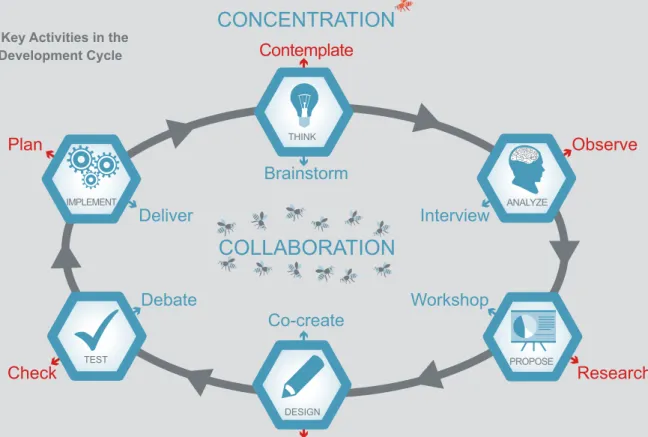
Figure 2: Key Activities in the Solution Development Cycle
Source: JLL THINK Contemplate Brainstorm ANALYZE
COLLABORATION
TEST Check Debate IMPLEMENT Interview ObserveCONCENTRATION
Workshop Research PROPOSE Co-create Imagine DESIGN Plan DeliverWhich work processes drive value?
In order to design for maximum productivity, a deep understanding of the work processes that enable value creation in your organization is required.
More and more companies are following the lead of the technology sector by adopting ‘agile programming’ methods in the development of products and services. Each step in this solution development cycle is characterized by both concentrated (solo) and collaborative (together) work (Fig 2).
The type of collaborative work varies throughout the development cycle, ranging from brainstorming sessions and workshops to co-creation, reviewing and debriefing. People frequently move back and forth between activities in this environment. Value is created when a business can support all types of work in the right way.
Failing to account for cultural
differences between geographies,
sectors and even business units
within your company can easily
derail the success of your workplace
transformation. Articulating these
cultural differences is critical
to successfully developing and
implementing a tailored solution that
will work right across an organization.
For more information, please see the
‘
Driving Effective Workplace Change
in Asia
’
report.
Does your workplace support the highest-value
activities?
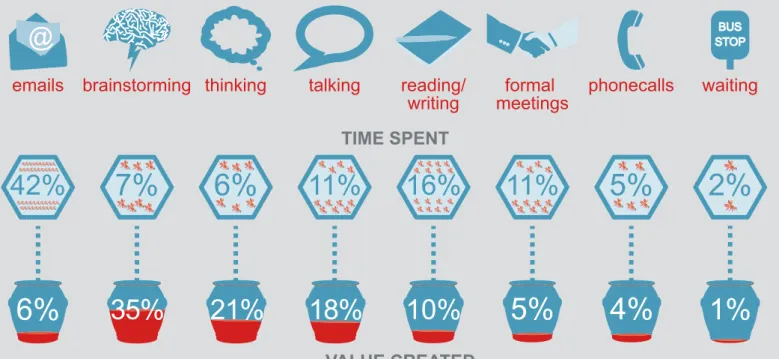
Figure 3: How Are Your Staff Spending Their Time?
Source: JLL global poll - What do you really do at work?
Uncovering the high-value activities within these work processes is crucial, as the workspace should be designed in a way that complements and supports them. However, a global JLL poll reveals that there is a staggering disconnect between the work that people spend their time doing and those activities that create value for their organizations. 74% of respondents indicate that thinking, talking and brainstorming create the most value for an organization, while only 24% spend most of their time on these high-value activities (Fig 3).
According to the JLL poll, employees spend most of their time on e-mails, phone calls and formal meetings—all of which are facilitated by the traditional workplace, with its focus on fixed desks, meeting rooms and, in some cases, phone/quiet rooms.
However, creative collaboration, concentrated work and face-to-face interactions have been identified as the activities that create the most value for an organization. Consistent with the solution development cycle (Fig 4), these are the activities that generate insights, enable solutions and facilitate flows of information and ideas. However, many offices are not equipped to facilitate the required balance of focused and collaborative work. For example, many workplace productivity programs focus on enhancing collaboration, at the expense of concentrated work, which can be equally important. Getting this delicate balance wrong can significantly inhibit your ability to develop new products and services and deliver them to your clients.
emails brainstorming thinking talking reading/
writing meetingsformal phonecalls waiting
TIME SPENT
CREATE SOLUTIONS
Introduce ‘quiet’ zones (no phone or talking) to help people think and focus without distractions
EXCHANGE INFORMATION Create hubs at natural gathering points to promote informal interactions. GENERATE IDEAS Use writable surfaces (e.g. whiteboards) around the office to enable small groups to collaborate on ideas and solutions
35%
saybrainstorming
creates the most value
18%
saytalking
creates the most value
21%
saythinking
creates the most value
Source: JLL
Creative collaboration: Typically in smaller groups, and
usually focused around generating ideas or solutions. This targets working together for outcomes, rather than review meetings or presentations.
Concentrated work: Focused work, where people can
think without being distracted and focus on a specific task that is important to them, adds value and is central to their job.
Face-to-face interactions: Opportunities for exchanges
that facilitate information flow across the organization, rather than casual conversations. The interactions could occur at a desk, at the water cooler, or even virtually, via videoconference. The ability to look someone in the eye is crucial.
There is a wide array of workplace solutions that can be applied to support these activities. For example, placing collaborative hubs at natural gathering points to promote interaction; creating ‘no phone’ zones in low circulation pathways to better support concentration; or providing whiteboards, chalkboards or ‘idea paint’ walls throughout the workplace to stimulate visual collaboration and conversation.
However, there is no one solution that best enables these high-value activities. Applying a ‘silver bullet’ approach to all workplace problems will often lead to unbalanced solutions that are not aligned to the specific needs of your business.
Are you striking the right balance?
Quantifying results is critical for gauging the success of workplace transformation. However, most workplace conversations start and end with cost. Workplace productivity is often measured in cost-per-square-foot or utilization rates and, does not account for contributions to business performance. This is unsurprising, as cost metrics are simple to determine and widely understood. However, achieving greater density is not the only way to improve workplace productivity. Companies should also assess the impact of workplace transformation projects based on value generation. This means developing a deep understanding of the clients and what they need or expect from your business, which ultimately determines the success of your organization. Providing a workplace that enables your staff to spend more time on the activities that create value for your business will often better enhance productivity than squeezing in more people or optimizing utilization rates.
By directly linking the workplace to your business performance and client experience, a wide range of new metrics become available (see case study), allowing your organization to move away from the limiting, cost-centric conversation and engage in the value side of the workplace productivity equation.
Case study: Driving value through workplace productivity initiatives
In private banking, ‘value’ is often defined as driving long-term revenue through wealth creation for clients and increases in share of wallet. This means providing highly tailored advice to individual clients, which requires deep understanding of what’s important to them and proactively matching their needs with the most relevant products. However, in a particular case a review of the most important work processes concluded that significant time and energy were being wasted in sourcing information from different parts of the business in order to provide these tailored solutions.
The bank realized it needed to:
• Improve collaboration and increase frequency of
connections with referral partners inside the bank
• Improve speed of decision-making around transactions as well as risk and compliance issues
• Minimize loss of productive time in accessing product knowledge and dealing with disconnected system interfaces
The existing workplace was generic, based on fixed desks and collaborative spaces, without a focus on the actual work processes. For example, meeting spaces were isolated from desk areas, preventing quick shifts between individual and ‘together’ activities.
The bank set out to provide a workplace that would better support the most high-value activities. This
included creating more intuitive and convenient places for interaction with referral partners in the business.
Data recordings and surveys indicated significant improvements after the implementation of a new workplace strategy. The transformation resulted in a considerable improvement in the collaborative
performance, while wasted time was reduced by 85% and the speed of manager review decisions improved by 30% (Fig 5).
Figure 5: Measuring the Success of Workplace Transformation
Highly dissatisfied Dissatisfied Satisfied Highly satisfied
Getting a review decision from the manager
Speed of decision making
Enabling the process of innovation and creativity
BEFORE AFTER
Ability to work in pairs
BEFORE AFTER
Ability to collaborate as a team
BEFORE AFTER Av. 7 days Av. 5 days BEFORE AFTER Interruptions
Finding and appropriate space in which to meet Getting connectivity to a network
Accessing reference material
Wasted time 92 mins/person 20% of the day 16 mins/person 3% of the day BEFORE AFTER
Starting the workplace productivity conversation
Years Profit
This is a question that strategists and leadership in an organization should be able to
answer. However, often, this has not been considered or articulated in any significant way.
1. What constitutes value
for your business?
When discussing workplace transformations, questions about the end client are often
disregarded, as the focus is usually on internal clients (staff). Mapping the client experience and defining what this should be
is a natural next step.
Fast Delivery
Service
2. What does the desired experience
look like for your clients?
What can you actually see, touch and feel that reflects what you are trying to achieve?
Identifying crucial work processes and understanding the day-to-day activities and
behaviors that drive them are essential to establish an accurate road map for your
workplace strategy.
3. What observable behaviors are
required to drive those outcomes?
The workplace is the final of the puzzle that will help enable/stimulate the activities and behavior that will drive value. Workplace projects should end with the physical space and
not start with it, as is so often the case.
4. How can your workplace better
enable this behavior?
The secret to achieving measurable improvements in workplace productivity lies in asking the right questions from the outset. The following four questions will help frame the discussion and start this journey for your own organization.
About JLL
JLL is a professional services and investment
management firm offering specialised real estate services to clients seeking increased value by owning, occupying and investing in real estate. With annual revenue of $4 billion, JLL operates in 75 countries worldwide. On behalf of its clients, the firm provides management and real estate outsourcing services for a property portfolio of 3 billion square feet and completed $99 billion in sales, acquisitions and finance transactions in 2013. Its investment management business, LaSalle Investment Management, has $47.6 billion of real estate assets under management.
About JLL Corporate Solutions
A leader in the real estate outsourcing field, JLL’s
Corporate Solutions business helps corporations improve productivity in the cost, efficiency and performance of their national, regional or global real estate portfolios by creating outsourcing partnerships to manage and execute a range of corporate real estate services. Our platform of transactions, lease administration, project and facility management services is backed by our expertise in consulting, workplace and portfolio strategy to provide an end-to-end service offering. This service delivery capability helps corporations improve business performance,
particularly as companies turn to the outsourcing of their real estate activity as a way to manage expenses and enhance profitability.
Business Contacts
Contributing Authors
Su Lim
Head of Workplace Strategy – APAC [email protected]
+65 6494 7017
Claudia Hamm
Head of Workplace Strategy – EMEA [email protected]
+089 290 088 117
Bernice Boucher
Head of Workplace Strategy – AM [email protected] +1 212 4182 619
Alexander Colpaert
Corporate Research – APAC [email protected] +65 6494 7084
Susan Sutherland
Head of Corporate Research – APAC [email protected] +65 6494 3655
Lee Elliott
Global Corporate Research Lead [email protected]
www.jll.com JLL global Argentina latinamerica.am.joneslanglasalle.com Asia Pacific www.ap.jll.com Australia www.jll.com.au Belgium www.joneslanglasalle.be Brazil www.joneslanglasalle.com.br Canada www.joneslanglasalle.ca Chile latinamerica.am.joneslanglasalle.com China www.joneslanglasalle.com.cn Colombia latinamerica.am.joneslanglasalle.com Croatia www.joneslanglasalle-croatia.com Czech-Republic www.cz.joneslanglasalle.com Egypt www.joneslanglasalle-mena.com EMEA www.joneslanglasalle.eu Finland www.joneslanglasalle.fi France www.joneslanglasalle.fr Germany www.joneslanglasalle.de Hong Kong www.jll.com.hk Hotels www.jll.com/hospitality Hungary www.joneslanglasalle.hu India www.joneslanglasalle.co.in Indonesia www.jll.co.id Ireland www.joneslanglasalle.ie Israel www.joneslanglasalle.co.il Italy www.joneslanglasalle.it Japan www.joneslanglasalle.co.jp Kazakhstan www.joneslanglasalle.kz Korea www.jll.co.kr Latin America latinamerica.am.joneslanglasalle.com Luxembourg www.joneslanglasalle.lu Macau www.joneslanglasalle.com.mo Maghreb www.joneslanglasalle.ma Mexico www.joneslanglasalle.com.mx Middle East www.joneslanglasalle-mena.com Morocco www.joneslanglasalle.ma Netherlands www.joneslanglasalle.nl New Zealand www.jll.co.nz Panama/ Peru latinamerica.am.joneslanglasalle.com Philippines www.jll.com.ph Poland www.joneslanglasalle.pl Portugal www.joneslanglasalle.pt Romania www.joneslanglasalle-romania.com Russia www.joneslanglasalle.ru Saudi Arabia www.joneslanglasalle-mena.com Serbia www.joneslanglasalle.rs Singapore www.jll.com.sg Slovakia www.joneslanglasalle-slovakia.com South Africa www.joneslanglasalle.co.za Spain www.joneslanglasalle.es Sri Lanka www.jll.com.lk Sweden www.joneslanglasalle.se Switzerland www.joneslanglasalle.ch Taiwan www.jll.com.tw Thailand www.jll.in.th Turkey www.joneslanglasalle.com.tr Ukraine www.joneslanglasalle.ua
United Arab Emirates
www.joneslanglasalle-mena.com United Kingdom www.joneslanglasalle.co.uk United States www.us.am.joneslanglasalle.com Vietnam www.joneslanglasalle.com.vn
Jones Lang LaSalle