Calhoun: The NPS Institutional Archive
Theses and Dissertations Thesis Collection
2013-12
The contract management body of knowledge: a
comparison of contracting competencies
Albano, Jonathan D.
Monterey, California: Naval Postgraduate School
NAVAL
POSTGRADUATE
SCHOOL
MONTEREY, CALIFORNIA
THESIS
Approved for public release; distribution is unlimited
THE CONTRACT MANAGEMENT BODY OF KNOWLEDGE: A COMPARISON OF CONTRACTING
COMPETENCIES by
Jonathan D. Albano December 2013
Thesis Advisor: Rene G. Rendon
REPORT DOCUMENTATION PAGE Form Approved OMB No. 0704–0188
Public reporting burden for this collection of information is estimated to average 1 hour per response, including the time for reviewing instruction, searching existing data sources, gathering and maintaining the data needed, and completing and reviewing the collection of information. Send comments regarding this burden estimate or any other aspect of this collection of information, including suggestions for reducing this burden, to Washington headquarters Services, Directorate for Information Operations and Reports, 1215 Jefferson Davis Highway, Suite 1204, Arlington, VA 22202–4302, and to the Office of Management and Budget, Paperwork Reduction Project (0704–0188) Washington DC 20503.
1. AGENCY USE ONLY (Leave blank) 2. REPORT DATE December 2013
3. REPORT TYPE AND DATES COVERED
Master’s Thesis
4. TITLE AND SUBTITLE
THE CONTRACT MANAGEMENT BODY OF KNOWLEDGE: A COMPARISON OF CONTRACTING COMPETENCIES
5. FUNDING NUMBERS
6. AUTHOR(S) Jonathan D. Albano
7. PERFORMING ORGANIZATION NAME(S) AND ADDRESS(ES)
Naval Postgraduate School Monterey, CA 93943–5000
8. PERFORMING ORGANIZATION REPORT NUMBER
9. SPONSORING /MONITORING AGENCY NAME(S) AND ADDRESS(ES)
N/A
10. SPONSORING/MONITORING AGENCY REPORT NUMBER
11. SUPPLEMENTARY NOTES The views expressed in this thesis are those of the author and do not reflect the official policy or position of the Department of Defense or the U.S. Government. IRB Protocol number ____N/A____.
12a. DISTRIBUTION / AVAILABILITY STATEMENT Approved for public release; distribution is unlimited
12b. DISTRIBUTION CODE
13. ABSTRACT (maximum 200 words)
Contract management is instrumental in supporting the mission of the Department of Defense (DoD) but continues to face significant problems with regard to management and oversight. The skills and training of contracting personnel continues to be a contributing factor to DoD’s contracting deficiencies. Additionally, as the DoD and other federal agencies continue to lose experienced contracting personnel due to retirement, the contracting knowledge gap continues to widen.
In response to increasing knowledge deficiencies in contract management, DoD and other federal agencies have put more emphasis on training and certification. Despite this, contract management problems continue to exist. Perhaps the training received by the workforce does not reflect basic contracting competencies and perhaps contracting competencies between the government and industry are inconsistent.
This research conducted a detailed comparative analysis of the contracting competencies established by the DoD, the Federal Acquisition Institute (FAI), and the National Contract Management Association (NCMA). It identified similarities and differences in the models and competencies.
Both NCMA’s Contract Management Body of Knowledge (CMBOK) and DoD/FAI’s competency models contain categories reflecting two out of three phases of the contract life cycle. The CMBOK contains both Pre-Award and Post-Award categories whereas DoD/FAI’s model contains one category titled “Pre-Award and Award.” Contracting competencies established by the DoD/FAI compare favorably to those set forth in the CMBOK. Of the 19 technical contracting competencies analyzed, 17 were covered by both DoD/FAI and the CMBOK. The level of detail provided in the CMBOK is much greater than that of DoD/FAI competency model.
14. SUBJECT TERMS Contract Management, Body of Knowledge, National Contract Management Association, Department of Defense, Federal Acquisition Institute
15. NUMBER OF PAGES 109 16. PRICE CODE 17. SECURITY CLASSIFICATION OF REPORT Unclassified 18. SECURITY CLASSIFICATION OF THIS PAGE Unclassified 19. SECURITY CLASSIFICATION OF ABSTRACT Unclassified 20. LIMITATION OF ABSTRACT UU
NSN 7540–01–280–5500 Standard Form 298 (Rev. 2–89)
Approved for public release; distribution is unlimited
THE CONTRACT MANAGEMENT BODY OF KNOWLEDGE: A COMPARISON OF CONTRACTING COMPETENCIES
Jonathan D. Albano Lieutenant, United States Navy B.S. Indiana University-Bloomington, 2001
Submitted in partial fulfillment of the requirements for the degree of
MASTER OF BUSINESS ADMINISTRATION from the
NAVAL POSTGRADUATE SCHOOL December 2013
Author: Jonathan D. Albano
Approved by: Rene G. Rendon Thesis Advisor
Janie L. Maddox Co-Advisor
William R. Gates
ABSTRACT
Contract management is instrumental in supporting the mission of the Department of Defense (DoD) but continues to face significant problems with regard to management and oversight. The skills and training of contracting personnel continues to be a contributing factor to DoD’s contracting deficiencies. Additionally, as the DoD and other federal agencies continue to lose experienced contracting personnel due to retirement, the contracting knowledge gap continues to widen.
In response to increasing knowledge deficiencies in contract management, DoD and other federal agencies have put more emphasis on training and certification. Despite this, contract management problems continue to exist. Perhaps the training received by the workforce does not reflect basic contracting competencies and perhaps contracting competencies between the government and industry are inconsistent.
This research conducted a detailed comparative analysis of the contracting competencies established by the DoD, the Federal Acquisition Institute (FAI), and the National Contract Management Association (NCMA). It identified similarities and differences in the models and competencies.
Both NCMA’s Contract Management Body of Knowledge (CMBOK) and DoD/FAI’s competency models contain categories reflecting two out of three phases of the contract life cycle. The CMBOK contains both Pre-Award and Post-Award categories whereas DoD/FAI’s model contains one category titled “Pre-Award and Award.” Contracting competencies established by the DoD/FAI compare favorably to those set forth in the CMBOK. Of the 19 technical contracting competencies analyzed, 17 were covered by both DoD/FAI and the CMBOK. The level of detail provided in the CMBOK is much greater than that of DoD/FAI competency model.
TABLE OF CONTENTS
I. INTRODUCTION...1 A. BACKGROUND ...1 B. PURPOSE OF RESEARCH ...3 C. RESEARCH QUESTIONS ...3 D. METHODOLOGY ...3E. BENEFITS AND LIMITATIONS...4
F. ORGANIZATION OF REPORT ...4
G. SUMMARY ...5
II. LITERATURE REVIEW ...7
A. INTRODUCTION...7
B. CONTRACTING AS A BUSINESS FUNCTION ...7
C. AGENCY THEORY ...8
D. THE CONTRACT MANAGEMENT PROCESS...8
1. Procurement Planning ...9 2. Solicitation Planning ...9 3. Solicitation ...9 4. Source Selection ...10 5. Contract Administration ...10 6. Contract Closeout/Termination ...10
E. PROFESSIONAL CONTRACT MANAGEMENT ASSOCIATIONS ....12
F. CONTRACT MANAGEMENT BODY OF KNOWLEDGE ...13
1. Pre-Award (1.0) ...15
2. Acquisition Planning/Strategy (2.0) ...17
3. Post Award (3.0) ...19
4. Specialized Knowledge Areas (4.0) ...21
5. Business (5.0) ...21
G. SUMMARY ...22
III. CONTRACTING COMPETENCIES FOR THE DEPARTMENT OF DEFENSE AND FEDERAL ACQUISITION INSTITUTE ...25
A. INTRODUCTION...25
B. DOD CONTRACTING COMPETENCY MODEL DEVELOPMENT ...25
C. DOD CONTRACTING COMPETENCY MODEL ...26
1. Unit 1: Pre-Award and Award (Competencies 1–11) ...27
a. Competency 1: Determination of How to Best Satisfy Requirements for the Missions Area ...27
b. Competency 2: Consider Socio-Economic Requirements ...27
c. Competency 3: Promote Competition ...27
d. Competency 4: Source Selection Planning ...28
e. Competency 5: Solicitation of Offers ...28
f. Competency 6: Responsibility Determination ...28
h. Competency 8: Proposal Evaluation (Contracting by
Negotiation) ...29
i. Competency 9: Source Selection ...29
j. Competency 10: Contract Award ...29
k. Competency 11: Process Protests ...29
2. Unit 2: Develop and/or Negotiate Positions (Competencies 12– 14) ...29
a. Competency 12: Justification of Other than Full and Open Competition ...29
b. Competency 13: Terms and Conditions ...29
c. Competency 14: Preparation and Negotiation ...30
3. Unit 3: Advanced Cost and/or Price Analysis (Competency 15) ...30
a. Competency 15: Advanced Cost and/or Price Analysis ...30
4. Unit 4: Contract Administration (Competencies 16–20) ...30
a. Competency 16: Initiation of Work ...30
b. Competency 17: Contract Performance Management ...30
c. Competency 18: Issue Changes and Modifications ...31
d. Competency 19: Approve Payment Requests ...31
e. Competency 20: Close-out Contracts ...31
5. Unit 5: Small Business/Socio-Economic Programs (Competency 21) ...31
a. Competency 21: Addressing Small Business Concerns...31
6. Unit 6: Negotiate FPRAs & Administer Cost Accounting Standards (Competency 22) ...32
a. Competency 22: Negotiate Forward Pricing Rates Agreements & Administer Cost Accounting Standards ...32
7. Unit 7: Contract Termination (Competency 23) ...32
a. Competency 23: Contract Termination ...32
8. Unit 8: Procurement Policy (Competency 24) ...32
a. Competency 24: Procurement Analysis ...32
9. Unit 9: E-Business Related (Competencies 25–26) ...32
a. Competency 25: E-Business and Automated Tools ...32
b. Competency 26: Activity Program Coordinator for Purchase Card ...33
10. Unit 10: Construction/Architect & Engineering (Competency 27) ...33
a. Competency 27: Construction/Architect & Engineering (A&E) ...33
11. Unit 11: Contracting in a Contingency/Combat Environment (Competency 28) ...33
a. Competency 28: Contracting in a Contingency and/or Combat Environment ...33
12. Unit 12: Professional Competency ...33
c. Oral Communication ...34 d. Written Communications ...34 e. Interpersonal Skills ...34 f. Decisiveness ...34 g. Technical Credibility ...34 h. Flexibility ...34 i. Resilience ...34 j. Accountability...35
D. FAI CONTRACTING COMPETENCY MODEL ...35
E. SUMMARY ...36
IV. COMPARATIVE ANALYSIS ...37
A. INTRODUCTION...37
B. CONTRACTING COMPETENCY MODEL OVERVIEW ...37
C. CMBOK CONTRACTING COMPETENCY MODEL ANALYSIS ...39
D. DOD/FAI CONTRACTING COMPETENCY MODEL ANALYSIS ...42
E. CMBOK AND DOD/FAI CONTRACTING COMPETENCY MODEL COMPARATIVE ANALYSIS...44
F. CONTRACTING COMPETENCY COMPARATIVE ANALYSIS ...48
G. PRE-AWARD ...49
1. Acquisition Planning/Market Research ...49
2. Socio-Economic Requirements ...50 3. Contract Structures/Types ...51 4. Contract Methods ...52 5. Contract Financing ...53 6. Solicitation Planning ...54 7. Procurement Policy ...55 H. CONTRACT AWARD ...57 1. Past Performance ...57 2. Cost/Price Analysis ...58
3. Terms and Conditions ...59
4. Negotiation ...60 5. Source Selection ...61 6. Contract Award ...62 7. Protests ...63 I. POST AWARD...64 1. Contract Administration ...64 2. Contract Performance ...65
3. Changes and Modifications ...66
4. Contract Closeout ...66
5. Contract Terminations ...67
J. ADDITIONAL CONTRACTING COMPETENCIES ...67
K. SUMMARY ...68
V. CONCLUSION ...71
A. SUMMARY ...71
1. How Consistent Are Contract Management Competencies
Established by Both the DOD and FAI? ...72
2. How Do Both the DoD and FAI’s Contracting Competencies Compare to the Contracting Competencies in the NCMA CMBOK? ...73
3. What Improvements Can Be Made to Increase Consistency between DOD and FAI Contracting Competencies as Well as Between DoD/FAI and NCMA’s CMBOK? ...74
C. AREAS FOR FURTHER RESEARCH ...75
APPENDIX A. CONTRACT MANAGEMENT PROCESS FAR MATRIX ...77
APPENDIX B. CMBOK ...79
APPENDIX C. DOD CONTRACTING COMPETENCY MODEL ...81
APPENDIX D. FAI CONTRACTING COMPETENCY MODEL ...83
APPENDIX E. CMBOK “REVISED OUTLINE” ...85
LIST OF REFERENCES ...87
LIST OF TABLES
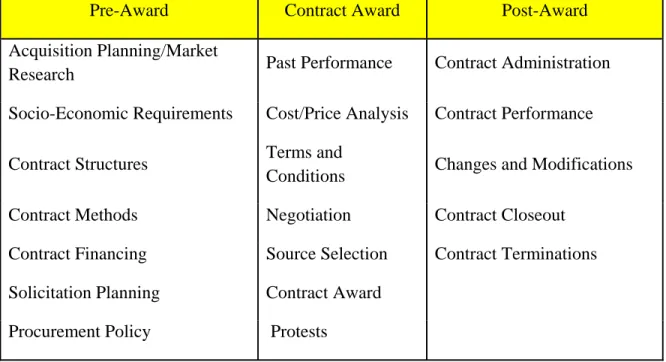
Table 1. Contract Life Cycle and Related Phases ...38
LIST OF ACRONYMS AND ABBREVIATIONS
A&E Architect & Engineering
ADA Anti-Deficiency Act
AFPA Armed Forces Procurement Act CICA Competition in Contracting Act
CMBOK Contract Management Body of Knowledge
CMCAB Contract Management Certification and Accreditation Board
COR Contracting Officer’s Representative
CPARS Contractor Performance Assessment Reporting System DAU Defense Acquisition University
DAWIA Defense Acquisition Workforce Improvement Act DFARS Defense FAR Supplement
DoD Department of Defense
FAC-C Federal Acquisition Certification-Contracting FAI Federal Acquisition Institute
FAPIIS Federal Awardee Performance and Integrity System FAR Federal Acquisition Regulation
FCPA Foreign Corrupt Practices Act FPRA forward pricing agreement
GAO Government Accountability Office
IACCM International Association for Contract and Commercial Management
ISM Institute for Supply Management
ITAR International Traffic in Arms Regulations NCMA National Contract Management Association NIGP National Institute for Government Purchasing OFPP Office of Federal Procurement Policy
OPM Office of Personnel Management
PPIRS Past Performance Information Retrieval System PWS performance work statement
RFP request for proposal
RFQ request for quote
SME subject matter expert
SOW statement of work
TINA Truth in Negotiations Act UCC uniform commercial code WBS work breakdown structure
ACKNOWLEDGMENTS
I would like to personally thank my primary advisor, Dr. Rene G. Rendon, for his guidance, recommendations, and infinite patience and understanding while preparing this research project. Dr. Rendon presented me with meaningful and logical ways to approach my research and was extremely helpful in every aspect of this project. His dedication, passion, and love for contracting are evident in his teaching and were exhibited every time I showed up outside his office unannounced with questions. I am a better writer because of Dr. Rendon and consider him to be a mentor. Thank you!
I would also like to thank my co-advisor, Janie L. Maddox, for her support on this project. Janie was always there when I had questions and took a personal interest in my progress as well as my learning. I have truly enjoyed having her as both a teacher and advisor over the past year. I would not hesitate to ask her for advice once I get out there in the contracting world. Thanks again Janie!
I.
INTRODUCTION
A. BACKGROUND
The Department of Defense (DoD) had an estimated budget of $671 billion for fiscal year 2012, which included a base budget of $553 billion and $118 billion for contingency operations (GAO, 2011). During that year, the DoD incurred contractual obligations of approximately $360 billion for goods and services (GAO, 2013). Contracting is instrumental to the DoD in acquiring weapons systems, base services, information technology, and consumable items, as well as for conducting contingency operations abroad.
Since the DoD encompasses such a large percentage of the discretionary federal budget, there is a heavy reliance on providing cost savings, best value, and accountability (Amadeo, 2013). With such a large budget to maintain, DoD assumes great responsibility in displaying effective fiscal management, and has often encountered significant problems with regard to contract management and oversight. In 1992, “DoD Contract Management” was placed on the Government Accountability Office’s (GAO) “high risk” list; twenty-one years later, it remains there (GAO, 2013). Additionally, the DoD Inspector General issued 142 reports highlighting deficiencies in 12 key areas relating to contract management processes during FYs 2003–2008 (IG Report, 2009).
Capabilities, skills and training of the acquisition workforce continue to be identified as contributing factors in why DoD’s contract management is still being assessed as high risk. Initially, to address this recurring issue, the Defense Acquisition Workforce Improvement Act (DAWIA) was established by the federal government in 1990 (GAO, 1993). DAWIA’s mission was to create a competent acquisition workforce by providing specialized acquisition training leading to certification and DoD career paths. Defense Acquisition University (DAU) was established as the mechanism by which to provide the required acquisition training. A combination of training, experience, and education is required to achieve one of three levels of contracting certification under DAWIA. Federal agencies, requiring the same formal training and certification as the
DoD, established the Federal Acquisition Institute (FAI) in 1976. FAI’s purpose is to provide training and certification opportunities to the civilian acquisition workforce outside the DoD (FAI, 2013). As the DoD and other federal agencies continue to lose experienced acquisition personnel due to retirement, the contracting knowledge gap will continue to widen. Aside from training and certification requirements, acquisition personnel are encouraged to join professional contracting associations to supplement professional development. One such association is the National Contract Management Association (NCMA).
The NCMA is a professional contracting association made up of contracting professionals in both government and private industry (NCMA, 2011). NCMA is dedicated to providing training and education to contracting professionals striving for professional credentials, by offering recognizable contracting certifications for both government and industry (NCMA, 2011). The NCMA has strict experience, education, and examination requirements for certification. The Contract Management Body of Knowledge (CMBOK) is NCMA’s primary reference on contract management knowledge and practices, and is utilized in the development of certification programs (NCMA, 2011).
The DoD and other federal agencies have put an additional emphasis on both training and certification. Despite this emphasis, contract management problems continue to persist in both the DoD and other federal agencies. As the level of acquisition training continues to increase, so does the number of contract management deficiencies (Rendon, 2013). Given this environment, one must ask: does the training received by today’s acquisition professionals truly reflect what is required and needed of them in the workplace? Perhaps, acquisition training received by the workforce does not reflect basic contracting competencies? It is also possible that these contracting competencies are not consistent within the government (DoD and FAI), and between the government and industry (DoD, FAI, and NCMA).
B. PURPOSE OF RESEARCH
The purpose of this research is to conduct a detailed and independent analysis of the contracting competencies established by the DoD and the FAI. Research will also be conducted by reviewing the CMBOK set forth by NCMA.
Contracting competencies established by both the DoD and FAI will be analyzed and compared in order to identify similarities and differences. Additionally, once DoD and FAI contracting competencies are compared, they will then be compared against the CMBOK established by the NCMA.
C. RESEARCH QUESTIONS
This thesis will answer the following questions:
How consistent are contract management competencies established by both the DoD and FAI?
How do both the DoD and FAI’s contracting competencies compare to the contracting competencies in the NCMA CMBOK?
What improvements can be made to increase consistency between DoD and FAI contracting competencies, as well as between DoD/FAI and NCMA’s CMBOK?
D. METHODOLOGY
The methodology for this research will consist of two components: A literature review and a comparative analysis.
The first component, the literature review, will present an overview of contract management. This overview will highlight the six phases of contract management from the buyer’s perspective, and will briefly cover the phases from the seller’s perspective. The literature review will include an in-depth review of NCMA’s CMBOK. Additionally, the contracting competencies of both the DoD and the FAI will be reviewed and discussed.
The second component of the methodology will be a comparative analysis. This analysis will compare and contrast the similarities and differences between DoD and FAI contracting competencies, as well as comparing both to the NCMA CMBOK.
E. BENEFITS AND LIMITATIONS
Benefits associated with this research will include a thorough understanding of DoD and FAI contracting competencies. An additional benefit will be an insight into how DoD and FAI contracting competencies compare with each other, and with the NCMA’s CMBOK. Additionally, areas of improvement may be identified based on these insights by comparing and contrasting both DoD and FAI contracting competencies with each other and with the NCMA’s CMBOK.
One limitation associated with this research is that only contracting competencies from three organizations (DoD, FAI, and NCMA) are being analyzed, two of which are part of the federal government. Additionally, this research focuses on a literature review and comparative analysis; there will be no surveys taken or interviews conducted. The opinions and recommendations of acquisition personnel associated with DoD, FAI, and NCMA will not be included in this research.
F. ORGANIZATION OF REPORT
This report consists of five chapters. The first chapter will include background information, purpose of research, research questions, methodology, benefits and limitations, organization of report, and summary. The second chapter will contain a literature review providing an overview on contract management. Chapter II will also include a discussion on agency theory and the NCMA’s CMBOK. Chapter III will provide a discussion of both DoD and FAI’s contracting competencies. Chapter IV will contain a comparative analysis among DoD and FAI contracting competencies, as well as NCMA’s CMBOK. This chapter will also present findings and recommendations on how to make contracting competencies complete and consistent across government agencies, as well as in private industry. Chapter V will present a summary and conclusion, and areas for further research.
G. SUMMARY
This chapter provided an overview of the research to be conducted by providing a brief background of contract management. It also stated the purpose of the research, research questions to be answered, and the methodology by which the research will be conducted. Additionally, Chapter I discussed benefits and limitations associated with this research, as well as how the report will be organized. The next chapter will provide a literature review discussing the six phases of contract management and the NCMA’s CMBOK.
II.
LITERATURE REVIEW
A. INTRODUCTION
Chapter II provides an overview of contract management as a business function. It also describes how agency theory attempts to explain the principal/agent relationship between the buyer and the seller. In addition, it gives an overview of the six phases of contract management and the professional associations that seek to promote it. A majority of this chapter will then analyze and discuss the NCMA CMBOK.
B. CONTRACTING AS A BUSINESS FUNCTION
The importance purchasing plays within an organization has been often overshadowed by other key functional areas such as finance, marketing, and operations management. In the past, purchasing was generally thought of as a component of either production or operations. In fact, purchasing remains one of the six basic functions common to all types of businesses, and is responsible for the expenditure of over half of an organization’s resources (Lee & Dobler, 1971). Generally speaking, every dollar that can be saved in purchasing will generate an additional dollar in profit (Lee & Dobler, 1971). It is, perhaps, no wonder why commercial managers value the importance of purchasing and are incorporating it more into their strategic planning.
Purchasing, once considered a tactical function, is becoming more strategic in nature as organizations start to integrate purchasing activities into their supply chain management functions (Kraljic, 1983). A successful organization will evaluate their buying and bargaining power and incorporate it into their long-range planning (Kraljic, 1983). In fact, many executives see strategic value in purchasing, and are evaluating their procurement and supply chain management policies in an effort to deliver higher returns for their companies (KPMG, 2012). As purchasing becomes increasingly more important in both government and commercial organizations, so too do the relationships that exist to facilitate purchasing.
In government contracting, the purchaser is the government and the seller is the contractor. Government and contractor relationships may best be analyzed by utilizing an economic concept known as agency theory (Rendon, 2011a).
C. AGENCY THEORY
Agency theory seeks to explain relationships between principals and agents and the exchange of information, and risks, associated with those relationships (Eisenhardt, 1989). Utilizing agency theory may be useful in understanding the dynamics of contractual relationships that exist between a principal (government) and an agent (contractor). Each party in the buyer and seller relationship has varying goals and objectives that differ from the other. The government’s buying objectives may include quality, source, timing, and price. The government is also concerned with complying with statutory requirements and adhering to public policy. On the other hand, contractors are more concerned about profit, market share, growth, and cash flow (Rendon, 2011a).
Information exchange is an important aspect of the buyer/seller relationship. Each party’s unwillingness to share pertinent information may lead to uncertainty and set the foundation for a potentially risky relationship (Rendon, 2011a). Agency theory focuses on mechanisms necessary in exchanging information between the buyer and seller. One such mechanism leads to a process on how contracts are planned, structured, negotiated, administered, and closed. The next section will discuss the contract management process (Rendon, 2011a).
D. THE CONTRACT MANAGEMENT PROCESS
The contract management process consists of six different phases from both the buyer and the seller perspective (Garrett, 2010). This research will focus on the buyer (government) perspective. The six contract management phases from the buyer’s perspective are procurement planning, solicitation planning, solicitation, source selection, contract administration, and contract closeout or termination.
1. Procurement Planning
Procurement planning is the process of determining which goods or services to procure and from what source. Additionally, procurement planning involves making decisions on how much to procure, how to procure it, and when to do so. Determining and defining goods or services may require generating product descriptions and conducting market research to see what is available outside the organization. This may require make-or-buy and risk analysis. Selecting a contract type, as well as developing preliminary requirements documents such as the statement of work (SOW) and performance work statement (PWS), may be done as part of this planning phase if the organization plans to procure goods or services outside the organization. Once an organization decides to outsource a requirement, it then must prepare the required documents needed for solicitation (Garrett, 2010; Rendon, 2011a).
2. Solicitation Planning
Solicitation planning is the process of clearly defining a requirement, identifying potential procurement sources, and preparing the necessary documents needed for the solicitation. It is imperative that an organization understands its own requirements in order to effectively communicate those needs outside the organization. Determining the procurement method and contract type is also conducted during this phase. Additional areas of concern include establishing proposal evaluation criteria, developing terms and conditions, and creating the actual solicitation documents (request for quotation [RFQ] or request for proposal [RFP]). Once an organization has identified its requirement and procurement strategy, it is ready to put the requirement out for solicitation (Garrett, 2010; Rendon, 2011a).
3. Solicitation
Solicitation involves the information exchange between buyers and sellers where the buyer communicates its requirements (via advertisement) and the seller submits a proposal on how they can fulfill it. Buyers use solicitations to request information such as bids, quotes, and proposals from potential sellers. The purpose of the solicitation is to clearly communicate the buyer’s need to all potential sellers. Communication may
involve conducting pre-proposal conferences in order to further clarify requirements. Once the buyer has identified an adequate number of potential sellers, it is time to select the seller via the source selection process (Garrett, 2010; Rendon, 2011a).
4. Source Selection
Source selection is the process of selecting a supplier to fulfill organizational requirements. This process involves applying pre-established evaluation criteria to proposals submitted by potential suppliers. Source selection is more than just evaluating proposals, as it may require additional information exchange and negotiating with the potential supplier concerning terms, schedule, and cost. The final and most important component of source selection is awarding the contract. After the contract has been awarded, it must then be administered (Rendon, 2011a).
5. Contract Administration
Contract administration is the process of monitoring contractor performance while ensuring compliance with terms and conditions set forth in the contract statement of work (SOW). Additional elements of contract administration include negotiating change requests, managing payment schedules, and conducting performance analysis. Sometimes, it may be necessary to hold a pre-performance conference in order to clarify any last-minute expectations. Contract administration is continuously conducted until the contract is closed out or terminated (Garrett, 2010; Rendon, 2011a).
6. Contract Closeout/Termination
Contract closeout/termination is the final phase of the contract management process. If a contractor has successfully and satisfactorily completed all the performance elements and all administrative issues have been settled, a contract can be closed out and verified complete. Elements of contract closeout may include processing final payments, completing closeout checklists, and documenting the contractor’s performance. There are two additional ways in which a contract may end. A contract can be terminated for convenience by the government or terminated for default because of lack of performance
by the contractor. All contracts eventually must be closed out (Garrett, 2010; Rendon, 2011a).
Although, for the purpose of this research, only the six phases of contract management from the buyer perspective will be discussed, there are six phases that represent contract management from the seller’s perspective. The first four phases for the seller are presales activity, bid/no-bid decision making, bid or proposal preparation, and contract negotiation and formation. Phases five and six, contract administration and contract closeout or termination, contain similar elements for both the buyer and seller. Presales activity entails identifying potential customers and determining their needs. It includes conducting market research and identifying potential competition. Bid/no-bid decision making involves evaluating buyer solicitations and assessing capabilities and risks associated with bidding on the contract. Bid or proposal preparation is when potential sellers develop offers in response to buyer solicitations. Contract negotiation and formation involves negotiating the terms and conditions of the contract. This is the phase in which the buyer and seller agree on expectations and clarify requirements. This is an important and integral phase for both the buyer and seller (Garret, 2010).
The six phases of contract management from the buyer and seller perspective present the overarching framework for the contract management process. Depending on the complexity of a requirement and whether the contract is government or commercial, the contracting process may contain all or a portion of the elements listed in each of the six phases. For government contracting, a set of statutes and regulations known as the Federal Acquisition Regulation (FAR) sets forth policies and procedures for the acquisition process. The FAR contains 53 distinct parts, corresponding to different acquisition areas. Many of the parts in the FAR correspond directly to elements in the six phases of contract management. For example, under the procurement planning phase, FAR Parts 5 and 10 correspond to market research. Additionally, acquisition planning can be found in FAR Part 7 (FAR, 2013).
Several parts of the FAR cover multiple phases of contract management. FAR Parts 12, 13, 14, and 15 correspond to numerous elements under solicitation planning. These elements include determining procurement method, evaluation strategy, and
solicitation document development. Under source selection, evaluating proposals, applying evaluation criteria, and negotiating terms and conditions are also discussed in FAR Parts 12, 13, 14, and 15. As previously illustrated, FAR topics can generally be found to correspond to all six phases of contract management (FAR, 2013). Appendix A reflects the six phases of contract management and their related FAR sections (Rendon, 2011a).
Even though the FAR provides statutory requirements and acquisition guidance for federal agencies, numerous FAR-related topics may also be relevant to commercial contracting. As the role of acquisition becomes increasingly more important in both governmental and commercial organizations, the field of contract management has become more professionalized. The next section will discuss professional associations pertaining to contract management.
E. PROFESSIONAL CONTRACT MANAGEMENT ASSOCIATIONS
Several professional associations exist to promote the professional development of acquisition personnel in fields such as contracting, and program and supply chain management. Providing education, training and certification in contracting-related fields is an important goal of many of these organizations. Perhaps the most widely recognized professional contracting association is NCMA. NCMA was founded in 1959 and is the world’s largest contract management professional association, with over 22,000 members (NCMA, 2013). NCMA offers networking, education, training, and professional certification opportunities to its members (NCMA, 2013).
Another professional association is the International Association for Contract and Commercial Management (IACCM). IACCM is a world-wide organization focusing on commercial contracting in global markets, and also offers training and professional certification in commercial contract management (IACCM, 2013). IACCM is perhaps one of the largest professional organizations, with a membership that includes contract managers, attorneys, and supply chain specialists from over 155 countries (IACCM, 2013).
One final professional organization is the Institute for Supply Management (ISM). Founded in 1915, ISM is a non-profit association serving supply chain management professionals in over 80 countries. ISM promotes research, education, and information dissemination to supply management professionals. Additionally, ISM offers professional certifications in both supply management and purchasing (ISM, 2013).
Although there are many professional associations dedicated to the professional development of acquisition and contracting professionals, the NCMA is the only organization that has actually created a contracting “body of knowledge.” In the contracting profession, NCMA is considered to be the standard for defining the body of knowledge in contract management. The next section will discuss bodies of knowledge and then focus on NCMA’s CMBOK (NCMA, 2011).
F. CONTRACT MANAGEMENT BODY OF KNOWLEDGE
A distinguishing feature of any profession is the unique knowledge base justifying the claim to special expertise (Pavalko, 1988; Morris, Crawford, Hodgson, Shepherd & Thomas, 2006). Contract management, sometimes called the “language of defense acquisition,” definitely requires special expertise (Rendon & Snider, 2008, p. 160). Some may even say that government contracting possesses an esoteric body of knowledge (Zemansky & Gordon, 1981). Ultimately, the purpose of a profession’s body of knowledge is to establish and promote competency, an important trait of professionalism (Morris, et al., 2006; Couture & Schooner, 2013). Additionally, some professions recognized that their respective bodies of knowledge must balance technical depth with sufficient breadth to make connections with other disciplines, and that the identified competencies reflect both cognitive rigor and practical relevance (Kilduff, 2008).
Specific to the NCMA CMBOK, NCMA uses the CMBOK as an “organizing rubric” to identify and manage contract management knowledge in its professional development programs and certification credentialing exams (Couture & Schooner, 2013, p. 41). Employers (both government and industry) may use the CMBOK for workforce management (e.g., job descriptions, performance standards, recruitment efforts) and
educators may use the CMBOK for curricula development and assurance of learning initiatives (Couture & Schooner, 2013; Rendon, 2011b).
NCMA’s Contract Management Body of Knowledge (CMBOK) may best be described as the “sum of knowledge” essential to the contract management profession. As the contracting profession has evolved, the CMBOK has endured numerous revisions over the past 15 years. In 2001, a CMBOK committee was appointed by the Contract Management Certification and Accreditation Board (CMCAB) to periodically update the CMBOK. The second edition of the CMBOK was the first to include terms and concepts for both federal and commercial contracting. The second edition also established a framework modeled after a work breakdown structure (WBS) that initially outlined the “contracting competencies.” In 2006, the CMBOK was reorganized into chapters discussing the competencies previously outlined in the original WBS. As this research is being conducted, a fourth edition of the CMBOK is scheduled to be released in late 2013 (NCMA, 2011).
The CMBOK is broken down into five broad knowledge areas, known as foundational competencies (Appendix B). These five foundational competencies are Pre-Award, Acquisition Planning/Strategy, Post-Pre-Award, Specialized Knowledge Areas, and Business. Each of the five foundational competencies contains subject matter competencies, which are specific knowledge areas managers need to master in order to effectively perform their job. Examples of subject matter competencies include contracting methods, contract financing, and standards of conduct. The following analysis will provide a detailed discussion of the subject matter competencies found under the first three foundational competencies: Pre-Award, Acquisition Planning/Strategy, and Post-Award. A general discussion will be provided for both the Specialized Knowledge Areas and Business competencies (NCMA, 2011). The following detailed analysis on NCMA’s contracting competencies is based on how the competencies are titled, presented, and discussed in Chapter 3 of the CMBOK and reflected in Appendix E.
1. Pre-Award (1.0)
Laws and Regulations (1.1) play an important role in contract management because contracts are legal and binding documents whose terms and condition are legally enforceable. Sources of law and guidance covered include the uniform commercial code (UCC), Federal Acquisition Regulation (FAR) and international contracting and case law (NCMA, 2011).
The CMBOK discusses in detail the “law of agency” in the context of principal-agent relationships, as well as the four types of authority (actual, express, implied, and apparent). Contract modifications, performance, implied warranties, and repudiation are also covered under this section. Statutes and Regulations covered under this competency include the Anti-Deficiency Act, Armed Services Procurement Act, and Competition in Contracting Act. The role of the FAR is covered with mention of the Defense FAR Supplement (DFARS). Finally, laws related to international contracting are covered, to include the Foreign Corrupt Practices Act (FCPA) and the International Traffic in Arms Regulations (ITAR). Anti-boycott regulations and foreign laws and customs are also briefly mentioned (NCMA, 2011).
Contract Principles (1.2) are also known as fundamentals of acquisition. The CMBOK utilizes the defense acquisition management framework as the basis for discussion. The defense model contains the following phases: need development, concept development, preliminary design, and detailed design; as well as production, deployment, and operations (NCMA, 2011).
Standards of Conduct (1.3) discuss the guidelines contracting professionals should follow in order to perform their job ethically and within the confines of legal policy. This competency discusses standards of conduct and ethics for both government and commercial organizations. Ethical issues such as conflict of interest, behavior toward competitors, privacy of information, and gift giving and receiving are also covered under this competency (NCMA, 2011).
Socioeconomic Programs (1.4) are mandated by the government in an effort to help small businesses. FAR 19 is highlighted as providing the maximum possible
contracting opportunities to the multitude of small businesses that exist. Small business programs and policies relating to the federal government are briefly discussed. The CMBOK briefly discusses small business set-asides. A good overview is provided for many types of small businesses, to include veteran-owned small businesses, small disadvantaged businesses, HUB Zones, and woman-owned small businesses. Labor Laws are mentioned in this section, as they relate to the Davis-Bacon and Walsh-Healy Public Contracts Act. Additionally, workplace and environmental considerations are also covered under this competency. Some examples include energy conservation, hazardous materials, and ozone-depleting substances (NCMA, 2011).
Contract Structures (1.5) has to do with identifying specific contract types and pricing arrangements used in carrying out contracts. Both types of contracts, fixed price and cost reimbursable, are covered in detail under this section of the CMBOK. Firm fixed-price, firm fixed-price (level of effort) and fixed-price (economic adjustment) type contracts are also explained. For reimbursement contracts, cost contracts, cost-sharing contracts and cost-plus-fixed-fee contracts are discussed. This competency also discusses time and material contracts as well as cost, performance, and delivery incentives. Incentive and award-fee contracts pertaining to fixed-price and cost-plus contracts are also detailed. Finally, this competency touches on basic ordering agreements, letter contracts, and Indefinite Delivery/Indefinite Quantity contracts (NCMA, 2011).
Contracting Methods (1.6) are the means by which customer requirements are solicited to potential offerors. This competency focuses on providing definitions to a number of contracting methods. Sealed bidding and two-step sealed bidding are discussed in detail, as is contract negotiation. Electronic commerce is mentioned as FedBizOpps is highlighted. Additionally, definitions and differences between a request for quotation (RFQ), request for proposal (RFP), and request for information (RFI) are examined in this section. Additional topics include sales contracts, performance-based contracts, and gap fillers (NCMA, 2011).
payments, progress payments, and contract funding. This competency discusses both commercial and governmental contract financing. Commercial contract financing includes obtaining loans or advance funding, as well as arranging payment progress schedules that include advanced payments, interim payments, and delivery payments. For government contract financing, FAR Part 32 outlines the order of preference a contracting officer should refer to when a contractor requests financing. FAR Part 32 also provides guidance on both progress payments and advance payments (NCMA, 2011).
Intellectual Property (1.8) represents a type of property that is not material in nature. Examples of intellectual property include copyrights, trademarks, patents and trade secrets. This competency merely defines each type of intellectual property. This section does not discuss too much about contracting, except to mention that intellectual property may be a potential element of a contract (NCMA, 2011).
2. Acquisition Planning/Strategy (2.0)
Acquisition Planning (2.1) is the process by which acquisition professionals generate a plan to fulfill a buyer’s need in a timely manner and at a reasonable cost. Acquisition planning should involve a variety of individuals, to include contracting officers, budget experts, legal counsel, and the customer. The CMBOK focuses on market research as the key component of acquisition planning. Internal market research focuses on understanding how one’s own organization operates, while external market research occurs once a customer’s requirement has been identified (NCMA, 2011).
Acquisition Methodology (2.2) discusses process elements used to prepare solicitations. This competency focuses on six elements of requirements preparation: statement of work (SOW), contract type and method, terms and conditions, evaluation procedures, preparing and submitting proposals, and other considerations. The SOW is discussed in great detail, explaining the three basic types: Design SOWs, Performance SOWs, and Functional SOWs. Regardless of the type of SOW used, each contains common elements such as objective, scope, and description of work required. The contract type is briefly mentioned and is merely reinforced as an important part of the solicitation package. Terms and conditions are mentioned as an important way to help
clearly define the requirement between the buyer and seller. Evaluation factors and procedures used by the buyer should be clearly defined and listed in the solicitation. Instructions relating to the preparation and submitting of proposals is the last part of the solicitation package. Other considerations discuss publicizing for both government and commercial organizations (NCMA, 2011).
Proposal Preparation (2.3) is a process in which potential sellers evaluate solicitations and either offer a quote or submit a proposal. The CMBOK covers this competency from the seller’s perspective. The seller must first review the evaluation factors and then make a bid or no-bid decision. If a seller plans to submit a proposal, it must be clearly and concisely written, well organized, and supported with credible statements (NCMA, 2011).
Negotiation (2.4) is the process in which the two parties (buyer and seller) seek to reach an agreement. The CMBOK gives a very detailed overview of the negotiation process. It covers negotiations from both the buyer and seller perspective. Key negotiation elements covered are preparation, negotiation teams, objectives, guidelines, and strategies and tactics (NCMA 2011).
Source Selection (2.5) is the process of selecting the seller that will win the contract. This is perhaps the most detailed subject matter competency in the CMBOK. This competency covers all the activities in the evaluation process. Source selection and evaluation plan elements are covered in detail. A significant part of this section discusses evaluation criteria to include price, technical, management, and past performance. Additionally, evaluation techniques are covered and include compliance matrix, independent evaluation, numeric scale, color, and adjectival scale. This section also includes awarding and preparing the contract, as well as preparing the contract file. This competency concludes the award practices unique to federal contracting (such as pre-award and post-pre-award notifications), as well as pre-pre-award and post-pre-award debriefings (NCMA, 2011).
post-award. Typical pre-award protest issues include restrictive requirements, ambiguous or erroneous evaluation criteria, or exclusion from the competitive range. Typical post-award issues may include unfair evaluation criteria, failure to evaluate as advertised, and unreasonable best value analysis (NCMA, 2011).
3. Post Award (3.0)
Contract Administration (3.1) is the first subject matter competency covered under Post Award. The CMBOK provides a broad definition of contract administration and explains that it is a responsibility of both the buyer and the seller. Contract administration is a function of the size and complexity of the contract. Specific elements of contract administration are not covered in this section of the CMBOK (NCMA, 2011).
Contract Performance/Quality Assurance (3.2) begins by discussing the importance of effective communication. Post-award kick-off meetings and the associated communication elements are covered in detail. Periodic status review meetings, written status reports, observation, and documentation are all discussed with regard to quality assurance (NCMA, 2011).
Subcontract Administration (3.3) discusses the relationships between the buyer and subcontractor, as well as between the seller and subcontractor. Issues concerning the use of subcontractors in government contracting are discussed and include approval, relationships, and communication. Additionally, benefits associated with including subcontractors in meetings held by the buyer are also discussed in detail (NCMA, 2011). Contract Changes and Modifications (3.4) focus on changes that may occur over the course of the contract. Three types of changes are discussed in detail: directed changes, constructive changes, and cardinal changes. The importance of communication between the buyer and seller resulting from a contract change, as well as identifying personnel who are authorized to make changes, is highlighted. Providing written concurrence is also discussed (NCMA, 2011).
Property Administration (3.5) focuses on the buyer providing property to the contractor or subcontractor in order to realize cost savings. Post-award administration of
buyer-provided or furnished property is generally managed by a trained specialist in the buyer’s organization. There are four general concepts relating to property that are discussed in detail: ownership, accountability, competitive advantage, and property administration (NCMA, 2011).
Transportation (3.6) considerations are discussed with regard to contracts involving the movement of goods that may be heavy, fragile, subject to spoilage, and/or difficult to transport. This competency outlines four common transportation considerations: required receipt dates, mode of transportation, transportation-related services, and responsibility for transportation charges (NCMA, 2011).
Disputes (3.7) are disagreements between buyers and sellers. The CMBOK discusses dispute resolution methods for both the buyer and seller. The three formal dispute resolution methods discussed are informal collaboration, negotiation, and alternative dispute resolution. Alternative dispute resolution is covered in detail, and provides explanations on five different techniques: interest-based negotiation, mediation, mini-trial, nonbinding arbitration, and binding arbitration. Resolution through legal means is also discussed, along with monetary damages and equitable remedies (NCMA, 2011).
Organizational Conflict of Interest (3.8) focuses on buyers identifying potential conflicts of interest early in the acquisition process. The CMBOK discusses elements of various types of conflict of interest mitigation plans. These elements include disclosure of relevant information, firewalls, confidentiality agreements, separation of personnel, divestiture of a company, removal of conflict, and work-switch (NCMA, 2011).
Contract Closeout (3.9) focuses on completing numerous procedural and administrative tasks in order to close out the contract. Examples of required tasks include verifying goods and services have been received, returning buyer furnished property, and de-obligating excess funds that may remain on the contract (NCMA, 2011).
Contract Termination (3.10) discusses the premature ending of a contract. This section discusses both termination for default and termination for convenience in detail.
Termination by mutual consent and no-cost cancellations are also discussed (NCMA, 2011).
4. Specialized Knowledge Areas (4.0)
Specialized Knowledge Areas discusses competencies associated with the various specialties within contract management. Some specialties may be exclusive to government contracting, while others may be found only in commercial contracting. Some contracting specialties may be applicable to both government and commercial contracting. The CMBOK identifies eleven contracting specialty areas. They are:
4.1 Research and Development
4.2 Architect-Engineer Services and Construction 4.3 Information Technology
4.4 Major Systems 4.5 Service Contracts
4.6 International Contracting 4.7 State and Local Government 4.8 Supply Chain
4.9 Performance-Based Acquisition 4.10 Government Property
4.11 Other Specialized Areas (NCMA, 2011) 5. Business (5.0)
The following is a list of general business competencies that are discussed in detail in the CMBOK:
5.1 Management 5.2 Marketing 5.3 Operations Management 5.4 Financial Analysis 5.5 Accounting 5.6 Economics
5.7 Information Science or Information Technology 5.8 Leadership Skills (NCMA, 2011)
When comparing the CMBOK’s competency outline (Appendix B) against the detailed competency discussions provided in the CMBOK Chapter 3 (Appendix E), several discrepancies were discovered. The first discrepancy was discovered under foundational competency Pre-Award (1.0). In the competency outline, subject matter competency 1.1 is titled Laws, Regulations and Contract Principles and subject matter competency 1.2 is titled Laws and Regulations. In Chapter 3 of the CMBOK, competency 1.1 is identified as Laws and Regulations, while 1.2 is identified as Contract Principles. (NCMA, 2011).
Similar to the discrepancy noted above, a second discrepancy was found regarding competency outline titles matching content descriptions. Under foundational competency Post-Award, subject matter competency 3.3 is titled Standards of Conduct and 3.4 is titled Subcontract Management. In Chapter 3 of the CMBOK, competency 3.3 is referred to as Subcontract Administration and 3.4 is referred to as Contract Changes and Modifications. Standards of Conduct were also previously covered under competency 1.3. (NCMA, 2011).
The final discrepancy falls under Business (5.0). The competency outline identifies competency 5.7 as Quantitative Methods, but it is referred to as Information Science or Information Technology in the chapter. Competency 5.8 is identified as Information Science in the outline, but as Leadership Skills in the chapter. Competencies 5.7, Quantitative Methods, and 5.10, Advisory Roles, are listed in the competency outline but are never discussed anywhere in the CMBOK (NCMA, 2011). Thus, there are inconsistencies in the CMBOK’s competency outline and the detailed competency discussions in CMBOK Chapter 3(NCMA, 2011).
G. SUMMARY
Chapter II provided an overview on contract management as a business function and detailed how agency theory attempts to explain the principal/agent relationship. This chapter also provided an overview of the six phases of contract management, as well as the professional associations that promote it. The majority of this chapter was analyzing
analysis will play an important part in the comparative analysis chapter (Chapter IV) when compared to the contracting competencies of both the DoD and FAI, which will be discussed in Chapter III.
III.
CONTRACTING COMPETENCIES FOR THE DEPARTMENT
OF DEFENSE AND FEDERAL ACQUISITION INSTITUTE
A. INTRODUCTION
This chapter will discuss the contracting competencies for both the Department of Defense (DoD) and the Federal Acquisition Institute (FAI). The chapter will begin with a brief overview on how the DoD Contracting Competency model was developed, followed by a detailed analysis of the 11 Units of Competence of which it is comprised. Additionally, the chapter will briefly cover FAI contracting competencies, which are virtually identical to those of the DoD. The purpose of this chapter is to provide a detailed discussion of DoD and FAI contracting competencies that will be used in performing a comparative analysis with the NCMA’s CMBOK, which will be presented in Chapter IV. The next section will discuss the DoD Contracting Competency Model. B. DOD CONTRACTING COMPETENCY MODEL DEVELOPMENT
Of the Department of Defense’s budget of $671 billion dollars for fiscal year 2012, approximately $360 billion, or 54%, resulted from contractual obligations for goods and services (GAO, 2011; GAO, 2013). Since “DoD Contract Management” continues to remain on the GAO’s “high risk” list, the DoD has been working to identify deficiencies and improve practices related to contract management (GAO, 2013). At the heart of contract management is the contracting workforce, which includes contracting officers, contracting officers’ representatives (CORs), and contract specialists.
As a result of the Defense Acquisition Workforce Improvement Strategy, the DoD contracting community has been focused on training and developing a more competency-based workforce (DoD, n.d.). In order to identify knowledge and capability gaps within the DoD contracting workforce, the department performed a DoD-wide Contracting Competency Assessment, which targeted over 20,000 members of the contracting workforce. In order for the DoD to perform an assessment of contracting competencies within the workforce, there needed to be a list of competencies to serve as guidance for
the assessment. That list of competencies became known as the DoD Contracting Competency Model (Appendix B) (DoD, n.d.).
In March of 2007, the DoD contracting community developed their own Contracting Competency Model, which was based on input from senior contracting leaders within the community. Additionally, 377 subject matter experts (SME) from all levels and components of the DoD were utilized to develop the technical contracting competencies included in the model. By analyzing the range and depth of over 600 simulated job situations, SMEs were able to analyze the range and depth of the skill sets required of various contracting professionals. For development of the Professional Competencies, which are more social in nature, the Office of Personnel Management (OPM) finalized a list of the 10 most significant competencies based on interpersonal characteristics needed to succeed in the contract management profession. The end result was a model consisting of 12 units of competence (11 technical contracting units and one professional competence unit) (DoD, n.d.).
C. DOD CONTRACTING COMPETENCY MODEL
The DoD Contracting Competency Model (Appendix B) is comprised of 12 units of competence. The first 11 units of competence contain contracting-related competencies, while the 12th consists of more general professional competencies. Within the 11 contracting units of competence are a total of 28 technical contracting competencies. Each of the 28 technical competencies is broken down further into 52 separate and distinct elements. Unit 12 contains 10 professional competencies. The 12 units of competences that comprise the contracting competency model are as follows:
Unit 1 - Pre-Award and Award
Unit 2 - Develop and/or Negotiate Positions Unit 3 - Advanced Cost and/or Price Analysis Unit 4 - Contract Administration
Unit 5 - Small Business/Socio-Economic Programs
Unit 6 - Negotiate Forward Pricing Rate Agreements (FPRA) & Administer Cost Accounting Standards
Unit 8 - Procurement Policy Unit 9 - E-Business Related
Unit 10 - Construction/Architect & Engineering (A&E)
Unit 11 - Contracting in a Contingent and/or Combat Environment Unit 12 - Professional Competencies (DoD, 2011)
1. Unit 1: Pre-Award and Award (Competencies 1–11)
a. Competency 1: Determination of How to Best Satisfy
Requirements for the Missions Area
This competency contains three elements that focus on identifying mission requirements, as well as researching the means by which to do so. The first element discusses the use of requirements documentation and utilizing analysis and performance-based approaches to identify the best solution to meet the requirement. The second element is utilizing market research to gain a better understanding of the industry and to identify potential sources of supply and/or services. The third element under this competency mentions acquisition planning. It is important to consider all available sources and methods of procurement when evaluating meeting requirements and evaluating risk.
b. Competency 2: Consider Socio-Economic Requirements
This competency mentions utilizing socio-economic requirements such as small business, environmental, foreign, and labor when considering contracting and sub-contracting opportunities.
c. Competency 3: Promote Competition
This competency contains two elements. The first element focuses on conducting pre-solicitation industry conferences. It also discusses analyzing responses to the terms and conditions in draft solicitations, as well as promoting full and open competition. The second element mentions increasing competition by facilitating the partnering on both solicitations and subcontracting opportunities.
d. Competency 4: Source Selection Planning
The source selection planning competency contains a single element. This element mentions documenting source selection plans that adhere to law, regulation, and policy.
e. Competency 5: Solicitation of Offers
This competency contains five elements. The first element suggests conducting pre-bid and pre-proposal conferences in order to help inform offerors and help clarify requirements of the acquisition. The second element mentions promoting competition by publicizing all proposed procurements. The third element mentions issuing a written solicitation that is consistent with requirement documents, and acquisition and source selection plans. This solicitation must include appropriate provisions and clauses that are tailored to the requirement. The fourth element discusses canceling solicitations or issuing amendments when they are lawful and are in the best interest of the government. The fifth and final element mentions pre-award inquiries. Responses to pre-award inquiries should be conducted with guidance from the FAR/DFARS.
f. Competency 6: Responsibility Determination
This competency focuses on utilizing past performance and financial information in determining contractor responsibility.
g. Competency 7: Bid Evaluation (Sealed Bidding)
This competency contains two elements. The first is the transparent evaluation of sealed bids to allow for a fair assessment of price, technical capability, and past performance. The second element is the utilization of price analysis in determining whether the lowest bid is reasonable and will provide the best value to the government.
h. Competency 8: Proposal Evaluation (Contracting by Negotiation) This competency focuses on evaluating quotes and proposals against stated evaluation criteria. It also mentions requesting technical and pricing support documentation in evaluating offers, to verify if they are acceptable.
i. Competency 9: Source Selection
This competency contains two elements: establishing the competitive range and deciding whether to hold discussions.
j. Competency 10: Contract Award
Three elements in this competency focus on the contract award. The first element is selecting the offeror who will provide the best value to the government. The second element is awarding the contract. It also discusses issuing task or delivery orders upon availability of funding. The third element is conducting pre/post-award debriefings for all unsuccessful offerors.
k. Competency 11: Process Protests
This is the final competency under Unit 1. This competency focuses on processing protests and evaluating whether holding the award or stopping performance may be necessary as the result of a protest.
2. Unit 2: Develop and/or Negotiate Positions (Competencies 12–14)
a. Competency 12: Justification of Other than Full and Open
Competition
This competency focuses on having to justify the need to award a contract without full and open competition.
b. Competency 13: Terms and Conditions
This competency focuses on determining contract terms and conditions that comply with laws and regulations. Examples of terms and conditions may include both financing methods and government property.