A Quantitative Examination of the Relationship Between Perceived Job Satisfaction and Organizational Commitment in Small Business Employees
in the Lynchburg Metropolitan Statistical Area
By Tammy Brown
A Dissertation Submitted in Partial Fulfillment of the Requirements for the Degree of
Doctor of Business Administration
Liberty University August 2016
Abstract
The Lynchburg Metropolitan Statistical Area (MSA) has an average turnover that exceeds the national and regional average. Organizational turnover unfavorably
influences productivity and has the potential to adversely affect, not only the Lynchburg MSA, but also the regional, state, and national economy. This quantitative
non-experimental, correlational research examined the relationship between perceived job satisfaction and organizational commitment in the Lynchburg MSA. The results of this research supports earlier research and demonstrated a statistically significant positive relationship existed between perceived job satisfaction and organizational commitment in small business employees in the Lynchburg MSA. The results may serve as beneficial to small business leaders for influencing human resource management processes aimed at increasing retention, reducing turnover, and remaining competitive in both the region and state.
Keywords: Job Satisfaction, Organizational Commitment, Small Business, Lynchburg MSA
A Quantitative Examination of the Relationship Between Perceived Job Satisfaction and Organizational Commitment in Small Business Employees
in the Lynchburg Metropolitan Statistical Area
By Tammy Brown
A Dissertation Submitted in Partial Fulfillment of the Requirements for the Degree of
Doctor of Business Administration
Liberty University October 2016 ___________________________________________________ Dr. Eric Richardson ___________________________________________________ Dr. Gene Sullivan __________________________________________________ Dr. Scott Hicks
Dedication
I want to dedicate this research to the most important person that has been with me through the highs and lows of life and throughout this process, Jesus Christ. He is truly my Rock and my Cornerstone. Thank you for my strength when I had none left. Anything I am or will be is due to your faithfulness.
Acknowledgments
I want to thank Dr. Eric Richardson for his wisdom, insight, and patience during this process. His expertise and knowledge of the process and topic was invaluable to my overall progression through this research. Thanks must also go to my amazing editor, Dr. Valerena Candy, in whom has the ability to instruct, interpret, and inspire.
i
Table of Contents
List of Tables
... v
List of Figures
... vi
Section 1: Foundation of the Study
... 1
Background of the Problem ...2
Problem Statement………..5
Purpose Statement ...6
Nature of the Study ……….. ...7
Research Question ...8
Hypothesis……….8
Theoretical Framework ...9
Definition of Terms ...11
Assumptions, Limitations, and Delimitations ...13
Assumptions...13
Methodological……….13
Conceptual………14
Limitations ... 15
Delimitations ... 16
Significance of the Research…. ...16
Reduction of Gaps ... 16
Implications for Biblical Integration………...19
ii
A Review of the Professional and Academic Literature……….20
Job Satisfaction as an Independent Variable………..22
Organizational Commitment as a Dependent Variable……….22
Small Business………24
Small Business Employees………25
Job Satisfaction and Organizational Commitment………..……..27
Traditional Theories of Employee Job Satisfaction………..…….…28
Traditional Theories of Motivation………...29
Intrinsic and Extrinsic Motivation………...30
Alternative Dynamic Models………..………….32
Contemporary Studies Linking Individual Components to Job Satisfaction 34 Theories of Organizational Commitment………..…………35
Contemporary Applied Research: Employee Job Satisfaction…………..…..38
Applied Research: Employee Organizational Commitment…………..….….40
Employee Turnover………..…....41
Job Satisfaction……….……….…42
The Multidimentional Nature of Organizational Commitment………….…..…..49
Organizational Commitment………...………. 51
Affective Commitment………..…. 51
Continuance Commitment………..………53
Normative Commitment………..………54
iii
Transition and Summary ...61
Section 2: The Project………..………...61
Purpose Statement ...61
Role of the Researcher ...62
Participants ………..63
Population Description………...64
Research Method and Design ...66
Method ... 66
Research Design ... 68
Population and Sampling ...69
Data Collection ...70
Instruments ... 70
Data Collection Technique ... 73
Data Organization Techniques ... 74
Data Analysis Technique ...74
Reliability and Validity...75
Reliability ... 75
Validity ... 76
Transition and Summary ...77
Section 3: Application to Professional Practice and Implications for Change ...
78
Overview of Study ...78
iv
Applications to Professional Practice ...89
Recommendations for Action...90
Recommendations for Further Study ...92
Reflections ...94
Summary and Study Conclusions ...95
References
...
97Appendix A: Survey Questionnaire……….127
v
List of Tables
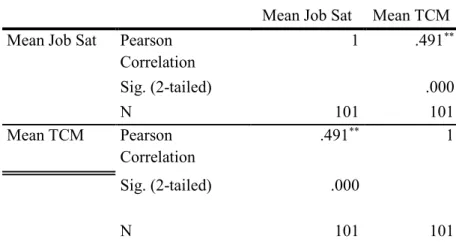
Table 1. Tests of Normality………...81 Table 2. Pearson Correlation Coefficient………..87
vi
List of Figures
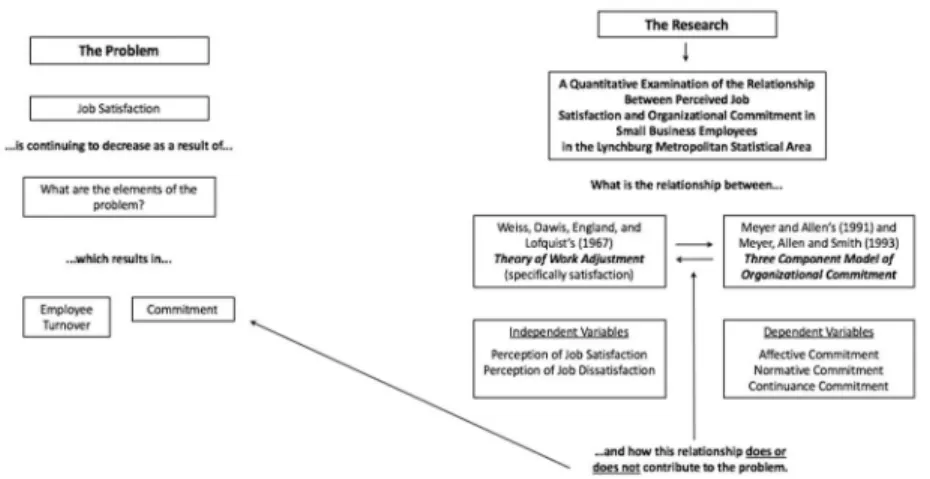
Figure 1.Theoretical/Conceptual Framework Map………11
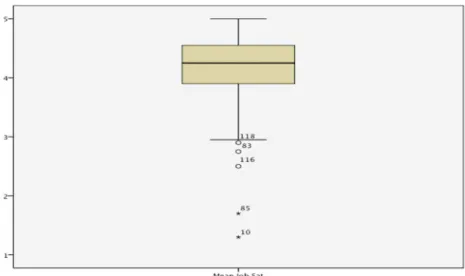
Figure 2. Box plot Job Satisfaction………....82
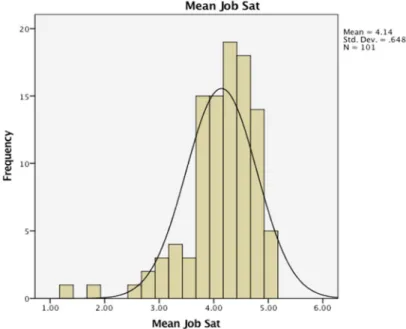
Figure 3. Detrended Q-Q Plot Job Satisfaction………...83
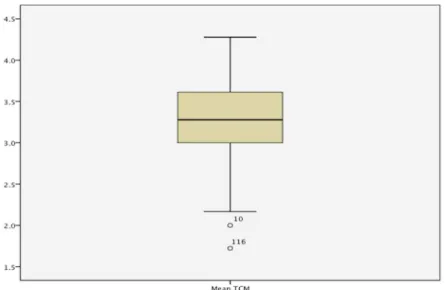
Figure 4. Box plot Organizational Commitment………..83
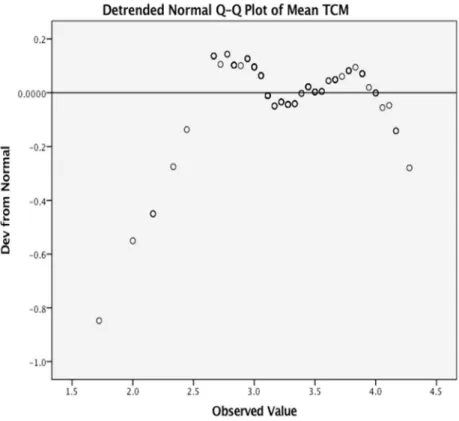
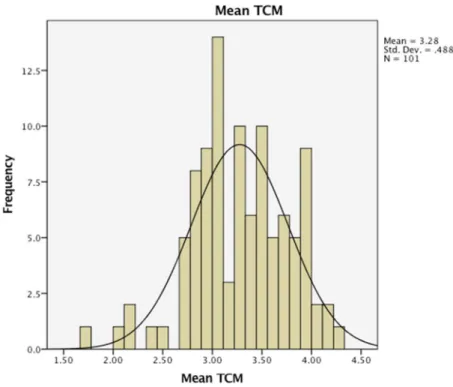
Figure 5. Detrended Q-Q Plot Organizational Commitment………..84
Figure 6. Histogram of Job Satisfaction………85
Section 1: Foundation of the Study
A wealth of literature exists that suggests that motivational constructs, such as job satisfaction and organizational commitment, are precursors to turnover and other key indicators used to assess the overall well-being of an organization’s human capital and position in the market (Grant, 2008; Springer, 2011). However, the strength of the association and interaction between job satisfaction, commitment, and turnover remains unclear in small businesses where non-standard work models challenge the traditional employer-employee dynamic (Cappelli & Keller, 2013; Springer, 2011). The perception of employee job satisfaction and commitment is dynamic and variable, and also has a direct impact on employee productivity, turnover, and ultimately organizational sustainability. Engaged employees do not think of leaving the organization (Olowu, 2008).
Akinbobola (2011) claimed that when employees are not being treated well, they develop a negative attitude towards the work, the employer, and co-workers that entertain thoughts of leaving. Job dissatisfaction has been associated with a decrease in individual and organizational performance and productivity. In turn, these pose a threat to the financial well-being and bottom-line of the company. Research on the relationship between motivational constructs and performance and productivity measures has focused primarily on large private and public businesses, healthcare organizations, and
government entities (Zhang et al., 2009). Understanding how these constructs impact small businesses is critical given the disproportionate effects associated with the cost of
turnover and sub-optimal human resource management. Attempting to understand the relationship between employees’ perceptions of job satisfaction and commitment may help provide the key to the retention of a stable and productive workforce that can maximize internal resources for a sustainable future. This research may help small business leaders create an action plan to proactively address and enhance employee job satisfaction and organizational commitment (Salleh, Nair, & Harwin, 2012). It is
necessary to understand the background of the problem in order to have greater clarity on the problem itself. The following section will discuss turnover in small businesses in the Lynchburg Metropolitan Statistical Area (Lynchburg MSA).
Background of the Problem
According to the Bureau of Labor Statistics (BLS) (2013), the number of small firms in the United States of America (U.S.A.) was 28,443,856 of which 35% employed between 1-99 employees. Turnover accounted for 2.2% (199,106,992) of small
businesses in the U.S.A. The amount of employee turnover in small firms accounted for an average of 2.2% (2,684,000) in the Southern Region. The Lynchburg MSA has a population by size of small businesses of 6,719 and an average turnover that exceeds the national and regional average at 8.3% or 557 (Virginia Employment Commission, 2013). Much of the small business employee turnover in the Lynchburg MSA may be associated with the relocation of companies to larger cities or states that are considered to be more favorable to small business needs (Gentry, 2009). The economic impact of employee turnover in small businesses is a significant problem in the Lynchburg MSA. Salleh,
Nair, and Harwin (2012) stated that job satisfaction and management commitment in the small business sector is far below those of other industries.
Given its importance to performance and productivity, job satisfaction and
organizational commitment have continued to be two of the most researched constructs in the management literature since the 1960s (Fisher, 2003). According to Locke (1976) job satisfaction is defined as a pleasurable or positive emotional state resulting from the appraisal of one’s job or job experience(s). Weiss, Dawis, England, and Lofquist (1967) proposed that an employee is motivated to find and maintain a correspondent that will meet individual needs and expectations of the working environment. Research conducted by Roos, Watson, Wensing, and Peters-Klimm (2014) lent support for the argument that job satisfaction is a strong factor associated with employee retention. Thus, the success of an organization is highly dependent upon the identification of internal (intrinsic) and external (extrinsic) factors that influence perceived levels of employee job satisfaction that may impact the long-term engagement and commitment of its human capital
(Bateman & Strassett, 1984; Chen, 2011; Herzberg et al., 2010; Johnson, Groff, & Taing, 2008; Yucel, 2012). Recognizing the elements of both intrinsic and extrinsic job
satisfaction is important for organizational success and in proactively addressing employee retention (Hausknecht, Hiller, & Vance, 2008). Newman and Sheikh (2012) described the impact that extrinsic and intrinsic rewards may have on the way in which small business employees develop a greater employee commitment and thus a higher retention rate. The greater the positive relationship between the employee level of
perceived job satisfaction and the organization, the more likely the employee will be committed to the organization.
Wang & Hwang (2012) speculated that an organization should be committed to its employees and employees should be committed to the organization. Seminal thinkers (Meyer & Allen, 1991; Meyer, Allen, & Smith, 1993) developed the Three-Component Model (TCM) of organizational commitment that continues to prove a popular topic in the management literature. Contemporary research (Akhtar, 2014) defined organizational commitment as an employee’s evaluative assessment of the employing organization. The TCM segments commitment into three distinctive categories: affective, normative, and continuance commitment.
According to the TCM, an employee’s psychological condition either reinforces or diminishes the perceived link with an employing organization (Meyer & Allen, 1997; Taing, 2011). Affective commitment occurs when an employee fosters an emotional connection with the organization. The emotional connection creates an association that ties the employee to the organization and influences the employee‘s resolution to either remain or to exit. Normative commitment is described as a compulsory emotion that an employee may encounter that directs the employee’s feelings to be that of an obligatory nature to stay with the present employer (Taing, 2011). Finally, continuance
commitment narrates a story of the employee that is mindful of the sacrifices linked with abandoning the current place of employment or the industry.
The influences of job satisfaction and organizational commitment have become a major concern for organizations as employee turnover can have long-term implications
(Fisher, 2003). Employees who experience reduced levels of job satisfaction may simultaneously experience increased levels of job dissatisfaction that contribute to unwanted or dysfunctional organizational turnover. Organizational turnover adversely affects both long-term knowledge management and organizational sustainability. In addition, turnover has the potential to affect not only the individual small business but also the available labor supply as a whole (Wessels, 2001). This is further clarified in the problem statement that emphasizes how small businesses in Lynchburg MSA are
challenged by above average turnover rates.
Problem Statement
The problem to be addressed is that there is a gap in the existing literature on the relationship between job satisfaction and organizational commitment in small businesses (Villanueva, 2014). The research will add to the literature that has thus far produced differing results. Some researchers suggest only a moderate relationship exists between job satisfaction and performance measures (Diestel, Wegge, & Schmidt, 2014) whereas others claim a strong statistically significant relationship exists between the variables (Mafini & Dlodlo, 2014; Miller, Erikson, & Yust, 2001; Moynihan & Pandey, 2007). Still other researchers have suggested a less controversial relationship exists between motivation and job performance, with the underlying assumption that motivation
influences job satisfaction and performance measures such as intent to leave and turnover (Fisher, 2003; Grant, 2008; Halbesleben & Bowler, 2007).
Given the aforementioned average turnover rate in small businesses in the
human resource management processes aimed at enhancing job satisfaction and retention to remain competitive in the region. The results may aid small businesses in better understanding the factors that increase job satisfaction and provide a working environment that will prevent the development of job dissatisfaction, apathy, and frustration (Herzberg et al., 2010). By understanding the relationship between both intrinsic and extrinsic factors’ contribution to job satisfaction and organizational
commitment, small business owners and managers may proactively develop strategies to retain valued employees.
Purpose Statement
The purpose of this non-experimental quantitative research was to examine the relationship between job satisfaction and organizational commitment in small business employees in the Lynchburg MSA. The independent variable was job satisfaction and the dependent variable was organizational commitment. Job satisfaction was measured by the MSQ questionnaire (Weiss et al., 1968) and organizational commitment was measured by the TCM questionnaire (Meyer & Allen, 1991; Powell & Meyer, 2004). Job satisfaction was generally defined as an employee’s harmonious relationship with the working environment. Organizational commitment was defined as the total sum of an employee’s affective, normative, and continuance commitment scores.
Small business employees were defined as those employed by an employer retaining 99 or fewer employees. Population contact information consisting of phone numbers, email addresses, and mailing addresses was obtained by permission from each owner of the small business organization surveyed, registrants, and attendees of the
Lynchburg Regional Business Alliance expo, and the Lynchburg Regional Business Alliance membership database. These methods of collection are important and are further explained in the description of the nature of the study.
Nature of the Study
The nature of the research was a quantitative, non-experimental, correlational method. The goal of correlational research is to discover relationships and provides the ability to measure the degree in which two or more variables relate without inferring cause and effect (Becker, 2015). Non experimental research is ideally suited for identifying cause and effect and associative relationships.
According to Barczak (2015) quantitative research is more effective in
establishing a correlation between multiple variables than qualitative research because of the precise measurements and logical structure that occurs in testing the hypothesis. The research design is consistent with the research question that asked what is the relationship between two variables of an interval level of measurement. Whereas a qualitative design would capture greater contextual detail, a cross-sectional correlational design is
appropriate where the population and sample size is large. According to Pathak, Jena, and Kalra (2013) qualitative research is utilized for non-numerical data to comprehend individual opinions, experiences, attitudes, behavior, and relations. Creswell (2010) explained that quantitative research allows for the quantification of trends or attitudes of a population. In addition, Creswell (2010) explained that non-experimental research methods often incorporate the use of survey research. Wisdom (2012) defined mixed
method research as one that integrates both qualitative and quantitative data within a single study.
A mixed methods study was not chosen for this research due to limited resources such as time and the alignment to the research questions. The topic was better suited to a design for a relatively large population and sample. A descriptive design would not be appropriate to this research as it would report only a percentage summary on a single variable whereas a quasi-experimental or experimental quantitative design, would seek to infer or imply a predictive cause and effect without considering the relationship between dependent and independent variables. The research question measured the strength of any relationship or non-statistically significant relationship between the independent and dependent variables.
Research Question
R1. Is there a relationship between perceived job satisfaction and organizational commitment in small business employees in the Lynchburg MSA?
Hypothesis
The corresponding null and alternative hypothesis for this research was:
H01: There is no statistically significant relationship between perceived job
satisfaction and organizational commitment in small business employees in the Lynchburg MSA.
HA1: There is a statistically significant relationship between perceived job
satisfaction and organizational commitment in small business employees in the Lynchburg MSA.
The theoretical framework introduces and describes the theory that explains why the research problem exists.
Theoretical Framework
The modernist perspective takes an objective or positivist view in the creation of knowledge and may lend itself to quantitative research seeking to improve efficiencies using “easy-to-measure” control variables based on the five senses (Creswell, 2010; Crotty, 1998). The nature of the research’s design was quantitative and correlational. The research examined the relationship between job satisfaction and organizational
commitment based primarily upon the theories espoused by Weiss, Dawis, England, and Lofquist’s (1967) Theory of Work Adjustment, Meyer and Allen (1991) and Meyer, Allen, and Smith‘s (1993) Three Component Model of Organizational Commitment (TCM). The independent variable of job satisfaction was generally defined as
employees’ harmonious relationship with their environment. The dependent variable(s) was generally defined as the total sum of employees’ Affective, Normative and
Continuance Commitment towards the employing small business in the Lynchburg MSA. Weiss, Dawis, England, and Lofquist’s (1967) Theory of Work Adjustment’s main theme is that of the employee and the work environment. The Theory of Work Adjustment was created with two purposes in mind: the advancement of instruments for measuring the work adjustment aptitude of candidates, and the assessment of work adjustment results. The basic assumption is that an individual will seek to achieve and maintain correspondence with his or her environment. Satisfaction, or correspondence
with one’s job, is achieved when the individual is bringing certain skills to the environment while the environment is providing either extrinsic or intrinsic rewards.
Job satisfaction is achieved when there is balance and harmony among the contributions of the individual and the work environment. There are three levels or conditions that describe the relationship between the individual and the work
environment: pleasant, fitting, or complementary. As correspondence between the two entities increases the probability of retention also increases. Thus, more satisfied
employees are less likely to seek new employment remaining committed to their current employer. For this reason, examining the factors associated with job satisfaction and commitment was both practical and valuable.
The Three Component Model of Organizational Commitment (TCM) suggests that an employee experiences job commitment in three ways (Meyer & Allen, 1991; Meyer, Allen, & Smith,1993). The mindset of an employee is revealed through affective, normative, and continuance commitment. Affective commitment reflects an emotional attachment to the employer. Normative commitment relates to commitment experienced as an obligatory manner or sense of duty. Continuance commitment reflects the outcome of a perceived cost and benefit analysis that can be both economic and social in nature.
The research of Weiss, Dawis, England, and Lofquist (1967) suggested that the greater the equilibrium and harmony among the contributions of the individual and the work environment, the greater the level of job satisfaction. Yee, Yeung, and Cheng (2010) supported this position and argued that the greater an employee’s conditions are
met through intrinsic or extrinsic measures, the greater the degree of job satisfaction. Further, Freund (2005) explained that the relationship between job factors that influence various types of employee commitment and the relationship that exists between the employee and the organization is an area warranting future research. Each term defined relates directly to a significant concept in the research and must be defined for clarity of the reader.
Figure 1. Conceptual framework
Definition of Terms
The following terms are defined relative to their use in this research:
Affective Commitment (AC): Affective commitment is defined as an employee’s emotional attachment, involvement or identification with a particular organization (Meyer & Allen, 1997).
Continuance Commitment (CC): Continuance commitment is defined as an employee’s awareness of the costs associated with leaving an organization (Meyer & Allen, 1997).
Extrinsic Motivation (EM): Extrinsic motivation is defined as the motivation to perform a behavior to earn a reward or avoid punishment (Herzberg, 2003).
Intrinsic Motivation (IM): Intrinsic motivation is defined as behaviors that are driven by internal rewards (Herzberg, 2003).
Job Dissatisfaction: Job satisfactionis defined as an employee’s emotional state that is displayed when job expectations are not met (Mattarelli & Tagliaventi, 2015).
Lynchburg MSA: Lynchburg MSA is the defined by the combined geographical areas of Amherst county, Appomattox County, Bedford County, Campbell County, and Lynchburg City (Virginia Community Profile, 2013).
Normative Commitment (NC): Normative commitment is defined as an
employee’s sense of obligation to his or her employer or organization (Meyer & Allen, 1997).
Retention: Retentionis defined as the measures taken to encourage employees to remain in an organization for a maximum period (James & Mathew, 2012).
Satisfaction: Satisfaction is defined as an effective response to one’s job, resultant from the official assessment of definite conclusions with those that are desired (Pagan-Rodriguez, 2015).
Small Business: A small business is defined as one that employs 99 or fewer employees, taking into account the number employed by affiliates. A small business is
defined further as one that is eligible by virtue of the number of its employees to receive Small Business Administration (Small Business Administration, 2015) and other federal program funding.
Turnover: Turnover is defined as an employee’s permanent advancement outside the boundary of the organization, incorporating intention to search for an alternative employer, quit the existing employer, and entertaining thoughts of the intension to quit (Rahman & Nas, 2013).
The assumptions, limitations, and delimitations clarify, instruct, and explain the research, participants, and demographics involved in the research. The assumptions associated with this research are factors that potentially influence the research, are specific to this research, but are generic to correlational research in a general sense.
Assumptions, Limitations, and Delimitations Assumptions
Methodological
The research assumed that participants understood the survey questions and answered honestly. Building on the seminal work of Durkheim (1897), who argued that causality is independent of consciousness, Donaldson (2005) suggested functionalism provides the justification for decision-makers who adopt strategies and structures for optimal performance. It was assumed that an identifiable relationship existed between small business employees’ self-reported perceptions of job satisfaction and organizational commitment.
According to Garson (2012), violations of data level assumptions frequently occur in the social sciences and increase the real chance of falsely rejecting the null hypothesis, or making a Type 1 error. This violation is a common practice when using Likert scale data in surveys, that technically require interval-level data, and causes the real standard error to be greater than its computed value (Garson, 2012). The debate surrounding levels of measurement is relevant in the present context since this research supported the use a cross-sectional Likert-type survey instrument. It is also assumed that survey participants understood the survey questions and answer honestly.
Conceptual
Job satisfaction has been measured through various components and predicted by an employee’s expectations and the degree of importance placed upon the atmosphere of the workplace. Thus, any identified relationship may not be associated with perception, but rather with expectations. In the workplace, the risks associated with expectations are easily mitigated through clear expectations and personalized management or human resource management oversight but may not be captured by a survey taken at a snapshot in time. If the risks associated with expectations are not true, then a greater amount of turnover is possible within the organization. Expectations are also manageable within a confine of communication and coaching. This research also assumed that a happy employee is a productive employee who will be less likely to leave an organization (Hoxsey, 2010).
Those employees who are motivated by intrinsic factors are often surprised by the level of support they receive in the areas of productivity and job satisfaction (Becchetti,
Castriota, & Tortia, 2013). A greater amount of support is in favor of extrinsic
motivations to support this idea. Happiness is a temporal feeling that manifests itself in differing situations. Quantifiable extrinsic and intrinsic factors that are supported by data collection can determine the level of satisfaction among employees at a snapshot in time.
Limitations
The literature focused on job satisfaction and organizational commitment in small businesses was relatively scarce and the number of newly published studies examining job satisfaction in general has diminished within the last five years. The willingness of the sample population to be candid in their responses as a result of this research was one factor. Each employee must consider the data collected to be private information and the responses could be weakened as a result. The Minnesota Satisfaction Questionnaire must be implemented in the correct manner as demonstrated by the survey to avoid bias or distortion of the data. This questionnaire must be administered and defined correctly to ensure the integrity and validity of the data.
Limitations of using a cross-sectional survey questionnaire approach are that it does not capture any change in perceived levels of job satisfaction or commitment even though they develop over time. Neither does it allow participants to provide the richer contextual information that a qualitative, case research approach, would afford for a greater understanding of the underlying issues that influence levels of job satisfaction. As with all correlational research, the findings measure the strength of association between the variables without inferring cause and effect.
Delimitations
The delimitations refer to the bounds or scope of the research. The boundaries described in the research will be limited to employees of small businesses in the
Lynchburg Metropolitan Statistical Area (MSA). Each of these businesses have reported earnings of less than five million and each has 99 or fewer employees, including those employed by affiliate companies. The perception of 131 employees in small businesses in the Lynchburg MSA regarding job satisfaction and organizational commitment was examined. Understanding the relationship between perceived levels of job satisfaction and organizational commitment, as well as addressing a gap in the literature on motivational constructs in small businesses, was important to the overall research and target population.
Significance of the Research Reduction of Gaps
The significance of this research may be revealed through an examination of the existing literature concerned with job satisfaction and organizational commitment. Weiss, Dawis, England, and Lofquist’s (1967) Theory of Work Adjustment
conceptualized the model of work adjustment to explain how job fit and workplace harmony created job satisfaction. The measure of job satisfaction was determined using the Minnesota Satisfaction Questionnaire (MSQ) and discussed in relation to
organizational commitment in the workplace.
An employee and the environment became the focus of correspondence. The theory stated that each employee innately held specific skills and conveyed these skills
into the workplace. The work environment afforded intrinsic and extrinsic rewards to the employee. It is when the employee’s skills and the work environment are balanced that each is congruent. Job satisfaction is the confirmation that the employee is fulfilling the requirements of the work environment and the work environment has been fulfilling the requirements of the employee. According to Griffin (2010) job satisfaction is the level of enjoyment an employee receives from their work environment. Job satisfaction can not only create enjoyment of the work environment, but also a greater commitment to the organization. According to contemporary research (Balassiano & Salles, 2012; Leite, Rodrigues, & de Albuquerque, 2014; Rosa & Brito, 2010) job satisfaction is an
antecedent of organizational commitment, which meditates its relationships with other variables outside of the work environment.
Meyer and Allen (1991) conceived of the three-component model of organizational commitment and established a theory that stated organizational
commitment was experienced by employees within the organization. The model also sought to explain the reasoning behind an employee’s departure from an organization despite a significant length of tenure. Meyer and Allen’s theory was based upon the measurement of affective commitment, normative commitment, and continuance commitment. This theory claimed the three components do not share an equally strong relationship with employee turnover with affective commitment boasting the strongest association. Yang (2012) claimed employee satisfaction to be at the root of intentions to leave and organizational turnover. According to Mishra, Mishra, and Grubb (2015), affective commitment and employee turnover are statistically linked to small business
employees and managers. Kuo (2014) also claimed that employee satisfaction has become an important indicator of a healthy work environment.
This research may help fill gaps in academic understanding and help promote effective leadership practices within small business by examining whether a relationship exists between job satisfaction and organizational commitment in small business
employees in the Lynchburg MSA. The results may help small business proprietors and managers acquire a greater awareness of how these motivational constructs may reduce unwanted turnover. Another important attribute of this research was that it added to the body of knowledge by providing an analysis of the degree to which job satisfaction is related to the underlying factors of the combined affective, continuance, and normative commitment. By disseminating the collective results and interpretation of the findings of this research, the research may contribute to improve job satisfaction and organizational commitment in small business employees in the Lynchburg MSA.
According to Irshad and Naz (2011) there is a positive relationship between job satisfaction and organizational commitment. Robbins and Judge (2015) also found evidence to suggest that job satisfaction precedes organizational commitment. These authors recommended further research on the relationship between job satisfaction and organizational commitment to provide managers with the information to help shape policies and practices that may increase retention and reduce turnover in small business organizations. Understanding the Biblical integration of an employee’s job satisfaction and organizational commitment is vital to incorporating God’s view of faith into the workplace.
Implications for Biblical Integration
According to Van Duzer (2010), the Christian in business enables individuals to express aspects of a God-given identity that provides the opportunity to participate in meaningful and creative work. The Bible explains that work and job commitment are inspirational and vital components of God’s future strategy of character improvement for every human being. The Bible has many references in relation to the experience of a meaningful job. Ecclesiastes 3:13 states, “That each person finds pleasure in his work as this is a gift from God.” The purpose of work is to bring job satisfaction to the individual and honor to the Lord. Colossians 3:23 states, “Whatever you do, work heartily, as for the Lord and not for men.” “Work itself is then considered a divine vocation” (Hardy, 2001, p. 47). If an individual is working for God in his or her divine vocation, a greater retention should be realized and an attitude of enthusiasm and cheer in the workplace should be present. It is through an individual’s vocation that his or her service is recognized. Through organizational commitment and wholehearted devotion to the organization and ultimately to God as a form of worship, an individual can express his or her purpose for work. Proverbs 16:3, “Commit thy works unto the Lord, and thy
thoughts shall be established.” Service to the organization, and to the co-workers employed in the organization, should be carried out with honor and with no malice to those who are not equal in stature. Proverbs 27:18, “If you care for your orchard, you’ll enjoy its fruit; if you honor your boss, you’ll be honored.
Understanding how human resource management relates to employee satisfaction and job commitment creates a link between relationships and retention. The relationship
between employee satisfaction and job commitment is essential to building an atmosphere that is conducive to reducing turnover and forming a unique bond that signifies loyalty and acknowledges commitment on the part of each employee.
Relationship to Field of Research
Effective human resource management within the organization is a vital link in ensuring and/or influencing employee job satisfaction and organizational commitment within an organization. The human resource management cognate is represented in this research through the topic and measurement of job satisfaction and the potential
relationship to organizational commitment. Understanding the unique needs and wants of each employee has the potential to impact overall employee satisfaction and exhibited commitment, thereby reducing costly unwanted turnover. The following section will present a review of both the seminal and current literature on job satisfaction and organizational commitment.
A Review of the Professional and Academic Literature
The literature review discussed, evaluated, and synthesized the critical seminal and contemporary literature that supports and challenges the theoretical framework of the research. The guiding framework underpinning this research was centered on the small business organization and was based on Weiss, Dawis, England, and Lofquist’s (1968) Theory of Work Adjustment and Meyer, Allen, and Smith’s (1993) Three Component Model of Organizational Commitment. The first section of the review introduced the topic of job satisfaction as the independent variable and organizational commitment as the dependent variable. These topics are important as they relate to the overall research.
The second section discussed small business and small business employees as a precursor to the problem of below average levels of job satisfaction, through to the motivational constructs and application of factors associated with theories of organizational
commitment and job satisfaction. The discussion also introduced possible alternative models that influence turnover including an individual’s compatibility with an employing organization’s culture
Organizational commitment is the second broad topic addressed. This topic was explored from a historical perspective incorporating both classical and current literature as a basis for discovery. Research involving affective, normative, and continuance commitment was also delineated. The fourth section of the review served to link each topic highlighting its potential relationship with job satisfaction, as proposed by England, Dawis, Lofquist, and Weiss’ (1968) theory of work adjustment, and how it impacts organizational commitment, as proposed by Meyer and Allen (1991) and revised by Meyer, Allen, and Smith (1993).
The literature review incorporated discussion surrounding the significance of England, Dawis, Lofquist, and Weiss’s (1968) Theory of Work Adjustment and Meyer and Allen’s (1991) TCM theory of organizational commitment. Contemporary research and the survey instruments utilized in measuring the two motivational constructs were included in the review during the process of evaluation, justification, and rationale for conducting this non-experimental quantitative research.
The independent variable of job satisfaction and the dependent variable of organizational commitment using England, Dawis, Loquist, and Weiss’s (1968) Theory
of Work Adjustment and Meyer, Allen, and Smith’s (1993) Three Component Model of Organizational Commitment are the basis upon which the research was based upon. Each variable was discussed as it relates to the research.
Job Satisfaction as an Independent Variable
Herzberg (1966) is one of the leading researchers on job satisfaction in the seminal literature. Herzberg’s Two-Factor Theory (1959) of job satisfaction was developed at a time when industrial action was diminishing productivity in factories in the USA and so the research was born out of a need to determine those factors in an employee’s work environment that caused job satisfaction or dissatisfaction. From the research identifying and relating job satisfaction and dissatisfaction as two distinct factors, the development of the motivation-hygiene theory was birthed. It was determined by the motivation-hygiene theory that factors causing satisfaction are different from those causing dissatisfaction. Notwithstanding, Locke’s (1976) Range of Affect theory is based upon the premise that satisfaction is determined by a discrepancy between what an employee wants and perceives to have in a job. Weiss, Dawis, England, and Lofquist’s (1968) Theory of Work Adjustment discusses the work personality and the work environment as an explanation for job satisfaction, or dissatisfaction, and its
relation with an employee’s tenure. These authors’ findings created an avenue upon which future studies could be built. Each theory discussed relates to the dependent variable of organizational commitment and its relationship with the independent variable, job satisfaction.
Meyer and Allen’s (1991) three-component model of commitment is the leading theory of organizational commitment that relates it to employee satisfaction within the organization. This model validates the recognition of an employee’s devotion and therefore personal commitment to an organization. The three components that comprise this model are founded from a psychological state and contain the following elements: affective, continuance, and normative commitment.
Etzioni’s (1961) model of commitment specifies three sources of organizational control and corresponding forms of employee commitment within the organization. Each form of commitment develops in response to the form of control exercised over the individual employee. Etzioni’s position asserted that the opposite of moral involvement is zero moral involvement rather than alienation, the opposite of alienated involvement is zero alienation rather moral involvement.
According to Penley and Gould (1988) argued in favor of two predominant views of organizational commitment: affective and instrumental. In the instrumental view of organizational commitment an employee replaces personal involvement for
compensation. This solidifies a commitment to the organization. Therefore, this theory states that extrinsic reward is more important than any other factor relating to
commitment in the workplace.
Each of these theories relating to individual perceptions of organizational
commitment support its positive role and relationship with individual perceptions of job satisfaction; whereas commitment on behalf of the organization solidified and increased overall performance, job satisfaction, enhanced levels of retention, and decreased
turnover. The linkage between organizational commitment and job satisfaction is especially important in that of a small business since turnover may have a
disproportionately high impact on productivity compared to large businesses and because they represent the majority of growth with the United States of America (USA) economy.
Small Business
A small business is defined as an entity; whether sole-proprietor, limited liability company, partnership, or corporation that employs fewer than 100 individuals (Heneman & Berkley, 1999; Small Business Administration, 2015). Small businesses are the fastest growing segment of economic development in the USA. Competition in both domestic and international markets presents a unique opportunity for small businesses to prove themselves through niche markets and segments. Small businesses in the US are growing in number every year and, in order to remain sustainable, each must maintain an internal network of support and resources. The role of a small business in the current economy requires that a minimum level of productivity, profitability, and an engaged workforce be maintained.
According to Headd (2010) small businesses account for nearly one-half of all private-sector jobs and historically accounted for nearly 65 percent of net job creation. Figures reported by the Small Business Administration (2015), claim that small
businesses represent 99.7% of all employer firms. In 1995, the small business segment accounted for 64% of all growth in the U.S.; whereas in 2015 small businesses
represented 78% of all economic growth. Individuals come to the US from across the globe to realize dreams of owning a business and through these efforts, the economic
ingenuity of America is strengthened (Watson, 2006). From the local economies of rural America to the bustling urban centers of larger cities everyone benefits from the success of small businesses (Rogoff, 2004).
Small Business Employees
The small business sector is the cornerstone of the U.S. economy and the majority of human capitals are contributors to the economic engine. A small business serves as a catalyst to fulfill the economic needs of the nation. Jones (2010) proposed that the process by which small businesses change to meet the desires of Americans is a
requirement to increase their effectiveness. This effectiveness is based on many factors. U.S. Census (2015) claims that business owners are well-educated with as many as 50 percent holding a college degree. Conversely, a small business is often used as the starting point for those who are considered unemployable by larger corporations to gain experience or overcome other employment related obstacles. In a Monthly Labor Review, Lockard, and Wolf (2012) claimed that employees in small businesses are often considered less employable by larger corporations because of a relatively lower level of educational achievement and limited job experience.
According to Greenidge (2012) small businesses differ from larger businesses on a number of defining characteristics. Many hire employees on a part-time or half-time basis only and do not enjoy the same benefits associated with full-time employment. Generally small business owners have limited resources and are unable to afford to pay comparable wages relative to that of a large corporation. However, a smaller company may be more likely to permit an individual to voices concerns and engage in participative
decision making for the good of the company. The need to multi-task in a small business is essential as in many instances the business owner is responsible for multiple
responsibilities within the company.
Many small businesses lack the financial resources to compete with larger firms. According to Allen, Ericksen, and Collins (2013), many small businesses lack the
capacity for a dedicated human resource management department to develop recruitment and retention strategies for hiring and developing critical talent. Villanueva (2014) recommended that future studies should address the gap in the literature by examining retention issues in small businesses. Existing literature suggested that human capital policies and practices in small business are created by individuals for individuals and not for corporations.
According to Pajo, Coetzer, and Guenole (2010) managers seeking to foster organizational commitment among employees of small business must create a supportive atmosphere. Often times the atmosphere of a small business allows for more support as the environment is intimate. The individuals that are entrepreneurial and creative by their nature tend to migrate to employment in small businesses where each decision or idea is heard and frequently readily implemented with ease.
As noted previously, small businesses account for the majority of businesses in the U.S.A. therefore, the rationale for conducting this research is that the findings may be utilized by managers and non-managers alike to better understand the differences that occur in employee perceptions and levels of job satisfaction in the work environment. Understanding the relationship between perceptions of job satisfaction and organizational
commitment may help managers strategically impact the workplace environment. According to Da Silva, Hutcheson, and Wahl (2010), the better the job fit between the goals and objectives of the organization and the employee’s individual intrinsic goals the more committed the employee will be to the organization. Suma and Lesha (2013) stated that understanding how an employee becomes satisfied and committed to work supports a better job fit and fosters greater workplace performance. The linkage between job
satisfaction and organizational commitment will be discussed in the next section.
Job Satisfaction and Organizational Commitment
The relationship between employee job satisfaction and employee performance and productivity remains one of the most popular among scholars and practitioners alike (Edmans, 2012; Fisher, 2003; Gerstner & Day, 1997; Locke, 1976; Spector, 2005; Vandenberghe & Tremblay, 2008). Within the past five or so years, job satisfaction has been correlated with other constructs and models within the business administration and management scholarly literature including organizational commitment (Johnson, Groff & Taing, 2008), turnover (Chen, Thomas, Anderson, & Bliese, 2011; Jones, Havens, & Thompson, 2009; Nyberg & Ployhart, 2015), absenteeism (Angermeir, Dunford, Boss, Boss, & Miller, 2009), Person-Job Fit (Peng & Mayo, 2015), and culture (Ng, Sorensen, & Yim, 2009; Zhang & Zheng, 2009). Frequently, scholars examine how the relationship between job satisfaction and organizational commitment is contingent upon leadership and/or motivation and retention (Edmans, 2012; McAlearney, 2006; Pichler, 2012). Both job satisfaction and organizational commitment are multi-dimensional in nature and measured at the individual, team, and organizational unit levels in relation to performance
and productivity (Brimeyer, Perruci, & Wadsworth, 2010; Latham, 2004; Dong, Mitchell, Lee, Holtom, & Hinkin, 2012).
Traditional Theories of Employee Job Satisfaction
Scholars continue to agree with Locke’s (1976) definition that job satisfaction is an “emotional state resulting from an appraisal of one’s job or job experiences” (p. 1300). Locke’s conception has endured the test of time for over 40 years during which time a wealth of research, of various perspectives and utilizing multiple methodologies, has cited Locke’s seminal thinking and drawn various conclusions building upon the premise that job satisfaction is an emotional or attitudinal construct. Findings from the early research were limited in their reliability and external validity given how studies
frequently utilized a cross-sectional survey methodology that failed to capture how it is prone to temporal changes and dynamic in nature (Chen, Ployhart, Thomas, Anderson, & Bliese, 2011; Suddaby, 2010).
The theoretical framework of a number of enduring theories and applied research examining job satisfaction and motivational behavior is developed from the classical concepts of basic needs (Mayer et al., 1992; Meyer et al., 1993; Spector, 2005). Whilst they are frequently referenced synonymously (Furnham, Eracleous, &
Chamorro-Premuzic, 2009), motivation has been defined as “an internal state giving rise to a desire or pressure to act” (Westwood, 1992, p. 288), whereas job satisfaction has been described as the extent to which people are satisfied with their work (Vroom, 1995; Warr, 2002).
The following review discussed pre and early foundational thinking on theories of work-based motivation that continue to form the basis for contemporary research, and on
which evidence-based practices are developed (Rousseau, 2006). This review also firmly placed the research’s findings within the field of motivation as it investigated the seminal and contemporary research on intrinsic and extrinsic factors, and their proclaimed
relationship with turnover.
Traditional Theories of Motivation
Bassett-Jones and Lloyd (2005) summarized F. W. Taylor’s fundamental views adopted by the scientific school of management that considered workers to be motivated by money and other tangible external rewards. Management studies were designed solely to identify and promote greater efficiencies and took little account of the internal state of the worker that reflected self-esteem, a sense of accomplishment, and satisfaction
(Edmans, 2012). Later, Henry Fayol promoted a school of thought that considered worker fatigue and wellbeing as critical determinants in sustained efficiencies (Hindle, 2002). Designing metrics to measure the cost of reduced efficiency due to worker dissatisfaction did not enter the management school of thought until Elton Mayo’s famous Hawthorne Studies that found an inexplicable increase in worker productivity that the research team attributed to an intangible motivation to enhance performance when aware a worker is being observed (Rowe & Sherlock, 2005). This phenomenon has since been widely known as the Hawthorne Effect (Caillier, 2012; Riketta, 2002).
This research adopted the view that the concept of work-related motivation encompasses the external (extrinsic) and internal (intrinsic) factors that determine an employee’s “direction”, “intensity”, and “duration” of effort in completing a job or task (Latham, 2004, p 388). The following section presented some of the content theories of
motivation of which Herzberg et al.’s (1959) Hygiene-Motivation Theory of Job
Satisfaction is credited with recognizing the social aspect of motivation in the workplace.
Intrinsic and Extrinsic Motivation
Motivation has been the subject of extensive research in the social and applied sciences with a range of definitions striving to capture what truly influences an individual to work towards a goal (Massenburg, Spurk, & Kauffeld, 2015). Scholars, practitioners, and clinicians agree that the rewards gleaned from work are far than a pecuniary
satisfaction (Lin, 2007). Dominant themes in the management and social science disciplines include needs theory, job characteristics theory, equity theory, goal-setting theory, social cognitive theory, organizational justice theory, and work adjustment
(Latham, 2004). Each theme shares a common goal in seeking to identify and understand the factors that motivate employees and to design or match working conditions that enhance feelings of satisfaction and minimize feelings of dissatisfaction and frustration (Caillier, 2012; Massenburg, Spurk, & Kauffeld, 2015).
An extensive review of the literature published during the years 1950 to 1955 provided the rationale for examining whether a relationship existed between an employee’s job attitudes and productivity (Herzberg, Mausner, Peterson, & Capwell, 1957; Herzberg, Mausner, & Snyderman, 2010). At the time, the USA was experiencing an unprecedented number of union disruptive actions that were threatening the overall productivity of organizations and the economic well-being of the Pittsburg area. Herzberg and his colleagues (1959) utilized a semi-structured survey approach and
invited more than 200 accountants and engineers self-reported perceptions of work experiences and job attitudes.
Herzberg et al. (1966) found that the workers reported enduring positive emotions and attitudes towards a job reflected internal (intrinsic factors) whereas ephemeral
positive emotions were experienced for particular achievement recognition. Importantly, a small number of factors evoked high-impact attitudes whereas, with the exception of salary, a large number of factors evoked low-impact attitudes that proved to be at the root of dissatisfaction (Bassett-Jones & Lloyd, 2005).
Herzberg et al. (1974) designed a novel model of motivation called the two or dual-factor theory of job satisfaction. The model is also known as the Motivation-Hygiene Theory that attributes positive attitudes to an intrinsic need or desire for
achievement, recognition, advancement, and greater responsibility. Job dissatisfaction on the other hand, is an expression of negative attitudes towards external, hygiene or
extrinsic, factors such as working conditions, peer relations, or salary. Notably, the lack of a significant relationship between the factors associated with job satisfaction and job dissatisfaction, raised doubts about the traditional belief that job satisfaction existed along a unilateral continuum of needs (Herzberg et al., 1974).
According to Herzberg and his colleagues (1974) perspective, internal factors may cause satisfaction while external factors do not cause job satisfaction but may cause dissatisfaction when these hygiene factors such as working considered fail to meet expectations. Accordingly, the opposite of job satisfaction is an absence of satisfaction and may exist independently of dissatisfaction (Bassett-Jones & Lloyd, 2005). This
position supports Deci and Ryan’s (2000; 2008) self-determination theory (SDT) that claimed that satisfaction is generated through the satisfaction of the need for recognition of and individual’s abilities, aptitudes, proficiency, relations with others, and
empowerment. It also suggests that changes in an evaluative assessment of a job factor may alter an employee’s self- perceived level of job satisfaction, which may then initiate a change in the intention to stay with or leave an organization (Chen et al., 2011;
Hausknecht et al., 2008; Yucel, 2012).
Alternative Dynamic Models
According to Chen et al. (2011) many theorists have largely overlooked the dynamic relationship of job satisfaction and turnover intentions. Instead four new and distinctive contributions exist in the contemporary research regarding these topics. These theories are: prospect theory, within-person spirals theory, sense-making theory, and conservation of resources theory. Chen’s theory (2011) merely expounds on existing research of the empirical questions surrounding job satisfaction and turnover intentions.
The prospect theory was initially created to clarify decision making under ambiguity. According to Kahneman and Tversky (1979) decision making in unreliable environments is fundamentally governed by whether decision makers structure decision choices as gains or losses. The decision to structure these decisions as such is due to the frame of reference or internal standards by which decisions are made. This theory also placed a greater emphasis on losses than gains, and thus avoid uncertain courses of action. According to Chen et al. (2011) one proposition of job satisfaction change is likely to influence change in turnover intentions. This is in reflection of the idea that
individuals have different frames of reference and subjectivism and may attach different meanings to the same job satisfaction at any given time. The theory of within-person spirals can elaborate and enhance the interpretation of the importance and purpose of job satisfaction change.
The theory of spirals involves a systematic and sustained change in a given occurrence over a period of time. Systematic change can either increase or decrease over time. If systematic job satisfaction decreases, then a downward spiral is present.
However, if systematic job satisfaction increases, then an upward spiral is present. According to Lindsley (1995) employees that believe in or experience a systematic decline in job satisfaction may come to expect this as normal occurrence and feel out of control in the situation. In comparison to those employees experiencing a systematic increase in job satisfaction may believe their experience will continue to improve. A similar theory of sense making compares and contrasts the employee’s work condition to develop an anticipated (either good or bad) theory.
Louis’s (1980) theory of sense making proposes that employees have an increased desire to understand inconsistent events at work that reflect change and distinction in the work experiences. This theory compares employees’ perceptions in their current and prior work conditions to elaborate on the understanding of why new or inconsistent conditions at work transpired. It is during the observation phase of this theory that expectations are developed. The development of expectations affects an employee‘s choices to remain at an organization.
Hobfoll’s (1989) theory of conservation of resource provides a perspective of objects, personal characteristics, conditions, or anything that is considered valuable to the employee to maintain critical resources. Employees that sense or experience an actual or possible loss of significant resources endeavor to defend what is in place, and search for new resources. Thus, changes in job satisfaction can be a source of stress because it is suggestive of incessant loss. The theory of conservation of resource and prospect theory have similar meanings in that declining concentrations of job satisfaction are prone to and influence turnover intentions.
Contrary to research that assumed that management can understand and, therefore, manipulate internal factors to increase perceived levels of employee job satisfaction, other studies have explored the degree to which external factors contributed to the relationship between satisfaction, performance, and productivity (Ilies, Wilson & Wagner, 2009). Hausknecht et al. (2008) concluded that, while controlling for possible external extraneous variables (such as unemployment rates), interactions between global measures of job satisfaction and work-unit level commitment over an extended period of time accounted for the observed differences in absence rates. However, such a design assumes little or no relationship between employee satisfaction and the intensity of employee-level continuance commitment, or the prevailing economic conditions.
Contemporary Studies Linking Individual Components To Job Satisfaction
Researchers have also found associations and interactions of varying strength between job satisfaction and the three types organizational commitment described in Meyer and Allen’s (2004) model. Since empirical studies have shown strong correlations
between the organizational commitment construct and employee performance and productivity, researchers have assumed that job satisfaction is a reliable performance metric (Angermeir, Dunford, Boss, Boss, Wayne, & Miller, 2009; Latham, 2004). Given how the cost of a loss in productivity is disproportionately high in small businesses where losses are less readily mitigated, research is required to explore isolated variables and more interactive elements of job satisfaction and organizational commitment at the individual and team unit levels (Hausknecht et al., 2008).
Contemporary research continues to offer explanations for the relationship between job satisfaction and organizational commitment. However, rather than treating affective, normative, and continuance commitment as acting independently within Meyer and Allen’s (2004) TCM, the focus of research has shifted towards measuring the
interactions within TCM, as well as between elements of other constructs, including job satisfaction, leadership, and culture (Johnson et al., 2008; Shaw 1990). For scholars, this makes the task of making direct observations and inferences about the relationship between employee job satisfaction and employee performance and productivity harder to identify.
Theories Of Organizational Commitment
Although the issue of causal direction may vary, numerous studies conducted in multiple industries, and nations, have found a significant relationship between job satisfaction, organizational commitment, and turnover (Lambert & Hogan, 2010; Rosati et al., 2009; Yucel, 2012). In addition, studies have consistently shown that employee intentions to leave are the most reliable predictor of real turnover as opposed to a
statement of intention to leave (O’Reilly, Chatman, & Caldwell, 1991; Vandenabeele, 2009).
The effects of either organizational commitment and/or job satisfaction have been studied to better understand how they may predict turnover and absenteeism. These studies of both turnover and absenteeism will also draw attention to many author’s works, but none have such an extensive amount of research as Porter (1974). Porter et al.’s (1974) seminal work on turnover provided a testable model highlighting the affective nature of job satisfaction as an antecedent of organizational commitment.
Porter’s theory argued that job satisfaction mediated turnover and that affective commitment needed time to develop (Meyer & Allen, 1988). Other researchers (Salancik & Peffer, 1978) contended that commitment enhances feelings of job satisfaction that, in turn, mediates intentions to leave during a logical inner evaluation of the job. These studies suggested that organizational commitment has only an indirect influence on turnover, as manifested through its contribution to job satisfaction, and that job
satisfaction is also the more critical predictor of the two constructs (Bateman & Strasser, 1984; Dossett & Suszko, 1990; Tett & Meyer, 1993).
A third view suggested that job satisfaction and organizational commitment are related but exert varying influence on an individual’s intentions to quit (Porter et al., 1974). This implies that the two constructs interact to influence an employee’s attitude toward the job, as well as feelings toward the employing organization, that result in an intention to leave or to stay, and or to engage in absence behaviors (Hausknecht et al., 2008; Tett & Meyer, 1993). Meyer and Allen (1991) proposed a three-component model
(TCM) of organizational commitment that is upheld in contemporary theoretical thinking and testing (Yucel, 2012).
According to the TCM, organizational commitment is a psychological state that strengthens an individual’s ties with an employing organization (Johnson, Groff, & Taing, 2008; Meyer & Allen, 1991). Affective commitment reflects an emotional bond, and a sense of identification that an individual perceives when seeking a sense of
belonging. Continuance commitment reflects an individual’s assessment of the opportunity costs associated with leaving an organization. Normative commitment reflects an individual’s willingness or perceived moral obligation to stay with an organization.
Tett and Meyer (1993) conducted research that measured how affective commitment developed over time as employees experience enhanced job satisfaction that, in turn, had an indirect impact of an individual’s intention to resign from an
organization. Although the authors claimed the research was restricted by its underlying assumption that the two motivational constructs and any mediating affects could be easily operationalized and measured, there has been widespread support for assuming that affective commitment included a strong belief, acceptance, or congruence with the mission, vision, and values of an organization. Further, Tett and Meyer claimed that an individual’s level of affective commitment was positively correlated with willingness to exert effort to benefit the company. Job satisfaction was assumed to be an effective response to an evaluation of the facets of a job. In support of the hypothesis, Tett and
Meyer (1993) concluded that although job satisfaction and affective commitment were moderately related, they acted independently upon decisions to quit an organization.
Contemporary Applied Research: Employee Job Satisfaction
According to Amoopour (2014), perceptions of job satisfaction are experienced when employees are happy and content with current work responsibilities. In the US small businesses continue to increase in recognizing the critical contribution of job satisfaction in maintaining a competitive edge. This significance grows every year. As small business is the fastest growing segment of economic opportunity, so is the
opportunity to employ a workforce of individuals that are satisfied and committed to assigned roles in the workplace.
According to Zhang (2015) job satisfaction is related to an employee’s attitude and can be examined through the internal view of an employee’s job. Hylton (2013) stated that turnover intent in small organizations (100 employees or fewer) was found to be increasingly related to an employee’s attitude and job satisfaction. An employee internally analyzes their workplace to determine if they are satisfied with their current role and atmosphere. Smith, Kendall, and Hulin (1969) stated that individuals who are employed in a small business are more likely to become dissatisfied with the overall atmosphere, work/life benefits, and job security than in a large to medium size firm. The dissatisfaction in a small business can be as a result of the inability to advance and the lack of resources offered to each employee. Davis (2004) held a different perspective by stating that workers in small businesses reported their work to have the highest