University of Central Florida University of Central Florida
STARS
STARS
Electronic Theses and Dissertations, 2004-20192013
Explicit Feedback Within Game-based Training: Examining The
Explicit Feedback Within Game-based Training: Examining The
Influence Of Source Modality Effects On Interaction
Influence Of Source Modality Effects On Interaction
Benjamin Goldberg University of Central Florida
Part of the Psychology Commons
Find similar works at: https://stars.library.ucf.edu/etd University of Central Florida Libraries http://library.ucf.edu
This Doctoral Dissertation (Open Access) is brought to you for free and open access by STARS. It has been accepted for inclusion in Electronic Theses and Dissertations, 2004-2019 by an authorized administrator of STARS. For more information, please contact [email protected].
STARS Citation STARS Citation
Goldberg, Benjamin, "Explicit Feedback Within Game-based Training: Examining The Influence Of Source Modality Effects On Interaction" (2013). Electronic Theses and Dissertations, 2004-2019. 2631.
EXPLICIT FEEDBACK WITHIN GAME-BASED TRAINING: EXAMINING
THE INFLUENCE OF SOURCE MODALITY EFFECTS ON INTERACTION
by
BENJAMIN S. GOLDBERG
B.A. University of Florida, 2005
M.S. University of Central Florida, 2010
A dissertation submitted in partial fulfillment of the requirements
for the degree of Doctor of Philosophy in Modeling and Simulation
in the College of Sciences
at the University of Central Florida
Orlando, Florida
Summer Term
2013
ii
iii
ABSTRACT
This research aims to enhance Simulation-Based Training (SBT) applications to support training events in the absence of live instruction. The overarching purpose is to explore available tools for integrating intelligent tutoring communications in game-based learning platforms and to examine theory-based techniques for delivering explicit feedback in such environments. The primary tool influencing the design of this research was the Generalized Intelligent Framework for Tutoring (GIFT), a modular domain-independent architecture that provides the tools and methods to author, deliver, and evaluate intelligent tutoring technologies within any training platform. Influenced by research surrounding Social Cognitive Theory and Cognitive Load Theory, the resulting experiment tested varying approaches for utilizing an Embodied
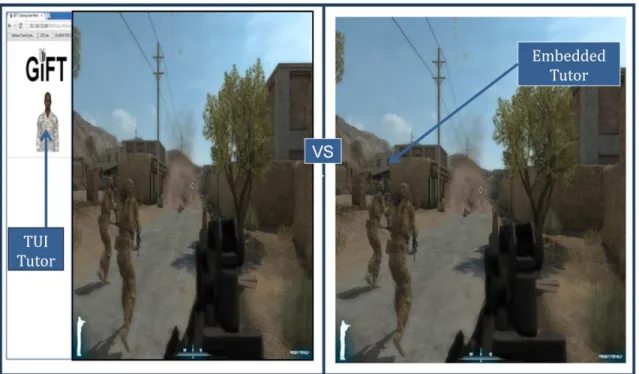
Pedagogical Agent (EPA) to function as a tutor during interaction in a game-based environment. Conditions were authored to assess the tradeoffs between embedding an EPA directly in a game, embedding an EPA in GIFT’s browser-based Tutor-User Interface (TUI), or using audio prompts alone with no social grounding.
The resulting data supports the application of using an EPA embedded in GIFT’s TUI to provide explicit feedback during a game-based learning event. Analyses revealed conditions with an EPA situated in the TUI to be as effective as embedding the agent directly in the game
environment. This inference is based on evidence showing reliable differences across conditions on the metrics of performance and self-reported mental demand and feedback usefulness items. This research provides source modality tradeoffs linked to tactics for relaying training relevant explicit information to a user based on real-time performance in a game.
iv
ACKNOWLEDGMENTS
I underestimated the difficulty in acknowledging all of those worthy of recognition, as there are too many to list. It’s been a wild, fun and extremely stressful ride over the past few years and there are a number of individuals to thank. I apologize if I miss you.
First and foremost, I would like to thank my advisor Dr. Jan Cannon-Bowers, my co-chair Dr. Clint Bowers, and the rest of my committee: Dr. Robert Sottilare, Dr. Rudy McDaniel, and Dr. Peter Kincaid. I couldn’t have asked for a better group of professionals to share this experience with. In particular, I would like to thank Jan and Clint for allowing me to tackle this mountain in my own way, and I appreciate the guidance and support throughout. Your expertise on game-based learning and experimental design was invaluable. Jan, you were instrumental right from the start. Your smarts and experience helped me through the difficult phases, and your coaching was just what I needed to get through the initial gauntlet of developing a topic. I’m thankful for the friendship we developed during this process.
I would also like to thank a number of individuals from the U.S. Army Research Laboratory (ARL) and the Simulation and Training Technology Center (STTC). For starters, I would like to thank my fellow LITE Labbers for being an awesome group of individuals to work with on a daily basis. Dr. Heather Holden, Janice Connor, and Dr. Anne Sinatra, thanks for all the help and for being a listening ear when I needed one. I owe a special thanks to Dr. Keith Brawner. You were as critical as ever when we traveled to West Point for data collection. I would also like to thank John Hart, Chris Metevier and Chuck Amburn for helping me stay motivated throughout the entire process. Last but not least, I have a large debt of gratitude to Dr. Robert Sottilare. Bob served an integral role in my development over the past three years, and I
v
would not have been able to accomplish this feat without his support and guidance. Thanks for being a dedicated leader and for mentoring me on both a professional and personal level.
Next, I would like to thank my family and friends for all the love and support during my stint as a graduate student; especially for putting up with me during the rough times. My father Stephen and my mother Elaine were integral in keeping me sane through this process. Thanks for keeping me grounded and for always helping me keep my eye on the prize. A special thanks goes to my brother Jordan and my sister in-law Shelley. You gave me a place to escape the insanity and you were the perfect target allowing me to rant and vent about all the pains and pleasures of working through a dissertation.
Lastly, I owe a big thank you to a few notable individuals from the United States Military Academy at West Point. Dr. Mike Matthews, you’re the man! I can’t express how great it’s been to work with you across multiple projects over the past few years. I consider myself lucky to have gotten to know you so well. You’re support and determination was essential to this study becoming a reality. I am indebted to you for your true professionalism and your gracious hospitality. I would also like to thank Colonel Jim Ness, Bess Georgoulas, and Dr. Elizabeth Velilla. You were essential pieces to my data collection, and your support and motivation for the research being conducted made the whole experience that much more enjoyable.
vi
TABLE OF CONTENTS
LIST OF FIGURES ... ix
LIST OF TABLES ... xi
LIST OF ACRONYMS ... xiii
CHAPTER 1: INTRODUCTION ... 1
Simulation-Based Training ... 2
Feedback in Simulation-Based Training ... 6
Intelligent Tutoring Systems ... 8
Statement of the Problem ... 9
Purpose of the Study ... 12
Research Questions ... 14
CHAPTER 2: BACKGROUND ... 15
Chapter Two Summary ... 15
Serious Games ... 16
Current State of Serious Games ... 19
Design Principles in Serious Games... 21
Components of Intelligent Tutoring Systems ... 25
Learner Modeling ... 28
Domain Modeling ... 29
Pedagogical Modeling ... 33
Communication Module ... 34
Domain Independency and Current Limitations ... 34
CHAPTER 3: LITERATURE REVIEW ... 38
Chapter 3 Summary ... 38
The Role of Feedback in Learning ... 38
Variability of Explicit Feedback ... 40
Research Surrounding Feedback Modality ... 48
Social Cognitive Theory ... 48
Cognitive Load Theory... 54
Summary ... 81
CHAPTER 4: METHODOLOGY ... 82
Participants ... 82
Experimental Testbed ... 83
Domain ... 83
Computer-Based Serious Game ... 85
vii
Experimental Tasks ... 90
Experimental Design ... 92
Equipment and Materials ... 95
Training Materials ... 95
Surveys ... 96
Dependent Measures ... 98
Performance Metrics ... 98
Workload and Mental Demand ... 100
Tutor (Source) Credibility ... 101
Flow and Presence ... 102
Experimental Hypotheses ... 103 Hypothesis 1 ... 103 Hypothesis 2 ... 105 Hypothesis 3 ... 106 Hypothesis 4 ... 108 Procedure ... 109
Pre-Test, Surveys, and Training ... 109
TC3Sim Exposure ... 110
Post-Test and Surveys ... 111
Participant Debrief... 112
CHAPTER 5: ANALYSIS AND RESULTS ... 113
Chapter 5 Summary and Data Analysis Plan ... 113
Hypothesis 1 ... 115 Prediction 1 ... 116 Prediction 2 ... 119 Prediction 3 ... 128 Hypothesis 2 ... 129 Prediction 1 and 2 ... 130 Prediction 3 ... 133 Prediction 4 ... 135 Hypothesis 3 ... 136 Prediction 1 ... 138 Prediction 2 ... 140 Prediction 3 ... 142 Prediction 4 ... 144 Hypothesis 4 ... 146 Prediction 1 ... 147 Prediction 2 ... 149
viii Prediction 3 ... 154 CHAPTER 6: DISCUSSION ... 157 Summary of Results ... 159 Tradeoff Analysis ... 170 Study Limitations ... 178 Future Work ... 182 Conclusion ... 186
APPENDIX A: POWER ANALYSIS WITH G*POWER3 ... 189
APPENDIX B: IRB APPROVAL LETTERS ... 191
APPENDIX C: INFORMED CONSENTS ... 196
APPENDIX D: DEMOGRAPHICS SURVEY ... 206
APPENDIX E: NASA-TLX INSTRUMENT ... 209
APPENDIX F: AGENT PERSONA INSTRUMENT ... 211
APPENDIX G: IMMERSIVE TENDENCIES QUESTIONNAIRE ... 213
APPENDIX H: RETRO-FLOW SCALE ... 219
APPENDIX I: KNOWLEDGE PRE-TEST... 223
APPENDIX J: KNOWLEDGE POST-TEST ... 226
APPENDIX K: TC3SIM MISSION BRIEFING SCRIPT ... 230
APPENDIX L: EPA PROFILE BACKGROUNDS/BIOS ... 232
APPENDIX M: GIFT CONCEPTS AND SIMILE RULE CONDITIONS FOR TC3SIM SCENARIOS ... 237
ix
LIST OF FIGURES
Figure 1. Interplay of Disciplines for Serious Game Design ... 19
Figure 2. Anxiety, Boredom, and Flow ... 23
Figure 3. Bloom’s 2-Sigma Problem ... 26
Figure 4. The Generalized Intelligent Framework for Tutoring (GIFT) ... 36
Figure 5. Baddeley's Model of Working Memory ... 57
Figure 6. Representation of relative condition effectiveness ... 67
Figure 7. TC3Sim Action Wheel ... 91
Figure 8. Variable Source Conditions ... 93
Figure 9. Experimental Conditions ... 94
Figure 10. Courseware Interface ... 95
Figure 11. GIFT Survey Authoring System ... 98
Figure 12. Experimental Procedure ... 112
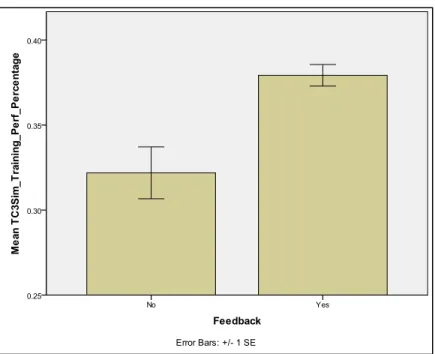
Figure 13. TC3Sim Training Scenario Performance With/With-Out Explicit Feedback ... 117
Figure 14. TC3Sim Training Scenario Performance ... 118
Figure 15. Estimated Marginal Means of TC3Sim Training Scenario Outcomes ... 121
Figure 16. Comparison of TC3Sim Game Performance for EPA, VoG, and No Feedback Groups ... 122
Figure 17. Estimated Marignal Means of the Game Capstone Scneario ... 124
Figure 18. Pre-/Post-Test Performance Outcomes Across Conditions ... 125
Figure 19. Estimated Marignal Means of the Knowledge Post-Test ... 127
x
Figure 21. Workload and Mental Demand Scores Based on Presence of Feedback ... 134 Figure 22. Workload and Mental Demand Across EPA Profile Conditions ... 136 Figure 23. API Scores for Human-Likeness and Engagment across EPA Profile Groups ... 140 Figure 24. API Scores for Facilitation to Learning and Credibility across EPA Profile Groups 141 Figure 25. API Scores for Human-Likeness and Engagement across EPA Source Modality Groups ... 144 Figure 26. API Scores for Human-Likeness and Engagement across EPA Source Modalities . 145 Figure 27. Flow Experience and Overall Flow Scores Across Feedback Source Modality Groups ... 149 Figure 28. Antecedents of Flow Scores Across EPA Profile Groups ... 152 Figure 29. RETRO-Flow Scale Feedback Dimension Scores Across EPA Profile Groups ... 154 Figure 30. RETRO-Flow Scale Presence Metric Scores Across Feedback Source Modality Groups ... 156 Figure 31. Representation of relative condition effectiveness (Kalyuga et al., 1999) ... 171 Figure 32. Relative Condition Effectiveness When Comparing Game Performance With Mental Demand and Feedback Usefulness (X and Y axes represent relative z-score in relation to control condition) ... 173 Figure 33. Relative Condition Effectiveness When Comparing Post-Test Performance With Mental Demand and Feedback Usefulness (X and Y axes represent relative z-score in relation to control condition) ... 174
xi
LIST OF TABLES
Table 1. Differences between Entertainment Games and Serious Games ... 17
Table 2. NASA-TLX Subscales ... 101
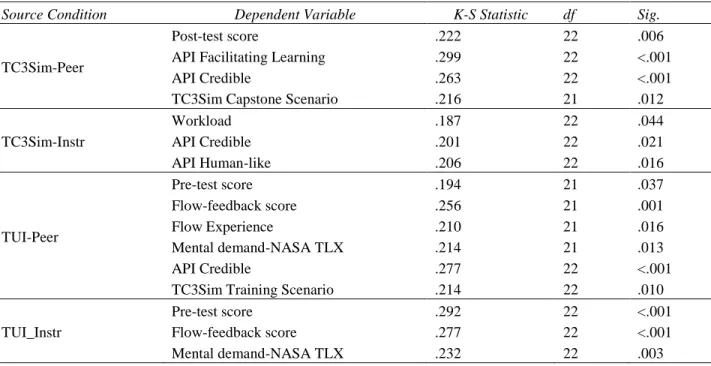
Table 3. Violations of Normality across Associated Dependent Measures ... 114
Table 4. Experimental Performance Metrics Across All Conditions ... 116
Table 5. Planned Comparisons examining each experimental condition versus the control with no feedback. ... 119
Table 6. Descriptive Statistics Comparing Conditions with/without an EPA ... 120
Table 7. Post-Hoc Analysis of Training Scenario Performance Across EPA Treatments ... 121
Table 8. Experimental Workload and Mental Demand Metrics Across Conditions ... 129
Table 9. Workload and Mental Demand Metrics Comparing Feedbacck Source Modalities .... 131
Table 10. Planned Comparisons Results for Mental Demand Scores Across EPA Condtions .. 133
Table 11. Agent Persona Instrument (API) Descriptive Statistics Across Conditions ... 138
Table 12. Agent Persona Instrument (API) Descriptive Statistics Across EPA Profile Groups 139 Table 13. Agent Persona Instrument (API) Descriptive Statistics Across EPA Source Modalities ... 143
Table 14. RETRO-Flow Scale Descriptive Statistics Across Dimensions ... 147
Table 15. RETRO-Flow Scale Descriptive Statistics Across Feedback Source Modality Groups ... 148
Table 16. RETRO-Flow Scale Descriptive Statistics Across EPA Profile Groups ... 151
Table 17. Post-Hoc Analysis of RETRO-Flow Feedback Metric Across EPA Profile Treatments ... 153
xii
Table 18. RETRO-Flow Scale Descriptive Statistics for Presence Across Feedback Source Modality Groups ... 155 Table 19. Summary of Research Questions, Associated Hypotheses, and Analyses Outcomes 159 Table 20. Condition Effectiveness Scores fore Game Performance ... 173 Table 21. Condition Effectiveness Scores fore Post-Test Knowledge Performance ... 174
xiii
LIST OF ACRONYMS
AAR After Action Review
AI Artificial Intelligence
ALC 2015 Army Learning Concept 2015
ANOVA Analysis Of Variance
ANCOVA Analysis of Co-Variance
API Agent Persona Instrument
CBT Computer-Based Training
CLT Cognitive Load Theory
CLS Combat Lifesaver
CUF Care Under Fire
CV Co-Variate
DRE Delay Retention Effect
DV Dependent Variable
ECD Evidence Centered Design
EPA Embodied Pedagogical Agent
FiST Fire Support Team
GIFT Generalized Intelligent Framework for Tutoring
ITQ Immersive Tendencies Questionnaire
ITS Intelligent Tutoring System
IV Independent Variable
KSAs Knowledge, Skills, and Abilities
LTM Long Term Memory
MANOVA Multivariate Analysis of Variance
MD Mental Demand
MIMIC Multiple Intelligent Mentors Instructing Collaboratively MeTERS MEdical Training Evaluation Review System
MRT Multiple Resource Theory
NASA-TLX National Aeronautics and Space Administration – Task Load Index
NPCs Non Player Characters
SBT Simulation-Based Training
SCT Social Cognitive Theory
SIMILE Student Information Models in Intelligent Learning Environments
STEM Science Technology Engineering Math
SWAT Subjective Workload Assessment Technique
TC3 Tactical Combat Casualty Care
TC3Sim Tactical Combat Casualty Care Simulation
xiv
TPI Temple Presence Inventory
TRADOC Training and Doctrine Command
TUI Tutor-User Interface
USMA United States Military Academy
VGE Videogame Experience
VoG Voice of God
WL Workload
WM Working Memory
WP Workload Profile
1
CHAPTER 1: INTRODUCTION
Today more than ever training and education communities are incorporating technology-driven learning platforms as tools to expand instruction beyond the boundaries of traditional schoolhouse environments. This maturation of technology-based training is important as academic and military communities are pushing for an accelerated, self-directed culture of learning. This is achieved through (among other things) the promotion of active, hands-on learning experiences, and also by making learning materials and exercises available at a place and time convenient to the user. Considerable research is being focused on identifying tools and methods that enable computers to compliment the learning process in the absence of live
instructors. The intention is for computers to support the development of realistic and immersive learning experiences designed to promote knowledge and skill acquisition.
To accomplish the development of effective self-directed educational platforms, research needs to examine standardized approaches for monitoring student activity and identifying
innovative and creative ways to integrate feedback and pedagogy into technology-based platforms no matter the domain being instructed. The goal of the current effort is to investigate approaches for enhancing game-based training applications through the incorporation of
performance-based feedback functions. Specifically, this work examines methods for embedding feedback delivery mechanisms within game environments and assesses the influence variations in the source and delivery of feedback have on learning outcomes and self-reported measures of cognitive load, immersion and flow. The results can be used to inform requirements for future simulation-based training (SBT) and intelligent tutoring system (ITS) design that is aimed at integrating real-time explicit task feedback within an open game environment.
2
The sections that follow highlight the current state of training technologies and the gaps in knowledge that are the basis for this research. A summary of what is known about SBT is presented first. Next, the role and importance of feedback in SBT is presented, with an emphasis on integrating ITS functions into simulation-based applications. The introduction concludes with a statement of the research problem being addressed along with a purpose of the study
description including a listing of research questions motivating this effort.
Simulation-Based Training
A major research thrust in technology-based training is to enhance systems to provide hands-on learning experiences with embedded pedagogical support functions. SBT is one such approach that provides attractive options for education, training and rehearsal. For the context of this research, SBT is defined as “a type of training that depends on the simulation to provide essential cues to trigger appropriate behaviors” (Cannon-Bowers & Bowers, 2008a, p. 317). Under this depiction, simulations are characterized by modeled representations of reality that can abstract, simplify, or accelerate process models associated with real-world phenomena (Galvao, Martins, & Gomes, 2000).
The benefit associated with SBT platforms is they provide realistic environments that allow individuals to master complex material and learn and apply new information through execution of simulated tasks (Menaker, Coleman, Collins, & Murawski, 2006). The learning process is influenced by student-centered teaching methods prompted by theories of ‘discovery’ (Bruner, 1966; Hermann, 1969) and ‘active’ (Johnson, Johnson, & Smith, 1991) learning. They incorporate interacting elements of logic, memory, visualization, and problem solving that cater
3
to elements required for learning; engagement, interaction, and satisfaction (Amory, Naicker, Vincent, & Adams, 1999). This is achieved by replacing traditional instructional techniques with methods of role-playing, simulations, self-regulated exercises, and other types of problems requiring creative and critical thinking skills (Greitzer, Kuchar, & Huston, 2007). Research has demonstrated these strategies are an effective alternative to traditional classroom instruction because they assist learners in creating and adjusting mental models for newly acquired
information(Cuevas, Fiore, Bowers, & Salas, 2004). These environments also provide a forum for learners to actively participate with learning material and to view the effect varying actions have on outcomes.
These approaches provide a new means for educators and trainers to deliver domain content, as well as new mechanisms for the practice and assessment of relevant instructional objectives. This enables engaging activities that assist individuals with learning and applying the knowledge, skills, and abilities (KSAs) associated with a given domain. These strategies also relieve the associated costs and limitations of live instruction, and reduce the risk of damaging costly equipment or endangering lives (Bratt, 2009). As a result, many professional fields and domains including: military, law enforcement, medical, and emergency-management
organizations apply SBT because of their coupled benefits. (Salas & Cannon-Bowers, 2001). This application across professional fields occurs because SBT allows for the
development of authentic scenarios that facilitate learning and cognitive development. In the military context, interactions in a simulated environment enable visualization and practice of task execution. As a result of practice in SBT, learners come to their first live performance
4
with multiple scenarios in a short timeframe. This allows for rapid exposure to variations in task conditions that build task relevant experience, which would require drastically more time, manpower, and resources to achieve from live training exercises (Pine, 2009).
A primary goal of many modern military training systems is to provide the learner with strategies that aid in the development of higher-order thinking skills and enable them to adapt decision-making tactics under variable missions and conditions (Wisher, Macpherson,
Abramson, Thorton, & Dees, 2001). In today’s combat environment, tasks are executed under a multitude of complex, stressful, and ambiguous settings where decisions must be quick and actions must be executed in a timely manner (Salas, Priest, Wilson, & Burke, 2006). Therefore, training aims to foster successful task execution and the values associated with making
reasonable decisions under difficult circumstances (Bratt, 2009). SBT fosters this type of learning by applying principles of instructional design through the processes of development, application, and evaluation of task relevant KSAs in realistic situations (Oser, Cannon-Bowers, Salas, & Dwyer, 1999; Salas, Rosen, Held, & Weissmuller, 2009b).
Simulating a task in a virtual environment and providing the ability for an individual to practice does not on its own increase expertise (Ericsson & Ward, 2007). SBT simply replicates a real-world representation of a problem space where KSAs can be applied within bounded realistic conditions that aid in skills training (e.g. time pressure, stress). Expertise development in SBT platforms is not practical without apt pedagogical support (Ericsson & Ward, 2007). This is a recognized gap because too often simulations are fielded without pedagogical components and functions. Simulations intended for education and training provide a means for practicing KSAs, but as mentioned above often lack elements of pedagogy that guide the learning process
5
(Nicholson, Fidopiastis, Davis, Schmorrow, & Stanney, 2007). Currently, simulations in the military are utilized as supplemental tools to instruction and require instructors to monitor interaction for identifying deficiencies and correcting erroneous actions. This limits their applicability as effective training tools outside the schoolhouse when experienced trainers may not be present due to the frequent absence of feedback mechanisms that foster the understanding performance outcomes.
In recognition of these limitations, the Army Learning Model 2015 was developed to highlight a new learning model to drive development of future training systems (TRADOC, 2011). The document outlines the Army’s strategy and motivation to steer away from traditional instructor-led courses that are executed in a lock-step approach. One Army Training 2015 requirement is for dramatic reductions in instructor-led training through the incorporation of a blended learning environment of simulations, gaming environments, and other technology-driven platforms (TRADOC, 2011). A secondary goal is to synchronize and tailor training to meet the needs of the individual learner (Durlach & Ray, 2011).
These goals are not attainable given the current state of knowledge regarding SBT. Specifically, further research is required to develop SBT systems that are easily accessible, have mechanisms for monitoring training performance for the purpose of tailoring training on the individual level, and to provide feedback automatically so that direct intervention by a human instructor is not required. The sections that follow provide insight into the nature of required research to achieve Army Learning Model 2015 goals.
6
Feedback in Simulation-Based Training
It is understood that feedback is an essential element to learning. It is used in a number of ways and for a number of reasons. Feedback serves a multitude of functions in the instructional process and is viewed as a fundamental element in all theories of learning and instruction (Koedinger, Anderson, Hadley, & Mark, 1997; VanLehn et al., 2005). In fact, most scholars commonly agree that learning cannot occur without some source of feedback (Bransford, Brown, & Cocking, 2000; Magerko, Stensrud, & Holt, 2006). Whether to inform a learner of an
incorrect step or misconception, to increase motivation by acknowledging successful
performance, or by promoting reflection through prompts and questioning, feedback is critical in learning from errors and improving KSAs no matter the domain. It allows an individual to compare inconsistencies of their own performance with the desired goals of a given task (Kluger & DeNisi, 1996). This is important because it can increase motivation by identifying
discrepancies in performance, reduce uncertainty for how an individual is performing, and assist someone in correcting errors found in execution (Davis, Carson, Ammerter, & Treadway, 2005).
In SBT, feedback often results from environmental changes in a scenario based on
actions taken by a player. Narciss (2008) describes this type as implicit feedback, in that it occurs naturally within the virtual environment and is tied directly to the context of the task decision and outcome. This allows for the forming of mental connections between actions taken and resulting outcomes and environmental changes (Billings, 2010). In comparison, guidance given outside of a specific task context where information is relayed to link performance with
overarching training objectives is termed explicit feedback (Kluger & DeNisi, 1996). This feedback is commonly delivered from an external source to the simulation. In most cases it is
7
provided by instructors monitoring how scenarios are performed. Typically, this form of feedback provides information confirming or correcting actions taken, and is used to highlight errors and strengthen response to correct decisions (Kulhavy & Stock, 1989; Mory, 2004). Currently, linking scenario outcomes to training objectives through explicit feedback is most often left to instructors. Current research is focused on identifying tools and methods for embedding autonomous explicit feedback functions that have an implicit feel within the game environment.
In current forms of SBT, feedback can be autonomously generated. It plays an implicit role and typically takes two forms: (1) short-term feedback that is immediate and signifies progress, natural consequences of interactions and task completion, and (2) holistic feedback that comes with player development and progression in the story narrative (Murphy, 2011). Holistic feedback is most noticeable in story-based scenarios, in that scenarios link task events to a common storyline and narrative for providing a long-term feedback metric on performance and progression. The missing piece is how performance within SBT environments mesh with desired training objectives, and how autonomously generated explicit feedback can improve
performance and reduce/remove the burden on instructors monitoring task execution. Identifying techniques for embedding explicit (computer-generated) feedback in SBT is the focus of this research. This requires systems to accurately monitor and link performance with specific training objectives, as well as having triggers to carry out interventions when guidance is deemed
8
Intelligent Tutoring Systems
One limiting factor associated with computer games and simulations in the educational and training domain is their lack of credible feedback mechanisms in the absence of human intervention. Before their use in a training context is made prevalent, there are a number of faculties these systems must be able to perform prior to reaching their full potential. To enable these systems to produce effective outcomes on their own, SBT requires capabilities for tracking performance and presenting feedback in real-time. Because of the desire to pursue a more self-regulated learning paradigm where instruction outside of the classroom is conventional,
mechanisms in SBT need to be implemented that facilitate the corrective strategies and actions executed by instructors.
Solutions developed to meet this need are termed Intelligent Tutoring Systems (ITSs). The heart of this line of research is for the development of tools that enable computer-based training systems to emulate instructional strategies used by human tutors during one-on-one instruction (Person & Graesser, 2003). This involves knowing about the domain being instructed, knowing about the individual being instructed, and knowing how to instruct based on the domain and individual. ITSs accomplish this by providing personalized training experiences through the monitoring of user interactions with a system and using AI methods to assess progress and trigger adaptive interventions (Goldberg, Holden, Brawner, & Sottilare, 2011). The role of the ITS is to mediate training sessions by providing feedback when appropriate and adjusting difficulty levels to maintain desired challenge.
With the identified divergence between SBT and ITSs, research is needed to merge the benefits of adaptive instruction provided by ITSs and the applied experience provided by SBT. A
9
large gap in this arena is empirical research examining how to optimally deliver feedback and adaptation based on individual differences derived from model outputs. Though there is a recent growth of empirical research supporting adaptive SBT applications (Mangos & Johnston, 2009), the literature does not make clear the distinctions of pedagogical strategies found to be most effective (Billings, 2010). A lot of work in this field over the past decade has focused on the modeling and data mining component of task interaction in SBT to determine when and why errors are present, and to predict cognitive and affective state trends during learning events (Woolf, 2009). The gap addressed by the current work is understanding the role feedback plays in these types of learning events and how to relay information without removing the individual from the simulated experience. This includes investigating what to present/adapt, when to present/adapt, and how to present/adapt when actions are deemed to warrant feedback. The driving force of this research is to examine options for answering the ‘how’ question for presenting feedback within simulated game-based training environments.
Statement of the Problem
SBT designed within synthetic virtual worlds provide the environments for ‘practicing’ the application of acquired skills, but often lack instructional guidance essential for effective training to occur (Nicholson et al., 2007). It is the goal of this research to explore the
synchronization of technology with the learning sciences to foster tailored and guided game-based training. Specifically, this work aims to address a crucial research gap related to how game and instructional designers can leverage the functionality of SBT for the purpose of delivering tailored learning experiences in the absence of an instructor. It is consistent with an evolving
10
thrust in the ITS research domain; namely, how to embed pedagogy and feedback within game-based instructional environments. Through the integration of AI and ITS technologies, SBT applications have the ability to support pedagogical interventions intended to maintain training progression.
A fundamental problem in this area is the lack of empirical evidence supporting the usefulness of instructional components and explicit feedback mechanisms in SBT events. This, in part, is due to recent advancements in gaming technologies that afford this capability, and a lack of understanding on how to deliver feedback within an interactive virtual world
environment. A common trend is incorporating ITS functions in SBT just because they are now possible rather than because there is evidence of their training effectiveness (Sweller, 2008). Empirical evidence is required to identify optimal approaches for delivering training relevant feedback in a SBT environment.
Given the central role feedback plays in the learning process, research is needed to address the impact variations in feedback delivery have on learning outcomes and system acceptance within game-based training environments. This involves examining elements available in the game world and existing ITS tools and methods that can be leveraged
specifically for the delivery of explicit feedback, including Non-Player Characters (NPCs). The principal goal in this study is to evaluate the feasibility of embedding NPCs in SBT as
mechanisms for guiding instruction and delivering feedback content. The specific focus is to introduce instructor qualities into game play that aids in the prevention of erroneous task execution, while maintaining optimal affective and cognitive learning states.
11
This is important due to work highlighting embodied agents as effective tools in training applications (Cassell, Sullivan, Prevost, & Churchhill, 2000; Yee, Bailenson, & Rickertsen, 2007). These entities within a virtual world are digitally modeled actors with interactions that are determined through predefined algorithms (Bailenson, Yee, Merget, & Schroeder, 2006). With this in mind, an objective of the current study is to investigate the effect varying implementations of Embodied Pedagogical Agents (EPA) have on performance within, and motivation for
interacting with, a training system. How an EPA is situated in the learning environment will be examined across multiple conditions, with approaches including characters embedded within the game environment and characters present in a tutor interface external to the virtual world.
In the context of feedback, this requires the evaluation of components that will inform the source modality to present feedback in when conditions exist that call for an intervention. Hence, two subordinate questions will be specifically addressed: 1) what effect does the source modality of explicit feedback have on performance; and 2) what effect does the source modality of explicit feedback have on subsequent interaction and acceptance? Components include variables that are derived from both learning theory and game design principles. In the context of this work, source modality refers to the tools and methods applied for delivering explicit feedback within SBT. A secondary research objective this work addresses is: does feedback delivered externally to the environment as in-game dialogues affect performance/learning outcomes, subjective ratings of workload, and sense of flow and immersion within a virtual world? The goal is to determine if there are approaches to embed explicit feedback functions in a game so that it has an implicit feel to its delivery. The notion is to use a character defined implicitly in the environment to deliver
12
information delivered from an explicit external source. If developed properly, the explicit feedback would be viewed as implicit to the environment based on the source of its delivery.
In addition, attributes and characteristics associated with EPA design will be explored to determine how an agent is characterized in the learning event influences interaction from the user. It is with this thought that variations among an NPC’s knowledge base, assigned role, and experience level can facilitate multiple functions of instructional support within a game-based training system. For example, comparing two conditions where participants are assigned to EPAs given distinctly different backgrounds; in one case, an EPA with a decorated career as a Soldier and trainer versus an EPA who is a peer and team-member. With research backing from Social Cognitive Theory, an additional objective of this research is: does an agent’s defined background
influence their perceived competency and usefulness across learners when there are no differences in interaction?
Purpose of the Study
This research aims to enhance SBT applications to support training events in the absence of live instruction. The overarching purpose is to determine how EPAs can be utilized as
guidance functions in a virtual world environment. Specifically, this research will assess whether explicit feedback delivered by EPAs present in a scenario has a significant effect on performance or subjective ratings when compared to external feedback source modalities. Consistent with this, the secondary purpose of this study is determining how defined attributes and characteristics of an NPC impacts user interactions, and whether this profile has a direct effect on performance, motivation to use the system, and system acceptance.
13
Specifically, this study will examine theory-based techniques for delivering explicit training relevant feedback and their effect on performance and sense of presence within a game-based training application developed for military use. Data will be collected across multiple conditions where source of feedback is manipulated, while content presented is held constant. This is important because the intent of this work does not focus on testing the effect variations in feedback content have on learning within game-based training. In particular, this study will investigate delivery methods involving both visual and auditory feedback approaches during a game-based training event. The results will inform the ITS, SBT and serious game communities whether there is a benefit to embedding feedback delivery through embodied agents interacting within SBT scenario environment. The goal is to provide empirical support that source of feedback has an effect on training effectiveness and perceived value of application.
To accomplish this, questions will be examined that determine the value associated with a source modality type through comparative evaluations across methodologies. This is to
determine if in-game EPA delivery has a noticeable impact on reported presence within the scenario storyline. Games are designed around principles intended to induce a state of flow through immersive and engaging interactions (Murphy, 2011). The notion is that delivering feedback through in-game sources will assist in maintaining immersion and will improve the effectiveness of the system. Individuals’ workload will also be assessed to determine if variations in feedback source produce variations in reported scores. This will be evaluated through the implementation of multiple feedback source conditions. Theories source modality of feedback are designed around include Social Cognitive Theory (SCT), Working Memory (WM) and Cognitive Load Theory (CLT). The intent is to identify pedagogical tactics that relay training
14
relevant information efficiently based on real-time performance and are found to be most cognitively effective. The tactics are intended to promote presence within the game world and reduce cognitive load in perceiving and interpreting explicit feedback.
Research Questions
This work investigates the effect variations in the source of real-time feedback within a scenario-based training event has on subsequent task performance; the effect the source of feedback has on post-training learning outcomes; and whether variations in feedback source produces reliable differences in trainee self-reported measures of cognitive load and flow. The study will go deeper by exploring the impact of delivering feedback through NPCs defined as EPAs, and to assess the effect varying agent delivery modalities have on trainee performance and game acceptance. Specifically, this research will examine whether there is a significant benefit to embedding EPAs directly into the task environment versus an EPA interacting with the user from an interface external to the game world. It is expected that feedback delivered by embedded EPAs will produce a higher sense of trainee presence and lower extraneous cognitive load when interpreting feedback, resulting in larger learning gains and greater motivation to interact with game-based training systems. The goal is to identify heuristics associated with how to deliver feedback in a game-based trainer, and how attributes of a character delivering feedback can be modified to compensate for an individual’s strengths/weaknesses in a given domain.
15
CHAPTER 2: BACKGROUND
Chapter Two Summary
Videogames are one product that supports the application of new and innovative SBT delivery approaches and reinforces concepts identified in the Army Learning Model (ALM) 2015 (TRADOC, 2011). The ALM2015’s learner-centric model identifies the role of computer- and simulation-based training systems as essential components to the future of military training. The report also highlights the need for the integration of adaptive functions in such systems that can provide task-relevant feedback and adjust training in real-time based on the desire to supply effective training solutions that can be accessed from anywhere and at anytime. This requires the ability of the Army to develop digitized learning products with embedded AI in order to adapt and tailor training to the experience and knowledge levels of the individual Soldier (Durlach & Ray, 2011). From an instructional design perspective, this calls for training systems to have tools and methods for performing functions of the instructor that are natural in occurrence and do not hamper performance and retention outcomes.
The question this work aims to address is how to best integrate feedback within game-based training events, and to determine how information delivered by EPAs in serious game environments (i.e., how the content is delivered) affects a user’s performance and
motivation/intention for future usage? Specifically, this research seeks to identify if embedding pedagogical agents for delivering feedback directly in a game-based environment improves training outcomes, reduces cognitive load required for interpreting information, and maintains a user’s sense of flow and presence in the virtual environment. With ITSs offering external
16
time, money, and effort to integrate EPAs in the game-world has a distinct benefit over more simplistic avenues of relaying information to the user.
Chapter two reviews existing literature on concepts applied to SBT, specifically looking at games for training (a.k.a. serious games) and the functions feedback play in these
environments. First, there will be an introduction to serious games along with a representative sample of current applications in use. Principles will be presented focusing on similarities between instructional design and game design, with an emphasis on flow and the role feedback plays in this construct. In the subsequent section, an introduction to ITS literature will be presented defining the specific features required for providing real-time feedback in game environments. An emphasis on the role pedagogy plays within serious game events will be described, and how ITS technologies can be integrated to support those functions. This will include current research on the integration of intelligent tutoring technologies within serious games and SBT applications, and the pursuit of domain-independent tools for authoring ITS components that integrate with game-based applications across multiple platforms.
Serious Games
Games intended to facilitate learning are termed ‘Serious Games’, as they are carefully designed with pedagogy around the overarching objectives of its intended use, and are
hypothesized to attend to both the affective and cognitive dimensions of learning (O'Neil, Mainess, & Baker, 2005). For the context of this study, serious games are referred to as SBT applications that operate on standard desktop computing systems and incorporate components commonly seen in entertainment industry games. The term was first coined by Clark Apt in his
17
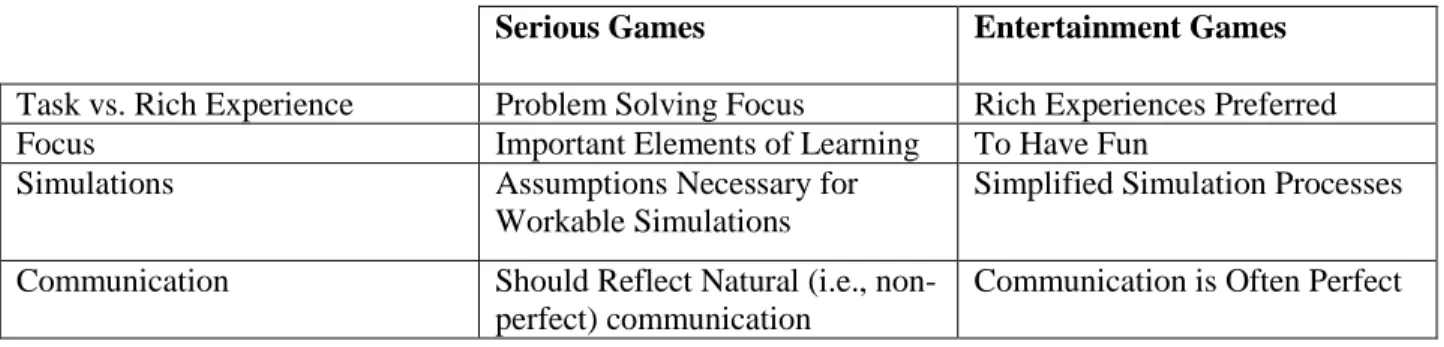
1970 book ‘Serious Games’ (Apt, 1970). Apt describes this genre as involving an explicit and carefully thought-out design process with an educational intent where game-play has a primary purpose other than providing entertainment (see Table 1).
Table 1. Differences between Entertainment Games and Serious Games (Susi, Johannesson, & Backlund, 2007)
Serious Games Entertainment Games
Task vs. Rich Experience Problem Solving Focus Rich Experiences Preferred
Focus Important Elements of Learning To Have Fun
Simulations Assumptions Necessary for Workable Simulations
Simplified Simulation Processes
Communication Should Reflect Natural (i.e., non-perfect) communication
Communication is Often Perfect
Though there are many opinions of what serious games are explicitly designed to do, there lacks a common designation among practitioners (Susi et al., 2007). In essence, “there is no one single definition of the term ‘serious games’, although it is widely accepted that they are games ‘with a purpose’. In other words, they move beyond entertainment per se to deliver engaging interactive media to support learning in the broadest sense” (Stone, 2008, p. 9). While describing the intent and purpose of serious games is rather straightforward, designing and developing such applications is challenging and involves numerous disciplines.
The effectiveness of a serious game is first dependent on the ability of the simulation to replicate specific features associated with executing a task in the real-world operational
environment (Salas, Rosen, Held, & Weissmuller, 2009a). This requires constructing a synthetic representation of task environment through psychological fidelity of processes, constructs, and performance (Kozlowski & Bell, 2007; Susi et al., 2007). A common goal of SBT interaction is
18
to promote and develop the application of higher order thinking skills and improve human performance essential for safety, effectiveness, and survival practices among domains within the military, medicine, business, and aviation communities (Salas et al., 2009a).
One early example highlighting the effectiveness of serious games involved business school students working with a series of simulations focused on finance practices (Estes, 1979). Following interaction, students commonly reported truly understanding the modeling and analysis concepts they had only previously studied theoretically, and attributed this deep
understanding to the simulation (Estes, 1979). This is achieved through individuals building and verifying mental models of new information as it pertains to the simulated environment (Cuevas et al., 2004). For this purpose, the target objectives associated with a scenario must be accurately modeled so that skills attained in the game environment effectively transfer to the task
environment. In this context, a serious game designer must understand both the science of learning, available simulation approaches, and how and why games work (see Figure 1)
(Murphy, 2011). Ignoring these components can result in a game that is the worst of both worlds, a dull game informed by ineffective teaching methods (Bowers, 2007).
19
Figure 1. Interplay of Disciplines for Serious Game Design (from Martens, Diener, & Malo, 2008)
Current State of Serious Games
Current use of serious games in education and training communities range from highly interactive, open-world discovery environments to web-based static 2-D environments running on discrete user inputs. The intention, no matter the level of interactivity, is to develop
applications that enable a ‘learning-by-doing’ philosophy, where users can observe outcomes and effects of decisions/actions within a safe controlled environment (Bell, Kanar, & Kozlowski, 2008; Cannon-Bowers & Bowers, 2008b). In the domains of military and medical training, the incorporation of game-based systems is for the purpose of job oriented training through
scenario-20
based events that mimic actual operational environment and task conditions (Hartog, 2009; van der Hulst, Muller, Besselink, Coetsier, & Roos, 2008). They provide feasible and affordable solutions to training skills and tactics that are performed under circumstances that are difficult to replicate in live exercises (Bratt, 2009; Susi et al., 2007). In a study conducted by Leemkuil, Jong, and Ootes (2000), 66 articles were reviewed examining the use of games in an instructional environment. The most conclusive findings were: (1) games are most effective when handling specific subject matters with targeted objectives, (2) games produce greater retention over time when compared to conventional classroom techniques, and (3) learners reported higher interest and motivation levels.
In recent years, the use of serious games as tools for learning has seen wide application in the training and vocational fields when compared to standard education (JISC, 2007); though there has been a substantial rise in academically geared games over the past few years as a result of the STEM (Science Technology Engineering Math) Serious Games Challenge, which was started in 2011. Michael and Chen (2005) categorize the common markets serious games are utilized within to six main domains: military games, government games, educational games, corporate games, healthcare games, and political, religious and art games. In the military domain, several serious games have been used over the past decade to train Soldiers on a variety of
KSAs. Examples include Full Spectrum Warrior to train urban warfare tactics to squad leaders (Reuters, 2003), America’s Army to train future officers at West Point (Roth, 2003), ELECT Bi-Lat to train Soldiers bilateral negotiation tactics and how to practice cultural customs (Kim et al., 2009), and UrbanSim for practicing mission command in counterinsurgency and stability
commercial-off-21
the-shelf game engines (e.g., Unity, UnReal Engine, Virtual Battle Space 2, Ogre, etc.) have been utilized by various armed forces to train military relevant tasks that are difficult and expensive to replicate in the real world (Fong, 2004; Topolski et al., 2010; Zyda, 2005).
While the use of serious games is on the rise, an important question becomes: what evidence is out there to signify these applications actually work and promote efficient learning? In a review based on instructional gaming literature, Hays (2005) finds empirical research on the effectiveness of serious games to be fragmented across different domains, age groups, and levels of interactivity, resulting in experimental confounds that make it difficult to draw valid
inferences on learning efficiency (Topolski et al., 2010). However, Prensky (2007) states the military has embraced game-based training because games work and they have been shown to be effective across several training problem spaces. Experimentation has shown specific skills, such as spatial ability (Sims & Mayer, 2002) and critical thinking (McAlinden et al., 2009) to be successfully trained in a game-based environment, while other research has shown serious games to proficiently teach more generalized skills like trouble shooting and visual attention (Topolski et al., 2010). The extent to which games are effective training tools is based on the technology used and the design principles applied in its development. This includes understanding the cognitive processes associated with game interaction, and how these interactions can be
leveraged to provide pedagogical function intended to promote knowledge and skill acquisition.
Design Principles in Serious Games
The training benefits associated with serious games include those introduced in SBT along with the addition of pedagogy (i.e., interactions that instruct or educate, with the intent of imparting knowledge and skill; Susi et al., 2007) in the three main elements of entertainment
22
games: software, art, and story (Zyda, 2005). With pedagogical heuristics guiding art and story, the strength of a game lies in its ability to engage a user through practices that promote flow, motivation, and fun (Murphy, Chertoff, Guerrero, & Moffitt, 2011). However, Zyda (2005) emphasizes that pedagogy must remain subordinate to the story and that entertainment value comes first (Susi et al., 2007). With these additional elements, it is important to understand how games work and why they make effective training tools.
Interestingly, the principles applied to designing effective games follow many of the same guidelines applied to the design of effective instruction; they incorporate mechanisms to facilitate practice, feedback, choice/involvement, positive feelings, emotion, and intensity (Murphy, 2011). The goal is for game-based training systems to promote transfer of acquired knowledge and skills to the operational environment, with Alexander, Brunyé, Sidman, and Weil (2005) attributing transfer to four factors: fidelity, immersion, presence, and operator buy-in. What needs to be considered are techniques to reduce the amount of time to reach efficient knowledge transfer. This is achieved by embedding functions of feedback that links what
happens in a game to instructional objectives and the inclusion of support mechanisms that assist users in interfacing with the game to promote focused attention on the task relevant information (Hays, 2005). In essence, these principles are applied to promote flow within experiences, leveraging elements to motivate individuals to fully engage in interaction (Murphy et al., 2011). Flow in Serious Games
Flow is described by Csikszenmihayi (1990) as a state where involvement in a task takes complete precedence over all else, and this experience is a driver for learning new challenges and skills (Csikszenmihayi, 1997). This is the power of videogames. They capture the perceptual
23
resources of an individual with the result of inducing complete focus on an activity where time becomes distorted (Csikszenmihayi, 1997). This immersion and concentrated effort is sought after from both game developers and instructional designers. The pursuit of flow is to balance challenge and skill to create an environment highly conducive to learning through the regulation of arousal (see Figure 2). This is achieved by matching difficulty and challenge in accord with an individual’s skill level, negating the effects of boredom when something is too easy and anxiety when something is too hard. This definition is further decomposed by Csikszenmihayi into seven core components associated with an induced state of flow.
Figure 2. Anxiety, Boredom, and Flow (Csikszenmihayi, 1990 – Dots and Text Added: van Gorp, 2006)
The seven components are broken up into characteristics present when experiencing a state of flow during task interaction and conditions that must be established for an individual to enter a state of flow. Characteristics include: control, diminished awareness of self, and an altered sense of time. Each of these variables is attributable to an individual being immersed in
24
the interaction through cognitive engagement. In a serious game, engaged interaction is
important because it keeps learners focused on the material being trained (Murphy et al., 2011), with studies showing engagement to strongly correlate with academic performance (Baker, Corbett, & Koedinger, 2004; Dorneich, Whitlow, Ververs, Carciofini, & Creaser, 2004;
Fredricks, Blumenfeld, & Paris, 2004). These characteristics stem from complete focus on a task through platforms affording the ability to have direct control of actions on outcomes, which can create a distorted perception of time where seconds feel like minutes; yet, time passes quickly going unnoticed (Murphy et al., 2011). Because of this induced trance, well-designed serious games provide great potential for immersing individuals in a synthetic learning environment that combines elements of technology and learning science to create a setting for achieving optimal learning (Cannon-Bowers & Bowers, 2008a).
In comparison, the conditions of flow are based on elements that must be in place for an individual to become fully immersed in the experience. These include: clearly defined tasks, attainable/balanced objectives, and feedback (Csikszenmihayi, 1990; Murphy et al., 2011). Having clearly defined tasks with balanced objectives ensures a learner is aware of what they must do, along with the confidence that they have the skill to do it. The other condition required, which is of most interest to this research, is the inclusion of feedback functions that relay the impact of moment-to-moment decisions and actions on outcomes (Murphy, 2011). This
incorporates both implicit and explicit modalities, where explicit feedback plays an integral role in managing challenge by defining the causes of error when difficulty is just beyond an
25
Feedback, in terms of flow, associates similarly with Vygotsky’s (1987) theory on the Zone of Proximal Development (ZDP). ZPD is defined as the distance between an individual’s actual level of performance and the level of potential performance as deemed achievable through guided assistance. ZPD is based on the concept that learning occurs best when individuals are challenged just beyond their capability with socially guided instruction progressing their competency development. From this perspective, Vygotsky (1978) argues that the learning process is a naturally social practice where those capable aid in the development of skill and knowledge by providing feedback to assist in achieving task goals. For the context of serious games, there lacks a true social interaction highlighted in ZPD that facilitates the development of skill through explicit feedback strategies. In recognition of this limitation, this research is
focused on applying ITS practices into serious game implementation. In addition, a research question as a result of this focus is: what effect does incorporating ITS function in a game have on an individual’s flow within the environment? And, does the inclusion of an EPA for
delivering feedback content affect reported levels? A common approach used to gauge the state of flow in mediated learning environments is through self-report instruments, which will be described in detail in the following chapter.
Components of Intelligent Tutoring Systems
The overarching theme of ITSs is to enable computer-based training applications to tailor and personalize instruction to better serve the individual needs and abilities associated with a given learner (Heylen, Nijholt, R., & Vissers, 2003; Loftin, Mastaglio, & Kenney, 2004). The goal is to achieve performance benefits within computer-based instruction as seen in Bloom’s
26
1984 study “the 2-Sigma Problem” (see Figure 3). Though there is recent controversy on the validity of these results (VanLehn, 2011), this classic experiment showed that individuals receiving one-on-one instruction with an expert tutor outperformed their fellow classmates in a traditional one-to-many condition by an average of two standard deviations (see Figure 3). The success of this interaction is in the ability of the instructor to tailor the learning experience to the needs of the individual. Interaction is based on the knowledge level of the learner as well as their performance and reaction (i.e., cognitive and affective response) to subsequent problems and communications (Porayska-Pomsta, Mavrikis, & Pain, 2008).
Figure 3. Bloom’s 2-Sigma Problem (1984)
In addition to correcting errors and misconceptions, the power of human tutoring is in peoples’ ability to read and interpret subtle cues from the learner that signify affective response to instruction and is used for applying strategies to maintain motivation. Based on these
27
tactics to address learner deficiencies (Goldberg et al., 2012; Porayska-Pomsta et al., 2008). The notion associated with this approach is that information about the learner, both historical and in real-time, can be used to modify learning experiences as to aid in performance and retention (Beck, Stern, & Haugsjaa, 1996).
In general, all ITSs are designed around the concept of the ZPD (Murray & Arroyo, 2002). They function on a cognitive level by managing challenge to make sure material is not too difficult or easy and on an affective level by applying strategies to avoid the extremes of being bored or confused, though it is accepted that some level of cognitive dissonance is necessary (Murray & Arroyo, 2002). Poorly managed interaction that does not account for the relationships of ZPD can lead to distraction, frustration, and a lack of motivation to further pursue objectives (Murray & Arroyo, 2003).
This management of instruction is carried out by four common components to all ITSs (Woolf, 1992): a learner model, a domain knowledge model, a pedagogical model, and a communication model. In the interpretation by Beck et al. (1996), an expert model of
performance is included, which is contained within the domain knowledge for the purpose of this description (Woolf, 1992). The information and processes contained within these models are derived from research looking at how effective tutors interact with learners and the information streams they use to base their decisions (Woolf, 2009). In reviewing the various model
components in an ITS, it is important to understand how feedback is triggered and the flow of information between models informing these interventions. The functions reported for each model will be applied within this study to monitor performance variables and trigger feedback based on production rules defined within the expert model.
28
Learner Modeling
A learner model is a system’s representation of an individual’s current knowledge state within a domain, and is used to inform adaptations to better address the strengths and weaknesses of a user (Corbett, Koedinger, & Anderson, 1997; Kassim, Kazi, & Ranganath, 2004). Learner models are designed to serve as the assessment engine within ITSs and are used to determine deficiencies in performance that need attention. Current implementations monitor both
performance and affective states to adapt content based on progress towards objectives as well as emotional reactions to training (Ammar, Neji, Alimi, & Gouarderes, 2010).
In terms of applying explicit feedback, learner models must account for specific performance objectives that can be tracked in real-time. They can be designed to outline and recognize learner solution paths to a problem (Conati, Gertner, VanLehn, & Druzdzel, 1997); evaluate performance and problem-solving capacity (Katz, Lesgold, Eggan, & Gordin, 1992); and diagnose misconceptions and constraints associated with a problem space (González, Burguillo, & Llamas, 2006). In conjunction with a defined expert model present within the domain knowledge (e.g., model of desired performance), a learner model can determine gaps in performance for the purpose of selecting focused instructional guidance. In essence, the learner model derives a state of performance by monitoring activity and predicting knowledge levels based on task behaviors (Kelly & Tangney, 2002; Roll, Baker, Aleven, McLaren, & Koedinger, 2005). This information is fed to the pedagogical model for determining strategies to execute (Beck et al., 1996). In the context of game-based applications, linking behavior in a virtual environment to associated training objectives is a challenging task. This requires domain
29
modeling techniques that can translate game state messages into performance metrics on overarching scenario objectives.
Domain Modeling
The domain model contains all relevant information linked to a task or subject (Beck et al., 1996). It represents the knowledge structure of a domain and is accessed by the learner and pedagogical models to manage interventions. In addition to storing domain-dependent materials and content, the domain model also houses representations of expert performance to compare learner interaction against. Rather than just a representation of domain data, the expert model organizes data on how someone skilled in a specific domain represents the associated knowledge (Beck et al., 1996). Interaction is monitored and performance states are communicated to the learner model for determining if a pedagogical intervention is deemed appropriate.
Development of expert models is critical for effective implementation of ITSs in game-based environments. They can be used to compare real-time learner performance versus desired progress (Beck et al., 1996), and are based on detailed descriptions of behaviors and mental activities, task conditions and standards, and other factors leading to successful performance (Sottilare & Gilbert, 2011). A limiting factor associated with expert model authoring is they are often labor intensive and require extensive task analyses to capture all the data to inform
assessment practices (Sottilare & Gilbert, 2011).
In addition, game-based applications offer new challenges to expert modeling. Dependent on the application being used, a system must incorporate performance assessments as they relate to a specific game engine’s messaging protocol (Sottilare & Gilbert, 2011). Concepts associated with a system (i.e., inputs, processes, and outputs) differ between platforms, with no
30
standardized approach for interpreting learner interactions (Shute, Masduki, & Donmez, 2010). For explicit feedback to be relevant in context, performance modeling techniques must be addressed in SBT and game-based applications.
Performance Modeling in a Serious Game
No matter the game or the set of tasks to be executed, there should always be sound instructional design practices applied to map objectives and performance criteria associated with achieving levels of proficient execution (Ulicsak & Wright, 2010). In SBT, it is essential to define the root objectives the simulation is designed to train. These objectives influence
requirements for what functions and mechanisms must be realistically simulated for the purpose of supporting transfer into the real-world (Shute et al., 2010; Shute, Ventura, Bauer, & Zapata-Rivera, 2009). This is achieved by defining what the system needs to measure and what constitutes successful performance. This information is used to design system interactions and interfaces dependent to performance requirements based on determinations of what constitutes proficient behavior. Shute et al. (2010) refers to this approach as evidence-centered design (ECD), where behavior and performance found to demonstrate knowledge, skills, and abilities associated with a domain are identified (Messick, 1994).
The goal of serious games and SBT is to instill higher-order thinking skills and increase human performance among tasks that are difficult to replicate in live simulation exercises that are often too expensive and too resource extensive to implement on a routine basis. With this functional requirement, it is imperative to accurately monitor performance to recognize error and determine cause. With this information, feedback can be tailored to focus specifically on the identified deficiency and how it impacts task performance. Furthermore, it is important to
31
understand theory and practices applied to monitoring human performance in learning events so as to design games that incorporate sound techniques to gauge successful/unsuccessful
interaction.
Human performance is based on associated behaviors required for completing a task and is monitored to assess where an individual falls on the spectrum of novice to expert. According to Rasmussen (1983) three interrelating levels of human performance exist: knowledge-, rule-, and skill-based performance. In the context of learning, these categories differentiate behaviors associated with comprehension and skill, and training systems must recognize the level of behavior they are intended to train so as to identify appropriate objectives to measure (Shute et al., 2010). These performance measurement determinations should be influenced and guided by learning theory, which in turn should influence the methods selected for assessing competencies (Cannon-Bowers et al., 1989). Furthermore, the resulting performance outcomes should then be used to determine deficiencies and misconceptions for the purpose of providing explicit task relevant feedback.
However, many serious games currently developed ignore performance in terms of training effectiveness and provide metrics on implicit objectives associated with a scenario or storyline. Typical approaches to assessing objective-oriented performance (i.e., questions to test declarative and procedural knowledge) in game-based environments requires pausing action, which can be disruptive to an individual’s flow (Shute et al., 2009). Real-time assessment of performance as they relate to training objectives is critical to providing timely and appropriate feedback to assist in the learning process, and tools for accomplishing this must be integrated into game-based architectures. As stated by Shute et al. (2009), this requires serious games to