COUNTRY REPORT – SRI LANKA
ON FOLLOW UP TO THE
DECLARATION ON
COMMITMENT
ON HIV/AIDS (UNGASS)
Reporting Period: January 2006- December 2007
Status of the epidemic.
Sri Lanka remains one of the few countries in the region with a low level HIV epidemic despite sharing some of the conditions such as sex work , networks of men who have sex with
men and large population of heroin users .In addition, many infections that have been identified are associated with overseas work..
It is apparent that some important vulnerability factors are absent or low-level in Sri Lanka. High literacy rates, relatively high status of women and good access to health care services and low STI prevalence all act to protect individuals and communities against HIV infection. On the other hand, conditions of higher vulnerability include conflict, high mobility of military, internally displaced persons, and separation of spouses related to overseas employment. Moreover, new economic developments such as the expansion of internal free trade zones, and broad social changes, such as the increasing migration of young adults from rural areas to large urban centers, could result in expansion of societal vulnerability factors. Returning migrant workers have been increasingly detected to be infected however will be epidemiologically important only if they are able to seed local networks that could sustain transmission.
HIV epidemic potential in Sri Lanka s not yet well understood, however there is a low probability that Sri Lanka will experience a large generalized epidemic. Experts based this assessment on the observations that despite the likely repeated introduction of HIV from out-migrants and in-out-migrants the HIV epidemic has remained very low in the general population and high-risk sub-populations other Asian countries have not experienced large-scale generalized epidemics, and Sri Lanka does not appear to have sexual behaviour patterns that are more conducive to widespread HIV transmission than elsewhere. Instead its believed two patterns of HIV epidemics, truncated persistently low level epidemic or a concentrated epidemic may emerge in Sri Lanka.
Truncated (persistently low level) epidemics – In circumstances where sexual and drug-using behaviours and networks cannot sustain local transmission, the spread of HIV is highly dependent on the movement of individuals to and from other locations where the HIV prevalence is higher. This could include out-migrants who are exposed to higher levels of HIV risk at their destination, or visitors from elsewhere who have sexual relationships with local residents. In Sri Lanka there is some evidence that this pattern of transmission is occurring. For example, HIV testing data indicates that more than 40% of women who have tested positive for HIV are international migrants. However, these data overstate the importance of this pattern of transmission since many of these out-migrant workers require HIV screening prior to departure so they are highly over-represented in HIV testing data. Moreover, it is not clear how many of these women have acquired HIV infection abroad, and how many have acquired HIV within Sri Lanka. It is important to note that unless those who acquire HIV infection abroad or from a foreign visitor are connected to local sexual or drug- injecting networks, the local HIV epidemic will remain truncated at a very low HIV prevalence
Concentrated epidemics – A concentrated HIV epidemic will occur where there are substantial enough high-risk behavioural patterns and networks to initiate and sustain local transmission within high-risk sub-populations (e.g. female sex workers, high risk men who have sex with men and injecting drug users). Expansion to the wider population occurs through the sexual partners of these groups (bridge populations). The ultimate extent of
concentrated epidemics will be determined by the size of the high-risk sub-populations and their sexual behaviours, including their number of sexual partners, concurrency patterns in sexual partnerships, types of sexual contacts, the prevalence of other sexually transmitted diseases that amplify HIV transmissibility, and condom use.
The recently conducted Behavioral surveillance confirms that the bridge populations such as transport workers, men working in factories are at low risk due to low partner change & fewer concurrent partnerships, low commercial sex and male to male sex, majority engaging in abstinence or safer sex & regular partnerships while MSM & beach boys (who frequent with tourists and engage in commercial sex) are practising unsafe sex with frequent partner change and relatively low condom use. Sex workers seem to be protected with low STIs , high condom use and low number of partners. Injecting drug use seems to be low even among drug users and networking of injectors is rare.
However the actual sizes of these populations are lacking and it’s likely that there will be substantial geographic heterogeneity in the distribution of these groups and in the epidemic potential. Moreover, the demographic, social and economic situation in Sri Lanka is changing, and these changes could increase the size and distribution of these sub-populations, thus altering the epidemic potential.
PREAMBLE
At the UN general assembly Special session on HIV /AIDS in June 2001 Sri Lanka was one of the 189 participating countries which committed themselves to a comprehensive programme to fight HIV/AIDS adopting a declaration of commitment and participated in the follow-up sessions pledging the government support.
The Declaration of commitment reflects global consensus on a comprehensive framework to achieve the millennium development goals of halting and beginning to reverse the HIV /AIDS epidemic by 2015.It calls for careful monitoring of progress in implementing agreed on commitments and United Nations General Secretary to issue progress reports annually on core indicators to measure the progress in implementing the declaration of commitment, Sri Lanka was one of the 103 member states which submitted national reports to UNAIDS based on the original core indicators in 2003 and subsequently in 2005 on the progress made . Sri Lanka received the information regarding the report preparation very late and there fore had only a short time frame for finalisation. The process to prepare the report was done through UNAIDS and its partners ,and the national STD/AIDS control programme (NSACP) ministry of health in accordance with procedures provided for reporting. A local external consultant was contracted by the UNAIDS and a coordinator based at the NSACP facilitated the data collection for part A of the National composite policy index Questionnaire (NCPI)from the government partners while UNAIDS facilitated collection of information to the part B of NCPI from civil society. A meeting to educate civil society on UNGASS reporting was held .A team of experts from the national programme assisted data collection analysis & reporting process. Key informants to be interviewed identified for each area and data gathered through desk reviews & interviews. Much of the data needed was available in the format required for the report in existing reporting system of the NSACP and from the surveys (behavioural surveillance) carried out during the period. Some data needed special surveys and obtaining financial data on actual expenditures at national and sub national level and from donors, other agencies on the new format has been a failure as most of the information was not available in the required format and the reluctance of other partners to submit reports and due to constraints in time.
The draft report was discussed at a stakeholder meeting representing civil society, PLWHA NGOs ,CBOs and government partners to arrive at a consensus .
With the development of the new management information system of the NSACP comprising a project tracking format , a patient management information system and a website and the much needed monitoring and evaluation unit generating data & reporting will be easier in the future. The relevant UNGASS indicators are incorporated in the M&E indicator framework and an annual report on the progress will be published.
Attention
The UNGASS National Programme and Behaviour Indicators to be reported & relevant to Sri Lanka were selected by a panel of experts, which are also incorporated in the National M&E framework considering the low prevalence status and are reported using the CRIS format. For the first time Sri Lanka attempted reporting the indicators using CRIS reporting system. Majority of UNGASS indicators & universal access indicators are incorporated in to the National Indicator Frame work which is relevant to Sri Lanka in the low prevalence situation and feasible to collect .The MIS is on trial for the computation of the indicators which would help to provide information required for the UNGASS Declaration of Commitment document.
When the data was not available or not in the format for CRIs, explanatory notes are given on the narrative report The proposed research strategy will include the surveys that will collect the indicator data, along with epidemiological, social & behavioural and operational research to evaluate quality of programme efforts.
1 TABLE OF CONTENTS
2 Status at a glance 8
3 Overview of the epidemic 13
4 National response to the AIDS epidemic 19
• National commitment and action 45
• National Composite Policy Index questionnaire : ANNEX 2 • National programme , behaviour knowledge And impact Indicators: ANNEX 3 5 Best practices 43
6 Major challenges faced and actions needed to achieve the 44
UNGASS goals /targets 7 Support required from country’s development partners 44
8 Monitoring and evaluation environment 44
ANNEXES Annex 1: Consultation/ Preparation process for the national report on monitoring the follow - up to the Declaration of Commitment on HIV/AIDS Annex 2: National Composite Policy Index Questionnaire 48
ACRONYMS
NSACP - National STD/AIDS Control Programme NAC National AIDS Committee
NHAPP National HIV/AIDS Prevention Project NBTS National Blood Transfusion Services NTB National Tuberculosis Programme FHB Family Health Bureau
HEB Health Education Bureau
MLTs Medical Laboratory Technicians ANC Antenatal clinics
NIE National Institute of Education MOH Ministry of Health
MOHs Medical officer of Health STIs Sexually transmitted Infections
MOSTD. Medical officer sexually transmission disease NGOs Non governmental organisations
PLWHA People living with HIV
SLFEB Sri Lanka foreign Employment bureau NDDCB National dangerous drug control board MOMCH Medical officer of Health
PHI Public Health Inspector PHN Public Health Nurse MARP Most At Risk Population MSM Men having Sex with Men FSW Female Sex Worker IDU Injecting Drug User
STATUS AT A GLANCE
I
Status of the epidemic.
Sri Lanka remains one of the few countries in the region with a low level HIV epidemic despite sharing some of the conditions such as sex work, networks of men who have sex with men and large population of heroin users .In addition, many infections that have been identified are associated with overseas work..
It is apparent that some important vulnerability factors are absent or low-level in Sri Lanka. High literacy rates, relatively high status of women and good access to health care services and low STI prevalence all act to protect individuals and communities against HIV infection. On the other hand, conditions of higher vulnerability include conflict, high mobility of military, internally displaced persons, and separation of spouses related to overseas employment. Moreover, new economic developments such as the expansion of internal free trade zones, and broad social changes, such as the increasing migration of young adults from rural areas to large urban centers, could result in expansion of societal vulnerability factors. Returning migrant workers have been increasingly detected to be infected however will be epidemiologically important only if they are able to seed local networks that could sustain transmission.
HIV epidemic potential in Sri Lanka s not yet well understood however there is a low probability that Sri Lanka will experience a large generalized epidemic. Experts based this assessment on the observations that despite the likely repeated introduction of HIV from out-migrants and in-out-migrants the HIV epidemic has remained very low in the general population and high-risk sub-populations other Asian countries have not experienced large-scale generalized epidemics, and Sri Lanka does not appear to have sexual behaviour patterns that are more conducive to widespread HIV transmission than elsewhere. Instead its believed two patterns of HIV epidemics, truncated persistently low level epidemic or a concentrated epidemic may emerge in Sri Lanka.
Truncated (persistently low level) epidemics – In circumstances where sexual and drug-using behaviours and networks cannot sustain local transmission, the spread of HIV is highly dependent on the movement of individuals to and from other locations where the HIV prevalence is higher. This could include out-migrants who are exposed to higher levels of HIV risk at their destination, or visitors from elsewhere who have sexual relationships with local residents. In Sri Lanka there is some evidence that this pattern of transmission is occurring. For example, HIV testing data indicates that more than 40% of women who have tested positive for HIV are international migrants. However, these data overstate the
importance of this pattern of transmission since many of these out-migrant workers require HIV screening prior to departure so they are highly over-represented in HIV testing data. Moreover, it is not clear how many of these women have acquired HIV infection abroad, and how many have acquired HIV within Sri Lanka. It is important to note that unless those who acquire HIV infection abroad or from a foreign visitor are connected to local sexual or drug- injecting networks, the local HIV epidemic will remain truncated at a very low HIV prevalence
Concentrated epidemics – A concentrated HIV epidemic will occur where there are substantial enough high-risk behavioural patterns and networks to initiate and sustain local transmission within high-risk sub-populations (e.g. female sex workers, high risk men who have sex with men and injecting drug users). Expansion to the wider population occurs through the sexual partners of these groups (bridge populations). The ultimate extent of concentrated epidemics will be determined by the size of the high-risk sub-populations and their sexual behaviours, including their number of sexual partners, concurrency patterns in sexual partnerships, types of sexual contacts, the prevalence of other sexually transmitted diseases that amplify HIV transmissibility, and condom use.
The recently conducted Behavioral surveillance confirms that the bridge populations such as transport workers, men working in factories are at low risk due to low partner change & fewer concurrent partnerships, low commercial sex and male to male sex, majority engaging in abstinence or safer sex & regular partnerships while MSM & beach boys (who frequent with tourists and engage in commercial sex) are practising unsafe sex with frequent partner change and relatively low condom use. Sex workers seem to be protected with low STIs , high condom use and low number of partners. Injecting drug use seems to be low even among drug users and networking of injectors is rare.
However the actual sizes of these populations are lacking and it’s likely that there will be substantial geographic heterogeneity in the distribution of these groups and in the epidemic potential. Moreover, the demographic, social and economic situation in Sri Lanka is changing, and these changes could increase the size and distribution of these sub-populations, thus altering the epidemic potential.
NATIONAL COMMITMENT AND ACTION INDICATORS Expenditures
1. AIDS spending ,by category and funding source in (2007)
Government spending on AIDS. US$ 1.705911.17 (1.7million ) International agencies (UNFPA&WHO)
Development Partners WB
Policy Development and Implementation Status
2. National Composite Policy Index 80% mean score 4
NATIONAL PROGRAMME INDICATORS
3. % of donated blood units screened for HIV in a quality assured manner - 42.07% in public sector
4. % of adult & children with advanced HIV infection receiving ARV therapy in 2006 - 9.62%%
4 % of adult & children with advanced HIV infection receiving ARV therapy in 2007 - 13.79 %
5 % of HIV + pregnant women receiving a complete course of ARV prophylaxis to reduce the risk of MTCT -3.92% (2006)*
6 % of estimated HIV positive incident TB cases that received treatment for TB & HIV ( not reported )
7 % men & women aged 15-49 who received an HIV test in the last 12 months and who know their results - 0.24 % *
8 % most at risk populations (Sex workers ) who received an HIV test in the last 12 months and who know their results - 42.6%
8 % most at risk populations (MSM ) who received an HIV test in the last 12 months and who know their results – 13.58%
Key : *No data available. See explanatory notes ** Limited data available. See explanatory notes
NATIONAL PROGRAMME INDICATORS
9 % most at risk populations reached with prevention programmes* not reported
10.% orphans and vulnerable children aged 0-17 whose households** received free basic external support in caring for the child
11 %of schools that provided life skills based education in the last Academic year *
Knowledge and Behaviour Indicators
12 Current school attendance among orphans and non-orphans aged 10-14 * Not reported as not applicable in the low prevalent situation
13 % of young women and men aged 15-24 who both correctly identify ways of preventing the sexual transmission of HIV and who reject major misconceptions about HIV transmission 7.9**
14 % of most at risk populations (sex workers) who both correctly identify ways of preventing the sexual transmission of HIV and who reject major misconceptions about HIV transmission - 9.96%
14 % of most at risk populations (MSM ) who both correctly identify ways of preventing the sexual transmission of HIV and who reject major
misconceptions about HIV transmission - 19.87%
15. % of young women and men who have had sexual intercourse before the age of 15** - 2.5 % should be interpreted with caution
16. % of women and men aged 15-49 who have had sex with more than one partner in the last 12 months 1.64% **
17 % of women and men aged 15-49 who have had more than one sexual partner in the past 12 months who report the use of a condom during their last sexual exposure **
18 .% of female and male sex workers reporting the use of a condom with their most recent client ** 89.3%
Key : *No data available. See explanatory notes ** Limited data available. See explanatory notes
Knowledge and Behaviour Indicators
19 % of men reporting use of a condom the last time they had anal sex with a male partner - 60.9%
20 .% of injecting drug users reporting the use of a condom the last time they had sexual exposure **
( not applicable to Sri Lanka at present )
21 .% of injecting drug users reporting the use of sterile injecting equipment the last time they injected**
( not applicable to Sri Lanka at present )
Sri lanka remains
22. % of young women and men aged 15-24 who are HIV infected * not applicable in low prevalence epidemic
23 % of most at risk populations (sex workers ) who are HIV infected 0.2%,disaggregated by age 0% prevalence among below 25 yrs 24. .% of adults and children with HIV known to be on treatment 12 months after initiation of antiretroviral therapy 63.6%
25 % of infants born to HIV infected mothers who are infected * modelled
Key : *No data available. See explanatory notes
** Limited data available. See explanatory notes for each policy indicator.
II. OVERVIEW OF THE HIV/AIDS EPIDEMIC (2006-2007)
Two decades since the detection of the first HIV infection in Sri Lanka, a cumulative total of 957 HIV infections and 266 AIDS cases have been detected in the country. There has been a steady increase in the number of reported cases over the years, in part due to the increase in HIV testing facilities (Figure 1). To date, 172 persons have died of AIDS. The male to female ratio of the reported HIV/AIDS cases is 1.3:1 So far, 30 children have been infected with the virus as a result of vertical transmission from their mothers. Perinatal transmission accounts for 3.1% (30 cases) of the reported cases. Majority of the people affected are within the 30-39 year age group. HIV positives are reported from all the provinces, majority from the western province (60%) and central province (8%). Injecting drug use is at present not reported as a problem in the country. Asia harm reduction network estimates 240,000opiate users in the country while National Dangerous Drugs Control Board estimates 40,000 as heroin users and 20,000 cannabis users. Among heroin users 1- 2% are estimated to be injecting. According to recent research findings 0.2% of the drug users are injecting. To date 2 drug users are reported to be infected with HIV since the first case reported in 2004.However there are no cases of HIV transmission reported through sharing of injecting equipment. There are two major sources of information on burden of HIV infection in the country.
Those include;
1. From the reported HIV cases
2. Trend information through the HIV Sentinel Surveillance
Even though HIV is not a notifiable disease in Sri Lanka , all the confirmatory tests for HIV is done only at the National reference laboratory at NSACP. From the laboratory, coded data on HIV positive people are sent for the surveillance purposes.
Table 1: Country situation- reported HIV/AIDS cases as of end 2006 - 2007.
(Source – NSACP 2007) * end 2006 **end 2007 Cumulative HIV cases
Cumulative
HIV cases male female
Cumulative AIDS cases Cumulative AIDS deaths Male : female ratio of HIV *838 487 351 226 155 1.4 :1 **957 552 405 266 172 1.3:1
Sri Lanka is considered a low prevalence country for HIV/AIDS but at high risk for a potential epidemic due to several reasons. Those reasons include emerging sexually active youth population (17-19% of the total population of 18.3 million in 2010) , increasing commercial sex (BSS mapping estimates 6000 sex workers compared to previous estimates of 30, 000),an open economy leading to large industrial zones with an estimated work force consisting of young people of over 100,000 , external migrants(annually nearly 180,000, mainly women to the middle eastern countries),and large contingents of armed forces personnel consequent to the civil war in the North and East for nearly two decades and child exploitation and abuse.
.
Reported HIV cases up to end 2007
Since 1993, the national STD/AIDS programme has been conducting annual HIV sero-surveillance among various sentinel populations. In 2006 drug users in rehabilitation camps in southern and western provinces were included in the survey. Inclusion of MSM as a sentinel group in future is under consideration.
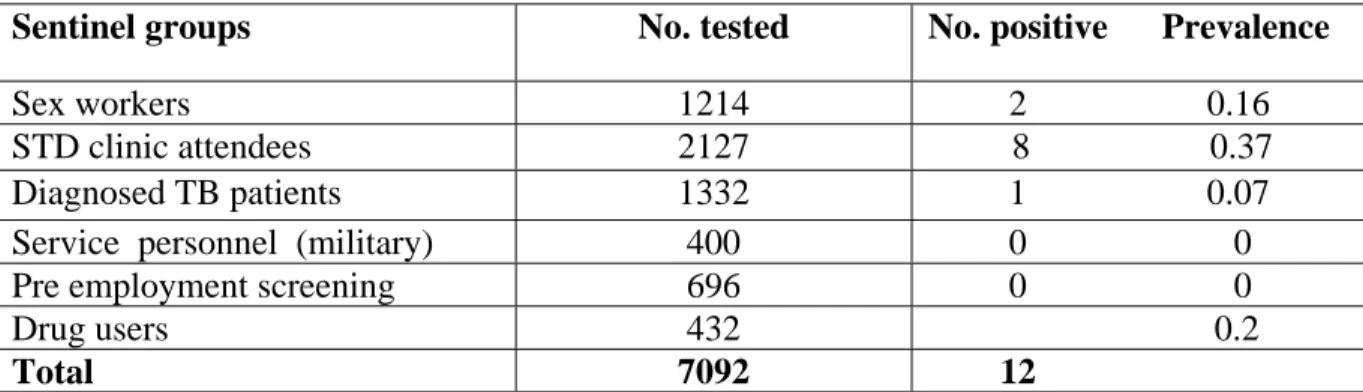
In 2006, a total of 7092 blood specimens were tested from patients with sexually transmitted infections (STIs), female sex workers (FSW), tuberculosis (TB), and military personnel; of these, only 12 specimens were HIV-positive –8 out 2216 (0.36%) STD patients, 2 out of 1216 (0.16%) FSW, 1 out of 1332 (0.08%) TB patients and 1 out of 432 (0.23%) drug users. Thus,
even among the high-risk groups, the HIV prevalence well below 1%. No data available for MSM .
Table 2 – HIV Sero –Sentinel surveillance 2005 -2006
( Source – NSACP 2006 )
There was no major change in trend and the low prevalence status of the country prevails. The prevalence among young people 15-24 years was Zero in most of the sentinel groups. (Table-)
Table 3: HIV Sentinel Surveillance 2006 (age desegregation)
No tested No. Positive Prevalence Rate
Sentinel Groups <25 years >25years <25 years >25 years <25 years >25 years Female sex workers 318 896 0 2 0 0.2 STD clinic attendees 564 1644 1 7 0.2 0.4 Diagnosed TB patients 219 1112 0 1 0 0.1 Service personnel (Military) 144 1056 0 0 0 0 Pre-employment category 269 427 0 0 0 0 Drug users 77 354 0 1 0 0.3 ( Source – NSACP 2006 )
Sentinel groups No. tested No. positive Prevalence
Sex workers 1214 2 0.16
STD clinic attendees 2127 8 0.37
Diagnosed TB patients 1332 1 0.07
Service personnel (military) 400 0 0
Pre employment screening 696 0 0
Drug users 432 0.2
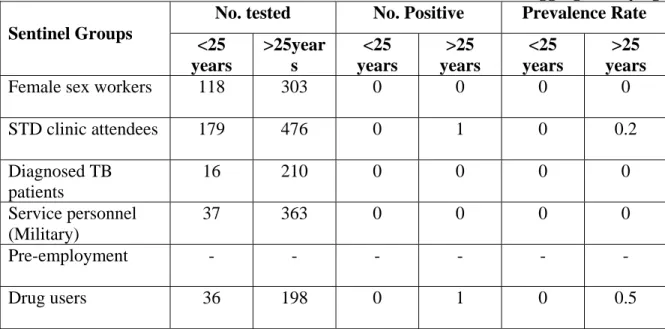
Table 4: HIV Sentinel Surveillance 2007 Western Province data (disaggregated by age) No. tested No. Positive Prevalence Rate Sentinel Groups <25 years >25year s <25 years >25 years <25 years >25 years
Female sex workers 118 303 0 0 0 0
STD clinic attendees 179 476 0 1 0 0.2 Diagnosed TB patients 16 210 0 0 0 0 Service personnel (Military) 37 363 0 0 0 0 Pre-employment - - - Drug users 36 198 0 1 0 0.5
Analysis of data from 2007 is complete only in the western province which has 5 sentinel sites.A single drug user among 404 (0.5%) and a STI clinic attendee among 655 (0.2%) were found to be positive.
Each year a large number of blood units are screened for HIV. Over the years, the HIV sero – positivity has ranged from a low of less than 1 per 100 000 population to a maximum of 5 per 100 000 population. Cumulatively, of a 251,187 blood units tested for HIV in 2006, (0.04%) were positive. (Source – NSACP) There was no major change in trend and the low prevalence status of the country prevails.
Antenatal clinic attendees as a sentinel group in the annual HIV sero-sentinel surveillance was discontinued in 1996 as advised by the WHO since repeated surveys yielded zero prevalence. The NSACP had been carrying out unlinked anonymous screening of VDRL samples of antenatal clinic attendees from two premier maternity hospitals in Colombo between 2000 and 2005, of 103,731 pregnant women tested in the two large hospitals in Colombo, only 6 (0.01%) were positive with little fluctuation from year-to-year.
Analysis of ANC data on mothers who were tested for HIV for PMTCT in a pilot project found a single mother positive in 2006 and none in 2007. (Table 5)
Table 5 – Prevalence of HIV among antenatal clinic attendees at the two premier maternity Hospitals in Colombo and pilot project at Gampaha
Year Number of VDRL samples screened Number positive % 2003 20,286 1 0.01
2004* 14,529 2 0.01
17
2006** 800 1
2007** 2105 0
(*The number of samples for VDRL received at the reference laboratory of NSACP in 2004 - 2005 declined as the maternity hospitals commenced testing their own samples).
**PMTCT pilot project in from 2004-2007 conducted in western province and central province yielded a single positive in 2006.
In 2006, the first behavioural surveillance survey (BSS) was conducted among a representative sample of sex workers, men who have sex with men (MSM), factory workers, three wheel drivers, beach boys and drug users.
Key findings of BSS were: proportion of men buying commercial sex ranged from 1.1% among factory workers to 12.2% among three wheel drivers and 15.5% among drug users; 0.8% of factory workers and 5.5% of drug users reported having male-to-male sex in the past year. Consistent condom use varied from a low of 46% % among MSM with non regular partners to 80% among factory workers with commercial sex workers.
Pattern of consistent condom use among vulnerable populations
0 10 20 30 40 50 60 70 sex workers
msm drug users male factoy workers taxi drivers beach boys
condom use
Source BSS 2006-2007 NSACP
HIV prevalence at a glance
% of young people 15-24 years of age who are HIV infected – 0% prevalence in 2007
% Most at risk population infected –well below 1% .
% of infants born to HIV infected mothers who are infected – no data available. 30 babies are infected through PMTCT to date.
Sri Lanka has a very strong network of STI Clinics Island wide which offers a comprehensive service package for the management of STIs. An analysis of the trends in data on reported sexually transmitted infections shows that while bacterial STIs have declined over the years, there is an increase in viral STIs.
0 1 2 3 4 5 6 7 8 9 10 92 93 94 95 96 97 98 99 2000 2001 2002 2003 2004 2005 2006 R at e p er 1 00. 00 0 Inf.syphilis GC NGI
Trend of selec ted bac ter ial STDs 1992-2006
0 1 2 3 4 5 6 7 8 9 10 92 93 94 95 96 97 98 99 2000 2001 2002 2003 2004 2005 2006 R at e p er 100. 000
Genital herpes Genital warts
III. NATIONAL RESPONSE TO THE HIV/AIDS EPIDEMIC. 1. National commitment and action
The Government of Sri Lanka (GOSL) has responded to HIV/AIDs since early1980s and the strategic response of the GOSL to the threat of HIV/AIDS has been the early adoption of a multi -sectoral approach which encompass partnerships, policy development capacity building and utilisation of resources of the partner sectors.
The GOSL is fully committed to the prevention and control of HIV/AIDS and over the years has recognised HIV/AIDS as a developmental issue with social and health implications and given priority to prevention and control activities.
The National AIDs Council formed in 2006 is the highest governing body chaired by His Excellency the president with relevant ministers as members .The National AIDs Committee (NAC) formed in 1988 is the policy formulating body of the Ministry of Health on HIV/AIDS and oversees implementation of the response and chaired by the secretary for the ministry of health care & nutrition (MOH ) ,with other ministerial secretaries , donors , civil society including Non governmental organisation NGOs/ Community based organisations CBOs People living with HIV/AIDS ( PLWHA )and private sector as members.
The National STD/AIDS Control Programme (NSACP), which comes under the purview of the Ministry of Health, is spearheading the national response with all other stakeholders such as non- health state sectors, non governmental organizations, business community, people living with HIV in its multi sectoral approach. The three one principle guides the national response, one multi sectoral strategy, one national comprehensive strategy and one HIV/ AIDS monitoring & evaluation framework. The head quarters of the NSACP are located in Colombo with the central STI clinic & national reference laboratory for HIV/STIs. The NSACP carry out both prevention and curative functions. The key component areas are surveillance, STI management and care, prevention of mother to child transmission, laboratory support including infection control, HIV care and support, Information education and communication (IEC) Behavioral change communication (BCC), Voluntary counselling and testing (VCT),policy and programme management, training and research.
NSACP provides preventive and curative services for STIs and HIV through a network of 26 STI clinics island wide manned by a trained MO trained in /STD. Clinical services for STI are high quality and well organized. Clinics are well equipped and have adequate supplies of condoms and essential medicines. Stock outs of some laboratory reagents were reported, however recently.
With the devolution of the health services the administrative powers lie with the provincial authorities and the NSACP provides technical guidance and oversees implementing preventive services through STI clinics in collaboration with the provincial health services. STD clinic staffs are very active in the community conducting awareness and risk reduction trainings for a range of groups from intermediate to low risk together with provincial medical officers of health ( MOH). These include military (those passing through transit camps,
peace keepers en route to overseas deployment), 3-wheel drivers, domestic workers en route to Middle East, school children, teachers, community groups (e.g.: funeral committee), etc. Within the health sector the key institutions providing HIV/AIDS related services are Family health bureau - (PMTCT ) Health education bureau , national blood transfusion service (NBTS) , National TB programme , Curative services of Ministry of health .
The other government sectors responding to the national response are education (school based life skills education) ,labour , prisons , national dangerous drug control board , defence, fisheries tourism , Social Services & national child protection authority , national youth council .Media & Broadcasting, External Resources, Ministry of foreign employment and Policy planning and Implementation. Public Administration, Provincial Councils and Home Affairs.
Non-governmental Organisations and Community based organisations and the private sector are the other stakeholders for the national response , mainly by raising awareness among general population at large and subpopulations with lower risk .Few NGOs are engaged in community care for those affected by HIV and targeted interventions for most at risk populations .
The first Medium Term Plan (MTPI) and the National AIDS Committee (NAC) was formed in 1988 and was followed by the MTP II in 1994, the formation of the UN Theme Group in 1996 and the National Integrated Work Plan in 1998.
Few development partners support the national response .The strategic plan for 2002-2006 was implemented by the NSACP mainly through the National HIV Prevention Project (NHAPP) launched in 2003 using a multi sectoral approach for a period of five years funded by a WB grant of 12 million US$ to the ministry of health. The grant was utilized for HIV/ AIDS prevention and care, purchase of ARV, strengthening surveillance, TB control, safe blood and waste management, institutional strengthening, and capacity building.
Global fund (GFATM) will support prevention services in schools and plantations and committed to support purchase of ARV from 2008 onwards. USAID the only bilateral donor assisting prevention has been providing technical assistance to CBOs , UN theme group formed in 1996 has been providing technical assistance including some funds for programme management (UNAIDS), surveillance (WHO) PMTCT & sexual health education for adolescents (UNFPA &UNICEF), HIV prevention in workplace (ILO) food support to AIDs affected families (WFP).
An external review was carried out in 2006 to evaluate the national response over the 2003-2006 and to make recommendations for formulating the strategic plan for the next five years. Several reviews were conducted by the WB in 2006 & 2007 to evaluate the progress of work by the NHAPP & a revised project implementation plan for year 2007-2008 has been developed with the objective of strengthening the NSACP in implementing the new strategic plan by engaging consultancies to develop a national strategy for advocacy, communication, research, care and treatment for HIV, M&E and size estimation of risk groups.
The national strategic plan (NSP) for the 2007-2011 was prepared during 2007 with participation of all relevant stakeholders with the Goal to maintain the low HIV prevalence in
the country and provide care and support for those infected and affected. It intended to enhance programme efficiency in its ongoing BCC activities, re-focus the programme on most at risk populations (MARP), and move towards greater integration of HIV-related activities with other health , sectoral and civil society activities. The NSP has identified key strategic areas and the relevant interventions and cost. Production of plan of operations building “bottom-up” from districts to provinces and provinces to the national level will be the next step which translate strategic directions laid out in the NSP into a work plan and a budget.
Political commitment
His Excellency the President chairs the National AIDs council a higher governance body formed in 2006 to provide direction to all sectors through their line ministries and take decisions on controversial issues. H.E.the president issues statements on World AIDS day and monitors the progress of work done on HIV/AIDS during health sector reviews. His Excellency the President was the Chief Guest at the 8th ICAAP held in 2007 .A high level ministers forum was organised by the ministers of Health & Labour at the 8th ICAAP on reproductive /sexual health HIV/AIDS integration. Sri Lanka politicians actively involved in the Parliamentarians for Global Action programme against AIDS.
AIDS in the Workplace activities are being evaluated by the minister of Labour regularly and the minister of Foreign Employment is actively involved in planning HIV prevention programmes of the Foreign Employment Bureau targeting international migrants and their families. New legislations protecting right and welfare of overseas employees are being introduced with support from employing country, securing minimum wages and health facilities.
Laws and policies are in preventing young married women under the age of 35 seeking employment overseas to prevent child abuse and family disruption was a step in the right direction.
Progress in implementation of the national strategic plan - 2006-2007.
Prevention
Prevention activities were conducted through NGOs, sectors, provincial authorities, International NGO (INGO) and private sector with support from donor agencies.
The project implementation plan of NHAPP was revised as recommended following the WB mission review in 2006 to focus more on interventions for high risk groups (CSWs, MSM, drug users, etc ) as it was noted that majority of the NGOs and sectors were only creating awareness among general population & low risk populations . The sectoral plans were revised to conduct BCC programs, base line surveys to gather information to develop appropriate interventions, training peer leaders to reach the target populations and continue advocacy for support from higher officials. Awarding contracts to NGOs to deliver a service package to MARP was expedited.
MARP were targeted through sectors (as evident by programmes in prison, for fishermen and external migrants) and NGOs ( sex workers , drug users , internal migrants) and some provincial programmes . Capacity building of the NGOs and sectors to meet the targets was given due attention.
The format of the prevention programmes moved away from IEC to behaviour development for low risk groups and BCC for MARP. More peer lead interventions to reach target population were designed than mass education programmes. The communication strategy which is being finalised will ensure development of standard, quality, target group specific, messages at the central level .
Most recently in 2007 the NSACP has obtained additional support through the Global fund for AIDS/TB/Malaria (GFATM round 6) .This fund will further strengthen and fill in some gaps in prevention, care and support programs for HIV. The key areas covered here are a program which covers 1300 schools in 10 selected districts, Plantation workers in Tamil speaking plantations in 5 districts for increasing condom use and strengthening voluntary counselling and testing, support for ARV, reagents and a program that builds provincial level teams that will be responsible for implementing prevention programs in the provinces and districts.
Involvement of Provincial Health Authorities
Provincial Work plans have been developed with technical assistance by NSACP to include HIV /AIDS prevention activities in the provinces in line with the National Programme objectives. The provincial health authorities collaborate with the STD clinics, other sectors and NGOs in their provinces in implementing these activities.
Regular meeting of provincial AIDS committees are held assisted by NSACP staff for monitoring the activities carried through other sectors and NGOs.
The provincial programmes were focussed on reducing stigma in health care settings by increasing awareness of health staff on HIV transmission & prevention , promoting standard precautions /Universal precautions among HCW , capacity building on VCT and sensitisation of the health staff on ART and comprehensive care for HIV .MO/STD continued to be the focal point providing technical support.
A summary of WB funded activities conducted by the NHAPP in 2006-2007 are given below.
Involvement of NGO/CBOs
Sub projects – small scale behaviour change interventions were carried out through 26 NGO/CBOs contracted during the second round in 2005 -2006 who successfully completed the first round of subprojects. Target groups were drug users, transport workers, sex workers, factory workers, estate population, internally displaced, youth etc. The activities were closely monitored by the provincial authorities, provincial AIDS committees, and 2 regional facilitators of the NHAPP. It was found that targeting high risk /vulnerable groups through NGOs were not adequate as only 3 NGOs out of the 26 engaged in targeted interventions addressed sex workers, 2 on drug users and none on MSM and the coverage was very low. It
was evident that very few NGOs are willing to work with difficult to reach groups in spite of capacity building on BCC, VCT, and M&E etc.
Subcontracts -Large contracts
6 NGOs were selected to provide interventions to sex workers, drug users and factory workers in 2007. Some have completed baseline surveys and some have used the results of the BSS to plan interventions. The project is ongoing, and peer out reach, BCC, VCT, condom promotion and linking with STD services are the key activities identified.
Sectors
Although 13 sectors were involved in the beginning in 2004-2005 in the first round, Prison, military, foreign employment bureau, labour and fisheries sectors were continuing to address high risk groups and were continued to be funded through WB till end 2007. The disbursement Of funds by other sectors were low A focal point for HIV prevention has been identified in almost all the sectors to liaise with the NSACP through the sectoral coordinator at NHAPP . Condom promotion ( condom dispensers were installed in officers mess in military , condoms made available to prisoners on discharge and in the wards in the prisons hospital) and VCT, BCC, screening for STIs, HIV/ AIDS education incorporated in to the training curricular, are the activities internalised in to sectoral programmes. Some sectors have mainstreamed preventive activities and have allocated own funds for these activities clearing doubts on sustainability of the projects.
Involvements of other sectors on HIV/AIDS Prevention
The 13 government sectors continue to work for prevention of HIV / STD /AIDS with technical assistance from NSACP and financial support of the NHAPP with additional resources made available through from the UN agencies ( National Dangerous Drug Control Board , National Institute of Education , Labour, Child protection authority) .Owing to the interest and commitment generated by NHAPP/ NSACP new sectors are getting involved in the national response .
• Uniformed services: (Army, Navy, Air force and Police): Awareness and advocacy programmes were continued in 2006 and specific IEC material produced. Existing counselling centres function as VCT centres with trained counsellors in the Army ,Navy and Air force camps. Peer leaders were trained. Condom promotion and distribution are in built in to the sectoral programme 30994800 condoms were distributed in 2006 & 18403200 in 2007. Nearly 80 condom dispensing boxes were installed in the camps. HIV prevention activities have been limited in 2007 due to escalation of the conflict situation in the country. However, advocacy programmes and awareness programmes for all three forces are continuing and condom distribution activities are sustained. Link with the STI clinics for referrals for STIs continued, however patients may be seeking treatment in the private sector.
A KAP study was carried out in 2006 among Air Force personal and in 2007 among Sri Lanka Army soldiers.
• National Youth Services Council : Guidelines for training peer educators were completed and peer outreach is being carried out through youth clubs on life skill based HIV prevention. Nearly 16,000 youth were reached in 2006.
National Institute for Education (NIE): Curricula for teaching HIV/AIDS and reproductive health education in schools and teacher training modules have been revised giving attention to concentrate in school education than informal education by NGOs /Medical officers and several organisations in the past. Ongoing activities to develop adequate material for the teachers to teach life skills based education in reproductive health (2 life skills per each area) will be supported by the NSACP.
Worker Education Division of Labour Department: HIV /AIDS awareness in the working place especially in garment factories, plantation sector & industrial zones are being carried out.
National Dangerous Drug Control Board (NDDCB) :
In the revised national policy on prevention & control of drug abuse launched in June 2006 under the “preventing use of drugs & reducing adverse consequences of drug abuse” its stated that drug prevention programmes will include HIV/AIDS prevention components and encourage voluntary testing .It also states that epidemiological ,social & scientific research on all aspects of drug abuse is encouraged .It also recognized that treatment and rehabilitation of drug dependents need different types of treatment and encourage provision of treatment acceptable to government via treatment services (residential or community based). Medical interventions are combined with counselling & provide with- in remand, prisons and correctional facilities with equity, screening for Hepatitis B&C ,TB and STIs also will be carried out.
A focal point has been appointed to deal with HIV/AIDS issues & collaborates with the NSACP in planning & implementing targeted interventions, estimations & research and surveillance on drug abuse .Director NSACP is among the many stakeholders, government and NGO dealing with drug abuse.
Promoting Voluntary Counselling and testing for HIV and other STDs through peer educators and rehabilitate drug users are some activities carried out by NDDCB through 4 residential centres and an out reach programme for drug dependents. 2738 persons island wide received treatment in 2006.58% in government facilities. 0.7% by NGOs .41% in prisons, majority (96%) receiving institutional care and were heroin addicts among whom (69%) inhaled, while 0.5% injected. No harm reduction (needle exchange programmes) are in place as it was not felt counter productive in low prevalent situations & methadone substitution is not permitted. NDDCB supported NSACP in conducting sentinel surveillance among drug users in the rehabilitation canters since 2006. A drug user was found to be HIV positive among 427 surveyed in the sentinel survey in 2006.
• Fisheries Ministry: One of the objectives of the Fisheries Social Development Division is the prevention of the HIV/AIDS in the Island wide fishing community HIV prevention activities are incorporated into fisheries cooperative societies and are carried out through fisheries field officers of the relevant division. Advocacy and awareness programmes for ministry officials were conducted to sensitise them on vulnerability of the fishing
population to HIV/AIDS as the commitment of the hierarchy for prevention programmes was very low initially..A baseline survey was completed to assess the vulnerability of fisher folk and their families. Training of peer leaders is being carried out. Monitoring and evaluation of HIV prevention activities is the responsibility of social development division.
• Sri Lanka Foreign Employment Bureau: (SLFEB) Pre departure awareness on HIV/AIDS and skills building to face vulnerable situations while overseas was commenced in 2005 for female migrants to minimize vulnerability to HIV infection as a pilot project. This was later extended to include spouses and families .Since the pilot project was successful it has been extended to the balance 34 training centres in the country. Videos, handouts are prepared for this activity. A hand out to promote voluntary testing on return to the island will be distributed at the immigration & emigration desks .An advocacy programme for foreign employment job agency officials was conducted to inform them of the necessity to educate migrants and maintaining confidentiality and quality of HIV testing.
• Department of Labour: Several policy level actions have been taken. A workshop was held to incorporate the ILO code of conduct on AIDs in the work place programmes. A tripartite agreement was signed between the Ministry of Labour, employer’s federation and workers organizations. NSACP and ILO have facilitated this process and some sectors are now internalising prevention of HIV/AIDS into their routine training protocols.
• Department of Prisons: Advocacy programmes were successful in generating interest & commitment of the high commissioner & prison officials integrating HIV prevention in to the prisons . Skill based HIV prevention education has been incorporated in to the training curriculum of new recruit prison officers. HIV prevention activities are included in to the duties of prison welfare officers. Training module were developed and training of peer leaders (prisoners ) are being carried out by welfare officers
Comprehensive clinical care for prisoners are in place with 16 doctors and 14 nurses facilitated by recent upgrading of the STI clinic and the laboratory to offer onsite testing, which is a major achievements and training of medical officers in syndromic management of STIs & counselling . 3 prisoners were found to be HIV positive over the years and 2 were foreigners who were deported.
Prisoners have access to IEC materials in their wards (rooms) and Library. Prisoners participated in World AIDs day programmes in 2006-7 by producing drama and song on AIDs & poster competition attended by Hon Minister of Health and higher officials’ Condoms are made available in the prison hospital & the clinic and distributed when released for family leave every 6 months. Despite overcrowding recreational facilities and income-generating activities for inmates are in place in the main prison in Colombo There are places of worship for 4 major religions. Female prisoners with infants are accommodated in a special unit and a pre-school for children under-five.
Specialized programme for drug dependent prisoners are conducted by the NDDCB& NGOS.
• National Child protection authority : The drop-in canters established by the NCPA in 2004 were not reaching those most at risk or most vulnerable children as expected. Those who attended were mainly to engage in recreational activities after school until their parent’s returns, or from poor families. The children who were deprived of parental care or living on the streets were not accessing these centres and the project was not funded in 2007. NCPA is committed to preventing child abuse and have engaged in a mass media campaign and providing a hotline for assistance in this respect.
Private sector organizations in the national response
A Business coalition has been established following the 8th ICAAP and the Standard Chartered Bank is giving the leadership to this collective and 39 business enterprises have been enlisted into the coalition
Sex workers outreach
Due to the illegal nature of the sex trade it is extremely difficult to reach out to sex workers. A group of health care providers have been trained to go out in to the field and meet with sex workers, brothel house workers and associated persons to educate them on the need for control and prevention of STD/HIV. As such around 250 sex workers have been reached in the capital city and 18 peers have been trained for out reach. The peer educators are referring colleagues for STD check up and voluntary counselling and testing. This project is funded by UNFPA
Information ,Education and Communication (IEC )
The national AIDs poliy has identified IECas aA Communication Agency has been contracted to develop a Mass Media Campaign and Condom Social Marketing under the supervision and with the technical assistance of the NSACP to increase HIV and STD awareness and bring about a behavioural change among vulnerable groups and general population to reduce stigma and adopt safe behaviours however, this failed to achieve the desired goals and was discontinued.
Awareness programmes are conducted by NSACP with the assistance of provincial health authorities by trained staff in the STD clinics and public health staff, and provide technical assistance for NGOS, CBOs, religious organisations, other sectors, private sector and PLWHA . A communication strategy was developed in 2007 with international expert assistance funded by UNFPA to guide developing target specific IEC material, to deliver uniform messages as it was evident from the BSS that there are gaps in knowledge on HIV transmission and prevention.
An advocacy strategy to support creating an enabling environment to implement prevention programmes was developed in 2006 & many advocacy programmes were conducted to sensitize political leaders, religious and community leaders, judiciary, provincial authorities
and sectors. Steps are being taken to develop a detailed advocacy & policy strategy aiming at policy change
(prevent sex worker arrests, facilitate condom promotion in prisons, and prevent discriminating drug users and MSM ) and is a priority area in the new NSP.
A Media Forum has been established in 2005.
Regular meeting are held chaired by the director HEB, with the participation of representatives, sectors & NGOs and health. 6 media seminars were held in 2006 and 15 media seminars in 2007 various issues related to HIV/AIDs were addressed including women empowerment, responsible media reporting, reducing stigma, health promotion.
Award for the best population journalist was given in 2005.NSACP has recognised the role of media as a very good method of dissemination of information on HIV & AIDS as reported by Behavioral surveillance , however responsible media reporting is encouraged respecting the rights of PLWHA for confidentiality & anonymity. Violators will have to pay compensation to the affected PLWHA.
ILO/USDOL HIV/AIDS Workplace Education Programme
The ILO in partnership with the Ministry of Labour Relations and Manpower (MOLRMP) is implementing a HIV/AIDS Workplace Education Programme since May 2005, with the objectives of reducing employment related stigma and discrimination and reducing risk behaviours among workers. The project has a behaviour change communication (BCC) component which is targeting nearly 7000 workers in 14 workplaces ( 5 hotels, 5 estates and 4 manufacture sector factories) and also has a capacity building component to enable partners from Employers’ Organisations, Trade Unions and the MOLRMP to integrate HIV/AIDS education in their programmes. The project approach is based on the ILO Code of Practice on
HIV/AIDS and the World of Work. HIV/AIDS Committees have been established in all
workplaces and they are trained to implement HIV/AIDS prevention programmes, provide care & support and to develop HIV/AIDS Workplace Policies. In addition Trainers and Peer Educators have been trained to create awareness and conduct BCC programmes. Thirteen workplaces have adopted Workplace HIV/AIDS Policies and have a workplace HIV prevention programmes in place.
At national level the project trained Trainers selected from the tripartite constituents, viz: MOLRMP, Trade Unions and the Employers Organisations. The tripartite constituents were provided assistance to design and sign a National Tripartite Declaration on Prevention of HIV/AIDS in Workplaces and also the Trade Unions to draft a Joint Trade Union Policy. The project attempts to change risky behaviours among migrant workers (both external & internal) in collaboration with the Sri Lanka Bureau of Foreign Employment (SLBFE), Trade Unions and the Board of Investment.
Capacity of Lanka plus has been increased by training peer leaders and increasing communication capacity of PLWHA. Active participation of members of Lanka plus is encouraged in all project activities which has helped to reduce employment related stigma & discrimination.
Blood Safety
The goal of the national blood policy is to transfuse infection free blood to all through non remunerative voluntary blood donations.. All blood donations are non remunerative but there is substantial levels of replacement donations. In Colombo replacement donations account for 8% and the national figure is 37%. Over the years there is a definite declining trend in the percentage of replacement donations while the total number of donations per year has increased from around 207 000 units in 2005 to 246752 in 2006.The donors who come in as replacement donors are turned back in many instances after counselling them about voluntary donation and they are used to recruit voluntary donors. A donor registry is maintained by the NBTS and MIS & M&E systems are being set up with WB assistance.
World blood day for 2006 & 2007 were celebrated ceremonially in order to improve voluntary in house blood donations.
All blood units collected are screened for HIV, syphilis and hepatitis B. Hepatitis C testing is performed in Colombo and will be island wide from January 2007. Blood is also tested for malaria, but there are often delays as the slides are read by AMC. HIV testing is done using ELISA. Blood units that test positive are destroyed and a sample sent to the central STD laboratory for confirmation. If confirmed, the donors are contacted by the central STD clinic for follow up.
The central blood bank and larger regional blood banks participate in an external quality assurance program run by the National Reference Laboratory in Melbourne and Thailand.
The blood bank has printed two books ‘Guidelines for clinical use of blood’ and ‘Handbook of blood transfusion practice for nurses’ to improve rational use of blood in hospitals.
Good progress is being made towards achieving 100% voluntary donations. It appears that some doctors and nurses outside the transfusion service are not aware of this policy. Smaller blood banks participate in external quality assurance program but do not practice standard operational procedures but this problem will disappear once testing is ‘centralised’ to Colombo and 5 regional blood banks practising standard operational procedures in the future.
STD Services
Sri Lanka has a well-established network of STD clinics at district level manned by both specialist and non-specialist medical officers and public health staff – usually a Public Health Inspector (PHI) and a Public Health Nurse (PHN) who have both clinic and prevention functions.. STD management Guidelines are followed in all the clinics to provide high quality clinical services for STIs. A comprehensive package is offered and the clinics are well equipped and have adequate supplies of condoms and essential medicines and laboratory facilities. 339552 condoms were distributed through STI clinics in 2006, & 182256 in 2007. Consultant Venereologists and MOs working in STD clinics are trained to manage the routine care of PLHA including routine ART follow-up visits.
STD clinic attendance is increasing following recent activities to raise awareness of STIs and HIV within communities. NGOs working with sex workers / MSM/drug users collaborates well with the local STD clinic team and makes regular contact and refer risk groups for STI services. PHI and PHN provide important outreach work including STI contract tracing and visits to sex work venues, and reach other high-risk populations with the support of NGOs. PMTCT in Sri Lanka
An opting out and an opting in pilot projects are on going. In the opting out project 4200 samples have been tested and only one antenatal mother was found to be positive. She was provided with the comprehensive management package. None have become positive in the opt- in project.
A working group was formed and a four prong strategy was adopted giving high emphasis on the first two prongs with Family Health bureau .Guidelines for PMTCT is to be finalised in 2008.The screening of pregnant mothers offering VCT to all is not cost effective in the current low prevalent situation, therefore screening of high risk mothers and opt in approach is favoured. Policy on ART to provide all mothers with ART free of charge in all public sectors exists. The drugs are registered for treatment of mother and baby. Breast feeding policy is in place encouraging formula feeding and exclusive breast feeding for the first 4 months in the event of in adequate facilities for formula feeding. 2 mothers were provided with ART for PMTCT during 2006-2007.
The training of health care workers on PMTCT have been conducted especially on stigma & discrimination covering the major maternity hospitals, children hospital in Colombo and will be extended to teaching hospitals in the provinces. A team of health staff including obstetricians, paediatricians, nursing sisters labour room staff, public health midwives and laboratory staff, were sent overseas for training on PMTCT in 2007. A team of obstetricians in the leading maternity hospitals in the country have been identified to provide comprehensive care to HIV positive pregnant mothers in collaboration with Venereologists of NSACP. To date a cumulative number of 30 babies were found to be infected through MTCT.
Treatment and Care:
Treatment and care of PLWA has been integrated in to prevention programme as a comprehensive approach to combat the epidemic. The care and support component has been strengthened by providing ARV for eligible people living with HIV in the public sector free of charge since 2004.The number of patients requiring ARV is increasing at a rate of approximately 30- 50 annually. It is a challenge to continue to provide ARV in the future as already an increase of people seeking care is noted probably due to availability of treatment (quarterly statistics NSACP)
The achievements so far in establishing the ARV programme are development of National treatment guidelines and drug policy ,Improving diagnostic facilities in the reference laboratory for diagnosing opportunistic infections, Institutional strengthening of Infectious disease hospital to provide care and treatment to AIDS patients in a patient friendly environment, Capacity building of health staff in the major institutions in the public sector , covering the National hospital ,obstetric units in 2 large maternity hospitals, National Eye
hospital and the leading paediatric hospital. All these activities were supported by the World Bank with necessary funds. Training programmes are currently being conducted, on treatment and care of HIV patients, counselling and infection control with emphasis on reducing stigma & discrimination towards positive people in health care settings.
Policy and Guidelines on HIV care
National AIDS policy under section one states that all HIV positive persons and AIDS patients shall have access to Government health services equally with other persons for treatment . Government accepts the right of infected persons to have access to treatment. HIV/AIDS patients will have the right to treatment as much as any other person in Sri Lanka. All drugs available in the government hospitals free of charge will be equally accessible to HIV/AIDS patients HIV Guidelines for ART and comprehensive care has been available since 2005 and will be up dated next year. Guidelines for management of Paediatric AIDs and for PMTCT are yet to be done, and HIV/TB guidelines are in the draft form and will be finalized during early 2008
National policy/ protocol for PEP is to provide PEP to all health care workers free of charge.. Recently the guidelines for disposal of dead bodies were updated and a new circular issued by the Ministry of Health .(2007)
Antiretroviral therapy (ART )
Since public provision of free ART began in November 2004, a total of 112 eligible persons were receiving ART by end 2007(adults and children) according to national guidelines. Provision of ARV was commenced at the central STI clinic and at present expanded services to Colombo North, Colombo South, and Kandy STI clinics. Due to the prevailing conflict situation in the north & east the services could not be extended to Jaffna as planned in the first phase of scaling up. Attention is being paid to scale up services gradually to the other provinces as well. The facilities for investigations for follow-up and monitoring the disease progress and response to therapy such as CD4 & Viral load tests are available at the central STD clinic In the immediate future these tests will be done only at the central STD laboratory because of small number of HIV/AIDs patients attending these clinics. It will not be cost effective to establish testing facilities in the peripheral clinics .Alternatively blood samples for CD4 are sent to the reference laboratory in the central STD clinic Drugs are issued to patients from the central STD clinic pharmacy and a quota of drugs for patients attending provincial clinics will be issued in advance from the central pharmacy. The facilities for treating patients for opportunistic infections and for comprehensive management of STIs are available in all the STD clinics.
WB/IDA project provided the financial assistance to procure ARV for HIV/AIDS patients at the inception of the comprehensive care and treatment programme and will be continued till June 2008. Average cost per an adult patient for ARV is Rs 8375 and it varies from 2274 to Rs 16024. It should be mentioned that these prices subjected to all tariff, duty, and other taxes imposed by the government. Funds from the 6th round of GFATM will be utilized to purchase ARV from latter half of 2008.
The cumulative number of patients registered at the central STD clinic was 275 at the beginning of 2006 .49 new HIV infected adults (25 Males and 24 females) were registered during year 2006’and 33 eligible patients commenced on ARV combination therapy during the same period. The cumulative number who were alive and on ART at the beginning of January 2007 was 69. During 2007, 67 new patients (36 males and 31 females) were enrolled and 44 eligible patients (22 males & 22 females) commenced ARV, of whom 6 have died .Cumulative number of adults on ART as end 2007 was 107.Six children are on ART at present a 50% increase from last year. Total number of patients who were changed to second line treatment was 5. At present there are about 391 HIV positives registered in the HIV clinic at the central STD clinic (NSACP)
According to the estimates carried out by the national working group in 2007, ART need for adults & children in 2006 were 706 and 776 in 2007. Accordingly coverage of ART for adults and children in 2006 was 9.6% and increased to 13.7% in 2007.
Patients are monitored using 6 monthly CD4 counts and viral load when it is available. HIV drug resistance testing is not available in Sri Lanka and it is recommended that close monitoring of adherence & compliance to treatment should be carried out to prevent development of drug resistance .Monitoring of CD 4 counts & viral load to detect treatment failure and as an early warning of drug resistance among patients on ART is also recommended in the absence of drug resistance testing. 63% patients were alive and on treatment continuously for 12 months during 2006-2007.
Capacity building
Over 700 health staff have been trained in clinical care , infection control since 2005.In 2007 sensitization programmes for health care workers in teaching hospitals in Colombo were commenced and will be scaled up to provinces next year aimed at providing facts on ART , adherence to treatment etc. and reducing stigma towards PWHA in the health care setting. This two-day WS on comprehensive care and treatment program (CCTP) has paid dividends among HCWs who committed to provide care for HIV/AIDS patients. It was evident that stigma and discrimination towards these patients were minimized significantly.
Care & Support
Patients who were having economic difficulties were provided nutritional support in a form of a food basket weighing 65 Kg on monthly basis with assistance from WFP since 2007. Palliative care is provided in all government hospitals including IDH .Community and Home based care is still in its infancy, very few Care groups /NGOs are engaged in providing support to PLWHA .Lanka + and “positive hope “PLWHA network provides psychological support. A three wheeler was provided to Lanka + by WB grant as logistic support in 2007 for PLWHA. Another NGO -salvation Army has a wider net work and make home visits, train family members in home based care. Nest looks after 2 orphans who are on ART. The burden of care of orphans still lie with the extended families and relatives and is an issue to be addressed in the new strategic plan by supporting care groups and engaging religious organisations in community based care with careful planning not to divulge identities and increase stigma.