Essays on Pre-Commitment in
Germany
Cumulative Dissertation
submitted to the Faculty of Business, Economics and Social Sciences,
University of Hohenheim, in partial fulfillment of the requirements for
the Degree
Dr. oec.
submitted by
M. Sc. Tanja Strohäker
Institute of Economics
Institute of Agricultural Policy and Markets
the University of Hohenheim.
Defense of doctoral thesis: January 13, 2020
Professor Dr. Karsten Hadwich, Dean, University of Hohenheim Professor Dr. Tilman Becker, Supervisor, University of Hohenheim
Professor Dr. Michael Ahlheim, Second assessor, University of Hohenheim
Professor Dr. Alfonso Sousa-Poza, Chair of the doctoral committee, University of Hohenheim
Summary
The focus of this thesis is to examine groups of gamblers who use different pre-commitment tools that can function as harm minimization strategies on the German gambling market. The main emphasis lies on those who set limits and those, getting excluded from gambling venues. Both groups have been awarded attention in the literature, but rather little work has been conducted on gamblers in the context of Germany and the legal and social conditions prevailing there. The goal is, on the one hand, to find out what drives the number of self-excluders from casinos or gambling arcades. To achieve this, a collective approach using macro data is used. On the other hand, it is examined whether self-initiated limits have an impact on gambling behavior. Based on the findings of the original research presented in this thesis, as well as findings already established in the literature, suggestions for future scientific work and recommendations for action for the programs can be made.
Pre-commitment is a form of self-binding that allows gamblers to limit money and time spent on gambling before they start a session. These tools can differ in the type of their liability. First, they can be designed in a way that they are monitored and enforced by third parties and hence are externally binding. Second, they can be self-management strategies that gamblers themselves voluntarily initiate. This is based on the underlying idea that gamblers will benefit from the fact that expenses and duration of stay are determined before commencing a gambling session, when they are not yet in a state of emotional arousal and hence more capable of deciding rationally. In terrestrial casino gambling, self-exclusions are a frequently used harm minimization strategy and can also be seen as a form of pre-commitment. They represent the most extreme type, where gamblers prevent themselves from entering establishments and hence limit their gambling activity to zero.
Chapter 2 concentrates on analyzing which variables drive the differences in the number of exclusions from casinos throughout German municipalities. The goal is to examine the degree to which socio-demographic factors and proximity measures can be used to explain the variation in the number of excluded gamblers across German communities. The risk factors for problematic gambling serve as a threshold for the socio-demographic background. The method used for estimation of the effects
socio-demographic variables yield significant results, we can only partially confirm the well-established risk factors for problematic or pathological gambling. Additionally, the results show that the number of exclusions increases with close proximity to gambling establishments.
Chapter 3 deals with a similar research question, which this time is tailored to excluders from gambling arcades in Hesse, Germany, where the first formalized exclusion system for arcade gamblers was established in 2014. The goal was to identify socio-demographic as well as accessibility related predictors that impact the number of exclusion in communities. We control for three different accessibility measures in two models: the share of electronic gambling machines in model I as well as the share of locations and the density of gambling machines at a location in model II. Thereby, the association between EGMs and exclusions of model I can be disentangled into a location and a clustering effect. Again, we are not able to determine a specific socio-demographic background for self-excluders. The accessibility variables, on the other hand, turn out to be significantly associated with the number of exclusions. All three of them are statistically significant and their impact is positive. The results of model II show that the location effect is more pronounced than the clustering effect of EGMs.
The findings from Chapters 2 and 3 show that, with higher aggregated data, no clear socio-demographic profile for excluders can be determined. The results concerning accessibility confirm those established in the literature. An increase in accessibility leads to an increase in the number of exclusions or in other words an increase in the number of vulnerable gamblers.
Chapter 4 deals with self-limitation, which is another type of pre-commitment. As there has existed no formalized limit scheme in Germany, it is left to evaluate voluntary and self-initiated limits that are frequently used as self-management strategies by gamblers. The goal is to analyze the impact of self-initiated limitations on gambling behavior. The analysis shows that there are significant differences in most gambling variables indicating that unwanted behavior occurs less frequently in the group with limits. These results even hold if they are controlled for (gambling-related) self-efficacy. These findings are highly promising and might serve as a starting point for future considerations concerning the topic of pre-commitment in Germany in general and self-limitation in particular.
Acknowledgments
I want to acknowledge all the people who supported me during the process of writing this thesis. First, and foremost, I want to thank my supervisor Professor Dr. Tilman Becker for giving me the opportunity to join his team and for his consistent guidance, advice and motivation to finish what I started. Equally important was the help of my colleagues and friends from the gambling research center, Andrea Wöhr and Marius Wuketich. Their remarks were always highly valuable and have always taken me one step further. I thank Professor Dr. Michael Ahlheim for being my second supervisor. I want to thank Professor Dr. Robert Jung, for giving me the opportunity to gain initial experience in research and Dr. Karsten Schweikert for always taking the time to answer my stupid questions. I also want to highlight the whole team of the chair Agricultural Markets and Agricultural Marketing, Alex, Beate, Esin, Gudrun, Johannes, Stergios and Luitgard, for the appreciated conversations, guidance and their general support. Further I want to shout out to all my fellow students and colleagues, who accompanied me along the way and who I luckily now call friends: Sonja, Miri, Rafaela, Senta, Annika, Mandy, Meli and of course Matze. My longtime friends must not be forgotten either, so thank you Anke, Ela and Tanne for enduring me and my whining.
Finally, and most importantly, I want to thank my Mom, Dad and my brother Jens for always and unconditionally believing in me. Who would have believed that, two doctors!
CONTENTS
Contents
List of Figures iii
List of Tables v
1 Introduction 1
2 Profiling Excluders from German Casinos using Municipality Level
Data 9 1 Introduction . . . 9 2 Literature Review . . . 11 3 Data . . . 14 4 Results . . . 20 5 Conclusion . . . 24
3 The Relationship between Exclusions from Gambling Arcades and Accessibility: Evidence from a newly introduced exclusion program in Hesse, Germany 27 1 Introduction . . . 27 2 Literature . . . 30 3 Data . . . 33 4 Results . . . 35 5 Discussion . . . 39 6 Conclusion . . . 40 A Appendix . . . 42
4 The Relationship between Self-limitation and Gambling Behavior among German Gambling Arcade Visitors 45
1 Introduction . . . 45
2 External versus Internal Limits . . . 47
3 Data . . . 51 4 Results . . . 57 4.1 Socio-demographic background . . . 57 4.2 Self-efficacy . . . 58 4.3 Gambling behavior . . . 59 5 Discussion . . . 63 6 Conclusion . . . 66
5 Critical Discussion and Conclusion 67
LIST OF FIGURES
List of Figures
2.1 Exclusion Density Map. Own presentation. . . 16
LIST OF TABLES
List of Tables
2.1 Definition of variables. . . 19
2.2 Regression Results. . . 21
3.1 Overview of EGMs and Venues in Hesse. Source: Trümper and Heimann (2014) and own calculations. . . 34
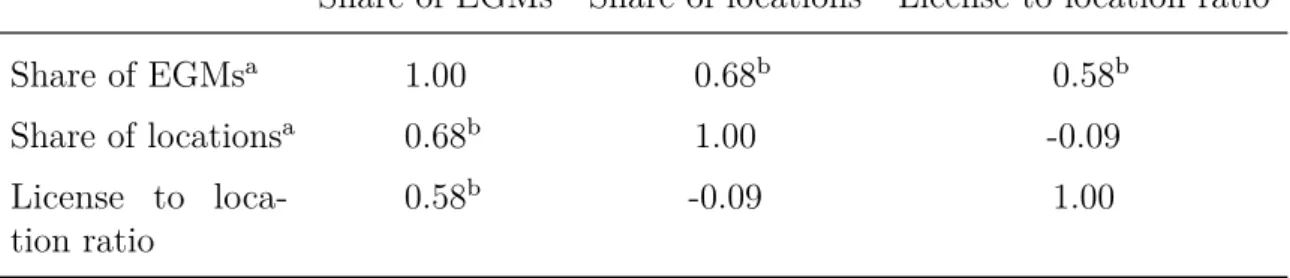
3.2 Correlation matrix for accessibility variables. . . 35
3.3 Regression Results Model I: Share of exclusions on share of EGMs and socio-demographic variables. . . 36
3.4 Regression Results Model 2: Share of exclusions on share of locations, license to location ratio and socio-demographic variables. . . 38
3.5 Estimates for prevalence rates of disordered gambling in Germany. . . 42
3.6 Estimates for prevalence rates of disordered gambling in Germany. . . 43
4.1 Overview of questions concerning gambling behavior. . . 53
4.2 Descriptives for metric gambling behavior variables. . . 54
4.3 Frequency distribution of the limit variable. . . 55
4.4 Results for difference in means test in socio-demographic variables. . 57
4.5 Frequencies of self-efficacy variables. . . 58
4.6 Frequencies of the Lie/Bet problem index. . . 59
4.7 Frequencies of ordinal gambling variables. . . 60
4.8 Descriptive statistics for the metric gambling behavior variables. . . . 61
Chapter 1
Introduction
Gambling is inseparably connected to the history of mankind, with first evidence for the presence of games of chance dating back to 4000 BC. Possible (monetary) gains paired with the thrill of the uncertain outcome of the game have always fascinated people (G. Meyer & Hayer, 2010).
Over time and with advances in technology, the possibilities to indulge in gambling increased, and with it, the opportunities to make money out of it. Hence, it is not surprising that gambling represents an important and profitable market for many countries. In 2016, the global volume of gross gaming revenue (GGR) is estimated to amount to EUR 367.9 billion (Jung et al., 2017). For Germany, GGR for the regulated gambling market was EUR 10.98 billion in 2017 (Barth, 2018).
The popularity, as displayed by the market volume is also reflected by lifetime prevalence rates. Banz and Lang (2017) show in their report that 75.3 % of the German population has participated at least once in any form of gambling throughout their life. What has to be taken into account is the fact that, in addition to being an allure, gambling can serve a completely different purpose. Namely, it can function as a means of blanking and displacement of stress or conflict (G. Meyer & Hayer, 2010). Consequently, gambling naturally carries the risk of developing problematic or pathological behavior. The estimates of the proportions of those affected vary, always depending on the sampling selection and the instrument1 used to assess gambling
behavior. Considering the estimates of recent German studies, the unweighted mean prevalence rates of studies using the Diagnostic and Statistical Manual of Mental Disorders (DSM-IV) are at 0.35 % for pathological and 0.34 % for problematic behavior, whereas the unweighted mean prevalence rates of studies using the South Oaks Gambling Screen are at 0.53 % for pathological behavior and at 0.46 % for
1The two instruments compared here are the Diagnostic Manual of Mental Disorders (DSM-IV)
and theSouth Oaks Gambling Screen (SOGS). Both are diagnostic tools, which are used to assess the presence of possible problematic or pathological gambling behavior.
problematic behavior (for more detail see Tables 3.5 and 3.6 in section A). Although these estimates appear small, especially when compared to prevalence rates of substance addictions like alcoholism or drug abuse, it can be assumed that more than half a million people2 are directly affected by their excessive gambling behavior,
not including their families, friends and further social costs that might arise.
The German government recognizes the risks involved in gambling. Nevertheless, at the moment, a comprehensive regulation is a rather tough undertaking, as the regulatory sovereignty lies within the legal scope of the federal states. Each state individually enacts implementing legislation which governs organization, operation or taxation of establishments. With the introduction of the Inter-State Treaty on Gambling (Glücksspielstaatsvertrag (GlüStV)) in 2008 and a renewed and adapted treaty(Glücksspieländerungsstaatsvertrag (GlüÄndStV)) in 2012, the German state aimed to provide a nationwide and common framework, valid for all federal states and types of gambling. Its overarching goals are
• to prevent the development of gambling addiction as well as to create pre-requisites for an effective addiction control
• to steer the natural gambling instinct of the people into orderly and monitored channels and to counteract the development and spread of illegal gambling in black markets
• to ensure youth and consumer protection
• to ensure that gambling is properly conducted, that gamblers are protected from fraudulent activities and that consequential and accompanying crimes associated with gambling are fended off
• to prevent risks to the integrity of sporting competition when organizing and placing sports bets.3
We see that the Inter-State Treaty puts an emphasis on youth and consumer protection as well as the prevention of problematic gambling behavior. The term prevention summarizes all tools that either counteract unwanted psychological or physical conditions or that avert them in advance. Prevention can be subdivided into primary, secondary and tertiary prevention, depending on the time of intervention.
Primary prevention can be seen as proactive. The target population are gamblers and non-gamblers, independent of their risk status. Risk groups, like adolescents, are
2Summarizing the shares of problematic and pathological gamblers of the more conservative
mean estimates and assuming a population size of 82.79 million people.
given particular attention. Measures such as education and promotion of conscious participation in gambling are used to prevent gambling problems in the future. This can be achieved, on the one hand, by structural interventions. Possible are statutory regulations, like the reduction of availability and accessibility, restrictions on advertisements in order to prevent incentives for participation (e.g. prohibition of free spins), restrictions on cashless payment transactions or the prohibition of alcohol and/or tobacco in venues. The latter measure is particularly important, as alcohol as well as tobacco addiction are established co-morbidities for gambling at problematic levels (Welte et al., 2004; Williams et al., 2012). On the other hand, there are educational tools like awareness-raising campaigns in schools and for the public (Hayer & Meyer, 2004).
Secondary prevention aims at gamblers at risk who exhibit moderately problematic behavior and is intended to contribute to early detection or early intervention. Measures of secondary prevention can help to recognize warning signs and avert negative consequences at an (respectively) early stage (G. Meyer & Hayer, 2008). The main goal here is to minimize harm by motivating gamblers to change their behavior early on. Suitable for this purpose are low-threshold offers, like telephone hotlines, but also the strengthening of coping mechanisms (Hayer & Meyer, 2004). This aspect of prevention is especially interesting for this thesis as pre-commitment tools, on which the following chapters focus, can be assigned to secondary prevention.
Tertiary prevention starts the latest and targets pathological gamblers who are often dealing with their severely disturbed playing behavior but also at those who are abstinent or even recovered. The main goals are thereby relapse prophylaxis, the avoidance of consequential damages, the reintegration into society and, of course, working life. Means to achieve these goals are often individual or group psychological therapy (Hayer & Meyer, 2004).
The focus of this thesis is to examine groups of gamblers using different pre-commitment tools that can function as harm minimization strategies on the German gambling market. The main emphasis lies on those who set limits and those, getting excluded from gambling venues. Both groups have been awarded attention in the literature, but rather little work has been conducted on gamblers in the context of Germany and the legal and social conditions prevailing there. The goal is, on the one hand, to find out what drives the number of self-excluders from casinos or gambling arcades. On the other hand, it is examined whether self-initiated limits have an impact on gambling behavior. Based on the findings of the original research presented in this thesis, as well as findings already established in the literature, suggestions for future scientific work and recommendations for action for the programs can be made.
and/or money spent on gambling. The most important feature is that these limits are determined before gamblers start their session of play while they are not yet in a state of emotional arousal (Griffiths et al., 2009; Livingstone et al., 2014). Self-exclusions portray a special instrument in the variety of means of pre-commitment. They represent the most restrictive form, as gamblers basically limit their gambling activity to zero by preventing themselves from entering venues at all (Productivity Commission, 2010). The exclusion is not necessarily accompanied by therapeutic measures. It is more an isolated strategy of restriction of demand, which is frequently used in land-based gambling. This drastic step might help gamblers to regain control of their actions. While especially self-exclusions are a rather new tool of player protection and harm minimization in most countries, they have a rather long tradition in German casinos. The possibility to get excluded has existed since the end of World War II, the formalization of the program started in 1991. Next to bilateral self-exclusions, unilateral external exclusion, e.g. by casino staff, can be imposed. They should, however, not be confused with bans issued on the basis of domiciliary rights as the intention behind it is a completely different one (G. Meyer & Hayer, 2010). The demand for a comprehensive exclusion system has been incorporated into the Inter-State Treaty. This shows that the German legislator is convinced of the positive contribution of exclusions to prevention. However, at the moment, there is no German-wide scheme which is valid across all types of games. A formalized one is only existent for casinos and for gambling arcades in the federal state of Hesse, Germany. The latter was introduced in 2014 and is valid state-wide, but not outside of Hesse (Fux, 2017). That is to say that the aforementioned goal of the Inter-State Treaty, namely a comprehensive exclusion scheme valid for all states and all types of gambling could not yet be implemented.
Excluded gamblers are interesting research subjects as, contrary to the popular opinion, they should not be equated to the group of pathological gamblers. Although there is some overlap (Hayer & Meyer, 2011a, 2011b; Ladouceur et al., 2000), the terms excluded and problematic or pathological gamblers should not be used as synonyms. Lischer et al. (2016) and Griffiths and Auer (2016) provide evidence that a large fraction of gamblers use self-exclusion as a means of prevention and the authors are not able to find an unambiguous link between getting excluded and problematic or pathological behavior. In G. Meyer and Hayer (2010), 60 % of the sample states to use the exclusion as a precautionary measure. Hence it makes sense to categorize self-excluders asvulnerable gamblers rather than any of the two aforementioned. This means in reverse, that not all insights established about problematic or pathological gamblers can be transferred one-to-one to excluders, hence more research about the latter group is necessary to better understand what drives them, to further improve the exclusion scheme and to adapt it to their needs.
Another feature, which distinguishes the original research presented in the second and third chapter of this thesis from other work dealing with exclusions from gambling, is the fact that no self-reported data is used, but higher aggregated community level census data. This has the advantage that biases, which typically occur when individual level data is used, are avoided. There are no problems with selection bias, i.e. under- or over-representation of certain groups, as census data tries to include all members of a population. Additionally, the data might be less biased due to social desirability or pride than individual level data, as data aggregation ensures that no individual can be singled out, i.e. identified by their answers. This means that they might be more honest. This is especially relevant in light of sensitive questions, e.g. about occupational status or age, which are important predictors in the two chapters of this thesis that are dealing with exclusions.
As there exists no German-wide comprehensive exclusion program, especially gamblers in gambling arcades outside of Hesse have to use other means of pre-commitment. Although there is also no formalized pre-commitment program in place for limit-setting in automated gambling in Germany, many gamblers still choose to determine internally initiated restrictions on money and/or time spent in venues. As these limits are not overseen by any monitoring body, they are not externally binding for the gamblers and should rather be seen as a voluntary control strategy. This specific type of informal pre-commitment can suffer from a lack of effectiveness. There are no possibilities to monitor expenditure or length of stay, hence it might be hard to maintain the overview for gamblers. Formalized systems offer clocks, counters and pop-up messages incorporated into the machines, which draw gamblers’ attention to time and losses played. Furthermore, these limits can easily be breached. However, there are also advantages. Certain gamblers still think that pre-commitment is mostly relevant for at least problematic gamblers. They might feel that paternalistic and rigid schemes enforced on them by operators or legislators impair their gambling experience, which might act as a deterrent for them. Consequently, the effectiveness of these mandatory types of programs could also be affected negatively. Obviously, both types of pre-commitment schemes have their pros and cons, Chapter 4 deals with this in more detail.
Having introduced pre-commitment as the main topic and red thread of this thesis, we now turn to the original research. The following chapters consist of three stand-alone research papers, each examining a certain pre-commitment tool more extensively. Chapters 2 and 3 focus on determining drivers of the number of self-exclusions and identifying socio-demographic patterns for excluders, while chapter 4 examines whether there are differences in the gambling behavior of those, who use voluntary and self-initiated limits and those who do not.
Chapter 2, Profiling Excluders from German Casinos using Municipality Level Data, aims at analyzing in what way socio-demographic factors and proximity measures can be used to explain the variation in the number of excluded gamblers across German communities. For that purpose, a unique dataset with 3 091 observa-tions containing information about the number of excluders as well as census data and spatial information has been created. The method used for estimation of the effects was OLS. The results of the study suggest that excluders are more likely to be male, between 30 and 39 years old and less likely to be single. Possibly due to flaws in the data, the other socio-demographic factors did not yield significant associations. Additionally, the number of exclusions increases with close proximity to gambling establishments. The distance to the closest casino has a negative impact on exclusions. This is backed up by the finding that there are relatively more exclusions in communities where casinos are directly located.
Chapter 3, The Relationship Between Exclusions from Gambling Arcades and Accessibility: Evidence from a Newly Introduced Exclusion Program in Hesse, Germany, examines the exclusion system for gambling arcades that has been introduced recently in the state of Hesse. The aim of this paper is to identify significant predictors that are useful in explaining the variation in the number of exclusions between different Hessian communities. Next to socio-demographic factors, we control for three different accessibility variables in two models: the number of electronic gambling machines (EGMs) in model I, and the number of locations and density of gambling machines at a location in model II. We disentangle the association between EGMs and exclusions of model I into a location and a clustering effect. Considering the socio-demographic variables, the explanatory power of our cross- sectional models is rather low. Only the age group of the 30–39 years old and those who are not in a partnership (in model I) yield significant results. As self-exclusion systems reduce availability for the group of vulnerable players, this analysis provides evidence for the assumption that the two groups — pathological gamblers and vulnerable players — seem to have little overlap concerning socio-demographic characteristics. The accessibility variables, on the other hand, turn out to be significantly associated with the number of exclusions. All three of them are statistically significant and their association is positive. The results of model II show that the location effect is more pronounced then the clustering effect of EGMs, i.e. the effect of an additional single-licensed arcade on the number of exclusions is stronger than the increase in the number of license at one location.
Chapter 4,The Relationship between Self-limitation and Gambling Behav-ior among German Gambling Arcade Visitors, focuses on pre-commitment tools on the automated gambling market in Germany. Slot machine gambling enjoys
great popularity in Germany. In 2016, electronic gambling machines in arcades and pubs had a market share of 51.7 % in the regulated gambling market with a gross gambling revenue of EUR 5,600 million. To decrease the risks of this type of gambling, pre-commitment tools are a frequently used harm-minimization strategy. Germany has not established any formalized self-limitation program for electronic gambling machines yet. Nevertheless, many gamblers use self-initiated limits as a voluntary control strategy. This paper uses a sample of 503 German arcade gamblers to analyze the differences in gambling behavior between gamblers who self-impose limits and those who do not. The results are promising. Unappreciated demeanor, like visiting multiple arcades in a row, occurs less frequently in the group with restricted expenses and time spent in arcades. Additionally, examined gambling parameters like the average expenditure per visit, the average length of stay per visit, and the average monthly expenditure for gambling in general are significantly lower for self-limiters. As it is suspected that these findings might be systematically driven by self-efficacy traits, also a regression model is used. This approach allows to control for self-efficacy and the aforementioned results still consistently hold. Likely, the outcomes for gamblers could be further improved by using an externally binding formalized pre-commitment system. Hence, the results of the present paper could serve as a starting point to rekindle the discussion about the possible features and advantages of such a system for arcades in Germany.
Chapter 5 first summarizes the key findings and discusses limitations of the research. Based on these shortcomings, recommendations for required future research are given. In a last step, recommendations for improvements of the existing exclusion systems and the hopefully soon to be introduced formalized limit program are made.
Chapter 2
Profiling Excluders from German
Casinos using Municipality Level
Data
1
1
Introduction
Gambling of all sorts always has been and today still is a gladly used activity among the German population. This is reflected by certain measures that describe the regulated gambling market. In 2015, the volume of gross gaming revenue (defined as the difference between the stakes and the paid out winnings) is estimated to be EUR 10 448 million. Compared to 2014, this is an increase of about 4 % (Barth, 2016). The more or less unbroken interest of the population concerning gambling can also be observed by looking at the figures provided by Haß and Lang (2016). 77.6 % of the respondents between the age of 16 and 70 state that they have participated in some kind of gambling during their lifetime. Considering only the last 12 months before the survey, the fraction of players is lower, but still at almost 40 %. Mostly people play lotteries or take part in privately organized or internet gambling. Interestingly, despite the advance of electronic gambling machines and online gambling providers, casinos seem to regain attractiveness. For the first time since 2008, they could register an increase of gross gaming revenues in comparison to the prior year in 2015. The value is EUR 556 million, which marks a plus of 9.5 % (Bundesverband deutscher Spielbanken, 2015). Additionally, 16.1 % of the BZgA survey participants reported to
1This chapter bases on a paper written jointly with Tilman Becker from the University of
Hohenheim. It is reprinted with kind permission of the University of Buckingham Press. It was originally published as:
Strohäker, T., & Becker, T. (2017). Profiling Excluders from German Casinos using Municipality Level Data. Journal of Gambling Business and Economics, 11(1), pp 38-54. The final publication is available via https://doi.org/10.5750/jgbe.v11i1.1354.
have visited a casino at least once, 1.8 % have done so in 2015 (Haß & Lang, 2016).
However, gambling is not a totally undisputed way to spend some leisure time. While most people pursue their play instinct only from time to time, some happen to lose control over their urge and develop a problematic or even pathological gambling behavior.2 Haß and Lang (2016) estimate the fraction of at least problematic gamblers
in Germany in 2015 to be approximately 0.8 % of the population. Among the games preferably played by this specific group, terrestrial casino games are ranked highly, next to electronic gambling machines, sports bets and online casino games. The fraction of at least problematic gamblers that state to have participated in casino gambling within the last 12 months is 10.5 % (11.7 % traditional table games, 19.8 % automated games), a noteworthy high value. Noteworthy because the fraction of those playing on EGMs, which are often called the “crack-cocaine” of gambling3,
is with 13 % only slightly higher. The authors also used a multivariate model to calculate the risk for developing problematic gambling behavior depending on the chosen type of game. Here again, casino games form a risk group. Automated games are associated with a 3.4, table games with a 2.2 times higher risk for an at least problematic gambling behavior, compared to non participation. In conclusion, gambling at casinos turns out to entail an increased level of risk for developing gambling disorders of some kind.
For casino patrons in Germany who suffer from addictive behavior or simply want to limit their gambling activities, there exists the opportunity of (self-) exclusion. The exclusion is not linked to any therapeutic implications, its sole purpose is to prevent access to the problematic type of gambling and thus help gamblers to regain control. It can be seen as an instrument of secondary prevention, i.e. a means to early motivate affected persons to overthink and change their behavior (Hayer & Meyer, 2011b). While there exists extensive English literature dealing with self-exclusion from gambling arcades and determining excluders’ characteristics and motives in the US, Canada or Australia, there is no work explicitly dealing with casino patrons. To fill this gap, the goal of this paper is, for one thing to identify especially socio-demographic characteristics of excluders from terrestrial casinos in Germany, as well as to analyze the role of proximity to establishments. For this task, a unique data set with 3 091 observations containing community level information about the number of excluders as well as census data and spatial information has been created. Compared to individual level survey data, which is often used in gambling research, this higher aggregated data might help to develop a more objective understanding of which
2Gambling disorders can be determined using classification schemes like the South Oaks Gambling
Screen (SOGS), where individuals have to meet 3−4 out of 20 diagnostic criteria to be diagnosed with problematic gambling and 5 or more for pathological gambling (Lesieur & Blume, 1987).
2. LITERATURE REVIEW
factors are associated with the number of exclusions.
The reminder of this paper is structured as follows. In section 2, an overview of the relevant literature will be provided. Sections 3 and 4 describe the data and the results of the analysis conducted to explain the variation of excluders between German communities. The last section concludes.
2
Literature Review
The first part of this review will examine work dealing with the determination of risk factors for problematic or pathological gambling. This is of special interest, because certain authors are able to provide evidence for the fact that the fraction of pathological or problematic gamblers is high among (self-) excluders (Hayer & Meyer, 2011a, 2011b; Ladouceur et al., 2000). Those findings provide the justification to link exclusions and risk factors for problematic gambling (PG hereafter) and use the latter in trying to explain variations in exclusions. However, it has to be noted that the groups of at least problematic gamblers and excluders are not congruent, and the terms should not be used synonymously (Griffiths & Auer, 2016).
The question is, why some people are able to maintain control over their gambling activities while others can’t. This is not easy to answer, as (behavioral) addictions are complex illnesses, which are affected by a variety of different factors. Kielholz and Ladewig (1973) describe a model where three factors are driving the advance-ment of a pathological gambling behavior. First, there is the game itself and its entailed structural features. The second driver is the setting, which includes factors like accessibility and the environment of gambling, social acceptability as well as living conditions and employment relationships of the gambler. Lastly, but not less important, there is the individual itself. This is probably the most complex factor as it is shaped by various influences. Involved are genetic disposition, neuro-biology and personality, family structure during adolescence, gender and socio-demographic characteristics. Due to this diversity, there exists literature from many different disciplines that try to identify factors which foster problematic or pathological gam-bling behavior. For an extensive overview including work from all relevant fields of research, see Johansson et al. (2009). In the present paper, the focus is on using socio-demographic risk factors and distance to the next casino as one dimension of availability to explain the variation in exclusions from gambling between German communities, hence literature related to these topics will be reviewed in more detail.
The most consistently agreed on determinants for PG are age, gender, employment status, education, migration background and marital status (Haß & Lang, 2016;
Johansson et al., 2009; C. Meyer et al., 2009), where the most coherent empirical evidence is provided for low age, being male and being a migrant. All three of these factors are significant predictors for an increased chance of developing PG (Bondolfi et al., 2000; Götestam & Johansson, 2003; Volberg et al., 2001; Welte et al., 2004). Interestingly enough, Haß and Lang (2016) also found evidence for an increased chance of PG for men between 36 and 45, next to the younger age group.
For the employment status, the results are not as consistent as the ones mentioned above. While certain studies report a significant association between unemployment and an increased risk for PG (Castrén et al., 2013; Feigelman et al., 1995; Hall et al., 2000), others did either not find significant relationships (Albers & Hübl, 1997; Volberg et al., 2001) or even reported a negative influence of unemployment on PG (Götestam & Johansson, 2003).
For education and marital status, the situation is similar. For the first characteristic, certain authors are not able to report a significant influence (Feigelman et al., 1995; Volberg et al., 2001), whereas others can link a lower level of education to an increased risk of developing PG (Castrén et al., 2013; Götestam & Johansson, 2003). Considering marital status, Volberg et al. (2001) identify being single as a highly significant predictor, Bondolfi et al. (2000), on the other hand, report that the group of married are at significantly higher risk of PG. In the study of Götestam and Johansson (2003), civil status is not significant. For Germany, there exist two major studies concerning this topic. Both are able to identify the age under 25, being male and having a low level of education and a migration background to be predictors for gambling problems (Haß & Lang, 2016; C. Meyer et al., 2009). These will be used as a baseline in this paper.
Next to socio-demographic factors, the availability of gambling opportunities might also influence the development of PG and hence the number of exclusions. Availability is a multidimensional construct, which consists of various facets. Vasiliadis et al. (2013) provide an extensive overview of articles dealing with physical accessibility of
gambling and conclude, that there might be a positive association between availability of venues and gambling participation in general, yet also an increased risk of PG. In this paper, proximity to casinos is the employed dimension of availability. Numerous studies provide evidence for the hypothesis that the probability of gambling related problems increases with increasing closeness to gaming establishments (LaBrie et al., 2007; Rush et al., 2007; Welte et al., 2016). According to their results, it seems to be the case that exposure to gambling venues is connected to the extent of gambling as such but also to problematic gambling behavior.
Shifting the focus more specifically to exclusions, there exists a large amount of mainly English literature dealing with self-exclusion itself but also its legal implications.
2. LITERATURE REVIEW
The latter branch is mostly concerned with the evaluation of the legal validity of the self-initiated bans and the resulting ambivalent framework, which aggravates the assessment of liability for gamblers as well as casinos (Faregh & Leth-Steensen, 2009; Kelly & Igelman, 2009; Napolitano, 2003; Nowatzki & Williams, 2002; Rhea, 2005).
The first branch of research is on the one hand interested in determining characteristics of self-excluders. Studies using survey data find that excluders are mostly male, middle aged, employed and married or in a partnership (Ladouceur et al., 2000; Ladouceur et al., 2007). On the other hand, authors are evaluating the effectiveness of the program and provide suggestions for further improvements (Blaszczynski et al., 2007; Nowatzki & Williams, 2002; Tremblay et al., 2008). Additionally, the effect of the ban on the gambler and their motives to take this step play an important role. Concerning the motives of choosing self-exclusion, the results provided by various studies are mostly consistent. Most respondents state self-related reasons like emotional distress, the loss of control and the threat of financial crisis to be the main drivers, influence by other people or venue staff only played a tangential role (Ladouceur et al., 2000; Nelson et al., 2010; Nower & Blaszczynski, 2006, 2008). Regarding effectiveness, the initial outcome for many participants has been positive. There are respondents who report significant reductions in time and money spent on gambling, as well as a decrease in the severity of their PG symptoms. They were now more capable of controlling their behavior and some even stayed abstinent (Nelson et al., 2010; Townshend, 2007). However, a central finding in the majority of these studies is that a lot of self-excluders eventually show a pattern of breaching and/or substitution to other types of gambling (Ladouceur et al., 2007; Nelson et al., 2010).
For Europe, and especially Germany, there exists not as much literature dealing with exclusion. For an comprehensive overview of the development of the legal situation in the past ten years see Reeckman (2015). Hayer and Meyer (2011b) were the first ones to conduct a study examining casino excluders from selected European countries. They found motives similar to the ones described above, mainly loss of control and financial issues, but some respondents also stated to use exclusion as a preventive measure. The results from their longitudinal study also provide evidence for an improvement of the psychological situation of the participants. These initial benefits may, however, decline over time. In their book, G. Meyer and Hayer (2010) discuss the efficiency of casino exclusion in Germany and make some general suggestions for improvement. They are in favor of a comprehensive exclusion scheme, which includes all relevant types of gambling. This would reduce the opportunities of substitution. Furthermore, they promote innovative programs similar to the self-exclusion counselor or educator, but adapted to regional or gambling specific peculiarities. Not less important is the close connection of exclusion and further
treatment possibilities, like debt or addiction counseling. In conclusion, one can say that most exclusion programs provide a good opportunity to make the first step into the right direction, however, they still entail room for improvements.
3
Data
The types of exclusions from gambling in German casinos can be divided into two parts, unilateral external exclusions and bilateral self-exclusions. The first term basically describes the possibility of an exclusion of gamblers mandated by third parties explicitly due to player protection reasons (G. Meyer & Hayer, 2010). The external exclusion can be initiated by relatives or friends of the gambler or the gambling venue itself. Self-exclusion, on the other hand, is characterized by the fact that the gamblers themselves initiate the ban.
The exclusion file used in this analysis contains external as well as self-exclusions, yet they are not distinguishable as a precise differentiation is unfortunately not possible. Due to data protection reasons, the raw file only included the sum of bans in the municipalities, a key to identify the respective district and the first two digits of the postal code for unique assignment of the bans to the related community. This information was used to match the data with the unique German municipality key. When particular allocation was not possible, the entries were filtered and removed alongside some duplicates. The described setup entails the possibility to work with the exclusion data on the community level, a pretty low level of aggregation. Altogether, the adjusted file contains 31 118 exclusions that are spread over 3 091 German communities. The distribution is, as expected, highly skewed to the right, where 75 % of the communities contain one to five bans. The maximum number of 3 724 occurs in the capital city of Berlin. At this point, some data quality problems with the exclusion file have to be emphasized. The list has never been cleared up, so it probably contains also people that are already dead or have changed their residency by now. Basically this means that there are a lot of entries that only exist on paper anymore. Unfortunately, this leads to a possibly large amount of noise in the data, which could affect the results.
To be able to work with the data in the geographical information system ArcGIS, coordinates of the community centroids have been obtained from the homepage of the German Federal Statistical Office4. This file was then matched with
socio-demographic data retrieved from the census database of the statistical offices of the Federation and the Länder5. Whenever data was not available from the latter
4See https://www.destatis.de/DE/Startseite.html. 5See https://ergebnisse.zensus2011.de/.
3. DATA
source, missing variables were compensated with information from the Regional Database, which focuses on community data, again run by theStatistical Offices of the Federation and the Länder. The different files were unambiguously matched using the municipality key.
The main socio-demographic variables of interest were gender, age, marital status, education, employment status and migration background, as certain features of them have been agreed on rather consistently to increase the probability of being involved in (pathological) gambling. As described in section 2, certain authors identify being male and of younger age (20 to 30 years), low education, being unemployed and having a migration background as potential risk factors. Men and young people might have a higher affinity to taking risks than women and older people, who potentially have also a family to support. Lower educated people probably are more prone to the promises of easy gains without much effort and cannot properly asses the true odds of winning. Unemployed persons have a lot of free time and gambling might seem as an entertaining way to fill it. Additionally, there is of course the chance of a huge win, money that could take them out of their desperate situation (Albers & Hübl, 1997). A similar consideration holds for migrants. Many of them are situated within low socioeconomic classes, so gambling could be seen as a way out. Furthermore, a lot of them participate in leisure activities that are passive and lacking content, hence boredom could be another reason for them to gamble (Tuncay, 2016). In a recent paper, Botterill et al. (2015) analyze the effect of the marital status on problematic gambling behavior of older adults in Australia. They suggest that the observed relationship between marital status and gambling problems is actually mainly driven by loneliness, which is known to be a risk factor in the development of the addiction. This is the case for older citizens, but surely not only for them. As loneliness cannot be captured with the data set used in this paper, marital status serves as a legitimate proxy. Of course, these risk factors change with the type of gambling, nevertheless those mentioned above serve as benchmarks in the following analysis. The basic research question is then, whether the explanatory variables identified in prior studies are also able to explain the variation in the number of exclusions from casinos, even if data is used, that is aggregated on a higher than individual level.
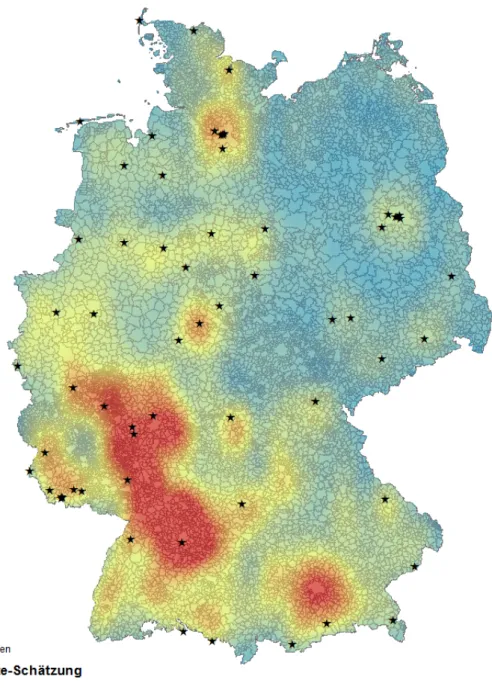
Additionally, a proximity measure is included into the analysis to capture possible locational effects and increase the explanatory power of the model. Considering the literature, one would expect a higher number of exclusions in communities close to casinos. Said exposure theory is visually supported by a map displaying the exclusion density as can be seen in Figure 2.1. It is obvious that the density is higher (red and yellow color) around communities where a casino (indicated by the black asterisks)
is located. Where no establishment is around, the density is typically lower (blue color).
3. DATA
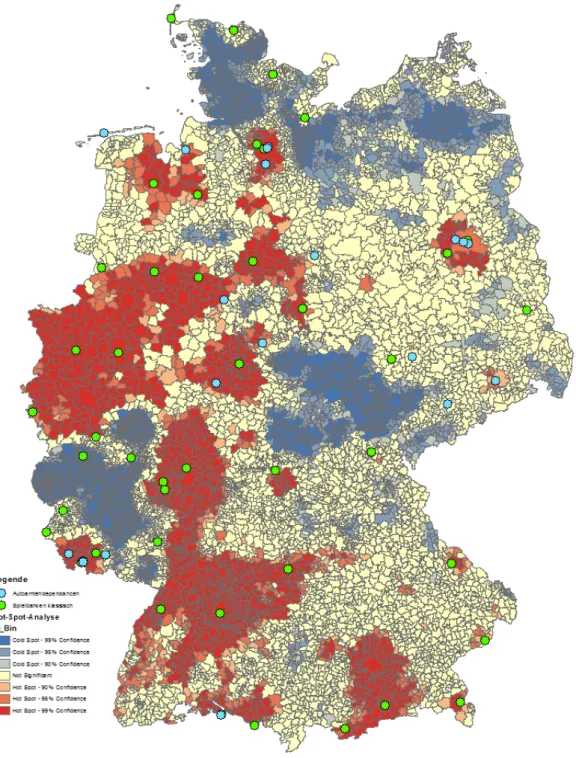
Figure 2.2. Exclusion Hot Spots. Own presentation.
Using ArcGIS, additionally a Hot-Spot-Analysis has been conducted. This is pre-sented in Figure 2.2. The red parts indicate areas where significantly more exclusions
are present, the yellow parts are insignificant and the blue parts indicate significantly low incidence areas. It can be seen that, with few exceptions, the hot spot commu-nities are mainly located around casinos (indicated by light blue and green dots6)
whereas in the blue areas no gambling establishment is present.
It is left to discuss the definition of the individual variables used in the analysis. An overview can be found in Table 2.1. All socio-demographic variables as well as the number of exclusion will be standardized to shares per 1 000 inhabitants to get rid of population effects. Proximity is measured by one variable capturing distance to the closest casino.
The minimum distances between the communities and the closest casino have been calculated with ArcGIS. To attenuate the influence of extreme values the natural logarithm of this distance is used for the examination. The education variable con-tains the number of people with German “Abitur” (high school degree) or advanced technical college certificate, in other words it captures highly educated people.The migration variable includes people with migration background and migration experi-ence since further differentiation did not increase informational content. Following the German Statistical Office, migrants are defined as either foreigners without the German nationality, Germans who immigrated to Germany after 1955 or Germans with at least one parent who immigrated to Germany after 1955. People with migra-tion experience form a sub-group of migrants who have not been born in Germany and hence immigrated (Statistisches Bundesamt, 2013).
The addresses of the casinos were obtained from their individual homepages and then geocoded using www.gpskoordinaten.de. Information about the assortment of games (table games and/or automated games) was also retrieved online. According to that, 47 casinos offer classical table games whereas 19 provide solely automated gambling. Furthermore, some control variables have been found to be reasonable extensions. First, it has to be accounted for the fact that people of the newly-formed German states seem to visit casinos less frequently due to the lower density of establishments and the below average income (Hübl, 2008). This can also be seen in Figure 2.1, where the density of exclusions is clearly lower in the eastern part. Hence an “east dummy” is included, which is equal to one, if a community is located in the area of the former GDR and zero otherwise. Hübl (2008) also suggests to include an indicator for the degree of urbanization, as this could be influencing gambling behavior in general. This is taken into account with a categorical indicator variable obtained from the Federal Statistical Office’s municipal directory information system. Three degrees are considered, from populated densely over moderately to sparsely. To proxy
6The light blue dots represent establishments where only automated gambling is provided, the
3. DATA
Table 2.1
Definition of variables.
Variable Measure Mean
(1) Exclusions
Exclusions Share of exclusions apparent in a community 0.61
(2) Socio-demographic variables
Male Share of men in a community 491.90
Age 30-39 Share of people between 30-39 years of age 110.57 No partnership Sum of Shares of singles, divorced, widowed 513.65 Education Share of people with Abitur or advanced technical
college certificate
205.40
Unemployment Share of unemployed people per community 21.45 Migration Share of people with migration background and/or
migration experience
166.71
(3) Proximity variables
Distance Logarithm of the distance to the closest casino (simple distance mean = 37 km)
10.24
(4) Casino dummies
Casino Games Dummy for casinos which offer classical casino table games
Automated Games Dummy for casinos which offer solely automated gambling
(5) Control variables
East dummy Dummy variable which equals 1 if a community is located within the former GDR
Sparsely populated Dummy variable which equals 1 if a community is located within a sparsely populated area
Assistance centers Share of assistance centers in a county 0.01
Note: All the shares are standardized to per1 000 inhabitants.
the influence of additional information sources like counseling centers and similar institutions on the awareness of the exclusion program or sensitization for gambling addiction as a whole, the share of these centers per 1 000 inhabitants in a county is also included. The reason to use the share of counties is to account for the fact that only a small number of communities have such centers. Additionally, a larger radius might be relevant for affected people, as they are probably more confident to choose a center that is not located exactly within their hometown but a little bit further
away, in order to maintain their privacy.
While performing this analysis, a further question arose, namely whether different types of gambling establishments have different effects on the number of exclusions. For this task, two dummy variables that indicate the immediate presence of a traditional casino offering table games or an automated gambling annex within a community have been included. They are equal to one, if a specific type is located directly within a community, and zero otherwise. For estimation, a simple linear OLS regression has been used. The dependent variable of the model is the share of exclusions in a municipality per 1 000 inhabitants.
4
Results
The results of the regression can be found in Table 2.2.
As expected, the number of exclusions increases with the share of males. This makes sense, as the prevalence rate among men is higher and they seem to have a higher probability of developing problematic gambling behavior which can ultimately result in the decision of restricting themselves from respective establishments (Haß & Lang, 2016). The coefficient is 0.0056 (p < 0.01).
The share of those not living in a partnership also has an influence on the bans. If it increases by one unit, the share of exclusions is decreased by 0.0036 (p < 0.01). The negative effect of this variable is especially interesting in the light of higher casino gambling prevalence within the group of singles as found by Albers and Hübl (1997). The authors justify this fact with the higher proportion of leisure consumption activities that are usually accompanied by these games, compared to, for example, playing the lottery. One could expect that a higher prevalence rate entails higher probability for problematic behavior and hence more exclusions. However, loneliness, the lack of a support system or not bearing responsibility for a partner or family does not only seem to increase participation, but also negatively impacts the willingness to take the step to get excluded and eventually stop gambling. Although bans initiated by the close environment of the gambler occur rarely, a stable family situation could nevertheless positively influence the decision making process in such a case.
The age profile of the excluded gamblers differs from the suggested risk age of being up to 25 or 30 years old. In this analysis, the largest effect could be found within the group of the 30 to 39 year olds. This is in line with e.g. Castrén et al. (2013), Ladouceur et al. (2000), Ladouceur et al. (2007) and Lischer et al. (2014), who also find excluders to be rather middle-aged. This makes sense when considering the fact that the duration of this whole process takes quite some time. On average, there
4. RESULTS
Table 2.2
Regression Results.
Dependent variable: Share of exclusions
Variable Coefficient P-value
(Standard Error) Intercept 1.3640 *** 0.1449 (0.9353) Male 0.0056 0.0012 (0.0018) Age 30-39 0.0043 *** 0.0056 (0.0015) No Partner −0.0036 *** 0.0000 (0.0007) Education 0.0000 0.7492 (0.0003) Unemployment 0.0035 0.1282 (0.0023) Migration −0.0003 0.2858 (0.0003) Distance −0.2335 *** 0.0000 (0.0272) Casino games 0.5580 *** 0.0030 (0.1878) Automated games 0.6251 ** 0.0395 (0.3034) East dummy −0.2243 ** 0.0167 (0.0936) Sparsely populated 0.3374 *** 0.0000 (0.0419) Assistance centers 4.6300 ** 0.0237 (2.0456) Number of observations 3 024 R2 0.10 Adjusted R2 0.10 F-Test 27.74 *** Significance levels: ***p <0.01,**p <0.05,*p <0.1
are 13.6 years between first starting to gamble and eventually get excluded (Fiedler, 2015). Additionally, young people lean towards other types of gambling, e.g. EGMs, online gambling or sports betting while the lifetime prevalence for casino games is higher in older age groups (Haß & Lang, 2016). The coefficient of the age variable is positive and also highly significant, meaning that an increase in the share of one unit of this age group leads to a plus of 0.0043 (p < 0.01) in the share of exclusions.
The variable concerning the migration background does not have a significant impact. According to Tuncay (2016), this is strange, as one would expect a negative effect, which means that in communities with a higher share of migrants less exclusions should occur. This is justified by various reasons. First, migrants could simply visit casinos less frequently and pursue their urge to play in different establishments. Following Hübl (2008), however, the share of foreigners and inhabitants with migration background in casinos is high, so assuming a low participation rate is not convincing. A second explanation could be that their way of thinking is shaped distinctly by their culture. A consequence of that would then be a decrease in the willingness to admit problematic behavior and in turn increase the barrier to get help, leading to a lower number of bans. During his work with migrants, Tuncay (2016) experienced that problematic gambling behavior is often accompanied by stigmatization and hence feelings like shame, false pride or honor. Additionally, this ethnic group has a rather passive understanding of sickness and health and only little trust in assistance offers. There might also be language barriers or a simple lack of awareness about the opportunity of getting a ban. All of these factors should lead to the fact that migrants make use of the exclusion less often. Nevertheless, the analysis is not able to provide evidence for this.
The same result, namely insignificance, holds for the education coefficient. Usually, it is expected that the influence of higher education is negatively correlated with the participation in gambling, as this group of people has a better ability to realistically evaluate the aspects of games. For casino gambling, however, the situation is different, it even tends to attract the better educated, but not to a significant level (Albers & Hübl, 1997). Hence, due to higher participation rates and probably a better assessment of the situation when first signs of PG behavior are recognized, a positive relationship could be expected for the influence of schooling on exclusions. The same holds for unemployment, which is also not significantly associated with the share of exclusions. As all three variables are usually good predictors in the gambling context, the question is why they fail in this particular case. An unfortunately rather likely explanation could be the flaws in the data as already mentioned above. Those lead to a lot of noise, which in turn lowers the precision of the estimation. This involves higher standard errors and hence an underestimation of the t-values, which has a
4. RESULTS
clear influence on significance levels (Pischke, 2007). This means that even if there is an effect, the data is not able to provide significance for it.
The dummies for casino games and automated gambling are equal to 1, if an establishment is present within a community, which means that those coefficients basically capture the extreme situation of being located in direct proximity to a casino. The coefficients for both dummies are significant and positive. The immediate presence of a casino that offers traditional games increases the share of exclusions on average by 0.5580 (p <0.01), an automated gambling annex by 0.6251 (p <0.05). Again, this is compared to the baseline case of no gambling establishment being there. The difference between both coefficients is, however, not significant, so there is no evidence that one type of establishment has more or less impact on exclusions than the other. This supports the hypothesis that close proximity to a casino has a positive effect on the number of excluded gamblers. The previous finding is backed up by the effect of the distance to the closest venue on the number of exclusions, which is negative, as expected, and highly significant. If the distance increases, this leads to a 0.2335 (p <0.01) units lower share of bans. The dummy for municipalities in East Germany is, as expected from the visual inspection, negative and significant. Communities in the former GDR exhibit on average 0.2243 (p < 0.05) less exclusions than those in western Germany. This is probably due to the already mentioned lower participation rate in general and also the lower density of establishments. Additionally, there were no casinos until after the German unification, hence the western part has a lead in being able to issue exclusions, especially considering the unadjusted data set which might contain old bans that have never been cleared. The population density indicator shows a rather interesting result. If the community is considered to be sparsely populated, this has a significantly higher influence on the number of exclusions than in the baseline case, which is a densely populated community. In those areas, the average of the share of exclusions is 0.3374 (p < 0.01) points higher than in highly or moderately urbanized ones. This could be due to different social structures in these communities. They are less anonymous and the influence or pressure exerted by the family or close peers might be higher. The share of counseling centers per 1 000 inhabitants of a county also has a significant positive effect on exclusions. If this share rises by one unit, the share of exclusions increases by 4.6300 (p <0.05). This could be evidence for higher awareness of the program in areas where more information and assistance is offered to gamblers.
5
Conclusion
The goal of this paper is for one thing to provide an overview of the existing literature concerning (self-) exclusions. Secondly, the focus is shifted to the development of a profile of excluders from German casinos by examining, whether the established risk factors also are significant predictors for the number of bans in German communities. To our knowledge, there is no work explicitly examining casino patrons. The approach using a unique data set brought some interesting insights. Some of the considered variables can be confirmed to serve this task in the given framework, whilst others did not yield a statistically significant impact
The most important socio-demographic factors are male gender, being between 30 and 39 years old, and not living in a partnership. The shares of the first two variables have a positive, the latter one a negative influence. Education, unemployment, and migration status, which are usually agreed on to be good predictors, did not exhibit significant results. However, it would be wrong to neglect them, as the outcome is probably owed to noise as well as missing variation in the data, which lowers the precision of the estimation and could lead to insignificance.
The coefficients of the variables that have been included to capture proximity turn out to be consistently significant. Distance to the next casino and the share of exclusions are inversely related, if the distance increases, the share of bans will decrease. The dummies capturing immediate proximity to gambling establishments also provide evidence for this pattern. If a classical casino or an annex is present in a community, this has a positive impact on the share of excluders. Considering only the proximity dimension of availability, the results provide evidence for the hypothesis that higher availability could be a predictor for an increase of bans. However, one has to keep in mind that this explanatory power is also in parts owed to tautology. Only in places where gambling is available in general, players can also get an exclusion.
The additionally included control variables also yield significant results. The co-efficient of the indicator for a sparsely populated region shows that the share of excluders in said areas is on average higher than in dense ones. Furthermore, the share of assistance centers in a county positively drives the share of bans. The dummy indicating communities in the former GDR turns out to be negatively associated with the dependent variable. This makes absolute sense, considering the different developments of the gambling markets in these two regions between 1950 and 1990.
To summarize, considering our community level data, excluders from German casinos are more likely to be male and between 30 and 39 years old and less likely to be single. Additionally, they tend to live in municipalities which are located in close
5. CONCLUSION
proximity to gambling establishments. On balance, however, the magnitude of the distinct effects on the amount of exclusions is rather small and the model is able to only explain about 10% of the variation in the number of bans, which is a rather small fraction. This is very likely owed to the fact that although problematic or pathological gambling is in parts driven by external socio-demographic factors like age, gender or the marital status, a lot of the behavior is facilitated by internal predisposition which cannot be captured with this model. Nevertheless, many of the proposed risk or, more neutrally stated, influence factors can be confirmed by this analysis specifically adapted to the German terrestrial casino patrons.
Chapter 3
The Relationship between
Exclusions from Gambling
Arcades and Accessibility:
Evidence from a newly introduced
exclusion program in Hesse,
Germany
1
1
Introduction
For the majority of people, gambling is solely a recreational pastime. A small fraction, however, develops disordered gambling behavior, which can be accompanied by substantial negative personal, financial or occupational consequences. There are wide variations in disordered gambling prevalence rates across different countries in the world (Calado & Griffiths, 2016). Even for one country these prevalence rates may differ due to different survey methods, instruments, cut-offs and periods used to assess these prevalence rates among the adult population.
Beginning in the year 2006, several epidemiological studies have been conducted in
1This chapter bases on paper written jointly with Tilman Becker from the University of
Hohenheim. It is a post-peer-review, pre-copyedit version of an article published as
Strohäker, T., & Becker, T. (2018). The Relationship Between Exclusions from Gambling Arcades and Accessibility: Evidence from a Newly Introduced Exclusion Program in Hesse, Germany.
Journal of Gambling Studies, 34(3), pp 1033-1047.
The chapter is reprinted with kind permission from Springer Nature, the final authenticated version is available online at https://doi.org/10.1007/s10899-018-9762-2.
Germany. These studies come up with different estimates of the prevalence rates of disordered gambling, depending on the instrument used. For an overview, see Tables 3.5 and 3.6 in the appendix. Positive responses to five or more items in the South Oaks Gambling Screen result in a designation of “probable pathological gambler” (Lesieur & Blume, 1987) or, for short, a pathological gambler. In these prevalence studies a positive response to three or four items result in a designation as a potential problem/pathological gambler or problem gambler. The same cut-off points are used for the DSM-IV. If five or more criteria are met, the gambler is classified as pathological gambler and if three or four criteria are met, as a problem gambler. The unweighted average of the five studies available that use the SOGS for assessing pathological gambling in the German adult population is 0.53 % with 0.46 % for problem gambling. The unweighted average of the four studies available using the DSM-IV is 0.35 % for pathological gambling and 0.34 % for problem gambling. As expected (Stinchfield, 2002), the South Oaks Gambling Screen results in higher estimates than the DSM-IV.
If we assume a prevalence rate of 0.35 % for pathological and 0.34 % for problem gamblers in the German population between 18 and 65, this means there are 183 902 pathological and 178 647 problem gamblers2 Germany-wide. For our work, the number of problem and pathological players in Hesse might be of interest. The numbers in this federal state are 21 616 pathological and 21 000 problem gamblers3.
As of March 2016, in Hesse 11 902 players have excluded themselves from gambling.
In the German Inter-State Treaty of 2008, the prevention of pathological gambling was stated as the main goal justifying gambling regulation. In the new and current Inter-State Treaty of 2012 addiction prevention is only one among several goals: preventing fraud, manipulations and crime, securing the protecting of the integrity of sports and channeling the demand towards the legal offers. The German state tries to legally enforce player protection measures. Next to other tools, exclusions from gambling play an important role (Reeckmann & Walter, 2014).
In particular, self-exclusions, which usually make up a large share of bans, are consistently seen as a well-suited means for harm minimization that helps affected gamblers to regain control over their behavior by preventing them entering gambling establishments (Hayer & Meyer, 2011b; Lischer et al., 2016). Self-exclusion is a voluntary obligation that gamblers take which is usually accompanied by immediate positive consequences. The pressure to gamble as well as gambling related stress de-crease, affected players regain control over their behavior and report an improvement
2Starting from a baseline population size of 52 543 373 in the age group between 18 and 65 in
Germany, status as of 31.12.2015 (retrieved from https://www-genesis.destatis.de).
3Starting from a baseline population size of 6 176 172 in the age group between 18 and 65 in the
1. INTRODUCTION
of psychological functioning (Gainsbury, 2014; G. Meyer & Hayer, 2010). Based on these beneficial effects, the German Inter-State Treaty on gambling of 2012 requires giving gamblers the opportunity to exclude themselves from gambling.
The casino industry has already been operating a well-established system since 1981, first on a voluntary basis in order to prevent claims under civil law of self-excluded players. This system is supported to some extent by the legal responsibility of casinos to act responsible in the interest of players, who have self-excluded themselves. Since the Inter-State Treaty of 2008, the public and private casinos are required to run a self-exclusion system for all casinos. A self-exclusion system covering arcades however is a novelty. This is surprising, as electronic gambling machines (EGMs) are highly addictive. If the clients in therapy or the therapeutic institutions are asked for the importance of different forms of gambling for their gambling problems, about 64 % of the clients (G. Meyer & Hayer, 2005) or, according to the therapists, 69 % of the clients (Becker, 2009) claim that the gambling machines in gambling arcades and pubs are their main problem causing form of gambling. Next are gambling machines in casinos with 13.5 % and 11.4 % respectively.
In May 2014, the federal state of Hesse was the first to introduce a statewide self-exclusion scheme for gambling arcades. The legal foundation is provided by § 6 of the Hessian law on gambling arcades from June 2012, which requires that every operator contributes to the program. Next to voluntary self-exclusions, also external exclusions by the operator or other third parties are possible. The exclusion is valid in all Hessian arcades and its minimum duration amounts to one year. All bans are stored in a central file (OASIS) to which all establishments have access. If gamblers want to be excluded, they have to go to an arcade where their p