University of Warwick institutional repository: http://go.warwick.ac.uk/wrap
A Thesis Submitted for the Degree of PhD at the University of Warwick
http://go.warwick.ac.uk/wrap/3260
This thesis is made available online and is protected by original copyright. Please scroll down to view the document itself.
Obsessive Compulsive Disorder in Children and Young People:
Experiences of Children with OCD and the Involvement of
Families in Treatment
By
Sarah Simmonds
A thesis submitted in partial fulfilment of the requirements for the degree of Doctor of Clinical Psychology
Coventry University, Faculty of Health and Life Sciences, University of Warwick, Department of Psychology
TABLE OF CONTENTS
Page
List of Tables ………...vii
Acknowledgements ………...viii
Declaration ………...ix
Summary ………...10
Chapter One: Literature Review Paper “How Does Family Work Facilitate the Cognitive Behavioural Treatment of Children with Obsessive Compulsive Disorder? A Review of the Evidence” Abstract ...12
1.0 Introduction ...13
1.1 Mental Health of Children and Young People ...13
1.2 OCD in Children and Young People ...13
2.0 The Role of the Family in Childhood OCD ...15
2.1 Medical Causes ...16
2.2 Characteristics of Families of Children with OCD ...16
2.3 Family Involvement in Symptomatology ...17
2.4 Impact of OCD on Families ...18
3.0 Treatment for Childhood OCD ...19
3.1 Cognitive Behavioural Therapy ...19
3.2 What is known about Involving Families in Treatment? ...21
5.0 Search Strategy ...24
5.1 Inclusion Criteria ...24
5.2 Exclusion Criteria ...25
6.0 Review of Studies ...25
6.1 Family Involvement: Joint Child-Family Sessions ...26
6.2 Summary of Joint Child-Family Involvement ...34
6.3 Family Involvement: Combination of Separate and Joint Child -Family Sessions ...35
6.4 Summary of Combined Separate and Joint Child-Family Involvement...43
7.0 Discussion ...44
7.1 Summary of Findings ...44
7.2 Methodological Limitations and Recommendations for Future Research ...45
7.3 Clinical Implications ...50
7.4 Recommendations for Service Providers ...52
8.0 Summary and Conclusion ...53
Chapter Two: Empirical Paper
“The Experiences of Children and Young People with Obsessive Compulsive Disorder: Perceptions of Living with the Diagnosis”
Abstract ……….…...………...69
10.0 Introduction ………...……….………...70
10.1 OCD in Children and Young People ………...…….………...70
10.2 The Impact of OCD on Children and Young People ...….……...70
10.3 Coping with OCD ...………...…...74
10.4 Children and Young People’s Experiences of OCD ...….…..…....76
11.0 Rationale for Study ..………...…...…...77
11.1 Aims of Study ...………...…………...78
12.0 Methodology ..………..………...79
12.1 Participants ..………...…………...79
12.2 Design ...79
12.3 Measures: Semi-Structured Interview ...80
12.4 Procedure ...81
12.5 Data Analysis ...82
13.0 Findings ...86
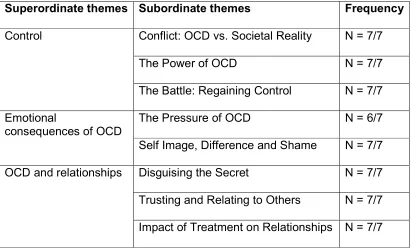
13.1 Superordinate Theme One: Control ...87
13.2 Superordinate Theme Two: Emotional Consequences of OCD....94
13.3 Superordinate Theme Three: OCD and Relationships ...97
14.1 Summary of Findings ...104
14.2 Consideration of Findings in the Context of the Literature ...105
14.3 Clinical Implications ...110
14.4 Methodological Limitations and Recommendations for Future Research ...111
15.0 Summary and Conclusion ...114
16.0 References ...115
Chapter Three: Reflective Paper “Conflicts within OCD: Psychological Treatment and Personal Development” 17.0 Introduction ...121
18.0 OCD Conflicts and Psychological Treatment ...121
18.1 The Involvement of Families in Treatment ...121
18.2 The Wider Systemic Network ...123
18.2 Reflections on the Role of Psychological Therapy ...125
19.0 Personal Reflections and Professional Development ...128
19.1 Research Experience Compared with Clinical Experience ...128
19.2 My Position as a Clinical Psychologist ...129
19.3 My Position as a Researcher ...131
19.4 Transference from the Interview Data ...133
20.0 Summary and Conclusion ...134
APPENDICES
A. Notes for Contributors ...136
B. Ethical Approval ...149
C. Invitation Letter...155
D. Participant Information Pack: Child and Parent Versions ...157
E. Consent Form ...166
F. Debrief Letter ...168
G. Interview Schedule ………..171
LIST OF TABLES
Page
Table 1 Studies that Use Joint Family-Child Sessions ...27
Table 2 Studies that Use a Mixture of Separate Family Involvement and Joint Family Involvement ...36
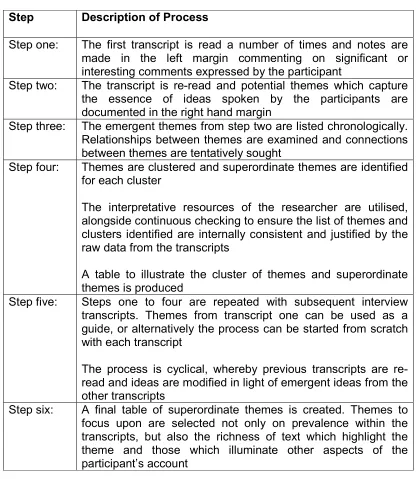
Table 3 Guidelines for Using Interpretative Phenomenological
Analysis ...82
ACKNOWLEDGEMENTS
I would like to thank my academic supervisor, Dr Eve Knight for her guidance, encouragement and motivation in supporting me throughout this research process. I would also like to thank Dr Lisa Summerhill, my clinical
supervisor who has been invaluable in helping me access participants and for her support, guidance and enthusiasm.
I would also like to thank Allan for his love and support for the duration of training and especially whilst my thesis temporarily took over our lives. I would like to thank my course mates for being there throughout; for laughter and support across the highs and the lows of training. I would also like to
thank my friends and family for their patience, understanding and encouragement.
DECLARATION
This thesis was carried out under the supervision of Dr Eve Knight, Consultant Clinical Psychologist and Dr Lisa Summerhill, Clinical Psychologist. Apart from the collaboration with the above people this thesis is
my own work. This thesis has not been submitted for a degree at another university. The authorship of the papers will be shared with the above named individuals. The thesis has been written for submission to the following journals (see Appendix A for Notes for Contributors). Any deviation from the
journal word limits was for the purpose of thesis submission and will be adhered to for journal publication.
Chapter One: How Does Family Work Facilitate the Cognitive Behavioural
Treatment of Children with Obsessive Compulsive Disorder? A Review of the Evidence.Clinical Psychology Review.(7974 words)
Chapter Two: The Experiences of Children and Young People with
Obsessive Compulsive Disorder: Perceptions of Living with the Diagnosis.
The Journal of Child Psychology and Psychiatry(8806 words)
Chapter Three: Conflict in the Perspective of OCD: Phenomenology, Systemic Network and Psychological Treatment. Clinical Psychology Forum
(3188 words)
SUMMARY
This research thesis has examined the way in which family involvement in childhood Obsessive Compulsive Disorder (OCD) facilitates treatment and
the experiences of children in living with their diagnosis of OCD.
Chapter one is a literature review of eleven empirical studies of the effectiveness of CBT with family involvement. The review highlights the
variety in the way families are involved in CBT treatment and suggests that there is a trend towards higher rates of improvement in symptom severity for treatments that involve families separate family sessions away from the child, and a potentially higher improvement for treatments that utilise a mixture of
joint child-family sessions in addition to separate family sessions.
Chapter two is an empirical study of the experiences of seven children in
living with their diagnosis of OCD. A qualitative methodology utilising Interpretative Phenomenological Analysis revealed three main areas of importance; the power and control of OCD, the associated emotional consequences and the role of relationships in OCD and in treatment. Clinical
implications and areas for future research are discussed alongside methodological limitations.
Chapter three is a reflective account of the research thesis as a whole;
Chapter One
How Does Family Work Facilitate the Cognitive Behavioural
Treatment of Children with Obsessive Compulsive Disorder?
A Review of the Evidence
Word Count (excluding titles, tables and references): 7974
ABSTRACT
Obsessive Compulsive Disorder (OCD) is a debilitating condition for children and young people; impacting on their social, academic and personal development. Given the nature of such difficulties it is not surprising that the
families of children with OCD are also impacted upon by this condition. Their attempts to understand and support their child’s difficulties in their daily coping with symptoms can result in OCD becoming a family problem.
Cognitive Behavioural Therapy (CBT) is advocated as an effective treatment for young people with Obsessive Compulsive Disorder and the involvement of families in treatment is recommended (Department of Health, 2005).
Previous reviews have highlighted that the involvement of families has been conducted in a wide variety of ways but there has been limited systematic evaluation about the way in which family involvement may facilitate the
treatment of children with OCD. The present review critically evaluates the existing empirical evidence for family involvement in the CBT treatment of childhood OCD. A range of different family approaches have been utilised in treatment but this review highlights a potential trend towards greater
improvement in symptom severity from treatments that involve families in a combination of separate family sessions in addition to joint child-family sessions. Methodological limitations of the literature are considered
1.0 INTRODUCTION
1.1 Mental Health of Children and Young People
A survey by the Office of National Statistics (2004) carried out on behalf of
the Department of Health and the Scottish Executive states that one in ten young people aged 5 to 16 years had a clinically diagnosed mental disorder as defined by ICD-10 (World Health Organisation, 1992). The proportion of
emotional disorders (anxiety or depression) was 4%, whilst 6% had a conduct disorder, 2% had a hyperkinetic disorder, 1% had a less common disorder such as autism, tics, eating disorders and selective mutism, and 2% had more than one type of disorder.
1.2 Obsessive Compulsive Disorder in Children and Young People
Obsessive Compulsive Disorder (OCD) is an anxiety disorder seen in adults and children, characterised by the presence of obsessions and / or compulsions. Obsessions are defined as “persistent ideas, thoughts, impulses, or images that are experienced as intrusive and inappropriate and
that cause marked anxiety or distress”. Compulsions are defined as “repetitive behaviours or mental acts, the goal of which is to prevent or reduce anxiety or distress, not provide pleasure or gratification” (American
rules, yet the association between the compulsion and the act they intend to
neutralise are not connected in a realistic way or are excessive in nature (Carr, 2004).
The variation in the content or character of the obsessions and compulsions
is diverse. Common obsessions are fear of harm to others such as loved ones, blasphemous thoughts, worries of contamination and urges relating to the need for exactness or symmetry. Common compulsions are excessive
washing and cleaning, repeated checking, ordering behaviour such as symmetry and straightening and mental acts such as counting or the need to think specific thoughts (Swedo, Rapoport, Leonard, Lenane & Cheslow,
1989). Whilst there are similarities in the nature of obsessive and compulsive characteristics between children and adults with OCD, a key difference in the diagnosis of OCD in young people, in comparison to the adult population, is
that young people are not required to recognise the obsessions or compulsions as unreasonable or excessive (Carr, 2004).
1.2.1 Prevalence
OCD was once thought to be rare in young people (Barrett & Healey, 2003; Freeman et al., 2003; Heyman, 2005). Estimations of prevalence of OCD in
nationwide survey of child mental health reported rates of 0.25% in those
aged 5 to 15 years (Heyman et al., 2001 in Presta, et al., 2003) yet when subsyndromal cases are included (Presta, et al., 2003) prevalence rates were reported to be up to 12% (Maina, et al., 1999 in Presta, et al., 2003). Indeed, some of the behaviours seen such as ordering and symmetry can be
seen as part of the normal developmental pattern for children.
Examination of the adult population estimates that up to 50% of adults
referred with OCD remembered the onset of their symptoms to be in childhood yet did not access treatment at this stage (Heyman, 2005). It is clear that further understanding of OCD in young people is needed to ensure
that effective early intervention is sought and utilised, thus potentially minimising adverse consequences seen in adulthood.
2.0 THE ROLE OF THE FAMILY IN CHILDHOOD OCD
The family may play an important part in childhood OCD for children are highly dependent on their families relative to adults and are immersed within
a family context. During this time they are undergoing cognitive, social and personal identity development; in which the family plays a key role. It is no surprise that the role of the family has been studied as a way to understand
section will briefly describe the way in which family involvement in childhood
OCD may occur in order to help set the context of the present review.
2.1 Medical Causes
It is suggested that there is an inherited vulnerability to OCD and genetics play a role (Hudziak et al., 2004). The Johns Hopkins Family Study (Nedstadt et al., 2001) found higher rates of OCD and depressive disorder in the
relatives of people with OCD compared with relatives of people without OCD; suggesting that OCD may have a genetic component. Other family studies have supported this conclusion (see Turner 2006, for a review).
2.2 Characteristics of Families of Children with OCD
In addition to a potential genetic contribution to OCD morbidity, the family environment is suggested to influence the development and maintenance of OCD through social learning and role modelling. The role of the family has been demonstrated to have a bidirectional influence on childhood OCD, in
2.3 Family Involvement in Symptomatology
Research has suggested that families of children with OCD may be characterised by ‘high expressed emotion’, (i.e. high levels of criticism and over-involvement) (Hibbs, et al., 1991) and that children with OCD perceive
low levels of emotional support, warmth and closeness in comparison to “non-clinic” children (Valleni-Basile et al., 1995). Furthermore, it is suggested that the families of children with OCD make less use of positive problem
solving, encourage avoidance of potentially difficult situations and are less likely to promote the independence of their children (Barrett, Shortt & Healy, 2002). Maternal over-control in families with anxious children was related to
the mother’s own anxiety and was characterised by interactions that were less warm and positive, less granting of autonomy and catastrophising in comparison to non-anxious mothers (Whaley, Pinto & Sigman, 1999).
Families often become involved in childhood OCD obsessions and compulsions in an attempt to restore family harmony, reduce child distress and to stop the child from engaging in symptomatic behaviour (Waters &
Barrett, 2000). This may take the form of direct involvement with compulsive behaviours by assisting with or interrupting their completion or indirect involvement by altering family functioning and routines to accommodate
compulsions, the difficulty experienced by family members in dealing with
obsessions that are sexual or aggressive in nature, and disagreements over the best way to manage OCD within the family (March, 1995).
Van-Noppen, Steketee, and Pato (1997) suggest that families may respond
on a continuum from accommodating (directly assisting and over-involved in symptomatology) to antagonistic (critical, hostile and refusing involvement). Waters (2000) suggests that while Van-Noppen et al.’s (1997) model is
simplistic some family members may be divided in their stance with some members accommodating and some antagonising and that either position constitutes involvement in symptomatology.
2.4 Impact of OCD on Families
Family accommodation and participation in childhood compulsions are associated with increased anxiety and depression in family members (Amir, Freshman & Foa, 2000) and increases in the affected child’s compulsions are related to increased critical comments and rejecting attitudes from family
members (Amir et al., 2000).
Given the impact that OCD can have upon a family it is not surprising that
stigmatisation by attempting to conceal the patient’s symptoms
(Stengler-Wenzke, Trosbasch, Dietrich & Angermeyer, 2004). As highlighted, families can be involved in the causation, development and maintenance of OCD in children and everyone in the family system can be affected. Therefore, family involvement in treatment is worthy of consideration.
3.0 TREATMENT FOR OBSESSIVE COMPULSIVE DISORDER
3.1 Cognitive Behaviour Therapy
Obsessive Compulsive Disorder (OCD) has received an increased amount of
research within the last 20 years. OCD was previously thought to be puzzling and severely chronic, and interventions failed to produce good outcomes in the short or long term. However, more recent advances have highlighted
numerous developments in the understanding of OCD in adults that have been adapted to aid understanding of OCD in children and young people.
Historically, behavioural treatment of OCD in the adult and child population
was the treatment of choice and led to the advocation of exposure and response prevention (ERP) as a key component of the treatment of OCD. Further research has led to the development of the Cognitive Theory of OCD (Salkovskis & Kirk, 1989) and as a result has led to the development of
treatment in adults and children based on research and clinical outcomes.
However, unlike the adult population, there is limited research examining the efficacy of CBT for young people with OCD.
The National Institute for Clinical Excellence (Department of Health, 2005)
guidelines recommend Cognitive Behavioural Therapy (to include ERP) as the treatment of choice for children and adolescents with OCD with moderate to severe functional impairment. Given what has been hypothesised about
the involvement of family factors in the development, maintenance and impact on the family of childhood OCD, it is appropriate that the NICE guidelines recommend that treatment also involves the family or carers in
some form of family therapy and that treatment is adapted to suit the developmental age of the child. The guidelines state that group or individual formats should be offered depending upon the preference of the child or
young person and their family or carers.
Given the effect of childhood OCD on the family, the role that the family may take in response to OCD symptomatology and the impact this may have on
the family and developing child, it is not surprising that OCD is seen as a family problem. Consequently, it is clear to see that it is important for treatment for childhood OCD to involve families and to do this it is important
3.2 What is known about Involving Families in Treatment?
There have been a number of review papers and meta-analyses to date that evaluate the effectiveness of CBT with children and adolescents with OCD (Barrett, Farrell, Pina, Peris & Piacentini, 2008; Freeman et al., 2007;
Renshaw 2005; Freeman, 2003; Diamond & Josephson, 2005; Turner 2006). This literature has reviewed the efficacy of CBT across both group and individual delivery formats and family involvement ranged from a
family-focused CBT approach in which the family work had an equal emphasis as working with the child, through to other CBT approaches in which the family may have a more distant ad-hoc involvement in the treatment. Whilst the
involvement of families is a common component of CBT treatment for childhood OCD, and a number of CBT efficacy studies have included family involvement as part of the treatment (see Barrett et al., 2008 and Freeman et
al., 2007 for a review) there has been limited specific evaluation of the importance of the role of family involvement in CBT. Consequently, we know little about the best way to involve families in CBT treatment for childhood OCD.
Barrett et al. (2008) conducted a comprehensive review of the CBT literature for the treatment of childhood OCD that included studies across various
studies for methodological rigour based on classification criteria for
‘well-established’, ‘probably efficacious’, ‘possibly efficacious’, and ‘experimental’ treatments (based on criteria suggested by Chambless et al., 1998, Chambless et al., 1996; and Chambless & Hollon, 1998; cited in Barrett et al., 2008). The authors suggested that based on their evaluation of the data
both family-focused individual CBT and family-focused group CBT can be considered ‘possibly efficacious’ treatments, and that the highest effect sizes of CBT reported in the study are from a study with what the authors describe
as ‘the highest dose’ of family involvement in CBT. This suggests that to achieve the highest level of success families must be substantially involved.
The benefit of family involvement is supported by the findings from a meta-analysis by Freeman et al. (2007) who examined the effectiveness of CBT for children with OCD delivered in various formats; individual CBT, group CBT
and CBT with a family component to the treatment, family CBT. Freeman et al. (2008) reported that individual CBT and family CBT had the greatest effect sizes (1.77 and 1.88 respectively) whereas group CBT was 0.76.
So in summary, the evaluation of family work in the treatment of childhood OCD has been demonstrated as ‘possibly efficacious’ (Barrett et al, 2008; Freeman et al., 2007). The review literature has evaluated the use of CBT in
the difficulty this presents in enabling rigorous examination of the utility and
efficacy of involving families in the treatment of childhood OCD (Renshaw, 2005; Diamond & Josephson, 2005; Turner, 2006; Barrett et al., 2008). Other childhood OCD CBT treatment review papers have been conducted but provided limited focus on the involvement of families in treatment (Freeman
et al., 2003; Abramowitz, Whiteside & Deacon, 2005; O’Kearney, Anstey & von Sanden, 2006).
4.0 AIMS OF REVIEW
The NICE guidelines recommend some form of family therapy plus CBT as
the treatment of choice for childhood OCD. It has been demonstrated that family-focused CBT treatment is ‘possibly efficacious’ (Barrett et al., 2008) but the considerable variation in the way families have been involved in CBT
treatment has prevented systematic evaluation of its efficacy.
Therefore, in order to make recommendations for future clinical practice and systematic evaluation it would be useful to:
Understand the way in which families have been involved in the CBT
treatment of young people with OCD
Critically evaluate what we know so far about the way in which family
Identify areas that guide clinical practice and the direction of future
research
5.0 SEARCH STRATEGY
Papers were searched for using Psychinfo, Medline, ScienceDirect and the Cochrane Reviews database. Search terms used in this search were
Obsessive, Compulsive, OCD, Cognitive, Behavior, Behaviour, Behavioral, Behavioural, CBT, ERP, Family, Parent, Parental, Parents, Sibling, Therapy, Treatment, Intervention’. All of these terms were cross referenced with the terms of Child, Children, Pediatric, Paediatric, Early Onset, Juvenile, Young
People, Young Person, and Adolescent. After identifying papers that met the search criteria the papers were then searched individually for further references cited within the paper.
5.1 Inclusion Criteria
Research studies that used CBT with family involvement in the treatment of
childhood OCD were included in this review. This includes randomised controlled trials, pilot studies and naturalistic studies. Only papers written within the past ten years have been included in this review. Included papers
5.2 Exclusion Criteria
Unpublished studies, dissertation abstracts, non-English language studies were excluded. Papers that reported inclusion of a sample whose OCD aetiology may be associated with ‘pediatric autoimmune neuropsychiatric
disorder associated with streptococal infections’ (PANDAS), (Swedo, et al., 1998) were excluded. Whilst the evidence for PANDAS is mixed it may represent a different classification entity (Moretti, Passquini, Mandarelli,
Tarsitani & Biondi, 2008) and its inclusion in treatment studies may confound results. Additionally, one paper was excluded for it included tic-related OCD (Himle, Fischer, Van Etten, Janeck & Hanna, 2003) which is commonly
thought to represent a different sub-type of OCD (Leckman et al., 2000) and may have therefore confounded the results.
6.0 REVIEW OF STUDIES
The literature search revealed eleven studies that utilised family involvement in the treatment of childhood OCD. The review will involve the division of the
available studies into two categories; 1) studies that involved families in treatment by conducting ‘joint’ child-family sessions only and 2) studies that involved families in ‘separate’ family sessions away from the child in addition
Each category of family involvement will be reviewed which will involve a
critical review of the studies to illustrate the amount of family involvement in the treatment, the way in which the families were involved and the study findings. Secondly, a critical evaluation of the way in which the involvement of families facilitates CBT treatment will be conducted; to consider the impact
of such involvement on OCD symptom severity and where applicable, on family outcome measures. Methodological limitations of the literature will be presented and, lastly, recommendations for clinical practice will be made on
how best to involve families in OCD treatment and to highlight gaps in our understanding for future research.
The majority of studies utilise parents in treatment whereas some studies also invite siblings and so the term family involvement will be used to describe this involvement overall.
6.1 Family Involvement: Joint Child-Family Sessions
Of the eleven studies there were six that utilised joint child-family sessions in
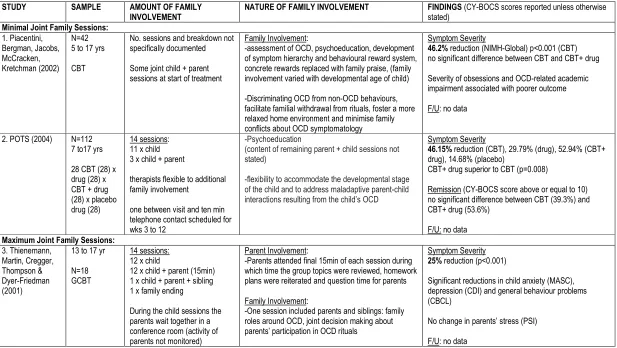
CBT treatment for childhood OCD. Table 1 presents a breakdown of the studies, illustrating the amount and nature of family involvement in the treatment. This ranged from minimal joint involvement; with families attending
Table 1: Studies that use joint family-child sessions
STUDY SAMPLE AMOUNT OF FAMILY
INVOLVEMENT NATURE OF FAMILY INVOLVEMENT FINDINGSstated) (CY-BOCS scores reported unless otherwise Minimal Joint Family Sessions:
1. Piacentini, Bergman, Jacobs, McCracken, Kretchman (2002)
N=42 5 to 17 yrs
CBT
No. sessions and breakdown not specifically documented
Some joint child + parent sessions at start of treatment
Family Involvement:
-assessment of OCD, psychoeducation, development of symptom hierarchy and behavioural reward system, concrete rewards replaced with family praise, (family involvement varied with developmental age of child) -Discriminating OCD from non-OCD behaviours, facilitate familial withdrawal from rituals, foster a more relaxed home environment and minimise family conflicts about OCD symptomatology
Symptom Severity
46.2%reduction (NIMH-Global) p<0.001 (CBT) no significant difference between CBT and CBT+ drug Severity of obsessions and OCD-related academic impairment associated with poorer outcome F/U: no data
2. POTS (2004) N=112 7 to17 yrs 28 CBT (28) x drug (28) x CBT + drug (28) x placebo drug (28)
14 sessions: 11 x child 3 x child + parent
therapists flexible to additional family involvement
one between visit and ten min telephone contact scheduled for wks 3 to 12
-Psychoeducation
(content of remaining parent + child sessions not stated)
-flexibility to accommodate the developmental stage of the child and to address maladaptive parent-child interactions resulting from the child’s OCD
Symptom Severity
46.15%reduction (CBT), 29.79% (drug), 52.94% (CBT+ drug), 14.68% (placebo)
CBT+ drug superior to CBT (p=0.008)
Remission (CY-BOCS score above or equal to 10) no significant difference between CBT (39.3%) and CBT+ drug (53.6%)
F/U: no data Maximum Joint Family Sessions:
3. Thienemann, Martin, Cregger, Thompson & Dyer-Friedman (2001)
13 to 17 yr N=18 GCBT
14 sessions: 12 x child
12 x child + parent (15min) 1 x child + parent + sibling 1 x family ending
During the child sessions the parents wait together in a conference room (activity of parents not monitored)
Parent Involvement:
-Parents attended final 15min of each session during which time the group topics were reviewed, homework plans were reiterated and question time for parents
Family Involvement:
-One session included parents and siblings: family roles around OCD, joint decision making about parents’ participation in OCD rituals
Symptom Severity 25%reduction (p<0.001)
Significant reductions in child anxiety (MASC), depression (CDI) and general behaviour problems (CBCL)
STUDY SAMPLE AMOUNT OF FAMILY INVOLVEMENT
NATURE OF FAMILY INVOLVEMENT FINDINGS(CY-BOCS scores reported unless otherwise stated)
4. Benazon, Ager & Rosenberg (2002)
N=16 8 to18 years
CBT
12 sessions: 8 x child
8 x child + parent (10min) 4 x child + parent (60min)
Parental Involvement:
-Parents encouraged to become co-therapists for child at home using ERP
-Children trained in a cognitive behavioural technique and then taught this to parents two sessions later
Symptom Severity
47.65%reduction (p=0.0001)
55.95%reduction (NIMH-Global) (p<0.0001) 44% asymptomatic (NIMH-Global) significant reduction in HAM-A F/U: no data
5. Asbahr, Castillo, Ito, De Oliveira Latorre, Moreira & Lotufo-Neto (2005)
N=40 9 to 17yrs GCBT (20) x drug (20)
12 sessions: 11 x child
11 x child + parent (15min) 1 x child + parent + sibling
Family Involvement:
-Family taught about family roles in OCD and how parents may participate in rituals
Parent Involvement:
-Parents invited to last 15min of session to review topics to be covered in next session, to confirm homework arrangements and for time for questions for clarification
Symptom Severity (estimated from graphical data) 53.85%reduction (CBT) vs. 50% reduction (drug) significant improvement, but not between groups 9mth F/U: 5% relapse (CBT) vs. 53% relapse (drug)
6. Storch, Geffken, Merlo, Mann, Duke, Munson, Adkins, Grabill, Murphy & Goodman (2007)
N=40 7 to17 yrs weekly CBT (20) x daily CBT (20)
14 sessions:
14 x child + parent -Parent inclusion to facilitate understanding oftreatment principles -To assist with generalisation of treatment gains by enlisting parents as at-home ‘coach’
reduce parent accommodation of OCD -To encourage optimal effort during in-session exposures and homework assignments
Symptom Severity
63.32%reduction (daily CBT) vs.49.61%reduction (weekly CBT) (both significant to p<0.001) Remission
75% (daily CBT) vs. 50% (weekly CBT) (significant difference between groups)
3mth F/U: no group differences in remission status
There were six studies that used joint child-family sessions, two studies
reported minimal joint sessions in the treatment protocol and the remaining four studies utilised joint family sessions for every session; ranging from a part of the session to the entire session.
Of the four studies which utilised maximum joint child-family sessions, Storch et al. (2007) was the only study to involve parents for the full length of all child sessions. The authors achieved a 49.61% reduction in mean symptom
severity (weekly CBT) and an even higher rate for daily CBT (63.32%), demonstrating effect sizes of 1.73 and 2.62 respectively. The reductions represented statistically significant change from pre- to post-treatment, with
no statistical differences between weekly and daily CBT. Improvement gains were maintained at follow-up and remission rates for weekly and daily CBT were 50% and 75% respectively.
Storch et al. (2007) hypothesise that the higher rates demonstrated by daily CBT were due to daily sessions allowing closer monitoring of family dynamics and therapeutic compliance, facilitating frequent feedback on
family behaviour (e.g. providing reassurance) and reducing family accommodation, however the authors provide no specific evaluation of this. It would be interesting to evaluate the impact of intensive family monitoring and
the effects of the intensive monitoring and feedback from the effects of
receiving intensive sessions.
Achieving similar outcomes, the second study to use maximum joint family involvement was Benazon, Ager & Rosenberg, (2002) who involved parents
in four joint child-parent sessions and parents attended the final 10 minutes of each child session. They demonstrated that CBT reduced symptom severity by 47.65% and showed a large effect of treatment (1.65).
Additionally, 44.44% were asymptomatic at the end of treatment (NIMH-Global score of </=2). The study lacks follow-up data so it is not possible to ascertain if the gains were maintained after treatment. Benazon, et al. (2002)
used less family involvement than Storch et al. (2007) which allowed for more child-only sessions yet achieved a similar outcome; this may suggest that it is not necessary to include parents in all sessions.
The remaining two studies that used maximum joint child-family involvement were group CBT studies. Achieving the highest rates in the joint involvement category, Asbahr et al. (2005) evaluated the effectiveness of group CBT
compared with drug treatment for 40 children aged 9 to 17 years. The treatment protocol utilised one family session (parent + sibling) and parents attended the final 15 minutes of each child session. The treatment protocol
that treatment with group CBT and drug treatment achieved statistically
significant improvement and did not differ in significance from each other.
Asbahr et al. (2005) provide graphical representation of their outcome data and so from this it was possible to estimate the outcome data and calculate
the percentage rate of improvement in symptom severity to be 53.85% and 50% for group CBT and drug treatment, respectively. However, the lack of numerical data renders this an estimation. The population treated within this
study were relatively severe compared to other studies and had not received psychological treatment previously which may have provided the opportunity for a greater reduction in symptom severity compared to other samples.
However, if we take the data estimation as accurate then it suggests that involving families in a part of each group CBT treatment session may lead to high improvement rates.
In contrast, the other group CBT study (Thienemann, Martin, Cregger, Thompson & Dyer-Friedman, 2001), although utilising a maximum approach to joint involvement, found only a 25% reduction in symptom severity; the
lowest in the joint category. Whilst constituting a statistically significant change from baseline, this is a lower rate than studies with a similar design. This difference between the group CBT studies reflects the mixed evidence
obtain as much from the group as in other groups or in individual treatment.
Thienemann et al. (2001) provided families with a conference room to wait in during the child sessions; however this time was not monitored or evaluated. It would have been useful to have evaluated the impact of this time on families and perhaps this may have impacted on the amount families used
their time together in-session, which may suggest the lower improvement rates compared to other group CBT and individual treatments.
In comparison to the studies with maximum joint involvement, Piacentini, Bergman, Jacobs, McCracken & Kretchman, (2002) and The Pediatric OCD Treatment Study Team (2004) used minimal joint child-family sessions.
Piacentini et al. (2002) stated they involved parents in initial sessions for assessment and psychoeducation and that additional involvement was provided for families where there was significant conflict or disruption from
OCD; however the exact details were not reported. Piacentini et al. found that CBT is as effective as CBT plus medication with symptom severity reductions of 46.2% and 44.1% respectively.
However, the reduction was measured on the National Institute Mental Health-Global Obsessive Compulsive Scale (Insel, Hoover & Murphy, 1983) which limits comparison to the other studies within this review, of which use
There was no follow-up data to ascertain if gains were maintained. The
authors state that four participants initiated drug treatment during the study and that behavioural rewards were not used with older participants. This differential medical and behavioural treatment of participants and additional family involvement for some families may have confounded the treatment
results and limits the conclusions that can be drawn for it is not possible to isolate the effects of the various components on treatment outcome.
Lastly, the Pediatric Obsessive Compulsive Treatment Study (2004) utilised a randomised controlled trial with 112 children aged 7 to 17 years. They involved parents in treatment in three dedicated parent-child joint sessions
and the authors stated that they were flexible additional parental involvement. The results indicated that the greatest improvement was for those treated with either, medication and CBT combined (52.94%) or CBT
only (46.15%), both statistically significant gains but not differing from each other. This compares to a 29.74% reduction for those treated with medication only and 14.8% placebo.
Similar differences were demonstrated in remission status with medication and CBT combined, and CBT only, achieving the highest rates (53.6% and 39.3% respectively). They did not differ significantly but were both superior to
substituted for by the last observation made, which may have affected the
results and skewed the outcome. No follow-up data was collected so it is not clear if the gains were maintained after treatment.
Both of the minimum joint family-child involvement studies report using
minimal joint sessions in the treatment protocol yet state that they were flexible to additional family involvement. So although the results suggest that minimal family involvement produces relatively high rates of improvement,
the studies may have had more than minimal family involvement, being more similar to the four studies using maximum involvement and may explain the similarity in results.
6.2 Summary of Joint Child-Family Involvement
The review highlighted the variation in use of joint child-family sessions and perhaps accounts for the variation in treatment outcome. Whilst the variation across studies prevents statistical comparison, there may be a trend towards greater symptom improvement in treatment approaches that utilise a majority
of joint child-family sessions compared with minimal joint child-family sessions and majority child-only sessions. The treatment protocols of two studies reported minimal joint sessions but reported that additional family
involvement. The lowest improvement was that with maximum joint
involvement but utilising a group CBT approach and provided informal un-monitored time for families to wait together with other families during child sessions. It is not clear whether this impacted on treatment outcome or reflects the mixed evidence for group CBT.
6.3 Family Involvement: Combination of Separate Sessions and Joint
Child-Family Sessions
Of the eleven studies there were five studies that used a mixture of separate family sessions and joint child-family sessions in CBT treatment for childhood
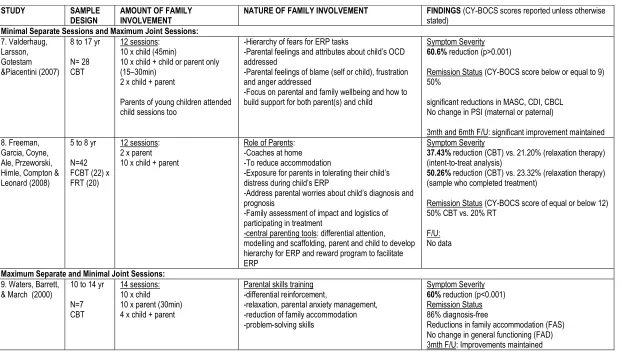
OCD. Table 2 presents a breakdown of the studies, illustrating the amount and nature of family involvement in the treatment. There was a range of family involvement ranging from minimal separate involvement and maximum
Table 2: Studies that use a mixture of separate family involvement and joint family involvement STUDY SAMPLE
DESIGN AMOUNT OF FAMILYINVOLVEMENT NATURE OF FAMILY INVOLVEMENT FINDINGSstated) (CY-BOCS scores reported unless otherwise Minimal Separate Sessions and Maximum Joint Sessions:
7. Valderhaug, Larsson, Gotestam &Piacentini (2007)
8 to 17 yr
N= 28 CBT
12 sessions: 10 x child (45min)
10 x child + child or parent only (15–30min)
2 x child + parent
Parents of young children attended child sessions too
-Hierarchy of fears for ERP tasks
-Parental feelings and attributes about child’s OCD addressed
-Parental feelings of blame (self or child), frustration and anger addressed
-Focus on parental and family wellbeing and how to build support for both parent(s) and child
Symptom Severity 60.6%reduction (p>0.001)
Remission Status (CY-BOCS score below or equal to 9) 50%
significant reductions in MASC, CDI, CBCL No change in PSI (maternal or paternal)
3mth and 6mth F/U: significant improvement maintained 8. Freeman,
Garcia, Coyne, Ale, Przeworski, Himle, Compton & Leonard (2008)
5 to 8 yr N=42 FCBT (22) x FRT (20)
12 sessions: 2 x parent 10 x child + parent
Role of Parents: -Coaches at home -To reduce accommodation
-Exposure for parents in tolerating their child’s distress during child’s ERP
-Address parental worries about child’s diagnosis and prognosis
-Family assessment of impact and logistics of participating in treatment
-central parenting tools: differential attention, modelling and scaffolding, parent and child to develop hierarchy for ERP and reward program to facilitate ERP
Symptom Severity
37.43%reduction (CBT) vs. 21.20% (relaxation therapy) (intent-to-treat analysis)
50.26%reduction (CBT) vs. 23.32% (relaxation therapy) (sample who completed treatment)
Remission Status (CY-BOCS score of equal or below 12) 50% CBT vs. 20% RT
F/U: No data
Maximum Separate and Minimal Joint Sessions: 9. Waters, Barrett,
& March (2000)
10 to 14 yr N=7 CBT
14 sessions: 10 x child 10 x parent (30min) 4 x child + parent
Parental skills training -differential reinforcement,
-relaxation, parental anxiety management, -reduction of family accommodation -problem-solving skills
Symptom Severity 60%reduction (p<0.001) Remission Status 86% diagnosis-free
STUDY SAMPLE
DESIGN AMOUNT OF FAMILYINVOLVEMENT NATURE OF FAMILY INVOLVEMENT FINDINGSstated) (CY-BOCS scores reported unless otherwise 10. Barrett,
Healy-Farrell & March (2004)
7 to 17 yrs N=77 CBFT (24) x GCBFT (29) x W/L (24)
14 sessions: 11 x child (50min) 11 x parent (30min) 11 x child + parent (10min)
3 sibling sessions: 1 x sibling 1 x parent + sibling 1 x child + sibling 2 x family booster sessions
Parent involvement:
-psychoeducation, problem-solving skills, and strategies to reduce parental involvement in the child’s symptoms, along with encouraging family support of home-based exposure and response prevention tasks.
-Parents were encouraged to discuss session content with partners not present.
Family involvement:
-review of progress and booster sessions -coping strategies encouraged to be practiced as a family on a daily basis
Symptom Severity
65%reduction CBT,61%GCBT 6mth F/U: gains maintained
18mth F/U: (of 90% of active treatment groups) 70% CBT, 84% GCBT diagnosis free
Equal amount of separate and joint sessions: 11. Martin &
Thienemann (2005)
8 to 14 yrs N=14 GCBT
14 sessions: 12 x child (60min) 12 x parent (60min) 12 x child + parent (30min) 2 x child + parent + sibling
-parents learn same CBT / ERP skills as child -cognitive: externalising OCD, constructive self talk, cognitive restructuring, cultivating detachment. -30min joint: review of topics and homework setting -Two joint sessions: 1)psychoeducation, 2)family roles in OCD (child, sibling and parent attendance) Individualised support to families session 9
Symptom Severity 24.76%reduction
Significant reductions in COIS-P, CDI, CBCL No significant change in COIS-C, MASC-P, MASC-C F/U: no data
There were five studies that used a mixture of separate and joint child-family
sessions. Two studies reported using minimal separate involvement and maximum joint involvement, two used maximum separate involvement and minimum joint involvement and the fifth used equal amounts of both.
Two studies used maximum separate involvement and minimum joint involvement (Waters & Barrett, 2000 and Barrett, Healy-Farrell & March, 2004). Firstly, Waters & Barrett (2000) scheduled the majority of treatment
sessions as separate child and separate parent sessions and demonstrated a large improvement in symptom severity (60%) over the course of treatment, with 6 of 7 (86%) children achieving clinical remission. There was
a significant reduction in child anxiety and family accommodation to OCD demands but no differences in parental reports of family functioning. Such significant improvement in symptom severity was not evidenced on a
measure of general functioning and symptom impairment (Children’s Global Assessment Scale, (Schaffer, Gould, Brasic, Ambrosini, Fisher, Bird, & Aluwahlia, 1983) and there was no follow-up data to ascertain the durability of such improvements over time. Additionally, the sample was small and so
difficult to draw firm conclusions from but the study suggests that maximum separate family sessions may maximise treatment outcome.
improvement in symptom severity (65%, CBT and 61% group CBT), using a
larger sample than Waters and Barrett (2000). The majority of treatment sessions enabled a separate component for both child and parent and comprised of a joint review at the end. Additionally, this study scheduled sessions to include siblings. The separate parent-only sessions enabled
parents to work in a group format with other parents and centred on psychoeducation, skills training to enable problem solving, reduction in family participation of child’s OCD symptomatology and to support parents to
encourage family support of home-based exposure and response prevention tasks. The study reported clinically and statistically significant reductions in diagnostic status and symptom severity for children with OCD in both active
CBT conditions compared to waiting list.
Additionally, Barrett et al. (2004) demonstrated a significant reduction in
family accommodation to OCD demands and in the associated distress. A significant reduction in depression and anxiety was demonstrated across active conditions and waiting list, indicating that any intervention can have a positive impact including assessment and waiting list only.
Both the Barrett et al. and Waters and Barrett (2000) studies utilising the maximum separate involvement and minimum joint involvement
child-family involvement may maximise treatment outcome. However, a study
that demonstrated a similarly high rate of improvement was one of the two studies that used minimum separate and maximum joint involvement (Valderhaug, Larsson, Gotestam & Piacentini, 2007 and Freeman et al., 2008). Valderhaug et al. (2007) demonstrated high rates of improvement
(60.6%) that were comparable to Waters and Barrett (2000). However, the rates of remission were lower (50%) but defined a stricter criterion for remission status than other studies, potentially artificially reducing the
number entering remission status compared to other studies.
Valderhaug et al. found significant reductions in anxiety and depression in
children with OCD following treatment but no change in parental stress levels. The parental component of the study enabled parents to discuss issues that may be inappropriate for discussion in the presence of the child
(e.g. parental feelings of blame of self or child, frustration, anger). Facilitation of such issues may have provided parents with support they could not have had without separate sessions. The authors did not evaluate the outcome of such sessions for parents and so it is not possible to conclude the effect of
this on treatment outcome.
However, despite being classified as a minimum separate involvement study
discussed, presumably in separate sessions rather than in front of the child
with OCD and a focus on family wellbeing and support was provided. Although not evaluated by the authors, the nature of such involvement may have addressed important difficulties for parents and may have impacted positively on treatment outcome.
In contrast to this is the second study that used minimum separate and maximum joint involvement. Freeman et al. (2008) found that children’s
symptom severity improved by 37.43% over the course of treatment and 50% entered clinical remission status. However, no follow-up data was gathered to ascertain if the gains were maintained after treatment. It is possible that
Freeman et al. (2008) did not achieve such high rates of improvement as the other studies using a mixture of separate and joint sessions because of the young age of the sample in comparison to other studies (5 to 8 years). Whilst
there is limited evidence for the use of CBT in younger children it is generally thought to be less effective for the age group in this sample.
Further research could clarify if the use of an older sample could produce
similar improvement rates to Valderhaug. Also, the joint CBT sessions were less cognitively advanced and adapted to suit the understanding of young children and it is not clear how this impacts on the family’s opportunity for
their children to tolerate the distress associated with ERP tasks. Whilst this
was not specifically evaluated this may be an important feature of joint child-family sessions for treatment outcome. Also, it is not clear whether the opportunity for family learning is reduced as the role that families play is potentially taken up with supporting the understanding of the child.
Lastly, the final study used equal amount of separate and joint involvement and found the lowest rate of improvement across all studies. Martin and
Thienemann (2005) conducted a group CBT study and scheduled separate parent and child sessions in addition to joint sessions each week and also included a small number of joint sessions to include siblings. Despite such
high involvement from families the study demonstrated an overall improvement in symptoms of 24.75% which represented statistically significant improvement of symptom severity over the course of treatment,
but was less successful than other studies in this review.
Whilst this may suggest that an equal mixture of both separate and joint sessions is not the most effective, it is noteworthy that the two lowest
improvement rates were demonstrated by group CBT studies; with Martin and Thienemann (2005) demonstrating similar results to Thienemann. Again this may reflect the limitation of the group treatment format in preventing
individualised support for children or families as other group CBT studies or
individual studies.
6.4 Summary of Combined Separate Family Involvement and Joint
Child-Family Involvement
So overall, similar to the findings of the joint child-family involvement, the utilisation of a mixture of joint and separate family involvement demonstrated
a variation in outcome, perhaps reflected by the variation in treatment design across studies. Again, the variation in treatment design prevents statistical comparison but there may be a slight trend towards the highest rates of
improvement for those utilising maximum separate involvement with some joint involvement.
7.0 DISCUSSION
7.1 Summary of Findings
The findings of the review indicate that all the studies demonstrated
significant improvement in symptom severity after CBT treatment with some family involvement, some studies demonstrating larger improvements than others. There was a wide variation in the way in which families were involved
in treatment and this prevented systematic and statistical comparison. However, whilst the available evidence has not specifically aimed to evaluate the contribution of family involvement to treatment, division of the treatment studies into the amount of family involvement may allow for a comparison
across treatment designs to highlight potential trends in outcomes.
In summary, there appears to be high rates of improvement in symptom
severity for studies that use a mixture of both joint child-family sessions and separate family sessions. Further still, those rates may be maximised in treatments that use a majority of separate sessions with some joint
child-family sessions. Whilst it is not possible to isolate the effects of child-family involvement on treatment outcome, from other treatment effects; the review has also highlighted the differences in roles for family involvement, some of which are more suited to joint involvement and some to separate
Whilst not a feature of all studies utilising separate family involvement, time
for families separate from child sessions may allow for parental issues to be addressed or may provide opportunity for additional learning not possible in joint sessions. Additionally, joint sessions may provide families with the opportunity to observe the clinical practitioner in-session and learn the skills
necessary to support children to engage in treatment tasks at home and to tolerate their own distress in encouraging their child to engage in activities that may be distressing.
7.2 Methodological Limitations and Recommendations for Future
Research
The reviewed studies highlighted a variation in the amount and role of family involvement in childhood OCD treatment. These include family members
acting as co-therapists to support exposure and response prevention tasks in-session and at home, as an implementer of behavioural reward programmes for younger children, as an aide to support the developmental ability of the child in remembering homework tasks and to increase effort. In
addition they offer the opportunity for families to learn to change their own behaviour patterns in response to the child’s OCD, and family members as ‘clients’ in their own right addressing family well-being issues and receiving
Such variation in methodology meant it was difficult to compare across
studies and draw firm conclusions about the relative contribution of family involvement to the treatment outcome. Furthermore, none of the studies aimed to evaluate the contribution of family involvement relative to non-family involvement and so it is not possible to isolate the effects of family
involvement from other treatment effects.
Future research could evaluate the contribution of family involvement by
controlling variables such as the amount of family involvement (number of sessions), the nature of such involvement (joint, separate, mixture of both) and the role for families in treatment (e.g. child-focused, co-therapist role,
family-focused role where the whole family are seen as in receipt of treatment) and comparing such variables on treatment outcome and in comparison to treatment with minimal or no family involvement. Ultimately,
statistical comparison of a number of randomised controlled trials using meta-analysis would be ideal to draw firm conclusions about the effect of family involvement on treatment.
In addition to the variation in the design of family involvement in treatment, the review highlighted the variation in the definition of who constitutes ‘family’; with some studies using only parents and others including siblings.
involvement of the wider system in such treatment studies, such as key
teachers, friends and general peer group may provide additional insights in how to support the generalisation of such treatment effects outside of the family.
In order to understand more fully the systemic context within which the child with OCD lives, research with a qualitative methodology may enable a perspective on family members’ experiences of having a family member with
OCD, and the family’s experience of being involved in treatment. This may highlight the experiences of parents and siblings and may consider potential differences between the experiences of those prior to such treatment relative
to those who have completed treatment.
The present review highlighted further variation in treatment design across
studies. The majority of studies utilised an individual CBT design whilst some studies delivered CBT treatment in group format. Group CBT may have provided additional confounding variables that effected treatment outcome, such as peer group support and normalisation for the child with OCD and for
those parents or siblings that were involved in treatment using a group CBT design. The evidence for the use of group CBT in childhood OCD treatment is mixed and as yet little is known about how group CBT impacts on the
traditional individualised CBT treatment for children, a group CBT approach
comprising the families of children with OCD may be a cost effective way to address additional family issues and utilise the peer support from other families. Further research is needed to examine the benefits of such an approach and the effectiveness on symptom severity and also on family
functioning, coping and support.
The research sample across studies varied in age, diagnostic severity,
previous treatment experience, medication use and diagnostic comorbidity. In some studies there was a lack of information of sample characteristics such as the average age of onset and duration of OCD. Such variation
creates differences within the baseline characteristics of the samples and may confound the treatment outcomes, rendering comparison between studies difficult. Future research to control such variables is needed before
firm conclusions can be made about the effectiveness of treatment and may clarify the variation in outcome across some studies.
The review highlighted variation in the outcome measures used to assess
symptom severity and other secondary measures of family functioning and impact of OCD. Whilst the CY-BOCS (Goodman, Price, Rasmussen et al., 1989a; 1989b) was the most widely used measure of symptom severity, this
remission status in terms of measures used and the cut-off scores. As above,
this increases the difficulty in comparing across studies and future research would benefit from remaining consistent in outcome measure assessment to allow for comparison in meta-analytic reviews.
In order to evaluate wider treatment effects, further research could evaluate
the impact of family involvement that may capture change in family coping and functioning, quality of life measures for the child and family members (impact on school, family and other relationships) and emotional well-being
(self esteem, self-concept) in addition to the more frequently utilised symptom severity measures and secondary mental health measures (anxiety, depression, stress).
Consideration of cognitive change in families may provide further insight into the effect of CBT treatment. CBT treatment for childhood OCD has been
adapted from the adult literature using the Cognitive Theory of OCD (Salkovskis & Kirk, 1989) and tends to neglect to consider children within the systemic context. The role of the family in the maintenance of both adult and childhood OCD at a cognitive behavioural level is evident within the model
but specific consideration of cognitive styles of the family system and any cognitive change across treatment is more limited. Additionally, it may be interesting to consider the role of involving family members in CBT treatment
success of children achieving the ability to reformulate their cognitive
appraisal of the world and ultimately OCD.
Finally, given the variability in methodology across studies, the percentage reduction in symptom severity was used to compare across studies. This is
only one way of evaluating effectiveness and what may have been more useful would have been the clinical significance of change and the percentage of those achieving an asymptomatic diagnostic status or falling
below the clinical range. However, not all studies reported such data and so it was not possible to compare the studies on this level.
7.3 Clinical Implications
This review has examined the research literature to describe the way in
which families have been involved in CBT treatment for childhood OCD. It then followed with a critical evaluation of the way in which family involvement facilitates CBT treatment and the impact this has on families.
A review of studies suggests that there are various ways to involve families in CBT treatment and that such involvement could be divided into separate family involvement, joint family-child involvement and a combination of joint
learning the same CBT skills to help the child challenge and cope with OCD;
additional potential benefits arose as a function of the nature of the way families were involved in treatment.
Sessions that provided parents and / or siblings with separate time from the child with OCD provided an opportunity to family members to obtain support
for their anxieties, concerns, difficulties, guilt and blame (of self and / or the child with OCD) from trained professionals and from other parents and / or siblings. Whereas sessions that facilitated joint family involvement seemed to
provide an opportunity for families to observe the child begin to engage in ERP tasks in-session and to enable family members to tolerate their own anxieties around facilitating the child to engage in ERP, tolerate the resulting
distress and make sense of the experiment in a CBT framework.
Furthermore, whilst the child and family are expected to engage in attempting
to change their behaviour, the family member attending the treatment sessions is implicitly expected to translate this understanding and rationale to the other family members. Maximum attendance in family sessions may enable family members to feel more immersed in the treatment and have the
opportunity to gain the confidence in their knowledge to disseminate this to other family members who did not attend. More understanding is needed to know how best to support family members in taking such a role and the
The review has highlighted the need to understand who best to involve in
treatment and who constitutes family. Furthermore, this extends to the consideration of addressing potential differences between parents and other family members in their response to the child’s OCD and potential difficulties in engaging family members that may be considered to fall within the style of
relating termed ‘high emotional expression’ such as critical comments, emotional over involvement and hostility, implicated in families of children with OCD (Leonard et al., 1993; Hibbs et al., 1991; Przeworski et al., 1999).
Such family members may be difficult to engage but may be important to the outcome of treatment. Similarly, with family members who are deemed ‘over-protective’ or resistant to taking a role in supporting ERP tasks, additional
support to foster understanding of the importance of such a component in treatment may require further separate involvement away from the child with OCD. It may be useful to consider the systemic family therapy literature in
order to address such concerns.
7.4 Recommendations for Service Providers
The present review has highlighted the trend towards greater symptom improvement in treatments that provide separate family sessions compared to those utilising joint sessions only. Furthermore, studies using a mixture of
change. A mixture of approaches may enable families to enhance their ability
to act as co-therapists to support the child to generalise treatment effects at home through joint sessions and to address additional systemic, family coping and functioning issues through separate sessions.
Whilst conducting separate family sessions may potentially lead to an increased cost in clinical time, the gains of involving families in such a way may enable longer term effects and address wider issues not possible
through solely joint sessions. A way to address this issue may be to conduct group CBT for the families of children with OCD which may reduce the cost on clinical time and provide additional group effects such as normalisation
and peer support for families of children with OCD.
8.0 SUMMARY AND CONCLUSION
The present review has been conducted to evaluate the effect of the involvement of families in CBT treatment for childhood OCD. Whilst the NICE guidelines advocate the involvement of families in treatment, there has been
little systematic review of the impact of involving families. The present review has considered the available empirical evidence and structured the studies that involve families in treatment in terms of studies that utilise joint
used solely separate family sessions. The review findings suggest that whilst
all studies demonstrated clinically significant change in symptom severity, studies that utilised a mixture of separate and joint child-family sessions demonstrated the highest improvement overall. The findings are discussed in light of methodological considerations and recommendations for future
9.0 REFERENCES
Abidin, R. (1995). Professional manual for the Parenting Stress Index (3rd edition). Odessa, FL: Psychological Assessment Resources.
Abramowitz, J., Whiteside, S. & Deacon, B. (2005). The effectiveness of treatment for pediatric obsessive-compulsive disorder: A meta-analysis.
Behavior Therapy,36: 55 – 63.
Achenbach, T. & Edelbrook, C. (1983). Manual for the child behavioral checklist and revised child behavior profile. Burlington: University of Vermont Department of Psychiatry.
American Psychiatric Association (1994). Diagnostic and statistical manual of mental disorders (4th edition). Washington, DC: American Psychiatric Association.
Asbahr, F., Castillo, A., Ito, L., De Oliveira Latorre, M. Moreira, M. &
Lotufo-Neto, F. (2005). Group cognitive behavioral therapy versus sertraline for the treatment of children and adolescents with obsessive-compulsive disorder.
Journal of the American Academy of Child and Adolescent Psychiatry, 44
(11): 1128 – 1136.
Barrett, P., Shortt, A. & Healy, L. (2002). Do parent and child behaviours differentiate families whose children have obsessive-compulsive disorder
from other clinic and non-clinic families? Journal of Child Psychology and Psychiatry, 43: 597 – 607.
Barrett, P., & Healey, L. (2003). An examination of the cognitive processes involved in childhood obsessive-compulsive disorder. Behaviour Research and Therapy, 41: 285 – 299.
Barrett, P., Healy-Farrell, L. & March, J. (2004). Cognitive behavioral family treatment of childhood obsessive-compulsive disorder: A controlled trial.
Journal of the American Academy for Child and Adolescent Psychiatry, 43
Barrett, P., Farrell, L., Pina, A., Peris, T. & Piacentini, J. (2008).
Evidence-based psychosocial treatments for child and adolescent obsessive compulsive disorder.Journal of Clinical Child and Adolescent Psychology, 37
(1): 131 – 155.
Benazon, N., Ager, J. & Rosenberg, D. (2002). Cognitive behavior therapy in treatment-naïve children and adolescents with obsessive compulsive disorder: an open trial.Behaviour Research and Therapy, 40: 529 – 539.
Calvocoressi, L., Lewis, B., Harris, M., Trufan, S., Goodman, W., McDougle, C. & Price, L. (1995). Family accommodation of obsessive compulsive disorder.American Journal of Psychiatry, 152: 441 – 443.
Carr, A. (2004).The handbook of child and adolescent clinical psychology: A contextual approach. Brunner-Routledge: New York.
Cooper, M. (1996). Obsessive–compulsive disorder: Effects on family members.American Journal of Orthopsychiatry, 66, 296 – 304.
Department of Health (2005). Obsessive-compulsive disorder: core interventions in the treatment of obsessive-compulsive disorder and body
dysmorphic disorder (NICE guideline). National Institute for Health and