R E S E A R C H
Open Access
Lung function reductions associated
with motor vehicle density in chronic
obstructive pulmonary disease: a
cross-sectional study
Monika Nitschke
1*, Sarah L. Appleton
2, Qiaoyu Li
3, Graeme R. Tucker
1, Pushan Shah
4, Peng Bi
3,
Dino L. Pisaniello
3and Robert J. Adams
2Abstract
Background:Motor vehicle-related air pollution can potentially impair lung function. The effect of pollution in people with compromised pulmonary function such as in COPD has not been previously investigated. To examine the association of lung function with motor vehicle density in people with spirometrically determined COPD in a cross-sectional study.
Methods:In 2004–06, The North West Adelaide Health Study (NWAHS), a biomedical cohort of adults assessed pre and post-bronchodilator spirometry (n= 3,103). Traffic density, obtained from the motor vehicle inventory
maintained by the South Australian Environment Protection Authority, was expressed as the daily numbers of vehicles travelling within a 200 m diameter zone around participants’geocoded residences.
Results:In subjects with COPD (FEV1/FVC <0.7,n= 221, 7.1 %), increasing daily vehicle density was associated with statistically significant decreases in lung function parameters after adjustment for smoking and socio-economic variables. Mean (95 % CI) post-bronchodilator % predicted FEV1was 81 % (76–87) in the low (≤7179/day) compared with 71 % (67–75) in the high (≥15,270/day) vehicle exposure group (p< 0.05). Linear regression analysis in all subjects with COPD showed significant decrements in post-bronchodilator FEV1/FVC ratio and % predicted FEV1of 0.03 and 0.05 % respectively per daily increase in 1000 vehicles. In men with COPD (n= 150), the corresponding reductions were 0.03 and 0.06 %. Smaller, non-significant decrements were seen in females. No difference was seen in those without COPD.
Conclusions:Vehicle traffic density was associated with significant reductions in lung function in people with COPD. Urban planning should consider the health impacts for those with pre-existing respiratory conditions.
Keywords:COPD, Vehicle density, Lung function, Air pollution, Cross-sectional study
Background
The prevalence of chronic obstructive pulmonary disease (COPD) ranges from 5 to 9 % in those aged over 40 years, with an increase in prevalence predicted in some countries [1, 2]. Based on the global disability-adjusted life-year (DALY) estimates, COPD has been ranked eighth out of 20 of the most common diseases in 2012 [3]. Although
mortality rates of COPD are decreasing in Australia, mainly due to reduced smoking, it still represents about 4 % of all deaths in the population aged 55 and over and the economic burden of this disease is substantial [1].
While it is agreed that cigarette smoking is a major cause of COPD, and about 80 % is estimated to be at-tributable to smoking, there is also evidence for other risk factors [2].
Biologically-based impacts of particulate matter (PM) on the lungs have been shown in a range of studies that have explored the response of the immune system to * Correspondence:[email protected]
1Department for Health and Ageing, 11 Hindmarsh Square, Adelaide, South
Australia, Australia
Full list of author information is available at the end of the article
particulates leading to exacerbations of symptoms and air-flow restriction in people with COPD [4]. It has been hypothesised that over time these PM-stimulated inflam-matory processes could lead to airway remodelling con-tributing to the aetiological pathway to COPD [4–7]. COPD is a progressive inflammatory disease and the add-itional effect of exposure to particulate matter and gases may add to the already ongoing inflammatory action and airflow obstruction which may have been originally caused by cigarette smoking or occupational exposures.
There is some evidence from three recent cross-sectional general population studies that lung function de-cline is associated with PM with an aerodynamic diameter of less than 10μm (PM10) and proxy indicators of traffic in adults [8–10]. A recent review concluded that there is suggestive evidence of adverse lung function effects asso-ciated with increasing traffic-related exposure in the gen-eral population of children and adults, but the available evidence precluded a causal relationship [11]. A commen-surate investigation among the sub-population of people with COPD has not yet been undertaken. Considering that people with COPD have to preserve remaining lung func-tion, it is important to find out the relevance of where people live, their exposure to traffic and the potential effects on their lung function.
The aim of this study was to examine effects on lung function of vehicular traffic density measured around the homes of adults with COPD using data from an ongoing cohort study conducted in Adelaide, South Australia (SA).
Methods
Study design and population
This study associates lung function data with traffic density using a cross-sectional design.
Participants with COPD were identified by post-bronchodilator spirometry conducted at stage 2 (May 2004–February 2006) of the North West Adelaide Health Study (NWAHS), a representative biomedical population cohort study of adults aged 18 years or older randomly selected from the Electronic White Pages tele-phone directory and living in the north-western suburbs of Adelaide, South Australia (regional population, 0.6 million of 1.2 million). The majority of the participants (96 %) were of European decent. The methods of the NWAHS and the validity of these methods of selection to achieve an unbiased sample at Stage 1 (biomedical examinationn= 4060, 69 % response rate) have been de-scribed previously [12].
Stage 2 of the NWAHS utilised identical method-ology to stage 1 and clinic data were obtained on 79 % (n= 3206) of the stage 1 NWAHS population. Smok-ing status, and socio-economic determinants were identi-fied by computer assisted telephone interview. Spirometry and anthropometry were conducted with standardised
reproducible methodology according to the 1987 ATS cri-teria [12].
Approval for the conduct of the study was obtained from the Ethics of Human Research Committees of the University of Adelaide and the Central Northern Adelaide Health Service, and all subjects gave written consent. This particular sub-study was approved by the NWAHS study team and the University of Adelaide Human Research Ethics Committee.
Pulmonary function measurements
Spirometry was conducted using a Microlab 3300 Spir-ometer (Micro Medical LTD, Kent, United Kingdom). Each subject performed at least three acceptable and re-producible forced vital capacity manoeuvres where the largest FVC (and FEV1) and second largest FVC (and
FEV1) from acceptable manoeuvres did not vary by more
than 100 ml and 5 % of the largest volume. Data are pre-sented as post-bronchodilator percentage of predicted forced expiratory volume in 1 second (FEV1) and forced
vital capacity (FVC). COPD was considered present if the post bronchodilator FEV1: FVC ratio was <0.7 given
recent findings in relation to COPD pathology and ad-verse outcomes in people classified by the fixed ratio, but not by the lower limit of normal [13–17]. Percentage reversibility of airways obstruction was determined as post-bronchodilator FEV1-pre-bronchodilator FEV1
/pre-bronchodilator FEV1. Pre-bronchodilator data can be
viewed in the supplement.
Traffic density
Density of vehicles within a certain buffer is a commonly used traffic indicator relating to health outcomes, and is highly correlated to measurements of nitrogen dioxide and PM2.5, the main contenders for exposures that affect respiratory health [18].
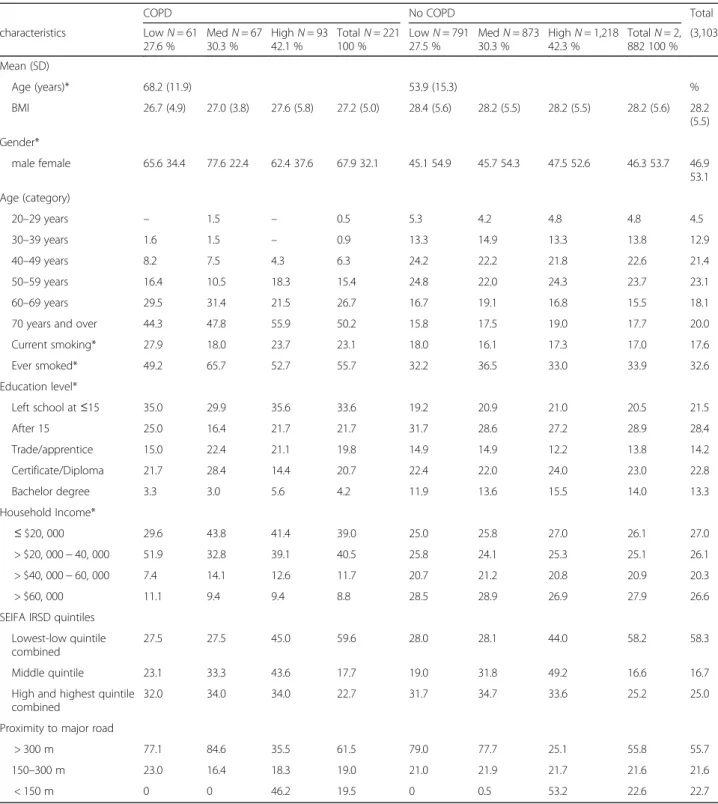
Proxy traffic exposure in the form of vehicle counts on all road sections surrounding the geocode of participants within a circle of 200 m diameter was calculated using ArcGIS 9.3 [19]. A buffer of 200 m around each home was selected based on studies that indicated that traffic-related exposure is receding to background levels within 200 to 300 m from major roads [11;18]. Proximity to major roads in meters (>10 000 cars per day), a traffic metric of lower exposure quality, was included into Table 1 (characteristics of participants) to assess distri-bution of proximity categories between people with COPD and non-COPD.
by the SA Environment Protection Authority (EPA) in-cludes annual average daily traffic counts of traffic for all road links in a GIS compatible database. A large part of the counts are based on traffic surveys, while counts on
local road links (approximately up to one third) are mod-elled. Additional file 1: Figure S2 in the supplement the lo-cation of the participants distributed in the north-western suburbs of Adelaide.
Table 1Characteristics of the NWHAS population overall and by 24 h vehicle density in relation to COPD
COPD No COPD Total
characteristics LowN= 61
27.6 %
MedN= 67 30.3 %
HighN= 93 42.1 %
TotalN= 221 100 %
LowN= 791 27.5 %
MedN= 873 30.3 %
HighN= 1,218 42.3 %
TotalN= 2, 882 100 %
(3,103)
Mean (SD)
Age (years)* 68.2 (11.9) 53.9 (15.3) %
BMI 26.7 (4.9) 27.0 (3.8) 27.6 (5.8) 27.2 (5.0) 28.4 (5.6) 28.2 (5.5) 28.2 (5.5) 28.2 (5.6) 28.2 (5.5)
Gender*
male female 65.6 34.4 77.6 22.4 62.4 37.6 67.9 32.1 45.1 54.9 45.7 54.3 47.5 52.6 46.3 53.7 46.9 53.1
Age (category)
20–29 years – 1.5 – 0.5 5.3 4.2 4.8 4.8 4.5
30–39 years 1.6 1.5 – 0.9 13.3 14.9 13.3 13.8 12.9
40–49 years 8.2 7.5 4.3 6.3 24.2 22.2 21.8 22.6 21.4
50–59 years 16.4 10.5 18.3 15.4 24.8 22.0 24.3 23.7 23.1
60–69 years 29.5 31.4 21.5 26.7 16.7 19.1 16.8 15.5 18.1
70 years and over 44.3 47.8 55.9 50.2 15.8 17.5 19.0 17.7 20.0
Current smoking* 27.9 18.0 23.7 23.1 18.0 16.1 17.3 17.0 17.6
Ever smoked* 49.2 65.7 52.7 55.7 32.2 36.5 33.0 33.9 32.6
Education level*
Left school at≤15 35.0 29.9 35.6 33.6 19.2 20.9 21.0 20.5 21.5
After 15 25.0 16.4 21.7 21.7 31.7 28.6 27.2 28.9 28.4
Trade/apprentice 15.0 22.4 21.1 19.8 14.9 14.9 12.2 13.8 14.2
Certificate/Diploma 21.7 28.4 14.4 20.7 22.4 22.0 24.0 23.0 22.8
Bachelor degree 3.3 3.0 5.6 4.2 11.9 13.6 15.5 14.0 13.3
Household Income*
≤$20, 000 29.6 43.8 41.4 39.0 25.0 25.8 27.0 26.1 27.0
> $20, 000−40, 000 51.9 32.8 39.1 40.5 25.8 24.1 25.3 25.1 26.1
> $40, 000−60, 000 7.4 14.1 12.6 11.7 20.7 21.2 20.8 20.9 20.3
> $60, 000 11.1 9.4 9.4 8.8 28.5 28.9 26.9 27.9 26.6
SEIFA IRSD quintiles
Lowest-low quintile combined
27.5 27.5 45.0 59.6 28.0 28.1 44.0 58.2 58.3
Middle quintile 23.1 33.3 43.6 17.7 19.0 31.8 49.2 16.6 16.7
High and highest quintile combined
32.0 34.0 34.0 22.7 31.7 34.7 33.6 25.2 25.0
Proximity to major road
> 300 m 77.1 84.6 35.5 61.5 79.0 77.7 25.1 55.8 55.7
150–300 m 23.0 16.4 18.3 19.0 21.0 21.9 21.7 21.6 21.6
< 150 m 0 0 46.2 19.5 0 0.5 53.2 22.6 22.7
*p< 0.05 for the overall comparison of COPD versus no COPD group
High≥15,270 vehicles, medium 7180–15269 and low density group≤7179 vehicles per 24 h
Statistical analysis
For categorical analysis of lung function by traffic density, cut points were based on tertiles. Participants were cate-gorised into a high, medium and low vehicles density group (High:≥15,270; Medium: 7180–15269; Low:≤7179).
Mean lung function and FEV1reversibility were
calcu-lated by density category. Regression analysis assessed the statistical significance in the differences in mean lung function relative to base level (the lowest vehicle density) including confounders. The results of this ana-lysis are presented in Table 3. Further anaana-lysis using the continuous measure of traffic density as a predictor in a multiple regression analysis estimated the average changes in lung function associated with increases in the 24 h density of vehicles (increment by 1000 vehicles). An interaction term between COPD (yes/no) and the continuous density variable was used in the regression analysis. The results of this analysis are presented in Table 4. Confounders included were age, body mass index (kg/m2), [BMI was calculated as weight (kg)/height (m) squared] smoking (currently, ever smoked), education level, annual gross household income and Socio-Economic Indexes for Areas (SEIFA) index of relative socio-economic advantage and disadvantage (IRSAD), created by the Australian Bureau of Statistics [20]. Statistical analysis was conducted in Stata 13.1.
Results
Clinic assessment in the second stage of the NWAHS cohort occurred in 3206 participants of whom 3,103 completed post-bronchodilator spirometry. COPD was identified in 221 participants (7.1 %). Table 1 presents the characteristics of participants by COPD and by ve-hicle density.
Participants with COPD were significantly older than those without COPD [mean (SD) age 68.2 (11.9) com-pared to 53.9 (15.3)]. Hence, the categorical age distribu-tion by category of density was also different between the COPD and no COPD group, with a high percentage of people in the two older and less subjects in the youn-ger age groups in those with COPD. Current and ever smoking prevalence was significantly higher, education and income levels were lower, in the COPD group com-pared to the non-COPD group. When proximity to a major road was assessed against vehicle density categor-ies, it was clearly demonstrated that people living closest to major roads were also exposed to a greater vehicle density. This distribution was similar in the COPD and non-COPD category.
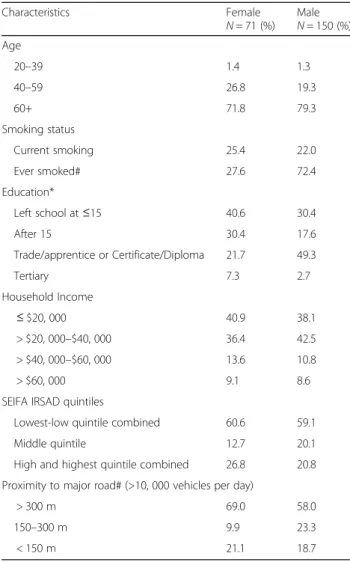
Table 2 compares characteristics and confounding vari-ables in COPD subjects by gender. COPD was significantly more common in males [n= 150 (67.9 %)] compared to fe-males [n= 71 (32.1 %)]. Compared to females, males with COPD were significantly more likely to have a smoking
history, reside in closer proximity to main roads, and be more likely to have post-secondary school qualification.
Categories of density and lung function
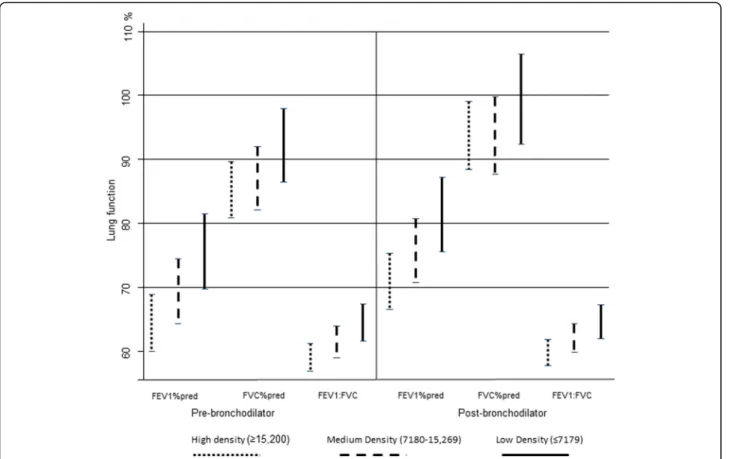
In those with COPD, mean lung function measures indi-cated an exposure-response relationship with increasing motor vehicle density for pre and post-bronchodilator measurements (Fig. 1).
Table 3 shows the adjusted mean (95 % confidence inter-val) post-bronchodilator lung function parameters (pre-bronchodilator data can be viewed in Additional file 1: Table S1 in the supplement) in relation to categories of vehicle density in participants with COPD. The re-spective results for those without COPD can be found in Additional file 1: Table S2 in the on-line supple-ment and no differences were observed in relation to vehicle density categories.
Table 2Characteristics of participants with COPD by gender (n= 221)
Characteristics Female
N= 71 (%) Male
N= 150 (%) Age
20–39 1.4 1.3
40–59 26.8 19.3
60+ 71.8 79.3
Smoking status
Current smoking 25.4 22.0
Ever smoked# 27.6 72.4
Education*
Left school at≤15 40.6 30.4
After 15 30.4 17.6
Trade/apprentice or Certificate/Diploma 21.7 49.3
Tertiary 7.3 2.7
Household Income
≤$20, 000 40.9 38.1
> $20, 000–$40, 000 36.4 42.5
> $40, 000–$60, 000 13.6 10.8
> $60, 000 9.1 8.6
SEIFA IRSAD quintiles
Lowest-low quintile combined 60.6 59.1
Middle quintile 12.7 20.1
High and highest quintile combined 26.8 20.8
Proximity to major road# (>10, 000 vehicles per day)
> 300 m 69.0 58.0
150–300 m 9.9 23.3
< 150 m 21.1 18.7
*P< 0.05; # < 0.1
Fig. 1Adjusted mean lung function by category of density and 95 % confidence intervals in all COPD subjects
Table 3Meana(95 % CI) post-bronchodilator lung function in subjects with COPD by vehicle density per 24 h within a 200 m buffer
Post-bronchodilator [Mean (95 % CI)]
FEV1% predicted FVC % predicted FEV1: FVC (%) FEV1reversibility (%)
All subjects (n= 221)
low 81.4 (75.6–87.2) 99.5 (92.4–106.5) 64.6 (61.9–67.2) 8.4 (6.5–10.3)
medium 75.7 (70.7–80.7) 93.7 (87.7–99.8) 62.1 (59.8–64.3) 8.9 (7.1–10.7)
high 70.9* (66.5–75.3) 93.8 (88.4–99.1) 59.8* (57.8–61.8) 10.9 (8.9–13.0)
Males (n= 150)
low 80.3 (73.6–87.0) 95.6 (89.6–101.7) 64.1 (60.6–67.7) 8.5 (6.3–10.8)
medium 78.0 (73.0–83.1) 94.4 (89.8–99.0) 62.2 (59.6–64.9) 8.8 (6.9–10.6)
high 71.9* (66.7–77.1) 93.2 (88.5–98.0) 58.9* (56.1–61.6) 10.6 (7.9–13.3)
Females (n= 71)
low 80.5 (69.7–91.2) 103.8 (86.7–120.9) 64.6 (60.6–68.6) 8.2 (4.6–11.7)
medium 69.7 (55.8–83.6) 93.6 (71.5–115.7) 61.9 (56.7–67.0) 9.4 (4.5–14.3)
high 69.1# (61.4–76.8) 94.9 (82.7–107.2) 61.3 (58.5–64.2) 11.5 (8.3–14.6)
*p< 0.05; #p< 0.1, for high (≥15,269 vehicles) compared to low exposure (<7179 vehicles) a
Data are presented as adjusted means (95 % CI). Statistical significance between the low and high density group was tested using regression analysis including confounders (age, smoking habits, BMI, education level, annual household income and SEIFA Index of Relative Socio-Economic Disadvantage)
For all subjects with COPD and for males, % predicted FEV1and the FEV1/FVC ratio were significantly lower in
the highest vehicle exposure group compared to the low density group in the adjusted regression analysis. The dif-ference in mean % predicted FEV1between the low and
high vehicle density category was 10.5 percentage points in all COPD participants and 8.4 percentage points in males. For the FEV1/FVC ratio, differences between the
low and high vehicle density categories were 4.8 percent-age points in all subjects and 5.2 in males respectively.
In females, the results were similar. A borderline signifi-cance was observed for post-bronchodilator % predicted FEV1 with a difference in percentage points between the low and high vehicle density category of 11.4 per-centage points.
Post-bronchodilator reversibility showed no significant change with increasing vehicle density overall or by sex.
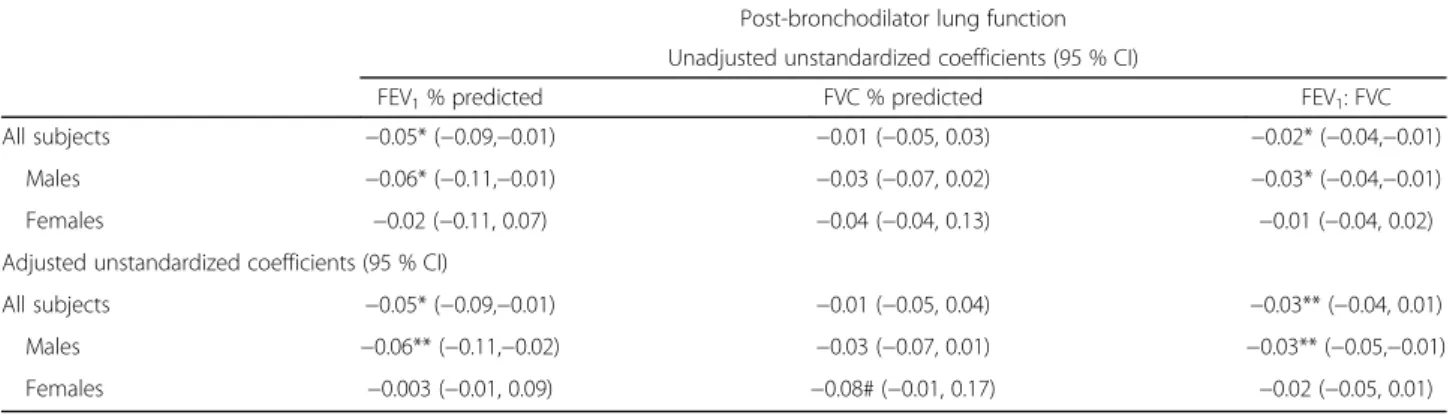
Regression analysis of lung function and vehicle density Table 4 shows the unadjusted and adjusted reductions in post-bronchodilator lung function parameters calculated for an increase in 1000 vehicles over 24 h within a 200 m buffer around residences of subjects with COPD (pre-bronchodilator data can be viewed in Additional file 1: Table S3 in the supplement). The point estimates of the lung function parameters indicated a general inverse rela-tionship with density.
In all subjects and in males, post-bronchodilator FEV1/FVC and % predicted FEV1, but not FVC %
pre-dicted were significantly reduced in association with in-creasing vehicle density, before and after adjustment for confounders. No significant linear relationship between lung function parameters and density was observed in fe-males. When analyses were conducted with smoking considered as‘ever smoked’in addition to‘current smok-ing’, the point estimates did not change and only the
post-bronchodilator % predicted FEV1 in males changed to
borderline significance.
We conducted a sensitivity analysis excluding the three highest car density observations, consistent with the 99th percentile. The linear regression results were robust to the removal of these observations.
Discussion
This is, to our best knowledge, the first study to consider the effect of motor vehicle density on lung function pa-rameters within an unselected COPD population. We hypothesised that lung function of people with COPD would be differentially affected according to where they live with regard to vehicle density, a proxy for air quality. Any findings of lung function reduction would have impli-cations for the progression of COPD over time regardless of the multifactorial contributors which caused COPD.
Our study demonstrated a clear association between lung function parameters and density of vehicles reflect-ing a 24 h exposure in a 200 m buffer around partici-pants with COPD residing in north-west regions of Adelaide that was stronger in men than women. The analysis by category of density showed significant reduc-tions in lung function. For % predicted FEV1 for
ex-ample, the difference from low to high vehicle density was 10 percentage points in males and 8 in females re-spectively. In the linear regression, the highest reduction was 0.07 % of predicted FEV1per 1000 vehicles in male
subjects. COPD patients exposed to the equivalent of the 50th road density percentile in this study would be exposed to 11,000 vehicles and those in the 90th per-centile to 91,000 vehicles leading to an average reduction in percentage points of predicted FEV1of 0.8 and 6.4 %
respectively. Adelaide’s daily traffic volume on any single major road does not exceed 76,500 vehicles [21]. In con-trast, many of the world’s city highways have a daily
Table 4Post-bronchodilator lung function estimates correlated with traffic density within a 200 m buffer for all COPD subjects and by gender
Post-bronchodilator lung function
Unadjusted unstandardized coefficients (95 % CI)
FEV1% predicted FVC % predicted FEV1: FVC
All subjects −0.05* (−0.09,−0.01) −0.01 (−0.05, 0.03) −0.02* (−0.04,−0.01)
Males −0.06* (−0.11,−0.01) −0.03 (−0.07, 0.02) −0.03* (−0.04,−0.01)
Females −0.02 (−0.11, 0.07) −0.04 (−0.04, 0.13) −0.01 (−0.04, 0.02)
Adjusted unstandardized coefficients (95 % CI)
All subjects −0.05* (−0.09,−0.01) −0.01 (−0.05, 0.04) −0.03** (−0.04, 0.01)
Males −0.06** (−0.11,−0.02) −0.03 (−0.07, 0.01) −0.03** (−0.05,−0.01)
Females −0.003 (−0.01, 0.09) −0.08# (−0.01, 0.17) −0.02 (−0.05, 0.01)
Adjusted models included age, current smoking, highest qualification, income, BMI, and SEIFA Index of Relative Socio-Economic Advantage and Disadvantage (IRSAD). **p< 0.01 *p< 0.05; #p< 0.1
volume of more than 200,000 vehicles contributing to overall higher vehicle densities than observed in this study when accounting for the addition of vehicles from other road sections in the 200 m buffer density [11]. This may be associated with concomitant larger lung function detriments. Furthermore, we did not find a significant association between vehicle density and post-bronchodilator reversibility suggesting that traffic expos-ure may contribute to a fixed chronic obstruction of the airways rather than an acutely reversible obstruction leading to FEV1 decline.
There is no consensus on the spirometric definition of COPD. We used a fixed ratio of FEV1/FVC of <0.70 to identify COPD consistent with the GOLD guideline [14]. Evidence from large population cohorts shows that sub-jects classified as“normal”using the lower limit of normal (LLN), but abnormal with the fixed ratio, demonstrate an increased risk of death and COPD-related hospitalisation during follow-up compared with asymptomatic individ-uals with normal lung function [15, 17]. The use of LLN has recently been shown to fail to identify a number of pa-tients with significant pulmonary pathology and respira-tory morbidity compared to the fixed ratio [16]. In our study 69.8 % of participants identified by the fixed ratio were also identified by LLN criteria and the remaining 30.2 % (N= 68) also demonstrated a post-bronchodilator FEV1of <80 % predicted, indicative of significant
respira-tory impairment [22].
Very few studies have used objective spirometric lung measurements in adults, and none have used them to dis-cern relative decrements in lung function associated with traffic-related air pollution in samples of people with COPD. In general population samples, spirometry mea-sures have been used recently to determine prevalence of COPD in relation to traffic exposures or surrogates with mixed results [8–10, 23, 24]. Collectively, these studies suggest that COPD may be associated with air pollution exposure [25]. Some of these studies reported lung func-tion levels in associafunc-tion with traffic proxies in the general population and indicated reductions that were in mag-nitude comparable to our study. Kan et al. [8] reported adjusted FEV1 and FVC reductions related to traffic
density which were significantly decreased across quar-tiles of density using the lowest density as comparison category. Nuvolone et al. [9] compared lung function parameters by distance to a busy road (as opposed in our study) and reported that in males, the reduction in FEV1/FVC ratio was 1.4 % when comparing
partici-pants living <100 m compared to >250 m distance from this roadway. However, the level of vehicle exposure was not reported in this study and a direct comparison to the difference in FEV1/FVC between the high and
the low vehicle density category in our study in males of 5.5 % is not possible [9].
Lung function decline has been directly linked to the frequency of COPD exacerbations [26]. Episodes of wors-ening COPD have been frequently linked to general and traffic-related air pollution causing increased morbidity and mortality in COPD patients [6]. Air pollution levels in cities have been associated with an increase in daily COPD-related hospital admissions [27, 28] and mortality [29], as well as frequency of COPD exacerbations [30].
Fine particulate matter with aerodynamic diameter <2.5 μm (PM2.5) is derived from combustion processes that include emissions from motor vehicle use, industry, biomass burning and smoking. PM2.5 contains reactive oxygen species that induce inflammatory processes and cause overload in alveolar macrophages in the small airways causing inflammation due to release of various immune system-related cells and associated mediators [6, 11]. Com-bined evidence from epidemiological and toxicological re-search have concluded that COPD patients are particularly sensitive to PM2.5 [25, 31]. Toxicological studies have suggested that it is likely that repeated exacerbations of the respiratory system may cause permanent injury, higher sus-ceptibility to infections and a re-modelling of airways even in the absence of smoking [32]. Continuous chronic expos-ure to PM2.5 in COPD patients is suggested to interact through a number of mechanisms with the already present COPD disease process [30, 31]. This can lead to exacerba-tions of COPD during high level of PM2.5 and over time to reductions in lung function relative to exposure status and ultimately to progression of COPD and related mortality and morbidity [6]. A study of women living in highly pol-luted areas demonstrated a statistically significant decline in lung function and increased COPD prevalence associated with a 5 year PM10 increase of 7.0 μg/m3
(interquartile range) [9]. The reductions in % predicted FEV1 and FVC were 5.1 % for and 3.7 % respectively. While PM has been previously associated with COPD, other co-pollutants including nitrogen dioxide and gaseous air toxics may also cause adverse effects, albeit, this evi-dence has not yet been developed.
There are a number of limitations in this study. The cross-sectional design precludes knowledge of the dis-ease onset and progression over time. As the data from this study has been obtained from a cohort study, it will be possible to later analyse lung function changes over time and progress in air pollution modelling may im-prove accuracy of exposure classification. Further, we have no information on occupational lifetime exposure to air pollutants, a possible confounder considering some areas of blue collar workers in the study area, but it is likely that this information is taken into account by adjusting for level of socioeconomic status by area.
In this study, the categorical assessment in females showed significant lung function reductions by density and negative lung function point estimates for all out-comes in the linear regression analysis, but none of the latter reached statistical significance. The relatively small sample size of COPD patients is likely to have impeded a clear signal in the female lung function results. Two re-cent general population studies used traffic exposure proxies with gender-specific lung function findings. While Nuvolone et al. observed reductions in the FEV1/FVC
ra-tio in males only, Kan observed FEV1and FVC-related
re-ductions in females only [8, 9]. These opposing results cannot be easily interpreted, but recent reviews on gender and COPD discuss common differential findings which may reflect the multifactorial development of COPD [33].
Density of motor vehicles only provides a proxy esti-mate of the exposure to fuel emissions. Modelled expos-ure measexpos-urements of PM2.5 or of other air pollutants are currently not available in SA, but the vehicle density, based on a 200 m buffer around subjects, was calculated at the individual level providing variability across the study population. The density metric may be associated with some random exposure misclassification with the effect of minimizing the association. It has been used successfully in a number of studies that established signifi-cant relationships with asthma health outcomes [34–36]. A study comparing effectiveness of exposure metrics for traffic-related air pollutants showed that density is a meas-ure that is broadly in agreement with other more sophisti-cated proxy measures including road-based emissions and dispersion modelling [12].
The question is whether the results of this study can in any way benefit people with COPD. In the first in-stance, it is important for physicians and patients to know that traffic exposure may affect COPD. It may be possible to move to areas with less traffic and additional exposure to indoor air pollution through biomass com-bustion can be avoided. Studies in children and adults have demonstrated that improving air quality has a posi-tive effect on lung function, symptoms and mortality [37–39]. These studies indicate a wide-reaching benefit from improved air quality not only for COPD patients,
but for the whole population. A conventional smoking cessation intervention in smokers with mild to moderate COPD improved % predFEV1by two percentage points
in the first year among quitters [40]. This compares well in magnitude to an improvement of six to ten percent-age points in % predFEV1 when reducing from high to low vehicle density as suggested in this study.
Conclusion
Recent reviews have outlined a substantive role of air pollution in the short and long term progress of COPD. This study has demonstrated for the first time clinically important lung function reductions in relation to traffic density in people with spirometrically determined COPD. This has consequences for COPD patients considering that the difference between low density (<7179 vehicles within a 200 m diameter circle) and high density exposure (>15 269 vehicles) was associated with a reduction of up to 10 % points of FEV1 % predicted in the high density category. It is generally advised that COPD patients pre-serve their lung function by ceasing to smoke or to avoid occupational exposures. Traffic-related PM2.5 is similar to tobacco smoke-related or any combustion-related PM2.5, and all can potentially contribute to additional irreversible loss of pulmonary function, but it may be more difficult to suggest a change of residence to a less polluted area. Community-based interventions that improve air quality would assist in prevention of disease progression of COPD and would benefit the entire community considering that PM2.5 and other air pollutants are linked to other respira-tory and to cardiovascular disease.
Additional file
Additional file 1:Lung function reductions associated with motor vehicle density in chronic obstructive pulmonary disease: a cross-sectional study. (DOCX 968 kb)
Abbreviations
BMI:Body mass index; COPD: Chronic obstructive bronchial disease; DALY: Global disability-adjusted life-year; EPA: Environment protection authority; FEV1: Forced expiratory volume in 1 s; FVC: Forced vital capacity; IRSAD: Index of relative socio-economic advantage and disadvantage; LLN: Lower limit of normal; NWAHS: North West Adelaide health study; PM: Particulate matter; PM10: PM with an aerodynamic diameter of less than 10μm; PM2.5: PM with an aerodynamic diameter of less than 2.5μm; SA: South Australia; Seifa: Socio-economic indexes for areas
Acknowledgements
We appreciate the support of Dr David Simon, Director Scientific Services at the Department for Health and Ageing.
Funding
Availability of data and materials
The data is stored and available upon application from the North West Adelaide Health Study Committee.
Authors’contributions
MN conceived of the study, participated in the design, contributed to the analysis and interpretation of data. She wrote the initial draft of the paper. All other authors revised it critically for important intellectual content and agreed to be accountable for all aspects of the work related to accuracy and integrity of the work. All authors have given final approval of the work published. SA substantially contributed to the design of the work, data acquisition, interpretation and substantially contributed to the revision of the manuscript. QL contributed to the design, analysis and interpretation of data. GT contributed substantially to the statistical analysis and interpretation of data. PS contributed substantially to data acquisition and interpretation of data. PB contributed to the design of the study and provided technical and scientific advice. DP contributed to the interpretation of the work and revised the draft critically. RA critically revised the manuscript for important intellectual content and contributed to the acquisition of data and interpretation.
Competing interests
The authors declare that they have no competing interests.
Consent for publication
All authors have stated their confidence in the work including accuracy and integrity. All authors have given final approval of the version submitted.
Ethics approval and consent to participate
Approval for the conduct of the study was obtained from the Ethics of Human Research Committees of the University of Adelaide and the Central Northern Adelaide Health Service, and all subjects gave written consent. This particular sub-study was approved by the NWAHS study team and the University of Adelaide Human Research Ethics Committee. No individually-based data has been reported. For analysis, the data was de-identified and results are based on aggregated data.
Reporting
We have strived to report on our study according to guidelines prepared for observational studies (STROBE) published in: J Clin Epidemiol. 2008 Apr;61 (4):344–9. PMID: 18313558.
Author details
1Department for Health and Ageing, 11 Hindmarsh Square, Adelaide, South
Australia, Australia.2The Health Observatory, Discipline of Medicine, The University of Adelaide, Adelaide, South Australia, Australia.3The School of
Public Health, University of Adelaide, Adelaide, South Australia, Australia.
4Environment Protection Authority, Adelaide, South Australia, Australia.
Received: 20 May 2016 Accepted: 12 October 2016
References
1. Australian Centre for Asthma Monitoring (ACAM). 2011. Asthma in Australia 2011: with a focus chapter on chronic obstructive pulmonary disease. Australian Institute for Health and Welfare Asthma Series no.4. Cat. no. ACM 22. Canberra: AIHW. Available: http://www.aihw.gov.au/WorkArea/ DownloadAsset.aspx?id=60129544677 [Accessed 8 Feb 2016] 2. Ko FWS, Tam W, Wong TW, et al. Temporal relationship between air
pollutants and hospital admissions for chronic obstructive pulmonary disease in Hong Kong. Thorax. 2007;62(9):780–5.
3. The World Health Organisation. 2015. Disease Burden:Estimates for 2000–12. Available: http://www.who.int/healthinfo/global_burden_disease/estimates/ en/index2.html [Accessed 8 Feb 2016].
4. Plummer LE, Smiley-Jewell S, Pinkerton KE. Impact of air pollution on lung inflammation and the role of Toll-like receptors. Int J Interferon Cytokine Mediator Res. 2012;4:43–57.
5. Grunig G, Marsh LM, Esmaeil N, et al. Perspective: ambient air pollution: inflammatory response and effects on the lung’s vasculature. Pulm Circ. 2014;4:25–35.
6. Ling SH, Van Eeden SF. Particulate matter air pollution exposure: role in the development and exacerbation of chronic obstructive pulmonary disease. Int J Chron Obstruct Pulmon Dis. 2009;4:233–43.
7. Ling SH, McDonough JE, Gosselink JV, et al. Patterns of retention of particulate matter in lung tissues of patients with copd: Potential role in disease progression. Chest. 2011;140:1540–9.
8. Kan H, Heiss G, Rose KM, et al. Traffic exposure and lung function in adults: the Atherosclerosis Risk in Communities study. Thorax. 2007;62:873–9. 9. Nuvolone D, Della Maggiore R, Maio S et al. Geographical information
system and environmental epidemiology: a cross-sectional spatial analysis of the effects of traffic-related air pollution on population respiratory health. Environ Health. 2011;10:12. doi.org/10.1186/1476-069X-10-12 [published Online First:1 March 2011].
10. Schikowski T, Sugiri D, Ranft U et al. Long-term air pollution exposure and living close to busy roads are associated with COPD in women. Respir Res. 2005;6:152. doi:10.1186/1465-9921-6-152 [published Online First: 22 December 2005]. 11. HEI Panel on the Health Effects of Traffic-Related Air Pollution. Traffic-Related
Air Pollution: A Critical Review of the Literature on emissions, Exposure, and Health Effects. HEI Special Report 17. Boston: Health Effects Institute; 2010. 12. Grant J, Chittleborough C, Taylor A et al. The North West Adelaide Health Study:
detailed methods and baseline segmentation of a cohort for selected chronic diseases. Epidemiol Perspect Innov. 2006;3:(1)4. doi:10.1186/1742-5573-3-4 [published Online First: 12 April 2006].
13. Global Initiative for Chronic Obstructive Lung Disease (GOLD). 2015. From the Global Strategy for the Diagnosis, Management and Prevention of COPD. Available: http://www.goldcopd.org/. [Accessed 8 Feb 2016]. 14. Zaigham S, Wollmer P, Engström G. Lung function, forced expiratory volume in
1 s decline and COPD hospitalisation over 44 years of follow-up. Eur Respir J. 2016;47(3):742–50. doi:10.1183/13993003.01575-2015 [published Online First: 2 Dec 2015].
15. Bhatt SP, Sieren JC, Dransfield MT, et al. Comparison of spirometric thresholds in diagnosing smoking-related airflow obstruction. Thorax. 2014;69(5):409–14. 16. Mannino DM, Buist SA, Vollmer WM. Chronic obstructive pulmonary disease in the older adult: what defines abnormal lung function? Thorax. 2007;62(3):237–41 doi:10.1136/thx.2006.068379 [published Online First: 7 November 2006]. 17. Wollmer P, Frantz S, Engström G et al. Fixed ratio or lower limit of normal
for the FEV1/VC ratio: relation to symptoms and extended lung fuction tests. Clin Physiol Funct Imaging. 2015 Oct 6. Published Online First: 6 Oct 2015. doi:10.1111/cpf.12294.
18. Batterman S, Burke J, Isakov V, et al. A Comparison of Exposure Metrics for Traffic-Related Air Pollutants: Application to Epidemiology Studies in Detroit, Michigan. Int J Environ Res Public Health. 2014;11:9553–77.
19. ESRI Australia. 2016. ArcGIS. Available: https://esriaustralia.com.au/products [Accessed 8 Feb 2016].
20. Australian Bureau of Statistics. Socio-Economic-Indices for Areas - Technical Paper, 2011, cat no. 2033,0,55.001. Canberra: ABS; 2013.
21. Department of Planning, Transport and Infrastructure (DPTEI). 2016. Traffic Volumes. Available: http://www.dpti.sa.gov.au/traffic_volumes [Accessed 8 Feb 2016].
22. Quanjer PH, Tammeling GJ, Cotes JE et al. Lung volumes and forced ventilatory flows. Eur Respir J. 1993;6 (Suppl 16):5–40 doi:10.1183/09041950.005s1693 [published Online First:1 March 1993].
23. Pujades-Rodriguez M, McKeever T, Lewis S et al. Effect of traffic pollution on respiratory and allergic disease in adults: cross-sectional and longitudinal analyses. BMC Pulm Med. 2009;9:42 doi:10.1186/1471-2466-9-42 [published Online First: 24 August 2009].
24. Schikowski T, Mills IC, Anderson HR, et al. Ambient air pollution: a cause of COPD? Eur Respir J. 2013;43:250–63.
25. Kelly FJ, Fussell JC. Air pollution and airway disease. Clin Exp Allergy. 2011;41:1059–71. 26. Donaldson G, Seemungal T, Bhowmik A, et al. Relationship between
exacerbation frequency and lung function decline in chronic obstructive pulmonary disease. Thorax. 2002;57:847–52.
27. Atkinson RW, Kang S, Anderson HR, et al. Epidemiological time series studies of PM2.5 and daily mortality and hospital admission: a systematic review and meta-analysis. Thorax. 2014;69:660–5.
28. Medina-Ramon M, Zanobetti A, Schwartz J. The Effect of Ozone and PM10 on Hospital Admissions for Pneumonia and Chronic Obstructive Pulmonary Disease: A National Multicity Study. Am J Epidemiol. 2006;163:579–88. 29. Faustini A, Stafoggia M, Cappai G, et al. Short-term effects of air pollution in
30. Peacock JL, Anderson HR, Bremner SA, et al. Outdoor air pollution and respiratory health in patients with COPD. Thorax. 2011;66:591–6.
31. Sint T, Donohue JF, Ghio AJ. Ambient air pollution particles and the acute exacerbation of chronic obstructive pulmonary disease. Inhal Toxicol. 2008;20:25–9.
32. Churg A, Brauer M, Del Carmen Avila-Casado M, et al. Chronic exposure to high levels of particulate air pollution and small airway remodeling. Environ Health Perspect. 2003;111:714–8.
33. Aryal S, Diaz-Guzman E, Mannino DM. COPD and gender differences: an update. Transl Res. 2013;162:208–18.
34. Cook A, DeVos A, Pereira G, et al. Use of a total traffic count metric to investigate the impact of roadways on asthma severity: a case–control study. Environ Health. 2011;10:52.
35. Kim JJ, Huen K, Adams S, et al. Residential Traffic and Children’s Respiratory Health. Environ Health Perspect. 2008;116:1274–9.
36. Zmirou D, Gauvin S, Pin I, et al. Traffic related air pollution and incidence of childhood asthma: results of the Vesta case–control study. J Epidemiol Community Health. 2004;58(1):18–23.
37. Avol EL, Gauderman JW, Tan SM, et al. Respiratory Effects of Relocating to Areas of Differing Air Pollution Levels. Am J Respir Crit Care Med. 2001;164:2067–72.
38. Downs SH, Schindler C, Liu L-JS, et al. Reduced Exposure to PM10 and Attenuated Age-Related Decline in Lung Function. N Engl J Med. 2007;357:2338–47. 39. Schikowski T, Ranft U, Sugiri D et al. Decline in air pollution and change in
prevalence in respiratory symptoms and chronic obstructive pulmonary disease in elderly women. Respir Res. 2010;11(1):113. doi:10.1186/1465-9921-11-113 [published Online First: 22 August 2010].
40. Scanlon PD, Connett JE, Waller LA, et al. Smoking cessation and lung function in mild-to-moderate chronic obstructive pulmonary disease. The Lung Health Study. Am J Respir Crit Care Med. 2000;161:381–90.
• We accept pre-submission inquiries
• Our selector tool helps you to find the most relevant journal
• We provide round the clock customer support
• Convenient online submission
• Thorough peer review
• Inclusion in PubMed and all major indexing services • Maximum visibility for your research
Submit your manuscript at www.biomedcentral.com/submit