UNDERUSE OF ORAL ANTICOAGULATION THERAPY IN OLDER ADULTS WITH ATRIAL FIBRILLATION AFTER STROKE
Cecily Robin Smith
A project submitted to the faculty at the University of North Carolina at Chapel Hill in partial fulfillment of the requirements for the degree of Doctorate of Nursing Practice
in the School of Nursing.
Chapel Hill 2018
Approved by:
Carrie Palmer
Hugh Waters
iii ABSTRACT
Cecily Robin Smith: Underuse of Oral Anticoagulation Therapy in Older Adults with Atrial Fibrillation After Stroke
(Under the direction of Carrie Palmer)
Background and Purpose: There was an identified underuse of oral anticoagulation (OAC) among individuals who were over the age of 65 with atrial fibrillation (AF). The purpose of this DNP project was to identify patients aged 65 or older with a diagnosis of AF and a
cerebral vascular accident (CVA) or transient ischemic attack (TIA), not on current OAC to determine if a prescription was provided to them at time of discharge from the hospital or during a post-hospitalization follow up appointment with their primary care or cardiology provider.
Method: A retrospective medical record review was used over a three-month period in 2016 to determine clinical practice of providers prescribing OAC to patient ages 65 and older with AF and known stroke or TIA diagnosis. An evidence-based clinical decision support algorithm for the treatment of those with AF who had a CVA or TIA was implemented over a 12-week period at a large, independent hospital using the ACE Star Model of Knowledge Transformation, a framework for putting evidence-based processes into operation. The risk for stroke and bleeding was calculated using the CHA2DS2-VASc score and HAS-BLED tools. Following the implementation period, the same three-month span was selected in 2017 for a retrospective record review to determine the effectiveness of the intervention.
iv
v
TABLE OF CONTENTS
LIST OF TABLES ... vii
LIST OF ABBREVIATIONS ... viii
Chapter 1: Introduction ...1
Statement of the Problem ...5
Purpose of the Project ...5
Clinical Practice Question...5
Chapter 2: Review of the Literature ...7
Sample Characteristics ...9
Risk Assessment ...9
Results of Interventions ...10
Chapter 3: Conceptual and Theoretical Framework ...12
Chapter 4: Methodology ...15
Setting and Participants...15
Intervention ...15
Data Collection ...17
Analysis Plan ...17
Chapter 5: Results ...18
Chapter 6: Discussion ...22
vi
Chapter 7: Implications for Practice ...24
Chapter 8: Conclusion...25
APPENDIX Anticoagulant Algorithm ...26
vii
LIST OF TABLES
Table
1. Stroke Risk Score and Bleeding Risk score ...3
2. ACE Star Model ...12
3. Demographic and Clinical Characteristics...19
4. Stroke and Bleeding Risk Factors ...20
viii
LIST OF ABBREVIATIONS
ACC American College of Cardiology
AHA American Heart Association
AF Atrial Fibrillation
CVA Cerebral Vascular Accident
CHADS2 Congestive Heart Failure, Hypertension, Age ≥ 75 Diabetes Mellitus, Stroke or Transient Ischemic Attack
CHA2DS2-VASc Congestive heart failure, Hypertension, Diabetes mellitus, history of Stroke /Transient Ischemic Attack, Thromboembolism, Vascular disease, Age, and Sex
DOACs Direct Oral Anticoagulants
EMR Electronic Medical Record
FFP Fresh Frozen Plasma
HRS Heart Rhythm Society
HAS-BLED Hypertension, Abnormal liver/renal function, Stroke history, Bleeding predisposition, Labile international normalized ratio, Elderly, and Drug/alcohol usage
ICH Intracranial Hemorrhage
INR International Normalized Ratio
PCP Primary Care Providers
OAC Oral Anticoagulation
SD Standard Deviation
TIA Transient Ischemic Attack
1
CHAPTER1: Introduction
Atrial fibrillation (AF) is the most common cardiac arrhythmia affecting 5% of
individuals over the age of 65. Atrial fibrillation carries a five-fold higher risk for an ischemic stroke compared to adults without the diagnosis. As individuals with AF age, their risk for a stroke increases, making AF the single most probable cause of ischemic strokes among older adults (Sellers & Newby, 2011). The number of individuals with AF is expected to increase due to the aging baby boomer population thus increasing the number of individuals at risk for having a stroke, specifically an embolic stroke (Khan, Huang & Datta, 2016). The mortality rate
associated with AF-related strokes is higher than those not related to AF, and there is greater disability, longer hospitalizations, and poorer functional outcomes in AF-related strokes (Lip, 2013; Padjen, Jovanovic, Leys, & Beslac-Bumbasirevic, 2013). The increased risk for stroke is similar with either paroxysmal AF or sustained AF (Meschia et al., 2014).
Stroke in the setting of AF creates a high suspicion for cardioembolic etiology. Age is also an associated risk for an embolic stroke. Oral anticoagulation therapy (OAC) has been found to be highly effective in preventing thromboembolism, thus reducing stroke risk in individuals with AF and extending the lives of many (Kirchhof et al., 2016). According to the American College of Cardiology/American Heart Association/Heart Rhythm Society
2
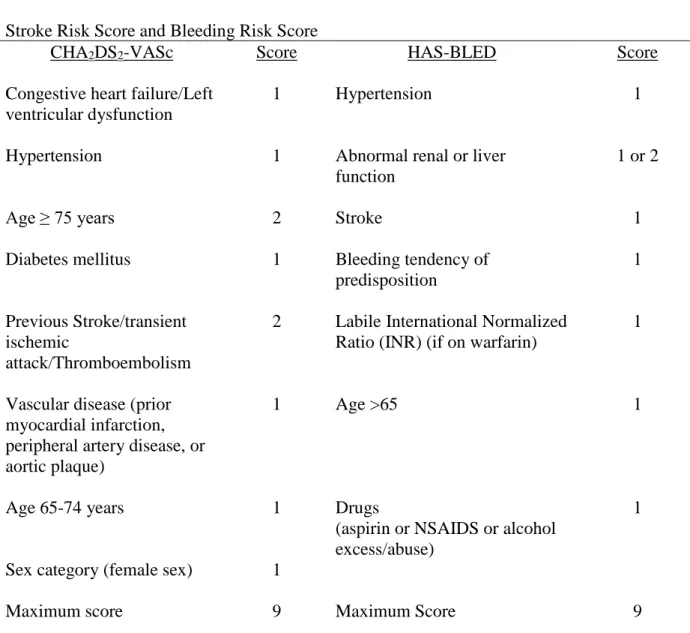
The CHADS2 (Congestive heart failure, Hypertension, Age >75 years, Diabetes mellitus previous Stroke/transient ischemic attack (TIA) is another risk stratification score. When the CHADS2 and the CHA2 DS2-VASc are compared, both predict an outcome of an acute stroke; however, the CHA2 DS2-VASc score predicts a higher percentage of high stroke risk scores using more common stroke risk factors and identifies true low risk patients (Lane & Lip, 2012).
Therefore, the CHA2 DS2-VASc tool increases the number of patients with AF who are eligible for OAC (Padjen et al., 2013).
Nonvalvular AF is defined in the ACC/AHA/Heart Rhythm Society (HRS) 2014 guidelines as AF in the absence of the following: rheumatic mitral stenosis, mechanical or bio prosthetic heart valve, or mitral valve repair (January et al., 2014). The introduction of direct oral anticoagulants (DOACs) has expanded the therapeutic options for primary and secondary stroke prevention in patients with nonvalvular AF.
3 Table 1
Stroke Risk Score and Bleeding Risk Score
CHA2DS2-VASc Score HAS-BLED Score
Congestive heart failure/Left ventricular dysfunction
1 Hypertension 1
Hypertension 1 Abnormal renal or liver
function
1 or 2
Age ≥ 75 years 2 Stroke 1
Diabetes mellitus 1 Bleeding tendency of
predisposition
1
Previous Stroke/transient ischemic
attack/Thromboembolism
2 Labile International Normalized Ratio (INR) (if on warfarin)
1
Vascular disease (prior myocardial infarction, peripheral artery disease, or aortic plaque)
1 Age >65 1
Age 65-74 years 1 Drugs
(aspirin or NSAIDS or alcohol excess/abuse)
1
Sex category (female sex) 1
Maximum score 9 Maximum Score 9
Table 1. Stroke risk and bleeding risk scores. Adapted from "Predicting the outcomes of acute ischaemic stroke in atrial fibrillation: The role of baseline CHADS2, CHA2DS2-VASc and HAS-BLED score values" by Padjen et al., 2013, ActaCardiologica, 68(6), 590-596. Copyright 2013 by ActaCardiologica.
4
have been shown to prevent stroke effectively. One advantage to the DOACs is a decreased risk for intracerebral hemorrhage (ICH). Another advantage is the shorter half-life of 5-17 hours compared to 20-60 hours with warfarin (Ansell, 2016; Moroti & Goldstein, 2016; Verheugt, 2013). Oral anticoagulant therapy is superior to antiplatelet therapy when providing prevention of stroke in the setting of AF (Baker, Wilsmore, & Narasimhan, 2016).
Reversal agents are available or under development for VKA and DOACs. Vitamin K will reverse VKA-induced coagulopathy, but it requires 12-24 hours for results to be seen. Fresh frozen plasma (FFP) and prothrombin complex concentrates can be used to reverse VKA-related bleeding (Ansell, 2016). Idarucizumab is the approved reversal agent for the direct thrombin inhibitors, dabigatran. Dexanetalfa is a reversal agent underdevelopment for the factor Xa inhibitors, rivaroxaban, apixaban, and edoxaban. Ciraparantag is a reversal agent
5
Statement of the Problem
Oral anticoagulation therapy has been shown to reduce stroke risk by 64% in individuals with AF (Meschia et al., 2014). Unfortunately, there is an underuse of OAC by providers caring for individuals over the age of 65 with AF, particularly those perceived to be at risk for falls (Donzé et al., 2012; Jacobs, Billett, Freeman, Dinglas, & Jumaquio, 2009; Khan, Huang, & Datta, 2016). Studies have demonstrated only 55% of individuals who have AF and meet the criteria are being prescribed OAC (Ogilvie, Newton, Welner, Cowell, & Gregory, 2010). The impact of a stroke affects not only the individual, but their family related to costs as well as the healthcare system as a whole related to the number of resources this stroke victim will likely utilize. The indirect costs include productivity loss due to a premature death, disability, and the informal caregiving by family members.
Purpose of the Project
The purpose of the practice change DNP project is to increase the number of healthcare providers prescribing OAC in the outpatient setting among individuals who are age 65 or older, have a known history of AF, and a recent diagnosis of cerebral vascular accident (CVA) or transient ischemic attack (TIA). The role of OAC management typically falls to the patient’s primary care provider or cardiology provider. By utilizing stroke and bleeding risk stratification schemes the decision to initiate OAC is simplified. Stroke prevention is key due to the increased risk of reoccurring strokes in individuals with AF and history of a TIA and/or CVA (Esenwa & Gutierrez, 2015).
Clinical Practice Question
6
a contraindication to OAC (Banerjee, Clementy, Haguenoer, Fauchier, & Lip, 2014; Donzé et. al, 2012; Garwood & Corbett, 2008; Sellers & Newby, 2011) and use would improve patient
outcomes by decreasing the risk for embolic stroke or ischemic events. Providers may be hesitant to initiate OAC in individuals who are considered at risk for falls due to the possible hemorrhagic complications, including ICH following a fall in the presence of OAC, lack of availability to reversal agents for some of the newer DOACs, or a previous patient experience with a poor outcome (Banerjee et al., 2014;Gattellari, Worthington, Zwar, & Middleton, 2008; Man-Son-Hing, Nichol, & Lau, 1999). According to Man-Son-Hing et al., (1999) an individual taking warfarin would have to fall 295 times in one year before the risk of being on the
anticoagulant would outweigh the benefits. Providers should consider the risk of stroke
7
CHAPTER 2: Review of Literature
A review of the literature identifies a range of factors associated with the underuse of OAC in older adults with AF. For this review, only studies focusing on AF and the use of OAC in individuals 65 and older were included due to existing gaps in the literature surrounding this topic. Two online databases, CINAHL and PubMed, were searched for research articles published after 2006 using the following key search terms: anticoagulation, warfarin, aspirin CHADS2 score, CHA2DS2 -VASc score, HAS-BLED, elderly, falls, older persons, atrial fibrillation, bleeding, physical activity, education, stroke, use, fall risk, and shared decision making. Articles containing the following inclusion criteria were selected: (a) both AF and OAC in adults 65 years and older; (b) the studies collected included randomized controlled trials , retrospective analyses, observational studies, longitudinal study designs, meta-analysis,
8
reviewed. Eleven studies did not meet inclusion criteria leaving nine articles and three practice guidelines for this review.
Nine studies and three practice guidelines published from 2007-2016 were identified. Two studies took place in the United States (Aakreet al., 2014; Jacobs, Billet, Freeman, Dinglas, & Jumaquio 2009); one study took place in Saudi Arabia (Al-Turaiki et al., 2016); one in Serbia (Padjen et al., 2013); one in Scotland (Abdul-Rahim, Wong, McAlpine, Young, & Quinn, 2014); two in Australia (Baker, Wilsmore, & Narasimhan, 2015; Gattellari, Worthington, Zwar, & Middleton, 2007); one in France (Banerjee, Clementy, Haguenoer, Fauchier, & Lip 2014);and one study took place in Europe, Japan, North America, China and intercontinental (Hart, Pearce, & Aguilar, 2007). Two of the three practice guidelines were from the United States (Furieet al., 2012; January et al., 2014), and the third was from Europe (Kirchhof et al., 2016). Two studies were cross sectional (Abdul-Rahimet al., 2014; Al-Turaiki et al., 2016), one study was
longitudinal, (Aakre, et al., 2014), four studies were retrospective (Baker et al., 2015; Banerjee et al., 2014; Jacobs, 2009; Padjen et al., 2013), one study was a survey (Gattellari et al., 2007), and one study was a systematic review with meta-analysis (Hart et al., 2007). Three clinical practice guidelines were also reviewed (January et al., 2014; Kirchhof et al., 2017; Meschia et al., 2014).
Six of the nine studies had large numbers of subjects increasing their strength and
9
there was no discernment between non-valvular and valvular AF in the medical records (Padjen et al., 2013). The meta-analysis was the largest summarizing study of its kind evaluating the effects of antithrombotic therapy in stroke prevention among those with non-valvular AF (Hart et al., 2007). The meta-analysis included 29 RCTs and nine double-blind trials. Methodological features varied in the meta-analysis.
Sample Characteristics
A total of 42,361 subjects participated in these eight studies that support practice guidelines using OAC in individuals that had AF and had been screened by a stroke risk model and bleeding model (Aakre et al., 2014; Abdul-Rahimet al., 2014; Al-Turaiki et al., 2016; Baker et al., 2007; Banerjee et al., 2014; Hart et al., 2007; Jacobs et al., 2007; Padjen et al., 2013). Abdul-Rahim et al. (2014), Al-Turaiki et al. (2016), Banerjee et al. (2014), and Jacobs et al. (2007) were the only four studies that reported the sex of the participants. A total of 596 physician subjects participated in survey reporting AF management (Gattellari et al., 2007).
A cross sectional study by Abdul-Rahim et al. (2014) reported 6736 men with chronic AF, aged 65 years and older and 8001 women aged 65 years and older with AF. The meta-analysis by Hart et al. (2007) consisted of 28,044 participants with AF with average age 71 years. Some of the trials in the Hart et al. (2007) meta-analysis included individuals with previous stroke or TIA. Lastly, there were three clinical practice guidelines included that recommended the use of OAC for management of stroke prevention in individuals with AF but did not have any participants (January et al., 2014; Kirchhof et al., 2017; Meschia et al., 2014)
Risk Assessment
10
al., 2013;) used a CHADS2, or a CHA2DS2-VASc score and five of the nine studies used HAS-BLED to evaluate participants’ risk of a stroke and bleeding (Abdul-Rahim et al., 2014; Al-Turaiki et al., 2016; Baker et al., 2015; Banerjee et al., 2014; & Padjen et al., 2013). The duration of the studies ranged from one to 14 years. The European Society of Cardiology recommends utilizing the CHA2DS2-VASc score to estimate stroke risk in patients with AF and supports the use of HAS-BLED to evaluate for bleeding risk. These stroke risk stratification schemes for individuals with AF were first developed in 1990 in small cohort studies and were further developed and later validated in larger populations (Kirchhof et al., 2016). The ACC compared the CHADS2 score with the CHA2DS2-VAScscore for non-valvular AF and found it has a broader score (January et al., 2014). The AHA/ASA recommended using CHADS2 score for patients with AF. This risk stratification scheme is validated by sufficient evidence from randomized control studies (Furie et al., 2012).
Results of Intervention
11
anticoagulated or nonanticoagulated regardless of the fall history. The increased risk
stratification scores were likely due to other comorbidities that influence CHA2DS2-VASc score. The retrospective study by Padjen et al. (2013) showed the HAS-BLED score had an
independent predictive value of symptomatic ICH regardless if treatment for an ischemic stroke was conservative or treated with a thrombolysis agent. A retrospective study by Baker et al. (2015) found OAC prescriptions increased from 50.9% to 64.1% in one year. This increase was attributed to the increase in DOAC being prescribed.
According to a meta-analysis by Hart et al. (2007) dose adjusted warfarin was associated with a 64% reduction in stroke among those in six randomized trials with AF. Unfortunately, no stroke risk score was included in these trials. The survey by Gattellari et al. (2007) reported family physicians feared bleeding and personal patient experience with a bleeding. Next, family physicians felt responsible if their patient experienced ICH while OAC for AF. Physicians chose other treatments such as aspirin or clopidogrel instead of warfarin when a patient was
experiencing bleeding, such as nose bleeds, or had preventable bleeding risks like treated peptic ulcers and falls.
The European stroke prevention guidelines recommend using OAC in men with a CHA2DS2-VASc score of 2 or more and a score of 3 or more in women. The European stroke prevention guidelines also recommend against withholding OAC therapy when an individual has a high bleeding risk (Kirchhof et al., 2016). The ACC showed the CHA2DS2-VASc score
12
CHAPTER 3: Theoretical Framework
The ACE Star Model of Knowledge Transformation (Star Model) has been used in clinical and education settings to support evidence-based practice. This model explains how clinical practice guidelines are the solution for moving research findings into everyday practice. Healthcare is then improved as new evidence-based knowledge is transformed through the five stages of the Kathleen Stevens’ ACE Star Model as cited by Dang et al. (2015). The five-point Star Model represents five different stages of knowledge transformation (Table 2).
Table 2
ACE Star Model
Stages of Knowledge Transformation
Discovery Primary research studies generate new
knowledge
Evidence Summary A systematic review of all the available knowledge
Translation to Guidelines Combine evidence base and expertise knowledge to provide recommendations Practice Integration Factors that affect integration of change to
reflect the strength of the evidence
Process, Outcome, Evaluation Evidence-based practice is evaluated in regard to the patient’s health outcomes, satisfaction, and efficacy of care and health policy
13
The first stage of the Star Model identifies an area of discovery where new knowledge generates in primary research studies; in this project, the underuse of OAC in individuals who are over the age of 65 with AF. The second stage, evidence summary, is a systematic review of all the literature identifying a range of factors associated with the underuse of OAC in older adults with AF. The third stage combines evidence base and expertise knowledge to provide recommendation that translate to guidelines. Clinical practice guidelines recommend individuals with AF who have a CHA2DS2-VASc of > 2 or CHADS2 score ≥2 should be placed on OAC provided they do not have a contraindication (January et al., 2014).
The forth step, practice integration, included factors of change to reflect the strength of the evidence. Integration into practice began in August 2017 with an educational in-service to hospitalists and cardiology providers affiliated with CaroMont Regional Medical Center (CRMC) that included the CHA2DS2-VASc stroke score, the HAS-BLED bleeding score, and their meanings. A review of clinical practice guidelines for stroke and the use of OAC in older adult patients with AF did take place as well as a discussion on patient scenarios that were not considered a contraindication for initiating OAC, including falls risk and dementia.
The fifth stage of the Star Model includes the impact of evidence-based practice
14
15
CHAPTER 4: Methodology
Setting and Participants
The setting for this DNP project was CaroMont Health a not-for-profit independent healthcare system in Gastonia, North Carolina. This healthcare system includes a 435-bed hospital, specialists, primary care offices, urgent care locations, and emergency departments throughout the region (http://www.caromonthealth.org/). The subjects for this DNP project included cardiology providers and the primary care providers within the CaroMont Health Care System. These two groups are most often responsible for initiating OAC in the outpatient setting following hospital discharge of patients with AF who were admitted for a CVA or TIA.
Intervention
16
in the hospital, those medications typically include apixaban 5mg twice a day depending on renal function or warfarin dosed by pharmacy. If a large vessel stroke were to be identified initiation of OAC would be seven to ten days following the stroke. In patients with large vessel strokes, a repeat CT scan of the head may be recommended prior to the initiation of OAC. An algorithm utilizing the HAS-BLED bleeding risk score and CHA2DS2-VASc stroke risk score was provided during the presentation to aid in decision-making surrounding OAC (Appendix 1). The use of OAC has been shown to improve patient outcomes by decreasing the risk for embolic stroke or ischemic events (Garwood & Corbett, 2008; January et al., 2014; Kirchhof et al., 2017; Sellers & Newby, 2011).
17
Data Collection
The EMR was used to identify those patients age 65 or older, admitted to CRMC from July 2016 to September 2016 and from July 2017 to September 2017 with a diagnosis of AF and CVA/TIA, and who were eligible for OAC. A review of medical records from the hospital, primary care, and cardiology outpatient settings using EPIC identified whether these patients received a prescription for an OAC at time of discharge or during a hospital follow up
appointment. Addition data used to score the CHA2DS2-VASc score and HAS-BLED score was collected (Table 1), in addition to descriptors of the patient population race, body mass index (BMI), current smoking, obstructive sleep apnea, dyslipidemia, and a history of neck radiation.
All patient information, including medical record numbers to allow for tracking
prescriptions over 30 days, was stored on an encrypted flash drive that was password-protected and remained at CRMC at all times. Once the follow up data was obtained, a random number replaced the medical record number to de-identify patient information.
Analysis Plan
The principal quantitative outcome was the rate (or percentage) of those patients who were eligible for OAC in the outpatient setting and actually received a prescription for an OAC.
18
CHAPTER 5: Results
A total of 27 patients were included in the analysis, 15 patients in 2016 and 12 patients in 2017. In 2016, 53% (n=8) received prescriptions for warfarin, 13% received apixaban (n=2), and 6% received rivaroxaban (n=1). One patient refused OAC and another patient's family refused as the patient transitioned to hospice. Overall 87% (n=13) patients who were eligible for OAC therapy were offered prescriptions by providers. Two patients were not offered OAC therapy by providers due to fall risk and noncompliance. In 2016, only nine of the 15 providers that
discharged eligible patients mentioned neurology’s recommendations when to start OAC
therapy. In 2017 58% (n=7) received prescriptions for apixaban, 33% (n=4) for warfarin, and one refused OAC therapy. Overall, 100% (n=12) patients who were eligible for oral anticoagulation therapy were offered prescriptions by providers. Of those 12 providers, 10 received education regarding the stroke and bleeding risk scores. In 2017, 11 of the 12 providers that discharged eligible patients mentioned the stroke/bleeding risk score or neurology's recommendation when to start OAC therapy.
19
2016 compared to 16% in 2017. No one used tobacco products in 2016 compared to 8% in 2017. Forty percent were obese with a BMI greater than 30 in 2016, compared to 58% in 2017.
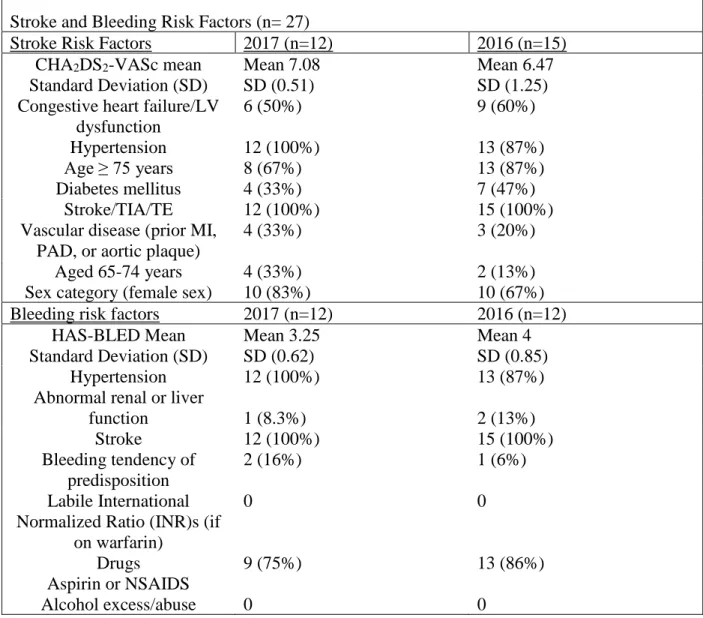
There were no significant differences observed in the CHA2DS2-VASc scores between the two groups (mean score 6.47 [SD 0.51]) compared to the 2017 group (mean score 7 [SD 1.25]). There was a higher HAS-BLED score the 2016 patient group (mean score 4 [SD .846])
compared to 2017 group (mean score 3.25 [SD 0.62]).
In 2016, 6% of patients had a prior clinical relevant non-major bleed compared to 16% in 2017 (Table 4). Prior to admission, 87% of patients were on an antiplatelet medication in 2016 compared to 33% in 2017.
Table 3
Demographic and Clinical Characteristics
2017 2016
Age years mean (SD) 79.7 (9.86) 82.2 (7.66)
Female sex, n (% female) 10 (83%) 10 (67%)
Male sex, n (% male) 2 (17%) 5 (33%)
Race 12 (100%) Caucasian 15 (100%) Caucasian
Antiplatelet therapy not on admission
8 (67%) 11 (73%)
Aspirin 4 (33%) 2 (13%)
Clopidogrel 0% 0%
Aspirin &Clopidogrel 0% 1 (6%)
Medication noncompliance 0% 2 (13%)
Falls 1 (8%) 5 (33%)
Dementia 2 (16%) 2 (13%)
20 Table 4
Stroke and Bleeding Risk Factors (n= 27)
Stroke Risk Factors 2017 (n=12) 2016 (n=15)
CHA2DS2-VASc mean Standard Deviation (SD)
Mean 7.08 SD (0.51)
Mean 6.47 SD (1.25) Congestive heart failure/LV
dysfunction
6 (50%) 9 (60%)
Hypertension 12 (100%) 13 (87%)
Age ≥ 75 years 8 (67%) 13 (87%)
Diabetes mellitus 4 (33%) 7 (47%)
Stroke/TIA/TE 12 (100%) 15 (100%)
Vascular disease (prior MI, PAD, or aortic plaque)
4 (33%) 3 (20%)
Aged 65-74 years 4 (33%) 2 (13%)
Sex category (female sex) 10 (83%) 10 (67%)
Bleeding risk factors 2017 (n=12) 2016 (n=12)
HAS-BLED Mean Standard Deviation (SD)
Mean 3.25 SD (0.62)
Mean 4 SD (0.85)
Hypertension 12 (100%) 13 (87%)
Abnormal renal or liver
function 1 (8.3%) 2 (13%)
Stroke 12 (100%) 15 (100%)
Bleeding tendency of predisposition
2 (16%) 1 (6%)
Labile International Normalized Ratio (INR)s (if
on warfarin)
0 0
Drugs Aspirin or NSAIDS
9 (75%) 13 (86%)
Alcohol excess/abuse 0 0
21 Table 5
Analysis of Bleeding and Stroke Risk
CHA2DS2-VASc score (stroke risk % per year) Has-Bled
score
(bleeding risk % per year)
0 (.84) 1 (1.79) 2 (3.67) 3 (5.75) 4 (8.18)
5 6
(11.0) 7 (11.0) 8 (11.0) 2016 Patients (15) 0 (1.2) 1 (2.8) 2 (3.6)
3 (6.0) N=1 N=3 N=1
4 (9.5) N=1 N=2 N=2
5 (12.5) N=1 N=1 N=2
6 (12.5) N=1
2017
Patients (12) 0 (1.2) 1 (2.8) 2 (3.6)
3 (6.0) N=1 N=7 N=2
4 (9.5) N=1
5 (12.6) N=1
22
CHAPTER 6: Discussion
The number of eligible patients who were offered prescriptions for OAC increased from 87% in 2016 to 100% in 2017. This increase indicates that the intervention resulted in an effective practice change among providers. Of the 12 providers discharging patients with stroke and AF, 100% mentioned the stroke risk/bleed risk scores or neurology recommendations in their discharge notes. Two of the providers, a cardiologist and critical care internist, did not receive education regarding the implementation project; however, the cardiologist did make mention of the stroke risk score in his note and the critical care internist did mention the plan the neurology team recommended regarding anticoagulation management.
Eight of the 15 patients in 2016 were started on warfarin compared to DOACs in three patients. Of the 11 patients who accepted the prescription for OAC therapy in 2017, nine received prescriptions for apixaban to fill at discharge, and two received prescriptions to start warfarin later. Physicians are also becoming more familiar with the stroke risk scoring methods which may also lead to confidence in prescribing of OAC therapy. Those on the cardiology service are already using the CHA2 DS2-VASc stroke risk score in their notes regarding individuals with atrial fibrillation.
23
Using the CHA2 DS2-VASc stroke risk will help to identify more eligible women for anticoagulation therapy. In 2016 & 2017, 100% of the patients were Caucasian females. These results did not reflect past epidemiological research in which African American patients are known to have a higher incidence of all strokes compared to Caucasians (Meschia et al., 2014).
Limitations
24
CHAPTER 7: Implications for Practice
Practice improvement for correcting the underuse of OAC was seen following the discussion with providers regarding practice guidelines, stroke and bleeding risk scores, an anticoagulant algorithm (Appendix 1), and recommendations made by neurology. The number of patients discharged with prescriptions for OAC increased. By using the Anticoagulant Algorithm (Appendix 1), providers can identify who needs therapy. Other providers in the health care system such as intensivists, nocturnal hospitalists, and primary care providers would benefit from this education. Continued effort by those discharging patients to include
25
CHAPTER 8: Conclusion
26
Appendix: Anticoagulant Algorithm
Determine stroke risk using CHA2DS2-VASc
score
If the CHA2DS2 -VASc score is > 2,
determine the bleeding risk using
the HAS-BLED score.
If the HAS-BLED score is ≥ 3, modify bleeding risk factors if
possible, and then consider prescribing an OAC
VKA or DOAC
If the HAS-BLED score is < 3, (low risk for bleeding complication) recommend
OAC.
VKA or DOAC
CHA2DS2-VASc score 0 for male and 1
27 REFERENCES
Aakre, C. A., McLeod, C.J., Cha, S.S., Tsang, T. S. M., Lip, G. Y. H., & Bernard, J. G. (2014). Comparison of clinical risk stratification for predicting stroke and thromboembolism in atrial fibrillation. Stroke, 45, 426- 431. doi:10.1161/STROKEAHA.113.002585
Abdul-Rahim, A. H., Wong, J., McAlpine, C., Young, C., & Quinn, T.J. (2014). Associations with anticoagulation: A cross-sectional registry-based analysis of stroke survivors with atrial fibrillation. Heart (British Cardiac Society), 100, 557- 562. doi:10.1136/heartjnl-2013- 305267
Al-Turaiki, A. M. (2016). Assessment and comparison of CHADS2, CHA2DS2-VASc, and HAS-BLED scores in patients with atrial fibrillation in Saudi Arabia. Annals of Thoracic
Medicine, 11(2), 146-150. doi: 10.4103/1817-1737.180026.
Ansell, J. E. (2016). Reversing the effect of oral anticoagulant drugs: Established and newer options. American Journal of Cardiovascular Drugs: Drugs, Devices, and Other Interventions, 16(3), 163-170. doi:10.1007/s40256-016-0162-7
Baker, D., Wilsmore, B., &Narasimhan, S. (2016). Adoption of direct oral anticoagulants for stroke prevention in atrial fibrillation. Internal Medicine Journal, 46(7), 792-797. doi:10.1111/imj.13088
Banerjee, A., Clementy, N., Haguenoer, K., Fauchier, L., & Lip, G. Y. (2014). Prior history of falls and risk of outcomes in atrial fibrillation: The Loire Valley atrial fibrillation project. The American Journal of Medicine, 127(10), 972-978. doi:10.1016/j.amjmed.2014.05.035
Dang, D., Melnyk, B.M., Fineout-Overholt, E., Ciliska, D., DiCenso, A., Cullen, L., ...Stevens, K.R. (2015). Models to guide implementation and sustainability of evidence-based practice. In B.M. Melnyk &E. Fineout-Overholt (Eds.), Evidence based practice in nursing &
healthcare a guide to best practice (3rd ed.) (pp. 274- 315). Philadelphia, PA: Wolters Kluwer
Donzé J., Clair, C., Hug, B., Rodondi, N., Waeber, G., Cornuz, J., &Aujesky, D. (2012). Risk of falls and major bleeds in patients on oral anticoagulation therapy. The American Journal of Medicine, 125(8), 773-778. doi:10.1016/j.amjmed.2012.01.033
Esenwa, C., & Gutierrez, J. (2015). Secondary stroke prevention: challenges and solutions. Vascular Health and Risk Management, 11, 437–450. doi.org/10.2147/VHRM.S63791
Furie, K. L., Goldstein, L. B., Albers, G. W., Khatri, P., Neyens, R., Turakhia, M. P., . . . Wood, K. A. (2012). Oral antithrombotic agents for the prevention of stroke in nonvalvular atrial fibrillation: A science advisory for healthcare professionals from the American Heart Association/American Stroke Association. Stroke, 43(12), 3442-3453.
28
Garwood, C. L., & Corbett, T. L. (2008). Use of anticoagulation in elderly patients with atrial fibrillation who are at risk for falls. The Annals of Pharmacotherapy, 42(4), 523-532. doi:10.1345/aph.1K498
Gattellari, M., Worthington, J., Zwar, N., & Middleton, S. (2008). Barriers to the use of anticoagulation for nonvalvular atrial fibrillation: A representative survey of Australian family physicians. Stroke; a Journal of Cerebral Circulation, 39(1), 227-230.
doi:STROKEAHA.107.495036
Hart, R. G., Pearce, L. A., & Aguilar, M. I. (2007). Meta-analysis: Antithrombotic therapy to prevent stroke in patients who have nonvalvular atrial fibrillation. Annals of Internal Medicine, 146(12), 857-867. doi:146/12/857
Jacobs, L. G., Billett, H. H., Freeman, K., Dinglas, C., &Jumaquio, L. (2009). Anticoagulation for stroke prevention in elderly patients with atrial fibrillation, including those with falls and/or early-stage dementia: A single-center, retrospective, observational study. The American Journal of Geriatric Pharmacotherapy, 7(3), 159-166.
doi:10.1016/j.amjopharm.2009.06.002
January, C. T., Wann, L. S., Alpert, J. S., Calkins, H., Cigarroa, J. E., Cleveland, J. C.Jr, . . . Sacco, R.L. (2014). 2014 AHA/ACC/HRS guideline for the management of patients with atrial fibrillation: A report of the American College of Cardiology/American Heart Association Task Force on Practice Guidelines and the Heart Rhythm Society. Journal of the American College of Cardiology, 64(21), e1-76. doi:10.1016/j.jacc.2014.03.022
Khan, F., Huang, H., &Datta, Y. H. (2016).Direct oral anticoagulant use and the incidence of bleeding in the very elderly with atrial fibrillation. Journal of Thrombosis and
Thrombolysis, 42(4), 573-578. doi:10.1007/s11239-016-1410-z
Kirchhof, P., Benussi, S., Kotecha, D., Ahlsson, A., Atar, D., Casadei, B., . . . Vardas, P. (2016). 2016 ESC guidelines for the management of atrial fibrillation developed in collaboration with EACTS.European Heart Journal, 37, 2893–2962. doi:10.1093/eurheartj/ehw210 Lane, D. A. & Lip, G.Y.H (2012). Use of the CHA2DS2-VASc and HAS-BLED scores to aid
decision making for thromboprophylaxis in nonvalvular atrial fibrillation. Circulation, 126,860-865. doi: 10.1161/CIRCULATIONAHA.111.060061
Lip, G. Y. (2011).Implications of the CHA2DS2-VASc and HAS-BLED scores for
thromboprophylaxis in atrial fibrillation. The American Journal of Medicine, 124(2), 111-114. doi:10.1016/j.amjmed.2010.05.007
Lip, G. Y. (2013). Stroke and bleeding risk assessment in atrial fibrillation: When, how, and why? European Heart Journal, 34(14), 1041-1049. doi:10.1093/eurheartj/ehs435 Lip, G. Y., Banerjee, A., Lagrenade, I., Lane, D. A., Taillandier, S., &Fauchier, L. (2012).
29
fibrillation project. Circulation, Arrhythmia and Electrophysiology, 5(5), 941-948. doi:10.1161/CIRCEP.112.972869
Man-Son-Hing, M., Nichol, G., Lau, A., & Laupacis, A. (1999). Choosing antithrombotic therapy for elderly patients with atrial fibrillation who are at risk for falls. Archives of Internal Medicine, 159(7), 677-685. doi: 10.1001/archinte.159.7.677 ·
Meschia, J. F., Bushnell, C., Boden-Albala, B., Braun, L. T., Bravata, D. M., Chaturvedi,
S.,…Creager, M.A. (2014). Guidelines for the primary prevention of stroke: A statement for healthcare professionals from the American Heart Association/American Stroke
Association. Stroke, 45(12), 3754-3832. doi:10.1161/STR.0000000000000046
Morotti, A.,& Goldstein, J.N. (2016). New oral anticoagulants and their reversal agents. Current Treatment Options Neurology. 18(47), 1-15. doi:10.1007/s11940-016-0430-5
.
Odum, L. E., Cochran, K. A., Aistrope, D. S., &Snella, K. A. (2012). The CHADS(2)versus the new CHA2DS2-VASc scoring systems for guiding antithrombotic treatment of patients with atrial fibrillation: Review of the literature and recommendations for use. Pharmacotherapy, 32(3), 285-296. doi:10.1002/j.1875-9114.2012.01023.x
Ogilvie, I. M., Newton, N., Welner, S. A., Cowell, W., & Lip, G. Y. (2010). Underuse of oral anticoagulants in atrial fibrillation: A systematic review. The American Journal of Medicine, 123(7), 638-645.e4. doi:10.1016/j.amjmed.2009.11.025
Padjen, V., Jovanovic, D. R., Leys, D., &Beslac-Bumbasirevic, L. (2013). Predicting the outcomes of acute ischaemic stroke in atrial fibrillation: The role of baseline CHADS2, CHA2DS2-VASc and HAS-BLED score values. ActaCardiologica, 68(6), 590-596. doi:10.2143/AC.68.6.8000006
Palomaki, A., Mustonen, P., Hartikainen, J.E.K., Nuotio, I., Kiviniemi, T., Ylitalo, A., …Airaksinen, K.E.J. (2016). Underuse of anticoagulation in stroke patients with atrial fibrillation-the FibStroke Study. European Journal of Neurology, 23 133-139.
doi:10.1111/ene.12820
Sellers, M., & Newby, L. (2011). Atrial fibrillation, anticoagulation, fall risk, and outcomes in elderly patients. American Heart Journal, 161(2), 241-246.
doi:10.1016/j.ahj.2010.11.002