An Examination of Social Influence Effects on Commitment to Change and Implementation Behaviors
Lisa Mali Jones
A dissertation submitted to the faculty of the University of North Carolina at Chapel Hill in partial fulfillment of the requirements for the degree of Doctor of Philosophy in the
Department of Management at the Kenan-Flagler Business School.
Chapel Hill 2007
Approved by:
Advisor: David A. Hofmann
Reader: Benson R. Rosen
Reader: Alison Fragale
Reader: Albert Segars
iii
ABSTRACT
LISA MALI JONES: An Examination of Social Influence Effects on Commitment to Change and Implementation Behaviors
(Under the direction of David A. Hofmann)
Planned organizational changes can be expensive and difficult to implement.
Research suggests that implementation failure occurs when managers do not gain their
employees’ skilled, consistent, and committed program (or product) use (Klein, Conn, &
Sorra, 2001). This definition highlights the need to understand commitment to change and
the implementation stage of organizational change. The purpose of this dissertation is to
investigate attitudinal and behavioral responses to an organizational change by specifying
how employee-generated reasons, and dyadic influence mechanisms, relate to employee
commitment to change. Two theories are used to understand the processes employees go
through in deciding to support and implement a change. First, Behavioral Reasons Theory
(Westaby, 2002, 2005) identifies the reasons people consider when deciding to support or
resist a change—and I extend this theory by suggesting that reasons may have organizing
categories. Second, I build upon social information processing theory (Salancik & Pfeffer,
1978) to suggest that people emphasize different reasons for and against supporting a change
after interacting with different network partners. I then argue that employee commitment to
change is in part due to the reasons employees adopt from influential network partners at
work. I close by further validating that certain types of commitment to change (affective,
iv
Findings indicated and that employee ratings of reasons were subject to influence
effects over time (even controlling for original ratings). This was true in the case of reasons
related to resource issues and reasons related to the opinions of others. Findings also indicate
a significant effect for relationship symmetry and the closeness of reason ratings over time,
again for two types of reasons. Also, there was evidence that reasons may be organized by
categories, and that certain categories relate to different types of commitment to change.
Lastly, regression results indicated that two of the three types of commitment to change
related to behavioral outcomes, specifically cooperation and championing behaviors.
This work helps researchers understand more about the social-contextual factors
related to organizational change and it can help practitioners intervene in facilitating the
v
Acknowledgments
A project of this scope requires a network of support built up and called upon over
many years. I would like to acknowledge the family, friends, faculty, and staff that have
enabled and encouraged me in the completion of this project. First, I am indebted to my
parents, Jim and Jackee Jones, and to my siblings, J.B., Mary, Rusty, Katherine and
Susannah (and their families), for their unflagging encouragement and their always-available
support. I would like to thank my husband, Joshua Christensen, for joining me along the way
and for helping me to finish. I also want to thank David and Jenifer Hofmann for guiding me
throughout the entire process. Lastly, I want to thank my committee for their time and steady
vi
TABLE OF CONTENTS
Page
LIST OF TABLES...vii
LIST OF FIGURES...viii
Chapter I. Introduction…….………...……….……….……….…...1
II. Sensemaking and Social Information Processing In Relation to Organizational Change ………...5
III. Individual Reactions to Change in the Form of Reasons: The Role of Behavioral Reasons Theory……….………....10
IV. Reasons For and Against Supporting a Change and Dyadic Network Influence During Organizational Change…………...……….…21
V. Reason Types and Commitment to Change ………29
VI. Commitment Types and Implementation Behaviors………...36
VII. Methodology………39
VIII. Results………..53
IX. Discussion...84
X. Appendix...102
vii
LIST OF TABLES
Table 3.0 Categories of Information-Gathering: Adjustments from the Socialization
Literature to the Reasons Literature………...19
Table 5.0 Commitment to Organizational Change- Definitions and Outcomes ...31
Table 6.0 Reasons For Supporting RRT as Generated From Interviews...45
Table 6.1 Reasons Against Supporting RRT as Generated From Interviews...45
Table 8.0 Reasons For Supporting Rapid Response Teams at UNCH- Item Descriptions, Factor Loadings, Reason Types and Category Label………....56
Table 8.1 Reasons Against Supporting Rapid Response Teams at UNCH- Item Descriptions, Factor Loadings, Reason Types and Category Label.………...57
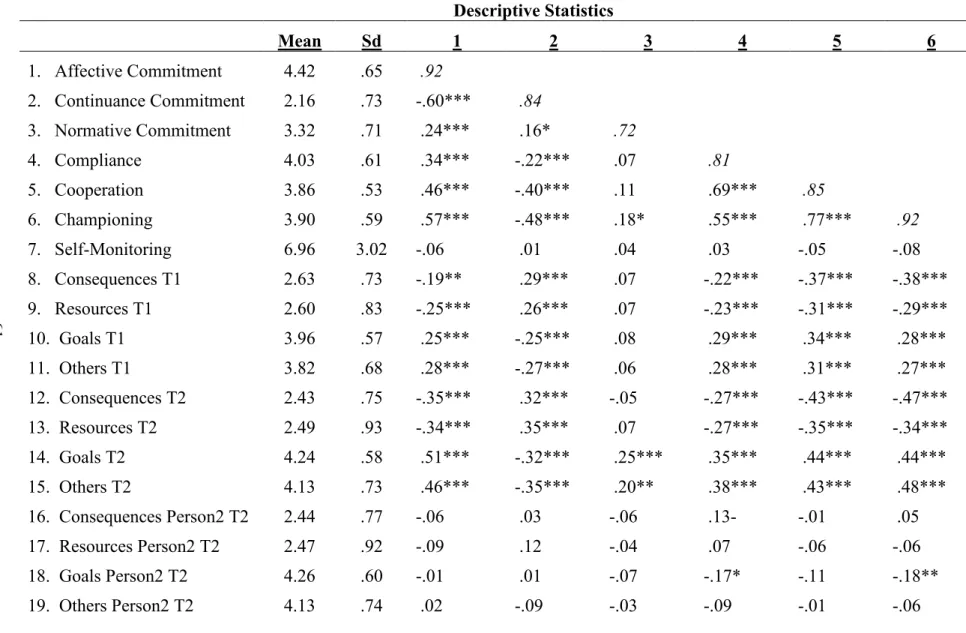
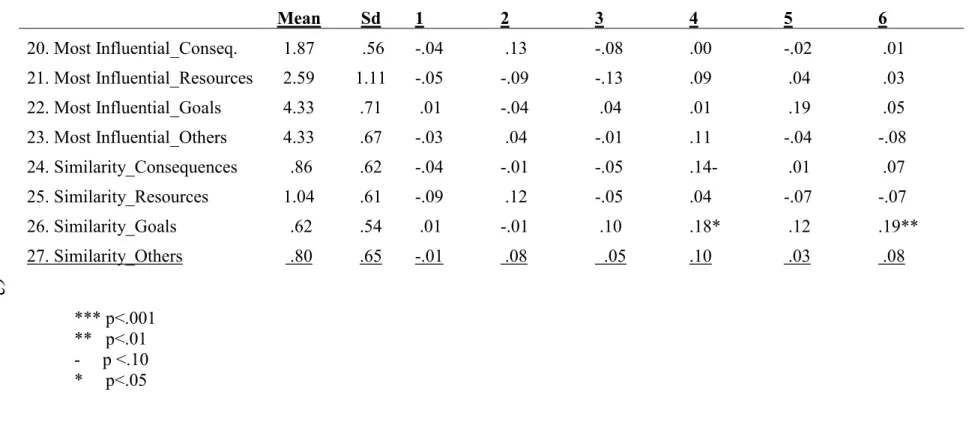
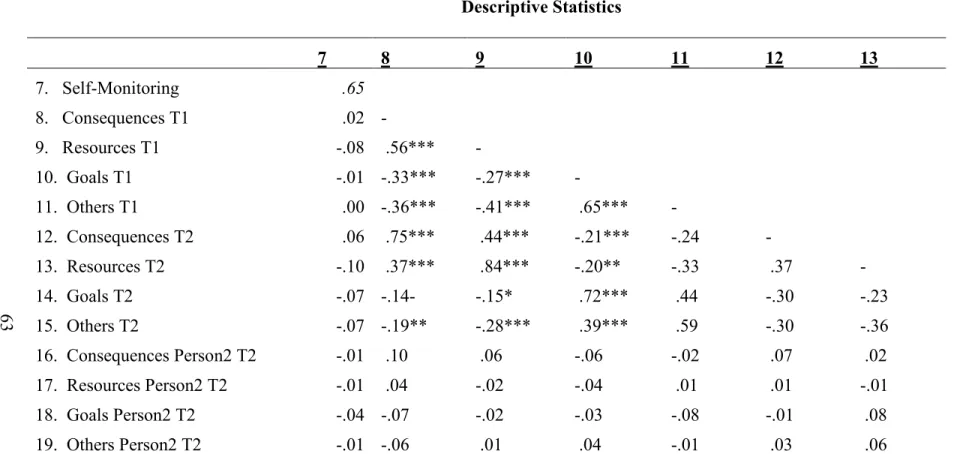
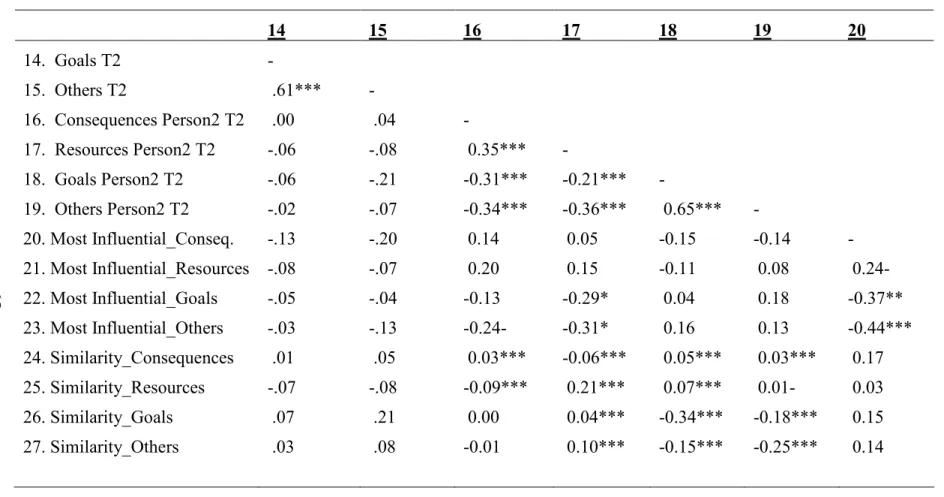
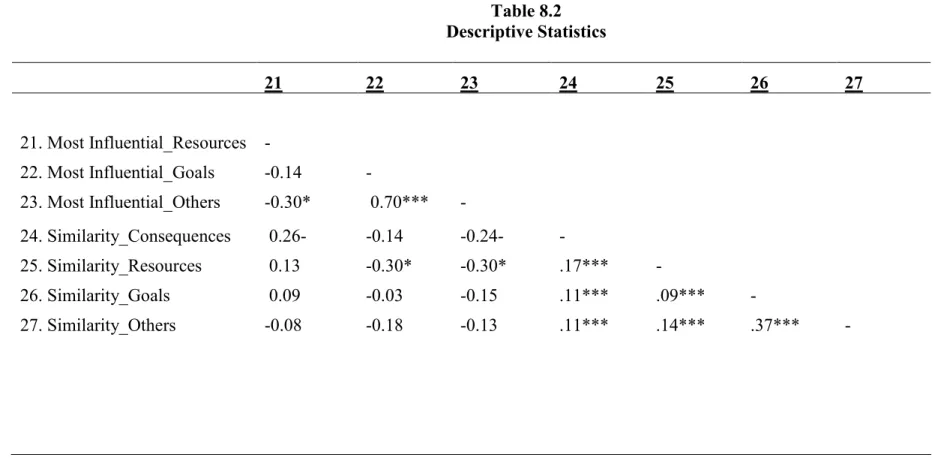
Table 8.2 Descriptive Statistics...61
Table 8.3 Employee Time 1 Reasons, Most Influential Person Time 2 Reasons, and Employee Time 2 Reasons ...70
viii
LIST OF FIGURES
Figure 1.0: Organizing Framework Relating Reasons For and Against a Change to
Networks, Commitment, and Implementation ……...4
Figure 2.0: Process Model of Dyadic Influence, Commitment to Change, and Change Implementation...9
Figure 3.0: Behavioral Reasons Theory……….……….……….…13
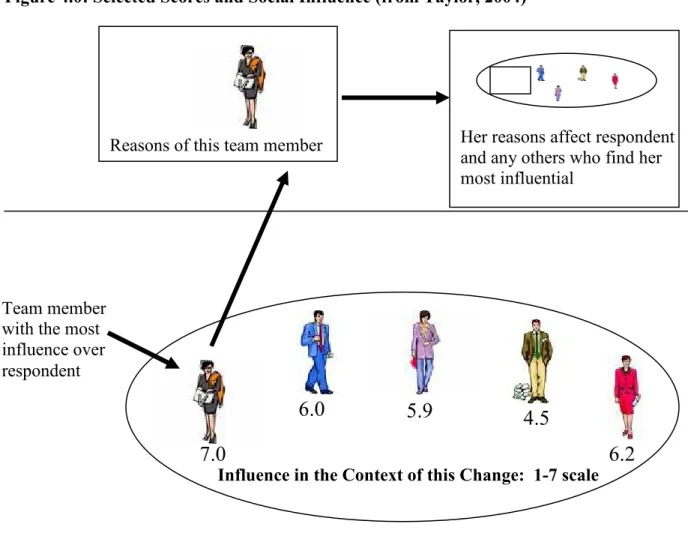
Figure 4.0: Selected Scores and Social Influence...23
Figure 6.0: Process Model and Hypothesized Relationships …….……….…38
CHAPTER ONE Introduction
Planned organizational changes—whether in the form of new products, new
processes, or the mandate to innovate for new markets—can be expensive and difficult to
implement. The history of organizational change efforts suggests that many innovative
products, practices, and services fail to deliver expected results (2001; Orlikowski, 2000;
Pfeffer & Sutton, 2000; White, 1996)). A growing body of research suggests that such
disappointments may be the result of implementation failure, rather than a result of program or technical failure (Klein et al., 2001; Repenning, 2002). Implementation failure occurs
when organizations “fail to gain employees’ skilled, consistent, and committed program (or
product) use” (Klein et al., 2001). When this occurs, the change initiative fails to produce
expected results. A decade ago, Dean and Bowen (1994) evaluated one type of change
initiative, total quality management, and noted that little theory exists to explain the
difference between successful and unsuccessful implementation efforts. Since that time, the
literature on implementation has grown to contain a large number of case studies (Klein &
Sorra, 1996), yet empirical fieldwork and theoretical research on the subject is still lacking.
Thus, the need to expand our understanding of the implementation stage of organizational
change efforts remains critical.
One way to do this is to focus on the commitment component of the definition of
implementation and to work from the commitment construct to understand the antecedents
2
evaluating commitment to change is to consider it as part of a sensemaking process whereby
individuals evaluate reasons for and against supporting a change and then use social
information to judge and act on those reasons. Thus, one can study the phenomenon of
commitment to change by selecting an organizational change and 1) identifying the
individual-level reasons people have for and against supporting the initiative; 2) identifying
how social network ties and communication patterns affect these reasons; and 3) relating the
reasons and the network information to both commitment and implementation behaviors.
In this research, I utilize this approach and focus on how reasons for and against
supporting an organizational change affect commitment to the change and change-related
behaviors—in particular as a result of social interactions. I draw from behavioral reasons
theory (BRT) (Westaby, 2005; Westaby & Fishbein, 1996; Westaby, Fishbein, & Aherin,
1997), social network theory (Burt, 1987), social information processing theory (Salancik &
Pfeffer, 1978), and the commitment to change literature (Herscovitch & Meyer, 2002) to
suggest that implementation success stems from the commitment people feel (or do not feel)
toward the change, which may be a result of the types of reasons influential people use in
describing and supporting the change. In so doing, I do the following: 1) outline a
sensemaking process clarifying how and why reasons may “travel” differently through an
organization based on communication flows at work; 2) address the question of whether
reasons change over time; and 3) suggest that commitment to change may mediate the
relationship between reasons and implementation behaviors.
Little research to date has examined commitment to change in relation to
implementation behaviors, and no research of which I am aware links reasons and social
3
contributions to the study of organizational behavior and the study of organizational change
in that it further investigates the social influence effects of network partners on
change-related cognitions and behaviors; it links commitment to change to a neglected variable,
implementation behavior; and it suggests that commitment to change can mediate the
relationship between reasons and implementation.
In order to make these contributions, I first discuss the sensemaking and social
information processing literatures to clarify the role of social comparisons and network
interactions during times of change. With this background, I offer a model that outlines how
individuals might respond to a change initiative—and how these responses may change over
time as a result of comparing responses with others in the social environment. In order to
support the model, I introduce behavioral reasons theory (Westaby, 2002; Westaby et al.,
1996; Westaby et al., 1997) and then argue that the movement of specific reasons through a
social system can be traced over time. After making this claim, I discuss commitment to
change and suggest that individual commitment to change might differ depending upon
which reasons are favored. Lastly, I outline the implementation literature, and identify how
different types of commitment to change may relate to different implementation behaviors. I
close with results and directions for future research.
Figure 1.0 below outlines the general approach of this paper and identifies which
elements of commitment to change and implementation will be discussed. Subsequent figures
4
Figure 1.0:
Organizing Framework Relating Reasons For and Against a Change to Networks, Commitment, and Implementation
Change Introduced:
Individual forms reasons for and against supporting a change
Commitment to the change:
Affective Normative Continuance
Implementation Behaviors:
Compliance Cooperation Championing Multiple reasons move
through the social network
CHAPTER TWO
Sensemaking and Social Information Processing In Relation to Organizational Change
Considerable research indicates that during times of uncertainty (such as during an
organizational change) individuals look to others in their social environment for information
on how to resolve that uncertainty (Ibarra & Andrews, 1993; Meyer, 1994; Rice & Aydin,
1991a). In particular, research on sensemaking and social information processing has
established these tendencies. This chapter briefly introduces both literatures in order to
establish why and how social comparison behaviors exist during times of organizational
change.
Sensemaking refers to the process where organizational members translate an event
into a meaningful explanation for that event (Gioia & Sims, 1986). More specifically, the
sensemaking perspective focuses on the development of meanings and how they motivate
action (Drazin, Glynn, & Kazanjian, 1999). Organizational members do not simply behave
and do work, they also order and make sense of their world (Gioia & Sims, 1986; Greenberg,
1995). Weick (1979; Weick & Roberts, 1993) suggests that people create meanings about
their social setting through interactions with others. When the social system receives a
shock, such as with the introduction of a change initiative, people’s habitual responses and
interpretations may no longer be appropriate. In such situations, organizational members
may need to create new or revised schemes that make sense within the context of the
6
Often, the sensemaking process can involve the entire social network, because
individuals look to a variety of others to compare reactions to change. Such social
comparisons are central to the sensemaking process, and social information processing theory
(Salancik & Pfeffer, 1978) provides the theoretical background to explain why comparison is
part of post-change sensemaking.
Social information processing theory posits that people within organizations use
information from others in order to form opinions about the organization and about
appropriate behavior. More specifically, social information processing theory suggests that
individual opinions about the merits of a particular change come from personal assessments
of the change, as well as from evaluations and acceptance of the subjective reactions of
coworkers. Timing is critical in social information processing theory, as social information
plays a particularly important role in shaping perceptions under conditions of ambiguity or
extreme uncertainty (such as during the introduction/sensemaking stage of an organizational
change). During times of ambiguity and uncertainty people look to others for cues and
interpretations (Festinger, 1954). In particular, social comparison theory (Festinger, 1954)
states that when personal and objective standards do not exist (as often is the case with a new
change effort), people are more likely to socially compare with both similar anddissimilar others.
Several studies have demonstrated that social information processing affects job
perceptions or job attitudes (Dean et al., 1994; Dean & Brass, 1985; Rice et al., 1991a). For
example, employees in a group show greater congruence in perceptions as their interaction
with coworkers increases (Dean & Brass, 1985). Other work in the social influence tradition
7
similarity in attitudes. Some of the attitudes that have been measured are attitudes about
computer use (Venkatesh & Davis, 2000), self-efficacy (Burkhardt, 1994) or system worth
(Rice, 1993; Rice et al., 1991a; Rice, Grant, Schmitz, & Torobin, 1990). For example, Rice
and Aydin (1991) studied departmental responses to a new health information system, and
they derived a mean attitude component from responses to three questions about a computer
system and 1) whether it was worth the time to use, 2) the extent to which the computer
system had changed the ease of performing work, and 3) about the quality of the work after
using the system. These researchers used tenets of network theory in order to specify which
people would have the strongest effects on attitudes. They also attempted to specify the
relative importance of “source others” by having respondents rate how important they found
the opinions of supervisors and coworkers, respectively.
Rice and Aydin (1991) discovered that: 1) social information processing influences
respondent attitudes toward a new system over and above traditional sources (such as use of
the system or occupational membership); 2) there was greater influence from relational and
positional sources of information than from spatially proximal sources (i.e. friends and
bosses rather than seat-mates); 3) the primary sources of social information are those with
whom one communicates freely and one’s supervisor; and 4) weighting of others’ attitude by
how important the respondent rates the others’ opinion is necessary in several situations.
This study and others (Meyer, 1994; Rice, 1993; Salancik et al., 1978) lend support to
the idea that an individual’s attitudes and beliefs are partially formed as a result of the
attitudes and beliefs of surrounding others through mechanisms of social comparison and
social information processing. Overall, the sensemaking and social information processing
8
standards and guidance on how to think and behave. I argue that this claim can be tested in a
very specific context—namely, the theories can be used as background in studying
antecedents to commitment to change and to change implementation behaviors. No research
of which I am aware has investigated these variables in this context.
In the following chapters, I build upon the idea that when employees hear about a
significant and controversial organizational change, they form initial reactions while also
looking to others to determine their ultimate attitudes and behaviors. I suggest that a key
area of comparison regards the different reasons for and against supporting the change. As
outlined in Figure 2 below, I argue that in selecting their reaction to an organizational
change, an individual determines who is most powerful and influential in the context of the change. Over time, I argue that an individual adopts the reasons of this influential person. Additionally, I suggest that different types of reasons lead to particular types of commitment
to change and to particular implementation behaviors.
Figure 2.0 below outlines a model of how the influence process may work in the
context of measuring commitment to change and change implementation behaviors.
The following chapter develops this model by introducing Behavioral Reasons
Theory (Westaby, 2002, 2005; Westaby et al., 1996; Westaby et al., 1997; Westaby &
Marsick, 2005) in order to establish the role of employee-generated reasons for and against
supporting a change as a key element of the social comparison and sensemaking that occurs
Figure 2.0:
Process Model of Dyadic Influence, Commitment to Change, and Change Implementation
Change is introduced. Consider which person is most influentialin this context; note the reasons endorsed by that person. Be swayed by those reasons. Feel uncertainty. Look to others to resolve uncertainty.
Hear reasons for and against the change from many sources at work. (Reasons have categories). Different reasons lead to different types of commitment to change: Affective Normative Continuance
CHAPTER THREE
Individual Reactions to Change in the Form of Reasons: The Role of Behavioral Reasons Theory
“The reasons motivating organizational change, both real and perceived, have received relatively little attention in research on the implementation of complex organizational interventions” (Rousseau & Tijoriwala, 1999: 517)
In the context of studying planned organizational changes, there is empirical evidence
that employee interpretations of the change are critical to understanding employee reactions
to the change. Specifically, in studying worker responses to change initiatives, researchers
have found that employee interpretations of the reasons for a change influence their reactions
to the change (Shapiro, Buttner, & Barry, 1994). Research also indicates that not all reasons
given by managers to explain change are considered credible or acceptable to employees
(Bies & Shapiro, 1993). Also, the same change initiative can give rise to very different causal
explanations from the perspective of employees (Rousseau & Tijoriwala, 1999). In this
context, researchers have also stated (as in the quote above): “the causal frameworks
employees use to understand change are not well understood…” (Rousseau & Tijoriwala,
1999:514).
Attempts to address this situation have found that employees interpret the reasons an
organization undertakes change based upon the reasons provided by managers, as well as
based upon the reasons they generate for themselves (Rousseau & Tijoriwala, 1999). The
11
are usually studied in relation to changes that are negative (such as downsizing, job cuts,
wage freezes, etc.). When employees seek and generate causal explanations for unusual and
unexpected events, and when they generate explanations based upon their own experiences
and cognitive processes (rather than from manager accounts), they are engaged in motivated
reasoning (Kunda, 1990). Recent work on employee evaluations of reasons to change
indicated that both social accounts and motivated reasoning affect employee evaluations of whether or not a change is legitimate and functional (Rousseau & Tijoriwala, 1999).
Specifically, nurses in a hospital undergoing a restructuring were asked to give their opinion
regarding the reasons for the change (e.g. select from categories related to quality,
economics, or self-serving reasons) and they were asked to rate these reasons in terms of
their legitimacy/acceptableness. When employees rated the managerial social account
(quality-related reasons for the change) as legitimate, this was considered as support for
social accounts theory; yet when they found other reasons as legitimate they were acting in
support of motivated reasoning theory. The results of the study supported social accounts
theory, while also providing strong evidence that employees create alternative explanations
for change. Importantly, the study also linked legitimacy of reasons to employee-rated
implementation success.
This work clearly supports the idea that reasons and justifications matter in evaluating
a change initiative; and further that employee-generated reasons are as critical as managerial
social accounts in helping researchers understand employee reactions to change. The study
also linked legitimacy of reasons to employee-rated implementation success. Given the
importance of reasons in evaluating a change initiative, it makes sense to further investigate
12
2005; Westaby et al., 1997; Westaby et al., 2005), that provide a theoretical link between
employee-generated reasons and behavioral intentions and outcomes.
Behavioral Reasons Theory
Behavioral reasons theory belongs to a general family of theories that examine the
impact of positive and negative factors on judgments and behavior (e.g. field theory, balance
theory, the health-belief model). It builds on behavioral intention theories such as the theory
of reasoned action (Fishbein & Ajzen, 1975) and the theory of planned behavior (Ajzen,
1991) by postulating that reasons for and against a behavior serve as an important link
between beliefs, “global evaluations” (e.g. attitudes, subjective norms, and perceived
control), intentions, and behavior.
More specifically, BRT is a framework that attempts to explain and incorporate the
specific cognitive factors that motivate and maintain people’s intentions and behaviors. It
suggests that understanding the specific reasons people use to explain “why” they form their
behavioral intentions is necessary to fully understand specific motives (Westaby, 2003;
Westaby et al., 1996). The emphasis that BRT places upon the importance of specific beliefs
(measured as accessible reasons) means that in BRT, accessible reasons are suggested to
have direct associations with behavioral intentions. This contrasts with assumptions in the
theory of planned behavior (Ajzen, 1991), where the effects of any belief-based components
are assumed to be mediated through attitude, subjective norm, and perceived control.
Behavioral reasons theory does not omit or “bypass” these variables, as such “global
evaluations” are postulated to also mediate the relationship between reasons and
intentions/behavior, it simply also suggests a direct link from reasons to intentions and
13
Figure 3.0
Behavioral Reasons Theory (from Westaby & Marsick, 2005, under review)
Behavioral reasons theory attempts to describe the role of accessible reasons in
behavioral decision-making. In a decision-making framework, the motivational process is
presumed to begin with a state of uncertainty. Individuals resolve uncertainty by evaluating
their positive and negative beliefs associated with the behavior under consideration. This
evaluative process results in intentions to perform the behavior and simultaneously results in
the formation of accessible reasons that can be used to justify and support these intentions.
Importantly, accessible reasons are assumed to support people’s ongoing pursuit of behavior
once the behavior is initiated.
Applications of Behavioral Reasons Theory
Behavioral reasons theory has been used to improve our understanding of turnover
decisions and job satisfaction (Westaby, 2003) and implementation behaviors (Westaby et
al., 2005). As an improvement on behavioral intention models, behavioral reasons theory
can also account for behavioral change—and this is critical to understanding how
commitment types and levels might change in the context of an organizational change effort.
Specifically, according to the model, people may interrupt their ongoing behavioral pursuits Reasons
(Pro/Con)
Global Evaluations
(Attitude, Perceived Control, Subjective Norm)
14
when new information is presented which causes them to question their current accessible
reasons. If their current accessible reasons are not sufficient to counter-argue the newly
encountered information, then they become uncertain about their intentions and on-going
behavior. At this point, the behavioral decision making process would be re-engaged to
“form a new intention, a new set of accessible reasons, and a new course of committed,
ongoing action” (Westaby, 2003: G3). Thus, when a change initiative is introduced and
discussed, people likely consider or reconsider the reasons that either support or do not
support endorsing the initiative. As I discuss later, this consideration likely involves
watching and interacting with others in order to fully decide how to act.
As an illustrative example of how accessible reasons theory is operationalized,
consider examples from a study where BRT was applied to the understanding of turnover
intentions (Westaby, 2003). Accessible reasons are defined as the specific factors that
employees use to explain their turnover intention responses—e.g. an employee could access
reasons to stay such as “I have good social relationships here” and “I enjoy my job.”
Employees would also access reasons against staying (such as “My boss does not promote
people”), and together both types of reasons would affect intentions and behavior. In
research, accessible reason variables were related to turnover intention and turnover
behavior, and they explained an additional 12% of the variance in turnover intentions, after
controlling for subjective norm, perceived control, and attitude variables (all of which are
related to the theory of planned behavior (Ajzen, 1991)). Accessible reasons also explained
more variance in longitudinal job satisfaction than that explained by other theories. Such
15
intention models. Doing so increases explanatory value while simultaneously highlighting
specific targets for applied interventions.
Measuring Behavioral Reasons Theory and Categorizing Reasons
In the research environment, BRT is assessed by first performing qualitative
elicitation interviews with organizational representatives in order to capture potential reasons
for or against a particular behavior. After salient possible reasons are collected, respondents
select applicable reasons from two columns (one “for” and one “against”). Typically,
reasons in the list deal with a range of issues, such as relationships, other alternatives, and the
nature of the work itself. Respondents are also often asked to place an additional mark next
to very influential reasons (which allows for additional assessment). However, to date, no
research using the theory has asked: are there predictable categories of reasons for and
against an organizational change? This question is important because if there were
predictable categories of reasons, then researchers could investigate whether certain reason
types strongly relate to certain behaviors or attitudes. This categorization could advance
investigations of change beyond idiosyncratic studies and move it toward more systematic
types of research.
Since no research (of which I am aware) has attempted to categorize reactions to
change initiatives, there is no a priori set of categories to guide such an exploration. There
are, however, several literatures that could inform such an investigation: one option is to look
at influence attempts (since a change initiative could be classified as in influence attempt);
another option is to look at the sensemaking and socialization literature (since an
16
socialization on the part of employees). A third option is to evaluate the social psychological
literature on persuasion.
Influence Literature as an Inspiration for Creating Reason for Change Categories
To date, the empirical study of influence in organizational behavior has been
dominated by the goal of developing inventories of strategic influence-seeking behaviors.
For example, Kipnis, Schmidt & Wilkinson (1980) identified an inventory of seven influence
tactics, which was later modified to nine tactics by Yukl and colleagues (e.g. rational
persuasion, inspirational appeal, consultation, ingratiation, exchange, personal appeal,
coalition, legitimating, and pressure (Yukl & Falbe, 1990). Most studies examine how
tactical choices vary with situational perceptions (Dillard & Burgoon, 1985), individual
differences (O'Hair & Cody, 1987), and organizational climate (Cheng, 1983); studies also
focus on the effects of certain tactics on certain targets. However, although there are many
types of influence tactics, researchers do not agree on the range of tactical options available
to managers and there is inconsistent information about results of using the tactics (Higgins,
Judge, & Ferris, 2003; Tepper, Eisenbach, Kirby, & Potter, 1998). Given these limitations,
some researchers suggest that meta-categories be used to allow a higher level of abstraction
in analysis (Furst, 2004; Tepper et al., 1998). The most commonly suggested scheme is that
of hard, soft, and rational tactics, where influence occurs by force, psychological persuasion,
or instrumental reasoning, respectively (Kipnis & Schmidt, 1985). While such
meta-categories may simplify comparative research on influence, such meta-categories do not cleanly
translate to the reasons literature (e.g. “hard” versus “soft” reasons are not as intuitive as
“hard” vs. “soft” tactics; and force-related reasons seem less common than force-related
17
instrumental reasoning remains intuitively appealing. One can both preserve that distinction
and improve upon the distinction by evaluating the socialization literature for its
contributions.
Socialization Literature as an Inspiration for Creating Reason for Change Categories
The socialization literature suggests that employees who are in a time of transition—
either at organizational entry or during a period of organizational change (Schein &
Diamante, 1988)—seek five types of information: technical, referent, normative,
performance, and social (Morrison, 1993). More specifically, technical information refers to
how to perform required tasks; referent information refers to role demands and expectations;
normative information regards adapting to the culture and getting integrated into a work
group; performance information regards feedback on specific behaviors; and social
information regards feedback on the acceptability of non-task behaviors. Attempts to put
these informational needs into meta-categories suggest that people seek job-relevant
information (informational) and organizational socialization-relevant information
(normative) (Morrison, 1993; Shah, 1998). Thus, there are two major types of employee
information-seeking that occur along with socialization. This two-part categorization is
parsimonious and easily lends itself to application in the reasons and justifications literature
(e.g. it can appear logical to suggest that people use informational and normative reasons to
support or resist a change). Also, this choice to draw from the socialization literature to
understand employee reactions to a change is supported by the literature itself, as researchers
in that field suggest that socialization-related issues do not just occur at organizational entry,
18
type of confusion and need for sensemaking that occurs at organizational entry can occur
with an organizational change (Schein, 1988).
Interestingly, these meta-categories as used in the socialization literature overlap
considerably with categories utilized in social psychological studies of persuasion and social
influence. Specifically, the field of social psychology has used, as its “central organizing
framework” (Wood, 2000), the assumption that people agree with others from an
informational motivation and/or from a normative motivation—e.g. because they want to
understand the entity or issue featured in the appeals and/or because they want to conform to
the expectations of another. Given the above information about the use of these two
categories as guiding categories in social psychology, and given the parsimony that can come
from integrating disciplines, I suggest that categories and meta-categories of
information-seeking behaviors can also be applied in evaluating and categorizing reasons and
justifications.
Making this application can be done with very few changes to the definitions as used
in socialization literature. In taking the categories and applying them to behavioral reasons
theory, I argue that the definitions can be adjusted according to the list in Table 3.0 below.
Also, while I maintain that each of the five types of organizational information types from
socialization also correspond to five types of reason categories, I still suggest that each of
these original categories would likely be related to second order higher factors that represent
the two metacategories (informational and normative) described earlier. The table below
captures the original definition of each information type, its adjusted definition, and its
19
Table 3.0
Categories of Information-Gathering: Adjustments from the Socialization Literature to the Reasons Literature
Type of Information Gathering: Category Name Original Definition in Socialization Literature Adjusted Definition in Context of
Organizational Change Meta-Category (Normative= culture/ socialization relevant; Informational=job/task relevant)
Technical Information on how
to perform required tasks
Why employees would be required to perform the change
Informational
Role Referent Refers to information on expectations of others related to role demands
Why and how change fits with role demands and
expectations
Informational
Normative Adapting to the
culture and getting integrated into a work group
Why change facilitates cultural and work group integration; why it is expected
Normative
Performance Feedback on
specific behaviors; helps evaluate job progress
Why and how change is related to work-specific progress
(work integration)
Informational
Social Regards feedback
on the acceptability of non-task
behaviors; allows one to assess acceptance in workgroup
Why and how change is related to non-task behaviors (social integration); why change will lead to acceptance
20
Thus, in investigating whether reasons for and against an organizational change fall
into categories, I draw from the socialization and social psychology literature to suggest that
there are likely five subcategories of reasons (those listed above in association with
socialization). I further suggest that these subcategories can be represented by two
meta-categories: normative and informational. This claim can be tested with a combination of
qualitative and quantitative research.
Hypothesis 1A: Employee-elicited reasons for and against a change can be independently coded into five categories: technical, referent, normative, performance, and social.
Hypothesis 1B: A second-level of analysis of employee-elicited reasons for and against a change will result in two higher-level factors; such factors can be considered as normative and informational.
This attempt to put reasons for and against a change initiative into empirical and
theoretical categories has the potential to significantly increase our understanding of how
employees consider and relate to change initiatives. To date, attempts at organizing
employee responses have been idiosyncratic and atheoretical (Rousseau & Tijoriwala, 1999);
also they have often focused solely on manager-generated accounts (Bies & Shapiro, 1993).
This current research provides a theoretical logic for categorizing reasons, while also
enabling reasons to be used in other research contexts. The advances possible with this
categorization would allow researchers to more systematically study reactions to
organizational change.
More specifically, the value of categorizing reasons increases significantly if reasons and
reason categories can be linked to hierarchical positions, communication patterns, and
ultimately to types of behaviors. To that end, the next chapter suggests how certain reason
types may come to be accepted by multiple people in a social system—and it also relates how
CHAPTER FOUR
Reasons For and Against Supporting a Change and Dyadic Network Influence During Organizational Change
In the previous chapter I suggested that reasons have organizing categories and that
reasons for or against supporting an organizational change ultimately affect attitudes and
behavioral intentions regarding that change. In this chapter, I continue to focus on reasons
and use them as a vehicle to test how the reactions of influential network members may
predict the reactions of others in the network. Again, promoting or accepting reasons for or
against supporting a change are one kind of reaction to change, and they are potentially a key
area of comparison and exchange between employees who are experiencing and discussing
change. In accordance with the model in Figure 4.0, I suggest that after individuals have
been exposed to reasons from different sources they consider how to value, weight, and
potentially adopt different reasons from different network sources. In order to make claims
about how an individual might do this, I discuss the role of power and influence in social
interactions.
Power and Influence in Social Network Communications
Most research that focuses on influence in social networks considers power and
influence from a resource dependency viewpoint, where it is assumed that people who are
able to control resources increase others dependence on them and thus they acquire power
(Burkhardt & Brass, 1990; Ibarra et al., 1993; Krackhardt, 1990; Krackhardt & Brass, 1994;
22
can include access to information, previous experience with the subject of the change,
training, or access to other forms of physical or financial support. Such information can be
highly salient for organizational survival and for individual success at work. People who
have the information, opportunity, and skill set to explain and aid in sensemaking regarding
the change are likely to be influential, as they help minimize the cognitive dissonance and
uncertainty that accompany a change request.
In studies that assess both communication network information and influence data, an
individual’s influence is assessed by asking respondents to identify others in the network
whom they communicate with in relation to the change, and by then asking them to rate the
influence of these people (vis-à-vis the change), as well as the frequency of discussions, on a
Likert scale (Brass, 1984; Podolny & Baron, 1997; Umphress, Labianca, Brass, Kass, &
Scholten, 2003). Such a rating attempts to capture who is most influential to the respondent
in the context of the change.
In the context of this dissertation, influence ratings are subjective reactions to (and
decisions about) others in the network, and such judgments are idiosyncratic to the context of
the change. For some people (and some changes), the most influential person will be a
resource provider or a subject matter expert, while for others, the most influential individual
might be a persuasive friend or superior. In this study, the focus is accepting the
respondent’s rating of whom they find to be the most influential in relation to the particular
change, and then identifying the reasons (or perceived reasons) of that person. Here,
identifying the most influential person in an individual’s ego network (Marsden, 1990) is key
to understanding which reasons for and against a change will be most discussed and
23
of influence on the reasons (and thus the commitment and implementation behaviors) of
others in the work environment. The argument is partially based on research on selected
scores and upward influence (Taylor, 2004; Taylor, Jones, Hofmann, & Mathieu, 2005).
Figure 4.0 below indicates, in a very generic manner, how the concept of selected score and
influence relate.
Figure 4.0: Selected Scores and Social Influence (from Taylor, 2004)
Influence in the Context of this Change: 1-7 scale
7.0
5.9
6.0
6.2
4.5
Reasons of this team member Her reasons affect respondent
and any others who find her most influential
24
I suggest that the selected score phenomenon modeled above occurs in situations
where individuals are selecting reasons for or against supporting a change. I argue that over
time, the reasons of the most influential individual are “selected,” and that this person exerts
influence on the formation of reasons above and beyond the reasons of other individuals and
above and beyond the reasons the respondent originally favored. Thus, over time, individual
reasons for supporting a change will likely be affected by the reasons of the most
communicative, persuasive, or otherwise influential person in the context of this change. His
or her opinion essentially serves as a weighting mechanism in meetings and in individual and
group discussions. Time, as discussed below, plays an important role in this process.
Introducing Time: Early vs. Later Reasons For/Against Supporting a Change
When a change is first introduced, the shock to the system is still “fresh.” There is a
great deal of uncertainty, and in these early stages people are still in flux regarding their
reactions to the change. Additionally, they are still learning how those around them are
responding to the change. Thus, when the change is introduced, people are likely making
their early evaluations of the change (and of their reasons for supporting or resisting that
change) based on individual differences, initial impressions, and prior experience. However,
as people continue to interact with others who are supporting (or not supporting) the change,
opinions and behaviors related to supporting the change are likely to alter (Barley, 1990;
Drazin et al., 1999; Gioia, Thomas, Clark, & Chittipeddi, 1994; Greenberg, 1995; Ridgeway,
Berger, & Smith, 1985). With time, the role of opinion leaders will likely play a stronger
role in how the change is considered and used (Drazin et al., 1999; George & Jones, 2001;
25
1996). Thus reasons (and the commitment and behaviors that flow from reasons) change as a
result of the sensemaking and social information processing that accompany an
organizational change.
Regarding how power and influence change over time, in a longitudinal study that
measured changes in network centrality and power after the introduction of a technology
change, Burkhardt and Brass (1990) found that while some early adopters increased their
power after the technology change, the people who were powerful prior to the change
remained powerful later (the correlation between power in the two time periods was .84).
Thus it follows that the group member who is most influential in the early stage of
implementation likely remains influential throughout. Because the most influential person
functions as an informal leader (at least in specific dyads), their ultimate reason “vote”
regarding a change should affect an individual’s reasons for or against supporting the change,
and likely sways the individual from their original reasons after repeated interactions.
Given this background, the following hypothesis regards the development of reasons
for and against supporting a change during the early stages of change implementation. The
“early stage” is defined as the period that begins with the announcement of the change and it
lasts for at least three to six months thereafter (this time period was selected based on
research precedent (Taylor & Todd, 1995; Venkatesh & Davis, 2000)).
Hypothesis 2: The Time 2 reasons of the person given the highest influence rating by the respondent will significantly predict the Time 2 reasons of the respondent, even controlling for Time1 reasons of the respondent.
Potential Moderators of the Influence Relationship
The tendency to “self-monitor” is an individual difference variable which is related to
26
Brass, 2001; Pollock, Whitbred, & Contractor, 2000; Snyder & Gangestad, 1986).
Specifically, self-monitoring refers to the extent to which an individual attends to social cues
in order to determine the appropriateness of their own individual attitudes and behaviors
(Snyder et al., 1986). The construct describes the extent to which people stay “true to
themselves” versus the extent to which people alter their behaviors based upon situational
cues and requirements. Chameleon-like high self-monitors use social cues to adjust
behavior, while true-to-themselves low self-monitors tend to behave the same across
situations. Network research that attempts to understand the relationship between
self-monitoring and social information processing has found high self-monitors more likely to be
influenced by the social environment (and by social information processing mechanisms in
particular) (Burkhardt, 1994; Mehra et al., 2001; Pollock et al. 2000).
Thus, I expect the effects of self-monitoring will be similar in the situation described
in hypothesis two above—specifically, I suggest that people who are high self-monitors will
be more likely to be affected by the reasons of influential people in their network. I argue
that the strength of the relationship between Time 1 and Time 2 reasons of the respondent (in
relation to the Time 2 reasons of the influential person) will be stronger when the respondent
is a high self-monitor than when the respondent is a low self-monitor. Stated formally:
Hypothesis 2B:Self-monitoring will moderate the hypothesized relationship between the Time 2 reasons of the person given the highest influence and the T2 reasons of the respondent (even controlling for the Time 1 reasons of the respondent), such that the relationship will be stronger when the respondent is a high self-monitor.
Relationship Symmetry in Work Relationships
Hypothesis 2 does not address the symmetry of the influence relationship, nor does it
fully describe change over time. Given the hierarchical and socially stratified nature of many
27
considers another influential in the context of the change, but the feeling of influence is not
reciprocated) (Brass & Burkhardt, 1993). For example, consider the case where an
experienced technology user is selected as the most influential person in the context of a
change related to that technology—that particular user may be selected by an employee but
that user may not select the employee as most influential in the context of this change. In
such cases, I would suggest that the employee reasons for and against supporting a change
would migrate towards the reasons endorsed by the influential person, but his/her reasons
would not migrate towards the reasons of the employee.
Similarly, there are likely some cases (consider two raters who are both in upper
management and who have similar hierarchical rankings and credentials related to the
change) where both people might rate the other as equally influential in the context of the
change. In such cases, one would expect that their mutual sense of influence caused them to
exchange information and become even more similar over time in terms of reasons.
Both symmetric influence and asymmetric influence scenario as outlined above can
be tested empirically. Stated in formal terms:
Hypothesis 3A:The degree of symmetry in an influence relationship will be positively related to the closeness of reasons, such that the reasons of people in symmetrical relationships will be the most similar to each other, the reasons of people in asymmetric relationships will be less similar, and the reasons of people with no relationship will be the least similar.
Previously, I described how the tendency to self-monitor can alter social influence
effects, and I suggested that people who are high self-monitors are more likely to be affected
by the reasons of influential people in their network. Accordingly, I expect that
self-monitoring could moderate the relationship described in hypothesis three above. I argue that
28
between the respondent and the most influential person will be stronger when the respondent
is a high self-monitor than when the respondent is a low self-monitor. Stated formally:
CHAPTER FIVE
Reason Types and Commitment to Change
In the previous chapters, I introduced reasons for and against supporting a change as
an important element of social comparison during the sensemaking stage of dealing with an
organizational change. I then suggested that reasons move through dyadic networks in
situations where influential people guide others to accept their reasons for and against the
change. However, reasons for and against supporting a change are also important because
they directly relate to cognitions and behavioral intentions (Westaby, 2005; Westaby et al., 1997; Westaby et al., 2005). Thus, it is possible that reasons are related to cognitions about
commitment to change.
In this chapter, I build on this logic and suggest that certain reasons lead to certain
types of commitment to change—and thus people with similar reasons may also have similar
levels of commitment to the change. Specifically, I argue that certain types of reasons
solidify affective, cognitive, or mixed reactions to the change request, and that different types
of reactions relate to different types of commitment to change (and, ultimately, to different
behaviors related to the change). Making these connections requires introducing the
commitment to change construct and linking network theory to its dimensions.
Commitment to Change- A Three-Component Model
Commitment to change is defined as “a force (mind set) that binds an individual to a
course of action deemed necessary for the successful implementation of a change initiative”
30
organizational commitment construct (Meyer & Allen, 1991), and like organizational
commitment, the commitment to change construct also has three constituent components.
Essentially, the commitment force or mindset can take different forms: that of desire
(affective commitment), perceived cost (continuance commitment) or obligation (normative
commitment). These three mindsets essentially refer to the employee feeling as if they want
to, have to, or ought to support the initiative. In the case of commitment to change, affective
commitment to change is a desire to support the change based on desire and a belief in its
inherent benefits; normative commitment to change stems from a sense of obligation to
provide support for the change; and continuance commitment comes from a recognition that
there are costs associated with failure to provide support for the change.
Research shows that these mindsets are distinguishable from one another (although
continuance and normative commitment are correlated (between .41-.64 in some studies)),
and that they relate differentially to change related behaviors (Herscovitch et al., 2002). In
particular, one study related the commitment types to behavioral outcomes of: compliance
(providing minimum support and doing so reluctantly), cooperation (exerting effort, going
along with the spirit of the change, and making modest sacrifices), and championing
(enthusiastically going above and beyond formal requirements to ensure success and
promoting the change to others) (Herscovitch & Meyer, 2002). The findings of this study
31
Table 5.0
Commitment to Organizational Change- Definitions and Outcomes
(Based on Hercovitch & Meyer, 2002)
Type of Commitment
to Change Accompanying Mindset Definition and Potential Bases of Commitment
Potential Outcomes
Affective (I want to) Desire Provide support for change based on a belief in its inherent benefits
(from personal involvement,
identification with the target, or value congruence) Correlates significantly and positively with: Compliance Cooperation Championing
Continuance (I have to) Cost Recognition that there are costs associated with failure to support (from sense of
accumulated investments or “sidebets” that could be lost; or from lack of alternatives)
Correlates significantly and positively with:
Compliance
32
As this table identifies, the study utilizing the three-component model found that all
three components of commitment to change were related but distinguishable. The study also
found that all three types of commitment correlate significantly with self-reported
compliance; while only normative and affective commitment correlate significantly with
cooperation and championing behaviors (Herscovitch & Meyer, 2002).
Interestingly, researchers also found that people who were uncommitted to the change
still reported a general willingness to comply with changes in their organization. Researchers
could not fully explain this result, but they speculated that “employees might be reluctant to
resist a change unless they view it as having serious negative consequences for
themselves…there are likely to be other factors that discourage employees from resisting a
change…” (Herscovitch & Meyer, 2002). This statement suggests that commitment to
change may not always mediate compliance, and it also suggests that researchers need to
“tease out” the specific reasons why people do or do not exhibit a behavior (such as
compliance). I argue that by gaining a better understanding of the reasons people use to
justify their intentions and behaviors, researchers can move from speculation (above) about
behavioral outcomes to prediction of such outcomes. Also, because of the paucity of
research using the three-component model of commitment to change, this area of research
can be strengthened with further inquiry and improved measurement. Mapping the influence
of reasons in a social network (as suggested in this research) enables such inquiry and
improvement.
Reason Types and Affective, Continuance, and Normative Commitment
The earlier section on reasons theory and reason types suggested that reasons differ in
meta-33
categories of reasons, there are informational and normative categories of reasons.
Reviewing the definitions of each category reveals that “normative” reasons are highly
relevant to organizational culture and to socialization; whereas “informational” reasons are
highly job- and task-relevant. Due to the fact that this paper utilizes the term “normative” in
two different contexts (i.e. “normative reasons” and “normative commitment to change”), I
make an effort to avoid confusion by referring to “normative reasons” as
“normative/socialization reasons” in this document.
Normative/socialization reasons concern issues such as acceptance, integration, value
congruence, and social functioning related to the change—all of which could relate to
creating a desire to commit to the change based on involvement, value congruence, or
identification with the change (all components of affective commitment to change). Given
the value- and socially-based nature of normative reasons (and their focus on emotions,
values, and beliefs), and given the definition of affective commitment as desire based on
identification, value congruence, and emotional involvement, I argue that normative reasons
are more likely to trigger feelings of affective commitment. Thus, people who share similar
normative/socialization reasons, and who likely more frequently discuss these reasons, would
likely have similar reactions of affective commitment to the change.
Hypothesis 4A: Normative (i.e. socialization-related) reasons will be positively and significantly related to affective commitment to change.
Continuance Commitment to Change
In direct contrast to affective commitment to change, feelings of continuance
commitment to change have a much lower affective component (since continuance
commitment is about calculating options and considering costs of failure to support). As
34
commitment to change, and it is focused on ramifications, implications, and potential factual
outcomes related to the change. Thus, normative/socialization reasons—with their emphasis
on emotions, values, and beliefs—are much less likely to influence continuance commitment.
However, informational reasons emphasize work-related information, technical outcomes
and exchanges, and instrumental reasoning. These reasons are highly cognitive and are more
likely to emphasize and reinforce feelings about costs, benefits, and job-related outcomes
related to the change. Thus, people who emphasize instrumental reasons (where cognitive
considerations are dominant) would likely have similar reactions of continuance commitment
to the change (because continuance commitment is highly calculative and cognitive).
Hypothesis 4B: Informational reasons will be positively and significantly related to continuance commitment to change.
Normative Commitment to Change
Lastly, I suggest that normative commitment to change, which concerns feelings of
obligation to support the change, has both an affective and a cognitive component.
Specifically, one can feel obligated because the change is in line with beliefs, because the
change matters to friends, and/or because one wants to appear consistent (all affect-laden
reasons that could be categorized as “normative” given the earlier definition of
normative/socialization reasons); however, one could also feel obligated to support the
change because the change is important to powerful people or because such support is owed
as a returned favor (all instrumental, cognitive calculations that could be categorized as
“informational” reasons according to the earlier definition of informational reasons). By
definition, normative commitment to change has less of an affective component than does
affective commitment to change, but the affective component remains—the sense of
35
come from a cognitive weighting of owed support. Feelings of normative commitment to
change will likely involve both the gathering of information and the gathering of affective
support. Thus, I expect that both normative/socialization and informational reasons will
influence normative commitment, and this influence will be evident in the similarity of
normative commitment between employees who share these reasons. Given this logic, I
offer the following hypothesis:
Hypothesis 4C: Both normative/socialization and informational reasons will be positively and significantly related to normative commitment to change.
In this chapter I argue that particular reasons tend to reflect and solidify certain
affective, cognitive, or mixed reactions to a change request; and that such reactions relate to
different types of commitment to change. I investigate the link between different types of
reasons and the interpersonal similarity of employee ratings on their affective, normative, and
continuance commitment. I predict that different reasons influence commitment to different
degrees, depending on the type of commitment being studied. The next chapter explores how
CHAPTERSIX
Commitment Types and Implementation Behaviors
This chapter suggests that different forms of commitment to change relate to different
implementation behaviors associated with a change request. More specifically, I follow the
research of Herscovitch and Meyer (2002) and argue that all commitment types lead to compliance behaviors related to the change, while some types of commitment to change are
related to discretionary behaviors such as cooperation and championing.
This section will explain that despite the fact that there are three types of commitment
to change, it is possible to relate the different types to different behavioral outcomes. This
argument builds on the work of Herscovitch and Meyer (2002) whose research on
commitment to change makes a distinction between focal behaviors and discretionary
behaviors. Focal behavior is “that course of action to which an individual is bound by his or
her commitment,” whereas discretionary behavior is “any course of action that, although not
specified in the terms of the commitment, can be included within these terms at the discretion
of the individual (e.g. exerting extra effort)” (Herscovitch & Meyer, 2002: 475).
The authors continue to suggest that any commitment, regardless of form, should lead
to the enactment of the focal behavior—in the case of change this enactment would take the
form of compliance with explicit requirements for change. However, discretionary behaviors
would include responses to the change that involve going along with the spirit of the change
and enacting modest sacrifices for the change (cooperation). A more intense discretionary
37
behaviors intended to promote the value of the change to others inside or outside the
organization (championing). The extent to which employees would engage in any
discretionary behavior would depend on the mind-set they have and the type of commitment
related to that mind-set.
On the basis of the distinctions in discretionary behaviors listed above, I suggest the
following hypotheses:
Hypothesis 5A: Affective, normative, and continuance commitment to change will correlate positively with the focal behavior (compliance with the requirements for change).
Hypothesis 5B: Only affective and normative commitment to change will be positively related to discretionary behavior (cooperation and championing). Continuance commitment to change will be unrelated, or negatively related to discretionary behaviors.
These proposed relationships between commitment to change and implementation
behavior can be tested by asking supervisors to rate the implementation behaviors of
individuals, as well as by asking people to self-report their actions.
A summary of the relationships among and between all of the hypotheses is found in
Figure 6.0:
Process Model and Hypothesized Relationships
H1A: Employee-elicited reasons for and against a change can be independently coded into five categories: technical, referent, normative, performance, and social.
H1B: A second-level of analysis of employee-elicited reasons for and against a change will result in two higher-level factors; such factors can be considered as normative and informational.
H2A: The Time 2 reasons of the person given the highest influence rating by the respondent will significantly predict the Time 2 reasons of the respondent, even controlling for Time1 reasons of the respondent.
H2B: Self-monitoring will moderate the hypothesized relationship between the Time 2 reasons of the person given the highest influence and the T2 reasons of the respondent (even controlling for the Time 1 reasons of the respondent), such that the relationship will be stronger when the respondent is a high self-monitor.
H3A: The degree of symmetry will be positively related to the closeness of reasons, such that the reasons of people in symmetrical relationships will be the most similar to each other, the reasons of people in asymmetric relationships will be less similar, and the reasons of people with no relationship will be the least similar.
H3B: Self-monitoring will moderate the effects of respondent relationship symmetry and the closeness of reason ratings, such that the strength of the hypothesized relationships between levels of respondent symmetry and closeness of reason ratings will be stronger when the respondent is a high self-monitor.
H4A: Normative reasons will be positively related to affective commitment to change. H4B: Informational reasons will be positively related to continuance commitment to change.
H4C: Both normative reasons and informational reasons will be positively related to normative commitment to change.
H5A: Affective, normative, and continuance commitment to change will correlate positively with the focal behavior (compliance with the requirements for change). H5B: Only affective and normative commitment to change will be positively related to discretionary behavior (cooperation and championing). Continuance commitment to
change will be unrelated, or negatively related to discretionary behaviors.
Change is introduced. Consider which person is most influentialin this context; note the reasons endorsed by that person. Be swayed by those reasons. Feel uncertainty. Look to others to resolve uncertainty.
Hear reasons for and against the change from many sources at work. (Reasons have categories). Different reasons lead to different types of commitment to change: Affective Normative Continuance