i
EXAMINING THE USE OF TAILORED HEALTH MESSAGES TO PROMOTE PHYSICAL ACTIVITY AMONG A NATIONAL SAMPLE OF INACTIVE BREAST CANCER SURVIVORS
Leanne Kaye
A dissertation submitted to the faculty at the University of North Carolina at Chapel Hill in partial fulfillment of the requirements for the degree of Doctor of Philosophy in the Department of Nutrition.
Chapel Hill 2014
iii
ABSTRACT
Leanne Kaye: Examining the Use of Tailored Health Messages to Promote Physical Activity among a National Sample of Inactive Breast Cancer Survivors
(Under the direction of Dianne S. Ward and Marci K. Campbell)
With continuous advancements in cancer care, the number of breast cancer survivors
(BCS) living beyond five years continues to grow. While these advancements are encouraging,
most survivors live with at least one side-effect of treatment, even six years after diagnosis.
Engagement in regular physical activity (PA) can mitigate many of the physical and
psychosocial side-effects experienced. As such, national PA guidelines recommend that BCS
engage in regular PA. However, more than two-thirds of BCS fail to meet these guidelines.
While some PA resources now exist for many of the challenges BCS face, these resources are
often limited in reach and accessibility, and may be less effective due to the “one-size-fits-all”
approach. Thus, this study aimed to develop and test the feasibility of a web-based, tailored
intervention to promote PA among inactive BCS.
In aim 1, we conducted a validation study of a commercial accelerometer (Fitbit Zip)
among 35 free-living, healthy adults. We found that the Fitbit was a valid tool for measuring step
activity, but further interpretation of activity intensity (sedentary, light, moderate and vigorous
activity) is needed. In aim 2, we evaluated the feasibility of a 12-week, web-based, tailored
intervention to promote PA among 90 inactive breast cancer survivors. We demonstrated that a
iv
Furthermore, we demonstrated that weekly tailoring is an effective technique to promote
moderate increases in walking steps (d=0.49 to 0.63), reduce sedentary time (p<0.05), and
increase goal-setting behaviors (p<0.05) when compared to targeting. Finally, in aim 3, we
evaluated the mediational role of the Self-determination Theory to promote PA. While we did
not find any significant mediators, there appeared to be a moderating effect of autonomous and
controlled motivation on step activity.
Our findings suggest that the Fitbit Zip is valid for measuring step activity, however, until
more refined activity intensity algorithms are developed, it may serve best as a health promotion
tool. Our study also suggests that an online, tailored, intervention is not only feasible to
implement, but may also promote PA engagement and improve PA goal-achievement among
v
vi
ACKNOWLEDGEMENTS
My doctoral journey would not have been possible without the help and guidance of my
mentors, colleagues, family, and friends.
Firstly, I would like to thank my chair and mentor, Dianne Ward. Dianne took me on as
her student after the untimely passing of my mentor and friend, Dr. Marci Campbell. I am keenly
aware that without Dianne’s unwavering support that my dissertation would not exist in the form
it is today. I am also most grateful to my committee members: Deborah Tate, Kimberly
Truesdale, Deborah Mayer, and Claudio Battaglini. They each spent many an hour helping me
transform research ideas into tangible and meaningful outcomes.
I have also had the distinct pleasure of working with the staff at the Lineberger
Comprehensive Cancer Center, especially Micah Sam and Allison Deal who often went out of
their way to provide advice and offer support. I would also like to thank Dr. Michael O’Malley
who served as my mentor during my Cancer Control Education Program’s pre-doctoral
fellowship (CCEP). Michael has a knack for providing thoughtful advice over blind
encouragement, and for this I am most grateful. I would also like to note that my dissertation
would not have materialized without the financial support from the Lineberger CCEP fellowship
and the Graduate School Dissertation Completion Award, as well as the collegiate support from
Dr. Ward’s and Dr. Tate’s students, and the statistical expertise provided to me by Dr. Derek
vii
Over the years, my Carolina experience has also been sweetened by the incredible
friendships formed. In many ways, my colleagues and friends have become my family. I will
always hold dear to my heart the many hours spent studying, working, collaborating, and
laughing with my Nutrition colleagues; Amanda, Verne, Carmina, Dalia, and of course, the tres
morenas (Carmen, Niha, and Carolina). A special thank you to Rabbi Zalman and Yehudis
Bluming, and the rest of the Jewish community, who provided sanctuary each Shabbos and never
questioned my abilities to succeed.
Finally, thank you to my family. To my parents who sacrificed so much in order to give
me and my brother the opportunity to come to America, thank you. For as long as I can
remember my parents have always taught me the value of family, believing in oneself, and
finding courage in the face of adversity. To my brother, Markie, you taught me to work hard, and
to always compete for a sibling rivalry title. So while you may have beaten me to the publishing
punch line, I beat you to Doctor. And finally, to my sweet, sweet, Simon, thank you for all of the
laughs and hugs we have shared together. I am certain that marrying you makes me the luckiest
viii
TABLE OF CONTENTS
LIST OF TABLES ... x
LIST OF FIGURES ... xii
LIST OF ABBREVIATIONS ... xiii
CHAPTER I: INTRODUCTION ... 1
I.A. Overview ... 1
I.B Specific Aims ... 2
CHAPTER II: LITERATURE REVIEW ... 4
Inactivity as a Public Health Problem ... 4
Breast Cancer Survivors and Physical Activity ... 5
Barriers and Predictors of Physical Activity among Breast Cancer Survivors ... 7
Reaching Breast Cancer Survivors ... 8
CHAPTER III: INTERVENTION FRAMEWORK ... 11
Tailoring Physical Activity Programs ... 11
Delivering Tailored Messages via the Internet ... 13
Physical Activity Determinants among Breast Cancer Survivors ... 13
Social Cognitive Theory ... 13
SCT Application to Physical Activity Behavior Change Interventions in Cancer Survivors... 15
Self-determination Theory ... 17
SDT Applications in Physical Activity Behavior Change Interventions ... 19
Conceptual Model ... 21
Summary and Implications ... 22
CHAPTER IV: VALIDATION OF THE FITBIT ZIP IN A SAMPLE OF FREE-LIVING, HEALTHY ADULTS ... 24
IV. A. Overview... 24
IV. B. Introduction: ... 26
ix
IV. D. Results ... 32
IV. E. Discussion ... 36
CHAPTER V: FEASIBILITY OF A WEB-BASED, TAILORED INTERVENTION TO INCREASE WALKING STEPS AMONG A NATIONAL SAMPLE OF BREAST CANCER SURVIVORS ... 47
V. A. Overview ... 47
V.B. Introduction ... 49
V.C. Methods ... 51
V.D. Results ... 58
V.E. Discussion... 63
CHAPTER VI: MEDIATION ... 72
VI. A. Overview... 72
VI. B. Introduction ... 74
VI. C. Methods... 76
VI. D. Results ... 81
VI. E. Discussion ... 84
CHAPTER VII: SUMMARY AND RECOMMENDATIONS ... 92
Summary ... 92
Aim 1 ... 94
Aim 2 ... 95
Aim 3 ... 98
Future Directions and Research Needs... 102
APPENDIX A. Supplemental Tables for AIM 1/ CHAPTER IV ... 110
APPENDIX B. Example of Step by Step Recruitment Materials ... 112
APPENDIX C. Organizations asked to share recruitment materials ... 114
APPENDIX D. Step by Step Weekly Lesson Topics ... 116
APPENDIX E. Step by Step Sample Barrier Messages ... 117
APPENDIX F. Example of Step by Step Weekly Emails ... 118
APPENDIX G. Step by Step Baseline Questionnaire ... 120
APPENDIX H. Step by Step Midpoint Questionnaire ... 130
APPENDIX I. Step by Step Follow-up Questionnaire... 135
APPENDIX J. Supplemental Tables and Figures for AIM 2/ CHAPTER V... 151
APPENDIX K. Supplemental Tables for AIM 3 ... 162
x
LIST OF TABLES
Chapter IV:
Table 4.1 Comparison between Fitbit and ActiGraph: Means, Correlation,
Deviation, and Percent Mean Deviation... 41
Table 4.2 Estimating best individual and group cut points for each Fitbit intensity category ... 42
Table 4.3 Correlations between self-report minutes and objective minutes from the Fitbit & ActiGraph ... 43
Chapter V: Table 5.1 Baseline means and estimated mean changes in physical activity and sedentary time (screen, sitting) from maximum likelihood repeated measure models ... 70
Table 5.2 Average Step Goals and Percentage of Participants Achieving Weekly Step Goal ... 71
Chapter VI: Table 6.1 Change in determinants between baseline and midpoint ... 89
Table 6.2 Change in determinants between baseline and follow-up ... 89
Appendix: Supplemental Table 4.1 Participant demographics ... 110
Supplemental Table 4.2 Referenced Activity Cut Points ... 111
Supplemental Table 5.1 Participant demographics ... 151
Supplemental Table 5.2 Difference in Fitbit wear-time. ... 159
Supplemental Table 5.3 Change in self-reported weight and BMI by group... 160
xi
Supplemental Table 6.1 Evaluation of Autonomy and Perceived Self-Efficacy
as Mediators of Change in Step Activity between Baseline and Intervention Midpoint ... 162 Supplemental Table 6.2 Evaluation of autonomy as a potential mediator
of change in self-reported physical activity outcomes ... 163 Supplemental Table 6.3 Evaluation of perceived competence as a potential
xii
LIST OF FIGURES
Chapter IV:
Figure 4.1: Bland-Altman Plot demonstrating level of step agreement
between the Fitbit and ActiGraph. ... 44 Figure 4.2: Bland-Altman Plot comparing 15-minute intervals between
05:00-23:59 for two accelerometers ... 45 Figure 4.3: Step deviations across count level for the Fitbit and ActiGraph ... 46
Chapter V:
Figure 5.1 Consort statement for the flow of participants through the study. ... 68 Figure 5.2 Unadjusted change in average daily steps (by week) between
groups. ... 69
Chapter VI:
Figure 6.1 Autonomous regulation and associated change in steps. ... 91 Figure 6.2 Controlled regulation and associated change in steps. ... 91
Appendix:
Supplemental Figure 5.1 Difference in average daily steps (by week) between
groups (Tailored minus Targeted) for the mixed model. ... 154 Supplemental Figure 5.2 Number of participants in the tailored and targeted
groups who synced/ wore their Fitbit for each week of the study. ... 155 Supplemental Figure 5.3 Change in average daily steps (by week) between
groups from baseline for adjusted model. ... 156 Supplemental Figure 5.4 Trends in average daily steps (by week) below the
sample median between the tailored and targeted groups (unadjusted models). ... 157 Supplemental Figure 5.5 Trends in average daily steps (by week) above the
xiii
LIST OF ABBREVIATIONS
ACS American Cancer Society
BMI – Body Mass Index
BCS– Breast Cancer Survivor
CA – Cancer
CDC Center for Disease Control and Surveillance
CPM – Counts per minute
GLTEQ—Godin Leisure Time Exercise Questionnaire
HEAL—Health, Eating, Activity & Lifestyle
IRB—Institutional Review Board
LOA—Limit of Agreement
MET Metabolic Equivalent
MVPA – Moderate to Vigorous activity
NHANES National Health and Nutrition Examination Survey
PA – Physical Activity
SCT—Social Cognitive Theory
SDT—Self-determination Theory
SMART—Specific, Measurable, Attainable, Realistic, Time specific
1
CHAPTER I: INTRODUCTION
I.A. Overview
There are just under three million female breast cancer survivors living in the United
States today, and this number is expected to grow to 3.7 million by the year 2022 (3). While
these are encouraging trends in survival, the need to address long term side effects of treatment is
becoming increasingly important. A recent study showed that more than 60% of breast cancer
survivors live with at least one side-effect of treatment, even six years after diagnosis (1). Usual
side-effects range from physical (weight gain, fatigue, weakness etc.) to psychosocial (mental
health, emotional health, sexuality), and typically span the cancer care continuum.
Engagement in regular physical activity can mitigate many of the physical and
psychosocial side effects of cancer treatment. As such, national physical activity guidelines
recommend that breast cancer survivors engage at least 150 minutes of moderate-to-vigorous
activity per week in addition to flexibility and strength training (2). However, more than
two-thirds of breast cancer survivors fail to meet these guidelines following treatment (4, 5).
Self-directed, web-based interventions targeting inactivity hold promise in reaching more
breast cancer survivors than traditional supervised interventions (6). However, self-directed
programs often come in a ‘one-size-fits-all’ package which may miss the individual needs of a
survivor. The use of a tailored messaging approach can help address a survivor’s unique needs
2
setting may be successful in fostering behavior change through building autonomy and
self-efficacy (8).
Few interventions to date, however, have utilized these approaches to increase physical
activity among inactive breast cancer survivors. Furthermore, no interventions have utilized
real-time, objective step data to tailor weekly step goals among breast cancer survivors
post-treatment. As such, we aimed to develop a self-directed, tailored physical activity intervention
that could be delivered using web- and technology-based tools. Thus, we propose the following
dissertation aims:
I.B Specific Aims
Phase 1: Fitbit Validation
AIM 1: Validate the Fitbit Zip (a commercial accelerometer) in a sample of healthy,
free-living adults over a 24-hour period by comparing and contrasting physical activity outcomes to a
standard research accelerometer (ActiGraph GT3X).
Phase 2: Randomized control trial to determine the feasibility of a web-based behavioral
intervention to promote physical activity among a national sample of breast cancer
survivors.
AIM 2: Determine if a randomized 12-week, self-directed, tailored behavioral
intervention will result in a significantly larger change in average daily steps (by week) from
baseline to follow-up among inactive, post-treatment breast cancer survivors, when compared to
3
We hypothesized that participants randomized to the intervention group
(tailored/targeted messaging) will engage in significantly more average daily steps between
baseline and follow-up when compared to participants randomized to the comparison arm
(targeted-only messaging).
AIM 3: Evaluate if changes in the hypothesized mediators (autonomy and self-efficacy)
mediate the relationship between exposure to the intervention and change in physical activity
(measured by average daily steps between baseline and midpoint, and self-reported physical
4
CHAPTER II: LITERATURE REVIEW
Inactivity as a Public Health Problem
Regular physical activity has been touted as one of the most important factors in
achieving and maintaining good health. Current physical activity guidelines recommend that
adults engage in at least 30 minutes of dedicated moderate to vigorous physical activity (MVPA)
most days of the week—in addition to strength and flexibility training (9). This recommendation,
in addition to habitual daily activity, equates to approximately 7,000-10,000 steps/day (10).
Engagement in regular activity has been shown to have multiple benefits which include
improved physical functioning (stronger bones, muscle tone, weight control), reduced risk of
chronic disease (cardiovascular, cancer, diabetes), and improved mental health status (mood,
cognition) and quality of life (11). Furthermore, women who regularly meet physical activity
guidelines have a 20-30% reduced risk of early morbidity and all-cause mortality compared to
those women who do not (12, 13).
Despite the myriad of benefits, trends in physical activity leave much to be desired
among adult women living in the United States. The Centers for Disease Control and Prevention
(CDC) estimates that just 42% of women in the United States regularly report meeting physical
activity guidelines (11). Objective data collected from the National Health and Nutrition
Examination Survey (NHANES 2005-06) (14) paint a starker picture where it is estimated that
5
dissertation, physical inactivity is defined as those individuals who do not meet national physical
activity guidelines, which is distinct from sedentary behavior which is defined as prolonged
periods of reclining or sitting while awake (<1.5 METs) (15).
While physical inactivity is the fourth leading cause of non-communicable death among
adults worldwide (16), women between the ages of 45-65 years report some of the lowest levels
of inactivity, with just 1 in 5 meeting national activity recommendations. This trend is important
to note because increasing age is an independent risk factor for developing chronic diseases like
breast cancer (17).
Breast Cancer Survivors and Physical Activity
There are just under three million breast cancer survivors living in the United States
today, and this number is expected to grow to 3.7 million by the year 2022 (3). While these
increasing trends in survival are encouraging, post-treatment care is becoming more important as
survivors live longer, and grow older with a number of post-treatment side effects. A recent
study showed that more than 60% of breast cancer survivors live with at least one side-effect of
treatment, even six years after diagnosis (1). Reported side-effects range from physical (weight
gain, fatigue, weakness, lymphedema, etc.) to psychosocial and typically span the cancer care
continuum (2).
However, studies have demonstrated that breast cancer survivors who regularly meet
national physical activity guidelines for minutes of activity, have improved physical and
psychosocial outcomes. A recent systematic review by Ballard-Bash (13) and colleagues
suggested that physical activity was strongly associated with decreased all-cause mortality, as
well as reduced breast- and colon cancer-specific mortality. Studies have also shown that regular
6
cardiorespiratory fitness (18), improved muscle strength and functionality (19, 20), improved
quality of life and reduced anxiety (21), as well as reduced risk of secondary cancers (22).
Current physical activity guidelines released by The American Cancer Society (ACS) are
similar to the national physical guidelines for healthy adults, but give the following specific
recommendations for all cancer survivors: 1. Be active, 2. Avoid inactivity and return to normal
daily activities as soon as possible after diagnosis, 3. Aim to exercise at least 150 minutes per
week and, 4. Include strength training exercises at least two days per week (2).
Despite these targeted recommendations, less than one-third of cancer survivors engage
in adequate physical activity (4, 23, 24). In a cross-sectional study of 451 cancer survivors,
Midtgaard and colleagues reported significant decreases in self-reported physical activity
between time of diagnosis and post-treatment status (25). Irwin and colleagues observed similar
trends among breast cancer survivors, reporting that over two-thirds of breast cancer survivors
remained inactive both during and after cancer treatment (26) regardless of stage of treatment, or
stage of cancer.
Racial disparities in physical activity engagement also exist among breast cancer
survivors. Between 1995 and 1999, 933 women with a history of breast cancer were enrolled into
the Health, Eating, Activity and Lifestyle (HEAL) study (26). The findings showed that black
breast cancer survivors were significantly less likely to engage in recommended levels of
moderate to vigorous physical activitywhen compared to white and Hispanic breast cancer
survivors (23% vs. 36%, respectively). African American women are of particular interest, and
public health importance, as they have increased rates of mortality related to breast cancer,
despite having lower incidence rates (27, 28). While prospective studies have suggested a
7
recommended levels of MVPA (29, 30), physical activity trials for breast cancer survivors
typically have poor racial diversity, and thus further investigations are needed to better
understand these observations (28, 29).
Barriers and Predictors of Physical Activity among Breast Cancer Survivors
For many breast cancer survivors, treatment is not the last hurdle in their survivorship
journey, but rather the beginning of many physical and psychosocial changes. Understandably,
starting a physical activity routine often is not the priority, and even under the best intentions,
breast cancer survivors face a number of hurdles in starting a physical activity regimen following
the completion of treatment (31, 32).
A study by Irwin and colleagues (31) explored the specific barriers breast cancer
survivors face in starting an exercise routine following treatment. The study revealed a number
of key barriers hindering survivors from making physical activity a priority. These barriers may
be best understood as two categories: environmental barriers and personal barriers. Typical
environmental barriers observed included: inconsistent insurance coverage of physical activity
programs for survivors, lack of clinical treatment plans that incorporate physical activity,
inadequate facilities and/ or counseling opportunities, and low priority given to promoting
physical activity.
Personal barriers included the aforementioned physical side effects of treatment (fatigue,
fear, bodily pain), as well as psychosocial changes (lack of behavioral/cognitive self-efficacy,
self-motivation, reduced outcome expectancies, and lack of knowledge), as well as situational
8
Reaching Breast Cancer Survivors
While some resources (programs, information, support groups) now exist for many of the
challenges breast cancer survivors face, it is clear that reach and access to environmental
resources continue to be issues (31, 33). Web- and mobile-based technologies may offer a
solution. In 2014, the PEW research counsel reported that more than 81% of adults living in the
United States today have regular access to a laptop or desktop computer, and 87% of adults
reported using the internet (34). Similar trends are observed for cell phone ownership and usage:
90% of US adults report using a cell phone, of which 58% report owning a smart phone.
However, while younger adults (18-29 years) report higher rates of cellphone ownership than
older adults (50-65 years) (98% vs. 88% respectively), as well as greater use of the internet (97%
vs 88%), older adults still have relatively high ownership and usage rates. Interestingly, African
American, as well as Hispanic adults in the U.S., are more likely to own a smartphone than white
adults living in the U.S., but are less likely to be computer users (34, 35).
Thus it appears that web- and mobile- technologies present an opportunity to reach
female breast cancer survivors. To understand how the internet is being used in research, we
explored the behavioral intervention literature focusing on physical activity promotion. In a
systematic review evaluating the use of internet-based randomized trials to promote physical
activity, van den Berg and colleagues found that web-based interventions are as effective, if not
more effective, than traditional non-web based trials (36). In a second systematic review,
Vandelanotte and colleagues explored what mobile- and internet-based strategies were more
effective in promoting physical activity among adults (37). While the review found no distinct
associations between intervention elements and changes in physical activity, the number of
9
had better outcomes; studies longer than three months had greater rates of attrition). As alluded
to earlier, due to the large range in intervention methods, efficacy of behavioral modification
strategies (e.g., goal-setting, assessment, feedback, reinforcement) could not be assessed, and
future studies were strongly recommended to explore these findings further (these studies are
addressed in the next chapter when we elaborate on the use of tailoring in behavioral
interventions).
Behavioral interventions have also begun incorporating mobile-technologies and tools.
While popular, it still remains important to utilize mobile-based instruments that have been
tested for reliability and validity. This is especially important in behavioral interventions
promoting physical activity. Traditionally, physical activity interventions have tracked and
evaluated participant’s activity using self-reported questionnaires. While research demonstrates
that these methods are effective in getting participants to report their activity in general terms,
challenges remain in obtaining more detailed and consistent activity assessments, like the
frequency, intensity, type and time spent in an activity, as well as the domains of activity (e.g.,
differences in leisure and occupational activity) (38).
Thus, the arrival of instrumentation to measure physical activity in an objective manner is
a welcomed change. Objective measures do not rely on self-reported data, but rather track
activity through various types of mechanical accelerometers and pedometers. Over the years,
accelerometers and pedometers have become more efficient in collecting data on the
aforementioned dimensions and domains of activity. While efficient, integration of these
instruments is often limited, as accelerometers can be costly ($300-$400/ monitor), and
10
However, in recent years, due to greater demands for ‘quantified self’ health tools, lower
cost, commercial accelerometer options have become available. One such commercial
accelerometer is the Fitbit (Fitbit Inc., San Francisco, CA). The Fitbit is a small tri-axial
accelerometer that tracks user activity in real time. The Fitbit uploads participant data via a
Bluetooth connection, and data are synced with a personal website. There are four current
models available (Zip, One, Force, Flex) and each varies in the type of activities recorded. At the
very least, all models record step activity, minutes of activity in light, fair and very active
intensities, distance traveled, sedentary time, and an estimation of calories burned. More
advanced models allow for sleep monitoring, and have a built-in altimeters allowing users to
track inclined physical activity. While commercial accelerometers, like the Fitbit, have filled an
important gap in accessibility, validation and reliability studies are needed to evaluate how well
such devices not only track activity, but how well the algorithms interpret intensity data collected
11
CHAPTER III: INTERVENTION FRAMEWORK
Tailoring Physical Activity Programs
While the development of web-based physical activity interventions may improve reach,
effectiveness of such an intervention may be poor if a ‘one-size fits all’, or targeted, approach is
used. Instead, a more customized, or tailored, approach to delivering a physical activity
intervention may have additional benefit by meeting the individual needs of a participant.
A tailored approach in behavioral interventions may be best understood as the use of
individual characteristics to develop health messages that are specific to a particular person. For
example, tailoring may use an individual’s psychosocial parameters such as self-efficacy or
motivation to exercise, to create a tailored message that addresses the unique needs of that
individual (39, 40). In contrast, targeting of health messages may be best understood as
developing messages based on shared characteristics of a group of individuals. For example, a
group of breast cancer survivors may have a shared experience based on treatment type,
diagnosis, or even barriers to activity, and so a targeted message around those generalized
experiences could be developed (40).
A meta-analysis by Noar and colleagues demonstrated that tailored behavioral messages
were more effective than non-tailored comparison messages, and significantly more effective
than targeted comparison messages (39). The meta-analysis further indicated that tailoring was
12
determinants from Bandura’s Social Cognitive Theory (41), as well as theories of motivation
(e.g., Transtheoretical Model (42), Theory of Planned Behavior (43)).
These findings were mildly supported by a systematic review evaluating the role of
tailored messages in interventions focusing solely on the promotion of physical activity (44).
While the systematic review identified a number of tailored randomized trials, only one
intervention specifically compared tailored messages to targeted messages (45). In this study,
280 sedentary women were randomized into one of three conditions: tailored, targeted, or a
contact-control group. Intervention materials were based on theoretical determinants from the
Stages of Change theory (46) and tailored specifically on processes of change for exercise,
exercise self-efficacy, and decisional balance. The study ultimately suggested that participants
randomized to the tailored group had slightly better physical activity outcomes when compared
to the targeted group (p=0.054).
In a second meta-analysis evaluating the best intervention approaches to increase
physical activity among chronically ill adults, findings indicated that interventions were more
effective when they focused on just one behavioral outcome (e.g., diet or physical activity)
versus multiple behavioral outcomes (e.g., diet+ physical activity (47)). Additionally, greater
effects were observed when interventions included key behavioral strategies such as goal-setting
or self-monitoring. This finding was echoed in a meta-analysis by Michie and colleagues (48)
who demonstrated that self-monitoring was the single most important factor in behavior change
interventions. Furthermore, Michie and colleagues reported that if self-monitoring was paired
with just one other behavioral change technique (e.g., goal-setting), behavioral outcomes were
13
Delivering Tailored Messages via the Internet
Finally, results from two meta-analyses evaluating the efficacy of delivering tailored
messages via the internet (49, 50) suggest that web-based delivery of tailored messages were as
effective as more traditional, non-web-based interventions. The meta-analyses further reiterated
that goal-setting and self-monitoring, as well as theory-based messaging and message-based
interaction with participants (e.g., text messages, emails), were effect strategies in promoting
behavior change. This point was further illustrated in a meta-analysis of tailored health
interventions where Lustria and colleagues (51) explored seven physical activity web-based
tailored interventions. The analysis showed that increased feedback, and multiple or iterative
assessments, enhanced intervention outcomes related to physical activity.
Physical Activity Determinants among Breast Cancer Survivors
Given these findings, the development of this thesis was framed on theoretical
determinants drawn from two behavioral theories: the Self-Determination Theory (52, 53), and
the Social Cognitive Theory (41). These theories were chosen because of their strong, positive
associations with behavioral outcomes in both observational and experimental studies (54). In
particular, research has demonstrated that self-efficacy, motivation, and self-regulation, have
emerged as strong predictors of physical activity adoption and maintenance in inactive adults
(54). Below, follows a deeper description of the aforementioned theories and their associated
determinants.
Social Cognitive Theory
The Social Cognitive Theory (SCT) is a widely used learning-based theory explained by
the dynamic interplay of personal (e.g., self-efficacy, outcome expectancies), behavioral (e.g.,
14
Behavioral change interventions have demonstrated that positive changes in personal and
behavioral attributes are strongly associated with physical activity initiation and engagement
(55-58).
Self-efficacy, a personal attribute, is defined as the confidence in one’s abilities to
perform a particular task or behavior to achieve a specific outcome, such as engaging in physical
activity to improve health. The SCT posits that higher, versus lower, self-efficacy leads to
greater perceived behavioral mastery, thus leading to greater engagement of a specific behavior.
On the other hand, regulation, a behavioral attribute, is best understood as a process of
self-influence that may be subdivided into three main categories: self-monitoring of behavior,
comparative assessment of behavior, and affective self-reaction. Self-monitoring is described as
the self-assessment of one’s behaviors (e.g., tracking sedentary activity during the day), the
determinants of the behavior (barriers, facilitators of the behavior), and the effects of the
behavior (short- and long-term outcomes). Comparative assessment involves assessing one’s
behavior in relations to one’s own standards as well as to one’s peers. This assessment
encourages individuals to set goals for improvement or change. Finally, affective
self-reaction refers to providing self-reinforcement of a behavior or self-punishment.
Thus, another core concept of SCT is goal-setting. The social cognitive theory posits that
goal-setting is a critical component of self-regulation, which helps an individual monitor
behavioral progress by either meeting or not meeting set goals. Bandura further posits that goals
that set high expectations encourage greater effort than goals that set low expectations. While
this makes intuitive sense, later studies found that large, lofty goals can be detrimental to
behavioral progress and suggested that smaller, sequential, proximal goals with specific and
15
behavioral goal of exercising 150 minutes per week may be more effective if broken down into
smaller, more achievable milestones, for example, exercising for 2-3 days a week for 20 minutes,
then 4-5 days per week for 20 minutes+, and so on and so forth until the overall goal of 150
minutes per week is met.
SCT Application to Physical Activity Behavior Change Interventions in Cancer Survivors
The Social Cognitive Theory has guided a number of physical activity interventions and
observational studies among cancer survivors (59). In a study by Pinto and colleagues, 86 breast
cancer survivors (<5years post-treatment, stage 0-II) were assessed for adherence to exercise
following participation in 12-week home-based exercise intervention (60). The study was
grounded in determinants drawn from the social cognitive theory and the trans-theoretical model.
Specific SCT strategies included self-monitoring (using a pedometer provided), goal-setting
(dependent of stage of motivational readiness), and problem-solving (barriers or challenges to
reaching activity goals). The results of the study demonstrated that baseline self-efficacy was an
important (and significant) predictor of exercise adherence as well as goal achievement.
Specifically, the study demonstrated that for every unit increase in self-efficacy, participants took
an additional 2637 (768) steps, and reported an additional 19.4 (5.5) minutes of weekly exercise.
Pinto and colleagues also noted that participants who set SMART (specific, measurable,
attainable, realistic, and timely) goals at the start of the intervention were more likely to be
successful.
Similar results were found in a study by Rogers and colleagues who enrolled 41 breast
cancer patients (61). Like Pinto’s study, Roger’s intervention was guided by the SCT, but also
16
survivors. Specific SCT constructs included self-efficacy, reciprocal determinism, goal-setting,
outcome expectations, behavioral capability, observational learning, self-control (regulation
through goal-setting), and emotional coping. Not surprisingly, the study demonstrated, through a
series of focus groups, that self-efficacy was one of the most important determinants for
promoting physical activity engagement among breast cancer survivors. Other important
determinants identified included outcome expectations and self-control.
Finally in a large behavioral intervention trial, Demark-Wahnefried and colleagues
recruited 543 breast and prostate cancer survivors for a 10-month, sequentially tailored
intervention aimed at improving both diet and physical activity outcomes (62). Participants
randomized to the intervention received tailored booklets and newsletters, whereas the control
group received a standard workbook prepared from the National Cancer Institute. Tailoring was
based on stage of change, as well as SCT constructs to build behavioral skills and self-efficacy.
Specific SCT strategies included positive reinforcement and setting of proximal goals. The study
resulted in a significant change in minutes of physical activity between groups from baseline to
follow-up (59 minutes vs. 39 minutes per week, p=0.02) as well as significant goal achievement
(34% vs. 18%, p<0.0001). In the two-year follow-up study, findings in the total sample
demonstrated that change in self-efficacy, as well as barriers to physical activity, was
significantly correlated with total minutes of activity per week (63). While the results of the
long-term follow-up are encouraging, authors cautioned that future studies should examine if
such effects mediated outcomes, and if the observed effect would be maintained if delivered via
17
Self-determination Theory
The Self-Determination Theory (SDT) theorizes that the degree of one’s self- motivation
(regulation) directly relates to one’s choice to engage in a behavior (e.g., starting an exercise
program) (53, 64, 65). Motivation may be best understood as a sliding scale ranging from
external motivation (controlled motivation), to intrinsic motivation (autonomous regulation) --
see Figure 1 below. Controlled motivations are best understood as those motivations that are
socially or environmentally-based, and do not originate from the individual. For example, one
might choose to engage in a new behavior in order achieve a reward or prize, or to avoid
punishment or feelings of guilt. Controlled motivations are in stark contrast to autonomous
motivations which originate from personal motivations. For example, one might choose to
engage in a new behavior because of the inherent enjoyment or satisfaction gained from the
behavior. The SDT posits that autonomous forms of motivation play a more significant role
18
Figure 1: Self-Determination Scale of Motivation
SDT further theorizes that for behavioral interventions to move an individual away from
controlled forms of motivation to more autonomous forms of motivation, the intervention must
foster three key elements: autonomy, competence and relatedness (64, 66, 67).
Autonomy: Autonomy is defined as the perception of making independent or
self-determined decisions—decisions that are not driven by external influences. For example, one
may be more inclined to engage in physical activity if it is determined by the individual that
engaging in such behavior was important for his/ her health. The construct of autonomy may be
enhanced through strategies that emphasize personal choice, provide rationale, and acknowledge
barriers.
Competence: Competence is defined as the perception of being able to master a task or
behavior. This concept is similar to self-efficacy in that the individual sets out to master a task--
19
competence may be enhanced through strategies like positive feedback, proximal goal-setting,
and skill-building.
Relatedness: Finally, relatedness is defined as the ideal of wanting to share in other’s
experiences. For example, a person scoring high in relatedness may benefit from an intervention
that utilizes group-based settings. The construct of relatedness may be enhanced through
behavioral strategies that incorporate group activities or promote feelings of connectedness to
other participants.
SDT Applications in Physical Activity Behavior Change Interventions
As eluded to earlier, self-determination theory has demonstrated positive outcomes in
both observational and experimental studies (68). One such behavioral trial explored if physical
activity adoption was greater among overweight adult females with higher autonomy (69).
Specifically, the study compared physical activity outcomes of a 12-month weight management
intervention to a 12-month general health program. During bi-weekly group sessions,
participants were encouraged to deepen their understanding of the importance of physical
activity, make their own decisions and choices on types and frequency of activity, and explore
any incongruences between self-declared values and activity goals. Ultimately, the study results
showed a significant increase in autonomous regulation, as well as significant increases in step
activity, and minutes of total activity, between study groups over time.
In a second 13-week behavioral intervention that aimed to increase physical activity,
Fortier and colleagues enrolled 120 healthy adults in either a brief face-to-face standard
counseling program, or an enhanced counseling program delivered via telephone/face-to-face
20
perceived competence. Strategies to enhance autonomous regulations included setting physical
activity goals, problem-solving physical activity barriers, and soliciting social support. At
follow-up, authors demonstrated that enhanced behavioral counseling was more effective in
augmenting autonomous motivations and perceived competence than a standard brief counseling
program for physical activity.
Finally, in a cross-sectional study by Peddle and colleagues (71), 414 colorectal-cancer
survivors were asked to complete a mailed questionnaire evaluating autonomy, competence and
relatedness in relation to physical activity. Using path analyses, the study showed that introjected
and identified regulation were significant independent factors in predicting physical activity
behavior, explaining 16% of the variation. Autonomy and relatedness were also significantly
associated (independently) with introjected regulation (engaging in behavior to avoid feelings of
guilt) and identified regulation (engaging in a behavior because of its personal value). Similar
outcomes were noted in a cross-sectional study by Milne and colleagues (72). In this study, 558
breast cancer survivors were asked to complete a behavioral physical activity questionnaire. The
study demonstrated again that both identified and introjected regulation were significant
predictors of activity, as was intrinsic motivation. Furthermore, those participants who reported
meeting physical activity guidelines reported significantly greater intrinsic motivation, and
perceived competence.
The relationship between autonomy and behavior change appears to be an important one,
but further research is needed to determine what role, if any, autonomous motivation plays in
determining physical activity outcomes in online randomized trials. Further investigation is also
needed to explore the role of introjected regulation. While introjected regulation is considered a
21
physical activity. While this observed relationship is potentially a result of study length (shorter
studies bring quicker external reward), further research is needed.
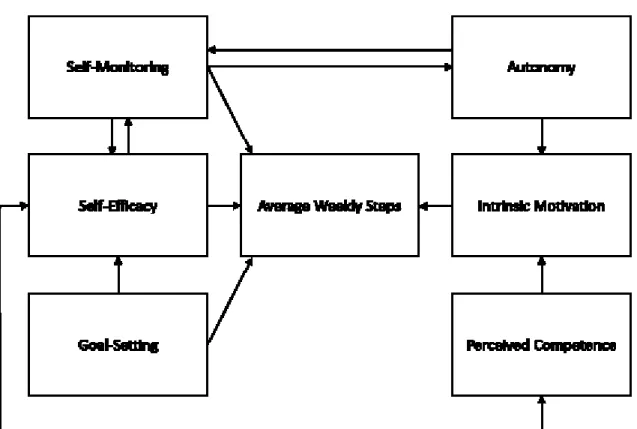
Conceptual Model
Based on the aforementioned theories and highlighted behavioral determinants, we
developed a conceptual model for promoting regular physical activity engagement among
inactive breast cancer survivors. Specifically, our model draws on autonomy and perceived
competence, as well as self-efficacy, self-monitoring, and proximal goal-setting. We
hypothesized that these theoretical determinants would explain the relationship between
motivation and self-efficacy and their effect on change in physical activity. For the purposes of
our proposed study, we defined weekly physical activity as average steps taken as measured by
the Fitbit Zip (see. Fig 2).
22
Summary and Implications
More than two-thirds of breast cancer survivors do not meet the national recommendation
for physical activity (fewer than 150 minutes of moderate-to-vigorous activity/ week). Lack of
regular activity is known to negatively impact both morbidity and mortality, and is especially
pronounced among cancer survivors. Self-directed behavior change interventions may have
improved outcomes for adopting moderate activity among post-treatment breast cancer
survivors. One approach that has been successful in behavior change interventions is tailoring of
messages. Tailoring is a customized approach where health messages are framed based on an
individual’s characteristics (e.g., intrinsic motivation or self-efficacy), which is in contrast to
targeting, where messages are based on shared group characteristics (e.g., race or age range).
While both of these messaging approaches are useful intervention tools, tailored messages hold
greater promise for individual behavior change than targeted messages, especially if grounded in
behavioral theory, and thus may be an effective tool for increasing activity among breast cancer
survivors.
This dissertation is grounded in the theories of self-determination and social cognitive
learning, which both have successfully demonstrated facilitation of behavior change among
adults in physical activity interventions. Specifically, research has suggested that the fostering of
autonomous regulations, as well as self-efficacy, may have added benefits for maintaining new
behaviors related to physical activity. These findings are of particular interest given the
popularity of commercially-available activity monitors (e.g., the Fitbit) that engage users’ real
time self-monitoring activity. Self-monitoring, in addition to strategies like goal-setting, have
23
Finally, a self-directed online program, such as the approach proposed, has the potential
to address issues related to reach, accessibility (especially in rural or hard-to-reach populations),
as well as sustainability. Moreover, the use of popular technologies, like the Fitbit Zip (Fitbit
Inc., San Francisco), not only highlights the innovation of the study, but provides a practical and
relatively inexpensive alternative to collecting repeated measures of objective activity data.
Ultimately, given the implications of such an intervention among breast cancer survivors,
this dissertation was developed with community and dissemination in mind. Our intervention
approach adopted a minimalist (versus “kitchen-sink”) approach, in hopes of minimizing costly
resources, all while maintaining fundamental and necessary components to elicit positive
24
CHAPTER IV: VALIDATION OF THE FITBIT ZIP IN A SAMPLE OF FREE-LIVING, HEALTHY ADULTS
IV. A. Overview
The Fitbit Zip is a commercial accelerometer that provides objective feedback on daily
physical activity (steps, intensity). The popularity of the Fitbit Zip has prompted interest
regarding its validity to not only track daily activity in a free-living population, but also to
classify activity intensity (sedentary, light, moderate and vigorous activity). Additionally,
discussion ensues over the role of such new and more affordable technologies compared to
traditional activity monitoring tools.
Thirty-five free-living, healthy, adults wore both a Fitbit Zip and ActiGraph GT3X for a
24-hour period. Participants also completed brief online pre/post activity questionnaires.
Correlation coefficients, Limits of Agreement, and Bland-Altman plots were used to evaluate the
Zip’s validity, as well as determine activity cut points. Non-wear time was estimated from the
ActiGraph.
While the Fitbit Zip and ActiGraph were strongly correlated for average daily steps, the
Fitbit Zip recorded about seven percent more steps than the ActiGraph. Smaller step differences
were observed for step counts below 7,000 steps, and larger step differences were noted for step
counts above 10,000 steps. Fitbit’s categorization of Lightly Active, Fairly Active, and Very
Active activity most closely matched with the published cut points for light and moderate
25
With some adjustment, the Fitbit Zip is a meaningful tool for measuring objective,
real-time physical activity. The Zip recorded slightly more daily steps than the ActiGraph, but all
outcomes were linear. The Zip appears to overestimate research-defined vigorous activity and
thus intensity should be interpreted cautiously. Future research should identify an algorithm to
26
IV. B. Introduction:
The advancement of internet and mobile-based technologies for measuring physical
activity has the potential to change current research practices. Such technologies are inviting for
researchers as they are often less costly, user-friendly, and may provide real time feedback to
both the user and researcher. However, despite strong interest in these new measurement tools,
few of these technologies have been independently validated for use in a free-living adult
population.
One such measurement tool is the Fitbit activity tracker (Fitbit Inc., San Francisco, CA).
The Fitbit is a small, wearable accelerometer which enables the user to track his/her daily
activity in real-time. There are various models available, and each varies in their utility and cost.
All Fitbit models provide user feedback regarding steps taken, distance traveled, sedentary time,
and activity intensity (Lightly Active, Fairly Active and Very Active). In addition, more advanced
models (One, Flex, and Force) provide user feedback regarding activity incline (e.g., stairs
climbed) and sleep data. Finally, Fitbit users have access to a private, no-cost website to track,
review and plan their activity. The average cost (in 2014) of the Fitbit ranges from approximately
$60 to $130.
At present, two peer-reviewed studies (73, 74) provide validity and reliability evidence
for measuring physical activity using Fitbit activity monitors when tested in an exercise
laboratory. In the first study, Noah and colleagues compared the validity and reliability of the
Fitbit Tracker and Fitbit Ultra in a sample of 23 healthy adults. Physical activity outcomes
(steps) were compared to industry-standard accelerometers (73). In the second study, Takacs and
colleagues evaluated the Fitbit One in a sample of 30 healthy adults, and compared step and
27
Both of these studies showed that the Fitbit, regardless of the model, was valid and reliable for
activity monitoring; specifically step counts and activity intensity. However, there was less
agreement on distance output, and no evaluation of sedentary time. A third study by Visovsky
and colleagues examined Fitbit accuracy in a free-living population over a 14-day period. While
the study sample was limited (n=3), the authors demonstrated that there was still modest
agreement for steps taken when comparing the Fitbit to the ActiGraph GT3X+ (75).
These aforementioned studies provided the initial evaluation for the Fitbit activity
monitors, but more research is needed to evaluate validity evidence for the Fitbit in a larger
sample of free-living healthy adults.(74) Because we were specifically interested in evaluating
the Fitbit for steps taken, sedentary time, and activity intensity, we chose to evaluate the Fitbit
Zip model. We also chose to compare the Fitbit Zip to a standard research accelerometer, the
ActiGraph GT3X, which has good validity and reliability evidence for use among free-living
healthy adults (76-78).
Thus, the purpose of this study was to produce validity evidence for the Fitbit Zip in a
sample of healthy, free-living adults by comparing physical activity outcomes from the Fitbit Zip
to commonly used outcomes from the ActiGraph GT3X (Freedson (79, 80), Troiano (78), and
Matthew (81)). Because the method by which the Fitbit monitor classifies activity intensity has
not been publically established, we also determined the ActiGraph cut points which most closely
match the Lightly Active, Fairly Active, and Very Active estimates from the Fitbit Zip. In
addition,, comparisons between Fitbit Zip and ActiGraph outcomes and participant self-reported
28
IV. C. Methods
Participants and Setting
A sample of 35 healthy adults was recruited via email listservs and flyers posted at the
University of North Carolina at Chapel Hill. Interested participants were encouraged to complete
an online eligibility survey. Only those participants who were at least 18 years of age, able to
ambulate without assistance, with a BMI score between 17-40 kg/m2, and who were fluent in
English met the eligibility criteria. Pregnant women in the 2nd or 3rd trimester were excluded.
There were no sex or race restrictions.
Eligible participants were contacted via telephone by a member of the research team.
During these calls, participants were provided with a more detailed description of the study and
what they would be asked to do if they chose to enroll. If eligible participants remained
interested in participating, they were then asked to provide verbal consent. Following consent,
participants were scheduled for days/times to pick up and return the activity monitors. This study
was approved by the University of North Carolina at Chapel Hill Institutional Review Board,
IRB # 13-2432.
Data Collection& Pre- and Post- Questionnaires
Enrolled participants were asked to complete a brief online questionnaire before and after
wearing the Fitbit Zip and ActiGraph. The baseline questionnaire included questions about
general demographics, perceived health status, usual physical activity during the past week
(self-reported minutes of moderate and/or vigorous activity) (82), screen time (television/ videos) and
sedentary (sitting) behavior (14), and knowledge about current physical activity
29
On the day of pickup, research assistants fitted each participant with an elastic belt such
that both the ActiGraph and Fitbit Zip were snug to the right hip. Participants were provided with
a care instruction sheet and instructed to wear the activity monitors the following day for all
waking hours (with the exception of water-based activities, ex. bathing and swimming).
The day after the activity monitors were worn, participants returned the equipment and
completed the online follow-up questionnaire. The questionnaire included questions about
physical activity for the previous day (modified IPAQ questions for self-reported minutes of
moderate and/or vigorous activity) (82), as well as screen time and sedentary behavior (14),
beliefs and attitudes towards exercise (52) and feedback on wearing the monitors.
Device Description
The Fitbit Zip (Fitbit Inc., San Francisco, CA) is a small tri-axial accelerometer that
provides real-time activity feedback on steps taken, distance traveled, and active minutes.
Activity data can be wirelessly uploaded to a personal user profile on the Fitbit website, where
users can see a daily breakdown of Light, Fairly Active, and Very Active minutes, total steps, and
an overall Activity Score. In addition, a daily summary graph showing the number of steps taken
in 15 minute increments is provided. Classification of Fitbit activity intensity is defined by Fitbit,
but is not publically available.
For this study, daily activity estimates were extracted from the website using a computer
program. The 15-minute step data were not available in the information automatically collected
and were therefore recorded by research staff directly from the Fitbit website. For this manually
recorded data, 25% of participants were selected for double entry to monitor error rates. In total,
30
different (error rate = 0.88%). On average, these observations differed by about nine steps per
15-minute block. For all 684 observations, average steps per 15-minute block differed by 0.07
steps between the first and second entry and the correlation was r = 0.999.
The ActiGraph GT3X is a tri-axial accelerometer that is used extensively in physical
activity based research. Evidence of validity and reliability for this monitor is strong in both
laboratory and free-living conditions (76, 78). While the monitor does not provide real time
feedback to the user, it does collect and store time stamped acceleration data allowing for more
detailed information about user activity to be obtained. Acceleration data from the ActiGraph
GT3X were summarized into counts per 10 second epoch and non-wear time was estimated
using the NHANES algorithm (78). Using these methods, each epoch was classified into an
intensity category based on research defined cut points (e.g., above 6000 counts = Vigorous
Activity).
For comparison to Fitbit data, ActiGraph steps were obtained, and minutes in several
intensity categories were estimated using common cut points as defined by Crouter (83, 84),
Freedson (79, 80), Matthew (81), and NHANES (78) (see Table 4.2 in the Appendix, which
outline the aforementioned cut points). In order to determine the ActiGraph cut points, or count levels, which best matched with Fitbit activity estimates, a dataset was created which contained
minutes above each count level from 0cpm to 8000cpm in 50 count increments (e.g. var0 = mins
> 0 cnts, Var50 = mins > 50 cnts, Var100 = mins > 100cnts, etc.). Data processing was
31
Analysis
Primary analyses were conducted using Fitbit and ActiGraph activity data summarized
both at the day level and the 15-minute block level. Day-level data analysis included total daily
steps and minutes per day in various activity intensities. Block level analysis included estimated
steps for each 15-minute block. For the analysis of the 15-minute level data, only blocks with at
least 11 minutes of wear time (80% wear) recorded between 5am and 11:59pm were included.
Wear time per block was estimated during the ActiGraph processing.
Activity estimates were compared using signed and absolute deviations, limits of
agreement, correlation, coefficient of variation, deviations as percent of mean, kappa, and
percent agreement. Scatter and Bland-Altman plots were created for each comparison (not all
shown). Basic descriptive analyses were conducted and presented for all variables examined,
including self-reported demographics.
In order to determine the ActiGraph cut points which most closely replicated Fitbit
estimates of Sedentary, Lightly Active, Fairly Active, and Very Active minutes, a SAS algorithm
was created. The algorithm was used to compute the correlation, signed and absolute deviations,
and coefficient of variation between the Fitbit and ActiGraph outcomes. The code compared a
selected Fitbit variable to each of the 160 ActiGraph outcomes. Each of the ActiGraph outcomes
was minutes above a cut-point from 0cpm to 8000cpm in 50 count increments. The algorithm
was designed to save and plot comparison statistics for all 160 comparisons and identify the best
three cut points. The top three cut points were selected based on the highest correlations and
smallest deviations at the group and individual levels.
Before applying the SAS code to the Fitbit variables it was tested on three outcomes
32
count level used to compute the variable. For example, using minutes in vigorous activity
computed with the NHANES cut points (78), the algorithm identified the cut-point as 6000cpm.
The actual cut is 5999cpm. Three Fitbit variables were processed using this SAS code, allowing
the identification of the separation point for the four Fitbit intensity levels in ActiGraph
measurement “units”, or counts. Fitbit Lightly Active + Fairly Active + Very Active was used to
identify the cut between sedentary and light. Fitbit Fairly Active + Very Active was used to
identify the cut between Lightly Active and Fairly Active. Fitbit Very Active was used to identify
the cut between Fairly Active and Very Active.
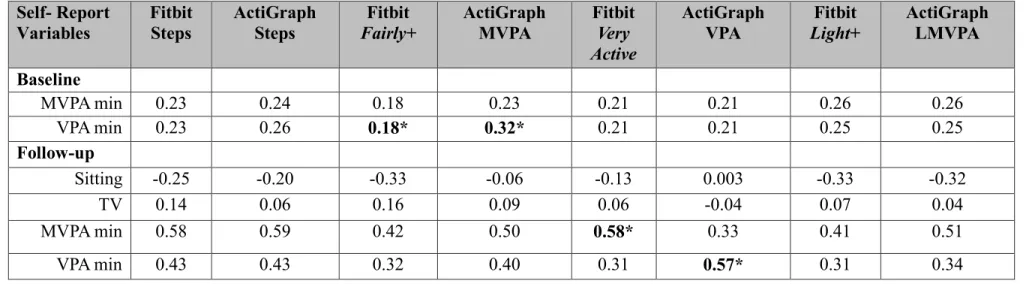
Finally, to further validate findings, self-reported minutes of activity (moderate and/or
vigorous minutes, screen time, and sitting time) was compared and contrasted using correlations
which identified the strength and direction of relationships between self-reported minutes of
activity, and data collected by the Fitbit and ActiGraph. Self-reported minutes of moderate and
vigorous activity, as well as screen time activity, were categorical variables. Self-reported sitting
time was a continuous variable.
IV. D. Results
Participants were primarily white (74%), female (66%), and well-educated. The average
age of participants was 31.8 (9.16) years, with an average reported BMI of 24.5 (5.43) kg/m2
(see Supplemental Table 4.1 in Appendix, which outlines participant demographics). Activity output
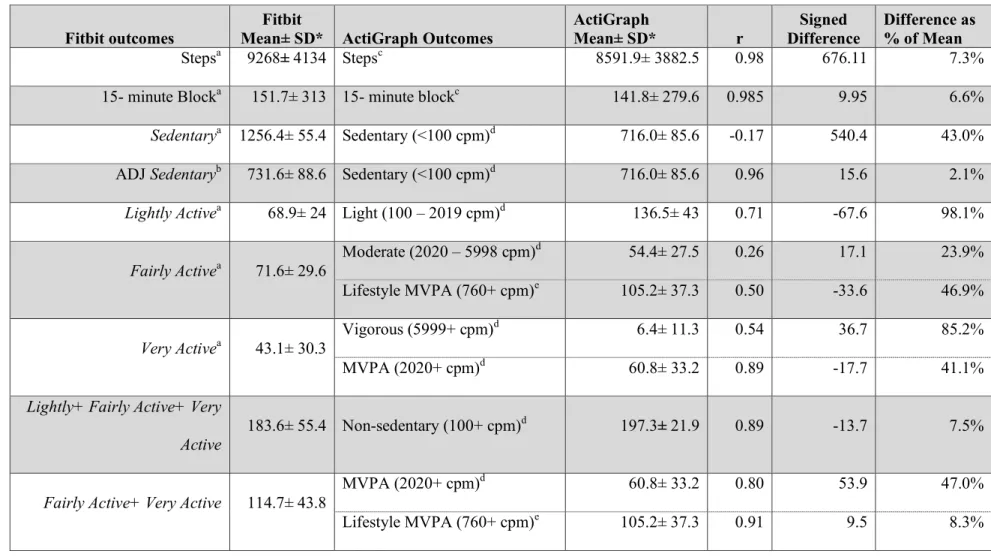
was compared between the Fitbit and the ActiGraph (Table 1). The Fitbit recorded an average of
9286 (4134) daily steps and 915.2 minutes of total activity (adjusted for Sedentary time). In
comparison, the ActiGraph recorded an average of 8591 (3883) steps and 913.3 minutes of total
33
A total of 2099 15-minute blocks were included in the final analysis. The Fitbit recorded
a mean of 152 (313) steps per 15-minute block, whereas the ActiGraph recorded 142(280) steps
per 15-minute block. Six outlying observations were identified in the 15-minute block data.
While the outlier values were high, they were not impossible and did not appear to result from
monitor error. Analyses with and without these observations were nearly identical, therefore the
observations were retained.
Comparing Total Steps and 15- minute Block Steps
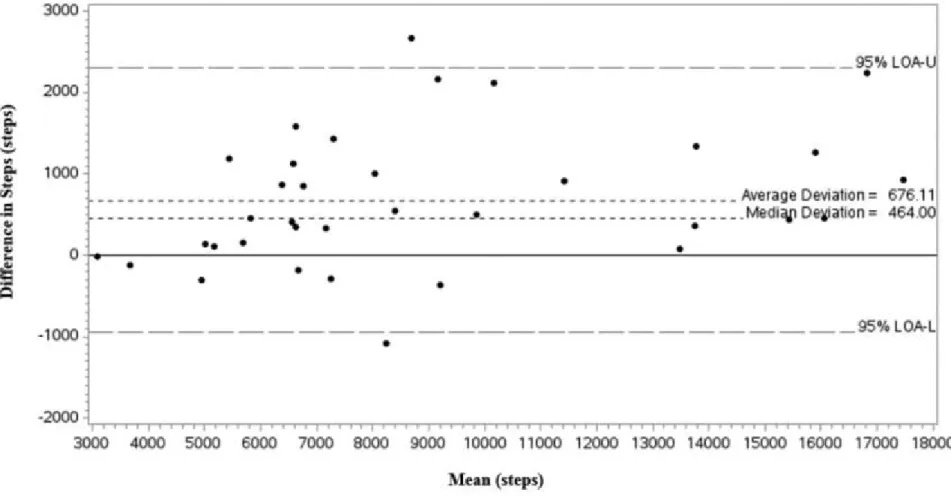
On average, the Fitbit Zip recorded approximately seven percent (~676 steps) more steps
than the ActiGraph. This difference varied slightly for days with less than 7000 Fitbit steps
(n=12; 4.6% difference) compared to days with more than 10,000 Fitbit steps (n = 13; 8.6%
difference). While the differences between these step levels were statistically significant (p =
0.044), both estimates and the difference are still considered small. Furthermore, there was a
very strong correlation between the Fitbit and ActiGraph accelerometers (r=0.98), suggesting
that the difference in step estimation is consistent. Additionally, Bland-Altman plots affirmed
low levels of discrepancy with a 95% Limit of Agreement (LOA) of +/- 1625steps per day, and
75% LOA at +/- 953 steps per day (Fig. 4.1).
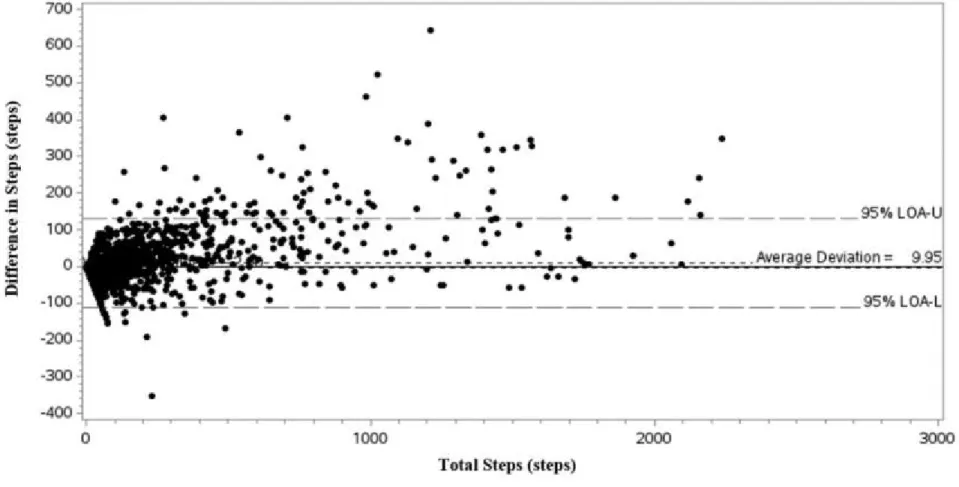
Results also showed that the Fitbit and ActiGraph 15-minute block step estimates were
very strongly correlated (r= 0.985). Regression analyses and Bland-Altman plots again indicated
strong agreement for the 15-minute step blocks, with an average deviation of ~10 steps per 15
minute block (Fig. 4.2).
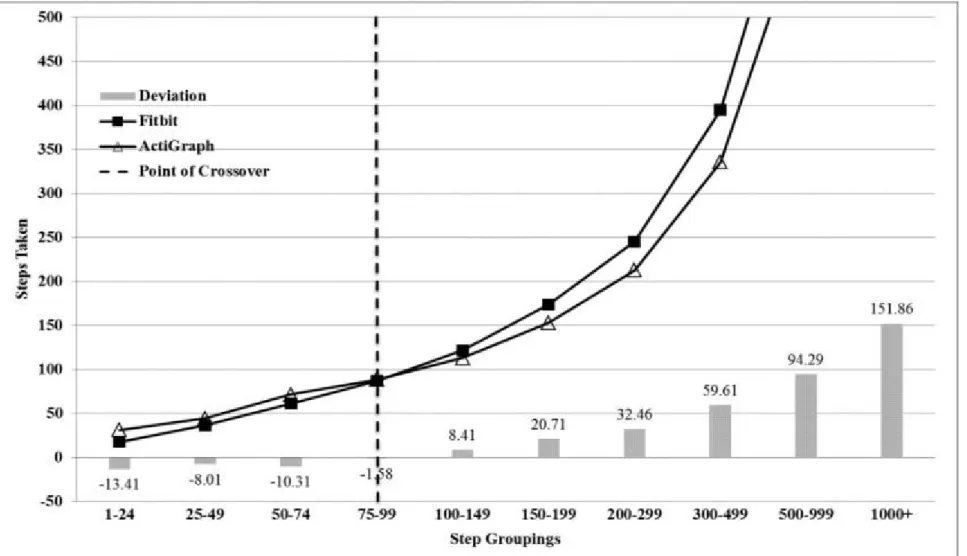
To see if the difference between steps estimated by the Fitbit and ActiGraph varied by the
34
estimates in 10 steps per block categories. Observations were categorized based on the Fitbit step
estimate for a given block. Grouping categories and deviations for this comparison can be found
in Figure 3. While the coefficient of variation remained fairly consistent across categories, it is
important to note that the average step counts for the ActiGraph were higher than the Fitbit
below 100 steps per 15-minute block. However, this trend is reversed for steps per block above
100, such that the Fitbit recorded more steps than the ActiGraph.
Comparing Classification of Activity Intensity
Table 4.1 also compares Sedentary, Lightly Active, Fairly Active, and Very Active Fitbit
minutes to minutes of activity recorded by the ActiGraph. On average, the Fitbit Zip reported
approximately 540 more minutes of Sedentary time compared to the ActiGraph. However, after
the Fitbit Zip Sedentary minutes were adjusted (Fitbit Zip Sedentary minutes minus ActiGraph
non-wear minutes), sedentary minutes of activity became strongly correlated between the two
monitors (r=0.96). Further confirmation for use of the Adjusted Sedentary minutes was observed
with Bland-Altman plots which also demonstrated strong levels of agreement between the
accelerometers (figure not shown).
In Table 4.1, it was also observed that Lightly Active minutes was strongly correlated
with NHANES cut points for light activity (r=0.71), but actual differences were 67.6 minutes
(deviation % about mean=98.1%). Fairly Active minutes, as recorded by the Fitbit Zip, was
poorly correlated with the NHANES moderate cut point (r=0.26). However, a stronger
correlation was observed between Fairly Active minutes and Matthews’ lifestyle cut point of
760cpm (r=0.50, deviation= -33.6mins, deviation % of mean =46.9%). Very Active minutes was
35
correlation with the NHANES MVPA cut point (r=.89, deviation=-17.7mins, deviation % about
mean= 41.1%). Finally, the strongest correlation was seen between Fairly Active+ Very Active
minutes and Matthews’ Lifestyle MVPA cut point (r=.91, deviation=9.5mins, deviation % about
mean=8.3%).
Estimation of ActiGraph Cut Points which most Closely Replicate Fitbit Estimated Physical
Activity
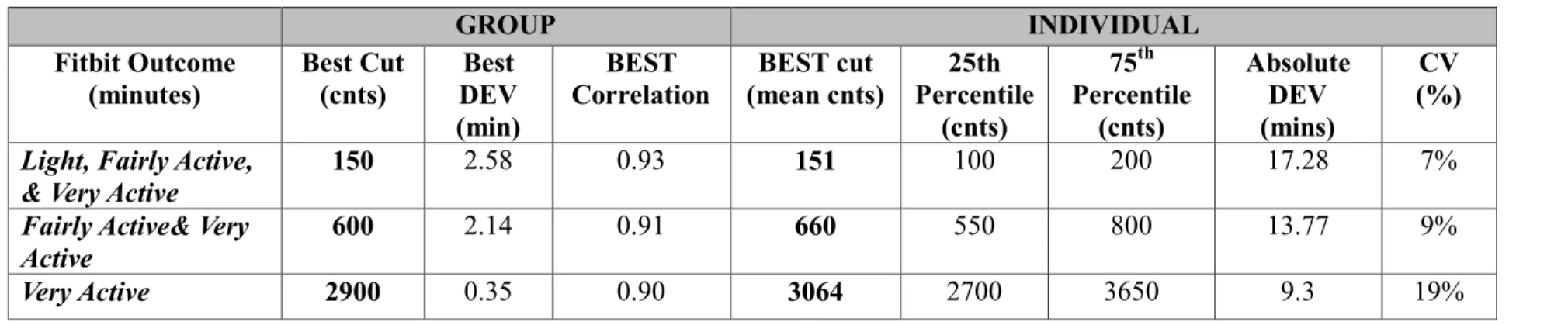
Table 4.2 summarizes the results for the estimation of the ActiGraph cut points which
most closely replicate the minutes in various levels of physical activity from the Fitbit Zip
monitor. Cut points were evaluated at both the group and individual level, but ultimately the
findings were very closely matched. We found that the best matched ActiGraph cut points for
Lightly Active, Fairly Active, and Very Active activity were 150cpm, 600cpm, and 2975cpm. The
Sedentary/Lightly Active cut point was very similar to the current 100cpm used in many studies,
while the Lightly Active/Fairly Active cut point was very close to the lifestyle MVPA cut point
proposed by Matthew (81).
Meeting National Recommendation for Steps
The agreement for classification of steps meeting or not meeting the national
recommendation of 10,000 daily steps was also examined in this study. It was found that the
level of agreement was also high (88.6%) for the Fitbit Zip and ActiGraph. In total, both
monitors classified 22 participants reaching 10,000 steps, and nine participants reaching less than
10,000 steps. Thus, there were four disagreements on 10,000 step attainment, resulting in a