STUDENT-CENTERED LEARNING AND PEDAGOGICAL CHOICE IN THE AMERICAN COLLEGE CLASSROOM: PERSPECTIVES FROM INTERNATIONAL TEACHING
ASSISTANTS
Sharon LaBurt Shofer
A dissertation submitted to the faculty at the University of North Carolina at Chapel Hill in partial fulfillment of the requirements for the degree of Doctor of Philosophy in the School of
Education (Culture, Curriculum, and Change).
Chapel Hill 2020
©2020
ABSTRACT
Sharon LaBurt Shofer: Student-centered learning and pedagogical choice in the American college classroom: Perspectives from international teaching assistants
(Under the direction of Xue Lan Rong)
Most colleges and universities in the United States use international teaching assistants (ITAs) in many of their lower level or introductory courses, particularly in science, technology, engineering, and mathematics, where there is often a shortage of American graduate students (Anderson, 2013; National Foundation for American Policy, 2017). Since the1980s, colleges and universities across the United States have implemented ITA training programs designed to help ameliorate the perceived cultural and linguistic differences between American undergraduate students and ITAs, and ITA training programs have since evolved from having a largely
linguistic focus to including elements of intercultural communication, intercultural competence, and pedagogy (Zhou, 2009). Concurrently, there has been an evolution in thought and practice regarding instruction in higher education, as researchers and educators have sought to move away from traditional teaching models and toward student-centered learning (SCL) as a
pedagogy that promises to engage more learners at a deeper level (Gibbs & Coffey, 2004; Lea et al., 2003). In an effort to reflect best practices and the stated preference of university
ACKNOWLEDGEMENTS
I must first thank the faculty of the School of Education at UNC Chapel Hill for their ongoing support of me as a student and a researcher. In particular, I would like to thank my advisor, Xue Lan Rong, for her faith in me. Sometimes it takes someone else believing in you to believe in yourself. I would also like to thank my committee members: Jim Trier, Suzanne Gulledge, Kristin Papoi, and Brian Rybarczyk. When I needed to take an extended leave to take care of family issues, you all rallied around me when I was able to return, and I am so grateful for your support. Additionally, Lynda Stone, Anne Bryan, Cheryl Bolick, Jocelyn Glazier, and Sherick Hughes have all contributed in major ways to my studies and my research. They are an amazing group of people to work with, and I thank them for the time and encouragement each of them has given me along the way.
In no small way, I am indebted to my friends who share my love of running. I am in awe of each of you and I am so thankful to have you in my life. We have spent untold hours together, running through life’s highs and lows, laughs and tears, kids being born, kids going off to
college, and everything in between. Through it all you have supported and sustained me through this journey. There are too many of you to thank by name, but you know who you are.
My three sons, Noah, Nick, and Nate, have taught me patience, given me unconditional love, and have supported me in all my crazy efforts. They have been my greatest teachers in life and I am so honored to be their mom.
TABLE OF CONTENTS
LIST OF TABLES ... xiii
LIST OF FIGURES ... xiv
LIST OF ABBREVIATIONS ... xv
CHAPTER 1: INTRODUCTION ... 1
Background of the Problem: ITAs and Student-Centered Learning ... 1
Cultural-Historical Activity Theory ... 3
Purpose of Study ... 5
Research Questions ... 5
CHAPTER 2: REVIEW OF THE LITERATURE ... 7
International Teaching Assistants ... 7
The ITA “Problem” ... 9
ITA Cultural and Pedagogical Challenges ... 10
ITA Training Programs ... 13
Student-Centered Learning ... 14
Origins and Development of SCL ... 15
Critiques of SCL ... 18
SCL in Higher Education Settings ... 20
Research on SCL in the Disciplines ... 21
Culture of Education Beliefs and Adoption of SCL Methods ... 22
Apprenticeship of Observation ... 22
Importance of Academic Culture in Relation to SCL ... 24
Theoretical and Analytical Framework ... 26
Cultural-Historical Activity Theory ... 26
Appropriation ... 31
Benefits and applicability of using CHAT to study ITA development. ... 36
Significance of this Study ... 37
CHAPTER 3: METHODS ... 39
Design and Overview of the Study ... 39
Research methodology – Case Study ... 40
Data Collection ... 44
Data Analysis ... 48
Addressing potential limitations ... 50
Positionality ... 52
CHAPTER 4: RESULTS ... 55
The TFITA Program ... 55
Participants’ Perceptions of the Factors Influencing Their Appropriation of SCL ... 59
Congruence ... 61
Outcome ... 63
Tools vs. Rules ... 67
Tools vs. Subject ... 77
Tools vs. Division of Labor ... 82
CHAPTER 5: THE CASES OF MARIA, NEEL, AND SARA ... 87
Elements of the Case Studies ... 88
Background ... 89
Sociocultural History ... 90
Maria and TFITA ... 93
Maria’s Current Activity System ... 94
Observations ... 95
Maria’s Activity System Analysis ... 97
Tensions ... 97
Discussion of Maria and SCL Appropriation ... 104
Neel’s Story “I’m not really a good instructor” ... 105
Background ... 105
Sociocultural History ... 106
Neel and TFITA ... 108
Neel’s Current Activity System ... 110
Observations ... 113
Neel’s Activity System Analysis ... 115
Tensions ... 115
Congruences ... 119
Discussion of Neel and SCL Appropriation ... 119
Sara’s Story: “We’re going to get through this together.” ... 121
Background ... 121
Sociocultural History ... 121
Sara and TFITA ... 123
Sara’s Current Activity System ... 124
Observations ... 125
Tensions ... 126
Congruences ... 129
Discussion of Sara and Level of Appropriation ... 131
Cross-Case Analysis ... 132
Outcome (Goals) ... 135
Sociocultural History ... 136
Tools vs. Rules ... 137
Tools vs. Division of Labor ... 138
Summary ... 139
CHAPTER 6: RESULTS OF ANALYSIS OF STUDY PARTICIPANTS ... 140
Research Question 1 ... 142
Theme 1: Stated Belief in the Conceptual Theory of SCL ... 142
Research Question 2 ... 144
Theme 2: Beliefs About Time to Plan and Implement SCL ... 144
Theme 3: Departmental Influence on Teaching Practices ... 146
Theme 4: Undergraduate Influence on Teaching Practices ... 147
Theme 5: Influence of Sociocultural Histories, Personal Goals, and Expectations on Teaching Practices ... 150
Summary ... 151
CHAPTER 7: DISCUSSION AND CONCLUSION ... 152
Implications and Recommendations ... 153
Limitations ... 160
Suggestions for future research ... 161
Conclusion ... 163
LIST OF TABLES
Table 1 Comparison of Teacher-centered and Student-centered Paradigms ... 17
Table 2 Examples of Student-Centered Learning Methods ... 18
Table 3 Components of First- and Second-Generation Activity Theory ... 29
Table 4 Participants and demographics ... 44
Table 5 Mwanza's Eight-Step Model ... 50
Table 6 CHAT Components ... 60
LIST OF FIGURES
Figure 1 Cultural-Historical Activity Theory ... 4
Figure 2 Vygotsky’s basic mediated action triangle ... 28
Figure 3 Second Generation CHAT ... 29
Figure 4 Third generation Activity Theory (Cultural-Historical Activity Theory ... 30
Figure 5 Representation of this study mapped on to the CHAT framework ... 37
Figure 6 Example of the interaction of an individual participant’s Activity Systems ... 66
Figure 7 Common Tensions across the Participants’ Activity Systems ... 86
Figure 8 Maria’s Activity System ... 105
Figure 9 Neel’s Activity System ... 120
LIST OF ABBREVIATIONS AE Academic Entitlement
AL Active Learning
CHAT Cultural-Historical Activity Theory ITA International Teaching Assistant SCT Sociocultural Theory
SCL Student Centered Learning
STEM Science, Technology, Engineering, and Math TFITA Training for International Teaching Assistants TOEFL Test of English as a Foreign Language
CHAPTER 1: INTRODUCTION Background of the Problem: ITAs and Student-Centered Learning
The rise in the number of international teaching assistants (ITAs) in U.S. colleges and universities since the 1970s is well documented (Williams, 2011); it has often been accompanied by a perception among the undergraduates that work with ITAs that they are not good teachers due to perceived linguistic, intercultural, or pedagogical deficiencies (Bailey, 1982; Fitch & Morgan, 2003; Orth, 1982; Subtirelu, 2015), an issue which has been dubbed “the ITA problem” (Bailey, 1982). In response, many U.S. colleges and universities in have created programs to train ITAs to teach effectively in their classrooms. These training programs vary from institution to institution in both duration and content (Zhou, 2009). Despite this curricular variability, most programs have evolved from a primarily linguistic focus to include elements of intercultural communication, intercultural competence, and pedagogy. The importance of these elements in training ITAs has been documented in studies demonstrating improvement in ITA teaching experiences following a training program (Tang & Sandell, 2000).
science, technology, engineering, and mathematics (STEM) in response to not only a more diverse student population but also the need to recruit and retain more American students (Ambrose, 2019).
Efforts to increase the use of SCL in higher education in the United States have met with limited success (Conti, 2004; Eagan et al., 2014; Hurtado et al., 2012), despite empirical
evidence of its effectiveness (Armbruster et al., 2009; Carlson & Winquist, 2011; Freeman et al., 2014; Kurdziel et al., 2003; Tsui & Gao, 2006; Ueckert et al., 2011; Weltman & Whiteside, 2010). Research into the causes of SCL’s limited implementation in higher education has revealed a variety of impeding factors, including a lack of training, incentives, time, and
departmental support (Brownell & Tanner, 2012; Eddy & Hogan, 2014; Gibbs & Coffey, 2004), and the influence of the instructor’s educational history (Austin, 2002; Ekroth, 1990). Additional research examining educational approaches along SCL lines at the undergraduate level has found that academic discipline also plays an important role in its adoption and use (Laird et al., 2008). In a study specific to ITAs, researchers found that ITAs’ educational background and discipline heavily influenced their teaching (Luo et al., 2001).
microteaching sessions, they were required to use SCL methods—specifically, active learning— to teach the class a lesson in their field. Despite these efforts, previous research has shown that ITAs have had difficulty implementing SCL methods after the completion of the program (Christian, 2014). My own in-class discussions with ITAs revealed a notable amount of pushback from some ITAs on the use of SCL, even before they had started teaching. What especially piqued my interest in the topic, however, was the discussions I had with ITAs from the program after they had begun serving as teaching assistants in Regional University courses. Some of the ITAs who had been most enthusiastic about SCL and were using it in their teaching would come back to me and talk about how difficult they found it to implement. Upon hearing their stories, I looked for research to see if this was a widespread issue. What I found on the subject of ITAs and their use of SCL was very limited, and there was an even greater paucity of research from the viewpoint of ITAs themselves. Ultimately, I found that the extent to which ITAs decide to appropriate these methods for use in their own teaching has been the focus of a very limited number of studies.
Cultural-Historical Activity Theory
In this study I examine how, after participating in an ITA training program emphasizing SCL methods, ITAs perceive and understand the factors involved in their use of those methods. The use of cultural-historical activity theory (CHAT) to examine those factors enables me to view the complex interactions between ITAs, their sociocultural histories, and the influence of their studies, departments, and undergraduate students.
CHAT, an extension of Lev Vygotsky’s sociocultural theory of learning, has been used to examine teacher education in a wide range of contexts (Grossman et al., 1999) and can be
diverse backgrounds. Because of the centrality of language, culture, and prior educational experience in ITA training programs, CHAT is particularly useful in examining how ITAs negotiate their teaching practices in U.S. higher education classrooms. One of CHAT’s key features is its focus on identifying systemic contradictions and tensions in an effort to examine how they can drive transformation and change (Yamagata-Lynch, 2010). In CHAT theory, tensions are thus not necessarily negative; whether a given tension is ultimately negative or positive is determined by its impact on the outcome of a process. By examining the six elements of the change process that make up CHAT as seen in Figure 1 —subject, object, mediating artifacts (or tools), rules, community, and division of labor—I seek to expose the tensions in the study participants’ teaching processes. Chapter Two will provide more details on CHAT and the role of tensions in the systemic process. By using CHAT, I aim to identify what the ITAs
themselves view as the factors, or tensions, that limit their use of SCL in teaching, as well as the possible factors that support its use.
Figure 1
Purpose of Study
There has been little research to date which explores factors from the perspective of ITAs that may affect ITAs’ appropriation of SCL-based pedagogical tools in their teaching. The purpose of this study is to understand which factors may affect ITA appropriation of SCL-related pedagogical tools in their teaching following their participation in a course designed to prepare them to teach in a college classroom in the United States. This is not an intervention study, and encouragement of the ITA participants to appropriate certain course-related pedagogical tools is not the study’s purpose. In studying the experiences, pedagogy, and perspectives of ITAs through the use of CHAT, I seek to shed light on the systemic tensions that influence ITAs’ teaching decisions. I hope to add to the body of literature on SCL use by ITAs and on the applicability of CHAT to ITA research.
Research Questions
This study is guided by the following research questions:
Question 1: How do ITAs and former ITAs decide what conceptual and practical tools to appropriate in their teaching practice?
Question 2: What do ITAs and former ITAs perceive as the factors involved in their appropriation of SCL tools (both conceptual and practical) to use as instructors in U.S. classrooms?
either helped or hindered the use of SCL in their teaching. A more detailed discussion of both Regional University and the ITA training program is provided in Chapter Three.
I used a qualitative case study because of the complex process involved in a specific setting (Marshall & Rossman, 1999). Data collected included ITA interviews, observations of participant-led classes, review and analysis of participant microteaching assignments and document analysis of the ITA training program syllabus and curriculum. Data were analyzed multiple times using the constant comparative method, first through open coding (Glaser & Strauss, 1967), then axial coding (Corbin & Strauss, 2008), and finally selective coding, once I had identified the core family of codes that were most relevant to the study (Strauss, 1987). In using CHAT as an analytical tool, I took the codes that emerged from the selective coding step and identified themes that fit into the elements of CHAT. Chapter Three provides more specifics on study methods.
Chapter Four looks broadly at the experiences of all eight ITAs in using SCL in their teaching and uses CHAT as a lens through which to view the tensions they experienced in its use. In Chapter Five, I take a deep dive into the experiences and perceptions of three participants in order to provide a richly detailed description of the participants’ experiences in their own words. Finally, in Chapter Six, I pull the lens back to examine the findings across the
CHAPTER 2: REVIEW OF THE LITERATURE
In this literature review I will cover the two central aspects of the proposed study, ITAs and student-centered learning (SCL), followed by a description of the theoretical framework that I used to frame this study. I will begin the first section on ITAs with the literature documenting the rise in ITAs in the American higher education setting, along with the cultural and
pedagogical challenges they face as instructors, followed by ITA training programs designed to ameliorate those challenges. I will then move on to the second section, the literature and research regarding student centered learning (SCL) in the American higher education setting. Beginning with its origins and moving to its use across disciplines in higher education, this review will then look at the influence of academic and educational culture on the use of SCL in that setting. Finally, I will discuss Cultural-Historical Activity Theory (CHAT) as the theoretical framework I will use to frame and analyze the ITAs perceptions of influences on their teaching decisions in this study.
International Teaching Assistants
While the overall rate of international graduate students has declined since the 2016 U.S. elections (Hazelrigg, 2019), there remains a large number of international graduate students responsible for teaching undergraduates in the United States. In addition to providing diversity and intercultural experiences for American students, international graduate students in the United States have increasingly filled an important role in higher education as qualified students,
US graduate school STEM programs. As an example of scope of U.S. universities’ dependence on international graduate students, the NFAP provides the following statistics for overall foreign national, full-time graduate students in selected STEM fields:
Foreign nationals account for 81 percent of the full-time graduate students in electrical engineering and petroleum engineering, 79 percent in computer science, 75 percent in industrial engineering, 69 percent in statistics, 63 percent in
mechanical engineering and economics, 59 percent in civil engineering and 57 percent in chemical engineering. (p.1)
Researchers contend that these international graduate students provide a key source of talent for U.S. universities to conduct research and offer high quality academic programs to U.S. students (Anderson, 2013; Chellaraj et al., 2008; National Foundation for American Policy, 2017).
As the number of international graduate students has risen, from 95,000 in 1980 (Anderson, 2013) to over 367,000 in 2017 (National Science Board, 2018), colleges and universities have increasingly relied on ITAs to fulfill many of the teaching responsibilities of their undergraduate students. Issues with ITAs are perhaps made more visible by the fact that they comprise a much larger percentage of all graduate teaching assistants in comparison to international faculty. By 2016 non-resident aliens (and hence, ITAs) made up 30% of all graduate assistants at U.S. institutions, while non-resident aliens only compromised 4% of all U.S. faculty (National Center for Education Statistics, 2017). Due to this discrepancy,
inexperience of the ITA. This disconnect between the expectations of undergraduates and the inexperience of their ITA instructors poses a continued challenge for ITA training programs.
The ITA “Problem”
Concomitant with the rise in ITA numbers, the literature in the 1980s began to reflect what at the time was known as the “foreign TA problem” which then evolved into the “ITA problem” (Bailey, 1982; Orth, 1982). While many in higher education view the increase in international graduate students in a positive light, not all have seen it in this way. It has been well documented that many U.S. undergraduate students find their ITAs inadequate in their roles as teachers. The complaints of undergraduates, and their parents, centered on what the students felt was the unintelligibility of the ITAs English language, as well as their pedagogical skills (Bailey, 1982; Brown, 1988; Marchetti-Bowick, 2015). Dissatisfaction, often coming in the form of angry letters to the editor of the local newspaper (Thomas & Monoson, 1993) was at a high enough level that beginning in the 1980s state politicians and trustees and college presidents began to respond to escalating opposition and dissatisfaction on the part of students and parents with ITAs by mandating language proficiency standards for both foreign-born faculty and ITAs at the higher education level (Smith, 1992; Thomas & Monoson, 1993). Beginning with Oklahoma in 1982 (Thomas & Monoson, 1993), the number of states with mandates enforcing the level of English language ability of ITAs stood at twenty-two by 2005 (Finder, 2005). Additionally, many colleges and universities, feeling the pressure to account for perceived inadequacies, have implemented language guidelines and programs for their ITA students (Thomas & Monoson, 1993).
literature reveals that research into the “ITA problem” can be categorized into two overall themes: The “ITA problem” as a function of undergraduate student perception, and the “ITA problem” as a function of ITA-centered language, sociocultural, and pedagogical challenges.
Early on several research studies found that many of the negative feelings that
undergraduates had with their ITAs lay in the undergraduates’ student perceptions of the ITAs. Orth (1982) and Bailey (1982) found that undergraduates’ negative and ethnocentric-based perceptions of the ITAs’ language and culture was at the root of their dissatisfaction with ITAs. A later study by (Brown, 1988) found positive correlations between the students’ perception of the lecturer’s country of origin and the undergraduates’ evaluation of the lecturer’s language competence and teaching status. In acknowledging the student-centered causes of the ITA problem, some researchers suggested that this paradigm of undergraduate discomfort with the “foreignness” of their ITAs is a prime reason for colleges and universities to utilize ITAs in an effort not only to provide much needed undergraduate instruction and expertise in their field, but to provide the diversity and intercultural experiences for undergraduates with little experience with other cultures (Pialorsi, 1984). In a later study, Neves and Sanyal (1991) found that while the American students rated their foreign-born instructors highly as regards their knowledge and social skills, they ranked them low for communication skills and teaching ability.
The second general theme in the “ITA problem” literature focuses on what can be termed “ITA-centered challenges.” This literature, while not dismissing the importance of student perceptions of ITAs, focuses on challenges for ITAs in teaching in the American classroom.
ITA Cultural and Pedagogical Challenges
to their centrality in the proposed study, the literature focusing on the sociocultural and pedagogical challenges faced by ITAs will be highlighted.
The confluence of academic culture and sociocultural beliefs has a strong influence on how an ITA teaches in the classroom. Differences in beliefs about academic norms and behaviors can hinder learning and overall learning outcomes in the ITA’s role as a student as well as an educator (LeGros & Faez, 2012). Despite the public perception that the ITA problem is one centered on the ITAs’ linguistic difficulties (Brown et al., 1990), Landa and Perry (1984) went so far as to say that sociocultural differences in the classroom are the primary basis for ITAs’ failure as instructors. While Stevens (1989) found few overt attitudinal differences toward underlying educational values between ITAs and American undergraduates, other studies reveal that the differences between cultures, especially the culture of the classroom, have a great effect on ITA effectiveness (Bauer, 1996; Ross & Krider, 1992; Schneider & Stevens, 1991).
Early studies revealed the importance of sociocultural factors in ITA classroom
performance and undergraduate student satisfaction, as when a study found that ITAs utilizing an ITA-culturally congruent authoritarian teaching approach were more likely to cause resentment among their students (Landa & Perry, 1984). The difficulty for ITAs in understanding the sociocultural context of the American higher education classroom can also cause
misunderstandings for the ITA, such as when the individualist nature of the American education system and American undergraduates can cause misunderstandings in the classroom for ITAs from more collectivist cultures (Ryckman & Houston, 2003). Similarly, Wanta (2003) found that ITAs from more traditional educational cultures where students are not encouraged to ask
educational cultures that are more hierarchical in nature might also misinterpret the friendly rapport of American undergraduates as a lack of respect for the ITA (Zukowski-Faust, 1984), although all of the ITAs in Ross and Krider's (1992) study not only accommodated to this difference but felt that it led to a positive didactic environment.
The lack of understanding about the American educational system and what Americans are expected to know upon entry to college can also contribute to low ITA expectations for American undergraduates as the ITAs can perceive them to be unprepared and unqualified (Bresnahan & Cai, 2000; Ross & Krider, 1992). Ross and Krider (1992) found that when ITAs had the time and opportunity to observe American undergraduates’ classes before beginning a role as an instructor it helped the ITAs to understand and adjust to the classroom culture they would be expected to teach in.
While some ITAs have experience teaching in their home countries (Hoekje & Williams, 1992), the academic culture and pedagogy they are used to are often in conflict with those in the United States. When ITAs do not attempt to modify their teaching style to one more congruent with the American higher education environment, it can lead undergraduates to consider them as “mechanical problem-solvers” (Bailey, 1982, p. 113). Additionally, research by Luo, Grady, and Bellows (2001) has found that ITAs are more likely to view their role in the classroom as a dispenser of information rather than as that of a facilitator, the SCL-based model that is more prevalent in the American academic culture.
knowledge to their students (p. 256).
ITA Training Programs
Many colleges and universities started to create and implement training programs for their ITAs as early as the 1970s (Bailey, 1982). The impetus for this was pressure from some vocal American undergraduates, concerned parents, and often politicians who complained that foreign teaching assistants were not providing undergraduates with a quality education (Smith, 1992). At the same time, colleges and universities were realizing their dependence on ITAs for research as well as teaching, By the early 1990s there appeared to be a consensus in the field that training for ITAs should include culture, pedagogy, and language; however there was little agreement about the relative importance of each (Hoekje & Williams, 1992).
During this time, researchers have conducted various types of studies regarding ITA training programs, with many of the studies focusing on the same institution conducting the training program (Christian & Rybarczyk, 2013; Gorsuch, 2006; Ross & Krider, 1992). The focus of the of the studies on ITA training also varies, from importance of explicitly highlighting intercultural communication (Meadows et al., 2015), to the use of drama as pedagogy (Stevens, 1989), the language and teaching skills of the ITAs (Moder & Halleck, 1998), using social-psychological interventions between undergraduates and ITAs (Kang et al., 2015), the use of microteaching in the ITA curriculum (LeGros & Faez, 2012), and to role-playing student-instructor interactions (Reinhardt, 2007). The specific needs of various disciplines in relation to ITA training has also been studied by Gorsuch (2006), who looked at discipline-specific practice and trainings for disciplines such as chemistry, math, and biology.
In line with Zhou’s (2009) third-phase of ITA training programs are those programs that emphasize development of the ITAs in their identity as teachers. These programs include pedagogical training utilizing constructivist-development frameworks with longer-term goals to benefit the ITAs in their teaching practice (Swan et al., 2017). Research has found that ITAs who participated in ITA specific training programs scored higher in teaching effectiveness and had a better understanding of classroom expectations that did ITAs who participated in training programs designed for all GTAs (Meadows et al., 2015). Despite this, the cultural and pedagogical backgrounds of many ITAs provide an additional set of challenges affecting perceptions of and adoption of SCL-based teaching methods (Chen, 2019; Swan et al., 2017). Student-Centered Learning
The educational paradigm termed student-centered learning (SCL), also known as
from PreK-12 to higher education settings. SCL is an approach to pedagogy that concentrates on students’ needs, as opposed to a top-down model in which the institution or institutional process determines the students’ needs, including how and what they will learn (Iiyoshi et al., 2005). As a pedagogy, SCL includes a wide variety of teaching methods, including active learning,
cooperative group, and the integration of self-paced learning programs (Iversen et al., 2015), as well as the re-framing of the teacher as a co-creator of knowledge (Atweh, 2010; Estes, 2004). These examples belie the behavioral, social, and educational backgrounds of the theorists responsible for the development and continued work on SCL, its implications and its tenets (Breen et al., 2009). See Appendix B for comparison chart of teacher-centered and student-centered learning characteristics.
Origins and Development of SCL
17
Table 1
Comparison of Teacher-centered and Student-centered Paradigms
From Huba and Freed (2000), Learner centered assessment of college campuses
Comparison of Teacher-centered and Student-centered paradigms*
Teacher-centered paradigm Student-centered paradigm
Knowledge is transmitted from professor to students Students construct knowledge through gathering and synthesizing information and integrating it with the general skills of inquiry, communication, critical thinking, problem solving and so on
Students passively receive information Students are actively involved Emphasis on acquisition of knowledge outside the context in which it will
be used Emphasis is on using and communicating knowledge effectively to address enduring and emerging issues and problems in real-life contexts Professor’s role is to be primary information giver and primary evaluator Professor’s role is to coach and facilitate
Professor and students evaluate learning together Teaching and assessing are separate Teaching and assessing are intertwined
Assessment is used to monitor learning Assessment is used to promote and diagnose learning
Emphasis on right answers Emphasis is on generating better questions and learning from errors Desired learning is assessed indirectly through the use of objectively scored
tests Desired learning is assessed directly through papers, projects, performances, portfolios, and the like Focus is on a single discipline Approach is compatible with interdisciplinary investigation
Table 2
Examples of Student-Centered Learning Methods
Examples of Student-Centered Learning Methods
Method Examples
Active learning Students solve problems, answer questions,
formulate questions of their own, discuss, explain, debate, or brainstorm during class
Cooperative learning Students work in teams on problems and
projects under conditions that assure both positive interdependence and individual accountability
Inductive teaching and learning Students are first presented with challenges. Inductive methods include inquiry-based learning, case-based instruction, problem-based learning, project-based learning,
discovery learning, and just-in-time teaching.
Source: NC State University College of Engineering “Learner-Centered Teaching”
https://www.engr.ncsu.edu/stem-resources/legacy-site/learner-centered/
Critiques of SCL
Although widely associated with progressive, liberal thought, SCL has been criticized
under the constructivist umbrella by some as a Eurocentric class-based pedagogy that was
developed in the privileged classes and does not meet the needs of culturally diverse students
(Richardson, 2003). Because much of the pedagogy inherent in SCL methods is predicated upon
student knowledge of socially constructed and culturally normed knowledge before entrance into
the learning setting, there are those that argue that students from culturally diverse backgrounds
who do not have access through explicit instruction to the “culture of power” that is at the
foundation of SCL are excluded from not only direct educational opportunities, but also from
(Delpit, 1988). In Delpit’s words,
Many liberal educators hold that the primary goal for education is for children to
become autonomous, to develop fully who they are in the classroom setting
without having arbitrary, outside standards forced upon them. This is a very
reasonable goal for people whose children are already participants in the culture of
power and who have already internalized its codes. (p. 285)
Delpit goes on to argue that a “silenced dialogue” of culturally diverse teachers exists regarding
what culturally diverse students need to be successful in the dominant culture, which is
subsumed to white researchers’ beliefs about what best practices are for all students. She
suggests that while some elements of a progressive SLC-type pedagogy can be utilized for
culturally diverse students, to be successful in the dominant culture they must be allowed to learn
the explicit set of skills and codes that students from the dominant culture come to school already
knowing.
In a perspective that crosses national borders and at the same time reveals tensions about
the universal applicability of SCL, other scholars, particularly those from other cultures of belief
about education (Kanu, 2005; Nguyen et al., 2006, 2009) have argued that there is a “false
universalism” and Eurocentric hegemony (Nguyen et al., 2009; Schweisfurth, 2013) behind
constructivist-based SCL pedagogy. Arguing from a neocolonial perspective, Nguyen et al.
(2009) conclude that the hegemony and market-based neocolonial power of Western cultures has
imposed educational pedagogy, such as SCL, in Asian contexts in which it is culturally
inappropriate and ineffective for students in those countries due to a mismatch in Eastern and
Western beliefs about knowledge and education. Similar to Delpit’s belief about the dangers of
wholesale adoption of Western education theories and practices” (p. 15) and argue that “research
that locates educational practices within a specific culture, at the level of classroom, school and
system” (p. 15) is needed to respond and educate students across cultures. In place of
unquestioned implementation of SCL, (Schweisfurth, 2013) recommends conceptualizing and
implementing SCL and learner-centered [sic] education pedagogy on a culturally relevant
continuum in order to not only be responsive to those cultures, but to have it be relevant and
effective for students in those settings.
SCL in Higher Education Settings
While some constructivist-based SCL-type practices have been utilized in the US higher
education context for over 100 years, it has not enjoyed widespread attention or implementation
until the late twentieth century (Brown, 2008) when the nature of the student population
attending college began to change on a large scale in terms of gender, class, and race leading to
increased student diversity. By shifting the focus of education from the teacher to the student,
proponents of SCL claim that it possesses the components to address and accommodate the
increased diversity of student needs that accompanies an increasingly diverse student population
(Eddy & Hogan, 2014; Haak et al., 2011; Lea et al., 2003).
In the fields of science, technology, engineering and math (STEM fields), there has been
a concerted effort to use SCL in the U.S. higher education context. In a 2019 House Science
Committee hearing to discuss ways the United States could maintain leadership in the fields of
science and technology in the face of foreign competition, experts in the field emphasized the
dual importance of welcoming students and researchers from abroad along with the need for the
United States to better develop domestic talent (Ambrose, 2019). Despite the need, efforts made
with limited positive results, as less than 40% of students who enter college with an interest in a
STEM field, and 20% of underrepresented minority students, will graduate with a STEM degree
(Freeman et al., 2014b). Unsurprisingly then, the President’s Council of Advisors has
recommended adoption of empirically validated teaching practices to achieve the goal of a 33%
increase in the number of STEM bachelor’s degrees per year (Freeman et al., 2014). Studies
across the STEM fields (Armbruster et al., 2009; Carlson & Winquist, 2011; Freeman et al.,
2014; Kurdziel et al., 2003; Tsui & Gao, 2006; Ueckert et al., 2011; Weltman & Whiteside,
2010), including a meta-analysis by Freeman, et al. (2014) have empirically supported
SCL-based pedagogies as being effective in increasing student learning in these fields.
Research on SCL in the Disciplines
There is a commonly-held belief that SCL as a teaching technique is an easier fit in the
humanities and social sciences owing to the fact that many of the problems in those fields are
subjective, and where a great deal of thinking about the discipline is open-ended and involves
divergent opinions (Tsui & Gao, 2006). In their use of active learning, McCarthy and Anderson
(2000) argue that as a type of learning centered on the interaction between the subject, the
instructor, and the students, active learning is critical in the humanities and the social sciences
due to the nature of human interaction that lies at the core of disciplines in these areas. This is
seen by many in contrast with the STEM fields, particularly at the undergraduate level, where an
objective set of skills and facts are thought to be necessary prior to the cultivation of the critical
thinking skills fostered through SCL pedagogies (Tsui & Gao, 2006). Despite this, due to the
emphasis on retaining students in STEM fields in the United States, there has been a significant
amount of research into SCL in those disciplines, as researchers, policy makers, and academics
students. Given the differences in content and traditional pedagogical approaches, the STEM
fields, social sciences, and humanities have adopted differing approaches towards
implementation of SCL-based teaching methods.
Culture of Education Beliefs and Adoption of SCL Methods
SCL methods are the subject of calls for reform and the stated standard across higher
education in the United States. Despite this, studies show the prevalent mode of education at this
level is still based on traditional, teacher-centered methods of education (Conti, 2004; Eagan et
al., 2014; Hurtado et al., 2012). A substantial body of literature has focused on many of the
factors impeding instructor (faculty, teaching assistant, international teaching assistant) adoption
of SCL based methods, such as lack of training (DeChenne et al., 2015; Gibbs & Coffey, 2004),
incentives, time, and professional identity (Brownell & Tanner, 2012; Dancy & Henderson,
2007; Fagen et al., 2002; Felder & Brent, 1996; Henderson & Dancy, 2007; Pundak et al., 2009;
Silverthorn et al., 2006). The cultural and pedagogical backgrounds of many ITAs provide an
additional set of challenges affecting perceptions of and adoption of SCL-based teaching
methods. Beginning with a discussion of the “apprenticeship of observation,” a theoretical model
based in teacher education, this review will examine the means with which cultural backgrounds
and personal educational experiences of ITAs specifically might influence their beliefs and
appropriation of SCL introduced during ITA-specific coursework.
Apprenticeship of Observation
The “apprenticeship of observation” refers to a theory originated by Lortie in his book
Schoolteacher: A Sociological Study (1975). Lortie used the “apprenticeship of observation” to
refer to the period of time in which a student spends as an observer in school before they choose
students of education become teachers, they look to their own education as a model for their
teaching, rather than the methods they were taught in the teacher education programs. The
“apprenticeship of observation” can be extended to instructors in higher education settings who
often become content experts before they begin their teaching. Most instructors who teach at the
undergraduate level receive little to no formal training in education models or pedagogy before
they start teaching, therefore, the “apprenticeship of observation” for an instructor in higher
education may play an even more important role in their beliefs on learning and decisions on
how they will teach (Austin, 2002; Ekroth, 1990). This effect then, may be magnified for
instructors from other cultures and epistemological backgrounds, who look back not only on
their own instruction, but on their cultural construction of knowledge and what teaching should
look like (Turner, 2006).
The Relevance of ITA Cultural/Epistemological Traditions in Relation to SCL
Knowledge traditions and pedagogical values emerge from cultural and historical
contexts that reflect the societies in which they are created. This, then, leads to conflicts between
American beliefs about education and those in other knowledge systems that manifest in
variations in beliefs and practices involving the teacher-student relationship, the nature of
education, and classroom behaviors (Neves & Sanyal, 1991). These differences play out in many
ways in the classroom for both instructors and students. For example, memorization and
recitation of texts are a common pedagogical method in China, whereas a greater emphasis on
classroom participation and a wider use of learning strategies are utilized in the SCL model
(Chan, 2017; Cortazzi & Jin, 1996; Hu, 2002; Jin & Cortazzi, 2006; Kember, 2016). In Europe,
teacher-centered lectures have been the norm at most colleges and universities until very
prior to 2007 most European academics were not even aware of it as a pedagogy, and only
recently has there been an emphasis on its use (Gaebel et al., 2018). However, the use of
stereotypes based on culture has been criticized as reductionist and an essentialist holdover from
colonial knowledge beliefs that position international faculty and students as the “Other”
(Grimshaw, 2007).
Importance of Academic Culture in Relation to SCL
In addition to cultural and pedagogical influences on ITAs, the importance of the
academic culture by discipline in the appropriation of teaching beliefs and methods should not be
overlooked. In a study on deep learning methods, closely related to SCL in methods and goals
such as an emphasis on critical thinking and problem-solving skills, as well as a focus on
collaboration in the process of learning, Laird et al. (2008) examined the effect of academic
discipline on deep approaches to learning at the undergraduate level. The results of the study
show that faculty in the “soft” disciplines, such as those in the humanities and social sciences,
were more likely to emphasize, and students use, deep learning methods more than those in the
hard sciences (i.e. biology, math, chemistry, etc.). The authors point out that these results may be
potentially instructive when examining patterns of disciplinary socialization for those students
who choose to continue their content studies.
In a study specific to TAs and ITAs, Luo et al. (2001) used survey data of 304 teaching
assistants representing 45 academic disciplines at a US university to examine how U.S. teaching
assistants (USTAs) and ITAs viewed their instructional roles in the classroom, their teaching
styles, potential problems, and communication strategies. Breaking down the data by nationality,
gender, and academic discipline, the authors found that significantly more USTAs than ITAs
TA and the students in which the TA viewed their role as a facilitator. On the other end of the
spectrum were the ITAs, particularly those from Asian counties, who favored a more
authoritarian teaching style and a formal relationship between teacher and student. The authors
noted that in terms of actual instructional methods, there was no statistical difference between
the USTAs and the ITAs, with the authors positing that this might have been the result of the
university requirement of the ITAs to attend a three-week training to prepare them to work in the
American classroom. The study also found a significant difference in USTA and ITA teaching
style according to academic discipline. Separated into the soft and hard sciences, the authors
found that in instructional roles, teaching style, and communication strategy, those TAs in the
soft sciences were significantly more likely to have their beliefs and practices fall in line with
SCL practices, as opposed to those TAs in the hard sciences. The authors conclude that both
ITAs and TAs in hard sciences are more likely to adopt a formal, teacher-centered teaching style.
In another study, Tang and Sandell (2000) found the importance of discipline-specific
training to be crucial to the overall preparation of ITAs when two Ohio universities implemented
ITA professional development programs after it was found that many ITAs were experiencing
teaching challenges despite attaining university-required language proficiency. In addition to
working with the ITAs on their linguistic abilities, the ITA programs included emphasis on
intercultural communication skills and teaching pedagogy and skills. The department concluded
that the integration of appropriate pedagogical training, particularly in a discipline-focused
manner, was crucial to effectively preparing the ITAs to successfully teach in the university
system.
The importance of the discipline and departmental beliefs about not only pedagogy, but
adopting SCL based teaching practices. In a dissertation study, Christian (2014), found that even
upon successfully completing a department required course for ITAs that emphasized SCL
theory and practice, Chinese ITAs in a statistics department were not only not encouraged to use
these teaching techniques, but they were given premade PowerPoint (PPT) slides to lecture from.
The study surmises that the faculty, aware of the “supposed deficiencies of Chinese TAs” (p.
101), felt they were helping the ITAs by having them flip through PPT slides created by others.
Unfortunately for both the author of the study and the students interviewed, student evaluations
reported that the class was a non-engaging statistics class for many students, which was reflected
in a negative sense in the ITA’s student evaluations.
Theoretical and Analytical Framework
Cultural-Historical Activity Theory
Cultural-Historical Activity Theory (CHAT) is a perspective that is based on the
psychological principle that higher cognitive development is an interactive process between
society and the individual, mediated by culture, context, language, and social interaction (Lantolf
& Thorne, 2006). As such, CHAT is effective in examining the professional development of
teachers and seems particularly applicable to those teaching across cultures, such as international
faculty and teaching assistants and teachers of second languages (Dupuy & Allen, 2012; Johnson
& Golombek, 2011).
In their discussion of the use of CHAT as a model for understanding the various factors
present in the process of learning to teach, Grossman et al. (1999) note that its use allows
researchers to view the sometimes-contradictory findings in the field as “pieces to a larger
puzzle” (p. 4). Because CHAT emphasizes the social settings in which teachers learn how to
existing beliefs about education with the cultural, institutional, and historical factors and settings
in which they learn to teach. This is especially useful in exploring why, given the same formal
education (such as through the TFITA class) in pedagogical theory and methods, and even given
the same cultural background, changes in thinking about education and implemented practices in
the classroom can vary from one individual ITA to another. CHAT can help to explain how the
mental functioning of an individual is related to and influenced by the cultural, institutional, and
historic context the individual exists in as well as their pre-existing schema. This, then,
highlights the roles of social interaction and culturally organized action in influencing the
development of the individual as teacher. As a framework, CHAT is particularly useful in
examining the consequences of professional development and teacher education (Dupuy &
Allen, 2012; Grossman et al., 1999; Johnson & Golombek, 2011).
To begin to discuss the applicability and appropriateness of utilizing CHAT as a
theoretical perspective for exploring ITAs as adult learners, its foundations need to be explored
further. Starting with Vygotsky’s sociocultural theory, CHAT has evolved through three
generations, each building on the previous iteration. The evolution from Vygotsky’s initial
sociocultural theory through third generation CHAT is discussed below.
First- and Second-Generation CHAT. CHAT, now considered in its third iteration, began with Vygotsky’s work on human learning and activity mediation. Vygotsky theorized an
essential transactive relationship between an individual’s development and learning and the
cultural, historical, and institutional contexts the individual is a part of (Rogoff, 1990; Wertsch &
Sohmer, 1995; Yamagata-Lynch, 2010). Vygotsky introduced the concept of mediated action to
describe the process in which elements of the context influence, and are influenced by, the
(Figure 2), now considered the first iteration of CHAT, the mediating artifact/tool can describe
artifacts, social others, and prior knowledge with which the subject interacts within the setting,
and the object is the goal (Cole & Engeström, 1993; Yamagata-Lynch, 2010).
Figure 2
Vygotsky’s basic mediated action triangle (adapted from Cole & Engström, 1993)
Following Vygotsky’s death, Leont’ev, a student of Vygotsky’s, contributed to the mediated
action triangle model by emphasizing the collective nature of human activity, as opposed to
Vygotsky’s subject-oriented model (Yamagata-Lynch, 2010). In Leont’ev’s activity system
model, now considered the second iteration of CHAT, the roles of the subject’s community,
divisions of labor within the community, and the rules of interaction between roles all became
elements that influenced, and were influenced by, the subject (Comperatore, 2017; Engeström,
2000). The components of second-generation CHAT can be seen in Figure 3, and are defined in
Figure 3
Second Generation CHAT
Source: Adapted from Engeström (1987). Learning by expanding: An activity-theoretical approach to
developmental research.
Table 3
Components of First- and Second-Generation Activity Theory
Components of First- and Second-Generation Activity Theory
Component Definition
Subject Individual or groups of individuals engaging in the activity Object The objective motivating the subjects’ participation in the activity Artifacts/Tools Signs, symbols, language, and conceptual understandings used to
mediate the activity and obtain the object
Community Social and cultural group/s in which subject/s are participating in the activity
Division of Labor Defines how tasks and roles are shared between system participants Rules The rules, norms, and roles guiding participants within the
community
Source: Taken from Cole & Engeström (1993)
(Yamagata-Lynch, 2010). In developing this method, now recognized as the third generation of
activity theory, Engeström introduced the cultural-historical perspective to the previous models,
creating cultural historical activity theory, or CHAT (Comperatore, 2017; Engeström, 2000).
Within Engeström’s CHAT model the basic unit of analysis is the object-oriented activity itself,
as opposed to the previous two models in which the subject was the basic unit of analysis.
Additionally, Engeström included networks of interacting activity systems to deal with the
intersections of tensions and contradictions that occur between a subject’s activity settings.
Interacting activity systems for the subject can include both concurrent and previous activity
systems, accounting for current and past sociocultural influences. Figure 4 represents
Engeström’s theoretical model for third generation CHAT reflecting the interactions among
activity settings.
Figure 4
Third generation Activity Theory (Cultural-Historical Activity Theory)
Source: Batiibwe (2019)
Tensions and Congruences in CHAT. Tensions occur when there are systemic
contradictions between and among the six components of the activity system. In her discussion
they can influence the subject’s object-oriented activity:
These tensions arise when the conditions of an activity put the subject in contradictory
situations that can preclude achieving the object or the nature of the subject’s
participation in the activity while trying to achieve the object. In some cases, the activity
may collapse altogether and the subject may not be able to attain the object. In other
cases, subjects may attain the object but be dissatisfied about how they attained the
object. (p. 23)
In discussing the role of tensions in analyzing activity systems, Barab et al. (2002) note, “It is
essentially the tensions within and among activity systems that create the force for change.” (p.
52). It is precisely at points of tension where change, or growth, can occur (Roth & Tobin, 2002).
Tensions, therefore, play a paramount role in the analysis of activity systems. Some researchers,
however, find that CHAT’s emphasis on tensions and contradictions within systems might be a
limitation (Frambach et al., 2014; Toth-Cohen, 2008). While using activity theory to study
medical education, Frambach et al. (2014) posit that congruences, or areas of harmony or
coordination within and between the components of activity systems, should also be analyzed:
As well as a possible strength, however, the focus on contradictions might be a possible
limitation of CHAT, as there is a danger that it overshadows processes that result from
congruence, while these are equally important for understanding cultural dynamics. Even
though we paid attention to congruent elements during our data collection and analysis,
our focus on contradictions was probably stronger as a result of our CHAT perspective.
(p. 199–200).
Appropriation
their skills and understanding through their involvement in an activity setting that prepares them
for involvement in another, related activity setting (Rogoff, 1993). In the parlance of CHAT,
appropriation refers to the process of a subject adopting a tool, either conceptual, practical, or
both, available for use in a particular social environment towards an object (Grossman et al.,
1999; Leontʹev, 1978). In the context of this study, conceptual tools refer to principles,
frameworks, and ideas about teaching and learning that the ITAs use as heuristics to guide their
teaching decisions. The term practical tools then refers to classroom practices, strategies and
resources with local and immediate utility (Grossman et al., 1999). In relation to this study, these
terms could refer to an ITA appropriating the conceptual tool of SCL through the use of one of
its associated practical tools such as active learning.
Influences affecting appropriation. In any activity setting there are a multitude of influences on the subject that influence whether they appropriate conceptual or practical tools in
their interaction with the object, and to what extent. These influences can be either social or
individual in nature. The social context of learning represents the sociocultural environment in
which learning occurs, in the case of a learning environment to include the instructor and other
students as well as the physical environment. The individual characteristics of the learner, in
conjunction with other mediators in the activity setting, can affect their appropriation of tools.
These experiences can either inhibit or encourage appropriation of a tool, and the extent to which
it is exhibited. Indicative of the interactive nature inherent in CHAT, the subject’s individual
characteristics, then, can act to mediate their knowledge and beliefs about the tools in the activity
setting. These characteristics include factors such as their past history as a learner, discussed
previously as their “apprenticeship of observation” (Lortie, 1975), which can be closely related
students the “13,000 hours” (p. 61) that Lortie estimated that a student spends as an “apprentice”
to teaching theories and methods by the time they graduate from secondary school is dwarfed in
comparison to the additional “apprenticeship” years spent as an undergraduate and graduate
student. Another influence on the subject is the culture of learning that they bring with them to
the activity setting representing taken for granted frameworks and expectations of learning and
behavior about how to teach and learn successfully (Cortazzi & Jin, 1996; Eagan et al., 2014;
Hurtado et al., 2012).
A relevant example of the influence of a subject’s sociocultural history are the influences
of Confucian Heritage Culture (CHC) (Jin & Cortazzi, 2006). Although some scholars argue that
in response to economic pressures CHC is starting to reflect a more individualistic model
(Penfold & van der Veen, 2014), traditionally CHC reflects a hierarchical, collectivist system,
which values harmony in the classroom and a focus on passing examinations (Chan, 2017,
2019). These beliefs are often at odds with the Socratic education systems found in Europe,
North America, and Australasia, which value experiential learner-centered pedagogy that
includes creativity, critical thinking, intellectual independence, and an open questioning of
beliefs (Gorry, 2011). The distance between the two cultures of learning might be too large for
the subject to mediate, thus prohibiting either fully or partially the subject’s appropriation of
conceptual and practical tools that will enable them to work on the object of learning how to
effectively teach in the US higher education setting.
The personal goals and expectations of the subject present another factor affecting
appropriation of tools toward an object. If using the same example of an ITA training program,
the presumed object of teaching effectively is mediated by the personal goals of the ITAs, who
Kim (2014) found that the influences of the ITAs’ personal goals as researchers, not as teachers
of mathematics, acted as a major prohibitor in their teaching, “the majority of M[athematics]
TAs have taught classes based on their personal knowledge derived from the mathematics
learning experiences as student because of their first priority goal, studying their fields, and their
resistance to new methods of teaching” (p. 75).
Appropriation, however, does not necessarily imply a complete appropriation of a tool.
According to Grossman et al. (1999), “The extent of appropriation depends on the congruence of
a learner’s values, prior experiences, and goals with those of more experienced or powerful
members of a culture, such as school based-teachers or university faculty” (p. 15). Accordingly,
then, in the ITA example, an ITA could decide to appropriate a practical tool, such as the
aforementioned group work, without appropriating the theoretical concept of SCL behind it,
which could be due factors such as an incongruence with the ITA’s own cultures of belief. In
another possibility, the ITA could fully or partially appropriate SCL theory in their own mental
schema of beliefs about education, but not appropriate the practical tools of the theory due to the
community influence present in the department they will be teaching in. The varying degrees of
appropriation can be used to explore how ITAs negotiate their teaching practices through
appropriation of tools in the activity setting of a US university.
Five degrees of appropriation.
Grossman et al.'s (1999) classification of the appropriation, or lack thereof, of tools by a
subject in a CHAT model is a useful framework with which to not only look at the perceptions
and practices of ITAs after an ITA training program, but also at the cultural, educational, and
contextual influences interacting within the activity setting.
or practical tools it is referred to as a lack of appropriation. There can be many reasons for this,
such as a difficulty in subject matter, or a cultural mismatch between the subject and the tools.
For example, an ITA from a culture with beliefs about education that emphasize an approach to
learning that is incongruous with the one they are learning about might resist and reject SCL
theory and methods as too divergent from the ones that inform their own beliefs about effective
teaching. Again going back to the example of an ITA from a CHC background in an ITA training
program, the incompatibility between the ITA’s beliefs that there should be a strict hierarchy
between teacher and students, and the training program’s SCL pedagogy which asserts that the
teacher act more as a “guide on the side,” might be too much for the ITA to overcome, therefore
prompting the ITA to reject the SCL pedagogy entirely.
Appropriating a label.When a subject learns the name of a tool but does not learn any of its features, either conceptual or pedagogical, it is termed appropriating a label. For an ITA,
this can mean learning about SCL theories and the names of practical tools, such as group
learning or active learning, but have no real knowledge of what those terms mean, much less
how to implement them in their teaching.
Appropriating surface features. The phrase appropriating surface features refers to the
subject knowing some features of the tools, but is not able to use them holistically in a
conceptual sense. This can occur when the subject has an incomplete understanding of the
conceptual purpose behind a practical tool. For example, this can be reflected in an ITA utilizing
a SCL-based pedagogical tool, such as questioning to stimulate critical thinking skills, but not
asking their students the types of questions that could elicit these types of responses in the
students.
basis of a tool and can occasionally use it in their implementation of practical tools toward an
object, or goal, it is referred to as appropriating conceptual underpinnings. This level of
appropriation would be exemplified in an ITA grasping the conceptual elements of SCL theory,
and intending to use it in their teaching, but not be able to make the jump from concept to
practice in a pedagogically consistent manner in their own teaching.
Achieving mastery. As the term implies, achieving mastery signifies when the subject is able to use both the conceptual and practical tools available to them to act upon the object. In the
example of the ITA’s activity setting, this could mean that the ITA conceptually understood what
the ITA training program was teaching as far as SCL theory, and was able to implement it fully
and effectively in their own teaching.
Benefits and applicability of using CHAT to study ITA development.
Evolving from Vygotsky’s work on the sociocultural theories of learning that highlight
the importance of context, CHAT presents a useful framework with which to analyze the process
of an ITA in learning to teach in a US higher education setting. Considering the multitude of
cultures, languages, and beliefs present in an ITA training program, not to mention the varying
cultures of belief about education being brought to bear in the ITAs’ academic disciplinary
communities, the use of CHAT enables a holistic view of the many factors affecting the ITAs in
this study. Through the exploration and analysis of the experiences of the ITAs in the context of
teaching at a U.S. university after participating in an ITA training program, factors critical to the
successful appropriation of known best didactic practices by ITAs may be identified and further
refined to optimize the effectiveness of ITA training programs in the future. In discussing the
importance of analyzing settings for professional development, Grossman et al. (1999) suggest
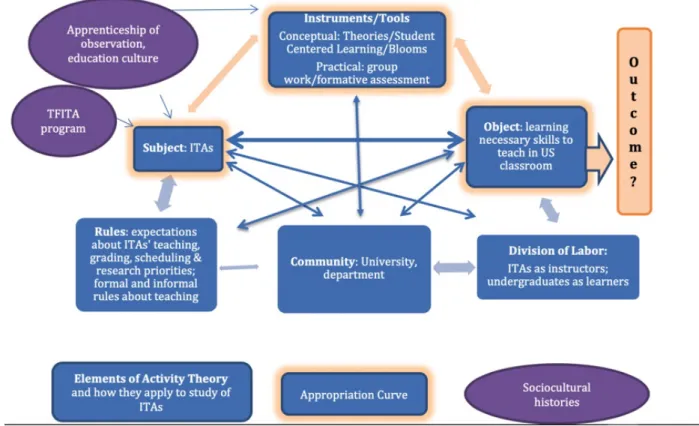
Figure 5 represents how CHAT can be used in this study of ITAs regarding the decisions and
perceptions of ITAs and their teaching practice.
Figure 5
Representation of this study mapped on to the CHAT framework
Additionally, looking to the writings of critical educational scholar Lisa Delpit (1986,
1988) who questioned the appropriateness of constructivist-based pedagogy, such as SCL, for
culturally diverse learners, qualitative examination of ITA perspectives of SCL pedagogy in the
US higher education setting has the potential to expose a “silenced dialogue” of the culturally
diverse ITA, allowing examination of assumed benefits of SCL methods for all students.
Significance of this Study
undergraduates in U.S. universities (Williams, 2011). As research attests, this comes with
cultural issues between the ITAs and the undergraduates (Zhou, 2009). At the same time many
universities and researchers of pedagogy in specific fields are calling for a move toward
student-centered learning that is often at odds with not only the education culture of many ITAs, but also
with current pedagogical practice in their field of study (Eddy & Hogan, 2014; Haak et al., 2011;
Lea et al., 2003). Additionally, the pressure that many graduate students, not just international
graduate students, feel to prioritize research over the honing of teaching skills, may limit their
appropriation of student-centered learning as pedagogy (Brownell & Tanner, 2012). Taken
together, these factors often serve to create a perceived incompatibility between ITA and
American undergraduates.
While there is a plethora of research about ITAs, most of these are focused on specific
aspects of the phenomenon, such as linguistic and cultural issues, or on the outcomes of ITA
training programs. There is a gap in the literature focused on the viewpoints of ITAs in relation
to their roles as international graduate students as well as novice members of academia and how
these factors affect their teaching decisions.
This study seeks to add to the body of research by using CHAT as a lens to analyze ITAs
perceptions about the academic and social forces that influence their appropriation of