Application Security
Guide For CISOs
Version 1.0 (November 2013)
Project Lead and Main Author
Marco Morana
Co-authors, Contributors and Reviewers
Tobias Gondrom, Eoin Keary, Andy Lewis, Stephanie Tan and Colin Watson
Chief Information Security Officers (CISOs) are responsible for application security from governance, compliance and risk perspectives. The Application Security Guide For CISOs seeks to help CISOs manage application security programs according to their own roles, responsibilities, perspectives and needs. Application security best practices and OWASP resources are referenced throughout the guide.
© 2013 OWASP Foundation
Foreword
This guide has been supported by the OWASP project reboot program and developed in alignment with OWASP core values reflected in the openness of the content, innovative ideas and concepts, global reach to the application security community and integrity of the contents that are published as strictly vendor neutral and un-biased by specific commercial interests. This guide has also been developed in respect of the OWASP core values such as to “Promote the implementation of and promote compliance with standards, procedures, controls for application security” and the OWASP principles of delivering free and open content, not for profit interests and a risk based approach for improving application security. The leader of the OWASP Application Security Guide for CISOS project is Marco Morana that developed the original contents of this guide with contributions from Colin Watson, Eoin Keary, Tobias Gondrom and Stephanie Tan. This project is being developed by the OWASP in parallel with the CISO Survey project lead by Tobias Gondrom.
The objective is to run these two projects in sync and use the results of the 2013 CISO Survey to tailor the guide to the specific CISOs needs by highlighting which OWASP projects/resources address these needs. The November 2013 version of the OWASP Application Security Guide for CISOs was presented at the 2013 AppSec USA Conference, held in New York City on November 18-23, 2013.
Contents
Preamble to Guide ... 1
Introduction 3
Executive Summary 5
The CISO Guide ... 11
Part I : Reasons for Investing in Application Security 13
Part II : Criteria for Managing Application Security Risks 31
Part III : Application Security Program 57
Part IV : Metrics For Managing Risks & Application Security Investments 77
Supporting Information ... 85
References 87
About OWASP 91
CISO Guide Appendixes ... 93
Appendix A: Value of Data & Cost of an Incident 95
List of Figures
Figure 1
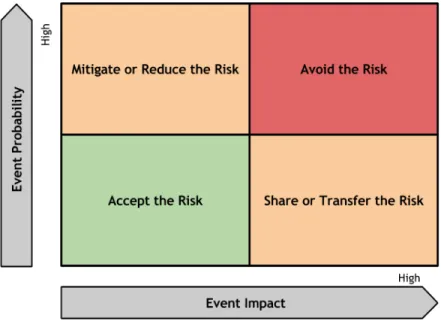
Risk Mitigation Strategy Based on Event Likelihood and Impact ... 22
Figure 2
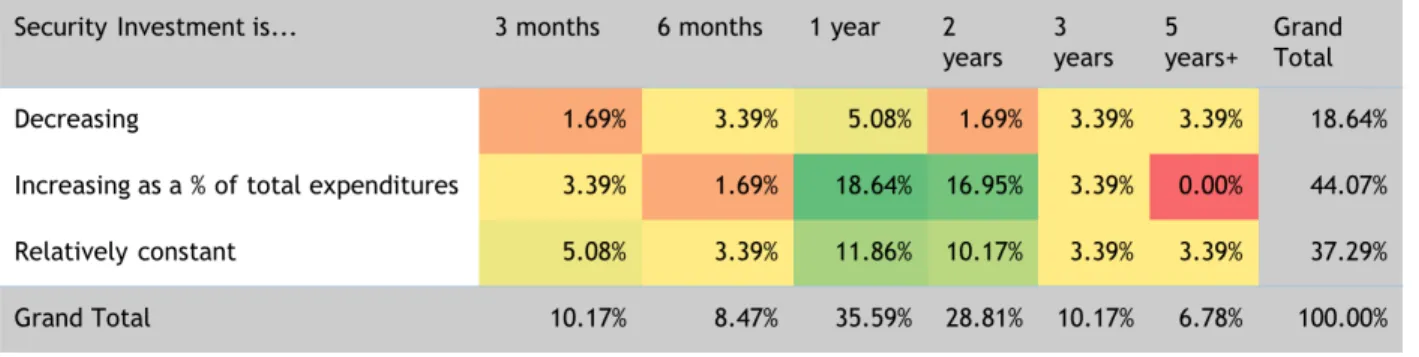
Analysis Indicating That 1-2 Year Roadmaps Support Obtaining Proper Security Investment; Shorter and Longer Roadmaps Do Not (OWASP CISO Survey 2013) ... 24
Figure 3
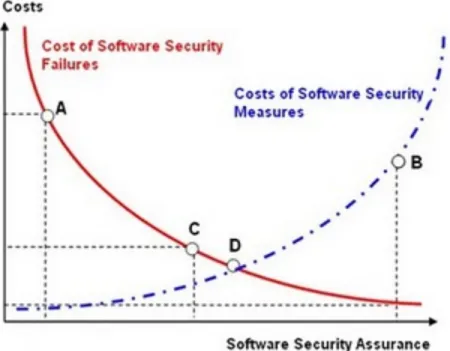
Chart Indicating How the Cost of Investment in Software Security Measures Against Failure Costs Due to Incidents that Exploit Software Vulnerabilities. ... 29
Figure 4
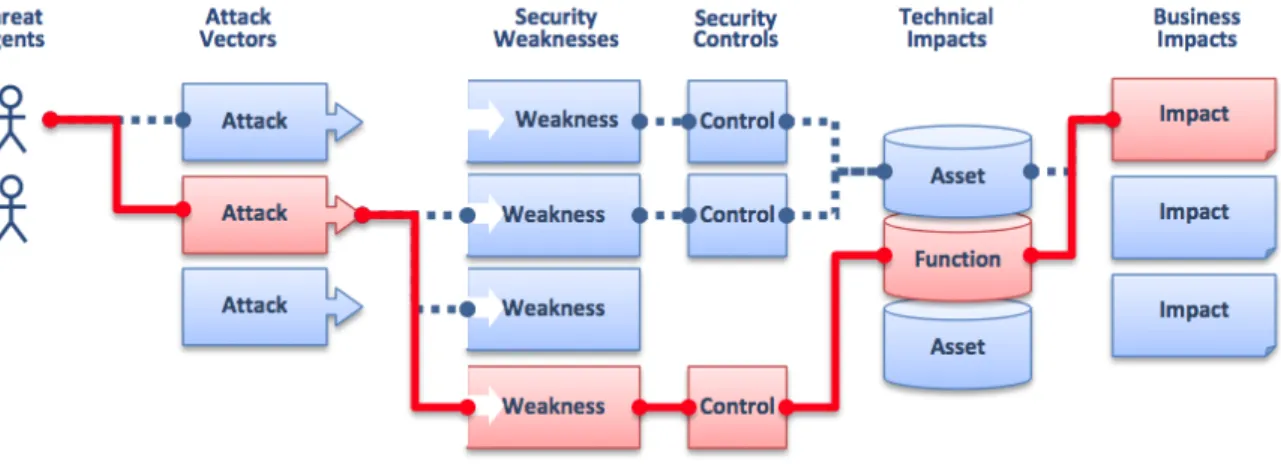
Diagram Indicating How Attackers Can take Different Pathways Through An Application to do Harm (OWASP Top Ten Web Application Risks 2013) ... 35
Figure 5
The Calculation of Business Risk ... 36
Figure 6
Threat Agents ... 38
Figure 7
Example Security Processes Built Into a Waterfall SDLC ... 65
Figure 8
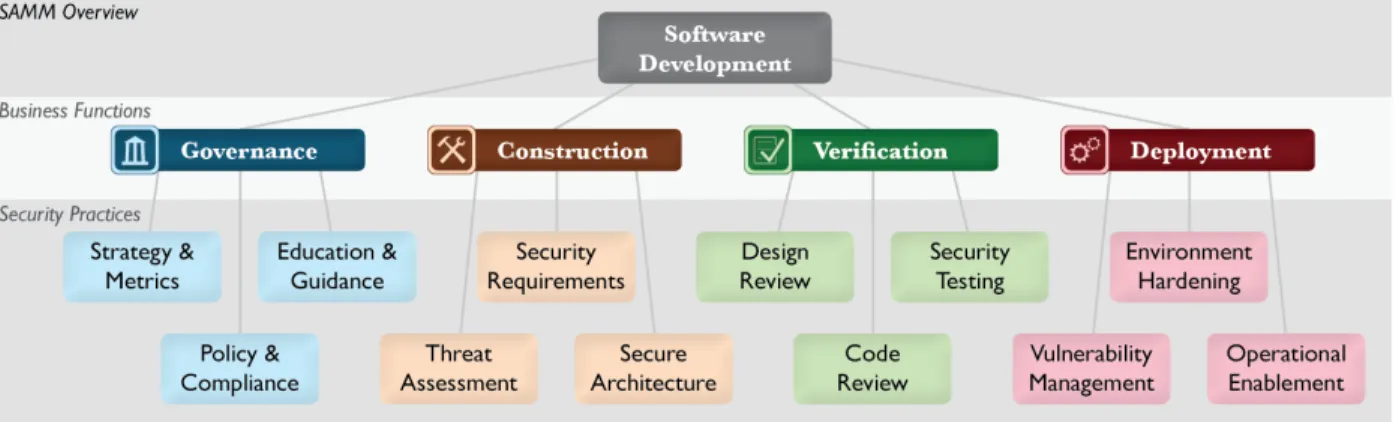
Business Functions and Related Security Practices Within Open Software Assurance Maturity Model (OWASP Open SAMM v1.0) ... 66
Figure 9
Three Key Questions for the Security Strategy ... 68
Figure 10
Inputs for Developing the Security Strategy ... 69
Figure 11
Elements of the Security Strategy ... 71
Figure 12
Analysis of Application Security Roadmap Durations (OWASP CISO Survey 2013) ... 72
Figure 13
An Illustration of OWASP’s Project Categories ... 73
Figure 14
People, Processes and Technology Controls Support Application Security ... 74
Figure 15
Example Vulnerability Categorization Trend Chart ... 82
Figure 16
Chart Illustrating How the Cost Of Testing and Managing Software Bugs Vary with Stage of SDLC ... 83
List of Tables
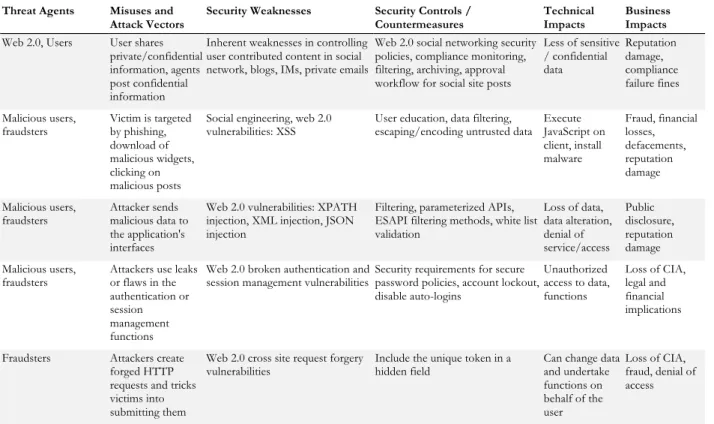
Table 1The OWASP Risk Framework Applied to Web 2.0 Technologies ... 53
Introduction
Among application security stakeholders, Chief Information Security Officers (CISOs) are
responsible for application security from governance, compliance and risk perspectives. This guide
seeks to help CISOs manage application security programs according to CISO roles, responsibilities,
perspectives and needs. Application security best practices and OWASP resources are referenced
throughout this guide. OWASP is a non profit organization whose mission is "making application
security visible and empowering application security stakeholders with the right information for
managing application security risks".
This CISO guide is written to help CISOs that are responsible for managing application security
programs from the information security and risk management perspectives. From the information
security perspective, there is a need to protect the organization assets such as the citizen, client and
customer sensitive data, the databases where this data is stored, the network infrastructure where the
database servers reside and last but not least, the applications and software used to access and
process this data. Besides business and user data, applications and software are among the assets that
CISOs seek to protect. Some of these applications and software provide business critical functions
to customers that generate revenues for the organization. Examples include applications and
software that provide customers with business services as well as applications and software that are
sold as products to the clients. In the case where software applications are considered business
critical information assets, these should receive a specific focus in human resources, training,
processes, standards and tools. The scope of this guide is the security of web applications and the
security of the components of the architecture such as the security of web servers, application
servers and databases. This does not include other aspects of security that are not related to the
specific application. Such as the security of the network infrastructure that supports the applications
and constitutes a valued asset whose security properties such as confidentiality, integrity and
availability need to be protected as well.
Objectives
This guide helps CISOs manage application security risks by considering the exposure from
emerging threats and compliance requirements. This guide helps:
•
Make application security visible to CISOs
•
Assure compliance of applications with security regulations for privacy, data protection and
information security
•
Prioritize vulnerability remediation based upon risk exposure to the business
•
Provide guidance for building and managing application security processes
•
Analyze cyber-threats against applications and identify countermeasures
•
Institute application security training for developers and managers
•
Measure and manage application security risks and processes
Target Audience
•
Chief Information Security Officers (CISOs)
•
Senior security management
Executive Summary
The fact that applications ought to be considered company's assets is "per se" a good reason to put
applications in scope for compliance with information security policies and standards. The impact of
compliance with information security policies and standards for applications typically depends on
the classification of the asset-data stored by the application, the type of exposure of the application
to the users (e.g. internet, intranet, extranet) and the risk of the functionality that the application
supports with the data (e.g. access to confidential data, transfer of money, payments, users
administration etc). From an information security perspective, applications should be in scope for
organizations specific vulnerability assessments and application security requirements. The security
validations and certifications of applications follow specific security requirements such as the secure
design, secure coding and secure operations. These are often part of the goals of application security
standards. Therefore, compliance is a critical aspect of application security, and of CISOs
responsibilities, but not the only one. Application security spans other security domains that CISOs
are responsible for. These can be summarized as (GRC) Governance, Risk and Compliance.
•
From the governance perspective, CISOs are responsible for institute application security
processes, roles and responsibilities to manage them, and software security training and
awareness for software developers such as defensive coding and vulnerability risk
management for information security officers/managers.
•
From the risk management perspective, the risks managed by the CISOs also include
application security risks, such as the risks of specific threats targeting applications that
process confidential user data by seeking to exploit gaps in security controls as well as
vulnerabilities in applications.
•
Among CISOs security domains, compliance with regulations and security standards is often
the one that gets the most attention from the organization's executive management. The aim
of this guide, is to help CISOs fulfill compliance requirements as well as to use compliance
requirements as one of the reasons for justifying investments in application security. For
some organizations, managing risks of security incidents such as credit card fraud, theft of
personal identifiable information, theft of intellectual property and confidential data is what
gets most of the executive management attention, especially when the organization has been
impacted by data breach security incidents.
Part I: Reasons for Investing in Application Security
In this digital era, public and private organizations serve an increasing number of citizens, clients,
customers and employees through web applications. Often these web applications provide “highly
trusted services” over the internet, including functions that bear high risk for the business. These
web applications are the target of an ever-increasing number of fraudsters and cyber-criminals. Many
incidents result in a denial of online access, breach of customer data and online fraud.
Chief Information Security Officers (CISOs) are tasked to enforce application security measures in
order to avoid, mitigate and reduce security risks affecting the organization's ability to deliver on its
mission. This evolving threat landscape further drives audit, legal and compliance requirements.
CISOs must create a business case for investing in an application security program. The business
case should be mapped to the security threats on the business and the program services necessary to
serve as a countermeasure. Industry security spending benchmarks and quantitative risk calculations
provide support to security investment budget requests.
Part II: Criteria for Managing Application Security Risks
CISOs must prioritize security issues in order to identify areas needing attention first. To make
informed decisions on how to manage application security risks, CISOs often need to assess the
costs of fixing known vulnerabilities and adoption of new countermeasures and to consider the risk
mitigation benefits of doing so. Costs vs. benefits trade offs are critical to decide on which
application security measures and security controls to invest in to reduce the level of risk. Often
CISOs need to explain to executive management the risks to applications and to articulate the
potential business impacts for the organization in case applications are attacked and confidential data
is breached. Security risks are business risks only when all three risk characteristics exist:
•
Viable threat
•
Vulnerability that may be exposed
•
Asset of value
To systematically prioritize risks for investment, CISOs should consider a risk scoring methodology
known as the Common Vulnerability Scoring System Version 2.0 (CVSSv2). To help regularly
communicate application risk to the business executives, CISOs may consider providing “emerging
cyber-threat awareness” reports to executive management.
Communicating to business executives
CISOs need to be real about cyber-threat risks and present to the business the overall picture of
information security risks, not just compliance and vulnerabilities, but also security incidents and
threat intelligence of threat agents targeting the organization information assets including for
applications. The ability to communicate risks to the business empowers CISOs to articulate the
business case for application security and justify additional spending in application security
measures. This justification needs to consider the economical impact of security incidents compared
with the costs of unlawful non compliance. Today's costs to the business due to the economical
impacts of security incidents are much higher than the costs of non-compliance and failing audits.
Often the severity of the impact of security incidents might costs CISOs their jobs and the company
losing reputation and revenues.
Threat modeling
A top-down approach to identifying threats and countermeasures, CISOs should consider a threat
modeling technique also described in Part III. The threat modeling technique allows the target
application to be decomposed to reveal its attack surface and subsequently its relevant threats,
associated countermeasures, and finally, its gaps and weaknesses.
Handling new technology
New application technologies and platforms such as mobile applications, Web 2.0, and cloud
computing services offer different threats and countermeasure techniques. Changes to applications
are also a source of potential risks, especially when new or different technologies are integrated
within applications. As applications evolve by offering new services to citizens, clients, customers
and employees, it is also necessary to plan for mitigation of new vulnerabilities introduced by the
adoption and implementation of new technologies such as mobile devices, web 2.0 and new services
such as cloud computing. Adopting a risk framework to evaluate the risks introduced by new
technologies is essential to determine which countermeasures to adopt to mitigate these new risks.
This guide will provide guidance for CISOs on how to mitigate risks of new threats against
applications, as well as of vulnerabilities that might be introduced by the implementation of new
technologies.
•
Mobile applications
o
Example concerns: lost or stolen devices, malware, multi-communication channel
exposure, weak authentication
o
Example CISO actions: Meeting mobile security standards, tailoring security audits
to assess mobile application vulnerabilities, secure provisioning, and application data
on personal devices.
•
Web 2.0
o
Example concerns: securing social media, content management, security of third
party technologies and services
o
Example CISO actions: security API, CAPTCHA, unique security tokens in form
posts, and transaction approval workflows.
•
Cloud computing services
o
Example concerns: multi-tenant deployments, security of cloud computing
deployments, third party risk, data breaches, denial of service malicious insiders
o
Example CISO actions: cloud computing security assessment, compliance-audit
assessment on cloud computing providers, due diligence, encryption in transit and at
rest, and monitoring.
Today's threat agents seek financial gain such as by attacking applications to compromise users'
sensitive data and company’s proprietary information for financial gain, fraud as well as for
competitive advantage (e.g. through cyber espionage). To mitigate the risks posed by these threat
agents, it is necessary to determine the risk exposure and factor the probability and the impact of
these threats as well as to identify the type of application vulnerabilities that can be exploited by
these threat agents. The exploit of some of these application vulnerabilities might severely and
negatively impact the organization and jeopardize the business.
Part III: Application Security Program
From the risk management strategic point of view, the mitigation of application security risks is not
a one time exercise; rather it is an ongoing activity that requires paying close attention to emerging
threats and planning ahead for the deployment of new security measures to mitigate these new
threats. This includes the planning for the adoption of new application security activities, processes,
controls and training. When planning for new application security processes and controls, it is
important for CISOs to know on which application security domains to invest, in order for the
business to deliver on its missions.
To build and grow an application security program, CISOs must:
•
Map business priorities to security priorities
•
Assess the current state using a security program maturity model
•
Establish the target state using a security program maturity model
Map business priorities to security priorities
All security priorities must be able to be mapped to business priorities. This is the first step towards
establishing the relevance of every security initiative and shows business management how security
supports the mission. It also demonstrates to security staff how the staff supports the mission.
Assess the current state using a security program maturity model
Accessing process maturity is a prerequisite for adoption of application security and software
security processes. One criteria that is often adopted by organizations is to consider the
organization's capabilities in application security domains and the maturity of the organization in
operating in these domains. Examples of these application security domains include application
security governance, vulnerability risk management, regulatory compliance and application security
engineering; such as to design and implement secure applications. Specifically in the case of
application security engineering, adopting software security assurance is often necessary when there
is not direct control on implementing the security of such software since it is produced by a third
party vendor. A factor to consider in this case is to measure the software security assurance using a
maturity model. A pre-requisite for measuring software security assurance is the adoption of a
Secure Software Development Lifecycle (S-SDLC). At high level, S-SDLC consists of embedding
"build security in" security activities, training and tools within the SDLC. Examples of these
activities might include software security processes/tools such as architectural risk analysis/ threat
modeling, secure code reviews/static source code analysis, application security testing/application
vulnerability scanning and secure coding for software developers. A reference to OWASP software
assurance maturity model as well as to the several OWASP projects dedicated to software security
and S-SDLC are provided in this guide as well.
Establish the target state using a security program maturity model
Not all organizations need to be at the highest maturity. The maturity should be at a level that it can
manage the security risk that affects the business. Obviously, this varies among organizations and is
driven by the business and what it accepts as risk as part of continuous collaboration and
transparency from the security organization.
Once a target state is identified, CISOs should build a roadmap that identifies its strategy for
addressing known issues as well as detecting and mitigating new risks.
OWASP provides several projects and guidance for CISOs to help develop and implement an
application security program. Besides reading this section of the guide, see the Appendix B: Quick
Reference to OWASP Guides & Projects for more information on the type of security engineering
domain activities that can be incorporated within an application security program.
Part IV: Metrics For Managing Risks & Application Security Investments
Once application security and software security investments are made, it is important for CISOs to
measure and report the status of governance, risk and compliance of the application security
program to Executive Management. Furthermore, CISOs need to show the effectiveness of the
application security program investment and its impact on business risk.
CISOs also need metrics to manage and monitor the people, processes, and technologies that make
up the application security program. Example metrics for measuring governance, risk and
compliance of application security processes are also included.
Security metrics consist of three categories:
•
Application security process metrics
•
Application security risk metrics
•
Security in the SDLC metrics
Applicat
ion security process m
etrics
These support informed decisions to decide where to focus the risk mitigation effort and to manage
application security risks more effectively. These risk management goals are usually very
organization specific and depend on the type of organization and the industry sector that the
organization does business with, to decide which application security risks should be prioritized for
action.
•
How well is the organization meeting security policies, technical standards, and industry
practices?
•
How consistently are we executing security SLAs? By application? By division? By channel?
Application security risk m
etrics
•
Vulnerability risk management metrics - What is the Mean Time to Repair on an annual
basis? On a monthly basis? By application? By division? What are the known security issues
in production?
•
Security incident metrics - What security issues have been exploited? Were they known issues
that were released in production? What was the cost to the business?
•
Threat intelligence reporting and attack monitoring metrics - Which applications are
receiving more attacks than others? Which applications have upcoming expected peak usage?
Security in the SDLC metrics
One often neglected aspect when spending on software security is the economics of dealing with
insecure software applications. The investment in software security to identify and fix security issues
prior to release of software in production actually pays for itself because it saves the organization
money. Patching vulnerabilities after applications are released into production is very expensive; it is
much cheaper than to invest in secure architecture reviews to identify design flaws and remediate
them prior to coding, as well as to invest in secure code reviews to identify and fix security bugs in
software during coding, and to ensure that releases are configured correctly.
•
Metrics for risk mitigation decisions - What is the Mean Time to Repair by an application's
risk category? Does it meet expectations? What is the risk heat map by application? By
division? By channel?
•
Metrics for vulnerability root causes identification - What are the root causes of
been best adopted by each development team? Which development teams need more
attention?
•
Metrics for software security investments - Which SDLC phase have identified the most
security issues? What is the maturity of the corresponding security practices in each SDLC
phase? What is the urgency for more security people, process, and technologies in each
SDLC phase? What are the cost-savings between security testing versus downstream
vulnerability penetration testing? What are the cost-savings between issues identified in each
phase?
Part I
: Reasons for Investing in Application Security
I
-
1 Executive Summary
In this digital era, public and private organizations serve an increasing number of citizens, customers
and employees through web applications. Often these web applications provide “highly trusted
services” over the internet, including functions that bear high risk for the business. These web
applications are the target of an ever-increasing number of fraudsters and cyber-criminals. Many
incidents result in a denial of online access, breach of customer data and online fraud.
Chief Information Security Officers (CISOs) are tasked to enforce application security measures in
order to avoid, mitigate and reduce security risks affecting the organization's ability to deliver on its
mission. This evolving threat landscape further drives audit, legal and compliance requirements.
CISOs must create a business case for investing in an application security program. The business
case should be mapped to the security threats on the business and the program services necessary to
serve as a countermeasure. Industry security spending benchmarks and quantitative risk calculations
provide support to security investment budget requests.
I
-
2 Introduction
Applications have grown increasingly critical in organizations. Oftentimes delivering critical services with legal and regulatory requirements. For bank customers, these are feature rich functions that allow them to open bank accounts, pay bills, apply for loans, book resources and services, transfer funds, trade stocks, view account information, download bank statements and others. This online experience is convenient for people: it allows them to perform the same financial transactions as being at the branch/office/outlet, but with the added convenience of conducting these transactions remotely from their home computer or mobile phone. At the same time, this convenience for customers comes at a price to the financial organizations involved in developing and maintaining these applications. For example, online banking and commerce sites have become the target of an increased number of fraudsters and cyber-criminals and victims of security incidents. Several of these incidents resulted in a denial of online access, breaches of data and online fraud.
In the case of data breach incidents, often these attacks from fraudsters and cyber-criminals involve the exploitation of applications such as SQL injection to compromise the data stored in the application database and cross site scripting to execute malicious code such as malware on the user’s browser. The targets of these attacks are both the data and the application business functions for processing this data. In the case of online banking applications, the data targeted by hacking and malware include personal data of individuals, bank account data, credit and debit card data, online credentials such as passwords and PINs and last but not least, alteration of data in on-line financial transactions such as transfers of money to commit fraud. Verizon’s 2012 data breach investigations report identifies hacking and malware as the most prominent types of attack, yielding stolen passwords and credentials, and thus posing a major threat to any organization that trades online.
To cope with this increase of incidents targeting applications, such as denial of services and data breaches often caused by hacking and malware, Chief Information Security Officers (CISOs) have been called by company’s executives such as the Chief Information Officer (CIO), Legal Counsel or Chief Financial Officer (CFO) to build and enforce application security measures to manage application security risks to the
organization. For financial organizations for example, the increasing threat to applications such as online banking applications, challenges CISOs to enforce additional application security controls and increase the investment in application security to cope with the increasing risk.
Due to the evolving threat landscape and increased pressure from audit, legal and compliance, in the last decade, investments in application security have been a growing proportion of overall information security and information technology budgets. This trend is also captured in applications security surveys such as the 2009 OWASP Security Spending Benchmarks Project Report that, for example, stated "Despite the economic downturn, over a quarter of respondents expected application security spending to increase in 2009 and 36% expected to remain flat". Furthermore, in the 2013 OWASP CISO Survey, about 87% of respondents indicated that application security investment would either increase or remain constant. Nevertheless, making the business case for increasing the budget for application security today remains a challenge because of the recession economy and prioritization of spending for development of new application features and platforms (e.g. mobile devices), initiatives to expand service uptake or profitability, and marketing to attract new customers and retain existing customers. Ultimately, in today’s recession type of economic climate and in a scenario of slow growth in business investments including the company’s built-in software, it is increasingly important for CISOs to articulate the "business case" for investment in application security. Since it also appears to be a disconnect between organization's perceived threats (application security threats are greatest) yet spending on network and infrastructure security is still much higher, we would like to shed some light on the business impact of data breaches due to application vulnerability exploits and how much these might cost to organizations. Typically, additional budget allocation for application security includes the development of changes in the application to fix the causes of the incident (e.g. fixing vulnerabilities) as well as rolling out additional security measures such as preventive and detective controls for mitigating risks of hacking and malware and limiting the likelihood and impact of future data breach incidents.
CISOs can build a business case for additional budget for application security today for different reasons; some directly tailored to the specific company risk culture or appetite for risk; others tailored to application security needs. Some of these needs can be identified by the analysis of the results of application security surveys. To assess these needs, readers of this guide are invited to participate in the OWASP CISO Survey so that the contents of this guide can be tailored to the needs of CISOs participating in the survey.
2013 CISO Survey: Growing Focus
An increased perception of risk of application targeted threats and shifts the organization investment from the traditional network security to application security. In comparison of the application security budget to the company's annual budget:
• 47% of CISOs have seen an increase • 39% consider it relatively constant • 13% have seen a decrease
The budgeting for application security measures might depend on different factors such as compliance with security policies and regulations, operational risks management including the risks due to application
vulnerabilities and the response of security incidents involving applications. For the sake of this guide we will focus on the following areas to target application security spending:
• Compliance with security standards, security policies and regulations;
• Identification and remediation of application vulnerabilities;
• Implementation of countermeasures against emerging threats targeting applications.
Nevertheless, assuming the business cases can be made along these goals, CISOs today still have the difficult task to determine “how much” money should the company spend for application security and “where” that is on “which security measures” to spend it. Regarding the how much, often it gets down to how much is needed to invest to satisfy compliance requirements and pass the auditor’s check. When the focus is compliance, the focus is to develop and implement application security standards and map these security requirements to current projects. When the focus is vulnerability risk management, the main goal is to fix high risk vulnerabilities and to reduce the residual risk to an acceptable value for the business. When the focus is security incident management, the focus is how to investigate and analyze the suspected security breaches and recommend corrective actions. When the focus is application security awareness, the focus is on institute application security training for the workforce.
For today’s CISO there is an increased focus on making decisions for mitigating risks. Both for mitigating real risks (e.g. incidents, vulnerability exploits) and for mitigating compliance risks (e.g. unlawful
non-compliance), the question for CISOs is "where" and "how" to prioritize the spending of the application security budget. Often the question is which countermeasure, application security process, activity, or security tool yields “more bang for the money” for the organization. Regarding the "where" it comes down to balance correctly different application security and risk domains - to name the most important ones: business
governance, security risk management, operational management that includes network security, identity management, access control and incident management. Since as a discipline, application security encompasses all these domains, it is important to consider all of them and look at the application security investment from different perspectives.
I-
3
Information Security Standards, Policies and Compliance
Identifying standards, policies and other mandates in scope for c
ompliance
One of the main factors for funding an application security program is compliance with information security standards, policies and regulations mandated by applicable industry standards regulatory bodies. Initially, it is important for the CISO to define what is in the scope for compliance and how it affects application security. Depending on the industry sector and the geographical location in which the organization operates, there will be several different types of security requirements that the organization needs to comply with. The impact of these requirements is also on the applications that manage and process data whose security falls under the scope of these standards and regulations. The impact on applications consists of performing scheduled risks assessment and to report the status on compliance to the auditors.
Examples of data security and privacy standards that apply to applications in the US include:
• Payment Card Industry (PCI) Data Security Standard (DSS) for payment card merchants and processors
• FFIEC guidelines for US financial organizations whose applications allow clients and consumers to bank online and conduct transactions such as payments and money transfers
• FISMA law for US federal government agencies whose systems and applications need to provide information security for their operations and assets
• HIPAA law for securing privacy of health data whose applications handle patient records in the U.S.
healthcare industry
• GLBA law for US financial institutions whose applications collect and store individuals’ personal
financial information
• US State Data Breach Disclosure laws for organizations whose applications store and process US state resident Personal Identifiable Information (PII) data when this data is lost or stolen in clear (e.g. un-encrypted)
• FTC privacy rules for organizations whose applications handle private information of consumers in the US as well as when operating in EU countries to comply with “Safe Harbor” rules
OWASP provides several projects and guidance for CISOs to help develop and implement policies, standards and guidelines for application security. Please consult the Appendix B: Quick Reference to OWASP Guides & Projects for more information.
Ca
pturing application security requirements
PCI DSSMost of the applications that carry out payment transactions such as merchant type of e-commerce
applications that handle credit cardholder data are required to comply with the Payment Card Industry Data Security Standard PCI DSS. The requirements for the protection of cardholder data when it is stored by the application includes several PCI DSS requirements such as rendering or encrypting the Primary Account Number (PAN) and masking the PAN when it is displayed. The PCI-DSS requirement for card
authentication data such as PIN, CVC2/CVV2/CIDs is not to store these data at all, even in encrypted form after a payment has been authorized. Credit cardholder data needs to be protected with encryption when it is transmitted over open networks. These requirements for protection of cardholder personal account numbers and cardholder authentication data motivate the CISO to document internal security requirements to comply with these provisions and to adopt application security measures and assessments to verify that these
requirements are met by the applications that are in scope. Besides protection of cardholder data, PCI-DSS has provisions for the development and maintenance of secure systems and applications, for testing security
systems and processes and for the testing of applications for common vulnerabilities such as those defined in the OWASP Top Ten.
The need of compliance with the PCI DSS requirements can be a reason to justify an additional investment in technology and services for application security testing: examples include source code security reviews with SAST (Static Analysis Security Testing) assessment/tools and application security reviews with DAST (Dynamic Analysis Security Testing) assessments. For a merchant that develops and maintains a web application such as an e-commerce web site that handles credit card payments, the main question is whether to allocate budget to application security measures and activities to comply with PCI DSS or to incur in fines (e.g. up to $ 500,000 when credit cardholder data is either lost or stolen). From this perspective, unlawful noncompliance with regulations and standards might be treated as another risk by the organization and as any other risk, this could be mitigated, transferred or accepted. If the risk of being non-compliant is accepted, CISO should consider that the data breach risk, because of not implementing basic security controls such as data encryption but also input validation, might be much higher than non-compliance risk.
Example: T.J.Maxx non-compliance with PCI DSS
T.J.Maxx was non-compliant with PCI DSS when 94 million credit card numbers were
compromised in a data breach. Yet, the non-compliance costs for failing to encrypt or truncate card numbers and remediate application vulnerabilities, such as SQL injection, were less of the overall costs incurred by the businesses impacted by this security incident. In the case of T.J Maxx credit card data breach incident, the economical costs incurred by T.J. Maxx because of the incident were a factor of at least a thousand times higher (if not more) than the costs of not compliance with PCI-DSS: several hundreds of millions of US dollars vs. several hundreds of thousands of US dollars.
FFIEC
In the U.S. banking sector, applications that handle sensitive customer information and are allowed to process financial transactions such as to transfer money between different bank accounts (e.g. electronic wires) must comply with Federal Financial Institutions Examination Council (FFIEC) guidelines for online
authentication. Requirements include strong authentication such as multi-factor authentication (MFA).
Business drivers for application security investment
Federal Financial Institutions Examination Council (FFIEC) requirements for authentication of online banking sites can justify budgeting for application security measures to secure design, implement and test the provision of MFA controls in the application.
GLBA
For US consumers, privacy is regulated under different laws and regulations depending on the industry sectors. In the US financial sectors, laws that govern consumers privacy include GLBA laws and FTC rules. From a GLBA compliance perspective, financial applications need to provide disclosure to application users of which PII is collected, processed and stored and how it is shared among the financial institution businesses and affiliates including third parties. From an FTC compliance perspective, organizations that store consumer PII need to disclose their due diligence security practices to consumers and can be considered liable when
such practices are not followed as in the case of a breach of consumer’s private information and in a clear breach of the license agreements with the consumers. Because privacy laws in the US mostly require acknowledging to consumer that the personal data is protected, the impact of security is limited to notifications, acknowledgements and “opt out” controls. Exceptions are cases where privacy controls are implemented as application privacy settings (e.g. as in the case of Facebook), and offered to users of the application as “opt in controls” to comply with the FTC Safe Harbor rules.
Privacy laws
In general, applications that store and process data that is considered personal and private by country specific privacy laws need to protect such data when it is stored or processed. What is considered private information varies country by country. For countries that are part of the European Union (EU) for example, personal data is defined in EU directive 95/46/EC, for the purposes of the directive: Article 2a: "'personal data' shall mean any information relating to an identified or identifiable natural person ('data subject'); an identifiable person is one who can be identified, directly or indirectly, in particular by reference to an identification number or to one or more factors specific to his physical, physiological, mental, economic, cultural or social identity".
For most of the US States, protection of personal identifiable information (PII) is driven by data breach notification laws such as SB1386 where PII is more narrowly defined than in the EU directive as the
individual's first name or first initial and last name in combination with any one or more of the following data elements, when either the name or the data elements are not encrypted: (1) Social security number. (2) Driver's license number or State Identification Card number. (3) Account number, credit or debit card number, in combination with any required security code, access code, or password that would permit access to an individual's financial account. For purposes of these laws, "personal information" does not include publicly available information that is lawfully made available to the general public from federal, state, or local government records.
Applications that process and store data that is considered personal private data by EU privacy laws or PII by US States data breach notification laws, need to implement security controls such as authentication,
authorization, encryption, logging and auditing to protect the confidentiality, availability and integrity of this data. These information security requirements are typically part of the information security policy enforced by the organization. These security requirements, indirectly translate in security requirements for applications that store and process data that is either considered confidential or confidential PII. Budgeting application security programs for complying with personal and consumer data privacy requirements is justifiable both as internal compliance with information security policy, as well as for mitigating the reputation damage to the organization in the case this data is either lost or compromised. In addition to reputation damage,
I-4 Risk Management
Risk management is certainly one of the core CISO functions. The purpose of this section of the guide is to help CISOs in developing, articulating and implementing a risk management process. OWASP also provides documentation guides that can be useful for CISOs to implement a risk management strategy for
applications. After reading this section, consult Appendix B for a reference to OWASP guides and projects.
Proactive vs. reactive risk management
Proactive risk management consists of focusing on mitigating the risks of threat events before these might possibly occur and negatively impact the organization. Organizations, whose focus is proactive risk
management, plan to protect mission critical assets including applications ahead of potential threats targeting them. Proactive risk mitigation activities for applications include focusing on threat intelligence to learn about threat agents, application threat modeling to learn how the application can be protected by attacks from different threat agents, security testing and fixing of potential vulnerabilities in the application as well as in the source code before these are exploited by potential attackers. A pre-requisite for proactive risk management is to have an inventory of the mission critical applications with associated risk profiles that allow CISOs to identify the critical digital assets such as data and functions that need to be prioritized and planned for proactive risk mitigation activities. CISOs whose organizations focus on proactive risk mitigation measures have typically adopted a risk mitigation strategy and act upon information from threat intelligence and monitored security events and alerts to raise the bar on acceptable technical and business risks. CISOs whose focus is proactive risk mitigation usually require the roll out of additional countermeasures ahead of new threats and new compliance requirements.
Reactive risk management consists of responding to risk events as they occur to mitigate negative impacts to the organization. Examples of reactive risk management activities include security incident response, security incident investigations and forensics and fraud management. In the case of application security, reactive risk management activities include vulnerability patch management, fixing application vulnerabilities in response to reported security incidents or when these are identified by third parties, performing application risk assessment due to occasional (not planned) requirements to satisfy specific compliance and audit
requirements. CISOs whose organizations focus on reactive risk management typically spend more focus on responding to unplanned risk management events. Often the focus of reactive risk management is "damage containment" to “stop the bleeding” and less focus is dedicated to planning for risk mitigation ahead of potential negative events targeting applications. Typically organizations whose focus is on reactive risk management have their CISOs spending most of their time on incident response and management and remediating application vulnerabilities either ahead of production releases or patching applications that are already released in production. When the prime focus of the CISO function is on reactive risk management, it is important to recognize that reactive risk mitigation, even if it cannot always be avoided because security incidents happen, is not cost effective since the cost of remediating issues after they have been either reported or exploited by an attacker is several factors of magnitude higher than identifying and fixing the same by adopting preventive risk mitigation measures.
A proactive risk mitigation approach is preferable to a reactive risk mitigation approach when making the business case for application security. A proactive risk mitigation approach might consist on using the opportunity of a required technology upgrade of a application to introduce new functionality or when an old application reaches end of life, and needs to migrate to a newer system/platform. Designing new features to applications represents an opportunity for CISOs to demand upgrade security technology to new standards and implement stronger security measures as well.
Asset centric risk management
CISOs whose information security policies are derived for compliance with information security standards such as ISO 17799/ISO 27001 include asset management as one of the security domains that need to be
covered. In the case when these assets include the applications, assets management requires an inventory of the applications that are managed by the organization in order to implement a risk management approach. This inventory includes information on the type of applications, the risk profile for each application, the type of data that is stored and processed, patching requirements and the security assessments such as vulnerability testing that are required. This inventory of applications is also critical to track application security assessments and risk management processes conducted on the application, the vulnerabilities that have been identified and fixed as well as the ones that are still open for remediation. The risk profile that is assigned to each
application can also be stored in the application inventory tool: depending on the inherent risk of the application that depends on the classification of the data and the type of functions that the application provides, it is possible to plan for risk management and the prioritization of the mitigation of existing vulnerabilities as well as for the planning for future vulnerability assessments and application security assessment activities. One of the application security activities that take advantage of asset centric risk management is application threat modeling. From an architecture perspective, assets consist of several components such as application servers, application software, databases and sensitive. Through application threat modeling, it is possible to identify threats and countermeasures for the threats affecting each asset. CISOs whose focus is on asset risk management, should consider implementing application threat modeling as proactive application security and asset centric risk management activity.
Technical vs. business risk management
When deciding how to mitigating the application security risks it is important to make the trade off between technical risks and business risks. Technical risks are the risks of either technical vulnerabilities or control gaps in an application whose exploit might cause a technical impact such as lost and compromised data, server/host compromise, unauthorized access to an application data and functions, denial or disruption of service as examples. Technical risks can be measured as the impact of confidentiality, integrity and availability of the asset caused by a technical event/cause such as vulnerability that is identified by an application security assessment. The managing of these technical risks typically depends on the type of the vulnerability and the risk rating assigned to it, also referred to as "severity" of the vulnerability. The severity of the vulnerability can be calculated based upon risk scoring methods such as FIRST's CVSS, while the type of vulnerability can be classified based upon the group that the vulnerability falls into such as using MITRE's CWE. CISOs can use the risk scoring of a vulnerability reported as HIGH, for example, to prioritize such vulnerability for
mitigation ahead of vulnerabilities that are scored as MEDIUM or LOW risk. In making this technical vulnerability risk management decision, CISO won’t consider the economical impact of the vulnerability to the business, such as in the case the value of the asset impacted by the vulnerability is either lost or
compromised.
Business risk management occurs when the value of the asset is taken into account to determine the impact to the organization. This requires the association of technical risk of the vulnerability with the asset value to quantify the risk. The risk can be factored as the likelihood of the asset being compromised and the business impact caused by the exploit of the vulnerability. For example, in the case that a high risk technical
vulnerability such as SQL injection (assumed is fully, 100% exposed as a pre-authentication issue) is exploited, the business impact can be determined as impact to an asset, such as data, that is classified as sensitive data and whose value if compromised is estimated as $ 250/data record (e.g. based upon either internal incident cost estimates or publicly reported estimates). The aggregated value of the sensitive data of 100,000 records stored in a database that could be exploited by SQL injection is therefore $ 25 Million. If the probability of a sensitive data compromise due to the exploit of SQL injection vulnerability is estimated as 10 % (1 successful data breach incident caused by SQL injection every ten years) the potential economical impact is a loss of $ 2,500,000. Based upon these estimates, it is possible to calculate how much to budget in application security measures (e.g. detective and preventive controls) for mitigating the risks to the business.
It should be noted that estimating business risks is much more difficult than estimating technical risks since business risk estimates require estimates of the likelihood of specific types of security incidents (e.g. data
breaches) as well as the estimates of the monetary losses (e.g. loss of revenue, legal-compliance costs, incident cause repair costs) caused by that incident. Typically these estimates are not easy to make in absence of specific data and calculation tools that can factor the frequency of security data breach incidents and keep records of direct and indirect costs suffered by the organization as a result of these security incidents.
Nevertheless, statistical data of data breach incidents, estimates of the costs of data breach incidents as well as data breach quantitative risk calculators might help. The Appendix A Value Data & Cost of an Incident provides examples, formulations and online calculators to help CISOs assigning monetary value to
information assets and determine the monetary impact for the organization in the case where such assets will be lost because of a security incident. The purpose of these quantitative risk calculations is to help CISOs decide how much is reasonable to spend in application security measures to reduce the business impacts for the organization in the case of data breach incident.
Risk management strategies
Once security risks have been identified and assigned a qualitative value such as high, medium and low risk, the next step for the CISO is to determine what to do with that risk. To decide “what to do with the risks” CISOs usually rely upon their organization's risk management processes and risk mitigation strategy. Risk management processes are usually different for each type of organization. At high level, risk management depends on the risk mitigation strategy that is adopted by the organization. Depending on the assessment of the level of risk impact and probability, for example, an organization might decide to accept the risks whose likelihood and impact are low, mitigate or reduce the risks (e.g. by applying security measures) that have high probability and low impact, transfer or share the risks (e.g. to/with a third party such as through contractual agreements) that are of low probability and high impact and avoid the risks (e.g. such as not to implement high risk functions, not to adopt high risk technologies) that have high probability and impact. A visual example of this risk mitigation strategy factored by event likelihood and impact is shown in the diagram below.
In the case high risks cannot be avoided because of business decisions requiring to mitigate them, and risks cannot be transferred to third parties through contractual agreements and cyber insurance, a possible risk strategy for the organization could be to mitigate all risks that are medium and high and accept (e.g. do nothing) only the ones whose residual risk (e.g. the risk left after either measures or compensating control are either applied or considered) are low. Risk mitigation strategies can also factor business risks using qualitative risk analysis that factor risks such as probability and economical impacts. Once the risk has been determined, the next step is to decide which risk the organization is willing to accept, mitigate, transfer or to avoid. For the risks that the organization is willing to accept it is important for CISOs to have a risk acceptance process that qualifies the low level of risk based upon the presence of compensating controls and that can be signed off by him and executive management. For the risks that are chosen for risk mitigation, it is important to determine which security measures/corrective actions are deemed acceptable by the organization and to decide which of these measures are most effective in reducing risks by minimizing the costs (e.g. highest benefit vs. minimum security measure total costs). This is where the risk mitigation strategy needs to consider the cost of potential security incidents, such as data breaches, to decide how much is reasonable for the organization to budget for investments in application security measures. An important aspect of the risk strategy for CISOs is to decide which security measures work best together as "pluribus unum" that includes applying preventive and detective controls to provide a defence in depth of the application's assets. Finally, for the risks that are either transferred or shared with a third party, it is important for the CISO to work with legal to make sure risk-liability clauses are documented in the legal agreements and service license agreements are signed by the organization with the third party service provider/legal entity.
Threat a
nal
ysis and awareness of emerging threats
Making the business case for additional spending on application security measures is not always justifiable without risk data from the analysis of the impact of emerging threats and the increased level of risks that needs to be mitigated. Threat analysis data allow informed risk management decisions. In the absence of such data, the management is left with subjective considerations about threats.
Subjective considerations about threats are most often decisions based upon Fear, Uncertainty and Doubt (FUD). Acting upon FUD to mitigate risks posed by emerging threats is late-coming and ineffective. Example actions based on FUD include, but are not limited to:
• Fear of data breaches
• Fear of failing audit and compliance • Uncertainty regarding business threats
• Doubts about effectiveness of existing security measures in light of recent security incidents
The intent of this part of the guide, is to help CISOs to create an additional business case for application security investment based upon objective threat analysis instead of subjective considerations. From a compliance with standards perspective, objective considerations are based upon a rationale for investing in applications security that includes complying with new security standards and regulations that impact applications. From a threat analysis perspective, objective considerations are based upon data regarding the business impact of emerging threat agents seeking to compromise applications for financial gain. Specifically regarding making the case for mitigation of risks, it is necessary for CISOs to avoid assumptions and back the case with data such as reports and analysis of cyber-threats and security incidents, costs of data breaches to estimate liability and quantitative calculations of risk based upon estimates of probability and impacts. Based upon risk calculations and data breach cost estimates, it is possible for the CISO to articulate how much the organization should invest in application security and to determine in which specific measures to invest.
From a fear perspective it is true that CISOs can also exploit the momentum, being this either a negative or positive event, but this is part of a reactive risk management approach and low maturity in dealing with risks.
Often application security spending can be triggered by a negative event such as a security incident, since this shifts senior management's perception of risk. However, CISOs should find that using a one to two year roadmap to drive security investment would be more effective as found in the 2013 OWASP CISO Survey.
Figure 2 ANALYSIS INDICATING THAT 1-2 YEAR ROADMAPS SUPPORT OBTAINING PROPER SECURITY INVESTMENT; SHORTER AND LONGER ROADMAPS DO NOT
(OWASP CISO SURVEY 2013)
In this case, the money is probably already being spent to limit the damage, such as to remediate the incident and implement additional countermeasures. The main question then is what further investment in application security will reduce the likelihood and impact of another similar incident happening in the future. One approach is to focus on applications that might become a target for future attacks.
Addressing the business concerns after a security i
ncident
The implementation of a security incident response process is an essential activity for every CISO. Such security incident response process requires the identification of a point of contact for security issues, the adoption of a security issue disclosure process and the creation of an informal security response team(s). In the case of a security incident, CISOs are often tasked to conduct root cause analysis for incidents, collect per-incident metrics and recommend corrective actions. In Appendix B we provide CISOS with a quick reference to OWASP guides & projects to help CISOs investigating and analyzing suspected and actual application security incidents and recommend corrective actions.
Once the root causes of the incident have been identified and corrective actions have been taken to contain the impact of the security incident, the main question for CISOs is what should be done to prevent similar security incidents to occur in the future. If an application has been targeted by an attack and sensitive data was either lost or compromised the main question is to whether similar applications and software might be also at risk of similar attacks and incidents in the future. The main question for the CISO is which application security measures and activities should be targeted for spending to mitigate the risks of breaches of sensitive data due to malware and hacking attacks to applications and software that are developed and managed by the organization.
After these measures are selected, the next question is how much should be spent in countermeasures. From the costs vs. benefit perspective, application security spending matching all of the costs of the business impact of a possible data breach is not justifiable since it will cost the business as much as doing nothing hence with no risk benefit for investing in countermeasures. The main question for the CISOs is therefore how much should be spent to reduce the risk of a data breach incident at a fraction of the cost of
how will I estimate the monetary losses of a security incident? Which methods should I use? Does the loss estimate include non-monetary losses such as reputation loss?
The goals of the following sections of the guide are to help CISOs in budgeting of application security measures for mitigating risks of data breach incidents by analyzing the risks of data breach incidents, monetizing the economical impacts and estimating the likelihood and the business impacts. Only after this "risk due diligence" work is done is it possible to determine the costs and compare with the risk mitigation benefits and decide in which security measures to invest. In Appendix A of this guide we provide a quick reference to assign monetary value to information assets and to determine the monetary impact of a security incident based upon statistical data. After measures are implemented it is important to measure and monitor security and the risks. In Appendix B we provide examples of OWASP projects that can help the CISO to measure and monitor security and risks of application assets within the organization.
Budgeting of application security measures for mitigating risks of data breach incidents
For guiding the CISOs in making decisions on "how much money the organization needs to budget for application security" we will focus on risk mitigation criteria rather than other factors such as percentage of the overall Information Technology (IT) budget and year over year budget allocation for applications security as a fraction of overall information security budget that includes compliance and operational-governance costs. A risk based application security budgeting criteria documented in this guide consist of the following:
• Estimate of the impact of the costs incurred in the event of an security incident • Quantitative risk calculation of the annual cost for losses due to a security incident
• Optimization of the security costs in relation to cost of incidents and cost of security measures • The return of security investment in application security measures
We shall explain in the following sections of this guide each of these criteria and how they can be used for quantifying how much money to spend on application security measures.
Analyzing the risks of data breach incidents
There are two important factors to determine the risk of a security incident: these are the negative impact caused by the security incident and the likelihood (probability) of the incident. To obtain an estimate of the impact of the costs incurred in the event of a security incident, the key factor is the ability to ascertain the costs incurred due to the security incident. Examples of negative impacts to an organization because of a security incident might include:
• Reputation loss such as, in the case of publicly traded company, a drop in stock price as consequence of announced security breach;
• Loss of revenue such as in the case of denial of service to a site that sells services or goods to clients and customers;
• Loss of data that is considered an asset for the company such as users' confidential data, Personal Identifiable Information (PII), authentication data, and trading secrets/intellectual property data;
• Inability to deliver a statutory service to citizens;
• Adverse impact on individuals whose data has been exposed.
Monetizing the economical impacts of data breach incidents
In the case of a security incident that caused a loss of sensitive customer or employee data such as personal identifiable information, debit and credit card data, the costs incurred by the organization that suffered the loss include several operational costs also referred as failure costs. In the case of a financial services company,
these are the costs for changing account numbers, remission costs for issuance of new credit and debit cards, liability costs because of fraud committed by the fraudster using the stolen data such as for illicit payment transactions and withdrawal of money from ATMs. Often times, the determination of such “failure” costs is not directly quantifiable by an organization, such as when this monetary loss is not directly caused by a security incident, hence ought to be estimated as a possible impact. In this case, CISOs can use statistical data to determine the possible liability costs to the company in case of data loss incident. By using reported statistical data from data loss incidents, it is possible to estimate the costs incurred by companies to repair the damage caused by a security incident that resulted in losses of sensitive data or identity loss.
The value of data will be different for each organization, but values in the range of $500 to $2,000 per record seem to be common.
Data value: $200 to $2,000 per record
We will use this range for the remaining discussion, but each CISO needs to come up with some valuation of their own that can then be used to calculate the impact of a data loss.
Note: Appendix A Value of Data & Cost of an Incident contains a detailed discussion, examples and a data breach calculation tool to estimate the cost of a data breach based upon statistical data.
Estimating the likelihood of data breach incidents
One of the challenges of the calculation of the burden to the company because of a potential data loss is to get an accurate estimate of the amount of the loss x victim and of the probability or likelihood of such loss occurring. Statistical data about reported data loss incidents to breach notification letters sent to various jurisdictions in the United States collected by the Open Security Foundation's (OSF) DataLossDB show that the percentage of 2010 data loss incidents breaching a web interface is 9% and the percentage that reported as being a hack is 12%, fraud 10% and virus 2%. The highest reported incident by breach type is stolen laptop with 13% of all reported incidents.
The data from OSF DataLossDB related to web as type of breach differ from the statistics of the Verizon’s 2011 data breach investigations report where hacking (e.g. brute force, credential guessing) and malware (e.g. backdoors, keyloggers/form grabbers, spyware) represent the majority of threats for security breaches (50% and 49% respectively) and attacks against applications represent 22% of all attack vectors and 38% as percent of records being breached.
These differences might be explained by the fact that the Verizon study is based upon a subset of data from the U.S Secret Service and does not include, for example, cases related to theft and fraud that are instead counted on the overall OSF DataLoss DB statistical data. Furthermore, according to the Verizon report; "the scope of the survey was narrowed to only those involving confirmed organizational data breaches". In the case of OSF, survey data includes data breaches covered by U.S State data breach notification law such as when resulting in disclosure of customer's Personal Identifiable Information (PII) and reported by organizations with notification letters sent to various jurisdictions in the United States.
Quantification of the business impact of data breach incidents
In the cases when the impact of an occurred data breach due to a security incident are not being recorded and notified to the public in compliance with the data breach notification laws enforced by different countries and jurisdictions, it is necessary to estimate it based upon risk estimate calculations. Besides the calculation of liability costs based upon the value of data (refer to Appendix A Value of Data & Cost of an Incident for
estimate the value of data), quantitative risk analysis can be used to estimate the spending for application security measures on the yearly basis such as by calculating the impact of a security incident on an annual basis. Quantitative risks can be calculated by the assessment of the Single Loss Expectancy (SLE) or
probability of a loss as a result of a security incident and the Annual Rate of Occurrence (ARO) or the annual frequency of the security incident. By using quantitative risk analysis and using publicly available reports of data breaches, CISOs can estimate the amount that a given organization managing an application would loose and therefore should spend on application security measures to mitigate the risk of a data loss due to the exploitation of an application vulnerability. The accuracy of this risk estimate depends on how reli