ABSTRACT
PARKER, RYAN JEREMY. Efficient Computational Methods for Large Spatial Data. (Under the direction of Brian J. Reich.)
Due to continued advances in technology, the ability to collect and store large data
sets are commonplace. In this dissertation we focus on spatial data collected through
technologies such as remote sensing, satellites, and computer model output. These data
are found in a variety of areas, such as research on the climate or environment, or in
areas where complex computer codes are constructed to simulate a scientific process.
The traditional methods used to analyze these data can either be very time consuming
to run on current computing platforms, or, in some cases, they can be too massive for
traditional approaches to even be considered. We propose methods that allow for efficient
computing in three different areas of spatial statistics: massive computer model output
used in climate research that is observed on a rectangular grid; estimating a nonstationary
spatial covariance observed on an irregular grid; and emulating complex computer codes
having a high-dimensional input space.
The first problem we consider is that of assessing value added within climate model
research. Climate models have emerged as an essential tool for studying the earth’s climate,
and it is common to run computationally expensive global models for study at a coarse
spatial resolution. Regional models are run with boundary conditions taken from the
global model to achieve a finer spatial scale for local analysis. These regional models add
to the computing expense, and it is of interest to know how much value the finer scale
adds over the coarser scale. We propose a new method for assessing the value added by
these higher resolution models, and we demonstrate the method within the context of
Assessment Program (NARCCAP) project. Our spectral approach using the discrete
cosine transformation (DCT) is based on characterizing the joint relationship between
observations, coarser scale models, and higher resolution models to identify how the finer
scales add value over the coarser output. The joint relationship is computed without
cumbersome matrix operations by instead estimating the smaller covariance of our data
sources at different spatial scales with a Bayesian hierarchical model. Using this model
we can efficiently estimate the value added by each data source over the others.
The second method we propose allows us to efficiently estimate nonstationary
spa-tial covariance parameters. Nonstationary covariance models require a large number
of parameters, and we develop a fused lasso approach to this problem. We do this by
partitioning the domain into a fine grid of subregions, with each subregion having a
covariance parameter. Then, we penalize the differences of these parameter values for
neighboring subregions. When the L1 norm is used to penalize the absolute differences of
parameter values, we achieve fusion that allows us to estimate stationary subdomains.
We evaluate this technique with a simulation study and demonstrate it on a data set for
tropospheric ozone in the US.
Finally, we develop a computationally efficient method for emulating the output from
deterministic computer codes within a designed experiment. By assigning observations
to blocks, we develop estimating equations that allow us to estimate Gaussian process
model covariance parameters quickly by reducing large matrix operations and exploiting
parallelization. We evaluate block assignment strategies with simulation studies for
estimation and prediction, finding that assuming independence for larger block sizes
works well for estimation. Also, we find that a subset approach for prediction should be
preferred in many cases. This approach is demonstrated on an inverse dynamics model
©Copyright 2015 by Ryan Jeremy Parker
Efficient Computational Methods for Large Spatial Data
by
Ryan Jeremy Parker
A dissertation submitted to the Graduate Faculty of North Carolina State University
in partial fulfillment of the requirements for the Degree of
Doctor of Philosophy
Statistics
Raleigh, North Carolina
2015
APPROVED BY:
Alyson G. Wilson Christopher M. Gotwalt
Donald E. K. Martin Hua Zhou
Brian J. Reich
DEDICATION
To Nikki
For being a loving and understanding wife,
A patient and dedicated mother,
BIOGRAPHY
Ryan was born on March 10, 1983 in Charleston, South Carolina. As the son of a teacher,
his mother, Diane, gave him everything he needed early on to be a great learner. Although
he excelled in school, he taught himself how to program, and his desire to never attend
school again became strong. Because of this, he graduated high school a year early,
thinking he would never step foot in a classroom again. After high school he married his
wife, Nikki, and spent seven great years working at Northrop Grumman as a programmer,
developing software for the United States Marine Corps. But it was during this time
that he reignited his childhood love for basketball with an unexpected source: math.
This helped spark a desire to return to school, resulting in another great seven year run,
starting with attending the College of Charleston, where he earned a BS in Mathematics
in 2010. He then left his hometown of Charleston for Raleigh, North Carolina to study
statistics at North Carolina State University, where he earned a Master of Statistics
ACKNOWLEDGEMENTS
First I must thank my wife, Nikki. You have trusted and supported me from the very
beginning, when I left a good job to return to school. We have had plenty of ups and
downs during this long journey, but you have always been there for me and supported
me. And even though I still had work left to do to finish this research, you gave me the
sweetest gift of all, our precious Rory Douglas. Know that your ability to fight through
adversity and continue to endure difficult situations has not only helped us get to this
rewarding point, but also inspired me to be as strong as you are.
None of the research in this dissertation would have been possible without my advisor,
Dr. Brian Reich. Your guidance on the work here, as well as all of the other projects we
have worked together on, has helped continue my growth as a statistician. You always
seem to be available to answer any questions I have, as well as provide valuable insight
that, had I just tried it your way first, would have likely saved me a lot of time and
frustration. Thank you for everything.
Also, Steve Sain (Chapter 2), Jo Eidsvik (Chapter 3), and Chris Gotwalt (Chapter 4)
all provided guidance on one of the three projects in this dissertation. I appreciate the
time you have all taken to help with these projects, no matter how big or small.
The entire faculty and staff in the Statistics Department at NC State has been
incredible. I have been provided with incredible committee members in Dr. Alyson Wilson,
Dr. Donald Martin, and Dr. Hua Zhou. You have all provided valuable feedback to
me during the entire process. I have also had the backing of fantastic support staff in
Alison McCoy, Adrian Blue, Lanakila Alexander, Terry Byron, and Chris Waddell. This
department does so much for us all and is greatly appreciated.
Computational Statistics Fellowship. I would like to thank John Sall for funding this
opportunity. Your generosity provided me with the freedom of study few students enjoy,
and I believe I am a more well rounded statistician because of it. This fellowship has
also given me the opportunity to intern as a student statistical developer at JMP. My
manager at JMP, Chris Gotwalt, has played an important role in my statistical training.
You have given me challenging projects to work on, and when I have run into a problem
your ideas for solutions have enhanced my growth as a statistician. JMP has also given
me the opportunity to learn alongside other great statisticians, like Clay Barker, Michael
Crotty, and Laura Lancaster. Clay Barker in particular has been someone I go to often.
You seem to always have an answer for any question I ask, no matter how simple or
ridiculous it is.
I would like to thank the Mathematics Department at the College of Charleston for
giving me a great start when I returned to school. I would especially like to thank my
advisors, Dr. Martin Jones and Dr. Amy Langville. Not only did you both help me find
the area I was most interested in, statistics, but you also played a key role in preparing
me for graduate school research. Martin, your common-sense teaching style resonated well
with me, and it helped to lay a foundation that I am able to rely on when I am faced
with a difficult problem. Amy, you were always very open and encouraging of my research,
no matter the subject. Your research groups and willingness to participate in independent
studies were unparalleled.
Last, but certainly not least, I would like to thank my family and friends that provided
encouragement and support along the way. Thank you for helping me through challenging
TABLE OF CONTENTS
LIST OF TABLES . . . viii
LIST OF FIGURES . . . x
Chapter 1 Introduction . . . 1
1.1 Estimating the value added by climate models . . . 2
1.2 Fusion for nonstationary covariance estimation . . . 3
1.3 Blocking observations in computer experiments . . . 4
Chapter 2 Estimating the Value Added by Regional Climate Models. . 5
2.1 Introduction . . . 5
2.2 Data . . . 7
2.3 Methodology . . . 9
2.3.1 Discrete cosine transformation . . . 11
2.3.2 Bayesian hierarchical model . . . 12
2.3.3 Summaries of Σ(δ) and measuring value added . . . 17
2.4 Analysis of NARCCAP model output . . . 19
2.4.1 Estimating the value added . . . 19
2.4.2 Results . . . 19
2.5 Discussion . . . 24
Chapter 3 A Fused Lasso Approach to Nonstationary Spatial Covari-ance Estimation . . . 26
3.1 Introduction . . . 26
3.2 Nonstationary covariance model . . . 29
3.3 Covariance regularization . . . 31
3.4 Computing details . . . 33
3.4.1 Choosing tuning parameters λ, R, and B . . . 35
3.5 Simulation study . . . 37
3.5.1 Design . . . 37
3.5.2 Evaluating performance . . . 38
3.5.3 Results . . . 39
3.6 Analyzing the spatial covariance of tropospheric ozone . . . 43
3.7 Discussion . . . 49
Chapter 4 Blocking Observations for Estimation and Prediction in Gaus-sian Process Models for Computer Experiments . . . 51
4.1 Introduction . . . 51
4.2.1 Blocking observations . . . 55
4.2.2 Assigning observations to blocks . . . 56
4.2.3 Making predictions . . . 58
4.3 Simulation studies . . . 61
4.3.1 Estimating covariance parameters . . . 61
4.3.2 Alternative prediction strategies . . . 69
4.4 An analysis of SARCOS data . . . 72
4.4.1 Models . . . 73
4.4.2 Results . . . 74
4.5 Discussion . . . 77
REFERENCES . . . 78
APPENDIX. . . 86
Appendix A Supplemental Material for Chapter 2: Estimating the Value Added by Regional Climate Models . . . 87
A.1 Connection to the MCAR model . . . 87
LIST OF TABLES
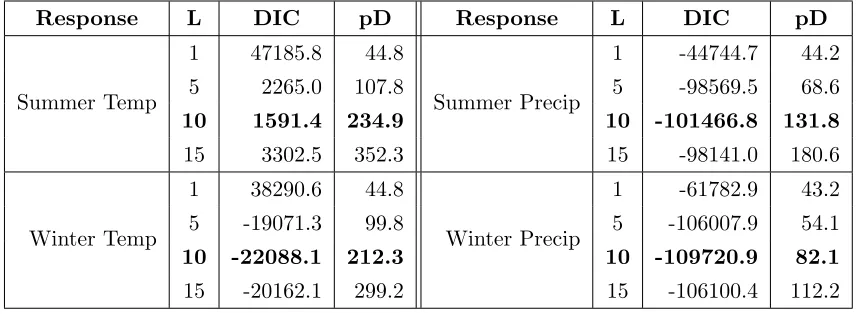
Table 2.1 DIC values and associated effective number of parameters, pD, for
models fit withL= 1,5,10,15 to each response type. Rows in bold
indicate the preferred model based on smallest DIC. . . 20
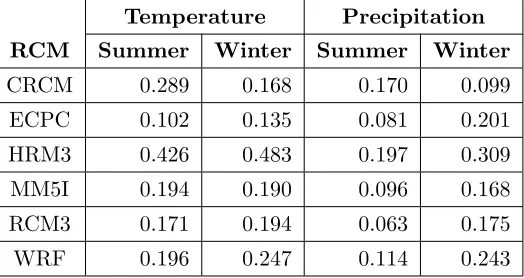
Table 2.2 The total value added (Section 2.3.3) by each RCM for the four
response types. The HRM3 performs the best in this metric in all cases, suggesting it adds the most value out of this collection of RCMs. 22
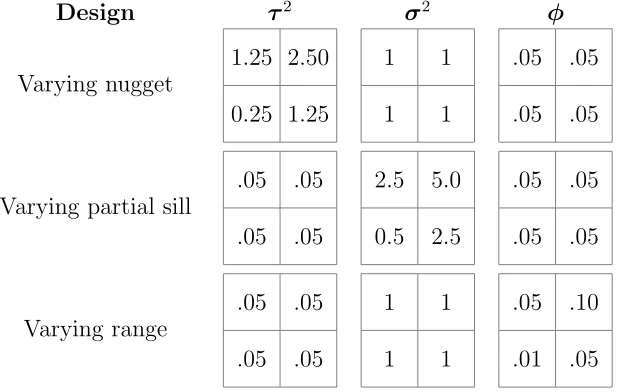
Table 3.1 Nonstationary covariance structures used to simulate data with the
nugget (left), partial sill (center), and range (right) varying by region. 38
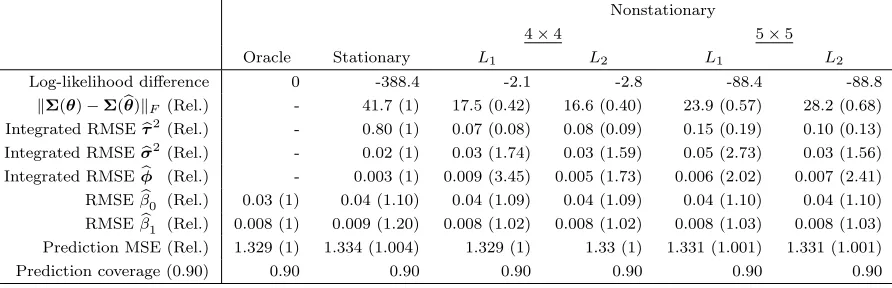
Table 3.2 Simulation study results when the nugget varies over space. The
relative factors shown in parenthesis highlight the proportional dif-ferences between the methods and the Oracle. The Oracle model uses the true values of the covariance parameters, so for metrics evaluating covariance parameters the differences are relative to the stationary model. . . 41
Table 3.3 Simulation study results when the partial sill varies over space.
The relative factors shown in parenthesis highlight the proportional differences between the methods and the Oracle. The Oracle model uses the true values of the covariance parameters, so for metrics evaluating covariance parameters the differences are relative to the stationary model. . . 42
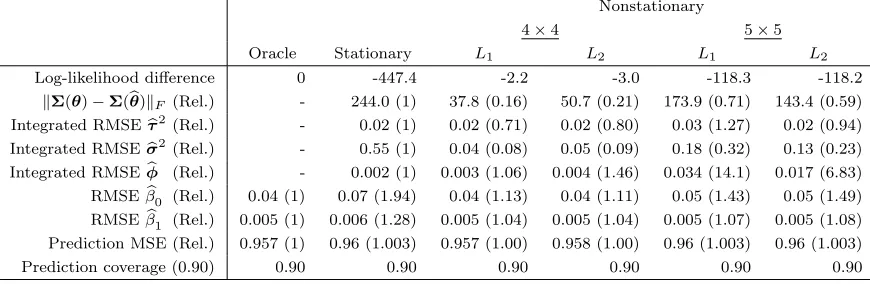
Table 3.4 Simulation study results when the range varies over space. The
relative factors shown in parenthesis highlight the proportional dif-ferences between the methods and the Oracle. The Oracle model uses the true values of the covariance parameters, so for metrics evaluating covariance parameters the differences are relative to the stationary model. . . 42
Table 3.5 A comparison between the stationary (S), L1 nonstationary, andL2
nonstationary covariance models. This table compares log-likelihood of the validation set (LL) along with prediction error (Pred MSE) and prediction standard deviations (Pred SD) over sites in the val-idation set for the entire United States, excluding California, and only in California. Note the prediction MSE and SD are computed on a centered and scaled version of the original data so that the
Table 4.1 Results for n= 500 that compares the full model (Full) to assuming independent (Ind) versus dependent (Dep) blocks, with observations assigned using stratified (S) or cluster (C) assignment for a varying number of observations per block (250, 100, 50, and 25). These results compare the RMSE of parameter estimates (RM SE(bθ)), predictions
(RM SE(by0)), and sensitivity indices (RM SE(SbT)), as well as how
often the three most important inputs are selected (% Top 3) and
the time it takes to estimate parameters (Mins). . . 65
Table 4.2 Results forn = 1,000 that compares the full model (Full) to assuming independent (Ind) versus dependent (Dep) blocks, with observations assigned using stratified (S) or cluster (C) assignment for a varying number of observations per block (250, 100, 50, and 25). These results compare the RMSE of parameter estimates (RM SE(bθ)), predictions
(RM SE(by0)), and sensitivity indices (RM SE(SbT)), as well as how
often the three most important inputs are selected (% Top 3) and
the time it takes to estimate parameters (Mins). . . 66
Table 4.3 Results forn = 2,500 that compares the full model (Full) to assuming independent (Ind) versus dependent (Dep) blocks, with observations assigned using stratified (S) or cluster (C) assignment for a varying number of observations per block (250, 100, 50, and 25). These results compare the RMSE of parameter estimates (RM SE(bθ)), predictions
(RM SE(by0)), and sensitivity indices (RM SE(SbT)), as well as how
often the three most important inputs are selected (% Top 3) and
the time it takes to estimate parameters (Mins). . . 67
Table 4.4 The prediction RMSE, relative RMSE, timing, and relative timing
comparing making predictions with all of the data to our alternative methods of local prediction, independent blocks, dependent blocks, and subset prediction. The relative RMSE (b) and timings (d) are relative to the full model. . . 71
Table 4.5 Comparison of estimation timing and prediction error between the
LIST OF FIGURES
Figure 2.1 The CRU observations, NCEP reanalysis data and CRCM output
before transformation for each of the four summer/winter and
temperature (◦C)/precipitation (mm/day) responses. . . 10
Figure 2.2 Filtered data plots created by only keeping the (a) low wavenumber
data (10 or more grid boxes apart) and (b) medium wavenumber data (3 to 10 grid boxes apart). We also plot the NCEP trans-formed data (Z) versus the CRU transformed data to illustrate the
correlation between the data sources at this spatial scale. . . 13
Figure 2.3 Filtered data plots created by only keeping the (a) low wavenumber
data (10 or more grid boxes apart) and (b) medium wavenumber data (3 to 10 grid boxes apart). We also plot the CRCM trans-formed data (Z) versus the CRU transformed data to illustrate the
correlation between the data sources at this spatial scale. . . 14
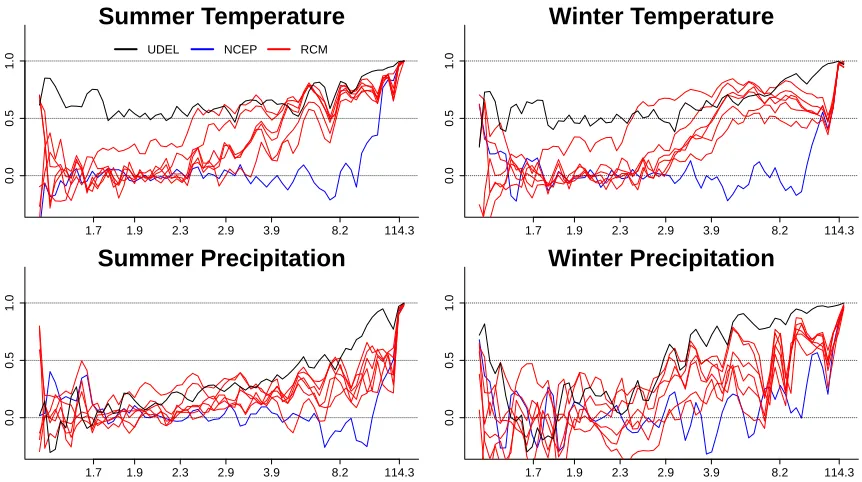
Figure 2.4 Sample correlation of the CRU data with UDEL data source (black),
NCEP data (blue), and RCMs (red) on the transformed Z scale
versus distance between grid boxes. The x-axis is in terms of grid boxes per cycle that are associated with theδ’s. . . 15
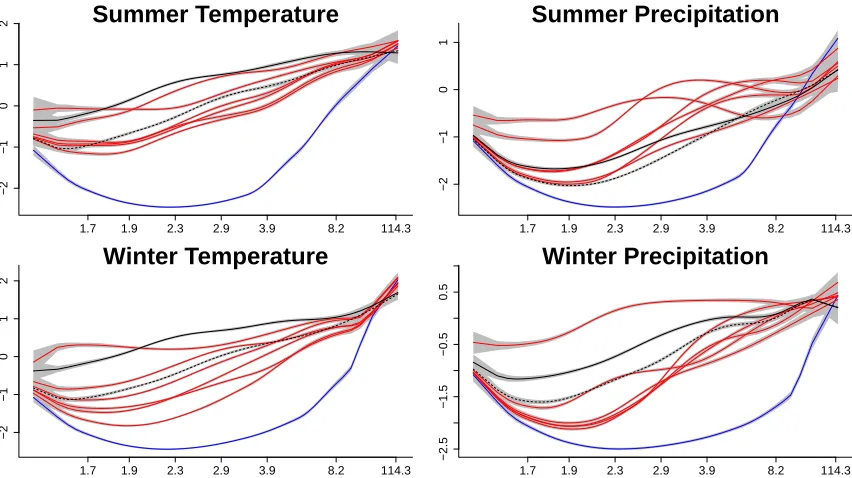
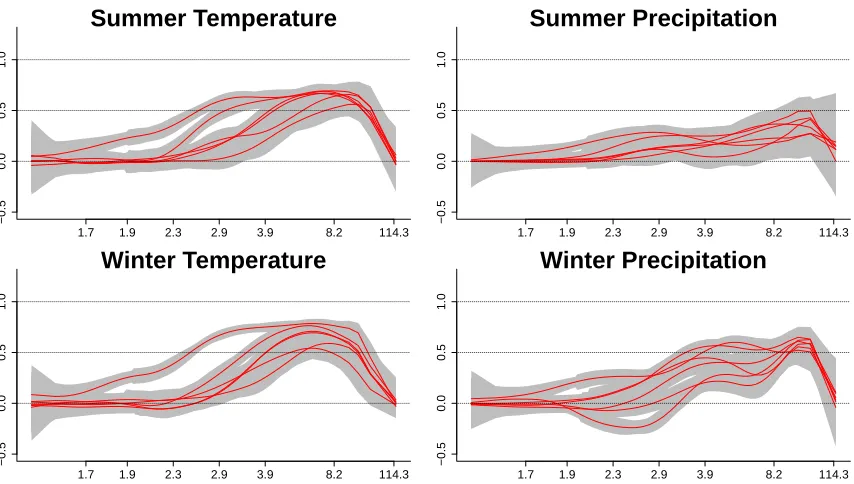
Figure 2.5 Estimated log standard deviation (pointwise 95% credible intervals
in gray) for the UDEL (solid black), CRU (dashed black), NCEP
(blue), and RCMs (red). . . 21
Figure 2.6 Estimated marginal correlations (joint 95% credible intervals in
gray) for CRU data with UDEL (black), NCEP (blue), and RCMs
(red) using the chosen model for each of the four response types. 22
Figure 2.7 CRU data and filtered reconstructions based on model output by
removing wavenumbers estimated to have no marginal correlation with the data. . . 23
Figure 2.8 Estimated conditional correlations (joint 95% credible intervals in
gray) for CRU data given the NCEP and an RCM using the chosen
model for each of the four response types. . . 24
Figure 3.1 Location of observations s1, . . . ,sn (a), the subregion grid having
a covariance parameter in each subregionR1, . . . ,RR (b), and the
BCL grid B1, . . . ,BB (c). . . 45
Figure 3.2 Estimated parameter values for the nugget (a), partial sill (b), and range (c) for the L1 andL2 nonstationary covariance models along
Figure 3.3 Predictions and associated prediction standard deviations (in terms of ppb) for the United States (a-b) and California (c-d) using
the stationary covariance along with the L1 and L2 regularized
nonstationary covariance models. Also included are the differences in predictions (a and c) as well as the prediction SD ratios (b and d). 50
Figure 4.1 An example of the SARCOS robot arm used to collect these
data. This SARCOS robot arm is used at the University of South-ern California Computational Learning and Motor Control lab:
http://www-clmc.usc.edu/Research/ExperimentalEquipment 73
Figure 4.2 Plots of estimated covariance parameter values for each method,
associated sensitivity indices, and a plot for the most important inputs. The covariance parameter estimates are from the residuals, and they describe the contribution of the inputs to the covariance of these residuals. The sensitivity indices are in [0,1], showing the total importance of each input to the inverse dynamics. These indices highlight the first and fourth accelerations as being the most important, and we plot the log counts ofy for each of these inputs
Chapter
1
Introduction
Modern data collection techniques, such as remote sensing, satellites, and computer model
output, make collecting massive data sets possible. These data are available in many fields,
such as climate research, environmental research, or in areas where complex computer code
can simulate a scientific process. In many of these settings the goal is to make predictions
at new locations where data is unobserved. Gaussian process models are used extensively
in these areas, as they are widely used in nonparametric regression to fit a response
surface. These Gaussian process models are ideal because they allow for flexible mean
and covariance structures to describe these data that can be used for making predictions.
Although these models work well for making these predictions, they can be difficult to
work with because of the computational limitations with large data sets.
In this chapter we introduce three spatial problems from these areas and overview
the efficient computational methods that we have developed for them. These problems
cover three different areas of spatial statistics. The first problem involves spatial data
on a rectangular grid, with multiple responses observed at each grid box. We develop a
context of climate model output. The second is the problem of estimating a nonstationary
spatial covariance model from data on an irregular grid. These models have a large
number of parameters, and we develop a method that uses variable fusion to reduce
the effective number of parameters to more efficiently estimate nonstationary covariance
parameters. Finally, we evaluate techniques for blocking observations from computer
experiments. When there are a large number of observations, blocking can dramatically
speedup the estimation of Gaussian process models for these data while maintaining
statistical efficiency for predictions and sensitivity analysis. In the sections below we
expand on each of these problems to give background for the remaining chapters.
1.1
Estimating the value added by climate models
In Chapter 2 we use climate data from the North American Regional Climate Change
Assessment Program (NARCCAP) to motivate the development of a method for evaluating
the relationship between climate model output observed on a rectangular grid in the
United States. Some of these climate models are run on a global scale, with this global
information used as inputs to models run on a finer scale. The finer scale models are more
costly to run, but they provide useful information at a finer resolution. Of interest is
evaluating how much information these finer scale models provide over the global models.
This concept is known as value added, and we gain insight into value added by estimating
the relationship between each of the climate models.
To estimate this relationship we first transform the gridded data to a wavenumber scale
using the discrete cosine transformation (DCT). This transformation removes the need for
cumbersome matrix operations and allows us to analyze subtle features in these massive
independent across resolution, we can focus on the dependence between the climate model
output at each resolution. We formulate a Bayesian hierarchical model to model this
dependence structure, and it allows us to estimate a smooth change in this relationship
over wavenumber. Using this model we can directly estimate the value added of a finer
scale model after accounting for the coarser model output. This is a unique contribution
to the study of value added by climate models.
1.2
Fusion for nonstationary covariance estimation
In spatial statistics, astationary covariance model does not change over space. That is,
the covariance between two locations only depends on their relative location. For example,
in a stationary model, two locations in the east have the same covariance if they are
simply relocated to west, as long as they have the same relative location. This is not
true for nonstationary covariance models, as they are designed to model the geographic
differences in covariance that occur in real world data. We would, for example, expect the
covariance structure for precipitation or temperature at locations in a coastal region to
differ from locations in a mountainous region.
These nonstationary spatial covariance structures are more difficult to work with
compared to the simpler stationary models due to the large number of parameters needed
to represent them. For an analysis of a large and diverse spatial domain, simplifying
assumptions such as stationarity are questionable and standard computational algorithms
are inadequate. We propose a method for efficient estimation of a nonstationary spatial
covariance using fusion in Chapter 3.
In this approach we partition the spatial domain into a fine grid of subregions and
number of parameters, and to stabilize the procedure we impose a penalty to spatially
smooth the estimates. By penalizing the absolute difference between parameters for
adjacent subregions, the solution can be identical for adjacent subregions and thus the
method identifies stationary subdomains. The method is applied to tropospheric ozone in
the US to demonstrate how the method can identify these subdomains.
1.3
Blocking observations in computer experiments
We evaluate and apply the idea of blocking observations to data from computer experiments
in Chapter 4. Deterministic computer codes can provide insight into scientific processes,
but these computer codes can be costly to run. Hence experiments are developed over the
potentially high-dimensional input space, and a sample of observations are collected for
analysis. Traditionally, Gaussian process models are built to interpolate these observations
and make predictions at untried inputs.
When, however, the number of experimental runs is large, these models are costly
to estimate. Motivated by the block composite likelihood for low-dimensional spatial
data developed by Eidsvik et al. (2014), we propose blocking observations from computer
experiments to perform efficient estimation in these situations. We evaluate how a variety
of blocking techniques perform in terms of estimation time, prediction error, and sensitivity
analysis. After identifying promising blocking techniques, we apply them to estimate an
inverse dynamics model from a 7 joint robot arm having a 21-dimensional input space and
over 40,000 observations. This is a problem that is otherwise intractable with traditional
Chapter
2
Estimating the Value Added by Regional
Climate Models
2.1
Introduction
Earth system models (ESMs) simulate weather as it responds to various forcings, including
both natural (e.g., solar or volcanoes) and anthropogenic (e.g., greenhouse gasses), over
long periods of time, and it is from these long time series that various climate properties
can be inferred. These models are continually evolving and modern ESMs not only include
components for atmosphere and ocean but also the cryosphere or land surface. While
ESMs have become invaluable tools for studying the earth’s changing climate (e.g., Stocker
et al., 2013), their relatively coarse spatial resolution hinders direct application for many
impacts studies requiring more regional and local climate information. There is also the
need to examine the role of processes that exist at finer spatial scales.
This need for higher resolution has spawned numerous approaches for downscaling
bound-ary condition data on a coarser scale. Mearns et al. (2014) offer a comprehensive review
of downscaling, including performance of both statistical approaches as well as dynamic
downscaling over North America. Statistical downscaling incorporates empirical
rela-tionships between the output from coarser models and local variables while dynamic
downscaling uses high-resolution models. Regional climate models (RCMs), for example,
can achieve much higher resolution but only on a limited spatial domain and require
time-dependent lateral boundary conditions from a global dataset.
Mearns et al. (2014) point out that one of the key issues when considering downscaling
approaches is added value (Flato et al., 2013, Section 9.6.4), which is the additional climate
information that is gained from employing an RCM or other type of downscaling. A number
of papers have addressed value added by examining biases or correlations (e.g., Pr¨ommel
et al., 2010; Feser et al., 2011; Racherla et al., 2012). Others have created new measures
to assess added value. Feser (2006) examines spatial correlations on different spatial scales
while Paeth and Mannig (2013) adapt an optimal fingerprint technique. Kanamitsu and
de Haan (2011) create an added value index based on spatial characteristics while Di
Luca et al. (2012, 2013) examine an index based on a type of a variance decomposition.
In this chapter we propose a new method for assessing value added. Our approach is
to decompose the data into different spatial scales, and then model the joint relationships
between data sources at each scale using a Bayesian hierarchical model. Using this joint
relationship, we evaluate the value added in three ways, with (1) the marginal correlations
between the RCM output and observations, (2) the conditional correlation between the
RCM output and observations after accounting for the coarser output, and (3) a measure
of the total value added using these conditional correlations (see Section 2.3.3). In our
analysis of data from the North American Regional Climate Change Assessment Program
and RCMs. Like Feser (2006), we use a multi-resolution spectral approach to analyze these
relationships. This allows us to assess the value added by RCMs separately by spatial
scales, e.g., global, regional, and local scales. Our approach differs from Feser (2006) in
several ways. First, rather than studying correlation between RCMs and the observations
at different spatial scales, we study the correlation between RCMs and the observations
conditional on the driving reanalysis data. This allows us to more directly assess the value
added by the RCM in terms of signal that can be explained by the RCM but not the
coarser information. In addition, our fully Bayesian approach allows us to quantify the
uncertainty of the value added by RCMs and hence perform formal statistical inference.
This chapter proceeds as follows. In Section 2.2 we introduce the NARCCAP data
that we will use to assess the value added by RCMs. For our study we summarize this
data to be the average temperature and precipitation values over summer and winter.
The methodology we use to assess added value is described in Section 2.3. In this section
we review the discrete cosine transformation (DCT) and the hierarchical model we use to
analyze the transformed data. In addition, we describe how we assess value added with
this model. We analyze the NARCCAP data with our method in Section 2.4 and conclude
with a discussion in Section 2.5.
2.2
Data
To illustrate our approach to assessing added value, we analyze data from the North
American Regional Climate Change Assessment Program (Mearns et al., 2009). NARCCAP
is a large-scale program using multiple RCMs and multiple GCMs to produce regional
climate change projections over North America and to examine the uncertainties in these
Regional Spectral Model (UC San Diego/Scripps; Juang et al., 1997) 2) CRCM: Canadian
Regional Climate Model (Canadian Centre for Climate Modelling and Analysis; Caya and
Laprise, 1999), 3) RCM3: Regional Climate Model version 3 (Abdus Salam International
Center for Theoretical Physics; Giorgi et al., 1993a, Giorgi et al., 1993b, Pal et al.,
2000, Pal and Coauthors, 2007), 4) WRF: NCAR Weather Research and Forecasting
model (National Center for Atmospheric Research; Skamarock et al., 2005), 5) MM5I:
NCAR/PSU Mesoscale Model 5 (National Center for Atmospheric Research/Pennsylvania
State University; Grell et al., 1993), and 6) HRM3: Hadley Regional Model 3 (Met
Office Hadley Centre; Jones et al., 2003). In Phase I of NARCCAP (Mearns et al.,
2012), boundary conditions were provided by the global NCEP-DOE Reanalysis 2 dataset
(Kanamitsu et al., 2002). Phase II of NARCCAP (Mearns et al., 2013) used boundary
conditions from four different GCMs to provide both a 30-year current (1970-2000) and
a 30-year future (2040-2070) ensemble of model output. The future runs use the A2
emissions scenario (Nakicenovic et al., 2000).
Our focus here is on the output from Phase I. In particular, we analyze the mean
surface temperature and precipitation for the summer and winter over the span of 20-years
(1980-2000). These means are computed over the days in the months of the summer
(June, July, and August) and winter (December, January, and February) during this
20-year time period. For comparison, we use version 2.01 of the University of Delaware
(UDEL) temperature and precipitation values (Willmott and Matsuura, 1995) as well as
version 2.10 Climatic Research Unit (CRU) temperature and precipitation values (Mitchell
and Jones, 2005) from the summer and winter. We use both the UDEL and CRU data
because there are often differences that arise due to differences in the data sources or
methodologies used when creating these reconstructions.
data are interpolated to a common 50km grid mesh. For convenience, this grid is the same
as the CRCM model. Data were interpolated using thin plate splines (McGinnis et al.,
2010; Loikith et al., 2014, Section 5b), a kriging algorithm implemented in thefastTps
routine (Fields Development Team, 2006). CRU and UDEL data sets were interpolated
similarly. Thin plate splines, and splines in general, are well-studied tools for interpolation
and smoothing; see, for example, Green and Silverman (1994).
Reanalysis combines observations from many different sources and numerical models
to produce spatially and temporally complete datasets. The NCEP-DOE Reanalysis 2
(Kanamitsu et al., 2002) corrects a number of errors in the NCEP-NCAR Reanalysis 1
(Kalnay et al., 1996), and, as Mearns et al. (2009) notes, using this data set for boundary
conditions is an approximation to using actual observations, if such would actually exist, to
drive the regional models. This reanalysis has a 2.5 x 2.5 degree resolution (approximately
250km).
Figure 2.1 plots a subset of the data sources to illustrate the differences between the
observational data, NCEP reanalysis, and RCM output (CRCM was arbitrarily chosen
simply to highlight the general differences for RCMs). We can see from these plots that
the NCEP reanalysis is smoother than the RCM output, and we are interested in knowing
how much more added information the RCMs bring over this driving reanalysis, as the
RCMs appear to identify more small-scale features.
2.3
Methodology
In this section we describe the methodology we use to characterize the joint relationship
of the observational data, driving reanalysis, and RCM output. We will let Y be the
Summer Temp: CRU Data
10 15 20 25 30
NCEP
10 15 20 25 30
CRCM RCM
10 15 20 25 30
Winter Temp: CRU Data
−10 0 10 20
NCEP
−10 0 10 20
CRCM RCM
−10 0 10 20
Summer Precip: CRU Data
2 4 6 8 10
NCEP
2 4 6 8 10
CRCM RCM
2 4 6 8 10
Winter Precip: CRU Data
2 4 6 8 10 12
NCEP
2 4 6 8 10 12
CRCM RCM
2 4 6 8 10 12
Figure 2.1: The CRU observations, NCEP reanalysis data and CRCM output before
transformation for each of the four summer/winter and temperature (◦C)/precipitation
(described in Section 2.2) from one of the observational, driving reanalysis, or RCM data
sources, where Y(i, j) is the value in row i and column j. In Section 2.3.1 we review the
discrete cosine transformation, which we use to perform an orthogonal transformation on
Y to obtain Z so that we have data on a scale that is more tractable to work with. Using
this transformed data we formulate a Bayesian hierarchical model (Section 2.3.2) for
modeling the covariance between each of our data sources at each resolution. We conclude
by outlining the techniques we use to summarize this covariance and assess added value
in Section 2.3.3.
2.3.1
Discrete cosine transformation
Rather than model the data sources directly, we transform Y to Z using the
two-dimensional discrete cosine transformation (DCT, Ahmed et al., 1974). This transformation
allows us to isolate signals at different spatial scales. Our motivation for choosing the
DCT over the fast Fourier transformation comes from the DCT’s close connection to the
common spatial statistical model for gridded data, as described below in Section 2.3.2.
More importantly, Denis et al. (2002) demonstrate that the DCT is preferred for the
atmospheric fields we are working with because of their aperiodic structure.
The DCT transforms Y toZ with
Z(m, n) =ambn N1−1
X
i=0
N2−1
X
j=0
cos
π m
N1
i+1
2
cos
π n
N2
j+ 1
2
Y(i, j), (2.1)
form= 0, . . . , N1−1 andn= 0, . . . , N2−1, wheream = 1/
√
N1ifm= 0 andam =
p
2/N1
if m >0, and bn= 1/
√
N2 if n = 0 and bn=
p
2/N2 if n > 0. EachZ(m, n) is a linear
combination of the data that measures the signal with a different spatial wavenumber. The
corresponds to the average of the columns of Y (representing the longitudes) formed by the linear combination with coefficients that are a cosine with period 2N2/n. Z(m, n)
corresponds to the feature with wavenumber ω = (ω1, ω2), where ω1 = m/(2N1) is the
one-dimensional wavenumber in the latitudes and ω2 =n/(2N2) is the one-dimensional
wavenumber in the longitudes. These correspond to periods 2N1/m in the latitudes and
2N2/n in the longitudes.
To illustrate how the transformation can allow us to examine data at different spatial
scales, we plot filtered data over the ranges of grid boxes per cycle of greater than 10 (low
wavenumbers) and between 3 and 10 (medium wavenumbers). These plots for summer
temperature and the NCEP data are shown in Figure 2.2, and Figure 2.3 shows these for
the CRCM model output. These show that at medium wavenumbers the CRCM model
output continues to have a positive correlation with the observation data. The NCEP,
however, does not have such a relationship and is uncorrelated. At low wavenumbers we
observe that the differences are higher in the west between the NCEP and the observed
data compared to the differences between the observed data and the CRCM. It is also
interesting to see that both the NCEP reanalysis data and CRCM model output are
higher in the midwest region.
2.3.2
Bayesian hierarchical model
In this section we propose a statistical model for modeling the covariance between our
K = 9 data sources. This covariance is used to examine and quantify the value added by
RCMs. To illustrate one component of this covariance, we plot the empirical correlations
of the transformed CRU data with the UDEL data, NCEP data and RCM output in