Research article
A functional genomic analysis of cell morphology using RNA
interference
AA Kiger*, B Baum*
†
, S Jones
‡
, MR Jones
§
, A Coulson
§
, C Echeverri
¶
and
N Perrimon*
Addresses: *Department of Genetics, Harvard Medical School, Howard Hughes Medical Institute, Boston, MA 02115, USA. ‡Genome Sciences Centre, British Columbia Cancer Research Centre, Vancouver V5Z 4E6, Canada. §MRC Laboratory of Molecular Biology, Cambridge CB2 2QH, UK. ¶Cenix BioScience GmbH, D-01307 Dresden, Germany. Current address: †Ludwig Institute for Cancer Research, University College London W1W 7BS, UK.
Correspondence: Norbert Perrimon. E-mail: [email protected]
Abstract
Background: The diversity of metazoan cell shapes is influenced by the dynamic cytoskeletal network. With the advent of RNA-interference (RNAi) technology, it is now possible to screen systematically for genes controlling specific cell-biological processes, including those required to generate distinct morphologies.
Results: We adapted existing RNAi technology in Drosophila cell culture for use in high-throughput screens to enable a comprehensive genetic dissection of cell morphogenesis. To identify genes responsible for the characteristic shape of two morphologically distinct cell lines, we performed RNAi screens in each line with a set of double-stranded RNAs (dsRNAs) targeting 994 predicted cell shape regulators. Using automated fluorescence microscopy to visualize actin filaments, microtubules and DNA, we detected morphological phenotypes for 160 genes, one-third of which have not been previously characterized in vivo. Genes with similar phenotypes corresponded to known components of pathways controlling cytoskeletal organization and cell shape, leading us to propose similar functions for previously uncharacterized genes. Furthermore, we were able to uncover genes acting within a specific pathway using a co-RNAi screen to identify dsRNA suppressors of a cell shape change induced by PtendsRNA.
Conclusions: Using RNAi, we identified genes that influence cytoskeletal organization and morphology in two distinct cell types. Some genes exhibited similar RNAi phenotypes in both cell types, while others appeared to have cell-type-specific functions, in part reflecting the different mechanisms used to generate a round or a flat cell morphology.
Open Access
Published: 1 October 2003
Journal of Biology2003, 2:27
The electronic version of this article is the complete one and can be found online at http://jbiol.com/content/2/4/27
Received: 17 April 2003 Revised: 17 July 2003 Accepted: 12 August 2003
Background
The morphological diversity of animal cells results largely from differences in the lineage-specific expression and control of cytoskeletal regulators. Cells in culture have been widely used to characterize morphogenetic events, for example the dynamics and organization of filamentous actin and microtubules in adherent and motile cells. Few metazoan cell systems, however, permit the use of genetic analysis to identify the complement of genes contributing to the generation of cell shape.
RNA interference (RNAi) has revolutionized the functional analysis of genes identified by genomic sequencing [1-3]. Several factors make RNAi in Drosophila cell cultures an excellent approach for such functional genomic analysis of animal cell form. The availability of well-annotated
Drosophilagenomic sequence simplifies the design of gene-specific double-stranded RNAs (dsRNAs) [4]. Furthermore, the Drosophila genome encodes homologs of over 60% of human disease genes [5] and lacks some of the genetic redundancy observed in vertebrates. RNAi in Drosophilacells is efficient, reducing or eliminating target-gene expression to elicit partial to complete loss-of-function phenotypes
upon the simple addition of dsRNA to the culture medium [6]. Finally, the well-established genetic techniques for
Drosophila allow comparisons to be made between loss-of-function cell-culture phenotypes and those observed in tissues of corresponding mutant flies.
In order to develop a cell-based approach for the study of gene functions involved in morphogenesis, we developed a high-throughput RNAi screening methodology in Drosophila
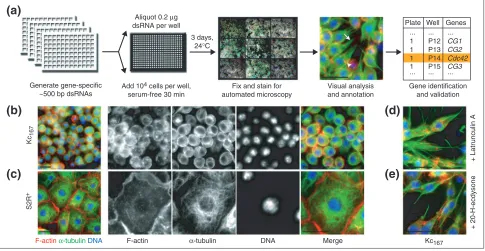
cell cultures that is applicable to the study of a wide range of cellular behaviors (Figure 1a). This approach involves the following steps: first, the design and synthesis of a gene-spe-cific dsRNA library; second, incubation of Drosophila cells with the dsRNAs in 384-well assay plates (in serum-free medium or with transfection reagents, depending on the cell line); and third, optional induction of a cell behavior, followed by detection of luminescent or fluorescent signals using a plate reader or an automated microscope.
Here, we describe the establishment of an RNAi functional approach applied to the study of cell morphology. Using images acquired by automated microscopy, we visualized phenotypic changes resulting from reverse-functional analysis
Figure 1
High-throughput RNAi screens by cell imaging. (a) Cellular phenotypes were visualized 3 days after the addition of dsRNA. In the example shown Kc167cells changed shape from round to polarized, with F-actin puncta (arrowhead) and extended microtubules (arrow), in response to Cdc42 dsRNA. (b)Kc167and (c)S2R+cells at low (left) and high (far right) magnifications, fluorescently labeled for F-actin (red), -tubulin (green) and
DNA (blue). Cell-shape changes could be induced using drugs that affect the cytoskeleton or using extracellular signals, as seen upon treatment of Kc167cells with(d) latrunculin A or (e)20-hydroxyecdysone (20-H-ecdysone). Scale bar, 30 µm.
Generate gene-specific ~500 bp dsRNAs
Add 104 cells per well,
serum-free 30 min
Fix and stain for automated microscopy
F-actin DNA Merge Kc167
+ 20-H-ecdysone
+ Latr
unculin A
α-tubulin
F-actin α-tubulin DNA
Visual analysis and annotation
Gene identification and validation Plate Well Genes
Aliquot 0.2 µg
dsRNA per well
3 days,
24°C
Kc
167
S2R
+
(a)
(b)
(c)
(d)
(e)
... ... ...
... ... ...
1 P12 CG1
1 P13 CG2
1 P14 Cdc42
by the treatment of Drosophilacells in culture with gene-specific dsRNAs. We were able to observe and characterize a wide range of phenotypes affecting cytoskeletal organiza-tion and cell shape, and from these, to identify sets of genes required for distinct round versus flat cell morphologies.
Results and discussion
Drosophilacell morphology in cultures
We began by surveying existing Drosophilacell lines to iden-tify those with distinct but uniform cell shape, size and adhesion properties. For a comparative study, we chose to further characterize two well-established lines, Kc167 and S2R+ cells [7-9], because of their differences in cell shape. Although both lines apparently derived from embryonic hemocytes (blood cells), Kc167 cells are small and round (10m; Figure 1b), whereas S2R+ cells are large, flat and strongly adherent to glass, plastic and extracellular matrix (averaging 50m; Figure 1c). The stereotypical morphology of each cell line could be modified in specific ways using drugs that perturb cytoskeletal function (for example cytochalasin, latrunculin, nocodazole or colchicine; see Figure 1d), ecdysone hormone treatment (Figure 1e), sub-strate-induced cell polarization (phagocytosis of bacteria or polystyrene beads; data not shown) or gene-specific RNAi (Figure 1a). For example, treatment with a drug that pre-vents the polymerization of filamentous (F-) actin caused Kc167 cells to develop long microtubule-rich processes, a morphological change similar to that observed upon treat-ment with dsRNA corresponding to the gene encoding Cdc42 GTPase. Thus, both cell types could be used with RNAi to assay single-gene functions that contribute to cytoskeletal organization and cell shape.
RNAi assay for cell morphology phenotypes
We set out to conduct parallel RNAi screens with a microscopy-based visual assay to identify genes required for the characteristic round versus flat morphology of Kc167 and S2R+cells, respectively (Figure 1a-c). By labeling actin filaments, microtubules and DNA, it was possible to assay a wide range of cellular behaviors in these cell types, including cytoskeletal organization, cell shape, cell growth, cell-cycle progression, cytokinesis, substrate adhesion and cell viability.
We used dsRNA to Rho1, a gene required for cytokinesis [10], to optimize conditions for RNAi in a 384-well plate format. The addition of 0.3 g Rho1dsRNA to cells for a minimum of 3 days in culture generated a penetrant multi-nucleated cell phenotype (62-100% per imaged field over five wells). Under these conditions, RNAi was effective in both cell types, as judged by the appearance of phenotypes and/or depletion of the targeted gene products. When
screening many genes under a single assay condition, several factors could influence the efficiency of RNAi. Given that dsRNA targets the destruction of endogenous mRNA, the efficacy of RNAi and thus the phenotypic strength could reflect gene- and cell-type-specific differences in mRNA levels, the levels and stability of the preexisting protein pool and/or the potency of the chosen dsRNA targeting sequence. In one example, a longer RNAi incubation time of 5 days was necessary to completely deplete the Capulet/Cyclase associated protein, as detected by western blot (although phenotypes affecting F-actin organization were observed by 3 days; data not shown). Thus, it is assumed that the strength or penetrance of RNAi-induced phenotypes observed under one screening condition could vary margin-ally for any specific gene target or cell type. We reasoned that screening under ‘hypomorphic’ conditions has the advantage of enabling the effects of gene product depletion to be analyzed rather than its terminal consequences (that is, potential cell lethality). Finally, differences in the pheno-typic effects of targeting the same gene with RNAi in two different cell types could reflect true cell-type differences in the function of the targeted genes.
Selection and generation of gene-specific dsRNAs
Screens of RNAi morphological phenotypes required the generation of a dsRNA library. In order to allow an assess-ment of the overall success of such an RNAi screening approach in Drosophila cells, we generated a selected set of 1,042 dsRNAs targeting 994 different genes. The set of genes represented in the library was chosen on the basis of primary sequence to include the vast majority of those pre-dicted to encode signaling components and cytoskeletal reg-ulators that could affect diverse cellular processes (a complete list of the selected categories of predicted gene functions are listed in Table 1; all targeted genes and primer sequences are listed in Additional data file 1, available with the online version of this article). Gene-specific dsRNAs averaging 800 base pairs (bp) in length were generated byin vitrotranscription, using selectively amplified products from
Drosophilagenomic DNA as templates, then aliquoted into 384-well optical bottom plates for image-based screens (see the Materials and methods section).
of processes. Choosing genes from one chromosomal region would be likely to yield fewer visible phenotypes, whereas choosing genes on the basis of their expression in existing cell lines would assume a correlation between expression levels and function.
RNAi screens of cell morphology by image analyses
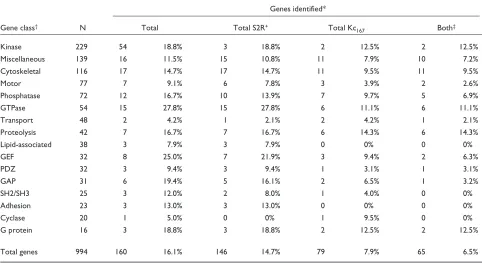
A phenotypic analysis of Kc167 or S2R+ cells treated with each dsRNA and labeled for detection of actin filaments, microtubules and DNA was performed by visual inspection of microscopic images. Defects were considered significant and reproducible when observed in multiple fields of repli-cate screens by independent observers. All changes observed were annotated using a limited set of phenotypic categories (described in more detail below). Of the genes screened, 16% (160/994) yielded a visible phenotype in Kc167or S2R+ cells (see Table 1 and Additional data file 2, available with this article online). Gene-specific phenotypes were identi-fied in each of the different predicted protein classes screened (Table 1). In addition, genes within any one class exhibited distinct phenotypes, suggesting a high degree of RNAi specificity (for example, genes encoding the GTPases Rho1, Cdc42, R/Rap1 and Ras85D; see below).
Assessment of RNAi screen efficacy
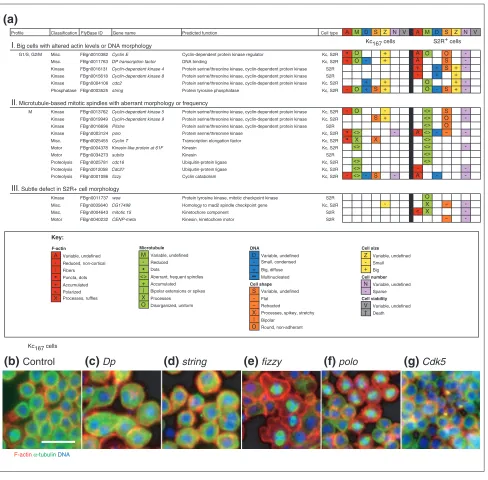
To make screen-wide comparisons of the phenotypes identi-fied, we generated concise phenotypic annotations. As a test of screening efficacy, we evaluated our results by focusing on genes with known or predicted functions in cell-cycle progression in other systems and likely to share conserved functions in Drosophila cultured cells; 20 such genes were identified in the screen, 16 of which exhibited an RNAi phenotype consistent with a defect in cell-cycle progression [11] (Figure 2). One group (Profile I) was characterized by an increase in cell size and an altered DNA morphology, indicative of growth in the absence of division. A second group (Profile II) was defined by an increase in the fre-quency of cells with a microtubule spindle, indicative of a defect in progression through mitosis. Both phenotypic groups could be further subdivided on the basis of addi-tional attributes to generate four distinct sets of funcaddi-tionally related genes that regulate the passage from G1 to S phase (Cyclin-dependent kinase 4 (Cdk4), Cyclin E, and the Dp), G2 to M phase (cdc2 and string), the onset of anaphase (fizzy,
cdc16 and Cdc27) and cyclin-dependent transcription (Cyclin-dependent kinase 9 (Cdk9) and Cyclin T). Several additional genes were identified with related phenotypes
Table 1
RNAi screen results classified by predicted gene function
Genes identified*
Gene class† N Total Total S2R+ Total Kc
167 Both‡
Kinase 229 54 18.8% 3 18.8% 2 12.5% 2 12.5%
Miscellaneous 139 16 11.5% 15 10.8% 11 7.9% 10 7.2%
Cytoskeletal 116 17 14.7% 17 14.7% 11 9.5% 11 9.5%
Motor 77 7 9.1% 6 7.8% 3 3.9% 2 2.6%
Phosphatase 72 12 16.7% 10 13.9% 7 9.7% 5 6.9%
GTPase 54 15 27.8% 15 27.8% 6 11.1% 6 11.1%
Transport 48 2 4.2% 1 2.1% 2 4.2% 1 2.1%
Proteolysis 42 7 16.7% 7 16.7% 6 14.3% 6 14.3%
Lipid-associated 38 3 7.9% 3 7.9% 0 0% 0 0%
GEF 32 8 25.0% 7 21.9% 3 9.4% 2 6.3%
PDZ 32 3 9.4% 3 9.4% 1 3.1% 1 3.1%
GAP 31 6 19.4% 5 16.1% 2 6.5% 1 3.2%
SH2/SH3 25 3 12.0% 2 8.0% 1 4.0% 0 0%
Adhesion 23 3 13.0% 3 13.0% 0 0% 0 0%
Cyclase 20 1 5.0% 0 0% 1 9.5% 0 0%
G protein 16 3 18.8% 3 18.8% 2 12.5% 2 12.5%
Total genes 994 160 16.1% 146 14.7% 79 7.9% 65 6.5%
In total, we screened 1,061 wells, 1,042 dsRNAs, 994 genes and found 160 genes with phenotypes. *The number and percentage of genes identified with any RNAi phenotype in duplicate screens. †The total number of genes (N) represented in the dsRNA set as defined by amino-acid sequence and Gene
Ontology [33] or FlyBase [12] annotation. Each gene was counted in only one category.‡Genes identified by phenotypes in both Kc
Figure 2
A test of RNAi screen efficacy: identifying genes involved in cell-cycle progression. (a)Gene identity and phenotypic annotation for RNAi
phenotypes identifying predicted cell-cycle regulators. The ‘Profile’ column provides a summary of the phenotypic profiles distinguishing sets of genes involved in specific stages of the cell cycle. The ‘Classification’ column gives a single predicted functional category assigned to each targeted gene on the basis of primary sequence and/or known functional data. The ‘FlyBase ID’ and ‘Gene name’ columns are information as annotated at FlyBase [12]. The ‘Predicted function’ column provides detail on the putative molecular function of each specific gene. ‘Cell type’ refers to whether the phenotype was observed in Kc167(Kc) and/or S2R+(S2R) cells. Profile I: RNAi phenotypes resulting in an increase in cell size, uniform or disorganized
microtubules, irregular cell shapes and decreased cell numbers identified genes involved in cell-cycle progression through G1 to S and G2 to M stages. Phenotypes were further distinguished on the basis of levels of F-actin accumulation and DNA morphology. Profile II: RNAi phenotypes resulting in aberrant morphology or increased frequency of microtubule-based mitotic spindles identified genes involved in mitosis. Profile III: RNAi phenotypes observed in S2R+cells identified additional genes with putative roles in cell cycle/mitosis progression. (b-g)Kc
167cells stained for F-actin
(red), -tubulin (green), DNA (blue), imaged using automated microscopy and scored visually. (b) Control. (c,d) Profile I: Dpand stringRNAi resulting in big cells. (e,f) Profile II: fizzyand poloRNAi resulting in increased frequency of cells with mitotic spindles. (g) Cdk5RNAi resulting in smaller cells and disorganized microtubules (and increased spindles in S2R+cells; not shown). Scale bar, 30 m.
Profile Classification FlyBase ID Gene name Predicted function Cell type A M D S Z N V A M D S Z N V Kc167 cells S2R+ cells
I. Big cells with altered actin levels or DNA morphology
G1/S, G2/M Misc. FBgn0010382 Cyclin E Cyclin-dependent protein kinase regulator Kc, S2R • O + A O O -Misc. FBgn0011763 DP transcription factor DNA binding Kc, S2R + O - + A S
-A Variable, undefined
Kinase FBgn0016131 Cyclin-dependent kinase 4 Protein serine/threonine kinase, cyclin-dependent protein kinase S2R + + S +
-- Reduced, non-cortical
Kinase FBgn0015618 Cyclin-dependent kinase 8 Protein serine/threonine kinase, cyclin-dependent protein kinase S2R - + +
/ Fibers
Kinase FBgn0004106 cdc2 Protein serine/threonine kinase, cyclin-dependent protein kinase Kc, S2R + + O +
-• Puncta, dots
Phosphatase FBgn0003525 string Protein tyrosine phosphatase Kc, S2R - O + S + O - S +
-+ Accumulated
< Polarized
II. Microtubule-based mitotic spindles with aberrant morphology or frequency
X Processes, ruffles
M Kinase FBgn0013762 Cyclin-dependent kinase 5 Protein serine/threonine kinase, cyclin-dependent protein kinase Kc, S2R - O - <> S
-Kinase FBgn0019949 Cyclin-dependent kinase 9 Protein serine/threonine kinase, cyclin-dependent protein kinase Kc, S2R S + <> O
-M Variable, undefined
Kinase FBgn0016696 Pitslre Protein serine/threonine kinase, cyclin-dependent protein kinase S2R <> O
- Reduced
Kinase FBgn0003124 polo Protein serine/threonine kinase Kc, S2R • <> - A <> - ~
-• Dots
Misc. FBgn0025455 Cyclin T Transcription elongation factor Kc, S2R • X X <>
<> Aberrant, frequent spindles
Motor FBgn0004378 Kinesin-like protein at 61F Kinesin Kc, S2R <> <>
-+ Accumulated
Motor FBgn0034273 subito Kinesin S2R <>
| Bipolar extensions or spikes
Proteolysis FBgn0025781 cdc16 Ubiquitin-protein ligase Kc, S2R <> <>
X Processes
Proteolysis FBgn0012058 Cdc27 Ubiquitin-protein ligase Kc, S2R <> -
-O Disorganized, uniform
Proteolysis FBgn0001086 fizzy Cyclin catabolism Kc, S2R - <> - S - A -
-D Variable, undefined
III. Subtle defect in S2R+ cell morphology
- Small, condensed
Kinase FBgn0011737 wee Protein tyrosine kinase, mitotic checkpoint kinase S2R O
+ Big, diffuse
Misc. FBgn0035640 CG17498 Homology to mad2 spindle checkpoint gene Kc, S2R - X ~
-•• Multinucleated
Misc. FBgn0004643 mitotic 15 Kinetochore component S2R < X
-Cell shape
Motor FBgn0040232 CENP-meta Kinesin, kinetochore motor S2R ~
-S Variable, undefined
- Flat
~ Retracted
X Processes, spikey, stretchy
| Bipolar
O Round, non-adherant
Z Variable, undefined
- Small
+ Big
N Variable, undefined
- Sparse
V Variable, undefined
† Death Cell size
Cell number
Cell viability
Key:
F-actin Microtubule DNA
F-actin α-tubulin DNA
(a)
Kc167 cells
(see Additional data file 2). For example, dsRNAs targeting a predicted Cyclin-dependent kinase 8(Cdk8) and a novel gene
CG3618 both resulted in large cells with aberrant DNA morphology (data not shown), similar to cells with targeted
cdc2 or string. It is therefore possible to use visual RNAi screens to functionally characterize a large set of genes and, by grouping genes according to morphological criteria, to identify functional modules.
For other cellular processes, limited Drosophilagenetic data are available with which to measure the success of the screens. We discovered, however, many examples of RNAi-induced phenotypes that are consistent with the previously predicted or described gene function in another assay system (examples discussed below). Importantly, in one-third of all cases, an RNAi-induced phenotype identified a previously uncharacterized gene that lacked a corresponding mutant allele in Drosophila (at least 51/160 genes; see Additional data file 2) [12]. This shows that RNAi screens represent a valuable addition to classical Drosophilagenetic screens.
Classification of RNAi cell morphology phenotypes
We detected a broad spectrum of distinct defects in cytoskeletal organization and cellular morphology, including subtle effects in the localization and level of actin filaments and microtubules (see Table 2, Figure 3 and Additional data file 2 with the online version of this article). To classify the results, phenotypes were scored using defined descriptions assembled under one of seven major categories, denoting visible defects in actin fila-ments, microtubules, DNA, cell shape, cell size, cell number and cell viability (Table 2). We were able to further define subcategories that describe specific morpho-logical attributes (see Materials and methods section for more details). Some descriptions were interdependent and therefore redundant; for example, cell shape was determined by a combined assessment of the actin and microtubule organization.
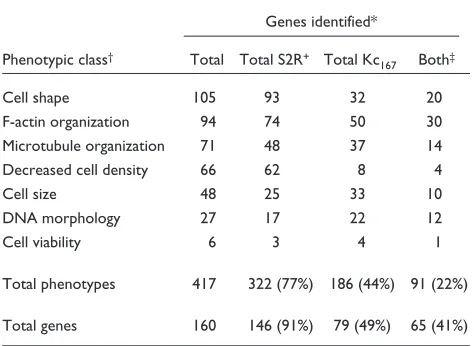
Using this system, a total of 417 phenotypic annotations were assigned to 160 genes, ranging from zero up to six annotations per gene in one cell type (Table 2, Figure 4). A comparison between the two RNAi screens revealed that 41% (65/160) of the genes were identified with phenotypes in both Kc167and S2R+cell types. This overlapping set iden-tified many genes that are known to control important cell-biological functions common to all cell types, such as cell-cycle progression and cytokinesis, and genes that may reflect a hemocyte origin (Figure 2 and see below). In com-paring the two cell types, nearly twice as many of the genes were found to have a detectable RNAi phenotype in S2R+ cells (146/160 genes, or 91% of the total) as in Kc167cells (79/160; 49% of the total). Genes identified in S2R+cells
also had a greater mean number of phenotypic annotations assigned to them (2.0) than in Kc167 cells (1.2; see Figure 4). This was due in part to the ease of detecting overt phenotypes in the larger S2R+cells but may also indicate a difference in the number of genes required to maintain a flat versus a round cellular morphology (see below). Inter-estingly, the relative importance of a gene in the two cell types, as determined by RNAi, did not strictly correlate with the relative levels of expression. Furthermore, RNAi was shown to deplete the protein in cases in which there was no measurable phenotype in our assay (see below; and data not shown).
We also noted cases in which morphological defects were accompanied by a decrease in cell number. An RNAi-induced phenotype was accompanied by a notable decrease in cell number (estimated as fewer than half the normal number of cells per image) in 43% of cases (68/160 genes; see Additional data file 2 with the online version of this article). Less than 1% of the genes screened caused a catastrophic reduction in cell number (an esti-mated fewer than 100 cells per image) three days after the addition of dsRNA (6/994 genes, listed as having a cell viability defect in Additional data file 2). One example of this class of genes was a known inhibitor of apoptosis, D-IAP1 [13]. These data demonstrate that under these conditions, severe cytotoxicity is not a major obstacle for cell-based RNAi screens, even if many of the genes are essential for Drosophiladevelopment.
Table 2
RNAi screen results classified by annotated phenotype
Genes identified*
Phenotypic class† Total Total S2R+ Total Kc
167 Both‡
Cell shape 105 93 32 20
F-actin organization 94 74 50 30
Microtubule organization 71 48 37 14
Decreased cell density 66 62 8 4
Cell size 48 25 33 10
DNA morphology 27 17 22 12
Cell viability 6 3 4 1
Total phenotypes 417 322 (77%) 186 (44%) 91 (22%)
Total genes 160 146 (91%) 79 (49%) 65 (41%)
*The number of genes categorized with a specific RNAi phenotype in duplicate screens. †The major classes of RNAi phenotypes. Individual
genes with multiple phenotypes were counted within each of the phenotypic classes scored. ‡Genes identified by a defect assigned to the
RNAi phenotypes with common cytoskeletal defects
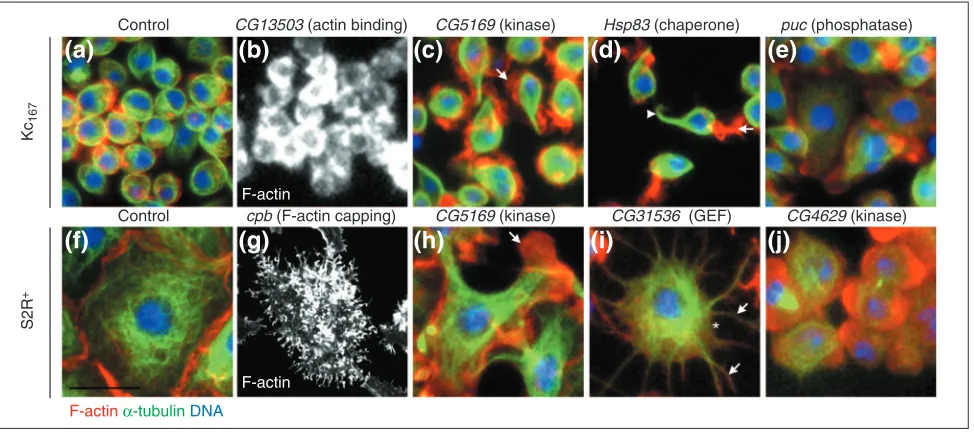
Changes in actin organization and cell shape were the most commonly observed phenotypes (94 and 105 out of 401 phenotypes, respectively). In some instances, specific dsRNAs led to defects in F-actin with related morphological conse-quences in both Kc167and S2R+cells (22 genes). For example, both cell types displayed RNAi phenotypes characterized by an elevated accumulation or a polarized (asymmetric or uneven) distribution of F-actin (13 genes). These phenotypes identified genes encoding proteins thought to limit the rate of actin-filament formation [14], such as twinstar (encoding cofilin) and capping protein beta, as well as previously unchar-acterized Drosophila genes, such as Pak3 and CG13503
(Figure 3b,g). Conversely, dsRNAs targeting several known regulators of actin-filament formation compromised cortical F-actin in both cell types (9 genes). In addition, actin-rich protrusions were observed in both cell types following dsRNA targeting of CG5169(Figures 3c,h), a Drosophilagene encod-ing a homolog of a Dictyostelium kinase thought to regulate severing of actin filaments [15]. Thus, one class of cytoskele-tal regulators has similar functions in two morphologically distinct cell lines, irrespective of their characteristic shape. In addition, a significant proportion of the genes implicated in cell-cycle progression (65%) or cytokinesis (50%) exhibited similar RNAi phenotypes in both cell types.
RNAi phenotypes affecting distinct cell shapes
To identify genes that specify different cell shapes, we focused on morphological phenotypes that were restricted to either Kc167or S2R+cells. Indeed, 78% of the morphological phenotypes observed were detected in only one of the two cell types. Kc167cells frequently adopted a unique, bipolar spindle shape in response to specific dsRNAs (21 genes), reminiscent of the cell-shape change induced by actin-destabilizing agents or ecdysone (Figure 1). This shape change was usually associated with the formation of discrete F-actin puncta and opposing microtubule-rich processes and was seen in cells treated with dsRNAs targeting genes known to promote actin-filament formation (such as those encoding Cdc42 and SCAR) [14] and others known to affect microtubules (for example, par-1) [16]. These observations suggest that actin filaments and microtubules play antago-nistic roles in Kc167 cells, with the contractile actin cortex opposing the formation of microtubule-based processes. Although Kc167cells exhibited a marked tendency to take on a bipolar morphology, various gene-specific manifestations of this phenotype were distinguishable. For example, a single, microtubule-rich extension formed directly opposite from a single, large, actin-rich protrusion in Kc167cells treated with dsRNA targeting the gene for the Hsp83 chaperone (Figure 3d). In addition, a large and flat bipolar morphology
Figure 3
RNAi screens identified a wide range of gene functions based on diverse morphological phenotypes. Cells were stained for F-actin (red), -tubulin (green) and DNA (blue), imaged using automated microscopy and scored visually. (a)Control Kc167cells. (b-e)Kc167cells with RNAi phenotypes. (f) Control
S2R+cells. (g-j)S2R+cells with RNAi phenotypes. (b) F-actin accumulation; CG13503RNAi (encoding a predicted WH2-containing actin-binding protein).
(c,h) Flatter, polarized cells with actin-rich lamellipodia (arrows); CG5169RNAi (a predicted kinase). (d) Opposing protrusions rich in F-actin (arrow) or microtubules (arrowhead), Hsp83RNAi (chaperone). (e) Flat cells; puckeredRNAi (JNK phosphatase). (g) Widely-distributed F-actin puncta; capping
protein betaRNAi (component of CapZ). (i) Radial protrusions (arrows) and reduced cortical actin (asterisk); CG31536RNAi (predicted Rho-GEF with
FERM domain). (j) Rounder cells, decreased in size; CG4629RNAi (predicted kinase). Scale bar, 30 µm.
F-actinα-tubulinDNA
Control CG13503 (actin binding) CG5169 (kinase) Hsp83 (chaperone) puc (phosphatase)
Control cpb (F-actin capping) CG5169 (kinase) CG31536 (GEF) CG4629 (kinase)
(a)
(b)
(c)
(d)
(e)
(f)
(g)
(h)
(i)
(j)
F-actin
F-actin
Kc
167
S2R
was induced in Kc167cells treated with dsRNAs targeting the
puckered gene encoding JNK phosphatase (Figure 3e),
CG7497, encoding a predicted G-protein-coupled receptor kinase, and the Pten gene encoding phosphatidylinositol (3,4,5)-trisphosphate (PIP3) 3-phosphatase (see below).
One major behavioral difference between the two cell types used in this study is the ability of S2R+ cells to adhere to and spread over the substratum. As a result, subtle changes in cytoskeletal organization could be visu-alized in S2R+ cells, such as polarized (uneven) F-actin
accumulation (in response to dsRNA targeting Abl-encoded kinase), actin stress-fiber formation (the RhoL-encoded GTPase) and the loss of cortical actin filaments (dsRNA targeting CG31536, encoding a predicted Rho guanine-nucleotide exchange factor (GEF) with a FERM domain; Figure 3i). Of particular interest were genes required for the spreading process characteristic of S2R+ cells. S2R+ cells rounded up and detached from the plate in response to dsRNAs targeting 37 different genes, 20 (54%) of which had no visible effect on Kc167cells. Four genes identified in this way had known functions in cell-matrix adhesion [17] (see Figure 5c), including an enigmatic adhesion mol-ecule that contains an integrin-ligand RGD sequence (Tenascin-major) [18], both and integrin subunits (inflatedand myospheroid) and a focal-adhesion cytoskele-tal anchor (talin) [19], as well as focal adhesion kinase (FAK56D, with a slightly different defect in cell spreading). This set also included novel genes (CG4629, encoding a predicted kinase; Figure 3j). The remaining 17 genes that, by RNAi, affected both S2R+cell spreading and Kc
167 cell morphology may identify those that indirectly affect the cell-adhesion process (for example, S2R+cells rounded up as a consequence of RNAi-induced arrest in mitosis; Figures 2 and 6).
The set of genes identified by RNAi defects in cell spreading suggested that S2R+cells utilize focal adhesion complexes to flatten on the substrate. An implication of this finding is that Kc167 cells may be unable to spread on the substrate because they fail to express adhesion-complex components. Surprisingly, quantitative PCR (qPCR) of reverse-transcribed mRNA revealed a 2.4-fold enrichment of PS integrin(mys)
expression in Kc167 cells versus S2R+ cells (adjusted cross-point difference of 1.2 cycles; see Materials and methods section; data not shown). Furthermore, PS integrin/Mys protein was detected in both cell types, with slightly ele-vated levels in untreated Kc167cells versus S2R+cells, and similarly depleted in both upon treatment with mysdsRNA (Figure 7). We extended the analysis to other adhesion-complex components identified in the screen and discov-ered by qPCR that both -integrin (if) and Rap1 (R) were also expressed in Kc167cells, although at slightly lower levels than in S2R+ cells (adjusted cross-point differences of 1.0 and 0.3 cycles, respectively). In contrast, S2R+cells exhibited a nearly 4.6-fold enrichment of talin expression relative to that in Kc167 cells (adjusted cross-point difference of 2.3 cycles). Moreover, Mys levels were sensitive to the loss of
Rap1by RNAi in S2R+cells (Figure 7). This analysis demon-strated that although many of the same adhesion complex components are expressed in both the round Kc167 and spread S2R+cells, the genes function differently in the two cell types, so that integrin-mediated adhesion has little impact on the morphology of Kc167cells.
Figure 4
The distribution of phenotypic annotations. (a)Frequency of genes associated with a number of different RNAi phenotypes (0-6) per cell type. Phenotypes refer to those identified by seven major annotation categories. From 0 up to 6 phenotypes per gene were observed; ‘0’ indicates those genes without detectable phenotypes in the one cell type (but were detected in the other). The set included all 160 genes identified by an RNAi phenotype in each of either S2R+(gray) or Kc
167
(black) cell types. (b) The percentage of genes associated with a certain combined phenotypic annotation in both cell types screened. The percentage is the number of genes identified with 0 to 6 phenotypic annotations in Kc167cells (normalized to 100%) that were also associated with 0 to 6 phenotypic annotations in S2R+cells (colored
fractions of columns; see the key).
0 1 2 3 4 5 6 0
20 40 60 80 100
S2R+
Kc167
Frequency observed (absolute number)
6 5 4 3 2 1 0
6 5 4 3 2 1 0
Genes with combination
of phenotypes per cell type
Number of phenotypes per gene in Kc167 Number of phenotypes per gene
Number of phenotypes
per gene in S2R
+
0 20 40 60 80 100
(a)
(b)
Furthermore, Kc167cells adhered but remained round even when plated on an adhesive concanavalin A substrate that induced round S2 cells to flatten [20] (data not shown), although Kc167cells do flatten when actin-filament formation
is compromised (Figure 1). Thus, spreading of Drosophila
cells probably requires both integrin-mediated adhesion and reorganization of cortical F-actin. This is supported by the fact that S2R+cells rounded up when treated with cofilin dsRNA because of an accumulated excess of cortical actin filaments. Integrins may, therefore, function to mediate substrate adhesion in both cell types, while the levels of additional gene products (such as talin, cofilin and phos-phoinositide (PI) 3-kinase activity) determine whether or not the cell will spread.
Genes with common phenotypes share morphogenetic functions
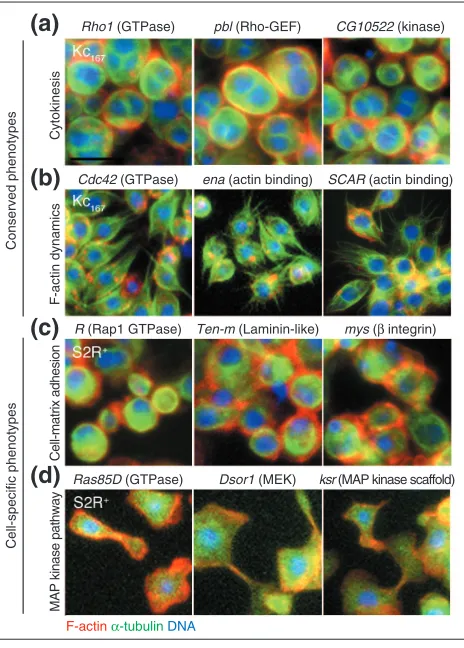
The results from RNAi screens in both cell types were com-bined to generate a phenotypic profile for each gene. Genes with similar phenotypic profiles were involved in common morphogenetic functions, as indicated by several distinct sets of genes known to interact in pathways or complexes. In both cell types, dsRNAs specific for the pebble gene encoding a Rho-GEF, the Rho1 gene encoding a GTPase,
and the CG10522 gene encoding citron kinase led to
enlarged cells with multiple nuclei, indicative of a failure to form and constrict the actin contractile ring necessary for cytokinesis (Figure 5a). While Rho1 and pebble (and five other identified genes; see Figure 6) have already been shown to function in Drosophilacytokinesis [3,10], we iden-tified CG10522 in the RNAi screen as a potential novel Rho1-effector required for cytokinesis [21]. RNAi targeting of members of a different group of genes resulted in a pro-found loss of actin filaments in both cell types, identifying known regulators of F-actin formation. In Kc167 cells, dsRNAs targeting the Cdc42-encoded GTPase, enabled -encoded actin-binding protein, and SCAR-encoded regula-tor of Arp2/3 complex [14], each led to a reduction in F-actin, the appearance of microtubule-rich protrusions and cell flattening (Figure 5b). In S2R+ cells, RNAi of Cdc42,
enabled or SCAR similarly reduced the levels of F-actin, compromising the ability to form lamellipodia (as in Figure 3i, and data not shown). Ena protein was effectively depleted upon enaRNAi in both cell types (Figure 7).
The screen profiles also identified clusters of genes with phenotypes unique to a single cell type, such as the set of matrix-adhesion genes required for S2R+ cell spreading, as noted above (Figure 5c). Three dsRNAs caused S2R+cells to assume a unique, amorphous shape. This striking pheno-type identified Ras85D, Downstream of Raf1 (encoding mitogen-activated protein (MAP) kinase kinase, or MEK) and kinase suppressor of Ras, all interacting components of the well-characterized MAP kinase signaling pathway [22] (Figure 5d). Thus, on the basis of phenotype alone, groups of genes were identified that function in the same cellular process, complex or pathway. In classic Drosophila genetic
Figure 5
Similar phenotypic profiles identified genes in pathways and protein complexes. Cells were stained for F-actin (red), -tubulin (green) and DNA (blue). Distinct phenotypes were observed with dsRNAs targeting different members of the same functional family (for example, GTPases, in the left panels). (a,b) Phenotypes observed in both cell types. (a) RNAi-induced binucleate cell phenotypes identified genes required for cytokinesis, including Rho1(encoding a GTPase), pebble (a Rho-GEF) and CG10522(a predicted citron kinase). Kc167cells are shown. (b) RNAi resulting in loss of actin filaments from the cell cortex identified regulators of actin-filament formation, including Cdc42 (GTPase), enabled(actin-binding protein) and SCAR(actin-binding, Arp2/3 regulator). Kc167cells (shown) also formed microtubule extensions and a polarized cell shape. (c,d)Some phenotypes were unique to one cell type. (c) RNAi resulting in round, non-adherent S2R+
cells identified genes required for cell-matrix adhesion, including
Roughened(a Rap1 GTPase), Tenascin-major (an adhesion protein with a
laminin domain) and myospheroid( integrin). (d) An RNAi-induced amorphous S2R+cell phenotype identified genes in the
mitogen-activated protein (MAP) kinase pathway, including Ras85D(a GTPase),
Downstream of raf1(a MAP kinase kinase, or MEK) and kinase suppressor
of Ras(a MAP kinase scaffold protein).
Rho1 (GTPase) pbl (Rho-GEF) CG10522 (kinase)
Cdc42 (GTPase) ena (actin binding) SCAR (actin binding)
R (Rap1 GTPase) Ten-m (Laminin-like) mys (β integrin)
Ras85D (GTPase) Dsor1 (MEK) ksr (MAP kinase scaffold)
F-actinα-tubulinDNA
Cell-specific phenotypes
MAP kinase pathway
Cell-matrix adhesion
F
-a
c
ti
n
dynamics
Cytokinesis
Conserved phenotypes
(a)
(b)
(c)
Figure 6 (see legend on the next page)
Profile Classification FlyBase ID Gene name Predicted function Cell type A M D S Z N V A M D S Z N V
Kc
167 cells S2R + cells
Key:
I. Binucleate cells
Both cell types FBgn0011202 diaphanous Actin binding Kc, S2R + •• + / •• F-Actin Cytoskeletal
Cytoskeletal
FBgn0004243 scraps Actin binding, microtubule binding Kc, S2R + <> •• + - •• + AVariable, undefined GEF FBgn0003041 pebble Rho guanyl-nucleotide exchange factor Kc, S2R •• •• O + -Reduced, non-cortical GTPase FBgn0014020 Rho1 Rho small monomeric GTPase Kc, S2R + •• S Z • •• /Fibers Kinase FBgn0036295 CG10522 Protein serine/threonine kinase, citron homology domain Kc, S2R + <> •• + •• + •Puncta, dots Kinase FBgn0031730 CG7236 Protein serine/threonine kinase, cyclin-dependent protein kinase Kc, S2R + •• + •• + +Accumulated Kinase FBgn0024227 IplI-aurora-like kinase Protein serine/threonine kinase Kc, S2R •• + •• + <Polarized Motor FBgn0011692 pavarotti Kinesin Kc, S2R •• + •• + XProcesses, ruffles One cell type FBgn0031090 CG9575 RAB small monomeric GTPase S2R •• + Microtubule
Cytoskeletal FBgn0004167 karst Actin binding Kc, S2R + •• S - MVariable, undefined Cytoskeletal FBgn0011726 twinstar Cofilin, actin severing Kc, S2R + •• + -Reduced Misc. FBgn0003717 Toll Transmembrane receptor Kc, S2R •• - •Dots Misc. FBgn0032095 Toll-4 Transmembrane receptor Kc, S2R •• - <>Aberrant, frequent spindles PDZ FBgn0000163 bazooka Protein kinase C binding Kc, S2R •• X ~ - +Accumulated Phosphatase FBgn0015399 kekkon-1 Protein tyrosine phosphatase Kc •• + |Bipolar extensions or spikes Transport AssoFBgn0003392 shibire Dynamin family Kc, S2R •• † - XProcesses
ODisorganized, uniform
II. F-actin accumulation, polarization and distribution in both cell types DNA Accumulation FBgn0038477 CG5169 Receptor signaling protein serine/threonine kinase Kc, S2R X X X X - DVariable, undefined
Cytoskeletal FBgn0011570 capping protein beta F-actin capping Kc, S2R + - < X -Small, condensed Cytoskeletal FBgn0034577 CG10540 Homology to F-actin capping alpha Kc, S2R + S Z • +Big, diffuse GTPase FBgn0014020 Rho1 Rho small monomeric GTPase Kc, S2R + •• S Z • •• ••Multinucleated Cytoskeletal FBgn0011202 diaphanous Actin binding Kc, S2R + •• + / •• Cell shape Cytoskeletal FBgn0011726 twinstar Cofilin, actin severing Kc, S2R + •• + SVariable, undefined GAP FBgn0030986 RhoGAP18B GTPase activation domain Kc, S2R + + -Flat Kinase FBgn0015806 RPS6-p70-protein kinase Protein serine/threonine kinase Kc, S2R + + ~Retracted G Protein FBgn0001105 G protein beta-subunit 13F Heterotrimeric G-protein Kc, S2R + < XProcesses, spikey, stretchy G Protein FBgn0004921 G protein gamma 1 Heterotrimeric G-protein Kc, S2R < < O |Bipolar Kinase FBgn0038430 Pak3 Receptor signaling protein serine/threonine kinase Kc, S2R < < ORound, non-adherant Misc. FBgn0001139 groucho Transcription co-repressor Kc, S2R < + Cell size Kinase FBgn0003217 retinal degeneration A Diacylglycerol kinase Kc, S2R A + - ZVariable, undefined Reduction, with
cell shape change
FBgn0037247 CG32944 Protein kinase-like Kc, S2R • S - + S -Small FBgn0034695 CG13503 Actin-binding WH2 domain Kc, S2R • S < + ~ - +Big Cytoskeletal
Cytoskeletal
FBgn0000578 enabled Actin binding Kc, S2R • X X X X X Cell number Cytoskeletal FBgn0041781 SCAR Actin binding Kc, S2R • X | - X X - NVariable, undefined GTPase FBgn0010341 Cdc42 Rho small monomeric GTPase Kc, S2R • | | • X -Sparse Kinase FBgn0026193 par-1 Protein serine/threonine kinase Kc, S2R • | | - <> O Cell viability Kinase FBgn0039924 CG17471 1-phosphatidylinositol-4-phosphate 5-kinase Kc, S2R • | | - O VVariable, undefined GEF FBgn0040068 vav Rho guanyl-nucleotide exchange factor Kc, S2R • | - + - - O †Death Phosphatase FBgn0026379 Pten Phosphatidylinositol-3,4,5-trisphosphate 3-phosphatase Kc, S2R • | - + - O +
-III. Polarized cell shape in Kc167 cells
And S2R+ cells GEF FBgn0040068 vav Rho guanyl-nucleotide exchange factor Kc, S2R • | - + - - O
GTPase FBgn0016700 Rab-protein 1 RAS small GTPases, Rab subfamily Kc, S2R - | - + O
Misc. FBgn0037028 CG3618 Kc, S2R - | - - + † O O
-Phosphatase FBgn0004210 puckered Protein tyrosine phosphatase Kc, S2R - | - + ~
-Phosphatase FBgn0026379 Pten Phosphatidylinositol-3,4,5-trisphosphate 3-phosphatase Kc, S2R • | - + - O +
-Phosphatase FBgn0004177 microtubule star Protein phosphatase type 2A Kc, S2R - | | + • O +
Kinase FBgn0032006 PDGF- and VEGF-receptor Transmembrane receptor protein tyrosine kinase Kc, S2R - | | - - ~
Misc. FBgn0000986 Female sterile (2) Ketel Importin beta, protein carrier Kc, S2R - | | X ~
GTPase FBgn0020255 ran RAN small monomeric GTPase Kc, S2R | | O
Kinase FBgn0039924 CG17471 1-phosphatidylinositol-4-phosphate 5-kinase Kc, S2R • | | - O
Kinase FBgn0026193 par-1 Protein serine/threonine kinase Kc, S2R • | | - <> O
Cytoskeletal FBgn0000578 enabled Actin binding Kc, S2R • X | X X X
Cytoskeletal FBgn0041781 SCAR Actin binding Kc, S2R • X | - X X
-GTPase FBgn0010341 Cdc42 Rho small monomeric GTPase Kc, S2R • | | • X
Kinase FBgn0033441 CG1776 Protein serine/threonine kinase Kc, S2R X X X
Misc. FBgn0025455 Cyclin T Transcription elongation factor Kc, S2R • X X <>
Kc
167 cells only FBgn0036742 CG7497 Protein serine/threonine kinase Kc • | - + Kinase
Kinase Kinase
FBgn0004367 meiotic 41 Phosphatidylinositol 3-kinase Kc • | - +
GEF FBgn0001965 Son of sevenless RAS guanyl-nucleotide exchange factor Kc - | |
Misc. FBgn0001233 Heat shock protein 83 Chaperone Kc < | |
-SH2/SH3 FBgn0004638 downstream of receptor kinase Kc • | |
IV. Round, detached cell shape in S2R+ cells
And Kc167 cells G Protein FBgn0004921 G protein gamma 1 Heterotrimeric G-protein Kc, S2R < < O
Kinase FBgn0030308 CG32666 Protein serine/threonine kinase Kc, S2R • O
-GTPase FBgn0020255 ran RAN small monomeric GTPase Kc, S2R | | O
Kinase FBgn0039924 CG17471 1-phosphatidylinositol-4-phosphate 5-kinase Kc, S2R • | | - O
Kinase FBgn0026193 par-1 Protein serine/threonine kinase Kc, S2R • | | - <> O
Cytoskeletal FBgn0000117 armadillo Beta-catenin, cytoskeletal anchor protein Kc, S2R S - X O
Kinase FBgn0019949 Cyclin-dependent kinase 9 Protein serine/threonine kinase, cyclin-dependent protein kinase Kc, S2R S + <> O
-GEF FBgn0003041 pebble Rho guanyl-nucleotide exchange factor Kc, S2R •• •• O +
GTPase FBgn0004636 Roughened RAS small monomeric GTPase Kc, S2R M - + - O
-Misc. FBgn0010382 Cyclin E Cyclin-dependent protein kinase regulator Kc, S2R • O + A O O
-Phosphatase FBgn0004177 microtubule star Protein phosphatase type 2A Kc, S2R - | + • O +
GTPase FBgn0016700 Rab-protein 1 RAS small GTPases, Rab subfamily Kc, S2R - | - O
GEF FBgn0040068 vav Rho guanyl-nucleotide exchange factor Kc, S2R • | - + - - O
Phosphatase FBgn0026379 Pten Phosphatidylinositol-3,4,5-trisphosphate 3-phosphatase Kc, S2R • | - + - O +
-Misc. FBgn0037028 CG3618 Novel Kc, S2R - | - - + † O O
-Misc. FBgn0014857 Histone H3.3A DNA binding Kc, S2R - + S Z - † - - O + -Kinase FBgn0028489 BcDNA:GH07910 Protein kinase Kc, S2R - - - X - O - †
S2R+ cells only FBgn0000464 Leukocyte-antigen-related-like Transmembrane receptor protein tyrosine phosphatase signaling S2R O - - † Kinase FBgn0031299 CG4629 Protein serine/threonine kinase S2R - O
-Kinase FBgn0013987 MAPK activated protein-kinase-2 Protein kinase S2R - O -
-GTPase FBgn0014380 rho-like Rho small monomeric GTPase S2R / O
Adhesion FBgn0004657 myospheroid Beta-integrin, cell adhesion receptor S2R + O
-Cytoskeletal FBgn0035910 Talin Cytoskeletal anchor protein S2R O
-Adhesion FBgn0004449 Tenascin major Adhesion molecule, laminin domain S2R O O
Adhesion FBgn0001250 inflated Alpha-integrin, cell adhesion receptor S2R <> O
GTPase FBgn0010348 ADP ribosylation factor 79F ARF small monomeric GTPase S2R <> O
Kinase FBgn0027587 BcDNA:GH04978 Protein kinase S2R <> O Kinase FBgn0016696 Pitslre Protein serine/threonine kinase, cyclin-dependent protein kinase S2R <> O
PDZ FBgn0026192 par-6 PDZ-domain S2R <> O -Cytoskeletal FBgn0002789 Muscle protein 20 Actin binding S2R O
GEF FBgn0036943 CG7323 DBL-domain, Rho GEF family S2R O
GTPase FBgn0015794 Rab-related protein 4 RAS small GTPases, Rab subfamily S2R O
-Kinase FBgn0013759 Caki Calcium/calmodulin-dependent protein kinase S2R O
-Lipid Assoc. FBgn0030749 Annexin B11 Calcium-dependent phospholipid binding S2R O
Lipid Assoc. FBgn0035697 CG10163 phospholipase A1 S2R O
Lipid Assoc. FBgn0037293 CG12007 RAB-protein geranylgeranyltransferase S2R O
Phosphatase FBgn0027515 BcDNA:LD21794 Protein serine/threonine phosphatase S2R O
-S2R+ cells only, retracted cells with F-actin defect
FBgn0020440 Focal adhesion kinase-like Protein tyrosine kinase S2R • + ~
-Cytoskeletal FBgn0032859 Arc-p34 Arp2/3 protein complex S2R - ~
SH2/SH3 FBgn0025865 Cortactin SH3 domain S2R - ~
-Kinase FBgn0014001 PAK-kinase Receptor signaling protein serine/threonine kinase S2R < O ~
-Kinase FBgn0000017 Abl tyrosine kinase Protein tyrosine kinase S2R <X ~
-GEF FBgn0035761 RhoGEF4 Rho guanyl-nucleotide exchange factor S2R < ~
Kinase FBgn0032677 CG5790 Receptor signaling protein serine/threonine kinase S2R < ~
GEF FBgn0037188 CG7369 RAS guanyl-nucleotide exchange factor S2R A ~
GTPase FBgn0030391 CG1900 RAB small monomeric GTPase S2R + ~ Kinase FBgn0010379 Akt1 Protein serine/threonine kinase S2R / ~
Kinase FBgn0014006 Protein kinase at 92B Receptor signaling protein serine/threonine kinase S2R X ~ Kinase Kinase GTPase
(a)
(b)
(c)
(d)
(e)
(f)
(g)
(h)
(i)
Phosphatasescreens a similar logic was used to group genes on the basis of common mutant cuticle phenotypes, identifying genes that act together to control different aspects of embryonic development [23].
A co-RNAi screen identifies modifiers of the Pten -dsRNA-induced cell shape phenotype
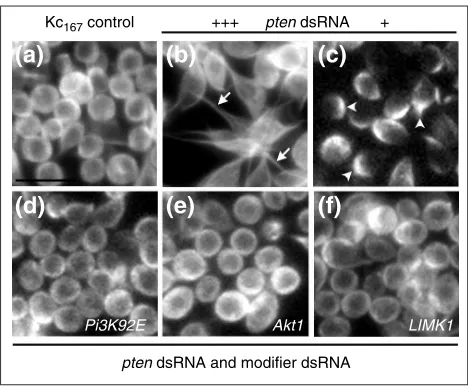
Part of the success of using Drosophila as a model genetic system has relied upon modifier screens to identify novel components acting in related processes or molecular path-ways of interest [24]. Using an analogous approach in cell culture, we designed an RNAi screen to identify genes that modify a specific RNAi-induced cell-shape change. Pten, a human tumor suppressor gene, is a lipid phosphatase that dephosphorylates PIP3, acting in opposition to PI 3-kinase [25] to control many cellular processes including growth, adhesion, migration and apoptosis [26]. In the initial screen, PtenRNAi was found to polarize Kc167cells, inducing microtubule extensions and a flattened, bipolar shape (Figure 8b). A lower concentration of PtendsRNA caused a visible but less severe asymmetric microtubule phenotype (Figure 8c) that was used for a co-RNAi screen to identify
Ptenmodifiers.
By screening for dsRNAs that modified the asymmetric microtubule distribution seen in response to PtenRNAi, 20 of the 229 dsRNAs targeting predicted kinases were identi-fied as visible suppressors of this phenotype. These included dsRNAs corresponding to seven genes that were not identified in screens in untreated Kc167 cells: Akt1, CG31187, LIM-kinase 1, MAP kinase activated protein-kinase 2, Pi3K92E, slipper and wee. Importantly, two of these encode known positive regulators of the pathway: Pi3K92E
and Akt1 [6] (Figure 8d,e). One suppressor, CG31187, encodes a predicted diacylglycerol kinase that may act directly in the phosphoinositide cycle [27]. It is possible that other genes identified as RNAi suppressors may rescue the
Pten-morphology phenotype indirectly by modifying actin-filament organization (LIMK1 [28]). These results demon-strate that modifier screens, like those used to identify new
components of specific pathways in classical genetic systems, can now be carried out in cell culture using RNAi-screening technology.
Conclusions
Despite a limited knowledge of the molecular mechanisms used to maintain the morphology of Drosophila cells in culture, we have identified over 100 genes with visible loss-of-function phenotypes that affected specific aspects of meta-zoan cytoskeletal organization, cell-cycle progression, cytokinesis and cell shape. While both Kc167and S2R+cells appear to use a similar set of genes to regulate actin filaments at the cell cortex and for cytokinesis, S2R+cells spread on the substrate using integrin-mediated adhesion, and Kc167cells require proper control of the PI 3-kinase pathway to main-tain their round shape. Furthermore, the functional conse-quences of a reduction in the expression of an individual gene did not correlate with its level of expression in the two cell types. It is more likely that gene function is determined by the network of functional interactions of a large number of proteins. Thus, our analysis has generated a genetic description of two cell types that reveals potential mecha-nisms through which their contrasting cell shapes might be generated. The same technology can be easily adapted using modified cell lines or conditions to a wide variety of cell-based studies and on a greater genomic scale. Comparisons between diverse RNAi screens will be invaluable in illumi-nating the complexities in the ways in which sets of genes can functionally interact to generate different cell behaviors. Significantly, RNAi screens bring systematic reverse genetics to cell culture, facilitating comprehensive functional analyses of cell-biological processes.
Materials and methods
Selection of gene targets and primer pairs
The set of genes represented in the RNAi library was chosen to include the vast majority of those encoding predicted sig-naling components and cytoskeletal regulators. Genes were
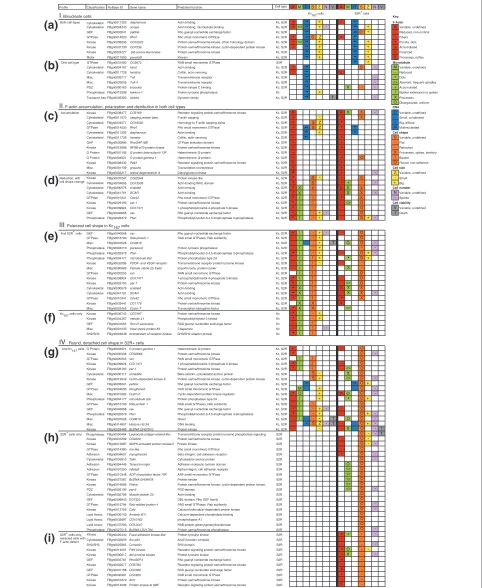
Figure 6(see figure on the previous page)
RNAi profiles identify known and novel genes with related morphogenetic functions. Table headings are as defined as in Figure 2. (a,b)Profile I: binucleate cells that identified genes required for cytokinesis, as detected either in (a) both cell types or (b) a single cell type. (c,d)Profile II: F-actin phenotypes observed in both cell types identified genes with potentially conserved roles in F-actin dynamics. (c) Increased or polarized (uneven) accumulation of F-actin identified genes with potential roles in F-actin capping, severing or depolymerization. (d) Reduced F-actin and altered cell shape identified genes with potential roles in F-actin polymerization. (e,f) Profile III: a common RNAi phenotype observed in Kc167cells was a change from round to spindle-shaped, with the formation of F-actin puncta and microtubule extensions. (e) Cases with phenotypes also observed in S2R+cells
identified genes involved in F-actin and microtubule regulation. (f) Cases with phenotypes observed only in Kc167cells identified components of receptor signaling pathways. (g-i)Profile IV: RNAi phenotypes resulting in round, detached S2R+cells. (g) Phenotypes detected in both S2R+and Kc
167
cells identified genes with probable indirect effects on cell adhesion and spreading, including roles in the cell cycle and cell viability; (h) RNAi phenotypes specific for S2R+cells identified genes that may distinguish the flat S2R+cell morphology, including genes encoding cell-matrix adhesion
selected on the basis of a combination of predictions using annotations in the FlyBase [12] and Berkeley Drosophila
Genome Project (BDGP) databases [29] and by BLAST searches for orthologs of known genes with functional domains via NCBI/GenBank [30]. The selected genes were categorized according to one of the following predicted protein functions or domains: adhesion molecules, adeny-late and guanyadeny-late cyclases, cytoskeletal proteins and binding proteins (such as proteins with WH and FERM domains), G proteins, GTPase-activating proteins (GAPs), GEFs, GTPases, kinases, lipid-associated proteins (such as phospholipases or proteins containing PH and PX domains), miscellaneous proteins (such as transcription factors, PI phosphotyrosine-binding domains and cell-cycle regulators), motors (such as dynein, kinesins and myosins), PDZ-domain-containing proteins, phos-phatases, proteins involved in proteolysis (such as ubiqui-tin-conjugating enzymes and ligases), proteins containing SH2 or SH3 domains and vesicle-transport-associated proteins (such as SNAREs, SNAPs and dynamins). A complete list is presented in Additional data file 1 with the online version of this article.
Primer sequences were predicted using genomic and annotation data from the BDGP Release 1 [4] with the Primer3 software [31]. Primers were preferentially selected to span predicted exonic sequences if confirmed by the existence of expressed sequence tag (EST) or protein homology data. Electronic PCR [32] was used to select amplification products from genomic sequence between 200 and 1,800 bp in length and possessing < 21 bp of exact match with any other predicted or confirmed transcript
sequence. A smaller PCR product size was selected if the genomic sequence corresponded to > 500 bp coding sequence. PCR primers could only be predicted within the most proximal half of the intergenic sequence of each gene.
Generation of dsRNA
OregonR genomic DNA was PCR-amplified using Taq (PerkinElmer, Foster City, USA) with 5 M each primer in 96-well plates (Tetrad from MJ Research Inc., Waltham, USA; 92ºC for 1 min, 34 cycles of 92ºC for 20 sec, 54ºC for 40 sec, 72ºC for 4 min, then 72ºC for 3 min and held at 4ºC), ethanol precipitated, washed, vacuum dried and resuspended in 7l DEPC-treated 100 mM Tris-HCl, 0.1 mM EDTA. Separate T3 and T7 in vitro transcription reactions were conducted (T3 and T7 MEGAscript; Ambion, Austin, USA) using 1.5l PCR product per well, incubated at 37ºC for 4.5 h, and diluted with 47 l of RNase-free water. T3 (50l) and T7 (50l) reaction mixes were combined, puri-fied using RNeasy 96 Kits and a QIAvac 96 vacuum mani-fold (QIAGEN, Valencia, USA), soaked twice for 2 min and eluted in 80 l RNase-free water. To anneal T3 and T7 single-strand RNAs, 50l purified RNA was mixed with 10l 6× buffer (40 mM KPO4 pH 7.5, 6 mM K-citrate pH 7.5,
Figure 7
Levels of gene expression do not necessarily correlate with gene function. Immunoblot detection of anti-PS-integrin (Mys, top panels) and anti-Enabled (Ena, middle panels) after 3 days RNAi. Columns represent Kc167cells (left) and S2R+cells (right) treated with different
dsRNAs (gfp, ena, mys, R, talin). Both cell types expressed Mys and Ena in cells treated with a nonspecific dsRNA. The respective proteins were completely and specifically depleted by treatment with mysor ena dsRNAs. Anti--tubulin (bottom panels; Tub) shows a loading comparison.
dsRNA: gfp ena mys R (Rap1)talin gfp ena mys R (Rap1)talin Anti-Mys
Anti-Ena Anti-Tub
Kc167 cells S2R+ cells
Figure 8
A co-RNAi screen for modifiers of Pten-dsRNA phenotype. Microtubules are visualized by -tubulin immunostaining. (a)Control Kc167cells exhibited normal, round morphology.(b) In response to PtendsRNA at the same concentration as the original screening conditions, Kc167cells were bipolar and spindle-shaped with
microtubule extensions (arrows). (c) In response to a relatively low concentration of PtendsRNA, the conditions used for the modifier screen, Kc167cells exhibited a less pronounced phenotype with asymmetric microtubule accumulation (arrowheads). Specific dsRNA suppressors of the Pten-RNAi-induced cell shape restored the normal, round cell morphology and microtubule organization, identifying
(d)Pi3K92E, (e)Akt1and (f)LIMK1.
+++ pten dsRNA +
pten dsRNA and modifier dsRNA Kc167 control
(a)
(b)
(c)
(d)
(e)
(f)
4% PEG 6000) and heated in a PCR block at 68ºC for 10 min and 37ºC for 30 min. Purified dsRNA and remaining non-annealed mixes were stored in 96-well plates at -70ºC. For screens, an average of 0.3 g dsRNA in 3l was transferred from stock plates to 384-well black-sided, tissue-culture-treated optical bottom-assay plates (Corning, Acton, USA) using a multichannel pipette or a CyBio robot (CyBio US Inc., Woburn, USA).
Cell cultures
Kc167 cells and S2R+ cells were grown in Schneider’s medium (Invitrogen, Carlsbad, USA) with 10% heat-inacti-vated fetal bovine serum (JRH Biosciences, Fenexa, USA) and penicillin-streptomycin (Sigma, St Louis, USA) at 24ºC in treated culture flasks (Falcon from BD Biosciences, Bedford, USA). S2R+cells were removed from culture flasks using Trypsin-EDTA (Invitrogen).
RNAi and cell staining
RNAi was performed as described [6]. Briefly, 1.2 × 10⁴cells in 10 l serum-free Schneider’s medium were added to dsRNAs in 384-well assay plates using a Multidrop384 liquid dispenser (Thermo Labsystems, Franklin, USA), cen-trifuged at 1,200 rpm for 1 min, then incubated at room temperature for 30 min before adding 30l more medium with serum by MultiDrop. Cells were grown for 3 days at 24ºC. In the RNAi-modifier screen, 0.1 g Pten dsRNA in 3l was added to each assay-well before plating cells. Cells were processed using the MultiDrop dispenser and a multi-channel manifold (Drummond Scientific, Broomall, USA). Cells were fixed for 10 min in 4% formaldehyde (Poly-science, Niles, USA) in phosphate-buffered saline (PBS), washed twice in PBS with 0.1% Triton-X-100 (PBST), stained overnight at 4ºC with FITC-conjugated anti-tubulin (DM1A; Sigma) and TRITC-phalloidin (Sigma) in PBST with 3% bovine serum albumin, stained for 10 min in PBS with 4ⴕ,6-diamidino-2-phenylindole, dihydrochloride (DAPI; Sigma) and washed in PBS.
Autoscope image acquisition
Fluorescent images of cells in 384-well plates were acquired using an automated Nikon TE300 microscope with a 20× objective and HTS MetaMorph software (Uni-versal Imaging, Downington, USA) running an automated Mac5000-driven stage, filter wheel and shutter (Ludl Elec-tronic Products, Hawthorne, USA), an automated Pifoc focusing motor (Piezo Systems Inc., Cambridge, USA) and an Orca-ER cooled-coupled device camera (Hamamatsu Corporation USA, Bridgewater, USA). Images were also acquired using a similar automated microscope with a Prior stage and controller (instrument kindly shared by the Institute for Chemistry and Cell Biology, Harvard Medical School). Automated focusing was performed on
DAPI-stained DNA. Images from UV, TRITC, and FITC channels were then collected within the same plane using preset exposures and a binning of 2 (640 w × 512 h pixels). Images from two different sites within each well were collected, representing around 12% of the total area. Multichannel images were combined as an RGB overlay within a stack of images for each plate.
Image annotation
Images from each channel and combined RGB images were visually scored independently by two researchers (B.B. and A.K.). Annotations assigned to each of the different sites imaged within every well were exported from MetaMorph into Excel spreadsheets. Phenotypes observed in multiple fields of replicate screens by independent observers were considered for further analysis. All visible phenotypes observed for an estimated majority of imaged cells per dsRNA treatment were recorded. Phenotypes were classified into one of seven major categories denoting visible defects in actin filaments, microtubules, DNA, cell shape, cell size, cell number and cell viability. Some descriptions were inter-dependent and therefore occasionally redundant: for example, cell shape was determined by an overall assessment of the actin and microtubule organization. Further subcategories were used to describe specific morphological attributes, although potentially subtle differences were still distinguish-able between specific dsRNA phenotypes grouped within the same category. Specific categories included the following.
F-actin
(a) Variable or undefined; (b) reduced levels or non-cortical (F-actin not apparent at the cell cortex, with diffuse or low levels of staining); (c) fibers (the appearance of spikes of F-actin away from the cortex, within the cell body); (d) puncta or dots (smaller and bigger accumulations within the cyto-plasm, respectively); (e) accumulated (elevated levels and/or expanded at the cortex); (f) polarized (asymmetric distribution of actin at the cortex, usually fewer but larger accumulations than puncta or dots); (g) processes or ruffles (spiky or broad actin-rich protrusions, reminiscent of filopo-dia and lamellipofilopo-dia).
Microtubules
DNA
(a) Variable or undefined; (b) small or condensed; (c) big or diffuse (abnormal size was estimated); (d) multi-nucleated cells.
Cell shape
(a) Variable or undefined; (b) flat; (c) retracted (pertains to S2R+ cells that remained flat but less well or less evenly spread, based on the shape and length of the cell edge and an estimate of the spreading area); (d) processes, spiky or stretchy (a description of the cell edge, in combination with F-actin and microtubule organization); (e) bipolar (pertains to Kc167cells with a polarized axis, with varying degrees of lengthening ranging from lemon shapes to elongated spindle shapes); (f) round or nonadherent (pertains to S2R+ cells that were no longer flat).
Cell size
(a) Variable; (b) small; (c) big (based on estimated size).
Cell number
(a) Variable; (b) sparse (having an estimated less than half of the normal cell confluence of approximately 1,000 cells per field).
Cell viability
(a) Death (fewer than an estimated 100 cells per field).
Molecular assays
Cells were plated at 106cells per ml in 6-well plates with or without 15 g dsRNA (results shown are either with gfp, mys, if, Rap1ortalin), as described above. After 3 days, cells in duplicate wells were processed for either protein or mRNA analyses. For protein detection on western blots, cells were washed, collected, resuspended in 75 l lysis buffer (50 mM Tris, pH 7.5; 150 mM NaCl; 1 mM EDTA; 1% NP40; 0.5% DOC; 10% SDS; 10 mM NaF; 1 mM NaOV; protease inhibitors), incubated on ice for 15 min and spun at 4ºC for 10 min before loading 10-12l supernatant with 2-mercaptoethanol to run on a 10% Tris-HCl polyacryl-amide electrophoretic gel (BioRad, Hercules, USA). Semi-dry transfer to nitrocellulose membrane was probed with rabbit anti-Myospheroid (185E; gift of R. Hynes), mouse anti-Enabled (gift of D. Van Vactor) and mouse anti- -tubulin (DM1A; Sigma) and detected with HRP anti-rabbit or anti-mouse (Jackson Labs, Bar Harbor, USA) with ECL Western Blotting Analysis System (Amersham Bioscience Corp., Piscataway, USA).
Alternatively, cells were lysed in 1 ml TRIzol (Invitrogen) and processed for total RNA resuspensions. Quantitated RNA samples (Bioanalyzer; Agilent Technologies, Palo Alto, USA) were normalized for reverse transcription reactions
with SuperScript III (Invitrogen), then diluted cDNA was used for quantitative PCR (LightCycler FastStart DNA Master SYBR Green I, Roche Applied Science, Indianapolis, USA). Analyzed products were assayed in triplicates in mul-tiple experiments. Individual samples were averaged, then normalized according to an adjustment factor, determined by the difference between cell types in the cross-point or cycle measurement for the rp49-positive control product. Relative levels of expression in the two cell types were pre-sented as the difference between the averaged and adjusted cross-points (with one cycle difference approximately equiv-alent to a two-fold difference in expression level).
Additional data files
The following are provided as additional materials with this article online: the gene identity and primer sequences for dsRNAs used in the RNAi screens (Additional data file 1); the genes identified with phenotypes in the RNAi screens, orga-nized by predicted functional class (Additional data file 2).
Acknowledgements
We thank S. Armknecht for technical help, members of the Institute for Chemistry and Cell Biology and the Mitchison laboratory (Harvard Medical School) for generous use of equipment and technical help, FlyBase for gene information, D. Traver and F. Schöck for helpful com-ments on the manuscript, and Howard Hughes Medical Institute (N.P. and B.B.), Jane Coffin Child’s Memorial Fund (A.A.K.), and the UK Medical Research Council (A.C. and M.R.J.) for financial support.
References
1. Fraser AG, Kamath RS, Zipperlen P, Martinez-Campos M, Sohrmann M, Ahringer J: Functional genomic analysis of C. eleganschromosome I by systematic RNA interference.
Nature 2000, 408:325-330.
2. Gonczy P, Echeverri G, Oegema K, Coulson A, Jones SJ, Copley RR, Duperon J, Oegema J, Brehm M, Cassin E, et al.: Functional
genomic analysis of cell division in C. elegansusing RNAi
of genes on chromosome III.Nature 2000, 408:331-336.
3. Somma MP, Fasulo B, Cenci G, Cundari E, Gatti M: Molecular dissection of cytokinesis by RNA interference in Drosophilacultured cells.Mol Biol Cell 2002, 13:2448-2460. 4. Adams MD, Celniker SE, Holt RA, Evans CA, Gocayne JD,
Ama-natides PG, Scherer SE, Li PW, Hoskins RA, Galle RF, et al.: The
genome sequence of Drosophila melanogaster.Science 2000,
287:2185-2195.
5. Rubin GM: Biological annotation of the Drosophilagenome
sequence.Novartis Found Symp 2000, 229:79-83.
6. Clemens JC, Worby CA, Simonson-Leff N, Muda M, Maehama T, Hemmings BA, Dixon JE: Use of double-stranded RNA
inter-ference in Drosophilacell lines to dissect signal
transduc-tion pathways.Proc Natl Acad Sci USA 2000, 97:6499-6503.
7. Echalier G, Ohanessian A: In vitro culture of Drosophila melanogasterembryonic cells.In Vitro 1970, 6:162-172. 8. Schneider I: Cell lines derived from late embryonic stages
of Drosophila melanogaster. J Embryol Exp Morphol 1972,
27:353-365.
9. Yanagawa S, Lee JS, Ishimoto A: Identification and
character-ization of a novel line of DrosophilaSchneider S2 cells
that respond to wingless signaling. J Biol Chem 1998,