LEEMAN-MUNK, SAMUEL PAUL Morphosyntactic Neural Analysis for Generalized Lexical Normalization. (Under the direction of James Lester II.)
The phenomenal growth of social media, web forums, and online reviews has spurred a growing interest in automated analysis of user-generated text. At the same time, a proliferation of voice recordings and efforts to archive culture heritage documents are fueling demand for effective automatic speech recognition (ASR) and optical character recognition (OCR). These sources of text all have two qualities in common: they are high in volume, and they frequently diverge from standard language in their surface forms, making them difficult to analyze using conventional methods.
To address these challenges, we either need to update our analysis methods to be robust to noisy text, or we need to design a technique to convert such text into a predetermined standard form, or “normalize” it. This document introduces an instance of the latter approach. Many techniques have been proposed to normalize ASR, OCR, and Twitter data, but they have always been treated as separate tasks despite having much in common. To our knowledge, the work presented here is the first to unite these tasks under a single umbrella task of generalized lexical normalization and develop an approach to this task based on deep learning.
We introduce two architectures for this purpose. The first uses a simple feed-forward neural network to perform Twitter normalization. This approach is context-insensitive and achieved third place in the Lexical Normalization of English Tweets Challenge conducted with the ACL Workshop on Noisy User Text at the 2015 Annual Meeting of the Association for Computational Linguistics. Our second architecture is an extension of the first that, using concepts from neural machine translation, adds a gated bidirectional recurrent neural network to use the context in which a word appears as well as the characters in the word itself to normalize both Twitter and other sources of noisy text.
by
Samuel Paul Leeman-Munk
A dissertation submitted to the Graduate Faculty of North Carolina State University
in partial fulfillment of the requirements for the Degree of
Doctor of Philosophy
Computer Science
Raleigh, North Carolina 2016
APPROVED BY:
__________________________________ James Cox
__________________________________ Jonathan Rowe
__________________________________ Bradford Mott
__________________________________ Christopher Healey
__________________________ James Lester II
DEDICATION
BIOGRAPHY
Sam was born in New York City in October of 1988. After spending the first two years of his life in New York, he moved with his family to Cary, North Carolina, where he spent his early childhood. By the time Sam was of middle school age, his family had moved to Chapel Hill where he was placed in the excellent public education system. Here he had the opportunity to study Japanese and Latin along with advanced calculus and, equally critical, compulsory art and writing curricula.
Sam briefly left the state-run school system when he earned a bachelor's degree in computer science with a minor in Japanese language and linguistics from Earlham College, a small Quaker college in Indiana in 2010. At Earlham College, Sam worked under his professor Charles F. Peck developing multidimensional benchmarking systems for high performance cluster computing systems and helping to design curricula for and teach parallel computing workshops at such revered public institutions as The University of Illinois Urbana-Champaign. During his summers away from Earlham College, Sam interned at the National Science Foundation-funded Shodor Education Foundation in Durham, North Carolina where he developed educational software and ran interactive classes teaching middle schoolers and high schoolers from a range of economic and racial backgrounds computational science. He stayed on at Shodor an additional year after graduation from Earlham before he entered graduate school at North Carolina State University.
ACKNOWLEDGEMENTS
I would like to thank my advisor James Lester and Senior Research Scientist Bradford Mott for their guidance throughout this work. This dissertation would not have been possible without their support. Their remarkable ability to find time in their busy schedules to provide guidance has been central to my academic success. Additionally, I am grateful for the insightful feedback and advice of the members of my committee. Along with an infectious enthusiasm for research, James Cox provided technical feedback in weekly meetings that helped keep me on productive research paths. Jon Rowe provided elaborately detailed conceptual feedback on each document that I presented to him and discussed statistical techniques with me at length until we could both agree that approximate randomization was the solution to most if not all statistical woes. Christopher Healey added a much appreciated levity to meetings and made a point of clarifying my hypotheses, particularly with regards to what “competitive” means when comparing models and to what I should and should not be applying claims of significance, two clarifications that eased for me the famous ambiguity of the dissertation process.
I thank my colleagues in the Center for Educational Informatics and the IntelliMedia Group for their help and support over the course of my degree. Individually I would like to thank Alok Baikadi, Megan Frankosky, Wookhee Min, Andy Smith, and Robert Taylor. I would also like to thank members of the various wider research communities in which I have participated and with whom I have had the opportunity to speak or who have otherwise had impacts on my research, Rodney Neilsen, Art Graesser, Valerie Schute, and Myroslava Dzikovska. I would finally like to thank the individuals who helped to shape my career before graduate school: Dr. Charlie Peck of Earlham College, Dr. Robert Panoff of the Shodor Education Foundation, and Mr. Keith Cooper of Chapel Hill High School.
themselves, the local private industries that get to take advantage of the incredible talent produced by our state university system, and the state as a whole. Let no one say that education at any level is not a profession to be honored.
I would also like to thank the many people at the SAS institute for their assistance in developing my understanding of deep learning for text analytics and their enthusiasm for the work that we did during NCSU and SAS’s collaboration. In particular, I would like to name Larry Lewis and Patrick Hall. It has truly been a pleasure working with this group. I would also like to thank Ning Jin for making a model that I could reasonably refer to as the state-of-the-art in Twitter normalization, despite having to be convinced even to submit it for consideration in W-NUT, and Saratendu Sethi for helping to make sure that I got the hardware I needed to do this work.
TABLEOFCONTENTS
LIST OF TABLES ... ix
LIST OF FIGURES ... xi
CHAPTER 1 INTRODUCTION ... 1
1.1THE UMBRELLA TASK OF GENERALIZED LEXICAL NORMALIZATION ... 2
OPTICAL CHARACTER RECOGNITION POST-PROCESSING... 6
AUTOMATIC SPEECH RECOGNITION POST-PROCESSING ... 7
TWITTER NORMALIZATION ... 8
1.2CHALLENGES ... 9
VARIETY OF NOISE ... 9
ABSENCE OF AN ENCOMPASSING STANDARD FORM ... 11
SCARCITY OF LABELED TRAINING DATA ... 11
1.3RESEARCH QUESTION AND HYPOTHESES ... 12
1.4CONTRIBUTIONS ... 15
1.5ORGANIZATION ... 16
CHAPTER 2 RELATED WORK:LEXICAL NORMALIZATION ... 17
2.1NOISE MODELS ... 18
2.2LANGUAGE MODELS ... 21
2.3THE W-NUTLEXICAL NORMALIZATION FOR ENGLISH TWEETS CHALLENGE ... 24
2.4MACHINE TRANSLATION FOR LEXICAL NORMALIZATION ... 25
2.5GENERAL MODELS OF LEXICAL NORMALIZATION ... 25
2.6NOVELTY OF THIS WORK ... 26
CHAPTER 3 FEED-FORWARDNEURALNETWORKSFORTHENORMALIZATIONOF TWITTERDATAWITHOUTCONTEXT ... 29
3.1ABRIEF OVERVIEW OF DEEP NEURAL NETWORKS FOR TEXT ANALYTICS ... 30
DEEP LEARNING FUNDAMENTALS ... 31
PROJECTION LAYERS ... 34
RECTIFIED LINEAR UNITS ... 35
3.2THE W-NUTLEXICAL NORMALIZATION FOR ENGLISH TWEETS CHALLENGE ... 36
3.3ARCHITECTURE AND COMPONENTS ... 36
THE RECONSTRUCTOR ... 37
THE FLAGGER ... 40
THE CONFORMER... 41
3.4SETTINGS AND EVALUATION ... 41
3.5RESULTS AND DISCUSSION ... 43
3.6NOTES ON THE ABSENCE OF FEATURE ENGINEERING ... 47
3.7SUMMARY ... 48
CHAPTER 4 RELATED WORK:NEURAL MACHINE TRANSLATION ... 49
4.1ADVANCED NEURAL NETWORK STRUCTURES ... 49
RECURRENT NEURAL NETWORKS ... 49
CONVOLUTIONAL NEURAL NETWORKS ... 52
4.2THE HISTORY OF NEURAL MACHINE TRANSLATION ... 54
OUT-OF-VOCABULARY WORDS ... 57
4.3NEURAL LEXICAL NORMALIZATION ... 58
CHAPTER 5 MORPHOSYNTACTIC NEURAL NETWORKS FOR GENERALIZED TEXT NORMALIZATION ... 61
5.1ARCHITECTURE ... 61
PREPROCESSING ... 62
GENERATION OF NOISY WORD EMBEDDINGS ... 63
WORD-LEVEL CONTEXTUAL ANALYSIS ... 64
GENERATION OF OUTPUT NORMAL WORDS ... 64
5.2CORPORA ... 65
TWITTER LEXICAL NORMALIZATION (W-NUT)... 66
OPTICAL CHARACTER RECOGNITION POST-PROCESSING (HOLMES) ... 66
5.3EVALUATION... 69
5.4RESULTS ... 70
W-NUT ... 73
HOLMES ... 74
LIBRISPEECH ... 75
5.5DISCUSSION ... 76
CHAPTER 6 ANCILLARY EXPERIMENTS ... 78
6.1COX WINDOWING ... 78
6.2TWEETCODE EXCLUSION... 80
6.3UNIFIED RECONSTRUCTION AND FLAGGING ... 83
6.4UNSUPERVISED PRETRAINING ... 86
UNSUPERVISED LEARNING METHODS ... 87
UNSUPERVISED DATA FOR W-NUT ... 87
UNSUPERVISED DATA FOR HOLMES ... 88
UNSUPERVISED DATA FOR LIBRISPEECH ... 88
RESULTS ... 89
6.5DOWNSTREAM ANALYSIS ... 93
6.6DISCUSSION ... 94
CHAPTER 7 CONCLUSION ... 96
7.1HYPOTHESES REVISITED ... 96
7.2LIMITATIONS ... 99
7.3FUTURE WORK ... 100
7.4SUMMARY ... 101
REFERENCES ... 103
LIST OF TABLES
Table 1: Variations on the word “together” in Twitter ...10
Table 2: Number of words corrected by an annotator in each dataset ...36
Table 3: Results of the constrained task ...44
Table 4: Model scores on validation and test data ...44
Table 5: Flagger scores on validation and test data ...44
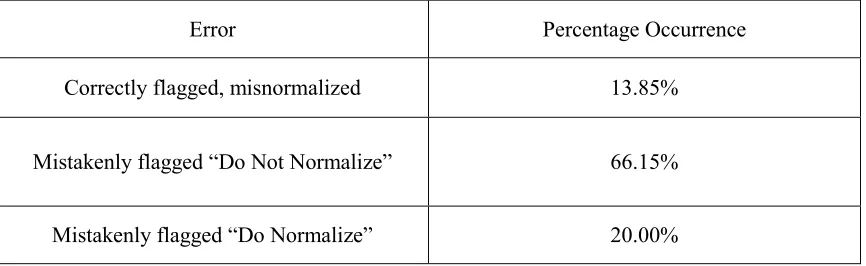
Table 6: Analysis of errors. Percentages given are out of the total error count ...45
Table 7: Examples of tokens that were mistakenly flagged "Do not normalize” ...45
Table 8: CMU-Sphinx recognitions of speech (top row) as aligned to the ground truth text (bottom row) ...68
Table 9: Evaluation results comparing character error rate between models ...71
Table 10: Word-level metrics comparing models on W-NUT ...71
Table 11: Word-level metrics comparing models on Holmes ...72
Table 12: Word-level metrics comparing models on Librispeech ...72
Table 13: Examples of one-to-many terms in W-NUT and the normalizations offered by each approach...74
Table 14: An example noisy tweet and the corrections offered by each approach ...74
Table 15: An example sentence from the Holmes OCR post-processing corpus and the corrections offered by each approach ...75
Table 16: Results on W-NUT with and without Cox windowing ...79
Table 17: Results on Holmes with and without Cox windowing ...80
Table 18: Effects of Tweetcode exclusion on results ...82
Table 19: Separate output results versus unified on W-NUT ...84
Table 20: Separate output results versus unified on Holmes ...85
Table 21: Randomly Selected Tweets from Nist’s noisy and clean datasets ...89
Table 22: Unsupervised pretraining results on W-NUT ...93
Table 23: Unsupervised pretraining results on Holmes ...93
Table 24: Unsupervised pretraining results on Librispeech ...93
LIST OF FIGURES
Figure 1: A simple example of word segmentation issues in ASR output ...20
Figure 2: Two feed-forward neural networks of different depth ...30
Figure 3: A flowchart detailing the process of normalizing a word ...37
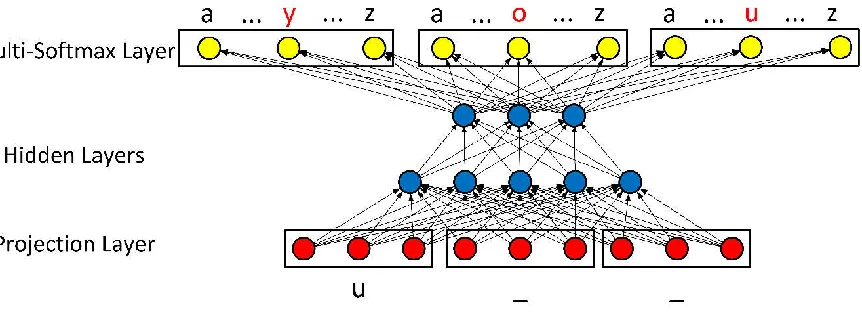
Figure 4: A diagram of the Reconstructor correcting "u" to "you" ...38
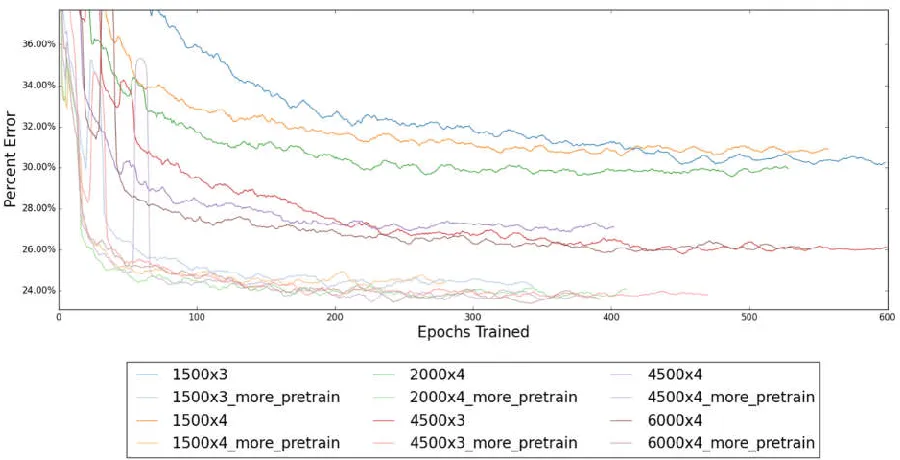
Figure 5: The Reconstructor component validation scores by epoch ...46
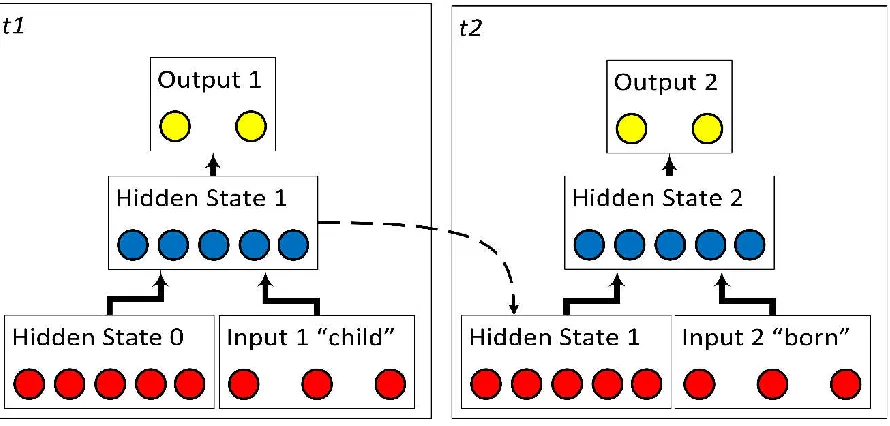
Figure 6: A diagram of a simple recurrent neural network ...50
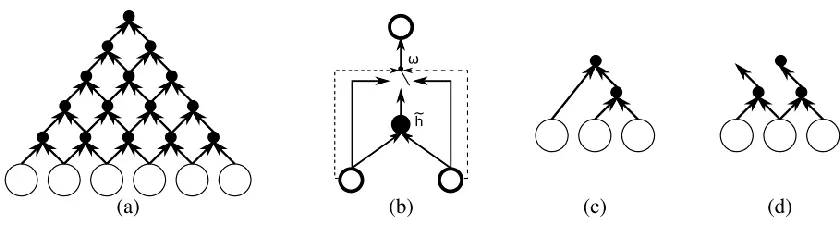
Figure 7: The gated recurrent unit ...51
Figure 8: A narrow (top) and wide (bottom) convolution for a given headline ...53
Figure 9: The recursive gated convolutional network ...55
Figure 10: An automatic caption generator using NMT techniques ...56
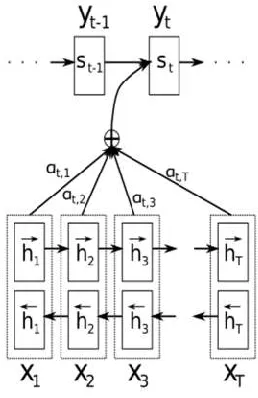
Figure 11: The annotation-based neural machine translation system ...57
Figure 12: Flow of data through DeepNorm...62
Figure 13: The unified multi-softmax output layer ...65
Figure 14: Text from the Holmes corpus after degradation ...67
Figure 15: A comparison of the character error rate during training on W-NUT and Holmes ...73
Figure 16: Character error rate on Librispeech during training ...76
Figure 17: Effects of removing Cox windowing on training of W-NUT ...79
Figure 18: Effects of removing Cox windowing on training of Holmes ...80
Figure 19: Effects of Tweetcode exclusion on training ...82
Figure 20: Flagger and Reconstructor training on W-NUT ...85
Figure 21: Flagger and Reconstructor training on Holmes ...86
Figure 22: Character error rate on supervised task during unsupervised pre-training ...91
CHAPTER 1 INTRODUCTION
As time passes, ever more data becomes available on the web, frequently in the form of text with little or no formal structure. This text comes from many sources, including newswire, blogs, speech transcripts, scans of printed documents, and social media and is known as unstructured text. Companies, organizations, and governments around the world understand the value of being able to extract useful information from large quantities of unstructured text and therefore research in text analytics is on the rise. The predominant techniques in text analytics, however, are primarily developed and evaluated on the Wall Street Journal and the Brown corpus. The text in these documents, referred to as normal text, follows formal rules of spelling and grammar that apply to only a small portion of the text available on the web (Han and Baldwin, 2011; Baldwin et al., 2015).
Meanwhile the text on the web takes a number of forms outside the realm of normal text. We refer to outside the boundaries of normal text as noisy text. Users write text in noisy forms and physical and verbal media are made noisy through imperfect recovery. We will elaborate on this process throughout this chapter. Noisy text poses significant challenges to techniques developed for normal text. In order to analyze it we must either revise the existing normal text techniques or develop a technique for converting noisy text into normal text.
There are different kinds of text normalization for fixing different kinds of noise, including correction of syntactic form, restoration of noisy words into their normal forms, restoration of lost punctuation and removal of inappropriate punctuation, capitalization correction, and phonetic conversion to support text to speech systems (Sproat et al., 2001; Goth, 2012; Mikheev, 2000; Shugrina, 2010).
Many systems have been developed for lexical normalization, but each system has approached this general task from the perspective of a smaller, more specific task. Instead of lexical normalization in general, there have been approaches to correcting spelling errors, approaches to resolving issues in optical character recognition, approaches to resolving issues in automatic speech recognition, and approaches to normalizing Twitter text. To date, no approach has been developed and evaluated on combinations of these tasks to serve as a tool for lexical normalization in general.We propose to unite these disparate tasks under the single umbrella task of generalized lexical normalization. In doing so, we lay groundwork that can support research in the normalization of other, possibly unencountered types of noise. In this section we describe first the task of lexical normalization and the three tasks within lexical normalization that we intend to unite and approach in a general manner: unedited text, optical character recognition post-processing, and automatic speech recognition post-processing. Next we describe some of the challenges present in the task of lexical normalization. Finally we give our research question and our hypotheses, followed by a brief discussion regarding the competitive models we have chosen.
1.1 The Umbrella Task of Generalized Lexical Normalization
We define the Generalized Lexical Normalization umbrella task as follows: Given: Word or short phrase W in document D
Generate: Word or short phrase W’ such that (a) W’ adheres to a predefined normal form
(b) W’ maintains as precisely as possible the meaning of W as it appears in D
Constraint: One or both of W and W’ must be a single word
lexical normalization model. We use the term “word” instead of “token” because the vast majority of such tokens to be corrected will fall under the common definition of “word,” and minor punctuation errors are the exception.
“Word or short phrase” here refers to any word or grouping of consecutive words in the given document D. An example of a short phrase is “a lot” as a correction for “alot,” or “to gether” as a noisy version of “together.” Hyphenated words such as “problem-solving” are treated as one word in Baldwin et al.'s (2015) definition of lexical normalization for Twitter, so we will treat them as one word in our definition as well. The document D refers to a body of text of any size, although for our purposes we do not consider more than a sentence of text at a time.
In general, the normal form referred to in (a) is characterized by strict adherence to the formal rules of spelling and grammar,1 although these rules change over time, such as with the addition of new words to the English lexicon. In addition, particular normalization tasks may demand exceptions to these rules and thus have their own variants of the normal form. The “normal” form is defined so as to best benefit common NLP systems, which have largely been trained on the Wall Street Journal and the Brown corpus.
An example of a task that demands a variant normal form is the normalization of Twitter text. Twitter’s interjectional abbreviations (“lol”), emoji (“:)”) and codes (“#hashtag”) evoke specialized meanings unrepresented in the normal corpora, and, as such, in W-NUT, they are treated specially (Baldwin et al., 2015). Codes and emoji are left as-is in normal form, and interjectional abbreviations are expanded into the short phrases they abbreviate. In addition, the W-NUT task’s normal form permits graceful degradation. By this we mean that if an annotator cannot determine a correction for a noisy word, she should leave it as-is. (An annotator who finds “GNICNRFPO” in the noisy text should, for instance, include it without change in the normal version). Finally, for simplicity of evaluation the W-NUT normal form renders all output in lowercase (Baldwin et al., 2015).
Rule (b) in general can easily be understood if we consider Lexical Normalization of W
as a translation of W from a noisy form into a normal form. Just as a translation between languages should optimize to preserve as much meaning as possible, so should a conversion from noisy to normal form. Because noisy text and its normal form tend to be much more closely related to begin with than a text in one language and a text in another language, the preservation of meaning becomes stricter in the normalization task. For example, in a hypothetical tweet “my little boi iz growin up soooo fast <3 <3 <3,” offering the word “guy,” as the normalization of “boi,” while it could be an acceptable translation from another language, is not appropriate between noisy and normal English. The fact that the noisy word “boi” is morphologically more similar in form to “boy” than “guy” is relevant in normalization where it is not in translation, on the assumption that, in the absence of perfect understanding of meaning, attempts at preservation of morphology will help to preserve nuances that cannot be detected directly.
Fortunately, very few of the natural language processing tasks that we might want to support with normalization require this depth and precision of representation. If we are normalizing for the support of downstream tasks, which elements of meaning are most important to maintain will depend on the task in question. The change, “soooo,” “so,” for example, loses its emphasis, which could be important in a graded sentiment analysis task, but would be less important in a named entity recognition task. An in-depth exploration of these issues is outside of the scope of this work. In fact, for our work the question has largely been answered already, since the only data sets that we use are technical noise datasets with unambiguous normal forms and our unedited user text dataset, the Twitter dataset, which has already been annotated according to the W-NUT Twitter normal form variant we describe above. In order to get a sense of how effective our model combined with this normal form variant is for assisting downstream NLP tasks, we explore the improvement on part of speech analysis between the original noisy data and the normalized form.
One reason lexical normalization is particularly important in support of standard natural language processing techniques is because in large part these techniques function at the word level, ignoring morphology. When a word is noisy, a word-level task trained on normal text may treat it as a different word or as if it has never seen it before. For example, in a word level model trained on noisy text, “teh,” a common typo for “the”, would be represented as unknown and lose all its meaning when even a simple character-level normalizer run as a preprocessor could correct it and allow it to be recognized with no loss.
each specific task. We refer to the task of performing these multiple specific lexical normalization tasks with the same model as generalized lexical normalization.
To treat this as a sequence labeling task wherein we label each noisy word with its normalization, we can modify our goal as follows. For each word W in document D, either return a word or phrase W’ as above or return ε. Here ε represents the empty string and means that an input “word,” which in fact may only be a letter or part of a word, should be removed entirely in the normalized version. This permits us to associate a single normalization with each input word. The normalization of “l o v e” to “love” for example, can be represented as [“l”, “o”, “v”, “e”] [ε, ε, ε, “love.”]
As we will describe in more detail in Section 1.2, annotated data for lexical normalization is scarce. For that reason, we have selected three normalization tasks based on their broader impact as well as the availability of gold standard corpora for their evaluation. We introduce these tasks below. We describe the approaches to each of these different tasks in more detail in Chapter 2 and how we collect these corpora in Chapter 5.
Optical Character Recognition Post-processing
Optical Character Recognition (OCR) is the process of converting images of printed and typed text into digital text (Impedovo et al., 1991). Taghva and Stofsky (2001) describe the main sorts of optical character recognition (OCR) errors:
Unexpected Characters: Errors can add numbers, punctuation, and other characters into words, making it more difficult to separate a word from a non-word token, such as a phone number.
No Conservation of Characters: One-to-one substitution is not guaranteed (m can be read as iii).
Segmentation Challenges: Words are often broken or combined, making tokenization non-trivial.
by a factor of 10 to 100 (Kata and Sagot, 2014). Towards this end, OCR post-processing, using linguistic phenomena to correct the text generated by an OCR system, is well-represented in the literature (Bassil and Alwani, 2012; Kolak and Resnik, 2005; Lon-Mu et al., 1991; Llobet et al., 2010). In addition to being a current and important area of research, we choose the OCR post-processing task for evaluating our general lexical normalizer due to the relative ease of generating an aligned evaluation corpus of normal and noisy OCR data by rendering text, reducing the image quality, and recognizing it with OCR. We describe the corpus generation process in more detail in Section 5.1.
Automatic Speech Recognition Post-processing
Automatic speech recognition (ASR) is the process of converting digitized speech into text (Jurafsky and Martin, 2008; Manning and Schütze, 1999). This process is not perfect and even modern systems are prone to error. The current state of the art in speech recognition gets an error rate between about 5 and 10% (Novet, 2015). Here we present a list of some of the main sources of noise in ASR modified from (Bassil and Semaan, 2012):
Segmentation Challenges: Words blending together in continuous speech (e.g., “buddai” instead of “but I”)
Disfluencies: “um” and “uh” can be misrecognized as words, and awkward pauses can lead to a word being misrecognized as two separate words.
Variation in Pronunciation: A mispronounced word or pronunciation variation can be misrecognized as a different word
Out of Vocabulary (OOV) errors: Small, monolingual vocabularies make development feasible, and without severe restriction of domain, one cannot cover the vast array of possible named entities, so OOV errors are very frequent.
the normalization of issues independent of the ASR system itself. For example, such an approach could normalize a collection of transcripts found to be noisy after their generation through an ASR system. ASR post-processing is well-represented in the literature (Twiefel et al., 2014; Huet et al., 2010; Ringger and Allen, 1996). ASR post-processing is also a task for which it is straightforward to obtain annotated data for evaluation given aligned text and speech. Such a corpus is freely available on the Internet through Librispeech, which we describe in more detail in Section 5.2, making ASR post-processing an ideal sample task for evaluating a general normalization system.
Twitter Normalization
Twitter normalization involves many of the same considerations as both OCR and ASR post-processing. Like OCR, an effective Twitter normalizer should be able to normalize words with dropped and substituted characters, even though due to coming from such a different source, they certainly will arise in different patterns. Similarly, the forms that words take on Twitter are often based on how they are pronounced, much like the errors in an ASR system, although the results of this pronunciation based distortion are distinctly different. Twitter’s sources of noise do not end here. From a qualitative study of Twitter text we formed a list of some of the most frequent types of Twitter noise:
Typos: E.g., “troble”, “teh”
Phonetic Substitution: E.g., “L8r”, “u r gr8”, “4EVA”, “trubl” Dialectical Spellings: E.g., “dem”, “dat”, “dose”, “da”
Expressive Capitalization: E.g., “I am so MAD”
Vowel Elongation: E.g., “Sooooooo Coooool”, “Totallyyyyy” Expletive Infixation: E.g., “Fan- f******-tastic”
Phrasal Abbreviations: E.g., “LOL”, “ROFL”, “LMFAO”, “SMH” Emoji: E.g., “:)”,“:(” ,“O_o”
of interest in recent years (Han and Baldwin, 2011; Baldwin et al., 2015; Kaufmann, 2010). This interest led to the creation of a human-annotated Twitter normalization corpus that we use to evaluate our approach to general lexical normalization. We describe this corpus in more detail in Section 3.2.
1.2Challenges
Despite years of research, lexical normalization remains an unsolved problem. As it exists now, the field is disjoint and treated as multiple separate fields, the definitions of what constitutes “normal form” remain ad-hoc, and it is difficult to find large corpora of training data. In this section we describe these three challenges in more detail.
Variety of Noise
The myriad forms and types of noise in text reflect the vast complexity of language itself. Some sources of noise are simply the result of machine errors, such as issues in automatic speech recognition (ASR), optical character recognition (OCR), or handwriting recognition. We will refer to these as technical noise. Other sources of noise arise from different manners of communication, such as text on social media, and text written by novice or non-native writers. This noise arises as part of the writing process and we therefore refer to it as cognitive noise, which carries its own set of challenges distinct from technical noise. It is important to note that cognitive noise can arise either unintentionally or intentionally, and just as often as an error, it is a valid alternative use of language. The normalization of cognitive and technical noise is further complicated by the fact that these sources of noise will overlap and can interact with each other in unpredictable ways.
As indicated above, cognitive and technical noise are two broad categories of a vast and expanding set of noisy channels. Here we use noisy channel to refer to a theoretical independent noising factor that plays a part in transforming a normal word into a noisy word (Brill and Moore, 2000). To explain noisy channels, we can take the general description of lexical normalization given in Section 1.1 and assume that the normal form of a word or phrase
channels and produces a noisy word or phrase W. This assumption is the basis of the noisy channel model, which we will describe in more detail in Chapter 2.
As an example of just how many channels can be at work in Twitter alone, (Liu et al., 2012) found twelve different variations on the word “together,” in which one can quickly identify more than five different channels at work. These include a typographical noisy channel (togehter), a phonological substitution channel (2gether) that also includes particular dialectical pronunciations (togeda), a channel based on swapping characters of a similar appearance (t0gether), and a combination of these and other channels that are more difficult to categorize (toqethaa). We show a list of these along with the number of times they appeared in the Edinburgh Twitter Corpus in Table 1 (Liu et al., 2012).
Table 1: Variations on the word “together” in Twitter
2gether (6326) togetha (919) tgthr (250) togeda (20)
2getha (1266) togather (207) t0gether (57) toquethaa (10)
2gthr (178) together (94) together (49) 2getter (10)
Absence of an Encompassing Standard Form
The normalization of cognitive noise is distinctly different from that of technical noise, and in many senses is much more difficult. The first challenge of cognitive normalization above technical normalization is that there is no concrete normal form to which to correct a text. Whereas technical noise comes from distortions that arise through imperfect conversion of language from one medium to another, with cognitive noise, it is not the medium but the language itself that is being converted. In effect, the “normalization” of text noised through cognitive channels is more akin to a translation task. In normalizing Twitter text, the preeminent example of mainly cognitively noisy text, the translation is from the Twitter dialect into another dialect of English; what we for the purposes of our work take as the normal form.
Approaches to defining a normal form for Twitter text are still evolving. In their 2011 normalization corpus, Han & Baldwin (2011) leave acronyms like “LOL” as they are to make their normalization task simpler, while in 2015 they correct “LOL” to “laughing out loud.” They do this despite the fact that neither of these approaches returns a sentence that would look like it belonged in a column of the Wall Street Journal or even in the fiction section of the Brown Corpus (Baldwin et al., 2015). Given these hurdles, targeting the Wall Street Journal and Brown Corpus as the form for the normalization of Twitter and other social media text is likely to remain an ideal rather than a hard and fast standard.
Because the normal forms proposed remain ad-hoc and are theoretically based on increasing the effectiveness of conventional NLP techniques, there is room in the literature for an examination of the degree to which automatic normalization based on these standards can improve the performance of NLP techniques on noisy text.
Scarcity of Labeled Training Data
recognize it using OCR (Zi and Doermann, 2004). The analogous technique for ASR works less well, as errors are unlikely to be representative of the idiosyncrasies of human speech.
Cognitive noise, because it by definition arises from the writing process itself, cannot be efficiently generated through this method. Instead, development of an annotated corpus of cognitive noise must work in the opposite direction. Starting with a noisy text from a source such as Twitter, the data must then be manually normalized by a team of humans. Because this process is laborious and expensive, there is a shortage of annotated corpora in cognitive noise datasets such as Twitter. Furthermore, a new, previously unconsidered source of noisy data will be expensive to annotate manually. Therefore it is worthwhile to explore how unsupervised data for a given normalization task and annotated data on different normalization tasks can be leveraged to support the given normalization task with limited annotated data available.
1.3Research Question and Hypotheses Research Question:
To what degree can the various tasks involving correcting noisy words into a normal form
be combined under the umbrella task of lexical normalization, and how well can a single deep
learning architecture address them as different instantiations of this generalized task?
For the purposes of this work, the “architecture” of a model remains the same when sources of training data and hyperparameters are changed. For example, a single architecture remains the same even if the number of nodes or layers is changed or new training data is added, but it is different if new hand-engineered features are added or a different machine learning technique is used. Although multiple architectures were considered in producing this work, for our main evaluation we select one architecture to run on all three tasks.
Sherlock Holmes, and correction of tweets into the normal form variant for the W-NUT competition described in Section 1.1.
The research approach involves collecting corpora of noisy text and their normalized counterparts, and developing a normalization system by extending neural machine translation techniques via other deep neural network techniques to make it applicable to the general lexical normalization task. We have three corpora on which we evaluate our approach and two models against which we compare. Thus, our primary hypotheses are as follows:
H1a. A single end-to-end architecture based on neural techniques can perform a supervised lexical normalization task on unedited text competitively with a state of the art skip-bigram model.
H1b. A single end-to-end architecture based on neural techniques can perform a supervised lexical normalization task on unedited text competitively with an off-the-shelf optical character recognition post-processing model.
H2a. The architecture from Hypothesis 1 will perform competitively with the skip-bigram model on the supervised task of normalizing optical character recognition output.
H2b. The architecture from Hypothesis 1 will perform competitively with the optical character recognition post-processing model on the supervised task of normalizing optical character recognition output.
H3a. The architecture from Hypothesis 1 will perform competitively with the skip-bigram model on the supervised task of normalizing automatic speech recognition output.
As secondary work, we also explore the potential for learning from unannotated data and from data annotated for different normalization tasks. Our secondary hypotheses are thus as follows:
H4: There exists a combination of annotated unedited text, annotated text from other tasks, and unannotated text such that the architecture from Hypothesis 1, trained on this data and evaluated on unedited text, will achieve significantly higher performance than the same model trained using only the evaluation task’s annotated text.
H5: There exists a combination of annotated unedited text, annotated text from other tasks, and unannotated text such that the architecture from Hypothesis 1, trained on this data and evaluated on optical character recognition text, will achieve significantly higher performance than the same model trained using only the evaluation task’s annotated text.
H6: There exists a combination of annotated unedited text, annotated text from other tasks, and unannotated text such that the architecture from Hypothesis 1, trained on this data and evaluated on automatic speech recognition text, will achieve significantly higher performance than the same model trained using only the evaluation task’s annotated text.
Tertiary work is to explore the effects of the combination of the normalization standard and the normalization model on downstream tasks. We take our normalization standard from W-NUT, as described in Section 1.1, and use part of speech tagging as our downstream task.
Our approach is specifically designed to be generalizable and portable in that it uses no hand-engineered features or off-the-shelf tools. Thus, although it may not outperform the skip-bigram model on Twitter, we expect it will perform competitively with the skip-skip-bigram model on all three tasks. We represent this expectation in our first three hypotheses in Section 1.3. In Chapter 6, we compare different permutations of our architectural framework to isolate the effects that different modules have on results.
1.4Contributions
This dissertation work has added to the literature in natural language processing and deep learning. Novel contributions of this work include the following:
C1.A new task: Generalized lexical normalization. We propose to treat the collection of lexical normalization tasks, ASR post-processing, OCR post-processing, Twitter lexical normalization, and other such tasks hitherto approached separately as all domains within a larger task of lexical normalization in general. Before this work there was little cross-referencing in papers describing approaches to these tasks.
C2.A deep feed-forward neural network that performs competitively on an international level in lexical normalization for Twitter. This is the first feed-forward neural network to be applied to lexical normalization (Leeman-Munk et al., 2015).
C3.A reconstruction-based word prediction output for lexical normalization. The notion of constructing words as sequences of letters in output rather than selecting from a large vocabulary has not previously been proposed in the literature (Leeman-Munk et al., 2015). C4.Extensive analysis of the relevant preferred parameters and existing issues surrounding normalization using a deep learning framework on a small dataset (Leeman-Munk et al., 2015).
C6.A noisy ASR text corpus generated from LibriSpeech, with the original text of the novels themselves serving as the gold standard.
C7.A noisy OCR text corpus generated by rendering classic novel text in a low-quality image and extracting the text again using OCR. The original text serves as the gold standard.
1.5Organization
CHAPTER 2
RELATED WORK: LEXICAL NORMALIZATION
Although each of the tasks described in Section 1.1 has a rich literature of normalization behind it, these literatures do not overlap. To date there is no method that attempts lexical normalization on noisy text from more than one source. This chapter describes some techniques for spelling correction, an early and simple example of lexical normalization, then moves onto each of the three distinct tasks that we propose to use to evaluate our general lexical normalizer. To explain our choice of organization, we will begin by describing the noisy channel model, which provides a useful duality of morphology and context for understanding lexical normalization.
The noisy channel model, from which the concept of noise as separating into channels arises, operates on the assumption that a given observed noisy text arises from a combination of an underlying normal text and one or more noisy channels. Given this assumption and the observed noisy word W’, one can estimate the probability that the original word was W using Bayes’ rule (Kernighan et al., 1990; Box and Tiao, 1992; Shannon, 1948):
( | ′) = ( ′| ) ( )
( ′)
Given that our goal is to select the most likely W, and ( ′) is the same for all W this value can be safely ignored. The expression for finding the most likely word using the noisy channel model is thus as follows:
argmax ( ′| ) ( )
With this assumption, what the noisy channel model needs to estimate is ( ′| ) and
to our knowledge is the first shared task on lexical normalization, and Section 2.4 describes machine translation techniques that have been used for lexical normalization. Section 2.5 illustrates the limited exploration thus far into general models of lexical normalization and draws upon the previous sections to explain why a general model now is both challenging and feasible. Section 2.6 explicitly lays out the novelty of this work.
2.1Noise Models
The simplest approach to calculating ( ′| ), which does not require explicitly selecting a noisy channel, is to build what is called a confusion set directly from an annotated corpus of noisy words and their normalizations. To build a confusion set, one counts the number of times in an annotated corpus that each word W’ in the vocabulary is confused for W. This will give a rough estimate of ( ′| ), but cannot generalize to any confusion that did not explicitly appear in the corpus. Calculating ( ′| ) in a more robust manner is where the noisy channels themselves come into play.
Among the earliest examples of the noisy channel model targeted at the typographical and cognitive spelling error channel uses four separate confusion matrices to rank possible corrections for a given spelling error. The model supports one-character errors including additions, deletions, substitutions, and transpositions (‘xy’ ‘yx’). Each error type has a confusion matrix. We give the details of the four matrices below. Here we use X and Y to represent arbitrary characters:
Addition of X after Y
Deletion of Y after X
Substitution of X for Y
Transposition of X for Y
Later work improved on this model. Brill and Moore (2000) present a noisy channel model that separates each word into partitions to allow a more generalized approach to spelling correction. Brill and Moore’s approach to modeling spelling errors holds two advantages over Kernighan et al.’s model. Firstly, it allows multiplication of multiple edit probabilities together to estimate the probability of errors that are more than one edit away from the original word. They give the example “actual” “akgsual” which could be calculated based on the product of the probabilities “c””k” “ε””g” and “t””s.” Second, they introduce character-level context to help inform likely errors. For example, at the letter “c” in the prior example, the probability of “c” becoming “k” is represented not only as “c” ”k” but as “ac” “ak”, “c” “kg”, “ac” “akg”, and “ct” “kgs.” They also include positional information within the
word, as one would naturally expect “confident” ”confidant” to be more likely than “antler” “entler.” Brill and Moore use a dynamic programming algorithm, the Wagner-Fischer
algorithm, to select the most likely from multiple possible combinations of edits (Wagner and Fischer, 1974).
Toutanova & Moore (2002) expand upon Brill and Moore’s approach by explicitly modelling two different noisy channels, one for typographical errors, and one for cognitive errors based on pronunciation. Using a letter-to-phone model, they predict phonetic sequences for the correct spelling of a word and the erroneous spelling and use largely the same technique as above for estimating the likelihood of one phoneme sequence becoming another. They combine their two channel models using a coefficient to allow tuning of which channel more strongly affects the prediction, but do not describe how this coefficient is either learned or selected.
Evans’s multi-character model and Brill and Moore’s character-context model in their OCR work on the Nigerian language of Igbo.
Like OCR, ASR has also taken advantage of some noisy channel approaches, but because in ASR there are no characters to be individually misrecognized, these approaches generally eschew the graphemic approach in favor of phonetics. For example, Hacker & Noth (2014) use a phonetic model comparable to Toutanova and Moore’s. Ringger & Allen (1996) proposed a model for ASR error correction that used two channels. The first was the basic word-for-word confusion set that simply counts the number of times a given word is confused for another given word. The second channel was a fertility channel for dealing with the segmentation challenges of continuous speech that estimated the likelihood that a word would be mistakenly split into two words or combined into one word. Figure 1 shows an example of word segmentation issues in ASR output (Ringger and Allen, 1996).
Figure 1: A simple example of word segmentation issues in ASR output
Further work on the Twitter lexical normalization task comes from Cook & Stevenson (2009), who proposed an error generation model for a few channels of noise, some very specific, including phonetic spelling errors and clipping, which is the removal of letters at the end of a word (“walkin”“walking”). Xue, Yin, & Davison (2011) add support for common abbreviations that expand to multiple words such as (“ttyl” “talk to you later”). Instead of learning from data, they use a pre-existing list of common abbreviations2.
Because it is cognitive and therefore exceptionally labor-intensive to annotate, Twitter lexical normalization has spurred research in unsupervised learning methods. Han & Baldwin (2011) use a 1.5 GB corpus created by filtering out tweets that include non-standard words to train their model. They normalize words based on contextual and morphophonetic similarity to the words in a dictionary. Han, Cook, & Baldwin (2012) take a similar approach, but use the technique to construct a lightweight mapping dictionary between words and their “lexical variants.” Each of these approaches focuses only on phonetic and morphological correction, excluding, for example, abbreviations such as “lol”. Gouws et al. (2011) develop a technique to deal with this weakness based on “exception dictionaries” mined from distributionally similar Twitter words, meaning the words tend to occur in the same context within a large body of text. Gouws et al. (2011) thin the exception dictionary, which at this point is full of matches like “I” ”you” and “and” ”but,” by removing matches that are also distributionally similar in normal text. Finally, using longest common subsequence and other string similarity measures, they further winnow the set. They demonstrate that the addition of this exception dictionary significantly improves the performance of a typical normalization system. Because it does not support many-to-one translations, however, it still cannot normalize “lol” and similar phrasal acronyms.
2.2Language Models
As we mentioned above, ( ′| ) is calculated from the morphology of W combined with a model of the noisy channel itself. Similarly, the words in a sentence provide contextual cues
that support calculation of ( ). Although context is helpful for word correction in many circumstances, a few examples of cases in which a context language model is especially important include real-word spelling errors, which appear in the dictionary but are not the intended word and cases in which one word has erroneously become split into two. When the language model is based on the target, normal language, it does not depend on the particular source of noise, and thus many systems use the same techniques for their language models. In this section we provide an overview of language models that have been used in normalization. In their spelling-correction system, Toutanova & Moore (2002) assume a uniform language model in which P(W) is assumed to be the same for all words and is thus not calculated. Their claim is not that the language model is not useful, simply that it was not the focus of their work. Kernighan et al. (1990) based their language model on the counted occurrences of a given word in a large corpus. Although it does not use any context, this approach is still useful in many cases because a large number of words in the English language are very uncommon. For example, the misspelling “confident””confidant” can be corrected with a reasonable degree of accuracy based on the knowledge that the former word is much more likely to be used, all other variables equal. Nevertheless, this approach will not fare well in the sentence “He was her best friend and confidant in times of trouble,” which will benefit from context. Brill & Moore's (2000) trigram language model would be likely to allow them to successfully avoid miscorrecting “confidant” in the above context. The trigram model uses the two words prior to a given word as context to inform a language model. In this example, “friend and” would be the context. It is called the trigram model because including the word in question, there are three words being considered at a time. Any number of words may be considered at a time. When not specifying the number of words considered, this is known as an n-gram model (Brown et al., 1992).
often context is bidirectional, and the words that are needed to correct a given word themselves need the word that we are trying to correct!
To deal with this issue, we must consider all words in a given sentence at once and select the corrections that maximize the whole sentence. Goth (2012) describes a “language-noise” model based on a finite state transducer that traverses the possible corrections of each word in a given sentence and finds the path of minimum cost.
Language models are especially deeply investigated in ASR post-processing. Because the output of a typical speech recognition system is already converted into real words, spelling errors are almost all if not all real-word errors, making a language model much more important for detection and correction. None of the automatic speech recognition systems we reviewed for this dissertation operate without a context-dependent language model. Ringger & Allen (1996) use a bigram language model trained on a corpus of speech transcripts. Bassil & Semaan (2012) use the Microsoft N-Gram corpus, which has the advantage of size. Their system takes the unigram corpus as a vocabulary and uses the 5-gram corpus as context to evaluate P(W) given the two words on either side of the observed word.
Rather than N-grams, Sarma & Palmer (2004) use information retrieval techniques on a corpus from 1.6 million words of existing ASR transcript data. By identifying how often two given words appear together versus separately they can evaluate how related those terms are. Using this technique one can take advantage of the huge corpora of Internet search engines for language modeling (Byambakhishig et al., 2014).
Tong & Evans (1996) and Kata & Sagot (2014) both use a bigram language model to support OCR post-processing. Bassil & Alwani (2012) base their model on Google’s did you mean spell correction feature, which, while effective, is fragile since it depends on Google to keep that feature available.
state transducer and a rule based model on English and Urdu script, with the improvement being much more dramatic on the more difficult Urdu.
Twitter’s language models are very similar to those of basic spelling correction. Like OCR, some work uses no language model (Choudhury et al., 2007) and other work uses n-gram models (Pennell and Liu, 2011b; Xue et al., 2011). Chrupala (2014) argues that a language model based on target text cannot work for Twitter normalization because beyond being normal it does not match the way language is used in Twitter. For this reason, he uses a recurrent neural network trained on a large quantity of unannotated Twitter data and uses it to inform a conditional random field-based noise-language model for Twitter normalization.
2.3The W-NUT Lexical Normalization for English Tweets Challenge
(Jin, 2015). The second place approach used an LSTM based on character edit operations. It uses the LSTM for terms with more than one mapping or with no mapping (Min and Mott, 2014).
2.4 Machine Translation for Lexical normalization
If we consider English Twitter text as a particular dialect of English and normal text as another dialect, it should not come as a surprise that machine translation is frequently presented in the literature as an analogy for lexical normalization in Twitter. It is interesting to note that this is not the case for ASR and OCR. In Twitter normalization alone our literature survey found researchers taking advantage of machine translation techniques.
Aw, Zhang, Xiao, & Su (2006) use a phrase-based model inspired by statistical machine translation for normalization of SMS text. The key insight of this model is one that we have already discussed — that many phrasal acronyms in Twitter do not match cleanly to just one word and thus must be mappable to multiple words. A later approach uses an off-the-shelf machine translation system at the character level to match abbreviations to their full forms (Pennell and Liu, 2011a). Another approach uses the same statistical machine translation technique, and as an indication of the challenge that text annotation presents, also describes a simple interface allowing users to provide annotations to support the system (Schlippe et al., 2010).
2.5General Models of Lexical Normalization
Based on our literature review, no model attempts general word correction on Twitter text, OCR output, and ASR output with a single architecture. Only a few models have been evaluated on multiple sources of noise at all. Mikheev (2000) describes his work in sentence boundary disambiguation, disambiguation of capitalized words, and identification of abbreviations as “domain independent”, but the various domains all come from the standard sources (WSJ and Brown corpora).
words into canonical forms that would appear in newswire text whereas their task is to convert all words into forms that directly represent their pronunciations (e.g., 100 one hundred). They present an extensive taxonomy of non-standard words collected from newswire text, newsgroups for recipes and hardware, and real estate classified ads, included in Appendix 1. As their work predates Twitter, Twitter text is not covered in the taxonomy.
The similarity of the word correction tasks described in this section suggests an opportunity for a general approach that is not addressed in the literature, while the differences indicate that the development of a general technique that does not rely on task-specific channel or feature engineering will be a significant technical contribution. Deep neural networks have the ability to learn features from data, and are thus capable of approaching in a general manner tasks that once required specialized feature engineering. In the next section we describe deep neural networks’ application to text, focusing especially on a field rapidly expanding over the past five years that serves as an informative parallel to lexical normalization, neural machine translation.
2.6Novelty of this Work
Our task is novel because it will be the first requiring a single architecture to address three distinct tasks under the umbrella of lexical normalization.
The novelty of the architecture itself consists of four parts:
a) It is a neural network that works at both the character and word level simultaneously. b) It does not rely on hand-engineered features.
c) It does not rely on off-the-shelf tools.
d) It is specifically designed to be applicable to multiple noise from multiple sources.
(b) The absence of hand-engineered features holds promise that our approach will not only work on the three datasets that we will use to evaluate it but on other datasets as well. Although we will be constructing our model to optimize on these datasets, we do so without any hand-engineered features. We instead allow the deep learning to automatically decide select relevant features from the data. We expect this to improve generalizability to datasets to which we do not have access.
It is important to note that we are not constructing a fully general model for this work. We will choose training datasets, supervised and unsupervised, to specialize to each task. For instance, in developing a normalizer for Twitter in our preliminary work we separated out the “tweetcode” (e.g “#hashtag,” “@atmention”, and “http://url.com”) from the rest of the data and trained without it, relying on the flagger to learn that the rules of the task specified that these constructions were not to be normalized. To show the effects of including or excluding tweetcode when training a Twitter normalizer, we include an experiment in Chapter 6.
(c) Off-the-shelf tools are often helpful and easy to use, but their use can also be complicated by license restrictions or dependencies on still other tools. As operating systems progress and change, old off-the-shelf tools may cease to function, with the risk becoming more pronounced with each additional dependency an approach has. Thus, excluding off-the-shelf tools improves the portability of our approach. For the purposes of prototyping we will be using the programming language Python, a high-performance computational library Theano, a GPU programming library CUDA, and various other simple Python libraries, but we do not count these as off-the-shelf tools as we describe them here because they do not provide any sophisticated NLP functions and only serve to help us implement and test our architecture.
(d) To our knowledge this will be the first lexical normalization architecture explicitly designed for and evaluated on noisy text from multiple modalities.
CHAPTER 3
FEED-FORWARD NEURAL NETWORKS FOR THE NORMALIZATION OF TWITTER DATA WITHOUT CONTEXT
To explore the potential of neural network-based lexical normalization, we have developed an approach to transform noisy user-generated text into a canonical form with a feed-forward neural network augmented with a projection layer (Kalchbrenner et al., 2014; Collobert et al., 2011; Vincent et al., 2008). The model performs a character-level analysis on each word of the input and attempts to reconstruct the word in its correct form. We tested our approach on Twitter text and submitted it to the W-NUT Lexical Normalization for English Tweets Challenge. The absence of hand-engineered features and the avoidance of direct and indirect external data make this model unique among the three top-performing models in the constrained task. It is also unique in that it does not take advantage of context. Each morphologically unique input will be normalized to the same word regardless of its surrounding words.
We argue that deep learning, the general term for neural networks with multiple layers, is the current best approach to the umbrella task of lexical normalization. Deep learning is effective for generalization because it has achieved several competitive and state-of-the-art results in text analytics without the use of hand-engineered features (Kalchbrenner et al., 2014; Kim et al., 2015). While there are still approaches based on years of careful feature engineering that outperform deep learning in some text analytics tasks, the trend is for deep learning to close that gap, and it has done so remarkably quickly on many disparate tasks at once. We consider this to be sufficient evidence that deep learning is worth exploring for the umbrella task of lexical normalization.
and discuss results. In Section 3.6 we address some potential questions regarding the absence of feature engineering in more detail before we conclude with a summary in Section 3.7.
3.1A Brief Overview of Deep Neural Networks for Text Analytics
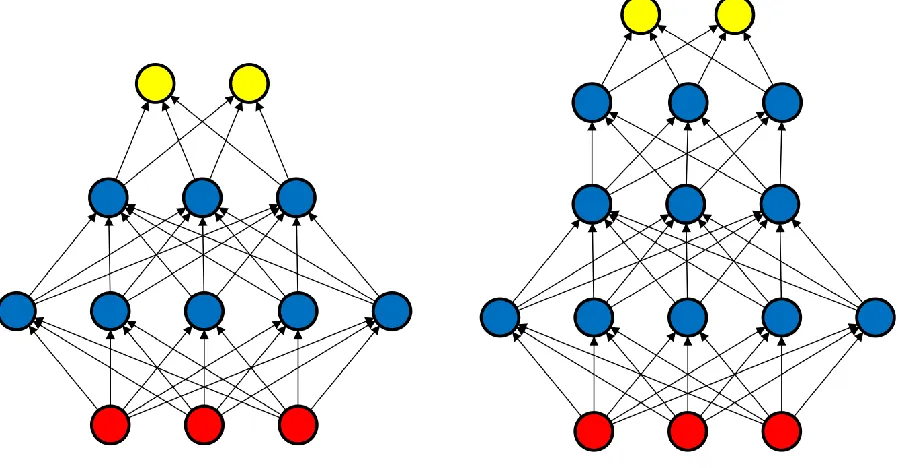
Deep learning refers to the process of recognizing complex patterns in data using a series of multiple learned transformations. Each of these transformations serves as a feature collection algorithm for the next transformation, and collectively they permit a network to form deep representations of information that have a nuanced, non-linear relationship with the input data. In the simplest example, the feed-forward neural network (FFNN), these transformations are each represented by what is referred to as a “layer,” with more layers indicating more depth, but in more complex neural network architectures, multiple transformations may occur through recursive application of the same layer. See Figure 2 for an example of feed-forward networks of different depth. Input starts at the red nodes (circles) and forward-propagates, generating output at the yellow nodes. Blue circles indicate the nodes in hidden layers (LeCun et al., 2015). In this section we describe some of the basics of deep learning as applied to text analytics, leaving more advanced models for Section 4.1.
Deep Learning Fundamentals
Training deep neural networks relies on an algorithm known as backpropagation. Backpropagation determines the gradient of change at each weight in a network that will decrease the error between the prediction and the gold standard. With these gradients a neural network’s weights can be initialized randomly and learned by one of any number of gradient descent algorithms (LeCun et al., 2015).
The simplest form of a deep learning algorithm is the deep FFNN. The FFNN takes a vector of numbers as input. This vector is known as a layer and each value within it is a neuron. The network multiplies the input layer by a matrix of weights to return another vector. This new vector is then transformed by a non-linear activation function. A number of functions can serve as the non-linearity, including the sigmoid and the hyperbolic tangent.
The transformed vector is referred to as a hidden layer because its values are never directly observed in the normal functioning of the model. A deep feed-forward neural network can contain any number of hidden layers, each going through the same process, multiplying by a matrix of weights and transforming via a non-linearity. Hidden layers may also be of any size. Multiple applications of learnable weight matrices and non-linear transformations together allow a deep neural network to represent complex relationships between input and output (Bengio, 2009).
have been initialized, they continue to be learned as if they had been initialized randomly (Bengio, 2009).
There are many techniques for pre-training. Here we will discuss two techniques that are particularly relevant to generalized lexical normalization: Transfer pre-training and layerwise pre-training. Transfer pre-training refers to pre-training a network intended for one task, the target task, using a different task, the base task. The motivation to pre-train on a different task than one intends to solve is that the base task may have more data available. An unsupervised base task, for example, is very likely to have much more data available to train it than its supervised target task. For example, a network for part of speech tagging could pre-train on unannotated data by learning to predict the next word in a sentence (Yosinski et al., 2014).
Layerwise pre-training is so named because it trains the network layer by layer. There are two ways to do this, supervised and unsupervised. Supervised layerwise pre-training is the simpler of the two approaches because the task remains the same. In supervised layerwise pre-training, the model is trained first with some minimum number of layers, then with one additional layer at a time until the full model is constructed. In order to do this, one new layer is required for each new pre-training model. For example, if you have a 4-layer network and want to pre-train the first two layers, 1 and 2, then you need a temporary shortcut layer from 2 to the output bypassing 3 and 4.
Unsupervised layerwise pre-training on the other hand has the advantage that, as an unsupervised method, it does not require annotated data. It pre-trains without supervision using denoising autoencoders3. Denoising autoencoders are neural networks whose output is the same as their input. That is, they specialize in developing a robust encoding of an input such that the input can be reconstructed from the encoding alone. The denoising aspect refers to the fact that to encourage robustness, denoising autoencoders are given inputs that have been deliberately corrupted, or “noised” and are expected to reconstruct them without the noise. (Erhan et al., 2010). The noising used in training denoising autoencoders is not the same as the
3 Restricted Boltzmann machines have also been popular for this purpose, but we focus on denoising auto
noise in noisy text, but as we will describe in Section 3.3, the two concepts are not entirely unrelated.
Softmax and Negative Log Likelihood
Neural networks are necessarily built on continuous operations. Due to the nature of backpropagation, anything not differentiable, and therefore anything not continuous, in a neural network cannot be learned. Text, however, is fundamentally discrete, and is therefore a conundrum for continuous-only operations. If one wants to learn how to select the best word for a given scenario, one is making a discrete decision between multiple options, and that cannot be directly differentiated.
The solution to this issue is what is referred to as a soft version of the max function “softmax.” The softmax operation transforms a vector such that each of its values is between zero and one and the new vector sums to one. Mathematically, it is given as:
( ) = ∑
Where K is the number of values in the vector. These individual values can alternately be considered posterior probabilities for each of the possible decisions, which can be letters, words, or, in the case of a named entity or part of speech recognition task, tags. To make a selection, one can simply take the highest value in the vector, which corresponds to the most likely option.
To learn using a softmax output function, one can use what is called the negative log likelihood cost function. Negative log likelihood is given mathematically as:
1 ln ( ( ))
Projection Layers
Another related issue with deep learning for text analytics is that words and letters are not easily represented with numbers. Many sources of data are already represented in numbers, such as images, whose underlying red, green, and blue values for each pixel are readily amenable to being converted into 3-dimensional tensors of numbers and sent to a deep neural network. Although text could be given as its underlying numeric representation—a list of ASCII values for each character in a document—the relationship between two letters is not described by the distance between their ASCII values at all in the same way that the relationship between a light and a dark pixel is described by the difference in its brightness value. For this reason, text analytics takes a different approach, the projection layer.