Scholarship@Western
Scholarship@Western
Electronic Thesis and Dissertation Repository
8-21-2014 12:00 AM
The Role of the Media in the Automatic Dehumanization of
The Role of the Media in the Automatic Dehumanization of
Refugees
Refugees
Stelian Medianu
The University of Western Ontario Supervisor
Dr. Victoria M. Esses
The University of Western Ontario Graduate Program in Psychology
A thesis submitted in partial fulfillment of the requirements for the degree in Doctor of Philosophy
© Stelian Medianu 2014
Follow this and additional works at: https://ir.lib.uwo.ca/etd
Part of the Social Psychology Commons
Recommended Citation Recommended Citation
Medianu, Stelian, "The Role of the Media in the Automatic Dehumanization of Refugees" (2014). Electronic Thesis and Dissertation Repository. 2287.
https://ir.lib.uwo.ca/etd/2287
This Dissertation/Thesis is brought to you for free and open access by Scholarship@Western. It has been accepted for inclusion in Electronic Thesis and Dissertation Repository by an authorized administrator of
(Thesis format: Monograph)
by
Stelian Medianu
Graduate Program in Psychology
A thesis submitted in partial fulfillment of the requirements for the degree of Doctor of Philosophy in Psychology
The School of Graduate and Postdoctoral Studies The University of Western Ontario
London, Ontario, Canada
ii
Abstract
The media plays an important role in the process of shaping attitudes about controversial
issues such as the arrival of refugees to Canada. The first aim of this research was to
investigate how the Canadian newsprint media portrayed one noteworthy event involving the
arrival of refugees to Canada: the arrival of the Tamil refugee boat to British Columbia in
August of 2010. A media content analysis revealed that the overall portrayal of refugees in
the Canadian press in response to this event was mixed. On the one hand, refugees were
perceived either as bogus claimants or as criminals/terrorists. On the other hand, refugees
were also perceived as victims. The second aim of this research was to investigate the effect
of these media depictions on the automatic dehumanization of refugees. Results showed that
exposing participants to editorials depicting refugees as bogus, terrorists or, surprisingly, as
victims activated the automatic dehumanization of refugees. In contrast, exposing
participants to an editorial with neutral, factual information about refugees did not activate
the automatic dehumanization of refugees. The results are discussed in the context of the
implicit social cognition model of media priming (Arendt, 2013). The results suggest that the
best way for the media to approach controversial issues such as the arrival of refugees to
Canada may be to engage in factual, non-biased journalism. The present research is the first
demonstration that media portrayals of refugees can cause the automatic dehumanization of
refugees.
iii
To the two people who taught me the most about the value of education:
iv
Acknowledgments
I would like to express my deep gratitude to Dr. Victoria Esses for being an outstanding
advisor. Her encouragement, patience, support, scholarship and insightful suggestions made
this project possible.
I would also like to express my appreciation to Dr. Bertram Gawronski for introducing me to
the world of implicit measures early on in my graduate career.
I am indebted to Dr. Clive Seligman, Dr. James Olson and Dr. Leslie Janes for their
constructive criticism and insightful comments.
I would also like to thank Dr. Mitch Rothstein, Dr. Donald Saklofske and Dr. Richard
Lalonde for agreeing to serve on my Senate Committee.
Finally, I am grateful for the support from the members and research assistants of the ELSIR
v
Table of Contents
Abstract ... ii
Acknowledgments... iv
Table of Contents ... v
List of Tables ... vii
List of Figures ... viii
List of Appendices ... ix
Chapter 1 ... 1
1 Introduction ... 1
1.1 Dehumanization ... 3
1.1.1 Indirect Measures ... 6
1.1.2 Automatic Dehumanization ... 8
1.2 Media Framing and Media Priming ... 12
1.2.1 Media Framing ... 12
1.2.2 Media Priming ... 14
1.3 Media Depictions of Refugees ... 17
1.4 Overview ... 20
Chapter 2 ... 21
2 Study 1 ... 21
2.1 Method ... 21
2.2 Results ... 23
2.3 Discussion ... 29
Chapter 3 ... 31
3 Study 2 ... 31
vi
3.2 Results ... 38
3.3 Discussion ... 51
Chapter 4 ... 55
4 Study 3 ... 55
4.1 Method ... 56
4.2 Results ... 59
4.3 Discussion ... 67
Chapter 5 ... 72
5 General Discussion... 72
5.1 Summary of Findings ... 72
5.2 Theoretical Implications ... 75
5.3 Practical Implications... 77
5.4 Future Research Directions ... 78
5.5 Conclusion ... 79
References ... 81
Appendices ... 93
vii
List of Tables
Table 1 Refugee Frames Used by the Fedia Six Months Before and After the Event ... 26
Table 2 Sequential Priming Procedure – Practice Trials ... 37
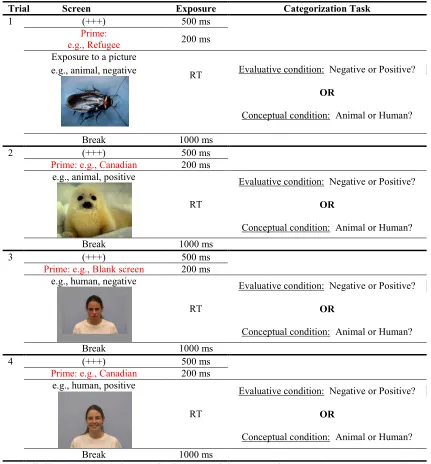
Table 3 Sequential Priming Procedure – Critical Trials... 38
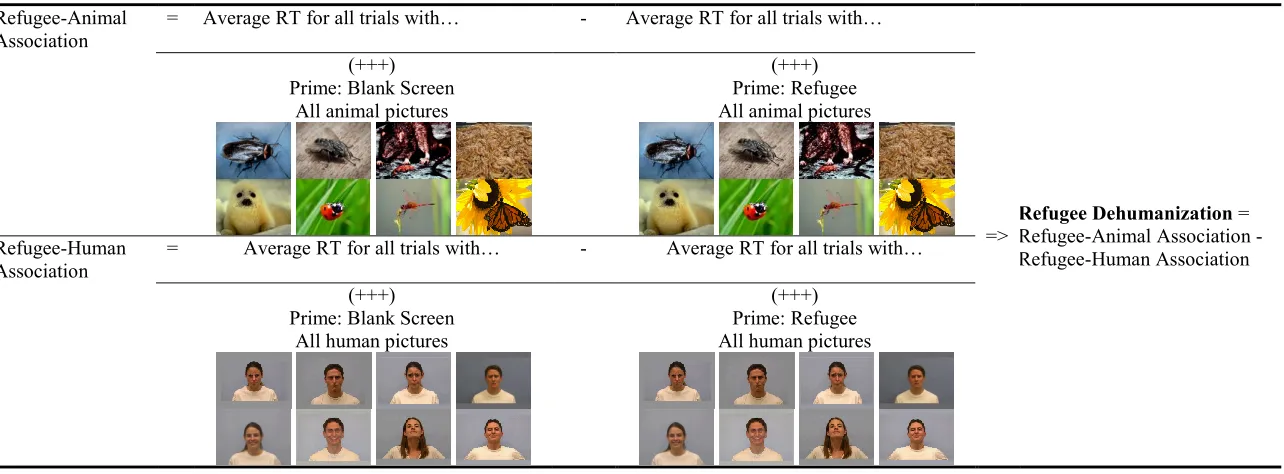
Table 4 Formula for the Calculation of the Automatic Dehumanization of Refugees... 41
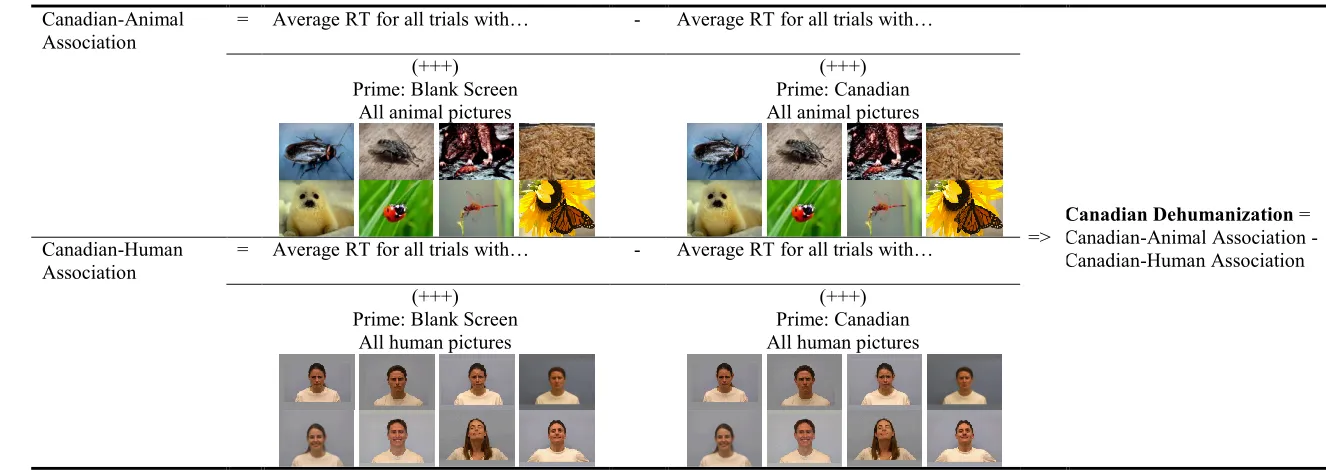
Table 5 Formula for the Calculation of the Automatic Dehumanization of Canadians ... 42
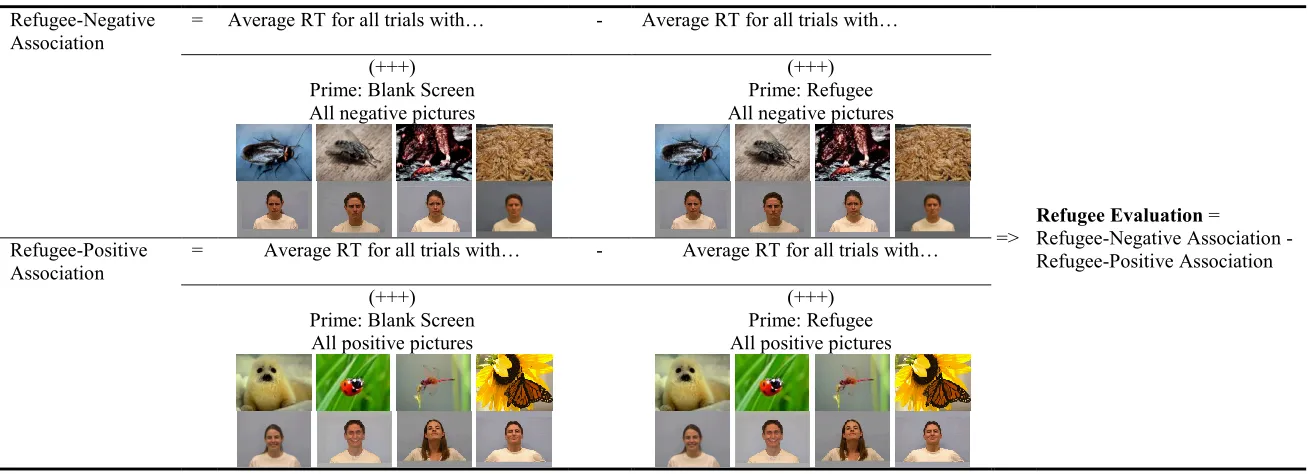
Table 6 Formula for the Calculation of the Automatic Evaluation of Refugees ... 45
Table 7 Formula for the Calculation of the Automatic Evaluation of Canadians... 46
Table 8 Correlations Study 2 ... 51
Table 9 Descriptive Statistics for the Explicit Measures ... 66
viii
List of Figures
Figure 1. The Implicit Social Cognition Model of Media Priming ... 15
Figure 2. Number of articles published in the time investigated ... 26
Figure 3. Newspaper coverage of refugees before and after the arrival of the Tamil refugee ship ... 27
Figure 4. Refugee frames before and after the arrival of the Tamil refugee boat: Toronto Star ... 28
Figure 5. Refugee frames before and after the arrival of the Tamil refugee boat: Vancouver Sun ... 28
Figure 6. Refugee frames before and after the arrival of the Tamil refugee boat: National Post ... 29
Figure 7. Automatic dehumanization for each target group. ... 49
Figure 8. Automatic dehumanization for each target group and type of editorial. ... 49
Figure 9. Automatic dehumanization for each target group. ... 62
Figure 10. Automatic dehumanization for each target group and type of editorial. ... 62
Figure 11. Automatic evaluation for each target group.. ... 64
ix
List of Appendices
Appendix A: Ethics ... 93
Appendix B: Coding From Media Content Analysis ... 95
Appendix C: Definition of the Frames... 98
Appendix D: Media Editorials ... 99
Appendix E: Pictures for Sequential Priming Procedure ... 104
Appendix F: Questionnaire Study 2 ... 108
Appendix G: Questionnaire Study 3 ... 114
Chapter 1
1
Introduction
The dehumanization of outgroups is a phenomenon that has been present throughout
history. In the 17th century, for example, European navigators described people living on
the African coast as animals full of lust and evilness (Jahoda, 1999). The early
association of Black people with apes led to predominant theories of race as represented
by Charles Darwin and Franz Boas (Lott, 1999). These theories argued for a racial
hierarchy, with monkeys and apes on the lower level and Whites on the higher level, as a
result of the evolutionary development of these species. These scientific theories set the
ground for the growing negative stereotypes and prejudice toward Black people, which
are still present to the present day (Goff, Eberhardt, Williams, & Jackson, 2008).
Dehumanization is not a phenomenon unique to Blacks, however. For example, Nazis
referred to Jews as ‘rats’ before and during the Second World War and the Hutu-led
Radio Rwanda described the Tutsis as ‘cockroaches’ during the Rwandan genocide
(Kellow & Steeves, 1998).
More recently, researchers have begun to systematically investigate the
dehumanization of refugees. In Western countries there has been growing resistance to
the arrival of large numbers of refugees, who are often viewed with suspicion and
hostility. With over ten million refugees worldwide seeking resettlement opportunities
(United Nations High Commissioner for Refugees, 2012), researchers have tried to
understand the negative reaction of receiving countries toward such an underprivileged
the dehumanization of refugees in terms of perceiving refugees as engaging in enemy and
barbarian acts and in terms of failure to uphold prosocial values. According to Schwartz
and Struch (1989), if people perceive a group to lack prosocial values (e.g., helpful,
considerate), then they will judge that group to be less human and thus less worthy of a
human treatment. Esses et al. showed in their studies that refugees were perceived to
engage in enemy and barbarian acts. Their results also showed that refugees were
perceived to be less likely to uphold prosocial values in comparison to Canadians, and
that refugees were perceived to be more likely to try to violate procedures and cheat the
system to claim refugee status. These measures of refugee dehumanization were
positively associated with negative emotions toward refugees, which in turn led to more
negative attitudes toward refugees and toward Canada’s current refugee policy. Of
importance, analyses indicated that dehumanization was separable from overall negative
attitudes toward refugees, indicating the distinction between dehumanization and general
prejudice toward refugees (Esses et al., 2008). While the previous study provided support
for the dehumanization of refugees in terms of failure to uphold prosocial values, and in
terms of the perception of refugees as being immoral and engaged in enemy/barbarian
acts, it is not clear the extent to which refugees are also dehumanized in terms of being
associated with animals. Medianu (2010) investigated this question and found that
refugees are more likely to be associated with animals than humans, in comparison to
Canadians. My doctoral dissertation aimed to investigate the possible causes for this
association and, in particular, it aimed to understand the role of the media in the
automatic dehumanization of refugees. My research program aimed to answer the
the negative portrayal of refugees as bogus and criminal/terrorists in the media impact the
automatic dehumanization of refugees? Third, how does the portrayal of refugees as
victims in the media impact the automatic dehumanization of refugees? Fourth, is
automatic dehumanization conditional on the specific categorization task used to assess
dehumanization?
In the following sections, I will first review the phenomenon of dehumanization
with a special emphasis on automatic dehumanization. Second, I will review the concepts
of media framing and media priming. Finally, I will introduce the event of the arrival of
the Tamil refugee boat to British Columbia, Canada, in August of 2010 and provide a
context to the media coverage of this event.
1.1 Dehumanization
Despite the fact that the phenomenon of dehumanization has had a long presence in
human history, researchers in social psychology started to investigate dehumanization
only in the last 15 years (Vaes, Leyens, Paladino, & Miranda, 2012). To understand why
people deny humanness to others it is important to realize that people use social
categories to better navigate through their complex environments (Srull & Wyer, 1979;
Turner, Hogg, Oakes, Reicher & Wetherell, 1987). While the boundaries of these social
categories are often arbitrarily constructed, people do not perceive them as such. Instead,
groups develop specific group realities that are based on the assumption that the socially
constructed differences between groups constitute an important reality in everyday life
(Leyens & Demoulin, 2010). Ethnocentrism, for example, refers to the tendency to regard
one’s group as superior on a variety of dimensions and to perceive outgroups as inferior,
measures might indicate the opposite (Leyens, Demoulin, Vaes, Gaunt, & Paladino,
2007; Summer, 1906). This ‘group reality’ may be explained or justified by attributing
different ‘essences’ to the groups. This can occur by attributing the most general essence,
the human essence, to the ingroup and regarding outgroups as lacking in the human
essence. That is, ingroups may be perceived as human or even supra-human, while other
groups may be “infra-humanized (viewed as less fully human) or even ‘bestialized’
(viewed as animals, such as apes)” (Leyens & Demoulin, 2010, p. 202). Overall,
according to Leyens & Demoulin (2010), ethnocentrism reflects a group reality that
together with essentialist beliefs can give rise to intergroup phenomena such as
dehumanization.
Dehumanization refers to the denial of humanness to others and their exclusion
from the human species (Haslam, 2006). However, the definition of what constitutes
humanness is less clear-cut. Haslam (2006) proposed that humanness has two distinct
senses: human uniqueness and human nature. Uniquely human characteristics refer to
those characteristics that separate humans from animals, such as civility, refinement,
moral sensibility, rationality and maturity. When people deny uniquely human
characteristics to outgroups, they perceive these outgroups as uncivilized, coarse, amoral,
irrational and childlike. In other words, they perceive outgroups as being more
animal-like and thus they dehumanize them in an animalistic way.
Human nature characteristics refer to those characteristics that separate humans
from inanimate objects, such as emotional responsiveness, interpersonal warmth,
cognitive openness, agency and depth (Haslam, 2006). When people deny human nature
and superficial. In other words, they perceive outgroups as being object- or
automaton-like and thus they dehumanize them in a mechanistic way.
Haslam (2014) points out that dehumanization can vary in its blatancy. Blatant
dehumanization refers to when people state that an outgroup is animal-like. For example,
Bandura, Barbaranelli, Caprara and Pastorelli (1996) measured the extent to which
participants agreed or disagreed with statements such as ‘Some people deserve to be
treated like animals’. Similarly, Esses et al. (2008) measured the extent to which
participants perceived refugees as barbarians, in other words as lacking civility. Subtle
dehumanization refers to when people express dehumanization of an outgroup in an
indirect way. In this case, people do not explicitly compare an outgroup to animals or
barbarians, but perceive the outgroup as lacking certain uniquely human characteristics.
For example, Castano and Giner-Sorolla (2006) measured the extent to which participants
thought Native Americans experience uniquely human emotions, such as sorrow,
admiration, fondness and hope. Similarly, Leyens et al. (2001) measured the extent to
which participants attributed uniquely human emotions to ingroups versus outgroups.
This form of dehumanization is subtle because participants were not aware of the
dehumanizing nature of the emotions they assigned to the outgroups. Furthermore, the
dehumanization in terms of uniquely human emotions is subtle because it is not as
extreme as the direct comparison of outgroups to animals.
It is important to note that the subtle-blatant distinction of dehumanization is not a
simple dichotomy, but rather it represents a continuum (Haslam, 2014). There are studies,
for example, that fall in between the two ends of the continuum. For example, Goff et al.
or animals. Similarly, Saminaden et al. (2010) found that indigenous people were more
likely to be implicitly associated with animal-related words than people from modern,
industrialized societies. On the one hand, in these studies dehumanization is blatant
because there are direct comparisons between outgroups and animals. Indeed, the
research uses directly human and animal related words as stimuli. On the other hand, in
these studies dehumanization is also subtle because participants are unaware of what is
being measured because of the use of indirect measures which bypass conscious control.
The main assumption of indirect measures is that attitudes influence people’s
performance on various tasks and that the size of this influence can provide us with a
measure of the underlying attitude (Wittenbrink & Schwarz, 2007). Because the
responses required in the tasks of indirect measures are very fast (a few hundred
milliseconds upon the display of the attitude object), people have limited control over
their responses. In other words, indirect measures observe automatic responses toward
attitude objects. This is particularly important given that with explicit self-reports, people
may be either unwilling or unable to report accurately on their attitudes (for a review, see
DeMaio, 1984). Indirect measures overcome these shortcomings because they do not
require participants to have conscious access to their attitudes or explicitly express them.
1.1.1
Indirect Measures
Indirect measures rely on experimental paradigms to infer people’ attitudes. Some of the
most known experimental paradigms are the evaluative (Fazio et al., 1995) and concept
(Wittenbrink et al., 1997) priming paradigms and the Implicit Association Test paradigm
(Greenwald, McGhee & Schwartz, 1998). In the evaluative priming paradigm,
followed immediately by targets that vary in their evaluative connotation (e.g., positive or
negative pictures). Participants are asked to indicate as quickly as possible whether the
target is positive or negative by pressing the corresponding key (Gawronski, 2009). If
participants respond faster to negative targets when paired with a prime (e.g., the word
refugee), then the prime is assumed to be associated with negative valence. On the other
hand, if participants respond faster to positive targets when paired with the prime, then
the prime is assumed to be associated with positive valence (Gawronski, 2009).
The concept priming paradigm is used to determine the kinds of attributes people
associate with the attitude object (e.g., Lepore & Brown, 1997; Wittenbrink et al., 1997).
The procedure in the concept priming paradigm is similar to the evaluative priming
procedure with one exception. In the concept priming paradigm, participants are
presented with targets that vary in their semantic meaning (e.g., animal vs. human
pictures) rather than in their evaluative meaning (e.g., positive vs. negative pictures).
More specifically, participants are briefly presented with attitude objects as primes (e.g.,
the word refugee) followed immediately by targets that vary in their semantic meaning
(e.g., animal vs. human pictures). If participants respond faster to animal targets when
paired with the prime, then the prime (e.g., the word refugee) is assumed to be associated
with the semantic meaning of the animal concept. On the other hand, if participants
respond faster to human picture targets when paired with the primes, then the prime is
assumed to be associated with the semantic meaning of the human concept (Gawronski,
2009; for scoring procedures see Wittenbrink, 2007).
Finally, the IAT paradigm provides an estimate of the strength of the association
Black persons vs. White persons) (Greenwald et al., 1998; Blanton & Jacard, 2006). The
underlying logic of the procedure is straightforward. On a computer screen, stimuli such
as words or pictures related to the categories of interest are presented, one at a time, to
participants. In the first task, the compatible task, participants are asked to classify the
words or pictures by pressing one of two buttons. One button refers to the category White
or pleasant while the other button refers to the category Black or unpleasant. In the
second task, the incompatible task, participants are asked to classify words and pictures
but with one button referring to the category White or unpleasant and the other button
referring to the category Black or pleasant. The IAT effect is calculated by subtracting
the mean latency for the compatible task from the mean latency for the incompatible task.
People who have an automatic preference for White people will perform faster in the
compatible task than in the incompatible task, while people who have an automatic
preference for Black people will perform faster in the incompatible task than in the
compatible task (Greenwald et al., 1998; Blanton & Jacard, 2006).
1.1.2
Automatic Dehumanization
Only a limited number of studies have investigated the automatic nature of the
dehumanization of outgroups. For example, Paladino and colleagues (2002) found, using
the IAT paradigm, that participants reacted faster to the associations between outgroup
names and non-uniquely human emotions and ingroup names and uniquely human
emotions, than to the opposite associations. While these results point in the predicted
direction, however, they do not provide insight into whether these results are due to a
stronger association of uniquely human emotions with the ingroup and/or are due to a
not clear the extent to which participants were aware of what was being assessed and
whether participants were able to strategically control their answers. Indeed, previous
research suggests that during IAT tasks, participants may become aware of the attitude
under investigation (Dasgupta, McGhee, Greenwald & Banaji, 2000) and may
strategically influence the outcome of the IAT if they are high in self-monitoring and are
highly motivated to fake the outcome (Czellar, 2006).
To overcome these problems, Boccato, Cortes, Demoulin and Leyens (2007) used
a sequential priming procedure instead of the IAT. Compared to the IAT, sequential
priming procedures with their short SOAs (Stimulus Onset Asynchrony) between prime
and target are less likely to allow participants to exert intentional control over their
answers. Furthermore, the sequential priming procedure allowed Boccato et al. (2007) to
find out which association is stronger: the ingroup/uniquely human emotions association
or the outgroup/non uniquely human emotions associations. Their results showed that
when participants were primed with a uniquely human emotion, they were faster to
identify an ingroup (White) photograph than when they were primed with a non-uniquely
human emotion. Importantly, when participants were primed either with a uniquely or
non-uniquely human emotion, they were equally fast to identify the outgroup photograph
(Black). These results suggest that people are especially likely to automatically associate
their ingroup with uniquely human emotions.
Furthermore, using a sequential priming procedure, Boccato et al. (2008) showed
in their studies that participants not only automatically associated their ingroup more
strongly with human beings than outgroups, but also that participants automatically
al. (2008) found support for the tendency of White Americans to associate Blacks more
with apes than with other animals, while Whites were not associated with animals at all.
Moreover, this Black-ape association had clear negative consequences for the treatment
of Black targets. Participants who were primed with the Black-ape association were more
likely to agree with the beating of Black criminal suspects.
In my research, I was particularly interested in investigating whether refugees are
more likely to be associated with animals than humans in comparison to Canadians
(Medianu, 2010). Furthermore, I was interested in examining whether the automatic
dehumanization of refugees is conditional on the type of categorization task. Previous
research has shown that primed memory contents differ under different judgment
contexts created by different tasks (Wittenbrink, Judd, & Park, 2001). Wittenbrink et al.
showed in their study about prejudice toward Blacks that the concept priming procedure
(Wittenbrink, Judd, & Park, 1997) activated a “stereotypic prejudice” which was related
to explicit racial attitude scales, while, using the same stimuli, the evaluative priming
procedure activated a “more generalized form of automatic prejudice” and did not
correlate with explicit racial attitude scales. Similarly, De Houwer, Hermans,
Rothermund and Wentura (2002) demonstrated that the congruence in valence of primes
and targets impacted priming effects only in an evaluative judgmental task but not in a
conceptual judgmental task. In other words, when participants were asked to categorize
targets as persons or objects (e.g., “mother”), it did not matter whether the primes (e.g.,
“suffer” or “kiss”) matched the valence of the targets or not. Overall, the different tasks
seem to activate different relevant goal states and influence the primed memory contents
Using the concept priming paradigm (Wittenbrink et al., 1997) and the evaluative
priming paradigm (Fazio et al., 1995), Medianu (2010) exposed participants first to a
prime word – refugee, Canadian or no prime – and then asked the participants to classify
a series of pictures of human faces and animals either as human or animal (conceptual
priming task) or as positive or negative (evaluative priming task). As expected, refugees
were not only more likely to be automatically associated with negative valence in
comparison to Canadians, but they were also more likely to be automatically associated
with animals in comparison to Canadians.
Also, the results suggested that, while the automatic evaluation of refugees was
conditional on the type of categorization task, the automatic dehumanization of refugees
was not conditional on the type of categorization task. Negative valence was more likely
to be associated with refugees in comparison to Canadians only when participants
performed the evaluative categorization task and not the conceptual categorization task.
On the other hand, refugees were more likely to be automatically dehumanized in
comparison to Canadians independent of the type of categorization task. This is an
interesting finding which suggests that as soon as participants are primed with the word
refugee, the animal concept gets activated independent of the current goals set through
the task. However, because the results were only marginally significant, it is premature to
draw definite conclusions about the unconditional nature of automatic dehumanization
and the conditional nature of automatic evaluation. Having established that refugees are
more automatically dehumanized than Canadians, a question that arises concerns the
potential causes of this association. In particular, what is the role of the media in the
1.2
Media Framing and Media Priming
In many cases, individuals form their attitudes and beliefs about other people and social
groups based on direct experiences (Oliver, Ramasubramanian & Kim, 2007). Indeed,
Allport (1954) set a milestone in psychology emphasizing the importance and impact of
these direct experiences with social groups and their members on the quality of the
intergroup relations. However, direct contact is often limited by geographical and social
boundaries so that other sources of information, such as the media, become very
important in the process of shaping attitudes and beliefs about other people (Oliver et al.,
2007).
1.2.1
Media Framing
Besides providing information, an important characteristic of the media is its contribution
to how issues are discussed. While effective journalism should report issues as they
occur, many times media frames or filters are used to form, misrepresent or even censor
journalism (Herman & Chomsky, 1988). An issue may be described or framed in a
particular way in order to construct a certain reality and ease its interpretation,
influencing people’s attitudes and behaviours (Entman, 2007; Gross & D’Ambrosio,
2004). Steuter and Wills (2009; 2010), for example, examined how 9/11 was framed in
Western (including Canadian) newspaper stories to build and strengthen a clear enemy
picture in order to justify the ‘War on Terror’. Interestingly, Steuter and Wills found that
newspaper stories employed dehumanizing language, portraying the enemy as animals,
vermin or metastatic disease. Another example is the arrival of four Chinese refugee
boats to Canada in 1999, which created the impression that the immigration and refugee
Canadian newspapers and found that specific words were used to describe the migrants
(“greedy”, “selfish” or “illegal”) and their arrival (“invasion” or “flood”).
Mahtani and Mountz (2002) investigated the media portrayal of the arrival of
refugees from China to British Columbia, Canada, in 1999. The researchers found that
newspaper articles portrayed the event as a crisis despite the relatively small number of
refugees arriving by boat compared to the total number of refugees accepted to Canada
every year. Furthermore, the researchers point out that the media portrayal of the arrival
of the refugees aimed to create panic and anxiety among the public by describing them as
bogus, as carriers of threatening diseases and as potential terrorists. Similarly, Henry and
Tator (2002) examined the media discourse of Canadian immigration in the National
Post. The results found that between 1998 and 2000 “the overwhelmingly majority of the
articles, features, and editorials were opposed to current immigration policies and
practices and critical of the values and norms of immigrants and refugees” (Henry &
Tator, 2002, p. 111). Furthermore, the researchers found several reoccurring themes. For
example, refugees were described as bogus and refugee policy was described as being lax
and allowing terrorists to enter Canada.
One explanation for the impact of the media on people’s perceptions of social
groups and their members is the repeated association between specific words or
metaphors with the social groups (Oliver et al., 2007). These social groups, when
encountered later alone, may serve as primes and activate cognitions associated with the
portrayal in the media and influence attitudes toward members of the social group.
media cultivates negative perceptions of how outgroups are perceived in society (e.g.,
Mastro, Behm-Morawitz, & Ortiz, 2007).
1.2.2
Media Priming
One theory that explains the media’s influence on people’s attitudes is the implicit social
cognition model of media priming (Arendt, 2013). This model assumes that a person’s
knowledge and attitudes are cognitively stored and organized in the form of an
associative neural network (Anderson, 1990; Greenwald & Banaji, 1995). This
associative neural network is made of many interlinked elements or mental concepts.
When a mental concept is activated, interlinked concepts are activated through spreading
activation. These associations between concepts can vary in their strength. Some
concepts may be strongly connected to each other, while others may not. Importantly, the
activation of the mental concepts increases their temporary accessibility. Frequent
activation of these mental concepts in turn increases their chronic accessibility.
The implicit social cognition model of media priming (Arendt, 2013) argues that
the media acts as an external stimulus which influences the associations between
concepts in memory. For example, the repeated simultaneous presentation of the two
concepts ‘refugee’ and ‘bogus’ in the media activates, strengthens and increases the
accessibility of the association between these two concepts and their closely related
concepts (e.g., animal, see Figure 1). The media also shapes the pattern of associations by
providing new information that is encoded in memory, which may again directly, or
indirectly through spreading activation, re-activate pre-existing memory associations.
increasing the accessibility of concepts in people’s minds. Repeated media priming
effects can then lead to the chronic accessibility of concepts in people’s minds.
Figure 1. The Implicit Social Cognition Model of Media Priming (based on Arendt,
2013)
Finally, the implicit social cognition model of media priming also draws upon
principles from the Associative-Propositional Evaluation (APE) model (Gawronski &
Bodenhausen, 2006). The implicit social cognition model of media priming argues that
highly accessible mental associations are more likely to be transformed into propositions
or declarative knowledge. For example, the highly accessible association between the
concepts ‘refugee’ and ‘bogus’ may be transformed into the proposition ‘refugees are
bogus’. This new proposition is then subjected to a validation process based on syllogistic
inferences. The perceived validity of the new proposition depends on other currently
new proposition, the new proposition is likely to be altered in order to avoid the
experience of cognitive dissonance (Festinger, 1957). For example, if another proposition
motivates us to appear unprejudiced, the new proposition may be changed into ‘refugees
are not bogus’.
Previous research has investigated the effects of different types of media, such as
print and audiovisual media, on the strength of automatic associations between concepts
in memory. For example, research on the impact of TV advertisements showed that after
exposure to anti-tobacco and anti-marijuana ads, participants showed increased negative
implicit attitudes toward these substances (Czyzewska & Ginsburg, 2007). Similarly,
negative political campaigns, which depicted an opponent in negative terms, led to less
favourable implicit evaluations of the source of the campaign as well as the opponent
mentioned in the campaign (Carraro, Gawronski & Castelli, 2010).
In respect to newspaper articles, Arendt (2010) showed that repeated exposure to
a newspaper that was reporting in a negative way about the European Union increased
implicit negative attitudes of the readers toward the European Union. In another study,
Arendt (2012) investigated the effect of newspaper articles over-representing members of
minority groups as criminals. The researcher found that these newspaper articles
strengthened the automatic association in memory between the minority group and the
concept ‘criminal’. Finally, Arendt (2013) examined the effect of newspaper articles
depicting foreigners as criminals on implicit and explicit stereotypes. Importantly, Arendt
manipulated the number of times that the nationality of the foreigner was mentioned in
relation to the reported crime in the article. The results showed a consistent media
that nationality was mentioned. However, the media priming effect on participants’
explicit stereotypes only occurred once a certain threshold was reached and declined once
the newspaper article became too blatant. That is, the priming effect on participants’
explicit attitudes occurred only once the newspaper article mentioned the nationality of
the foreigner several times and declined once the nationality of the foreigner was
mentioned too many times. Overall, the above studies suggest that exposure to different
media depictions has an impact on the strength of automatic associations in people’s
memories.
1.3
Media Depictions of Refugees
The current research aimed to examine how refugees are portrayed in Canadian
newspapers, and how these media depictions influence the automatic dehumanization of
refugees. In particular, in my thesis, I chose to investigate the media’s coverage of the
arrival of the Tamil refugee boat to British Columbia in August of 2010. There are
several reasons for choosing this particular event. First, the occurrence of the event is
fairly recent. Second, the event is similar to previous refugee boat arrivals to Canada, not
only in the way the event was covered in the media, but also in the way it led to
subsequent immigration policy changes. The purpose of my research was to deepen the
understanding of the role of the media in shaping public attitudes toward refugees in
Canada, in particular in terms of whether the media enhances the automatic
dehumanization of refugees.
Refugee boat arrivals occur approximately once every decade in Canada
(Bradimore & Bauder, 2011). For example, in October 2009, seventy-six Tamil refugees
same shores. These events were preceded by the 1999 arrival of 599 refugees from the
Fujian province of China. Before that, in 1987, 174 Sikh refugees reached the shores of
Nova Scotia, while in 1986, 152 Sri Lankan refugees reached the same shores. These
refugee numbers are small in comparison to the number of refugees that Canada accepts
every year (Bradimore & Bauder, 2011). In 2008, 36,000 people made refugee claims
within Canada or at a Canadian port of entry and about half of them received a positive
response to their applications (Maytree, 2009).
Despite this reality, with the arrival of each refugee boat, the media tends to create
a feeling of panic and anxiety among the public regarding the vulnerability of the
Canadian immigration system, and this eventually prompts government officials to
review refugee policy. For example, the Canadian media was extremely concerned with
the arrival of boats carrying Tamil refugees in 1986 and Sikh refugees in 1987 to Canada.
Only two years later, Bill C-55 was officially introduced creating the Immigration and
Refugee Board with the goal of reducing bogus refugee claimants (Bradimore & Bauder,
2011). In 1999, the arrival of migrants from the Fujian province of China was met with
similar skepticism by the Canadian media. Not long after that, in 2002, the Immigration
and Refugee Protection Act was introduced (Bradimore & Bauder, 2011). Finally, on
August 13, 2010, the MV Sun Sea arrived on the shores of British Columbia carrying 497
Tamil refugees. Immediately after that, on October 21, 2010, the federal government
introduced Bill C-49: Preventing Human Smugglers from Abusing Canada's Immigration
System Act in Parliament (Bradimore & Bauder, 2011).
The context behind the arrival of the Tamil refugees in British Columbia in 2010
the goal of escaping the bloody aftermath of a civil war that had been going on for the
last twenty years. Despite the fact that the Sri Lankan civil war officially ended in May
2009, Tamils still faced the threat of violence. Because of that, many Tamils had to flee
for safety (Human Rights Watch, 2010). Indeed, human rights agencies expressed
extreme concern over human rights violations in Sri Lanka. In fact, concerned citizens,
many of them of Tamil origin, also protested in the streets of Toronto and condemned the
ongoing violence in Sri Lanka. Despite this reality, the 492 Tamil refugees received ‘a
cold welcome’ from the media and the Canadian public (Bradimore & Bauder, 2011).
According to an Angus Reid poll (2010), more than half of Canadians (64%) were
following the story of the arrival of the Tamil refugees in the media ‘very closely’ or
‘moderately closely’, including 72% of respondents in British Columbia. The poll also
showed that 63% of Canadians thought that the ship carrying the Tamil refugees should
have been sent back and not allowed to reach the Canadian shores. Eighty-three percent
of Canadians also thought that the Tamil refugees were bogus and were trying to jump
the immigration queue. Even under the assumption that the refugee claims were
legitimate and that there were no links between the Tamil refugees and any terrorist
organization, 48% of the respondents still believed that the passengers and the crew
should be deported to their country of origin. Only 35% of the respondents said that the
Tamil refugees should be allowed to stay in Canada as refugees.
Based on these findings, I expected that the media coverage of the arrival of the
Tamil refugee boat in Canada in 2010 would include mainly negative depictions of
refugees. I also expected that exposure to these articles would elicit media priming effects
1.4
Overview
In Study 1, I conducted a media content analysis to investigate how refugees were
portrayed before and after the arrival of the Tamil refugee boat to Canada in August of
2010. Based on these results, in Study 2, I investigated the effects of negative (bogus or
terrorist) and neutral media depictions of refugees on the automatic and explicit
dehumanization of refugees. In Study 3, I investigated the effects of negative (bogus),
potentially positive (victims), and neutral media depictions of refugees on the automatic
and explicit dehumanization of refugees. In Study 3, I also examined the effects of these
media depictions of refugees on explicit emotions toward refugees, willingness to have
contact with refugees, and attitudes toward policies that aim to support refugees. Finally,
in Studies 2 and 3, I also re-examined the question of whether the automatic
dehumanization of refugees is conditional on the type of categorization task (evaluative
Chapter 2
2
Study 1
Why are refugees automatically associated with animals in comparison to Canadians?
One possible answer may lie in how refugees are depicted in the media. Through its
negative depictions of refugees, the media might build and/or strengthen the mental
associations of refugees with the animal concept. Two main questions were addressed in
Study 1. First, I investigated how refugees are generally portrayed in Canadian
newspapers. Based on previous research (Esses et al., 2008; Greenberg, 2000), I expected
that refugees would be portrayed in a negative light, describing them as immoral and
likely to cheat the system to claim refugee status. Second, I was interested in how a
unique event – in this case, the arrival of the Tamil refugee boat to Canada in 2010 -
impacted the depiction of refugees. In order to investigate this question, I examined how
refugees were portrayed six months before and six months after the arrival of the Tamil
refugee boat.
2.1 Method
Newspaper articles. The newspapers were selected according to their circulation and
location. I selected the most highly circulated newspapers in Canada - Toronto Star and
The Globe and Mail - as well as the newspapers Vancouver Sun, Calgary Herald,
National Post and Ottawa Citizen to cover the major cities in Canada. The time
investigated included six months before and six months after the arrival of the Tamil
refugee ship to Victoria, Canada, on the 13th of August 2010. To identify all the relevant
online database for Canadian newspapers. Similar to Dimitrova and Stromback’s (2005)
procedure, I searched for all articles and editorials that included the key term ‘refugee’ in
the headline or abstract and were longer than 400 words. The search yielded a total of 95
articles for the whole period investigated (46 articles six months before and 49 articles six
months after the arrival of the Tamil refugee boat): Toronto Star (n = 36), Vancouver Sun
(n = 17), National Post (n = 17), Ottawa Citizen (n = 11), Calgary Herald (n = 9) and
The Globe and Mail (n = 5). One article was published on the 13th of August 2010 and
was included in the six months before the event period. There was no multiple coverage
of the same article or editorial in the selected newspapers.
Coding scheme. The coding scheme consisted of four categories based on Snow
and Benford (1988) and Roggeband and Vliegenthart (2007). The first category,
voice/standing, refers to the source of the information and the use of specific quotes,
statistics or alternatives provided in the articles. The second category, diagnosis, is
concerned with the problem, causes and/or the entity being perceived to be responsible
for causing the problem. The third category, prognosis, looks at the potential solutions to
the problem. Finally, the fourth category, call for action, asks whether specific actions are
suggested or not, who is acted on, what the boundaries of these actions are, and/or how
non-action is legitimized (see also Appendix B).
Coding procedure. Two research assistants who were uninvolved in the selection
of the articles independently coded the articles based on the questions within the four
categories mentioned above (see coding scheme). Each research assistant was randomly
assigned to half of the articles for the time period ‘six months before the arrival of the
coding all articles, I asked each research assistant what the common themes were based
on their answers to the coding scheme. Then, we compared and discussed the results of
each coder in order to decide on the final themes. Importantly, the final themes had to
fulfill two criteria. First, each theme should not be too narrow to maintain relevance.
Second, we aimed for a minimum overlap between themes in order to ensure their
distinctiveness. After determining the final themes, the two research assistants assigned
each article to the corresponding theme. Each article could be assigned to only one
theme. The inter-rater reliability for assigning the articles to the specific themes was good
(IR = .80; Holsti, 1969).
2.2
Results
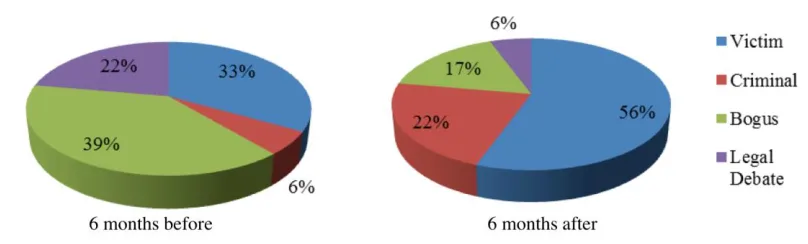
The analyses showed that the newspapers depicted refugees in terms of four themes.
Forty percent of the total number of articles corresponded to the victim theme, 29.5% to
the bogus theme, 20% to the criminal/terrorist theme, and 10.5% to the legal debate
theme. The articles using the ‘victim’ theme discussed refugees as having endured
hardships, pointing out to the need for Canada to continue accepting refugees. In contrast,
the articles using the ‘bogus’ theme portrayed refugees as false claimants who are trying
to jump the queue and are clearly taking advantage of the Canadian immigration system,
suggesting that the immigration system should be tightened. The articles using the
‘criminal/terrorist’ theme described refugees as having entered Canada with the help of
human smugglers or associated them with terrorism. Finally, the articles using the ‘legal
debate’ theme discussed possible solutions to current problems within the Immigration
Descriptive results showed that in comparison to the six months before the arrival
of the Tamil refugee boat, a larger percentage of the total number of newspaper articles
contained the ‘victim’ theme in the six months period after their arrival (30.4% to 49%).
At the same time, the criminal/terrorist theme increased from 8.7% to 30.6%, whereas the
bogus (45.7% to 14.3%) and the legal debate theme (15.2% to 6.1%) decreased (see
Table 1). To test whether these differences before and after the event were statistically
significant, I conducted a chi-square test. The results showed that there was a significant
association between newspaper frame and time period X2(3) = 17.52, p < .01. The
decrease in articles with the bogus frame after the event was significant (from 21 to 7, p <
.05) and the increase in articles with the criminal frame after the event was marginally
significant (from 4 to 15, p < .10).
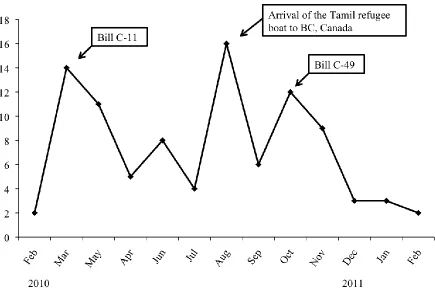
These changes might be better understood when looking at the three spikes in
number of articles published throughout the period investigated (see Figure 2). As
expected, most articles were published in the second half of August 2010, when the
Tamil refugee boat arrived to Canada. During this time, refugees, in particular Tamil
refugees, were either portrayed as victims or criminals/terrorists. In fact, the majority of
articles portraying refugees in criminal/terrorist terms were published during the three
months after the arrival of the Tamil refugee ship. In line with these results, another spike
in number of articles published was in October 2010, when the Canadian Government
discussed a bill to prevent human smugglers from abusing Canada’s Immigration System.
Finally, the third spike was in March 2010, before the arrival of the Tamil refugee boat.
discussion of a bill that aimed to speed up the decision-making process of deciding
Table 1
Refugee Frames Used by the Media Six Months Before and After the Event
6 months before 6 months after
Victim 30.4% 49.0%
Criminal/Terrorist 8.7% 30.6%
Bogus 45.7% 14.3%
Legal Debate 15.2% 6.1%
Total 100% 100%
Figure 2.Number of articles published in the time investigated
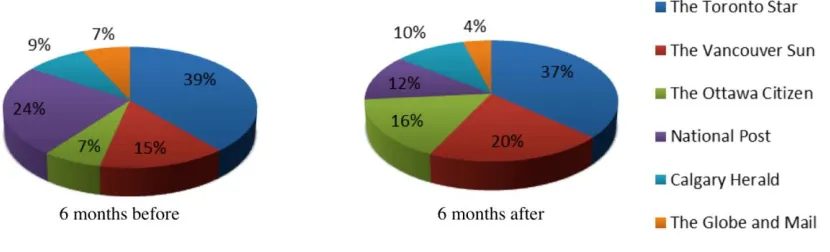
There were also considerable variations between newspapers. In terms of
newspaper coverage, the Toronto Star had the highest share. Indeed, the Toronto Star
and 37% after the arrival. Interestingly, The Globe and Mail, the second largest
newspaper in terms of circulation in Canada, had the lowest share of newspaper coverage
before (7%) and after (4%) the arrival of the Tamil refugee boat, followed by the Calgary
Herald with a share of 9% before and 10% after the arrival of the Tamil refugee boat.
Both the Vancouver Sun and the Ottawa Citizen increased their shares after the arrival of
the Tamil refugee boat, from 15% to 20%, and from 7% to 16%, respectively. Finally, the
National Post reduced its share after the arrival of the Tamil refugee boat from 24% to
12% (see Figure 3).
Figure 3. Newspaper coverage of refugees before and after the arrival of the Tamil
refugee ship
The Toronto Star and Vancouver Sun were more likely to frame refugees as
victims after than before the arrival of the Tamil refugee boat. From all the articles
published in the Toronto Star, 33.3% of the articles framed refugees as victims before the
arrival of the Tamil refugee boat and 55.6% after the arrival. Similarly, from all the
articles published in the Vancouver Sun, 42.9% of the articles framed refugees as victims
before the arrival of the Tamil refugee boat and 80% after the arrival. In contrast, from all
articles framed refugees as bogus before the arrival of the Tamil refugee boat and 50% of
the articles framed refugees as criminals/terrorists after the arrival of the Tamil refugee
boat (see Figures 4 – 6).
Figure 4. Refugee frames before and after the arrival of the Tamil refugee boat: Toronto
Star
Figure 5. Refugee frames before and after the arrival of the Tamil refugee boat:
Figure 6. Refugee frames before and after the arrival of the Tamil refugee boat: National
Post
2.3
Discussion
The aim of Study 1 was to investigate how refugees were generally portrayed in
Canadian newspapers and how the arrival of the Tamil refugee boat to Canada in 2010
impacted their depiction. The results revealed that the overall portrayal of refugees in the
Canadian press in response to this event was mixed. As expected many Canadian
newspapers portrayed refugees in a negative light, either as bogus or criminals/terrorists.
Interestingly, the arrival of the Tamil refugee boat seemed to have an impact on these
depictions. Whereas before the event refugees were more likely to be portrayed as bogus,
after the event refugees were more likely to be portrayed as criminals/terrorists, being
blamed for entering Canada with the help of human smugglers or even being suspected of
terrorist links. However, unexpectedly, refugees were not only portrayed in negative
terms. Canadian newspapers also depicted refugees as victims in need of help. This was
particularly the case among newspapers such as the Toronto Star and Vancouver Sun.
It is interesting to note that there were substantial variations in the extent to
which newspapers reported on the issue of refugee arrivals, as well as in their refugee
portrayals. These variations are likely due to the different target audiences of the
newspapers and their agenda setting. In addition, the geographical location might have
had an impact on the news coverage, especially on the West Coast of Canada where the
Tamil refugee boat arrived. For example, the Vancouver Sun reported on refugee issues
to a larger extent after the arrival of the Tamil refugee boat, portraying them mainly as
victims.
After establishing how refugees are generally portrayed in Canadian newspapers,
I was interested in investigating in Study 2 the impact of the negative refugee depictions
Chapter 3
3
Study 2
Study 1 showed that six months before and after the arrival of the Tamil refugee boat to
Canada in August 2010, the Canadian news print media portrayed refugees using three
major themes: bogus, criminal/terrorist and victim. The aim of Study 2 was to investigate
how two of these themes, the bogus and criminal/terrorist themes, influence the automatic
and the explicit dehumanization of refugees. To this end, I asked participants to read
either a bogus, terrorist or neutral (control) newspaper editorial before performing either
the evaluative or conceptual priming task and completing a questionnaire to assess
explicit dehumanization of refugees.
Based on the implicit social cognition model of media priming (Arendt, 2013), I
predicted that participants would automatically dehumanize refugees more than
Canadians in the bogus and terrorist editorial conditions, but not in the neutral editorial
condition. The implicit social cognition model of media priming (Arendt, 2013) argues
that the media can elicit a priming effect by temporarily increasing the accessibility of
concepts in people’s minds. In particular, the model argues that the exposure to media
portrayals of refugees as being bogus or terrorists will activate, strengthen and increase
the accessibility of the association between these concepts and their closely related
concepts (e.g., ‘animal’, see Figure 1) through spreading activation. I predicted that in the
bogus and terrorist editorial conditions, the increased accessibility of the primed concepts
(‘refugee’, ‘bogus’ and ‘terrorists’) would lead to increased automatic dehumanization of
‘animal’). Furthermore, I predicted that the exposure to neutral media portrayals of
refugees would not activate the concept ‘refugee’ in conjunction with concepts such as
‘bogus’, ‘terrorist’ and related concepts such as ‘animal’ and thus not lead to more
automatic dehumanization of refugees in comparison to Canadians.
Moreover, I predicted that the newspaper editorials would have an effect on the
explicit dehumanization of refugees. This prediction was based on previous research.
Esses et al. (2008) examined the effect of negative media depictions on the explicit
dehumanization of refugees. In particular, the researchers investigated the impact of a
real newspaper editorial, which portrayed refugees as violating and cheating the
immigration system, on the explicit dehumanization of refugees. Their results showed
that, compared to a neutral editorial, the negative editorial led to increased explicit
dehumanization of refugees.
Finally, I wanted to explore the extent to which automatic dehumanization is
conditional on the type of categorization task (evaluative versus conceptual). Based on
Medianu (2010), I expected that the automatic dehumanization of refugees would not be
conditional on the type of categorization task.
3.1 Method
Participants and design. Sixty-four undergraduate students (40 females, 23 males, 1
unspecified) participated for course credit. Participants’ ages ranged from 17 to 42 (M =
20.21, SD = 4.65). The small sample size in this study was due to unusually low
participant sign-ups in our department in the year in which this study was conducted. The
refugee, Canadian, or no prime) x 2 (targets: human pictures or animal pictures) x 2
(target valence: positive or negative) x 2 (target categorization task: human/animal or
positive/negative) mixed model design, with prime, target, and target valence as
within-subject factors and editorial content and target categorization task as between-within-subjects
factors.
Procedure and measures. Participants were asked to participate in a study about
“current affairs” and were randomly assigned to read one of the three newspaper
editorials that were specifically designed for the purposes of this experiment (see
Appendix D). The editorials all discussed the anticipated arrival of a fictitious refugee
group by boat to the east coast of Canada. I decided to use a fictitious refugee group in
order to make sure that the previous knowledge of participants about refugee groups
would not contaminate the results of the study. In particular, the “bogus” editorial raised
the question of whether this refugee group should be sent home before reaching the
Canadian coast, arguing that many refugees seek protection even if they are clearly not at
risk and engage in illegal activities to overcome the ordinary immigration system. The
“terrorist” editorial raised the serious concern that terrorist leaders may be among the
refugees on the boat and aim to set up a terror-based government-in-waiting in Canada
and “even import their civil war into Canada”. Both the bogus and the terrorist editorial
were based on real editorials depicting the arrival of the Tamil refugees to Canada.
Finally, the “neutral” editorial provided a factual description of today’s refugees to
Canada. After reading the editorials, participants were asked several filler questions as
well as questions about the main argument to ensure that participants actually read and
Next, participants completed either an evaluative or a conceptual priming task
adopted, respectively, from Fazio et al. (1995) and from Wittenbrink et al. (1997).
Similar to Medianu (2010), the evaluative and conceptual priming paradigms were
chosen in order to be able to differentiate the extent to which participants automatically
associate refugees to negative valence and Canadians to positive valence (automatic
evaluation) as well as to differentiate the extent to which participants automatically
associate refugees to animals and Canadians to humans (automatic dehumanization).
Moreover, the evaluative and conceptual priming paradigm were chosen over the IAT
paradigm to avoid any bias resulting from participants’ deliberate efforts to influence
their responses (Czellar, 2006; Dasgupta et al., 2000).
In both conditions, the evaluative priming task condition and the conceptual
priming task condition, participants were told that the purpose of the experiment was to
investigate how people categorize pictures. First, all participants were exposed to sixteen
practice trials with no preceding primes. In these practice trials the participants who
performed the evaluative priming task were asked to indicate whether a given picture was
positive or negative and pressed the left key as fast as possible if the picture was negative
and pressed the right key if the picture was positive. The participants who performed the
conceptual priming task were asked to indicate whether the same picture represented an
animal or a human and pressed the left key as fast as possible if the picture was an animal
and pressed the right key if the picture was human. The human pictures included pictures
showing the upper body and face of either a white man or a white woman and varied in
their valence. The positive human pictures included the emotions of happiness and pride,
source of the pictures see Tracy et al., 2009). The animal pictures were pictures of insects
and mammals and also varied in their valence. The positive animal pictures included a
baby seal, a butterfly, a dragonfly, and a ladybug, and the negative animal pictures
included a rat, a cockroach, worms, and a fly (see also Appendix E). These animal
pictures were selected based on a pilot study for my Master’s thesis and were utilized in
that research as well. The pilot assessed the perceived valence of various animal pictures
and I then selected one mammal and three insect pictures that received appropriate
ratings for each of the positive and negative categories. During the practice trials, each
picture was presented once. Each practice trial started with a warning signal (+++) for
500 ms, followed by a blank screen for 200 ms. Then the picture was presented at the
centre of the computer screen. The distance from the participants’ eyes to the centre of
the screen was approximately 55 cm.
After the practice trials, participants were exposed to the critical trials with the
primes. The primes included the word refugee, Canadian and a no prime condition. The
primes appeared in bold 30 point Arial font letters in bright yellow colors on a black
background (e.g., Deutsch, Gawronski & Strack, 2006). Following in part Judd, Blair,
and Chapleau’s (2004) version of sequential priming, participants first viewed a fixation
point (+++) for 500 ms. A prime then appeared for 200 ms, followed by a picture of a
target object. Thus, the stimulus-onset asynchrony (the delay between the display onset of
the prime and the target) was 200 ms. The inter-trial interval was 1000 ms. Each prime
was paired three times with each picture (3x16x3 = 144 trials). Reaction times to
categorize pictures preceded by primes or no primes were recorded. For a schematic
Finally, once participants completed the sequential priming tasks, they were asked
to complete the enemy/barbarian measure of dehumanization used previously by Esses et
al. (2008). The reason why I decided to use this scale instead of simply asking
participants whether refugees are like animals was because I was concerned that such a
measure would be too blatant. The enemy/barbarian scale of explicit dehumanization
consisted of twelve items that were rated on a 7-point Likert scale (1 = strongly disagree
to 7 = strongly agree). A sample item is ‘Refugees would take advantage of any efforts
on our part to cooperate, and they would even try to exploit us’. The scale computed as
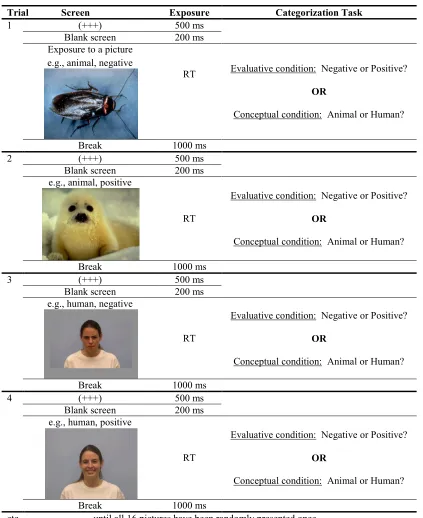
Table 2
Sequential Priming Procedure – Practice Trials
Trial Screen Exposure Categorization Task
1 (+++) 500 ms Blank screen 200 ms Exposure to a picture
RT Evaluative condition: Negative or Positive?
OR
Conceptual condition: Animal or Human? e.g., animal, negative
Break 1000 ms 2 (+++) 500 ms
Blank screen 200 ms e.g., animal, positive
RT
Evaluative condition: Negative or Positive?
OR
Conceptual condition: Animal or Human?
Break 1000 ms 3 (+++) 500 ms
Blank screen 200 ms e.g., human, negative
RT
Evaluative condition: Negative or Positive?
OR
Conceptual condition: Animal or Human?
Break 1000 ms 4 (+++) 500 ms
Blank screen 200 ms e.g., human, positive
RT
Evaluative condition: Negative or Positive?
OR
Conceptual condition: Animal or Human?
Break 1000 ms