30
Implementation of LMS Algorithm for AEC’s in Mobile
Communication Systems
Dr. Raja Murali Prasad
Professor, Vardhaman College of Engineering, Hyderabad, Telangana, India
Abstract:- In cellular mobile communication systems, an Acoustic Echo Cancellation (AEC) algorithm performs an imperative aspect. The approximated error can be diminished by these algorithms while regulating the step size through which the rate of convergence promotes significantly. The Least Mean Square (LMS) filter, a leading adaptive filter is used to revoke the echo. The distinct adaptive filter which endures the double talk with a step size control method is an expansion for the LMS such as normalized LMS (NLMS) algorithms. Two adaptive filter structures are used rather a single adaptive filter that regulates the step size for revoking the echo steadily in the proposed algorithm, which is an extension for the state of art AEC algorithms. Sub adaptive filter (SAF) and main adaptive filter (MAF) are the two adaptive filter structures used in this algorithm. Convergence and approximated error have been demonstrated in the simulation outcomes that the proposed algorithm executed preferable to the conventional adaptive filters.
Keywords:- AEC algorithm, NLMS, SAF, MAF.
1. INTRODUCTION
The adaptive filter coefficients are disturbed by primarily two aspects in AEC systems. For evaluating the coefficients, power fluctuation of far end talker’s signal can be used which results in disturbing the adaptive filter coefficients. This disturbance can be efficiently countered by employing the block length control [1], [2] and [3]. The superposition of near end talker’s signal on the acoustic echo is called as gibberish which is another factor in disturbing the adaptive filter coefficients. This superposition can be averted by wavering the assessment during the gibberish. The expeditious and specific detection of the superposition is precondition to the avoidance. Hence like [2] and [3] methods, many gibberish detection mechanisms have been considered. The convergence agility of the coefficients is excessively moderate while the estimation error is huge which the flaws of these methods are. The Least mean square algorithm [4] is the most prominent adaptive algorithm because of its integrity. But the passive and data reliant convergence behavior results appear from the LMS algorithm. Apart from this algorithm, the NLMS algorithm has been given a more scrutiny in real time applications, shows a improved balance between simplicity and action than the LMS algorithm and more prosperous variant of the LMS algorithm. But, NLMS conjointly suffers from lack of stability that in results the degradation of systems performance [5], [6], [7] and [8]. To overcome these drawbacks, here during this paper a replacement step size dominant theme has been enforced to boost the convergence speed and to cut back the calculable error. In this new method, we considered two adaptive filters for the cancellation of gibberish. The two adaptive filters are SADF and MADF. The primary point of the venture is that the MADF will drop the
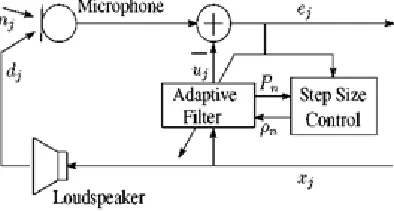
[image:1.612.346.543.433.539.2]acoustic resound by changing the lingering reverberation which will be furnished by the SADF with the variable advance size. The settled advance size and number of taps of the sub-versatile channel are bigger and less than those of the MADF; likewise, the leftover reverberate de-wrinkles more quickly than that gave by the MADF.
Fig 1: Configuration of conventional system
The variable advance size in this manner increments rapidly; thus, the MADF can quickly lessen the acoustic resound. This venture likewise confirms that the proposed technique can give practically a similar union speed as that got by applying a settled expansive advance size to the MADF.
2. EXISTING METHOD
31
∑( ) ⁄∑( ) --- (1)
Where is the vector of reference signal, is the echo of
residual, is a step size constant, j is a index of test time and n means the block number. This calculation can ensure that the estimation mistake abatements to
--- (2)
At the point when the square is stretched out until the connection,
∑( ) --- (3)
is fulfilled, where is the environment commotion power, and n is the quantity of taps of the versatile channel [1]. The threshold , can be effectively assessed utilizing
--- (4)
Obtained by revising (2) by applying this square length control technique to (1), the coefficient vector can be constantly evaluated notwithstanding when the reference flag control is low. In this control strategy, (2) can be additionally changed as
--- (5)
This condition additionally demonstrates that the estimation error can be kept at if the progression measure is controlled as
--- (6)
At the point when the close end talker's flag builds to . Notwithstanding, it is vey hard to appraise Q_n is expanded by the close end talker's flag. Creator in [3] proposed an inexact to it by,
∑( )
--- (7)
This can be normally postpones the estimation of eq. (1), in light of the fact that includes the resound of buildup, which turns out to be extensive after the way of reverberate changed. Henceforth, this paper proposes another strategy for estimating .
3. PROPOSED METHOD
Fig.2 demonstrates the proposed framework setup; MADF will be spoken to by utilizing the fig.1, and the SADF
used to gauge the energy of close end talker's flag rapidly. The quantity of taps of the SADF managing yield is less than that of MADF, and its progression measure is settled at a steady to maximize the merging rate. The SADF can in like manner lessen the lingering echo more rapidly than the MADF. Then again, the SADF can't adequately wipe out the acoustic echo . The proposed framework includes the resound imitation blended utilizing the last half taps of the principle versatile filter, , to , and subtracts it from the yield of mouthpiece, . Along these lines, the lingering reverberation can be composed as
̂ ( ) --- (7)
At that point the remaining reverberation diminish all the more quickly than . The proposed framework gauges
utilizing computed giving the littler one of and
̂ ∑( ) ̂
--- (8)
To eq. (6) and along these lines builds the meeting speed.
Fig.2: Configuration of Proposed AEC system
A. ACOUSTIC echo canceller utilizing SADF:
32
( ) ( )( ) --- (9)
The progression measure parameter of the ADF is constantly improved by (2) where the gauge error of the SADF is substituted for that of ADF.
B. Starting coefficients of SADF:
In this technique, the precision of step-measure control can be enhanced as the underlying estimation of the SADF is near the motivation reaction of the real acoustic resound way. In spite of the fact that the acoustic echo way is obscure unless it is measured, it is for the most part lessened exponentially. In this way, the underlying coefficients of the SADF are likewise weakened exponentially. Specifically, the rate of the constriction is processed from a guess of the resonation time, and after that the underlying coefficients are registered by weakening arbitrary esteems in light of this decay rate.
C. LMS Algorithm:
Consider a length L, LMS based versatile channel, delineated in fig.3, which takes an input sequence X(n) at that point the yield of channel is as per the following:
1.
The yield of the versatile channel is computed.( ) ∑ ( ) ( ) ( ) ( )
( )
Where, ( ) ( ) ( ) ( ) is the tap
weight vector at the index, ( ) ( ) ( ) (
) ,
2.
An error flag is figured as the distinction between the desired flag and the filter yield.( ) ( ) ( ) ( )
3.
The step size estimate an incentive for the input vector is computed.( ) ( ) ( ) ( ) ( )--- (12)
D. Usage of the NLMS calculation:
The NLMS [6], [7] and [8] is an augmentation of the standard LMS calculation; the NLMS calculations down to earth execution is fundamentally the same as that of the LMS calculation. Every emphasis of the NLMS calculation requires these means in the accompanying request:
Where the µ(n) can be assigned as,
( )
( ) ( )--- (13)
Here μ is settled meeting element to control maladjustment. The channel tap weights are refreshed in arrangement for the following cycle. Every emphasis of the
NLMS calculation requires 3N+1 augmentations, this is just N more than the standard LMS calculation. This is a satisfactory increment considering the additions in dependability and resound constriction accomplished.
Fig.3: Structure of adaptive filter
E. Proposed RSLMS Algorithm:
The RSLMS is an augmentation of the standard LMS and even that of NLMS calculations. The down to earth usage of RSLMS is fundamentally the same as that of the LMS and NLMS algorithms. A typical real disadvantage of LMS and NLMS calculations is the huge estimation of abundance mean square error which brings about flag bending in the commotion scratched off flag. In the RSLMS calculation the time-shifting advance size that is conversely relative to the squared standard of the contrast between two back to back input vectors as opposed to the input vector as in the NLMS.
This calculation gives significant changes in reducing mean-squared error (EMSE) and thusly limiting signal distortion. The progression estimate an incentive for the input vector is computed.
( ) ( ) [ ( ) ( )‖ ( )‖ ] --- (14) Where ( ) ( ) ( ) is the contrast between two sequential input vectors. Likewise ( ) (
( ) is the distinction in the priori error grouping?
The weight adjustment rule can be made stronger by presenting a little p and by duplicating the weight augment by a steady advance size µ to control the speed of the adjustment. This gives the weight refresh connection for proposed calculation in its last shape as follows,
33
4. SIMULATION RESULTS
Results comes about have been done in MATLAB 2014a variant with 4.00 GB RAM and i3 processor. Here in this paper, we exhibited another RSLMS calculation for echo cancelation. To perform the test analysis we had considered a speech flag as information and connected all the conventional calculations and proposed calculation on to the Echo flag. At that point we had a comparison amongst existing and proposed echo cancelation plans with LMS, NLMS and RSLMS. Unique speech, echo discourse and wanted speeches have been appeared in fig.4 (a), (b) and (c) individually.
(a)
(b)
(c)
Fig.4: (a) Original speech signal (b) Echoed speech signal and (c) Desired speech signal
(a)
(b)
(c)
34
Fig6. Performance analysis of conventional and proposed systems
5. CONCLUSION
In this paper, we have introduced the novel AEC calculation RSLMS with step measure control technique has been proposed and confirmed its execution by PC simulations in MATLAB. The new technique can give the better execution as that got utilizing the step size boosting the merging rate and consistently wipe out the acoustic echo opposing the gibberish. We have looked at the results of Convergence parameter for existing calculations regular, LMS and NLMS with the proposed RSLMS calculation and demonstrated that the proposed technique have preferred outcomes over the current ones.
REFERENCES
1) J. Benesty, T. Gaensler, D. R. Morgan, M.M. Sondhi, and S. L. Gay, Advances in Network and Acoustic Echo Cancellation. Berlin, Germany: Springer-Verlag, 2001. 2) K. Fujii and J. Ohga, ―Convergence time reduction provided
by a block length control method applied to the
summational NLMS algorithm‖, IEICE Transaction fundamentals, vol. J80-A, pp: 27-35, Jan. 1997
3) C. Breining, P. Dreiseitel, E. Haensler, A. Mader, B.Nitsch, H. Puder, T. Schertler, G. Schmidt, and J. Tilp, ―Acoustic echo control—An application of very-high- order adaptive filters,‖ IEEE Signal Process.Mag., vol. 16, no. 4, pp. 42– 69, Jul. 1999.
4) S. Haykin, Adaptive Filter Theory, 4th ed. Upper Saddle River, NJ:Prentice-Hall, 2002.
5) Nagendra Rao, K. Pantagi Ganesh babu , ―A Modified Least Mean Square Algorithm for Acoustic Echo Cancellation in Cellular Communication Systems‖, IJESR, Vol. 3, No. 8, pp: 4467-4470, August 2013.
6) Sandip A. Zade, Prof. Sameena Zafar, ―To Study LMS & NLMS Algorithm for Adaptive Echo Cancellation‖, International Journal of Advance Research In Science And Engineering, Vol. 4, No. 1, April 2015.
7) S. K. Mendhe, Dr. S. D. Chede and Prof. S. M. Sakhare, ―Design and Implementation of Acoustic Echo Cancellation Based LMS and NLMS‖, International Journal of Application or Innovation in Engineering & Management (IJAIEM), Vol. 3, No. 8, June 2014.