A Novel Effective Algorithm for Improving Information Retrieval on
Document Streams
Pachhigolla Usharani #1 Medisetty Nidesh #2 , Penmetsa Meher Pravallika #3 ,Gorapalli
Srinivasarao #4 ,
#1,#2,#3 B.Tech Student, Department of CSE ,
Nadimpalli Satyanarayana Raju Institute of Technology, Sontyam,
Visakhapatnam, AP, India
#4 Assistant Professor, Department of CSE ,
Nadimpalli Satyanarayana Raju Institute of Technology, Sontyam,
Visakhapatnam, AP, India.
ABSTRACT
Information Retrieval (IR) is mainly
used for extracting the most related
information from a set of resources that are
available. Now a day’s information retrieval
is done only based on index (i.e. filename,
folder name or sub-folder name), hence the
data which is extracted based on these
categories is not always accurate. Hence
there is no single mechanism which can
extract the most related and exact
information for the given search keyword. In
this paper we mainly try to extract the
information which is almost exactly matched
with the user requirement by applying RF
algorithm on the search technique. The term
RF indicates relevance feedback in which
the data can be extracted either based on
index as well as content, so that the data
user who try to search the files can get
related files as top priority and those which
are not exactly matched will be set as non
priority files by the application and they will
be send to the last level. Here we mainly
inspired by the term quantum detection in
order to extract the data based from the
information resource. By conducting various
experiments on finding relevance feedback
based on quantum detection, the simulation
results clearly tell that this model is very
accurate in re-weight query terms by
projecting the given query vector on the
subspace represented by the eigenvector.
Key Words:
Information Retrieval, Quantum Detection, Relevance Feedback, Subspace, Query Projection.
1.
Introduction
of gathering useful and important
information from different information
resources in order to achieve the output. The
process of extracting the useful information
from a document and in turn it searches for
metadata that describe about the data. As we
all know that information retrieval is done
manually or physically from large data
sources, so it takes a lot of information
overloading problems. Recently for
extracting the information with high
accuracy all are trying to extract the
information based on content wise so that
we can able to reduce a lot of overloading
problem. Best example for information
retrieval in the real time is Google search
engine. In the first stage the data user try to
assume that all the data which is to be
searched is in the form of unstructured
manner rather that in a structured manner, so
there is a need to search the data and arrange
the data in a structured manner. Here each
and every search query is treated as an
object ,which is an entity that is represented
by information in a content collection or
Figure 1. Denotes the main common similarities between before Relevance Feedback and
after Relevance Feedback
Till now all the search
keywords try to match the content
based on the filename or folder name
which is present inside the drive or
some time if the search is done based
on database tables. The search
keyword try to verify the content is
matched either from file name or
category name but not based on the
conten [1]. In the process of
information retrieval the objects may
vary from one type to other based on
the requirement like text documents
to images and images [2] to audio
and audio to video or maps and so
on. Often directly the documents
themselves are not stored in the
information retrieval system, but
instead they are represented in the
metadata.
II.
Related
Work
In this section we will mainly discuss
about the related work that is carried out in
order to prove the current RF Algorithm for
extracting the data based on content as well
as index. For this we try to study about
Eigen Vector in this section in detail
Eigen Vector and Eigen Matrix
Eigen values and Eigen vectors
feature are mostly used in the analysis of
linear transformations. The word Eigen- is
adopted from the German word eigen for
“proper”, “characteristic”. Actually the word
eigen came from the study of principle axes
of the rotational motion of the rigid bodies.
Most of the applications use this eigen
vectors for performing their operation in a
wide range of applications, some of the best
applications that uses eigen vectors
technique is facial recognition and
application, Eigen matrix or eigen vector is
used for finding the matrix diagonalization
based on the keywords that was used in
order to extract the relevance feedback. Here
the positive relevance feedback as well as
negative relevance feedback for the
appropriate document based on the query
input. So, here we try to assume an eigen
vector (v) of a linear transformation T is a
non- zero vector that, when T is applied, it
doesn’t change direction. Applying T to the
eigen vector only scales the eigen vector by
the scalar value λ called an eigen value. This
condition can be written in the equation
T(v) = λ v
The above equation is referred to as
the eigenvalue equation or eigen equation.
In general, λ may be any
scalar.
For example, λ may be
negative, in which case the eigen vector
reverses direction as part of the scaling, or it
may be zero or complex.
In the next section we will discuss
about quantum detection in detail for
elaborating the paper in depth for the
relevance search based on index and
content.
3. Novel Effective Algorithm
for Improving Information
Retrieval On Document Streams
In this section, we mainly describe
the proposed Novel Effective Algorithm for
Improving Information Retrieval on
Document Streams. Now let us Discuss
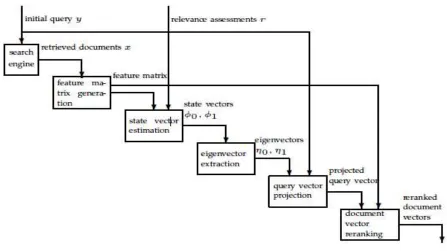
Figure. 2. Represents the Proposed Model For Extracting Relevance Feedback
From the above figure 2, we can
clearly represent the proposed architecture
flow diagram of our current thesis which
will mainly discuss about the extraction of
relevance data from a set of documents.Here
we try to take some sample documents
which are having different filenames and
different contents present inside the database
and we try to apply RF algorithm to extract
the most related files into the first preference
and then later with next updated files.We
can demonstrate the figure 2 with following
step wise explanation.
The proposed RF algorithm works in
the following way:
STEP 1:
Initially, the user raises a query to
the search engine which identifies
the matched features from that input
query.
STEP 2:
Feature set can be formed based on
the input keyword.
The input query is extracted with a
set of distinct features then the
related features are formed into state
vector machine (SVM).
STEP 4:
Here SVM takes two parameters
like
Where 0, 1 indicates true or false.
If input keyword and the words in
the documents have exact match then
it is positive RF otherwise, negative
RF.
STEP 5:
Eigen matrix projects the
frequency of the word count in the
document.
STEP 6:
High word count frequency related
to the input query, ranked top among
PRF else NRF.
STEP 7:
Finally all the documents are
retrieved in the form of ranked order,
based on PRF and NRF.
This proposed algorithm can able
to identify the positive relevance
feedback among a set of documents
based on a query keyword.
4.
Experimental Result
The proposed application is designed
and developed with java programming
language, in which the front end of the
application is done with HTML, JSP and
CSS.The back end of the application is
designed with MY-SQL database .Here we
try to take some set of documents into the
database and try to apply our proposed RF
algorithm on our current approach:
From the above screen we can
clearly identify that the data user try to a
keyword as search input and based on that
keyword the documents are retrieved based
on content wise and index wise.If we look at
the output clearly the document which is
matched mostly with inner content is
displayed first and later the document with
the index matched. Here we can also check
the percentage of matched as well as not
From the above window we can clearly
identify the documents which are matched
with index as well as content separately and
also we can see the percentage of both the
keywords individually from a set of
pre-defined documents which we choose as
input. Also we can see the total file count
with the ratio of matched and non-matched
and if one is matched out of five documents
then we treat that as 20 percent matched and
80 percent we treat as not matched.
5.
Conclusion
In this paper, we finally developed a
Relevance Feedback (RF) algorithm. Here
this RF Algorithms is mainly inspired by
quantum detection principle in order to
re-weight each and every object that is matched
with our query keyword and finally we try to
re-rank the documents retrieved from an
Information retrieval system. By conducting
various experiments on our proposed model
like finding relevance feedback based on
quantum detection with the principles like
communication channel with probabilities,
our simulation results clearly tell that our
model is very accurate in re-weight query
terms by projecting the given query vector
on the subspace represented by the
eigenvector.
6.
References
[1] J. Rocchio. Relevance feedback in information retrieval. In G. Salton, editor,
“The SMART Retrieval System:
Experiments in Automatic Document Processing”, chapter 14, pages 313–323. Prentice-Hall, Englewood Cliffs, NJ, 1971.
[2] I. Frommholz, B. Larsen, B. Piwowarski, M. Lalmas, P. Ingwersen, and
K. van Rijsbergen. “Supporting
polyrepresentation in a quantum-inspired geometrical retrieval framework”. In Proceedings of IIiX, pages 115–124, 2010.
[3] Jansen, B. J. and Rieh, S. (2010), “The Seventeen Theoretical Constructs of Information Searching and Information Retrieval”. Journal of the American Society for Information Sciences and Technology. 61(8), 1517-1534.
[4] G. Salton and M. McGill. “Introduction
to Modern Information Retrieval”. McGraw-Hill, New
York, NY, 1983.
[5] Goodrum, Abby A. (2000). "Image Information Retrieval: An Overview of Current Research". Informing Science. 3 (2).
[6] A. K. Jain and R. C. Dubes, “Algorithms for Clustering Data”. Englewood Cliffs, NJ: Prentice-Hall, 1988.
[7] Foote, Jonathan (1999). "An overview of audio information retrieval". Multimedia Systems. Springer.
[8] Beel, Jöran; Gipp, Bela; Stiller, Jan-Olaf (2009). “Information Retrieval On Mind Maps - What Could It Be Good For?”. Proceedings of the 5th International Conference on Collaborative Computing: Networking, Applications and Worksharing (CollaborateCom'09). Washington, DC: IEEE.
[9] G. Salton and C. Buckley. “Term weighting approaches in automatic text retrieval”. Information Processing and Management, 24(5):513–523, 1988.
[10] D. Zellh¨ofer, I. Frommholz, I. Schmitt, M. Lalmas, and K. van Rijsbergen
Towards “Quantum-based DB+IR
Polyrepresentation”. In Proceedings of ECIR, pages 729–732. Springer-Verlag, 2011.
[11] I. Frommholz, B. Piwowarski, M. Lalmas, and K. van Rijsbergen. “Processing queries in session in a quantum-inspired IR framework”. In Proceedings of ECIR, pages 751–754, 2011.
[12] "Unstructured Data and the 80 Percent Rule". Breakthrough Analysis. Retrieved 2015-02-23.
[13] D. Blei and J. Lafferty, “Correlated topic models,” Adv. Neural Inf. Process. Syst., vol. 18, pp. 147–154, 2006.
[14] R. Hughes. “The Structure and Interpretation of Quantum Mechanics”. Harvard University Press, Cambridge, MA, USA, 1989.
7 .About the Authors
PACHHIGOLLA
USHARANI is currently
pursuing her 4 Years
B.Tech in Department
of Computer Science and
Engineering, at Nadimpalli Satyanarayana
Raju Institute of Technology, Sontyam
,Visakhapatnam, AP, India. Her area of
interest includes Web Designing and
MEDISETTY
NIDESH is currently
pursuing his 4 Years
B.Tech in Department of Computer Science
and Engineering, at Nadimpalli
Satyanarayana Raju Institute of Technology,
Sontyam,Visakhapatnam, AP, India. His
area of interest includes Web Designing and
Development.
PENMETSA MEHER
PRAVALLIKA is
currently pursuing her 4
Years B.Tech in
Department of Computer
Science and Engineering, at Nadimpalli
Satyanarayana Raju Institute of Technology,
Sontyam ,Visakhapatnam, AP, India. Her
area of interest includes Web Designing and
Development.
GORAPALLI
SRINIVASARAO is
currently working as
Assistant Professor in
Department of Computer
Science and Engineering, at Nadimpalli
Satyanarayana Raju Institute of Technology,
Sontyam ,Visakhapatnam, AP, India. She
has more than 4 years of teaching
experience in engineering colleges. Her area