Western University Western University
Scholarship@Western
Scholarship@Western
Electronic Thesis and Dissertation Repository
10-4-2018 11:00 AM
Exploring Language Learning with Mobile Technology: A
Exploring Language Learning with Mobile Technology: A
Qualitative Content Analysis of Vocabulary Learning Apps for ESL
Qualitative Content Analysis of Vocabulary Learning Apps for ESL
Learners in Canada
Learners in Canada
Luyi Liang
The University of Western Ontario
Supervisor
Dr. Immaculate Namukasa
The University of Western Ontario Graduate Program in Education
A thesis submitted in partial fulfillment of the requirements for the degree in Master of Arts © Luyi Liang 2018
Follow this and additional works at: https://ir.lib.uwo.ca/etd
Part of the Curriculum and Instruction Commons
Recommended Citation Recommended Citation
Liang, Luyi, "Exploring Language Learning with Mobile Technology: A Qualitative Content Analysis of Vocabulary Learning Apps for ESL Learners in Canada" (2018). Electronic Thesis and Dissertation Repository. 5763.
https://ir.lib.uwo.ca/etd/5763
This Dissertation/Thesis is brought to you for free and open access by Scholarship@Western. It has been accepted for inclusion in Electronic Thesis and Dissertation Repository by an authorized administrator of
i
Abstract
Learning apps are becoming ubiquitous in and out of the classroom. While the
number of ESL learnings apps has been increasing dramatically, not much information
is available for teachers and learners to evaluate the quality of these apps. The purpose
of this study was to explore the apps that are most commonly recommended for
language learning, investigate features of commonly recommended ESL learning
apps, and develop an app evaluation tool that might inform selection of ESL learning
apps for use in teaching or recommendations to parents and learners. This study used
qualitative content analysis to study three selected vocabulary learning apps—
Duolingo, Johnny Grammar Word Challenge, and AnkiApp. Findings show that there
is a lack of ESL reading and writing apps, which indicates the reading and writing
apps are not emphasized by the researchers or app developers. The findings also show
that the quality app features in curriculum include learning objectives, rich and
appropriate learning content, accurate content, various learning activities, and various
learning topics; productive app features in pedagogy are detailed feedback on
learning, clear levels of difficulty, inclusion of collaboration and social contexts,
proper use of gamification, and personalized options; well-design app features in
design are appropriate multimedia integration, off-line function, app support, and free
of technical issues. The selected apps do not have all the exemplar app features in
curriculum, pedagogy, and design. The author developed an app evaluation checklist
based on the existing literature, Ontario ESL curriculum, and on the emergent app
features in the findings. The app evaluation checklist consists of three categories:
curriculum, pedagogy, and design. The exemplar app features are developed into
criteria in each category. For example, one criteria in pedagogy is “gives detailed
ii
exploration of exemplar app features, and the development of an app evaluation
checklist have potential to guide administrators, policy makers, educators, teachers,
and individual learners when selecting quality, productive, and well-designed apps.
Key Words: ESL learning apps, MALL, Krashen’s Theory, Autonomous Learning,
iii
Acknowledgement
It is my privilege to express my deep sense of gratitude to my beloved parents
and grandmother. I cannot finish this thesis without their love and encouragement. I
would like to extend my thanks to my aunts, uncles, and cousins who inspired me in
my life.
My sincere gratitude goes to my thesis supervisor Dr. Immaculate Namukasa
who gave me enormous support and guidance throughout my Master’s study. Her
wisdom, knowledge, thoughtfulness, and encouragement had tremendous influence on
me. I would also like to thank my thesis committee member Dr. Mi Song Kim who
gave me valuable comments on this thesis.
A special thanks goes to Luc Vaillancourt, and my dear friends Denise
Ankarberg, Santiago Cobos Cobos, Adam Groh, and Betsy Kimball. They not only
encouraged me when I met obstacles in writing, but also gave me valuable insights
into my thesis. I am very lucky to know all of them!
iv
Table of Contents
Abstract ... i
Acknowledgement ... iii
Table of Contents ... iv
List of Tables ... viii
List of Figures ... ix
List of Appendices ... xi
Chapter 1 ... 1
1 Introduction ... 1
1.1 Social Context ... 1
1.2 ESL in Canadian Context ... 2
1.3 ESL Curriculum and Pedagogical Approaches ... 3
1.4 Mobile Assisted Language Learning (MALL) ... 6
1.5 Rationale of the Study ... 7
1.6 Research Questions and Purpose of the Study ... 9
1.7 Definition of Terms ... 9
1.8 Overview of the Thesis ... 10
Chapter 2 ... 12
2 Literature Review ... 12
2.1 Promising Dimensions of Language Learning Apps ... 12
2.2 Limitations of Language Learning Apps ... 16
2.3 Studies of ESL Learning apps in Existing Literature ... 16
2.3.1 Listening ... 17
2.3.2 Vocabulary. ... 18
v
2.4 Existing Evaluation Criteria of Language Learning Apps ... 20
2.5 Preliminary App Evaluation Checklist ... 23
2.6 Summary ... 25
Chapter 3 ... 26
3 Theoretical Framework ... 26
3.1 Krashen’s Theory ... 26
3.1.1 Comprehensible Input. ... 26
3.1.2 Affective Filter. ... 28
3.2 Summary ... 29
Chapter 4 ... 31
4 Research Method ... 31
4.1 What is Content Analysis? ... 31
4.1.1 Context of content analysis in this study. ... 32
4.2 Sampling Units: Selecting the Apps ... 33
4.2.1 Affordable ESL apps. ... 35
4.2.2 Early Childhood Education ESL apps. ... 36
4.2.3 Further selection of apps for in-depth study. ... 38
4.3 Study Materials ... 39
4.3.1 Downloading the apps. ... 41
4.3.2 App content transcripts. ... 41
4.3.3 App screenshots. ... 41
4.4 Procedures ... 44
4.4.1 Preparation phase... 45
4.4.2 Organizing phase. ... 46
vi
4.4.4 Research procedure summary. ... 50
4.5 Credibility and Dependability ... 51
4.6 Summary ... 53
Chapter 5 ... 54
5 Research Findings ... 54
5.1 The Most Commonly Recommended ESL Apps ... 55
5.1.1 Vocabulary apps ... 55
5.1.2 Listening apps ... 56
5.1.3 Reading apps ... 56
5.1.4 Speaking apps ... 57
5.1.5 Pronunciation apps ... 57
5.1.6 Grammar apps ... 57
5.1.7 Spelling apps ... 58
5.1.8 Comprehensive language learning apps ... 58
5.1.9 Conclusion ... 58
5.2 Features of the Selected Vocabulary Apps ... 59
5.2.1. Duolingo ... 59
5.2.2 Johnny Grammar Word Challenge ... 85
5.2.3 AnkiApp ... 100
5.2.4 Conclusion ... 113
5.3 Modified App Evaluation Checklist ... 116
5.4 Summary ... 119
Chapter 6 ... 120
6 Discussion ... 120
vii
6.2 App Features ... 121
6.2.1 Curriculum ... 122
6.2.2 Pedagogy ... 125
6.2.3 App design ... 133
6.2.4 Conclusion ... 137
6.3 App Evaluation Checklist ... 139
6.4 Limitations of the Study ... 139
6.5 Contributions and Possibilities for Future Studies ... 140
6.6 Conclusion ... 141
viii
List of Tables
Table 1 Preliminary App Evaluation Checklist ... 24
Table 2 App Recommendation List ... 37
Table 3 Data Analysis Matrix ... 48
Table 4 Duolingo Summary Table ... 83
Table 5 Johnny Grammar Word Challenge Summary Table ... 98
Table 6 AnkiApp Summary Table ... 111
Table 7 A Comparison of App Features Among Duolingo, Johnny Grammar Word Challenge, and AnkiApp ... 114
ix
List of Figures
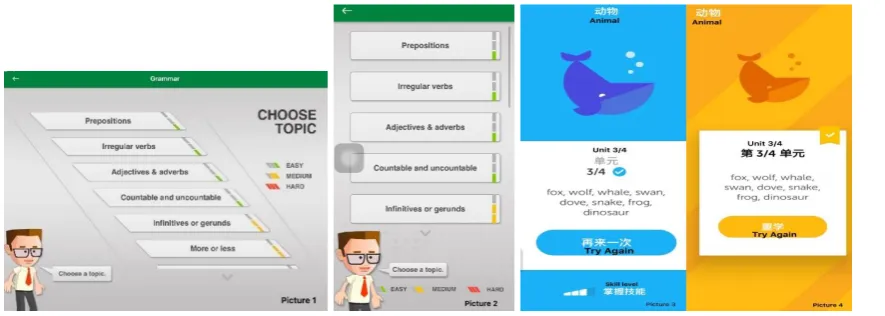
Figure 1. Comparison of the selected apps on different devices ... 40
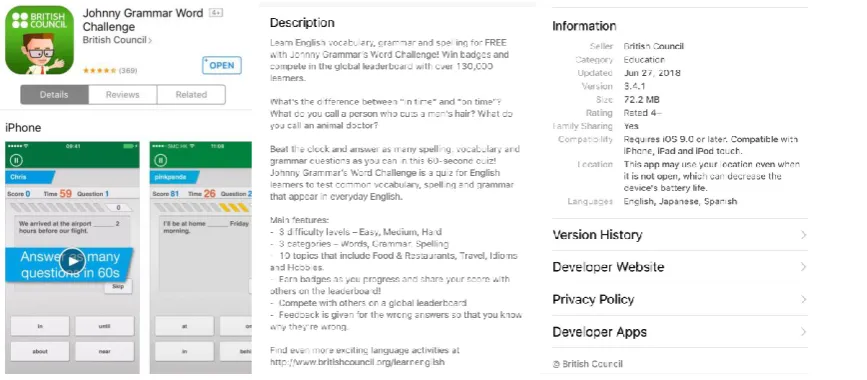
Figure 2. A sample app description.. ... 42
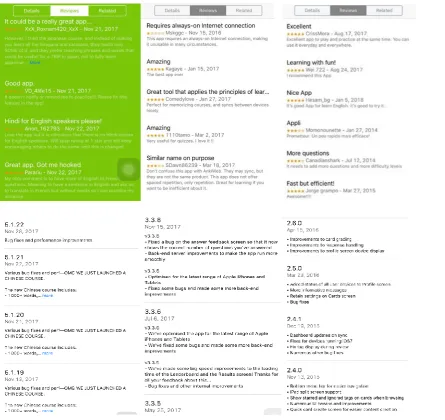
Figure 3. A sample user reviews and history version in the app store ... 44
Figure 4. Data Analysis Diagram. ... 45
Figure 5. the main page in Duolingo ... 61
Figure 6. A sample of the learning units in Duolingo ... 63
Figure 7.A sample of the “Sports” unit summary pages in Duolingo ... 63
Figure 8. Examples of learning activities in Duolingo. ... 64
Figure 9. Some example of the learning activities ... 65
Figure 10. A level quiz to skip seven units in Duolingo ... 66
Figure 11. Placement test in Duolingo ... 66
Figure 12.An email from Duolingo ... 67
Figure 13. Notifications on the phone screen ... 67
Figure 14. The upgraded levels of difficulty ... 68
Figure 15. The language club in Duolingo ... 68
Figure 16. The Health fucntion in Duolingo ... 69
Figure 17.The XP in Duolingo ... 71
Figure 18. An example to earn gems in Duolingo ... 71
Figure 19. The Shop in Duolingo ... 73
Figure 20. The main page in Johnny Grammar Word Challenge ... 86
Figure 21. The learning categories in Johnny Grammar Word Challenge. ... 86
Figure 22. A sample for my badges page in Johnny Grammar Word Challenge ... 87
Figure 23. The Leaderboard page in Johnny Grammar Word ... 87
x
Figure 25. The answers and feedback page in Johnny Grammar Word Challenge ... 88
Figure 26. Dashboard, Help and New Card in AnkiApp. ... 102
Figure 27. The card deck summary page in AnkiApp ... 103
Figure 28. Review of the card deck in AnkiApp ... 103
xi
List of Appendices
Appendix A App Recommended from Multiple Resources ... 154
Appendix B Apps Recommended the Most Number of Times ... 157
Appendix C Commonly Recommended ESL Learning Apps for ECE learners ... 158
Appendix D Data Analysis Conceptual Map ... 159
1
Chapter 1
1 Introduction
In this chapter I give an overview of the background of this study. I start with the
social context of the ubiquity of learning apps. Then I explain the definition of ESL as well as
the importance of ESL teaching and learning in a Canadian context. Next, I introduce Mobile
Assisted Language Learning (MALL), which is the approach of using handheld devices in
language teaching and learning. I then discuss the rationale of the study, pointing out the
urgent need of app evaluation tools and app recommendations. This is followed by the
research questions and purposes of the study. Then, I defined the terms in this study. I
conclude the chapter with an overview of this thesis.
1.1 Social Context
Learning apps are becoming ubiquitous in and out of the classroom, and they have
had exponential growth since their introduction (Mindog, 2016). Over 400,000 apps are
available at digital app stores such as iTunes and Google Play (Dickens & Churches, 2012;
Bárcena et al., 2015). Bárcena et al. (2015) observed that schools, teachers, and students have
an opportunity to apply this newly identified form of Mobile Assisted Language Learning
(MALL) in teaching and learning.
An app or application is “a software program, often designed to run on a mobile
device, [sic] that allows the user to carry out one or more operations” (Gardner & Davis,
2013, p. 6). Gardner and Davis pointed out that some powerful functions of the apps (e.g.,
easy access to resources, virtual worldwide interaction, etc.) allow users to interact with
content, tasks, and games, and to raise and answer questions. For language learning, those
functions have the potential to empower learners to develop several English skills—
vocabulary, listening, speaking, reading, writing, and grammar (Levy, 2009; Miangah &
2
1.2 ESL in Canadian Context
My main reason for choosing this topic is my experience and personal interest. I have
worked closely with ESL learners, especially in the secondary school level in the past few
years.
In this study, English as a Second Language (ESL) means to study English while in a
geographic location (e.g., country, region) where English is the first or dominant language
(Al-Hashash, 2007). An ESL learner refers to a student who is learning English in an
English-speaking country/region and who needs the language for education, employment, and
other basic purposes (Saville-Troike, 2006). In the context of Canada, a student from Quebec
whose first language is French is considered an ESL learner when studying English. This is
because Quebec has a predominantly French-speaking population (Al-Hashash, 2007).
Broadly speaking, ESL learners may speak English as their second, third, or even fourth
language. To reflect this, some educators replace ESL with the term ESOL (English for
Speakers of Other Language).
In Canada, ESL teaching and learning is in great need because Canada is one of the
largest destinations for immigrants from non-English speaking countries (Kirk, 2016). A
survey from 2011 show that 25% of the population in Canada does not speak English as their
first official language (Statistics Canada, 2015). The number of ESL learners in Canada has
increased dramatically over the past few years and it is foreseen that there will be continuous
growth in the decades to follow (Lovett et al., 2008). The increasing number of international
students contributes to the growth of ESL learners in Canada. Secondary schools are home to
students speaking more than 100 different languages (Ontario Ministry of Education, 2007).
Loriggio (2017) reported that the rise of international population in secondary school level is
five to ten percent each year, and even as high as more than 100% in some districts (e.g.,
3
for social, cultural, and academic purposes, these students are in great need of additional
English learning support.
1.3 ESL Curriculum and Pedagogical Approaches
Johnson (1967) stated that the accepted definition of curriculum is “planned learning
experiences” (p.129). The most commonly recognized key curriculum components are
objectives, content, instructional methods, and assessment (Johnson, 1967; Sand, Davis,
Lammel, & Stone, 1960; Su, 2012).
The ESL curriculum in Ontario’s secondary schools (Ontario Ministry of Education,
2007) is designed to provide learners with knowledge and skills with the goal to help them
become successful in their social and academic lives. One of the expectations in ESL learning
is to “use a variety of strategies to build vocabulary” (p. 18). In order to achieve this goal, the
ESL curriculum highlights the following key curriculum elements.
a) Learning objectives--the ESL courses should be designed to help students develop
skills that they need to develop proficiency in everyday life English and academic
English.
b) Learning content—the ESL learning content is organized in four strands and two
broad areas: Listening, Speaking, Reading, Writing, Socio-cultural Competence,
and Media Literacy. The courses around these strands and areas should provide
ESL learners with rich and frequent opportunities to practice different English
skills and to interact with other learners in a purposeful way (e.g., collaborative
learning in pairs or in small groups).
c) Instructional methods--it is essential for the teacher to offer instructions and
feedback in the learning process. Learning also happens outside of the classroom.
4
than one language skill at the same time and to choose learning materials based on
their personal interests.
d) Assessment--as the process of gathering information from a variety of sources,
assessment can accurately reflect how well a student is achieving the curriculum
expectations in a subject. As part of assessment, students receive feedback that
guides their efforts towards improvement. The ESL curriculum also emphasizes the
importance of initial assessment because initial assessment helps determine the
learner’s level of proficiency in English, and academic achievement in the first
place, and therefore the learner can be placed at an appropriate learning level.
In this ESL curriculum, students are placed in five different levels based on their
English proficiency in initial assessment. Students who have never studied English are in
Level One, students who have studied some English may be placed in ESL Level Two or
Three, and students who have studied English for several years may be placed in Level
Three, Four, or Five.
Curriculum plays some role in guiding instruction (Johnson, 1967). Based on the ESL
curriculum, the Ontario Ministry of Education (2007) also outlines the following effective
pedagogical approaches that teachers can use:
a) Ensure that the lessons are integrated with social context rather than being taught
or practiced in isolation. For example, students may be involved in learning
materials or learning activities related to real life.
b)Allow students to make mistakes. Realize that mistakes are a normal and useful
part of the language learning process that allows students to apply knowledge and
5
c) Help learners bridge their prior knowledge in lessons and practices. For example,
allow students to create or access bilingual materials using English and their first
language.
d)Provide learners collaborative learning opportunities. Collaborative learning
activities allows learners to work together to complete learning tasks.
e) Utilize visuals (e.g., chart, diagrams, etc.) as teaching and learning support.
f) Utilize multiple resources to support teaching and learning (e.g., pictures, printed
materials, objects, forms, etc.)
g)Place ESL learners in appropriate learning levels through three procedures: initial
assessment, placement, and monitoring. Initial assessment determines each
student’s educational background, level of proficiency in English, and academic
achievement. Placement determines the best program and selection of courses for
each student. Monitoring keeps track of each student’s progress in second-language
acquisition.
h)Start teaching and learning with simple words and essential phrases related to
everyday life. Help students read English as soon as they can orally recognize and
produce the simple words. help students write English (e.g., the learned words).
Engage students in English oral practice.
To sum up, the ESL curriculum in the Canadian province of Ontario emphasizes the
four curriculum components including learning objectives, earning content, instructional
methods, assessment. Accordingly, some pedagogical approaches are to design lessons in
social context, allow students to make mistakes and learn from mistakes, bridge learners’
prior knowledge, provide cooperative learning opportunities, utilize visuals and multiple
resources, and place learners in appropriate learning levels. The Ontario ESL curriculum,
6
ESL programmatic curriculum to this study. This curriculum may not be identical to the
curriculum in ESL learning apps given the nature of mobile apps. However, the curriculum
and the instructional approaches of the ESL curriculum in Ontario may be a useful guidance
when I study the curriculum in the apps.
1.4 Mobile Assisted Language Learning (MALL)
MALL stands for Mobile Assisted Language Learning. Here the word “mobile” refers
to mobile devices. MALL is a new learning approach using handheld and portable devices
(e.g., smartphones, tablets, MP3/MP4 players, and PDAs) to improve language learning
(Kukulska-Hulme & Shield, 2008; Miangah & Nezarat, 2012). MALL has emerged as a
combination of Mobile learning (or “M-learning”) and Computer Assisted Language
Learning (CALL) (Niño, 2015). M-learning is learning mediated via handheld devices and
potentially available anytime, anywhere (Kukulska-Hulme & Shield, 2008,), and CALL
refers to the search for and study of applications of the computer in language teaching and
learning (Levy, 1997,). According to Kukulska-Hulme and Shield (2008), MALL differs
from CALL in “its use of personal, portable devices that enable new ways of learning,
emphasizing continuity or spontaneity of access and interaction across different contexts of
use” (p. 273). These features of MALL increase the flexibility of where and when learning
happens, which makes learning more personalized and effective (Hoppe, Joiner, Milrad, &
Sharples, 2003; Kim, Rueckert, Kim, & Seo, 2013; Miangah & Nezarat, 2012). Mobile
hand-held devices offer students a convenient way to integrate digital technology as part of the
language learning process (Bárcena et al., 2015). Miangah and Nezart (2012) explained that
the reason for this is that the connectivity function of mobile devices allows learners to use
wireless networks to connect and communicate with learning websites to access learning
7
Generally speaking, there are two types of studies about MALL: content-related and
design-related (Kukulska-Hulme & Shield, 2008). Kukulska-Hulme and Shield (2008)
explained that content-related studies emphasize the development of activity types and
learning materials; this type of study often uses mobile devices to deliver content to learners.
In contrast, design-related studies address design issues that are related to developing
learning materials and activities for mobile devices. My research is content-based because I
am studying the pre-existing learning content in the apps instead of researching how to
develop app materials and activities.
Hoppe et al. (2003) stated that handheld devices are emerging as one of the most
promising technologies that support language learning. With the handiness, convenience, and
flexibility of mobile devices, MALL allows students to learn a second language without the
limit of time and space (Hoppe et al., 2003, Kukulska-Hulme & Shield, 2008; Miangah &
Nezarat, 2012; Niño, 2015). These features of MALL open new pedagogical scaffolding
(Kim, Rueckert, Kim, & Seo, 2013).
1.5 Rationale of the Study
Despite the pedagogical promise of language learning apps, it is a great challenge to
determine the best apps to use within and outside of the classroom (Kim, Rueckert, Kim, &
Seo, 2013). This is difficult due to the nature of the app developers, the features of the apps,
and the lack of research discourse on using mobile devices to learn language (Gangaiamaran,
& Pasupathi, 2017).
Apps are closely controlled by the app designers (Gardner & Davis, 2013), but not all
apps are well-designed. Chik (2014) agreed that some apps have poorly-designed features,
particularly free apps released by small-scale and amateur developers. Although literature
reveals the collaborative potential mobile devices can offer learners (e.g., Hoppe et al., 2003;
8
(2015) argued that learning apps in the market mostly support individual learning because
these apps mainly deliver content rather than providing learners with the opportunity to
interact with each other. Consequently, some students consider language learning apps not to
be challenging enough due to the lack of social interaction and context (Bárcena et al., 2015).
Moreover, Chik (2014) observed that although some apps emphasize their educational nature,
about two-thirds of the apps in her study lacked curriculum content appropriateness and were
based on games and reward. The learning activities were observed to be gamified through
time constraints or aesthetics (Heil, Wu, Lee, & Schmidt, 2016). These game features distract
the users from focusing on a single activity and position apps as sources of entertainment
rather than as learning tools (Bárcena et al., 2015). Sweeny and Moore (2012) noted that
some developer usually depend on in-app purchases or ads to cover the costs of app
development and marketing expense. Chik (2014) stated that third-party pop-up ads, in-app
purchases, and/or limited access to the content are distracting features.
In light of challenges in selecting apps, Traxler and Kukulska- Hulme (2006) pointed
out that evaluation and analysis are key to embedding mobile learning and perhaps to all
forms of innovation in learning technology. However, there are few studies that have
investigated mobile apps for ESL learning. These studies have often focused on learners (e.g.,
the demography of users, learners’ reasons for using apps, and types of apps used) (Mindog,
2016). Only a few studies (e.g., Nisbet & Austin, 2013; Sweeney & Moore, 2012) have
provided evaluation instruments or frameworks for teachers to evaluate the quality of ESL
learning apps. As mobile apps become more and more popular in the classroom, teachers
need such tools not only to inform their own selection and use of ESL apps in teaching, but
also to recommend apps to students and their parents. Given that it is difficult to choose a
9
both educators and non-educators, there is a need for exemplars and a list of recommended
apps.
1.6 Research Questions and Purpose of the Study
The purpose of this study was to explore the apps that are most commonly
recommended for language learning, investigate features of exemplar and
commonly-recommended ESL learning apps, and develop an app evaluation tool that might inform
selection of ESL learning apps for use in teaching or recommendations to parents and
learners. In this study I explored the following questions:
1.What are the common ESL learning apps for mobile devices?
2.What are the exemplary features of ESL learning apps in terms of curriculum,
pedagogy, and design?
3.What app evaluation tool could be used to assess the quality of ESL learning apps?
1.7 Definition of Terms
Throughout this thesis I use a number of specialized terms related to learning and
digital apps. Here is a list of these terms with their definitions.
Autonomous learning refers to self-directed and self-access learning. Learners are
motivated to learn by freely accessing learning materials and making their own decisions of
what to learn and how to learn (Al-Hashash, 2007; Kim, 2014).
Collaborative learning refers to “techniques [that] allow students to work together as
a team to accomplish a common learning goal” (Ontario Ministry of Education, 2007, p. 40).
Freemium apps refer to apps that are free to download but typically include offers to
upgrade to the paid version (i.e., in-app purchase) to gain extra features such as freedom from
ads and additional learning content or services (Liu, Au, & Choi, 2014).
Gamification is “the use of features and concepts (e.g., points, levels, leaderboards)
10
users to engage with the product” (Sweeny & Moore, 2012, p. 8). I also use the term
game-style to describe the gamification of an app.
Social aspects refer to learners’ ability to share information, ideas, personal messages,
and other content via electronic means (e.g., sharing scores in a leaderboard in the app or in a
social community such as Facebook or Twitter, sharing learning objectives and attempting
similar tasks) (Sweeny & Moore, 2012). Social aspect also includes the context (e.g.,
location, background, environment) in which the app content is situated in (Huang & Sun,
2010; Wang, 2004).
Textual Corrections refers to a correct answer in the form of short text that is
provided to learners when an answer is incorrect.
Utility apps refers to apps that enable “users to quickly access a specific types of
information or perform a narrowly defined task” (Ginsburg, 2010, p.1). In this study, I
categorize dictionary apps and translation apps as utility apps because of their quick look-up
functionality.
1.8 Overview of the Thesis
This thesis contains six chapters, including this introductory chapter. In Chapter 2 I
provide an overview of relevant literature on ESL learning apps, including the promising
features of mobile apps, limitations of learning apps, previous studies on ESL learning apps,
existing language app evaluation criteria and instruments, and a preliminary app evaluation
checklist. In Chapter 3 I lay out the theoretical frameworks that guide this study. I introduce
Krashen’s Theory to discuss the important role of comprehensible input and the influence of
learners’ affective filter level in learning efficiency in the learning process using a language
app. In the fourth chapter covers the research method of this study, which is to use qualitative
content analysis to explore in-depth the app features of Duolingo, Johnny Grammar Word
11
research questions by providing an app recommendation list and an app evaluation checklist,
and by describing the app features of the selected vocabulary apps including Duolingo,
Johnny Grammar Word Challenge, and AnkiApp in detail. In Chapter 6 I draw upon the
entire thesis to analyze the research findings, tying up the theoretical and empirical strands as
well as previous studies in order to discuss the app features of ESL vocabulary learning apps
in this study. In this final chapter I also point out the limitations of this study and discuss the
12
Chapter 2
2 Literature Review
The purpose of this section is to provide an overview of relevant literature on English
language learning apps. I begin by exploring the promising dimensions of mobile apps
identified in the literature. Next, I examine the literature on the limitations of ESL learning
apps. I then look at reviews of ESL learning apps in the literature. Following that, I present
the app evaluation criteria and instruments developed by other researchers. Lastly, I offer a
preliminary app evaluation checklist.
2.1 Promising Dimensions of Language Learning Apps
The wide range of mobile devices (e.g., smartphones, iPods, iPads, tablets,
Chromebooks and other portable internet-connected devices) has provided students access to
an array of digital learning materials (Beach & O’Brien, 2015). These learning materials
include apps. Most apps are free (e.g., podcasts) or cost little money, usually less than $10
(Rosell-Aguilar, 2007). Some (e.g., Johnny Grammar Word Challenge) are downloadable on
the devices themselves (Chik, 2014), whereas others (e.g., Duolingo) have both on-line and
off-line functionalities (Miangah & Nezarat, 2012). Sweeny and Moore (2012) observed that
language apps are often designed for stand-alone self-study purposes rather than as classroom
support resources. To function independently from instruction by a teacher, apps are
developed with a range of functions to support self-study such as the ability for a learner to
personalize a list of items by choosing which items to practice, adding their own image or
translation (Sweeny & Moore, 2012). In addition, apps have the potential to record complex
use input in a precise and reliable manner and to personalize the learning experience for
individual learners (Heil, Wu, Lee, & Schmidt, 2016). Heil, Wu, Lee, and Schmidt noted that
13
information, learners may detect mistakes that they may otherwise have neglected (Heil, Wu,
Lee, & Schmidt, 2016).
Using apps in the learning process reflects Knud Illeris’s Three Dimensions of
Learning,namely the cognitive dimension, the affective dimension, and the socio-cultural
dimension. The literature also identifies several other dimensions of learning to which apps
may contribute, including autonomous learning, multimedia dimension, and inclusive
learning. Here is an outline of these dimensions:
First, language learning apps have a potential influence on the cognitive dimension of
learning. For example, apps can lessen learners’ cognitive load by offering unlimited access
to the learning activities. Having this information stored on a device and readily available at
any given moment does not require them to commit vast amounts information to memory
(Pachler, 2009).
Second, a good learning app motivates learners and allows them to engage in
meaningful and rewarding learning, which have a positive effect on the development of
learners’ affective (e.g., emotional, attitudinal, self-efficacy) dimension of learning (Hoppe et
al., 2003; Niño, 2015).
Third, second language learning often takes place in the context of interactions with
others (Chik, 2014). The socio-cultural dimension of learning apps makes the learning
communication easily accessible (Pachler, 2009). This communicative potential of mobile
learning apps provides learners with a chance to actively participate in learning activities with
their peers, teachers, parents, and members of their communities and other communities
outside the classroom (Pachler, 2009). Context plays an important role in language learning
because context provides additional means for learners to enhance their vocabulary (Heil,
14
Fourth, mobile apps have the potential tosupport language learning through the
autonomous learning dimension (Al-Hashash, 2007; Reinders & White, 2011; Wu & Marek;
2010). The purpose of autonomous learning is to help learners acquire meaningful learning
using the motivational advantage of self-study (Al-Hashash, 2007). Wu and Marek (2010)
stated that providing learners with a foundation to develop their ability to adapt and continue
learning on their own is the ultimate goal of any academic program, including ESL learning.
Mobile apps often monitor learners’ progress and engagement, which provides users with
learning experiences that suit them and encourages them to make decisions about their own
progress (Reinders, 2007). Immediate feedback also facilitates autonomous learning
opportunities (Forsythe, 2013). However, Reinders and White (2011) suggested that mobile
apps may bring constraints to learners’ autonomous learning if the app provides inadequate
learning materials and improper guidance. This may restrain learners from taking
responsibility for learning vocabulary or spelling, for instance (Murray, 1999).
Fifth, themultimedia dimension of ESL apps creates a contextual learning
environment using graphics, sounds, images, and texts so students can interpret knowledge
and study without additional assistance (Wu & Marek, 2010). This multimedia feature of
software downloaded on portable digital tools has the potential to motivate students and help
them engage in effective English language learning (Beach & O’Brien, 2015; O’Brien &
Voss, 2011). This occurs because learners can choose a convenient and preferred method to
receive, interact with, and respond to content (O’Brien & Voss, 2011). In order to maximize
the potential of the multimedia in ESL learning apps, Mayer (2014) suggested that
multimedia elements should be purposefully added to text.
Sixth, learning apps can promote inclusive learning that supports students of diverse
backgrounds and learning abilities (Al-Hashash, 2007; Bocci, Guerini, & Marsano, 2017).
15
study whose results showed that apps helped learners with exceptionalities such as autism
learn vocabulary. Likewise, Bouck, Satsangi, and Flanagan (2016) found that disadvantaged
learners were more engaged in an “apps-directed condition” (p. 324).
Several researchers reported that students generally had a positive attitude toward
learning with mobile apps. Kim, Rueckert, Kim, and Seo (2013) showed that most students
considered mobile apps valuable for the majority of subjects in academic study, including
learning language. This is because mobile apps created a personalized and meaningful
learning experience for the students, which allowed them to expand their learning experience.
80% of participants in Zou and Li’s (2015) survey responded that they were satisfied with
their language learning experience using mobile apps. The participants claimed that language
learning apps were motivational, convenient, and time-saving. These benefits of mobile
devices increased students’ willingness to incorporate mobile technology, particularly mobile
apps, into their lives and language learning (Kim, Rueckert, Kim, & Seo, 2013; Pachler,
2009).
In conclusion, mobile apps have promising features including portability,
affordability, connectivity, ability to detect learners’ errors, personalization, and the use of
multimedia. With all these promising dimensions of English language learning apps, it vital
to take into consideration the implications of mobile devices and apps in curriculum and to
provide educational practitioners with training and support they might need to adopt this
technology (Rosell-Aguilar, 2007). The literature on the promising dimensions of language
learning apps illustrates that the most effective use of mobile apps in ESL teaching and
learning is to choose apps that harness several of these dimensions. In the next section I
16
2.2 Limitations of Language Learning Apps
Despite the promising features of mobile apps in language learning, several
researchers have argued that the limitations of language learning apps should not be
neglected.
Design limitations are a first concern. Bárcena et al. (2015) observed that many apps
are only designed to operate on one system (e.g., Android, iOS, or Chromebook) and do not
have a counterpart for other systems, making it difficult for some students to access the
learning resources.
The next concern is that not all apps use sound pedagogical practices. Poor pedagogy
occurs when an app fails to provide extensive opportunities to practice language skills,
especially speaking and writing (Niño, 2015). Some apps contain grammar mistakes and
technical errors and thus cannot be fully trusted (Berns et. al., 2015; Niño, 2015). Kim et al.
(2013) noted that the potential knowledge gap between some app developers and educators
may result in poor pedagogical usefulness of the app. Niño also raised the common concern
that students found it difficult to apply the knowledge learned from apps to real life because
some apps are not closely connected to social contexts. From the perspective of using
language learning apps as an independent teaching and learning tool as well as in terms of the
scope of the curriculum, Bárcena et al. (2015) pointed out that some apps do not improve
every language skill equally.
It is important that researchers pay attention to potential problems related to design
and pedagogy when they study ESL learning apps and other language learning apps.
2.3 Studies of ESL Learning apps in Existing Literature
Mobile apps are great tools for language learning because they allow learners to
improve their language competency by accessing different aspects in ESL learning (Levy,
17
apps to learn language skills such as listening, reading, speaking, writing, vocabulary, and
grammar. In this section I focus on language skills as I present studies of ESL learning apps.
2.3.1 Listening.
Listening plays an essential role in language learning because it is the first step when
learning a new language (Read & Barcena, 2016). Without listening, it would be difficult to
practice speaking (Huang & Sun, 2010). In Hoven and Palalas’s (2011) research, participants
expressed that mobile learning enhanced their listening skills.
Some apps have been specially developed to improve students’ listening skills. Huang
and Sun (2010) developed a mobile multimedia English practice system to help users
improve their listening abilities. This app contains a multimedia materials website and an
English listening practice system to provide users with extensive listening resources in the
forms of video, mp3 materials, texts, and online interactions. From this app, students can
access both on-line and off-line resources with five levels of difficulty, and choose leaning
content according to their individual needs and interests. However, this app exists only on a
website and is not downloadable. I explain in Chapter 4 that I have excluded apps like this in
the app selection for this study. Another app that uses multimedia resources to assist learners’
listening skills is Listening Drill. This app covers hundreds of learning topics related to
everyday life contexts through downloadable visual and audio materials such as TED talks
and audio books (Cowan, 2015).
Cowan observed another highly rated English learning app called Lingo Arcade (96%
positive comments from 25 customer reviews in the iTunes app store). This user-friendly app
can assist students with low English proficiency to improve their listening and to learn some
simple everyday words like “man” and “woman” through learning activities that include
matching an image with a sound/word and rearranging letters into words. Nisbet & Austin
18
Clear Speech uses gamification to provide students with interactive listening experiences.
With 10 stages of challenge, students practice their listening skills to reach their goals and
progress through the game.
2.3.2 Vocabulary.
Steel (2012) stated that mobile apps have remarkable benefits for learning English
vocabulary (e.g., for understanding meanings and contexts and memorizing words). English
vocabulary apps such as vocabulary games and flashcards are among the most common apps
that learners use (Mindog, 2016). Niño (2015) conducted a survey in which 73% of the
students responded that mobile language learning apps helped to increase their vocabulary.
The literature on language learning apps notes some mobile apps of high utility for
vocabulary teaching and learning, which include: (a) English LaunchPad, which contains
everyday topics facilitated by many activities such as flashcards and quizzes; (b) Idioms,
which covers the most common conversational idioms in daily life to engage students in
vocabulary building through fun activities and quizzes (Nisbet & Austin, 2013); (c) Guess it!
Language Trainer, which teaches vocabulary through practice (e.g., guessing word meanings,
rating word meanings, uploading word definitions) (Berns et al., 2015). (d) Busuu, which
helps students with vocabulary acquisition and other language skills (Bárcena, et al., 2015);
(e) MindSnacks, which provides vocabulary activities in a game style; (f) vocabulary
flashcards apps such as Memrise, Quizlet, Brainscape, and Anki, with which learners can
download or design their own English vocabulary flashcards (Niño, 2015); (g) translation
apps such as Google Translate and iTranslate, which help English learners to learn
vocabulary and to communicate with others more effectively (Niño, 2015; Nisbet & Austin,
2013); (h) dictionary apps such as Dictionary.com, TheFreeDictionary (Chik, 2014),
Wordreference, Dict CC, LEO, Pons,and Linguee (Niño, 2015), which provide word
19
Although previous research has included dictionary apps and translation apps in the
category of vocabulary learning, in this study I have separated these two types of apps into a
different category: utility apps. In this study, I define a learning app as an app that learners
can use for independent learning; the app provides opportunities to practice language skills
and receive feedback. Due to the lack of teaching elements (e.g., lessons, quizzes), dictionary
apps and translation apps do not fit into the vocabulary learning apps category.
2.3.3 Speaking, Pronunciation, Reading, Writing, and Grammar.
Compared with research about apps that are designed to support listening and
vocabulary, there is sparse research literature on ESL learning apps specifically developed for
speaking, reading, grammar, or writing.
Only two apps in the existing literature were identified as speaking learning apps.
Hello Talk provides a language and culture exchange community with the purpose of
connecting language learners with native speakers to practice speaking (Mindog, 2016). VISP
(Videos for Speaking) is a speaking app in which learners orally describe what appears
on-screen in a limited amount of time (Bárcena, et al., 2015). Some apps that have not been not
designed particularly for the purpose of practicing speaking also have the potential to
improve learners’ speaking skills. For example, English newspaper apps such as National
Post and The Globe and Mail have been noted to be helpful to students in terms of enhancing
their speaking and comprehension skills while readers try to understand the news and culture
(Niño, 2015).The audio and video materials in Listening Drill can enhance learners’
speaking skills Cowan (2015).
English Pronunciation, recommended by Cowan (2015), is the only learning app in
the literature designed specifically for practicing pronunciation. This app allows users to
listen to sentence pronunciation and then record their own pronunciation. The app then scores
text-20
to-speech functions in Duolingo, Busuu, and Babble contribute to developing accurate
pronunciation. Dictionary apps such as Dictionary.com, Google Translate, and
TheFreeDictionary often provide pronunciations.
Several researchers (e.g., Levy, 2009; Miangah & Nezarat, 2012;Steel 2012) pointed
out that mobiles apps can help students learn grammar. In Niño’s (2015) survey, 32% of the
participants responded that mobile apps improved their grammatical accuracy. Nevertheless,
few studies recommended grammar apps. One recommended app is Duolingo, which features
grammar lessons (Munday, 2016), and the other is English LaunchPad (Nisbet & Austin
(2013).
No previous studies highlighted reading and writing learning apps. However, some
apps designed for learning other language skills may benefit learners in ESL reading and
writing. For instance, learners can read sentences and learn how to write sentences in Lingo
Arcade (Cowan, 2015). In the same way, learners can improve their writing skills when
creating their own word definition in Guess it! Language Trainer (Berns et. al., 2015). Niño
(2015) stated that social network apps such as WhatsApp and Facebook Messenger also offer
learners opportunities to practice writing skills. However, these social network apps have
been noted to provide some improper grammar and spelling in cases where learners use
abbreviations and short forms of words. I will discuss the limitations of some ESL learning
apps in Chapter 6.
Overall, these studies show that there is a need to develop better criteria for
recommending ESL learning apps, especially those that focus on speaking, pronunciation,
reading, writing, and grammar.
2.4 Existing Evaluation Criteria of Language Learning Apps
Teachers face a daunting challenge in selecting suitable digital materials to meet their
21
mobile apps (Namukasa, Gadanidis, Sarina, Scucuglia & Aryee, 2016). Just as teachers
struggle to choose suitable ESL learning apps, learners and their parents are often
overwhelmed with the extensive number of apps in the market. As a result, they usually
consult family members, friends, or the media for advice. Sometimes they depended on the
app descriptions provided by the app developers (Chik, 2014). It is clearly the case that app
description from the app store is not sufficient for teachers, parents, and students to make a
valid judgement because the description provided by the app store does not always match
users’ experience with the app (Larkin, 2013). While many teachers and students already
know how to access and use apps, they urgently need guidance on how to effectively and
strategically search for, select, and use language learning apps that meet their teaching and
learning goals (Nisbet & Austin, 2013). In this section I review literature on existing
evaluation criteria and instruments for language learning apps.
Several researchers emphasized the importance of evaluation criteria for mobile
learning apps (Caffarella, 1993; Hoppe et al., 2003; Kukulska-Hulme & Traxler, 2007; Niño,
2015). Mobile apps with good qualities for language learning should involve social
interaction and have pedagogical potential to inspire self-directed learning (Caffarella, 1993),
engagement, motivation, and social communication (Niño, 2015). A quality app is situated in
the learner’s everyday life context and shows context-awareness in the learning activities
(Kukulska-Hulme & Traxler, 2007; Wang, 2004). These apps usually have the function to
sense users’ location, language level, learning environment, and personal interests, thereby
creating a dynamic and personalized learning environment (Huang & Sun, 2010; Wang,
2004). Kukulska-Hulme and Traxler (2007) emphasized that personalized app features satisfy
users’ individual needs. A well-designed learning app integrates multimedia elements
purposefully in the learning activities (Mayer, 2004; Schwebs, 2014). Giving feedback to
22
at different stages of learning, raises their awareness of their strengths and areas for
improvement, and identifies actions they can take to improve performance (Lally, 2013).
Without effective feedback, the quality of learning cannot be guaranteed (Smith & Higgins,
2006).
Nisbet and Austin (2013) adapted an instructional sequence from Chamot and
O’Malle. This instructional sequence has a curriculum focus and pedagogical focus on
connecting students’ experience with the apps. Nisbet and Austin concluded that a useful
learning app should have the following features:
a) elicit and draw on students’ background knowledge;
b)show (rather than just tell) students how to use the app;
c) point out multiple benefits, features, and uses;
d)engage students in meaningful practice using the app;
e) have students complete an independent task using the app; and
f) provide an opportunity for students to report on the experience afterwards (p. 6).
On the other hand, Sweeney and Moore (2012) recommended a framework with four
major technical and pedagogical criteria to evaluate mobile language learning apps. These
criteria are:
a) the mobile app contains the right sorts of interactivity;
b)the learning resources include appropriate multimedia contents;
c) the app is designed with high contextual relevance with a suitable level of utility
and functionality;
d)the app supports autonomous and personalized learning (p. 14).
Overall, these studies highlighted three aspects of app evaluation criteria and
instruments: curriculum, pedagogy, and design. I used these three aspects as the categories in
23
however, has focused only on one or two of these three aspects, and none of the sets of
criteria or instruments is comprehensive. Whilst Nisbet and Austin focused on curriculum
and pedagogical practice, the purpose of the instructional sequence is to guide teachers to
introduce ESL learning apps to their students rather than being used as an independent app
evaluation tool for app users. Sweeney and Moore’s framework highlighted criteria from the
developer’s perspective and for the purpose of app design as opposed to app selection. On the
other hand, Namukasa et al. (2016) focused on the curriculum, technical, cognitive,
interaction, and interactivity aspects of mathematics apps.
2.5 Preliminary App Evaluation Checklist
In the section near the beginning of this chapter on the limitations of learning apps, I
indicated the need for further research to develop a comprehensive app evaluation tool. My
research explores an app evaluation tool in response to this need.
Based on my review of the literature, I developed a PreliminaryAppEvaluation
Checklist. Not only did I adopt evaluation criteria as demonstrated above, but I also
developed new criteria by drawing on Ontario ESL curriculum and research that mentioned
promising app features and limitations of apps.
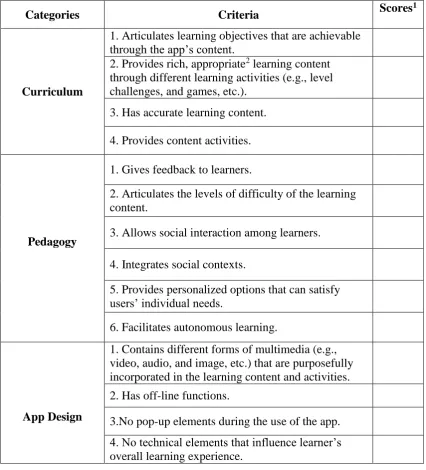
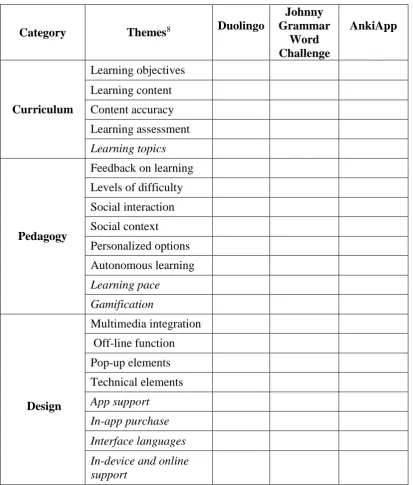
Table 1 shows the preliminary app evaluation checklist. Specifically, I matched each
of criterion with a category (i.e., curriculum, pedagogy, and design) in which the criterion fits
best. I expected that categories and criteria would emerge once I analyzed the data. This
preliminary app evaluation checklist guided me, as I elaborate in Chapter 4, to use a data
24 Table 1
Preliminary App Evaluation Checklist
Categories Criteria Scores
1
Curriculum
1. Articulates learning objectives that are achievable through the app’s content.
2. Provides rich, appropriate2 learning content through different learning activities (e.g., level challenges, and games, etc.).
3. Has accurate learning content.
4. Provides content activities.
Pedagogy
1. Gives feedback to learners.
2. Articulates the levels of difficulty of the learning content.
3. Allows social interaction among learners.
4. Integrates social contexts.
5. Provides personalized options that can satisfy
users’ individual needs.
6. Facilitates autonomous learning.
App Design
1. Contains different forms of multimedia (e.g., video, audio, and image, etc.) that are purposefully incorporated in the learning content and activities.
2. Has off-line functions.
3.No pop-up elements during the use of the app.
4. No technical elements that influence learner’s overall learning experience.
1 A score (1-5) will be given to each criterion according to the researchers' app using experience. According to
Vagias' (2006) Likert Scale (http://www.marquette.edu/dsa/assessment/documents/Sample-Likert-Scales.pdf), the score is given based on the following standard: 1 – Strongly disagree, 2 – Disagree, 3 – Neither agree nor disagree, 4 – Agree, 5 – Strongly agree.
2 In this study, inappropriate content means any sexual or violent text, images or sound that is unsuitable for the
25
2.6 Summary
In this chapter I provided an overview of the relevant literature on English learning
apps. In the first section I explored the promise of mobile apps in different dimensions of
learning— cognitive, affective, and socio-cultural—as well as in autonomous learning,
multimedia integration, and inclusive learning. In the second section I discussed some
limitations of language learning apps. In the third section I reviewed ESL learning apps
studied and recommended in the literature. I found that there was a lack of research on
language learning apps that focus on grammar, reading, writing, and pronunciation. Next, I
presented app evaluation criteria and instruments developed by other researchers in previous
studies. Since these criteria and tools are not comprehensive enough, I developed my own
preliminary app evaluation checklist, which is an urgent necessity. This checklist, as we shall
26
Chapter 3
3 Theoretical Framework
In this chapter I discuss the theoretical framework of this study. When researching
ESL learning apps, it is important to understand how learners acquire comprehensive input
and what effects learners’ motivation and confidence. I therefore chose to draw upon
Krashen’s Theory to guide this study.
3.1 Krashen’s Theory
Krashen’s Theory has become a predominant influence on Second Language
Acquisition (SLA) theories, including ESL teaching and learning.SLA refers to the study of:
a) learners who learn a language subsequent to learning their first language; and b) the
process of learning that language. The additional language is referred to as a second language
(L2), or target language (TL). Despite its name, the additional language could be a third,
fourth, or even tenth language (Saville-Troike, 2006). Researchers draw upon a variety of
theoretical frameworks, analytical frames, and methodologies to study SLA (Myles, 2013;
Saville-Troike, 2006). From Norm Chomsky’s Universal Grammar (UG), Krashen’s Theory
adopted the notion that all learners have innate ability to acquire their native language despite
its complexity and abstractness (Myles, 2013). The UG principles have little variation and
apply to all human natural languages (Lardiere, 2012).
3.1.1 Comprehensible Input.
Krashen (1989) emphasized the importance of comprehensible input (also called i+1)
in his theory. The letter i symbolizes the learner’s current English level and the number 1
represents the next level that is just beyond the learner’s current language level. In other
words, comprehensible input refers to the knowledge learners acquire that is just beyond their
current knowledge level. Learning does not happen alone. With comprehensible input learner
27
so acquisition takes place spontaneously (Saville-Troike, 2006).
Some researchers (e.g., Guerra, 1996; Johnson, 1995) were inclined to associate
Vygotsky’s zone of proximal development (ZPD) with Krashen’s comprehensible input (i +
1) (Dunn & Lantolf, 1998). Vygotsky (1978) defined ZPD as “the distance between the actual
developmental level as determined by independent problem solving and the level of potential
development as determined through problem-solving under adult guidance, or in
collaboration with more capable peers” (p. 86). Guerra (1996) believed that comprehensible
input is equivalent to ZPD as both theories point out that learners can progress to the next
level that immediately follows their actual learning development. However, Dunn and
Lantolf (1998) argued that these two theories are not commensurable, claiming that “giving
the sharp differences between Vygotsky and Krashen on the interface between learning and
development, any attempt to integrate the ZPD and the input hypothesis is misguided and
ultimately unproductive” (p.422). Krashen’s input theory indicates that an individual’s
language development is certain, whereas a ZPD perspective holds that the language
development is open, uncertain and depends on the interactional contexts to which the learner
is exposed (Dunn & Lantolf, 1998). Dunn and Lantolf explained that this is because i+1
emphasizes that the learner acquires knowledge as a loner, whereas ZPD highlights the
assistance of other individuals.
Input theory lacks social interaction. Long (1996) found that it is insufficient to
improve English proficiency by comprehensible input alone; interaction is required. The main
reason is that learners do not have a guarantee for their accurate use of language even when
they have strong language skills (Long, 1996). Long further noted that even when errors are
not involved, many advanced ESL learners fail to use knowledge that they learned.
Furthermore, some of these advanced ESL learners may lack basic vocabulary, are unable to
28
Long suggested an interaction theory to address the issues of input theory. Long
claimed that interaction theory can connect input, internal learner capacities, particularly
selective attention, and output in productive ways. Interaction theory highlights that the
effectiveness of comprehensible input may be significantly improved if the learner negotiates
for meaning (Long, 1996). Long believed that interaction among learners (e.g., role-playing)
helps second language learners increase the language input and improves their language
proficiency. Through interaction, a learner may learn from a learning partner who may be
more competent in the language during frequent communication, repetition, and extensions.
The semantically-related interaction is important for language acquisition because the
frequencies of the target forms in the reformulations tend to be higher, which increases the
saliency of the learning content. This interaction also increases the likelihood of this content
being noticed by the learners (Long, 1996). Long pointed out that another way to increase the
possibility of the content being noticed is through input modifications (e.g., key words,
partial repetition, etc.). Hence, the increased comprehensibility through interaction makes the
language components acquirable.
3.1.2 Affective Filter.
On the other hand, Krashen (1989) argued that comprehensible input alone is not
enough for acquisition because the learners’ affective filter affects the amount of
comprehensible input they receive. Krashen described affective filter as a “mental block” that
may slow down learners’ comprehensible input process. This mental block can consist of
learners’ motivation, self-confidence, and learning interest. Apositive attitude and a
comfortable learning environment where the learner does not worry about failure can lower
the filter and allow unconstrained access to comprehensible input. Alternatively, forced
learning (e.g., if learners fear that their weakness will be revealed) creates a high filter,
Saville-29
Troike, 2006). Krashen (1989) claimed that learners’ filter is the lowest when they are so
engaged with the learning material that they temporarily forget that they are learning English.
Krashen’s theory is particularly important in exploring ESL learning activities on
mobile apps, including vocabulary. Repeated exposure to English (e.g., having unlimited
access to practice the same lesson in an app) gives learners a better opportunity to pick out
comprehensible knowledge, especially in an English context (Krashen, 1989). Mobile apps
have the potential to provide learners with an ESL learning environment where they gain
language input and comprehension through app features such as multimedia (e.g., graphics,
sounds, animations) and social contexts (e.g., everyday life conversation) (Al-Hashash,
2007). It appears that when a mobile app provides learners with comprehensible input in
terms of learning content and activities that allow them to recall their real-life experience,
they are more likely to acquire a higher level of skills in vocabulary, grammar, reading,
writing, and speaking. Krashen (1989) also believed comprehensible input to be associated
with better vocabulary development. The learning process will be more effective if learners
see words and sentences in context as they read the words, use them in writing, hear them in
listening, and practice speaking them (Beach & O’Brien, 2015; Nelson, 2006; Yi, 2014).
Learners acquire vocabulary unconsciously in this way as it lowers their affective filter and
makes their learning efficient. Various app features can affect learners’ affective filter. The
factors for a low filter may include well-designed multimedia integration and personalized
options. As I mention later in the discussion chapter, distracting ads and technical errors may
create a high affective filter.
3.2 Summary
In this chapter I presented Krashen’s theory as the theoretical framework that guides
this study to explore the app features of the ESL leaning apps. Krashen’s theory guides my
30
environments with appropriate levels of knowledge and explore how each the apps affect the
31
Chapter 4
4 Research Method
The research method in this study is a qualitative content analysis. Creswell (2007)
noted that in qualitative research the researcher analyzes words or pictures to describe the
central phenomenon rather than using statistics. The findings are usually presented through
themes or broad categories. In my study I used qualitative analysis to gain insights into the
app features of ESL learning apps. I used content analysis as both the research method and
the data analysis method.
4.1 What is Content Analysis?
Krippendorff (2004) defined content analysis as “a research technique for making
replicable and valid inferences from texts (or other meaningful matter) to the contexts of their
use” (p. 18). The “texts” in the definition do not only mean written text, but also include
images, sounds, art works, magazines, social media, signs, and numerical records (Flick,
2009; Krippendorff, 2004). Elo, Kääriäinen, Kanste, Pölkki, Utriainen, and Kyngäs (2014)
noted that content analysis can be used in both qualitative and quantitative research in an
inductive or deductive way. They explained that in an inductive content analysis, categories
are created from the raw data without a theory-based categorization environment, whereas a
deductive content analysis is based on a pre-existing categorization matrix or coding scheme.
The content analysis I used in this study was both inductive and deductive. It was deductive
because I adopted the preliminary app evaluation checklist I developed in Chapter 2 as the
data analysis matrix. It was inductive as I further developed the matrix with the categories
and themes that emerged from the analysis of the data using the preliminary checklist.
In recent years there has been an increasing amount of literature that explores mobile
apps through qualitative content analysis. Yamanaka (2015), for example, used content
32
(2013) used content analysis to study the effectiveness of health fitness exercising apps.
Content analysis has increasingly been used in research areas including nursing (e.g., Elo &
Kyngas, 2008), library and information science (e.g., Marsh & White, 2006), political science
(e.g., Grimmer & Stewart, 2013; Marsh & White, 2006), business (e.g., Cleave, Arku &
Chatwin, 2017), psychology (e.g., Leech & Onwuegbuzie, 2008), and journalism (e.g.,
Mellado, & Van Dalen, 2017). Content analysis has also been used in education, specifically
in curriculum research (e.g., Al-Jaro, Asmawi & Hasim, 2017), health education (e.g., Cowan
et al., 2013), language learning (e.g., Lin & Lan, 2015), and digital materials in learning (e.g.,
Cowan et al., 2013).
I used content analysis to understand the features of the selected vocabulary apps. The
“texts” included all textual and non-textual representations such as video, images, sounds,
symbols, activities, and art work in a language learning app. I wanted to understand what
these “texts” meant for learning language. Rather than analyzing signs in print, in this study I
analyzed signs on screen.
4.1.1 Context of content analysis in this study.
It is of vital importance to make clear the context in content analysis because it
explains how the researcher understands the text (Krippendorff, 2004). Without knowing the
context, readers might misinterpret the results. The context in this study was that numerous
apps were available for learning language, some of which were used by ESL learners.
Although a large percentage of learners and teachers used language apps, others did not.
Some users used apps recommended by educators, teachers, peers, or other third parties such
as forums or magazines. As already noted in Chapter 2 (e.g., Chik, 2014; Nisbet & Austin,
2013), even those who used the apps had little professional and no research-based guidance
on how a quality, productive, and well-designed language learning app might read, look, or