A Privacy-Aware Database Interface
Table of Contents
Executive Summary
...1
Introduction
...2
The Need for Privacy Technology
...2
P3P
...2
Approaches for Privacy Policy Enforcement
...2
PADI...3
PADI Features and Limitations
...3
Purpose-based Access Control...4
Recipient-based Access Control
...4
Internal Error Logging...4
PADI Limitations...4
PADI Architecture
...5
Subsystem 1: XML-DBMS
...5
Subsystem 2: PADI
...5
Prototype Limitations
...6
Limited SQL Syntax...6
Reliance on Oracle
...7
Incomplete Handling of
REQUIRED
attributes
...7
Potential Future Enhancements
...7
Design Enhancements
...7
Prototype Enhancements
...8
Lessons Learned
...8
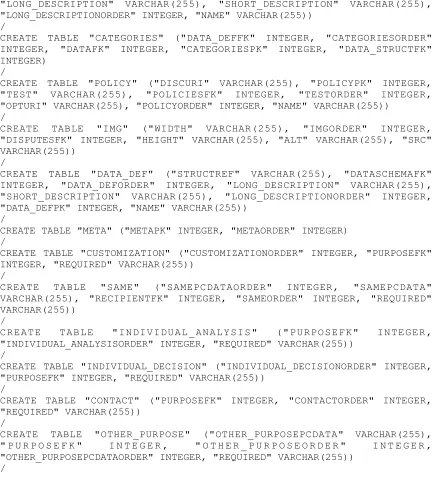
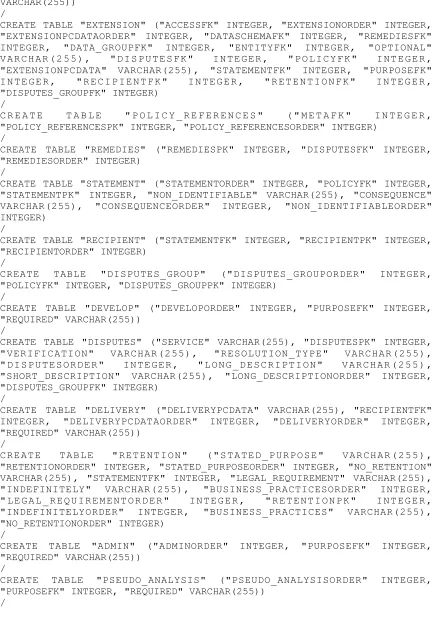
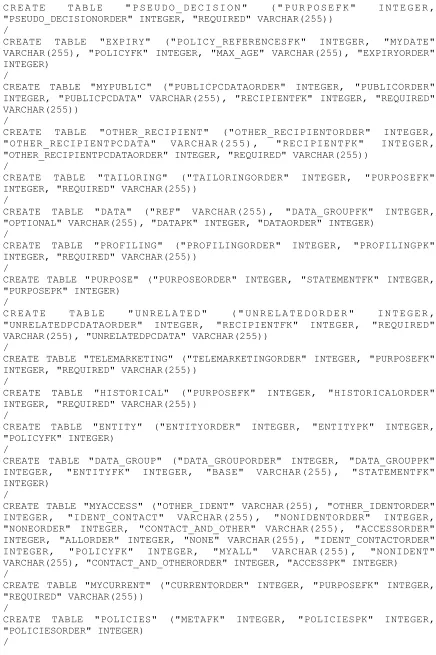
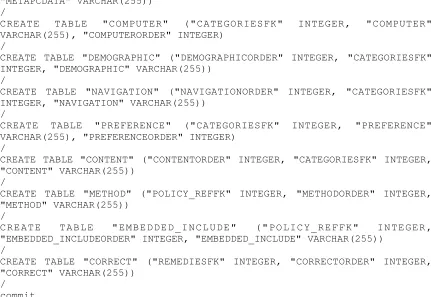
Appendix A: Database Creation SQL
...10
Appendix B: P3P_MAP Table Creation SQL
...15
Appendix C: ERRORS Table Creation SQL
...16
Executive Summary
Firms have long collected and used various types of data about their current and potential
customers. The explosive growth of Internet-enabled technologies presents a significant
opportunity in this arena; however, both consumer sentiment and governmental
regulation are quickly increasing the need for tools to manage the privacy of this data.
The World Wide Web Consortium (W3C) has developed the Platform for Privacy
Preferences Project (P3P) to address this need.
One of the most serious gaps in P3P regards the enforcement of the privacy policies set
forth by firms and agreed to by consumers. Few automated enforcement solutions exist,
and their auditability is limited. The Privacy-Aware Database Interface (PADI) provides
a platform with which firms can ensure that the use of data collected by their
Internet-enabled systems is compliant with the policies under which it was collected.
PADI acts as a gatekeeper which requires that programs requesting data provide the
purpose for which they will use that data. It then allows or denies access to the data
according to the P3P privacy policy under which the data was collected. By presenting a
uniform application programming interface (API) for this access, PADI provides auditing
capability at the source code level.
Primarily a research project, PADI has been implemented in limited prototype form,
using Java Database Connectivity (JDBC) and Oracle technologies. While the prototype
clearly has shortcomings, it effectively demonstrates how such a system could be
successfully implemented. There are also several exciting potential enhancements that
future projects may yet explore.
Introduction
The Need for Privacy Technology
The collection, aggregation, and analysis of information about people’s attributes and
behaviors are an important part of doing business. Today’s Internet-enabled technologies
provide an unprecedented channel for gathering this information, and thus present
organizations with tremendous opportunities.
These opportunities must be approached carefully. Consumers are becoming more aware
of the implications that this data collection holds for their privacy and anonymity. Their
personal information may be used in ways that they do not approve; for example, the
shipping address for their online purchase might become an entry in a direct-mail
database, or their clickstream might be captured so that a merchant can determine their
attitudes for marketing purposes.
Furthermore, many industries, such as health care, are becoming more heavily regulated.
HIPAA, the Health Insurance Portability and Accountability Act, has strict guidelines
addressing how certain kinds of information can be used.
iFirms in this industry must be
careful to ensure that they remain in compliance with these privacy guidelines.
P3P
Because of these and other factors, technologies to manage the privacy of personal
information are beginning to gain more widespread attention. At the forefront of these
technologies is the Platform for Privacy Preferences Project (P3P), a standard developed
by the World Wide Web Consortium (W3C).
The W3C describes P3P as follows:
At its most basic level, P3P is a standardized set of multiple-choice
questions, covering all the major aspects of a Web site's privacy policies.
Taken together, they present a clear snapshot of how a site handles
personal information about its users. P3P-enabled Web sites make this
information available in a standard, machine-readable format. P3P enabled
browsers can "read" this snapshot automatically and compare it to the
consumer's own set of privacy preferences. P3P enhances user control by
putting privacy policies where users can find them, in a form users can
understand, and, most importantly, enables users to act on what they see.
iiApproaches for Privacy Policy Enforcement
Ad Hoc
Most firms currently implementing P3P technologies appear to be using ad hoc
enforcement methodologies. Essentially, ad hoc enforcement implies that the privacy
policies are developed and managed separately from the data collected about users.
Furthermore, this means that programmers who access the data must rely on manual tools
to ensure that they are using the data in ways that are compliant with the policy under
which it was collected.
This clearly presents a problem for both users and firms. The user has no assurance that
the firm is actually complying with the terms under which the data was collected, and the
firm has no way to audit their software to ensure that they are complying with their own
policies or government regulation.
Privacy-aware Database Storage
Privacy-aware database storage, a concept presented by Paul Miotti in his master’s thesis,
“Conception and Implementation of a Privacy-Supportive Database”, provides the data
storage medium itself with intelligence about privacy.
iiiPrivacy-aware Programming Interfaces
Integrating privacy awareness into the API used to develop the software for both data
collection and eventual data use provides a solution for these issues. Middleware
provides for strict access controls on the data, while still allowing firms and developers
an easy method to audit their source code for compliance.
An API which manages this privacy information also provides portability across database
platforms and programming languages. The middleware can be designed to use only
standard relational database features, which allows for multiple backend database
platforms. The conceptual features of the API can also be easily implemented in many
programming languages (e.g. JDBC for Java or ODBC for C).
PADI
The rest of this paper explores the design and architecture of such an API, called the
Privacy-Aware Database Interface (PADI). The prototype implementation is explored in
detail; where compromises were made during development, they are explained and
alternatives provided. Some possible future enhancements to the design are also
discussed.
PADI Features and Limitations
Purpose-based Access Control
The P3P specification provides the
PURPOSE
element, which states one or more
purposes for which the collected data will be used. For example, the
contact
purpose
states that:
Information may be used to contact the individual, through a
communications channel other than voice telephone, for the promotion of
a product or service. This includes notifying visitors about updates to the
Web site. This does not include a direct reply to a question or comment or
customer service for a single transaction … In addition, this does not
include marketing via customized Web content or banner advertisements
embedded in sites the user is visiting[.]
ivWhen using PADI to access data collected under a P3P policy, the program requesting
the data must first provide the purpose for which the data will be used. If the purpose
provided does not match with an allowed purpose under which the data was collected,
access to the data is denied and an exception or error is returned to the program. The
invalid access attempt can also be logged to the database for auditing purposes.
Recipient-based Access Control
The P3P specification also provides the
RECIPIENT
element, which states one or more
parties to whom the data may be transferred. For example, the
delivery
recipient
means that:
Legal entities performing delivery services that may use data for purposes
other than completion of the stated purpose. This should also be used for
delivery services whose data practices are unknown.
vPADI provides similar functionality surrounding the recipient as it does for the purpose,
with the exception that if no recipient is supplied, PADI defaults to the
ours
recipient.
If the recipient for the data does not match with an allowed recipient under which the data
was collected, access to the data is denied. This type of invalid access attempt can also
be logged.
Internal Error Logging
When invalid access is attempted, these errors are logged internally to the database for
future audit purposes.
PADI Limitations
This limitation can be mitigated by implementing a network architecture in which only a
single secondary server, acting as a gatekeeper, is allowed direct access to the database.
The prototype has not been implemented in this manner, primarily due to time and
resource constraints.
PADI Architecture
PADI consists of two primary toolsets, described in the prototype design documentation
as Subsystem 1 and Subsystem 2. Subsystem 1 provides a toolset for creating a database
schema capable of storing P3P policies and for populating policies into that schema.
Subsystem 2 provides the API for developers to use when accessing user data stored in
the database.
It is interesting to note that there is no requirement that user data and P3P policy data be
stored in the same database, or even on the same platform. For the purposes of this
paper, however, the prototype was developed with a single database instance storing both
P3P policies and user data.
For the prototype accompanying this paper, the subsystems have been implemented as
follows.
Subsystem 1: XML-DBMS
Subsystem 1 is based on a freely-available Java-based tool called XML-DBMS.
viThis
tool provides methods to translate XML Document Type Definitions (DTDs) into
database schemas and to insert XML documents into those schemas. The P3P DTD is
fed to a program named GenerateMap.java, which create a set of SQL statements that
describe the tables and fields necessary to store P3P policies.
1This set of SQL
statements is then used to actually create the necessary tables. (See Appendix A.)
GenerateMap.java also creates a map file. Another XML-DBMS-based program,
Transfer.java, uses this map file to take an actual P3P policy and create SQL statements
that will insert that policy into the database.
Subsystem 2: PADI
Subsystem 2 consists of two conceptually distinct pieces: a set of prerequisites for storing
user data, and the PADI object, which provides the API for programmers wishing to
retrieve user data from the database.
The prerequisites for storing user data into the database are:
•
The P3P policy which will govern access to the data must be already populated in
the database.
•
The database must have a P3P_MAP table to link table fields to specific P3P
“DATA” elements. (See Appendix B.)
•
The P3P_MAP table must contain a record for each table field to which access
should be controlled.
•
The database must have an ERRORS table to store access violation records. (See
Appendix C.)
The PADI object is an wrapper around the built-in java.sql.statement class. It is extended
by two methods: setPurpose and setRecipient. The user of the class must set the purpose;
the recipient defaults to
ours
(a special recipient that indicates the firm itself).
A simple example of a PADI session looks like this:
// Note that conn represents an already open database connection PADI query = new PADI(conn.createStatement());
query.setPurpose(query.TELEMARKETING); query.setRecipient(query.OURS);
ResultSet rs = query.executeQuery(“select ccnum from customer”); while (rs.next()) {
// Do something with results }
Assuming that telemarketing is not allowed to receive credit card numbers, this example,
without a try/catch block, would halt with a fatal exception at the
executeQuery
statement.
Behind the scenes, PADI takes the query string passed to it – in this case,
select
ccnum from customer
– and parses out the list of tables and columns being
accessed. It then queries the database to determine if the provided purpose and recipient
are compliant with those tables and columns. If the access is allowed, it runs the
provided query string and returns the result set; if the access is disallowed, it throws an
exception. (Obviously, in production programs, there should be a try/catch block around
the executeQuery statement to deal with such failures.)
Prototype Limitations
Time and development resources have been limited, and this is reflected in the feature set
that was actually implemented in the prototype. The following list details the areas in
which the prototype is limited with regards to the described functionality, as well as ways
that the team has determined that these limitations can be overcome in the future.
Limited SQL Syntax
SELECT
field
[
, field ...
] [AS
name
[
, name ...
]]
FROM
table
[WHERE
conditional
]
This is a limitation of the simple SQL parser included in the PADI object. This can be
resolved by enhancing this parser or replacing it with an external parser.
Future enhancers should take note that once the parser has been enhanced to allow
selecting from multiple tables, care must be taken that the purpose and recipient
restrictions on fields in the WHERE clause are honored, since fields in the WHERE clause
may not necessarily be included in the SELECT list.
Reliance on Oracle
While there is nothing in the PADI design at this time which restricts it to a particular
vendor’s product, the prototype has been developed against Oracle 9.2i. This has
necessarily caused some vendor-specific syntax to be included in the source code, which
will necessitate some rework if PADI is to be used with a different DBMS.
Incomplete Handling of
REQUIRED
attributes
Both
PURPOSE and
RECIPIENT policy elements can contain an attribute called
REQUIRED. This attribute denotes whether the purpose is always required (that is, users
cannot opt in or out of the use of their data for this purpose), or can be opted in or out.
The PADI prototype always acts as if this attribute is set to always (the default, if none
is specified). Future enhancements of PADI should address this; one possible solution is
to add a field to each data table which specifies the opt-in and/or opt-out preference for
that particular record.
Potential Future Enhancements
The limited time and resources provided to the research team have led to considerable
scope contraction over the lifetime of the project. There are several enhancements to
both the PADI design and the prototype implementation that the team was forced to
abandon during development. Some of these enhancements are enumerated below.
Design Enhancements
Direct ties between data and policy
As it currently stands, PADI restricts access to data based solely on the table and column
names. This is adequate protection for a small database, but may require compromises to
data normalization rules. For example, if a firm collects customer data under two
different policies – say, an order page and a mailing list subscription page – this data
must be stored in two different tables, even though many of the fields are duplicated
between the tables.
allows for the creation of user-specified data object types. These objects can contain data
fields, references to other objects, and methods. One might create a data type for a
customer’s last name which contains a string field to store the name, a reference to a
DATA
element in a P3P policy, and a method which selects the proper
DATA
element to
which to link at the time the object is inserted into the database. This would allow
conceptually homogenous data, such as customers’ last names, to be stored in a single
table, while still allowing each individual data entry to be linked to a different P3P
policy.
P
rototype Enhancements
Database creation and policy mapping tooling
There are still many manual steps necessary to create a P3P database. Many of these
steps, such as renaming tables and fields that conflict with Oracle keywords, could be
automated.
Also, there is currently no tooling in place for creating the records in the P3P_MAP table
that link table and column names to
DATA
elements; they must be created by hand.
Development of a tool to ease this linking should be a fairly straightforward
programming exercise.
Separation of policy and data storage
As previously mentioned, there is nothing in the PADI design as it stands that would
prevent the storage of P3P policies and actual collected data from being separated. This
would allow organizations implementing PADI to provide a single storehouse for P3P
policy data, while allowing collected data to be stored in several different databases.
Note that this enhancement is fundamentally in conflict with the described design change
that would include object references within stored data items. Oracle currently has no
functionality that allows for references between database instances to be created.
Lessons Learned
Through the course of the project, the team learned several important lessons. In no
particular order, these are:
The Importance of Clearly-Defined Goals
In the initial stages of the project, the goals were nebulous – the best statement of the
project’s intent that we had was to “ensure that practice matches policy.” This led to
considerable confusion during the project’s initiation as the team struggled to define more
concrete goals. It is not clear how this could have been avoided, however, since this
project is primarily a research-oriented project addressing new areas of privacy thought.
Standards Can Be Vague
should be defined; it is essentially freeform text. The purpose of P3P is to provide
privacy policy information in a machine-readable format that can easily be automated;
this “feature” runs counter to that purpose, since it makes parsing and interpreting the
field problematic at best and simply impossible at worst.
The project, in fact, had originally intended to tackle
RETENTION as part of the
enforcement that PADI provides. This gap in the standard, however, prohibited the team
from doing so.
Scope Contraction is Sometimes Necessary
The original design of PADI was quite ambitious, including enforcement of data
retention policies and allowing the direct data-to-policy ties described under “Design
Enhancements.” Clearly, this scope was too ambitious for the time and resources
available to the project team, and had to be contracted somewhat.
A
ppendix
A
: Database Creation SQL
This is the script used to create the schema for the database which stores the P3P policies.
-- create table to store P3P policies
CREATE TABLE "XMLDBMSKEY" ("HIGHKEY" INTEGER) /
INSERT INTO XMLDBMSKEY VALUES (0) /
CREATE TABLE "DATA_STRUCT" ("DATA_STRUCTORDER" INTEGER, "STRUCTREF" VARCHAR(255), "DATASCHEMAFK" INTEGER, "DATA_STRUCTPK" INTEGER, "LONG_DESCRIPTION" VARCHAR(255), "SHORT_DESCRIPTION" VARCHAR(255), "LONG_DESCRIPTIONORDER" INTEGER, "NAME" VARCHAR(255))
/
CREATE TABLE "CATEGORIES" ("DATA_DEFFK" INTEGER, "CATEGORIESORDER" INTEGER, "DATAFK" INTEGER, "CATEGORIESPK" INTEGER, "DATA_STRUCTFK" INTEGER)
/
CREATE TABLE "POLICY" ("DISCURI" VARCHAR(255), "POLICYPK" INTEGER, "TEST" VARCHAR(255), "POLICIESFK" INTEGER, "TESTORDER" INTEGER, "OPTURI" VARCHAR(255), "POLICYORDER" INTEGER, "NAME" VARCHAR(255))
/
CREATE TABLE "IMG" ("WIDTH" VARCHAR(255), "IMGORDER" INTEGER, "DISPUTESFK" INTEGER, "HEIGHT" VARCHAR(255), "ALT" VARCHAR(255), "SRC" VARCHAR(255))
/
CREATE TABLE "DATA_DEF" ("STRUCTREF" VARCHAR(255), "DATASCHEMAFK" INTEGER, "DATA_DEFORDER" INTEGER, "LONG_DESCRIPTION" VARCHAR(255), "SHORT_DESCRIPTION" VARCHAR(255), "LONG_DESCRIPTIONORDER" INTEGER, "DATA_DEFPK" INTEGER, "NAME" VARCHAR(255))
/
CREATE TABLE "META" ("METAPK" INTEGER, "METAORDER" INTEGER) /
CREATE TABLE "CUSTOMIZATION" ("CUSTOMIZATIONORDER" INTEGER, "PURPOSEFK" INTEGER, "REQUIRED" VARCHAR(255))
/
CREATE TABLE "SAME" ("SAMEPCDATAORDER" INTEGER, "SAMEPCDATA" VARCHAR(255), "RECIPIENTFK" INTEGER, "SAMEORDER" INTEGER, "REQUIRED" VARCHAR(255))
/
CREATE TABLE "INDIVIDUAL_ANALYSIS" ("PURPOSEFK" INTEGER, "INDIVIDUAL_ANALYSISORDER" INTEGER, "REQUIRED" VARCHAR(255))
/
CREATE TABLE "INDIVIDUAL_DECISION" ("INDIVIDUAL_DECISIONORDER" INTEGER, "PURPOSEFK" INTEGER, "REQUIRED" VARCHAR(255))
/
CREATE TABLE "CONTACT" ("PURPOSEFK" INTEGER, "CONTACTORDER" INTEGER, "REQUIRED" VARCHAR(255))
/
CREATE TABLE "OTHER_PURPOSE" ("OTHER_PURPOSEPCDATA" VARCHAR(255), " P U R P O S E F K " I N T E G E R , " O T H E R _ P U R P O S E O R D E R " I N T E G E R , "OTHER_PURPOSEPCDATAORDER" INTEGER, "REQUIRED" VARCHAR(255))
CREATE TABLE "POLICY_REF" ("POLICY_REFERENCESFK" INTEGER, "POLICY_REFORDER" INTEGER, "POLICY_REFPK" INTEGER, "ABOUT" VARCHAR(255))
/
CREATE TABLE "EXTENSION" ("ACCESSFK" INTEGER, "EXTENSIONORDER" INTEGER, "EXTENSIONPCDATAORDER" INTEGER, "DATASCHEMAFK" INTEGER, "REMEDIESFK" INTEGER, "DATA_GROUPFK" INTEGER, "ENTITYFK" INTEGER, "OPTIONAL" VARCHAR(255), "DISPUTESFK" INTEGER, "POLICYFK" INTEGER, "EXTENSIONPCDATA" VARCHAR(255), "STATEMENTFK" INTEGER, "PURPOSEFK" INTEGER, "RECIPIENTFK" INTEGER, "RETENTIONFK" INTEGER, "DISPUTES_GROUPFK" INTEGER)
/
C R E A T E T A B L E " P O L I C Y _ R E F E R E N C E S " ( " M E T A F K " I N T E G E R , "POLICY_REFERENCESPK" INTEGER, "POLICY_REFERENCESORDER" INTEGER)
/
CREATE TABLE "REMEDIES" ("REMEDIESPK" INTEGER, "DISPUTESFK" INTEGER, "REMEDIESORDER" INTEGER)
/
CREATE TABLE "STATEMENT" ("STATEMENTORDER" INTEGER, "POLICYFK" INTEGER, "STATEMENTPK" INTEGER, "NON_IDENTIFIABLE" VARCHAR(255), "CONSEQUENCE" VARCHAR(255), "CONSEQUENCEORDER" INTEGER, "NON_IDENTIFIABLEORDER" INTEGER)
/
CREATE TABLE "RECIPIENT" ("STATEMENTFK" INTEGER, "RECIPIENTPK" INTEGER, "RECIPIENTORDER" INTEGER)
/
CREATE TABLE "DISPUTES_GROUP" ("DISPUTES_GROUPORDER" INTEGER, "POLICYFK" INTEGER, "DISPUTES_GROUPPK" INTEGER)
/
CREATE TABLE "DEVELOP" ("DEVELOPORDER" INTEGER, "PURPOSEFK" INTEGER, "REQUIRED" VARCHAR(255))
/
CREATE TABLE "DISPUTES" ("SERVICE" VARCHAR(255), "DISPUTESPK" INTEGER, "VERIFICATION" VARCHAR(255), "RESOLUTION_TYPE" VARCHAR(255), "DISPUTESORDER" INTEGER, "LONG_DESCRIPTION" VARCHAR(255), "SHORT_DESCRIPTION" VARCHAR(255), "LONG_DESCRIPTIONORDER" INTEGER, "DISPUTES_GROUPFK" INTEGER)
/
CREATE TABLE "DELIVERY" ("DELIVERYPCDATA" VARCHAR(255), "RECIPIENTFK" INTEGER, "DELIVERYPCDATAORDER" INTEGER, "DELIVERYORDER" INTEGER, "REQUIRED" VARCHAR(255))
/
CREATE TABLE "RETENTION" ("STATED_PURPOSE" VARCHAR(255), "RETENTIONORDER" INTEGER, "STATED_PURPOSEORDER" INTEGER, "NO_RETENTION" VARCHAR(255), "STATEMENTFK" INTEGER, "LEGAL_REQUIREMENT" VARCHAR(255), "INDEFINITELY" VARCHAR(255), "BUSINESS_PRACTICESORDER" INTEGER, "LEGAL_REQUIREMENTORDER" INTEGER, "RETENTIONPK" INTEGER, "INDEFINITELYORDER" INTEGER, "BUSINESS_PRACTICES" VARCHAR(255), "NO_RETENTIONORDER" INTEGER)
/
CREATE TABLE "ADMIN" ("ADMINORDER" INTEGER, "PURPOSEFK" INTEGER, "REQUIRED" VARCHAR(255))
/
CREATE TABLE "PSEUDO_ANALYSIS" ("PSEUDO_ANALYSISORDER" INTEGER, "PURPOSEFK" INTEGER, "REQUIRED" VARCHAR(255))
CREATE TABLE "PSEUDO_DECISION" ("PURPOSEFK" INTEGER,
"PSEUDO_DECISIONORDER" INTEGER, "REQUIRED" VARCHAR(255)) /
CREATE TABLE "EXPIRY" ("POLICY_REFERENCESFK" INTEGER, "MYDATE" VARCHAR(255), "POLICYFK" INTEGER, "MAX_AGE" VARCHAR(255), "EXPIRYORDER" INTEGER)
/
CREATE TABLE "MYPUBLIC" ("PUBLICPCDATAORDER" INTEGER, "PUBLICORDER" INTEGER, "PUBLICPCDATA" VARCHAR(255), "RECIPIENTFK" INTEGER, "REQUIRED" VARCHAR(255))
/
CREATE TABLE "OTHER_RECIPIENT" ("OTHER_RECIPIENTORDER" INTEGER,
"OTHER_RECIPIENTPCDATA" VARCHAR(255), "RECIPIENTFK" INTEGER,
"OTHER_RECIPIENTPCDATAORDER" INTEGER, "REQUIRED" VARCHAR(255)) /
CREATE TABLE "TAILORING" ("TAILORINGORDER" INTEGER, "PURPOSEFK" INTEGER, "REQUIRED" VARCHAR(255))
/
CREATE TABLE "DATA" ("REF" VARCHAR(255), "DATA_GROUPFK" INTEGER,
"OPTIONAL" VARCHAR(255), "DATAPK" INTEGER, "DATAORDER" INTEGER) /
CREATE TABLE "PROFILING" ("PROFILINGORDER" INTEGER, "PROFILINGPK" INTEGER, "REQUIRED" VARCHAR(255))
/
CREATE TABLE "PURPOSE" ("PURPOSEORDER" INTEGER, "STATEMENTFK" INTEGER,
"PURPOSEPK" INTEGER) /
C R E A T E T A B L E "U NR E L A T ED " ( " U NR E L A T ED ORDE R " I NT EGE R,
"UNRELATEDPCDATAORDER" INTEGER, "RECIPIENTFK" INTEGER, "REQUIRED" VARCHAR(255), "UNRELATEDPCDATA" VARCHAR(255))
/
CREATE TABLE "TELEMARKETING" ("TELEMARKETINGORDER" INTEGER, "PURPOSEFK" INTEGER, "REQUIRED" VARCHAR(255))
/
CREATE TABLE "HISTORICAL" ("PURPOSEFK" INTEGER, "HISTORICALORDER" INTEGER, "REQUIRED" VARCHAR(255))
/
CREATE TABLE "ENTITY" ("ENTITYORDER" INTEGER, "ENTITYPK" INTEGER,
"POLICYFK" INTEGER) /
CREATE TABLE "DATA_GROUP" ("DATA_GROUPORDER" INTEGER, "DATA_GROUPPK" INTEGER, "ENTITYFK" INTEGER, "BASE" VARCHAR(255), "STATEMENTFK" INTEGER)
/
CREATE TABLE "MYACCESS" ("OTHER_IDENT" VARCHAR(255), "OTHER_IDENTORDER" INTEGER, "IDENT_CONTACT" VARCHAR(255), "NONIDENTORDER" INTEGER,
"NONEORDER" INTEGER, "CONTACT_AND_OTHER" VARCHAR(255), "ACCESSORDER" INTEGER, "ALLORDER" INTEGER, "NONE" VARCHAR(255), "IDENT_CONTACTORDER" INTEGER, "POLICYFK" INTEGER, "MYALL" VARCHAR(255), "NONIDENT" VARCHAR(255), "CONTACT_AND_OTHERORDER" INTEGER, "ACCESSPK" INTEGER)
/
CREATE TABLE "MYCURRENT" ("CURRENTORDER" INTEGER, "PURPOSEFK" INTEGER,
"REQUIRED" VARCHAR(255)) /
CREATE TABLE "DATASCHEMA" ("DATASCHEMAPK" INTEGER, "DATASCHEMAORDER"
INTEGER, "POLICYFK" INTEGER) /
CREATE TABLE "EXCLUDE" ("EXCLUDE" VARCHAR(255), "EXCLUDEORDER" INTEGER,
"POLICY_REFFK" INTEGER) /
CREATE TABLE "OURS" ("OURS" VARCHAR(255), "RECIPIENTFK" INTEGER,
"OURSORDER" INTEGER) /
CREATE TABLE "PHYSICAL" ("PHYSICAL" VARCHAR(255), "CATEGORIESFK"
INTEGER, "PHYSICALORDER" INTEGER) /
CREATE TABLE "HEALTH" ("HEALTH" VARCHAR(255), "CATEGORIESFK" INTEGER,
"HEALTHORDER" INTEGER) /
CREATE TABLE "FINANCIAL" ("FINANCIAL" VARCHAR(255), "FINANCIALORDER"
INTEGER, "CATEGORIESFK" INTEGER) /
CREATE TABLE "POLITICAL" ("POLITICAL" VARCHAR(255), "POLITICALORDER"
INTEGER, "CATEGORIESFK" INTEGER) /
CREATE TABLE "OTHER" ("OTHER" VARCHAR(255), "OTHERORDER" INTEGER,
"CATEGORIESFK" INTEGER) /
CREATE TABLE "PURCHASE" ("PURCHASE" VARCHAR(255), "PURCHASEORDER"
INTEGER, "CATEGORIESFK" INTEGER) /
CREATE TABLE "STATE" ("STATE" VARCHAR(255), "STATEORDER" INTEGER,
"CATEGORIESFK" INTEGER) /
CREATE TABLE "INTERACTIVE" ("INTERACTIVEORDER" INTEGER, "INTERACTIVE"
VARCHAR(255), "CATEGORIESFK" INTEGER) /
CREATE TABLE "MONEY" ("REMEDIESFK" INTEGER, "MONEY" VARCHAR(255),
"MONEYORDER" INTEGER) /
CREATE TABLE "MYONLINE" ("MYONLINE" VARCHAR(255), "CATEGORIESFK"
INTEGER, "ONLINEORDER" INTEGER) /
CREATE TABLE "LAW" ("REMEDIESFK" INTEGER, "LAW" VARCHAR(255),
"LAWORDER" INTEGER) /
CREATE TABLE "INCLUDE" ("INCLUDE" VARCHAR(255), "INCLUDEORDER" INTEGER,
"POLICY_REFFK" INTEGER) /
CREATE TABLE "UNIQUEID" ("UNIQUEID" VARCHAR(255), "UNIQUEIDORDER"
INTEGER, "CATEGORIESFK" INTEGER) /
CREATE TABLE "GOVERNMENT" ("GOVERNMENTORDER" INTEGER, "GOVERNMENT"
VARCHAR(255), "CATEGORIESFK" INTEGER) /
CREATE TABLE "EMBEDDED_EXCLUDE" ("EMBEDDED_EXCLUDE" VARCHAR(255),
"POLICY_REFFK" INTEGER, "EMBEDDED_EXCLUDEORDER" INTEGER) /
CREATE TABLE "DATAPCDATA" ("DATAFK" INTEGER, "DATAPCDATAORDER" INTEGER,
CREATE TABLE "METAPCDATA" ("METAFK" INTEGER, "METAPCDATAORDER" INTEGER,
"METAPCDATA" VARCHAR(255)) /
CREATE TABLE "COMPUTER" ("CATEGORIESFK" INTEGER, "COMPUTER" VARCHAR(255), "COMPUTERORDER" INTEGER)
/
CREATE TABLE "DEMOGRAPHIC" ("DEMOGRAPHICORDER" INTEGER, "CATEGORIESFK" INTEGER, "DEMOGRAPHIC" VARCHAR(255))
/
CREATE TABLE "NAVIGATION" ("NAVIGATIONORDER" INTEGER, "CATEGORIESFK" INTEGER, "NAVIGATION" VARCHAR(255))
/
CREATE TABLE "PREFERENCE" ("CATEGORIESFK" INTEGER, "PREFERENCE" VARCHAR(255), "PREFERENCEORDER" INTEGER)
/
CREATE TABLE "CONTENT" ("CONTENTORDER" INTEGER, "CATEGORIESFK" INTEGER,
"CONTENT" VARCHAR(255)) /
CREATE TABLE "METHOD" ("POLICY_REFFK" INTEGER, "METHODORDER" INTEGER,
"METHOD" VARCHAR(255)) /
CREATE TABLE "EMBEDDED_INCLUDE" ("POLICY_REFFK" INTEGER,
"EMBEDDED_INCLUDEORDER" INTEGER, "EMBEDDED_INCLUDE" VARCHAR(255)) /
CREATE TABLE "CORRECT" ("REMEDIESFK" INTEGER, "CORRECTORDER" INTEGER,
"CORRECT" VARCHAR(255)) /
A
ppendix B: P3P_MAP Table Creation SQL
This is the SQL script used to create the P3P_MAP table.
-- create p3p_map table drop table p3p_map; create table p3p_map (
p3p_mappk number not null primary key, tablename varchar(255),
columnname varchar(255),
datafk number
);
-- create p3p_mapsequence autoincrementer for creating PKs drop sequence p3p_mapsequence;
create sequence p3p_mapsequence increment by 1
start with 1
nomaxvalue minvalue 1
nocycle nocache noorder
;
-- create p3p_mapincrement trigger to populate PKs create or replace trigger p3p_mapincrement
before insert on p3p_map for each row
begin
select p3p_mapsequence.nextval into :new.p3p_mappk
from dual; end;
/
-- uncomment following to test autoincrement trigger -- insert into P3P_map
-- (table_name, column_name, dataref_id) -- values
-- ('test table', 'test column', '42')
Appendix
C: ERRORS Table Creation SQL
This is the SQL script used to create the ERRORS table.
-- create errors table
drop table errors;
create table errors (
id number(6) not null primary key,
code number(6) not null,
text varchar(1024),
time date
);
-- create errorssequence autoincrementer for creating PKs drop sequence errorssequence;
create sequence errorssequence increment by 1
start with 1
nomaxvalue minvalue 1
nocycle nocache noorder
;
-- create errorsincrement trigger to populate PKs
create or replace trigger errorsincrement before insert on errors
for each row
begin
select errorssequence.nextval
into :new.id
from dual;
end; /
-- create errordate trigger to populate date create or replace trigger errorsdate
before insert on errors
for each row
begin
select sysdate into :new.time from dual;
end; /
-- uncomment following to test triggers
-- insert into errors
-- (code, text)
-- values
-- (402, 'access denied')
Re
ferences
i
“Medical Privacy - National Standards to Protect the Privacy of Personal Health
Information.
”
Office for Civil Rights, Department of Health and Human
Services. Available online at
http://www.hhs.gov/ocr/hipaa/finalreg.html
.
ii
“P3P Public Overview.” World Wide Web Consortium. Available online at
http://www.w3.org/P3P/
.
iii
Miotti, Paul. “Conception and Implementation of a Privacy-Supportive Database”.
Institute of Information Systems, ETH Zurich, Switzerland, 2002. Unpublished
Master’s thesis.
iv
“The Platform for Privacy Preferences 1.0 (P3P1.0) Specification.” World Wide Web
Consortium. Available online at
http://www.w3.org/TR/P3P/#PURPOSE
.
v
Ibid. Available online at
http://www.w3.org/TR/P3P/#RECPNT
.
vi
Bourret, Ron. “XML-DBMS.”