Upregulation of the intestinal paracellular pathway with breakdown of tight and adherens
junctions in deficit schizophrenia.
Michael Maes, M.D., Ph.D.a,b,c, Sunee Sirivichayakul, Ph.D.d, Buranee Kanchanatawan, M.D.a,
Aristo Vodjani, Ph.D.e,f,g
a
Department of Psychiatry, Faculty of Medicine, Chulalongkorn University, Bangkok, Thailand.
b
Department of Psychiatry, Medical University of Plovdiv, Plovdiv, Bulgaria.
c IMPACT Strategic Research Center, Deakin University, Geelong, Australia.
d
Faculty of Medicine, Chulalongkorn University, Bangkok, Thailand.
e
Immunosciences Lab., Inc, Los Angeles, CA, USA.
f
Cyrex Labs, LLC, Phoenix, AZ, USA.
g
Department of Preventive Medicine, Loma Linda University, Loma Linda, CA, USA.
Corresponding author:
Prof. Dr. Michael Maes, M.D., Ph.D.
IMPACT Strategic Research Center
Barwon Health
Deakin University
Geelong, Vic
Australia
https//:scholar.google.co.th/citations?user=1wzMZ7UAAAAJ&hl=th&oi=ao
Abstract
In 2001, the first author of this paper reported that schizophrenia is associated with an increased
frequency of the haptoglobin (Hp)-2 gene. The precursor of Hp-2 is zonulin, a molecule that
affects intercellular tight junction integrity. Recently, we reported increased plasma IgA/IgM
responses to Gram-negative bacteria in deficit schizophrenia indicating leaky gut and gut
dysbiosis. The current study was performed to examine the integrity of the paracellular (tight and
adherens junctions) and transcellular (cytoskeletal proteins) pathways in deficit versus
non-deficit schizophrenia. We measured IgM responses to zonulin, occludin, E-cadherin, talin, actin
and vinculin in association with IgA responses to Gram-negative bacteria, CCL-11, IgA
responses to tryptophan catabolites (TRYCATs), immune activation and IgM to
malondialdehyde (MDA) and NO-cysteinyl in 78 schizophrenia patients and 40 controls. We
found that the ratio of IgM to zonulin + occudin / talin + actin + viculin (PARA/TRANS) was
significantly greater in deficit than in non-deficit schizophrenia and higher in schizophrenia than
controls and was significantly associated with increased IgA responses to Gram-negative
bacteria. IgM responses to zonulin were positively associated with schizophrenia (versus
controls), while IgM to occludin was significantly associated with deficit schizophrenia (versus
non-deficit schizophrenia and controls). A large part of the variance (90.8%) in negative and
PHEM (psychosis, hostility, excitation and mannerism) symptoms was explained by
PARA/TRANS ratio, IgA to Gram-negative bacteria, IgM to E-cadherin and malondialdehyde
(MDA) and memory dysfunctions, while 53.3% of the variance in the latter was explained by
PARA/TRANS ratio, IgA to Gram-negative bacteria, CCL-11, TRYCATs and immune
activation. The results show an upregulated paracellular pathway with breakdown of the tight
dysfunctions in the intestinal paracellular route together with lowered natural IgM, immune
activation and production of CCL-11 and TRYCATs contribute to the phenomenology of deficit
schizophrenia.
Key words: schizophrenia, leaky gut, neuro-immune, inflammation, oxidative stress, TRYCATs,
Introduction
In 2001, the first author of this paper reported that the Hp-2 gene frequency was
significantly higher in schizophrenia patients as compared with the observed frequency in the
population, indicating that genetic variation on chromosome 16 is associated with schizophrenia
[1]. Hp is an acute phase protein, which is increased together with other acute phase reactants
and complement factors, including C3C, during immune-inflammatory responses [1]. Hp shows
a polymorphism with three common phenotypes, namely Hp 1-1, Hp 2-1 and Hp 2-2, which are
determined by two autosomal codominant alleles, i.e. Hp-1 and Hp-2 [2]. This is important as the
Hp 2-2 phenotype is significantly associated with increased oxidative burden, low grade
inflammation and increased levels of pro-inflammatory cytokines, including interleukin (IL)-6
and tumor necrosis factor (TNF)-α [3-5]. Increased Hp 2-2 genotypic distribution not only plays
a role in schizophrenia [1], but also in other medical illness, including Crohn’s disease, celiac
disease and chronic kidney failure [6,7]. We have argued that the increased frequency of the Hp
2-2 phenotype could play a role in the immune-inflammatory pathophysiology of schizophrenia
[1].
There is now indeed evidence that schizophrenia and its different phenotypes, including
first episode psychosis, chronic schizophrenia, treatment resistant schizophrenia, and deficit
schizophrenia are accompanied by activation of the immune-inflammatory response system
(IRS) with an acute phase response, activated macrophagic M1, T helper (Th)-1 and Th-17
phenotypes [8-10]. Moreover, the different schizophrenia phenotypes and manifestations are
accompanied by simultaneous signs of immune regulatory or anti-inflammatory processes,
including activated Th-2 and Tregulatory (Treg) phenotypes and increased levels of cytokine
[10]. As such, the different phenotypes of schizophrenia are accompanied by activated IRS
pathways and an activated compensatory immune-regulatory system (CIRS) which tends to
downregulate the primary IRS [10,11]. Different IRS and CIRS products have neurotoxic and
excitotoxic effects and may deleteriously impact neuroplastic mechanisms and neurogenesis
thereby causing neurocognitive impairments and symptoms of schizophrenia, including negative
symptoms, psychosis, hostility, excitation and mannerism (PHEM) [9,10,12-16]. These
neurotoxic substances belong to the IRS as well as CIRS and include increased levels of IL-1β,
IL-6, TNF-α, interferon-γ, IL-4, IL-13, CCL-11 (eotaxin), and cytokine-induced production of
neurotoxic tryptophan catabolites (TRYCATs) including xanthurenic acid (XA), picolinic acid
(PA) and 3-OH-kynurenine (3HK) [9,10,14-16].
Recently, we discovered a deficit in the CIRS that is strongly associated with deficit
schizophrenia, namely lowered IgM antibody levels to conjugated oxidative specific epitopes
(OSEs) including malondialdehyde (MDA) [17]. Moreover, lowered levels of IgM to MDA were
highly significantly associated with the negative symptoms of schizophrenia and excitation and
impairments in semantic and episodic memory including direct and delayed recall [17]. Those
antibodies directed against conjugated OSEs are part of the innate immune system and may be
present even without antigenic contact [18-22]. These natural antibodies are produced by B1
cells and have housekeeping, immune-regulatory, anti-inflammatory and anti-oxidant properties
thereby protecting against uncontrolled inflammation [23,24].
Importantly, we discovered that deficit schizophrenia is accompanied by increased IgA
responses to gut commensal bacteria including Hafnia alvei, Pseudomonas aeruginosa,
Morganella morganii, and Klebsiella pneumoniae as compared with non-deficit schizophrenia
Gram-negative bacteria coupled with lowered natural IgM to OSEs predict deficit schizophrenia
with a bootstrapped area under the ROC curve of 0.960 [25]. Natural IgM to OSEs are an
integral pre-existing part of the innate first-line defense system protecting against
microorganisms, including Gram-negative bacteria, through early recognition and neutralization
of the invading pathogens ‘in the lag time for adaptive antibody production’ [18,1920,23,26].
The LPS of translocated bacteria, in turn may activate receptors of the innate immune system,
including the Toll Like Receptor (TLR)4 complex thereby activating intracellular signalling
networks (e.g. nuclear factor (NF)-κB and MAPK) and stimulating the production of inducible
nitric oxide (NO) synthase, reactive oxygen species and pro-inflammatory cytokines [27].
Moreover, LPS and other bacterial antigens may exert profound neurotoxic effects [28] by
accessing the brain via different routes, including the blood-brain-barrier, the circumventricular
organs and area postrema, or via outer membrane vesicles [28-33]. Based on this knowledge, we
concluded that schizophrenia patients with lowered natural IgM are more prone to the
detrimental effects of LPS and other bacterial neurotoxic antigens, which in turn may drive
schizophrenia symptoms including memory impairments [25].
The Hp-2 gene and increased bacterial translocation are both related to pre-Hp-2, namely
zonulin [6]. The latter increases the permeability of the tight junctions (TJs) composed of
occludin and claudin, which in the gut join epithelial cells together thereby protecting against
entrance of unwanted enterobacteria and food molecules [6]. Besides TJs also E-cadherin binds
epithelial cells together via adherens junctions (AJs) thereby increasing stability of the gut
barrier [34]. Gut dysbiosis and gliadin may cause loosening of the TJ barrier and therefore
increased translocation of bacterial and other antigens (e.g. food) into the blood stream via the
vinculin and talin, may allow entrance of antigens via the transcellular route [34]. However,
there are no data whether (deficit) schizophrenia is accompanied by upregulated paracellular or
transcellular pathways leading to increased translocation of gut commensal Gram-negative
bacteria.
Hence, the current study examined whether (deficit) schizophrenia and its
phenomenological characteristics (i.e. negative and PHEM symptoms and memory deficits) are
accompanied by dysfunctions in the paracellular or transcellular pathways as measured using
IgM responses to zonulin, occludin, E-cadherin, talin, actin and vinculin.
Subjects and Methods Participants
The current study recruited 79 patients with schizophrenia and 40 healthy controls. All
participants were recruited from the same catchment area, namely province Bangkok, Thailand.
Patients attended the Department of Psychiatry, King Chulalongkorn Memorial Hospital,
Bangkok, Thailand, and fulfilled all DSM-IV-TR diagnostic criteria. They were stabilized
patients who did not suffer from acute psychotic episodes the year prior to the study. Patients
were divided into two groups, namely those with and without deficit schizophrenia [37].
Exclusion criteria for patients were: axis-1 DSM-IV-TR disorders other than schizophrenia,
including bipolar disorder, schizoaffective disorder, major depression, substance use disorders
and psycho-organic disorders. Exclusion criteria for healthy controls were: lifetime and current
diagnoses of axis I, DSM-IV-TR diagnoses and a positive family history of schizophrenia.
Exclusion criteria for both patients and controls were: a) medical illnesses such as inflammatory
and 2; b) neuro-inflammatory and neurodegenerative disorders, including multiple sclerosis,
stroke, Parkinson’s disease and Alzheimer’s disease; c) use of medications known to suppress
immune functions, such as glucocorticoids or immunosuppresiva, and d) use of supplements with
ω3-polyunsaturated fatty acids or antioxidants the months prior to the study. All patients and
controls as well as the guardians (parents or close family members) gave written informed
consent prior to participation in our study. The study was conducted according to International
and Thai ethics and privacy laws. Approval for the study (298/57) was obtained from the
Institutional Review Board of the Faculty of Medicine, Chulalongkorn University, Bangkok,
Thailand, which is in compliance with the International Guidelines for Human Research
protection as required by the Declaration of Helsinki, The Belmont Report, CIOMS Guideline
and International Conference on Harmonization in Good Clinical Practice.
Measurements Clinical assessments
A senior psychiatrist (BK) specialized in schizophrenia made the diagnosis of
schizophrenia using DSM-IV-TR diagnostic criteria and the Mini-International Neuropsychiatric
Interview (MINI) in a validated Thai translation [38]. On the same day, the same senior
psychiatrist used a semi-structured interview to assess clinical and socio-demographic data in
patients and controls. Patients were divided into those with and without primary deficit
schizophrenia using the Schedule for the Deficit Syndrome [37]. We also made the diagnosis of
first episode of psychosis versus multiple psychotic episodes using DSM-5 criteria. On the same
day, BK assessed the Positive and Negative Syndrome Scale (PANSS) [39], the Scale for the
[41], and the Hamilton Depression (HAM-D) and Anxiety (HAM-A) Rating Scales [42,43] and
the Fibromyalgia and Chronic Fatigue Syndrome Rating scale (FF) [44].
Consequently, we have computed indices reflecting different symptoms clusters of
schizophrenia pathology as explained previously [15,16,17,25,46]. A psychomotor retardation
index (PMRI) was constructed based on items of the BPRS, HDRS and PANSS as: z-score of
HDRS item 8 (HDRS8: psychomotor retardation: slowness of thought and speech, decreased
motor activity, impaired inability to concentrate) plus z-score of the general psychopathology
scale of the PANSS, item G7 (zPANSSG7; reduction in motor activity as reflected in slowing or
lessening of movements and speech, diminished responsiveness to stimuli and reduced body
tone) plus z score of item 13 of the BPRS (zBPRS13; reduction in energy level evidenced in
slowed movements). Formal thought disorders (FTD) was computed as z value of PANNS P2
(item P2 of the PANNS scale or conceptual disorganization, zP2) plus zN5 (item N5 of the
PANNS or difficulty in abstract thinking) plus zBPRS4 (item 4 of the BPRS or conceptual
disorganization). The severity of psychotic symptoms was computed as sum of zPANSS
(positive subscale item 1) P1 (delusion) plus zPANSSP3 (hallucinations) + zPANNSP6
(suspiciousness) plus zBPRS11 (suspiciousness) plus zBPRS12 (hallucinatory behavior) plus
zBPRS15 (unusual thought content). The severity of hostility was computed as sum of zPANSS7
(hostility) plus zPANSSG14 (poor impulse control) plus zBPRS10 (hostility) plus zBPRS14
(uncooperativeness). The excitement dimension score was computed as zP14 (excitement) plus
zP5 (grandiosity) plus zBPRS8 (grandiosity) plus zBPRS17 (excitement). Mannerism was
computed as zG5 plus zBPRS7 (both mannerism and posturing). Severity of gastro-intestinal
On the same day, a well-trained research assistant (a MSc in Mental Health) assessed
neuropsychological functions in all participants using the Consortium to Establish a Registry for
Alzheimer’s disease (CERAD)-Neuropsychological battery [47]. Here we assessed the Verbal
Fluency Test (VFT) to probe semantic memory and fluency; b) Word List Memory (WLM) to
test verbal episodic memory and learning ability, and c) Word List Recall, true recall (True
Recall) to test verbal episodic memory recall. In addition, we employed DSM-IV-TR criteria to
make the diagnosis of Tobacco Use Disorder (TUD), while we computed the body mass index
(BMI) using body weight (kg) / length (m2).
Assays
In patients and controls, fasting blood was sampled at 8.00 a.m. for the assay of IgM
responses to intestinal barrier, TJ (zonulin and occludin), AJ (E-Cadherin) and
cytoskeletal-related proteins (talin, actin and vinculin), IgM antibody levels to MDA and NO-cysteinyl, IgA
responses to TRYCATs, and IL-10, sIL-1RA, macrophage inflammatory protein (MIP)-1α and
CCL-11 (eotaxin) levels.
Zonulin, occludin, E-cadherin, talin and vinculin were purchased from Bio-Synthesis®
(Lewisville, TX, USA) and Abcam® (Cambridge, MA, USA), while actin was obtained from
Sigma-Aldrich® (St. Louis, MO, USA). Proteins and peptides at a concentration of 1 mg/mL
were dissolved in 0.01 M Tris buffer and diluted 1:50 in 0.1 M carbonate buffer at pH 9.5. 100
µL of each diluted antigen was added to each well of the microtiter plate. Plates were incubated
overnight at 4°C and then washed three times with 200 μL 0.01 M PBS containing 0.05% Tween
20 at a pH of 7.4. After washing, 200 μL of 2% bovine serum albumin (BSA) was added to each
100 µL of serum diluted 1:100 for IgM detection in serum diluent were added to duplicate wells
coated with each antigen. Plates were incubated for an additional 1 hour at room temperature.
The plates were then washed five times with Tris-buffered saline (TBS)-Tween. Alkaline
phosphatase-labeled IgM at dilutions of 1:400 for IgM were then added to all wells and
incubated again for 1 hour at room temperature. The enzyme reaction was started by adding 100
mL of paranitrophenylphosphate at a concentration of 1 mg/mL in diethanolamine buffer
containing 1mN MgCl2 and sodium azide at a pH of 9.8. The reaction was stopped 45 minutes
later with 75 μL of 1 N NaOH, and the samples were read by an ELISA reader; the optical
densities were recorded. Several wells were coated with non-specific proteins such as human
serum albumin (HAS) and rabbit serum albumin, which were used as controls for detecting the
ELISA background. Sera from healthy subjects were used as negative controls, and sera from
patients with intestinal autoimmunity with moderate and high titers of IgM antibodies were used
as calibrator and positive controls and for the calculation of ELISA indices using the following
formula: antibody ELISA index = OD of tested specimen - OD blank / OD of calibrator - OD of
blank. All OD values were then converted into z scores which were used in the statistical
analyses. Consequently, we computed z unit weighted composite scores to obtain indices of
parracellular and transcellular leaky gut. For paracellular TJ leaky gut we computed the sum of
the z scores of zonulin and occludin as z zonulin plus z occludin (PARA). Furthermore, we also
computed z zonulin plus z occludin plus z E-cadherin as an index of the total paracellular
pathway (PARA2). For the transcellular route we computed the composite score of z talin plus z
actin plus z vinculin (TRANS). In order to estimate which route prevails in schizophrenia, we
have computed the ratio between PARA versus TRANS as: z score of (z zonulin plus z occludin)
gut we computed the sum of the z scores of all 6 proteins, namely z zonulin plus z occludin plus
z talin plus z actin plus z vinculin plus z E-cadherin (named “overall LEAKY index”).
The assays of IgA responses to different conjugated TRYCATs were performed as
described previously [48-50]. The 6 TRYCATs were dissolved in 200 μL dimethylsulfoxide
(DMSO) (Acros). BSA (ID Bio) was dissolved in 3 mL 2-morpholino-ethanesulfonic acid
monohydrate (MES) buffer 10−1 M at pH = 6.3 (Acros). The TRYCATs were then mixed with
the BSA solution and supplemented with 15 mg N-hydroxysuccinimide (Sigma) and
1-(3-dimethylaminopropyl)-3-ethylcarbodiimide (Acros) as coupling agents. The conjugates were
synthesized by linking 3-OH-kynurenine (3HK, Sigma), kynurenic acid (KA, Acros), quinolinic
acid (QA, Acros), anthranilic acid (AA, Acros), xanthurenic acid (XA, Akros) and picolinic acid
(PA, Akros) to 20 mg BSA. The coupling reaction proceeded at 37◦C for 1 hour in the dark. The
coupling was stopped by adding 100 mg hydroxylamine (Sigma-Aldrich) per conjugate. Protein
conjugates were dialyzed with 10−1 M NaCl solution for 72 hours and the bath solution was
changed at least four times per day. The conjugated TRYCATs and BSA concentrations were
evaluated by spectrophotometry. The coupling ratio of each conjugate was determined by
measuring the concentration of TRYCATs and BSA at 310-330 nm and 280 nm, respectively.
ELISA tests were used to determine plasma titers of immunoglobulins (Ig) A (IgA). Towards
this end, polystyrene 96-well plates (NUNC) were coated with 200 μL solution containing 10–50
μg/mL TRYCAT conjugates in 0.05 M carbonate buffer (pH = 9.6). Well plates were incubated
under agitation at 4◦C for 16 hours. Then, 200 μL blocking buffer A (Phosphate Buffered Saline,
PBS, 2.5 g/L BSA) was applied and all samples were incubated at 37◦C for 1 hour. Well plates
were washed with PBS solution and filled up with 100 μL serum diluted 1:130 in blocking buffer
0.05% Tween 20, incubated with peroxidase-labeled goat anti-human IgA (SouthernBiotech)
antibodies at 37◦C for 1 hour. The goat anti-human IgA antibody was diluted at 1:10.000 in
blocking buffer (PBS, 2.5 g/L BSA). Plates were then washed three times with PBS, 0.05%
Tween 20. Fifty microlitre of TMB substrate (3,3',5,5'-Tetramethylbenzidine, SouthernBiotech)
was added and incubated for 10 minutes in the dark. The reaction was stopped using 50 μL of
TMB stop solution (SouthernBiotech). Optical densities (ODs) were measured at 450 nm using
Varioskan Flash (Thermo Scientific). All assays were carried out in one and the same run by the
same operator who was blind to all clinical results. All assays were carried out in duplicate. The
analytical intra-assays CV values were < 7%. We computed a noxious / protective TRYCAT
ratio as z score of PA (zPA) plus zXA plus zOHK minus zAA minus zKA (NOX/PRO TRYCAT
ratio) [51].
We used an enzyme-linked immunosorbent assay to measure IgM levels directed against
conjugated MDA [52-55]. MDA was linked to fatty acid free-BSA, according to previously
described methods [52-55]. Synthesis of the conjugates to delipidated BSA was performed as
described before [54]. In order to mimic nitrosylation processes, NO-cysteinyl was synthesized
by linking haptens to BSA (Sigma-Aldrich) using glutaraldehyde [53,56,57]. The synthesis of
these conjugates has been described previously [58]. The hapten conjugate was nitrosylated
using sodium nitrite (NaNO2) dissolved in 2 ml of each conjugate, in 0.5 M HCl at 37°C for 2 h,
while shaking in the dark. The conjugate was then dialyzed at 4°C for 24 h against a Phosphate
Buffered Saline (PBS: 10-2 M NaH2PO4, 12H2O; 0.15M NaCl; pH 7.4) solution. S-nitrosothiol
bond formation was determined by spectrophotometry. The S-nitrosothiol compound possesses
two absorbance maxima, at 336 and 550 nm, respectively: e336 nm = 900 M-1cm-1 for the
NO concentrations linked to the compound. The detection of IgM autoantibodies to the
conjugates was performed by indirect ELISA tests [55,58]. Briefly, polystyrene 96-well plates
(NUNC) were coated with 200 µl solution containing the conjugates or BSA in 0.05 M carbonate
buffer at pH 9.6. Well plates were incubated at 4°C for 16 h under agitation. Then, a 200 µl of
blocking solution (PBS, 2.5 g/l BSA) was added for 1 h and placed at 37°C. Following three
washes with PBS, plates were filled up with 100 µl of sera diluted at 1:1000 in the blocking
buffer A (PBS, 0.05% Tween 20, 10% Glycerol, 2.5 g/l BSA, 1 g/l BSA-G) and incubated at
37°C for 2 h. After three washes with PBS-0.05% Tween 20, plates were incubated at 37°C for 1
h with peroxidase-labeled anti-human IgM secondary antibodies diluted respectively at 1:
15,000, in the blocking buffer (PBS, 0.05% Tween 20, 2.5 g/l BSA). They were then washed
three times with PBS-0.05% Tween 20, and incubated with the detection solution for 10 min in
the dark. Chromogen detection solution was used for the peroxidase assay at 8% in 0.1 M acetate
and 0.01 M phosphate buffer (pH 5.0) containing 0.01% H2O2. The reaction was stopped with 25
µl 2-N HCl. ODs were measured at 492 nm using a multiscan spectrophotometer. All assays
were carried out in duplicate. The intra-assay coefficients of variation (CV) were < 6%.
For the assays of cytokines/chemokines, 50 µl of serum (1:2 dilution in calibrator
diluents) was mixed with 50 µl of microparticle cocktail containing CCL-11, sIL-1RA, IL-10
and MIP-1α (R&D Systems, Inc, Minneapolis, MN, USA) per well of a 96-well plate provided
by manufacturer and incubated for 2 hours at room temperature on a shaker at 800 rpm. The
mixture was then washed 3 times with wash buffer and 50 µl diluted Biotin Antibody cocktail
was added and then incubated for 1 hour. Wells were washed 3 times before another 50 µl of
diluted Streptavidin-PE was added and further incubated for 30 minutes. Finally, wells were
before being read with Bio-Plex® 200 System (Bio-Rad Laboratories, Inc.). The intra-assay CV
values were <7.0%. The least detectable dose was 1.82 pg/mL for eotaxin, 1.58 pg/mL for
MIP-1, 5.98 pg/mL for IL-1RA and 0.4 pg/mL for IL-10. We computed an immune activation index
as z score of interleukin-10 (zIL-10) plus zMIP-1α plus zsIL-1RA [15,16].
Statistical analysis
Analysis of variance (ANOVA) was used to assess differences in scale variables among
categories and analysis of contingency tables (Χ2 tests) was employed to assess associations
between nominal variables. Correlation matrices were assessed to check associations between
sets of scale variables using Pearson’s product moment and Spearman’s rank order correlation
coefficients. Multiple regression analysis was employed to delineate the significant biomarkers
predicting symptoms and cognitive scores. Binary and multinomial logistic regression analyses
were used to delineate the significant predictors of diagnostic groups (either binary, e.g. deficit
versus non-deficit SCZ or multiple groups, e.g. controls versus SCZ with or without deficit).
Multivariate GLM analysis was used to examine the effects of explanatory variables (e.g. drug
state, age and sex) on the 6 PARA-TRANS proteins. Results of regression analyses were
checked for multicollinearity. Moreover, all analyses were bootstrapped (1000 bootstraps) and
we report the bootstrapped results if there are differences between analyses with and without
bootstrapping. IgM to MDA and CCL-11 were processed in Ln transformations in order to
normalize the data distribution of these variables. Tests were 2-tailed and a p-value of 0.05 was
used for statistical significance. All abovementioned statistical analyses were performed using
We used partial Least Squares (PLS) path modeling to analyze causal associations [59]
between input variables, namely biomarkers including PARA/TRANS, E-cadherin, IgA to
Gram-negative bacteria, the immune activation index, CCL-11, NOX/PRO TRYCAT ratio, IgM
to MDA and NO-Cysteinyl, and symptom dimensions, including negative (the 6 symptoms of
the SDS) and PHEM symptoms, which were used as output variables. Based on our new
cognitive theory of schizophrenia [15,16], we considered that memory dysfunctions may mediate
the association between biomarkers and symptoms. We entered data in the PLS analysis as
indicator variables, i.e. CCL-11, TRYCATs, PARA/TRANS, E-cadherin, IgM MDA, immune
activation index or as latent vectors (LV), namely a LV extracted from Gram-negative bacteria
(“Gram-negative LV”), a LV extracted from negative (the 6 SDS symptoms) and PHEM
indicators (“symptom LV”) and a LV extracted from memory indicators (VFT, WLM and WL
True Recall) and FTD values (“memory LV”). Based on our novel neurocognitive theory, we
entered the memory LV as a predictor variable for the symptom LV, while the biomarkers
predicted both the memory and symptom LVs. As such, we used a multistep path model with
multiple mediators [60] including Gram-negative LV, CCL-11, NOX/PRO TRYCAT ratio and
memory LV. PLS path modeling was carried out only if the LVs and overall model quality data
complied with specific criteria, namely a) all indicators in the outer model have factor loadings >
0.400 (all p<0.001), b) model SRMR < 0.08; and c) all LVs have adequate reliability as indicated
by Cronbach’s alpha > 0.7, composite reliability > 0.8 and average variance extracted (AVE) >
0.5. We then applied complete, consistent bootstrapping (2000 bootstraps) to compute path
coefficients with exact p-values, total effects and total indirect and specific indirect effects.
Biomarkers and schizophrenia categories
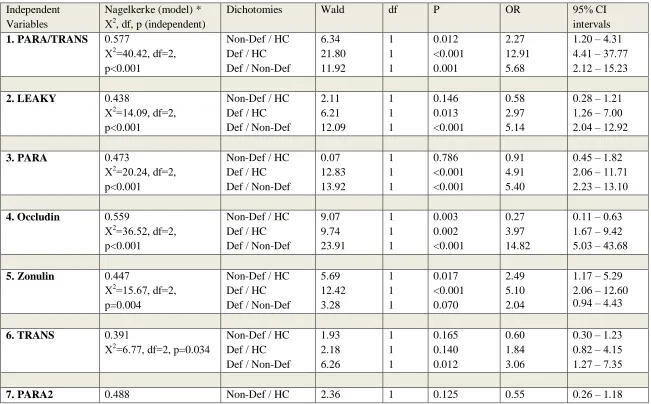
Table 1 shows the outcome of different multinomial logistic regression analyses with the diagnosis, namely controls, deficit schizophrenia (SCZ) and non-deficit SCZ, as dependent
variables and the biomarkers as explanatory variables. Regression #1 shows a strong association
between PARA/TRANS ratio and diagnosis with an effect size of 0.577 for the total model
(including age, sex and IgM MDA), 0.343 for PARA/TRANS alone, 0.268 for IgM MDA alone,
0.330 for age, sex and IgM MDA combined and 0.111 for age and sex. PARA/TRANS was
significantly and positively associated with deficit SCZ as compared with non-deficit SCZ and
controls, and with non-deficit schizophrenia as compared with controls. Also, ANOVA showed
that the PARA/TRANS ratio was significantly different (F=24.41, df=2/114, p<0.001) between
the three study groups and increased from controls (mean z score ±SE = -0.698 ±0.804)
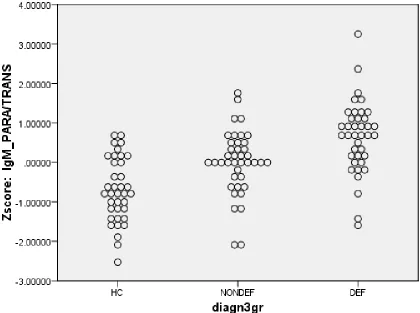
non-deficit SCZ (0.008 ±0.817) deficit SCZ (0.654 ±0.903). Figure 1 shows the dot plot of the
PARA/TRANS ratio in the three study groups.
There were significant and positive correlations between IgM to MDA and IgM to
zonulin (r=0.624, p<0.001), occludin (r=0.670, p<0.001), E-cadherin (r=0.672, p<0.001), talin
(r=0.660, p<0.001) and actin (r=0.712, p<0.001), but not vinculin (r=0.096, p=0.302, all n=117).
Therefore, all regressions shown in Table 1 examine whether the IgM levels to the proteins
contribute to the prediction of deficit SCZ after considering the highly significant association of
IgM MDA and deficit SCZ [17], while controlling for the effects of age and sex (see below).
Firstly, we have examined the effect of the LEAKY, PARA, PARA2 and PARA/TRANS indices
and the effects of the separate IgM values.
Regression #2 and #3 show that the LEAKY and PARA indices had a significant impact,
controls, while there were no significant differences between controls and non-deficit SCZ.
Occludin (regression #4) yielded a higher effect size and showed that increased levels were
significantly associated with deficit SCZ versus controls and non-deficit SCZ. Increased IgM to
zonulin (regression #5) was significantly associated with both SCZ categories versus controls,
without significant differences between the SCZ subgroups. Regression #6 shows that the
TRANS proteins were associated with deficit versus non-deficit SCZ albeit with very low
impact. There were no significant associations between vinculin and the diagnostic groups,
whilst both increased talin (Wald=8.59, df=1, p=0.003) and actin (F=11.88, df=1, p=0.001) were
associated with deficit versus non-deficit SCZ. PARA2 (regression #7) was significantly
associated with deficit SCZ versus non-deficit SCZ and controls, while IgM to E-cadherin was
significantly associated with deficit SCZ versus non-deficit SCZ (Wald=18.20, df=1, p<0.001
with an Odds ratio = 10.59 and 95% confidence intervals: 3.65 – 32.90). Regression #8 shows
the combined effects of increased PARA/TRANS ratio and IgA against Gram-negative bacteria
(z composite score of the 5 bacteria): both increased PARA/TRANS and Gram-negative bacteria
were associated with deficit SCZ versus non-deficit SCZ and controls, while PARA/TRANS also
differentiated non-deficit SCZ from controls.
Characteristics of increased PARA/TRANS ratio
Based on the high impact of the PARA/TRANS ratio we examined the characteristics of
SCZ subjects with an increased PARA/TRANS ratio versus patients with a lower ratio and
controls. Table 2 shows the outcome of ANOVAs / Χ2 tests performed on socio-demographic, clinical and biomarker data in three study groups, namely controls and SCZ patients with a lower
There were no significant differences in age, TUD and BMI between the three study groups.
There were somewhat more females in the lower PARA/TRANS group than in controls, while
years of education was somewhat lower in SCZ patients with an increased PARA/TRANS ratio.
The number of psychotic episodes was significantly lower in those with an increased
PARA/TRANS ratio, while the latter showed increased SDS, SANS, PANSS negative,
psychosis, excitements and PMRI scores as compared with those with a lowered PARA/TRANS
ratio. There were, however, no significant differences in PANSS positive symptoms, hostility,
mannerism, FTD, GIS symptoms, between both SCZ subgroups. There was a significant
association between the PARA/TRANS groups and deficit SCZ. IgA levels to Gram-negative
bacteria and IgM to NO-cysteinyl were significantly greater in SCZ patients allocated to the high
PARA/TRANS group. The other biomarkers and VFT, WLM and WL True Recall did not differ
significantly between both PARA/TRANS groups.
Multivariate biomarker prediction of SCZ and deficit SCZ.
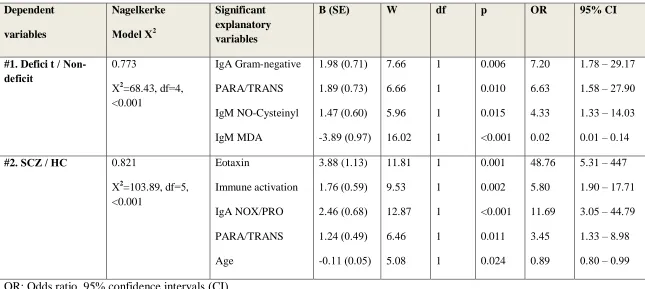
Table 3 examines the best prediction of deficit versus non-deficit SCZ and SCZ versus healthy controls using logistic regression analyses with PARA/TRANS, IgA to Gram-negative
bacteria, IgM to NO-cysteinyl and MDA, CCL-11 and NOX/PRO TRYCAT ratio as explanatory
variables. Logistic regression #1 shows that deficit SCZ (versus non-deficit SCZ) was highly
predicted (effect size=0.773) by IgA Gram-negative bacteria, PARA/TRANS ratio, and IgM to
NO-cysteinyl (all positively) and IgM to MDA (inversely); 88.6% of all cases were correctly
classified with a sensitivity of 87.2% and a specificity of 90.0%. We found that zonulin,
occludin, IgA to Gram-negative bacteria, IgM to NO-cysteinyl and CCL-11 (all positively) and
df=6, p<0.001, Nagelkerke=1) with a sensitivity and specificity of 100%. Regression #2 shows
that SCZ (versus controls) was highly predicted by CCL-11, the immune activation index, the
NOX/PRO TRYCAT ratio, PARA/TRANS (all positively) and age (inversely); 92.3% of all
cases were correctly classified with a sensitivity of 94.9% and a specificity of 86.8%. A second
logistic regression analysis showed that PARA/TRANS could be replaced by zonulin levels
(Wald=6.73, df=1, p=0.009) and that zonulin together with the variables shown in Table 3,
regression #2, yielded an effect size of 0.829; 93.2% of the cases were correctly classified with a
sensitivity of 94.9% and a specificity of 89.5%.
Effects of extraneous variables
We have also examined possible effects of the drug state of the patients on the IgM
responses to paracellular and transcellular proteins. Multivariate GLM analysis did not show a
significant effect of use of risperidone (F=1.59, df=6/96, p=0.158; n=34), clozapine (F=1.16,
df=6/96, p=0.335; n=9), haloperidol (F=0.69, df=6/96, p=0.661; n=11), perphenazine (F=1.25,
df=6/96, p=0.290; n=21), antidepressants (F=0.40, df=6/96, p=0.880; n=26), mood stabilizers
(F=0.37, df=6/96, p=0.899; n=13) and anxiolytics / hyponotics (F=1.04, df=6/96, p=0.406;
n=29). Previously, we have shown that the same drugs have no effect on CCL-11, TRYCATs,
IgM to MDA and NO-cysteinyl, IgA/IgM to Gram-negative bacteria and the clinical assessments
[14-17,25,46]. There was however a significant effect of age (F=4.58, df=6/106, p<0.001), but
not sex (F=2.05, df=6/106, p=0.065). Parameter estimates showed significant inverse
associations between age and IgM to E-cadherin (F=15.28, df=1/111, p<0.001) and vinculin
effects of age and sex. There were no significant effects of TUD (F=0.26, df=6/105, p=0.953)
and BMI (F=1.05, df=6/100, p=0.400) on the IgM levels to PARA-TRANS proteins.
Prediction of SCZ symptomatology using biomarkers.
In SCZ patients we have examined the effects of PARA/TRANS, E-cadherin, IgM to
Gram-negative bacteria, IgA to K. pneumonia or M. Morganii on negative and PHEM symptoms
while also allowing for the effects of age, sex and education. Table 4, regression #1 shows that 58.6% of the variance in the total SDS score was explained by the regression on PARA/TRANS,
IgA to K. pneumonia and E-cadherin (all positively) and IgM to MDA and education (inversely).
Regressions #2-7 show that a large part of the variance (35.3%-53.3%) in the items of the SDS
was predicted by PARA/TRANS and IgM to MDA with or without Gram-negative bacteria,
E-cadherin and education. There were no associations between the explanatory variables used here
and PANSS positive symptoms (regression #8), while a large part of the variance in PANSS
negative symptoms (regression #9) was explained by the regression on PARA/TRANS, IgA to
K. pneumonia and E-Cadherin (all positively) and IgM to MDA (inversely). The same 4
variables together with education also predicted the SANS total score with an explained variance
of 50.8% (regression #10). Regression #11 shows that 46.8% of the variance in psychomotor
retardation was explained by PARA/TRANS, IgA to K. pneumoniae, E-cadherin (all positively)
and IgM MDA (inversely). We found that 23.3% of the variance in psychotic symptoms
(regression #12) was explained by 2 explanatory variables, namely PARA/TRANS and IgA to K.
pneumoniae, while 33.2% of the variance in excitation (regression #13) was explained by
PARA/TRANS, IgA to K. pneumonia (both positively) and education and IgM to MDA (both
Prediction of SCZ symptomatology using all biomarkers.
Table 5 shows the prediction of key symptoms using the variables shown in Table 4 combined with CCL-11, NOX/PRO TRYCAT ratio, IgM NO-cysteinyl and immune activation
index, while allowing for possible effects of age, sex and education. We used multiple regression
analyses performed in the total study group to examine these associations. Regression #1 shows
that 18.4% of the variance in GIS symptoms was explained by the immune activation index and
zonulin levels. We found that (regression #2) 37.9% of the variance in WLM was explained by
immune activation and PARA/TRANS (both inversely) and education and IgM MDA (both
positively). 50.1% of the variance in PMRI (regression #3) was explained by the multiple
regression on PARA/TRANS, IgA to K. pneumoniae, CCL-11, E-cadherin, and the immune
activation index (all positively) and IgM MDA (inversely). FTD (regression #4) was best
predicted by IgA NOX/PRO, PARA/TRANS and male sex (26.9% of the variance). A large part
of the variance in SDS score (57.1%, regression #5) was explained by PARA/TRANS, IgA to K.
pneumoniae, CCL-11, IgA NOX/PRO, E-cadherin and the immune activation index (all
positively) and IgM MDA (inversely). A large part of the variance in psychosis (regression #6)
was explained by PARA/TRANS, IgA to K. pneumoniae, IgA to NOX/PRO and male sex. A
relatively smaller part of the variances in hostility and mannerism (regressions # 7 and 9) were
explained by PARA/TRANS and male sex and immune activation index. We found that
PARA/TRANS, IgA to K. pneumoniae, IgA to NOX/PRO and CCL-11 (all positively) and IgM
MDA (inversely) were significantly associated with excitation (regression #8).
Figure 2 shows the results of a PLS analysis with as final outcome variable the symptom
LV and as direct explanatory variable the memory LV. The biomarkers were entered as input
variables, including the Gram-negative LV (two Gram-negative bacteria did not load
significantly and therefore were deleted from the model). Figure 2 shows the multistep path
model with multiple mediators including the Gram-negative LV, CCL-11, TRYCATs and
memory LV. We found that the overall model fit was excellent, namely SRMR=0.047, the
construct reliability and discriminant validity of all LVs were good to excellent, namely all
Cronbach’s alpha > 0.787, composite reliability > 0.865 and average variance extracted > 0.618
and all outer loadings of the 3 LVs were > 0.701.
A large part of the variance in the symptoms LV (90.8%) was explained by the regression
on memory LV, the Gram-negative LV, PARA/TRANS, E-cadherin (all positively) and IgM
MDA (inversely); 53.3% of the variance in the memory LV was explained by Gram-negative
LV, PARA/TRANS, CCL-11, TRYCATs and the immune activation index. The Gram-negative
LV was predicted by PARA/TRANS, whilst CCL-11 and TRYCATs were both predicted by the
immune activation index (both positively), which in turn was predicted by IgM MDA
(inversely). We found significant total effects of E-cadherin (t=3.59, p<0.001), CCL-11 (t=4.68,
p<0.001), Gram-negative bacteria LV (t=2.07, p<0.0001), IgM MDA (t=-4.90, p<0.001),
immune activation index (t=3.85, p<0.001), PARA/TRANS (t=4.75, p<0.001) and NOX/PRO
TRYCAT ratio (t=4.75, p<0.001) on the symptom LV. There were significant total effects of
CCL-11 (t=5.33, p<0.001), Gram-negative bacteria LV (t=2.25, p=0.024), immune activation
index (t=4.39, p<0.001), PARA/TRANS (t=2.77, p=0.006) and the NOX/PRO TRYCAT ratio
(t=2.52, p=0.012) on the memory LV. There were significant specific indirect effects of
(t=4.68, p<0.001), TRYCATs (t=2.50, p=0.013), and immune activation index (t=3.85, p<0.001)
on the symptoms LV which were all mediated by the memory LV.
Discussion
The first major finding of this study is that the PARA/TRANS ratio (i.e. increased IgM
responses to zonulin plus occludin versus talin plus actin plus viculin) and IgM responses to
occludin are positively associated with deficit schizophrenia versus non-deficit schizophrenia
and controls. Table 6 summarizes the major findings of this study with regard to diagnoses. The distance in the TPARA/TRANS ratio between deficit schizophrenia and controls was 1.35
standard deviations and between deficit and non-deficit schizophrenia 0.65 standard deviations.
The appearance of IgM antibodies to occludin in the peripheral blood of patients with deficit
schizophrenia may indicate damage to the tight junctions system and breakdown of occludin TJs
leading to an upregulated intestinal paracellular pathway [34]. Moreover, we found that the
increased PARA/TRANS ratio was significantly associated with increased IgA responses to
Gram-negative bacteria, suggesting that an upregulated paracellular leak pathway allowed
ingress of these pathogenic bacteria leading to breakdown of oral tolerance. Occludin is one of
the key transmembrane proteins of the TJs that contributes to TJ stability, maintenance of
selective paracellular permeability and TJ integrity [61-66]. TJ strands from adjacent epithelial
cells associate with strands from the opposing membrane to form a TJ fence and occludin is
together with claudin a main functional component of this TJ fence [67]. Increased expression of
occludin in cultured Madin-Darby canine kidney (MDCK) cells elevates transepithelial
resistance of these cells, whereas introduction of truncated occludin into MDCK cells increases
complex phenotype characterized by chronic inflammation of the gastric epithelium, growth
retardation, male sterility, testicular atrophy and calcifications in the brain [67]. A leaky
paracellular pathway is involved in autoimmune and inflammatory disorders, including celiac
disease, diabetes mellitus type 1 and inflammatory bowel disease [6,7,70].
Another finding is that IgM antibodies to E-cadherin are significantly and positively
associated with deficit versus non-deficit schizophrenia and explain part of the variance in
negative symptoms and psychomotor retardation. Cadherin molecules are core components of
AJs (or intermediate junctions) that give stability, mediate cell-cell adhesion and regulate the
turnover of the actin cytoskeleton through binding of catenins [71-74]. AJs are important for the
integrity of the epithelium and tissue morphogenesis, and they mediate transcriptional regulation
and intracellular signaling [74]. Moreover, we also detected that there was a weak albeit
significant association of IgM antibodies to the cytoskeletal proteins talin and actin and deficit
schizophrenia, although the increased PARA/TRANS ratio indicates that the paracellular
pathway is significantly more upregulated than the transcellular pathway. Actin is a key
component in cellular functions including regulation of transcription and maintenance of cell
structure, polarity and shape [75], whilst talin is another cytoskeletal molecule than links
integrins to the actin cytoskeleton and functions in the attachment of microfilaments to the
plasma membrane [76]. TJs are closely associated with the actin cytoskeleton whilst occludin
may regulate the structural maintenance of the actin cytoskeleton in endothelial cells [77,78].
Therefore, it is plausible that the minor changes in the cytoskeleton observed in this study are
secondary to degradation of the TJs (and AJs), which in part regulate the cytoskeleton.
The third major finding of this study is that IgM responses to zonulin were significantly
gastro-intestinal (GIS) symptoms, indicating that zonulin may play a role in schizophrenia and GIS
symptoms in that disorder. The expression of zonulin in plasma is elevated in several
autoimmune disorders and neurodegenerative disorders, including autoimmune disorders,
diabetes mellitus type 1 and celiac disease [6]. In fact, the latter author concluded that plasma
levels of zonulin may be employed as a biomarker of impaired TJ functions for these disorders.
Nevertheless, the assay of plasma zonulin levels is not very reproducible, whereas measurements
of plasma antibodies directed to zonulin may be more reliable and sensitive to measure zonulin
status [34]. Zonulin may displace zona occludens proteins from the TJ complex thereby
modulating the permeability of TJs [6] and, therefore, this molecule was called the doorway to
inflammation, autoimmunity and cancer [6]. We reported that schizophrenia is accompanied by
increased Hp-2 gene frequency, Hp 2-2 phenotype and increased Hp levels [1]. Also, Wan et al.
[79] reported increased Hp levels in schizophrenia and a significant association between the Hp
gene and schizophrenia. Because pre-Hp-2 is similar to zonulin [6], it is safe to hypothesize that
Hp-2 carriers are more prone to develop schizophrenia [1] through effects on zonulin with
consequent breakdown of the TJs.
Nevertheless, it should be underscored that zonulin levels are not only affected by the
Hp-2 gene, but also by gliadin and other bacterial toxins, which may induce the release of
zonulin and consequently displace the zonula occludens thereby opening the paracellular leak
pathway which allows pathogens, bacterial antigens and other proteins to be translocated into the
plasma [6]. In this respect, it is interesting to note that gluten sensitivity, antigliadin antibodies
and celiac disease may play a role in schizophrenia [80-82] and that gut dysbiosis may occur in
some patients with schizophrenia [83]. However, increased levels of pro-inflammatory
and AJs thereby upregulating the paracellular leak pathway [84-87]. Thus, the primary IRS
during acute episodes of schizophrenia may affect the apical junction complex (TJs and AJs)
especially in Hp-2 carriers and in people with lowered natural IgM defenses against
immune-inflammatory injuries. The consequent upregulation of the paracellular leak pathway with
increased translocation of Gram-negative bacteria (and possibly undigested food
macromolecules and other microbiota) may, in turn, contribute to the ongoing
immune-inflammatory response.
The fourth major finding of this study is that the upregulated paracellular leak pathway
and increased bacterial translocation coupled with lower IgM to MDA, immune activation, and
increased CCL-11 and noxious TRYCAT levels are, together, strong predictors of deficit
schizophrenia (versus non-deficit schizophrenia and controls), negative symptoms, psychosis,
excitation, psychomotor retardation, formal thought disorders and memory impairments. A large
part of the variance (90.8%) in negative and PHEM (psychosis, hostility, excitation and
mannerism) symptoms was explained by Gram-negative bacteria, PARA/TRANS ratio,
E-cadherin, IgM to malondialdehyde (MDA) and memory dysfunctions, which in turn were
predicted (53.3% of the variance) by an increased PARA/TRANS ratio, Gram-negative bacteria,
CCL-11, TRYCATs and immune activation. One mechanistic explanation is that breakdown of
TJs and AJs with increased bacterial translocation may induce different neuro-immune pathways
that ultimately cause neuroprogression. We have reviewed elsewhere the mechanism by which
gut microbiota, CCL-11, some pro-inflammatory cytokines and noxious TRYCATs may cause
cognitive decline and impairments in long-term memory performance [14-17,25]. Interestingly,
based on our new cognitive model of schizophrenia [15-17], we found that the effects of an
mediated by memory deficits. As such, the upregulated paracellular leak pathway in deficit
schizophrenia may aggravate the cognitive decline in semantic and episodic memory and, as a
consequence, schizophrenia symptomatology. Nevertheless, our PLS analysis showed that
different pathways may lead to schizophrenia phenomenology: a) the paracellular path with
bacterial translocation; b) immune activation with increased TRYCAT and eotaxin production;
and c) lowered natural IgM which aggravates the effects of the first two paths. These findings
also suggest that the paracellular leak path may affect other (unknown) pathways that were not
assayed in our study comprising other cytokines and microbiota and food hypersensitivities
(including gliadin and gluten).
The results of the current study should be interpreted with regard to its limitations.
Firstly, this is a cross-sectional study which precludes the establishment of firm causal
inferences. Secondly, while the associations of the PARA/TRANS ratio with deficit
schizophrenia and its phenomenology are highly significant, the IgM antibody data to
PARA/TRANS proteins appear to be useful as external validating criteria when combined with
other biomarkers including IgM to MDA. Furthermore, the strong associations between IgM to
MDA (an established natural IgM to an oxidation-associated neo-determinant) and IgM to
PARA/TRANS proteins suggest that the latter reflects two phenomena, namely natural IgM and
induced IgM responses secondary to damage to paracellular proteins. It is well established that
IgM antibodies to MDA have housekeeping properties protecting against uncontrolled
inflammation [88], while also IgM to various proteins may have protective properties [89], e.g.
IgM responses to tubulin (another cytoskeleton protein) in neuroinflammatory disorders [90].
schizophrenia) it may be more difficult to interpret the induced IgM responses in those proteins
without considering the effects of other biomarkers.
In conclusion, we found that the paracellular leak pathway was upregulated in deficit
schizophrenia and that mainly TJs (but also AJs) contribute to this phenomenon. An increased
paracellular pathway and associated translocation of Gram-negative bacteria and lower IgM to
MDA coupled with immune activation and increased CCL-11 and TRYCATs predict memory
dysfunctions (including formal thought disorders), while the latter coupled with an upregulated
paracellular leak pathway, Gram-negative bacteria and lowered natural IgM predict
schizophrenia symptomatology comprising negative and PHEM symptoms. The results suggest
that breakdown of the TJs and dysfunctions in the intestinal paracellular route contribute to the
phenomenology of deficit schizophrenia.
Acknowledgements
The study was supported by the Asahi Glass Foundation, Chulalongkorn University
Centenary Academic Development Project and Ratchadapiseksompotch Funds, Faculty of
Medicine, Chulalongkorn University, grant numbers RA60/042 (to BK) and RA61/050 (to MM).
Conflict of interest
The authors have no conflict of interest with any commercial or other association in
connection with the submitted article.
All the contributing authors have participated in the manuscript. MM and BK designed
the study. BK recruited patients and completed diagnostic interviews and rating scale
measurements. MM carried out the statistical analyses. All authors (BK, MM, SS, and AV)
contributed to interpretation of the data and writing of the manuscript. All authors approved the
final version of the manuscript.
References.
1. Maes M, Delanghe J, Bocchio Chiavetto L, Bignotti S, Tura GB, Pioli R, Zanardini R,
Altamura CA (2001) Haptoglobin polymorphism and schizophrenia: genetic variation on
chromosome 16. Psychiatry Res 104(1):1-9.
2. Ritzmann SE, Daniels JC (1976) Haptoglobin, in serum protein abnormalities: Diagnostic and
clinical aspects, Boston, Little, Brown.
3. Dalan R, Liew H, Goh LL, Gao X, Chew DE, Boehm BO, Leow MK (2016) The haptoglobin
2-2 genotype is associated with inflammation and carotid artery intima-media thickness. Diab
Vasc Dis Res 13(5):373-376.
4. Lazalde B, Huerta-Guerrero HM, Simental-Mendía LE, Rodríguez-Morán M,
Guerrero-Romero F (2014) Haptoglobin 2-2 genotype is associated with TNF- α and IL-6 levels in
5. Marvasti TB, Moody AR, Singh N, Maraj T, Tyrrell P, Afshin M (2017) Haptoglobin 2-2
genotype is associated with presence and progression of MRI depicted atherosclerotic
intraplaque hemorrhage. Int J Cardiol Heart Vasc 18:96-100.
6. Fasano A (2012) Zonulin, regulation of tight junctions, and autoimmune diseases. Ann N Y
Acad Sci 1258:25-33.
7. Fasano A (2012) Leaky gut and autoimmune diseases. Clin Rev Allergy Immunol 42(1):71-78
8. Smith RS, Maes M (1995) The macrophage-T-lymphocyte theory of schizophrenia: additional
evidence. Med Hypotheses 45:135-141
9. Noto MN, Maes M, Nunes SO, Ota VK, Rossaneisf AC, Verri Jr WA, Cordeiro Q, Belangero
SI, Gadelha A, Bressan RA, Noto C (2018) Activation of the immune-inflammatory response
system and the compensatory immune-regulatory reflex system in antipsychotic naive first
episode psychosis. Preprints Preprints 201809.0314.v2.
10. Roomruangwong C, Noto C, Kanchanatawan B, Anderson G, Kubera M, Carvalho AF, Maes
M (2018) The role of aberrations in the immune-inflammatory response system (IRS) and the
compensatory immune-regulatory reflex system (CIRS) in different phenotypes of
schizophrenia: the IRS-CIRS theory of schizophrenia. Preprint, September 2018, DOI:
11. Maes M, Carvalho AF (2018) The Compensatory Immune-Regulatory Reflex System (CIRS)
in Depression and Bipolar Disorder. Mol Neurobiol 55(12):8885-8903.
12. Davis J, Moylan S, Harvey BH, Maes M, Berk M (2014) Neuroprogression in schizophrenia:
Pathways underpinning clinical staging and therapeutic corollaries. Aust N Z J Psychiatry
48:512-529.
13. Davis J, Eyre H, Jacka FN, Dodd S, Dean O, McEwen S, Debnath M, McGrath J, Maes M,
Amminger P, McGorry PD, Pantelis C, Berk M (2016) A review of vulnerability and risks for
schizophrenia: Beyond the two hit hypothesis. Neurosci Biobehav Rev 65:185-194.
14. Kanchanatawan B, Hemrungrojn S, Thika S, Sirivichayakul S, Ruxrungtham K, Carvalho
AF, Geffard M, Anderson G, Maes M (2018) Changes in Tryptophan Catabolite (TRYCAT)
Pathway Patterning Are Associated with Mild Impairments in Declarative Memory in
Schizophrenia and Deficits in Semantic and Episodic Memory Coupled with Increased
False-Memory Creation in Deficit Schizophrenia. Mol Neurobiol 55(6):5184-5201.
15. Sirivichayakul S, Kanchanatawan B, Thika S, Carvalho AF, Maes M (2018) A new
schizophrenia model: immune activation is associated with induction of different neurotoxic
products which together determine memory impairments and schizophrenia symptom
dimensions. CNS Neurol Disord Drug Targets. Nov 18. doi:
16. Sirivichayakul S, Kanchanatawan B, Thika S, Carvalho AF, Maes M (2019) Eotaxin, an
endogenous Cognitive Deteriorating Chemokine (ECDC), Is a Major Contributor to Cognitive
Decline in Normal People and to Executive, Memory, and Sustained Attention Deficits, Formal
Thought Disorders, and Psychopathology in Schizophrenia Patients. Neurotox Res
35(1):122-138.
17. Maes M, Kanchanatawan B, Sirivichayakul S, Carvalho AF (2018) In Schizophrenia,
Deficits in Natural IgM Isotype Antibodies Including those Directed to Malondialdehyde and
Azelaic Acid Strongly Predict Negative Symptoms, Neurocognitive Impairments, and the Deficit
Syndrome. Mol Neurobiol Nov 27. doi: 10.1007/s12035-018-1437-6. [Epub ahead of print]
PubMed PMID: 30484113
18. Binder CJ (2012) Naturally occurring IgM antibodies to oxidation-specific epitopes. Adv
Exp Med Biol 750:2-13.
19. Weismann D, Binder CJ (2012) The innate immune response to products of phospholipid
peroxidation. Biochim Biophys Acta 1818:2465-2475.
20. Díaz-Zaragoza M, Hernández-Ávila R, Viedma-Rodríguez R, Arenas-Aranda D,
Ostoa-Saloma P (2015) Natural and adaptive IgM antibodies in the recognition of tumor-associated
21. Thiagarajan D, Frostegård AG, Singh S, Rahman M, Liu A, Vikström M, Leander K,
Gigante B, Hellenius ML, Zhang B, Zubarev RA, de Faire U, Lundström SL, Frostegård J (2016)
Human IgM Antibodies to Malondialdehyde Conjugated With Albumin Are Negatively
Associated With Cardiovascular Disease Among 60-Year-Olds. J Am Heart Assoc 20:5(12).
22. McMahon M, Skaggs B (2016) Autoimmunity: Do IgM antibodies protect against
atherosclerosis in SLE? Nat Rev Rheumatol 12:442-444.
23. Aziz M, Holodick NE, Rothstein TL, Wang P (2015) The role of B-1 cells in inflammation.
Immunol Res 63:153-166.
24. Roomruangwong C, Barbosa DS, de Farias CC, Matsumoto AK, Baltus THL, Morelli NR,
Kanchanatawan B, Duleu S, Geffard M, Maes M (2018) Natural regulatory IgM-mediated
autoimmune responses directed against malondialdehyde regulate oxidative and nitrosative
pathways and coupled with IgM responses to nitroso adducts attenuate depressive and
physiosomatic symptoms at the end of term pregnancy. Psychiatry Clin Neurosci 72:116-130.
25. Maes M, Kanchanatawan B, Sirivichayakul S, Carvalho AF (2018) In Schizophrenia,
Increased Plasma IgM/IgA Responses to Gut Commensal Bacteria Are Associated with Negative
Symptoms, Neurocognitive Impairments, and the Deficit Phenotype. Neurotox Res doi:
26. Rothstein TL, Griffin DO, Holodick NE, Quach TD, Kaku H (2013) Human B-1 cells take
the stage. Ann N Y Acad Sci 1285:97-114.
27. Lucas K, Maes M (2013) Role of the Toll Like receptor (TLR) radical cycle in chronic
inflammation: possible treatments targeting the TLR4 pathway. Mol Neurobiol 48:190-204.
28. Braniste V, Al-Asmakh M, Kowal C, Anuar F, Abbaspour A, Tóth M, Korecka A, Bakocevic
N, Ng LG, Kundu P, Gulyás B, Halldin C, Hultenby K, Nilsson H, Hebert H, Volpe BT,
Diamond B, Pettersson S (2014) The gut microbiota influences blood-brain barrier permeability
in mice. Sci Transl Med 6(263):263ra158.
29. Zakaria R, Wan Yaacob WM, Othman Z, Long I, Ahmad AH, Al-Rahbi B (2017)
Lipopolysaccharide-induced memory impairment in rats: a model of Alzheimer's disease.
Physiol Res 66:553-565.
30. Muraca M, Putignani L, Fierabracci A, Teti A, Perilongo G (2015) Gut microbiota-derived
outer membrane vesicles: under-recognized major players in health and disease? Discov Med
19:343-348.
31. Anand D, Chaudhuri A (2016) Bacterial outer membrane vesicles: New insights and
32. Ellis TN, Kuehn MJ (2010) Virulence and immunomodulatory roles of bacterial outer
membrane vesicles. Microbiol Mol Biol Rev 74:81-94.
33. Ellis TN, Leiman SA, Kuehn MJ (2010) Naturally produced outer membrane vesicles from
Pseudomonas aeruginosa elicit a potent innate immune response via combined sensing of both
lipopolysaccharide and protein components. Infect Immun 78:3822-3831.
34. Vojdani A, Vojdani E (2019) Food-associated autoimmunities: when food turns your
immune system against you. In press.
35. Maes M, Mihaylova I, Leunis JC (2007) Increased serum IgA and IgM against LPS of
enterobacteria in chronic fatigue syndrome (CFS): indication for the involvement of
gram-negative enterobacteria in the etiology of CFS and for the presence of an increased gut-intestinal
permeability. J Affect Disord 99(1-3):237-240.
36. Maes M, Kubera M, Leunis JC (2008) The gut-brain barrier in major depression: intestinal
mucosal dysfunction with an increased translocation of LPS from gram negative enterobacteria
(leaky gut) plays a role in the inflammatory pathophysiology of depression. Neuro Endocrinol
Lett 29(1):117-124.
37. Kirkpatrick B, Buchanan RW, McKenney PD, Alphs LD, Carpenter WT Jr (1989) The
Schedule for the Deficit syndrome: an instrument for research in schizophrenia. Psychiatry Res
38. Kittirathanapaiboon P, Khamwongpin M (2005) The Validity of the Mini International
Neuropsychiatric Interview (M.I.N.I.) Thai Version. J Mental Health of Thailand 13(3):125-135.
39. Kay SR, Fiszbein A, Opler LA (1987) The positive and negative syndrome scale (PANSS)
for schizophrenia. Schizophr Bull 13:261-276.
40. Andreasen NC (1989) The scale for the assessment of negative symptoms (SANS): conceptual and theoretical foundations. Brit J Psychiatry suppl7:49-58.
41. Overall JE, Gorham DR (1962) The brief psychiatric rating scale. Psycholog Rep
10:799-812.
42. Hamilton M (1960) A rating scale for depression. J Neurol Neurosurg Psychiatry 23:56-62.
43. Hamilton M (1959) The assessment of anxiety states by rating. Br J Med Psychol
32(1):50-55.
44. Zachrisson O, Regland B, Jahreskog M, Kron M, Gottfries CG (2002) A rating scale for
fibromyalgia and chronic fatigue syndrome (the FibroFatigue scale). J Psychosom Res
45. Maes, M, Sirivichayakul S, Kanchanatawan B, Carvalho AF (2019) In Schizophrenia,
Psychomotor Retardation is Associated with Executive and Memory Impairments, Negative and
Psychotic Symptoms, Neurotoxic Immune Products and Lower Natural IgM to
Malondialdehyde. Preprints 2019, 2019010108
46. Kanchanatawan B, Thika S, Sirivichayakul S, Carvalho AF, Geffard M, Maes M (2018) In
Schizophrenia, Depression, Anxiety, and Physiosomatic Symptoms Are Strongly Related to
Psychotic Symptoms and Excitation, Impairments in Episodic Memory, and Increased
production of Neurotoxic Tryptophan Catabolites: a Multivariate and Machine Learning Study.
Neurotox Res 33(3):641-655.
47. CERAD (1986) CERAD – An Overview: The Consortium to Establish a Registry for
Alzheimer’s Disease; http://cerad.mc.duke.edu/
48. Duleu S, Mangas A, Sevin F, Veyret B, Bessede A, Geffard M (2010) Circulating Antibodies
to IDO/THO Pathway Metabolites in Alzheimer's Disease. Int J Alzheimers Dis 15;2010. pii:
501541.
49. Roomruangwong C, Kanchanatawan B, Sirivichayakul S, Anderson G, Carvalho AF, Duleu
S, Geffard M, Maes M (2017) IgA/IgM responses to tryptophan and tryptophan catabolites
(TRYCATs) are differently associated with prenatal depression, physio-somatic symptoms at the
50. Roomruangwong C, Kanchanatawan B, Carvalho AF, Sirivichayakul S, Duleu S, Geffard M,
Maes M (2018) Body image dissatisfaction in pregnant and non-pregnant females is strongly
predicted by immune activation and mucosa-derived activation of the tryptophan catabolite
(TRYCAT) pathway. World J Biol Psychiatry 19:200-209.
51. Kanchanatawan B, Sirivichayakul S, Ruxrungtham K, Carvalho AF, Geffard M, Ormstad H,
Anderson G, Maes M (2018) Deficit, but Not Nondeficit, Schizophrenia Is Characterized by
Mucosa-Associated Activation of the Tryptophan Catabolite (TRYCAT) Pathway with Highly
Specific Increases in IgA Responses Directed to Picolinic, Xanthurenic, and Quinolinic Acid.
Mol Neurobiol 55(2):1524-1536.
52 Daverat P, Geffard M, Orgogozo JM (1989) Identification and characterization of
anti-conjugated azelaic acid antibodies in multiple sclerosis. J Neuroimmunol 22(2):129-134.
53. Boullerne A, Petry KG, Geffard M (1996) Circulating antibodies directed against conjugated
fatty acids in sera of patients with multiple sclerosis. J Neuroimmunol 65(1):75-81.
54. Amara A, Constans J, Chaugier C, Sebban A, Dubourg L, Peuchant E, Pellegrin JL, Leng B,
Conri C, Geffard M (1995) Autoantibodies to malondialdehyde-modified epitope in connective
tissue diseases and vasculitides. Clin Exp Immunol 101(2):233-238.
55. Faiderbe S, Chagnaud JL, Geffard M (1992) Anti-phosphoinositide auto-antibodies in sera of