University of South Carolina
Scholar Commons
Theses and Dissertations
2017
Chemical Sensing In Harsh Environments By
Multivariate Optical Computing
Christopher Michael Jones
University of South Carolina
Follow this and additional works at:https://scholarcommons.sc.edu/etd Part of theChemistry Commons
This Open Access Dissertation is brought to you by Scholar Commons. It has been accepted for inclusion in Theses and Dissertations by an authorized administrator of Scholar Commons. For more information, please [email protected].
Recommended Citation
i
CHEMICAL SENSING IN HARSH ENVIRONMENTS BY
MULTIVARIATE OPTICAL COMPUTING
by
Christopher Michael Jones
Bachelor of Science
University of South Carolina, 1996
Master of Science University of Houston, 2000
__________________________________________________
Submitted in Partial Fulfillment of the Requirements
For the Degree of Doctor of Philosophy in
Chemistry
College of Arts and Sciences
University of South Carolina
2017
Accepted by:
Michael L. Myrick, Major Professor
Timothy Shaw, Committee Member
S. Michael Angel, Committee Member
John Rose, Committee Member
ii
iii
DEDICATION
To my wife Angela and children Amanda, Tess and Sean who sacrificed more
than I can ever express, to enable me to conduct this research and write this dissertation.
iv
ACKNOWLEDGEMENTS
In addition to my wife and children I would like to thank my parents, brother and
sister, my wife’s extended family (Stevenson’s, Pasicatan’s, Chapman’s Browne’s,
Herty’s, Martin’s), most who live in my neighborhood. In many ways they have helped
through these years as my family has sacrificed for me to attend graduate school, they
have been there to help us and offered me encouragement.
I would like to thank Dr. Stephen Morgan, and Dr. William Egan (past Morgan
Group). While I was undergraduate in chemistry, they introduced me to Chemometrics
and intensified my interest in spectroscopy. It was Dr. Morgan who introduced me to Dr.
Stanley Deming at the University of Houston where I attended graduate school, receiving
my Masters of Science in Chemistry. I am indebted to Dr. Deming, my most active
committee member, who both in the classroom and outside the classroom taught me my
Chemometrics foundation.
I would like to thank my early professional mentors and friends Dr. Richard
Drozd, Patrick Jacobs, Michael Dix. In my first professional job, they believed in me and
encouraged my growth. Even at that early stage they had encouraged me to return to
school and pursue a Doctor of Philosophy. They have each taught me lessons of life for
which I am forever grateful.
I would like to thank my friends Ronald Cherry, Robert Engelman, and Mark
Proett, who were also the mentors of my second job. They had directly encouraged me
v
I would like to thank Dr. Milos Milosevic Director of Technology at Halliburton,
and Dr. Sriram Srinivasan Vice President of Technology at Halliburton, who enabled me
to attend graduate school. They also, have allowed the collaboration between the
University of South Carolina and Halliburton in order to conduct this research. I have
truly enjoyed working with each of them, and consider them to be my latest mentors.
I would like to thank the current Myrick Group, Cameron Rekully, Stefan
Faulkner, Elle Belliveau, and Ergun Kara for collaborations in various research activities
over the past couple of years, and to Cameron and Stefan specifically for helping me with
the seminars. I would specifically like to thank Dr. David Perkins, Dr. Megan Pearl (past
Myrick Group), Dr. Bin Dai, Dr. James Price, Dr. Jian Li, Michael Pelletier, Dr. Jing
Shen, Robert Atkinson, Darren Gascooke, and Tony van Zuilekom (Halliburton) with
whom I most closely collaborated in this research.
I would like to thank Dr. Michael Myrick, the opportunity of my life. I have
thoroughly enjoyed working with you and the entire group. I remember talking over
lunch years ago excitedly discussing the potential I believed this technology held for
harsh environments, and then a later lunch were we decided to pursue the graduate
research formally. It has not been without challenges, but what has been accomplished is
absolutely amazing.
vi
ABSTRACT
Multivariate optical computing (MOC) is a compressive sensing technique for
which an analyte concentration is detected in an interfering mixture by direct detector
output. The detector measures the dot product of a linear regression vector with a sample
spectrum, as an analog optical computation. The computation is accomplished with the
multivariate optical element (MOE), to which the optical regression vector is encoded as
a transmission pattern. As a spectrum of light emanates from a sample and passes
through the MOE, the dot product naturally occurs when light strikes the detector. The
MOC platform allows a simple, robust, and direct measurement of chemical properties.
This work extends the MOC platform to high temperature, high pressure harsh
environments and is tested with petroleum fluids in-situ within subterranean petroleum
wells.
This work describes a unique experimental apparatus and method necessary to
gather petroleum fluid reference spectra for petroleum at reservoir conditions. The
instrument is capable of measuring the optical spectrum (long-wave ultraviolet through
short-wave mid-infrared) of fluids from ambient up to 138 MPa (20,000 psia) and 422 K
(300°F) using ~5 mL of fluid. The instrument is validated with ethane.
This work further describes new design and fabrication techniques necessary to
enable a harsh environment single-core MOE. The entirely new MOE fabrication
technology uses a highly customized ion-assisted electron-beam (e-beam) deposition
vii
low interference, the MOC sensor validates within 1% relative accuracy of a laboratory
Fourier transform infrared (FTIR) spectrometer using partial least squares (PLS)
regression.
Lastly this work describes a new MOC dual-core configuration, which is able to
better mimic complex regression vector behavior relative to a single-core, thus enabling
better analysis for analytes more highly interfered by complex petroleum fluid
background. The regression vector is encoded as the linear combination of two MOE
transmission patterns. Design considerations, the design workflow and fabrication
methodology are described. High temperature and pressure laboratory and field
validation is presented for methane with the single-core MOC sensor and methane and
viii
TABLE OF CONTENTS
DEDICATION ... iii
ACKNOWLEDGEMENTS ... iv
ABSTRACT ... vi
LIST OF TABLES ...x
LIST OF FIGURES ... xii
CHAPTER 1: INTRODUCTION ...1
1.1 THE PETROLEUM INDUSTRY ...1
1.2 PETROLEUM FRACTIONS AND COMPOSITION ...2
1.3 DRILLING ...5
1.4 FORMATION TESTING AND SAMPLING ...12
1.5 LABORATORY ANALYTICAL TECHNIQUES ...22
1.6 FORWARD ...26
REFERENCES ...32
CHAPTER 2: A SMALL-VOLUME PVTX SYSTEM FOR SPECTROSCOPIC CALLIBRATION OF DOWNHOLE OPTICAL SENSORS ...46
2.1 INTRODUCTION ...46
2.2 EXPERIMENTAL...51
2.3 RESULTS AND DISCUSSION ...73
2.4 CONCLUSION ...87
REFERENCES ...99
CHAPTER 3: IN-SITU METHANE DETERMINATION IN PETROLEUM AT HIGH TEMPERATURES AND PRESSURES WITH MULTIVARIATE OPTICAL COMPUTING ...110
3.1 INTRODUCTION ...110
3.2 THEORY ...112
ix
3.4 RESULTS AND DISCUSSION ...142
3.5 CONCLUSION ...150
REFERENCES ...173
CHAPTER 4: MEASUREMENT OF CARBON DIOXIDE AND METHANE IN PETROLEUM RESERVOIRS WITH DUAL-CORE MULTIVARIATE OPTICAL COMPUTING ...180
4.1 INTRODUCTION ...180
4.2 THEORY ...183
4.3 EXPERIMENTAL...190
4.4 RESULTS AND DISCUSSION ...208
4.5 CONCLUSION ...213
REFERENCES ...229
CHAPTER 5: CONCLUSION ...237
x
LIST OF TABLES
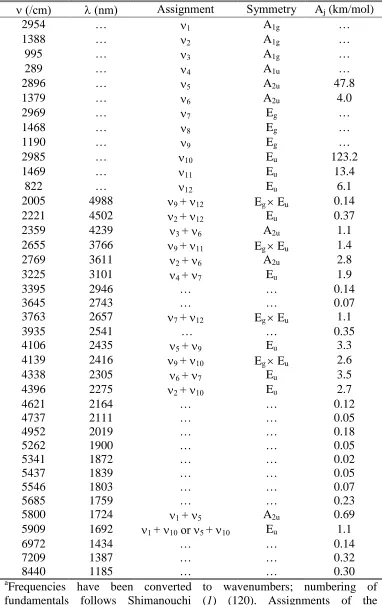
Table 2.1 Fundamentals and observed combination bands of ethane from Figure 2.7.a ...88
Table 3.1: The composition range of recombined components into petroleum fluid base oils. The GOR shows the relative concentration of recombined fluids to the petroleum base. ...152
Table 3.2: Shown are the thin layer stack recipes for the designs discussed. Each row shows the thickness of the thin film for the material shown in the last column. The first column shows the layer number with the first layer being deposited directly onto the substrate and the last layer for that design exposed to air. The second column “MOE Design (nm)” shows the recipe for the fabricated methane MOE. The third column, “Alternate Design (nm) shows a design that was not chosen for fabrication, but rather listed for comparison to the selected design due to the good SEC but very low sensitivity. The fifth column shows the bandpass filter fabricated in this study. The fifth column, ”Uniformity Test Design (nm)”, is an MOE chosen for sharp easy to measure features but difficult to fabricate so that an upper boundary of wavelength fabrication tolerance can be established. ...153
Table 3.3: The results of the MOE fabrication system uniformity test. Twenty MOEs were fabricated on substrates for each of the 6 mm substrates and 25.4 mm substrates. The standard deviation for each peak of the each batch is calculated. The mean position difference for each peak is also calculated for the 25.4 mm substrate to the 6 mm substrate. ...154
Table 3.4: Laboratory validation work for MOC Sensor Series 1, 2, and 3. All measurements presented are acquired at 93.3°C and 40.369 MPa. The reference values are reconstituted with methane to known concentrations with an uncertainty of approximately +/- 0.00005 g/cc methane. Live oil samples labeled LO were run as blind validation. ...155
Table 3.5: Results for the field test of MOC sensors using the methane MOEs. Samples 1-4 are oil samples with reference accuracy of approximately +/- 0.002 g/cc methane to one standard deviation. Samples 5-6 are gas samples with reference accuracy of approximately +/- 0.001 g/cc methane. All samples were run as blind validation. ...156
xi
fluids to the petroleum base. The design sets for methane and carbon dioxide dual-MOE cores are mutually exclusive. ...216
Table 4.2: Stack designs for MOE dual cores. ...217
xii
LIST OF FIGURES
Figure 1.1 Shown is an illustration of a generic petroleum fluid phase diagram. The phase envelop is the typical shape of petroleum fluids. The phase envelope separates the single phase fluid region of liquid or gas outside the envelope from the two fluid phase region of liquid and gas inside the envelope. The critical point which lies along the phase envelope separates gas at higher temperature from liquid at lower temperature. The bubble point is defined as the point at which as less dense gas first bubbles from the liquid oil at reservoir temperature.(9) ...28
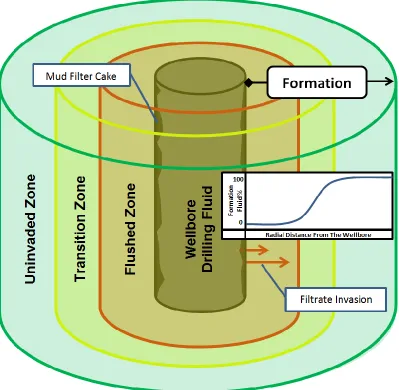
Figure 1.2 Shown is an illustration of a cylindrical section of a fluid saturated formation centered on a wellbore containing drilling fluid filtrate. Filtrate invasion is driven into the formation, displacing the formation fluid in a near wellbore region. The invasion rate is proportional over burden pressure, and inversely proportional to the thickness of the mud filter cake. Filtrate invasion profiles have been modeled by finite element simulation.(50-53) The transition shown by the imbedded graph is a generic illustration of the typical formation fluid profile throughout the three zones which have been described. The imbedded graph is aligned with the radial zones in the illustration grading from 0% formation fluid in the near wellbore region to 100% formation fluid in distal to the wellbore in the uninvaded zone. ...29
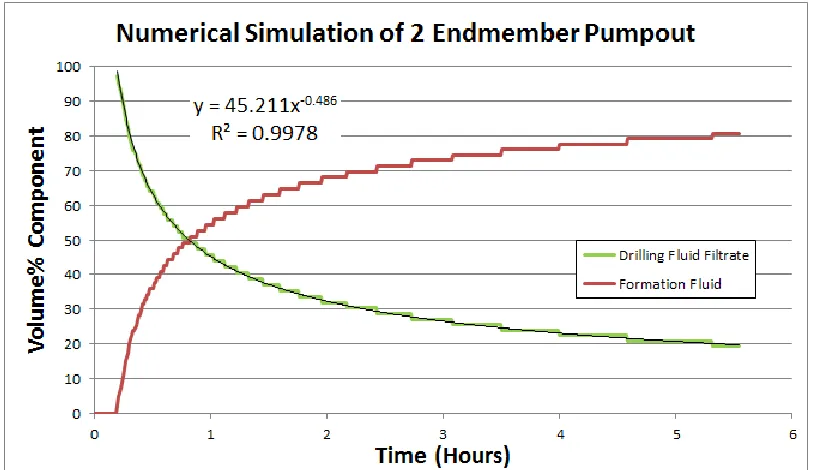
Figure 1.3 A numerical simulation of a formation pumpout assuming a 16 inch radial invasion depth of filtrate with an additional 16 inch radial linear graded convectively mixed transition zone with a formation fluid, homogeneous and isotropic permeability and 0.25 porosity, rate limited by a pumping speed of 40cc/min with a Lamar flow velocity profile. ...30
xiii
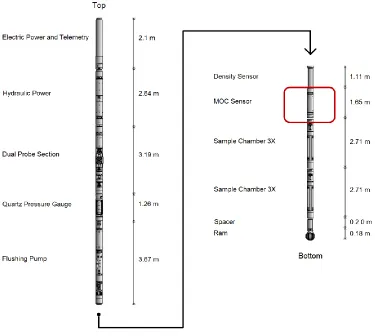
accurately records the fluid density to +/- 0.01 g/cc 95% confidence, with a resolution of 0.001 g/cc. This section also contains a capacitance sensor and resistivity sensor. The MOC sensor is an optical sensor capable of detecting methane and carbon dioxide as the subject of this work. The sample chamber holder switches the fluid from the wellbore exit path into any sample chamber. The spacer contains a series of retractable thermometers for measuring wellbore temperature, but also a shock absorber to minimize impact during descent. The ram is wider than the spacer, and spherical in shape with the intention of preventing sticking on an uneven wellbore surface during decent. ...31
Figure 2.1 Schematic. The top section is used to prepare injections of volatiles. The center section is the main section of the PVTX instrument housed in an oven. The lower right portion of the instrument is used to prepare and inject nonvolatiles and to extract samples for analysis. Valves are labeled v1 to v19; I is a pump driving hydraulic sample injection pumps H3 and SC; Q1 and Q2 are pumps driving hydraulic recirculating pumps H1 and H2, respectively; F is a particulate filter for injected oils; SI is a sample-injection valve; D is a densitometer; PT1 is a pressure and temperature gauge; EC is an oven enclosing the temperature-regulated portion of the instrument; O1 and O2 are fiber-coupled optical cells for FTIR and UV-visible spectroscopy, respectively; C1, C2, CO2, C3, and NGL represent sample loops that can be loaded with volatiles for preparing injections. All Rs represent gas regulators for the respective volatiles, and all Ps represent pressure gauges for the volatiles. See the text for details. ...90
Figure 2.2 Optical cell sketch. The stainless steel cell (A) is constructed to couple to a SMA fiber connector (B). The light is coupled to a 1/8-in. sapphire rod (E) that is held in place with a custom bushing (C) and seal (D). Each sapphire rod extends into the flow path and is set to provide a 1-mm optical pathlength. ...91
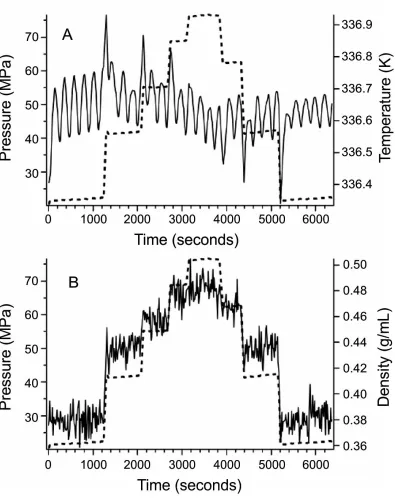
Figure 2.3 Pressure, temperature, and density measurements for a typical isothermal compression/decompression cycle for ethane: (A) measured pressure (dashed line, left axis) during cycle and measured pressure (solid line, right axis). Regular temperature fluctuations result from the reversals of the mixing pumps. Spikes in the instantaneous temperature occur at each step of compression/decompression, but all within approximately 0.5 K of the setpoint. Spectroscopic measurements are made after settling; (B) density (solid line, right axis) during the same cycle as measured by the
in situ densitometer. Correspondence between these measurements and literature are described in the text. ...92
xiv
Figure 2.5 Ethane absorption spectra in the NIR region between 5040 to 6060 cm-1 (1650 to 1850 nm) under isothermal conditions at 362 K for a range of pressures. Colored curves correspond to the left axis and have been compensated for the density and pathlength changes as a function of pressure and then scaled together for illustrative purposes. The black curve represents the difference between the lowest and highest pressure conditions. Again, in arbitrary units, the zero for this curve is the black horizontal line. Arbitrary scales on the left and right have the same range but different zeros; the black curve has been multiplied by a factor of five for clarity. ...94
Figure 2.6 Ethane spectra respond differently to changes in temperature and pressure. The top curve is the absorption spectrum (corrected for density and pathlength) at a particular temperature and pressure in the strongest part of the NIR spectrum. The colored curves represent changes in absorption in this spectral window when the temperature or pressure vary around this condition. Both difference curves are between the lower and higher density conditions. The red curve represents the change in absorption with pressure, calculated as the difference between a low (21.2 MPa) and high (82.5 MPa) pressure spectrum. The blue curve represents the difference between a high (388 K) and low (337 K) temperature spectrum. The blue and red curves lie on the same arbitrary axis, with the zero difference line shown as a horizontal black line. The colored curves are each multiplied by five to show them on the same axis range as the upper curve. ...95
Figure 2.7 Ethane molar absorption coefficient in the C-H stretching fundamental
absorption region near 3000 cm-1 out to the short-wave NIR. The fundamental absorptions themselves are too strong to be measured in this spectrum because of the relatively long pathlength. All of the stronger bands here have been assigned as either fundamentals (off scale) or combination bands of ethane in Table 2.1. ...96
Figure 2.8 200 parts per million by volume (ppmV) methyl mercaptan (methanethiol) in a balance of methane as a function of pressure at 8.89cm pathlength. ...97
Figure 2.9 A typical live oil spectrum shown from 450 nm in the visible to 5000 nm in the mid infrared acquired at a pressure of 82.76 MPa and 394K 1mm pathlength. Absorbance limit for the visible spectrometer is above 3 abs and for the FTIR spectrometer above 2.5 abs. ...98
xv
Figure 3.2: Custom band pass filter vs. an ideal top hat baseline offset. The deviation from an ideal reference is compensated by the MOE design. ...158
Figure 3.3: The MOE reference configuration. A regression vector is designed from a spectral library and encoded as the transmission function for an MOE (shown in orange). As light (blue arrow) passes through an unknown sample, represented by the cloud, the resultant light (red arrows) passes through the MOE and onto a detector, whereas a separate path of light is passed through the reference (in green) and onto a detector. ...159
Figure 3.4: Color map of the PLS SEP for beginning wavelengths to ending wavelengths for methane. Dark blue is low SEP better than 5% relative to the methane calibration range, and dark red is higher than 30% SEP relative to the calibration range. ...160
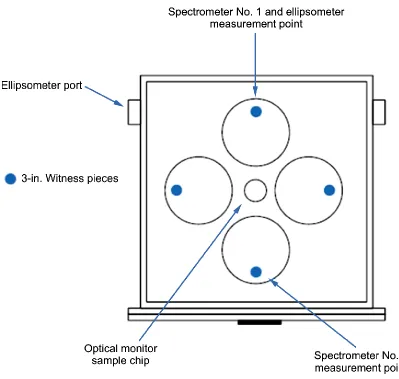
Figure 3.5: Top-down schematic of the ion-assisted e-beam deposition system. ...161
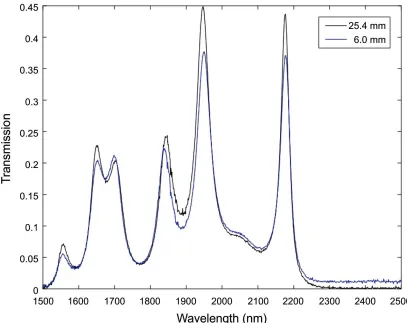
Figure 3.6: Middle MOE transmission of 20 optical elements for a 25.4 mm vs. 6.0 mm double-sided fabrication. ...162
Figure 3.7: Knee-plot of model error vs. number of PLS model levels. The SEP by RMSECV is shown in blue and SEC by root mean square error of calibration (RMSEC) is shown in red. ...163
Figure 3.8: Temperature stability and repeatability of custom bandpass. The leading edge at 1502.6 nm has a temperature stability of 0.0495 +/- 0.0004 nm/°C and trailing edge at 2388.5 nm has a temperature stability of .0374 +/- 0.006 nm/°C. The repeatability of the leading edge is +/- 3.1 nm and trailing edge is +/- 1.4 nm for the batch at the 95% confidence interval. ...164
Figure 3.9: The virtual sensor spectra used for calibration are generated as the vector product of the transmission function for all optical components in the MOC sensor, thereby representing the spectra that the MOC detector would observe. ...165
Figure 3.10: Methane 5 level PLS regression vector for FTIR virtual sensor single beam transmittance. The regression vector is designed to the virtual sensor single beam transmittance calibration set. ...166
xvi
Figure 3.12: MOE transmission profile for a large (red curve) and small (black curve) regression coefficient design. Note this transmission profile is not convoluted with the custom band pass filter. ...168
Figure 3.13: Fabricated MOE stack compared to the theoretical transmission based on the stack design. The differences in the target design vs the fabricated MOE are due to the re-optimization process. As little stack errors build layer upon layer during the fabrication process, the nonlinear optimization routine uses the in-situ measured optical constants and the transmission profile for the partially fabricated MOE to re-optimize the remaining layers in order to achieve the best SEC performance as opposed to retaining the original transmission shape. ...169
Figure 3.14: Measured vs. predicted methane concentration comparison between theoretical PLS model and MOE design. ...170
Figure 3.15: Temperature analysis results for 200 random seeded designs, using the same random seeds for the single- temperature vs. multitemperature optimizations. ...171
Figure 3.16: Performance for the combined validation study of methane by MOC sensor compared to laboratory gas chromatography analysis. ...172
Figure 4.1: PLS model prediction plot identifying a theoretical PLS calibration error of 0.00478 g/cc (a), and corresponding four-PC regression vector (b). ...219
Figure 4.2: Figure, norm of NAS vs. measured carbon dioxide concentration for the NIR (a) and MIR (b) spectral regions. The range of the MIR NAS indicates~27stronger sensitivity compared to the NIR spectral region. ...220
Figure 4.3: Transmission spectra of the pressure, volume, temperature (PVT) fluid spectra calibration dataset used for carbon dioxide. ...221
Figure 4.4: Carbon dioxide single- and dual-core MOE design results for 500 randomly seeded designs. To help identify viable candidates, MSQ is plotted against SEC (a) and SEC against NNAS (b). The dashed green line plots the PLS limits to serve as a reference point. ...222
Figure 4.5: Dual-core MOE transmission profiles for carbon dioxide (a); optical regression vector based on weighted regression coefficients and the spectra of the optical MOE core pairs (blue circles) and comparison with the single-core optical regression vector (b). The red line of (b) illustrates the reference offset level for positive vs. negative coefficients of the single core as determined by for a single-core design. ...223
xvii
Figure 4.7: Methane single- (red triangles) and dual-core (blue circles) MOE design results for2,500 randomly seeded designs plotted vs. the norm of the NAS. The PLS limits (dashed green line) serve as a reference point. ...225
Figure 4.8: Dual MOE core design transmission functions (a) and dual MOE regression vector with PLS regression vector (b). ...226
Figure 4.9: Predicted concentration of carbon dioxide for reference oils run at 62.05 Mpa and 65.5°C based on the theoretical MOC virtual master response. ....227
1
CHAPTER 1
INTRODUCTION
1.1 THE PETROLEUM INDUSTRY
The petroleum industry is estimated at 4.46 trillion United States dollars (USD)
value as of August 2017, as the composite market cap of 1,618 publically traded
companies tracked worldwide by the Financial Times.(1) This estimation does not
consider private companies and national oil companies (NOCs) such as Saudi Aramco,
and Kuwait Oil Company. The 2016 Oil and gas sector revenues, as tracked for the
largest 45 publically traded petroleum companies of the Fortune Global 500, have a
combined total revenue of 3.3 trillion USD, a number that excludes the NOCs and
smaller independent producers with revenue less than 22 billion USD annually.(2) With
the organization of the petroleum exporting countries (OPEC), accounting for a majority
of the world’s national oil company production, the OPEC market share of 40% (3) can
be used to estimate revenue of 2.2 trillion USD for national oil companies bringing the
global petroleum industry estimate 5.5 trillion USD revenue. The oil industry produced
an average 95 million barrel production of oil per day in 2015, with transportation sector
accounting 60% of the consumption and gas, industrial consumption and chemical
production accounting for the balance (3). During the year 2016 gasoline traded for a
global average of 1.4 USD based on the NasDaq commodity exchange (4) thereby
accounting for about 1.2 trillion USD of annual revenue in 2016 for the oil and gas
2
chemical sector. Petroleum is in high demand with this demand expected to grow until
2040 as a moderate projection.(3) To meet this demand, approximately 2100 drilling rigs
are in operation for the year 2017 vs 1600 drilling rigs from 2016.(5) Costs for deep
water offshore wells can exceed 1 million USD/ Day with total well costs above 100
million USD/ Day.(6) Two thirds of the wells drilled use formation evaluation services
which includes in-situ formation testing fluid analysis and sampling services. The same
report shows the strongest need for technology improvement, as determined by 278
oilfield operator corporate responses, is improved sensor resolution with 25%, sensor
innovation with 15%, and reliability improvement with 12% as the number one driver,
with no remaining category receiving above %7.(7)
1.2 PETROLEUM FRACTIONS AND COMPOSITION
Petroleum is a geological fluid mixture that can contain of thousands of
hydrocarbon and non-hydrocarbon components.(8-13) The fluid may either be in the
liquid or gas state at reservoir conditions. Hydrocarbon components only contain the
atoms of carbon and hydrogen, where as non-hydrocarbon components may be organics
that contain other atoms known as heteroatoms, or inorganic components. The most
common heteroatoms are nitrogen, sulfur, and oxygen, although phosphorus, and the
transition metals nickel and vanadium, iron and copper, can be found to a lesser extent.
(12,14-15) The carbon dioxide, nitrogen, hydrogen sulfide are the typical inorganic
non-hydrocarbon gas components associated with petroleum.(10,12) Within the petroleum
industry, the carbon number is the common nomenclature for groups of molecular
components with the same number carbon atoms.(8,12) Molecular groups are
3
molecule. Therefore C1, C2, and C3 are exactly methane, ethane, and propane, but C4
refers to normal butane, and isobutene, C5 refers to all isomers of molecules containing 5
carbon atoms and so on.
Petroleum is formed from the thermogenic cracking of buried detrital biomass, of
primarily plankton sources.(10,16) The buried biomass first fuses under temperature and
pressure, and then at higher temperatures ultimately cleaves by a first order
decomposition reaction forming smaller organic components. The progressive cracking
of organic matter into subsequently smaller compounds leads to a characteristic
exponential decay (log linear) distribution as a function of carbon
number.(8,10,14,17-23) Hydrocarbon components include the hydrocarbon gases methane, ethane, propane
and the isomers of butane and pentane. Hydrocarbon gases are defined as components
that are thermodynamically stable as a pure state in the gas phase at stock tank
conditions, namely 60F (15.5C) and 14.7 psi (1.01 bar).(8-9) Methane is the primary
hydrocarbon gas and at stock tank conditions is usually greater than 70% of the
hydrocarbon gas phase volume, and frequently about 80% to 85%.(9,24-25) Non
hydrocarbon gases commonly found in petroleum are primarily carbon dioxide, nitrogen,
and hydrogen sulfide. Carbon dioxide varies greatly in abundance within petroleum gas
and can typically account for trace concentration to 5% by volume of the produced fluid
stock tank gas phase, but can be a majority of the gas phase reaching 10% to 90%.(9,26)
Nitrogen, when present is usually found in concentration of less than 1% by volume at
stock tank conditions. Hydrogen Sulfide, when present is usually found in concentration
of less than 1% by volume of petroleum at stock tank conditions. Typically, the majority
4
Components with 6 or more carbon atoms (C6+) are the liquid fraction.(8-9) The
C6+ petroleum fraction is divided into four common sub fractions of hydrocarbons and
non-hydrocarbons. The hydrocarbon fractions include the C6+ saturates fraction and
C6+ aromatics fraction. The non-hydrocarbon fractions include the C6+ resins fraction
and the C6+ asphaltenes fraction. The resins and aromatics fraction increase the
solubility of asphaltenes in solution.(10,27-29) High concentrations of the saturates
fraction, hydrocarbon gas, and especially carbon dioxide, destabilize the asphaltene
fraction and favor asphaltene precipitation. A decrease in pressure also destabilizes the
asphaltene fraction.(28-31) The non-hydrocarbon fractions are characterized by
molecules that contain functional groups with atoms other than hydrogen and carbon and
are known as heteroatoms. The non-hydrocarbon C6+ resins and C6+ asphaltenes
fractions generally contain nitrogen, sulfur and oxygen which give the fractions an
electrically polar charge.(10,32)
Petroleum is generally classified into five reservoir fluid types including black
oils, volatile oils, gas condensates, wet gas, and dry gas. Gas vs oil is defined by phase
behavior with respect to reservoir conditions, with oil as liquid being contained in a
reservoir at a temperature lower than the critical point of the petroleum fluid, and gas
being contained in a reservoir at a temperature higher than the critical point. The liquid
oil will bubble a lower density gas from a denser liquid phase upon the reduction of
pressure. Black oils have a gas to oil ratio (GOR) less than 1,700 scf/bbl and may
further be divided into sub classifications of heavy oils, medium oils and light oils. The
sub classifications of black oils are based on American Petroleum Institute (API) gravity,
5
oil, as measured at the stock tank conditions of 14.7 psi and 60F. The API gravity is
calculated from the specific gravity by Equation 1.1. For the black oils, the heavy oils
are of API gravity less than 22.5, medium oils are between 22.5 and 30 API gravity, and
light oils are greater than 30 and usually less than 40 API gravity. Volatile oils have a
GOR greater than 1,700 scf/bbl, and typically less than 3500 scf/bbl with an API gravity
typically between 30 and 45. Condensates are gas mixtures that precipitate dew with a
reduction of pressure at reservoir temperature. Condensates are typically of GOR greater
than 3,500 scf/bbl and between 35 and 50 API gravity. No phase segregation occurs for
wet or dry gas as a reduction of pressure from reservoir pressure to stock tank pressure,
however, a wet gas precipitates a dew upon temperature reduction to stock tank
temperature, were as dry gas does not precipitate any liquid upon temperature or pressure
reduction from reservoir conditions to stock tank conditions.(9)
𝐴𝑃𝐼 = 141.5
𝑆𝐺 − 131.5 1.1
1.3 DRILLING
Petroleum wells are drilled with a specialized bit used to grind rock and sediment
into chips called cuttings. The bit is located at the end of a specialized pipe called a drill
string. Specialized sections of the drill string close to the bit known as drill collars can
provide control steering control, drilling measurements, rock formation measurements,
power, and telemetry. The grinding action can be provided either by rotation of the drill
string, or direct hydraulic power to the bit supplied by a drilling fluid. The wells start
with a vertical section of at least a few hundred feet, but may deviate to any angle
including horizontal. Wells may be split into multiple branches known as sidetracks.
6
been drilled to greater than 7700 meters vertical depth in up ultra-deep water of 3174
meters of water (33), although the deepest wells have been drilled to more than 12,200
depth (34). The thermal and pressure gradients of the wells can routinely provide hostel
pressures and temperatures of 20,000 psi and 400 F respectively, although temperatures
and pressures as high as 35,000 psi and 500 F respectively not uncommon.(35)
1.3.1 Drilling Fluid
The drilling fluid, sometimes called a mud, is a fluid containing a high
concentration of solid clay particles. The drilling fluid circulates through the center of
the drill string pipe, out the bit, and back to surface through the annular space between
the drill string and the well. This drilling fluid, called a mud, has a liquid portion that
may be aqueous, organic, or an emulsified mixture of aqueous and organic components.
The drilling fluid serves multiple purposes. The drilling fluid provides an overbalance
pressure to seal the formation and prevent formation fluid influx. The hydrostatic
pressure provided by the mud also prevents the newly drilled and unprotected wellbore
from collapsing. The drilling fluid lubricates the drill string, and the bit. The drilling
fluid also cools the bit. As the drilling fluid circulates to the surface it carries the
sediment and rock cuttings to the surface.(6,36) Also the drilling fluid is designed to
mitigate the presence of hydrogen sulfide, and carbon dioxide for safety, and to mitigate
corrosion.(37-38) The maximum extent to which a well section may be drilled is
determined by the drilling fluid weight, although other factors may limit the well section
extent. Specifically, the hydrostatic pressure at the top of the section must be high
enough to prevent formation fluid influx, and hence blowouts, while remaining below the
7
can also cause a blowout. The drilling mud places a hydrostatic pressure on the rock
formation as it is drilled, and maintains that pressure until the section is cemented and
cased.(6)
1.3.2 Invasion
Because the mud is weighted to provide a hydrostatic pressure on the formation
as to keep the formation fluids from invading the wellbore, there is a net driving force for
liquid filtrate to enter the formation. Clay particles which build on the surface of the well
into a filter cake, compresses over time to form a low permeability barrier which prevents
further loss of fluid into the formation.(39) Therefore, as a result of the drilling process
a near wellbore invaded zone of drilling fluid filtrate if formed. Typically this zone
extends from 8 to 32 inches.(40) The organic components of a drilling fluid can be
petroleum distillation fractions such as diesel or mineral oil, or synthetic components
such as olefins, esters, or ketones.(36,41-42) For oil (organic) based mud, OBM, the
filtrate is highly miscible with petroleum formation fluid, and as such there is no
laboratory technique to exclusively separate them without disturbing the inherent
petroleum composition.(43)
The invasion process, as shown in Figure 1.2, has been commonly described as
piston displacement.(39-40,44-48) Piston displacement is the common invasion model
used for simulations, although other models if invasion have been proposed.(49-54)
Figure 1.2 is an illustration showing a cylindrical section of a generic, fluid containing
formation, centered on a wellbore. The mud filtrate invasion displaces the formation
fluid, much like a plug, from the near wellbore region. As shown in Figure 1.2, three
8
transition zone comprising an composition intermediate to that of the filtrate and
formation fluid; and 3) The uninvaded zone containing the native formation fluid.
Together the flushed zone and transition zone comprise an invaded zone. All three zones
are observed by formation probing sensors including resistivity sensors, nuclear sensors,
acoustic sensors, and NMR sensors.(39)
1.3.3 Formation Evaluation
The hydrostatic mud column pressure is specifically designed to contain a
formation fluid within the rock formation.(6,36) Therefore, evidence of petroleum within
a zone is suppressed and not obvious without closer inspection of the formation. It is
surprisingly easy to drill through a potential petroleum reservoir, and never determine its
existence, only to discover the bypassed pay decades later upon re-evaluation of the
formation log data.(55) In fact, the metadata results for the search of “bypassed pay” in
the OnePetro petroleum industry database operated by the Society of Petroleum
Engineers returned 1255 articles, suggesting that the occurrence of “bypassed pay” is
painfully common.(56) To find a petroleum reservoir within a well, the well must be
evaluated by sensors specifically for the presence, nature and quality of liquid or gas
petroleum. Also, the formation is evaluated for rock properties indicative of reservoir
quality. Methods of evaluation include wireline and or logging while drilling sensing,
surface data logging, fluid and core sample evaluation, and well testing. The formation
evaluation is conducted on the open hole prior to casing and cementing a well
section.(6,57-58)
Surface data logging, attempts to measure the change in drilling fluid properties
9
cuttings are carried to the surface and depressurize, the formation fluid contained within
the cuttings evolves into the drilling fluid as mud gas.(59-60) Mud gas is analyzed at the
surface on the drilling rig platform, by gas chromatography and spectroscopic equipment.
Mud gas analysis provides a qualitative gas distribution but not reservoir fluid
concentration.(61) However, the gas distribution and isotopic content can indicate the
presence and nature of formation fluids. Also, the evaluation of the rock cuttings can
also provide some formation properties.(59-60) Unfortunately the exact location of a
petroleum occurrence is not known with high resolution as the cuttings and fluid churn in
transit to the surface.(6,62)
Wireline and Logging While Drilling (LWD) sensor evaluation can provide a
more accurate location of formation and fluid properties along the wellbore.(6, 57-68)
For a wireline evaluation, sensors are lowered into the well along a wireline cable that
provides telemetry and power. The sensors probe the formation from a distance. The
electrical wireline cable provides direct kilowatt range power with up to megabit speed
telemetry for in-situ sensors.(6,58,63) LWD logging places the sensors in specialized
drill pipe sections called collars, which are just behind the drill bit, as part of the bottom
hole assembly (BHA).(6,58) Although wired pipe for LWD telemetry and power does
exist, it is far more common for those sensors to be powered by battery or generated
power from hydraulic drilling, with surface telemetry provided by mud pulses at about 20
bits per second.(6,64) The conventional wireline and LWD sensors look into the
formation using electromagnetic technology, nuclear physics technology, acoustic
technology, and magnetic resonance imaging technology. The conventional logging
10
unfortunately convoluted. To provide pure rock and fluid information, the formation fluid
responses and rock responses must not only deconvoluted, but also the effects of the near
wellbore drilling fluid filtrate invasion, and the wellbore drilling fluid influence
subtracted from the logging responses.(58) None the less, in combination with surface
data logging, the information provided by conventional wireline logging can identify
zones of interest for well testing and sampling.(6,57,61)
Well testing is the only logging technology that provides conclusive evidence for
the presence of petroleum deposits within a reservoir zone and the dynamic production
potential of that petroleum.(6) Additionally, the formation fluid properties are provided
in real time which is critical information for safely addressing issues encountered during
well construction.(6,65-66) Well testing includes wireline and LWD formation testing,
and drill stem well testing. In well testing, fluid is withdrawn from the formation and
analyzed separate from the rock formation and well bore drilling fluid. Formation
pressure and production rates are measured as a function of pressure.(6,58,65-66)
A drill stem test produces fluid to surface through specialized pipe or tubing.
Drill stem testing places a temporary production apparatus in a well to produce large
quantities of petroleum reservoir fluid to the surface. At a surface a gas separator
removes the dissolved gas from the liquid oil in a controlled depressurization. The
production rate of oil and gas from a reservoir section is monitored at surface.(6,8) The
liquid oil and flashed gas are sampled separately and analyzed in a laboratory.(8) The test
is usually conducted for days to weeks at considerable expense, but conclusively provides
production potential of a reservoir section, reservoir extent, rock permeability, formation
11
however, is an average of the produced zone which can span multiple compartments and
any compositional grading that often occurs within a reservoir section is not
preserved.(10,30,65) Unfortunately, the fluid recovered at surface is depressurized and
phase segregated, which can alter the fluid properties, especially with respect to
asphaltene precipitation.(10,30,65,69) The cost is substantial and fluid disposal is of
great concern; hence well testing is not always practical, especially in deep wells, highly
gas charged systems and unconsolidated formations.(67,70-71)
In many cases, drill stem well testing has given way to formation testing which
extends a rubber pad against the formation to make hydraulic contact, measure the
formation pressure, and withdraw fluid using a mechanical pump. The fluid can be
sampled under pressure and returned to surface using a pressure compensating
chamber.(67-68,70) Rock cores can be cut either with a specialized drill bit on the drill
string, or a wireline device which is often run with the formation testing equipment. The
cores can be tested in a laboratory for mechanical rock properties, and fluids withdrawn
and analyzed.(6,36)
1.3.4 Casing and Completions
Each section of a well is cased with a metal pipe to provide fluid isolation and
cemented to provide reinforced well strength and bonding of the casing with the
formation. A well section is usually immediately cased and cemented after formation
evaluation both for safety reasons, and to meet the drilling schedule. Each subsequent
section is drilled with a smaller bit, forming a smaller wellbore. The casing is lowered
into the well and either hung into position as a liner, or from surface as a pipe casing.
12
casing with a displacement fluid. The casing and cement are selected based on pressure,
environmental and chemical considerations with corrosion and gas content of primary
concern, and hence early fluid analysis is important. After the well has been drilled to the
terminal depth, the well is either cemented and abandoned if purely an exploration well,
or completed if a production well. A well may be temporarily decommissioned if to be
completed and produced at a later date.(6)
To complete the well, explosive charges are lowered into position and discharged,
in the presence of a completion fluid, to perforate the casing and cementing within an
identified production zone. A completion string which may consist of packers and
production tubulars can be lowered into the well to produce from multiple reservoirs
which can be commingled and separate tubulars to zones which may not be commingled.
Production may also take place directly through suitable casing if separate production
strings are not necessary. The completion design is primarily dependent on the reservoir
pressure as well as fluid compatibility. High quality fluid analysis is required to
understand which zones may be commingled. The fluid analysis results regarding the
corrosive nature of the production fluid is a primary concern in selecting completion
designs. The top side facilities, which separate the gas from oil, must be designed for the
proper gas to oil (GOR) as based on the fluid analysis. Additionally, the top side
facilities must also be designed specifically for the chemical corrosiveness of the
production fluid, including scrubbers to prepare the fluid for transport.(6)
1.4 FORMATION TESTING AND SAMPLING
Wireline or LWD formation testing provides petroleum asset evaluation and risk
13
samples, acquired in the oil well at the reservoir, are a primary means to provide the fluid
properties necessary to simulate production strategies, design completions, design large
capital investment surface facilities, anticipate any flow assurance production issues and
associated operational expenses, and ultimately make the financial decision as to whether
an asset should be developed.(65-66,75) However, the utility of the samples acquired is
only discovered after laboratory analysis. After a delay of transport, the laboratory
analysis often takes weeks to months. Unfortunately, as formation testing is often the last
activity prior to casing and cementing a zone, only one opportunity is available to acquire
these open hole samples, and that opportunity is not afforded the benefit of a second
chance to mitigate poorly acquired samples.(66,73-74)
Accurate compositional measurements of a reservoir petroleum fluid is necessary
to ensure a well is safely drilled, to identify a new discovery, to evaluate the production
potential and value of that discovery, to optimize the capital investment required to the
produce petroleum, and to design a field management system for multiple reservoirs in a
field.(66) There are three primary methods are used to obtain chemical information of a
petroleum fluid contained in a reservoir, mud gas analysis, drill stem tests, and bottom
hole sampling by formation testing. Mud gas analysis is qualitative, and drill stem tests
are often unfeasible.(61,67,69,75) Bottom hole sampling acquires samples directly from
a reservoir with a device lowered along the electrical wireline cable. The device has
pumps designed to extract petroleum from a precise location along the wellbore and place
that sample into a pressurized container which is then sent to a laboratory for
analysis.(8,65-66) Typically on a single wireline sampling run, only 3 to 9, 1000 ml
14
samples can be collected.(76-77) Based on 10 case studies, 64 samples, with 16 wells and
117 pressure tests for 3 wells, an average formation tester sampling run takes 14.1 hours
for an average 4 samples per well and average pressure test takes 0.36 hours for an
average 39 pressure tests per well.(78-87) Therefore the average formation test pressure
and sampling run, including trip and set time, takes 70.4 hours or almost 3 days. To
acquire 3, 6, and 9 samples on a formation testing run it would take 56, 99 and 141 hours
on average respectively by those statistics. LWD formation testing and sampling
operationally has a similar duration to that of wireline formation testing with estimates of
4 to 7 days, however, LWD formation testers must stay in hole typically from 120 to 396
hours (5 to 16.5 days) for the entire drilling of a well section.(88) It is clear that
formation testing fluid analysis sensors must operate days and survive weeks without
service in harsh environment conditions.
The laboratory analysis of fluids can be performed in as little as 3 weeks but can
also take months, and the transport and a lead time can be weeks to months before sample
analysis can even begin.(73,89) Because samples can be taken at multiple locations
along a single reservoir, the samples are more representative of the reservoir geometry
than with mud gas analysis, or drill stem test samples.(60-61,65) If the samples are kept
above reservoir pressure, the samples are not irreversibly altered. Usually, by the time a
laboratory analysis is performed, the well section from which samples were acquired, has
been shut in cased and cemented, and often, the drilling rig moved to another location.
The laboratory analysis reveals the quality of the sample and hence their
usefulness.(73-74) Unfortunately, as formation testing is often the last activity prior to casing and
15
opportunity is not afforded the benefit of a laboratory analysis to mitigate poorly acquired
samples, or if those samples were not acquired from the best locations. Therefore some
level of analysis is required in real time to assess the suitability and utility of samples
prior to acquisition downhole. That fluid analysis may also be used to augment the
laboratory data acquired from the samples at sparse locations.(90-91) For this reason,
both physical and chemical fluid property sensors exist in formation testers. Fluid
temperature and pressure, resistivity, capacitance, density, viscosity, bubble point,
compressibility, index of refraction, speed of sound, and compositional sensors are
routinely employed to monitor the properties of fluids during a formation
pumpout.(66,72,76-77) A formation pumpout is the process of mechanically
withdrawing large volumes of fluid from the formation with a formation tester in order to
flush the near wellbore region clean from invasion of drilling fluid filtrate. Usually
between 100 L and 600 L are withdrawn. Figure 1.3 shows a simulation of the fluid
withdrawn from formation during a two endmember pumpout. Multi-endmember
pumpouts are possible if the fluid is withdrawn from a transition zone containing oil and
water, or if the filtrate invasion is an emulsion of oil and water. The two endmember
pumpout considered here is specifically for petroleum based drilling fluid filtrate and
miscible oil based drilling fluid filtrate invasion. The formation fluid grades
monotonically asymptotically from high contamination at early time lower contamination
at later time after an initial breakthrough of formation fluid.
Figure 1.4 shows a diagram of a formation tester, containing the Multivariate
Optical Computing (MOC) sensor, the topic of this study. From top to bottom, the
16
high voltage 60 Hz alternating current (880 V) to low voltage 60 Hz alternating current
220 V and 20 V direct current. The telemetry sub sends up to 1.2 Mbit/s, and receives
200 Kbit/s with ASDL protocol. The hydraulic power section converts electrical power
to hydraulic power to be used throughout the formation tester for mechanical action. The
dual probe section hydraulically sets up to two donut shaped pads against the formation
like suction cups with 4,000 psi of pressure, balanced opposite by two hydraulic rams.
The probe section also contains a Pressure Volume Temperature (PVT) test cylinder to
monitor the bubble point and compressibility of the fluid withdrawn. The quartz gauge
section accurately reads the pressure of the fluid to +/- 0.1 psi. The flushing pump
section contains a hydraulically powered reciprocating pump with speeds operational
between 2 ml/s and 40 ml/s. The pump withdraws fluid from the formation through the
probe into through the tool sections and with exit to the wellbore through the last sample
chamber section. The densitometer section accurately records the fluid density to +/-
0.01 g/cc, with a precision of 0.001 g/cc. This section also contains a capacitance sensor
and resistivity sensor. The MOC sensor is an optical sensor capable of detecting methane
and carbon dioxide as the subject of this work. The sample chamber holder switches the
fluid from the wellbore exit path into any sample chamber. Up to 5 sample chamber
sections may be stacked, although 1 to 3 are most common due to weight and length
constraints. The spacer contains a series of retractable thermometers for measuring
wellbore temperature, but also a shock absorber to minimize impact during descent. The
ram is wider than the spacer, and spherical in shape with the intention of preventing
sticking on an uneven wellbore surface during decent. The tool sections can be
17
and ram section at the bottom. The hydraulic power section must be co-located with the
probe section opposite of the flushing pump. The direction of pumping may either be up
or down. The probe section starts the formation flow line and the sample chamber
sections must terminate the formation flow line.
Three critical questions define the success of any open hole sampling program.
Specifically: Where to sample?; When to sample?; and How to sample?(92-93) Samples
must be gathered from the best locations along the wellbore such that fluid trends can be
adequately defined. Reservoir fluids must be sampled at the optimal time during the
formation fluid cleanup pumpout at a point for which the contamination is sufficiently
low as to achieve the goals of sampling. Lastly, the samples must be acquired in such a
way as to ensure they are representative aliquots of the formation fluid, and are
maintained as such in transit from the down hole reservoir to the laboratory.(92)
1.4.1 Where to Sample?
Reservoir compartmentalization and fluid column compositional grading within a
reservoir compartment are the two primary defining factors in assessment of sampling
location.(66,72,90-91,94-99) However, it is the fluid analysis from the samples that will
ultimately confirm compartmentalization and compositional grading.(73,94) Therefore,
it is generally desirable to obtain at least one sample from every reservoir compartment,
and up to three samples from reservoirs which exhibit sufficient compositional grading.
(73,94,100) Conventional wireline log data and formation pressure test data can provide
some compartment information, but little compositional grading information.(94,101)
Fluid properties, including methane carbon dioxide and asphaltene concentration, provide
18
grading.(66,73,90-91,94-99,101) Significant advancement has been made toward using
downhole fluid analysis data for the purpose of determining sampling location and for
augmenting laboratory sample analysis for final compartmentalization and compositional
grading assessment. Compartmentalization and compositional grading assessment has
been assigned geochemically, statistically, and by thermodynamic principals governed by
cubic equations of state utilizing fluid composition as determined in laboratory studies
and in situ on formation testers.(61,90,94,102-105)
1.4.2 When to Sample?
Samples need to be of sufficient quality to be representative of reservoir fluid
properties. Those samples must be acquired with sufficiently low filtrate invasion
contamination. In acquiring a bottom hole sample it is the goal to collect a sample with
sufficiently low contamination in as short a time as is possible. Multiple sensors for
down hole fluid sensors exist to assess contamination level, however, including methane
concentration and GOR. It is desirable to acquire a sample as soon as it can be
determined with certainty that the contamination is below a threshold required for the
series of laboratory analysis.(25,72,106) Generally, 5% contamination is sufficiently
low contamination for most medium and light oil analysis although 10% to 15% can be
acceptable for some applications.(73,107-108) Volatile oils and condensates phase
envelop is highly influenced by slight contamination and as such less than 3% to 1%
contamination respectively is often desirable.(66,73,107)
Various schemes have been proposed for real time downhole contamination
assessment including, trend fitting (72), endmember fingerprinting (94), and equation of
19
and ubiquitously. Equation of state methods have required more, high quality input than
is generally available downhole. To date the most common comercial means of real time
contamination assessment is asymptotic trend fitting as shown in Equation 1.2.
(65,93,109) Trend fitting relies on two basic assumptions: 1) That as the instantaneous
pumpout fluid, monotonically grades with volume pumped, from filtrate to formation
fluid, a pure formation fluid is asymptotically approached, and 2) that the pumpout
gradation follows a strict analytical form that may be sufficiently fit as to determine the
asymptote endmembers.(53,109-110) Equation 1.2 shows an asymptotic equation
derived by Hammond(109) for a hemispherical formation tester probe in a homogeneous
isotropic reservoir rock with respect to permeability and porosity. Other equations have
been derived for anisotropic media and other probe configurations.(111-112) For
Equation 1.2 the values SM, SA, and SS are the signals, at the monitor time, asymptote at
infinite time and start time respectively. The volume, V, at start time is not zero, but
rather the volume required to pump in order to clear the flushed zone and first observe
filtrate at the formation testing sensor. The value of 2/3 was derived for a circular probe
of negligible size compared to the wellbore radius, and is constant dependent on the
formation and fluid properties such that the denominator of Equation 1.2 at the start time
is unity. For trend fitting, a single sensor parameter, linear with contamination, such as
density, methane concentration, asphaltene concentration is required.(113-114)
Contamination is calculated as the percentage of the monitor signal value to asymptote
value difference relative to the starting value asymptote difference shown in Equation 1.3
20
state, or statistical methods of contamination estimation, accurate, high resolution fluid
measurements with respect to fluid contrast are required.(102,115-116)
𝑆𝑀 = 𝑆𝐴+𝑆𝑆− 𝑆𝐴
𝛾𝑉23 1.2
𝐶% =⌊𝑆𝑀− 𝑆𝐴⌋
⌈𝑆𝑆− 𝑆𝐴⌉ × 100 1.3
Often the starting value for the monitor signal is not observed and is extrapolated
with some uncertainty. Therefore a third assumption is often imposed, that the starting
monitor value for mud filtrate properties is known. Such is the case with methane and
asphaltenes that are assumed to be zero concentration at pumpout start. Because mud
filtrate depressurizes at the surface, any filtrate which permeates into the formation
ideally contains no methane. Also any asphaltenes that do contaminate the drilling mud,
usually flocculate and hence do not enter the formation but rather cling to the mud cake
on the wellbore surface. Usually either methane or asphaltenes can provide a good
contrast for asymptotic fitting. Petroleum samples with high methane have low
asphaltene concentrations and samples with high asphaltene concentration have low
methane concentration. Therefore methane and asphaltene concentrations are primary
signals for trend fitting. Also, asphaltene gradient, and GOR gradients as a function of
reservoir depth can constrain the ending asymptote for a pumpout, with methane and
carbon dioxide accounting for a majority of the GOR gas.(25,53,72-73,75,106)
1.4.3 How to Sample?
For a sample to be useful in petroleum asset assessment, it must be representative
of the reservoir fluid from which it was aliquoted.(73) Of concern are phase changes
21
from a bulk fluid.(8) Fluid chemical measurements can provide information about
potential sample fractionation issues while sampling.(66,91,94-95,97) For gas
condensates, it is very common to fractionate a liquid portion from a bulk gas. However,
fractionation of light components relative to heavy components can naturally take due to
differences in mobility, not unlike with the effect of chromatography.(10,25,117-118)
Therefore to ensure a sample is not fractionated as withdrawn from the formation,
methane can be a useful fluid component to monitor.(93) Also, the caustic and reactive
nature of the near wellbore drilling fluid filtrate can fractionate acetic components of a
petroleum sample.(37-38,73) Therefore acetic components of the petroleum fluid such as
carbon dioxide may also be useful to monitor in order to ensure a representative fluid
sample.
It is desirable that the sample be acquired with enough pressure as to ensure
preservation of single phase with regards to a gas/ liquid phase envelop and asphaltene
phase envelop.(30,119) Pressure, preservation of samples receives the greatest amount
of attention with regards to fractionation issues. The asphaltene phase envelop is
complicated with pressure effects, temperature effects, and compositional effects.(11) It
has been shown, that once asphaltenes precipitate from solution, it is not always
favorable for them to attain their reservoir state even when the sample is reintroduced to
reservoir temperature and pressure.(27-28,31,119-120) Also if precipitation of
asphaltenes occurs in the reservoir, an unrepresentative sample may be acquired devoid
of those asphaltene species.(31,119) Therefore it is important to ensure the asphaltenes
22
1.5 Laboratory Analytical Techniques
After acquired, open hole samples are brought to surface, samples that are not
acquired in Department of Transportation (DOT) certified sample containers are
transferred into certified shipping sample cylinders. This process dictates a single phase
transfer above reservoir temperature and pressure.(77,100,119,122-123) Although not
prevalent, during the transfer, some sample may be aliquoted and analyzed at the well
site.(73,123-125) Wellsite analysis is usually limited to a volumetric flash in which the
sample is immediately lowered from reservoir temperature and pressure to stock tank
temperature and pressure. The gas and liquid phases immediately separate and the
volumes are measured. The ratio of gas to liquid is reported as the GOR. A subsample
of the gas fraction is usually measured in a gas chromatograph with a thermal
conductivity detector (GC-TCD) composition, and a liquid subsample is measured by gas
chromatography with a flame ionization detector (GC-FID) for composition. Up to the
C10 components, individual species may or may not be reported, but above C10
individual components are rarely reported. Carbon numbers are reported as a plus
fraction of usually 10 to 30. A stock tank condition density is usually measured for the
liquid fraction. The gas and liquid compositions are re-combined mathematically using
the molecular weight estimated from the compositional analysis, density of the liquid
fraction and the measured flashed volume, as the reservoir fluid
composition.(8,12,73,123,125-128)
The DOT certified shipping sample cylinder is sent to a laboratory for analysis. It
is standard for the DOT certified cylinder to contain a mixing ball to aid in sample
23
sample was in an airplane cargo hold, the sample may have been exposed to temperatures
well below freezing. Otherwise the samples were at least exposed to the environmental
temperatures during transit, which may also be below freezing. In some circumstances,
the temperature of exposure may lower the pressure in the cylinder below the cylinder
compensation system’s ability to keep the sample above a multiphase envelope. The
sample is therefore restored to reservoir conditions, over the course of 1 to 3 days, but
sometimes up to 1 week. Standard restoration consists of heating the sample back to
reservoir temperature, maintaining pressure at reservoir pressure, and mixing the sample
cylinder by rocking it back and forth with the mixing ball providing
agitation.(8,69,77,124) Once recombined, the flash and compositional measurements are
made as described above. However, in the laboratory, is also standard laboratory practice
to measure the molecular weight of the liquid fraction by freezing point depression as
opposed to estimation by composition. Also it is standard practice to measure the density
of the gas fraction in order to calculate the molecular weight of the gas fraction. The
density of the liquid fraction is measured as before. Chemical analysis for geochemistry,
oil fingerprinting and biomarker analysis such as two dimensional Gas Chromatography
(GC X GC), gas chromatography with a mass spectrometry detector (GC-MS), Fourier
transform ion cyclotron resonance mass spectrometry (FT-ICR MS), and Isotope Ratio
Mass Spectrometry (IRMS).(10,12,129)
To determine the composition and physical properties of the pure reservoir fluid,
acquired with formation testers, it is necessary to provide a good estimate of the
concentration of drilling fluid filtrate, and back out that effect.(130-131) The drilling