| INVESTIGATION
A Robust Methodology for Assessing Differential
Homeolog Contributions to the Transcriptomes
of Allopolyploids
J. Lucas Boatwright,* Lauren M. McIntyre,†,‡Alison M. Morse,†,‡Sixue Chen,*,‡,§Mi-Jeong Yoo,*
Jin Koh,*,§Pamela S. Soltis,**,‡Douglas E. Soltis,*,‡,** and W. Brad Barbazuk*,‡,§,1 *Department of Biology,†Department of Molecular Genetics and Microbiology,‡Genetics Institute,§Interdisciplinary Center for Biotechnology Research, and **Florida Museum of Natural History, University of Florida, Gainesville, Florida 32611 ORCID IDs: 0000-0003-4371-2457 (J.L.B.); 0000-0002-0077-3359 (L.M.M.); 0000-0002-0909-4563 (W.B.B.)
ABSTRACT Polyploidy has played a pivotal and recurring role in angiosperm evolution. Allotetraploids arise from hybridization between species and possess duplicated gene copies (homeologs) that serve redundant roles immediately after polyploidization. Although polyploidization is a major contributor to plant evolution, it remains poorly understood. We describe an analytical approach for assessing homeolog-specific expression that begins withde novoassembly of parental transcriptomes and effectively (i) reduces redundancy inde novoassemblies, (ii) identifies putative orthologs, (iii) isolates common regions between orthologs, and (iv) assesses homeolog-specific expression using a robust Bayesian Poisson-Gamma model to account for sequence bias when mapping polyploid reads back to parental references. Using this novel methodology, we examine differential homeolog contributions to the transcriptome in the recently formed allopolyploidsTragopogon mirusandT. miscellus(Compositae). Notably, we assess a largerTragopogongene set than previous studies of this system. Using carefully identified orthologous regions andfiltering biased orthologs, wefind in both allopolyploids largely balanced expression with no strong parental bias. These new methods can be used to examine homeolog expression in any tetrapolyploid system without requiring a reference genome.
KEYWORDSRNA-Seq; allopolyploid; nonmodel; homeolog-specific expression; transcriptome
P
OLYPLOIDY has played a major role in angiosperm evo-lution and has received considerable attention for nearly a century (Müntzing 1936; Darlington 1937; Clausen et al. 1945; Stebbins 1947), with all angiosperms now known to be of ancient polyploid ancestry (Doyle et al. 2008; Soltis et al. 2008; Jiao et al. 2011; Amborella Genome Project 2013). Polyploidization provides an immediate doubling of genetic material and results in increased biodiversity, instant speciation and genetic robustness as seen in both heterosis and the masking of deleterious recessive mutations (Levin 2002; Madlung 2013). These features of genome doubling are evident in a diverse range of angiosperms that have beenextensively examined from crop species such as potatoes (Spooneret al.2014), sugar cane (Jannooet al.2007), to-bacco (Denget al. 2012), cotton (Wrightet al.1998), rice (Patersonet al.2004), and maize (Schnableet al.2009) to the model organism Arabidopsis (Vision et al. 2000) and many evolutionary model plants, including polyploid species inTragopogon(Soltis et al.2004),Spartina(Chelaifaet al. 2010),Senecio(Abbott and Lowe 2004), andGlycine(Doyle et al.2004; reviewed in Adams and Wendel 2005b).
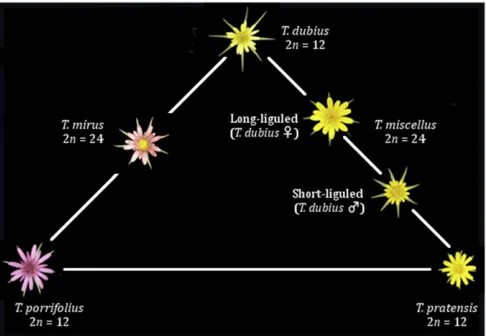
Theflowering plant genusTragopogon(Compositae) pro-vides a textbook example of recent, naturally occurring al-lopolyploid speciation (reviewed in Soltis et al.2012). The allotetraploidsT. mirusandT. miscellus(Ownbey 1950; Soltis et al.2004) have formed recently (80 years ago) (Soltiset al. 2004; Mavrodievet al.2008) and repeatedly in North America (Soltiset al.1995; reviewed in Soltiset al.(2004), Symonds et al.(2010); reviewed in Soltiset al.2012), and provide the opportunity to examine incipient genome evolution after nat-ural polyploid formation (Figure 1).
Copyright © 2018 by the Genetics Society of America doi:https://doi.org/10.1534/genetics.118.301564
Manuscript received May 1, 2018; accepted for publication September 7, 2018; published Early Online September 13, 2018.
Supplemental material available at Figshare: https://doi.org/10.25386/genetics. 6207317.
Advances in RNA sequencing technologies and de novo assembly provide opportunities to examine gene content, gene expression, and genome dynamics within nonmodel organisms without available reference genome sequences (Ozsolak and Milos 2011). These advances have enabled preliminary studies into biased homeolog expression in Tragopogon(Buggset al.2010a, 2011) as well as other poly-ploid plant systems (reviewed in Groveret al.2012; Yooet al. 2014; Wendel et al. 2018) such as maize (Springer and Stupar 2007), strawberry (Schaart et al.2005) and cotton (Adams and Wendel 2005a; Liu and Adams 2007). Examin-ing the expression patterns of genes within allopolyploids requires accurate assignment of transcript reads to homeol-ogous gene copies. The software packages Hylite (Duchemin et al.2015) and Polycat (Pageet al.2013) have been devel-oped to achieve this. However, Hylite requires a reference genome sequence of a third species sufficiently closely re-lated to the original diploid parents that the allopolyploid RNA-Seq reads will align to it, while Polycat requires a set of SNPs to be identifieda prioribetween a set of extant dip-loid relatives. Neither of these methods solely exploits RNA-Seq data, which is often the most cost-effective means of obtaining genomic information from the majority of unchar-acterized, nonmodel allopolyploid species.
De novo transcriptome assembly is error-prone, and as-sembling polyploidy transcriptomes compounds these chal-lenges. There have been multiple attempts to develop assemblers that can generate haplotype assemblies from spe-cies of varying ploidal levels, but optimal solutions are com-putationally intensive even for diploid genomes (Das and Vikalo 2015). Assembly accuracy is further compromised by the number of duplicates of each subgenome, the degree of similarity among inparalogs (paralogs within a subgenome), outparalogs (paralogs between subgenomes), homeologs, and, in the case of transcriptome assembly, multiple copies of varying isoforms (reviewed in Martin and Wang 2011). Attempts have been made to limit these difficulties by creat-ing multispecies assemblies containcreat-ing parents and poly-ploids, which is justified on the premise that homeologs in the polyploid demonstrate more similarity to the diploid tran-scripts from which they derive than to one another (Flagel et al.2012). However, this depends on a good understanding of the genome evolution for each species involved.
Resolving sequence differences between homeologs is cru-cial both for quantification of homeolog expression and for understanding the biology of polyploid species (Krasileva et al.2013). Krasilevaet al.(2013) demonstrated that more fractionated transcripts occur upon directly assembling a re-cently duplicated polyploid genome compared to assembly of the corresponding diploid progenitors, and similarities be-tween the subgenomes result in substantial numbers of chi-meric homeologs. Thus, failure to assess carefully the quality of a transcriptome assembly prior to using it as a reference for short-read alignment to evaluate expression will result in a significant number of reads that either fail to map or mismap due to deficiencies in the ability of sequencers to distinguish
between homeologs (Krasilevaet al.2013). Instead, assem-bly of parental transcriptomes followed by detection of ortho-logs between the assemblies offers a simplified approach to assessing homeolog-specific expression (HSE) in the poly-ploid transcriptome where parental assemblies serve as polyploid transcriptome references and parental orthologs represent polyploid homeologs (Krasilevaet al.2013; Soltis et al.2013).
Here, we describe a new analytical approach to examine biased homeolog expression from RNA-Seq data. The meth-odology (i) reduces redundancy inde novoassemblies, (ii) identifies putative orthologs between diploid assemblies, (iii) isolates common orthologous regions between orthologs, and (iv) assesses HSE using a Bayesian Poisson-Gamma model to account for sequence bias when mapping polyploid reads back to parental references.
We then apply our methodology to RNA-Seq data from T. mirusandT. miscellusand their corresponding diploid pro-genitors (T. dubiusandT. porrifolius, andT. dubiusandT. pra-tensis) to assess changes in HSE in the early generations following allopolyploidization. We focus on HSE where expres-sion may be biased toward one parentally derived homeolog relative to the other, and examine the relative contribution of each homeolog to the total expression of those loci. We addi-tionally examine additive expression, where the polyploid expression is the arithmetic mean of its parents and further distinguish between additive expression occurring when paren-tal expression levels are either the same (i.e., not differentially expressed) or different (differentially expressed). Additivity as-sesses the total expression of homeologous pairs in the poly-ploid, whereas HSE examines the relative contribution of each homeolog to the total expression of those loci.
Materials and Methods
Sample processing
Leaf tissue was collected from the leaf tissue of 6-week-old plants grown from seed in controlled growth chambers un-der uniform conditions; RNA was extracted using a modi-fied CTAB method, as described in Tate et al. (2006). A MicroPoly(A) Purist kit was used to purify mRNAs from 100 mg of total RNA. Three individuals of each species were sampled: the diploidsT. porrifolius,T. dubius, andT. pratensis and the allotetraploidsT. mirus and T. miscellus. The seed material originated from natural populations: collections 2674-4 (Oakesdale, WA) forT. dubius, 2878-2 (Pullman-2, WA) forT. porrifolius, 2893-26 (Garfield, WA) forT. pratensis, 2880-19 (Pullman-2, WA) forT. mirus, and 2894-2 (Garfield, WA) forT. miscellus. Herbarium vouchers for all of these col-lections are at FLAS. RNA-Seq samples were barcoded and processed using the Illumina TruSeq kit.
Sequencing and assembly
Sequencing was performed at the University of Florida’s Interdisciplinary Center for Biotechnology Research. We obtained paired-end 100-bp reads from three individuals of each species using Illumina HiSeq 2000. Samples were multi-plexed and run across three lanes to account for possible lane effects (Auer and Doerge 2010). Approximately 245, 265, and 310 million read pairs were obtained from the diploids T. porrifolius,T. dubius, andT. pratensis, respectively (Sup-plemental Material, Table S1), and 144 and 145 million read pairs were acquired for T. mirusand T. miscellus, re-spectively. Adapters were removed using CutAdapt [v1.7.1, -O = 5] (Martin 2011), and the first 10 bp were trimmed from reads using Trimmomatic [v0.32, HEADCROP:10, LEADING:3 TRAILING:3, SLIDINGWINDOW:4:15, MINLEN:60] (Bolgeret al.2014). Reads were assembled jointly for all indi-viduals within each species with Trinity de novo assembler [v2013-02-25] (Grabherret al.2011) using default parame-ters with normalization at a maximum coverage of 50 and a minimum coverage of 2. Assembly was performed for reads both with and without head cropping, resulting in two assem-blies per species that were subsequently concatenated and subjected to redundancy removal to maximize assembly con-tinuity (Table S2).
Minimizing redundant isoforms
We generated a pipeline to minimize redundant isoforms within our assemblies (Figure S1). To avoid the generation of chimeric contigs, we opted to cluster contigs within as-semblies. Clusters were established by performing a self-WU-BLAST blastn [v2.0] (W. Gish, personal communication) for each assembly. In this manner, contigs that were highly similar (90% identity, P-value #1E2100 and alignment length.90% of the subject length) were placed into a single cluster, and then each cluster was processed individually by CAP3 under less stringent parameters [v2012-07-05, -o 25, -p 80] (Huang and Madan 1999). CAP3 clustering resulted in
significantly reduced transcriptome complexity (Table S3). A subsequent self-BLAST revealed that, while redundancy was reduced, CAP3 largely failed to sufficiently collapse heterozygous or fragmented transcripts. We further pro-cessed these assemblies by reclustering contigs using WU-BLAST blastn [95% identity, P-value #1E2100 and align-ment length .90% of the subject length] and performing a multiple sequence alignment on each cluster using MAFFT [v7.127,–adjustdirection,–clustalout,–preservecase] (Katoh and Standley 2013). A consensus sequence was subsequently generated for each multiple sequence alignment using the Align package within Biopython [v1.65] where the predomi-nant nucleotide for each position had to be present.50% of the time or it was considered ambiguous (replaced with N) (Cocket al.2009).
Trinotate annotation and gene ontology enrichment
Each assembly was annotated using Trinotate [v3.0.1] (Grabherret al.2011), which wrapped TransDecoder [3.0.0] (Grabherr et al. 2011), TMHMM [v2.0–short] (Kroghet al. 2001), RNAmmer [v3.0.1] (Lagesen et al.2007), hmmscan [from HMMER v3.1b1–domtblout] (Finnet al. 2011; Punta et al.2012), and BLAST [BLASTX and BLASTP using Trans-Decoder peptides] in conjunction with the Swiss-Prot database [-max_target_seqs 1 -evalue 1e-5] (Altschulet al.1990). An-notations were generated in XLS format with accompanying gene ontology (GO) and Kyoto Encyclopedia of Genes and Genomes (KEGG) terms (Ashburner et al. 2000; Kanehisa et al.2011). GO enrichment and depletion were tested using the GO terms identified by Trinotate and the GOSeq (Young et al. 2012) pipeline included with Trinity (Grabherret al. 2011). The additive and HSE datasets were tested for GO enrichment using the set of GO terms determined from the Trinotate annotation with respect to the T. dubiusassembly. The backgrounds included those loci that both possessed iden-tifiable GO terms and were used in assessing additivity or HSE.
Reciprocal best-hit orthologs
Pairwise ortholog calling was performed between the T. dubius assembly and bothT. pratensisandT. porrifolius us-ing a reciprocal best-hit approach (Moreno-Hagelsieb and Latimer 2008). Sequences subjected to ortholog calling were required to meet minimum standards of similarity set at 90% identity, anE-value of 1E2100, 1 kb minimum contig length and an alignment length of 90% of either the subject or query total length, which is a more robust requirement than other methods that depend upon WU-BLAST reciprocal best-hits (Liet al.2003; W. Gish, personal communication). This stringent definition is expected to reduce the number of paralog mismatches in the identification of orthologs.
Common orthologous regions
used to identify orthologs and a custom python script (Files S7– S10). These BEDfiles were used to identify homologous re-gions between the orthologous pairs. In this manner, reads from the polyploids had comparable references for each parent. We required that the homologous region be 90% sequence-identical, and have 90% of the individual species contig (with minimum contig length set at 1 kb) included in the pair.
Poisson-Gamma model
Adapter-trimmed and quality filtered reads used in the as-sembly process above were aligned to complete references from both parents independently using Bowtie [v0.12.9, -m 1, -v 3] (Langmead et al.2009) and Last [v531, -l 25] (Frith et al.2010; Grazeet al.2012; Mungeret al.2014). Individ-ualized BED files containing CORE coordinates for each ortholog set were used to filter SAM files, one from each parent. Alignments were compared using a custom script ini-tially developed in PERL (Grazeet al.2012) and updated in python for this project (https://github.com/McIntyre-Lab/ mcscript/blob/master/sam_compare.py), and reads map-ping in the COREs were classified as mapping equally well to both parental orthologs, or as mapping better to one of the two parents based on edit distance.
A Poisson-Gamma model (León-Noveloet al.2014) that can use afixed parameter (q) was used to identify and correct for mapping biases to the CORE reference regions. Mean theta, the real proportion of reads from the paternal allele, was estimated for each species after mapping to the corre-sponding references using three separate estimations where the prior (q) was set at 0.4, 0.5, and 0.6, to account for potential bias towardT. dubius, no bias and bias toward the alternative diploid parent, respectively. The ortholog was considered to have homeologous expression bias if the cred-ible interval did not overlap 0.5 for all priors. This approach has been shown to conservatively control type I error (Fear et al.2016). For diploid read alignment, orthologous regions where reads were predominantly mapping to the “wrong” parent reference were filtered out, and a set of nonbiased contigs was identified for each diploid. The sets of contigs from each diploid were compared to generate an overlapping set of orthologs with low read-mapping bias. This same ap-proach was then used to determine HSE using mapped reads from the polyploids to nonbiased orthologous COREs.
Differential expression analysis
Counts were taken from reads mapped to both of the COREs between orthologous pairs. Thus, counts are taken from highly similar regions of the orthologs to account for differences in length between orthologous pairs resulting from incompletely reconstructed orthologs. The resulting CORE count matrix was filtered by removing loci with,10 counts per million based on the average library size. The voom function (Lawet al.2014) in the R package limma (Ritchie et al. 2015) was used to estimate the mean-variance relationship of the log2counts to
add mean-variance weights before calculating test statistics using the empirical Bayes analysis pipeline. Differentially
expressed (DE) loci were identified between diploid parents andfiltered based on the Benjamini and Hochberg false dis-covery rate (FDR) correction at 0.05 FDR (Benjamini and Hochberg 1995).
Putative homeolog silencing and loss
The reads for each polyploid individual were mapped to the corresponding diploid contig references. COREs that had reads mapped to one reference, but not the other, and dem-onstrated HSE were identified as putative silencing or loss events for polyploid individuals. Loci demonstrating putative loss/silencing were tabulated and subjected to a reciprocal best-hit blastn, with at least 95% identity, aP-value#1E210 and an alignment length$150 bases against 114 previously identifiedTragopogongenes demonstrating loss (Buggset al. 2010a, 2012).
Data availability
Sequenced reads are available in the NCBI Sequence Read Archive under SRP026656. Scripts used in this study are available athttps://github.com/BBarbazukLab/papers/. Sup-plemental material available at Figshare:https://doi.org/10. 25386/genetics.6207317.
Results and Discussion
Assembly and redundancy removal
Diploid reference transcriptomes were assembled using the Trinityde novoassembler (Grabherret al.2011) and cleaned of redundant sequences (Figure S1, Files S11–S13, and Tables S2 and S3), and orthologs were identified using WU-BLAST (Materials and Methods). The parental assemblies also serve as polyploid transcriptome references, and paren-tal ortholog pairs represent polyploid homeologs (Table S3) (Krasilevaet al.2013; Soltiset al.2013).
Ortholog detection, CORE identification, and quality checks
preferentially to an ortholog from a different parent, that ortholog was removed from further analysis.
HSE was assessed using the Poisson-Gamma model and the unfiltered COREs generated from the two diploid ortholog sets (León-Novelo et al.2014). From the 15,587 orthologs identified betweenT. dubiusandT. porrifolius, 11,513 orthol-ogous pairs exhibited low mapping bias forT. dubiusreads and 11,223 for T. porrifolius. Similarly, of the 15,493 T. dubius andT. pratensisorthologous pairs, 11,502 exhibited low mapping bias forT. dubiusreads and 10,194 forT. pra-tensis. Notably, the sets of unbiased orthologous pairs identi-fied for theT. dubiusandT. porrifoliusloci is relatively equal (11,000 each), whereas the T. dubius and T. pratensis orthologous pairs differ by .1000 loci. This is noteworthy because, if biased loci were notfiltered and HSE in the poly-ploids was purely random, we would expect relatively equal HSE withinT. mirusand a bias toward higherT. pratensis-derived homeologs inT. miscellus. Thisfinding underscores the importance of assessing read mapping bias prior to iden-tifying HSE. We then isolated the overlapping orthologous pairs betweenT. dubiusandT. porrifoliusthat did not exhibit mapping bias for parental reads, resulting in 8064 ortholo-gous pairs with low read-mapping bias for theT. mirus anal-ysis, and similarly identified 7202 orthologous pairs for the T. miscellusanalysis.
Homeolog-specific expression
Differences in homeolog expression can arise from variation in cis- ortrans- regulatory sequences (Wittkoppet al.2004; Williams et al. 2007) and epistatic effects (Graze et al. 2012), and are expected to be observed after polyploidization (Buggset al.2010a; Kohet al.2010; De Smet and Van de Peer 2012; reviewed in Yooet al.2014). Sequence polymor-phisms and redundancy often affect read mapping, which hinders accurate measurement of allele-specific expres-sion and the degree of allelic imbalance (León-Noveloet al. 2014). Additional mapping issues include biases between references due to sequence ambiguity, incomplete or missing transcripts, chimeric transcripts, misidentified orthologs and structural differences (Degneret al.2009; León-Noveloet al. 2014). To account for potential reference sequence biases, we utilized a Bayesian Poisson-Gamma model to identify biased ortholog references and subsequently determine HSE based on the remaining set of unbiased orthologs (León-Noveloet al.2014).
In a previous study examining HSE inT. miscellus, homeo-log expression levels showed a slight bias toward higher T. dubius expression overT. pratensis (Buggs et al.2010a). Application of our COREs and rigorous exclusion of alignment bias determined that HSE inT. miscelluswas equally distrib-uted between both parental homeologs, with 1820 contigs biased towardT. dubiusand 1866 contigs biased toward T. pratensiswhen parental expression is ignored (Figure 2). Similarly, HSE inT. miruswas approximately equal, with a potentially small expression bias toward T. dubius (2093) compared toT. porrifolius(1768), resulting in slightly higher
T. dubiusexpression at those loci regardless of whether pa-rental expression was equal or not (Figure 3).
We also examined HSE in light of parental expression patterns where parental expression may be the same or different. Differences in parental expression were tested us-ing voom (Lawet al.2014). Afterfiltering for minimum read depth, the reduced contig sets hadfinal sizes of 10,677 forT. dubius-T. porrifoliusorthologs and 10,248 for theT. dubius-T. pratensisset. ForT. dubiusandT. pratensis, 5176 of 10,248 loci were differentially expressed, and 5800 of 10,677 loci were differentially expressed forT. dubiusandT. porrifolius. Expression inT. mirusshowed a slight bias towardT. dubius homeolog expression (Table 1), which agrees with previous studies examining far fewer loci (Kovariket al.2005; Buggs et al.2010a). Expression of parental homeologs inT. miscel-lus was equal when parental expression was different but showed a slight bias towardT. pratensiswhen parental ex-pression levels were the same.
These results represent a substantial (1003or more) in-crease in gene sample size compared to previous expres-sion studies in Tragopogon (Tate et al. 2006; Buggset al. 2010a, 2011; Kohet al.2010). Importantly, the differences in expression between our work and previous studies are actually minor, and may be due to differences in the scale of the analyses, the stringent requirements for orthology, sto-chasticity (Buggset al.2011, 2012), direction of the cross, or tissue analyzed (Buggset al.2009, 2010b). As orthologs were stringently defined, the relatively balanced HSE may also be a product of examining more conserved orthologs. As such, HSE may become increasingly imbalanced as sequence iden-tity between orthologs decreases. It may also be that differ-ences in the number of loci demonstrating HSE, which is only 325 of the 8000 loci analyzed for T. mirus, are within a predictable range of variation such that independent poly-ploidization events result in relatively balanced HSE with some independently formed lineages being moderately biased.
natural and synthetic allopolyploids where natural al-lopolyploids have shown balanced HSE and synthetic are bi-ased toward the A-genome inGossypium(Yooet al.2013). In the same study, the degree of HSE was additionally shown to increase with increasing time since polyploidization (Yooet al. 2013). Genome expression biases also appear to occur in Senecio cambrensis, where bias was reproduced in natural and synthetic allopolyploids (Hegarty et al.2012). Overall,
there seems to be little consensus across allopolyploid plant species. However, it tentatively appears that biased expression patterns may at least be reproducible within certain clades and stochastic within others (reviewed in Yooet al.2014).
Additively expressed loci
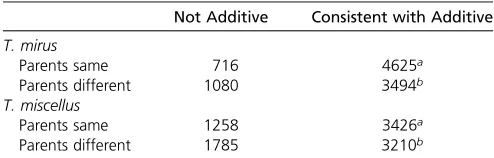
Most loci displayed expression levels in the polyploids con-sistent with additivity, with 64% of the T. miscellus loci
demonstrating additivity and76% of theT. mirusDE loci demonstrating additivity when parental expression is dif-ferent (Table 2). These results are consistent with studies in hybrid maize (Schadt et al. 2003; Guo et al. 2006; Stupar and Springer 2006) with synthetic allotetraploid Arabidopsis(Wanget al.2006b) and synthetic allohexaploid Brassica (Zhao et al. 2013). Expression patterns observed after polyploidization are, at least in part, a product of
genome doubling and hybridization (reviewed in Yooet al. 2014). However, the degree to which each contributes to these expression changes is unclear (reviewed in Soltis et al. 2016b). Patterns of nonadditive expression in cotton have been proposed to be a long-term evolutionary response, where older polyploids exhibit more nonadditive expression (reviewed in Yooet al.2014). Early studies in allopolyploid Tragopogonalso demonstrated additive enzyme phenotypes
inT. miscellus(Roose and Gottlieb 1980). Proteome additiv-ity forT. mirusoccurred for 408 of 476 proteins (Kohet al. 2012). However, it is still not clear to what degree the tran-scriptome accurately portrays the proteome (reviewed in Vogel and Marcotte 2012; Soltiset al.2016a). Ecological data suggest intermediate habitat occupation for both allotetra-ploids compared to their parents (Sauber 2000; Soltis et al. 2004), suggesting some degree of phenotypic additivity. How-ever, most morphological phenotypes inT. mirusandT. mis-cellusare only intermediate in terms of recombining dominant traits from each diploid (Ownbey 1950). Interestingly, domi-nant phenotypes may be explained by dosage imbalance, where interacting partners in the same pathway may be co-ordinately regulated to ameliorate imbalances (Veitia 2004).
GO enrichment
We found no significant enrichment or depletion in addi-tive, nonaddiaddi-tive, HSE or non-HSE sets. However, if only Arabidopsisannotations are utilized, there is enrichment for transferases and binding proteins. This result may suggest that limiting GO enrichment analyses to single-species orthol-ogy calls may bias identification of highly conserved loci and skew enrichment results. Thus, it is crucial that GO assignment methods utilize more comprehensive databases such as the nonredundant database, TrEMBL, or SwissProt. Paterson and colleagues (2006) found that shared protein functional do-mains were more useful for identifying gene retention pat-terns than broad GO categories in Arabidopsis, Oryza, Saccharomyces, and Tetraodon (Patersonet al. 2006). Simi-larly, GO enrichment alone may not be the most appropriate method to identify conserved patterns of expression such as HSE after polyploidization. Other models, such as domain-based (Addou et al. 2009) or network-based (Veitia 2004; Changet al.2010) models, may better describe the processes governing expression change in newly formed polyploids.
Homeolog silencing and potential loss
Biased fractionation and silencing have been observed in Arabidopsis suecica(Wanget al.2006b; Changet al.2010), Brassica rapa (Wang et al. 2011; Cheng et al. 2012; Woodhouse et al. 2014) and Zea mays (Schnable et al. 2011; reviewed in Yoo et al. 2014), and may result from epigenetic changes (reviewed in Wendel et al. 2018), and be influenced by stoichiometric constraints in accord with
the gene dosage balance hypothesis (reviewed in Freeling 2009; Wendelet al.2018). We cannot differentiate between physical loss of a homeolog or silencing using mapped RNA-Seq reads because both phenomena result in the absence of aligned reads. Notably, these potential silencing/loss events were few in bothT. miscellus(Figure 2) andT. mirus(Figure 3). As there are so few putative events detected, it is difficult to speculate on potential homeolog-specific biases in loss. However, it tentatively appears that silencing/loss may occur more frequently in the maternally derived homeologs (i.e., T. pratensis andT. porrifolius). This is contrary to previous, targeted studies whereT. miscellusexhibits preferential loss ofT. dubius(Tateet al.2006; Buggset al.2009, 2012; Soltis et al.2009) andT. mirusshows preferential silencing (Buggs et al.2010b) or loss (Kohet al.2010) of theT. dubius homeo-log based upon 13 and 30 genes, respectively. However, data from a larger set of anonymous loci assayed via the Seque-nom approach show greater silencing of the maternal home-olog in T. mirus (the T. porrifolius homeolog) and of the T. dubius homeolog—regardless of maternal or paternal ancestry—inT. miscellus(Jordon-Thadenet al., personal com-munication). We reiterate that the scale of the current study is larger than previous analyses, and loss events are only puta-tive loss events as they are derived from lack of expression alone rather than in conjunction with direct assessment of DNA. These putatively lost loci were additionally compared to 114 loci, some of which previously demonstrated loss in Tragopogon(Buggset al.2010a, 2012). We identified 111 of the 114 loci in theT. dubiusassembly, 103 inT. pratensisand 106 in T. porrifolius. However, none of the loci potentially demonstrating loss here overlapped with those from the pre-vious studies. In fact, most of the loci (80 of 114), which previously showed loss, were identified within our ortholog sets and expressed. This lack of overlap for loci demonstrat-ing homeolog silencdemonstrat-ing/loss may support that the processes governing gene expression may be largely stochastic and prone to differ between individuals (Buggs et al. 2009, 2010b, 2011). Indeed, every individual surveyed in Jordon-Thaden et al.(personal communication) differs in its pro-file of lost loci. Alternatively, it may reflect our more stringently applied requirements for ortholog definition,
Table 1 Homeolog-specific expression
T. dubius T. porrifolius T. pratensis Parents same
T. mirus 715 645 — T. miscellus 680 — 749 Parents different
T. mirus 1325 1065 — T. miscellus 1081 — 1059
Counts represent total number of loci demonstrating expression bias toward a particular parental homeolog. Homeolog expression biases are examined in light of loci expression levels being the same in the diploid parents and loci expression levels being different in the diploid parents.
Table 2 Test for additivity in polyploid expression
Not Additive Consistent with Additive
T. mirus
Parents same 716 4625a
Parents different 1080 3494b
T. miscellus
Parents same 1258 3426a
Parents different 1785 3210b
Counts represent loci where parental expression is not significantly different or is significantly different and polyploid expression is either additive or nonadditive in the polyploid individuals of independent origin inT. mirusorT. miscellus. aThese loci are not strictly additive as polyploid expression could deviate from
midparent expression and yet be consistent with additive when parental expression is the same.
bThese loci have power issues because the hybrid mean expression falls within the
sequence alignment, correction of mapping bias, and statis-tically robust expression assessment that may have been an unrecognized shortcoming of previous studies.
Final remarks
Here, we present a robust methodology for assessing homeo-log-specific expression in polyploids from RNA-Seq data and employ it to elucidate the large-scale changes in gene expres-sion that have occurred in the recently formed (40 gener-ations ago) Tragopogon allopolyploids. Our methodology reduces redundancy inde novoassemblies, identifies putative orthologs between assemblies and isolates common ortholo-gous regions between ortholog pairs for the purpose of iden-tifying unbiased references to assess changes in HSE. Notably, this study assesses significantly more contigs than previous studies inTragopogon(Tateet al.2006, 2009; Buggset al. 2009, 2010b, 2012; Kohet al.2010) and represents a notable increase in both scale and confidence of HSE assessment in Tragopogon. While our results confirm earlier observations thatT. mirushomeolog expression is slightly biased toward T. dubius (Kovariket al.2005; Buggset al.2010a), we ob-serve equal HSE towardT. pratensisandT. dubiushomeologs inT. miscellus, which contradicts earlier small-scale studies (Tateet al.2006; Buggset al.2011). Additionally, the rela-tively balanced HSE seen inTragopogoncontradicts studies in other allopolyploid species (e.g., A. suecica, Gossypium, or S. cambrensis). Because our analysis is based on a large sam-ple size of well-defined orthologous genes that have been robustlyfiltered for bias, these differences between our anal-ysis and previous studies of homeolog expression may largely be a product of methodological rigor.
Acknowledgments
We thank Oleksandr Moskalenko for rewriting sam_compare from PERL to CPython (https://github.com/McIntyre-Lab/ mcscript/blob/master/sam_compare.py). The High-Performance Computing Center of the University of Florida (UF) pro-vided computational resources and support. This work was supported by the UF Office of Research, UF Depart-ment of Biology, National Science Foundation (NSF) grant DEB-1146065, and National Institutes of Health (NIH) grant GMS102227. The contents of this article are solely the responsibility of the authors and do not necessarily represent the official views of the NSF or NIH. The authors declare no conflict of interest.
Literature Cited
Abbott, R. J., and A. J. Lowe, 2004 Origins, establishment and evolution of new polyploid species: Senecio cambrensis and S. eboracensis in the British Isles. Biol. J. Linn. Soc. Lond. 82: 467– 474.https://doi.org/10.1111/j.1095-8312.2004.00333.x
Adams, K. L., and J. F. Wendel, 2005a Allele-specific, bidirec-tional silencing of an alcohol dehydrogenase gene in different organs of interspecific diploid cotton hybrids. Genetics 171: 2139–2142.https://doi.org/10.1534/genetics.105.047357
Adams, K. L., and J. F. Wendel, 2005b Polyploidy and genome evolution in plants. Curr. Opin. Plant Biol. 8: 135–141.https:// doi.org/10.1016/j.pbi.2005.01.001
Adams, K. L., R. Cronn, R. Percifield, and J. F. Wendel, 2003 Genes duplicated by polyploidy show unequal contribu-tions to the transcriptome and organ-specific reciprocal silenc-ing. Proc. Natl. Acad. Sci. USA 100: 4649–4654. https://doi. org/10.1073/pnas.0630618100
Adams, K. L., R. Percifield, and J. F. Wendel, 2004 Organ-specific silencing of duplicated genes in a newly synthesized cotton al-lotetraploid. Genetics 168: 2217–2226.https://doi.org/10.1534/ genetics.104.033522
Addou, S., R. Rentzsch, D. Lee, and C. A. Orengo, 2009 Domain-based and family-specific sequence identity thresholds increase the levels of reliable protein function transfer. J. Mol. Biol. 387: 416–430.https://doi.org/10.1016/j.jmb.2008.12.045
Amborella Genome Project, 2013 TheAmborellagenome and the evolution of flowering plants. Science 342: 1241089.https:// doi.org/10.1126/science.1241089
Altschul, S. F., W. Gish, W. Miller, E. W. Myers, and D. J. Lipman, 1990 Basic local alignment search tool. J. Mol. Biol. 215: 403– 410.https://doi.org/10.1016/S0022-2836(05)80360-2
Ashburner, M., C. A. Ball, J. A. Blake, D. Botstein, H. Butleret al., 2000 Gene ontology: tool for the unification of biology. Nat. Genet. 25: 25–29.https://doi.org/10.1038/75556
Auer, P. L., and R. Doerge, 2010 Statistical design and analysis of RNA sequencing data. Genetics 185: 405–416.https://doi.org/ 10.1534/genetics.110.114983
Benjamini, Y., and Y. Hochberg, 1995 Controlling the false dis-covery rate: a practical and powerful approach to multiple test-ing. J. R. Stat. Soc. B 57: 289–300.
Bolger, A. M., M. Lohse, and B. Usadel, 2014 Trimmomatic: a
flexible trimmer for Illumina sequence data. Bioinformatics 30: 2114–2120.https://doi.org/10.1093/bioinformatics/btu170
Buggs, R., A. Doust, J. Tate, J. Koh, K. Soltiset al., 2009 Gene loss and silencing in Tragopogon miscellus (Asteraceae): compari-son of natural and synthetic allotetraploids. Heredity 103: 73– 81.https://doi.org/10.1038/hdy.2009.24
Buggs, R. J., S. Chamala, W. Wu, L. Gao, G. D. May et al., 2010a Characterization of duplicate gene evolution in the recent natural allopolyploid Tragopogon miscellus by next-generation se-quencing and Sequenom iPLEX MassARRAY genotyping. Mol. Ecol. 19: 132–146.https://doi.org/10.1111/j.1365-294X.2009.04469.x
Buggs, R. J., N. M. Elliott, L. Zhang, J. Koh, L. F. Viccini et al., 2010b Tissue‐specific silencing of homoeologs in natural popula-tions of the recent allopolyploid Tragopogon mirus. New Phytol. 186: 175–183.https://doi.org/10.1111/j.1469-8137.2010.03205.x
Buggs, R. J., L. Zhang, N. Miles, J. A. Tate, L. Gao et al., 2011 Transcriptomic shock generates evolutionary novelty in a newly formed, natural allopolyploid plant. Curr. Biol. 21: 551– 556.https://doi.org/10.1016/j.cub.2011.02.016
Buggs, R. J., S. Chamala, W. Wu, J. A. Tate, P. S. Schnableet al., 2012 Rapid, repeated, and clustered loss of duplicate genes in allopolyploid plant populations of independent origin. Curr. Biol. 22: 248–252.https://doi.org/10.1016/j.cub.2011.12.027
Chang, P. L., B. P. Dilkes, M. McMahon, L. Comai, and S. V. Nuzh-din, 2010 Homoeolog-specific retention and use in allotetra-ploid Arabidopsis suecica depends on parent of origin and network partners. Genome Biol. 11: R125.https://doi.org/10. 1186/gb-2010-11-12-r125
Chelaifa, H., A. Monnier, and M. Ainouche, 2010 Transcriptomic changes following recent natural hybridization and allopoly-ploidy in the salt marsh species Spartina3townsendii and Spar-tina anglica (Poaceae). New Phytol. 186: 161–174.https://doi. org/10.1111/j.1469-8137.2010.03179.x
of Brassica rapa. PLoS One 7: e36442.https://doi.org/10.1371/journal. pone.0036442
Clausen, J., D. D. Keck, and W. M. Hiesey, 1945 Experimental Studies on the Nature of Species. II. Plant Evolution Through Am-phiploidy, with Examples From the Madiinae. Carnegie Inst., Washington. Publ. 564.
Cock, P. J., T. Antao, J. T. Chang, B. A. Chapman, C. J. Coxet al., 2009 Biopython: freely available Python tools for computational molecular biology and bioinformatics. Bioinformatics 25: 1422– 1423.https://doi.org/10.1093/bioinformatics/btp163
Darlington, C. D., 1937 Recent Advances in Cytology. P. Blakiston’s Son and Co., Philadelphia.
Das, S., and H. Vikalo, 2015 SDhaP: haplotype assembly for dip-loids and polypdip-loids via semi-definite programming. BMC Geno-mics 16: 260.https://doi.org/10.1186/s12864-015-1408-5
Degner, J. F., J. C. Marioni, A. A. Pai, J. K. Pickrell, E. Nkadoriet al., 2009 Effect of read-mapping biases on detecting allele-specific expression from RNA-sequencing data. Bioinformatics 25: 3207–3212.https://doi.org/10.1093/bioinformatics/btp579
Deng, B., W. Du, C. Liu, W. Sun, S. Tianet al., 2012 Antioxidant response to drought, cold and nutrient stress in two ploidy lev-els of tobacco plants: low resource requirement confers polytol-erance in polyploids? Plant Growth Regul. 66: 37–47.https:// doi.org/10.1007/s10725-011-9626-6
De Smet, R., and Y. Van de Peer, 2012 Redundancy and rewiring of genetic networks following genome-wide duplication events. Curr. Opin. Plant Biol. 15: 168–176.https://doi.org/10.1016/j. pbi.2012.01.003
Doyle, J. J., J. L. Doyle, J. T. Rauscher, and A. Brown, 2004 Evolution of the perennial soybean polyploid complex (Glycine subgenus Glycine): a study of contrasts. Biol. J. Linn. Soc. Lond. 82: 583–597.https://doi.org/10.1111/j.1095-8312. 2004.00343.x
Doyle, J. J., L. E. Flagel, A. H. Paterson, R. A. Rapp, D. E. Soltis et al., 2008 Evolutionary genetics of genome merger and dou-bling in plants. Annu. Rev. Genet. 42: 443–461.https://doi.org/ 10.1146/annurev.genet.42.110807.091524
Duchemin, W., P.-Y. Dupont, M. A. Campbell, A. R. Ganley, and M. P. Cox, 2015 HyLiTE: accurate andflexible analysis of gene expression in hybrid and allopolyploid species. BMC Bioinfor-matics 16: 8.https://doi.org/10.1186/s12859-014-0433-8
Fear, J. M., L. G. Leon-Novelo, A. M. Morse, A. R. Gerken, K. Van Lehmanet al., 2016 Buffering of genetic regulatory networks in Drosophila melanogaster. Genetics 203: 1177–1190.https:// doi.org/10.1534/genetics.116.188797
Finn, R. D., J. Clements, and S. R. Eddy, 2011 HMMER web server: interactive sequence similarity searching. Nucleic Acids Res. 39: W29–W37.https://doi.org/10.1093/nar/gkr367
Flagel, L., J. Udall, D. Nettleton, and J. Wendel, 2008 Duplicate gene expression in allopolyploid Gossypium reveals two tempo-rally distinct phases of expression evolution. BMC Biol. 6: 16.
https://doi.org/10.1186/1741-7007-6-16
Flagel, L. E., J. F. Wendel, and J. A. Udall, 2012 Duplicate gene evolution, homoeologous recombination, and transcriptome characterization in allopolyploid cotton. BMC Genomics 13: 302.https://doi.org/10.1186/1471-2164-13-302
Freeling, M., 2009 Bias in plant gene content following different sorts of duplication: tandem, whole-genome, segmental, or by transposition. Annu. Rev. Plant Biol. 60: 433–453. https://doi. org/10.1146/annurev.arplant.043008.092122
Frith, M. C., R. Wan, and P. Horton, 2010 Incorporating sequence quality data into alignment improves DNA read mapping. Nu-cleic Acids Res. 38: e100.https://doi.org/10.1093/nar/gkq010
Grabherr, M. G., B. J. Haas, M. Yassour, J. Z. Levin, D. A. Thompson et al., 2011 Full-length transcriptome assembly from RNA-Seq data without a reference genome. Nat. Biotechnol. 29: 644–652.
https://doi.org/10.1038/nbt.1883
Graze, R., L. Novelo, V. Amin, J. Fear, G. Casella et al., 2012 Allelic imbalance inDrosophilahybrid heads: exons, iso-forms, and evolution. Mol. Biol. Evol. 29: 1521–1532.https:// doi.org/10.1093/molbev/msr318
Grover, C., J. Gallagher, E. Szadkowski, M. Yoo, L. Flagel et al., 2012 Homoeolog expression bias and expression level domi-nance in allopolyploids. New Phytol. 196: 966–971.https://doi. org/10.1111/j.1469-8137.2012.04365.x
Guo, M., M. A. Rupe, X. Yang, O. Crasta, C. Zinselmeier et al., 2006 Genome-wide transcript analysis of maize hybrids: allelic additive gene expression and yield heterosis. Theor. Appl. Genet. 113: 831–845.https://doi.org/10.1007/s00122-006-0335-x
Hegarty, M. J., R. J. Abbott, and S. J. Hiscock, 2012 Allopolyploid speciation in action: the origins and evolution of Senecio cam-brensis, pp. 245–270 in Polyploidy and Genome Evolution. Springer, New York.
Huang, X., and A. Madan, 1999 CAP3: a DNA sequence assembly program. Genome Res. 9: 868–877. https://doi.org/10.1101/ gr.9.9.868
Jannoo, N., L. Grivet, N. Chantret, O. Garsmeur, J. C. Glaszmann et al., 2007 Orthologous comparison in a gene‐rich region among grasses reveals stability in the sugarcane polyploid ge-nome. Plant J. 50: 574–585. https://doi.org/10.1111/j.1365-313X.2007.03082.x
Jiao, Y., N. J. Wickett, S. Ayyampalayam, A. S. Chanderbali, L. Landherret al., 2011 Ancestral polyploidy in seed plants and angiosperms. Nature 473: 97–100. https://doi.org/10.1038/na-ture09916
Kanehisa, M., S. Goto, Y. Sato, M. Furumichi, and M. Tanabe, 2011 KEGG for integration and interpretation of large-scale mo-lecular data sets. Nucleic Acids Res. 40: D109–D114.https://doi. org/10.1093/nar/gkr988
Katoh, K., and D. M. Standley, 2013 MAFFT multiple sequence alignment software version 7: improvements in performance and usability. Mol. Biol. Evol. 30: 772–780. https://doi.org/ 10.1093/molbev/mst010
Koh, J., P. S. Soltis, and D. E. Soltis, 2010 Homeolog loss and ex-pression changes in natural populations of the recently and repeat-edly formed allotetraploid Tragopogon mirus (Asteraceae). BMC Genomics 11: 97.https://doi.org/10.1186/1471-2164-11-97
Koh, J., S. Chen, N. Zhu, F. Yu, P. S. Soltiset al., 2012 Comparative proteomics of the recently and recurrently formed natural al-lopolyploid Tragopogon mirus (Asteraceae) and its parents. New Phytol. 196: 292–305.https://doi.org/10.1111/j.1469-8137. 2012.04251.x
Kovarik, A., J. C. Pires, A. R. Leitch, K. Y. Lim, A. Sherwood et al., 2005 Rapid concerted evolution of nuclear ribosomal DNA in two Tragopogon allopolyploids of recent and recurrent origin. Genetics 169: 931–944.https://doi.org/10.1534/genetics.104.032839
Krasileva, K. V., V. Buffalo, P. Bailey, S. Pearce, S. Ayling et al., 2013 Separating homeologs by phasing in the tetraploid wheat transcriptome. Genome Biol. 14: R66.https://doi.org/10. 1186/gb-2013-14-6-r66
Krogh, A., B. Larsson, G. Von Heijne, and E. L. Sonnhammer, 2001 Predicting transmembrane protein topology with a hid-den Markov model: application to complete genomes. J. Mol. Biol. 305: 567–580.https://doi.org/10.1006/jmbi.2000.4315
Lagesen, K., P. Hallin, E. Rødland, H. Stærfeldt, T. Rognes et al., 2007 RNammer: consistent and rapid annotation of ribosomal RNA genes. Nucleic Acids Res. 35: 3100–3108.https://doi.org/ 10.1093/nar/gkm160
Langmead, B., C. Trapnell, M. Pop, and S. L. Salzberg, 2009 Ultrafast and memory-efficient alignment of short DNA sequences to the human genome. Genome Biol. 10: R25.
https://doi.org/10.1186/gb-2009-10-3-r25
read counts. Genome Biol. 15: R29. https://doi.org/10.1186/ gb-2014-15-2-r29
León-Novelo, L. G., L. M. McIntyre, J. M. Fear, and R. M. Graze, 2014 Aflexible Bayesian method for detecting allelic imbal-ance in RNA-seq data. BMC Genomics 15: 920.https://doi.org/ 10.1186/1471-2164-15-920
Levin, D. A., 2002 The Role of Chromosomal Change in Plant Evo-lution. Oxford University Press, Oxford.
Li, L., C. J. Stoeckert, and D. S. Roos, 2003 OrthoMCL: identifi -cation of ortholog groups for eukaryotic genomes. Genome Res. 13: 2178–2189.https://doi.org/10.1101/gr.1224503
Liu, Z., and K. L. Adams, 2007 Expression partitioning between genes duplicated by polyploidy under abiotic stress and during organ development. Curr. Biol. 17: 1669–1674.https://doi.org/ 10.1016/j.cub.2007.08.030
Madlung, A., 2013 Polyploidy and its effect on evolutionary suc-cess: old questions revisited with new tools. Heredity 110: 99– 104.https://doi.org/10.1038/hdy.2012.79
Martin, J. A., and Z. Wang, 2011 Next-generation transcriptome assembly. Nat. Rev. Genet. 12: 671–682.https://doi.org/10.1038/ nrg3068
Martin, M., 2011 Cutadapt removes adapter sequences from high-throughput sequencing reads.EMBnet. Journal 17: 10–12. Mavrodiev, E. V., P. S. Soltis, and D. E. Soltis, 2008 Putative
parentage of six Old World polyploids in Tragopogon L.(Aster-aceae: Scorzonerinae) based on ITS, ETS, and plastid sequence data. Taxon 57: 1215.
Moreno-Hagelsieb, G., and K. Latimer, 2008 Choosing BLAST op-tions for better detection of orthologs as reciprocal best hits. Bioinformatics 24: 319–324. https://doi.org/10.1093/bioinfor-matics/btm585
Munger, S. C., N. Raghupathy, K. Choi, A. K. Simons, D. M. Gatti et al., 2014 RNA-Seq alignment to individualized genomes im-proves transcript abundance estimates in multiparent popula-tions. Genetics 198: 59–73. https://doi.org/10.1534/genetics. 114.165886
Müntzing, A., 1936 The evolutionary significance of autopoly-ploidy. Hereditas 21: 363–378. https://doi.org/10.1111/j.1601-5223.1936.tb03204.x
Ownbey, M., 1950 Natural hybridization and amphiploidy in the genus Tragopogon. Am. J. Bot. 37: 487–499.https://doi.org/ 10.1002/j.1537-2197.1950.tb11033.x
Ozsolak, F., and P. M. Milos, 2011 RNA sequencing: advances, challenges and opportunities. Nat. Rev. Genet. 12: 87–98.
https://doi.org/10.1038/nrg2934
Page, J. T., A. R. Gingle, and J. A. Udall, 2013 PolyCat: a resource for genome categorization of sequencing reads from al-lopolyploid organisms. G3 (Bethesda) 3: 517–525.https://doi. org/10.1534/g3.112.005298
Paterson, A., J. Bowers, and B. Chapman, 2004 Ancient polyploid-ization predating divergence of the cereals, and its conse-quences for comparative genomics. Proc. Natl. Acad. Sci. USA 101: 9903–9908.https://doi.org/10.1073/pnas.0307901101
Paterson, A. H., B. A. Chapman, J. C. Kissinger, J. E. Bowers, F. A. Feltuset al., 2006 Many gene and domain families have con-vergent fates following independent whole-genome duplication events in Arabidopsis, Oryza, Saccharomyces and Tetraodon. Trends Genet. 22: 597–602.https://doi.org/10.1016/j.tig.2006.09. 003
Punta, M., P. C. Coggill, R. Y. Eberhardt, J. Mistry, J. Tate et al., 2012 The Pfam protein families database. Nucleic Acids Res. 40: D290–D301.https://doi.org/10.1093/nar/gkr1065
Rambani, A., J. T. Page, and J. A. Udall, 2014 Polyploidy and the petal transcriptome of Gossypium. BMC Plant Biol. 14: 3.
https://doi.org/10.1186/1471-2229-14-3
Ritchie, M. E., B. Phipson, D. Wu, Y. Hu, C. W. Law et al., 2015 Limma powers differential expression analyses for
RNA-sequencing and microarray studies. Nucleic Acids Res. 43: e47.https://doi.org/10.1093/nar/gkv007
Roose, M., and L. Gottlieb, 1980 Biochemical properties and level of expression of alcohol dehydrogenases in the allotetra-ploid plant Tragopogon miscellus and its diallotetra-ploid progenitors. Biochem. Genet. 18: 1065–1085.https://doi.org/10.1007/ BF00484339
Sauber, K. L., 2000 Habitat differentiation between derivative tet-raploid and progenitor diploid species of Tragopogon. Masters of Science thesis, Washington State University, Pullman, WA. Schaart, J. G., L. Mehli, and H. J. Schouten, 2005 Quantification
of allele‐specific expression of a gene encoding strawberry poly-galacturonase‐inhibiting protein (PGIP) using Pyrosequen-cingTM. Plant J. 41: 493–500. https://doi.org/10.1111/j.1365-313X.2004.02299.x
Schadt, E. E., S. A. Monks, T. A. Drake, A. J. Lusis, N. Cheet al., 2003 Genetics of gene expression surveyed in maize, mouse and man. Nature 422: 297–302.https://doi.org/10.1038/nature01434
Schnable, J. C., N. M. Springer, and M. Freeling, 2011 Differentiation of the maize subgenomes by genome dominance and both ancient and ongoing gene loss. Proc. Natl. Acad. Sci. USA 108: 4069–4074.
https://doi.org/10.1073/pnas.1101368108
Schnable, P. S., D. Ware, R. S. Fulton, J. C. Stein, F. Wei et al., 2009 The B73 maize genome: complexity, diversity, and dynamics. Science 326: 1112–1115.https://doi.org/10.1126/science.1178534
Shi, X., D. W. Ng, C. Zhang, L. Comai, W. Yeet al., 2012 Cis-and trans-regulatory divergence between progenitor species deter-mines gene-expression novelty in Arabidopsis allopolyploids. Nat. Commun. 3: 950.https://doi.org/10.1038/ncomms1954
Soltis, D., R. Buggs, W. Barbazuk, P. Schnable, and P. Soltis, 2009 On the origins of species: does evolution repeat itself in polyploid populations of independent origin? inCold Spring Harbor Symposia on Quantitative Biology. Cold Spring Harbor Laboratory Press, Cold Spring Harbor, NY.
Soltis, D. E., P. S. Soltis, J. C. Pires, A. Kovarik, J. A. Tate et al., 2004 Recent and recurrent polyploidy in Tragopogon (Aster-aceae): cytogenetic, genomic and genetic comparisons. Biol. J. Linn. Soc. Lond. 82: 485–501. https://doi.org/10.1111/j.1095-8312.2004.00335.x
Soltis, D. E., V. A. Albert, J. Leebens-Mack, J. D. Palmer, R. A. Wing et al., 2008 The Amborella genome: an evolutionary reference for plant biology. Genome Biol. 9: 402. https://doi.org/10. 1186/gb-2008-9-3-402
Soltis, D. E., E. V. Mavrodiev, S. C. Meyers, P. M. Severns, L. Zhang et al., 2012 Additional origins of Ownbey’s Tragopogon mirus. Bot. J. Linn. Soc. 169: 297–311. https://doi.org/10.1111/ j.1095-8339.2012.01244.x
Soltis, D. E., M. A. Gitzendanner, G. Stull, M. Chester, A. Chander-baliet al., 2013 The potential of genomics in plant systematics. Taxon 62: 886–898.https://doi.org/10.12705/625.13
Soltis, D. E., B. B. Misra, S. Shan, S. Chen, and P. S. Soltis, 2016a Polyploidy and the proteome. Biochim. Biophys. Acta 1864: 896–907.https://doi.org/10.1016/j.bbapap.2016.03.010
Soltis, D. E., C. J. Visger, D. B. Marchant, and P. S. Soltis, 2016b Polyploidy: pitfalls and paths to a paradigm. Am. J. Bot. 103: 1146–1166.https://doi.org/10.3732/ajb.1500501
Soltis, P. S., G. M. Plunkett, S. J. Novak, and D. E. Soltis, 1995 Genetic variation in Tragopogon species: additional ori-gins of the allotetraploids T. mirus and T. miscellus (Composi-tae). Am. J. Bot. 82: 1329–1341.https://doi.org/10.1002/ j.1537-2197.1995.tb12666.x
Spooner, D. M., M. Ghislain, R. Simon, S. H. Jansky, and T. Gavrilenko, 2014 Systematics, diversity, genetics, and evolution of wild and cultivated potatoes. Bot. Rev. 80: 283–383. https://doi.org/ 10.1007/s12229-014-9146-y
effects in hybrid maize. The Plant Cell Online 19: 2391–2402.
https://doi.org/10.1105/tpc.107.052258
Stebbins, G., 1947 Types of polyploids: their classification and significance. Adv. Genet. 1: 403–429.
Stupar, R. M., and N. M. Springer, 2006 Cis-transcriptional varia-tion in maize inbred lines B73 and Mo17 leads to additive ex-pression patterns in the F1 hybrid. Genetics 173: 2199–2210.
https://doi.org/10.1534/genetics.106.060699
Symonds, V. V., P. S. Soltis, and D. E. Soltis, 2010 Dynamics of polyploid formation in Tragopogon (Asteraceae): recurrent for-mation, gene flow, and population structure. Evolution 64: 1984–2003.https://doi.org/10.1111/j.1558-5646.2010.00978.x
Tate, J. A., Z. Ni, A.-C. Scheen, J. Koh, C. A. Gilbert et al., 2006 Evolution and expression of homeologous loci in Trago-pogon miscellus (Asteraceae), a recent and reciprocally formed allopolyploid. Genetics 173: 1599–1611.https://doi.org/10.1534/ genetics.106.057646
Tate, J. A., V. V. Symonds, A. N. Doust, R. J. Buggs, E. Mavrodiev et al., 2009 Synthetic polyploids of Tragopogon miscellus and T. mirus (Asteraceae): 60 years after Ownbey’s discovery. Am. J. Bot. 96: 979–988.https://doi.org/10.3732/ajb.0800299
Veitia, R. A., 2004 Gene dosage balance in cellular pathways: implications for dominance and gene duplicability. Genetics 168: 569–574.https://doi.org/10.1534/genetics.104.029785
Vision, T. J., D. G. Brown, and S. D. Tanksley, 2000 The origins of genomic duplications in Arabidopsis. Science 290: 2114–2117.
https://doi.org/10.1126/science.290.5499.2114
Vogel, C., and E. M. Marcotte, 2012 Insights into the regulation of protein abundance from proteomic and transcriptomic analyses. Nat. Rev. Genet. 13: 227–232.https://doi.org/10.1038/nrg3185
Wang, J., L. Tian, H.-S. Lee, and Z. J. Chen, 2006a Nonadditive regulation of FRI and FLC loci mediatesflowering-time variation in Arabidopsis allopolyploids. Genetics 173: 965–974.https:// doi.org/10.1534/genetics.106.056580
Wang, J., L. Tian, H.-S. Lee, N. E. Wei, H. Jiang et al., 2006b Genomewide nonadditive gene regulation in Arabidop-sis allotetraploids. Genetics 172: 507–517. https://doi.org/ 10.1534/genetics.105.047894
Wang, X., H. Wang, J. Wang, R. Sun, J. Wu et al., 2011 The genome of the mesopolyploid crop species Brassica rapa. Nat. Genet. 43: 1035–1039.https://doi.org/10.1038/ng.919
Wendel, J. F., D. Lisch, G. Hu, and A. S. Mason, 2018 The long and short of doubling down: polyploidy, epigenetics, and the temporal dynamics of genome fractionation. Curr. Opin. Genet. Dev. 49: 1–7.https://doi.org/10.1016/j.gde.2018.01.004
Williams, R. B., E. K. Chan, M. J. Cowley, and P. F. Little, 2007 The influence of genetic variation on gene expression. Genome Res. 17: 1707–1716.https://doi.org/10.1101/gr.6981507
Wittkopp, P. J., B. K. Haerum, and A. G. Clark, 2004 Evolutionary changes in cis and trans gene regulation. Nature 430: 85–88.
https://doi.org/10.1038/nature02698
Woodhouse, M. R., F. Cheng, J. C. Pires, D. Lisch, M. Freelinget al., 2014 Origin, inheritance, and gene regulatory consequences of genome dominance in polyploids. Proc. Natl. Acad. Sci. USA 111: 5283–5288 (erratum: Proc. Natl. Acad. Sci. USA 111: 6527).https://doi.org/10.1073/pnas.1402475111
Wright, R. J., P. M. Thaxton, K. M. El-Zik, and A. H. Paterson, 1998 D-subgenome bias of Xcm resistance genes in tetraploid Gossypium (cotton) suggests that polyploid formation has cre-ated novel avenues for evolution. Genetics 149: 1987–1996. Yang, S., F. Cheung, J. J. Lee, M. Ha, N. E. Wei et al.,
2006 Accumulation of genome‐specific transcripts, transcrip-tion factors and phytohormonal regulators during early stages offiber cell development in allotetraploid cotton. Plant J. 47: 761–775.https://doi.org/10.1111/j.1365-313X.2006.02829.x
Yoo, M., E. Szadkowski, and J. Wendel, 2013 Homoeolog expres-sion bias and expresexpres-sion level dominance in allopolyploid cotton. Heredity 110: 171–180.https://doi.org/10.1038/hdy.2012.94
Yoo, M.-J., X. Liu, J. C. Pires, P. S. Soltis, and D. E. Soltis, 2014 Nonadditive gene expression in polyploids. Annu. Rev. Genet. 48: 485–517. https://doi.org/10.1146/annurev-genet-120213-092159
Young, M. D., M. J. Wakefield, G. K. Smyth, and A. Oshlack, 2012 goseq: gene ontology testing for RNA-seq datasets. R Bioconductor. Available at: http://citeseerx.ist.psu.edu/viewdoc/ download?doi=10.1.1.366.9571&rep=rep1&type=pdf.
Zhao, Q., J. Zou, J. Meng, S. Mei, and J. Wang, 2013 Tracing the transcriptomic changes in synthetic trigenomic allohexaploids of Brassica using an RNA-Seq approach. PLoS One 8: e68883.
https://doi.org/10.1371/journal.pone.0068883