A Novel Loom for Progress Performance in
Miscellany Based Protocol
P.Ramya, Dr.Nalini, Sundararajan.M, Arulselvi S
Lecturer, Dept. of CSE, Bharath University, Chennai, Tamil Nadu, India
Assistant Professor, Dept. of CSE, Bharath University, Chennai, Tamil Nadu, India
Director, Research Center for Computing and Communication, Bharath University, Chennai, Tamil Nadu, India
Co-Director, Research Center for Computing and Communication, Bharath University, Tamil Nadu, India
ABSTRACT: This study deals with the bang of cooperative routing for maximizing the network lifetime in sensor network applications. It is implicit that the nodes in the network are equipped with a single Omni directional antenna and they perform cooperative transmission to achieve transmit diversity. It is proposed as a joint cooperative transmission and multi-channel interface energy aware routing algorithm to prolong the network lifetime. This approach uses the maximum lifetime power allocation with multi-channel interface, instead of minimum power allocation. Using the maximum lifetime power allocation, the cooperative nodes allocate their transmit power according to the multi-channel condition and the residual energy in the nodes. The proposed scheme combines the maximum lifetime power allocation and the energy aware routing to maximize the network lifetime It is studied that the performance of the cooperative routing in terms of network lifetime defined as the time until the first node dies and the total delivered packets before the first node dies. It is demonstrated that the proposed solution achieves one to three and half and one to two times longer network lifetime and more total delivered packets compared to non cooperative routing, when it is used with MTE and FA algorithms, respectively. Furthermore, the maximum lifetime power allocation achieves one to two times longer lifetime, compared to minimum power allocation in MTE and FA routine schemes. It provides distributed implementation of the proposed algorithm.
KEYWORDS: Wireless ad hoc network, Cooperative diversity, Multi-channel interface, Energy efficiency. wireless broadcast advantage. In the multi-hop transmission, nodes that have received the transmitted signal will
I. INTRODUCTION
In recent years, significant progress has been made in developing systems that use multiple antennas at the transmitter and the receiver to achieve better performance. Such systems are known as multiple input multiple output (MIMO) systems. There are two types of benefits of using multiple antennas: link budget / spatial diversity improvement and throughput improvement from spatial multiplexing. Both are intrinsic to wireless channels, where rich spatial variations or spatial dimensionality. spatial dimensionality is via spatial multiplexing, i.e. transmitting and receiving multiple data streams from multiple antennas at the same time, and in the same frequency spectrum. The latter is possible because the signals received at different antennas are unique combinations of the transmitted data streams. Advanced digital signal processing algorithms can be used to recover the original data streams. MIMO systems with spatial multiplexing achieve higher peak data rates and increases spectrum efficiency.
II. RELATED WORKS
2.1 Cooperative Diversity MAC for Robust Communication in Wireless Ad-Hoc Networks
It uses of FER as a metric, it has introduced the user cooperation gain. It is found that whether cooperation is useful for a user or not does not depend on the inter-user channel quality between the user and its partner, but only depends on the cooperation decision parameter (CDP), which is the FER ratio of the cooperative block fading channel to the non-cooperative quasi-static fading channel. It has analyzed certain asymptotic behaviors of user cooperation and develop analytical results on how link qualities of user-to user and user-to-destination affect cooperation benefits. It also investigates the relative locations of the partners and the destination for coded cooperation to improve error rates of an individual user or a system of users. Furthermore, this paper establishes rules on how a user can choose among possible partners to maximize the cooperation gain. The results are based on simple analytical formulas, which match simulations closely, and thus can be easily and quickly implemented.
In the formulation, it is assumed that locations of all the nodes are known. One way this can be established by using a Global Positioning System (GPS) receiver. Alternatively, cooperation decisions can be based solely on average received SNRs. Before actual communication takes place, the nodes could transmit training signals to calculate average received SNR’s of all the relevant links and base cooperation decisions on these measurements. Analytical PEP based formulas enable decisions to be made online without need of simulations or large look-up tables.
2.2A Radically New Architecture for Next Generation Mobile Ad Hoc Networks
It investigated the effects of different routing choices in a MIMO ad hoc network. The MIMO physical layer provides a number of degrees of freedom that a correct protocol design could exploit to the network’s advantage. To illustrate this point, two approaches are compared. The first is fixed shortest path forwarding, with routes computed a priori. The second involves a dynamic relay choice based on a specific metric. This metric has been designed to yield an overall assessment of the relay’s ability to forward packets. In fact, the complexity of such a setting can be more profitably controlled through a cross-layer design of the various components.
For this reason, a straightforward use of fixed shortest path routes has proved to be a working, but ineffective solution. The adaptive forwarding policies offer better performance because they can harvest network resources more efficiently by conveniently redistributing traffic over the nodes.
2.3Maximizing Communication Concurrency via Link-Layer Packet Salvaging in Mobile Ad Hoc Networks
2.4 Cooperative Regions and Partner Choice in Coded Cooperative Systems
It considers the problem of average throughput maximization per total consumed energy in packetized sensor communications. The study results in a near-optimal transmission strategy that chooses the optimal modulation level and transmit power while adapting to the incoming traffic rate, buffer condition, and the channel condition. It investigates the point-to-point and multi node communication scenarios. Many solutions of the previous works require the state transition probability, which may be hard to obtain in a practical situation. Therefore, it is proposed to utilize a class of learning algorithms [called reinforcement learning (RL)] to obtain the near-optimal policy in point-to-point communication and a good transmission strategy in multi node scenario. For comparison purpose, it develops the stochastic models to obtain the optimal strategy in the point-to-point communication. It further extends the algorithm to solve the optimization problem in a multi node scenario by independent learning. The agent chooses the highest possible modulation and selects the transmit power that achieves a predefined signal-to-interference ratio (SIR) given one particular modulation. The proposed learning algorithm achieves more than twice the throughput per energy compared with the simple policy, particularly, in high packet arrival regime. Beside the good performance, the RL algorithm results in a simple, systematic, self-organized, and distributed way to decide the transmission strategy.
2.5 An Energy Efficient Routing Protocol in Wireless Sensor Network
Energy-aware design and evaluation of network protocols requires knowledge of the energy consumption behavior of actual wireless interfaces. But little practical information is available about the energy consumption behavior of well-known wireless network interfaces and device specifications do not provide information in a form that is helpful to protocol developers. This paper describes a series of experiments which obtained detailed measurements of the energy consumption of an IEEE 802.11 wireless network interface operating in an ad hoc networking environment. The data is presented as a collection of linear equations for calculating the energy consumed in sending, receiving and discarding broadcast and point-to-point data packets of various sizes.[6,9]
For energy efficiency, it uses Distance-Based Energy Aware Routing (DEAR) Algorithm In the DEAR algorithm, each sensor node has two tables. One is the routing table which contains information like source node, previous and next hop node, etc. The other table is the neighbor table which contains neighbors’ information like distance between them, distance to the sink node, residual energy, node degree, etc. Thus, each node can make intelligent decisions about the next hop based on the DEAR algorithm and the algorithm is easy to implement for practical engineering applications[1,5]
III. LISTS OF SUB-SYSTEMS
3.1 Intelligent Transport system (ITS)
To fully appreciate the merits of a search technique it is important to understand the commercial environment in which these techniques are implemented. Many routes finding systems are currently in development worldwide and the majority form part of much larger systems to manage and operate the device network more efficiently. These management infrastructures are known as Intelligent Transport Systems (ITS) and vary in complexity and size. These systems fall into two main categories, centralized and decentralized systems.
3.2 Implementation of Labeling
One possible approach to solving shortest path problems would be to pre-calculate and store the shortest path from every node to every possible other node, which would allow us to answer a shortest path query in constant time. Unfortunately the required storage size and computation time grows with the square of the number of nodes. With realistic device networks in mind this processing would take years if not decades and be virtually impossible to store. Hence to overcome this problem we require real time search techniques. Two aspects are particularly important to the shortest path algorithms discussed in this project:
3.3 Radius Search
To eliminate or minimize the effects of combinatorial explosion we need to adopt a search technique similar to the way humans approach navigation problems. So far we have not implemented any intelligence within a search which can filter out roads that are less likely to be travelled on. This type of intelligence requires some form of historical knowledge about the network. Since the road network does not change very often it is possible to calculate auxiliary information in a pre-processing step. Perhaps the most obvious way to classify the roads in the network is to identify the class of each road (i.e. motorways, highways, local roads etc), and then to exploit these classes in the search. This is similar to the way humans approach routing problems and is known as Hierarchical Search [10,14]
3.4 Power Minimization of Cooperative Link
Each node uses a default transmission power to construct a route, in order to avoid high power consumption for long distance transmission at the initial stage. Each cooperative link can adjust to its minimum power using MPSDF once link performance is satisfied the target. Each relay node as a monitor periodically broadcasts a HELLO packet to its source- destination pair to measure the link performance. When an improvement is necessary, the relay sends a NOTIFICATION to its source and destination and triggers new relay selections between the source-relay and the relay-destination links. To fit the non-infrastructure nature of ad-hoc networks, it is desirable to devise a distributed mechanism to choose the relay node with the best incoming and outgoing channel condition among candidate nodes without using a central controller. [15,18]
3.5 Selection of Back off Periods
The back-off period for each relay is chosen such that the smaller the link, the shorter the back-off time is. After the first back-off time expired, the corresponding relay node will broadcast an acknowledgment to other nodes which will quit the competition and refrain for next competition. At the same time, if the link is satisfied the constraint, a power adjustment will also be sent through the same acknowledgement to the source that both source and relay can adjust their power to optimal without adversely affecting the link performance. The selection of back-off periods at various relay nodes ensures that the best quality relay with optimized power will be the one responsible for forwarding the data to the destination node.[19,24]
3.6 Sensor Node Deployment
One possible approach to solving shortest path problems would be to pre-calculate and store the shortest path from every node to every possible other node, which would allow us to answer a shortest path query in constant time.
3.7 Performance Analysis
The performance of nodes is measures by network simulator in terms of Throughput, Delay, Distance, Error Rate.
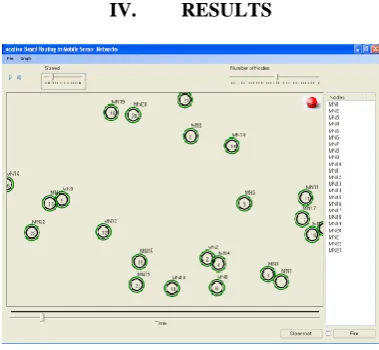
Fig 4.2 shows the node travel to reach sink node.
V. SIMULATION RESULT
Fig 5.1Performance measure between MTE, FA, MIMO
VI. CONCLUSION & FUTURE WORK
It proposed an effective way to do the multi-channel interface with power allocation in cooperative transmission. In the cooperative routing, the power allocation and the MIMO routing decision should be jointly decided to maximize the network lifetime. To achieve maximum network lifetime, the proposed scheme employs the maximum lifetime power allocation and the energy aware routing. The maximum lifetime power allocation allocates transmit power according to each node’s channel condition and its residual energy in cooperative transmission. This criterion results in a situation where nodes with more residual energy help more compared to nodes with less energy. Compared to the minimum power allocation, proposed method achieves longer network lifetime and more total delivered packets in MTE algorithm and FA algorithm. It says that the distributed implementation of the algorithms and shows that the distributed algorithm converges to the centralized route.
REFERENCES
[1] S. Moh, C. Yu, S.-M. Park, H.-N. Kim, and J. Kim, “CD-MAC:Cooperative Diversity MAC for Robust Communication in Wireless Ad-Hoc Networks,” Proc. of IEEE ICC,
[2] R. Ramanathan, “Challenges: A Radically New Architecture for Next Generation Mobile Ad Hoc Networks,” Proc. of ACM/IEEE Mobicom [3] C. Yu, K. G. Shin, and L. Song, “Maximizing Communication Concurrency via Link-Layer Packet Salvaging in Mobile Ad Hoc Networks,” IEEE Trans. on Mobile Computing, Vol. 6, No. 4,
[4] Z. Lin, E. Erkip, and A. Stefanov, “Cooperative Regions and Partner Choice in Coded Cooperative Systems”, IEEE Trans. on Communications, Vol. 54, Issue 7, pp. 1323-1334,
[5] J. N. Laneman, “Cooperative Diversity: Models, Algorithms, and Architectures,” Cooperation in Wireless Networks: Principles and Applications, F. H. P. Fitzek and M. D. Katz (Eds.), Chapter 6, Springer,
[6] A. Nosratinia, T. E. Hunter, and A. Hedayat, “Cooperative Communication in Wireless Networks,” IEEE Communication Magazine,
[7] J. N. Laneman and G. W. Wornell, “Distributed Space-Time Coded Protocols for Exploiting Cooperative Diversity in Wireless Networks,”IEEE Trans. on Information Theory,
[8] G. Scutari and S. Barbarossa, “Distributed Space-Time Coding for Regenerative Relay Networks,” IEEE Trans. on Wireless Communications, [9] E. Kojima, T. Fujii, Y. Kamiya, and Y. Suzuki, “Distributed ARQ Using STBC for OFDM Ad-Hoc Networks,” Proc. of 14th IST Mobile and Wireless Communications Summit,
[10] A. Azgin, Y. Altunbasak, and G. AlRegib, “Cooperative MAC and Routing Protocols for Wireless Ad Hoc Networks,” Proc. of IEEE GLOBECOM,
[11] A. Host-Madsen, “Capacity Bounds for Cooperative Diversity,” IEEE Trans. on Information Theory, [12] S. Krco and M. Dupcinov, “Improved Neighbor Detection Algorithm for AODV Routing Protocol,” IEEE Communication Letters
[13] Intersil Prism WLAN Chipset Application Note: Tutorial on Basic Link Budget Analysis, Available from http://www.sssmag. com/
[14] J. N. Laneman, “Cooperative Diversity in Wireless Networks: Algorithms and Architectures,” Ph.D. Thesis, Massachusetts Institute of Technology, Cambridge,MA,
[15] J. Broch, D, A, Maltz, D. Johnson, Y.-C. Hu, and J. Jetcheva, “A Performance Comparison of Multi-Hop Wireless Ad Hoc Network Routing Protocols,” Proc. of ACM/IEEE MobiCom
[16] J.VIDHYA, G.KALPANA and P.DANANJAYAN,” Analysis of Cooperative MIMO MAC Protocol in Wireless Sensor Networks”,
[17] Paolo Casari, Marco Levorato, Daniele Mazzi and Michele Zorzi,” On the Design of Routing Protocols for MIMO Ad Hoc Networks under Uniform and Correlated Traffic”.
[18] Langeswaran K., Revathy R., Kumar S.G., Vijayaprakash S., Balasubramanian M.P., "Kaempferol ameliorates aflatoxin B1 (AFB1) induced hepatocellular carcinoma through modifying metabolizing enzymes, membrane bound ATPases and mitochondrial TCA cycle enzymes", Asian Pacific Journal of Tropical Biomedicine, ISSN : 2221-1691, 2(S3)(2012) pp.S1653-S1659.
[19] Rajendran S., Muthupalani R.S., Ramanathan A., "Lack of RING finger domain (RFD) mutations of the c-Cbl gene in oral squamous cell carcinomas in Chennai, India", Asian Pacific Journal of Cancer Prevention, ISSN : 1513-7368, 14(2) (2013) pp.1073-1075.
[20] A. J. Goldsmith and S. B. Wicker, “Design challenges for energy-constrained ad hoc wireless networks ”, in IEEE Wireless Communications, [21] Anbazhagan R., Satheesh B., Gopalakrishnan K., 'Mathematical modeling and simulation of modern cars in the role of stability analysis", Indian Journal of Science and Technology, ISSN : 0974-6846, 6(S5) (2013) pp.4633-4641.
[22] Muruganantham S., Srivastha P.K., Khanaa, "Object based middleware for grid computing", Journal of Computer Science, ISSN : 1552-6607, 6(3) (2010) pp.336-340.
[23] C. Pandana and K. J. Ray Liu, “Near-optimal reinforcement learning framework for energy-aware sensor communications”, in IEEE Journal on
Selected Areas in Communications,
[24] Sengottuvel P., Satishkumar S., Dinakaran D., "Optimization of multiple characteristics of EDM parameters based on desirability approach and fuzzy modeling", Procedia Engineering, ISSN : 0975 – 7384, 64() (2013) pp.1069-1078.
[25] Bharthvajan R, Human Resource - Strategy and Outsource, International Journal of Innovative Research in Science, Engineering and Technology, ISSN: 2319-8753,pp 15273-15276, Vol. 3, Issue 8, August 2014
[26] Bharthvajan R, Human Resource Management and Supply Chain Management Intersection, International Journal of Innovative Research in Science, Engineering and Technology, ISSN: 2319-8753,pp 10163-10167, Vol. 3, Issue 3, March 2014
[27] Bharthvajan R, Women Entrepreneurs & Problems Of Women Entrepreneurs, International Journal of Innovative Research in Science, Engineering and Technology, ISSN: 2319-8753,pp 16105-16110, Vol. 3, Issue 9, September 2014
[28] Bharthvajan R, Organizational Culture and Climate, International Journal of Innovative Research in Science, Engineering and Technology, ISSN: 2319-8753,pp 8870-8874, Vol. 3, Issue 1, January 2014
[29] C.Rathika Thaya Kumari , Dr.A.Mukunthan, M.Nageshwari, Electric and Magnetic Properties of Semiconductors and Metals in One, Two and Three Dimensions, International Journal of Innovative Research in Science, Engineering and Technology, ISSN: 2319-8753,pp 271-279, Vol. 2, Issue 1, January 2013
[30] C.Tamil Selvi & Dr. A. Mukunthan, Different Varieties of Plantain (Banana) and Their Estimation by Chemical Tests, International Journal of Innovative Research in Science, Engineering and Technology, ISSN: 2319-8753,pp 1099-1105, Vol. 2, Issue 4, April 2013